

EN 14607-5-1:2004
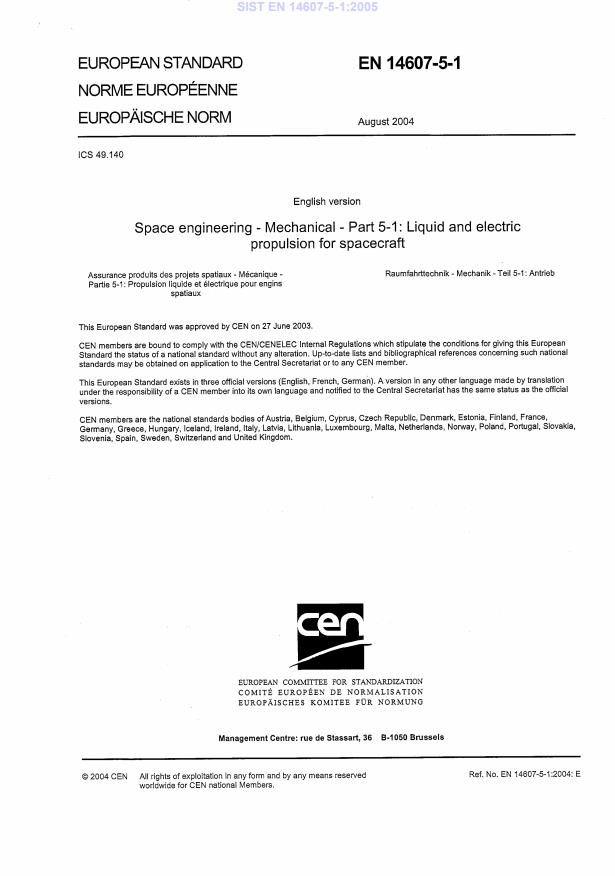
(Main)Space engineering - Mechanical - Part 5-1: Liquid and electric propulsion for spacecraft
- Abstract
EN 14607 Part 5.1 of Space engineering - Mechanical defined the requirements for the discipline liquid and electric propulsion for spacecraft
This document belongs to the propulsion field of the mechanical discipline, as defined in EN 13292, and defines the regulatory aspects applicable to elements and processes for liquid, including cold gas, and electrical propulsion for spacecraft. It specifies the activities to perform in the engineering of such propulsion systems, their applicability, and defines the requirements for the engineering aspects: functional, configurational, interfaces, physical, environmental, quality factors, operational and verification.
General requirements relating to Mechanical Engineering are defined in EN 14607 Part 1.
This document applies only to liquid, including cold gas, and electrical propulsion systems used in spacecraft and to related mechanical parts. Solid propulsion for spacecraft, and solid and liquid propulsion for launchers are not covered by this document.
Other forms of propulsion currently under development (e.g. nuclear, nuclear-electric, solar-thermal and hybrid propulsion) are not presently covered by this document.
When viewed in a specific project context, the requirements defined in this document should be tailored to match the genuine requirements of a particular profile and circumstances of a project.
NOTE Tailoring is a process by which individual requirements of specifications, standards and related documents are evaluated and made applicable to a specific project, by selection and in some exceptional cases, modification of existing or addition of new requirements.
- Status
- Withdrawn
- Publication Date
- 03-Aug-2004
- Withdrawal Date
- 06-Oct-2026
- Technical Committee
- CEN/SS T02 - Aerospace
- Drafting Committee
- CEN/SS T02 - Aerospace
- Current Stage
- 9960 - Withdrawal effective - Withdrawal
- Start Date
- 10-Sep-2014
- Completion Date
- 07-Oct-2026

Relations
- Effective Date
- 29-May-2013
- Effective Date
- 28-Jan-2026
- Effective Date
- 28-Jan-2026
- Effective Date
- 28-Jan-2026
- Effective Date
- 28-Jan-2026
- Effective Date
- 28-Jan-2026
- Effective Date
- 28-Jan-2026
- Effective Date
- 28-Jan-2026
- Effective Date
- 28-Jan-2026
- Effective Date
- 28-Jan-2026
- Effective Date
- 28-Jan-2026
- Effective Date
- 28-Jan-2026
- Effective Date
- 28-Jan-2026
Get Certified
Connect with accredited certification bodies for this standard

BUREAU VERITAS Certification Germany
Bureau Veritas certification in Germany.

Element Materials Technology
Materials testing and product certification.

AQMS Ltd.
AQMS provides ISO certification to SMEs across the UK.
Sponsored listings
Frequently Asked Questions
EN 14607-5-1:2004 is a standard published by the European Committee for Standardization (CEN). Its full title is "Space engineering - Mechanical - Part 5-1: Liquid and electric propulsion for spacecraft". This standard covers: EN 14607 Part 5.1 of Space engineering - Mechanical defined the requirements for the discipline liquid and electric propulsion for spacecraft This document belongs to the propulsion field of the mechanical discipline, as defined in EN 13292, and defines the regulatory aspects applicable to elements and processes for liquid, including cold gas, and electrical propulsion for spacecraft. It specifies the activities to perform in the engineering of such propulsion systems, their applicability, and defines the requirements for the engineering aspects: functional, configurational, interfaces, physical, environmental, quality factors, operational and verification. General requirements relating to Mechanical Engineering are defined in EN 14607 Part 1. This document applies only to liquid, including cold gas, and electrical propulsion systems used in spacecraft and to related mechanical parts. Solid propulsion for spacecraft, and solid and liquid propulsion for launchers are not covered by this document. Other forms of propulsion currently under development (e.g. nuclear, nuclear-electric, solar-thermal and hybrid propulsion) are not presently covered by this document. When viewed in a specific project context, the requirements defined in this document should be tailored to match the genuine requirements of a particular profile and circumstances of a project. NOTE Tailoring is a process by which individual requirements of specifications, standards and related documents are evaluated and made applicable to a specific project, by selection and in some exceptional cases, modification of existing or addition of new requirements.
EN 14607 Part 5.1 of Space engineering - Mechanical defined the requirements for the discipline liquid and electric propulsion for spacecraft This document belongs to the propulsion field of the mechanical discipline, as defined in EN 13292, and defines the regulatory aspects applicable to elements and processes for liquid, including cold gas, and electrical propulsion for spacecraft. It specifies the activities to perform in the engineering of such propulsion systems, their applicability, and defines the requirements for the engineering aspects: functional, configurational, interfaces, physical, environmental, quality factors, operational and verification. General requirements relating to Mechanical Engineering are defined in EN 14607 Part 1. This document applies only to liquid, including cold gas, and electrical propulsion systems used in spacecraft and to related mechanical parts. Solid propulsion for spacecraft, and solid and liquid propulsion for launchers are not covered by this document. Other forms of propulsion currently under development (e.g. nuclear, nuclear-electric, solar-thermal and hybrid propulsion) are not presently covered by this document. When viewed in a specific project context, the requirements defined in this document should be tailored to match the genuine requirements of a particular profile and circumstances of a project. NOTE Tailoring is a process by which individual requirements of specifications, standards and related documents are evaluated and made applicable to a specific project, by selection and in some exceptional cases, modification of existing or addition of new requirements.
EN 14607-5-1:2004 is classified under the following ICS (International Classification for Standards) categories: 49.140 - Space systems and operations. The ICS classification helps identify the subject area and facilitates finding related standards.
EN 14607-5-1:2004 has the following relationships with other standards: It is inter standard links to EN 16603-35-01:2014, EN 16603-10:2018, EN 16603-31:2014, EN 16603-32:2014, EN 13701:2001, EN 16602-70:2016, EN 13292:1999, EN 16603-32-08:2016, EN 16603-33-11:2019, EN 16602-40:2018, EN 14101:2001, EN 14725:2003, EN 16603-70:2015. Understanding these relationships helps ensure you are using the most current and applicable version of the standard.
EN 14607-5-1:2004 is associated with the following European legislation: Standardization Mandates: M/237. When a standard is cited in the Official Journal of the European Union, products manufactured in conformity with it benefit from a presumption of conformity with the essential requirements of the corresponding EU directive or regulation.
EN 14607-5-1:2004 is available in PDF format for immediate download after purchase. The document can be added to your cart and obtained through the secure checkout process. Digital delivery ensures instant access to the complete standard document.
Standards Content (Sample)
2003-01.Slovenski inštitut za standardizacijo. Razmnoževanje celote ali delov tega standarda ni dovoljeno.Vesoljska tehnika – Mehanika – 5-1. del: Pogon za vesoljska plovilaRaumfahrttechnik - Mechanik - Teil 5-1: AntriebIngénierie spatiale - Mécanique - Partie 5-1: Propulsion liquide et électrique pour satellitesSpace engineering - Mechanical - Part 5-1: Liquid and electric propulsion for spacecraft49.140Vesoljski sistemi in operacijeSpace systems and operationsICS:Ta slovenski standard je istoveten z:EN 14607-5-1:2004SIST EN 14607-5-1:2005en01-januar-2005SIST EN 14607-5-1:2005SLOVENSKI
STANDARD
SIST E
...