

ASTM B349/B349M-16(2021)
(Specification)Standard Specification for Zirconium Sponge and Other Forms of Virgin Metal for Nuclear Application
General Information
- Abstract
ABSTRACT
This specification covers one grade of virgin zirconium metal commonly designated as sponge because of its porous, sponge-like texture, but it may also take other forms such as chunklets. The one grade described is designated as Reactor Grade R60001, suitable for use in nuclear applications. The main characteristic of the reactor grade is its low nuclear cross section as achieved by removal of hafnium. Zirconium metal is usually prepared by reduction of zirconium tetrachloride, and gets its physical characteristics from the processes involved in production. These characteristics may be expected to vary greatly with manufacturing methods. Only virgin zirconium metal, in identified, uniform, well-mixed blends, shall be used. The zirconium metal shall conform to the requirements for chemical composition specified.
SCOPE
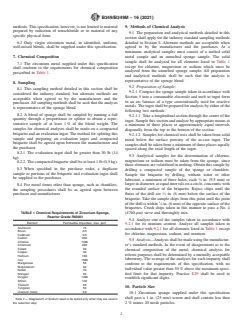
1.1 This specification covers one grade of virgin zirconium metal commonly designated as sponge because of its porous, sponge-like texture, but it may also take other forms such as chunklets, suitable for use in nuclear applications.
1.2 Unless a single unit is used, for example corrosion mass gain in mg/dm2, the values stated in either inch-pound or SI units are to be regarded separately as standard. The values stated in each system are not exact equivalents; therefore each system must be used independently of the other. SI values cannot be mixed with inch-pound values.
1.3 This standard does not purport to address all of the safety concerns, if any, associated with its use. It is the responsibility of the user of this standard to establish appropriate safety, health, and environmental practices and determine the applicability of regulatory limitations prior to use.
1.4 This international standard was developed in accordance with internationally recognized principles on standardization established in the Decision on Principles for the Development of International Standards, Guides and Recommendations issued by the World Trade Organization Technical Barriers to Trade (TBT) Committee.
- Status
- Published
- Publication Date
- 31-Mar-2021
- Technical Committee
- B10 - Reactive and Refractory Metals and Alloys
- Drafting Committee
- B10.02 - Zirconium and Hafnium


Overview
ASTM B349/B349M-16(2021) is the internationally recognized specification developed by ASTM for virgin zirconium metal, primarily in the form of sponge and chunklets, intended for use in nuclear applications. This standard defines the requirements for "Reactor Grade R60001" zirconium, emphasizing stringent chemical purity, low neutron cross section achieved by hafnium removal, and strict manufacturing and quality controls. The document establishes guidelines for chemical composition, physical properties, sampling practices, product marking, and packaging to ensure the zirconium metal is suitable for safe and reliable use in nuclear environments.
Key Topics
Material Forms and Purity Requirements
- Covers only virgin zirconium metal in uniform blends.
- Specifies reactor grade zirconium (R60001), known for its low neutron capture cross section due to minimized hafnium content.
Chemical Composition
- Details maximum permissible impurities such as aluminum, boron, cadmium, iron, nickel, and uranium.
- Outlines industry-standard testing and alternate analytical procedures by manufacturer-purchaser agreement.
Manufacturing Process
- Zirconium is typically produced by reduction of zirconium tetrachloride, forming a sponge-like porous texture.
- Both sponge and chunklet forms are within scope; manufacturing methods must maintain the required purity and physical characteristics.
- Only well-mixed, traceable batches of virgin zirconium are permitted.
Testing, Sampling, and Certification
- Sampling guidelines ensure representativeness, including procedures for both sponge and solid ingot forms.
- Minimum sample sizes and analytical locations are specified for accurate impurity measurement.
- Certification and documentation are required for each shipment, confirming compliance.
Packaging and Marking
- Packaging methods are determined by mutual agreement, with a focus on safety and material preservation.
- Containers must be permanently marked with key identification and traceability information.
Applications
Nuclear Reactor Fuel and Components
- Reactor grade zirconium is essential in nuclear reactors due to its low neutron absorption, enhancing reactor efficiency and safety.
- Used for the fabrication of nuclear fuel cladding, structural components, and core internals.
Nuclear Fuel Manufacturing
- Supports production processes requiring contamination-free, high-purity zirconium starting materials.
- Ensures consistent batch-to-batch material quality, critical for regulated nuclear supply chains.
Specialty Research and High-Purity Alloys
- Provides the basis for advanced research in nuclear materials where impurity control is paramount.
- Enables the production of customized alloy forms for specialized nuclear applications.
Related Standards
- ASTM E29 - Practice for Using Significant Digits in Test Data to Determine Conformance with Specifications.
- ASTM Standards on Reactive and Refractory Metals and Alloys - Broader guidance covering related materials and test methods.
- World Trade Organization Technical Barriers to Trade (TBT) Principles - Ensures global recognition and harmonization with international best practices.
By adhering to ASTM B349/B349M-16(2021), producers and users of zirconium metal for nuclear application can ensure compliance with globally recognized quality, testing, and safety standards. This makes it an essential document for anyone involved in the supply, procurement, or application of zirconium metals in the nuclear industry.
Relations
- Effective Date
- 01-Oct-2008
- Effective Date
- 15-Nov-2006
- Effective Date
- 15-Sep-2006
- Effective Date
- 01-May-2006
- Effective Date
- 01-Dec-2004
- Effective Date
- 10-May-2002
- Effective Date
- 10-May-1999
Get Certified
Connect with accredited certification bodies for this standard

DNV
DNV is an independent assurance and risk management provider.

Lloyd's Register
Lloyd's Register is a global professional services organisation specialising in engineering and technology.
DNV Energy Systems
Energy and renewable energy certification.
Sponsored listings
Frequently Asked Questions
ASTM B349/B349M-16(2021) is a technical specification published by ASTM International. Its full title is "Standard Specification for Zirconium Sponge and Other Forms of Virgin Metal for Nuclear Application". This standard covers: ABSTRACT This specification covers one grade of virgin zirconium metal commonly designated as sponge because of its porous, sponge-like texture, but it may also take other forms such as chunklets. The one grade described is designated as Reactor Grade R60001, suitable for use in nuclear applications. The main characteristic of the reactor grade is its low nuclear cross section as achieved by removal of hafnium. Zirconium metal is usually prepared by reduction of zirconium tetrachloride, and gets its physical characteristics from the processes involved in production. These characteristics may be expected to vary greatly with manufacturing methods. Only virgin zirconium metal, in identified, uniform, well-mixed blends, shall be used. The zirconium metal shall conform to the requirements for chemical composition specified. SCOPE 1.1 This specification covers one grade of virgin zirconium metal commonly designated as sponge because of its porous, sponge-like texture, but it may also take other forms such as chunklets, suitable for use in nuclear applications. 1.2 Unless a single unit is used, for example corrosion mass gain in mg/dm2, the values stated in either inch-pound or SI units are to be regarded separately as standard. The values stated in each system are not exact equivalents; therefore each system must be used independently of the other. SI values cannot be mixed with inch-pound values. 1.3 This standard does not purport to address all of the safety concerns, if any, associated with its use. It is the responsibility of the user of this standard to establish appropriate safety, health, and environmental practices and determine the applicability of regulatory limitations prior to use. 1.4 This international standard was developed in accordance with internationally recognized principles on standardization established in the Decision on Principles for the Development of International Standards, Guides and Recommendations issued by the World Trade Organization Technical Barriers to Trade (TBT) Committee.
ABSTRACT This specification covers one grade of virgin zirconium metal commonly designated as sponge because of its porous, sponge-like texture, but it may also take other forms such as chunklets. The one grade described is designated as Reactor Grade R60001, suitable for use in nuclear applications. The main characteristic of the reactor grade is its low nuclear cross section as achieved by removal of hafnium. Zirconium metal is usually prepared by reduction of zirconium tetrachloride, and gets its physical characteristics from the processes involved in production. These characteristics may be expected to vary greatly with manufacturing methods. Only virgin zirconium metal, in identified, uniform, well-mixed blends, shall be used. The zirconium metal shall conform to the requirements for chemical composition specified. SCOPE 1.1 This specification covers one grade of virgin zirconium metal commonly designated as sponge because of its porous, sponge-like texture, but it may also take other forms such as chunklets, suitable for use in nuclear applications. 1.2 Unless a single unit is used, for example corrosion mass gain in mg/dm2, the values stated in either inch-pound or SI units are to be regarded separately as standard. The values stated in each system are not exact equivalents; therefore each system must be used independently of the other. SI values cannot be mixed with inch-pound values. 1.3 This standard does not purport to address all of the safety concerns, if any, associated with its use. It is the responsibility of the user of this standard to establish appropriate safety, health, and environmental practices and determine the applicability of regulatory limitations prior to use. 1.4 This international standard was developed in accordance with internationally recognized principles on standardization established in the Decision on Principles for the Development of International Standards, Guides and Recommendations issued by the World Trade Organization Technical Barriers to Trade (TBT) Committee.
ASTM B349/B349M-16(2021) is classified under the following ICS (International Classification for Standards) categories: 27.120.99 - Other standards related to nuclear energy; 77.120.99 - Other non-ferrous metals and their alloys; 77.150.99 - Other products of non-ferrous metals. The ICS classification helps identify the subject area and facilitates finding related standards.
ASTM B349/B349M-16(2021) has the following relationships with other standards: It is inter standard links to ASTM E29-08, ASTM E29-06b, ASTM E29-06a, ASTM E29-06, ASTM E29-04, ASTM E29-02e1, ASTM E29-93a(1999). Understanding these relationships helps ensure you are using the most current and applicable version of the standard.
ASTM B349/B349M-16(2021) is available in PDF format for immediate download after purchase. The document can be added to your cart and obtained through the secure checkout process. Digital delivery ensures instant access to the complete standard document.
Standards Content (Sample)
This international standard was developed in accordance with internationally recognized principles on standardization established in the Decision on Principles for the
Development of International Standards, Guides and Recommendations issued by the World Trade Organization Technical Barriers to Trade (TBT) Committee.
Designation:B349/B349M −16 (Reapproved 2021)
Standard Specification for
Zirconium Sponge and Other Forms of Virgin Metal for
Nuclear Application
This standard is issued under the fixed designation B349/B349M; the number immediately following the designation indicates the year
of original adoption or, in the case of revision, the year of last revision. A number in parentheses indicates the year of last reapproval.
A superscript epsilon (´) indicates an editorial change since the last revision or reapproval.
1. Scope 3.1.1.1 Discussion—In this process, the reduced metal is
melted and dripped onto a rotating disk to form chunklets.
1.1 This specification covers one grade of virgin zirconium
3.1.2 sponge, n—zirconium metal produced from the reduc-
metal commonly designated as sponge because of its porous,
tion of the chloride, usually by magnesium.
sponge-like texture, but it may also take other forms such as
3.1.2.1 Discussion—The process is one where the metal
chunklets, suitable for use in nuclear applications.
condenses to the solid state and does not melt.
1.2 Unless a single unit is used, for example corrosion mass
3.2 Lot Definition—a lot shall consist of a single blend
gain in mg/dm , the values stated in either inch-pound or SI
produced at one time.
units are to be regarded separately as standard. The values
stated in each system are not exact equivalents; therefore each
4. Classification
system must be used independently of the other. SI values
cannot be mixed with inch-pound values.
4.1 Primary zirconium is furnished in one grade designated
1.3 This standard does not purport to address all of the as Reactor Grade R60001, suitable for nuclear applications.
The main characteristic of the reactor grade is its low neutron
safety concerns, if any, associated with its use. It is the
responsibility of the user of this standard to establish appro- capture cross section as achieved by removal of hafnium. The
manufacturer must use procedures to prevent contamination
priate safety, health, and environmental practices and deter-
mine the applicability of regulatory limitations prior to use. with other high cross-section materials.
1.4 This international standard was developed in accor-
dance with internationally recognized principles on standard- 5. Ordering Information
ization established in the Decision on Principles for the
5.1 Purchase orders for material under this specification
Development of International Standards, Guides and Recom-
shallincludethefollowinginformation,asrequired,todescribe
mendations issued by the World Trade Organization Technical
adequately the desired material:
Barriers to Trade (TBT) Committee.
5.1.1 Quantity (weight),
5.1.2 Name of material (zirconium sponge or chunklets),
2. Referenced Documents
5.1.3 Grade designation (see 4.1),
2.1 ASTM Standards:
5.1.4 ASTM designation and year of issue.
E29 Practice for Using Significant Digits in Test Data to
5.2 In addition to the data specified in 5.1, the following
Determine Conformance with Specifications
options and points of agreement between the manufacturer and
the purchaser shall be specified in the purchase order, as
3. Terminology
required.
3.1 Forms:
5.2.1 Sampling and duplicate samples (see 8.2 and 8.3).
3.1.1 chunklets, n—zirconium metal produced from the
5.2.2 Certification reports (Section 14), and
reduction of the chloride, usually by sodium.
5.2.3 Packaging (Section 16).
NOTE1—Atypicalorderingdescriptionisasfollows:5000lb(2000kg)
This specification is under the jurisdiction of ASTM Committee B10 on reactor grade zirconium, Grade R60001, ASTM Specification B349/
Reactive and Refractory Metals and Alloys and is the direct responsibility of
B349M – 09.
Subcommittee B10.02 on Zirconium and Hafnium.
Current edition approved April 1, 2021. Published April 2021. Originally
6. Materials and Manufacture
approved in 1960. Last previous edition approved in 2016 as B349/B349M – 16.
DOI: 10.1520/B0349_B0349M-16R21.
6.1 Zirconium metal is usually prepared by reduction of
For referenced ASTM standards, visit the ASTM website, www.astm.org, or
zirconium tetrachloride, and gets its physical characteristics
contact ASTM Customer Service at service@astm.org. For Annual Book of ASTM
from the processes involved in production. These characteris-
Standards volume information, refer to the standard’s Document Summary page on
the ASTM website. tics may be expected to vary greatly with manufacturing
Copyright © ASTM International, 100 Barr Harbor Drive, PO Box C700, West Conshohocken, PA 19428-2959. United States
B349/B349M−16 (2021)
methods.This specification, however, is not limited to material 9. Methods of Chemical Analysis
prepared by reduction of tetrachloride or to material of any
9.1 The preparation and analytical methods detailed in this
specific physical form.
section shall apply for the industry standard sampling methods
6.2 Only virgin zirconium metal, in identified, uniform, detailed in Section 8. Alternate methods are acceptable when
well-mixed blends, shall be supplied under this specification. agreed to by the manufacturer and the purchaser. At a
minimum, analytical samples must consist of a melted solid
7. Chemical Composition metal sample and an unmelted sponge sample. The solid
sample shall be analyzed for all elements listed in Table 1
7.1 The zirconium metal supplied under this specification
except for chlorine, magnesium or sodium which must be
shall conform to the requirements for chemical composition
analyzed from the unmelted sponge sample. All preparation
prescribed in Table 1.
and analytical methods shall be such that the analysis is
representative of the sponge blend.
8. Sampling
9.2 Preparation of Sample:
8.1 This sampling method detailed in this section shall be
9.2.1 Compact the sponge sample taken in accordance with
considered the industry standard, but alternate methods are
Section 8 into a consumable electrode and melt to ingot form
acceptable when agreed to by the manufacturer and the
in an arc furnace of a type conventionally used for reactive
purchaser.All sampling methods shall be such that the analysis
metals.The ingot shall be prepared for analysis by either of the
is representative of the sponge blend.
following two methods:
8.2 A blend of sponge shall be sampled by running a full
9.2.1.1 Take a longitudinal section through the center of the
quantity through a proportioner or splitter to obtain a repre-
ingot. Sample this section and analyze by appropriate means at
sentative sample of at least 1 % of the blend weight. The
a minimum of three places at approximately eq
...