

ASTM E3329-21e1
(Practice)Standard Practice for Establishing an Examination Scheme for Explosive Residues
General Information
- Abstract
SIGNIFICANCE AND USE
6.1 This practice is designed to assist the forensic explosives examiner in selecting and organizing an analytical scheme for identifying explosive residues. The amount and condition of the sample, as well as the availability of instrumental techniques, will determine the selected analytical scheme.
6.2 The forensic explosives examiner considers relevant issues about the case investigation and submitted items, such as sample size, complexity and condition, environmental effects, and collection methods used. Considerations include test methods, sample preparation schemes, test sequences, and acceptable degrees of sample alteration and consumption that will be different for each case submission.
6.3 This practice is used when insufficient material is present to follow Practice E3253.
6.4 This practice is used in conjunction with the referenced documents.
6.5 This practice does not attempt to address all the issues regarding sample analyses. There could be additional tests or analyses performed to provide further discrimination and characterization of samples.
SCOPE
1.1 This practice covers the evaluation, selection, and application of techniques to establish an examination scheme for use by forensic explosives examiners to identify residues from low and high explosives. A foundation for the consistent approach to the analysis of visible and non-visible explosive residues from post-blast or other explosive-related scenes is provided. Methods for the development of identifying information that follows an efficient order of testing are described.
1.2 This practice establishes requirements for the use of visual, physical, analytical, and instrumental techniques that provide structural and chemical information for an identification of an explosive residue.
1.3 Techniques used in the examination of explosive residues include visual and microscopical inspection, physical characterization, ignition susceptibility testing, chemical and spot testing, and instrumental methods.
1.4 This standard is intended for use by competent forensic science practitioners with the requisite formal education, discipline-specific training (see Practice E2917), and demonstrated proficiency to perform forensic casework (refer to the T/SWGFEX Suggested Guide for Explosives Analysis Training).
1.5 This standard does not purport to address all of the safety concerns, if any, associated with its use. It is the responsibility of the user of this standard to establish appropriate safety, health, and environmental practices and determine the applicability of regulatory limitations prior to use.
1.6 This international standard was developed in accordance with internationally recognized principles on standardization established in the Decision on Principles for the Development of International Standards, Guides and Recommendations issued by the World Trade Organization Technical Barriers to Trade (TBT) Committee.
- Status
- Published
- Publication Date
- 31-Oct-2021
- Technical Committee
- E30 - Forensic Sciences
- Drafting Committee
- E30.01 - Criminalistics
Overview
ASTM E3329-21e1, Standard Practice for Establishing an Examination Scheme for Explosive Residues, provides a structured framework for forensic explosives examiners to evaluate, select, and apply appropriate analytical techniques for detecting and identifying residues from low and high explosives. Given the variable nature of explosive incidents, this standard supports a consistent, reliable approach to both visible and non-visible residue analysis found at post-blast scenes or other explosive-related sites. It enables examiners to develop examination schemes tailored to the condition and size of the sample, available laboratory resources, and specific investigative requirements.
Key Topics
- Analytical Scheme Selection: Guidance on selecting analytical procedures based on sample size, complexity, environmental effects, and available instrumentation. Analytical choices are made considering best practices for sample preservation and maximal information yield, especially when limited residue is available.
- Examination Techniques: The standard outlines the use of visual and microscopical inspection, physical characterization, chemical spot tests, ignition susceptibility testing, and instrumental analysis methods. These methods collectively provide both structural and chemical information required for identification.
- Sample Considerations: Addresses the importance of the sampling environment, distinguishing between visible and non-visible residues, and taking steps to avoid cross-contamination. It also recognizes differences between cases based on evidence recovery, packaging, and environmental influence.
- Documentation and Reporting: Ensures that case notes, analytical results, and supporting data are retained and reported according to best practice guidelines (e.g., ASTM E860 and ASTM E620). Documentation must be sufficiently detailed to enable independent review and interpretation.
Applications
- Forensic Investigations: Used by forensic science practitioners to identify explosive residues from criminal or civil incidents, such as bombings, arson, or clandestine manufacturing sites, where post-blast evidence may be limited or compromised.
- Law Enforcement Support: Assists law enforcement in reconstructing explosive events, verifying the type of device used, and tracing sources of materials for investigative leads.
- Quality Assurance in Laboratories: Promotes standardized procedures for handling, analyzing, and reporting explosive residue evidence, thereby improving laboratory quality assurance and the credibility of forensic findings in judicial settings.
- Education and Training: Provides a reference for developing discipline-specific training programs for forensic analysts, ensuring that practitioners have the requisite skills for explosive residue analysis.
Related Standards
Practitioners using ASTM E3329-21e1 will often refer to related ASTM standards and guidance documents to ensure comprehensive coverage of explosive residue analysis:
- ASTM E3253 - Practice for Establishing an Examination Scheme for Intact Explosives
- ASTM E2917 - Practice for Forensic Science Practitioner Training, Continuing Education, and Professional Development
- ASTM E860 - Practice for Examining and Preparing Items for Criminal or Civil Litigation
- ASTM E2998 & E2999 - Analysis of Organic Compounds in Smokeless Powder
- ASTM E620 - Practice for Reporting Opinions of Scientific or Technical Experts
- ASTM E3255 - Practice for Quality Assurance of Forensic Science Service Providers
In addition, terminology standards such as ASTM E1732 and ASTM E3196 assist in ensuring clear communication and consistency across forensic science disciplines.
Keywords: ASTM E3329, explosive residues, forensic explosives analysis, post-blast residue, laboratory examination scheme, forensic science, analytical techniques, evidence contamination prevention, explosives identification, quality assurance.
Relations
- Effective Date
- 01-Feb-2024
- Effective Date
- 01-Feb-2024
- Effective Date
- 15-Feb-2019
- Effective Date
- 15-Jan-2019
- Effective Date
- 01-Nov-2018
- Effective Date
- 01-Jun-2018
- Effective Date
- 15-May-2018
- Effective Date
- 01-Sep-2017
- Effective Date
- 01-Jun-2013
- Effective Date
- 01-Jun-2013
- Effective Date
- 15-Jun-2012
- Effective Date
- 01-Oct-2011
- Effective Date
- 01-Oct-2011
- Effective Date
- 01-Jun-2011
- Effective Date
- 01-May-2011
Get Certified
Connect with accredited certification bodies for this standard

ECOCERT
Organic and sustainability certification.

Eurofins Food Testing Global
Global leader in food, environment, and pharmaceutical product testing.

Intertek Bangladesh
Intertek certification and testing services in Bangladesh.
Sponsored listings
Frequently Asked Questions
ASTM E3329-21e1 is a standard published by ASTM International. Its full title is "Standard Practice for Establishing an Examination Scheme for Explosive Residues". This standard covers: SIGNIFICANCE AND USE 6.1 This practice is designed to assist the forensic explosives examiner in selecting and organizing an analytical scheme for identifying explosive residues. The amount and condition of the sample, as well as the availability of instrumental techniques, will determine the selected analytical scheme. 6.2 The forensic explosives examiner considers relevant issues about the case investigation and submitted items, such as sample size, complexity and condition, environmental effects, and collection methods used. Considerations include test methods, sample preparation schemes, test sequences, and acceptable degrees of sample alteration and consumption that will be different for each case submission. 6.3 This practice is used when insufficient material is present to follow Practice E3253. 6.4 This practice is used in conjunction with the referenced documents. 6.5 This practice does not attempt to address all the issues regarding sample analyses. There could be additional tests or analyses performed to provide further discrimination and characterization of samples. SCOPE 1.1 This practice covers the evaluation, selection, and application of techniques to establish an examination scheme for use by forensic explosives examiners to identify residues from low and high explosives. A foundation for the consistent approach to the analysis of visible and non-visible explosive residues from post-blast or other explosive-related scenes is provided. Methods for the development of identifying information that follows an efficient order of testing are described. 1.2 This practice establishes requirements for the use of visual, physical, analytical, and instrumental techniques that provide structural and chemical information for an identification of an explosive residue. 1.3 Techniques used in the examination of explosive residues include visual and microscopical inspection, physical characterization, ignition susceptibility testing, chemical and spot testing, and instrumental methods. 1.4 This standard is intended for use by competent forensic science practitioners with the requisite formal education, discipline-specific training (see Practice E2917), and demonstrated proficiency to perform forensic casework (refer to the T/SWGFEX Suggested Guide for Explosives Analysis Training). 1.5 This standard does not purport to address all of the safety concerns, if any, associated with its use. It is the responsibility of the user of this standard to establish appropriate safety, health, and environmental practices and determine the applicability of regulatory limitations prior to use. 1.6 This international standard was developed in accordance with internationally recognized principles on standardization established in the Decision on Principles for the Development of International Standards, Guides and Recommendations issued by the World Trade Organization Technical Barriers to Trade (TBT) Committee.
SIGNIFICANCE AND USE 6.1 This practice is designed to assist the forensic explosives examiner in selecting and organizing an analytical scheme for identifying explosive residues. The amount and condition of the sample, as well as the availability of instrumental techniques, will determine the selected analytical scheme. 6.2 The forensic explosives examiner considers relevant issues about the case investigation and submitted items, such as sample size, complexity and condition, environmental effects, and collection methods used. Considerations include test methods, sample preparation schemes, test sequences, and acceptable degrees of sample alteration and consumption that will be different for each case submission. 6.3 This practice is used when insufficient material is present to follow Practice E3253. 6.4 This practice is used in conjunction with the referenced documents. 6.5 This practice does not attempt to address all the issues regarding sample analyses. There could be additional tests or analyses performed to provide further discrimination and characterization of samples. SCOPE 1.1 This practice covers the evaluation, selection, and application of techniques to establish an examination scheme for use by forensic explosives examiners to identify residues from low and high explosives. A foundation for the consistent approach to the analysis of visible and non-visible explosive residues from post-blast or other explosive-related scenes is provided. Methods for the development of identifying information that follows an efficient order of testing are described. 1.2 This practice establishes requirements for the use of visual, physical, analytical, and instrumental techniques that provide structural and chemical information for an identification of an explosive residue. 1.3 Techniques used in the examination of explosive residues include visual and microscopical inspection, physical characterization, ignition susceptibility testing, chemical and spot testing, and instrumental methods. 1.4 This standard is intended for use by competent forensic science practitioners with the requisite formal education, discipline-specific training (see Practice E2917), and demonstrated proficiency to perform forensic casework (refer to the T/SWGFEX Suggested Guide for Explosives Analysis Training). 1.5 This standard does not purport to address all of the safety concerns, if any, associated with its use. It is the responsibility of the user of this standard to establish appropriate safety, health, and environmental practices and determine the applicability of regulatory limitations prior to use. 1.6 This international standard was developed in accordance with internationally recognized principles on standardization established in the Decision on Principles for the Development of International Standards, Guides and Recommendations issued by the World Trade Organization Technical Barriers to Trade (TBT) Committee.
ASTM E3329-21e1 is classified under the following ICS (International Classification for Standards) categories: 71.100.30 - Explosives. Pyrotechnics and fireworks. The ICS classification helps identify the subject area and facilitates finding related standards.
ASTM E3329-21e1 has the following relationships with other standards: It is inter standard links to ASTM E2917-24, ASTM E1732-24, ASTM E2917-19, ASTM E1732-19, ASTM E1732-18b, ASTM E1732-18a, ASTM E1732-18, ASTM E1732-17, ASTM E860-07(2013)e1, ASTM E860-07(2013), ASTM E1732-12, ASTM E1732-11a, ASTM E1732-11b, ASTM E1732-11, ASTM E620-11. Understanding these relationships helps ensure you are using the most current and applicable version of the standard.
ASTM E3329-21e1 is available in PDF format for immediate download after purchase. The document can be added to your cart and obtained through the secure checkout process. Digital delivery ensures instant access to the complete standard document.
Standards Content (Sample)
This international standard was developed in accordance with internationally recognized principles on standardization established in the Decision on Principles for the
Development of International Standards, Guides and Recommendations issued by the World Trade Organization Technical Barriers to Trade (TBT) Committee.
´1
Designation: E3329 − 21 An American National Standard
Standard Practice for
Establishing an Examination Scheme for Explosive
Residues
This standard is issued under the fixed designation E3329; the number immediately following the designation indicates the year of
original adoption or, in the case of revision, the year of last revision. A number in parentheses indicates the year of last reapproval. A
superscript epsilon (´) indicates an editorial change since the last revision or reapproval.
ε NOTE—Fig. 1 was corrected editorially in October 2022.
1. Scope 2. Referenced Documents
1.1 This practice covers the evaluation, selection, and ap- 2.1 ASTM Standards:
plication of techniques to establish an examination scheme for E620 Practice for Reporting Opinions of Scientific or Tech-
use by forensic explosives examiners to identify residues from nical Experts
low and high explosives. A foundation for the consistent E860 Practice for ExaminingAnd Preparing Items ThatAre
approach to the analysis of visible and non-visible explosive Or May Become Involved In Criminal or Civil Litigation
residues from post-blast or other explosive-related scenes is E1732 Terminology Relating to Forensic Science
provided. Methods for the development of identifying infor- E2917 Practice for Forensic Science Practitioner Training,
mation that follows an efficient order of testing are described. Continuing Education, and Professional Development
Programs
1.2 This practice establishes requirements for the use of
E2998 Practice for Characterization and Classification of
visual, physical, analytical, and instrumental techniques that
Smokeless Powder
provide structural and chemical information for an identifica-
E2999 Test Method for Analysis of Organic Compounds in
tion of an explosive residue.
Smokeless Powder by Gas Chromatography-Mass Spec-
1.3 Techniques used in the examination of explosive resi-
trometry and Fourier Transform Infrared Spectroscopy
dues include visual and microscopical inspection, physical
E3255 Practice for Quality Assurance of Forensic Science
characterization, ignition susceptibility testing, chemical and
ServiceProvidersPerformingForensicChemicalAnalysis
spot testing, and instrumental methods.
E3196 Terminology Relating to the Examination of Explo-
1.4 This standard is intended for use by competent forensic sives
science practitioners with the requisite formal education, E3253 Practice for Establishing an Examination Scheme for
Intact Explosives
discipline-specific training (see Practice E2917), and demon-
strated proficiency to perform forensic casework (refer to the
2.2 Other Resources:
T/SWGFEX Suggested Guide for Explosives Analysis Train-
Technical/Scientific Working Group for Fire and Explosion
ing).
Analysis (T/SWGFEX) Suggested Guide for Explosive
1.5 This standard does not purport to address all of the Analysis Training
safety concerns, if any, associated with its use. It is the
responsibility of the user of this standard to establish appro-
3. Terminology
priate safety, health, and environmental practices and deter-
3.1 Definitions—For definitions of terms used in this guide,
mine the applicability of regulatory limitations prior to use.
see Terminology E1732, Practice E3253, and Terminology
1.6 This international standard was developed in accor-
E3196.
dance with internationally recognized principles on standard-
3.2 Definitions of Terms Specific to This Standard:
ization established in the Decision on Principles for the
Development of International Standards, Guides and Recom-
mendations issued by the World Trade Organization Technical
Barriers to Trade (TBT) Committee.
For referenced ASTM standards, visit the ASTM website, www.astm.org, or
contact ASTM Customer Service at service@astm.org. For Annual Book of ASTM
Standards volume information, refer to the standard’s Document Summary page on
the ASTM website.
1 3
This practice is under the jurisdiction of ASTM Committee E30 on Forensic Available from National Institute of Standards and Technology (NIST), 100
Sciences and is the direct responsibility of Subcommittee E30.01 on Criminalistics. Bureau Dr., Stop 1070, Gaithersburg, MD 20899-1070, https://www.nist.gov/
Current edition approved Nov. 1, 2021. Published January 2022. DOI: 10.1520/ system/files/documents/2018/09/21/twgfex_suggest_guide_for_explosive_analysis
E3329-21E01. _training.pdf.
Copyright © ASTM International, 100 Barr Harbor Drive, PO Box C700, West Conshohocken, PA 19428-2959. United States
´1
E3329 − 21
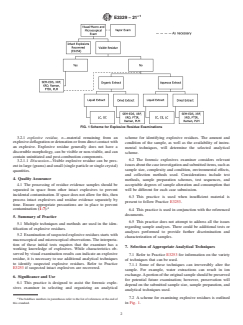
FIG. 1 Scheme for Explosive Residue Examinations
3.2.1 explosive residue, n—material remaining from an scheme for identifying explosive residues. The amount and
explosivedeflagrationordetonationorfromdirectcontactwith
condition of the sample, as well as the availability of instru-
an explosive. Explosive residue generally does not have a
mental techniques, will determine the selected analytical
discernible morphology, can be visible or non-visible, and can
scheme.
contain uninitiated and post-combustion components.
6.2 The forensic explosives examiner considers relevant
3.2.1.1 Discussion—Visible explosive residue can be pres-
issuesaboutthecaseinvestigationandsubmitteditems,suchas
ent in large (grams) and small (single particle or single crystal)
sample size, complexity and condition, environmental effects,
quantities.
and collection methods used. Considerations include test
4. Quality Assurance
methods, sample preparation schemes, test sequences, and
acceptable degrees of sample alteration and consumption that
4.1 The processing of residue evidence samples should be
separated in space from other intact explosives to prevent will be different for each case submission.
incidental contamination. If space does not allow for this, then
6.3 This practice is used when insufficient material is
process intact explosives and residue evidence separately by
present to follow Practice E3253.
time. Ensure appropriate precautions are in place to prevent
contamination (1-7).
6.4 This practice is used in conjunction with the referenced
documents.
5. Summary of Practice
6.5 This practice does not attempt to address all the issues
5.1 Multiple techniques and methods are used in the iden-
regarding sample analyses. There could be additional tests or
tification of explosive residues.
analyses performed to provide further discrimination and
5.2 Examination of suspected explosive residues starts with
characterization of samples.
macroscopical and microscopical observations. The interpreta-
tion of these initial tests requires that the examiner has a
7. Selection of Appropriate Analytical Techniques
working knowledge of explosives. While characteristics ob-
served by visual examination results can indicate an explosive
7.1 Refer to Practice E3253 for information on the variety
residue, it is necessary to use additional analytical techniques
of techniques that can be used.
to identify suspected explosive residues. Refer to Practice
7.1.1 Some of these techniques can irreversibly alter the
E3253 if suspected intact explosives are recovered.
sample. For example, water extractions can result in ion
exchange.Aportionoftheoriginalsampleshouldbepreserved
6. Significance and Use
for potential future examination; however, preservation will
6.1 This practice is designed to assist the forensic explo-
depend on the submitted sample size, sample preparation, and
sives examiner in selecting and organizing an analytical
analytical techniques used.
4 7.2 A scheme for examining explosive residues is outlined
The boldface numbers in parentheses refer to the list of references at the end of
this standard. in Fig. 1.
´1
E3329 − 21
7.2.1 Residue quantities greater than approximately 1 gram 8.2.1 Inorganic low explosives include commercially manu-
can be initially analyzed following Practice E3253, regardless factured products, such as black powder and black powder
ofwhetherthematerialisunexploded,initiated,oramixtureof substitutes, and solid oxidizer and fuel mixtures.
both. 8.2.2 Original components or reaction products of inorganic
low explosives are identified by a variety of techniques. For
7.2.2 If limited sample is available (less than approximately
1 gram), use an analytical scheme that yields the most identification requirements of original components refer to
Practice E3253.
information and consumes the least amount of sample. Fig. 1
does not imply that other examinations should be excluded or 8.2.2.1 If visible residues are present, note their physical
characteristics.
that the order of the procedures in the figure is predetermined.
8.2.2.2 If visible residues can be physically removed, ana-
7.3 Visual/Macro and Microscopical Exams:
lyze using one of the following: X-ray fluorescence (XRF),
7.3.1 Beginwithareviewoftheinformationsubmittedwith
scanning electron microscopy with energy dispersive spectros-
the evidence, including the condition of the packaging and
copy (SEM-EDS), or chemical spot test; and one of the
labeling, and document any potential for cross-contamination
following: X-ray diffraction (XRD), Fourier transform infrared
between samples.
spectroscopy (FTIR), Raman, or polarized light microscopy
7.3.1.1 Record any potential for cross-contamination or
(PLM).
discrepancies and take this into account in the final evaluation
8.2.2.3 If no visible residues are present, or if techniques
of the analytical data.
listed in 8.2.2.2 do not yield adequate results, analyze extracts
7.3.2 Conduct a visual and stereo microscopical assessment
(filtered or concentrated as needed) using ion chromatography
of each item, prior to (when the packaging permits), and after
(IC), capillary electrophoresis (CE), mass spectrometry (MS),
opening the evidence packaging. Provide a written description
gaschromatography(GC),orliquidchromatography(LC)with
of the general condition, size, shape, and color of each sample
appropriate confirmation techniques, if necessary. Extracts can
and photograph when possible.
also be dried and analyzed using one of the following: XRF,
7.3.2.1 This preliminary assessment provides information
SEM-EDS, or chemical spot test; and one of the following:
for the selection of an analytical scheme and can identify
XRD, FTIR, Raman, or PLM.
potentialcomplexitiesinthereviewofanalyticaldataobtained.
NOTE 2—Chemical spot tests are destructive and should only be
7.3.2.2 Prior to analysis, consider the potential effect on
conducted if sufficient residue material can be physically removed,
other examinations, such as trace, latent prints, and DNA
collected, and preserved for further analysis.
(8-10).
8.2.3 Black Powder:
7.3.2.3 If items are submitted in suitable containers (for
8.2.3.1 Black powder is composed of potassium nitrate,
example, paint cans, glass jars, or nylon bags), a vapor
sulfur and charcoal.
examination can be performed to identify certain organic
8.2.3.2 Reaction products of black powder can include
explosives prior to conducting a full visual assessment.
potassium sulfate, potassium carbonate, potassium sulfide,
(Warning—Performthisanalysisinatimelymannerasvapors
potassium thiocyanate, potassium bicarbonate, and potassium
can dissipate rapidly.)
nitrite.
7.3.2.4 Examine visible material to determine if it is visu-
8.2.4 Pyrodex:
ally similar to an explosive, related to an explosive, non-
8.2.4.1 Pyrodex is composed of potassium nitrate, potas-
explosive or reaction products of an explosive.
sium perchlorate, sulfur, sodium benzoate, cyanoguanidine,
7.3.2.5 Follow Practice E3253 for recovered explosive ma-
and charcoal.
terials with a discernible morphology or a quantity greater than
8.2.4.2 ReactionproductsofPyrodexcanincludepotassium
approximately 1 gram. Further residue analysis could still be
sulfate, potassium chloride, potassium carbonate, potassium
required for some materials.
sulfide, potassium thiocyanate, potassium bicarbonate, potas-
7.3.2.6 Utilize a solvent extraction scheme to isolate resi-
sium nitrite, and potassium chlorate.
duesofexplosives,explosivecomponentsorreactionproducts, 6
8.2.5 Triple Seven
if no visible material is observed or material cannot be
8.2.5.1 Triple Seven is composed of potassium nitrate,
physically removed (11-13).
potassium perchlorate, sodium benzoate, cyanoguanidine, so-
dium 3-nitrobenzoate and charcoal.
NOTE 1—The choice of solvent can be influenced by the damage to the
evidenceandotherinformationrelatedtothescene,whichcanindicatethe
8.2.5.2 Reaction products of Triple Seven can include po-
type of explosive involved.
tassium chloride, potassium carbonate, potassium bicarbonate,
potassium nitrite, and potassium chlorate.
8. Analytical Requirements for Identification
8.2.6 Ascorbic Acid-Based Black Powder Substitutes:
8.1 Analysisandidentificationrequirementsforresiduesare 8.2.6.1 The original components include ascorbic acid and
at least potassium nitrate or potassium perchlorate.
dependent on a variety of factors, such as the type of explosive
8.2.6.2 Reaction products can include potassium carbonate,
used, evidence collected, packaging, environmental conditions
(14-17), and instrumental techniques available. potassium chloride, potassium nitrite, potassium chlorate, and
8.1.1 Explosive residue analysis includes the identification
of original components or reaction products, or both (18).
Pyrodex is a trademark of Hodgdon Powder Company, Inc., Shawnee, KS.
8.2 Inorganic Low Explosives: Triple Seven is a trademark of Hodgdon Powder Company, Inc., Shawnee, KS.
----------------------
...