

ASTM F3256-23
(Guide)Standard Guide for Reporting and Recording of Near-Misses for Maritime Industry
General Information
- Abstract
SIGNIFICANCE AND USE
3.1 The objective of this guide is to provide near-miss reporting guidance for maritime vessels to promote standardization of near-miss reporting which will allow for better use of the data industrywide.
3.2 Importance of Near-Miss Reporting:
3.2.1 Most accidents/incidents are preceded by a chain of events, circumstances, acts, or conditions. If any of these events, circumstances, acts, or conditions had transpired another way, at another time, or had been corrected, the accident/incident may have been avoided. Reporting near-misses can play an important role in learning from mistakes, preventing accidents, and suffering from their serious consequences.
3.3 Near-miss reporting can provide information that can be used to improve most any safety system, often complementing other safety system components such as accident/incident investigations, hazard analyses, safety reporting, prioritizing, root cause analysis, solution identification, communication, identifying corrective actions, sharing lessons learned, leading safety indicator analyses, and safety culture enhancement. In addition, in terms of human life and property damage, near-misses are very low cost learning tools for training, prevention of re-occurrence, and a new data source on what may work to break the chain of events before an accident occurs. Finally, near-misses may provide key data that can prevent low probability-high consequence accidents by providing safer alternatives.
3.4 Barriers to Near-Miss Reporting:
3.4.1 It is generally agreed that effective near-miss reporting can reduce hazardous conditions and situations in the workplace, resulting in a reduction in accidents, or at least provide an opportunity for hazard identification and abatement. However, there remain significant challenges and obstacles to implementing near-miss recording/reporting systems. The barriers to near-miss recording/reporting can be related to the employees and management as well as outside influences. ...
SCOPE
1.1 This guide provides near-miss reporting criteria and terminology for maritime vessels.
1.2 The purpose of this near-miss reporting guide is to standardize near-miss reporting, including terminology, for the maritime industry.
1.3 The criteria contained within this guide should be applied as a minimum to all near-miss reporting in the maritime industry unless otherwise specified.
1.4 This guide is divided into the following sections and appendixes:
Table of Contents
Sections and Subsections
Title
1
Scope
2
Terminology
3
Significance and Use
4
Near-Miss Standardization
5
Procedure
6
Keywords
Appendix X1
Probability, Severity, and Risk Assessment
Appendix X2
Sample Near-Miss Reporting Form
1.5 This standard does not purport to address all of the safety concerns, if any, associated with its use. It is the responsibility of the user of this standard to establish appropriate safety, health, and environmental practices and determine the applicability of regulatory limitations prior to use.
1.6 This international standard was developed in accordance with internationally recognized principles on standardization established in the Decision on Principles for the Development of International Standards, Guides and Recommendations issued by the World Trade Organization Technical Barriers to Trade (TBT) Committee.
- Status
- Published
- Publication Date
- 31-Dec-2022
- Technical Committee
- F25 - Ships and Marine Technology
- Drafting Committee
- F25.07 - General Requirements
Overview
ASTM F3256-23: Standard Guide for Reporting and Recording of Near-Misses for Maritime Industry provides a comprehensive framework for standardizing near-miss reporting aboard maritime vessels. Developed by ASTM International, this guide aims to enhance safety management in the maritime sector by defining consistent criteria and terminology for the collection, analysis, and sharing of near-miss data across the industry. Effective near-miss reporting helps prevent accidents, supports hazard identification, encourages corrective actions, and strengthens safety culture throughout maritime organizations.
Key Topics
Definition and Importance of Near-Miss Reporting
- Near-miss reporting involves identifying, recording, and analyzing events or conditions that could have resulted in loss or injury but did not. This process enables maritime companies to learn from potentially hazardous situations and prevent future accidents.
- Most incidents are preceded by a chain of events, often detectable through diligent near-miss reporting.
- Near-miss data provides valuable insights to improve and supplement existing safety systems such as root cause analysis, hazard assessment, and corrective action planning.
Standardized Procedures
- The standard details essential report fields for both initial reporters and investigators, ensuring consistency in the information gathered.
- Recommends the use of risk assessment matrices to evaluate the potential severity and probability of near-miss events.
- Emphasizes streamlined and accessible reporting forms, minimizing paperwork and enabling timely submission and review.
Overcoming Barriers
- Identifies common hurdles faced in near-miss reporting, such as lack of training, fear of reprisal, insufficient management support, or complexity of reporting forms.
- Encourages a no-blame culture and the availability of confidential or anonymous reporting options to foster more open participation.
- Highlights management responsibility in supporting, resourcing, and communicating around near-miss programs.
Criteria and Minimum Reporting Requirements
- Specifies a minimum set of data fields required for effective trend analysis and industry-wide benchmarking, such as details on personnel, equipment, incident description, location, contributing factors, corrective actions, and lessons learned.
- Advocates for data normalization (e.g., near-miss frequency per hours worked) to support accurate comparisons and trend identification across vessels and fleets.
Applications
Safety Management and Accident Prevention
- Enables maritime organizations to identify trends, root causes, and vulnerabilities before they lead to incidents.
- Provides actionable data for implementing corrective actions and continuous improvement in safety management systems.
Regulatory and Corporate Compliance
- Helps organizations meet international and company-specific safety management requirements, such as those of the International Safety Management (ISM) Code.
- Facilitates communication with regulatory bodies and insurers by providing standardized, reliable near-miss data.
Training and Culture Enhancement
- Supports risk-based training for crew and shore-based staff by using real near-miss data as learning tools.
- Fosters a proactive safety culture focused on prevention, reporting, and shared responsibility.
Benchmarking and Performance Assessment
- Allows comparison of near-miss frequency rates across vessels, operations, and companies for industry benchmarking.
- Assists in assessing the effectiveness of existing safety systems and identifying areas for improvement.
Related Standards
- ASTM F2039 - Guide for Basic Elements of Shipboard Occupational Health and Safety Program
- International Maritime Organization (IMO) - Guidance on Near-Miss Reporting, ISM Code
- MIL-STD-882E - Practice for System Safety
- Oil Companies International Marine Forum (OCIMF) - Marine Injury Reporting Guidelines
Other useful resources include best practice reports and guidance notes from the American Bureau of Shipping, U.S. Navy, and various academic literature on safety culture and reporting practices in hazardous industries.
Keywords: near-miss reporting, maritime safety, incident prevention, root cause analysis, ship safety culture, hazard identification, ASTM F3256-23, safety management, near-miss frequency, corrective action, lessons learned.
Get Certified
Connect with accredited certification bodies for this standard

DNV
DNV is an independent assurance and risk management provider.

Lloyd's Register
Lloyd's Register is a global professional services organisation specialising in engineering and technology.

FSC International
Forest Stewardship Council certification.
Sponsored listings
Frequently Asked Questions
ASTM F3256-23 is a guide published by ASTM International. Its full title is "Standard Guide for Reporting and Recording of Near-Misses for Maritime Industry". This standard covers: SIGNIFICANCE AND USE 3.1 The objective of this guide is to provide near-miss reporting guidance for maritime vessels to promote standardization of near-miss reporting which will allow for better use of the data industrywide. 3.2 Importance of Near-Miss Reporting: 3.2.1 Most accidents/incidents are preceded by a chain of events, circumstances, acts, or conditions. If any of these events, circumstances, acts, or conditions had transpired another way, at another time, or had been corrected, the accident/incident may have been avoided. Reporting near-misses can play an important role in learning from mistakes, preventing accidents, and suffering from their serious consequences. 3.3 Near-miss reporting can provide information that can be used to improve most any safety system, often complementing other safety system components such as accident/incident investigations, hazard analyses, safety reporting, prioritizing, root cause analysis, solution identification, communication, identifying corrective actions, sharing lessons learned, leading safety indicator analyses, and safety culture enhancement. In addition, in terms of human life and property damage, near-misses are very low cost learning tools for training, prevention of re-occurrence, and a new data source on what may work to break the chain of events before an accident occurs. Finally, near-misses may provide key data that can prevent low probability-high consequence accidents by providing safer alternatives. 3.4 Barriers to Near-Miss Reporting: 3.4.1 It is generally agreed that effective near-miss reporting can reduce hazardous conditions and situations in the workplace, resulting in a reduction in accidents, or at least provide an opportunity for hazard identification and abatement. However, there remain significant challenges and obstacles to implementing near-miss recording/reporting systems. The barriers to near-miss recording/reporting can be related to the employees and management as well as outside influences. ... SCOPE 1.1 This guide provides near-miss reporting criteria and terminology for maritime vessels. 1.2 The purpose of this near-miss reporting guide is to standardize near-miss reporting, including terminology, for the maritime industry. 1.3 The criteria contained within this guide should be applied as a minimum to all near-miss reporting in the maritime industry unless otherwise specified. 1.4 This guide is divided into the following sections and appendixes: Table of Contents Sections and Subsections Title 1 Scope 2 Terminology 3 Significance and Use 4 Near-Miss Standardization 5 Procedure 6 Keywords Appendix X1 Probability, Severity, and Risk Assessment Appendix X2 Sample Near-Miss Reporting Form 1.5 This standard does not purport to address all of the safety concerns, if any, associated with its use. It is the responsibility of the user of this standard to establish appropriate safety, health, and environmental practices and determine the applicability of regulatory limitations prior to use. 1.6 This international standard was developed in accordance with internationally recognized principles on standardization established in the Decision on Principles for the Development of International Standards, Guides and Recommendations issued by the World Trade Organization Technical Barriers to Trade (TBT) Committee.
SIGNIFICANCE AND USE 3.1 The objective of this guide is to provide near-miss reporting guidance for maritime vessels to promote standardization of near-miss reporting which will allow for better use of the data industrywide. 3.2 Importance of Near-Miss Reporting: 3.2.1 Most accidents/incidents are preceded by a chain of events, circumstances, acts, or conditions. If any of these events, circumstances, acts, or conditions had transpired another way, at another time, or had been corrected, the accident/incident may have been avoided. Reporting near-misses can play an important role in learning from mistakes, preventing accidents, and suffering from their serious consequences. 3.3 Near-miss reporting can provide information that can be used to improve most any safety system, often complementing other safety system components such as accident/incident investigations, hazard analyses, safety reporting, prioritizing, root cause analysis, solution identification, communication, identifying corrective actions, sharing lessons learned, leading safety indicator analyses, and safety culture enhancement. In addition, in terms of human life and property damage, near-misses are very low cost learning tools for training, prevention of re-occurrence, and a new data source on what may work to break the chain of events before an accident occurs. Finally, near-misses may provide key data that can prevent low probability-high consequence accidents by providing safer alternatives. 3.4 Barriers to Near-Miss Reporting: 3.4.1 It is generally agreed that effective near-miss reporting can reduce hazardous conditions and situations in the workplace, resulting in a reduction in accidents, or at least provide an opportunity for hazard identification and abatement. However, there remain significant challenges and obstacles to implementing near-miss recording/reporting systems. The barriers to near-miss recording/reporting can be related to the employees and management as well as outside influences. ... SCOPE 1.1 This guide provides near-miss reporting criteria and terminology for maritime vessels. 1.2 The purpose of this near-miss reporting guide is to standardize near-miss reporting, including terminology, for the maritime industry. 1.3 The criteria contained within this guide should be applied as a minimum to all near-miss reporting in the maritime industry unless otherwise specified. 1.4 This guide is divided into the following sections and appendixes: Table of Contents Sections and Subsections Title 1 Scope 2 Terminology 3 Significance and Use 4 Near-Miss Standardization 5 Procedure 6 Keywords Appendix X1 Probability, Severity, and Risk Assessment Appendix X2 Sample Near-Miss Reporting Form 1.5 This standard does not purport to address all of the safety concerns, if any, associated with its use. It is the responsibility of the user of this standard to establish appropriate safety, health, and environmental practices and determine the applicability of regulatory limitations prior to use. 1.6 This international standard was developed in accordance with internationally recognized principles on standardization established in the Decision on Principles for the Development of International Standards, Guides and Recommendations issued by the World Trade Organization Technical Barriers to Trade (TBT) Committee.
ASTM F3256-23 is classified under the following ICS (International Classification for Standards) categories: 47.020.01 - General standards related to shipbuilding and marine structures. The ICS classification helps identify the subject area and facilitates finding related standards.
ASTM F3256-23 is available in PDF format for immediate download after purchase. The document can be added to your cart and obtained through the secure checkout process. Digital delivery ensures instant access to the complete standard document.
Standards Content (Sample)
This international standard was developed in accordance with internationally recognized principles on standardization established in the Decision on Principles for the
Development of International Standards, Guides and Recommendations issued by the World Trade Organization Technical Barriers to Trade (TBT) Committee.
Designation: F3256 − 23 An American National Standard
Standard Guide for
Reporting and Recording of Near-Misses for Maritime
Industry
This standard is issued under the fixed designation F3256; the number immediately following the designation indicates the year of
original adoption or, in the case of revision, the year of last revision. A number in parentheses indicates the year of last reapproval. A
superscript epsilon (´) indicates an editorial change since the last revision or reapproval.
1. Scope fatality, property loss, environmental impact, business loss,
etc., or a combination of these.
1.1 This guide provides near-miss reporting criteria and
terminology for maritime vessels. 2.1.2 activity/task, n—an action or job that was being
performed during the time of the near-miss, unsafe act/
1.2 The purpose of this near-miss reporting guide is to
behavior, or hazardous/unsafe condition.
standardize near-miss reporting, including terminology, for the
maritime industry. 2.1.3 causal factor, n—a structural/machinery/equipment/
outfitting problem, human factors, or external factors that
1.3 The criteria contained within this guide should be
contributed to an incident, allowed an incident to occur, or
applied as a minimum to all near-miss reporting in the
allowed the consequences of the incident to be worse than they
maritime industry unless otherwise specified.
might have been.
1.4 This guide is divided into the following sections and
2.1.4 consequences, n—the undesirable or unexpected out-
appendixes:
comes that may result in negative effects for an organization.
Table of Contents
These outcomes can range from minor injuries to major events
Sections and Title
involving loss of life, extensive property loss, environmental
Subsections
1 Scope
damage, and breaches related to security.
2 Terminology
3 Significance and Use 2.1.5 corrective actions, n—improvements to an organiza-
4 Near-Miss Standardization
tion’s processes taken to eliminate causes of hazards, non-
5 Procedure
conformities, or other undesirable situations.
6 Keywords
Appendix X1 Probability, Severity, and Risk Assessment
2.1.6 event, n—a happening caused by humans, automati-
Appendix X2 Sample Near-Miss Reporting Form
cally operating equipment/components, external events or the
1.5 This standard does not purport to address all of the
result of a natural phenomenon.
safety concerns, if any, associated with its use. It is the
2.1.6.1 Discussion—Eventdescriptionstypicallyincludeac-
responsibility of the user of this standard to establish appro-
tion verbs such as walked, turned, opened, said, radioed,
priate safety, health, and environmental practices and deter-
discovered, decided, saw, etc. If negative (an error, failure or
mine the applicability of regulatory limitations prior to use.
external factor), then the event may also be a causal factor,
1.6 This international standard was developed in accor-
intermediate cause, or root cause.
dance with internationally recognized principles on standard-
2.1.7 external factors, n—issues outside the control of the
ization established in the Decision on Principles for the
organization. Examples include uncharted/unknown hazards to
Development of International Standards, Guides and Recom-
navigation, some sea or weather conditions, suicides or
mendations issued by the World Trade Organization Technical
homicides, and external events.
Barriers to Trade (TBT) Committee.
2.1.8 hazard, n—a condition with the potential to cause
2. Terminology
injury, illness, or death of personnel; damage to or loss of
2.1 Definitions of Terms Specific to This Standard:
equipment or property; or degradation of voyage/activity/task
2.1.1 accident, n—an incident with unexpected or undesir-
capabilities.
able consequences that may be related to personnel injury or
2.1.9 hazardous/unsafe condition, n—any condition that
may adversely affect the safety of any seafarer, equipment,
This guide is under the jurisdiction of ASTM Committee F25 on Ships and
vessel, bridge, structure, or shore area or the environmental
Marine Technology and is the direct responsibility of Subcommittee F25.07 on
General Requirements. quality of any port, harbor, or navigable waterway.
Current edition approved Jan. 1, 2023. Published January 2023. Originally
2.1.10 human errors, n—performance of humans that devi-
approved in 2017. Last previous edition approved in 2017 as F3256 – 17. DOI:
10.1520/F3256-23. ates from the desired performance.
Copyright © ASTM International, 100 Barr Harbor Drive, PO Box C700, West Conshohocken, PA 19428-2959. United States
F3256 − 23
2.1.11 incident, n—an unplanned sequence of events or of an incident. Organizational culture issues, which are deeper
conditions, or both, that results in, or could have reasonably than root causes, could also be identified and addressed.
resulted in, a loss event.
2.1.25 root cause analysis (RCA), n—an analysis by a
person(s), appropriately trained in RCA, that identifies the
2.1.12 incident category, n—for near-miss reporting the
causal factors, intermediate causes, and root causes of an
typical categories are near-miss, unsafe act/behavior, or
incident and develops recommendations to address each level
hazardous/unsafe condition.
of the analysis.
2.1.13 incident type, n—for near-miss reporting, the typical
2.1.26 safeguard, n—a physical, procedural or administra-
types are near struck near struck by, near struck against, near
tive control that prevents or mitigates consequences associated
trapped in, near slip, near trip, near fall (same level or different
with an incident.
level),nearfire,nearspill,nearstrain/overexertion,nearcaught
between, near contacted by, near contacted with, near
2.1.27 unsafe act/behavior, n—any act/behavior of a seafar-
exposure, etc.
er(s) that may adversely affect the safety of any seafarer, the
vessel, the bridge, any structure, shore area, or the environ-
2.1.14 injury, n—damage or harm caused to the structure or
mental quality of any port, harbor, or navigable waterway.
function of the human body as a result of an outside physical
agent or force.
2.2 Acronyms:
2.2.1 IMO—International Maritime Organization
2.1.15 intermediate causes, n—an underlying reason why a
causal factor occurred, but it is not deep enough to be a root
2.2.2 ISM—International Safety Management
cause.
3. Significance and Use
2.1.15.1 Discussion—Intermediate causes are underlying
3.1 The objective of this guide is to provide near-miss
causes that link causal factors and items-of-note to root causes.
reporting guidance for maritime vessels to promote standard-
2.1.16 lagging indicator, n—measure of a company’s safety
izationofnear-missreportingwhichwillallowforbetteruseof
performance in the form of past incident/accident statistics.
the data industrywide.
2.1.17 leading indicator, n—a measure preceding or indicat-
3.2 Importance of Near-Miss Reporting:
ing a future event used to drive and measure activities carried
3.2.1 Most accidents/incidents are preceded by a chain of
out to prevent and control incidents/accidents.
events, circumstances, acts, or conditions. If any of these
2.1.18 lessons learned, n—information gained and shared
events, circumstances, acts, or conditions had transpired an-
through the study of incidents that serves to help prevent those
other way, at another time, or had been corrected, the accident/
incidents from occurring in the future.
incident may have been avoided. Reporting near-misses can
play an important role in learning from mistakes, preventing
2.1.19 loss, n—human injury, environmental damage, or
accidents, and suffering from their serious consequences.
negative business impact (for example, repair or replacement
costs, schedule delays, contract violations, loss of reputation,
3.3 Near-miss reporting can provide information that can be
etc.).
used to improve most any safety system, often complementing
other safety system components such as accident/incident
2.1.20 loss event, n—undesirable consequences resulting
investigations, hazard analyses, safety reporting, prioritizing,
from events or conditions or a combination of these.
root cause analysis, solution identification, communication,
2.1.21 management system, n—– a methodology devised
identifying corrective actions, sharing lessons learned, leading
and put in place by management to encourage desirable
safety indicator analyses, and safety culture enhancement. In
behaviors and discourage undesirable behaviors.
addition, in terms of human life and property damage, near-
2.1.22 near-miss, n—a near-miss is a non-loss sequence of
misses are very low cost learning tools for training, prevention
events or conditions/acts, or both, that could have resulted in a
of re-occurrence, and a new data source on what may work to
loss, or in an outcome with more severe consequences than
break the chain of events before an accident occurs. Finally,
actually occurred. This loss was prevented only by a fortuitous
near-misses may provide key data that can prevent low
or intentional break in the chain of events or conditions/acts, or
probability-high consequence accidents by providing safer
both. The potential loss could result from human injury,
alternatives.
environmental damage, or negative business impact (for
3.4 Barriers to Near-Miss Reporting:
example, repair or replacement costs, scheduling delays, con-
3.4.1 Itisgenerallyagreedthateffectivenear-missreporting
tract violations, loss of reputation, etc.).
can reduce hazardous conditions and situations in the
2.1.23 near-miss frequency (NMF), n—the total number of
workplace, resulting in a reduction in accidents, or at least
near-miss cases multiplied by 200 000 (or 1 million), divided
provideanopportunityforhazardidentificationandabatement.
by the number of exposure (working) hours over the past year.
However, there remain significant challenges and obstacles to
2.1.24 root cause, n—deficiency of a management system implementing near-miss recording/reporting systems. The bar-
component that allowed the causal factors to occur or exist. riers to near-miss recording/reporting can be related to the
Root causes must be within the control of management to employees and management as well as outside influences. The
address. For a typical causal factor, there are one to four root barriers to near-miss recording/reporting can lead to underre-
causes. Root causes are usually as deep as a typical root cause porting in the maritime industry. Common near-miss reporting
analysis will go in attempting to identify the underlying causes barriers include, but are not limited to:
F3256 − 23
• Employees lack adequate near-miss training. Employ- the fact that there exists varying definitions of what constitutes
ees must be trained to report near-misses, how to report a near-miss and various interpretations within companies of
near-misses, what constitutes a near-miss, and the benefits of their own definition.
near-miss reporting. 4.2.3 Basedonanalysesofover100000maritimenear-miss
• Employees not being fully engaged in the development reports, approximately 75 % of the reported near-misses are
and operation of near-miss reporting. Employees should be related to hazardous/unsafe conditions and unsafe acts and
involved in the development and implementation of near-miss approximately25%arerelatedtoanon-lossincident.Areview
reporting. of near-miss reporting practices and literature suggests that a
• Employees feel their near-miss reports are not being majority of maritime companies do capture hazardous/unsafe
followed up on. If the reports are not actively followed up on conditionsandunsafeactsintheirnear-missreports,regardless
and there is not clear communication between ship and shore, of their near-miss definition.
near-miss reporting efforts will fail. 4.2.4 Near-miss reports across the maritime industry vary in
• Employees fear some type of reprimand or discipline. their data collection fields. This also creates a challenge for
Employees must not fear any disciplinary action, peer teasing, industry-wide trending and benchmarking.
or supervisory belittling. A means of anonymous or confiden- 4.2.5 While most maritime companies that are recording/
tial reporting should exist and a positive, no-blame near-miss reporting near-misses use computer technology to capture
reporting culture needs to be nurtured. near-misses, some still use paper. One of the challenges in the
• Employee lack adequate motivation to report near- maritimeindustryispaperworkload.Thecomputertechnology
misses or even disincentives. Participation in near-miss report- used varies widely. Computer technology is preferred.
ing cuts across all levels of an organization and management 4.2.6 Some maritime companies require near-miss quotas,
must fully support near-miss reporting through their words, while others do not. If seafarers are expected to complete a
actions, and support. minimum number of near-miss reports in a given time,
• Managementnotprovidingunwaveringsupporttonear- processes should be in place that prevent erroneous near-miss
miss reporting. This includes providing adequate time for the reporting.
employee to complete the near-miss report. Additionally, this 4.2.7 Some maritime companies normalize their near-miss
includesanyfinancialsupportorsupportfromexternalexperts, data based on exposure (for example, hours worked), while
if necessary to correct potentially hazardous conditions. Man- others do not. It is best practice to normalize near-miss data.
agement commitment to safety has a positive effect on Refer to 5.10.
reporting, while underreporting has been linked to lack of
5. Procedure
management commitment to safety.
• Near-miss reporting is viewed as overly time consum-
5.1 Near-Miss Definition:
ing.Near-missreportingformsmustbestreamlinedtobeeasily
5.1.1 Maritime companies should have a clear definition of
completed, easily available, easily submitted, easily reviewed,
what constitutes a near-miss.Adefinition is provided in 2.1.22.
and lessons learned easily disseminated.
5.2 Maritime companies should provide adequate near-miss
• Management may fear legal liability or recrimination.
reportingtraining.Minimally,thistrainingshouldincludewhat
When deciding to formalize a near-miss reporting system,
constitutes a near-miss, how to report near-misses, and the
organizations have both legitimate and unsubstantiated fears of
benefits of near-miss reporting.
liability and recrimination. Regardless, if legislators, enforce-
5.3 Maritime companies should involve their employees in
ment agencies, and the legal community give companies
the development, updating, improving, and implementation of
legitimate fear of liability based on their near-miss reporting or
their near-miss reporting program.
the fear is unfounded, the result most likely will be the same;
companies will not report near-misses. Near-miss reporting
5.4 Maritime companies should have and follow a policy of
must be viewed by all stakeholders (companies, legislators,
actively and promptly following up on near-miss reports,
enforcement agencies, and the legal system) as one of the most
communicating any corrective actions and lessons learned to
effective ways to identify hazards and reduce accidents/
their vessels, and throughout their fleet when necessary, and
incidents and not used for recrimination of any type.
have clear and unambiguous communication between ship and
shore.
4. Near-Miss Standardization
5.5 Employees should not fear any disciplinary action, peer
4.1 The maritime industry does not have a standardized
teasing, or supervisory belittling. A means of anonymous or
definition of a near-miss or near-miss reporting methodology,
confidential near-miss reporting should exist and a positive,
therefore providing industry-wide lessons learned, trending,
no-blame near-miss reporting culture should exist.
and benchmarking proves to be challenging.
5.6 Employees should be motivated and supported to prop-
4.2 Near-Miss Reporting in Current Practice:
erly and promptly complete near-miss reports. This support
4.2.1 Studies of maritime companies show a wide-range of should include training and time to complete the near-miss
near-miss reporting system maturity ranging from no system to
reports and should not have any disincentives. Participation in
systems being in place for over 10 years. near-missreportingcutsacrossalllevelsofanorganizationand
4.2.2 Studies of maritime companies’ near-miss reporting management should fully support near-miss reporting through
programs and other guidance on near-miss reporting highlight their words, actions, and support.
F3256 − 23
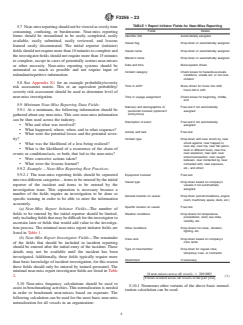
TABLE 1 Report Initiator Fields for Near-Miss Reporting
5.7 Near-missreportingshouldnotbeviewedasoverlytime
consuming, confusing, or burdensome. Near-miss reporting Fields Details
Identifier (ID) Automatically assigned
forms should be streamlined to be easily completed, easily
available, easily submitted, easily reviewed, and lessons
Vessel flag Drop down or automatically assigned
learned easily disseminated. The initial reporter (initiator)
Vessel name Drop down or automatically assigned
fields should not require more than 10 minutes to complete and
the investigator fields should not require more than 15 minutes
Master’s name Drop down or automatically assigned
to complete, except in cases of potentially serious near-misses
Date and time Menu/system driven
or other necessity. Near-miss reporting systems should be
automated as much as possible and not require input of
Incident category Check boxes for hazardous/unsafe
redundant/repetitive information. conditions, unsafe act, or non-loss
incident
5.8 See Appendix X1 for an example probability/severity
Time in shift? Menu driven for hours into shift;
risk assessment matrix. This or an equivalent probability/
hours left in shift
severity risk assessment should be used to determine level of
Time in voyage assignment Check boxes for beginning, middle,
near-miss investigation.
end
5.9 Minimum Near-Miss Reporting Data Fields:
Name(s) and demographics of Free text if not automatically
5.9.1 At a minimum, the following information should be
personnel involved (optional if assigned
anonymous)
gathered about any near-miss. This core near-miss information
can be then used across the industry.
Description of event Free text if
...
This document is not an ASTM standard and is intended only to provide the user of an ASTM standard an indication of what changes have been made to the previous version. Because
it may not be technically possible to adequately depict all changes accurately, ASTM recommends that users consult prior editions as appropriate. In all cases only the current version
of the standard as published by ASTM is to be considered the official document.
Designation: F3256 − 17 F3256 − 23 An American National Standard
Standard Guide for
Reporting and Recording of Near-Misses for Maritime
Industry
This standard is issued under the fixed designation F3256; the number immediately following the designation indicates the year of
original adoption or, in the case of revision, the year of last revision. A number in parentheses indicates the year of last reapproval. A
superscript epsilon (´) indicates an editorial change since the last revision or reapproval.
1. Scope
1.1 This guide provides near-miss reporting criteria and terminology for maritime vessels.
1.2 The purpose of this near-miss reporting guide is to standardize near-miss reporting, including terminology, for the maritime
industry.
1.3 The criteria contained within this guide should be applied as a minimum to all near-miss reporting in the maritime industry
unless otherwise specified.
1.4 This guide is divided into the following sections and appendixes:
Table of Contents
Sections and Subsections Title
1 Scope
2 Terminology
3 Significance and Use
4 Near-Miss Standardization
5 Procedure
6 Keywords
Appendix X1 Probability, Severity, and Risk Assessment
Appendix X2 Sample Near-Miss Reporting Form
1.5 This standard does not purport to address all of the safety concerns, if any, associated with its use. It is the responsibility
of the user of this standard to establish appropriate safety, health, and environmental practices and determine the applicability of
regulatory limitations prior to use.
1.6 This international standard was developed in accordance with internationally recognized principles on standardization
established in the Decision on Principles for the Development of International Standards, Guides and Recommendations issued
by the World Trade Organization Technical Barriers to Trade (TBT) Committee.
2. Terminology
2.1 Definitions of Terms Specific to This Standard:
2.1.1 accident, n—an incident with unexpected or undesirable consequences that may be related to personnel injury or fatality,
property loss, environmental impact, business loss, etc., or a combination of these.
This guide is under the jurisdiction of ASTM Committee F25 on Ships and Marine Technology and is the direct responsibility of Subcommittee F25.07 on General
Requirements.
Current edition approved May 1, 2017Jan. 1, 2023. Published July 2017January 2023. Originally approved in 2017. Last previous edition approved in 2017 as F3256 – 17.
DOI: 10.1520/F3256-17.10.1520/F3256-23.
Copyright © ASTM International, 100 Barr Harbor Drive, PO Box C700, West Conshohocken, PA 19428-2959. United States
F3256 − 23
2.1.2 activity/task, n—an action or job that was being performed during the time of the near-miss, unsafe act/behavior, or
hazardous/unsafe condition.
2.1.3 causal factor, n—a structural/machinery/equipment/outfitting problem, human factors, or external factors that contributed to
an incident, allowed an incident to occur, or allowed the consequences of the incident to be worse than they might have been.
2.1.4 consequences, n—the undesirable or unexpected outcomes that may result in negative effects for an organization. These
outcomes can range from minor injuries to major events involving loss of life, extensive property loss, environmental damage, and
breaches related to security.
2.1.5 corrective actions, n—improvements to an organization’s processes taken to eliminate causes of hazards, non-conformities,
or other undesirable situations.
2.1.6 event, n—a happening caused by humans, automatically operating equipment/components, external events or the result of
a natural phenomenon.
2.1.6.1 Discussion—
Event descriptions typically include action verbs such as walked, turned, opened, said, radioed, discovered, decided, saw, etc. If
negative (an error, failure or external factor), then the event may also be a causal factor, intermediate cause, or root cause.
2.1.7 external factors, n—issues outside the control of the organization. Examples include uncharted/unknown hazards to
navigation, some sea or weather conditions, suicides or homicides, and external events.
2.1.8 hazard, n—a condition with the potential to cause injury, illness, or death of personnel; damage to or loss of equipment or
property; or degradation of voyage/activity/task degradation.capabilities.
2.1.9 hazardous/unsafe condition, n—any condition that may adversely affect the safety of any seafarer, equipment, vessel, bridge,
structure, or shore area or the environmental quality of any port, harbor, or navigable waterway.
2.1.10 human errors, n—performance of humans that deviates from the desired performance.
2.1.11 incident, n—an unplanned sequence of events or conditions, or both, that results in, or could have reasonably resulted in,
a loss event.
2.1.12 incident category, n—for near-miss reporting the typical categories are near-miss, unsafe act/behavior, or hazardous/unsafe
condition.
2.1.13 incident type, n—for near-miss reporting, the typical types are near struck near struck by, near struck against, near trapped
in, near slip, near trip, near fall (same level or different level), near fire, near spill, near strain/overexertion, near caught between,
near contacted by, near contacted with, near exposure, etc.
2.1.14 injury, n—damage or harm caused to the structure or function of the human body as a result of an outside physical agent
or force.
2.1.15 intermediate causes, n—an underlying reason why a causal factor occurred, but it is not deep enough to be a root cause.
2.1.15.1 Discussion—
Intermediate causes are underlying causes that link causal factors and items-of-note to root causes.
2.1.16 lagging indicator, n—measure of a company’s safety performance in the form of past incident/accident statistics.
2.1.17 lessons learned, n—information gained and shared through the study of incidents that serves to help prevent those incidents
from occurring in the future.
F3256 − 23
2.1.17 leading indicator, n—a measure preceding or indicating a future event used to drive and measure activities carried out to
prevent and control incidents/accidents.
2.1.18 lessons learned, n—information gained and shared through the study of incidents that serves to help prevent those incidents
from occurring in the future.
2.1.19 loss, n—human injury, environmental damage, or negative business impact (for example, repair or replacement costs,
schedule delays, contract violations, loss of reputation, etc.).
2.1.20 loss event, n—undesirable consequences resulting from events or conditions or a combination of these.
2.1.21 management system, n—– a methodology devised and put in place by management to encourage desirable behaviors and
discourage undesirable behaviors.
2.1.22 near-miss, n—a near-miss is a non-loss sequence of events and/or conditions/acts or conditions/acts, or both, that could
have resulted in a loss, or in an outcome with more severe consequences than actually occurred. This loss was prevented only by
a fortuitous or intentional break in the chain of events or conditions/acts, or both. The potential loss could result from human injury,
environmental damage, or negative business impact (for example, repair or replacement costs, scheduling delays, contract
violations, loss of reputation, etc.).
2.1.23 near-miss frequency (NMF), n—the total number of near-miss cases multiplied by 200 000 (or 1 million), divided by the
number of exposure (working) hours over the past year.
2.1.24 root cause, n—deficiency of a management system component that allowed the causal factors to occur or exist. Root causes
must be within the control of management to address. For a typical causal factor, there are one to four root causes. Root causes
are usually as deep as a typical root cause analysis will go in attempting to identify the underlying causes of an incident.
Organizational culture issues, which are deeper than root causes, could also be identified and addressed.
2.1.25 root cause analysis (RCA), n—an analysis by a person(s), appropriately trained in RCA, that identifies the causal factors,
intermediate causes, and root causes of an incident and develops recommendations to address each level of the analysis.
2.1.26 safeguard, n—a physical, procedural or administrative control that prevents or mitigates consequences associated with an
incident.
2.1.27 unsafe act/behavior, n—any act/behavior of a seafarer(s) that may adversely affect the safety of any seafarer, the vessel, the
bridge, any structure, shore area, or the environmental quality of any port, harbor, or navigable waterway.
2.2 Acronyms:
2.2.1 IMO—International Maritime Organization
2.2.2 ISM—International Safety Management
3. Significance and Use
3.1 The objective of this guide is to provide near-miss reporting guidance for maritime vessels to promote standardization of
near-miss reporting which will allow for better use of the data industrywide.
3.2 Importance of Near-Miss Reporting:
3.2.1 Most accidents/incidents are preceded by a chain of events, circumstances, acts, or conditions. If any of these events,
circumstances, acts, or conditions had transpired another way, at another time, or had been corrected, the accident/incident may
have been avoided. Reporting near-misses can play an important role in learning from mistakes, preventing accidents, and suffering
from their serious consequences.
F3256 − 23
3.3 Near-miss reporting can provide information that can be used to improve most any safety system, often complementing other
safety system components such as accident/incident investigations, hazard analyses, safety reporting, prioritizing, root cause
analysis, solution identification, communication, identifying corrective actions, sharing lessons learned, leading safety indicator
analyses, and safety culture enhancement. In addition, in terms of human life and property damage, near-misses are very low cost
learning tools for training, prevention of re-occurrence, and a new data source on what may work to break the chain of events
before an accident occurs. Finally, near-misses may provide key data that can prevent low probability-high consequence accidents
by providing safer alternatives.
3.4 Barriers to Near-Miss Reporting:
3.4.1 It is generally agreed that effective near-miss reporting can reduce hazardous conditions and situations in the workplace,
resulting in a reduction in accidents, or at least provide an opportunity for hazard identification and abatement. However, there
remain significant challenges and obstacles to implementing near-miss recording/reporting systems. The barriers to near-miss
recording/reporting can be related to the employees and management as well as outside influences. The barriers to near-miss
recording/reporting can lead to underreporting in the maritime industry. Common near-miss reporting barriers include, but are not
limited to:
• Employees lack adequate near-miss training. Employees must be trained to report near-misses, how to report near-misses,
what constitutes a near-miss, and the benefits of near-miss reporting.
• Employees not being fully engaged in the development and operation of near-miss reporting. Employees should be involved
in the development and implementation of near-miss reporting.
• Employees feel their near-miss reports are not being followed up on. If the reports are not actively followed up on and there
is not clear communication between ship and shore, near-miss reporting efforts will fail.
• Employees fear some type of reprimand or discipline. Employees must not fear any disciplinary action, peer teasing, or
supervisory belittling. A means of anonymous or confidential reporting should exist and a positive, no-blame near-miss reporting
culture needs to be nurtured.
• Employee lack adequate motivation to report near-misses or even disincentives. Participation in near-miss reporting cuts
across all levels of an organization and management must fully support near-miss reporting through their words, actions, and
support.
• Management not providing unwavering support to near-miss reporting. This includes providing adequate time for the
employee to complete the near-miss report. Additionally, this includes any financial support or support from external experts, if
necessary to correct potentially hazardous conditions. Management commitment to safety has a positive effect on reporting, while
underreporting has been linked to lack of management commitment to safety.
• Near-miss reporting is viewed as overly time consuming. Near-miss reporting forms must be streamlined to be easily
completed, easily available, easily submitted, easily reviewed, and lessons learned easily disseminated.
• Management may fear legal liability or recrimination. When deciding to formalize a near-miss reporting system,
organizations have both legitimate and unsubstantiated fears of liability and recrimination. Regardless, if legislators, enforcement
agencies, and the legal community give companies legitimate fear of liability based on their near-miss reporting or the fear is
unfounded, the result most likely will be the same; companies will not report near-misses. Near-miss reporting must be viewed
by all stakeholders (companies, legislators, enforcement agencies, and the legal system) as one of the most effective ways to
identify hazards and reduce accidents/incidents and not used for recrimination of any type.
4. Near-Miss Standardization
4.1 The maritime industry does not have a standardized definition of a near-miss or near-miss reporting methodology, therefore
providing industry-wide lessons learned, trending, and benchmarking proves to be challenging.
4.2 Near-Miss Reporting in Current Practice:
4.2.1 Studies of maritime companies show a wide-range of near-miss reporting system maturity ranging from no system to systems
being in place for over 10 years.
4.2.2 Studies of maritime companies’ near-miss reporting programs and other guidance on near-miss reporting highlight the fact
that there exists varying definitions of what constitutes a near-miss and various interpretations within companies of their own
definition.
4.2.3 Based on analyses of over 100 000 maritime near-miss reports, approximately 75 % of the reported near-misses are related
F3256 − 23
to hazardous/unsafe conditions and unsafe acts and approximately 25 % are related to a non-loss incident. A review of near-miss
reporting practices and literature suggests that a majority of maritime companies do capture hazardous/unsafe conditions and
unsafe acts in their near-miss reports, regardless of their near-miss definition.
4.2.4 Near-miss reports across the maritime industry vary in their data collection fields. This also creates a challenge for
industry-wide trending and benchmarking.
4.2.5 While most maritime companies that are recording/reporting near-misses use computer technology to capture near-misses,
some still use paper. One of the challenges in the maritime industry is paperwork load. The computer technology used varies
widely. Computer technology is preferred.
4.2.6 Some maritime companies require near-miss quotas, while others do not. If seafarers are expected to complete a minimum
number of near-miss reports in a given time, processes should be in place that prevent erroneous near-miss reporting.
4.2.7 Some maritime companies normalize their near-miss data based on exposure (for example, hours worked), while others do
not. It is best practice to normalize near-miss data. Refer to 5.10.
5. Procedure
5.1 Near-Miss Definition:
5.1.1 Maritime companies should have a clear definition of what constitutes a near-miss. A definition is provided in 2.1.22.
5.2 Maritime companies should provide adequate near-miss reporting training. Minimally, this training should include what
constitutes a near-miss, how to report near-misses, and the benefits of near-miss reporting.
5.3 Maritime companies should involve their employees in the development, updating, improving, and implementation of their
near-miss reporting program.
5.4 Maritime companies should have and follow a policy of actively and promptly following up on near-miss reports,
communicating any corrective actions and lessons learned to their vessels, and throughout their fleet when necessary, and have
clear and unambiguous communication between ship and shore.
5.5 Employees should not fear any disciplinary action, peer teasing, or supervisory belittling. A means of anonymous or
confidential near-miss reporting should exist and a positive, no-blame near-miss reporting culture should exist.
5.6 Employees should be motivated and supported to properly and promptly complete near-miss reports. This support should
include training and time to complete the near-miss reports and should not have any disincentives. Participation in near-miss
reporting cuts across all levels of an organization and management should fully support near-miss reporting through their words,
actions, and support.
5.7 Near-miss reporting should not be viewed as overly time consuming, confusing, or burdensome. Near-miss reporting forms
should be streamlined to be easily completed, easily available, easily submitted, easily reviewed, and lessons learned easily
disseminated. The initial reporter (initiator) fields should not require more than 10 minutes to complete and the investigator fields
should not require more than 15 minutes to complete, except in cases of potentially serious near-misses or other necessity.
Near-miss reporting systems should be automated as much as possible and not require input of redundant/repetitive information.
5.8 See Appendix X1 for an example probability/severity risk assessment matrix. This or an equivalent probability/severity risk
assessment should be used to determine level of near-miss investigation.
5.9 Minimum Near-Miss Reporting Data Fields:
5.9.1 At a minimum, the following information should be gathered about any near-miss. This core near-miss information can be
then used across the industry.
• Who and what was involved?
• What happened, where, when, and in what sequence?
F3256 − 23
• What were the potential losses and the potential severity?
• What was the likelihood of a loss being realized?
• What is the likelihood of a recurrence of the chain of events or conditions/acts, or both, that led to the near-miss?
• Were corrective actions taken?
• What were the lessons learned?
5.9.2 Example – Near-Miss Reporting Best Practices:
5.9.2.1 The near-miss reporting fields sh
...