

ASTM C1285-21
(Test Method)Standard Test Methods for Determining Chemical Durability of Nuclear, Hazardous, and Mixed Waste Glasses and Multiphase Glass Ceramics: The Product Consistency Test (PCT)
General Information
- Abstract
SIGNIFICANCE AND USE
5.1 These test methods provide data useful for evaluating the chemical durability (see 3.1.5) of glass waste forms as measured by elemental release. Accordingly, it may be applicable throughout manufacturing, research, and development.
5.1.1 Test Method A can specifically be used to obtain data to evaluate whether the chemical durability of glass waste forms have been consistently controlled during production (see Table 1).
5.1.2 Test Method B can specifically be used to measure the chemical durability of glass waste forms under various test conditions, for example, varying test durations, test temperatures, sample surface area (SA)-to-leachant volume (V) ratios (see Appendix X1), and leachant types (see Table 1). Data from this test may form part of the larger body of data that are necessary in the logical approach to long-term prediction of waste form behavior (see Practice C1174).
SCOPE
1.1 These product consistency Test Methods A and B provide a measure of the chemical durability of homogeneous glasses, phase separated glasses, devitrified glasses, glass ceramics, multiphase glass ceramic waste forms, or combinations thereof, hereafter collectively referred to as “glass waste forms” by measuring the concentrations of the chemical species released to a test solution under carefully controlled conditions.
1.1.1 Test Method A is a seven-day chemical durability test performed at 90 ± 2 °C in a leachant of ASTM-Type I water. The test method is static and conducted in stainless steel vessels. The stainless steel vessels require a gasket to remain leak-tight (see Note 1) The stainless steel vessels are considered to be “closed system” tests. Test Method A can specifically be used to evaluate whether the chemical durability and elemental release characteristics of nuclear, hazardous, and mixed glass waste forms have been consistently controlled during production. This test method is applicable to radioactive and simulated glass waste forms as defined above.
Note 1: TFE-fluorocarbon gaskets, available commercially, are acceptable and chemically inert up to radiation doses of 1 × 10⁵ R of beta or gamma radiation which have been shown not to damage TFE-fluorocarbon. If higher radiation doses are anticipated, special gaskets fabricated from metals such as copper, gold, lead, or indium are recommended.
1.1.2 Test Method B is a durability test that allows testing at various test durations, test temperatures, particle size and masses of glass sample, leachant volumes, and leachant compositions. This test method is static and can be conducted in stainless steel or PFA TFE-fluorocarbon vessels. The stainless steel vessels are considered to be “closed system” while the PFA TFE-fluorocarbon vessels are considered to be “open system” tests. Test Method B can specifically be used to evaluate the relative chemical durability characteristics of homogeneous glasses, phase separated glasses, devitrified glasses, glass ceramics, or multiphase glass ceramic waste forms, or combinations thereof. This test method is applicable to radioactive (nuclear) and mixed, hazardous, and simulated glass waste forms as defined above. Test Method B cannot be used as a consistency test for production of high level radioactive glass waste forms.
1.2 These test methods must be performed in accordance with all quality assurance requirements for acceptance of the data.
1.3 The values stated in SI units are to be regarded as standard. The values given in parentheses after SI units are provided for information only and are not considered standard.
1.4 This standard does not purport to address all of the safety concerns, if any, associated with its use. It is the responsibility of the user of this standard to establish appropriate safety, health, and environmental practices and determine the applicability of regulatory limitations prior to use.
1.5 This international standard was developed in accordance with ...
- Status
- Published
- Publication Date
- 31-Jan-2021
- Technical Committee
- C26 - Nuclear Fuel Cycle
- Drafting Committee
- C26.13 - Spent Fuel and High Level Waste
Buy Documents
ASTM C1285-21 - Standard Test Methods for Determining Chemical Durability of Nuclear, Hazardous, and Mixed Waste Glasses and Multiphase Glass Ceramics: The Product Consistency Test (PCT)
REDLINE ASTM C1285-21 - Standard Test Methods for Determining Chemical Durability of Nuclear, Hazardous, and Mixed Waste Glasses and Multiphase Glass Ceramics: The Product Consistency Test (PCT)
Overview
ASTM C1285-21 is the international standard developed by ASTM International for evaluating the chemical durability of glass waste forms using the Product Consistency Test (PCT). This standard is critical for laboratories, manufacturers, and researchers handling nuclear, hazardous, and mixed waste glasses or multiphase glass ceramics. It defines reliable and repeatable test methods to measure elemental release under controlled conditions, providing key data for compliance, production control, and life-cycle analysis of waste forms.
The standard includes two specific test methods:
- Test Method A: Primarily used for verifying consistency and quality control during the production of glass waste forms.
- Test Method B: Used for research, development, and comparative evaluation under varying test durations, temperatures, surface area-to-volume ratios, and leachant types.
Key Topics
- Chemical Durability Assessment: The main focus is on determining resistance to alteration, dissolution, and elemental release from glass waste forms when exposed to leaching solutions.
- Test Method A (PCT-A):
- Seven-day, static test at 90 ± 2°C using ASTM Type I water as the leachant
- Conducted in closed-system stainless steel vessels with leak-tight gaskets
- Designed to evaluate production consistency and compliance of nuclear, hazardous, and mixed glass waste forms
- Test Method B (PCT-B):
- Allows flexible parameters such as test duration, temperature, particle size, and leachant volume/composition
- Can be performed in stainless steel (closed system) or PFA TFE-fluorocarbon (open system) vessels
- Suitable for research into long-term behavior and comparative studies among various glass waste forms
- Data Use and Quality Assurance: Test results measure elemental concentrations in leachates, aiding in performance assessment and modeling of waste form longevity. Quality assurance processes are integral to data acceptance.
- Applicability: Both test methods are suitable for homogeneous glasses, phase-separated glasses, devitrified glasses, glass ceramics, and multiphase glass ceramic waste forms, including radioactive and simulated samples.
Applications
- Nuclear Waste Management: Supports vitrification projects by certifying the chemical durability of high-level radioactive waste glasses, essential for safe geological disposal.
- Hazardous and Mixed Waste Evaluation: Used for regulatory compliance of waste forms containing hazardous and mixed waste streams, ensuring they meet environmental containment criteria.
- Quality Control: Enables manufacturers to confirm consistent production quality of glass waste matrices, reducing the risk of non-compliance or product failure.
- Research and Development: Facilitates comparative durability studies for new waste glass forms and glass ceramics under varied operational conditions.
- Long-Term Behavior Prediction: Provides scientific data for predictive models of waste form performance over time, critical for repository safety assessments.
- Reference Testing: Acts as a benchmark for evaluating other leaching protocols or for validating new waste form compositions.
Related Standards
Several referenced ASTM standards complement and inform the application of ASTM C1285-21, including:
- ASTM C1174: Guide for evaluating long-term behavior of materials in engineered barrier systems for geological disposal of high-level radioactive waste.
- ASTM C1220: Test method for static leaching of monolithic waste forms for radioactive waste disposal.
- ASTM D1193: Specification for reagent water, relevant for preparing leachants.
- ASTM C1109: Practice for analysis of aqueous leachates from nuclear waste materials using ICP-AES.
- ASTM C162 & C859: Terminology standards for glass, glass products, and nuclear materials.
By following ASTM C1285-21, stakeholders in nuclear, hazardous, and mixed waste management can ensure robust evaluation and documentation of chemical durability, meeting both regulatory and safety requirements in waste form development and quality assurance.
Relations
- Effective Date
- 01-Feb-2024
- Effective Date
- 01-Jan-2024
- Effective Date
- 01-Dec-2023
- Effective Date
- 01-Nov-2023
- Effective Date
- 01-Oct-2023
- Effective Date
- 01-Apr-2022
- Effective Date
- 01-May-2020
- Effective Date
- 15-Feb-2020
- Effective Date
- 01-Aug-2019
- Effective Date
- 01-Feb-2019
- Effective Date
- 01-Nov-2018
- Effective Date
- 01-Oct-2018
- Effective Date
- 01-Sep-2018
- Effective Date
- 15-Nov-2017
- Effective Date
- 01-Oct-2017
Buy Documents
ASTM C1285-21 - Standard Test Methods for Determining Chemical Durability of Nuclear, Hazardous, and Mixed Waste Glasses and Multiphase Glass Ceramics: The Product Consistency Test (PCT)
REDLINE ASTM C1285-21 - Standard Test Methods for Determining Chemical Durability of Nuclear, Hazardous, and Mixed Waste Glasses and Multiphase Glass Ceramics: The Product Consistency Test (PCT)
Get Certified
Connect with accredited certification bodies for this standard

CIS Institut d.o.o.
Personal Protective Equipment (PPE) certification body. Notified Body NB-2890 for EU Regulation 2016/425 PPE.

Kiwa BDA Testing
Building and construction product certification.
Kmetijski inštitut Slovenije
Agricultural Institute of Slovenia. Soil testing, plant health, agricultural product analysis.
Sponsored listings
Frequently Asked Questions
ASTM C1285-21 is a standard published by ASTM International. Its full title is "Standard Test Methods for Determining Chemical Durability of Nuclear, Hazardous, and Mixed Waste Glasses and Multiphase Glass Ceramics: The Product Consistency Test (PCT)". This standard covers: SIGNIFICANCE AND USE 5.1 These test methods provide data useful for evaluating the chemical durability (see 3.1.5) of glass waste forms as measured by elemental release. Accordingly, it may be applicable throughout manufacturing, research, and development. 5.1.1 Test Method A can specifically be used to obtain data to evaluate whether the chemical durability of glass waste forms have been consistently controlled during production (see Table 1). 5.1.2 Test Method B can specifically be used to measure the chemical durability of glass waste forms under various test conditions, for example, varying test durations, test temperatures, sample surface area (SA)-to-leachant volume (V) ratios (see Appendix X1), and leachant types (see Table 1). Data from this test may form part of the larger body of data that are necessary in the logical approach to long-term prediction of waste form behavior (see Practice C1174). SCOPE 1.1 These product consistency Test Methods A and B provide a measure of the chemical durability of homogeneous glasses, phase separated glasses, devitrified glasses, glass ceramics, multiphase glass ceramic waste forms, or combinations thereof, hereafter collectively referred to as “glass waste forms” by measuring the concentrations of the chemical species released to a test solution under carefully controlled conditions. 1.1.1 Test Method A is a seven-day chemical durability test performed at 90 ± 2 °C in a leachant of ASTM-Type I water. The test method is static and conducted in stainless steel vessels. The stainless steel vessels require a gasket to remain leak-tight (see Note 1) The stainless steel vessels are considered to be “closed system” tests. Test Method A can specifically be used to evaluate whether the chemical durability and elemental release characteristics of nuclear, hazardous, and mixed glass waste forms have been consistently controlled during production. This test method is applicable to radioactive and simulated glass waste forms as defined above. Note 1: TFE-fluorocarbon gaskets, available commercially, are acceptable and chemically inert up to radiation doses of 1 × 10⁵ R of beta or gamma radiation which have been shown not to damage TFE-fluorocarbon. If higher radiation doses are anticipated, special gaskets fabricated from metals such as copper, gold, lead, or indium are recommended. 1.1.2 Test Method B is a durability test that allows testing at various test durations, test temperatures, particle size and masses of glass sample, leachant volumes, and leachant compositions. This test method is static and can be conducted in stainless steel or PFA TFE-fluorocarbon vessels. The stainless steel vessels are considered to be “closed system” while the PFA TFE-fluorocarbon vessels are considered to be “open system” tests. Test Method B can specifically be used to evaluate the relative chemical durability characteristics of homogeneous glasses, phase separated glasses, devitrified glasses, glass ceramics, or multiphase glass ceramic waste forms, or combinations thereof. This test method is applicable to radioactive (nuclear) and mixed, hazardous, and simulated glass waste forms as defined above. Test Method B cannot be used as a consistency test for production of high level radioactive glass waste forms. 1.2 These test methods must be performed in accordance with all quality assurance requirements for acceptance of the data. 1.3 The values stated in SI units are to be regarded as standard. The values given in parentheses after SI units are provided for information only and are not considered standard. 1.4 This standard does not purport to address all of the safety concerns, if any, associated with its use. It is the responsibility of the user of this standard to establish appropriate safety, health, and environmental practices and determine the applicability of regulatory limitations prior to use. 1.5 This international standard was developed in accordance with ...
SIGNIFICANCE AND USE 5.1 These test methods provide data useful for evaluating the chemical durability (see 3.1.5) of glass waste forms as measured by elemental release. Accordingly, it may be applicable throughout manufacturing, research, and development. 5.1.1 Test Method A can specifically be used to obtain data to evaluate whether the chemical durability of glass waste forms have been consistently controlled during production (see Table 1). 5.1.2 Test Method B can specifically be used to measure the chemical durability of glass waste forms under various test conditions, for example, varying test durations, test temperatures, sample surface area (SA)-to-leachant volume (V) ratios (see Appendix X1), and leachant types (see Table 1). Data from this test may form part of the larger body of data that are necessary in the logical approach to long-term prediction of waste form behavior (see Practice C1174). SCOPE 1.1 These product consistency Test Methods A and B provide a measure of the chemical durability of homogeneous glasses, phase separated glasses, devitrified glasses, glass ceramics, multiphase glass ceramic waste forms, or combinations thereof, hereafter collectively referred to as “glass waste forms” by measuring the concentrations of the chemical species released to a test solution under carefully controlled conditions. 1.1.1 Test Method A is a seven-day chemical durability test performed at 90 ± 2 °C in a leachant of ASTM-Type I water. The test method is static and conducted in stainless steel vessels. The stainless steel vessels require a gasket to remain leak-tight (see Note 1) The stainless steel vessels are considered to be “closed system” tests. Test Method A can specifically be used to evaluate whether the chemical durability and elemental release characteristics of nuclear, hazardous, and mixed glass waste forms have been consistently controlled during production. This test method is applicable to radioactive and simulated glass waste forms as defined above. Note 1: TFE-fluorocarbon gaskets, available commercially, are acceptable and chemically inert up to radiation doses of 1 × 10⁵ R of beta or gamma radiation which have been shown not to damage TFE-fluorocarbon. If higher radiation doses are anticipated, special gaskets fabricated from metals such as copper, gold, lead, or indium are recommended. 1.1.2 Test Method B is a durability test that allows testing at various test durations, test temperatures, particle size and masses of glass sample, leachant volumes, and leachant compositions. This test method is static and can be conducted in stainless steel or PFA TFE-fluorocarbon vessels. The stainless steel vessels are considered to be “closed system” while the PFA TFE-fluorocarbon vessels are considered to be “open system” tests. Test Method B can specifically be used to evaluate the relative chemical durability characteristics of homogeneous glasses, phase separated glasses, devitrified glasses, glass ceramics, or multiphase glass ceramic waste forms, or combinations thereof. This test method is applicable to radioactive (nuclear) and mixed, hazardous, and simulated glass waste forms as defined above. Test Method B cannot be used as a consistency test for production of high level radioactive glass waste forms. 1.2 These test methods must be performed in accordance with all quality assurance requirements for acceptance of the data. 1.3 The values stated in SI units are to be regarded as standard. The values given in parentheses after SI units are provided for information only and are not considered standard. 1.4 This standard does not purport to address all of the safety concerns, if any, associated with its use. It is the responsibility of the user of this standard to establish appropriate safety, health, and environmental practices and determine the applicability of regulatory limitations prior to use. 1.5 This international standard was developed in accordance with ...
ASTM C1285-21 is classified under the following ICS (International Classification for Standards) categories: 13.030.30 - Special wastes. The ICS classification helps identify the subject area and facilitates finding related standards.
ASTM C1285-21 has the following relationships with other standards: It is inter standard links to ASTM C371-09(2024), ASTM C859-24, ASTM C1109-23, ASTM E1402-13(2023), ASTM C162-23, ASTM E456-13a(2022)e1, ASTM D1129-13(2020)e2, ASTM C1174-20, ASTM C693-93(2019), ASTM C1463-19, ASTM E1402-13(2018), ASTM C371-09(2018), ASTM C1662-18, ASTM C1662-17, ASTM E456-13A(2017)e3. Understanding these relationships helps ensure you are using the most current and applicable version of the standard.
ASTM C1285-21 is available in PDF format for immediate download after purchase. The document can be added to your cart and obtained through the secure checkout process. Digital delivery ensures instant access to the complete standard document.
Standards Content (Sample)
This international standard was developed in accordance with internationally recognized principles on standardization established in the Decision on Principles for the
Development of International Standards, Guides and Recommendations issued by the World Trade Organization Technical Barriers to Trade (TBT) Committee.
Designation: C1285 − 21
Standard Test Methods for
Determining Chemical Durability of Nuclear, Hazardous, and
Mixed Waste Glasses and Multiphase Glass Ceramics: The
Product Consistency Test (PCT)
This standard is issued under the fixed designation C1285; the number immediately following the designation indicates the year of
original adoption or, in the case of revision, the year of last revision.Anumber in parentheses indicates the year of last reapproval.A
superscript epsilon (´) indicates an editorial change since the last revision or reapproval.
1. Scope homogeneous glasses, phase separated glasses, devitrified
glasses, glass ceramics, or multiphase glass ceramic waste
1.1 These product consistency Test Methods A and B
forms, or combinations thereof. This test method is applicable
provide a measure of the chemical durability of homogeneous
to radioactive (nuclear) and mixed, hazardous, and simulated
glasses, phase separated glasses, devitrified glasses, glass
glass waste forms as defined above. Test Method B cannot be
ceramics, multiphase glass ceramic waste forms, or combina-
used as a consistency test for production of high level
tions thereof, hereafter collectively referred to as “glass waste
radioactive glass waste forms.
forms” by measuring the concentrations of the chemical
species released to a test solution under carefully controlled 1.2 These test methods must be performed in accordance
conditions. with all quality assurance requirements for acceptance of the
1.1.1 Test MethodAis a seven-day chemical durability test data.
performed at 90 6 2 °C in a leachant ofASTM-Type I water.
1.3 The values stated in SI units are to be regarded as
The test method is static and conducted in stainless steel
standard. The values given in parentheses after SI units are
vessels. The stainless steel vessels require a gasket to remain
providedforinformationonlyandarenotconsideredstandard.
leak-tight (see Note 1) The stainless steel vessels are consid-
1.4 This standard does not purport to address all of the
eredtobe“closedsystem”tests.TestMethodAcanspecifically
safety concerns, if any, associated with its use. It is the
be used to evaluate whether the chemical durability and
responsibility of the user of this standard to establish appro-
elemental release characteristics of nuclear, hazardous, and
priate safety, health, and environmental practices and deter-
mixed glass waste forms have been consistently controlled
mine the applicability of regulatory limitations prior to use.
duringproduction.Thistestmethodisapplicabletoradioactive
1.5 This international standard was developed in accor-
and simulated glass waste forms as defined above.
dance with internationally recognized principles on standard-
NOTE 1—TFE-fluorocarbon gaskets, available commercially, are ac-
ization established in the Decision on Principles for the
ceptable and chemically inert up to radiation doses of1×10 R of beta
Development of International Standards, Guides and Recom-
or gamma radiation which have been shown not to damage TFE-
mendations issued by the World Trade Organization Technical
fluorocarbon. If higher radiation doses are anticipated, special gaskets
Barriers to Trade (TBT) Committee.
fabricated from metals such as copper, gold, lead, or indium are recom-
mended.
2. Referenced Documents
1.1.2 TestMethodBisadurabilitytestthatallowstestingat
2.1 ASTM Standards:
various test durations, test temperatures, particle size and
C92Test Methods for Sieve Analysis and Water Content of
masses of glass sample, leachant volumes, and leachant com-
Refractory Materials
positions. This test method is static and can be conducted in
C162Terminology of Glass and Glass Products
stainless steel or PFATFE-fluorocarbon vessels. The stainless
C169Test Methods for Chemical Analysis of Soda-Lime
steel vessels are considered to be “closed system” while the
and Borosilicate Glass
PFA TFE-fluorocarbon vessels are considered to be “open
C225Test Methods for Resistance of Glass Containers to
system” tests. Test Method B can specifically be used to
Chemical Attack
evaluate the relative chemical durability characteristics of
C371Test Method for Wire-Cloth Sieve Analysis of Non-
plastic Ceramic Powders
These test methods are under the jurisdiction of ASTM Committee C26 on
Nuclear Fuel Cycle and are the direct responsibility of Subcommittee C26.13 on
Spent Fuel and High Level Waste. For referenced ASTM standards, visit the ASTM website, www.astm.org, or
Current edition approved Feb. 1, 2021. Published April 2021. Originally contact ASTM Customer Service at service@astm.org. For Annual Book of ASTM
approved in 1994. Last previous edition approved in 2014 as C1285–14. DOI: Standards volume information, refer to the standard’s Document Summary page on
10.1520/C1285-21. the ASTM website.
Copyright © ASTM International, 100 Barr Harbor Drive, PO Box C700, West Conshohocken, PA 19428-2959. United States
C1285 − 21
C429Test Method for Sieve Analysis of Raw Materials for its chemical durability is consistent, by comparison with a
Glass Manufacture standard or a target, or by other experiments (proposed
C693Test Method for Density of Glass by Buoyancy Terminology C859).
C859Terminology Relating to Nuclear Materials
3.1.8 devitrified glass, n—an initially homogeneous or
C1109Practice for Analysis of Aqueous Leachates from
phase separated glass, or both, that has partially crystallized
Nuclear Waste Materials Using Inductively Coupled
during cooling, heat treatment, or both (Terminology C859).
Plasma-Atomic Emission Spectroscopy
3.1.9 glass, n—an inorganic product of fusion that has
C1174Guide for Evaluation of Long-Term Behavior of
cooled to a rigid condition without crystallizing (see Termi-
Materials Used in Engineered Barrier Systems (EBS) for
nologies C162 and C859).
Geological Disposal of High-Level Radioactive Waste
C1463Practices for Dissolving Glass Containing Radioac-
3.1.10 glass ceramic, n—a solid material composed of
tive and Mixed Waste for Chemical and Radiochemical
both crystalline and glassy phases (Terminology C859).
Analysis
3.1.11 hazardous waste, n—(1) in waste management in a
C1662Practice for Measurement of the Glass Dissolution
broad sense, any substance or mixture of substances having
Rate Using the Single-Pass Flow-Through Test Method
propertiescapableofproducingadverseeffectsonthehealthor
D859Test Method for Silica in Water
safety of a human (see also RCRA hazardous waste); (2) in
D1129Terminology Relating to Water
waste management in the US, any waste that is “listed” in
D1193Specification for Reagent Water
40CFR Parts 261.31 -261.33 or exhibits one or more of the
D1293Test Methods for pH of Water
characteristics identified in 40CFRParts 261.20 -261.24, is a
D4327Test Method forAnions in Water by Suppressed Ion
mixture of hazardous and non-hazardous waste, or is deter-
Chromatography
mined to be hazardous waste by the generator (proposed
D5956Guide for Sampling Strategies for Heterogeneous
Terminology C859).
Wastes
E7Terminology Relating to Metallography
3.1.12 hazardouswasteglass,n—aglasscomprisedofglass
E177Practice for Use of the Terms Precision and Bias in
forming additives and hazardous waste.
ASTM Test Methods
3.1.13 homogeneous glass, n—a glass that is a single
E456Terminology Relating to Quality and Statistics
amorphous phase; a glass that is not separated into multiple
E691Practice for Conducting an Interlaboratory Study to
amorphous phases (Terminology C859).
Determine the Precision of a Test Method
3.1.14 leachant, n—in leach tests, general term for the
E1402Guide for Sampling Design
initial solution with which a solid is contacted and into which
the solid dissolves or is leached (Terminology C859).
3. Terminology
3.1.15 leachate, n—in leach tests, general term for the
3.1 Definitions:
solution resulting from a test in which a solid is contacted by
3.1.1 See Terminology C859 for additional references not
a solution and leaches or dissolves (Terminology C859).
listed below.
3.1.2 anneal, n—to prevent or remove materials processing
3.1.16 mixed waste, n—in the US, waste containing
stressesinglassbycontrolledcoolingfromasuitabletempera- radioactive, source special nuclear, or byproduct material
ture (modified from Terminology C162). regulated by the Atomic Energy Act (AEA) and hazardous
components regulated by the Resource Conservation and
3.1.3 annealing,n—inglassleachtests,acontrolledcooling
Recovery Act (RCRA); the term “radioactive component”
process for glass designed to reduce thermal residual stress to
refers only to actual radionuclides dispersed or suspended in
an acceptable level, and, in some cases, modify structure
the waste substance (DOE Order 5400.3) (proposed Terminol-
(Terminology C859).
ogy C859).
3.1.4 ASTM Type I water, n—purified water with a maxi-
3.1.17 mixed waste glass, n—in nuclear waste management
mum total matter content including soluble silica of 0.1 g/m ,
in the US, a glass composed of glass-forming additives and
amaximumelectricalconductivityof0.056µmho/cmat25°C,
mixed waste components (proposed Terminology C859).
a minimum electrical resistivity of 18 MΩ·cm at 25 °C (see
Specification D1193 and Terminology D1129). 3.1.18 nuclear waste glass, n—a glass composed of glass
forming additives and radioactive waste (proposed Terminol-
3.1.5 chemicaldurability,n—inleachtests,theresistanceof
ogy C859).
a material to alteration, dissolution and release of its
constituents, under the specific conditions of the test (Termi-
3.1.19 open system, n—in leach tests, a system utilizing a
nology C859). test container through which material transport is possible , for
example O or CO diffusion, or both (Terminology C859).
2 2
3.1.6 closedsystem,n—inleachtests,systemutilizingatest
containerthatisimpervioustomaterialtransport(Terminology 3.1.20 phase separated glass, n—a glass composed of
C859). more than one amorphous phase (Terminology C859).
3.1.7 consistently controlled, adj—in high level waste vitri- 3.1.21 radioactive, adj—of or exhibiting radioactivity
fication in the US, that has been controlled in such a way that (proposed Terminology C859).
C1285 − 21
TABLE 1 Summary of Test Methods A and B
3.1.22 radioactivity, n—spontaneous nuclear disintegration
with emission of corpuscular or electromagnetic radiation, or Test Method A Test Method B
both (consult Terminology D1129). Type of Radioactive Radioactive
Waste Form Mixed Mixed
3.1.23 sample blank, n—a test in a cleaned test vessel that
Simulated, Hazardous Simulated, Hazardous
has been filled with the same amount of leachant as the tests
Usage During production for Scoping tests; Crystallization
with the waste form samples but containing no waste form
rapid analysis and for studies (see Note 3);
sample that is conducted under the same conditions as tests
waste compliance (3) Comparative waste form
evaluation
with the waste form.
3.1.24 sensitization, n—in austenitic steels such as Types
Test Vessel Unsensitized Type 304L Unsensitized Type 304L
stainless steel; vessels stainless steel or PFATFE-
304and316,theprecipitationofchromiumcarbideatthegrain
rated to>0.5 MPa (see fluorocarbon vessels rated
boundaries in a temperature range of 400 to 900°C (modified
Section 9) to >0.5 MPa (see Section 9)
from Terminology E7).
Test Duration 7 days ± 2% 7 days ± 2 % or varying times
3.1.24.1 Discussion—Sensitization constitutes the greatest
single threat to their corrosion resistance (1).
Leachant ASTM Type I water ASTM Type I water or other
solutions
3.1.25 set of samples, n—samples tested simultaneously in
the same oven.
Condition Static Static
3.1.26 simulated waste glass, n—a glass comprised of glass
Minimum $1g $1g
forming additives with simulants of, or actual chemical
Sample
species, or both, in radioactive wastes or in mixed nuclear Mass
wastes, or both.
Particle Size U.S. Standard U.S. Standard ASTM −100
3.1.27 standard, n—to have the quality of a model, gage, ASTM −100 to +200 to +200 mesh (0.150 to
mesh (0.150 to 0.075 mm) or other sizes
pattern, or type (Webster’s New Twentieth Century Dictionary,
0.075 mm) which are <40 mesh
1973).
(0.425 mm)
3.1.28 standardize, v—to make, cause, adjust, or adapt to fit
3 3
Leachant 10±0.1cm /g of 10±0.1cm /g of sample mass
a standard; to cause to conform to a given standard, for
Volume sample mass or other volume/sample
example, to make standard or uniform (Webster’s New Twen- mass
tieth Century Dictionary, 1973).
Temperature 90±2°C 90±2°Corother
temperatures provided that
3.1.29 unsensitized austenitic steel, n—stainless steel that is
any observed changes in
not sensitized (see sensitization).
reaction mechanism are
noted
3.1.30 verify, v—to determine or test the accuracy of, as by
comparison, investigation, or reference, for example, to con-
Atmosphere Air Air or CO free air (optional)
duct experiments to verify a hypothesis (The American Heri-
(see Section 10)
tage Dictionary, 1973).
Type of Closed to transport Open to transport in PFATFE-
3.1.31 vitrification, n—the process of fusing waste or simu-
System fluorocarbon; Closed to
transport in stainless steel
lated waste with glass making chemicals at elevated tempera-
tures to form a waste glass or a simulated waste glass
(proposed Terminology C859).
greater than or equal to1gis placed in a Type 304L stainless
4. Summary of Test Methods
steel vessel. An amount of ASTM Type I water equal to ten
4.1 TestMethodAistheProductConsistencyTest(PCT-A),
times the sample mass (m ) (see Note 2) is added so that
solid
which was developed specifically to measure the chemical 3
(V /m )=10 6 0.1cm /g and the vessel is sealed. The
soln solid
durability of radioactive glass waste forms as defined in 1.1
vessel is placed in a constant temperature device at 90 6 2°C.
during production (Table 1) (2). It can also be used to measure
The vessels must be placed in constant temperature devices so
the chemical durability of hazardous, mixed, and various
thatthereisampleconvectionaroundthevesselsandevenheat
simulated glass waste forms as defined in 1.1.The test method
distribution (Fig. 1).After seven days 62% (3.4 h), the vessel
is easily repeatable, can be performed remotely on highly
isremovedfromtheconstanttemperaturedeviceandcooledto
radioactive samples and can yield results rapidly. The glass
ambient temperature. The pH of an aliquot of the leachate is
wasteformdoesnotneedtobeannealedpriortotesting.Inthis
measured and temperature of the aliquot at the time of the pH
test method, the glass waste form is crushed and sieved to
measurement is also recorded. The remaining leachate is
isolate the size fraction between U.S. Standard ASTM−100
filteredandthefiltratesentforanalysis.Testswithareference
and +200 mesh sieves (0.150 to 0.075 mm) for use in the test,
glass are to be conducted in parallel with tests with the glass
the particles are cleaned of adhering fines (see Note 3), and a
wasteformtoverifythatthetestswereconductedandanalyzed
weighed amount of sized and cleaned glass waste form that is
properly. The test response provides a measure of the amounts
ofvariousglasscomponentsthatarereleasedtosolutionunder
carefully controlled conditions that can be expressed in terms
The boldface numbers in parentheses refer to a list of references at the end of
this standard. of an average glass dissolution rate over the seven-day test
C1285 − 21
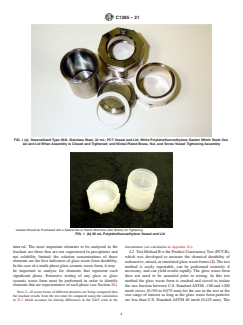
FIG. 1 (a) Desensitized Type 304L Stainless Steel, 22 mL; PCT Vessel and Lid; White Polytetrafluoroethylene Gasket Which Seals Ves-
sel and Lid When Assembly is Closed and Tightened; and Nickel-Plated Brass, Nut, and Screw Vessel Tightening Assembly
Vessels Should be Purchased with a Special Set of Plastic Wrenches (Not Shown) for Tightening.
FIG. 1 (b) 60 mL Polytetrafluoroethylene Vessel and Lid
denominator (see calculation in Appendix X1).
interval. The most important elements to be analyzed in the
leachate are those that are not sequestered in precipitates and
4.2 TestMethodBistheProductConsistencyTest(PCT-B),
not solubility limited; the solution concentrations of those
which was developed to measure the chemical durability of
elements are the best indicators of glass waste form durability.
radioactive,mixed,orsimulatedglasswasteforms (2).Thetest
In the case of a multi-phase glass ceramic waste form, it may
method is easily repeatable, can be performed remotely if
be important to analyze for elements that represent each
necessary, and can yield results rapidly. The glass waste form
significant phase. Extensive testing of any glass or glass
does not need to be annealed prior to testing. In this test
ceramic waste form must be performed in order to identify
method the glass waste form is crushed and sieved to isolate
elementsthatarerepresentativeofeachphase(seeSection26).
the size fraction between U.S. StandardASTM –100 and+200
mesh sieves (0.150 to 0.075 mm) for the use in the test or the
NOTE 2—If waste forms of different densities are being compared then
size range of interest as long as the glass waste form particles
the leachate results from the test must be compared using the calculation
in 25.3 which accounts for density differences in the SA/V term in the are less than U.S. Standard ASTM 40 mesh (0.425 mm). The
C1285 − 21
particles are cleaned of adhering fines (see Note 3), and an Datafromthistestmayformpartofthelargerbodyofdatathat
amount of sized and cleaned glass waste form greater than or arenecessaryinthelogicalapproachtolong-termpredictionof
equal to 1 g is placed into either a Type 304 L stainless steel waste form behavior (see Practice C1174).
vesseloraPFATFE-fluorocarbonvessel.AnamountofASTM
Type I water equal to 10 6 0.1 cm /g of sample mass is added
6. Apparatus
and the vessel is sealed. The use of other solution volume to
6.1 Test Vessels for Test Method A—The production test
samplemassratiosandotherleachantsareallowed.Thevessel
method requires the use of unsensitized Type 304L stainless
is placed in a constant temperature device at 90 6 2 °C. Other
steel leach vessels of >20 mL capacity designed with an
test temperatures are permissible. It is desirable that inter-
internal pressure rating >0.5 MPa (see Sections 10 and 11).
comparison of test responses be conducted at different tem-
6.1.1 The stainless steel vessels require a gasket to remain
peratures to indicate whether the reaction mechanism changes
leak-tight. TFE-fluorocarbon gaskets, available commercially,
over the temperature range investigated. The vessels must be
are acceptable for test durations of less than 28 days since
placed in a constant temperature device so that there is ample
TFE-fluorocarbonischemicallyinertandexposuretoradiation
convection around the vessels and even heat distribution (Fig.
doses up to 1×10 rad of beta or gamma radiation have been
1). After seven days or other test durations, the vessel is
shownnottodamageTFE-fluorocarbon (4).Ifhigherradiation
removed from the constant temperature device and cooled to
doses are anticipated, degradation of the TFE-fluorocarbon
ambient temperature. The pH is measured on an aliquot of the
gasket can compromise the seal and contaminate the leachate
leachateandthetemperatureofthealiquotatthetimeofthepH
−
with F and HF (5). For high radiation doses, special gaskets
measurement is also recorded. The remaining leachate is
fabricatedfrommetalssuchascopper,gold,leadorindiumare
filteredandthefiltratesentforanalysis.Testswithareference
recommended.
glass are to be conducted in parallel with tests with the glass
6.2 Test Vessels for Method B—Test Method B allows for
wasteformtoverifythatthetestswereconductedandanalyzed
the use of either unsensitizedType 304Lstainless steel or PFA
properly. The test response provides a measure of the amounts
TFE-fluorocarbon leach vessels of >20 mL capacity designed
ofvariousglasscomponentsthatarereleasedtosolutionunder
with pressure ratings >0.5 MPa (see Section 10).
carefully controlled conditions that can be expressed in terms
6.2.1 The stainless steel vessels require a gasket material in
of an average glass dissolution rate over the test interval. The
order to remain leak-tight. If radioactive glass waste forms are
most important elements to be analyzed in the leachate are
tested in stainless steel vessels with TFE-fluorocarbon gaskets
those that are not sequestered in precipitates or solubility
the same constraints that are noted in 6.1 for radioactive usage
limited;thoseelementsaregoodindicatorsofglasswasteform
in Test Method A apply.
durability. In the case of a multi-phase glass ceramic waste
6.2.2 High radiation fields (>1×10 rad of beta or gamma
form, it may be important to analyze for elements from each
significant phase present. Extensive testing of any glass or radiation) will not generally be generated by hazardous, mixed
or simulated nuclear waste glass forms. Commercially avail-
glass ceramic waste form must be performed in order to
able PFATFE-fluorocarbon vessels can be used in the absence
determinewhattheseelementsare(seeSection26).Theresults
can be normalized to the glass surface area to solution volume of high radiation fields because PFA TFE-fluorocarbon is
chemically inert when properly cleaned (6).
ratio and glass composition to compare tests with different
glasses reacted under different conditions. The results of tests
NOTE 4—PFATFE-fluorocarbon is perfluoroalkoxy TFE-fluorocarbon.
conducted with the same test parameters but for different
6.3 Constant Temperature Devices—Laboratory ovens or
durations can be combined to describe the dissolution kinetics
water baths capable of maintaining 62.0 °C uniformity
under the particular test conditions.
throughout the entire interior of the device, including the
NOTE 3—Devitrified glasses, glass ceramics, and multiphase glass
samples, at the test temperature are to be used for sample
ceramic waste forms containing soluble secondary phases require special
leaching and sample drying. These devices must be equipped
handling procedures (see 19.6.1 and 22.6.1).
with an over-temperature control.
5. Significance and Use 6.4 Conventional Oven—Ovens, capable of maintaining
610 °C can be used for vessel cleaning and sample drying.
5.1 These test methods provide data useful for evaluating
6.5 Temperature Measurement Device—Resistance ther-
the chemical durability (see 3.1.5) of glass waste forms as
mometersorthermocouples,orboth,withastripchartrecorder
measured by elemental release. Accordingly, it may be appli-
or a data logger for periodic monitoring of the temperature of
cable throughout manufacturing, research, and development.
the convection oven during the test duration. The maximum
5.1.1 Test MethodAcan specifically be used to obtain data
period between temperature recordings should be 0.5 h.
to evaluate whether the chemical durability of glass waste
formshavebeenconsistentlycontrolledduringproduction(see
Table 1).
5.1.2 TestMethodBcanspecificallybeusedtomeasurethe
The sole source of supply of the PFATFE-fluorocarbon manufactured without
plasticizers or organic additives known to the committee at this time is Savillex
chemical durability of glass waste forms under various test
Corp., 6133 Baker Rd., Minnetonka, MN 55345. If you are aware of alternative
conditions, for example, varying test durations, test
suppliers, please provide this information to ASTM International Headquarters.
temperatures, sample surface area (SA)-to-leachant volume (V)
Your comments will receive careful consideration at a meeting of the responsible
ratios (see Appendix X1), and leachant types (see Table 1). technical committee, which you may attend.
C1285 − 21
6.6 Balance(s)—Any balance that will provide the follow- with the reference waste form may be conducted in parallel
ing sensitivity: 0.25% of the smallest masses to be measured, with triplicate tests of several waste forms.
including the masses of the reagents, sample, leachant,
7.2 Multi-element Solution Standard—A reference solution
leachate, leach vessel, and any required combinations.
of choice, similar in composition to the leachate being tested,
6.7 Weight Calibration Set—A standard weight calibration is to be submitted in triplicate along with each batch of
set covering the range to include the smallest and largest leachates for multi-element analysis. The reference solution
weights to be measured. The weight calibration set should be standard should be traceable to NIST, or an equivalent metrol-
traceabletotheNationalInstituteofStandardsandTechnology ogy institute, and have a certified shelf life.
(NIST).
7.3 pH Buffers—commercial pH buffers or pH buffers made
6.8 Crushing Device—Any mechanical or manual crushing to the specifications given in Test Method D1293 that bracket
device that will avoid iron (mild steel) contamination in the the measured pH range of the leachant and leachate. All
crushed waste form specimen (7). Crushing and grinding commercialbuffersolutionsshouldbetraceabletoNIST,oran
devices made of tungsten carbide, agate, sapphire, stainless equivalent metrology institute, and have a certified shelf life.
steel, or dense alumina are acceptable. Keep all the reference buffer solutions well sealed and replace
at the expiration of shelf life, or sooner if a visible change is
6.9 Sieves—AnestofU.S.standardASTMstainlesssteelor
observed (see Test Method D1293).
brass sieves. The nest shall include the cover and receptacle,
and the largest and smallest mesh size sieves for the desired 7.4 Analytic Standard Solutions—The reference solutions
size range. should be traceable to NIST, or an equivalent metrology
institute.All standard solutions must have a certified shelf life.
6.10 Flasks—Class A or calibrated volumetric laboratory
ware.
8. Reagents and Standards
6.11 Pipettes—Calibrated pipettes. Pipette tips that have
8.1 ACS Reagent Grade Acids—Reagent grade nitric acid
either been cleaned, sterilized, or individually packaged to
(HNO )andhydrofluoricacid(HF)forcleaningleachvessels.
avoid contamination from handling.
8.2 ACS High Purity Acid—Ultra high purity concentrated
6.12 Syringes and Syringe Filters—Sterilized, cleaned, or
nitric acid (HNO ) for acidification of leachates.
individually packaged syringes and mono or bidirectional
0.45µm syringe filters (see Note 5). 8.3 ReagentGradeNaOH—ReagentgradeNaOHforclean-
ing of new PFA TFE-fluorocarbon vessels.
NOTE 5—Commercially available cellulose acetate filters have been
shown not to contaminate test solutions.
8.4 Solvents—Absolute ethanol (99% pure) or another non
polar solvent like cyclohexane or reagent grade acetone.
6.13 Sample Vials—Precleaned or individually packaged
sample vials and caps.
8.5 ASTM Type I Water—Type I water shall have a minimal
electrical resistivity of 18 MΩ·cm at 25 °C (see Specification
6.14 pH meter and probe—pH meter and probe (for
D1193).
example, combination pH electrode) with an accuracy of 60.1
8.5.1 The source water shall be purified, then passed
pH units.
through a deionizer cartridge packed with a mixed bed of
6.15 Water Purification System—Water purification system
nuclear-grade resin (see Note 6), then through a cellulose ester
for producing ASTM-Type I water.
membrane having openings not exceeding 0.45 µm (see Note
6.16 Ultrasonic Cleaner—Device to remove fines from
7).
crushed waste form materials.
NOTE 6—A nuclear-grade resin mixture of the strong acid cation
6.17 Analytic Equipment—Equipment for measuring anion exchanger in the hydrogen form and the strong base anion exchanger in
the hydroxide form with a one-to-one cation to anion equivalence ration
and cation content of the leachates and anion content of dilute
is suitable.
solutions, for example, inductively coupled plasma-atomic
NOTE 7—An in-line filter has been found to be satisfactory.
emission spectrometry (see Test Methods C1109 or Ref 8,or
8.5.2 Passthepurifiedwaterthroughanin-lineconductivity
both), atomic absorption spectrometry, ion chromatography
cell to verify its purity. Alternatively, the water can be
(consult Test Method D4327 or Ref 8, or both), ion selective
measured for all anions and cations to verify that there is less
electrodes or colorometric methods (consult Test Method
than a total dissolved solid content including soluble silica of
D859).
0.1 g/m (see Specification D1193 and Terminology D1129).
7. Standards
8.6 Other Leachants—Test Method B allows for the use of
other leachants such as simulated or real groundwaters, brine,
7.1 Reference Waste Form—A reference waste form (see
seawater, pH buffers, and others. The simulated solutions
Refs 9-14forexample)ofchoice,similarincompositiontothe
should be made from ACS reagent grade chemicals. All
waste form being tested, must be tested in triplicate along with
triplicate MethodAor Method B tests with the waste forms to
confirm the tests were conducted properly (15). The reference
waste form composition should be traceable to NIST or an
Available from American Chemical Society, 1155 16th St., NW, Washington,
equivalent metrology institute. A single set of triplicate tests DC 20036.
C1285 − 21
leachants should be chemically analyzed to verify their com- fluorocarbon and steel vessels may be different due to equili-
position before durability testing begins. All leachants should bration with CO and O , that is, the differences in “open” and
2 2
be used within their specified shelf life. “closed” system conditions. The user is cautioned that the
leachate concentrations and leachate pH values may be signifi-
9. Hazards
cantly different in tests conducted in PFA TFE-fluorocarbon
andsteelvesselsduetohigherdissolvedconcentrationsofCO
9.1 All appropriate precautions for operation of pressurized 2
and O in tests performed in PFA TFE-fluorocarbon vessels,
equipment must be taken. To ensure safe operation, the test
which provide “open system” conditions. (11, 12, 17-23)
vessels should be designed to withstand the vapor pressure of
10.2.2 PFATFE-fluorocarbonvesselscannotbeusedinTest
water at the test temperature with an appropriate safety factor.
Method A and it is recommended that PFA TFE-fluorocarbon
The thermal expansion of water must be taken into account
vessels not be used in Test Method B with radioactive glass
when filling the leach containers. Specifically, between 4 and
waste forms. The use of PFATFE-fluorocarbon vessels under
100 °C, water expands by 4 volume %. Overfilling, for
radiation doses >10 roentgen causes degradation of the PFA
example, filling a 60 mL vessel to 58 mL, may lead to
−
TFE-fluorocarbon, and subsequent release of F and HF into
pressuresinsidethecontainerthatexceedthedesignlimitsand
the test solution. The presence of HF in the solution may
could lead to the failure of one or more parts of the vessel.
change the rate of degradation of the glass waste form due to
−
10. Choice of Test Vessel theacidificationandF ionsthatattacktheglasswasteform (4,
5) and lead to a spurious and erroneous test result.
10.1 Stainless Steel Vessels—UnsensitizedType 304Lstain-
less steel vessels must be used in Test Method A and may be
11. Identification of Vessels and Vessel Cleaning History
used inTest Method B.The user should ensure that the vessels
are free from chloride as radiolysis of Cl containing solutions
11.1 Identification of Vessels—Aunique identifying number
can generate reducing species such as Cl and various oxy-
should be permanently marked on each vessel. The same
chlorides that can lower the redox (reduction/oxidation) poten-
number should be permanently marked on the companion lid.
tialoftheleachateandgiveanomalousleachratesorattackthe
11.2 Identification of Vessel Cleaning History—Each batch
leach vessel, or both (16). The user is also cautioned that
of cleaned vessels will be labeled with a unique batch number.
radionuclides such as americium, plutonium, and other redox
A log book of the vessel number and date the cleaning is
sensitivespeciesareknowntoplate-outonsteelsothatanacid
completed shall be kept. The date can be used as the batch
strip of the interior of the vessel may be needed to account for
number identifier if only one batch has been cleaned on that
all the radionuclides released (see 14.1.2).
date.
10.1.1 Steel vessels represent “closed system” applications
11.2.1 Alternatively, a separate batch number can be as-
where the influx of CO or O into the leachate is not desired.
2 2
signed and recorded in the log book. In this manner, any
10.1.2 It is recommended that 22 mLsteel vessels be used
inconsistent test responses might be traced to insufficient or
for the radioactive production application in Test Method A
improper cleaning of a batch of vessels or to a problem vessel.
(see Fig. 1a). This allows for the use of up to 18 cm water to
11.2.1.1 The batch number of the vessel used for each
minimize the amount of radioactive sample being handled.
sample and blank while conducting PCT Test Method A or B
10.2 PFA TFE-fluorocarbon Vessels—PFA TFE-
will be entered on a model data sheet like the one in Appendix
fluorocarbon vessels may be used in Test Method B (see Fig.
X2.Thesedatawillbemaintainedinalaboratorynotebookfor
1b). PFA TFE-fluorocarbon vessels can be used for Test
control purposes.
Method B for short-term chemical durability testing with
mixed or simulated nuclear glass waste forms.The use of PFA
12. Cleaning of New Stainless Steel Vessels for PCT Test
TFE-fluorocarbon vessels is acceptable for test durations up to
Methods A and B
28 days. Longer test durations are acceptable only if it can be
12.1 NewType 304Lstainless steel vessels shall be cleaned
demonstratedthatthevesselinteractionsdonotaffecttheglass
by the following procedure:
waste form reactivity, including leaching of fluoride ions from
12.1.1 Remove any gaskets before cleaning new stainless
the vessel and ingress of CO from the atmosphere. The user
steel vessel lids. Degrease the vessels and lids with acetone.
should ensure that new PFATFE-fluorocarbon vessels are free
Check the integrity of the gasket and discard if visibly
of leachable fluoride which is present as a free surface fluoride
damaged. Clean new undamaged TFE-fluorocarbon gaskets
residue from vessel fabrication (see Section 16).
according to Section 13. Clean new undamaged metallic
10.2.1 PFATFE-fluorocarbonvesselsarefor“opensystem”
gaskets according to 12.1.2 – 12.1.5.
applications where the influx of CO or O into the leachant is
2 2
12.1.2 Clean the vessels and lids ultrasonically in either
eitherdesirableornotofconcern.Theuseriscautionedthatthe
99% ethanol or absolute ethanol or another non polar solvent
leachate concentrations and leachate pH in PFA TFE-
like cyclohexane for approximately 5 min.
12.1.3 Rinse the vessels and lids three times with ASTM
The sole source of supply of the apparatus known to the known to the
Type I water.
committeeatthistimeisParrInstrumentCo.,21153rdSt.,Moline,IL61265.Ifyou
12.1.4 Submerge the vessels and lids in 0.16 M HNO
are aware of alternative suppliers, please provide this information to ASTM
(1weight % HNO ) and heat to 90 6 10 °C for a minimum of
International Headquarters. Your comments will receive careful consideration at a 3
meeting of the responsible technical committee, which you may attend. 1h.
C1285 − 21
12.1.5 Rinse the vessels three times with ambient tempera- oven for a minimum of 16 h to dissolve (acid strip) radionu-
ture ASTM Type I water. clides adhering to the interior of the vessel.
12.1.6 Submerge the vessels and lids in freshASTMType I
14.1.2 Checktheacidstripsolutionforradioactivity.Repeat
water for1hat90 6 10 °C.
14.1.1 until the radioactivity of the acid strip solution is less
12.1.7 Rinse with fresh ASTM Type I water at ambient
than three times background.
temperature.
14.1.3 If possible, remove the gasket and discard. Gaskets
12.1.8 Carefullyplaceacleanedgasket(see13.1)inthelid.
that have been exposed to HNO during cleaning or acid
Fillthevessel80to90%fullofASTMTypeIwater.Closethe
stripping of the vessel may be compromised because small
lid and leave in a 90 6 10 °C oven for a minimum of 16 h.
amounts of HNO may be trapped between the gasket and the
12.1.9 Remove the vessels from the oven, cool to ambient
lid.Rinsevesselsandlidsthoroughlywithdeionizedwaterand
temperature,takeacooledaliquotofthewaterandmeasurethe
thenwithASTMTypeIwateratambienttemperature.Extreme
pH (see Test Methods D1293).
caution should be exercised so that the inside of the vessel is
12.1.10 IfthepHisnotintherange5.0to7.0,repeat12.1.6
not contaminated with radioactivity that may have contacted
– 12.1.9.
the outside of the vessel.
12.1.11 If the 5.0 to 7.0 pH range cannot be achieved by
14.1.4 Fill the vessel 80 to 90% full of freshASTM Type I
three repetitions of 12.1.6 – 12.1.9, then repeat the cleaning
water.Ifnecessary,putanewgasketinthelid.Closethevessel
method starting at 12.1.4.
and leave in a 90 6 10 °C oven for a minimum of 24 h.
12.1.12 Dry vessels and lids at 90 6 10 °C for a minimum
14.1.5 Removevesselsfromoven,takeonealiquotofwater
of 16 h and then cool them. If the vessels are not used
from each vessel and measure the pH (see Test Methods
immediately,closethevesselsandstoreinacleanenvironment
D1293).Takeadditionalaliquotsofwaterfromeachvesseland
until needed.
measure the radioactivity and the silicon content of the
13. Cleaning of New TFE-fluorocarbon Gaskets for solution.
Stainless Steel Vessels for PCT Test Methods A and B
14.1.6 If the pH is not in the range 5.0 to 7.0, or the
measured radioactivity is greater than three times background,
13.1 New gaskets for stainless steel vessels should be
or silicon is detected at >0.1 g/m in the solution by methods
cleaned by the following method:
such as ICP or Test Method D859, repeat 14.1.3 – 14.1.5.
13.1.1 Remove visible grease or dirt from acceptable gas-
ketsusingacleanlintfreeclothandabsoluteethanol.Recheck 14.1.7 If the pH is not in the 5.0 to 7.0 range, or the
measured radioactivity is greater than three times background,
the integrity of the gasket and discard if damaged.
13.1.2 Handle the gaskets only with clean tongs or cotton or the >0.1 g/m criteria cannot be achieved by three repeti-
tions of 14.1.3 – 14.1.6, or a combination thereof, then repeat
gloves.
the cleaning method starting at 14.1.1.
13.1.3 Clean each gasket ultrasonically in 99% or absolute
ethanol or another non polar solvent like cyclohexane for
14.1.8 Dry vessels, lids, and gaskets at 90 6 10 °C for a
approximately 10 min.
minimum of 16 h and store in a clean environment until
13.1.4 Rinse each gasket inASTM Type I water at ambient
needed.
temperature for approximately 3 min.
13.1.5 Bake each gasket in an oven at 200 6 10 °C for a
15. Cleaning of Used Stainless Steel Vessels for PCT Test
minimum of 4 h.
Method B
13.1.6 Immerse each cooled gasket in fresh ASTM Type I
15.1 When stainless steel vessels are reused subsequent to
water in a boiling water bath for a minimum of 2 h.
their use with radioactive mixed waste specimens, residual
13.1.7 Dry gaskets at 90 6 10 °C for a minimum of 16 h,
contamination may be present. The vessels shall be cleaned
and store in a clean environment until needed.
before reuse by cleaning with HNO andASTM Type I water
14. Cleaning of Used Stainless Steel Vessels for PCT Test
until the level of the radioactive element(s) of interest is(are)
Method A below the detectable level using the analytical method em-
ployed for concentration measurement of the leachate. Stain-
14.1 When stainless steel vessels are reused subsequent to
less steel vessels are also checked for silicon contamination
their use with radioactive materials, residual contamination
before reuse. Used stainless steel containers for PCT Test
may be present. The vessels shall be cleaned before reuse by
Method B shall be cleaned according to the following method:
cleaning with dilute HNO and ASTM Type I water until the
15.1.1 For stainless steel vessels that have been used for
leveloftheradioactiveelement(s)ofinterestis(are)belowthe
mixed waste glass form testing follow 14.1.1 and 14.1.2. For
detectable level using the analytical method employed for
vessels used for non-radioactive glass waste form testing
concentration measurement of the leachate. Stainless steel
remove any remaining glass waste form from previous testing
vesselsarealsocheckedforsiliconcontaminationbeforereuse.
by rinsing the vessel and lid with ASTM Type I water.
Used stainless steel containers for radioactive service (PCT
MethodA)shallbecleanedaccordingtothefollowingmethod: 15.1.2 Remove the gasket from the lid and discard. Gaskets
14.1.1 Remove any remaining glass waste form sample that have been exposed to HNO during cleaning or acid
from previous testing by rinsing the vessel and lid withASTM stripping of the vessel may be compromised because small
TypeIwater.Fillthevessel80to90%fullwith0.16MHNO amounts of HNO may be trapped between the gasket and the
3 3
(1weight%HNO ).Resealthevesselandplacein90 610°C lid.
C1285 − 21
−
15.1.3 Soak the vessels and lids in 0.16 M HNO 16.1.13 If the pH is <5.0 or the F content is >0.5 µg⁄mL,
(1weight% HNO)at90 6 10 °C for 1 h. repeat steps 16.1.1 – 16.1.12.
15.1.4 RinsevesselsandlidsthoroughlywithASTMTypeI 16.1.14 If the pH is above 7.0 repeat steps 16.1.7 – 16.1.12.
water at ambient temperature. 16.1.15 Dry vessels and lids at 90 6 10 °C for a minimum
of 16 h, and store in a clean environment until needed.
15.1.5 Heat vessels and lids inASTM Type I water at 90 6
10 °C for a minimum of 1 h.
17. Cleaning of Used PFA TFE-fluorocarbon Vessels for
15.1.6 Putanewgasketinthelid.Fillthevessel80to90%
PCT Test Method B
full of fresh ASTM Type I water. Close the lid and leave in a
90 6 10 °C oven for a minimum of 24 h.
17.1 When PFA TFE-fluorocarbon vessels are reused, re-
15.1.7 Removevesselsfromoven,takeonealiquotofwater
sidualcontaminationfromtheglasswasteformstestedmaybe
from each vessel and measure the pH (see Test Methods
present. The vessels shall be cleaned before reuse by cleaning
D1293).Takeadditionalaliquotsofwaterfromeachvesseland
with HNO and ASTM Type I water. As a precaution fluoride
measure the silicon content of the solution.
contamination should continue to be checked for the first five
15.1.8 If the pH of the aliquot is not in the range 5.0 to 7.0
uses of a given PFA TFE-fluorocarbon vessel. Used PFA
or silicon is detected at >0.1 g/m in the solution by methods
TFE-fluorocarbon containers shall be cleaned according to the
suchasICPorTestMethodD859,repeatsteps15.1.4–15.1.7.
following method:
15.1.9 If the 5.0 to 7.0 pH range or the >0.1 g/m silicon
17.1.1 Remove any glass from previous waste form testing
criteria cannot be achieved after three repetitions of 15.1.4 –
fromthevesselsbyrinsingboththevesselsandlidwithASTM
15.1.7, then repeat the cleaning and testing method starting at
Type I water.
15.1.2.
17.1.2 Soak vessels and lids in 0.16 M HNO (1 weight%
15.1.10 Dry vessels, lids, and gaskets at 90 6 10 °C for a
HNO)at90 6 10 °C for approximately 1 h.
minimum of 16 h and store in a clean environment until
17.1.3 Rinse vessels and lids thoroughly with fresh ASTM
needed.
Type I water at ambient temperature.
17.1.4 PutvesselsandlidsinfreshASTMTypeIwaterat90
16. Cleaning of New PFA TFE-fluorocarbon Vessels for
6 10 °C. Remove after approximately 1 h.
PCT Test Method B
17.1.5 Fill each vessel 80 to 90% full of freshASTM Type
I water at ambient temperature. Close the lid and leave in a 90
16.1 NewPFATFE-fluorocarbonvesselsarecleanedbefore
6 10 °C oven for a minimum of 16 h.
use with NaOH and ASTM Type I water to remove any free
17.1.6 Remove vessels from oven, take an aliquot of water
fluoride from the interior surfaces (6). New TFE-fluorocarbon
from each vessel and measure the pH (see Test Methods
leach containers shall be cleaned according to the following
D1293).
method:
−
17.1.7 If the pH is in the 5.0 to 7.0 pH range, check the F
16.1.1 Rinse PFA TFE-fluorocarbon vessels and lids with
−
concentrationbymeasuringtheF contentofanotheraliquotof
fresh ASTM Type I water at ambient temperature.
the water. If a given vessel has been reused a minimum of five
16.1.2 Fillvesselsatleast90%fullwith5weight%NaOH
−
times and the vessel cleaning history indicates that the F
solution.
concentration has consistently been <0.5 µg/mL when the pH
16.1.3 Tighten lids and place vessels in a preheated 110 6
measurement is between 5.0 to 7.0, then the measurement of
...
This document is not an ASTM standard and is intended only to provide the user of an ASTM standard an indication of what changes have been made to the previous version. Because
it may not be technically possible to adequately depict all changes accurately, ASTM recommends that users consult prior editions as appropriate. In all cases only the current version
of the standard as published by ASTM is to be considered the official document.
Designation: C1285 − 14 C1285 − 21
Standard Test Methods for
Determining Chemical Durability of Nuclear, Hazardous, and
Mixed Waste Glasses and Multiphase Glass Ceramics: The
Product Consistency Test (PCT)
This standard is issued under the fixed designation C1285; the number immediately following the designation indicates the year of
original adoption or, in the case of revision, the year of last revision. A number in parentheses indicates the year of last reapproval. A
superscript epsilon (´) indicates an editorial change since the last revision or reapproval.
1. Scope
1.1 These product consistency test methodsTest Methods A and B provide a measure of the chemical durability of homogeneous
glasses, phase separated glasses, devitrified glasses, glass ceramics, multiphase glass ceramic waste forms, or combinations
thereof, hereafter collectively referred to as “glass waste forms” by measuring the concentrations of the chemical species released
to a test solution under carefully controlled conditions.
1.1.1 Test Method A is a seven-day chemical durability test performed at 90 6 2°C 2 °C in a leachant of ASTM-Type I water.
The test method is static and conducted in stainless steel vessels. The stainless steel vessels require a gasket to remain
leak-tight.leak-tight (see Note 1) The stainless steel vessels are considered to be “closed system” tests. Test Method A can
specifically be used to evaluate whether the chemical durability and elemental release characteristics of nuclear, hazardous, and
mixed glass waste forms have been consistently controlled during production. This test method is applicable to radioactive and
simulated glass waste forms as defined above.
NOTE 1—TFE-fluorocarbon gaskets, available commercially, are acceptable and chemically inert up to radiation doses of 1 × 10 R of beta or gamma
radiation which have been shown not to damage TFE-fluorocarbon. If higher radiation doses are anticipated, special gaskets fabricated from metals such
as copper, gold, lead, or indium are recommended.
1.1.2 Test Method B is a durability test that allows testing at various test durations, test temperatures, particle size and masses of
glass sample, leachant volumes, and leachant compositions. This test method is static and can be conducted in stainless steel or
PFA TFE-fluorocarbon vessels. The stainless steel vessels are considered to be “closed system” while the PFA TFE-fluorocarbon
vessels are considered to be “open system” tests. Test Method B can specifically be used to evaluate the relative chemical durability
characteristics of homogeneous glasses, phase separated glasses, devitrified glasses, glass ceramics, or multiphase glass ceramic
waste forms, or combinations thereof. This test method is applicable to radioactive (nuclear) and mixed, hazardous, and simulated
glass waste forms as defined above. Test Method B cannot be used as a consistency test for production of high level radioactive
glass waste forms.
1.2 These test methods must be performed in accordance with all quality assurance requirements for acceptance of the data.
1.3 The values stated in SI units are to be regarded as standard. No other units of measurement are included in this The values
given in parentheses after SI units are provided for information only and are not considered standard.
These test methods are under the jurisdiction of ASTM Committee C26 on Nuclear Fuel Cycle and are the direct responsibility of Subcommittee C26.13 on Spent Fuel
and High Level Waste.
Current edition approved Jan. 1, 2014Feb. 1, 2021. Published April 2014April 2021. Originally approved in 1994. Last previous edition approved in 20082014 as
C1285 – 02 (2008).C1285 – 14. DOI: 10.1520/C1285-14.10.1520/C1285-21.
Copyright © ASTM International, 100 Barr Harbor Drive, PO Box C700, West Conshohocken, PA 19428-2959. United States
C1285 − 21
1.4 This standard does not purport to address all of the safety concerns, if any, associated with its use. It is the responsibility
of the user of this standard to establish appropriate safety safety, health, and healthenvironmental practices and determine the
applicability of regulatory limitations prior to use.
1.5 This international standard was developed in accordance with internationally recognized principles on standardization
established in the Decision on Principles for the Development of International Standards, Guides and Recommendations issued
by the World Trade Organization Technical Barriers to Trade (TBT) Committee.
2. Referenced Documents
2.1 ASTM Standards:
C92 Test Methods for Sieve Analysis and Water Content of Refractory Materials
C162 Terminology of Glass and Glass Products
C169 Test Methods for Chemical Analysis of Soda-Lime and Borosilicate Glass
C225 Test Methods for Resistance of Glass Containers to Chemical Attack
C371 Test Method for Wire-Cloth Sieve Analysis of Nonplastic Ceramic Powders
C429 Test Method for Sieve Analysis of Raw Materials for Glass Manufacture
C693 Test Method for Density of Glass by Buoyancy
C859 Terminology Relating to Nuclear Materials
C1109 Practice for Analysis of Aqueous Leachates from Nuclear Waste Materials Using Inductively Coupled Plasma-Atomic
Emission Spectroscopy
C1174 Guide for Evaluation of Long-Term Behavior of Materials Used in Engineered Barrier Systems (EBS) for Geological
Disposal of High-Level Radioactive Waste
C1220 Test Method for Static Leaching of Monolithic Waste Forms for Disposal of Radioactive Waste
C1463 Practices for Dissolving Glass Containing Radioactive and Mixed Waste for Chemical and Radiochemical Analysis
C1662 Practice for Measurement of the Glass Dissolution Rate Using the Single-Pass Flow-Through Test Method
D859 Test Method for Silica in Water
D1129 Terminology Relating to Water
D1193 Specification for Reagent Water
D1293 Test Methods for pH of Water
D4327 Test Method for Anions in Water by Suppressed Ion Chromatography
D5956 Guide for Sampling Strategies for Heterogeneous Wastes
E7 Terminology Relating to Metallography
E177 Practice for Use of the Terms Precision and Bias in ASTM Test Methods
E456 Terminology Relating to Quality and Statistics
E691 Practice for Conducting an Interlaboratory Study to Determine the Precision of a Test Method
E1402 Guide for Sampling Design
3. Terminology
3.1 Definitions:
3.1.1 See Terminology C859 for additional references not listed below.
3.1.2 anneal, n—to prevent or remove materials processing stresses in glass by controlled cooling from a suitable temperature
(modified from Terminology C162).
3.1.3 annealing, n—in glass leach tests, a controlled cooling process for glass designed to reduce thermal residual stress to an
acceptable level, and, in some cases, modify structure.structure (Terminology C859)).
3.1.4 ASTM Type I water, n—purified water with a maximum total matter content including soluble silica of 0.1 g/m , a maximum
electrical conductivity of 0.056 μmho/cm at 25°C, 25 °C, a minimum electrical resistivity of 18 MΩ·cm at 25°C 25 °C (see
Specification D1193 and Terminology D1129).
3.1.5 chemical durability, n—in leach tests, the resistance of a material to alteration, dissolution and release of its constituents,
under the specific conditions of the test (Terminology C859).
For referenced ASTM standards, visit the ASTM website, www.astm.org, or contact ASTM Customer Service at service@astm.org. For Annual Book of ASTM Standards
volume information, refer to the standard’s Document Summary page on the ASTM website.
C1285 − 21
3.1.6 closed system, n—in leach tests, system utilizing a test container that is impervious to material transport (Terminology
C859).
3.1.7 consistently controlled, adj—in high level waste vitrification in the US, that has been controlled in such a way that its
chemical durability is consistent, by comparison with a standard or a target, or by other experiments (proposed Terminology C859).
3.1.8 devitrified glass, n—an initially homogeneous or phase separated glass, or both, that has partially crystallized during cooling,
heat treatment, or both (Terminology C859).
3.1.9 glass, n—an inorganic product of fusion that has cooled to a rigid condition without crystallizing (see Terminologies C162
and C859).
3.1.10 glass ceramic, n—a solid material composed of both crystalline and glassy phases (Terminology C859).
3.1.11 hazardous waste, n—(1) in waste management in a broad sense, any substance or mixture of substances having properties
capable of producing adverse effects on the health or safety of a human (see also RCRA hazardous waste); (2) in waste management
in the US, any waste that is “listed” in 40CFR Parts 261.31 -261.33 or exhibits one or more of the characteristics identified in
40CFRParts 261.20 -261.24, is a mixture of hazardous and non-hazardous waste, or is determined to be hazardous waste by the
generator (proposed Terminology C859).
3.1.12 hazardous waste glass, n—a glass comprised of glass forming additives and hazardous waste.
3.1.13 homogeneous glass, n—a glass that is a single amorphous phase; a glass that is not separated into multiple amorphous
phases (Terminology C859).
3.1.14 leachant, n—in leach tests, general term for the initial solution with which a solid is contacted and into which the solid
dissolves or is leached (Terminology C859).
3.1.15 leachate, n—in leach tests, general term for the solution resulting from a test in which a solid is contacted by a solution
and leaches or dissolves (Terminology C859).
3.1.16 mixed waste, n—in the US, waste containing radioactive, source special nuclear, or byproduct material regulated by the
Atomic Energy Act (AEA) and hazardous components regulated by the Resource Conservation and Recovery Act (RCRA); the
term “radioactive component” refers only to actual radionuclides dispersed or suspended in the waste substance (DOE Order
5400.3) (proposed Terminology C859).
3.1.17 mixed waste glass, n—in nuclear waste management in the US, a glass composed of glass-forming additives and mixed
waste components (proposed Terminology C859).
3.1.18 nuclear waste glass, n—a glass composed of glass forming additives and radioactive waste (proposed Terminology C859).
3.1.19 open system, n—in leach tests, a system utilizing a test container through which material transport is possible , for
example O or CO diffusion, or both (Terminology C859).
2 2
3.1.20 phase separated glass, n—a glass composed of more than one amorphous phase (Terminology C859).
3.1.21 radioactive, adj—of or exhibiting radioactivity (proposed Terminology C859).
3.1.22 radioactivity, n—spontaneous nuclear disintegration with emission of corpuscular or electromagnetic radiation, or both
(consult Terminology D1129).
3.1.23 sample blank, n—a test in a cleaned test vessel that has been filled with the same amount of leachant as the tests with the
waste form samples but containing no waste form sample that is conducted under the same conditions as tests with the waste form.
C1285 − 21
3.1.24 sensitization, n—in austenitic steels such as Types 304 and 316, the precipitation of chromium carbide at the grain
boundaries in a temperature range of 400–900°C 400 to 900 °C (modified from Terminology E7).
3.1.24.1 Discussion—
ThisSensitization constitutes the greatest single threat to their corrosion resistance (1).
3.1.25 set of samples, n—samples tested simultaneously in the same oven.
3.1.26 simulated waste glass, n—a glass comprised of glass forming additives with simulants of, or actual chemical species, or
both, in radioactive wastes or in mixed nuclear wastes, or both.
3.1.27 standard, n—to have the quality of a model, gage, pattern, or type.type (Webster’s New Twentieth Century Dictionary,
1973)).
3.1.28 standardize, v—to make, cause, adjust, or adapt to fit a standard; to cause to conform to a given standard, for example, to
make standard or uniform (Webster’s New Twentieth Century Dictionary, 1973).
3.1.29 unsensitized austenitic steel, n—stainless steel that is not sensitized (see sensitization).
3.1.30 verify, v—to determine or test the accuracy of, as by comparison, investigation, or reference, for example, to conduct
experiments to verify a hypothesis.hypothesis (The American Heritage Dictionary, 1973)).
3.1.31 vitrification, n—the process of fusing waste or simulated waste with glass making chemicals at elevated temperatures to
form a waste glass or a simulated waste glass (proposedTerminology (proposed Terminology C859).
4. Summary of Test Methods
4.1 Test Method A is the Product Consistency Test (PCT-A), which was developed specifically to measure the chemical durability
of radioactive glass waste forms as defined in 1.1 during production (Table 1) (2). It can also be used to measure the chemical
durability of hazardous, mixed, and various simulated glass waste forms as defined in 1.1. The test method is easily repeatable,
can be performed remotely on highly radioactive samples and can yield results rapidly. The glass waste form does not need to be
annealed prior to testing. In this test method, the glass waste form is crushed and sieved to isolate the size fraction ofbetween U.S.
Standard ASTM − 100 to + 200 mesh (0.149–0.074 ASTM −100 and +200 mesh sieves (0.150 to 0.075 mm) for use in the test,
the particles are cleaned of adhering fines (see Note 13), and a weighed amount of sized and cleaned glass waste form that is greater
than or equal to 1 g is placed in a Type 304L stainless steel vessel. An amount of ASTM Type I water equal to ten times the sample
mass (m ) (see Note 2) is added so that (V /m ) = 10 6 0.50.1 cm mL/g /g and the vessel is sealed. The vessel is placed
solid soln solid
in a constant temperature device at 90 6 2°C.2 °C. The vessels must be placed in constant temperature devices so that there is
ample convection around the vessels and even heat distribution (Fig. 1). After seven days 63.4 h, 62 % (3.4 h), the vessel is
removed from the constant temperature device and cooled to ambient temperature. The pH of an aliquot of the leachate is measured
and temperature of the aliquot at the time of the pH measurement is also recorded. The remaining leachate is filtered and the filtrate
sent for analysis. Tests with a reference glass are to be conducted in parallel with tests with the glass waste form to verify that
the tests were conducted and analyzed properly. The test response provides a measure of the amounts of various glass components
that are released to solution under carefully controlled conditions that can be expressed in terms of an average glass dissolution
rate over the 7-dayseven-day test interval. The most important elements to be analyzed in the leachate are those that are not
sequestered in precipitates and not solubility limited; the solution concentrations of those elements are the best indicators of glass
waste form durability. In the case of a multi-phase glass ceramic waste form, it may be important to analyze for elements that
represent each significant phase. Extensive testing of any glass or glass ceramic waste form must be performed in order to identify
elements that are representative of each phase (see Section 26).
NOTE 2—If waste forms of different densities are being compared then the leachate results from the test must be compared using the calculation in 25.3
which accounts for density differences in the SA/V term in the denominator (see calculation in Appendix X1).
4.2 Test Method B is the Product Consistency Test (PCT-B), which was developed to measure the chemical durability of
The boldface numbers in parentheses refer to a list of references at the end of this standard.
C1285 − 21
TABLE 1 Summary of Test Methods A and B
Test Method A Test Method B
Type of Radioactive Radioactive
Waste Form Mixed Mixed
Simulated, Hazardous Simulated, Hazardous
Usage During production for Scoping tests; Crystallization
rapid analysis and for studies (see Note 1);
waste compliance (3) Comparative waste form
evaluation
Usage During production for Scoping tests; Crystallization
rapid analysis and for studies (see Note 3);
waste compliance (3) Comparative waste form
evaluation
Test Vessel Unsensitized Type 304L Unsensitized Type 304L
stainless steel; vessels stainless steel or PFA TFE-
rated to> 0.5 MPa fluorocarbon vessels rated
(see to >0.5 MPa (see Section 9)
Section 9)
Test Vessel Unsensitized Type 304L Unsensitized Type 304L
stainless steel; vessels stainless steel or PFA TFE-
rated to>0.5 MPa (see fluorocarbon vessels rated
Section 9) to >0.5 MPa (see Section 9)
Test Duration 7 days ± 2% 7 days ± 2% or varying times
Test Duration 7 days ± 2% 7 days ± 2 % or varying times
Leachant ASTM Type I water ASTM Type I water or other
solutions
Condition Static Static
Minimum $1 g $1 g
Sample
Mass
Particle Size U.S. Standard U.S. Standard ASTM − 100
ASTM − 100 to + 200 to + 200 mesh (0.149 to
mesh (0.149 to 0.074 mm) or other sizes
0.074 mm) which are <40 mesh (0.420
mm)
Particle Size U.S. Standard U.S. Standard ASTM −100
ASTM −100 to +200 to +200 mesh (0.150 to
mesh (0.150 to 0.075 mm) or other sizes
0.075 mm) which are <40 mesh
(0.425 mm)
3 3
Leachant 10 ± 0.5 cm /gram of 10 ± 0.5 cm /gram of sample
Volume sample mass mass or other volume/
sample mass
3 3
Leachant 10 ± 0.1 cm /g of 10 ± 0.1 cm /g of sample mass
Volume sample mass or other volume/sample
mass
Temperature 90 ± 2°C 90 ± 2°C or other temperatures
provided that any observed
changes in reaction
mechanism are noted
Temperature 90 ± 2 °C 90 ± 2 °C or other
temperatures provided that
any observed changes in
reaction mechanism are
noted
Atmosphere Air Air or CO free air (optional)
(see Section 10)
Type of Closed to transport Open to transport in PFA TFE-
System fluorocarbon; Closed to
transport in stainless steel
radioactive, mixed, or simulated glass waste forms (2). The test method is easily repeatable, can be performed remotely if
necessary, and can yield results rapidly. The glass waste form does not need to be annealed prior to testing. In this test method the
glass waste form is crushed and sieved to isolate the size fraction ofbetween U.S. Standard ASTM − 100 to + 200 mesh
C1285 − 21
FIG. 1 (a) The(a) Desensitized Type 304L Stainless Steel, 22 mL; PCT Vessel and Lid; a White Polytetrafluoroethylene Gasket Which
Seals the Vessel and Lid When the Assembly is Closed and Tightened; and the Nickel-Plated Brass, Nut, and Screw Vessel Tightening
Assembly. Assembly
Vessels Should be Purchased with a Special Set of Plastic Wrenches (Not Shown) for Tightening.
FIG. 1 (b) 60 mL Polytetrafluoroethylene Vessel and Lid
(0.149–0.074 ASTM –100 and +200 mesh sieves (0.150 to 0.075 mm) for the use in the test or the size range of interest as long
as the glass waste form particles are less than U.S. Standard ASTM 40 mesh (0.420(0.425 mm). The particles are cleaned of
adhering fines (see Note 13), and an amount of sized and cleaned glass waste form greater than or equal to 1 g is placed ininto
either a Type 304 L stainless steel vessel or a PFA TFE-fluorocarbon vessel. An amount of ASTM Type I water equal to 10 6 0.50.1
cm /g of sample mass (m )is added and the vessel is sealed. The use of other solution volume to sample mass ratios and other
solid
leachants are allowed. The vessel is placed in a constant temperature device at 90 6 2°C. 2 °C. Other test temperatures are
permissible. It is desirable that inter-comparison of test responses be conducted at different temperatures to indicate whether the
reaction mechanism changes over the temperature range investigated. The vessels must be placed in a constant temperature device
so that there is ample convection around the vessels and even heat distribution (Fig. 1). After seven days 6 3.4 h, or other optional
test durations, the vessel is removed from the constant temperature device and cooled to ambient temperature. The pH is measured
on an aliquot of the leachate and the temperature of the aliquot at the time of the pH measurement is also recorded. The remaining
leachate is filtered and the filtrate sent for analysis. Tests with a reference glass are to be conducted in parallel with tests with
C1285 − 21
the glass waste form to verify that the tests were conducted and analyzed properly. The test response provides a measure of the
amounts of various glass components that are released to solution under carefully controlled conditions that can be expressed in
terms of an average glass dissolution rate over the test interval. The most important elements to be analyzed in the leachate are
those that are not sequestered in precipitates or solubility limited; those elements are good indicators of glass waste form durability.
In the case of a multi-phase glass ceramic waste form, it may be important to analyze for elements from each significant phase
present. Extensive testing of any glass or glass ceramic waste form must be performed in order to determine what these elements
are (see Section 26). The results can be normalized to the glass surface area to solution volume ratio and glass composition to
compare tests with different glasses reacted under different conditions. The results of tests conducted with the same test parameters
but for different durations can be combined to describe the dissolution kinetics under the particular test conditions.
NOTE 3—Devitrified glasses, glass ceramics, and multiphase glass ceramic waste forms containing soluble secondary phases require special handling
procedures (see 19.6.119.6.1 and 22.6.1 and 22.6.1).
5. Significance and Use
5.1 These test methods provide data useful for evaluating the chemical durability (see 3.1.5) of glass waste forms as measured by
elemental release. Accordingly, it may be applicable throughout manufacturing, research, and development.
5.1.1 Test Method A can specifically be used to obtain data to evaluate whether the chemical durability of glass waste forms have
been consistently controlled during production (see Table 1).
5.1.2 Test Method B can specifically be used to measure the chemical durability of glass waste forms under various test conditions,
for example, varying test durations, test temperatures, ratios of sample-surface sample surface area (SSA) to leachant )-to-leachant
volume (V) ratios (see Appendix X1), and leachant types (see Table 1). Data from this test may form part of the larger body of
data that are necessary in the logical approach to long-term prediction of waste form behavior (see Practice C1174).
6. Apparatus
6.1 Test Vessels for Test Method A—The production test method requires the use of unsensitized Type 304L stainless steel leach
vessels of >20 mL capacity designed with an internal pressure rating > 0.5 >0.5 MPa (see Sections 1010 and 11 and 11).
6.1.1 The stainless steel vessels require a gasket to remain leak-tight. TFE-fluorocarbon gaskets, available commercially, are
acceptable for test durations of less than 28 days since TFE-fluorocarbon is chemically inert and exposure to radiation doses up
to 1 × 10 rad of beta or gamma radiation have been shown not to damage TFE-fluorocarbon (4)). not to damage TFE-fluorocarbon.
If higher radiation doses are anticipated, degradation of the TFE-fluorocarbon gasket can compromise the seal and contaminate the
−
leachate with F and HF (5). For high radiation doses, special gaskets fabricated from metals such as copper, gold, lead or indium
are recommended.
6.2 Test Vessels for Method B—Test Method B allows for the use of either unsensitized Type 304L stainless steel or PFA
TFE-fluorocarbon leach vessels of >20 mL capacity designed with pressure ratings >0.5 MPa (see Section 10).
6.2.1 The stainless steel vessels require a gasket material in order to remain leak-tight. If radioactive glass waste forms are tested
in stainless steel vessels with TFE-fluorocarbon gaskets the same constraints that are noted in 6.1 for radioactive usage in Test
Method A apply.
6.2.2 High radiation fields (>1 × 10 rad of beta or gamma radiation) will not generally be generated by hazardous, mixed or
simulated nuclear waste glass forms. Commercially available PFA TFE-fluorocarbon vessels, available commercially, vessels can
be used in the absence of high radiation fields sincebecause PFA TFE-fluorocarbon is chemically inert when properly cleaned (6).
PFA TFE-fluorocarbon is perfluoroalkoxy TFE-fluorocarbon. Labware of PFA TFE-fluorocarbon is manufactured by Savillex Corp., 6133 Baker Rd., Minnetonka, MN
55345 without plasticizers or organic additives.
Cellulose acetate filters such as Nalgene No. 190-2045, available from Nalgene Co, or Gelman Sciences Supor Acrodisc 25, No. 4614 filters, available from Gelman
Sciences, 600 S. Wagner Rd., P.O. Box 1448, Ann Arbor, MI 48106-9982, have been shown not to contaminate test solutions
Available from American Chemical Society, 1155 16th St., NW, Washington, DC 20036.
A nuclear-grade resin mixture of the strong acid cation exchanger in the hydrogen form and the strong base anion exchanger in the hydroxide form with a one-to-one
cation to anion equivalence ration, such as that available from the Millipore Corp., Bedford, MA 01730; Barnstead Co., 225 Rivermoor St., Boston, MA 02131; Illinois Water
Treatment Co., 854 Cedar St., Rockford, IL 61105; or Vaponics, Inc., 200 Cordage Park, Plymouth, MA 02360, is suitable. The sole source of supply of the PFA
TFE-fluorocarbon manufactured without plasticizers or organic additives known to the committee at this time is Savillex Corp., 6133 Baker Rd., Minnetonka, MN 55345.
If you are aware of alternative suppliers, please provide this information to ASTM International Headquarters. Your comments will receive careful consideration at a meeting
of the responsible technical committee, which you may attend.
C1285 − 21
NOTE 4—PFA TFE-fluorocarbon is perfluoroalkoxy TFE-fluorocarbon.
6.3 Constant Temperature Devices—Laboratory ovens or water baths capable of maintaining 62.0°C 62.0 °C uniformity
throughout the entire interior of the device, including the samples, at the test temperature are to be used for sample leaching and
sample drying. These devices must be equipped with an over-temperature control.
6.4 Conventional Oven—Ovens, capable of maintaining 610°C, 610 °C can be used for vessel cleaning and sample drying.
6.5 Temperature Measurement Device—Resistance thermometers or thermocouples, or both, with a strip chart recorder or a data
logger for periodic monitoring of the temperature of the convection oven during the test duration. The maximum period between
temperature recordings should be 0.5 h.
6.6 Balance(s)—Any balance that will provide the following sensitivity: 0.25%0.25 % of the smallest masses to be measured,
including the masses of the reagents, sample, leachant, leachate, leach vessel, and any required combinations.
6.7 Weight Calibration Set—A standard weight calibration set covering the range to include the smallest and largest weights to
be measured. The weight calibration set should be traceable to the National Institute of Standards and Technology (NIST).
6.8 Crushing Device—Any mechanical or manual crushing device that will avoid iron (mild steel) contamination in the crushed
waste form specimen (7). Crushing and grinding devices made of tungsten carbide, agate, sapphire, stainless steel, or dense
alumina are acceptable.
6.9 Sieves—A nest of U.S. standard ASTM stainless steel or brass sieves. The nest shall include the cover and receptacle, and the
largest and smallest mesh size sieves for the desired size range.
6.10 Flasks—Class A or calibrated volumetric laboratoryware.laboratory ware.
6.11 Pipettes—Calibrated pipettes. Pipette tips that have either been precleaned,cleaned, sterilized, or individually packaged to
avoid contamination from handling.
6.12 Syringes and Syringe Filters—Sterilized, precleaned,cleaned, or individually packaged syringes and mono or bidirectional
0.45 μm 0.45 μm syringe filters.filters (see Note 5).
NOTE 5—Commercially available cellulose acetate filters have been shown not to contaminate test solutions.
6.13 Sample Vials—Precleaned or individually packaged sample vials and caps.
6.14 pH meter and probe—pH meter and probe (for example, combination pH electrode) with an accuracy of 60.1 pH units.
6.15 Water Purification System—Water purification system for producing ASTM-Type I water.
6.16 Ultrasonic Cleaner. Cleaner—Device to remove fines from crushed waste form materials.
6.17 Analytic Equipment—Equipment for measuring anion and cation content of the leachates and anion content of dilute
solutions, for example, inductively coupled plasma-atomic emission spectrometry (see Test Methods C1109 or Ref 8, or both),
atomic absorption spectrometry, ion chromatography (consult Test Method D4327 or Ref 8, or both), ion selective electrodes or
colorometric methods (consult Test Method D859).
7. Standards
7.1 Reference Waste Form—A reference waste form (see Refs 9-14 for example) of choice, similar in composition to the waste
form being tested, must be tested in triplicate along with triplicate Method A or Method B tests with the waste forms to confirm
C1285 − 21
the tests were conducted properly (see Ref (15). The reference waste form composition should be traceable to NIST or an
equivalent metrology institute. A single set of triplicate tests with the reference waste form may be conducted in parallel with
triplicate tests of several waste forms.
7.2 Multi-element Solution Standard—A reference solution of choice, similar in composition to the leachate being tested, is to be
submitted in triplicate along with each batch of leachates for multi-element analysis. The reference solution standard should be
traceable to NIST, or an equivalent metrology institute, and have a certified shelf life.
7.3 pH Buffers—commercial pH buffers or pH buffers made to the specifications given in Test Method D1293 that bracket the
measured pH range of the leachant and leachate. All commercial buffer solutions should be traceable to NIST, or an equivalent
metrology institute, and have a certified shelf life. Keep all the reference buffer solutions well sealed and replace at the expiration
of shelf life, or sooner if a visible change is observed (see Test Method D1293).
7.4 Analytic Standard Solutions—The reference solutions should be traceable to NIST, or an equivalent metrology institute. All
standard solutions must have a certified shelf life.
8. Reagents and Standards
8.1 ACS Reagent Grade Acids—Reagent grade nitric acid (HNO ) and hydrofluoric acid (HF) for cleaning leach vessels.
8.2 ACS High Purity Acid—Ultra high purity concentrated nitric acid (HNO ) for acidification of leachates.
8.3 Reagent Grade NaOH—Reagent grade NaOH for cleaning of new PFA TFE-fluorocarbon vessels.
8.4 Solvents—Absolute ethanol (99 % pure) or another non polar solvent like cyclohexane or reagent grade acetone.
8.5 ASTM Type I Water—Type I water shall have a minimal electrical resistivity of 18 MΩ·cm at 25°C 25 °C (see Specification
D1193).
8.5.1 The source water shall be purified, then passed through a deionizer cartridge packed with a mixed bed of nuclear-grade
resin,resin (see Note 6), then through a cellulose ester membrane having openings not exceeding 0.45 μm.μm (see Note 7).
NOTE 6—A nuclear-grade resin mixture of the strong acid cation exchanger in the hydrogen form and the strong base anion exchanger in the hydroxide
form with a one-to-one cation to anion equivalence ration is suitable.
NOTE 7—An in-line filter has been found to be satisfactory.
8.5.2 Pass the purified water through an in-line conductivity cell to verify its purity. Alternatively, the water can be measured for
all anions and cations to verify that there is less than a total dissolved solid content including soluble silica of 0.1 g/m (see
Specification D1193 and Terminology D1129).
8.6 Other Leachants—Test Method B allows for the use of other leachants such as simulated or real groundwaters, brine, seawater,
pH buffers, and others. The simulated solutions should be made from ACS reagent grade chemicals. All leachants should be
chemically analyzed to verify their composition before durability testing begins. All leachants should be used within their specified
shelf life.
9. Hazards
9.1 All appropriate precautions for operation of pressurized equipment must be taken. To ensure safe operation, the test vessels
should be designed to withstand the vapor pressure of water at the test temperature with an appropriate safety factor. The thermal
expansion of water must be taken into account when filling the leach containers. Specifically, between 4°C4 and 100°C, 100 °C,
An in-line filter such as those made by the Millipore Corp., Bedford, MA 01730; Gelman Instrument Co., 600 S. Wagner Rd., Ann Arbor, MI 48106; and Schleicher
and Schuell, Inc., 540 Washington St., Keene, NH 10003, has been found to be satisfactory. If you are aware of alternative suppliers, please provide this information to ASTM
International Headquarters. Your comments will receive careful consideration at a meeting of the responsible technical committee,Available from American Chemical Society,
1155 16th St., NW, Washington, DC 20036. which you may attend.
C1285 − 21
water expands by 4 volume %. Overfilling, for example, filling a 60 mL vessel to 58 mL, may lead to pressures inside the container
that exceed the design limits and could lead to the failure of one or more parts of the vessel.
10. Choice of Test Vessel
10.1 Stainless Steel Vessels—Unsensitized Type 304L stainless steel vessels must be used in Test Method A and may be used in
Test Method B. The user should ensure that the vessels are free from chloride as radiolysis of Cl containing solutions can generate
reducing species such as Cl and various oxychlorides that can lower the redox (reduction/oxioxdation)idation) potential of the
leachate and give anomalous leach rates or attack the leach vessel, or both (16). The user is also cautioned that radionuclides such
as americium, plutonium, and other redox sensitive species are known to plate-out on steel so that an acid strip of the interior of
the vessel may be needed to account for all the radionuclides released (see 14.1.2).
10.1.1 Steel vessels represent “closed system” applications where the influx of CO or O into the leachate is not desired.
2 2
10.1.2 It is recommended that 22 mL steel vessels be used for the radioactive production application in Test Method A (see Fig.
1a). This allows for the use of up to 1.818 cm water to minimize the amount of radioactive sample being handled.
10.2 PFA TFE-fluorocarbon Vessels—PFA TFE-fluorocarbon vessels may be used in Test Method B (see Fig. 1b). PFA
TFE-fluorocarbon vessels can be used for Test Method B for short-term chemical durability testing with mixed or simulated nuclear
glass waste forms. The use of PFA TFE-fluorocarbon vessels is acceptable for test durations of ≤28 up to 28 days. Longer test
durations are acceptable only if it can be demonstrated that the vessel interactions do not affect the glass waste form reactivity,
including leaching of F fluoride ions from the vessel and ingress of CO from the atmosphere. The user should ensure that new
PFA TFE-fluorocarbon vessels are free of leachable fluoride which is present as a free surface fluoride residue from vessel
fabrication (see Section 16).
10.2.1 PFA TFE-fluorocarbon vessels are for “open system” applications where the influx of CO or O into the leachant is either
2 2
desirable or not of concern. The user is cautioned that the leachate concentrations and leachate pH in PFA TFE-fluorocarbon and
steel vessels may be different due to equilibration with CO and O , that is, the differences in “open” and “closed” system
2 2
conditions. The user is cautioned that the leachate concentrations and leachate pH values may be significantly different in tests
conducted in PFA TFE-fluorocarbon and steel vessels due to higher dissolved concentrations of CO and O in tests performed in
2 2
PFA TFE-fluorocarbon vessels, which provide “open system” conditions. (11, 12, 17-23)
10.2.2 PFA TFE-fluorocarbon vessels cannot be used in Test Method A and it is recommended that PFA TFE-fluorocarbon vessels
not be used in Test Method B with radioactive glass waste formsforms. . The use of PFA TFE-fluorocarbon vessels under radiation
5 −
doses >10 Rroentgen causes degradation of the PFA TFE-fluorocarbon, and subsequent release of F and HF into the test solution.
−
The presence of HF in the solution may change the rate of degradation of the glass waste form due to the acidification and F ions
that attack the glass waste form (4, 5) and lead to a spurious and erroneous test result.
11. Identification of Vessels and Vessel Cleaning History
11.1 Identification of Vessels—A unique identifying number should be permanently marked on each vessel. The same number
should be permanently marked on the companion lid.
11.2 Identification of Vessel Cleaning History—Each batch of cleaned vessels will be labeled with a unique batch number. A log
book of the vessel number and date the cleaning is completed shall be kept. The date can be used as the batch number identifier
if only one batch has been cleaned on that date.
11.2.1 Alternatively, a separate batch number can be assigned and recorded in the log book. In this manner, any inconsistent test
responses might be traced to insufficient or improper cleaning of a batch of vessels or to a problem vessel.
11.2.1.1 The batch number of the vessel used for each sample and blank while conducting PCT Test Method A or B will be entered
on a model data sheet like the one in Appendix X2. These data will be maintained in a laboratory notebook for control purposes.
Vessels from The sole source of supply of the apparatus known to the known to the committee at this time is Parr Instrument Co., 211 53rd St., Moline, IL 61265, have
been found satisfactory. 61265. If you are aware of alternative suppliers, please provide this information to ASTM International Headquarters. Your comments will receive
careful consideration at a meeting of the responsible technical committee, which you may attend.
C1285 − 21
12. Cleaning of New Stainless Steel Vessels for PCT Test Methods A and B
12.1 New Type 304L stainless steel vessels shall be cleaned by the following procedure:
12.1.1 Remove any gaskets before cleaning new stainless steel vessel lids. Degrease the vessels and lids with acetone. Check the
integrity of the gasket and discard if visibly damaged. Clean new undamaged TFE-fluorocarbon gaskets according to Section 13.
Clean new undamaged metallic gaskets according to 12.1.212.1.2 – 12.1.5 through 12.1.5.
12.1.2 Clean the vessels and lids ultrasonically in either 99 % ethanol or absolute ethanol or another non polar solvent like
cyclohexane for approximately 5 min.
12.1.3 Rinse the vessels and lids three times with ASTM Type I water.
12.1.4 Submerge the vessels and lids in 0.16 M HNO (1 weight (1 weight % HNO ) and heat to 90 6 10°C 10 °C for a minimum
3 3
of 1 h. 1 h.
12.1.5 Rinse the vessels three times with ambient temperature ASTM Type I water.
12.1.6 Submerge the vessels and lids in fresh ASTM Type I water for 1 h at 90 6 10°C.10 °C.
12.1.7 Rinse with fresh ASTM Type I water at ambient temperature.
12.1.8 Carefully place a cleaned gasket (see 13.1) in the lid. Fill the vessel 80 to 90 % full of ASTM Type I water. Close the lid
and leave in a 90 6 10°C 10 °C oven for a minimum of 16 h.
12.1.9 Remove the vessels from the oven, cool to ambient temperature, take a cooled aliquot of the water and measure the pH
(see Test Methods D1293).
12.1.10 If the pH is not in the range 5.0 to 7.0, repeat 12.1.612.1.6 – 12.1.9 through 12.1.9.
12.1.11 If the 5.0 to 7.0 pH range cannot be achieved by three repetitions of 12.1.612.1.6 – 12.1.9 through 12.1.9, then repeat the
cleaning method starting at 12.1.4.
12.1.12 Dry vessels and lids at 90 6 10°C 10 °C for a minimum of 16 h and then cool them. If the vessels are not used
immediately, close the vessels and store in a clean environment until needed.
13. Cleaning of New TFE-fluorocarbon Gaskets for Stainless Steel Vessels for PCT Test Methods A and B
13.1 New gaskets for stainless steel vessels should be cleaned by the following method:
13.1.1 Remove visible grease or dirt from acceptable gaskets using a clean lint free cloth and absolute ethanol. Recheck the
integrity of the gasket and discard if damaged.
13.1.2 Handle the gaskets only with clean tongs or cotton gloves.
13.1.3 Clean each gasket ultrasonically in 99 % or absolute ethanol or another non polar solvent like cyclohexane for
approximately 10 min.
13.1.4 Rinse each gasket in ASTM Type I water at ambient temperature for approximately 3 min.
13.1.5 Bake each gasket in an oven at 200 6 10°C 10 °C for a minimum of 4 h.
13.1.6 Immerse each cooled gasket in fresh ASTM Type I water in a boiling water bath for a minimum of 2 h.
13.1.7 Dry gaskets at 90 6 10°C 10 °C for a minimum of 16 h, and store in a clean environment until needed.
C1285 − 21
14. Cleaning of Used Stainless Steel Vessels for PCT Test Method A
14.1 When stainless steel vessels are reused subsequent to their use with radioactive materials, residual contamination may be
present. The vessels shall be cleaned before reuse by cleaning with dilute HNO and ASTM Type I water until the level of the
radioactive element(s) of interest is (are) below the detectable level using the analytical method employed for concentration
measurement of the leachate. Stainless steel vessels are also checked for silicon contamination before reuse. Used stainless steel
containers for radioactive service (PCT Method A) shall be cleaned according to the following method:
14.1.1 Remove any remaining glass waste form sample from previous testing by rinsing the vessel and lid with ASTM Type I
water. Fill the vessel 80 to 90 % full with 0.16 M HNO (1 weight % HNO ). Reseal the vessel and place in 90 6 10°C 10 °C
3 3
oven for a minimum of 16 h to dissolve (acid strip) radionuclides adhering to the interior of the vessel.
14.1.2 Check the acid strip solution for radioactivity. Repeat 14.1.1 until the radioactivity of the acid strip solution is less than
three times background.
14.1.3 If possible, remove the gasket and discard. Gaskets that have been exposed to HNO during cleaning or acid stripping of
the vessel may be compromised because small amounts of HNO may be trapped between the gasket and the lid. Rinse vessels
and lids thoroughly with deionized water and then with ASTM Type I water at ambient temperature. Extreme caution should be
exercised so that the inside of the vessel is not contaminated with radioactivity that may have contacted the outside of the vessel.
14.1.4 Fill the vessel 80 to 90 % full of fresh ASTM Type I water. If necessary, put a new gasket in the lid. Close the vessel and
leave in a 90 6 10°C 10 °C oven for a minimum of 24 h.
14.1.5 Remove vessels from oven, take one aliquot of water from each vessel and measure the pH (see Test Methods D1293). Take
additional aliquots of water from each vessel and measure the radioactivity and the silicon content of the solution.
14.1.6 If the pH is not in the range 5.0 to 7.0, or the measured radioactivity is greater than three times background, or silicon is
detected at >0.1 g/m in the solution by methods such as ICP or Test Method D859, repeat 14.1.314.1.3 – 14.1.5 through 14.1.5.
14.1.7 If the pH is not in the 5.0 to 7.0 range, or the measured radioactivity is greater than three times background, or the >0.1
g/m criteria cannot be achieved by three repetitions of 14.1.314.1.3 – 14.1.6 through 14.1.6, or a combination thereof, then repeat
the cleaning method starting at 14.1.1.
14.1.8 Dry vessels, lids, and gaskets at 90 6 10°C 10 °C for a minimum of 16 h and store in a clean environment until needed.
15. Cleaning of Used Stainless Steel Vessels for PCT Test Method B
15.1 When stainless steel vessels are reused subsequent to their use with radioactive mixed waste specimens, residual
contamination may be present. The vessels shall
...