

ASTM C1750-21
(Guide)Standard Guide for Development, Verification, Validation, and Documentation of Simulants for Hazardous Materials and Process Streams
General Information
- Abstract
SCOPE
1.1 Intent:
1.1.1 The intent of this guide is to provide general considerations for the development, verification, validation, and documentation of tank simulants for hazardous materials (for example, radioactive wastes) and process streams. Due to the expense and hazards associated with obtaining and working with actual hazardous materials, especially radioactive wastes, simulants are used in a wide variety of applications including process and equipment development and testing, equipment acceptance testing, and plant commissioning. This standard guide facilitates a consistent methodology for development, preparation, verification, validation, and documentation of simulants.
1.2 This guide provides direction on (1) defining simulant use, (2) defining simulant-design requirements, (3) developing a simulant preparation procedure, (4) verifying and validating that the simulant meets design requirements, and (5) documenting simulant-development activities and simulant preparation procedures.
1.3 Applicability:
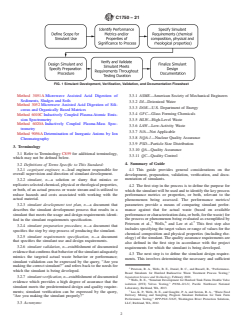
1.3.1 This guide is intended for persons and organizations tasked with developing simulants to either mimic certain characteristics and properties of hazardous materials or provide representative performance for the phenomenon being evaluated. The process for simulant development, verification, validation, and documentation is shown schematically in Fig. 1. Specific approval requirements for the simulant developed under this guide are not provided. This topic is left to the performing organization. Approval requirements are associated with the design of the simulant, makeup procedures, and final simulant produced.
FIG. 1 Simulant Development, Verification, Validation, and Documentation Flowsheet
1.3.2 While this guide is directed at simulants for radioactive materials (for example, nuclear waste), the guidance is also applicable to other aqueous based solutions and slurries.
1.3.3 The values stated in SI units are to be regarded as the standard. The values given in parentheses are for information only.
1.4 This guide is not a substitute for sound chemistry and chemical engineering skills, proven practices and experience. It is not intended to be prescriptive but rather to provide considerations for the development and use of simulants.
1.5 This standard does not purport to address all of the safety concerns, if any, associated with its use. It is the responsibility of the user of this standard to establish appropriate safety, health, and environmental practices and determine the applicability of regulatory limitations prior to use.
1.6 This international standard was developed in accordance with internationally recognized principles on standardization established in the Decision on Principles for the Development of International Standards, Guides and Recommendations issued by the World Trade Organization Technical Barriers to Trade (TBT) Committee.
- Status
- Published
- Publication Date
- 14-Jul-2021
- Technical Committee
- C26 - Nuclear Fuel Cycle
- Drafting Committee
- C26.13 - Spent Fuel and High Level Waste
Buy Documents
ASTM C1750-21 - Standard Guide for Development, Verification, Validation, and Documentation of Simulants for Hazardous Materials and Process Streams
REDLINE ASTM C1750-21 - Standard Guide for Development, Verification, Validation, and Documentation of Simulants for Hazardous Materials and Process Streams
Overview
ASTM C1750-21: Standard Guide for Development, Verification, Validation, and Documentation of Simulants for Hazardous Materials and Process Streams provides comprehensive guidance for the creation and management of simulants that mimic hazardous materials, including radioactive waste and process streams. Simulants are essential in testing equipment, process development, and facility commissioning where direct handling of actual hazardous substances is cost-prohibitive and potentially dangerous. This ASTM standard establishes a consistent methodology for developing, verifying, validating, and documenting simulant materials, ensuring reliable and repeatable results in a variety of industrial and research applications.
Key Topics
The guide is focused on providing best practices and considerations in the following key areas:
Simulant Use Definition
- Identifying the intended applications and performance metrics for the simulant
- Matching chemical, physical, and rheological properties to those of actual hazardous materials.
Simulant Design Requirements
- Establishing key properties and acceptance criteria
- Specifying chemical compositions and physical features relevant to equipment and process testing.
Preparation Procedures
- Outlining step-by-step processes for consistent simulant fabrication
- Addressing factors such as the source and grade of water and chemicals, order of component addition, mixing, temperature control, and prevention of contamination or degradation.
Verification and Validation
- Ensuring that simulant properties meet design and quality specifications
- Implementing quality assurance and control processes, including standardized measurements and compliance with project or regulatory requirements.
Documentation
- Compiling comprehensive records, including design specifications, preparation procedures, test plans, and verification activities to facilitate traceability and repeatability.
These topics help engineers and project managers create simulants that accurately replicate the properties of hazardous materials for safe, effective, and cost-efficient testing and development.
Applications
ASTM C1750-21 is particularly valuable in environments where direct use of hazardous materials is impractical or poses significant risks. Practical applications include:
Nuclear and Radioactive Waste Management
- Developing, testing, and validating equipment and processes for handling and treating radioactive wastes
- Supporting the commissioning of waste treatment facilities using non-hazardous simulants.
Process Development and Optimization
- Simulating various properties of hazardous process streams for design, performance evaluation, and troubleshooting operations.
Equipment Acceptance Testing
- Evaluating system and component performance prior to operation with actual hazardous materials to ensure safety and compliance.
Regulatory and Environmental Compliance
- Supporting activities where hazardous materials simulations are required for meeting environmental and safety regulations.
Scale-up and Fabrication
- Guiding the transition from bench-scale to full-scale simulant production, addressing concerns of consistency, chemical impurities, equipment compatibility, and storage needs.
Related Standards
ASTM C1750-21 references and aligns with a variety of related standards to support consistent and reliable results, including:
- ASTM C859 - Terminology Relating to Nuclear Materials
- ASTM C1109 & C1111 - Analytical Methods for Waste Materials
- ASTM C1752 - Measuring Physical and Rheological Properties of Radioactive Solutions and Sludges
- ASME NQA-1 - Quality Assurance Requirements for Nuclear Facility Applications
- EPA SW-846 Methods - Analytical methods for environmental testing, including acid digestion and ion chromatography
By following guidelines established in ASTM C1750-21 and related standards, organizations can develop robust protocols that enhance safety, regulatory compliance, and operational efficiency when working with simulants for hazardous materials.
Keywords: ASTM C1750-21, simulant development, hazardous materials, radioactive waste, process streams, verification, validation, documentation, quality assurance, equipment testing, process simulation, nuclear waste, standard guide.
Relations
- Effective Date
- 01-Jan-2024
- Effective Date
- 15-Jun-2014
- Effective Date
- 15-Jan-2014
- Effective Date
- 01-Jun-2013
- Effective Date
- 01-May-2013
- Effective Date
- 01-Nov-2010
- Effective Date
- 01-Aug-2010
- Effective Date
- 01-Feb-2010
- Effective Date
- 15-Feb-2009
- Effective Date
- 15-Sep-2008
- Effective Date
- 01-Jan-1992
Buy Documents
ASTM C1750-21 - Standard Guide for Development, Verification, Validation, and Documentation of Simulants for Hazardous Materials and Process Streams
REDLINE ASTM C1750-21 - Standard Guide for Development, Verification, Validation, and Documentation of Simulants for Hazardous Materials and Process Streams
Get Certified
Connect with accredited certification bodies for this standard

CIS Institut d.o.o.
Personal Protective Equipment (PPE) certification body. Notified Body NB-2890 for EU Regulation 2016/425 PPE.

Kiwa BDA Testing
Building and construction product certification.
Kmetijski inštitut Slovenije
Agricultural Institute of Slovenia. Soil testing, plant health, agricultural product analysis.
Sponsored listings
Frequently Asked Questions
ASTM C1750-21 is a guide published by ASTM International. Its full title is "Standard Guide for Development, Verification, Validation, and Documentation of Simulants for Hazardous Materials and Process Streams". This standard covers: SCOPE 1.1 Intent: 1.1.1 The intent of this guide is to provide general considerations for the development, verification, validation, and documentation of tank simulants for hazardous materials (for example, radioactive wastes) and process streams. Due to the expense and hazards associated with obtaining and working with actual hazardous materials, especially radioactive wastes, simulants are used in a wide variety of applications including process and equipment development and testing, equipment acceptance testing, and plant commissioning. This standard guide facilitates a consistent methodology for development, preparation, verification, validation, and documentation of simulants. 1.2 This guide provides direction on (1) defining simulant use, (2) defining simulant-design requirements, (3) developing a simulant preparation procedure, (4) verifying and validating that the simulant meets design requirements, and (5) documenting simulant-development activities and simulant preparation procedures. 1.3 Applicability: 1.3.1 This guide is intended for persons and organizations tasked with developing simulants to either mimic certain characteristics and properties of hazardous materials or provide representative performance for the phenomenon being evaluated. The process for simulant development, verification, validation, and documentation is shown schematically in Fig. 1. Specific approval requirements for the simulant developed under this guide are not provided. This topic is left to the performing organization. Approval requirements are associated with the design of the simulant, makeup procedures, and final simulant produced. FIG. 1 Simulant Development, Verification, Validation, and Documentation Flowsheet 1.3.2 While this guide is directed at simulants for radioactive materials (for example, nuclear waste), the guidance is also applicable to other aqueous based solutions and slurries. 1.3.3 The values stated in SI units are to be regarded as the standard. The values given in parentheses are for information only. 1.4 This guide is not a substitute for sound chemistry and chemical engineering skills, proven practices and experience. It is not intended to be prescriptive but rather to provide considerations for the development and use of simulants. 1.5 This standard does not purport to address all of the safety concerns, if any, associated with its use. It is the responsibility of the user of this standard to establish appropriate safety, health, and environmental practices and determine the applicability of regulatory limitations prior to use. 1.6 This international standard was developed in accordance with internationally recognized principles on standardization established in the Decision on Principles for the Development of International Standards, Guides and Recommendations issued by the World Trade Organization Technical Barriers to Trade (TBT) Committee.
SCOPE 1.1 Intent: 1.1.1 The intent of this guide is to provide general considerations for the development, verification, validation, and documentation of tank simulants for hazardous materials (for example, radioactive wastes) and process streams. Due to the expense and hazards associated with obtaining and working with actual hazardous materials, especially radioactive wastes, simulants are used in a wide variety of applications including process and equipment development and testing, equipment acceptance testing, and plant commissioning. This standard guide facilitates a consistent methodology for development, preparation, verification, validation, and documentation of simulants. 1.2 This guide provides direction on (1) defining simulant use, (2) defining simulant-design requirements, (3) developing a simulant preparation procedure, (4) verifying and validating that the simulant meets design requirements, and (5) documenting simulant-development activities and simulant preparation procedures. 1.3 Applicability: 1.3.1 This guide is intended for persons and organizations tasked with developing simulants to either mimic certain characteristics and properties of hazardous materials or provide representative performance for the phenomenon being evaluated. The process for simulant development, verification, validation, and documentation is shown schematically in Fig. 1. Specific approval requirements for the simulant developed under this guide are not provided. This topic is left to the performing organization. Approval requirements are associated with the design of the simulant, makeup procedures, and final simulant produced. FIG. 1 Simulant Development, Verification, Validation, and Documentation Flowsheet 1.3.2 While this guide is directed at simulants for radioactive materials (for example, nuclear waste), the guidance is also applicable to other aqueous based solutions and slurries. 1.3.3 The values stated in SI units are to be regarded as the standard. The values given in parentheses are for information only. 1.4 This guide is not a substitute for sound chemistry and chemical engineering skills, proven practices and experience. It is not intended to be prescriptive but rather to provide considerations for the development and use of simulants. 1.5 This standard does not purport to address all of the safety concerns, if any, associated with its use. It is the responsibility of the user of this standard to establish appropriate safety, health, and environmental practices and determine the applicability of regulatory limitations prior to use. 1.6 This international standard was developed in accordance with internationally recognized principles on standardization established in the Decision on Principles for the Development of International Standards, Guides and Recommendations issued by the World Trade Organization Technical Barriers to Trade (TBT) Committee.
ASTM C1750-21 is classified under the following ICS (International Classification for Standards) categories: 13.030.30 - Special wastes. The ICS classification helps identify the subject area and facilitates finding related standards.
ASTM C1750-21 has the following relationships with other standards: It is inter standard links to ASTM C859-24, ASTM C859-14a, ASTM C859-14, ASTM C859-13a, ASTM C859-13, ASTM C859-10b, ASTM C859-10a, ASTM C859-10, ASTM C859-09, ASTM C859-08, ASTM C859-92b. Understanding these relationships helps ensure you are using the most current and applicable version of the standard.
ASTM C1750-21 is available in PDF format for immediate download after purchase. The document can be added to your cart and obtained through the secure checkout process. Digital delivery ensures instant access to the complete standard document.
Standards Content (Sample)
This international standard was developed in accordance with internationally recognized principles on standardization established in the Decision on Principles for the
Development of International Standards, Guides and Recommendations issued by the World Trade Organization Technical Barriers to Trade (TBT) Committee.
Designation:C1750 −21
Standard Guide for
Development, Verification, Validation, and Documentation of
Simulants for Hazardous Materials and Process Streams
This standard is issued under the fixed designation C1750; the number immediately following the designation indicates the year of
original adoption or, in the case of revision, the year of last revision. A number in parentheses indicates the year of last reapproval. A
superscript epsilon (´) indicates an editorial change since the last revision or reapproval.
1. Scope 1.3.3 The values stated in SI units are to be regarded as the
standard. The values given in parentheses are for information
1.1 Intent:
only.
1.1.1 The intent of this guide is to provide general consid-
erations for the development, verification, validation, and 1.4 This guide is not a substitute for sound chemistry and
documentation of tank simulants for hazardous materials (for chemicalengineeringskills,provenpracticesandexperience.It
example, radioactive wastes) and process streams. Due to the is not intended to be prescriptive but rather to provide
expense and hazards associated with obtaining and working considerations for the development and use of simulants.
with actual hazardous materials, especially radioactive wastes,
1.5 This standard does not purport to address all of the
simulants are used in a wide variety of applications including
safety concerns, if any, associated with its use. It is the
process and equipment development and testing, equipment
responsibility of the user of this standard to establish appro-
acceptance testing, and plant commissioning. This standard
priate safety, health, and environmental practices and deter-
guide facilitates a consistent methodology for development,
mine the applicability of regulatory limitations prior to use.
preparation, verification, validation, and documentation of
1.6 This international standard was developed in accor-
simulants.
dance with internationally recognized principles on standard-
ization established in the Decision on Principles for the
1.2 This guide provides direction on (1) defining simulant
Development of International Standards, Guides and Recom-
use, (2) defining simulant-design requirements, (3) developing
mendations issued by the World Trade Organization Technical
a simulant preparation procedure, (4) verifying and validating
Barriers to Trade (TBT) Committee.
that the simulant meets design requirements, and (5) docu-
menting simulant-development activities and simulant prepa-
2. Referenced Documents
ration procedures.
1.3 Applicability: 2.1 ASTM Standards:
C859 Terminology Relating to Nuclear Materials
1.3.1 This guide is intended for persons and organizations
tasked with developing simulants to either mimic certain
2.2 ASME Standard:
characteristicsandpropertiesofhazardousmaterialsorprovide
NQA-1 Quality Assurance Requirements for Nuclear Facil-
representative performance for the phenomenon being evalu-
ity Applications
ated. The process for simulant development, verification,
2.3 Environmental Protection Agency SW-846 Methods:
validation, and documentation is shown schematically in Fig.
Method 3010A Acid digestion of Aqueous Samples and
1. Specific approval requirements for the simulant developed
Extracts for total metals for Analysis by FLAA or ICP
under this guide are not provided. This topic is left to the
Spectroscopy
performingorganization.Approvalrequirementsareassociated
Method 3050B Acid Digestion of Sediments, Sludges and
with the design of the simulant, makeup procedures, and final
Soils
simulant produced.
1.3.2 While this guide is directed at simulants for radioac-
tivematerials(forexample,nuclearwaste),theguidanceisalso
For referenced ASTM standards, visit the ASTM website, www.astm.org, or
applicable to other aqueous based solutions and slurries.
contact ASTM Customer Service at service@astm.org. For Annual Book of ASTM
Standards volume information, refer to the standard’s Document Summary page on
the ASTM website.
1 3
This guide is under the jurisdiction ofASTM Committee C26 on Nuclear Fuel Available from American Society of Mechanical Engineers (ASME), ASME
Cycle and is the direct responsibility of Subcommittee C26.13 on Spent Fuel and International Headquarters, Two Park Ave., New York, NY 10016-5990, http://
High Level Waste. www.asme.org.
Current edition approved July 15, 2021. Published August 2021. Originally AvailablefromUnitedStatesEnvironmentalProtectionAgency(EPA),William
approved in 2011. Last previous edition approved in 2017 as C1750 – 17. DOI: Jefferson Clinton Bldg., 1200 Pennsylvania Ave., NW, Washington, DC 20460,
10.1520/C1750-21. http://www.epa.gov.
Copyright © ASTM International, 100 Barr Harbor Drive, PO Box C700, West Conshohocken, PA 19428-2959. United States
C1750−21
FIG. 1Simulant Development, Verification, Validation, and Documentation Flowsheet
Method 3051A Microwave Assisted Acid Digestion of 3.3.1 ASME—American Society of Mechanical Engineers
Sediments, Sludges and Soils
3.3.2 DI—Deionized Water
Method 3052 Microwave Assisted Acid Digestion of Sili-
3.3.3 DOE—U.S. Department of Energy
ceous and Organically Based Matrices
3.3.4 GFC—Glass Forming Chemicals
Method 6010C Inductively Coupled Plasma-Atomic Emis-
sion Spectrometry 3.3.5 HLW—High-Level Waste
Method 6020A Inductively Coupled Plasma-Mass Spec-
3.3.6 LAW—Low-Activity Waste
trometry
3.3.7 N/A—Not Applicable
Method 9056A Determination of Inorganic Anions by Ion
3.3.8 NQA-1—Nuclear Quality Assurance
Chromatography
3.3.9 PSD—Particle Size Distribution
3. Terminology
3.3.10 QA—Quality Assurance
3.1 Refer to Terminology C859 for additional terminology,
3.3.11 QC—Quality Control
which may not be defined below.
4. Summary of Guide
3.2 Definitions of Terms Specific to This Standard:
3.2.1 cognizant engineer, n—lead engineer responsible for
4.1 This guide provides general considerations on the
overall supervision and direction of simulant development.
development, preparation, validation, verification, and docu-
mentation of simulants.
3.2.2 simulant, n—a solution or slurry that mimics or
replicatesselectedchemical,physicalorrheologicalproperties,
4.2 The first step in the process is to define the purpose for
or both, of an actual process or waste stream and is utilized to
which the simulant will be used and to identify the key process
reduce hazards and costs associated with working with the
performance metrics or properties, or both, relevant to the
actual material.
phenomenon being assessed. The performance metrics/
parameters provide a means of comparing simulant perfor-
3.2.3 simulant development test plan, n—a document that
mance against that for actual waste (based on available
describes the simulant development process that results in a
performanceorcharacterizationdata,orboth,forthewaste)for
simulant that meets the usage and design requirements identi-
the process or phenomenon being evaluated as exemplified by
fied in the simulant requirements specification.
5 6 7
Peterson et al., Wells, and Lee et al. This first step also
3.2.4 simulant preparation procedure, n—a document that
includes specifying the target values or range of values for the
specifies the step by step process of producing the simulant.
chemical composition and physical properties (including rhe-
3.2.5 simulant requirements specification, n—a document
ology) of the simulant. The quality assurance requirements are
that specifies the simulant use and design requirements.
also defined in the first step in accordance with the project
3.2.6 simulant validation, n—establishment of documented
requirements for which the simulant is being developed.
evidencethatconfirmsthatbehaviorofthesimulantadequately
4.3 The next step is to define the simulant design require-
mimics the targeted actual waste behavior or performance;
ments. This involves determining the necessary and sufficient
simulant validation can be expressed by the query, “Are you
making the correct simulant?” and refers back to the needs for
Peterson, R. A., Wells, B. E., Daniel, R. C., and Russell, R., “Performance-
which the simulant is being developed.
Based Simulants for Hanford Radioactive Waste Treatment Process Testing,”
Separation Science and Technology, February 2021.
3.2.7 simulantverification,n—establishmentofdocumented
Wells, B. E., “Simulant Development for Hanford Tank Farms Double Valve
evidence which provides a high degree of assurance that the
isolation (DVI) Valves Testing,” PNNL-22121, Pacific Northwest National
simulant meets the predetermined design and quality require-
Laboratory, Richland, WA, 2013.
ments; simulant verification can be expressed by the query, Lee, K. P., Wells, B. E., and Gauglitz, P. A, and Sexton, R. A., “Waste Feed
Delivery Mixing and Sampling Program Simulant Definition for Tank Farm
“Are you making the simulant properly?”
Performance Testing,” RPP-PLN-51625, Washington River Protection Solutions,
3.3 Acronyms: LLC, Richland, WA, 2012.
C1750−21
simulant properties to be measured for each affected unit tion (i.e., performance of interest) need to be considered. For
operation. Key simulant properties and acceptance criteria are example, if pipeline transport of non-buoyant solids in an
developed with regard to the project requirements for which
aqueous liquid is the phenomena being evaluated, solids
the simulant is being developed. Standardized chemical and
properties significant to the process performance can be
physical property measurements are referenced.
different than those characteristics for the same simulant
forming settled sediment that has a yield stress in a vessel, and
4.4 The following step is to define an approach for devel-
the associated performance metrics are different. Similarly,
oping the simulant to meet the needs for simulant use while
significant difference in simulant solid particle performance
satisfying the design requirements. This approach is often
properties may be required to evaluate waste impact on
documented in a test plan that includes the methods for
equipment associated with abrasive wear and fretting. The use
validatingtheuseofthefinaldevelopedsimulantandverifying
ofkeyprocessperformancemetricsallowschangesinsimulant
the simulant is acceptable.
composition to be evaluated and compared with other compo-
4.5 Upondevelopinganapproachandsimulant,aprocedure
sitions and the actual waste. The effect of process chemical
for preparing the simulant must be generated and documented.
additions and recycle streams must also be assessed. Wells
Theprocedureisfocusedonprovidingameansforconsistently
provides an example of an assessment of an existing simulant
generating the correct simulant regardless of persons conduct-
designed for an alternative purpose and the resulting develop-
ing process. The procedure takes into account sequence con-
ment of a performance-based simulant to represent the same
stituentsareadded,degreeofmixing,andtemperatureatwhich
process material for evaluating valve wear.
processes take place. The development of the preparation
5.2.1.2 The applicable quality assurance requirements
procedures must address scale-up associated with fabricating
larger batches of simulant, and simulant contamination, should be specified in accordance with the projects quality
degradation, or attrition during testing. assurance program. For example, in the U. S. Department of
Energy (DOE) complex, these requirements often include a
4.6 Once the fabrication of simulant is initiated, the simu-
QA program that implements ASME Nuclear Quality
lant being produced needs to be verified. Verification assures
Assurance, NQA-1 (latest revision or as specified by project)
the simulant meets design requirements and addresses the
and its applicable portions of Part II, Subpart 2.7 (latest
question: was the simulant made properly?
revision or as specified by project) or Office of Civilian
4.7 At the end of the simulant process, documentation for
Radioactive Waste Management Quality Assurance Require-
the simulant development process needs to be compiled and
mentsDocument:QARDDOE/RW0333P(latestrevisionoras
finalized. The documentation must meet project requirements
specified by project) QA requirements. Simulant-development
for producing records materials and focus on assuring the
activities that support regulatory and environmental
repeatability of the process.
compliance-related aspects of a waste-vitrification program
may need to be performed in accordance with project quality-
5. Significance and Use
assurance requirements for generating environmental regula-
5.1 The development and use of simulants is generally
tory data. The use of simulants for project testing that is
dictated by the difficulty of working with actual radioactive
exploratory or scoping in nature may not need to comply with
wastes or hazardous materials, or both, and process streams.
specific QA requirements.
These difficulties include large costs associated with obtaining
5.2.2 Simulant Composition Definition:
samplesofsignificantsizeaswellassignificantenvironmental,
5.2.2.1 Approaches to simulant-composition development
safety and health issues.
will vary depending on the type of simulant required for
5.2 Simulant-development Scope Statement:
testing. Simulant compositions may be based on actual sample
5.2.1 Simulant Use Definition:
characterization data, formulated for specific unit operations,
5.2.1.1 The first step should be to determine what the
or used for bounding or testing the limits of a process or
simulant is to be used for. Simulants may be used in a wide
specific piece of equipment. Key properties that are to be
variety of applications including evaluation of process
simulated should be identified as it may be difficult and
performance, providing design input to equipment, facilities
unnecessary to develop simulants that exactly mimic all actual
and operations, acceptance testing of procured equipment or
process stream properties at once.These key properties may be
systems, commissioning of equipment or facilities, or trouble-
identified based on the key process performance metrics (see
shooting operations in existing equipment or facilities. A
5.2.1.1) used to evaluate simulant performance relative to the
simulant may be used for single or multiple unit operations.
phenomenon being investigated.
Through the simulant-use definition, the characteristics of the
5.2.2.2 Compositions for simulants based on actual waste
simulant required for development are determined. The char-
samples should be defined using the available characterization
acteristics may include chemical, physical, or a combination of
data as the starting point (see Fig. 2). The best available
these properties. The simulant-use definition should identify
source-term analytical data, including uncertainties, along with
the key process performance metrics or properties, or both. It
a comparison against comparable inventory data, historical
is important to note that a simulant developed to evaluate
mobilization and suspension of Material A is not necessarily process information, or feed vectors must be assessed. This
comparison should highlight analytical outlier values that will
adequate for assessing component wear or pipeline transport
associated with MaterialA. Both the material and the applica- need to be addressed for an analyte.
C1750−21
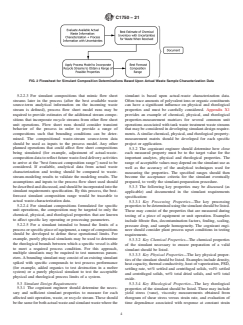
FIG. 2Flowsheet for Simulant Composition Determinations Based Upon Actual Waste Sample Characterization Data
5.2.2.3 For simulant compositions that mimic flow sheet simulant is based upon actual-waste characterization data.
streams later in the process (after the best available waste Often trace amounts of polyvalent ions or organic constituents
source-term analytical information on the incoming waste can have a significant influence on physical and rheological
stream is defined), process flow sheet model runs may be properties and must be carefully considered. Appendix X1
required to provide estimates of the additional stream compo- provides an example of chemical, physical, and rheological
sitions that incorporate recycle streams from other flow sheet properties-measurement matrices for several common unit
unit operations. Flow sheet runs should consider transient operations associated with tank waste treatment waste streams
behavior of the process in order to provide a range of that may be considered in developing simulant-design require-
compositions such that bounding conditions can be deter- ments.Asimilar chemical, physical, and rheological property-
mined. The compositional waste-stream source-term data measurement matrix should be developed for each specific
should be used as inputs to the process model. Any other project or application.
planned operations that could affect flow sheet compositions 5.3.2 The cognizant engineer should determine how close
being simulated (for example, adjustment of actual-waste-
each measured property must be to the target value for the
composition data to reflect future waste-feed delivery activities important analytes, physical and rheological properties. The
to arrive at the “best forecast composition range”) need to be
range of acceptable values may depend on the simulant use as
considered. If available, analytical data from actual waste well as the accuracy of the analytical techniques used for
characterization and testing should be compared to waste-
measuring the properties. The specified ranges should then
stream-modeling results to validate the modeling results. The become the acceptance criteria for the simulant eventually
assumptions and inputs to the process flow sheet used should
prepared, to verify the simulant-preparation procedure.
bedescribedanddiscussed,andshouldbeincorporatedintothe
5.3.3 The following key properties may be discussed (as
simulant requirements specification. By this process, the best-
applicable) and documented in the simulant requirements
forecast simulant composition range would be traceable to
specification:
actual waste-characterization data.
5.3.3.1 Key Processing Properties—The key processing
5.2.2.4 For simulant compositions formulated for specific
propertiestobedeterminedusingthesimulantshouldbelisted.
unit operations, the composition may be targeted to only the
These may consist of the properties that are measured during
chemical, physical, and rheological properties that are known
testing of a piece of equipment or unit operation. Examples
to affect specific key operating or processing parameters.
include filtrate flux, decontamination factors, fouling, scaling,
5.2.2.5 For a simulant intended to bound the limits of a
pressure drop, and sample homogeneity. The cognizant engi-
processorspecificpieceofequipment,arangeofcompositions
neer should consider plant process upset conditions in testing
should be developed to define these operational limits. For
requirements.
example, purely physical simulants may be used to determine
5.3.3.2 Key Chemical Properties—The chemical properties
the rheological bounds between which a specific vessel is able
of the simulant necessary to ensure preparation of a valid
to meet a required process condition. For this approach,
simulant should be listed.
multiple simulants may be required to test numerous param-
5.3.3.3 Key Physical Properties—The key physical proper-
eters.Abounding simulant may consist of an existing simulant
ties of the simulant should be listed. Examples include density,
spiked with specific compounds to test process performance
heat capacity, thermal conductivity, heat of vaporization, PSD,
(for example, added organics to test destruction in a melter
settling rate, wt% settled and centrifuged solids, vol% settled
system) or a purely physical simulant to test the acceptable
and centrifuged solids, wt% total dried solids, and wt% total
physical and rheological process limits of a system.
oxide.
5.3 Simulant Design Requirements: 5.3.3.4 Key Rheological Properties—The key rheological
5.3.1 The cognizant engineer should determine the neces- properties of the simulant should be listed. These may include
sary and sufficient simulant properties to measure for each yield stress (vane), viscosity measurements obtained from
affected unit operation, waste, or recycle stream. These should rheogram of shear stress versus strain rate, and evaluation of
bethesameforbothactualwasteandsimulantwastewherethe time dependence associated with response at constant strain
C1750−21
rate or constant stress application, or both. Other “strength” 5.5.1.7 Actual processing parameters of the simulant impor-
related parameters may be pertinent. For instance, erosion tant in developing a final simulant (for example, washing,
(mobilization of the sediment) rate parameters should be leaching, shearing of solids, or generation and sampling of a
investigatedformobilizationofthe5.2.1.1exampleofasettled submerged-bed-scrubber simulant) are stipulated.
sediment that has a yield stress.
5.5.2 Simulants may be developed following one of several
5.3.3.5 Design-basis Range—Key design assumptions used general approaches: attempt to replicate the process that
at the particular point in the plant should also be listed. For
produced the material (for example, waste), replicate key
example, key design parameters for pumps, agitators, piping, processes that produced the material, obtain individual com-
and vessels that would affect the simulant development should
ponents that mimic the key properties of the actual material
be documented. when mixed together, or use materials that are chemically
5.3.4 If simulant melter feeds are to be developed, the different than the material being represented, but mimic the
cognizant engineer should ensure that the glass-former chemi- physical or rheological properties, or both, when mixed to-
cals (GFCs), used for testing, are consistent with project gether.
requirements.
5.5.2.1 One approach is to attempt to replicate the process
5.3.5 The key simulant properties and acceptance criteria that produced the actual material (for example, waste). This is
maybedocumentedinthesimulantrequirementsspecification,
generally the most difficult approach to implement, but has the
preferably in table format.An example for a LAWMelter Feed greatest chance of replicating a wide variety of material
is provided in X2.1. Each project is encouraged to develop a
properties. This approach may be able to produce a simulant
similar list. with specialized properties and produce compounds and par-
5.3.6 Standardized chemical, physical, and rheological ticulates that may not be commercially available or may not
property measurements for work performed should be used have been identified during characterization of the actual
material of interest. It has the potential to produce a simulant
(see Section 2). Use of these property measurements is
essential to ensure standardized, comparable results between that is highly credible. Use of this approach may be hampered
byalackofknowledgeofprocessconditionsthatproducedthe
all actual-waste and simulant-based tests.
material. For example, nuclear wastes may have been stored
5.4 Simulant Development Test Plan:
for decades with unknown chemical interactions and changed
5.4.1 The person or organization assigned to perform the
inunknownwaysduetoagingeffectsandachemicalevolution
simulant development work may prepare a simulant develop-
that is not fully understood. The processes are often complex,
ment test plan that implements the simulant requirements
expensive and time consuming to replicate. In practice it is
specification.Thesimulantdevelopmenttestplandescribesthe
often sufficient to replicate the key processes that produced the
proposed simulant development process, the key performance
material. For example, neutralizing an
...
This document is not an ASTM standard and is intended only to provide the user of an ASTM standard an indication of what changes have been made to the previous version. Because
it may not be technically possible to adequately depict all changes accurately, ASTM recommends that users consult prior editions as appropriate. In all cases only the current version
of the standard as published by ASTM is to be considered the official document.
Designation: C1750 − 17 C1750 − 21
Standard Guide for
Development, Verification, Validation, and Documentation of
Simulated High-Level Tank WasteSimulants for Hazardous
Materials and Process Streams
This standard is issued under the fixed designation C1750; the number immediately following the designation indicates the year of
original adoption or, in the case of revision, the year of last revision. A number in parentheses indicates the year of last reapproval. A
superscript epsilon (´) indicates an editorial change since the last revision or reapproval.
1. Scope
1.1 Intent:
1.1.1 The intent of this guidelineguide is to provide general considerations for the development, verification, validation, and
documentation of high-level waste (HLW) tank simulants. tank simulants for hazardous materials (for example, radioactive wastes)
and process streams. Due to the expense and hazards associated with obtaining and working with actual wastes, hazardous
materials, especially radioactive wastes, simulants are used in a wide variety of applications including process and equipment
development and testing, equipment acceptance testing, and plant commissioning. This standard guide facilitates a consistent
methodology for development, preparation, verification, validation, and documentation of waste simulants.
1.2 This guidelineguide provides direction on (1) defining simulant use, (2) defining simulant-design requirements, (3) developing
a simulant preparation procedure, (4) verifying and validating that the simulant meets design requirements, and (5) documenting
simulant-development activities and simulant preparation procedures.
1.3 Applicability:
1.3.1 This guide is intended for persons and organizations tasked with developing HLW simulants to either mimic certain
characteristics and properties of actual wastes. hazardous materials or provide representative performance for the phenomenon
being evaluated. The process for simulant development, verification, validation, and documentation is shown schematically in Fig.
1. Specific approval requirements for the simulantssimulant developed under this guidelineguide are not provided. This topic is left
to the performing organization. Approval requirements are associated with the design of the simulant, makeup procedures, and final
simulant produced.
1.3.2 While this guide is directed at HLW simulants, much of the guidance may also be simulants for radioactive materials (for
example, nuclear waste), the guidance is also applicable to other aqueous based solutions and slurries.
1.3.3 The values stated in SI units are to be regarded as the standard. The values given in parentheses are for information only.
1.4 User Caveats: This guide is not a substitute for sound chemistry and chemical engineering skills, proven practices and
experience. It is not intended to be prescriptive but rather to provide considerations for the development and use of simulants.
This specificationguide is under the jurisdiction of ASTM Committee C26 on Nuclear Fuel Cycle and is the direct responsibility of Subcommittee C26.13 on Spent Fuel
and High Level Waste.
Current edition approved Nov. 15, 2017July 15, 2021. Published December 2017August 2021. Originally approved in 2011. Last previous edition approved in 20112017
as C1750 – 11.C1750 – 17. DOI: 10.1520/C1750-17.10.1520/C1750-21.
Copyright © ASTM International, 100 Barr Harbor Drive, PO Box C700, West Conshohocken, PA 19428-2959. United States
C1750 − 21
FIG. 1 Simulant Development, Verification, Validation, and Documentation Flowsheet
1.4.1 This guideline is not a substitute for sound chemistry and chemical engineering skills, proven practices and experience. It
is not intended to be prescriptive but rather to provide considerations for the development and use of waste simulants.
1.4.2 This standard does not purport to address all of the safety concerns, if any, associated with its use. It is the responsibility
of the user of this standard to establish appropriate safety, health, and environmental practices and determine the applicability of
regulatory limitations prior to use.
1.5 This standard does not purport to address all of the safety concerns, if any, associated with its use. It is the responsibility
of the user of this standard to establish appropriate safety, health, and environmental practices and determine the applicability of
regulatory limitations prior to use.
1.6 This international standard was developed in accordance with internationally recognized principles on standardization
established in the Decision on Principles for the Development of International Standards, Guides and Recommendations issued
by the World Trade Organization Technical Barriers to Trade (TBT) Committee.
2. Referenced Documents
2.1 ASTM Standards:
C859 Terminology Relating to Nuclear Materials
C1109 Practice for Analysis of Aqueous Leachates from Nuclear Waste Materials Using Inductively Coupled Plasma-Atomic
Emission Spectroscopy
C1111 Test Method for Determining Elements in Waste Streams by Inductively Coupled Plasma-Atomic Emission Spectroscopy
C1752 Guide for Measuring Physical and Rheological Properties of Radioactive Solutions, Slurries, and Sludges
D4129 Test Method for Total and Organic Carbon in Water by High Temperature Oxidation and by Coulometric Detection
2.2 ASME Standard:
NQA-1 Quality Assurance Requirements for Nuclear Facility Applications
2.3 Environmental Protection Agency SW-846 Methods:
Method 3010A Acid digestion of Aqueous Samples and Extracts for total metals for Analysis by FLAA or ICP Spectroscopy
Method 3050B Acid Digestion of Sediments, Sludges and Soils
Method 3051A Microwave Assisted Acid Digestion of Sediments, Sludges and Soils
Method 3052 Microwave Assisted Acid Digestion of Siliceous and Organically Based MatriciesMatrices
Method 6010C Inductively Coupled Plasma-Atomic Emission Spectrometry
Method 6020A Inductively Coupled Plasma-Mass Spectrometry
Method 9056A Determination of Inorganic Anions by Ion Chromatography
3. Terminology
3.1 Refer to Terminology C859 for additional terminology, which may not be defined below.
For referenced ASTM standards, visit the ASTM website, www.astm.org, or contact ASTM Customer Service at service@astm.org. For Annual Book of ASTM Standards
volume information, refer to the standard’s Document Summary page on the ASTM website.
For typical contaminants such as chloride, these ingredients should be added after the amount already present from the other chemicals added is known.Available from
American Society of Mechanical Engineers (ASME), ASME International Headquarters, Two Park Ave., New York, NY 10016-5990, http://www.asme.org.
Available from United States Environmental Protection Agency (EPA), William Jefferson Clinton Bldg., 1200 Pennsylvania Ave., NW, Washington, DC 20460,
http://www.epa.gov.
C1750 − 21
3.2 Definitions of Terms Specific to This Standard:
3.2.1 cognizant engineer, n—lead engineer responsible for overall supervision and direction of simulant development.
3.2.2 simulant, n—a solution or slurry that mimics or replicates selected chemical, physical or rheological properties, or both, of
an actual process or waste stream.stream and is utilized to reduce hazards and costs associated with working with the actual
material.
3.2.3 simulant development test plan, n—a document that describes the simulant development process that results in a simulant
that meets the usage and design requirements identified in the simulant requirements specification.
3.2.4 simulant preparation procedure, n—a document that specifies the step by step process of producing the simulant.
3.2.5 simulant requirements specification, n—a document that specifies the simulant use and design requirements.
3.2.6 simulant validation, n—establishment of documented evidence that confirms that behavior of the simulant adequately
mimics the targeted actual waste behavior. Simulant behavior or performance; simulant validation can be expressed by the query,
“Are you making the correct simulant?” and refers back to the needs for which the simulant is being developed.
3.2.7 simulant verification, n—establishment of documented evidence which provides a high degree of assurance that the simulant
meets the predetermined design and quality requirements. Simulantrequirements; simulant verification can be expressed by the
query, “Are you making the simulant properly?”
3.3 Acronyms:
3.3.1 ASME—American Society of Mechanical Engineers
3.3.2 DI—Deionized Water
3.3.3 DOE—U.S. Department of Energy
3.3.4 GFC—Glass Forming Chemicals
3.3.5 HLW—High-Level Waste
3.3.6 LAW—Low-Activity Waste
3.3.7 N/A—Not Applicable
3.3.8 NQA-1—Nuclear Quality Assurance
3.3.9 PSD—Particle Size Distribution
3.3.10 QA—Quality Assurance
3.3.11 QC—Quality Control
4. Summary of Guide
4.1 This guide provides general considerations on the development, preparation, validation, verification, and documentation of
HLW simulants.
4.2 The first step in the process is to define the purpose for which the simulant will be used and to identify the key process
performance metrics or properties, or both, relevant to the phenomenon being assessed. The performance metrics/parameters
provide a means of comparing simulant performance against that for actual waste (based on available performance or
C1750 − 21
characterization data, or both, for the waste) for the process or phenomenon being evaluated. evaluated as exemplified by Peterson
5 6 7
et al., Wells, and Lee et al. This first step also includes specifying the target values or range of values for the chemical
composition and physical properties (including rheology) of the simulant. The quality assurance requirements are also defined in
the first step in accordance with the project requirements for which the simulant is being developed.
4.3 The next step is to define the simulant design requirements. This involves determining the necessary and sufficient simulant
properties to be measured for each affected unit operation. Key simulant properties and acceptance criteria are developed with
regard to the project requirements for which the simulant is being developed. Standardized chemical and physical property
measurements are referenced.
4.4 The following step is to define an approach for developing the simulant to meet the needs for simulant use while satisfying
the design requirements. This approach is often documented in a test plan that includes the methods for validating the use of the
final developed simulant and verifying the simulant is acceptable.
4.5 Upon developing an approach and simulant, a procedure for preparing the simulant must be generated and documented. The
procedure is focused on providing a means for consistently generating the correct simulant regardless of persons conducting
process. The procedure takes into account sequence constituents are added, degree of mixing, and temperature at which processes
take place. The development of the preparation procedures must address scale-up associated with fabricating larger batches of
simulant, and simulant contamination, degradation, or attrition during testing.
4.6 Once the fabrication of simulant is initiated, the simulant being produced needs to be verified. Verification assures the simulant
meets design requirements and addressaddresses the question: was the simulant made properly?
4.7 At the end of the simulant process, documentation for the simulant development process needs to be compiled and finalized.
The documentation must meet project requirements for producing records materials and focus on assuring the repeatability of the
process.
5. Significance and Use
5.1 The development and use of simulants is generally dictated by the difficulty of working with actual radioactive wastes or
hazardous wastes,materials, or both, and process streams. These difficulties include large costs associated with obtaining samples
of significant size as well as significant environmental, safety and health issues.
5.2 Simulant-DevelopmentSimulant-development Scope Statement:
5.2.1 Simulant Use Definition:
5.2.1.1 The first step should be to determine what the simulant is to be used for. Simulants may be used in a wide variety of
applications including evaluation of process performance, providing design input to equipment, facilities and operations,
acceptance testing of procured equipment or systems, commissioning of equipment or facilities, or troubleshooting operations in
existing equipment or facilities. A simulant may be used for single or multiple unit operations. Through the simulant-use definition,
the characteristics of the simulant required for development are determined. The characteristics may include chemical, physical,
or a combination of these properties. The simulant-use definition should identify the key process performance metrics or properties,
or both. It is important to note that a simulant developed to evaluate mobilization and suspension of Material A is not necessarily
adequate for assessing component wear or pipeline transport associated with Material A. Both the material and the application (i.e.,
performance of interest) need to be considered. For example, if pipeline transport of non-buoyant solids in an aqueous liquid is
the phenomena being evaluated, solids properties significant to the process performance can be different than those characteristics
for the same simulant forming settled sediment that has a yield stress in a vessel, and the associated performance metrics are
Simulant development, verification, validation, and documentation activities (described inPeterson, R. A., Wells, B. E., Daniel, R. C., and Russell, R.,
“Performance-Based Simulants 5.2 throughfor Hanford 5.7) have been summarized asRadioactive Waste Treatment Process Testing,” a checklist in Separation Science
Appendix X3 to allow the cognizant engineer and reviewersand Technology, a means to determine whether all appropriate areas have been addressed in the associated project
documentation.February 2021.
Wells, B. E., “Simulant Development for Hanford Tank Farms Double Valve isolation (DVI) Valves Testing,” PNNL-22121, Pacific Northwest National Laboratory,
Richland, WA, 2013.
Lee, K. P., Wells, B. E., and Gauglitz, P. A, and Sexton, R. A., “Waste Feed Delivery Mixing and Sampling Program Simulant Definition for Tank Farm Performance
Testing,” RPP-PLN-51625, Washington River Protection Solutions, LLC, Richland, WA, 2012.
C1750 − 21
different. Similarly, significant difference in simulant solid particle performance properties may be required to evaluate waste
impact on equipment associated with abrasive wear and fretting. The use of key process performance metrics allows changes in
simulant composition to be evaluated and compared with other compositions and the actual waste. The effect of process chemical
additions and recycle streams must also be assessed. Wells provides an example of an assessment of an existing simulant designed
for an alternative purpose and the resulting development of a performance-based simulant to represent the same process material
for evaluating valve wear.
5.2.1.2 The applicable quality assurance requirements should be specified in accordance with the projects quality assurance
program. For example, in the DOE U. S. Department of Energy (DOE) complex, these requirements often include a QA program
that implements ASME Nuclear Quality Assurance, NQA-1 (latest revision or as specified by project) and its applicable portions
of Part II, Subpart 2.7 (latest revision or as specified by project) or Office of Civilian Radioactive Waste Management Quality
Assurance Requirements Document: QARD DOE/RW 0333P (latest revision or as specified by project) QA requirements.
Simulant-development activities that support regulatory and environmental compliance-related aspects of a waste-vitrification
program may need to be performed in accordance with project quality-assurance requirements for generating environmental
regulatory data. The use of simulants for project testing that is exploratory or scoping in nature may not need to comply with
specific QA requirements.
5.2.2 Simulant Composition Definition:
5.2.2.1 Approaches to simulant-composition development will vary depending on the type of simulant required for testing.
Simulant compositions may be based on actual sample characterization data, formulated for specific unit operations, or used for
bounding or testing the limits of a process or specific piece of equipment. Key properties that are to be simulated should be
identified as it may be difficult and unnecessary to develop simulants that exactly mimic all actual process stream properties at
once. These key properties may be identifiefdidentified based on the key process performance metrics (refer to (see 5.2.1.1) used
to evaluate simulant performance relative to the phenomenon being investigated.
5.2.2.2 Compositions for simulants based on actual waste samples should be defined using the available characterization data as
the starting point (see Fig. 2). The best available source-term analytical data, including uncertainties, along with a comparison
against comparable inventory data, historical process information, or feed vectors must be assessed. This comparison should
highlight analytical outlier values that will need to be addressed for an analyte.
5.2.2.3 For simulant compositions that mimic flow sheet streams later in the process (after the best available waste source-term
analytical information on the incoming waste stream is defined), process flow sheet model runs may be required to provide
estimates of the additional stream compositions that incorporate recycle streams from other flow sheet unit operations. Flow sheet
runs should consider transient behavior of the process in order to provide a range of compositions such that bounding conditions
can be determined. The compositional waste-stream source-term data should be used as inputs to the process model. Any other
planned operations that could affect flow sheet compositions being simulated (for example, adjustment of actual-waste-
composition data to reflect future waste-feed delivery activities to arrive at the “best forecast composition range”) need to be
considered. If available, analytical data from actual waste characterization and testing should be compared to waste-stream-
modeling results to validate the modeling results. The assumptions and inputs to the process flow sheet used should be described
and discussed, and should be incorporated into the simulant requirements specification. By this process, the best-forecast simulant
composition range would be traceable to actual waste-characterization data.
5.2.2.4 For simulant compositions formulated for specific unit operations, the composition may be targeted to only the chemical,
physical, and rheological properties that are known to affect specific key operating or processing parameters.
FIG. 2 Flowsheet for Simulant Composition Determinations Based Upon Actual Waste Sample Characterization Data
C1750 − 21
5.2.2.5 For a simulant intended to bound the limits of a process or specific piece of equipment, a range of compositions should
be developed to define these operational limits. For example, purely physical simulants may be used to determine the rheological
bounds between which a specific vessel is able to meet a required process condition. For this approach, multiple simulants may
be required to test numerous parameters. A bounding simulant may consist of an existing simulant spiked with specific compounds
to test process performance (for example, added organics to test destruction in a melter system) or a purely physical simulant to
test the acceptable physical and rheological process limits of a system.
5.3 Simulant Design Requirements:
5.3.1 The cognizant engineer should determine the necessary and sufficient simulant properties to measure for each affected unit
operation, waste, or recycle stream. These should be the same for both actual waste and simulant waste where the simulant is based
upon actual-waste characterization data. Often trace amounts of polyvalent ions or organic constituents can have a significant
influence on physical and rheological properties and must be carefully considered. Appendix X1 provides an example of chemical,
physical, and rheological properties-measurement matrices for several common unit operations associated with tank waste
treatment waste streams that may be considered in developing simulant-design requirements. A similar chemical, physical, and
rheological property-measurement matrix should be developed for each specific project or application.
5.3.2 The cognizant engineer should determine how close each measured property must be to the target value for the important
analytes, physical and rheological properties. The range of acceptable values may depend on the simulant use as well as the
accuracy of the analytical techniques used for measuring the properties. The specified ranges should then become the acceptance
criteria for the simulant eventually prepared, to verify the simulant-preparation procedure.
5.3.3 The following key properties may be discussed (as applicable) and documented in the simulant requirements specification:
5.3.3.1 Key Processing Properties—The key processing properties to be determined using the simulant should be listed. These
may consist of the properties that are measured during testing of a piece of equipment or unit operation. Examples include filtrate
flux, decontamination factors, fouling, scaling, pressure drop, and sample homogeneity. The cognizant engineer should consider
plant process upset conditions in testing requirements.
5.3.3.2 Key Chemical Properties—The chemical properties of the simulant necessary to ensure preparation of a valid simulant
should be listed.
5.3.3.3 Key Physical Properties—The key physical properties of the simulant should be listed. Examples include density, heat
capacity, thermal conductivity, heat of vaporization, PSD, settling rate, wt% settled and centrifuged solids, vol% settled and
centrifuged solids, wt% total dried solids, and wt% total oxide.
5.3.3.4 Key Rheological Properties—The key rheological properties of the simulant should be listed. These may include yield
stress (vane), viscosity measurements obtained from rheogram of shear stress versus strain rate, and evaluation of time dependence
associated with response at constant strain rate or constant stress application, or both. Other “strength” related parameters may be
pertinent. For instance, erosion (mobilization of the sediment) rate parameters should be investigated for mobilization of the 5.2.1.1
example of a settled sediment that has a yield stress.
5.3.3.5 Design-BasisDesign-basis Range—Key design assumptions used at the particular point in the plant should also be listed.
For example, key design parameters for pumps, agitators, piping, and vessels that would affect the simulant development should
be documented.
5.3.4 If simulant melter feeds are to be developed, the cognizant engineer should ensure that the glass-former chemicals (GFCs),
used for testing, are consistent with project requirements.
5.3.5 The key simulant properties and acceptance criteria may be documented in the simulant requirements specification,
preferably in table format. An example for a LAW Melter Feed is provided in X2.1. Each project is encouraged to develop a similar
list.
5.3.6 Standardized chemical, physical, and rheological property measurements for work performed should be used (see Section
2). Use of these property measurements is essential to ensure standardized, comparable results between all actual-waste and
simulant-based tests.
C1750 − 21
5.4 Simulant Development Test Plan:
5.4.1 The person or organization assigned to perform the simulant development work may prepare a simulant development test
plan that implements the simulant requirements specification. The simulant development test plan describes the proposed simulant
development process, the key performance metrics being used, and should indicate what methodologies are planned to verify and
validate simulant-property data produced during preparation and testing activities. For complex applications, the test plan may also
define a hierarchy for applying or matching performance parameters to guide the simulant development process in cases where
compromises between competing factors must be made.
5.5 Develop Simulant Preparation Procedure:
5.5.1 Once the simulant requirements specification and the development test plan (if required) have been completed, the performer
of the work may proceed with the simulant-development activities in order to produce a standalone simulant preparation procedure.
The performer of the work should make sure all simulant design requirements are met when developing the simulant-preparation
procedure, for example:
5.5.1.1 Specified ionic forms of waste component
...