

ASTM G181-21
(Test Method)Standard Test Method for Conducting Friction Tests of Piston Ring and Cylinder Liner Materials Under Lubricated Conditions
General Information
- Abstract
SIGNIFICANCE AND USE
5.1 The efficiency and fuel economy of spark ignition and diesel engines is affected in part by the friction between moving parts. Although no reliable, in situ friction measurements exist for fired internal combustion engines, it has been estimated that at least half of the friction losses in such engines are due to those at the ring and liner interface. This test method involves the use of a reciprocating sliding arrangement to simulate the type of oscillating contact that occurs between a piston ring and its mating cylinder bore surface near the top-dead-center position in the cylinder where most severe surface contact conditions occur. There are many types of engines and engine operating environments; therefore, to allow the user the flexibility to tailor this test to conditions representative of various engines, this standard test method allows flexibility in selecting test loads, speeds, lubricants, and durations of testing. Variables that can be adjusted in this procedure include: normal force, speed of oscillation, stroke length, duration of testing, temperature of testing, method of specimen surface preparation, and the materials and lubricants to be evaluated. Guidance is provided here on the set-up of the test, the manner of specimen fixturing and alignment, the selection of a lubricant to simulate conditioned oil characteristics (for a diesel engine), and the means to run-in the ring specimens to minimize variability in test results.
5.2 Engine oil spends the majority of its operating lifetime in a state that is representative of use-conditioned oil. That is, fresh oil is changed by exposure to the heat, chemical environment, and confinement in lubricated contact. It ages, changing viscosity, atomic weight, solids content, acidity, and chemistry. Conducting piston ring and cylinder liner material evaluations in fresh, non-conditioned oil is therefore unrealistic for material screening. But additive-depleted, used oil can result in high wear and corros...
SCOPE
1.1 This test method covers procedures for conducting laboratory bench-scale friction tests of materials, coatings, and surface treatments intended for use in piston rings and cylinder liners in diesel or spark-ignition engines. The goal of this procedure is to provide a means for preliminary, cost-effective screening or evaluation of candidate ring and liner materials. A reciprocating sliding arrangement is used to simulate the contact that occurs between a piston ring and its mating liner near the top-dead-center position in the cylinder where liquid lubrication is least effective, and most wear is known to occur. Special attention is paid to specimen alignment, running-in, and lubricant condition.
1.2 This test method does not purport to simulate all aspects of a fired engine’s operating environment, but is intended to serve as a means for preliminary screening for assessing the frictional characteristics of candidate piston ring and liner material combinations in the presence of fluids that behave as use-conditioned engine oils. Therefore, it is beyond the scope of this test method to describe how one might establish correlations between the described test results and the frictional characteristics of rings and cylinder bore materials for specific engine designs or operating conditions.
1.3 The values stated in SI units are to be regarded as standard. No other units of measurement are included in this standard.
1.4 This standard does not purport to address all of the safety concerns, if any, associated with its use. It is the responsibility of the user of this standard to establish appropriate safety, health, and environmental practices and determine the applicability of regulatory limitations prior to use.
1.5 This international standard was developed in accordance with internationally recognized principles on standardization established in the Decision on Principles for the Development of International ...
- Status
- Published
- Publication Date
- 31-Oct-2021
- Technical Committee
- G02 - Wear and Erosion
- Drafting Committee
- G02.50 - Friction
Buy Documents
ASTM G181-21 - Standard Test Method for Conducting Friction Tests of Piston Ring and Cylinder Liner Materials Under Lubricated Conditions
REDLINE ASTM G181-21 - Standard Test Method for Conducting Friction Tests of Piston Ring and Cylinder Liner Materials Under Lubricated Conditions
Overview
ASTM G181-21: Standard Test Method for Conducting Friction Tests of Piston Ring and Cylinder Liner Materials Under Lubricated Conditions provides an essential laboratory-based method for evaluating the frictional performance of candidate materials, coatings, and surface treatments used in piston rings and cylinder liners. Developed by ASTM International, this procedure simulates the reciprocating, lubricated contact found between piston rings and cylinder liners in both diesel and spark-ignition engines, with particular focus on the demanding conditions at the top-dead-center cylinder position.
The primary value of ASTM G181-21 lies in its cost-effective, repeatable approach to preliminary screening, helping engine and material developers assess new designs or formulations before committing to expensive and time-consuming engine testing. The method offers flexibility in test parameters, allowing customization to reflect the wide variety of engine types, loads, lubricants, and operating environments encountered in practice.
Key Topics
- Reciprocating Friction Testing: The test uses a reciprocating sliding friction apparatus to mimic the back-and-forth movement of a piston ring against a cylinder liner under controlled lubricated conditions.
- Customizable Test Parameters: Users can adjust normal force, oscillation speed, stroke length, test temperature, and lubricant type, enabling simulations tailored to specific engine conditions.
- Conditioned Lubricants: Recognizes that engine oils change properties during use-testing should employ lubricants that simulate "use-conditioned" oil rather than only fresh or excessively depleted oils, as this more realistically reflects in-service conditions.
- Specimen Preparation & Alignment: Emphasizes the importance of proper material preparation, alignment, and a "running-in" procedure to minimize variability and ensure test repeatability.
- Friction Measurement & Reporting: The test method details requirements for force measurement accuracy and calibration, data logging frequency, and standardized reporting to support comparison and repeatability.
- Test Flexibility: While highly customizable, the method is specifically designed for bench-scale laboratory evaluation and is not intended to fully replicate all aspects of real-world engine operation.
Applications
ASTM G181-21 is widely used by:
- Engine and automotive manufacturers to screen and compare the frictional properties of new piston ring and cylinder liner materials or coatings, aiming to reduce engine friction losses that directly impact fuel economy and durability.
- Lubricant developers seeking to assess tribological performance of oils under realistic wear and lubrication regimes, especially as oil properties evolve during engine operation.
- Research and development organizations working on wear-resistant materials and surface treatments for internal combustion engines.
- Quality control laboratories for verifying material performance in pre-production environments or during supplier qualification.
Typical practical uses include:
- Early-stage material selection for new engine designs.
- Comparative analysis of different coatings or surface treatments under lubricated, reciprocating contact.
- Evaluating the impact of lubricant degradation on component wear and friction.
- Supporting innovation in reduced-friction or extended-lifetime engine components.
Related Standards
Several ASTM standards and practices provide complementary guidance relevant to the application of ASTM G181-21:
- ASTM G40 - Terminology Relating to Wear and Erosion
- ASTM E177 - Use of the Terms Precision and Bias in ASTM Test Methods
- ASTM E691 - Conducting an Interlaboratory Study to Determine the Precision of a Test Method
- ASTM D6838 (Withdrawn) - Cummins M11 High Soot Test (for reference on used oil simulation)
Other related topics include standard practices for the preparation and analysis of lubricating oils, test setups for wear and lubrication studies, and protocols for interlaboratory precision studies.
Keywords: friction test, piston ring, cylinder liner, lubricated conditions, reciprocating sliding, engine wear, conditioned oil, ASTM G181, material screening, engine tribology
Relations
- Effective Date
- 01-Nov-2015
- Effective Date
- 01-May-2014
- Effective Date
- 01-Jun-2013
- Effective Date
- 01-May-2013
- Effective Date
- 01-May-2013
- Effective Date
- 01-May-2012
- Effective Date
- 01-Nov-2011
- Effective Date
- 01-Dec-2010
- Effective Date
- 01-Oct-2010
- Effective Date
- 01-Oct-2010
- Effective Date
- 01-Jul-2010
- Effective Date
- 01-Jan-2010
- Effective Date
- 15-Nov-2009
- Effective Date
- 01-Oct-2008
- Effective Date
- 01-Oct-2008
Buy Documents
ASTM G181-21 - Standard Test Method for Conducting Friction Tests of Piston Ring and Cylinder Liner Materials Under Lubricated Conditions
REDLINE ASTM G181-21 - Standard Test Method for Conducting Friction Tests of Piston Ring and Cylinder Liner Materials Under Lubricated Conditions
Get Certified
Connect with accredited certification bodies for this standard

DNV
DNV is an independent assurance and risk management provider.

Lloyd's Register
Lloyd's Register is a global professional services organisation specialising in engineering and technology.
DNV Energy Systems
Energy and renewable energy certification.
Sponsored listings
Frequently Asked Questions
ASTM G181-21 is a standard published by ASTM International. Its full title is "Standard Test Method for Conducting Friction Tests of Piston Ring and Cylinder Liner Materials Under Lubricated Conditions". This standard covers: SIGNIFICANCE AND USE 5.1 The efficiency and fuel economy of spark ignition and diesel engines is affected in part by the friction between moving parts. Although no reliable, in situ friction measurements exist for fired internal combustion engines, it has been estimated that at least half of the friction losses in such engines are due to those at the ring and liner interface. This test method involves the use of a reciprocating sliding arrangement to simulate the type of oscillating contact that occurs between a piston ring and its mating cylinder bore surface near the top-dead-center position in the cylinder where most severe surface contact conditions occur. There are many types of engines and engine operating environments; therefore, to allow the user the flexibility to tailor this test to conditions representative of various engines, this standard test method allows flexibility in selecting test loads, speeds, lubricants, and durations of testing. Variables that can be adjusted in this procedure include: normal force, speed of oscillation, stroke length, duration of testing, temperature of testing, method of specimen surface preparation, and the materials and lubricants to be evaluated. Guidance is provided here on the set-up of the test, the manner of specimen fixturing and alignment, the selection of a lubricant to simulate conditioned oil characteristics (for a diesel engine), and the means to run-in the ring specimens to minimize variability in test results. 5.2 Engine oil spends the majority of its operating lifetime in a state that is representative of use-conditioned oil. That is, fresh oil is changed by exposure to the heat, chemical environment, and confinement in lubricated contact. It ages, changing viscosity, atomic weight, solids content, acidity, and chemistry. Conducting piston ring and cylinder liner material evaluations in fresh, non-conditioned oil is therefore unrealistic for material screening. But additive-depleted, used oil can result in high wear and corros... SCOPE 1.1 This test method covers procedures for conducting laboratory bench-scale friction tests of materials, coatings, and surface treatments intended for use in piston rings and cylinder liners in diesel or spark-ignition engines. The goal of this procedure is to provide a means for preliminary, cost-effective screening or evaluation of candidate ring and liner materials. A reciprocating sliding arrangement is used to simulate the contact that occurs between a piston ring and its mating liner near the top-dead-center position in the cylinder where liquid lubrication is least effective, and most wear is known to occur. Special attention is paid to specimen alignment, running-in, and lubricant condition. 1.2 This test method does not purport to simulate all aspects of a fired engine’s operating environment, but is intended to serve as a means for preliminary screening for assessing the frictional characteristics of candidate piston ring and liner material combinations in the presence of fluids that behave as use-conditioned engine oils. Therefore, it is beyond the scope of this test method to describe how one might establish correlations between the described test results and the frictional characteristics of rings and cylinder bore materials for specific engine designs or operating conditions. 1.3 The values stated in SI units are to be regarded as standard. No other units of measurement are included in this standard. 1.4 This standard does not purport to address all of the safety concerns, if any, associated with its use. It is the responsibility of the user of this standard to establish appropriate safety, health, and environmental practices and determine the applicability of regulatory limitations prior to use. 1.5 This international standard was developed in accordance with internationally recognized principles on standardization established in the Decision on Principles for the Development of International ...
SIGNIFICANCE AND USE 5.1 The efficiency and fuel economy of spark ignition and diesel engines is affected in part by the friction between moving parts. Although no reliable, in situ friction measurements exist for fired internal combustion engines, it has been estimated that at least half of the friction losses in such engines are due to those at the ring and liner interface. This test method involves the use of a reciprocating sliding arrangement to simulate the type of oscillating contact that occurs between a piston ring and its mating cylinder bore surface near the top-dead-center position in the cylinder where most severe surface contact conditions occur. There are many types of engines and engine operating environments; therefore, to allow the user the flexibility to tailor this test to conditions representative of various engines, this standard test method allows flexibility in selecting test loads, speeds, lubricants, and durations of testing. Variables that can be adjusted in this procedure include: normal force, speed of oscillation, stroke length, duration of testing, temperature of testing, method of specimen surface preparation, and the materials and lubricants to be evaluated. Guidance is provided here on the set-up of the test, the manner of specimen fixturing and alignment, the selection of a lubricant to simulate conditioned oil characteristics (for a diesel engine), and the means to run-in the ring specimens to minimize variability in test results. 5.2 Engine oil spends the majority of its operating lifetime in a state that is representative of use-conditioned oil. That is, fresh oil is changed by exposure to the heat, chemical environment, and confinement in lubricated contact. It ages, changing viscosity, atomic weight, solids content, acidity, and chemistry. Conducting piston ring and cylinder liner material evaluations in fresh, non-conditioned oil is therefore unrealistic for material screening. But additive-depleted, used oil can result in high wear and corros... SCOPE 1.1 This test method covers procedures for conducting laboratory bench-scale friction tests of materials, coatings, and surface treatments intended for use in piston rings and cylinder liners in diesel or spark-ignition engines. The goal of this procedure is to provide a means for preliminary, cost-effective screening or evaluation of candidate ring and liner materials. A reciprocating sliding arrangement is used to simulate the contact that occurs between a piston ring and its mating liner near the top-dead-center position in the cylinder where liquid lubrication is least effective, and most wear is known to occur. Special attention is paid to specimen alignment, running-in, and lubricant condition. 1.2 This test method does not purport to simulate all aspects of a fired engine’s operating environment, but is intended to serve as a means for preliminary screening for assessing the frictional characteristics of candidate piston ring and liner material combinations in the presence of fluids that behave as use-conditioned engine oils. Therefore, it is beyond the scope of this test method to describe how one might establish correlations between the described test results and the frictional characteristics of rings and cylinder bore materials for specific engine designs or operating conditions. 1.3 The values stated in SI units are to be regarded as standard. No other units of measurement are included in this standard. 1.4 This standard does not purport to address all of the safety concerns, if any, associated with its use. It is the responsibility of the user of this standard to establish appropriate safety, health, and environmental practices and determine the applicability of regulatory limitations prior to use. 1.5 This international standard was developed in accordance with internationally recognized principles on standardization established in the Decision on Principles for the Development of International ...
ASTM G181-21 is classified under the following ICS (International Classification for Standards) categories: 27.020 - Internal combustion engines. The ICS classification helps identify the subject area and facilitates finding related standards.
ASTM G181-21 has the following relationships with other standards: It is inter standard links to ASTM G40-15, ASTM E177-14, ASTM G40-13, ASTM E177-13, ASTM E691-13, ASTM G40-12, ASTM E691-11, ASTM G40-10b, ASTM E177-10, ASTM D6838-04(2010), ASTM G40-10a, ASTM G40-10, ASTM G40-09, ASTM E691-08, ASTM E177-08. Understanding these relationships helps ensure you are using the most current and applicable version of the standard.
ASTM G181-21 is available in PDF format for immediate download after purchase. The document can be added to your cart and obtained through the secure checkout process. Digital delivery ensures instant access to the complete standard document.
Standards Content (Sample)
This international standard was developed in accordance with internationally recognized principles on standardization established in the Decision on Principles for the
Development of International Standards, Guides and Recommendations issued by the World Trade Organization Technical Barriers to Trade (TBT) Committee.
Designation:G181 −21
Standard Test Method for
Conducting Friction Tests of Piston Ring and Cylinder Liner
Materials Under Lubricated Conditions
This standard is issued under the fixed designation G181; the number immediately following the designation indicates the year of
original adoption or, in the case of revision, the year of last revision. A number in parentheses indicates the year of last reapproval. A
superscript epsilon (´) indicates an editorial change since the last revision or reapproval.
1. Scope mendations issued by the World Trade Organization Technical
Barriers to Trade (TBT) Committee.
1.1 This test method covers procedures for conducting
laboratory bench-scale friction tests of materials, coatings, and
2. Referenced Documents
surface treatments intended for use in piston rings and cylinder
2.1 ASTM Standards:
liners in diesel or spark-ignition engines. The goal of this
D6838 Test Method for Cummins M11 High Soot Test
procedure is to provide a means for preliminary, cost-effective
(Withdrawn 2019)
screening or evaluation of candidate ring and liner materials.A
E177 Practice for Use of the Terms Precision and Bias in
reciprocating sliding arrangement is used to simulate the
ASTM Test Methods
contact that occurs between a piston ring and its mating liner
E691 Practice for Conducting an Interlaboratory Study to
near the top-dead-center position in the cylinder where liquid
Determine the Precision of a Test Method
lubrication is least effective, and most wear is known to occur.
G40 Terminology Relating to Wear and Erosion
Special attention is paid to specimen alignment, running-in,
and lubricant condition.
3. Terminology
1.2 This test method does not purport to simulate all aspects
3.1 For definitions, see Terminology G40.
of a fired engine’s operating environment, but is intended to
3.2 Definitions of Terms Specific to This Standard:
serve as a means for preliminary screening for assessing the
frictional characteristics of candidate piston ring and liner 3.2.1 conditioned oil—a lubricating oil whose viscosity,
material combinations in the presence of fluids that behave as composition, and other function-related characteristics have
use-conditioned engine oils. Therefore, it is beyond the scope been altered by use in an operating engine, such that the oil’s
of this test method to describe how one might establish effects on friction and wear reflect those characteristic of the
correlationsbetweenthedescribedtestresultsandthefrictional long-term, steady-state engine operation.
characteristics of rings and cylinder bore materials for specific
3.2.2 conformal contact—in friction and wear testing, any
engine designs or operating conditions.
macro-geometric specimen configuration in which the curva-
ture of one contact surface matches that of the countersurface.
1.3 The values stated in SI units are to be regarded as
3.2.2.1 Discussion—Examples of conformal contact include
standard. No other units of measurement are included in this
a flat surface sliding on a flat surface and a ball rotating in a
standard.
socket that conforms to the shape of the ball.Apair of surfaces
1.4 This standard does not purport to address all of the
may begin a wear or friction test in a non-conformal contact
safety concerns, if any, associated with its use. It is the
configuration, but develop a conformal contact as a result of
responsibility of the user of this standard to establish appro-
wear.
priate safety, health, and environmental practices and deter-
3.2.3 lubrication regime—in liquid-lubricated sliding
mine the applicability of regulatory limitations prior to use.
contact, a certain range of friction coefficients that results from
1.5 This international standard was developed in accor-
a combination of contact geometry, lubricant viscosity
dance with internationally recognized principles on standard-
characteristics, surface roughness, normal pressure, and the
ization established in the Decision on Principles for the
relative speed of the bearing surfaces.
Development of International Standards, Guides and Recom-
For referenced ASTM standards, visit the ASTM website, www.astm.org, or
This test method is under the jurisdiction of ASTM Committee G02 on Wear contact ASTM Customer Service at service@astm.org. For Annual Book of ASTM
and Erosion and is the direct responsibility of Subcommittee G02.50 on Friction. Standards volume information, refer to the standard’s Document Summary page on
Current edition approved Nov. 1, 2021. Published November 2021. Originally the ASTM website.
approved in 2004. Last previous edition approved in 2017 as G181 – 11 (2017). The last approved version of this historical standard is referenced on
DOI: 10.1520/G0181-21. www.astm.org.
Copyright © ASTM International, 100 Barr Harbor Drive, PO Box C700, West Conshohocken, PA 19428-2959. United States
G181−21
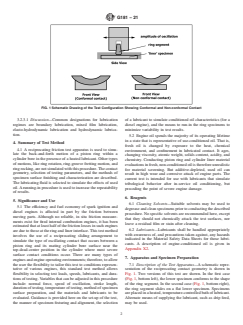
FIG. 1Schematic Drawing of the Test Configuration Showing Conformal and Non-conformal Contact
3.2.3.1 Discussion—Common designations for lubrication of a lubricant to simulate conditioned oil characteristics (for a
regimes are boundary lubrication, mixed film lubrication, diesel engine), and the means to run-in the ring specimens to
elasto-hydrodynamic lubrication and hydrodynamic lubrica- minimize variability in test results.
tion.
5.2 Engine oil spends the majority of its operating lifetime
in a state that is representative of use-conditioned oil. That is,
4. Summary of Test Method
fresh oil is changed by exposure to the heat, chemical
4.1 A reciprocating friction test apparatus is used to simu-
environment, and confinement in lubricated contact. It ages,
late the back-and-forth motion of a piston ring within a
changing viscosity, atomic weight, solids content, acidity, and
cylinder bore in the presence of a heated lubricant. Other types
chemistry. Conducting piston ring and cylinder liner material
of motions, like ring rotation, ring-groove fretting motion, and
evaluationsinfresh,non-conditionedoilisthereforeunrealistic
ringrocking,arenotsimulatedwiththisprocedure.Thecontact
for material screening. But additive-depleted, used oil can
geometry, selection of testing parameters, and the methods of
result in high wear and corrosive attack of engine parts. The
specimen surface finishing and characterization are described.
current test is intended for use with lubricants that simulate
The lubricating fluid is selected to simulate the effects of used
tribological behavior after in-service oil conditioning, but
oil.Arunning-in procedure is used to increase the repeatability
preceding the point of severe engine damage.
of results.
6. Reagents
5. Significance and Use
6.1 Cleaning Solvents—Suitable solvents may be used to
5.1 The efficiency and fuel economy of spark ignition and
degreaseandcleanspecimenspriortoconductingthedescribed
diesel engines is affected in part by the friction between
procedure. No specific solvents are recommended here, except
moving parts. Although no reliable, in situ friction measure-
that they should not chemically attack the test surfaces, nor
ments exist for fired internal combustion engines, it has been
leave a residual film or stain after cleaning.
estimated that at least half of the friction losses in such engines
6.2 Lubricants—Lubricants shall be handled appropriately
are due to those at the ring and liner interface.This test method
with awareness of, and precautions taken against, any hazards
involves the use of a reciprocating sliding arrangement to
indicated in the Material Safety Data Sheets for those lubri-
simulate the type of oscillating contact that occurs between a
cants. A description of engine-conditioned oil is given in
piston ring and its mating cylinder bore surface near the
Appendix X2.
top-dead-center position in the cylinder where most severe
surface contact conditions occur. There are many types of
7. Apparatus and Specimen Preparation
enginesandengineoperatingenvironments;therefore,toallow
the user the flexibility to tailor this test to conditions represen- 7.1 Description of the Test Apparatus—A schematic repre-
tative of various engines, this standard test method allows sentation of the reciprocating contact geometry is shown in
flexibility in selecting test loads, speeds, lubricants, and dura- Fig. 1. Two versions of this test are shown. In the first case
tions of testing.Variables that can be adjusted in this procedure (Fig. 1, bottom left), the lower specimen conforms to the shape
include: normal force, speed of oscillation, stroke length, of the ring segment. In the second case (Fig. 1, bottom right),
duration of testing, temperature of testing, method of specimen the ring segment slides on a flat lower specimen. Specimens
surface preparation, and the materials and lubricants to be areplacedinaheated,temperature-controlledbathoflubricant.
evaluated. Guidance is provided here on the set-up of the test, Alternate means of supplying the lubricant, such as drip feed,
the manner of specimen fixturing and alignment, the selection may be used.
G181−21
7.1.1 Motion—The test apparatus shall be capable of im- micro-scale aspects of alignment. A method for running in
parting a back-and-forth (herein called reciprocating) motion specimens is given in Appendix X1.
of constant stroke length and repeatable velocity profile to the
NOTE 2—Mechanical specimen alignment tends to be difficult to
simulated piston ring specimen which slides against the simu-
achieve with conformal starting geometry. When testing ring and cylinder
lated cylinder bore under a controlled normal force. The motor materials from the same type of engine, the ring curvature in the actual
engine is produced by elastically confining the ring in its groove. The
shall be sufficiently powered so that the velocity profile and
same ring, out of the engine, will tend to have a larger curvature, and
constancy of operation shall be unaffected by the friction force
hence rest on the edges of the corresponding cylinder bore specimen
developed between the test specimens. The velocity versus
unless the ring can be pre-stressed or in some other way forced into a
time response of crank-driven devices tends to be approxi-
radius of curvature that precisely matches that of the opposing specimen
cut from the cylinder. A non-conformal, ring-on-flat geometry with a
mately sinusoidal, and this type of motion is appropriate to
suitable running-in procedure, has been shown to produce a more
simulate a piston driven by a crankshaft. The frequency of
repeatable worn-in condition for friction testing.
reciprocation, given in cycles per second, shall be selected to
7.1.5 Normal Force Application—The apparatus shall have
induce the appropriate lubrication regime experienced by the
the ability to apply a controlled normal force to the ring and
pistonringduringitsslowdownandreversalofdirectioninthe
cylinder specimens. The loading mechanism can be a dead-
engine of interest. Typical frequencies for slider-crank testing
weight system, a levered type of device, or a hydraulic or
equipment of this type range between 5 and 40 cycles per
electromagnetic actuator. The loading system shall have suffi-
second. The average sliding speed for each stroke, s, in metres
cient rigidity and damping capacity to avoid excessive deflec-
per second, is calculated as follows:
tions or vibrations during testing, and to maintain the desired
s 5 2fL (1)
normal force within 2 % of the intended value.
where:
7.2 Specimen Preparation—Test specimens are herein re-
f = frequency of reciprocation in cycles per second, and ferred to as the ring specimen and the cylinder bore specimen.
L = stroke length in meters. Theprecisemannerofpreparingtestspecimensdependsinpart
on the kinds of materials, coatings, or surface treatments to be
7.1.2 Stroke Length Selection—It is unnecessary to set the
evaluated.
stroke length equal to the full stroke of the piston in the engine
7.2.1 Ring Specimen—The ring specimen shall be prepared
because the greatest frictional influence of the materials is
by cutting a segment from a production piston ring, or
experiencedattheendsoftheringtravelwhereoperationinthe
machining a test piece of equal dimensions and finish to a
boundary lubrication regime increases the likelihood that
production piston ring. The ring specimen may be used in its
contactwilloccurbetweenthesurfacesoftheringandcylinder
original, factory-finished condition or it may be altered by
materials. The stroke length should typically range between 5
applying a coating or surface treatment. The surface shall be
and10timesthewidthoftheworn-incontactfaceofthepiston
prepared to simulate that for a particular engine or class of
ring specimen.
engines. The surface roughness of the ring specimen, in the
area of the contact, shall be measured by a suitable method and
NOTE 1—The design of certain testing machines and motor drive
included in the test record. All pertinent descriptors (type of
systems limits the maximum frequency achievable for a given stroke
length. Therefore, a compromise may be necessary between the highest
profiling method, surface finish parameters, and measuring
desired stroke length and the desired reciprocating frequency.
conditions) shall be reported.
7.2.2 Cylinder Bore Specimen—The specimen intended to
7.1.3 Specimen Fixturing—A means shall be provided to
simulate the cylinder bore surface shall constitute either a cut
clamp the ring specimen to the reciprocating portion of the
section of a production-finished cylinder or a flat specimen
machine in such a way as to ensure correct alignment during
whose form and finish is similar to that of the cylinders used in
sliding.Likewise,thecylinderborespecimenshallbemounted
the engine of interest. Methods have been developed to
in a suitable, heated lubricant container such that no loosening
simulate the roughness and lay of production cylinder liners on
orothermisalignmentoccursduringthetest.Forringsegments
flat cast iron test coupons. Alternatively, a polished surface
with a rectangular cross-section, a suitable flat-faced ring-
may be used to simulate the worn condition of a cylinder bore
segment grip may be used. For non parallel-sided piston rings
near at the top-dead-center position. In certain cases, the
(for example, those with keystone-like cross-sections), it may
cylinder bore specimen may be fabricated from experimental
benecessarytoprepareaholderfromanactualpistonordesign
materials, coated, or surface-treated. The surface roughness of
a holder that clamps the inclined sides of the ring firmly.
the cylinder bore specimen shall be measured by a suitable
7.1.4 Specimen Alignment—Proper alignment and centering
method and included in the test record. With stylus-type
between sliding surfaces is a critical factor for ensuring
instruments, it is traditional to measure and report the surface
repeatable friction test results. Alignment affects the distribu-
roughnessprofileparalleltothedirectionofmotionofthering,
tion of normal forces on the contact surface as well as the
that is, parallel to the cylinder axis. All pertinent descriptors
lubrication regimes that change as the ring specimen moves
back and forth. Two approaches are used together to ensure
proper alignment: (1) mechanical alignment of the test fixtures
Blau, P. J., “Simulation of Cylinder Bore Surface Finish Parameters to Improve
during the initial test set-up, and (2) running-in of the ring
Laboratory-Scale FrictionTests in New and Used Oil,” Engine Systems: Lubricants,
specimenagainstthecounterfacesurface.Theformerapproach
Components, Exhaust and Boosting System, Design and Simulation, Amer. Soc. of
addresses macro-contact aspects of alignment and the latter Mech. Engr., New York, ASME ICE Vol. 37-3, 2001, pp. 57-63.
G181−21
(type of profiling method, surface finish parameters, and simulation desired. (See Appendix X2 for a description of
measuring conditions) shall be reported. lubricant preparation to simulate engine-conditioned oil.)
8.5.1 Fully-flooded—Fill the lubricant bath to cover the
7.3 Lubricant Selection—The lubricant should be in a con-
contact surface with at least 2 mm of the selected lubricant.
dition that is representative of that found in the engine of
8.5.2 Drip-feed Lubrication—Ametered drop of lubricant is
interest after a period of running. Studies of experimental
introduced into the contact periodically, in accordance with an
piston ring and liner materials have shown that fresh engine
established flow rate or delivery schedule.
lubricants do not in general produce friction and wear test
8.5.3 Starved Lubrication—A specific quantity of lubricant
results equal to those obtained with used engine oils under
5 is placed on the surface before the test is started and no
otherwise similar testing conditions. A guide to formulating
additional lubricant is added for the duration of the test.
fluidswithcharacteristicssimilartothoseofuseddieselengine
oil is given in Appendix X2. 8.6 Lubricant Heating—For fully-flooded tests, with no
normal load applied, slowly oscillate the upper specimen while
7.4 Friction Force Measurement and Calibration:
the bath heats to the desired temperature. After the test
7.4.1 Friction Force Measurement and Recording—A
temperature is reached, allow the temperature to equilibrate for
means shall be provided for measuring and recording the
10 min (62 °C), then stop the motor. For drip-feed tests or
magnitude of the friction force. This can involve a tension/
starved lubrication tests, ensure the specimens and lubricant
compression load cell, strain gauged beam, piezoelectric force
are at the correct test temperature before proceeding.
sensor, or similar. The friction force sensor should be as close
to the line of action of the friction force at the contact point as 8.7 Adjust the speed setting to the desired reciprocation
practical on the test apparatus. The sampling rate should be at frequency, raise the load to the desired test load.
least 10 readings per stroke in each direction.Thus, a sampling
8.8 Run the test for the desired period of time, while
rate of at least 200 readings per second would be required with
monitoring and recording friction force. When running a step
a frequency of 10 Hz (10 cycles per second having 1 forward
loaded test, increase the load to the next level and run for the
and 1 reverse stroke per cycle).The sign of the friction force is
desired period of time. Repeat the step loading sequence as
positive when it is opposes the direction of relative motion;
needed to reach the maximum desired load.
therefore, the friction data should be corrected to account for
8.9 After completing the test allow specimens to cool with
the reversal of direction during reciprocating sliding. Data
the load removed.
collected during the period of direction reversal should be
discarded. The quotient of the instantaneous friction force
8.10 Remove the test specimens and inspect both contact
divided by the normal force is defined as the kinetic friction surfaces. Record observations of ring or bore specimen surface
coefficient.
damage, including the dimensions of the wearing contact area
7.4.2 Calibration—Since mechanical assembly stresses and on the ring.
asymmetry can exist in the design of friction testing apparatus,
9. Report
the friction force shall be calibrated in both directions of
reciprocating sliding using a pulley system or similar method
9.1 Materials—Provide a description of the composition,
for applying a known weight in line with the sliding contact
heat treatment, surface coating, or other identifying
and parallel to the friction force that occurs during testing.The
designations, or a combination thereof, for the test materials.
calibration weights shall be chosen to cover the full range of
Indicate the dimensions of the ring segment, particularly the
friction forces typically experienced during the testing.
contactwidth(mm).Describethesurfacefinishofthelinerand
ring, including the arithmetic average surface roughness of the
8. Procedure
liner specimen taken parallel to the direction of ring motion.
8.1 Turn on the testing machine and recording equipment
Additional measures of roughness may also be us
...
This document is not an ASTM standard and is intended only to provide the user of an ASTM standard an indication of what changes have been made to the previous version. Because
it may not be technically possible to adequately depict all changes accurately, ASTM recommends that users consult prior editions as appropriate. In all cases only the current version
of the standard as published by ASTM is to be considered the official document.
Designation: G181 − 11 (Reapproved 2017) G181 − 21
Standard Test Method for
Conducting Friction Tests of Piston Ring and Cylinder Liner
Materials Under Lubricated Conditions
This standard is issued under the fixed designation G181; the number immediately following the designation indicates the year of
original adoption or, in the case of revision, the year of last revision. A number in parentheses indicates the year of last reapproval. A
superscript epsilon (´) indicates an editorial change since the last revision or reapproval.
1. Scope
1.1 This test method covers procedures for conducting laboratory bench-scale friction tests of materials, coatings, and surface
treatments intended for use in piston rings and cylinder liners in diesel or spark-ignition engines. The goal of this procedure is to
provide a means for preliminary, cost-effective screening or evaluation of candidate ring and liner materials. A reciprocating sliding
arrangement is used to simulate the contact that occurs between a piston ring and its mating liner near the top-dead-center position
in the cylinder where liquid lubrication is least effective, and most wear is known to occur. Special attention is paid to specimen
alignment, running-in, and lubricant condition.
1.2 This test method does not purport to simulate all aspects of a fired engine’s operating environment, but is intended to serve
as a means for preliminary screening for assessing the frictional characteristics of candidate piston ring and liner material
combinations in the presence of fluids that behave as use-conditioned engine oils. Therefore, it is beyond the scope of this test
method to describe how one might establish correlations between the described test results and the frictional characteristics of rings
and cylinder bore materials for specific engine designs or operating conditions.
1.3 The values stated in SI units are to be regarded as standard. No other units of measurement are included in this standard.
1.4 This standard does not purport to address all of the safety concerns, if any, associated with its use. It is the responsibility
of the user of this standard to establish appropriate safety safety, health, and healthenvironmental practices and determine the
applicability of regulatory limitations prior to use.
1.5 This international standard was developed in accordance with internationally recognized principles on standardization
established in the Decision on Principles for the Development of International Standards, Guides and Recommendations issued
by the World Trade Organization Technical Barriers to Trade (TBT) Committee.
2. Referenced Documents
2.1 ASTM Standards:
D6838 Test Method for Cummins M11 High Soot Test (Withdrawn 2019)
E177 Practice for Use of the Terms Precision and Bias in ASTM Test Methods
E691 Practice for Conducting an Interlaboratory Study to Determine the Precision of a Test Method
G40 Terminology Relating to Wear and Erosion
This test method is under the jurisdiction of ASTM Committee G02 on Wear and Erosion and is the direct responsibility of Subcommittee G02.50 on Friction.
Current edition approved June 1, 2017Nov. 1, 2021. Published June 2017November 2021. Originally approved in 2004. Last previous edition approved in 20112017 as
G181 – 11.G181 – 11 (2017). DOI: 10.1520/G0181-11R17.10.1520/G0181-21.
For referenced ASTM standards, visit the ASTM website, www.astm.org, or contact ASTM Customer Service at service@astm.org. For Annual Book of ASTM Standards
volume information, refer to the standard’sstandard’s Document Summary page on the ASTM website.
The last approved version of this historical standard is referenced on www.astm.org.
Copyright © ASTM International, 100 Barr Harbor Drive, PO Box C700, West Conshohocken, PA 19428-2959. United States
G181 − 21
3. Terminology
3.1 For definitions, see Terminology G40.
3.2 Definitions of Terms Specific to This Standard:
3.2.1 conditioned oil—a lubricating oil whose viscosity, composition, and other function-related characteristics have been altered
by use in an operating engine, such that the oil’s effects on friction and wear reflect those characteristic of the long-term,
steady-state engine operation.
3.2.2 conformal contact—in friction and wear testing, any macro-geometric specimen configuration in which the curvature of one
contact surface matches that of the countersurface.
3.2.2.1 Discussion—
Examples of conformal contact include a flat surface sliding on a flat surface and a ball rotating in a socket that conforms to the
shape of the ball. A pair of surfaces may begin a wear or friction test in a non-conformingnon-conformal contact configuration,
but develop a conformal contact as a result of wear.
3.2.3 lubrication regime—in liquid-lubricated sliding contact, a certain range of friction coefficients that results from a
combination of contact geometry, lubricant viscosity characteristics, surface roughness, normal pressure, and the relative speed of
the bearing surfaces.
3.2.3.1 Discussion—
Common designations for lubrication regimes are boundary lubrication, mixed film lubrication, elasto-hydrodynamic lubrication
and hydrodynamic lubrication.
4. Summary of Test Method
4.1 A reciprocating friction test apparatus is used to simulate the back-and-forth motion of a piston ring within a cylinder bore
in the presence of a heated lubricant. Other types of motions, like ring rotation, ring-groove fretting motion, and ring rocking, are
not simulated with this procedure. The contact geometry, selection of testing parameters, and the methods of specimen surface
finishing and characterization are described. The lubricating fluid is selected to simulate the effects of used oil. A running-in
procedure is used to increase the repeatability of results.
5. Significance and Use
5.1 The efficiency and fuel economy of spark ignition and diesel engines is affected in part toby the friction between moving parts.
Although no reliable, in situ friction measurements exist for fired internal combustion engines, it has been estimated that at least
half of the friction losses in such engines are due to those at the ring and liner interface. This test method involves the use of a
reciprocating sliding arrangement to simulate the type of oscillating contact that occurs between a piston ring and its mating
cylinder bore surface near the top-dead-center position in the cylinder where most severe surface contact conditions occur. There
are many types of engines and engine operating environments; therefore, to allow the user the flexibility to tailor this test to
conditions representative of various engines, this standard test method allows flexibility in selecting test loads, speeds, lubricants,
and durations of testing. Variables that can be adjusted in this procedure include: normal force, speed of oscillation, stroke length,
duration of testing, temperature of testing, method of specimen surface preparation, and the materials and lubricants to be
evaluated. Guidance is provided here on the set-up of the test, the manner of specimen fixturing and alignment, the selection of
a lubricant to simulate conditioned oil characteristics (for a diesel engine), and the means to run-in the ring specimens to minimize
variability in test results.
5.2 Engine oil spends the majority of its operating lifetime in a state that is representative of use-conditioned oil. That is, fresh
oil is changed by exposure to the heat, chemical environment, and confinement in lubricated contact. It ages, changing viscosity,
atomic weight, solids content, acidity, and chemistry. Conducting piston ring and cylinder liner material evaluations in fresh,
non-conditioned oil is therefore unrealistic for material screening. But additive-depleted, used oil can result in high wear and
corrosive attack of engine parts. The current test is intended for use with lubricants that simulate tribological behavior after
in-service oil conditioning, but preceding the point of severe engine damage.
G181 − 21
FIG. 1 Schematic Drawing of the Test Configuration Showing Conformal and Non-conformal Contact
6. Reagents
6.1 Cleaning Solvents—Suitable solvents may be used to degrease and clean specimens prior to conducting the described
procedure. No specific solvents are recommended here, except that they should not chemically attack the test surfaces, nor leave
a residual film or stain after cleaning.
6.2 Lubricants—Lubricants shall be handled appropriately with awareness of, and precautions taken against, any hazards indicated
in the Material Safety Data Sheets for those lubricants. A further description of simulated used engine engine-conditioned oil is
further described given in Appendix X2an appendix to this standard.
7. Apparatus and Specimen Preparation
7.1 Description of the Test Apparatus—A schematic representation of the reciprocating contact geometry is shown in Fig. 1. Two
versions of this test are shown. In the first case (Fig. 1, bottom left), the lower specimen conforms to the shape of the ring segment.
In the second case (Fig. 1, bottom right), the ring segment slides on a flat lower specimen. Specimens are placed in a heated,
temperature-controlled bath of lubricant. Alternate means of supplying the lubricant, such as drip feed, may be used.
7.1.1 Motion—The test apparatus shall be capable of imparting a back-and-forth (herein called reciprocating) motion of constant
stroke length and repeatable velocity profile to the simulated piston ring specimen which slides against the simulated cylinder bore
under a controlled normal force. The motor shall be sufficiently powered so that the velocity profile and constancy of operation
shall be unaffected by the friction force developed between the test specimens. The velocity versus time response of crank-driven
devices tends to be approximately sinusoidal, and this type of motion is appropriate to simulate a piston driven by a crankshaft.
The frequency of reciprocation, given in cycles per second, shall be selected to induce the appropriate lubrication regime
experienced by the piston ring during its slow down and reversal of direction in the engine of interest. Typical frequencies for
slider-crank testing equipment of this type range between 5 and 40 cycles per second. The average sliding speed for each stroke,
s, in metres per second, is calculated as follows:
s 5 2 f L (1)
where:
where:
f = frequency of reciprocation in cycles per second, and
L = stroke length in meters.
7.1.2 Stroke Length Selection—It is unnecessary to set the stroke length equal to the full stroke of the piston in the engine because
the greatest frictional influence of the materials is experienced at the ends of the ring travel where operation in the boundary
lubrication regime increases the likelihood that contact will occur between the surfaces of the ring and cylinder materials. The
stroke length should typically range between 5 and 10 times the width of the worn-in contact face of the piston ring specimen.
G181 − 21
NOTE 1—The design of certain testing machines and motor drive systems limits the maximum frequency achievable for a given stroke length. Therefore,
a compromise may be necessary between the highest desired stroke length and the desired reciprocating frequency.
7.1.3 Specimen Fixturing—A means shall be provided to clamp the ring specimen to the reciprocating portion of the machine in
such a way as to ensure correct alignment during sliding. Likewise, the cylinder bore specimen shall be mounted in a suitable,
heated lubricant container such that no loosening or other misalignment occurs during the test. For ring segments with a rectangular
cross-section, a suitable flat-faced ring-segment grip may be used. For non parallel-sided piston rings (for example, those with
keystone-like cross-sections), it may be necessary to prepare a holder from an actual piston or design a holder that clamps the
inclined sides of the ring firmly.
7.1.4 Specimen Alignment—Proper alignment and centering between sliding surfaces is a critical factor for ensuring repeatable
friction test results. Alignment affects the distribution of normal forces on the contact surface as well as the lubrication regimes
that change as the ring specimen moves back and forth. Two approaches are used together to ensure proper alignment: (1)
mechanical alignment of the test fixtures during the initial test set-up, and (2) running-in of the ring specimen against the
counterface surface. The former approach addresses macro-contact aspects of alignment and the latter micro-scale aspects of
alignment. A method for running in specimens is given in Appendix X1.
NOTE 2—Mechanical specimen alignment tends to be difficult to achieve with conformal starting geometry. When testing ring and cylinder materials from
the same type of engine, the ring curvature in the actual engine is produced by elastically confining the ring in its groove. The same ring, out of the engine,
will tend to have a larger curvature, and hence rest on the edges of the corresponding cylinder bore specimen unless the ring can be pre-stressed or in
some other way forced into a radius of curvature that precisely matches that of the opposing specimen cut from the cylinder. A non-conformal, ring-on-flat
geometry with a suitable running-in procedure, has been shown to produce a more repeatable worn-in condition for friction testing.
7.1.5 Normal Force Application—The apparatus shall have the ability to apply a controlled normal force to the ring and cylinder
specimens. The loading mechanism can be a dead-weight system, a levered type of device, or a hydraulic or electromagnetic
actuator. The loading system shall have sufficient rigidity and damping capacity to avoid excessive deflections or vibrations during
testing, and to maintain the desired normal force within 2 % of the intended value.
7.2 Specimen Preparation—Test specimens are herein referred to as the ring specimen and the cylinder bore specimen. The precise
manner of preparing test specimens depends in part on the kinds of materials, coatings, or surface treatments to be evaluated.
7.2.1 Ring Specimen—The ring specimen shall be prepared by cutting a segment from a production piston ring, or machining a
test piece of equal dimensions and finish to a production piston ring. The ring specimen may be used in its original, factory-finished
condition or it may be altered by applying a coating or surface treatment. The surface shall be prepared to simulate that for a
particular engine or class of engines. The surface roughness of the ring specimen, in the area of the contact, shall be measured by
a suitable method and included in the test record. All pertinent descriptors (type of profiling method, surface finish parameters, and
measuring conditions) shall be reported.
7.2.2 Cylinder Bore Specimen—The specimen intended to simulate the cylinder bore surface shall constitute either a cut section
of a production-finished cylinder or a flat specimen whose form and finish is similar to that of the cylinders used in the engine of
interest. Methods have been developed to simulate the roughness and lay of production cylinder liners on flat cast iron test
coupons. Alternatively, a polished surface may be used to simulate the worn condition of a cylinder bore near at the
top-dead-center position. In certain cases, the cylinder bore specimen may be fabricated from experimental materials, coated, or
surface-treated. The surface roughness of the cylinder bore specimen shall be measured by a suitable method and included in the
test record. With stylus-type instruments, it is traditional to measure and report the surface roughness profile parallel to the
direction of motion of the ring, that is, parallel to the cylinder axis. All pertinent descriptors (type of profiling method, surface finish
parameters, and measuring conditions) shall be reported.
7.3 Lubricant Selection—The lubricant should be in a condition that is representative of that found in the engine of interest after
a period of running. Studies of experimental piston ring and liner materials have shown that fresh engine lubricants do not in
general produce friction and wear test results equal to those obtained with used engine oils under otherwise similar testing
conditions. A guide to formulating fluids with characteristics similar to those of used diesel engine oil is given in Appendix X2.
Blau, P. J., “Simulation of Cylinder Bore Surface Finish Parameters to Improve Laboratory-Scale Friction Tests in New and Used Oil,” Engine Systems: Lubricants,
Components, Exhaust and Boosting System, Design and Simulation, Amer. Soc. of Mech. Engr., New York, ASME ICE Vol. 37-3, 2001, pp. 57-63.
Naylor, M. G. S., “Development of Wear-Resistant Ceramic Coatings for Diesel Engine Components,” Vol 1, Oak Ridge National Laboratory, Oak Ridge, TN, Report
ORNL/Sub/87–SA581/1, 1992, pp. 195.
G181 − 21
7.4 Friction Force Measurement and Calibration:
7.4.1 Friction Force Measurement and Recording—A means shall be provided for measuring and recording the magnitude of the
friction force. This can involve a tension/compression load cell, strain gauged beam, piezoelectric force sensor, or similar. The
friction force sensor should be as close to the line of action of the friction force at the contact point as practical on the test
apparatus. The sampling rate should be at least 10 readings per stroke in each direction. Thus, a sampling rate of at least 200
readings per second would be required with a frequency of 10 Hz (10 cycles per second having 1 forward and 1 reverse stroke
per cycle). The sign of the friction force is positive when it is opposes the direction of relative motion; therefore, the friction data
should be corrected to account for the reversal of direction during reciprocating sliding. Data collected during the period of
direction reversal should be discarded. The quotient of the instantaneous friction force divided by the normal force is defined as
the kinetic friction coefficient.
7.4.2 Calibration—Since mechanical assembly stresses and asymmetry can exist in the design of friction testing apparatus, the
friction force shall be calibrated in both directions of reciprocating sliding using a pulley system or similar method for applying
a known weight in line with the sliding contact and parallel to the friction force that occurs during testing. The calibration weights
shall be chosen to cover the full range of friction forces typically experienced during the testing.
8. Procedure
8.1 Turn on the testing machine and recording equipment and allow the electronics to stabilize for 30 min.
8.2 Measure the surface finish of the ring and liner specimens. This shall include at least the arithmetic average roughness of the
liner profiled parallel to the direction of reciprocating motion.
8.3 Mount the ring and liner specimens in the testing machine. Verify proper specimen alignment.
8.4 Conduct a running-in procedure to ensure proper fitting of the ring and liner specimen. (See Appendix X1 for a description
of the recommended running-in procedure.)
8.5 Lubrication Methods—Several methods are possible, depending on the objective of the test and the type of simulation desired.
(See Appendix X2 for a description of lubricant preparation to simulate engine-conditioned oil.)
8.5.1 Fully-flooded—Fill the lubricant bath to cover the contact surface with at least 2 mm of the selected lubricant.
8.5.2 Drip-feed Lubrication—A metered drop of lubricant is introduced into the contact periodically, in accordance with an
established flow rate or delivery schedule.
8.5.3 Starved Lubrication—A specific quantity of lubricant is placed on the surface before the test is started and no additional
lubricant is added for the duration of the test.
8.6 Lubricant Heating—For fully-flooded tests, with no normal load applied, slowly oscillate the upper specimen while the bath
heats to the desired temperature. After the test temperature is reached, allow the temperature to equilibrate for 10 min
(62°C),(62 °C), then stop the motor. For drip-feed tests or starved lubrication tests, ensure the specimens and lubricant are at the
correct test temperature before proceeding.
8.7 Adjust the speed setting to the desired reciprocation frequency, raise the load to the desired test load.
8.8 Run the test for the desired period of time, while monitoring and recording friction force. When running a step loaded t
...