

ASTM F2956-22
(Test Method)Standard Test Methods for Anchor Systems Used for Detention Hollow Metal Systems
General Information
- Abstract
SIGNIFICANCE AND USE
4.1 A major concern for corrections administration officials is the resistance of security barriers used in detention/correctional facilities to certain types of physical attack that it is reasonable to expect in the field. These test methods are designed to aid in identifying a level of physical security for anchor systems used to install fixed detention hollow metal vision systems and door assemblies.
4.2 These test methods are not intended to measure resistance to attack by corrosive agents, high-powered rifles, explosives, sawing, or other such methods. These test methods are intended to evaluate the resistance of a vision system to violent attacks using battering devices such as benches, bunks, fire extinguishers, or tables; hand guns up to and including the .44 magnum; and fires started by using mattresses, books, and similar flammable materials.
4.3 The primary purpose or result of this standard is to provide detailed test methods that approximate the levels of abuse to which it is possible that vision system and door assembly anchor systems become subjected in the field. The desired result of its use is to give ensurance of protection to the public, to prison administrative personnel, and to the inmates themselves in the event of such attack.
Note 1: It is recommended that detention/correctional facility administration provide adequate training, supervision, and preventive maintenance programs to enable hollow metal vision systems to function as intended throughout the expected service life.
SCOPE
1.1 These test methods cover anchor systems used for the installation of fixed detention hollow metal vision systems and door assemblies of various materials and types of construction. These anchor systems are used to install fixed hollow metal vision systems and door assemblies in wall openings in detention and correctional institutions designed to incarcerate inmates.
1.2 Anchor systems individual components investigated under these test methods include detention security hollow metal frames, frame anchoring, security glazing, panels, and removable glazing stops.
1.3 These test methods are designed to test the capability of anchor systems used to install a fixed detention hollow metal vision system or door assembly to prevent, delay, and frustrate escape; to limit or control access to unauthorized or secured areas; and prevent passage of contraband.
1.4 These test methods apply primarily to anchor systems used to install detention hollow metal vision systems or door assemblies between secure areas generally found inside a detention/correctional facility such as: day rooms, control rooms, cells, and sally ports. These test methods are applicable to anchor systems used to install vision systems and door assemblies other than hollow metal, provided testing and reporting procedures are followed.
1.5 The values stated in inch-pound units are to be regarded as the standard. The values given in parentheses are for information only.
1.6 This standard does not purport to address all of the safety concerns, if any, associated with its use. It is the responsibility of the user of this standard to establish appropriate safety, health, and environmental practices and determine the applicability of regulatory limitations prior to use.
1.7 This international standard was developed in accordance with internationally recognized principles on standardization established in the Decision on Principles for the Development of International Standards, Guides and Recommendations issued by the World Trade Organization Technical Barriers to Trade (TBT) Committee.
- Status
- Published
- Publication Date
- 31-May-2022
- Technical Committee
- F33 - Detention and Correctional Facilities
- Drafting Committee
- F33.02 - Physical Barriers
Buy Documents
ASTM F2956-22 - Standard Test Methods for Anchor Systems Used for Detention Hollow Metal Systems
REDLINE ASTM F2956-22 - Standard Test Methods for Anchor Systems Used for Detention Hollow Metal Systems
Overview
ASTM F2956-22: Standard Test Methods for Anchor Systems Used for Detention Hollow Metal Systems establishes rigorous testing procedures designed to evaluate the strength, durability, and security performance of anchor systems used to install fixed hollow metal vision systems and door assemblies in detention and correctional facilities. These methods are focused on replicating realistic physical attacks-such as battering with heavy objects or attempts using handguns-to ensure the reliability and integrity of security barriers crucial for preventing escapes, controlling access, and stopping contraband movement within secure environments.
These test methods do not cover resistance to corrosive agents, explosives, sawing, or high-powered rifles, but specifically target credible threats likely to occur in correctional institutions. By setting consistent protocols and reporting requirements, ASTM F2956-22 helps manufacturers, facility managers, and security professionals verify and compare the physical security performance of anchor systems.
Key Topics
- Security Performance: Establishes procedures for impact testing to evaluate if anchor assemblies can withstand intense and repeated blows from battering devices and small firearms, simulating real-world attack scenarios within correctional settings.
- Component Evaluation: Covers all key components of anchor systems, including security hollow metal frames, anchoring devices, security glazing, steel panels, and removable glazing stops.
- Testing Methods:
- Impact testing using a standardized pendulum ram to assess resistance at critical points on the frame and glazing/panel.
- Criteria for documenting and reporting assembly details, test setups, and results.
- Requirements for sample retention and retesting intervals to ensure long-term product performance.
- Application Scope: Primarily applies to products installed between secure areas inside detention and correctional facilities, such as day rooms, cells, control rooms, and sally ports. Also provides guidance for non-hollow metal assemblies when tested with the same procedures.
- Security Grades: Defines security grade levels based on endurance against sustained attack, helping facilities select appropriate products to match required security levels and response times.
Applications
ASTM F2956-22 is essential for:
- Correctional Facility Design and Safety: Assisting architects, engineers, and facility managers in selecting and specifying anchor systems that meet defined security resilience criteria.
- Product Certification and Procurement: Supporting manufacturers and procurement officials in verifying, certifying, and comparing anchor system performance prior to installation.
- Facility Maintenance and Upkeep: Informing best practices for training, supervision, and preventive maintenance to ensure hollow metal vision systems continue delivering reliable security performance.
Typical settings where these standardized test methods deliver value include:
- Jails, prisons, and other correctional institutions requiring robust physical security at perimeter and internal barriers.
- Court holding areas or police detention suites where the integrity of secure barriers is crucial.
- Any setting where restricting access, preventing egress, and combating contraband passage are top priorities.
Related Standards
For comprehensive physical barrier security, ASTM F2956-22 should be used alongside related standards that address complementary components in detention environments:
- ASTM F1450: Test Methods for Hollow Metal Swinging Door Assemblies
- ASTM F1577: Test Methods for Detention Locks for Swinging Doors
- ASTM F1592: Test Methods for Detention Hollow Metal Vision Systems
- ASTM F1643: Test Methods for Detention Sliding Door Locking Device Assemblies
- ASTM F1758: Test Methods for Detention Hinges
- ASTM F1915: Test Methods for Glazing for Detention Facilities
- ANSI/NAAMM HMMA 863: Guide Specifications for Detention Security Hollow Metal Doors and Frames
- NFPA 252 and UL-10(C): Fire Test Standards for Door Assemblies
- UL-752: Standard for Bullet-Resisting Equipment
Utilizing ASTM F2956-22 with these standards ensures a holistic approach to building and maintaining secure detention facilities that meet internationally recognized performance and safety benchmarks.
Keywords: anchor systems, detention facility security, hollow metal vision systems, physical security, impact test, ASTM standards, prison doors, correctional institution barriers, security grade.
Relations
- Effective Date
- 01-Dec-2023
- Effective Date
- 01-Apr-2019
- Effective Date
- 01-Apr-2019
- Refers
ASTM F1643-05(2019) - Standard Test Methods for Detention Sliding Door Locking Device Assembly - Effective Date
- 01-Apr-2019
- Effective Date
- 01-Apr-2019
- Effective Date
- 01-Apr-2019
- Effective Date
- 01-Apr-2019
- Effective Date
- 15-Jul-2016
- Effective Date
- 15-Dec-2015
- Effective Date
- 01-Feb-2014
- Effective Date
- 01-Jun-2013
- Effective Date
- 01-Nov-2012
- Effective Date
- 01-Aug-2012
- Effective Date
- 01-Jun-2012
- Refers
ASTM F1643-05(2012) - Standard Test Methods for Detention Sliding Door Locking Device Assembly - Effective Date
- 01-Jun-2012
Buy Documents
ASTM F2956-22 - Standard Test Methods for Anchor Systems Used for Detention Hollow Metal Systems
REDLINE ASTM F2956-22 - Standard Test Methods for Anchor Systems Used for Detention Hollow Metal Systems
Frequently Asked Questions
ASTM F2956-22 is a standard published by ASTM International. Its full title is "Standard Test Methods for Anchor Systems Used for Detention Hollow Metal Systems". This standard covers: SIGNIFICANCE AND USE 4.1 A major concern for corrections administration officials is the resistance of security barriers used in detention/correctional facilities to certain types of physical attack that it is reasonable to expect in the field. These test methods are designed to aid in identifying a level of physical security for anchor systems used to install fixed detention hollow metal vision systems and door assemblies. 4.2 These test methods are not intended to measure resistance to attack by corrosive agents, high-powered rifles, explosives, sawing, or other such methods. These test methods are intended to evaluate the resistance of a vision system to violent attacks using battering devices such as benches, bunks, fire extinguishers, or tables; hand guns up to and including the .44 magnum; and fires started by using mattresses, books, and similar flammable materials. 4.3 The primary purpose or result of this standard is to provide detailed test methods that approximate the levels of abuse to which it is possible that vision system and door assembly anchor systems become subjected in the field. The desired result of its use is to give ensurance of protection to the public, to prison administrative personnel, and to the inmates themselves in the event of such attack. Note 1: It is recommended that detention/correctional facility administration provide adequate training, supervision, and preventive maintenance programs to enable hollow metal vision systems to function as intended throughout the expected service life. SCOPE 1.1 These test methods cover anchor systems used for the installation of fixed detention hollow metal vision systems and door assemblies of various materials and types of construction. These anchor systems are used to install fixed hollow metal vision systems and door assemblies in wall openings in detention and correctional institutions designed to incarcerate inmates. 1.2 Anchor systems individual components investigated under these test methods include detention security hollow metal frames, frame anchoring, security glazing, panels, and removable glazing stops. 1.3 These test methods are designed to test the capability of anchor systems used to install a fixed detention hollow metal vision system or door assembly to prevent, delay, and frustrate escape; to limit or control access to unauthorized or secured areas; and prevent passage of contraband. 1.4 These test methods apply primarily to anchor systems used to install detention hollow metal vision systems or door assemblies between secure areas generally found inside a detention/correctional facility such as: day rooms, control rooms, cells, and sally ports. These test methods are applicable to anchor systems used to install vision systems and door assemblies other than hollow metal, provided testing and reporting procedures are followed. 1.5 The values stated in inch-pound units are to be regarded as the standard. The values given in parentheses are for information only. 1.6 This standard does not purport to address all of the safety concerns, if any, associated with its use. It is the responsibility of the user of this standard to establish appropriate safety, health, and environmental practices and determine the applicability of regulatory limitations prior to use. 1.7 This international standard was developed in accordance with internationally recognized principles on standardization established in the Decision on Principles for the Development of International Standards, Guides and Recommendations issued by the World Trade Organization Technical Barriers to Trade (TBT) Committee.
SIGNIFICANCE AND USE 4.1 A major concern for corrections administration officials is the resistance of security barriers used in detention/correctional facilities to certain types of physical attack that it is reasonable to expect in the field. These test methods are designed to aid in identifying a level of physical security for anchor systems used to install fixed detention hollow metal vision systems and door assemblies. 4.2 These test methods are not intended to measure resistance to attack by corrosive agents, high-powered rifles, explosives, sawing, or other such methods. These test methods are intended to evaluate the resistance of a vision system to violent attacks using battering devices such as benches, bunks, fire extinguishers, or tables; hand guns up to and including the .44 magnum; and fires started by using mattresses, books, and similar flammable materials. 4.3 The primary purpose or result of this standard is to provide detailed test methods that approximate the levels of abuse to which it is possible that vision system and door assembly anchor systems become subjected in the field. The desired result of its use is to give ensurance of protection to the public, to prison administrative personnel, and to the inmates themselves in the event of such attack. Note 1: It is recommended that detention/correctional facility administration provide adequate training, supervision, and preventive maintenance programs to enable hollow metal vision systems to function as intended throughout the expected service life. SCOPE 1.1 These test methods cover anchor systems used for the installation of fixed detention hollow metal vision systems and door assemblies of various materials and types of construction. These anchor systems are used to install fixed hollow metal vision systems and door assemblies in wall openings in detention and correctional institutions designed to incarcerate inmates. 1.2 Anchor systems individual components investigated under these test methods include detention security hollow metal frames, frame anchoring, security glazing, panels, and removable glazing stops. 1.3 These test methods are designed to test the capability of anchor systems used to install a fixed detention hollow metal vision system or door assembly to prevent, delay, and frustrate escape; to limit or control access to unauthorized or secured areas; and prevent passage of contraband. 1.4 These test methods apply primarily to anchor systems used to install detention hollow metal vision systems or door assemblies between secure areas generally found inside a detention/correctional facility such as: day rooms, control rooms, cells, and sally ports. These test methods are applicable to anchor systems used to install vision systems and door assemblies other than hollow metal, provided testing and reporting procedures are followed. 1.5 The values stated in inch-pound units are to be regarded as the standard. The values given in parentheses are for information only. 1.6 This standard does not purport to address all of the safety concerns, if any, associated with its use. It is the responsibility of the user of this standard to establish appropriate safety, health, and environmental practices and determine the applicability of regulatory limitations prior to use. 1.7 This international standard was developed in accordance with internationally recognized principles on standardization established in the Decision on Principles for the Development of International Standards, Guides and Recommendations issued by the World Trade Organization Technical Barriers to Trade (TBT) Committee.
ASTM F2956-22 is classified under the following ICS (International Classification for Standards) categories: 21.060.99 - Other fasteners. The ICS classification helps identify the subject area and facilitates finding related standards.
ASTM F2956-22 has the following relationships with other standards: It is inter standard links to ASTM C90-23, ASTM F1592-12(2019), ASTM F1758-05(2019), ASTM F1643-05(2019), ASTM F1577-05(2019), ASTM F1450-12a(2019), ASTM F1915-05(2019), ASTM C90-16, ASTM C90-15, ASTM C90-14, ASTM C90-13, ASTM F1592-12, ASTM C90-12, ASTM F1450-12a, ASTM F1643-05(2012). Understanding these relationships helps ensure you are using the most current and applicable version of the standard.
ASTM F2956-22 is available in PDF format for immediate download after purchase. The document can be added to your cart and obtained through the secure checkout process. Digital delivery ensures instant access to the complete standard document.
Standards Content (Sample)
This international standard was developed in accordance with internationally recognized principles on standardization established in the Decision on Principles for the
Development of International Standards, Guides and Recommendations issued by the World Trade Organization Technical Barriers to Trade (TBT) Committee.
Designation: F2956 − 22
Standard Test Methods for
Anchor Systems Used for Detention Hollow Metal Systems
This standard is issued under the fixed designation F2956; the number immediately following the designation indicates the year of
original adoption or, in the case of revision, the year of last revision. A number in parentheses indicates the year of last reapproval. A
superscript epsilon (´) indicates an editorial change since the last revision or reapproval.
1. Scope Development of International Standards, Guides and Recom-
mendations issued by the World Trade Organization Technical
1.1 These test methods cover anchor systems used for the
Barriers to Trade (TBT) Committee.
installation of fixed detention hollow metal vision systems and
door assemblies of various materials and types of construction.
2. Referenced Documents
These anchor systems are used to install fixed hollow metal
2.1 ASTM Standards:
vision systems and door assemblies in wall openings in
A36 Specification for Carbon Structural Steel
detention and correctional institutions designed to incarcerate
A615 Specification for Deformed and Plain Carbon-Steel
inmates.
Bars for Concrete Reinforcement
1.2 Anchor systems individual components investigated
C90 Specification for Loadbearing Concrete Masonry Units
under these test methods include detention security hollow
F1450 Test Methods for Hollow Metal Swinging Door
metal frames, frame anchoring, security glazing, panels, and
Assemblies for Detention and Correctional Facilities
removable glazing stops.
F1592 Test Methods for Detention Hollow Metal Vision
1.3 These test methods are designed to test the capability of
Systems
anchor systems used to install a fixed detention hollow metal
F1577 Test Methods for Detention Locks for Swinging
vision system or door assembly to prevent, delay, and frustrate
Doors
escape; to limit or control access to unauthorized or secured
F1643 Test Methods for Detention Sliding Door Locking
areas; and prevent passage of contraband.
Device Assembly
F1758 Test Methods for Detention Hinges Used on
1.4 These test methods apply primarily to anchor systems
Detention-Grade Swinging Doors
used to install detention hollow metal vision systems or door
F1915 Test Methods for Glazing for Detention Facilities
assemblies between secure areas generally found inside a
2.2 ANSI/NAAMM/HMMA Standard:
detention/correctional facility such as: day rooms, control
ANSI/NAAMM HMMA 863 Guide Specifications for De-
rooms, cells, and sally ports. These test methods are applicable
tention Security Hollow Metal Doors and Frames
to anchor systems used to install vision systems and door
assemblies other than hollow metal, provided testing and 2.3 NFPA Standard:
reporting procedures are followed. NFPA 252 Standard Methods of Fire Tests of Door Assem-
blies
1.5 The values stated in inch-pound units are to be regarded
2.4 UL Standards:
as the standard. The values given in parentheses are for
UL-10 (C) Standard for Positive Pressure Fire Tests of Door
information only.
Assemblies
1.6 This standard does not purport to address all of the
UL-752 Standard for Bullet-Resisting Equipment
safety concerns, if any, associated with its use. It is the
responsibility of the user of this standard to establish appro-
3. Terminology
priate safety, health, and environmental practices and deter-
3.1 Definitions of Terms Specific to This Standard:
mine the applicability of regulatory limitations prior to use.
1.7 This international standard was developed in accor-
dance with internationally recognized principles on standard-
For referenced ASTM standards, visit the ASTM website, www.astm.org, or
ization established in the Decision on Principles for the contact ASTM Customer Service at service@astm.org. For Annual Book of ASTM
Standards volume information, refer to the standard’s Document Summary page on
the ASTM website.
1 3
These test methods are under the jurisdiction of ASTM Committee F33 on Available from Hollow Metal Manufacturer’s Association, A Division of
Detention and Correctional Facilities and is the direct responsibility of Subcommit- NAAMM, 800 Roosevelt Road, Building C, Suite 312, Glen Ellyn, IL 60137.
tee F33.02 on Physical Barriers. Available from National Fire Protection Association (NFPA), 1 Batterymarch
Current edition approved June 1, 2022. Published August 2022. Originally Park, Quincy, MA 02269, http://www.nfpa.org.
approved in 2016. Last previous edition approved in 2016 as F2956 – 16. DOI: Available from Underwriters Laboratories (UL), 2600 N.W. Lake Rd., Camas,
10.1520/F2956-22. WA 98607-8542, http://www.ul.com.
Copyright © ASTM International, 100 Barr Harbor Drive, PO Box C700, West Conshohocken, PA 19428-2959. United States
F2956 − 22
3.1.1 anchor system, n—assembly of components between a 3.1.13.1 Discussion—The miter joint can be either punched
detention hollow metal vision system or door assembly and in the flat form or sawed after the members are formed.
surrounding structure or substructure that supports and secures
3.1.14 mullion, n—vertical or horizontal member within a
the fixed hollow metal vision system or door assembly verti-
frame, separating either doors, a door and a sidelight, glazed
cally and laterally during its intended service life.
areas, or panels.
3.1.2 borrowed light, n—fixed window frame for use in an
3.1.15 multi-light, n—two or more fixed lights or glazing,
interior partition.
located adjacent to each other, horizontally, vertically, or both
3.1.2.1 Discussion—This term is derived from the concept
within the same frame, either located in an interior partition or
of borrowing light from one room or space to help illuminate
in an exterior wall.
another.
3.1.16 panel, n—for the purposes of these test methods, the
3.1.3 butt joint, n—corner or mullion joint of a frame in
panel is a steel plate at least 0.375 in. thick, installed to transfer
which the stop of either member is notched to fit the other,
impact energy to the glazing stops and the assembly, and serve
resulting in a perpendicular joint.
as a uniform testing medium that substitutes for actual field
3.1.4 component, n—subassembly, as distinguished from a
glazing materials.
part, that combines with other components to make up a total
3.1.17 performance characteristic, n—response of the as-
frame assembly.
sembly or its components to any one of the tests described
3.1.4.1 Discussion—The prime components of a fixed vi-
herein.
sion system assembly are frame, wall, glazing, and panels.
3.1.18 sidelight,n—fixedlightofglazinglocatedadjacentto
3.1.5 contraband breach, n—any through opening created
a door or doors within the same frame.
such that a 0.060-in. diameter wire can be passed completely
3.1.19 sill, n—bottom horizontal member of a frame.
through the assembly at any location constitutes a contraband
3.1.20 tamper-resistant security screw, n—screw that is
breach.
designedtoberemovedonlybyspecialtoolskeptbydetention/
3.1.6 detention security, n—assurance of the restriction of
correctional facility maintenance personnel.
mobility of inmates to designated areas within a correctional or
3.1.21 test completion, n—conduct of one test sequence for
detention facility.
each of the frame assemblies.
3.1.7 door assembly, n—unit composed of a group of parts
3.1.22 testing laboratory, n—independent materials testing
or components that make up an opening barrier for a passage-
laboratory not associated with the manufacturer.
way through a wall.
3.1.23 vision system, n—hollow metal frame with glazing,
3.1.8 forcible egress, n—ability to passa5by8by 8-in.
glazing stops, and panels in place ready for service.
rigid rectangular box through an opening in the test sample
3.1.23.1 Discussion—A vision system may be a borrowed
created by destructive testing procedures using no more than
light or sidelight.
10 lbf (44.5 NM).
3.1.9 glazing stop, n—formed metal section used to secure 3.1.24 vision system frame, n—assembly of members sur-
glazing or panel in a frame either by application to the glazing rounding and supporting glazing panels, steel panels, or
material or as an integral part of the frame. combinations thereof, located either in an interior partition or
exterior wall.
3.1.10 head or header, n—horizontal member that forms the
3.1.24.1 Discussion—If an exterior application is desired,
top of a frame.
other standards that address cutting and deflection may be
3.1.11 hollowmetal,n—termusedinreferencetosuchitems
applicable.
asdoors,frames,partitions,enclosures,andotheritemsthatare
fabricated from metal sheet, usually carbon steel.
4. Significance and Use
3.1.11.1 Discussion—These products are usually internally
4.1 A major concern for corrections administration officials
reinforced but hollow, hence the term hollow metal. In doors
is the resistance of security barriers used in detention/
and partitions, the voids are normally filled with insulation. In
correctional facilities to certain types of physical attack that it
frames, the jambs and sometimes heads are grouted where
is reasonable to expect in the field. These test methods are
installed in masonry walls, or of such construction that they
designed to aid in identifying a level of physical security for
may be left hollow (see ANSI/NAAMM HMMA 863).
anchor systems used to install fixed detention hollow metal
3.1.12 jamb, n—vertical member forming the side of a
vision systems and door assemblies.
frame.
4.2 These test methods are not intended to measure resis-
3.1.13 miter joint, n—corner joint of a head and jamb in
tance to attack by corrosive agents, high-powered rifles,
whichthetrimfaces,andsometimesthestops,meetatanangle
explosives, sawing, or other such methods. These test methods
(usually 45°).
are intended to evaluate the resistance of a vision system to
violent attacks using battering devices such as benches, bunks,
fire extinguishers, or tables; hand guns up to and including the
See The Hollow Metal Manual-87, available from the Hollow Metal Manufac-
.44 magnum; and fires started by using mattresses, books, and
turer’sAssociation,ADivision of NAAMM, 800 Roosevelt Road, Building C, Suite
312, Glen Ellyn, IL 60137. similar flammable materials.
F2956 − 22
4.3 The primary purpose or result of this standard is to minimum density of 105 lbm/ft ; and have a minimum
provide detailed test methods that approximate the levels of compressive strength of 1900 psi. Reinforce every CMU cell
abuse to which it is possible that vision system and door vertically using #4 Rebar that complies with Specification
assembly anchor systems become subjected in the field. The A615, and fully grout every cell using masonry grout having a
desired result of its use is to give ensurance of protection to the
minimum cured compressive strength of 3000 psi. The wall
public, to prison administrative personnel, and to the inmates specification shall be included as part of the test report.
themselves in the event of such attack.
6.2 Mounting for Testing:
NOTE 1—It is recommended that detention/correctional facility admin-
6.2.1 The sample shall be mounted such that the removable
istration provide adequate training, supervision, and preventive mainte-
glazing stops are mounted on the same side of the glazing or
nance programs to enable hollow metal vision systems to function as
panel as the impact test ram. The test sample shall be installed
intended throughout the expected service life.
into the masonry test wall using a frame anchor method as
5. Sampling
specifiedinANSI/NAAMMHMMA863.Anyalternateanchor
5.1 Sample frame assemblies shall be representative of the type, including weld-in embed type anchor methods or arc
types and styles intended for use in the application outlined in welding to hollow metal wall panel systems, to be approved
1.4. shall be investigated similarly in accordance with these stan-
dard test methods. The type anchors and anchor spacing used
5.2 The manufacturer shall permanently mark the test
shall be recorded as part of the test report.
samplesandretainthematthemanufacturingfacilityforfuture
6.2.2 Where weld-in embed anchors or hollow metal wall
reference. As an alternative to retaining test samples, the
panel arc welded anchors are to be tested, it is acceptable to
manufacturer shall contract with the testing laboratory to
modify the impact test fixture in Figs. 3-10 to accurately
provide a certified procedure for the construction of tested
simulate field conditions. Any modifications to the impact test
assemblies with factory follow-up inspection service as an
fixture shown in Figs. 3-10 shall be included in the test
option (see 8.2).
laboratory’s report in accordance with Section 8.
5.3 Test reports shall include complete details of test
6.2.3 Install components such as frames, glazing or panels,
assemblies, details or photographs of the testing apparatus, or
and glazing stops in the component test fixture as described in
both, and installation instructions including templates for all
6.1.Provideclearancesaroundthetestsampleandanchoringin
items of hardware (see 8.3).
accordance with the manufacturer’s recommendations. Manu-
5.4 In the event of failure in one or more of the performance
facturer’s recommendations and instructions shall be included
tests, the manufacturer shall provide another complete test
as part of test reports.
sample with test wall where applicable.
7. Test Methods
6. Specimen Preparation
6.1 Construction: 7.1 Anchor System Impact Test:
6.1.1 The construction and size of the sample assemblies
7.1.1 Scope—This test method is designed to evaluate the
shall be representative of the application under investigation
capability of an anchor system used to install a hollow metal
and shall include the configuration as shown in Figs. 1 and 2.
vision system or door frame assembly including frame, and
Fig. 1 shows the impact locations for a sidelight door and
wall anchoring to resist repetitive impact forces at the desig-
frame configuration used for testing to Test Methods F1592.
nated critical areas.
Fig. 2 shows the impact locations for a four sided, single light
7.1.2 Significance and Use:
windowframeconfigurationwithoutheadandsillanchors.The
7.1.2.1 This test method is intended to closely simulate a
test samples constructed to meet Figs. 1 and 2 shall be
sustained battering ram-style attack and provide an evaluation
representative of the vision system and anchor configuration
of the capability of the anchoring method and assembly to
being investigated. Hollow metal doors and frame samples
prevent, delay, and frustrate escape or access to unauthorized
shall be manufactured in accordance with ANSI/NAAMM
areas. The test results have the potential to be used to aid in
HMMA 863.
identifying a level of physical security for various configura-
6.1.2 The assembly support fixture shall be constructed
tions of anchor methods for detention hollow metal vision
using structural steel components that meet Specification A36,
systems and door assemblies.
and shall simulate the rigidity normally provided to a vision
7.1.2.2 An impact test of this design performed on a
system or door assembly in a building by the ceiling, floor, and
complete assembly evaluates the impact fatigue strength of the
walls. Figs. 3-10 show an acceptable fixture.
anchoring components in a full scale as installed condition as
6.1.3 Description of the Test Wall—The test fixture for the
well as quality of fabrication techniques and strengths of
vision system shall include a vertical masonry wall section
materials used for the anchoring systems.
constructed suitably to retain the sample throughout the testing
7.1.3 Apparatus:
procedure. Construct the test wall using Concrete Masonry
Unit (CMU) block, reinforcing components, masonry grout, 7.1.3.1 Impact Ram—The impact ram shall be a pendulum
and grouting procedures, that are all typical of those used in system with a steel weight capable of delivering horizontal
detention and correctional facility construction. The test wall impacts of up to 200 ft·lbf (271.2 J). The weight of the ram
CMU block must comply with Specification C90; have a shallbe80 60.25lb(36.0 60.10kg).Thestrikingnoseofthe
F
...
This document is not an ASTM standard and is intended only to provide the user of an ASTM standard an indication of what changes have been made to the previous version. Because
it may not be technically possible to adequately depict all changes accurately, ASTM recommends that users consult prior editions as appropriate. In all cases only the current version
of the standard as published by ASTM is to be considered the official document.
Designation: F2956 − 16 F2956 − 22
Standard Test Methods for
Anchor Systems Used for Detention Hollow Metal Systems
This standard is issued under the fixed designation F2956; the number immediately following the designation indicates the year of
original adoption or, in the case of revision, the year of last revision. A number in parentheses indicates the year of last reapproval. A
superscript epsilon (´) indicates an editorial change since the last revision or reapproval.
1. Scope
1.1 These test methods cover anchor systems used for the installation of fixed detention hollow metal vision systems and door
assemblies of various materials and types of construction. These anchor systems are used to install fixed hollow metal vision
systems and door assemblies in wall openings in detention and correctional institutions designed to incarcerate inmates.
1.2 Anchor systems individual components investigated under these test methods include detention security hollow metal frames,
frame anchoring, security glazing, panels, and removable glazing stops.
1.3 These test methods are designed to test the capability of anchor systems used to install a fixed detention hollow metal vision
system or door assembly to prevent, delay, and frustrate escape; to limit or control access to unauthorized or secured areas; and
prevent passage of contraband.
1.4 These test methods apply primarily to anchor systems used to install detention hollow metal vision systems or door assemblies
between secure areas generally found inside a detention/correctional facility such as: day rooms, control rooms, cells, and sally
ports. These test methods are applicable to anchor systems used to install vision systems and door assemblies other than hollow
metal, provided testing and reporting procedures are followed.
1.5 The values stated in inch-pound units are to be regarded as the standard. The values given in parentheses are for information
only.
1.6 This standard does not purport to address all of the safety concerns, if any, associated with its use. It is the responsibility
of the user of this standard to establish appropriate safety safety, health, and healthenvironmental practices and determine the
applicability of regulatory limitations prior to use.
1.7 This international standard was developed in accordance with internationally recognized principles on standardization
established in the Decision on Principles for the Development of International Standards, Guides and Recommendations issued
by the World Trade Organization Technical Barriers to Trade (TBT) Committee.
2. Referenced Documents
2.1 ASTM Standards:
A36 Specification for Carbon Structural Steel
A615 Specification for Deformed and Plain Carbon-Steel Bars for Concrete Reinforcement
These test methods are under the jurisdiction of ASTM Committee F33 on Detention and Correctional Facilities and is the direct responsibility of Subcommittee F33.02
on Physical Barriers.
Current edition approved June 1, 2016June 1, 2022. Published August 2016August 2022. Originally approved in 2016. Last previous edition approved in 2016 as
F2956 – 16. DOI: 10.1520/F2956-16.10.1520/F2956-22.
For referenced ASTM standards, visit the ASTM website, www.astm.org, or contact ASTM Customer Service at service@astm.org. For Annual Book of ASTM Standards
volume information, refer to the standard’s Document Summary page on the ASTM website.
Copyright © ASTM International, 100 Barr Harbor Drive, PO Box C700, West Conshohocken, PA 19428-2959. United States
F2956 − 22
C90 Specification for Loadbearing Concrete Masonry Units
F1450 Test Methods for Hollow Metal Swinging Door Assemblies for Detention and Correctional Facilities
F1592 Test Methods for Detention Hollow Metal Vision Systems
F1577 Test Methods for Detention Locks for Swinging Doors
F1643 Test Methods for Detention Sliding Door Locking Device Assembly
F1758 Test Methods for Detention Hinges Used on Detention-Grade Swinging Doors
F1915 Test Methods for Glazing for Detention Facilities
2.2 ANSI/NAAMM/HMMA Standard:
ANSI/HMMA ANSI/NAAMM HMMA 863 Guide Specifications for Detention Security Hollow Metal Doors and Frames
2.3 NFPA Standard:
NFPA 252 Standard Methods of Fire Tests of Door Assemblies
2.4 UL Standards:
UL-10 (C) Standard for Positive Pressure Fire Tests of Door Assemblies
UL-752 Standard for Bullet-Resisting Equipment
3. Terminology
3.1 Definitions of Terms Specific to This Standard:
3.1.1 anchor system, n—assembly of components between a detention hollow metal vision system or door assembly and
surrounding structure or substructure that supports and secures the fixed hollow metal vision system or door assembly vertically
and laterally during its intended service life.
3.1.2 borrowed light, n—fixed window frame for use in an interior partition.
3.1.2.1 Discussion—
This term is derived from the concept of borrowing light from one room or space to help illuminate another.
3.1.3 butt joint, n—corner or mullion joint of a frame in which the stop of either member is notched to fit the other, resulting in
a perpendicular joint.
3.1.4 component, n—subassembly, as distinguished from a part, that combines with other components to make up a total frame
assembly.
3.1.4.1 Discussion—
The prime components of a fixed vision system assembly are frame, wall, glazing, and panels.
3.1.5 contraband breach, n—any through opening created such that a 0.060-in. diameter wire can be passed completely through
the assembly at any location constitutes a contraband breach.
3.1.6 detention security, n—assurance of the restriction of mobility of inmates to designated areas within a correctional or
detention facility.
3.1.7 door assembly, n—unit composed of a group of parts or components that make up an opening barrier for a passageway
through a wall.
3.1.8 forcible egress, n—ability to pass a 5 by 8 by 8-in. rigid rectangular box through an opening in the test sample created by
destructive testing procedures using no more than 10 lbf (44.5 NM).
3.1.9 glazing stop, n—formed metal section used to secure glazing or panel in a frame either by application to the glazing material
or as an integral part of the frame.
3.1.10 head or header, n—horizontal member that forms the top of a frame.
Available from Hollow Metal Manufacturer’s Association, A Division of NAAMM, 800 Roosevelt Road, Building C, Suite 312, Glen Ellyn, IL 60137.
Available from National Fire Protection Association (NFPA), 1 Batterymarch Park, Quincy, MA 02269, http://www.nfpa.org.
Available from Underwriters Laboratories (UL), 2600 N.W. Lake Rd., Camas, WA 98607-8542, http://www.ul.com.
F2956 − 22
3.1.11 hollow metal, n—term used in reference to such items as doors, frames, partitions, enclosures, and other items that are
fabricated from metal sheet, usually carbon steel.
3.1.11.1 Discussion—
These products are usually internally reinforced but hollow, hence the term hollow metal. In doors and partitions, the voids are
normally filled with insulation. In frames, the jambs and sometimes heads are grouted where installed in masonry walls, or of such
construction that they may be left hollow (see ANSI/HMMA ANSI/NAAMM HMMA 863).
3.1.12 jamb, n—vertical member forming the side of a frame.
3.1.13 miter joint, n—corner joint of a head and jamb in which the trim faces, and sometimes the stops, meet at an angle (usually
45°).
3.1.13.1 Discussion—
The miter joint can be either punched in the flat form or sawed after the members are formed.
3.1.14 mullion, n—vertical or horizontal member within a frame, separating either doors, a door and a sidelight, glazed areas, or
panels.
3.1.15 multi-light, n—two or more fixed lights or glazing, located adjacent to each other, horizontally, vertically, or both within
the same frame, either located in an interior partition or in an exterior wall.
3.1.16 panel, n—for the purposes of these test methods, the panel is a steel plate at least 0.375 in. thick, installed to transfer impact
energy to the glazing stops and the assembly, and serve as a uniform testing medium that substitutes for actual field glazing
materials.
3.1.17 performance characteristic, n—response of the assembly or its components to any one of the tests described herein.
3.1.18 sidelight, n—fixed light of glazing located adjacent to a door or doors within the same frame.
3.1.19 sill, n—bottom horizontal member of a frame.
3.1.20 tamper-resistant security screw, n—screw that is designed to be removed only by special tools kept by detention/
correctional facility maintenance personnel.
3.1.20.1 Discussion—
The screws should be resistant to removal by means other than use of the appropriate special tool. In some cases, tamper-resistant
security screws are furnished with twist-off heads such that a means of removal after final installation is not provided. Regarding
impact resistance, the frame manufacturer may choose various grades (strengths) and sizes of tamper-resistant screws, and may
install them at various spacings to obtain satisfactory test results. All information regarding the tamper-resistant security screws
used by the manufacturer shall be provided as part of test reports.
3.1.21 test completion, n—conduct of one test sequence for each of the frame assemblies.
3.1.22 testing laboratory, n—independent materials testing laboratory not associated with the manufacturer.
3.1.23 vision system, n—hollow metal frame with glazing, glazing stops, and panels in place ready for service.
3.1.23.1 Discussion—
A vision system may be a borrowed light or sidelight.
3.1.24 vision system frame, n—assembly of members surrounding and supporting glazing panels, steel panels, or combinations
thereof, located either in an interior partition or exterior wall.
3.1.24.1 Discussion—
If an exterior application is desired, other standards that address cutting and deflection may be applicable.
See The Hollow Metal Manual-87, available from the Hollow Metal Manufacturer’s Association, A Division of NAAMM, 800 Roosevelt Road, Building C, Suite 312,
Glen Ellyn, IL 60137.
F2956 − 22
4. Significance and Use
4.1 A major concern for corrections administration officials is the resistance of security barriers used in detention/correctional
facilities to certain types of physical attack that it is reasonable to expect in the field. These test methods are designed to aid in
identifying a level of physical security for anchor systems used to install fixed detention hollow metal vision systems and door
assemblies.
4.2 These test methods are not intended to measure resistance to attack by corrosive agents, high-powered rifles, explosives,
sawing, or other such methods. These test methods are intended to evaluate the resistance of a vision system to violent attacks using
battering devices such as benches, bunks, fire extinguishers, or tables; hand guns up to and including the .44 magnum; and fires
started by using mattresses, books, and similar flammable materials.
4.3 The primary purpose or result of this standard is to provide detailed test methods that approximate the levels of abuse to which
it is possible that vision system and door assembly anchor systems become subjected in the field. The desired result of its use is
to give ensurance of protection to the public, to prison administrative personnel, and to the inmates themselves in the event of such
attack.
NOTE 1—It is recommended that detention/correctional facility administration provide adequate training, supervision, and preventive maintenance
programs to enable hollow metal vision systems to function as intended throughout the expected service life.
5. Sampling
5.1 Sample frame assemblies shall be representative of the types and styles intended for use in the application outlined in 1.4.
5.2 The manufacturer shall permanently mark the test samples and retain them at the manufacturing facility for future reference.
As an alternative to retaining test samples, the manufacturer shall contract with the testing laboratory to provide a certified
procedure for the construction of tested assemblies with factory follow-up inspection service as an option (see 8.2).
5.3 Test reports shall include complete details of test assemblies, details or photographs of the testing apparatus, or both, and
installation instructions including templates for all items of hardware (see 8.3).
5.4 In the event of failure in one or more of the performance tests, the manufacturer shall provide another complete test sample
with test wall where applicable.
6. Specimen Preparation
6.1 Construction:
6.1.1 The construction and size of the sample assemblies shall be representative of the application under investigation and shall
include the configuration as shown in Figs. 1 and 2. Fig. 1 shows the impact locations for a sidelight door and frame configuration
used for testing to Test Methods F1592. Fig. 2 shows the impact locations for a four sided, single light window frame configuration
with or without head and sill anchors. The test samples constructed to meet Figs. 1 and 2 shall be representative of the vision
system and anchor configuration being investigated. Hollow metal doors and frame samples shall be manufactured in accordance
with ANSI/NAAMM HMMA 863.
6.1.2 The assembly support fixture shall be constructed using structural steel components that meet Specification A36, and shall
simulate the rigidity normally provided to a vision system or door assembly in a building by the ceiling, floor, and walls. Figs. 3-10
show an acceptable fixture.
6.1.3 Description of the Test Wall—The test fixture for the vision system shall include a vertical masonry wall section constructed
suitably to retain the sample throughout the testing procedure. Construct the test wall using Concrete Masonry Unit (CMU) block,
reinforcing components, masonry grout, and grouting procedures, that are all typical of those used in detention and correctional
facility construction. The test wall CMU block must comply with Specification C90; have a minimum density of 105 lbm/ft ; and
have a minimum compressive strength of 1900 psi. Reinforce every CMU cell vertically using #4 Rebar that complies with
Specification A615, and fully grout every cell using masonry grout having a minimum cured compressive strength of 3000 psi.
The wall specification shall be included as part of the test report.
F2956 − 22
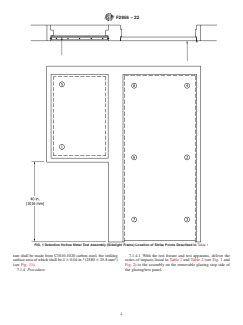
FIG. 1 Detention Hollow Metal Test Assembly (Sidelight Frame) Location of Strike Points Described in Table 1
6.2 Mounting for Testing:
6.2.1 The sample shall be mounted such that the removable glazing stops are mounted on the same side of the glazing or panel
oppositeas the impact test ram. In this test configuration, the removable glazing stops and screws must prevent the glazing or panel
from being forced out of the opening by ram impacts. The test sample shall be installed into the masonry test wall using a frame
anchor method as specified in ANSI/NAAMM HMMA 863. Any alternate anchor type, including weld-in embed type anchor
methods or arc welding to hollow metal wall panel systems, to be approved shall be investigated similarly in accordance with these
standard test methods. The type anchors and anchor spacing used shall be recorded as part of the test report.
F2956 − 22
FIG. 2 Detention Hollow Metal Test Assembly (Sidelight Frame) Location of Strike Points Described in Table 2
6.2.2 Where weld-in embed anchors or hollow metal wall panel arc welded anchors are to be tested, it is acceptable to modify
the impact test fixture in Figs. 3-10 to accurately simulate field conditions. Any modifications to the impact test fixture shown in
Figs. 3-10 shall be included in the test laboratory’s report in accordance with Section 8.
6.2.3 Install components such as frames, glazing or panels, and glazing stops in the component test fixture as described in 6.1.
Provide clearances around the test sample and anchoring in accordance with the manufacturer’s recommendations. Manufacturer’s
recommendations and instructions shall be included as part of test reports.
7. Test Methods
7.1 Anchor System Impact Test:
F2956 − 22
FIG. 3 (Sidelight) Test Wall Detention Hollow Metal Anchor Systems (Test Method F1592 Sidelight)
7.1.1 Scope—This test method is designed to evaluate the capability of an anchor system used to install a hollow metal vision
system or door frame assembly including frame, and wall anchoring to resist repetitive impact forces at the designated critical
areas.
7.1.2 Significance and Use:
7.1.2.1 This test method is intended to closely simulate a sustained battering ram-style attack and provide an evaluation of the
capability of the anchoring method and assembly to prevent, delay, and frustrate escape or access to unauthorized areas. The test
results h
...