

ASTM E3172-18
(Guide)Standard Guide for Reporting Production Information and Data for Nano-Objects
General Information
- Abstract
SIGNIFICANCE AND USE
5.1 A nano-object at any specific time can be considered well-defined.
5.2 The life-cycle of a nano-object can be viewed as a series of production processes that transforms starting materials or a well-defined nano-object into a new, equally well-defined nano-object.
5.3 Each step of the life-cycle can be considered a separate production action and can be described by the information categories and descriptors within this guide.
5.4 The following are examples of nano-object productions that can be described by this guide.
5.4.1 The creation of carbon nanotubes by arc discharge.
5.4.2 The coating of a nano-object in a random or controlled manner when placed in a liquid.
Note 1: The reactivity of nano-objects makes it likely that even with the utmost precautions, various features and characteristics may change over time, for example, when a nano-object is placed in a liquid and coated. Such a coating can significantly change the properties, functionalities, and reactivity of the nano-object. This change can be considered one step of a life-cycle and is a production process.
Note 2: A nano-object may have more than one coating. For example, titania nano-objects are often coated by alumina by manufacturers to control certain properties. When these previously coated nano-objects are placed in liquid containing biological molecules, they can acquire a second coating. It can require very careful administration of test procedures to ensure the test results can meaningfully be ascribed to characteristics and features of the “initial” nano-objects.
5.4.3 A nano-object experiences changes to its size, shape, physical structure, and other characteristics.
Note 3: Events such as shock (unexpected forces), temperature and pressure changes, humidity changes, shipping, dissolution, and exposure to acids and bases can result in a changed nano-object with significantly different properties, functionalities, and reactivity. These events can be considered a prod...
SCOPE
1.1 This guide provides guidelines for describing the production of one or more individual nano-objects. It establishes essential and desirable information categories and descriptors important to specify the production process, including the starting materials, the process itself, and the resulting nano-objects.
1.2 This guide is designed to be directly applicable to reporting production information and data for nano-objects in most circumstances, including but not limited to reporting original research results in the archival literature, developing of ontologies, database schemas, data repositories and data reporting formats, specifying regulations, and enabling commercial activity.
1.3 This guide is applicable to an individual nano-object and a collection of nano-objects.
1.4 This standard does not purport to address all of the safety concerns, if any, associated with its use. It is the responsibility of the user of this standard to establish appropriate safety, health, and environmental practices and determine the applicability of regulatory limitations prior to use.
1.5 This international standard was developed in accordance with internationally recognized principles on standardization established in the Decision on Principles for the Development of International Standards, Guides and Recommendations issued by the World Trade Organization Technical Barriers to Trade (TBT) Committee.
- Status
- Published
- Publication Date
- 31-May-2018
- Technical Committee
- E56 - Nanotechnology
- Drafting Committee
- E56.01 - Informatics and Terminology
Overview
ASTM E3172-18, Standard Guide for Reporting Production Information and Data for Nano-Objects, provides comprehensive guidelines for describing and documenting the production processes of individual nano-objects and collections of nano-objects. Developed by ASTM, this international standard enables clear reporting through essential information categories and descriptors that cover starting materials, production techniques, process conditions, and resulting products. This guide is applicable in research, commercial manufacturing, ontology and database development, regulatory compliance, and data repository management. Its use fosters transparency, repeatability, and reliability in reporting production data for nano-objects, which is critical for quality, reproducibility, and standardization in nanotechnology.
Key Topics
- Production Process Documentation
- Describes how to report processes that transform starting materials into well-defined nano-objects.
- Guidelines cover each production step as a separate action, supporting full life-cycle documentation.
- Information Categories and Descriptors
- Defines descriptors for starting materials, equipment, production techniques (e.g., chemical vapor deposition, arc discharge), recipes, process conditions (temperature, media, pressure), and final production results.
- Ensures clarity in reporting by requiring details such as batch numbers, purity, yield, component sources, and manufacturing location.
- Stability and Integrity of Nano-Objects
- Stresses the importance of documenting stability and changes in nano-objects resulting from handling, processing, or environmental exposure (e.g., temperature fluctuations, transportation, coating).
- Provides categories for reporting different types of instability, including inherent, reactive, and condition-induced changes.
- Adaptability
- The guide supports different production scenarios, such as research-scale synthesis, commercial production, and sample preparation for testing, adapting the reporting depth as needed.
- Terminology Consistency
- Aligns with ISO terminology (e.g., ISO/TS 80004-1:2010) to ensure shared understanding and international compatibility.
Applications
- Research and Scientific Publication
- Standardizes production reporting of nano-objects in scientific literature, improving reproducibility and enabling meaningful comparison across studies.
- Development of Ontologies and Databases
- Supports creation of standard ontologies, database schemas, and data repository formats for nanomaterials, catalyzing data sharing and aggregation.
- Regulatory Compliance
- Facilitates regulatory reporting by providing a consistent framework to specify processes and nano-object characteristics, aiding in safety assessments and material registration.
- Commercial Manufacturing
- Enables manufacturers to document and communicate production details for quality control, traceability, and certification purposes.
- Quality Control and Testing
- Helps ensure the integrity of nano-object samples used in tests, toxicity evaluations, or performance assessments by tracing their production history and potential alterations.
- Lifecycle Analysis
- Useful for tracing the full life-cycle of a nano-object, including modifications from coatings, environmental exposure, or storage conditions.
Related Standards
- ISO/TS 12805:2011 – Guidance on specifying nano-objects for nanotechnologies.
- ISO/TS 80004-1:2010 – Vocabulary for nanotechnologies, core terms.
- ISO/TS 80004-3:2010 – Nanotechnology vocabulary focused on carbon nano-objects.
- CODATA-VAMAS Working Group – Resources for nanomaterials description.
- ASTM Quality Control Guides – Procedures for quality assessment in manufacturing and testing nano-objects.
Keywords: nano-objects, nanomaterials, production information, reporting standard, ASTM E3172, nano-object stability, nanotechnology documentation, manufacturing traceability, production process, specification, database schema, quality control, regulatory compliance.
Relations
- Effective Date
- 01-Jun-2018
- Effective Date
- 01-Jun-2018
Frequently Asked Questions
ASTM E3172-18 is a guide published by ASTM International. Its full title is "Standard Guide for Reporting Production Information and Data for Nano-Objects". This standard covers: SIGNIFICANCE AND USE 5.1 A nano-object at any specific time can be considered well-defined. 5.2 The life-cycle of a nano-object can be viewed as a series of production processes that transforms starting materials or a well-defined nano-object into a new, equally well-defined nano-object. 5.3 Each step of the life-cycle can be considered a separate production action and can be described by the information categories and descriptors within this guide. 5.4 The following are examples of nano-object productions that can be described by this guide. 5.4.1 The creation of carbon nanotubes by arc discharge. 5.4.2 The coating of a nano-object in a random or controlled manner when placed in a liquid. Note 1: The reactivity of nano-objects makes it likely that even with the utmost precautions, various features and characteristics may change over time, for example, when a nano-object is placed in a liquid and coated. Such a coating can significantly change the properties, functionalities, and reactivity of the nano-object. This change can be considered one step of a life-cycle and is a production process. Note 2: A nano-object may have more than one coating. For example, titania nano-objects are often coated by alumina by manufacturers to control certain properties. When these previously coated nano-objects are placed in liquid containing biological molecules, they can acquire a second coating. It can require very careful administration of test procedures to ensure the test results can meaningfully be ascribed to characteristics and features of the “initial” nano-objects. 5.4.3 A nano-object experiences changes to its size, shape, physical structure, and other characteristics. Note 3: Events such as shock (unexpected forces), temperature and pressure changes, humidity changes, shipping, dissolution, and exposure to acids and bases can result in a changed nano-object with significantly different properties, functionalities, and reactivity. These events can be considered a prod... SCOPE 1.1 This guide provides guidelines for describing the production of one or more individual nano-objects. It establishes essential and desirable information categories and descriptors important to specify the production process, including the starting materials, the process itself, and the resulting nano-objects. 1.2 This guide is designed to be directly applicable to reporting production information and data for nano-objects in most circumstances, including but not limited to reporting original research results in the archival literature, developing of ontologies, database schemas, data repositories and data reporting formats, specifying regulations, and enabling commercial activity. 1.3 This guide is applicable to an individual nano-object and a collection of nano-objects. 1.4 This standard does not purport to address all of the safety concerns, if any, associated with its use. It is the responsibility of the user of this standard to establish appropriate safety, health, and environmental practices and determine the applicability of regulatory limitations prior to use. 1.5 This international standard was developed in accordance with internationally recognized principles on standardization established in the Decision on Principles for the Development of International Standards, Guides and Recommendations issued by the World Trade Organization Technical Barriers to Trade (TBT) Committee.
SIGNIFICANCE AND USE 5.1 A nano-object at any specific time can be considered well-defined. 5.2 The life-cycle of a nano-object can be viewed as a series of production processes that transforms starting materials or a well-defined nano-object into a new, equally well-defined nano-object. 5.3 Each step of the life-cycle can be considered a separate production action and can be described by the information categories and descriptors within this guide. 5.4 The following are examples of nano-object productions that can be described by this guide. 5.4.1 The creation of carbon nanotubes by arc discharge. 5.4.2 The coating of a nano-object in a random or controlled manner when placed in a liquid. Note 1: The reactivity of nano-objects makes it likely that even with the utmost precautions, various features and characteristics may change over time, for example, when a nano-object is placed in a liquid and coated. Such a coating can significantly change the properties, functionalities, and reactivity of the nano-object. This change can be considered one step of a life-cycle and is a production process. Note 2: A nano-object may have more than one coating. For example, titania nano-objects are often coated by alumina by manufacturers to control certain properties. When these previously coated nano-objects are placed in liquid containing biological molecules, they can acquire a second coating. It can require very careful administration of test procedures to ensure the test results can meaningfully be ascribed to characteristics and features of the “initial” nano-objects. 5.4.3 A nano-object experiences changes to its size, shape, physical structure, and other characteristics. Note 3: Events such as shock (unexpected forces), temperature and pressure changes, humidity changes, shipping, dissolution, and exposure to acids and bases can result in a changed nano-object with significantly different properties, functionalities, and reactivity. These events can be considered a prod... SCOPE 1.1 This guide provides guidelines for describing the production of one or more individual nano-objects. It establishes essential and desirable information categories and descriptors important to specify the production process, including the starting materials, the process itself, and the resulting nano-objects. 1.2 This guide is designed to be directly applicable to reporting production information and data for nano-objects in most circumstances, including but not limited to reporting original research results in the archival literature, developing of ontologies, database schemas, data repositories and data reporting formats, specifying regulations, and enabling commercial activity. 1.3 This guide is applicable to an individual nano-object and a collection of nano-objects. 1.4 This standard does not purport to address all of the safety concerns, if any, associated with its use. It is the responsibility of the user of this standard to establish appropriate safety, health, and environmental practices and determine the applicability of regulatory limitations prior to use. 1.5 This international standard was developed in accordance with internationally recognized principles on standardization established in the Decision on Principles for the Development of International Standards, Guides and Recommendations issued by the World Trade Organization Technical Barriers to Trade (TBT) Committee.
ASTM E3172-18 is classified under the following ICS (International Classification for Standards) categories: 07.120 - Nanotechnologies. The ICS classification helps identify the subject area and facilitates finding related standards.
ASTM E3172-18 has the following relationships with other standards: It is inter standard links to ASTM E3144-19, ASTM E3206-19. Understanding these relationships helps ensure you are using the most current and applicable version of the standard.
ASTM E3172-18 is available in PDF format for immediate download after purchase. The document can be added to your cart and obtained through the secure checkout process. Digital delivery ensures instant access to the complete standard document.
Standards Content (Sample)
This international standard was developed in accordance with internationally recognized principles on standardization established in the Decision on Principles for the
Development of International Standards, Guides and Recommendations issued by the World Trade Organization Technical Barriers to Trade (TBT) Committee.
Designation: E3172 − 18
Standard Guide for
Reporting Production Information and Data for Nano-
Objects
This standard is issued under the fixed designation E3172; the number immediately following the designation indicates the year of
original adoption or, in the case of revision, the year of last revision. A number in parentheses indicates the year of last reapproval. A
superscript epsilon (´) indicates an editorial change since the last revision or reapproval.
1. Scope 2.2 Other Standards:
Uniform Description System for Materials on the Na-
1.1 This guide provides guidelines for describing the pro-
noscale
duction of one or more individual nano-objects. It establishes
essential and desirable information categories and descriptors
3. Terminology
important to specify the production process, including the
3.1 Definitions:
starting materials, the process itself, and the resulting nano-
3.1.1 For definitions of general terms used in this standard,
objects.
see Compilation of ASTM Standard Definitions.
1.2 This guide is designed to be directly applicable to
3.2 Definitions of Terms for Data Description:
reporting production information and data for nano-objects in
3.2.1 descriptor, n—numericaldataortextthatexpressesthe
most circumstances, including but not limited to reporting
measurement, observation, or calculational result of some
originalresearchresultsinthearchivalliterature,developingof
aspect of an object.
ontologies,databaseschemas,datarepositoriesanddatareport-
3.2.1.1 Discussion—A descriptor conveys both the seman-
ing formats, specifying regulations, and enabling commercial
tics of the results as well as the result itself.
activity.
3.2.2 information category, n—a set or group of related
1.3 Thisguideisapplicabletoanindividualnano-objectand
descriptors that represent a property, characteristic, or feature
a collection of nano-objects.
of an object.
1.4 This standard does not purport to address all of the 3.2.2.1 Discussion—Information categories may be hierar-
safety concerns, if any, associated with its use. It is the
chical and contain subcategories (referred to as such), each
responsibility of the user of this standard to establish appro- containing a set of descriptors.
priate safety, health, and environmental practices and deter-
3.2.2.2 Discussion—Information categories and their sub-
mine the applicability of regulatory limitations prior to use.
categories are constructed to convey understanding of the
1.5 This international standard was developed in accor-
structure, properties, features, and performance of an object.
dance with internationally recognized principles on standard-
3.2.2.3 Discussion—A descriptor may occur in more than
ization established in the Decision on Principles for the
one information category.
Development of International Standards, Guides and Recom-
3.2.2.4 Discussion—It is the responsibility of the owner of
mendations issued by the World Trade Organization Technical
data or information resources using an information category to
Barriers to Trade (TBT) Committee.
ensure that data and information redundancy is adequately
addressed.
2. Referenced Documents
3.3 Definitions of Terms for Nanomaterials:
2.1 ISO Standards:
3.3.1 nanomaterial, n—a material with one, two, or three
ISO/TS 12805:2011(en) Nanotechnologies — Materials
external dimensions in the nanoscale.
Specifications — Guidance on Specifying Nano-Objects
ISO/TS 80004-3:2010(en)
ISO/TS 80004-1:2010(en) Nanotechnologies –Vocabulary –
3.3.2 nano-object, n—an instance of nanomaterial that has a
Part 1: Core Terms
distinct physical boundary in every direction and moves freely.
3.3.2.1 Discussion—A nano-object is the smallest unit of
This guide is under the jurisdiction of ASTM Committee E56 on Nanotech-
nanomaterial that exists as a separate functional entity.
nology and is the direct responsibility of Subcommittee E56.01 on Informatics and
Terminology.
Current edition approved June 1, 2018. Published July 2018. DOI: 10.1520/
E3172-18. Available from CODATA-VAMAS Working Group on the Description of
Available from International Organization for Standardization (ISO), ISO Nanomaterials, http://www.codata.org/nanomaterials, as released on 25 May 2016.
Central Secretariat, BIBC II, Chemin de Blandonnet 8, CP 401, 1214 Vernier, Compilation of ASTM Standard Definitions, 9th edition, ASTM International,
Geneva, Switzerland, http://www.iso.org. 2000.
Copyright © ASTM International, 100 Barr Harbor Drive, PO Box C700, West Conshohocken, PA 19428-2959. United States
E3172 − 18
3.4 Definitions of Terms for Production: 5.3 Each step of the life-cycle can be considered a separate
3.4.1 production technique, n—a formal or informal tech- production action and can be described by the information
nology to produce a new substance. categories and descriptors within this guide.
3.4.1.1 Discussion—Example production techniques in-
5.4 The following are examples of nano-object productions
clude chemical vapor deposition (CVD), arc discharge, laser
that can be described by this guide.
ablation, etc.
5.4.1 The creation of carbon nanotubes by arc discharge.
3.4.2 recipe, n—a documented procedure for taking speci-
5.4.2 The coating of a nano-object in a random or controlled
fied amounts of substances and processing them in a specified
manner when placed in a liquid.
sequence or sequences to produce one or more new substances.
NOTE 1—The reactivity of nano-objects makes it likely that even with
3.4.2.1 Discussion—Arecipe can describe how a production
the utmost precautions, various features and characteristics may change
technique can be used to produce desired nano-objects.
over time, for example, when a nano-object is placed in a liquid and
3.4.2.2 Discussion—A recipe is often referred to as a stan- coated. Such a coating can significantly change the properties,
functionalities, and reactivity of the nano-object. This change can be
dard operating procedure.
considered one step of a life-cycle and is a production process.
NOTE 2—Anano-object may have more than one coating. For example,
4. Summary of Guide
titania nano-objects are often coated by alumina by manufacturers to
4.1 This guide enumerates information categories and their control certain properties. When these previously coated nano-objects are
placed in liquid containing biological molecules, they can acquire a
contained descriptors used to report the information and data
second coating. It can require very careful administration of test proce-
necessary to specify the production of one or more individual
dures to ensure the test results can meaningfully be ascribed to charac-
nano-objects. In practice, only a subset of information catego-
teristics and features of the “initial” nano-objects.
ries or descriptors will be used in each report instance.
5.4.3 A nano-object experiences changes to its size, shape,
4.2 Different amounts of data and information are generated
physical structure, and other characteristics.
in different production scenarios. For example, production of
NOTE 3—Events such as shock (unexpected forces), temperature and
new or novel nano-objects for research purposes differs from
pressure changes, humidity changes, shipping, dissolution, and exposure
production of commercial nano-objects which in turns differs
to acids and bases can result in a changed nano-object with significantly
from the production of a sample of nano-objects suitable for
different properties, functionalities, and reactivity. These events can be
toxicity testing. considered a production process.
4.3 Nano-objects are tangible materials that are always 5.4.4 Unless care is taken to carefully control potential
changes to a nano-object before testing, measurement results
produced from already existing tangible materials. It is desir-
able in some report instances to describe the starting materials should be carefully examined for unintended changes through
and in other instances, only the resulting nano-objects. good laboratory practices, statistical analysis of all data, and
4.3.1 It is also desirable in many report instances simply to verification that test samples maintain their integrity through-
describe nano-objects in detail without specifying their pro- out the testing process.
duction process. In these instances, it is critical to ensure that
5.5 A nano-object can be subjected to a series or sequence
the reported nano-objects have not been subjected to change of
of production steps. The steps can be fully planned and
any type.
controlled or some steps can happen due to random events.
This guide is applicable to describe one, many, or all steps in
5. Significance and Use
detail.
5.1 A nano-object at any specific time can be considered
NOTE 4—For example, the testing of a nano-object for potential toxic
well-defined.
effects may involve a sequence of steps as shown in Table 1. As can be
seen, steps such as storage, insertion into biological media, or sampling
5.2 The life-cycle of a nano-object can be viewed as a series
can possibly involve random changes to the resulting nano-object.
of production processes that transforms starting materials or a
well-defined nano-object into a new, equally well-defined 5.6 Use of this guide to describe the individual production
nano-object. steps leading to the creation of a tested nano-object can be
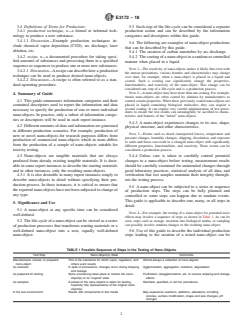
TABLE 1 Possible Sequence of Steps in the Testing of Nano-Objects
Test Step Nano-Object(s) State Comments
Manufactured, natural, or prepared This is the substance for which users, regulators, and Almost always a collection of nano-objects
nano-object others want results
As received In spite of precautions, changes occur during shipping Agglomeration, aggregation, reactions, degradation
and stora
...