

ASTM F2660-20
(Test Method)Standard Test Method for Qualifying Coatings for Use on F3125 Grade A490 Structural Bolts Relative to Environmental Hydrogen Embrittlement
General Information
- Abstract
SIGNIFICANCE AND USE
4.1 This test method describes the testing procedure that shall be used to qualify a coating system that is under consideration for use on ASTM F3125 Grade A490 high strength structural bolts made of any steel composition permitted by the F3125 specification for Grade A490 bolts. The test method measures the susceptibility of coated specimen bolts to the influence of an externally applied potential (see 7.2.3.3) by testing for the threshold of embrittlement in a salt solution environment.
SCOPE
1.1 This test method defines the procedures and tests to evaluate the effect of a coating system on the susceptibility to environmental hydrogen embrittlement (EHE) of an ASTM F3125 Grade A490 high strength structural bolt.
1.2 This test method shall qualify a coating system for use with any size of F3125 Grade A490 bolts (that is, 1/2 to 1-1/2 in.) high strength structural bolts, relative to EHE.
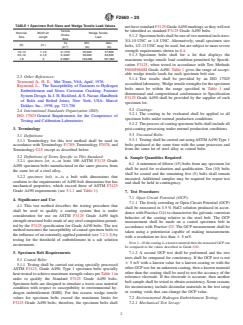
1.3 The characteristic to be evaluated by this test method is the susceptibility to EHE caused by hydrogen generated from corrosion protection of the steel bolt by sacrificial galvanic corrosion of the coating. Testing shall be performed on coated, specimen ASTM F3125 Grade A490 bolts manufactured to the maximum susceptible tensile strength values (see Table 1) of the bolt (see Section 5 Specimen Bolt Requirements). The internal hydrogen embrittlement (IHE) susceptibility will also be inherently evaluated when the EHE is tested through this test method. There is no need for a separate IHE susceptibility test.
1.4 The values stated in inch-pound units are to be regarded as standard. No other units of measurement are included in this standard.
1.5 This standard does not purport to address all of the safety concerns, if any, associated with its use. It is the responsibility of the user of this standard to establish appropriate safety, health, and environmental practices and determine the applicability of regulatory limitations prior to use.
1.6 This international standard was developed in accordance with internationally recognized principles on standardization established in the Decision on Principles for the Development of International Standards, Guides and Recommendations issued by the World Trade Organization Technical Barriers to Trade (TBT) Committee.
- Status
- Published
- Publication Date
- 31-Mar-2020
- Technical Committee
- F16 - Fasteners
- Drafting Committee
- F16.01 - Test Methods
Buy Documents
ASTM F2660-20 - Standard Test Method for Qualifying Coatings for Use on F3125 Grade A490 Structural Bolts Relative to Environmental Hydrogen Embrittlement
REDLINE ASTM F2660-20 - Standard Test Method for Qualifying Coatings for Use on F3125 Grade A490 Structural Bolts Relative to Environmental Hydrogen Embrittlement
Overview
ASTM F2660-20: Standard Test Method for Qualifying Coatings for Use on F3125 Grade A490 Structural Bolts Relative to Environmental Hydrogen Embrittlement establishes comprehensive procedures to evaluate the performance of coatings applied to ASTM F3125 Grade A490 high strength structural bolts. This standard is focused on assessing the susceptibility of coated bolts to environmental hydrogen embrittlement (EHE), a critical failure mode caused by hydrogen absorption during corrosion protection and exposure to salt-rich environments.
It provides an industry-accepted test methodology for manufacturers, specifiers, and end-users to ensure that protective coatings do not compromise the structural integrity of high strength bolts by inducing hydrogen embrittlement.
Key Topics
- Hydrogen Embrittlement Testing: Outlines specific procedures for testing the susceptibility of coated bolts to EHE by simulating real-world corrosive environments, which include exposure to salt solutions and applied mechanical stresses.
- Qualification of Coating Systems: Standardizes the qualification of any size of F3125 Grade A490 bolt (from 1/2 to 1-1/2 in.), ensuring that approved coatings can be reliably used across typical bolt sizes in structural applications.
- Specimen Preparation: Requires specimen bolts to be produced to the maximum susceptible tensile strength values, simulating a worst-case material condition for valid testing.
- Galvanic Corrosion and Potential: Includes procedures for measuring the open circuit potential (OCP) to characterize the galvanic response of the coating relative to the underlying steel.
- Acceptance Criteria: Defines clear pass/fail requirements based on threshold load, which must meet or exceed 60% of the fast fracture load in bending for acceptance.
Applications
ASTM F2660-20 is a valuable standard for industries and projects where the reliability of high-strength bolted connections is critical and where protective coatings are applied for corrosion resistance. Key applications include:
- Steel Construction and Bridges: Ensuring long-term integrity of bolted connections in bridges and large steel structures exposed to weather and road salts.
- Heavy Equipment and Infrastructure: Qualification of coatings for bolts used in infrastructure such as power plants, wind turbines, and industrial facilities.
- Coating Manufacturers: Testing and validating new or existing coating systems to demonstrate compliance and enhanced product value.
- Quality Assurance in Fastener Production: Integrating EHE susceptibility testing in routine quality inspection procedures for safety-critical applications.
By following this test method, stakeholders can mitigate the risk of premature fastener failure caused by hydrogen ingress from coatings, enabling safer, longer-lasting structural connections.
Related Standards
ASTM F2660-20 references and complements several other key standards relevant to fastener testing, coatings, and measurement procedures:
- ASTM F3125: Specification for high strength structural bolts and assemblies
- ASTM F519: Test Method for Mechanical Hydrogen Embrittlement Evaluation of Plating/Coating Processes and Service Environments
- ASTM F606/F606M: Test Methods for Determining the Mechanical Properties of Externally and Internally Threaded Fasteners, Washers, and Rivets
- ASTM F1624: Test Method for Measurement of Hydrogen Embrittlement Threshold in Steel by the Incremental Step Loading Technique
- ASTM G3/G44/G82: Practices and guides for electrochemical measurements and corrosion testing
- ISO 17025: General requirements for the competence of testing and calibration laboratories
- Research Council on Structural Connections Specifications: Design standards for structural joints using high strength bolts
These standards collectively support robust product validation, quality assurance, and regulatory compliance across global construction and manufacturing industries.
Keywords: ASTM F2660-20, hydrogen embrittlement, F3125 Grade A490 bolts, coating qualification, environmental exposure, galvanic corrosion, structural bolting standards, bolt testing, corrosion protection, fastener integrity
Relations
- Effective Date
- 01-Apr-2020
- Effective Date
- 01-Jan-2024
- Effective Date
- 01-Dec-2023
- Effective Date
- 01-Nov-2023
- Effective Date
- 01-May-2019
- Effective Date
- 01-Nov-2018
- Effective Date
- 01-Nov-2018
- Effective Date
- 01-Dec-2017
- Effective Date
- 01-Jun-2017
- Effective Date
- 01-Mar-2017
- Effective Date
- 01-Sep-2016
- Effective Date
- 01-Aug-2016
- Effective Date
- 15-Jul-2016
- Effective Date
- 01-Mar-2015
- Effective Date
- 01-Feb-2015
Buy Documents
ASTM F2660-20 - Standard Test Method for Qualifying Coatings for Use on F3125 Grade A490 Structural Bolts Relative to Environmental Hydrogen Embrittlement
REDLINE ASTM F2660-20 - Standard Test Method for Qualifying Coatings for Use on F3125 Grade A490 Structural Bolts Relative to Environmental Hydrogen Embrittlement
Frequently Asked Questions
ASTM F2660-20 is a standard published by ASTM International. Its full title is "Standard Test Method for Qualifying Coatings for Use on F3125 Grade A490 Structural Bolts Relative to Environmental Hydrogen Embrittlement". This standard covers: SIGNIFICANCE AND USE 4.1 This test method describes the testing procedure that shall be used to qualify a coating system that is under consideration for use on ASTM F3125 Grade A490 high strength structural bolts made of any steel composition permitted by the F3125 specification for Grade A490 bolts. The test method measures the susceptibility of coated specimen bolts to the influence of an externally applied potential (see 7.2.3.3) by testing for the threshold of embrittlement in a salt solution environment. SCOPE 1.1 This test method defines the procedures and tests to evaluate the effect of a coating system on the susceptibility to environmental hydrogen embrittlement (EHE) of an ASTM F3125 Grade A490 high strength structural bolt. 1.2 This test method shall qualify a coating system for use with any size of F3125 Grade A490 bolts (that is, 1/2 to 1-1/2 in.) high strength structural bolts, relative to EHE. 1.3 The characteristic to be evaluated by this test method is the susceptibility to EHE caused by hydrogen generated from corrosion protection of the steel bolt by sacrificial galvanic corrosion of the coating. Testing shall be performed on coated, specimen ASTM F3125 Grade A490 bolts manufactured to the maximum susceptible tensile strength values (see Table 1) of the bolt (see Section 5 Specimen Bolt Requirements). The internal hydrogen embrittlement (IHE) susceptibility will also be inherently evaluated when the EHE is tested through this test method. There is no need for a separate IHE susceptibility test. 1.4 The values stated in inch-pound units are to be regarded as standard. No other units of measurement are included in this standard. 1.5 This standard does not purport to address all of the safety concerns, if any, associated with its use. It is the responsibility of the user of this standard to establish appropriate safety, health, and environmental practices and determine the applicability of regulatory limitations prior to use. 1.6 This international standard was developed in accordance with internationally recognized principles on standardization established in the Decision on Principles for the Development of International Standards, Guides and Recommendations issued by the World Trade Organization Technical Barriers to Trade (TBT) Committee.
SIGNIFICANCE AND USE 4.1 This test method describes the testing procedure that shall be used to qualify a coating system that is under consideration for use on ASTM F3125 Grade A490 high strength structural bolts made of any steel composition permitted by the F3125 specification for Grade A490 bolts. The test method measures the susceptibility of coated specimen bolts to the influence of an externally applied potential (see 7.2.3.3) by testing for the threshold of embrittlement in a salt solution environment. SCOPE 1.1 This test method defines the procedures and tests to evaluate the effect of a coating system on the susceptibility to environmental hydrogen embrittlement (EHE) of an ASTM F3125 Grade A490 high strength structural bolt. 1.2 This test method shall qualify a coating system for use with any size of F3125 Grade A490 bolts (that is, 1/2 to 1-1/2 in.) high strength structural bolts, relative to EHE. 1.3 The characteristic to be evaluated by this test method is the susceptibility to EHE caused by hydrogen generated from corrosion protection of the steel bolt by sacrificial galvanic corrosion of the coating. Testing shall be performed on coated, specimen ASTM F3125 Grade A490 bolts manufactured to the maximum susceptible tensile strength values (see Table 1) of the bolt (see Section 5 Specimen Bolt Requirements). The internal hydrogen embrittlement (IHE) susceptibility will also be inherently evaluated when the EHE is tested through this test method. There is no need for a separate IHE susceptibility test. 1.4 The values stated in inch-pound units are to be regarded as standard. No other units of measurement are included in this standard. 1.5 This standard does not purport to address all of the safety concerns, if any, associated with its use. It is the responsibility of the user of this standard to establish appropriate safety, health, and environmental practices and determine the applicability of regulatory limitations prior to use. 1.6 This international standard was developed in accordance with internationally recognized principles on standardization established in the Decision on Principles for the Development of International Standards, Guides and Recommendations issued by the World Trade Organization Technical Barriers to Trade (TBT) Committee.
ASTM F2660-20 is classified under the following ICS (International Classification for Standards) categories: 21.060.10 - Bolts, screws, studs. The ICS classification helps identify the subject area and facilitates finding related standards.
ASTM F2660-20 has the following relationships with other standards: It is inter standard links to ASTM F2660-13, ASTM E8/E8M-24, ASTM F519-23, ASTM F1789-23, ASTM G3-14(2019), ASTM F519-18, ASTM F1624-12(2018), ASTM F519-17a, ASTM F1789-17, ASTM F519-17, ASTM F606/F606M-16, ASTM F1789-16, ASTM E8/E8M-16, ASTM F1789-15a, ASTM E8/E8M-15. Understanding these relationships helps ensure you are using the most current and applicable version of the standard.
ASTM F2660-20 is available in PDF format for immediate download after purchase. The document can be added to your cart and obtained through the secure checkout process. Digital delivery ensures instant access to the complete standard document.
Standards Content (Sample)
This international standard was developed in accordance with internationally recognized principles on standardization established in the Decision on Principles for the
Development of International Standards, Guides and Recommendations issued by the World Trade Organization Technical Barriers to Trade (TBT) Committee.
Designation: F2660 − 20
Standard Test Method for
Qualifying Coatings for Use on F3125 Grade A490 Structural
Bolts Relative to Environmental Hydrogen Embrittlement
This standard is issued under the fixed designation F2660; the number immediately following the designation indicates the year of
original adoption or, in the case of revision, the year of last revision. A number in parentheses indicates the year of last reapproval. A
superscript epsilon (´) indicates an editorial change since the last revision or reapproval.
1. Scope 2. Referenced Documents
2.1 ASTM Standards:
1.1 This test method defines the procedures and tests to
E4 Practices for Force Verification of Testing Machines
evaluate the effect of a coating system on the susceptibility to
E8/E8M Test Methods for Tension Testing of Metallic Ma-
environmental hydrogen embrittlement (EHE) of an ASTM
terials
F3125 Grade A490 high strength structural bolt.
F519 Test Method for Mechanical Hydrogen Embrittlement
1.2 This test method shall qualify a coating system for use
Evaluation of Plating/Coating Processes and Service En-
1 1
withanysizeofF3125GradeA490bolts(thatis, ⁄2to1- ⁄2in.)
vironments
high strength structural bolts, relative to EHE.
F606/F606M Test Methods for Determining the Mechanical
Properties of Externally and Internally Threaded
1.3 The characteristic to be evaluated by this test method is
Fasteners, Washers, Direct Tension Indicators, and Rivets
the susceptibility to EHE caused by hydrogen generated from
F1624 Test Method for Measurement of Hydrogen Em-
corrosion protection of the steel bolt by sacrificial galvanic
brittlement Threshold in Steel by the Incremental Step
corrosion of the coating. Testing shall be performed on coated,
Loading Technique
specimenASTM F3125 Grade A490 bolts manufactured to the
F1789 Terminology for F16 Mechanical Fasteners
maximum susceptible tensile strength values (see Table 1)of
F2078 Terminology Relating to Hydrogen Embrittlement
the bolt (see Section 5 Specimen Bolt Requirements). The
Testing
internal hydrogen embrittlement (IHE) susceptibility will also
F3125 Specification for High Strength Structural Bolts and
be inherently evaluated when the EHE is tested through this
Assemblies, Steel and Alloy Steel, Heat Treated, Inch
test method. There is no need for a separate IHE susceptibility
Dimensions 120 ksi and 150 ksi Minimum Tensile
test.
Strength, and Metric Dimensions 830 MPa and 1040 MPa
Minimum Tensile Strength
1.4 The values stated in inch-pound units are to be regarded
G3 Practice for Conventions Applicable to Electrochemical
as standard. No other units of measurement are included in this
Measurements in Corrosion Testing
standard.
G15 Terminology Relating to Corrosion and CorrosionTest-
1.5 This standard does not purport to address all of the
ing (Withdrawn 2010)
safety concerns, if any, associated with its use. It is the
G44 PracticeforExposureofMetalsandAlloysbyAlternate
responsibility of the user of this standard to establish appro-
Immersion in Neutral 3.5 % Sodium Chloride Solution
priate safety, health, and environmental practices and deter-
G82 Guide for Development and Use of a Galvanic Series
mine the applicability of regulatory limitations prior to use.
for Predicting Galvanic Corrosion Performance
1.6 This international standard was developed in accor-
2.2 Research Council on Structural Connections:
dance with internationally recognized principles on standard-
Specification for Structural Joints Using High Strength Bolts
ization established in the Decision on Principles for the
(LRFD) Load and Resistance Factor Design
Development of International Standards, Guides and Recom-
Specification for Structural Joints Using High Strength Bolts
mendations issued by the World Trade Organization Technical
(ASD) Allowable Stress Design
Barriers to Trade (TBT) Committee.
For referenced ASTM standards, visit the ASTM website, www.astm.org, or
This test method is under the jurisdiction of ASTM Committee F16 on contact ASTM Customer Service at service@astm.org. For Annual Book of ASTM
Fasteners and is the direct responsibility of Subcommittee F16.01 on Test Methods. Standards volume information, refer to the standard’s Document Summary page on
Current edition approved April 1, 2020. Published April 2020. Originally the ASTM website.
approved in 2012. Last previous edition approved in 2013 as F2660–13. DOI: The last approved version of this historical standard is referenced on
10.1520/F2660–20. www.astm.org.
Copyright © ASTM International, 100 Barr Harbor Drive, PO Box C700, West Conshohocken, PA 19428-2959. United States
F2660 − 20
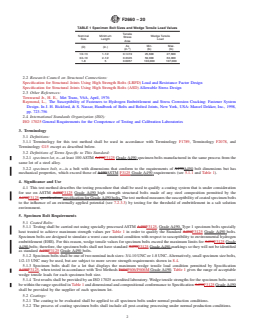
TABLE 1 Specimen Bolt Sizes and Wedge Tensile Load Values
nothavestandardF3125GradeA490markingssotheywillnot
Tensile be identified as standard F3125 Grade A490 bolts.
Nominal Minimum Wedge Tensile
Stress
5.1.2 Specimenboltsshallbeoneoftwonominalinchsizes:
Size Length Load
Area
3/4-10 UNC or 1-8 UNC. Alternatively, small specimen size
As Min. Max.
(D) (in.)
2 bolts, 1/2-13 UNC may be used, but are subject to more severe
(in. ) (lb) (lb)
strength requirements shown in 8.4.
1/2-13 1-1/2 0.1419 25,600 27,600
3/4-10 2-1/2 0.3345 59,000 63,000 5.1.3 Specimen bolts shall for a lot that displays the
1-8 5 0.6057 103,000 107,000
maximum wedge tensile load condition permitted by Specifi-
cation F3125, when tested in accordance with Test Methods
F606/F606M Grade A490. Table 1 gives the range of accept-
able wedge tensile loads for each specimen bolt size.
2.3 Other References:
5.1.4 Test results shall be provided by an ISO 17025
Townsend Jr., H. E., Met Trans, V6A, April, 1976
accreditedlaboratory.Wedgetensilestrengthsforthespecimen
Raymond, L., The Susceptibility of Fasteners to Hydrogen
bolts must be within the range specified in Table 1 and
Embrittlement and Stress Corrosion Cracking: Fastener
dimensional and compositional conformance to Specification
System Design. In J. H. Bickford, & S. Nassar, Handbook
F3125 Grade A490 shall be provided by the supplier of each
of Bolts and Bolted Joints, New York, USA: Marcel
specimen lot.
Dekker, Inc., 1998, pp. 723-756
5.2 Coatings:
2.4 International Standards Organization (ISO):
5.2.1 The coating to be evaluated shall be applied to all
ISO 17025 General Requirements for the Competence of
specimen bolts under normal production conditions.
Testing and Calibration Laboratories
5.2.2 Theprocessofcoatingspecimenboltsshallincludeall
post-coating processing under normal production conditions.
3. Terminology
5.3 Uncoated Bolts:
3.1 Definitions:
5.3.1 Testing shall be carried out usingASTM A490 Type 1
3.1.1 Terminology for this test method shall be used in
bolts produced at the same time with the same processes and
accordance with Terminology F1789, Terminology F2078, and
from the same lot of steel alloy as coated bolts.
Terminology G15 except as described below.
3.2 Definitions of Terms Specific to This Standard:
6. Sample Quantities Required
3.2.1 specimen lot, n—at least 100 ASTM F3125 Grade
6.1 A minimum of fifteen (15) bolts from any specimen lot
A490 specimen bolts manufactured in the same process from
shall be used for evaluation and qualification. Ten (10) bolts
the same lot of a steel alloy.
shall be coated and the remaining five (5) bolts shall remain
3.2.2 specimen bolt, n—is a bolt with dimensions that
uncoated. Additional samples may be required for repeat test
conform to the requirements of A490 bolt dimensions but has
and shall be held in contingency.
mechanical properties, which exceed those of ASTM F3125
Grade A490 requirements (see 5.1.1 and Table 1).
7. Test Procedures
7.1 Open Circuit Potential (OCP):
4. Significance and Use
7.1.1 The freely corroding or Open Circuit Potential (OCP)
4.1 This test method describes the testing procedure that
shall be measured in 3.5 % NaCl solution produced in accor-
shall be used to qualify a coating system that is under
dance with Practice G44 to characterize the galvanic corrosion
consideration for use on ASTM F3125 Grade A490 high
behavior of the coating relative to the steel bolt. The OCP
strength structural bolts made of any steel composition permit-
measurement shall be made on a coated specimen bolt in
ted by the F3125 specification for Grade A490 bolts. The test
accordance with Practice G3. The OCP measurement shall be
method measures the susceptibility of coated specimen bolts to
taken using a potentiostat capable of making measurements
the influence of an externally applied potential (see 7.2.3.3)by
with a resolution no less than 65mV.
testing for the threshold of embrittlement in a salt solution
NOTE 1—If the coating is a known material then the measured OCPcan
environment.
be compared to the values described in Guide G82.
5. Specimen Bolt Requirements 7.1.2 A second OCP test shall be performed and the two
tests shall be compared for consistency. If the OCP test is not
5.1 Coated Bolts:
6 5 mV with a known value for a known coating or with the
5.1.1 Testing shall be carried out using specially processed
other OCPtest for an unknown coating, then a known material
ASTM F3125, Grade A490, Type 1 specimen bolts specially
other than the coating shall be used to test the accuracy of the
heattreatedtoachievemaximumstrengthvaluesperTable1in
reference electrode. If the electrode is accurate, then another
order to qualify the Standard F3125 Grade A490 bolts.
bolt sample shall be tested to obtain consistency. Some reasons
Specimen bolts are designed to simulate a worst case material
for inconsistency include dissimilar materials in the test setup
condition with respect to susceptibility to environmental hy-
or coating voids that can change the OCP value.
drogen embrittlement (EHE). For this reason, wedge tensile
values for specimen bolts exceed the maximum limits for 7.2 Environmental Hydrogen Embrittlement Testing:
F3125 Grade A490 bolts; therefore, the specimen bolts shall 7.2.1 Mechanical Test Set-up:
F2660 − 20
7.2.1.1 The test shall be conducted on bolts that have been 7.2.3.1 To measure the EHE susceptibility of the fastener/
truncated by removal of the bolt head. Cut off the bolt head coating system, bolts are tested in the environment/setup
using a water cooled cut off saw or other device that does not described in section 7.1.1 and 7.2.3.3 using the step load
cause excessive heating of the bolt.The length of the specimen methodology described in Test Method F1624, Section 8, to
bolt for testing shall be a minimum length of 1.5 in. and a measure P .
th
maximum length of 4.0 in. The truncated bolt specimen shall 7.2.3.2 A galvanic condition (see Annex A1) is created by
be adjusted to achieve the placement of a minimum of two inscribing a mark in the coating at the root of a bolt thread to
threads between the gripping devices. The exposed threads expose the steel substrate. This condition simulates a damaged
shall be equally spaced on each side of the minor diameter of coating, also referred to as “coating holiday.” The scribe mark
thethreads.Thisplacementoftheboltspecimeninthegripping inthecoatingshallbelocatedbetweentheexposedthreads(see
device is shown in Fig. 1. Fig. 1) between the gripping devices and shall have a length of
7.2.1.2 The loading method required for this test is four- at least one diameter and a width that exposes the thread root.
point (4 pt) bend, which produces constant moment along the Care must be taken not to cause any damage in the form of a
gage section so that the stress may be calculated anywhere notch to the bolt itself. To this end an abrasive medium, lower
along the length of the fastener. The test is conducted under in hardness than the bolt material is recommended.
displacement control. The loading method shall have a speci-
NOTE 3—For example, a wire can be placed at the base of the exposed
fied load accuracy of 6 0.5 %, programmable to increase
thread in scribing the coating circumferentially to a length of one
incrementally in steps of load and time. The loading method
diameter.
shall be within the guidelines of calibration, force range,
7.2.3.3 To test at the OCPof the coating, the environmental
resolution, and verification of Practices E4.
chamber shall be partially filled with 3.5 % NaCl solution
7.2.2 Fast Fracture Testing:
produced in accordance with Practice G44 with the level of the
7.2.2.1 The first step in the testing sequence shall be a
solution being maintained below the threshold section of the
measurement of the fast fracture load of the specimen bolts in
bolt specimen. The reference electrode shall be placed in close
bending. Determine this value by performing a test in accor-
vicinity to the scribe mark.An electrochemical potential equal
dancewithTestMethodF1624,Section8,asshowninFig.2A,
to the measured OCPfrom section 7.1 shall be imposed on the
using a fast fracture protocol.Test a minimum of five uncoated
specimen during the test to negate the influence of any
specimen bolts and a minimum of five coated specimen bolts.
dissimil
...
This document is not an ASTM standard and is intended only to provide the user of an ASTM standard an indication of what changes have been made to the previous version. Because
it may not be technically possible to adequately depict all changes accurately, ASTM recommends that users consult prior editions as appropriate. In all cases only the current version
of the standard as published by ASTM is to be considered the official document.
Designation: F2660 − 13 F2660 − 20
Standard Test Method for
Qualifying Coatings for Use on F3125 Grade A490 Structural
Bolts Relative to Environmental Hydrogen Embrittlement
This standard is issued under the fixed designation F2660; the number immediately following the designation indicates the year of
original adoption or, in the case of revision, the year of last revision. A number in parentheses indicates the year of last reapproval. A
superscript epsilon (´) indicates an editorial change since the last revision or reapproval.
1. Scope
1.1 This test method defines the procedures and tests to evaluate the effect of a coating system on the susceptibility to
environmental hydrogen embrittlement (EHE) of an ASTM A490F3125 Grade A490 high strength structural bolt.
1 1
1.2 This test method shall qualify a coating system for use with any size of A490F3125 Grade A490 bolts (that is, ⁄2 to 1- ⁄2
in.) high strength structural bolts, relative to EHE.
1.3 The characteristic to be evaluated by this test method is the susceptibility to EHE caused by hydrogen generated from
corrosion protection of the steel bolt by sacrificial galvanic corrosion of the coating. Testing shall be performed on coated,
specimen ASTM A490F3125 Grade A490 bolts manufactured to the maximum susceptible tensile strength values (see Table 1)
of the bolt (see Section 5 Specimen Bolt Requirements). The internal hydrogen embrittlement (IHE) susceptibility will also be
inherently evaluated when the EHE is tested through this test method. There is no need for a separate IHE susceptibility test.
1.4 The values stated in inch-pound units are to be regarded as standard. No other units of measurement are included in this
standard.
1.5 This standard does not purport to address all of the safety concerns, if any, associated with its use. It is the responsibility
of the user of this standard to establish appropriate safety safety, health, and healthenvironmental practices and determine the
applicability of regulatory limitations prior to use.
1.6 This international standard was developed in accordance with internationally recognized principles on standardization
established in the Decision on Principles for the Development of International Standards, Guides and Recommendations issued
by the World Trade Organization Technical Barriers to Trade (TBT) Committee.
2. Referenced Documents
2.1 ASTM Standards:
A490 Specification for Structural Bolts, Alloy Steel, Heat Treated, 150 ksi Minimum Tensile Strength (Withdrawn 2016)
E4 Practices for Force Verification of Testing Machines
E8/E8M Test Methods for Tension Testing of Metallic Materials
F519 Test Method for Mechanical Hydrogen Embrittlement Evaluation of Plating/Coating Processes and Service Environments
F606F606/F606M Test Methods for Determining the Mechanical Properties of Externally and Internally Threaded Fasteners,
Washers, and Rivets (Metric) F0606_F0606M Direct Tension Indicators, and Rivets
F1624 Test Method for Measurement of Hydrogen Embrittlement Threshold in Steel by the Incremental Step Loading Technique
F1789 Terminology for F16 Mechanical Fasteners
F2078 Terminology Relating to Hydrogen Embrittlement Testing
F3125 Specification for High Strength Structural Bolts and Assemblies, Steel and Alloy Steel, Heat Treated, Inch Dimensions
120 ksi and 150 ksi Minimum Tensile Strength, and Metric Dimensions 830 MPa and 1040 MPa Minimum Tensile Strength
G3 Practice for Conventions Applicable to Electrochemical Measurements in Corrosion Testing
G15 Terminology Relating to Corrosion and Corrosion Testing (Withdrawn 2010)
G44 Practice for Exposure of Metals and Alloys by Alternate Immersion in Neutral 3.5 % Sodium Chloride Solution
G82 Guide for Development and Use of a Galvanic Series for Predicting Galvanic Corrosion Performance
This test method is under the jurisdiction of ASTM Committee F16 on Fasteners and is the direct responsibility of Subcommittee F16.01 on Test Methods.
Current edition approved Nov. 1, 2013April 1, 2020. Published December 2013April 2020. Originally approved in 2012 2012. Last previous edition approved in 2013
as F2660–12.–13. DOI: 10.1520/F2660–13.10.1520/F2660–20.
For referenced ASTM standards, visit the ASTM website, www.astm.org, or contact ASTM Customer Service at service@astm.org. For Annual Book of ASTM Standards
volume information, refer to the standard’s Document Summary page on the ASTM website.
The last approved version of this historical standard is referenced on www.astm.org.
Copyright © ASTM International, 100 Barr Harbor Drive, PO Box C700, West Conshohocken, PA 19428-2959. United States
F2660 − 20
TABLE 1 Specimen Bolt Sizes and Wedge Tensile Load Values
Tensile
Nominal Minimum Wedge Tensile
Stress
Size Length Load
Area
As Min. Max.
(D) (in.)
(in. ) (lb) (lb)
1/2-13 1-1/2 0.1419 25,600 27,600
3/4-10 2-1/2 0.3345 59,000 63,000
1-8 5 0.6057 103,000 107,000
2.2 Research Council on Structural Connections:
Specification for Structural Joints Using High Strength Bolts (LRFD) Load and Resistance Factor Design
Specification for Structural Joints Using High Strength Bolts (ASD) Allowable Stress Design
2.3 Other References:
Townsend Jr., H. E., Met Trans, V6A, April, 1976
Raymond, L., The Susceptibility of Fasteners to Hydrogen Embrittlement and Stress Corrosion Cracking: Fastener System
Design. In J. H. Bickford, & S. Nassar, Handbook of Bolts and Bolted Joints, New York, USA: Marcel Dekker, Inc., 1998,
pp. 723-756
2.4 International Standards Organization (ISO):
ISO 17025 General Requirements for the Competence of Testing and Calibration Laboratories
3. Terminology
3.1 Definitions:
3.1.1 Terminology for this test method shall be used in accordance with Terminology F1789, Terminology F2078, and
Terminology G15 except as described below.
3.2 Definitions of Terms Specific to This Standard:
3.2.1 specimen lot, n—at least 100 ASTM A490F3125 Grade A490 specimen bolts manufactured in the same process from the
same lot of a steel alloy.
3.2.2 specimen bolt, n—is a bolt with dimensions that conform to the requirements of A490A490 bolt dimensions but has
mechanical properties, which exceed those of A490ASTM F3125 Grade A490 requirements (see 5.1.1 and Table 1).
4. Significance and Use
4.1 This test method describes the testing procedure that shall be used to qualify a coating system that is under consideration
for use on ASTM A490F3125 Grade A490 high strength structural bolts made of any steel composition permitted by the
A490F3125 specification. specification for Grade A490 bolts. The test method measures the susceptibility of coated specimen bolts
to the influence of an externally applied potential (see 7.2.3.3) by testing for the threshold of embrittlement in a salt solution
environment.
5. Specimen Bolt Requirements
5.1 Coated Bolts:
5.1.1 Testing shall be carried out using specially processed ASTM A490F3125, Grade A490, Type 1 specimen bolts specially
heat treated to achieve maximum strength values per Table 1 in order to qualify the Standard A490F3125 Grade A490 bolts.
Specimen bolts are designed to simulate a worst case material condition with respect to susceptibility to environmental hydrogen
embrittlement (EHE). For this reason, wedge tensile values for specimen bolts exceed the maximum limits for A490F3125 Grade
A490 bolts; therefore, the specimen bolts shall not have standard A490F3125 Grade A490 markings so they will not be identified
as standard A490F3125 Grade A490 bolts.
5.1.2 Specimen bolts shall be one of two nominal inch sizes: 3/4-10 UNC or 1-8 UNC. Alternatively, small specimen size bolts,
1/2-13 UNC may be used, but are subject to more severe strength requirements shown in 8.4.
5.1.3 Specimen bolts shall for a lot that displays the maximum wedge tensile load condition permitted by Specification
A490F3125, when tested in accordance with Test Methods F606F606/F606M Grade A490. Table 1 gives the range of acceptable
wedge tensile loads for each specimen bolt size.
5.1.4 Test results shall be provided by an ISO 17025 accredited laboratory. Wedge tensile strengths for the specimen bolts must
be within the range specified in Table 1 and dimensional and compositional conformance to Specification A490F3125 Grade A490
shall be provided by the supplier of each specimen lot.
5.2 Coatings:
5.2.1 The coating to be evaluated shall be applied to all specimen bolts under normal production conditions.
5.2.2 The process of coating specimen bolts shall include all post-coating processing under normal production conditions.
F2660 − 20
5.3 Uncoated Bolts:
5.3.1 Testing shall be carried out using ASTM A490A490 Type 1 bolts produced at the same time with the same processes and
from the same lot of steel alloy as coated bolts.
6. Sample Quantities Required
6.1 A minimum of fifteen (15) bolts from any specimen lot shall be used for evaluation and qualification. Ten (10) bolts shall
be coated and the remaining five (5) bolts shall remain uncoated. Additional samples may be required for repeat test and shall be
held in contingency.
7. Test Procedures
7.1 Open Circuit Potential (OCP):
7.1.1 The freely corroding or Open Circuit Potential (OCP) shall be measured in 3.5%3.5 % NaCl solution produced in
accordance with Practice G44 to characterize the galvanic corrosion behavior of the coating relative to the steel bolt. The OCP
measurement shall be made on a coated specimen bolt in accordance with Practice G3. The OCP measurement shall be taken using
a potentiostat capable of making measurements with a resolution no less than 6 5 mV.
NOTE 1—If the coating is a known material then the measured OCP can be compared to the values described in Guide G82.
7.1.2 A second OCP test shall be performed and the two tests shall be compared for consistency. If the OCP test is not 6 5 mV
with a known value for a known coating or with the other OCP test for an unknown coating, then a known material other than the
coating shall be used to test the accuracy of the reference electrode. If the electrode is accurate, then another bolt sample shall be
tested to obtain consistency. Some reasons for inconsistency include dissimilar materials in the test setup or coating voids that can
change the OCP value.
7.2 Environmental Hydrogen Embrittlement Testing:
7.2.1 Mechanical Test Set-up:
7.2.1.1 The test shall be conducted on bolts that have been truncated by removal of the bolt head. Cut off the bolt head using
a water cooled cut off saw or other device that does not cause excessive heating of the bolt. The length of the specimen bolt for
testing shall be a minimum length of 1.5 inchesin. and a maximum length of 4.0 inches.in. The truncated bolt specimen shall be
adjusted to achieve the placement of a minimum of two threads between the gripping devices. The exposed threads shall be equally
spaced on each side of the minor diameter of the threads. This placement of the bolt specimen in the gripping device is shown in
Fig. 1.
7.2.1.2 The loading method required for this test is four-point (4 pt) bend, which produces constant moment along the gage
section so that the stress may be calculated anywhere along the length of the fastener. The test is conducted under displacement
control. The loading method shall have a specified load accuracy of 6 0.5%,0.5 %, programmable to increase incrementally in
steps of load and time. The loading method shall be within the guidelines of calibration, force range, resolution, and verification
of Practices E4.
7.2.2 Fast Fracture Testing:
7.2.2.1 The first step in the testing sequence shall be a measurement of the fast fracture load of the specimen bolts in bending.
Determine this value by performing a test in accordance with Test Method F1624, Section 8, as shown in Fig. 2A, using a fast
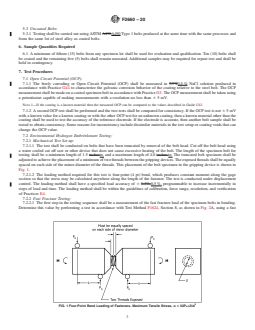
FIG. 1 Four-Point Bend Loading of Fasteners. Maximum Tensile Stress, σ = 32P λ/Πd
t b
F2660 − 20
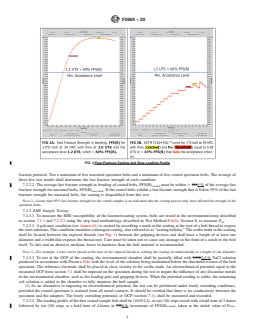
FIG. 2 Fast Fracture Testing and Step Loading Profile
fracture protocol. Test a minimum of five uncoated specimen bolts and a minimum of five coated specimen bolts. The average of
these five test results shall determine the fast fracture strength of each condition.
7.2.2.2 The average fast fracture strength in bending of coated bolts, FFS(B) must be within 6 5%5 % of the average fast
coated
fracture strength for uncoated bolts, FFS(B) . If the coated bolts exhibit a fast fracture strength that is below 95% of the fast
uncoated
fracture strength for uncoated bolts, the coating is disqualified from this test.
NOTE 2—Lower than 95% fast fracture strength for the coated samples is an indication that the coating process may have affected the strength of the
specimen bolts.
7.2.3 EHE Sample Testing:
7.2.3.1 To measure the EHE susceptibility of the fastener/coating system, bolts are tested in the environment/setup described
in section 7.1.1 and 7.2.3.3 using the step load methodology described in Test Method F1624, Section 8, to measure P .
th
7.2.3.2 A galvanic condition (see Annex A1) is created by inscribing a mark in the coating at the root of a bolt thread to expose
the steel substrate. This condition simulates a damaged coating, also referred to as “coating holiday.” The scribe mark in the coating
shall be located between the exposed threads (see Fig. 1) between the gripping devices and shall have a length of at least one
diameter and a width that exposes the thread root. Care must be t
...