

ASTM A307-21
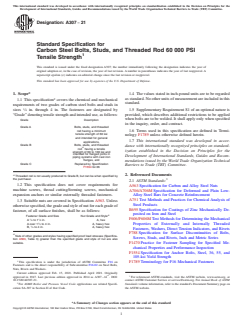
(Specification)Standard Specification for Carbon Steel Bolts, Studs, and Threaded Rod 60 000 PSI Tensile Strength
General Information
- Abstract
ABSTRACT
This specification covers the chemical and mechanical requirements for three grades (Grades A, B, and C) of carbon steel bolts and studs in specified sizes. This specification does not cover the requirements for machine screws, thread cutting/forming screws, mechanical expansion anchors, or other similar externally threaded fasteners. When tested, sampled specimens shall adhere to specified values for chemical composition, hardness, tensile strength, yield point, elongation, and dimensions.
SCOPE
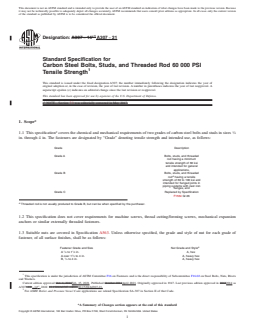
1.1 This specification2 covers the chemical and mechanical requirements of two grades of carbon steel bolts and studs in sizes 1/4 in. through 4 in. The fasteners are designated by “Grade” denoting tensile strength and intended use, as follows:
Grade
Description
Grade A
Bolts, studs, and threaded rod having a minimum tensile strength of 60 ksi and intended for general applications,
Grade B
Bolts, studs, and threaded rodA having a tensile strength of 60 to 100 ksi and intended for flanged joints in piping systems with cast iron flanges, and
Grade C
Replaced by Specification F1554 Gr.36
1.2 This specification does not cover requirements for machine screws, thread cutting/forming screws, mechanical expansion anchors or similar externally threaded fasteners.
1.3 Suitable nuts are covered in Specification A563. Unless otherwise specified, the grade and style of nut for each grade of fastener, of all surface finishes, shall be as follows:
Fastener Grade and Size
Nut Grade and StyleA
A 1/4 to 11/2 in.
A, hex
A over 11/2 to 4 in.
A, heavy hex
B, 1/4 to 4 in.
A, heavy hex
1.4 The values stated in inch-pound units are to be regarded as standard. No other units of measurement are included in this standard.
1.5 Supplementary Requirement S1 of an optional nature is provided, which describes additional restrictions to be applied when bolts are to be welded. It shall apply only when specified in the inquiry, order, and contract.
1.6 Terms used in this specification are defined in Terminology F1789 unless otherwise defined herein.
1.7 This international standard was developed in accordance with internationally recognized principles on standardization established in the Decision on Principles for the Development of International Standards, Guides and Recommendations issued by the World Trade Organization Technical Barriers to Trade (TBT) Committee.
- Status
- Published
- Publication Date
- 14-Feb-2021
- Technical Committee
- F16 - Fasteners
- Drafting Committee
- F16.02 - Steel Bolts, Studs and Nuts
Buy Documents
ASTM A307-21 - Standard Specification for Carbon Steel Bolts, Studs, and Threaded Rod 60 000 PSI Tensile Strength

REDLINE ASTM A307-21 - Standard Specification for Carbon Steel Bolts, Studs, and Threaded Rod 60 000 PSI Tensile Strength
Overview
ASTM A307-21 is a widely recognized standard specification established by ASTM International, detailing the chemical and mechanical requirements for carbon steel bolts, studs, and threaded rods with a minimum tensile strength of 60,000 psi. This standard applies to fasteners in sizes from 1/4 inch up to 4 inches and is categorized into two main grades based on tensile strength and intended use: Grade A for general applications and Grade B for flanged joints in piping systems with cast iron flanges. The specification ensures consistency in quality, performance, and interchangeability, supporting the needs of the construction, maintenance, and manufacturing industries globally.
Key Topics
- Grades and Intended Use
- Grade A: Minimum tensile strength 60 ksi; suitable for general-purpose bolts, studs, and threaded rod.
- Grade B: Tensile strength between 60 and 100 ksi; typically used in flanged piping systems with cast iron flanges.
- Grade C: No longer covered; replaced by ASTM F1554 Grade 36.
- Mechanical and Chemical Requirements
- Governed measurements include tensile strength, yield point, elongation, hardness, and chemical composition.
- Specifics on heat treatment, stress relief, and thread forms to ensure optimal performance and safety.
- Dimensions and Threading
- Conforms to Unified Screw Thread standards, with coarse thread series and specific tolerances.
- Hex or heavy hex head styles specified based on grade and size.
- Coatings and Finishes
- Options for zinc coatings (hot-dip or mechanically deposited) to enhance corrosion resistance.
- Finishing process details and corresponding ASTM references.
- Testing, Marking, and Packaging
- Detailed sampling and testing frequencies to ensure compliance.
- Requirements for product and package markings for traceability.
- Guidance for packaging to prevent damage during shipment.
Applications
ASTM A307-21 is essential for applications where reliable carbon steel fasteners are critical for structural integrity and safety. Common industries and scenarios include:
- Building and Civil Construction: Used in structural connections, foundation bolts, and other non-critical load applications.
- Piping Systems: Grade B fasteners are favored for assembling flanged joints in cast iron pipelines commonly found in water treatment and process plants.
- Equipment Manufacturing: Frequently specified for machinery assembly, fixtures, and general industrial purposes.
- Maintenance, Repair, and Operations (MRO): Offers standardized options for replacement bolts, studs, and threaded rods in ongoing facility upkeep.
- Infrastructure Projects: Provides dependable fastener solutions for bridges, roads, and utility installations.
The versatility and comprehensive specification of ASTM A307-21 make it an industry standard for common carbon steel fasteners, ensuring compatibility and interchangeability in a wide range of applications.
Related Standards
A number of related ASTM and ASME standards complement or reference ASTM A307-21:
- ASTM A563: Specification for Carbon and Alloy Steel Nuts - covers suitable nuts for bolts and threaded rods under ASTM A307.
- ASTM F1554: Specification for Anchor Bolts, Steel, 36, 55, and 105-ksi Yield Strength - now replaces Grade C.
- ASTM B695: Specification for Mechanically Deposited Zinc Coatings on Iron and Steel.
- ASTM F2329: Specification for Hot-Dip Zinc Coating on Carbon and Alloy Steel Fasteners.
- ASME B1.1: Unified Inch Screw Threads.
- ASME B18.2.1: Square and Hex Bolts and Screws dimensions.
- ASME B18.31.3: Threaded Rods (Inch Series).
Adhering to ASTM A307-21 and its related standards promotes best practices and facilitates compliance with industry and regulatory requirements across construction and manufacturing sectors.
Keywords: ASTM A307, carbon steel bolts, threaded rod, steel studs, 60,000 psi tensile strength, mechanical fasteners, Grade A bolts, Grade B studs, standard specification, flanged joints, piping systems, building construction fasteners.
Relations
- Effective Date
- 01-Jan-2024
- Effective Date
- 01-Nov-2023
- Effective Date
- 01-Nov-2023
- Effective Date
- 01-Sep-2018
- Effective Date
- 01-Feb-2018
- Refers
ASTM F1554-17e1 - Standard Specification for Anchor Bolts, Steel, 36, 55, and 105-ksi Yield Strength - Effective Date
- 01-Dec-2017
- Refers
ASTM F1554-17 - Standard Specification for Anchor Bolts, Steel, 36, 55, and 105-ksi Yield Strength - Effective Date
- 01-Dec-2017
- Effective Date
- 01-Jun-2017
- Effective Date
- 01-Sep-2016
- Effective Date
- 01-Aug-2016
- Refers
ASTM F1554-15 - Standard Specification for Anchor Bolts, Steel, 36, 55, and 105-ksi Yield Strength - Effective Date
- 01-Sep-2015
- Refers
ASTM F1554-15e2 - Standard Specification for Anchor Bolts, Steel, 36, 55, and 105-ksi Yield Strength - Effective Date
- 01-Sep-2015
- Refers
ASTM F1554-15e1 - Standard Specification for Anchor Bolts, Steel, 36, 55, and 105-ksi Yield Strength - Effective Date
- 01-Sep-2015
- Effective Date
- 01-Mar-2015
- Effective Date
- 01-Feb-2015
Buy Documents
ASTM A307-21 - Standard Specification for Carbon Steel Bolts, Studs, and Threaded Rod 60 000 PSI Tensile Strength
REDLINE ASTM A307-21 - Standard Specification for Carbon Steel Bolts, Studs, and Threaded Rod 60 000 PSI Tensile Strength
Frequently Asked Questions
ASTM A307-21 is a technical specification published by ASTM International. Its full title is "Standard Specification for Carbon Steel Bolts, Studs, and Threaded Rod 60 000 PSI Tensile Strength". This standard covers: ABSTRACT This specification covers the chemical and mechanical requirements for three grades (Grades A, B, and C) of carbon steel bolts and studs in specified sizes. This specification does not cover the requirements for machine screws, thread cutting/forming screws, mechanical expansion anchors, or other similar externally threaded fasteners. When tested, sampled specimens shall adhere to specified values for chemical composition, hardness, tensile strength, yield point, elongation, and dimensions. SCOPE 1.1 This specification2 covers the chemical and mechanical requirements of two grades of carbon steel bolts and studs in sizes 1/4 in. through 4 in. The fasteners are designated by “Grade” denoting tensile strength and intended use, as follows: Grade Description Grade A Bolts, studs, and threaded rod having a minimum tensile strength of 60 ksi and intended for general applications, Grade B Bolts, studs, and threaded rodA having a tensile strength of 60 to 100 ksi and intended for flanged joints in piping systems with cast iron flanges, and Grade C Replaced by Specification F1554 Gr.36 1.2 This specification does not cover requirements for machine screws, thread cutting/forming screws, mechanical expansion anchors or similar externally threaded fasteners. 1.3 Suitable nuts are covered in Specification A563. Unless otherwise specified, the grade and style of nut for each grade of fastener, of all surface finishes, shall be as follows: Fastener Grade and Size Nut Grade and StyleA A 1/4 to 11/2 in. A, hex A over 11/2 to 4 in. A, heavy hex B, 1/4 to 4 in. A, heavy hex 1.4 The values stated in inch-pound units are to be regarded as standard. No other units of measurement are included in this standard. 1.5 Supplementary Requirement S1 of an optional nature is provided, which describes additional restrictions to be applied when bolts are to be welded. It shall apply only when specified in the inquiry, order, and contract. 1.6 Terms used in this specification are defined in Terminology F1789 unless otherwise defined herein. 1.7 This international standard was developed in accordance with internationally recognized principles on standardization established in the Decision on Principles for the Development of International Standards, Guides and Recommendations issued by the World Trade Organization Technical Barriers to Trade (TBT) Committee.
ABSTRACT This specification covers the chemical and mechanical requirements for three grades (Grades A, B, and C) of carbon steel bolts and studs in specified sizes. This specification does not cover the requirements for machine screws, thread cutting/forming screws, mechanical expansion anchors, or other similar externally threaded fasteners. When tested, sampled specimens shall adhere to specified values for chemical composition, hardness, tensile strength, yield point, elongation, and dimensions. SCOPE 1.1 This specification2 covers the chemical and mechanical requirements of two grades of carbon steel bolts and studs in sizes 1/4 in. through 4 in. The fasteners are designated by “Grade” denoting tensile strength and intended use, as follows: Grade Description Grade A Bolts, studs, and threaded rod having a minimum tensile strength of 60 ksi and intended for general applications, Grade B Bolts, studs, and threaded rodA having a tensile strength of 60 to 100 ksi and intended for flanged joints in piping systems with cast iron flanges, and Grade C Replaced by Specification F1554 Gr.36 1.2 This specification does not cover requirements for machine screws, thread cutting/forming screws, mechanical expansion anchors or similar externally threaded fasteners. 1.3 Suitable nuts are covered in Specification A563. Unless otherwise specified, the grade and style of nut for each grade of fastener, of all surface finishes, shall be as follows: Fastener Grade and Size Nut Grade and StyleA A 1/4 to 11/2 in. A, hex A over 11/2 to 4 in. A, heavy hex B, 1/4 to 4 in. A, heavy hex 1.4 The values stated in inch-pound units are to be regarded as standard. No other units of measurement are included in this standard. 1.5 Supplementary Requirement S1 of an optional nature is provided, which describes additional restrictions to be applied when bolts are to be welded. It shall apply only when specified in the inquiry, order, and contract. 1.6 Terms used in this specification are defined in Terminology F1789 unless otherwise defined herein. 1.7 This international standard was developed in accordance with internationally recognized principles on standardization established in the Decision on Principles for the Development of International Standards, Guides and Recommendations issued by the World Trade Organization Technical Barriers to Trade (TBT) Committee.
ASTM A307-21 is classified under the following ICS (International Classification for Standards) categories: 21.060.10 - Bolts, screws, studs. The ICS classification helps identify the subject area and facilitates finding related standards.
ASTM A307-21 has the following relationships with other standards: It is inter standard links to ASTM F1470-24, ASTM F2329/F2329M-15(2023), ASTM F1789-23, ASTM F788-13(2018), ASTM F1470-18, ASTM F1554-17e1, ASTM F1554-17, ASTM F1789-17, ASTM F606/F606M-16, ASTM F1789-16, ASTM F1554-15, ASTM F1554-15e2, ASTM F1554-15e1, ASTM F1789-15a, ASTM F1789-15. Understanding these relationships helps ensure you are using the most current and applicable version of the standard.
ASTM A307-21 is available in PDF format for immediate download after purchase. The document can be added to your cart and obtained through the secure checkout process. Digital delivery ensures instant access to the complete standard document.
Standards Content (Sample)
This international standard was developed in accordance with internationally recognized principles on standardization established in the Decision on Principles for the
Development of International Standards, Guides and Recommendations issued by the World Trade Organization Technical Barriers to Trade (TBT) Committee.
Designation:A307 −21
Standard Specification for
Carbon Steel Bolts, Studs, and Threaded Rod 60000 PSI
Tensile Strength
This standard is issued under the fixed designation A307; the number immediately following the designation indicates the year of
original adoption or, in the case of revision, the year of last revision. A number in parentheses indicates the year of last reapproval. A
superscript epsilon (´) indicates an editorial change since the last revision or reapproval.
This standard has been approved for use by agencies of the U.S. Department of Defense.
1. Scope* 1.4 The values stated in inch-pound units are to be regarded
2 as standard. No other units of measurement are included in this
1.1 This specification covers the chemical and mechanical
standard.
requirements of two grades of carbon steel bolts and studs in
sizes ⁄4 in. through 4 in. The fasteners are designated by 1.5 Supplementary Requirement S1 of an optional nature is
“Grade” denoting tensile strength and intended use, as follows: provided, which describes additional restrictions to be applied
when bolts are to be welded. It shall apply only when specified
Grade Description
in the inquiry, order, and contract.
Grade A Bolts, studs, and threaded
1.6 Terms used in this specification are defined in Termi-
rod having a minimum
tensile strength of 60 ksi
nology F1789 unless otherwise defined herein.
and intended for general
applications, 1.7 This international standard was developed in accor-
Grade B Bolts, studs, and threaded
dance with internationally recognized principles on standard-
A
rod having a tensile
ization established in the Decision on Principles for the
strength of 60 to 100 ksi and
intended for flanged joints in
Development of International Standards, Guides and Recom-
piping systems with cast iron
flanges, and
mendations issued by the World Trade Organization Technical
Grade C Replaced by Specification
Barriers to Trade (TBT) Committee.
F1554 Gr.36
A 2. Referenced Documents
Threaded rod is not usually produced to Grade B, but can be when specified by
the purchaser. 3
2.1 ASTM Standards:
1.2 This specification does not cover requirements for
A563 Specification for Carbon and Alloy Steel Nuts
machine screws, thread cutting/forming screws, mechanical
A706/A706M Specification for Deformed and Plain Low-
expansion anchors or similar externally threaded fasteners.
Alloy Steel Bars for Concrete Reinforcement
A751 Test Methods and Practices for Chemical Analysis of
1.3 Suitable nuts are covered in Specification A563. Unless
Steel Products
otherwisespecified,thegradeandstyleofnutforeachgradeof
B695 Specification for Coatings of Zinc Mechanically De-
fastener, of all surface finishes, shall be as follows:
posited on Iron and Steel
A
Fastener Grade and Size Nut Grade and Style
1 1 F606/F606M Test Methods for Determining the Mechanical
A ⁄4 to 1 ⁄2 in. A, hex
A over 1 ⁄2 to 4 in. A, heavy hex Properties of Externally and Internally Threaded
B, ⁄4 to 4 in. A, heavy hex
Fasteners, Washers, Direct Tension Indicators, and Rivets
F788 Specification for Surface Discontinuities of Bolts,
A
Nuts of other grades and styles having specified proof load stresses (Specifica-
Screws, Studs, and Rivets, Inch and Metric Series
tion A563, Table 3) greater than the specified grade and style of nut are also
suitable.
F1470 Practice for Fastener Sampling for Specified Me-
chanical Properties and Performance Inspection
F1554 Specification for Anchor Bolts, Steel, 36, 55, and
105-ksi Yield Strength
This specification is under the jurisdiction of ASTM Committee F16 on
F1789 Terminology for F16 Mechanical Fasteners
Fasteners and is the direct responsibility of Subcommittee F16.02 on Steel Bolts,
Nuts, Rivets and Washers.
Current edition approved Feb. 15, 2021. Published April 2021. Originally
ɛ1
approved in 1947. Last previous edition approved in 2014 as A307 –14 . DOI: For referenced ASTM standards, visit the ASTM website, www.astm.org, or
10.1520/A0307-21. contact ASTM Customer Service at service@astm.org. For Annual Book of ASTM
For ASME Boiler and Pressure Vessel Code applications see related Specifi- Standards volume information, refer to the standard’s Document Summary page on
cation SA-307 in Section II of that Code. the ASTM website.
*A Summary of Changes section appears at the end of this standard
Copyright © ASTM International, 100 Barr Harbor Drive, PO Box C700, West Conshohocken, PA 19428-2959. United States
A307−21
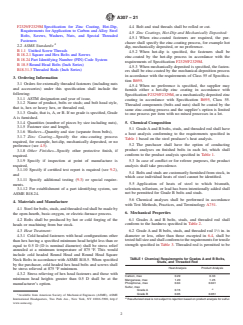
F2329/F2329M Specification for Zinc Coating, Hot-Dip, 4.4 Bolt and stud threads shall be rolled or cut.
Requirements for Application to Carbon and Alloy Steel
4.5 Zinc Coatings, Hot-Dip and Mechanically Deposited:
Bolts, Screws, Washers, Nuts, and Special Threaded
4.5.1 When zinc-coated fasteners are required, the pur-
Fasteners
chaser shall specify the zinc-coating process, for example hot
2.2 ASME Standards:
dip, mechanically deposited, or no preference.
B 1.1 Unified Screw Threads
4.5.2 When hot-dip is specified, the fasteners shall be
B 18.2.1 Square and Hex Bolts and Screws
zinc-coated by the hot-dip process in accordance with the
B 18.24 Part Identifying Number (PIN) Code System
requirements of Specification F2329/F2329M.
B 18.5 Round Head Bolts (Inch Series)
4.5.3 When mechanically deposited is specified, the fasten-
B18.31.3 Threaded Rods (Inch Series)
ers shall be zinc-coated by the mechanical-deposition process
in accordance with the requirements of Class 55 of Specifica-
3. Ordering Information
tion B695.
3.1 Orders for externally threaded fasteners (including nuts
4.5.4 When no preference is specified, the supplier may
and accessories) under this specification shall include the
furnish either a hot-dip zinc coating in accordance with
following:
SpecificationF2329/F2329M,oramechanicallydepositedzinc
3.1.1 ASTM designation and year of issue,
coating in accordance with Specification B695, Class 55.
3.1.2 Name of product, bolts or studs; and bolt head style,
Threaded components (bolts and nuts) shall be coated by the
that is, hex or heavy hex, or threaded rod,
same zinc-coating process and the supplier’s option is limited
3.1.3 Grade, that is,A, or B. If no grade is specified, Grade
to one process per item with no mixed processes in a lot.
A is furnished.
3.1.4 Quantities (number of pieces by size including nuts),
5. Chemical Composition
3.1.5 Fastener size and length,
5.1 GradeAand B bolts, studs, and threaded rod shall have
3.1.6 Washers—Quantity and size (separate from bolts),
a heat analysis conforming to the requirements specified in
3.1.7 Zinc Coating—Specify the zinc-coating process
Table 1 based on the steel producer’s heat analysis.
required, for example, hot-dip, mechanically deposited, or no
5.2 The purchaser shall have the option of conducting
preference (see 4.5).
product analyses on finished bolts in each lot, which shall
3.1.8 Other Finishes—Specify other protective finish, if
conform to the product analysis specified in Table 1.
required.
3.1.9 Specify if inspection at point of manufacture is
5.3 In case of conflict or for referee purposes, the product
required,
analysis shall take precedence.
3.1.10 Specify if certified test report is required (see 9.2),
5.4 Bolts and studs are customarily furnished from stock, in
and
which case individual heats of steel cannot be identified.
3.1.11 Specify additional testing (9.3) or special require-
5.5 Application of heats of steel to which bismuth,
ments.
selenium, tellurium, or lead has been intentionally added shall
3.1.12 For establishment of a part identifying system, see
not be permitted for Grade B bolts and studs.
ASME B18.24.
5.6 Chemical analyses shall be performed in accordance
4. Materials and Manufacture
with Test Methods, Practices, and Terminology A751.
4.1 Steel for bolts, studs, and threaded rod shall be made by
6. Mechanical Properties
the open-hearth, basic-oxygen, or electric-furnace process.
6.1 Grades A and B bolts, studs, and threaded rod shall
4.2 Bolts shall be produced by hot or cold forging of the
conform to the hardness specified in Table 2.
heads or machining from bar stock.
6.2 Grade A and B bolts, studs, and threaded rod 1 ⁄2 in. in
4.3 Heat Treatment:
diameter or less, other than those excepted in 6.4, shall be
4.3.1 Cold headed fasteners with head configurations other
testedfullsizeandshallconformtotherequirementsfortensile
than hex having a specified minimum head height less than or
strength specified in Table 3. Threaded rod is permitted to be
equal to 0.5 D (D is nominal diameter) shall be stress relief
annealed at a minimum temperature of 875 °F. This would
include cold headed Round Head and Round Head Square
TABLE 1 Chemical Requirements for Grades A and B Bolts,
Neck Bolts in accordance with ASME B18.5. When specified
Studs, and Threaded Rod
by the purchaser, cold headed hex head bolts and screws shall
Heat Analysis Product Analysis
be stress relieved at 875 °F minimum.
4.3.2 Stress relieving of hex head fasteners and those with
Carbon, max 0.29 0.33
minimum head heights greater than 0.5 D shall be at the
Manganese, max 1.20 1.25
Phosphorus, max 0.04 0.041
manufacturer’s option.
Sulfur, max
A
Grade A 0.15
4 Grade B 0.05 0.051
Available from American Society of Mechanical Engineers (ASME), ASME
A
International Headquarters, Two Park Ave., New York, NY 10016-5990, http://
Resulfurizedsteelisnotsubjecttorejectionbasedonproductanalysisforsulfur.
www.asme.org.
A307−21
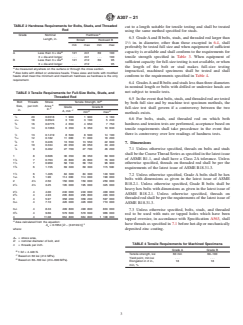
TABLE 2 Hardness Requirements for Bolts, Studs, and Threaded
cut to a length suitable for tensile testing and shall be treated
Rod
using the same method specified for studs.
A
Grade Nominal Hardness
6.3 GradeAand B bolts, studs, and threaded rod larger than
Length, in.
Brinell Rockwell B
1 ⁄2 in. in diameter, other than those excepted in 6.4, shall
min max min max
preferably be tested full size and when equipment of sufficient
B capacity is available and shall conform to the requirements for
A Less than3×dia 121 241 69 100
3 × dia and longer . . . 241 . . . 100 tensile strength specified in Table 3. When equipment of
B
B Less than3×dia 121 212 69 95
sufficient capacity for full-size testing is not available, or when
3 × dia and longer . . . 212 . . . 95
the length of the bolt or stud makes full-size testing
A
As measured anywhere on the surface or through the cross section.
impractical, machined specimens shall be tested and shall
B
Also bolts with drilled or undersize heads. These sizes and bolts with modified
conform to the requirements specified in Table 4.
heads shall meet the minimum and maximum hardness as hardness is the only
requirement.
6.4 GradesAand B bolts and studs less than three diameters
in nominal length or bolts with drilled or undersize heads are
not subject to tensile tests.
TABLE 3 Tensile Requirements for Full-Size Bolts, Studs, and
Threaded Rod
6.5 In the event that bolts, studs, and threaded rod are tested
B
Bolt Threads Stress Tensile Strength, lbf
by both full size and by machine test specimen methods, the
A
Size, per inch Area,
Grade Grade B
full-size test shall govern if a controversy between the two
in.
in.
C
A, min
D D
min max
methods exists.
⁄4 20 0.0318 1 900 1 900 3 180
6.6 For bolts, studs, and threaded rod on which both
⁄16 18 0.0524 3 100 3 100 5 240
⁄8 16 0.0775 4 650 4 650 7 750 hardness and tension tests are performed, acceptance based on
⁄16 14 0.1063 6 350 6 350 10 630
tensile requirements shall take precedence in the event that
there is controversy over low readings of hardness tests.
⁄2 13 0.1419 8 500 8 500 14 190
⁄16 12 0.182 11 000 11 000 18 200
⁄8 11 0.226 13 550 13 550 22 600
7. Dimensions
⁄4 10 0.334 20 050 20 050 33 400
⁄8 9 0.462 27 700 27 700 46 200 7.1 Unless otherwise specified, threads on bolts and studs
shallbetheCoarseThreadSeriesasspecifiedinthelatestissue
1 8 0.606 36 350 36 350 60 600
of ASME B1.1, and shall have a Class 2A tolerance. Unless
1 ⁄8 7 0.763 45 800
...
This document is not an ASTM standard and is intended only to provide the user of an ASTM standard an indication of what changes have been made to the previous version. Because
it may not be technically possible to adequately depict all changes accurately, ASTM recommends that users consult prior editions as appropriate. In all cases only the current version
of the standard as published by ASTM is to be considered the official document.
´1
Designation: A307 − 14 A307 − 21
Standard Specification for
Carbon Steel Bolts, Studs, and Threaded Rod 60 000 PSI
Tensile Strength
This standard is issued under the fixed designation A307; the number immediately following the designation indicates the year of
original adoption or, in the case of revision, the year of last revision. A number in parentheses indicates the year of last reapproval. A
superscript epsilon (´) indicates an editorial change since the last revision or reapproval.
This standard has been approved for use by agencies of the U.S. Department of Defense.
ε NOTE—Section 7.3 was editorially corrected in May 2017.
1. Scope*
1.1 This specification covers the chemical and mechanical requirements of two grades of carbon steel bolts and studs in sizes ⁄4
in. through 4 in. The fasteners are designated by “Grade” denoting tensile strength and intended use, as follows:
Grade Description
Grade A Bolts, studs, and threaded
rod having a minimum
tensile strength of 60 ksi
and intended for general
applications,
Grade B Bolts, studs, and threaded
A
rod having a tensile
strength of 60 to 100 ksi and
intended for flanged joints in
piping systems with cast iron
flanges, and
Grade C Replaced by Specification
F1554 Gr.36
A
Threaded rod is not usually produced to Grade B, but can be when specified by the purchaser.
1.2 This specification does not cover requirements for machine screws, thread cutting/forming screws, mechanical expansion
anchors or similar externally threaded fasteners.
1.3 Suitable nuts are covered in Specification A563. Unless otherwise specified, the grade and style of nut for each grade of
fastener, of all surface finishes, shall be as follows:
A
Fastener Grade and Size Nut Grade and Style
1 1
A ⁄4 to 1 ⁄2 in. A, hex
A over 1 ⁄2 to 4 in. A, heavy hex
B, ⁄4 to 4 in. A, heavy hex
This specification is under the jurisdiction of ASTM Committee F16 on Fasteners and is the direct responsibility of Subcommittee F16.02 on Steel Bolts, Nuts, Rivets
and Washers.
Current edition approved Oct. 1, 2014Feb. 15, 2021. Published October 2014April 2021. Originally approved in 1947. Last previous edition approved in 20122014 as
ɛ1
A307 –12. –14 . DOI: 10.1520/A0307-14E01.10.1520/A0307-21.
For ASME Boiler and Pressure Vessel Code applications see related Specification SA-307 in Section II of that Code.
*A Summary of Changes section appears at the end of this standard
Copyright © ASTM International, 100 Barr Harbor Drive, PO Box C700, West Conshohocken, PA 19428-2959. United States
A307 − 21
A
Nuts of other grades and styles having specified proof load stresses (Specification A563, Table 3) greater than the specified grade and style of nut are also suitable.
A307 − 21
1.4 The values stated in inch-pound units are to be regarded as standard. No other units of measurement are included in this
standard.
1.5 Supplementary Requirement S1 of an optional nature is provided, which describes additional restrictions to be applied when
bolts are to be welded. It shall apply only when specified in the inquiry, order, and contract.
1.6 Terms used in this specification are defined in Terminology F1789 unless otherwise defined herein.
1.7 This international standard was developed in accordance with internationally recognized principles on standardization
established in the Decision on Principles for the Development of International Standards, Guides and Recommendations issued
by the World Trade Organization Technical Barriers to Trade (TBT) Committee.
2. Referenced Documents
2.1 ASTM Standards:
A563 Specification for Carbon and Alloy Steel Nuts
A706/A706M Specification for Deformed and Plain Low-Alloy Steel Bars for Concrete Reinforcement
A751 Test Methods and Practices for Chemical Analysis of Steel Products
B695 Specification for Coatings of Zinc Mechanically Deposited on Iron and Steel
F606F606/F606M Test Methods for Determining the Mechanical Properties of Externally and Internally Threaded Fasteners,
Washers, and Rivets (Metric) F0606_F0606M Direct Tension Indicators, and Rivets
F788/F788MF788 Specification for Surface Discontinuities of Bolts, Screws, Studs, and Rivets, Inch and Metric Series
F1470 Practice for Fastener Sampling for Specified Mechanical Properties and Performance Inspection
F1554 Specification for Anchor Bolts, Steel, 36, 55, and 105-ksi Yield Strength
F1789 Terminology for F16 Mechanical Fasteners
F2329F2329/F2329M Specification for Zinc Coating, Hot-Dip, Requirements for Application to Carbon and Alloy Steel Bolts,
Screws, Washers, Nuts, and Special Threaded Fasteners
2.2 ASME Standards:
B 1.1 Unified Screw Threads
B 18.2.1 Square and Hex Bolts and Screws
B 18.24 Part Identifying Number (PIN) Code System
B 18.5 Round Head Bolts (Inch Series)
B18.31.3 Threaded Rods (Inch Series)
3. Ordering Information
3.1 Orders for externally threaded fasteners (including nuts and accessories) under this specification shall include the following:
3.1.1 ASTM designation and year of issue,
3.1.2 Name of product, bolts or studs; and bolt head style, that is, hex or heavy hex, or threaded rod,
3.1.3 Grade, that is, A, or B. If no grade is specified, Grade A is furnished.
3.1.4 Quantities (number of pieces by size including nuts),
3.1.5 Fastener size and length,
3.1.6 Washers—Quantity and size (separate from bolts),
3.1.7 Zinc Coating—Specify the zinc-coating process required, for example, hot-dip, mechanically deposited, or no preference
(see 4.5).
For referenced ASTM standards, visit the ASTM website, www.astm.org, or contact ASTM Customer Service at service@astm.org. For Annual Book of ASTM Standards
volume information, refer to the standard’s Document Summary page on the ASTM website.
Available from American National Standards Institute (ANSI), 25 W. 43rd St., 4th Floor, New York, NY 10036, http://www.ansi.org.
Available from American Society of Mechanical Engineers (ASME), ASME International Headquarters, ThreeTwo Park Ave., New York, NY 10016-5990,
http://www.asme.org.
A307 − 21
3.1.8 Other Finishes—Specify other protective finish, if required.
3.1.9 Specify if inspection at point of manufacture is required,
3.1.10 Specify if certified test report is required (see 9.2), and
3.1.11 Specify additional testing (9.3) or special requirements.
3.1.12 For establishment of a part identifying system, see ASME B18.24.
4. Materials and Manufacture
4.1 Steel for bolts, studs, and threaded rod shall be made by the open-hearth, basic-oxygen, or electric-furnace process.
4.2 Bolts shall be produced by hot or cold forging of the heads or machining from bar stock.
4.3 Heat Treatment:
4.3.1 Cold headed fasteners with head configurations other than hex having a specified minimum head height less than or equal
to .50.5 D (D is nominal diameter) shall be stress relief annealed at a minimum temperature of 875°F.875 °F. This would include
cold headed Round Head and Round Head Square Neck Bolts in accordance with ASME B18.5. When specified by the purchaser,
cold headed hex head bolts and screws shall be stress relieved at 875 °F minimum.
4.3.2 Stress relieving of hex head fasteners and those with minimum head heights greater than .50.5 D shall be at the
manufacturer’s option.
4.4 Bolt and stud threads shall be rolled or cut.
4.5 Zinc Coatings, Hot-Dip and Mechanically Deposited:
4.5.1 When zinc-coated fasteners are required, the purchaser shall specify the zinc-coating process, for example hot dip,
mechanically deposited, or no preference.
4.5.2 When hot-dip is specified, the fasteners shall be zinc-coated by the hot-dip process in accordance with the requirements of
Specification F2329F2329/F2329M.
4.5.3 When mechanically deposited is specified, the fasteners shall be zinc-coated by the mechanical-deposition process in
accordance with the requirements of Class 55 of Specification B695.
4.5.4 When no preference is specified, the supplier may furnish either a hot-dip zinc coating in accordance with Specification
F2329F2329/F2329M, or a mechanically deposited zinc coating in accordance with Specification B695, Class 55. Threaded
components (bolts and nuts) shall be coated by the same zinc-coating process and the supplier’s option is limited to one process
per item with no mixed processes in a lot.
5. Chemical Composition
5.1 Grade A and B bolts, studs, and threaded rod shall have a heat analysis conforming to the requirements specified in Table 1
based on the steel producer’s heat analysis.
5.2 The purchaser shall have the option of conducting product analyses on finished bolts in each lot, which shall conform to the
product analysis specified in Table 1.
5.3 In case of conflict or for referee purposes, the product analysis shall take precedence.
5.4 Bolts and studs are customarily furnished from stock, in which case individual heats of steel cannot be identified.
A307 − 21
TABLE 1 Chemical Requirements for Grades A and B Bolts,
Studs, and Threaded Rod
Heat Analysis Product Analysis
Heat Analysis Product Analysis
Carbon, max 0.29 0.33
Manganese, max 1.20 1.25
Phosphorus, max 0.04 0.041
Sulfur, max
A
Grade A 0.15
Grade B 0.05 0.051
A
Resulfurized steel is not subject to rejection based on product analysis for sulfur.
5.5 Application of heats of steel to which bismuth, selenium, tellurium, or lead has been intentionally added shall not be permitted
for Grade B bolts and studs.
5.6 Chemical analyses shall be performed in accordance with Test Methods, Practices, and Terminology A751.
6. Mechanical Properties
6.1 Grades A and B bolts, studs, and threaded rod shall conform to the hardness specified in Table 2.
6.2 Grade A and B bolts, studs, and threaded rod 1½1 ⁄2 in. in diameter or less, other than those excepted in 6.4, shall be tested
full size and shall conform to the requirements for tensile strength specified in Table 3. Threaded rod is permitted to be cut to a
length suitable for tensile testing and shall be treated using the same method specified for studs.
6.3 Grade A and B bolts, studs, and threaded rod larger than 1 ⁄2 in. in diameter, other than those excepted in 6.4, shall preferably
be tested full size and when equipment of sufficient capacity is available and shall conform to the requirements for tensile strength
specified in Table 3. When equipment of sufficient capacity for full-size testing is not available, or when the length of the bolt or
stud makes full-size testing impractical, machined specimens shall be tested and shall conform to the requirements specified in
Table 4.
6.4 Grades A and B bolts and studs less than three diameters in nominal length or bolts with drilled or undersize heads are not
subject to tensile tests.
6.5 In the event that bolts, studs, and threaded rod are tested by both full size and by machine test specimen methods, the full-size
test shall govern if a controversy between the two methods exists.
6.6 For bolts, studs, and threaded rod on which both hardness and tension tests are performed, acceptance based on tensile
requirements shall take precedence in the event that there is controversy over low readings of hardness tests.
TABLE 2 Hardness Requirements for Bolts, Studs, and Threaded
Rod
A
Grade Nominal Hardness
Length, in.
Brinell Rockwell B
min max min max
B
A Less than 3 × dia 121 241 69 100
3 × dia and longer . . . 241 . . . 100
B
B Less than 3 × dia 121 212 69 95
3 × dia and longer . . . 212 . . . 95
A
As measured anywhere on the surface or through the cross section.
B
Also bolts with drilled or undersize heads. These sizes and bolts with modified
heads shall meet the minimum and maximum hardness as hardness is the only
requirement.
A307 − 21
TABLE 3 Tensile Requirements for Full-Size Bolts, Studs, and
Threaded Rod
B
Bolt Threads Stress Tensile Strength, lbf
A
Size, per inch Area,
Grade Grade B
in.
in.
C
A, min
D D
min max
⁄4 20 0.0318 1 900 1 900 3 180
⁄16 18 0.0524 3 100 3 100 5 240
⁄8 16 0.0775 4 650 4 650 7 750
⁄16 14 0.1063 6 350 6 350 10 630
⁄2 13 0.1419 8 500 8 500 14 190
⁄16 12 0.182 11 000 11 000 18 200
⁄8 11 0.226 13 550 13 550 22 600
⁄4 10 0.334 20 050 20 050 33 400
⁄8 9 0.462 27 700 27 700 46 200
1 8 0.606 36 350 36 350 60 600
1 ⁄8 7 0.763 45 800 45 800 76 300
1 ⁄4 7 0.969 58 150 58 150 96 900
1 ⁄8 6 1.155 69 300 69 300 115 500
1 ⁄2 6 1.405 84 3
...