


ASTM F879-23
(Specification)Standard Specification for Stainless Steel Socket Button, Low and Flat Countersunk Head Cap Screws
Standard Specification for Stainless Steel Socket Button, Low and Flat Countersunk Head Cap Screws
ABSTRACT
This specification covers the chemical and mechanical requirements for stainless steel metric hexagon socket button (SBHCS) and flat countersunk (SFHCS) head cap screws with nominal thread M 3 through M 20 intended for use in applications requiring general corrosion resistance. These steels are designated into three classes: Austenitic Class A 1-50 in an annealed condition, Austenitic Class A1-55 in a cold worked condition, and Austenitic Class A 1-70 in a cold worked condition. The austenitic stainless steel socket screw shall be designated F879M A1-50, F879M A1–55, or F 879M A1-70. Screws shall be formed by upsetting or extruding, or both. Also, these screws shall be roll threaded. Austenitic alloys ClassA 1-50 screws, following manufacture, shall be annealed by heating to a certain temperature to obtain maximum corrosion resistance and minimum permeability. The screws shall be held for a sufficient time at temperature, then cooled at a rate sufficient to prevent precipitation of the carbide and provide the properties specified. Different tests shall be conducted in order to determine the following mechanical properties of screws: tensile strength, minimum extension, yield strength, elongation, Vickers hardness, and Rockwell hardness.
SCOPE
1.1 This specification covers the chemical and mechanical requirements for stainless steel inch hexagon socket button (SBHCS), flat countersunk (SFHCS) head cap screws with nominal thread 0.060 through 0.625 in. and low head (SLHCS) cap screws with nominal thread 0.112 through 0.625 in. intended for use in applications requiring general corrosion resistance.
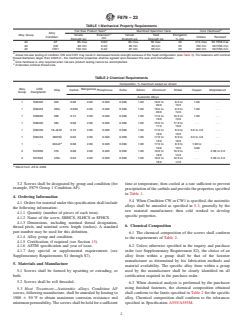
1.2 Two groups of austenitic stainless steel alloys and three conditions are covered. See Table 1 and Table 2.
1.3 Units—The values stated in inch-pound units are to be regarded as standard. No other units of measurement are included in this standard.
1.4 The following precautionary caveat pertains only to the test method portion, Section 12, of this specification: This standard does not purport to address all of the safety concerns, if any, associated with its use. It is the responsibility of the user of this standard to establish appropriate safety, health, and environmental practices and determine the applicability of regulatory limitations prior to use.
1.5 This international standard was developed in accordance with internationally recognized principles on standardization established in the Decision on Principles for the Development of International Standards, Guides and Recommendations issued by the World Trade Organization Technical Barriers to Trade (TBT) Committee.
General Information
- Status
- Published
- Publication Date
- 31-May-2023
- Technical Committee
- F16 - Fasteners
- Drafting Committee
- F16.04 - Nonferrous Fasteners
Relations
- Effective Date
- 01-Jan-2024
- Effective Date
- 01-Oct-2023
- Effective Date
- 01-Sep-2018
- Effective Date
- 01-Jul-2018
- Effective Date
- 01-May-2018
- Effective Date
- 01-Feb-2018
- Effective Date
- 01-Jul-2017
- Effective Date
- 01-Jul-2017
- Effective Date
- 01-Sep-2016
- Effective Date
- 01-Jan-2016
- Effective Date
- 01-Dec-2015
- Effective Date
- 01-Nov-2014
- Effective Date
- 01-Mar-2014
- Effective Date
- 01-Mar-2014
- Effective Date
- 01-Dec-2013
Overview
ASTM F879-23 is the standard specification for stainless steel socket button head, low head, and flat countersunk head cap screws. Developed by ASTM International, this standard outlines the chemical and mechanical requirements for both inch and metric series of austenitic stainless steel socket cap screws. These fasteners are engineered to provide general corrosion resistance in a variety of demanding industrial and commercial applications. ASTM F879-23 includes screws with nominal diameters from M3 through M20 (metric) and 0.060 in. through 0.625 in. (inch series). The standard covers three primary head styles:
- Socket Button Head Cap Screws (SBHCS)
- Socket Low Head Cap Screws (SLHCS)
- Socket Flat Countersunk Head Cap Screws (SFHCS)
The specification classifies screws into groups based on austenitic stainless steel alloys and conditions, intended to suit diverse performance and corrosion resistance requirements.
Key Topics
- Material Requirements: Specifies austenitic stainless steel alloys in both annealed and cold worked conditions for improved mechanical properties and corrosion resistance.
- Dimensions & Tolerances: Mandates conformity to dimensional requirements outlined in ASME B18.3 for screw size, thread pitch, and overall length.
- Mechanical Properties: Details the necessary tensile strength, yield strength, extension, elongation, and hardness that screws must achieve, verified through standardized testing protocols.
- Chemical Composition: Establishes strict limits on elements such as carbon, chromium, nickel, and others to maintain corrosion resistance and mechanical integrity.
- Manufacturing Processes: Requires screws to be formed by upsetting, extruding, or both, and roll threaded for enhanced performance. Heat treatment (annealing and cold working) is specified to optimize corrosion resistance and minimize magnetic permeability.
- Corrosion Resistance: Screws must pass standardized tests for susceptibility to intergranular corrosion (ASTM A262).
- Surface Quality and Treatment: Screws must be cleaned, descaled, and passivated according to ASTM A380/A967 to enhance resistance to surface contamination and corrosion.
- Inspection and Testing: Stipulates quality control, sampling plans, and test report retention to ensure consistency and traceability.
Applications
ASTM F879-23 stainless steel socket cap screws are widely used across multiple industries requiring reliable fastening components with corrosion-resistant properties:
- Mechanical Assemblies: Common in manufacturing equipment, machinery, and maintenance applications where high strength and resistance to corrosion are essential.
- Aerospace and Automotive Industries: Used for components exposed to varying environments, requiring both mechanical integrity and long-term durability.
- Electronics and Instrumentation: Suitable in high-precision tools and devices where non-magnetic, corrosion-resistant fastening is critical.
- Marine Applications: Ideal for shipbuilding, docks, and offshore structures due to their performance in wet, corrosive environments.
- Construction and Architectural Projects: Used in building infrastructure, especially where exposure to moisture or harsh chemicals is anticipated.
Related Standards
For optimal performance, ASTM F879-23 references several other industry standards:
- ASTM A262 – Practices for detecting susceptibility to intergranular attack in stainless steels
- ASTM A380/A967 – Specifications for cleaning, descaling, and passivation treatments of stainless steel
- ASTM A555/A751 – General requirements and test methods for stainless steel chemical analysis
- ASTM F606/F1470 – Test methods and fastener sampling guides
- ASME B18.3 – Dimensional requirements for socket cap, shoulder, and set screws
- JIS G 4309 – Japanese Industrial Standard for stainless steel wires
Practical Value
Choosing stainless steel socket button, low, and flat countersunk head cap screws certified to ASTM F879-23 ensures compliance with the latest safety, quality, and durability requirements. This standard provides clear criteria for manufacturers, specifiers, and end-users to select the right fastening solution for environments demanding excellent corrosion resistance and robust mechanical performance, reducing maintenance needs and extending service life across a range of engineering applications.
Keywords: ASTM F879-23, stainless steel cap screws, socket button head, flat countersunk, low head, corrosion-resistant fasteners, mechanical properties, austenitic alloys, industrial fasteners standard.
Buy Documents
ASTM F879-23 - Standard Specification for Stainless Steel Socket Button, Low and Flat Countersunk Head Cap Screws
REDLINE ASTM F879-23 - Standard Specification for Stainless Steel Socket Button, Low and Flat Countersunk Head Cap Screws
Frequently Asked Questions
ASTM F879-23 is a technical specification published by ASTM International. Its full title is "Standard Specification for Stainless Steel Socket Button, Low and Flat Countersunk Head Cap Screws". This standard covers: ABSTRACT This specification covers the chemical and mechanical requirements for stainless steel metric hexagon socket button (SBHCS) and flat countersunk (SFHCS) head cap screws with nominal thread M 3 through M 20 intended for use in applications requiring general corrosion resistance. These steels are designated into three classes: Austenitic Class A 1-50 in an annealed condition, Austenitic Class A1-55 in a cold worked condition, and Austenitic Class A 1-70 in a cold worked condition. The austenitic stainless steel socket screw shall be designated F879M A1-50, F879M A1–55, or F 879M A1-70. Screws shall be formed by upsetting or extruding, or both. Also, these screws shall be roll threaded. Austenitic alloys ClassA 1-50 screws, following manufacture, shall be annealed by heating to a certain temperature to obtain maximum corrosion resistance and minimum permeability. The screws shall be held for a sufficient time at temperature, then cooled at a rate sufficient to prevent precipitation of the carbide and provide the properties specified. Different tests shall be conducted in order to determine the following mechanical properties of screws: tensile strength, minimum extension, yield strength, elongation, Vickers hardness, and Rockwell hardness. SCOPE 1.1 This specification covers the chemical and mechanical requirements for stainless steel inch hexagon socket button (SBHCS), flat countersunk (SFHCS) head cap screws with nominal thread 0.060 through 0.625 in. and low head (SLHCS) cap screws with nominal thread 0.112 through 0.625 in. intended for use in applications requiring general corrosion resistance. 1.2 Two groups of austenitic stainless steel alloys and three conditions are covered. See Table 1 and Table 2. 1.3 Units—The values stated in inch-pound units are to be regarded as standard. No other units of measurement are included in this standard. 1.4 The following precautionary caveat pertains only to the test method portion, Section 12, of this specification: This standard does not purport to address all of the safety concerns, if any, associated with its use. It is the responsibility of the user of this standard to establish appropriate safety, health, and environmental practices and determine the applicability of regulatory limitations prior to use. 1.5 This international standard was developed in accordance with internationally recognized principles on standardization established in the Decision on Principles for the Development of International Standards, Guides and Recommendations issued by the World Trade Organization Technical Barriers to Trade (TBT) Committee.
ABSTRACT This specification covers the chemical and mechanical requirements for stainless steel metric hexagon socket button (SBHCS) and flat countersunk (SFHCS) head cap screws with nominal thread M 3 through M 20 intended for use in applications requiring general corrosion resistance. These steels are designated into three classes: Austenitic Class A 1-50 in an annealed condition, Austenitic Class A1-55 in a cold worked condition, and Austenitic Class A 1-70 in a cold worked condition. The austenitic stainless steel socket screw shall be designated F879M A1-50, F879M A1–55, or F 879M A1-70. Screws shall be formed by upsetting or extruding, or both. Also, these screws shall be roll threaded. Austenitic alloys ClassA 1-50 screws, following manufacture, shall be annealed by heating to a certain temperature to obtain maximum corrosion resistance and minimum permeability. The screws shall be held for a sufficient time at temperature, then cooled at a rate sufficient to prevent precipitation of the carbide and provide the properties specified. Different tests shall be conducted in order to determine the following mechanical properties of screws: tensile strength, minimum extension, yield strength, elongation, Vickers hardness, and Rockwell hardness. SCOPE 1.1 This specification covers the chemical and mechanical requirements for stainless steel inch hexagon socket button (SBHCS), flat countersunk (SFHCS) head cap screws with nominal thread 0.060 through 0.625 in. and low head (SLHCS) cap screws with nominal thread 0.112 through 0.625 in. intended for use in applications requiring general corrosion resistance. 1.2 Two groups of austenitic stainless steel alloys and three conditions are covered. See Table 1 and Table 2. 1.3 Units—The values stated in inch-pound units are to be regarded as standard. No other units of measurement are included in this standard. 1.4 The following precautionary caveat pertains only to the test method portion, Section 12, of this specification: This standard does not purport to address all of the safety concerns, if any, associated with its use. It is the responsibility of the user of this standard to establish appropriate safety, health, and environmental practices and determine the applicability of regulatory limitations prior to use. 1.5 This international standard was developed in accordance with internationally recognized principles on standardization established in the Decision on Principles for the Development of International Standards, Guides and Recommendations issued by the World Trade Organization Technical Barriers to Trade (TBT) Committee.
ASTM F879-23 is classified under the following ICS (International Classification for Standards) categories: 21.060.10 - Bolts, screws, studs. The ICS classification helps identify the subject area and facilitates finding related standards.
ASTM F879-23 has the following relationships with other standards: It is inter standard links to ASTM F1470-24, ASTM D3951-18(2023), ASTM F788-13(2018), ASTM E18-18, ASTM D3951-18, ASTM F1470-18, ASTM E18-17, ASTM A967/A967M-17, ASTM F606/F606M-16, ASTM A555/A555M-16, ASTM D3951-15, ASTM F606/F606M-14a, ASTM A751-14, ASTM A555/A555M-05(2014), ASTM F593-13a. Understanding these relationships helps ensure you are using the most current and applicable version of the standard.
ASTM F879-23 is available in PDF format for immediate download after purchase. The document can be added to your cart and obtained through the secure checkout process. Digital delivery ensures instant access to the complete standard document.
Standards Content (Sample)
This international standard was developed in accordance with internationally recognized principles on standardization established in the Decision on Principles for the
Development of International Standards, Guides and Recommendations issued by the World Trade Organization Technical Barriers to Trade (TBT) Committee.
Designation: F879 − 23
Standard Specification for
Stainless Steel Socket Button, Low and Flat Countersunk
Head Cap Screws
This standard is issued under the fixed designation F879; the number immediately following the designation indicates the year of original
adoption or, in the case of revision, the year of last revision. A number in parentheses indicates the year of last reapproval. A superscript
epsilon (´) indicates an editorial change since the last revision or reapproval.
This standard has been approved for use by agencies of the U.S. Department of Defense.
1. Scope* Attack in Austenitic Stainless Steels
A342/A342M Test Methods for Permeability of Weakly
1.1 This specification covers the chemical and mechanical
Magnetic Materials
requirements for stainless steel inch hexagon socket button
A380/A380M Practice for Cleaning, Descaling, and Passi-
(SBHCS), flat countersunk (SFHCS) head cap screws with
vation of Stainless Steel Parts, Equipment, and Systems
nominal thread 0.060 through 0.625 in. and low head (SLHCS)
A555/A555M Specification for General Requirements for
cap screws with nominal thread 0.112 through 0.625 in.
Stainless Steel Wire and Wire Rods
intended for use in applications requiring general corrosion
A751 Test Methods and Practices for Chemical Analysis of
resistance.
Steel Products
1.2 Two groups of austenitic stainless steel alloys and three
A967/A967M Specification for Chemical Passivation Treat-
conditions are covered. See Table 1 and Table 2.
ments for Stainless Steel Parts
D3951 Practice for Commercial Packaging
1.3 Units—The values stated in inch-pound units are to be
regarded as standard. No other units of measurement are E18 Test Methods for Rockwell Hardness of Metallic Ma-
terials
included in this standard.
E92 Test Methods for Vickers Hardness and Knoop Hard-
1.4 The following precautionary caveat pertains only to the
ness of Metallic Materials
test method portion, Section 12, of this specification: This
E384 Test Method for Microindentation Hardness of Mate-
standard does not purport to address all of the safety concerns,
rials
if any, associated with its use. It is the responsibility of the user
F593 Specification for Stainless Steel Bolts, Hex Cap
of this standard to establish appropriate safety, health, and
Screws, and Studs
environmental practices and determine the applicability of
F606/F606M Test Methods for Determining the Mechanical
regulatory limitations prior to use.
Properties of Externally and Internally Threaded
1.5 This international standard was developed in accor-
Fasteners, Washers, Direct Tension Indicators, and Rivets
dance with internationally recognized principles on standard-
F788 Specification for Surface Discontinuities of Bolts,
ization established in the Decision on Principles for the
Screws, Studs, and Rivets, Inch and Metric Series
Development of International Standards, Guides and Recom-
F1470 Practice for Fastener Sampling for Specified Me-
mendations issued by the World Trade Organization Technical
chanical Properties and Performance Inspection
Barriers to Trade (TBT) Committee.
2.2 ASME Standard:
B 18.3 Socket Cap, Shoulder and Set Screws (Inch Series)
2. Referenced Documents
2.3 JIS Standard:
2.1 ASTM Standards:
JIS G 4309 Stainless Steel Wires
A262 Practices for Detecting Susceptibility to Intergranular
3. Classification
3.1 The designation of the alloy group and condition of this
This specification is under the jurisdiction of ASTM Committee F16 on
specification shall be consistent with the stainless steel desig-
Fasteners and is the direct responsibility of Subcommittee F16.04 on Nonferrous
Fasteners. nations in Specification F593.
Current edition approved June 1, 2023. Published July 2023. Originally approved
in 1986. Last previous edition approved in 2020 as F879 – 15 (2020). DOI:
10.1520/F0879-23. Available from American Society of Mechanical Engineers (ASME), ASME
For referenced ASTM standards, visit the ASTM website, www.astm.org, or International Headquarters, Two Park Ave., New York, NY 10016-5990, http://
contact ASTM Customer Service at service@astm.org. For Annual Book of ASTM www.asme.org.
Standards volume information, refer to the standard’s Document Summary page on Available from Japanese Industrial Standards Committee (JIS) 1-3-1
the ASTM website. Kasumigaseki, Chiyoda-ku, Tokyo 100-8901, JAPAN. http://www.jisc.go.jp
*A Summary of Changes section appears at the end of this standard
Copyright © ASTM International, 100 Barr Harbor Drive, PO Box C700, West Conshohocken, PA 19428-2959. United States
F879 − 23
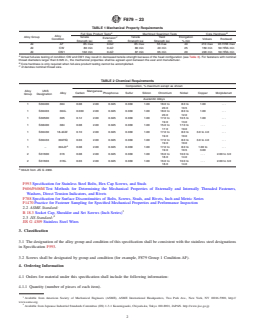
TABLE 1 Mechanical Property Requirements
A B
Full Size Product Tests Machined Specimen Tests Core Hardness
Alloy
C
Alloy Group Tensile Tensile Yield Elongation
Extension
Condition Vickers Rockwell
min
Strength ksi Strength ksi Strength ksi % min
All AF 85 max 0.6D 85 max 55 max 40 210 max 95 HRB max
All CW 80 min 0.4D 80 min 40 min 25 150 min 50 HRA min
All CW1 102 min 0.4D 87 min 65 min 20 220 min 59 HRA min
A
Actual full-size testing of condition CW and CW1 may result in decreased tensile strength because of the head configuration (see Table 3). For fasteners with nominal
thread diameters larger than 0.625 in., the mechanical properties shall be agreed upon between the user and manufacturer.
B
Core hardness is only required when full-size product testing cannot be accomplished.
C
D denotes nominal thread size.
TABLE 2 Chemical Requirements
Composition, % maximum except as shown
Alloy UNS Manganese
Alloy Carbon Phosphorus Sulfur Silicon Chromium Nickel Copper Molybdenum
Group Designation
Austenitic Alloys
1 S30400 304 0.08 2.00 0.045 0.030 1.00 18.0 to 8.0 to 1.00 . . .
20.0 10.5
1 S30403 304L 0.030 2.00 0.045 0.030 1.00 18.0 to 8.0 to 1.00 . . .
20.0 12.0
1 S30500 305 0.12 2.00 0.045 0.030 1.00 17.0 to 10.5 to 1.00 . . .
19.0 13.0
1 S38400 384 0.08 2.00 0.045 0.030 1.00 15.0 to 17.0 to . . . . . .
17.0 19.0
1 S30430 18–9LW 0.10 2.00 0.045 0.030 1.00 17.0 to 8.0 to 3.0 to 4.0 . . .
19.0 10.0
1 S30433 302HQ 0.03 2.00 0.045 0.030 1.00 17.0 to 8.0 to 3.0 to 4.0 . . .
19.0 10.0
A
1 . 304J3 0.08 2.00 0.045 0.030 1.00 17.0 to 8.0 to 1.00 to . . .
19.0 10.5 3.00
2 S31600 316 0.08 2.00 0.045 0.030 1.00 16.0 to 10.0 to . . . 2.00 to 3.0
18.0 14.0
2 S31603 316L 0.03 2.00 0.045 0.030 1.00 16.0 to 10.0 to . . . 2.00 to 3.0
18.0 14.0
A
304J3 from JIS G 4309.
3.2 Screws shall be designated by group and condition (for time at temperature, then cooled at a rate sufficient to prevent
example, F879 Group 1 Condition AF).
precipitation of the carbide and provide the properties specified
in Table 1.
4. Ordering Information
5.4 When Condition CW or CW1 is specified, the austenitic
4.1 Orders for material under this specification shall include
alloys shall be annealed as specified in 5.3, generally by the
the following information:
raw material manufacturer, then cold worked to develop
4.1.1 Quantity (number of pieces of each item).
specific properties.
4.1.2 Name of the screw, SBHCS, SLHCS or SFHCS.
4.1.3 Dimensions, including nominal thread designation,
6. Chemical Composition
thread pitch, and nominal screw length (inches). A standard
part number may be used for this definition.
6.1 The chemical composition of the screws shall conform
4.1.4 Alloy group and condition.
to the requirements of Table 2.
4.1.5 Certification, if required (see Section 15).
6.2 Unless otherwise specified in the inquiry and purchase
4.1.6 ASTM specification and year of issue.
order (see Supplementary Requirement S2), the choice of an
4.1.7 Any special or supplemental requirements (see
Supplementary Requirements S1 through S7). alloy from within a group shall be that of the fastener
manufacturer as determined by his fabrication methods and
5. Materials and Manufacture
material availability. The specific alloy from within a group
5.1 Screws shall be formed by upsetting or extruding, or used by the manufacturer shall be clearly identified on all
both. certification required in the purchase order.
5.2 Screws shall be roll threaded.
6.3 When chemical analysis is performed by the purchaser
using finished fasteners, the chemical composition obtained
5.3 Heat Treatment—Austenitic alloys Condition AF
shall conform to the limits specified in Table 2 for the specific
screws, following manufacture, shall be annealed by heating to
alloy. Chemical composition shall conform to the tolerances
1900 6 50 °F to obtain maximum corrosion resistance and
minimum permeability. The screws shall be held for a sufficient specified in Specification A555/A555M.
F879 − 23
6.3.1 In the event of a discrepancy, a referee analysis of the Practice A380/A380M or Specification A967/A967M at the
samples for each lot as specified in 12.1 shall be made in option of the manufacturer.
accordance with 11.3.1.
10.2 Surface Discontinuities:
7. Mechanical Properties
10.2.1 The surface discontinuities for these products shall
conform to Specification F788 and the additional limitations
7.1 The finished screws shall conform to the mechanical
specified herein.
requirements specified in Table 1.
10.2.1.1 Forging defects that connect the socket to the
7.2 Screws having a nominal length equal to or greater than
periphery of the head are not permissible. Defects originating
three diameters shall be tensile tested full size and shall meet
on the periphery and with a traverse indicating a potential to
the full size breaking strength requirements specified in Table
intersect are not permissible. Other forging defects are permis-
3. Tensile failures through the head are acceptable providing
sible provided those located in the bearing area, fillet, and top
the load requirements are satisfied.
surfaces shall not have a depth exceeding 0.03 D or 0.005 in.
7.3 Screws that are too short (lengths less than specified in
whichever is greater. For peripheral discontinuities, the maxi-
7.2 or that have insufficient threads for tension testing) shall
mum depth may be 0.06 D (see Fig. 1).
not be subject to tension tests, but shall conform to the
10.2.1.2 Forging defects located in the socket wall within
hardness requirements of Table 1.
0.1 times the actual key engagement, T, from the bottom of the
socket are not permissible. Discontinuities located elsewhere in
8. Corrosion Resistance Requirements
the socket shall not have a length exceeding 0.25 T, or a
8.1 Carbide Precipitation:
maximum depth of 0.03 D not to exceed 0.005 in. (see Fig. 2).
8.1.1 Rod, bar, and wire used to make fasteners in accor-
10.2.1.3 Seams in the shank shall not exceed a depth of 0.03
dance with this specification shall be capable of passing the test
D or 0.008 in. whichever is greater.
for susceptibility to intergranular corrosion as specified in
10.2.1.4 No transverse discontinuities shall be permitted in
Practice E of Practices A262.
8.1.2 As stated in Practices A262, samples may be subjected the head-to-shank fillet area.
to the faster and more severe screening test in accordance with
10.2.1.5 Threads shall have no laps at the root or on the
Practice A. Failing Practice A, specimens shall be tested to
flanks, as shown in Fig. 3. Laps are permitted at the crests (Fig.
Practice E and be considered satisfactory if passing Practice E.
3(C)) that do not exceed 25 % of the basic thread depth, and on
the flanks outside the pitch cylinder. Longitudinal seams rolled
9. Dimensions
beneath the root of the thread and across the crests of the
9.1 Unless otherwise specified, the dimensions shall con-
threads are acceptable within the limits of 10.2.1.3.
form to the requirements of ASME B18.3.
11. Number of Tests
10. Workmanship and Finish
11.1 The requirements of this specification shall be met in
10.1 Surface Treatment—Unless otherwise specified, screws
continuous mass production for stock and the manufacturer
shall be cleaned, descaled, and passivated in accordance with
shall make sample inspections to ensure that the product
conforms to the specified requirements. Additional tests of
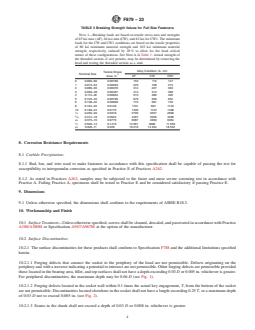
TABLE 3 Breaking Strength Values for Full Size Fasteners
individual shipments of fasteners are not ordinarily necessary.
NOTE 1—Breaking loads are based on tensile stress area and strengths
A record of the individual heat of steel in each lot shall be
of 85 ksi max (AF), 64 ksi min (CW), and 82 ksi for CW1. The minimum
maintained. The containers shall be coded to permit identifi-
loads for the CW and CW1 conditions are based on the tensile properties
of 80 ksi minimum material strength and 102 ksi minimum material
cation of the lot.
strength, respectively, reduced by 20 % to allow for the head critical
11.2 When specified in the purchase order, the manufacturer
nature of these configurations. See Note A in Table 1. Actual strength of
the threaded section, if size permits, may be determined by removing the
shall furnish a test report of the last complete set of chemical
head and testing the thr
...
This document is not an ASTM standard and is intended only to provide the user of an ASTM standard an indication of what changes have been made to the previous version. Because
it may not be technically possible to adequately depict all changes accurately, ASTM recommends that users consult prior editions as appropriate. In all cases only the current version
of the standard as published by ASTM is to be considered the official document.
Designation: F879 − 15 (Reapproved 2020) F879 − 23
Standard Specification for
Stainless Steel Socket Button Button, Low and Flat
Countersunk Head Cap Screws
This standard is issued under the fixed designation F879; the number immediately following the designation indicates the year of original
adoption or, in the case of revision, the year of last revision. A number in parentheses indicates the year of last reapproval. A superscript
epsilon (´) indicates an editorial change since the last revision or reapproval.
This standard has been approved for use by agencies of the U.S. Department of Defense.
1. Scope*
1.1 This specification covers the chemical and mechanical requirements for stainless steel inch hexagon socket button (SBHCS)
and (SBHCS), flat countersunk (SFHCS) head cap screws with nominal thread 0.060 through 0.625 in. and low head (SLHCS)
cap screws with nominal thread 0.112 through 0.625 in. intended for use in applications requiring general corrosion resistance.
1.2 Two groups of austenitic stainless steel alloys and three conditions are covered. See Table 1 and Table 2.
1.3 Units—The values stated in inch-pound units are to be regarded as standard. No other units of measurement are included in
this standard.
1.4 The following precautionary caveat pertains only to the test method portion, Section 12, of this specification: This standard
does not purport to address all of the safety concerns, if any, associated with its use. It is the responsibility of the user of this
standard to establish appropriate safety, health, and environmental practices and determine the applicability of regulatory
limitations prior to use.
1.5 This international standard was developed in accordance with internationally recognized principles on standardization
established in the Decision on Principles for the Development of International Standards, Guides and Recommendations issued
by the World Trade Organization Technical Barriers to Trade (TBT) Committee.
2. Referenced Documents
2.1 ASTM Standards:
A262 Practices for Detecting Susceptibility to Intergranular Attack in Austenitic Stainless Steels
A342/A342M Test Methods for Permeability of Weakly Magnetic Materials
A380/A380M Practice for Cleaning, Descaling, and Passivation of Stainless Steel Parts, Equipment, and Systems
A555/A555M Specification for General Requirements for Stainless Steel Wire and Wire Rods
A751 Test Methods and Practices for Chemical Analysis of Steel Products
A967/A967M Specification for Chemical Passivation Treatments for Stainless Steel Parts
D3951 Practice for Commercial Packaging
E18 Test Methods for Rockwell Hardness of Metallic Materials
E92 Test Methods for Vickers Hardness and Knoop Hardness of Metallic Materials
E384 Test Method for Microindentation Hardness of Materials
This specification is under the jurisdiction of ASTM Committee F16 on Fasteners and is the direct responsibility of Subcommittee F16.04 on Nonferrous Fasteners.
Current edition approved April 1, 2020June 1, 2023. Published April 2020July 2023. Originally approved in 1986. Last previous edition approved in 20152020 as
F879F879 – 15 (2020).-15. DOI: 10.1520/F0879-15R20.10.1520/F0879-23.
For referenced ASTM standards, visit the ASTM website, www.astm.org, or contact ASTM Customer Service at service@astm.org. For Annual Book of ASTM Standards
volume information, refer to the standard’s Document Summary page on the ASTM website.
*A Summary of Changes section appears at the end of this standard
Copyright © ASTM International, 100 Barr Harbor Drive, PO Box C700, West Conshohocken, PA 19428-2959. United States
F879 − 23
TABLE 1 Mechanical Property Requirements
A B
Full Size Product Tests Machined Specimen Tests Core Hardness
Alloy
C
Alloy Group
Tensile Extension Tensile Yield Elongation
Condition Vickers Rockwell
min
Strength ksi Strength ksi Strength ksi % min
All AF 85 max 0.6D 85 max 55 max 40 210 max 95 HRB max
All CW 80 min 0.4D 80 min 40 min 25 150 min 50 HRA min
All CW1 102 min 0.4D 87 min 65 min 20 220 min 59 HRA min
A
Actual full-size testing of condition CW and CW1 may result in decreased tensile strength because of the head configuration (see Table 3). For fasteners with nominal
thread diameters larger than 0.625 in., the mechanical properties shall be agreed upon between the user and manufacturer.
B
Core hardness is only required when full-size product testing cannot be accomplished.
C
D denotes nominal thread size.
TABLE 2 Chemical Requirements
Composition, % maximum except as shown
Alloy UNS Manganese
Alloy Carbon Phosphorus Sulfur Silicon Chromium Nickel Copper Molybdenum
Group Designation
Austenitic Alloys
1 S30400 304 0.08 2.00 0.045 0.030 1.00 18.0 to 8.0 to 1.00 . . .
20.0 10.5
1 S30403 304L 0.030 2.00 0.045 0.030 1.00 18.0 to 8.0 to 1.00 . . .
20.0 12.0
1 S30500 305 0.12 2.00 0.045 0.030 1.00 17.0 to 10.5 to 1.00 . . .
19.0 13.0
1 S38400 384 0.08 2.00 0.045 0.030 1.00 15.0 to 17.0 to . . . . . .
17.0 19.0
1 S30430 18–9LW 0.10 2.00 0.045 0.030 1.00 17.0 to 8.0 to 3.0 to 4.0 . . .
19.0 10.0
1 S30433 302HQ 0.03 2.00 0.045 0.030 1.00 17.0 to 8.0 to 3.0 to 4.0 . . .
19.0 10.0
A
1 . 304J3 0.08 2.00 0.045 0.030 1.00 17.0 to 8.0 to 1.00 to . . .
19.0 10.5 3.00
2 S31600 316 0.08 2.00 0.045 0.030 1.00 16.0 to 10.0 to . . . 2.00 to 3.0
18.0 14.0
2 S31603 316L 0.03 2.00 0.045 0.030 1.00 16.0 to 10.0 to . . . 2.00 to 3.0
18.0 14.0
A
304J3 from JIS G 4309.
F593 Specification for Stainless Steel Bolts, Hex Cap Screws, and Studs
F606/F606M Test Methods for Determining the Mechanical Properties of Externally and Internally Threaded Fasteners,
Washers, Direct Tension Indicators, and Rivets
F788 Specification for Surface Discontinuities of Bolts, Screws, Studs, and Rivets, Inch and Metric Series
F1470 Practice for Fastener Sampling for Specified Mechanical Properties and Performance Inspection
2.2 ASME Standard:
B 18.3 Socket Cap, Shoulder and Set Screws (Inch Series)
2.3 JIS Standard:
JIS G 4309 Stainless Steel Wires
3. Classification
3.1 The designation of the alloy group and condition of this specification shall be consistent with the stainless steel designations
in Specification F593.
3.2 Screws shall be designated by group and condition (for example, F879 Group 1 Condition AF).
4. Ordering Information
4.1 Orders for material under this specification shall include the following information:
4.1.1 Quantity (number of pieces of each item).
Available from American Society of Mechanical Engineers (ASME), ASME International Headquarters, Two Park Ave., New York, NY 10016-5990, http://
www.asme.org.
Available from Japanese Industrial Standards Committee (JIS) 1-3-1 Kasumigaseki, Chiyoda-ku, Tokyo 100-8901, JAPAN. http://www.jisc.go.jp
F879 − 23
4.1.2 Name of the screw, SBHCS SBHCS, SLHCS or SFHCS.
4.1.3 Dimensions, including nominal thread designation, thread pitch, and nominal screw length (inches). A standard part number
may be used for this definition.
4.1.4 Alloy group and condition.
4.1.5 Certification, if required (see Section 15).
4.1.6 ASTM specification and year of issue.
4.1.7 Any special or supplemental requirements (see Supplementary Requirements S1 through S6).S7).
5. Materials and Manufacture
5.1 Screws shall be formed by upsetting or extruding, or both.
5.2 Screws shall be roll threaded.
5.3 Heat Treatment—Austenitic alloys Condition AF screws, following manufacture, shall be annealed by heating to 1900 6 50 °F
to obtain maximum corrosion resistance and minimum permeability. The screws shall be held for a sufficient time at temperature,
then cooled at a rate sufficient to prevent precipitation of the carbide and provide the properties specified in Table 1.
5.4 When Condition CW or CW1 is specified, the austenitic alloys shall be annealed as specified in 5.3, generally by the raw
material manufacturer, then cold worked to develop specific properties.
6. Chemical Composition
6.1 The chemical composition of the screws shall conform to the requirements of Table 2.
6.2 Unless otherwise specified in the inquiry and purchase order (see Supplementary Requirement S2), the choice of an alloy from
within a group shall be that of the fastener manufacturer as determined by his fabrication methods and material availability. The
specific alloy from within a group used by the manufacturer shall be clearly identified on all certification required in the purchase
order.
6.3 When chemical analysis is performed by the purchaser using finished fasteners, the chemical composition obtained shall
conform to the limits specified in Table 2 for the specific alloy. Chemical composition shall conform to the tolerances specified
in Specification A555/A555M.
6.3.1 In the event of a discrepancy, a referee analysis of the samples for each lot as specified in 12.1 shall be made in accordance
with 11.3.1.
7. Mechanical Properties
7.1 The finished screws shall conform to the mechanical requirements specified in Table 1.
7.2 Screws having a nominal length equal to or greater than three diameters shall be tensile tested full size and shall meet the full
size breaking strength requirements specified in Table 3. Tensile failures through the head are acceptable providing the load
requirements are satisfied.
7.3 Screws that are too short (lengths less than specified in 7.2 or that have insufficient threads for tension testing) shall not be
subject to tension tests, but shall conform to the hardness requirements of Table 1.
F879 − 23
TABLE 3 Breaking Strength Values for Full Size Fasteners
NOTE 1—Breaking loads are based on tensile stress area and strengths
of 85 ksi max (AF), 64 ksi min (CW), and 82 ksi for CW1. The minimum
loads for the CW and CW1 conditions are based on the tensile properties
of 80 ksi minimum material strength and 102 ksi minimum material
strength, respectively, reduced by 20 % to allow for the head critical
nature of these configurations. See Note A in Table 1. Actual strength of
the threaded section, if size permits, may be determined by removing the
head and testing the threaded section as a stud.
Alloy Condition, lb. min
Tensile Stress
Nominal Size
Area, in.
AF CW CW1
0 0.060–80 0.00180 153 115 147
1 0.073–64 0.00263 223 168 215
2 0.086–56 0.00370 314 237 303
3 0.099–48 0.00487 414 312 399
4 0.112–40 0.00604 513 386 495
5 0.125–40 0.00796 676 509 652
6 0.138–32 0.00909 772 581 745
8 0.164–32 0.0140 1191 897 1149
10 0.190–24 0.0175 1490 1122 1438
⁄4 0.250–20 0.0318 2705 2037 2609
⁄16 0.312–18 0.0524 4457 3356 4299
⁄8 0.375–16 0.0775 6587 4959 6354
⁄2 0.500–13 0.1419 12 061 9082 11 636
⁄8 0.625–11 0.226 19 210 14 464 18 532
8. Corrosion Resistance Requirements
8.1 Carbide Precipitation:
8.1.1 Rod, bar, and wire used to make fasteners in accordance with this specification shall be capable of passing the test for
susceptibility to intergranular corrosion as specified in Practice E of Practices A262.
8.1.2 As stated in Practices A262, samples may be subjected to the faster and more severe screening test in accordance with
Practice A. Failing Practice A, specimens shall be tested to Practice E and be considered satisfactory if passing Practice E.
9. Dimensions
9.1 Unless otherwise specified, the dimensions shall conform to the requirements of ASME B18.3.
10. Workmanship and Finish
10.1 Surface Treatment—Unless otherwise specified, screws shall be cleaned, descaled, and passivated in accordance with Practice
A380/A380M or Specification A967/A967M at the option of the manufacturer.
10.2 Surface Discontinuities:
10.2.1 The surface discontinuities for these products shall conform to Specification F788 and the additional limitations specified
herein.
10.2.1.1 Forging defects that connect the socket to the periphery of the head are not permissible. Defects originating on the
periphery and with a traverse indicating a potential to intersect are not permissible. Other forging defects are permissible provided
those located in the bearing area, fillet, and top surfaces shall not have a depth exceeding 0.03 D or 0.005 in. whichever is greater.
For peripheral discontinuities, the maximum depth may be 0.06 D (see Fig. 1).
10.2.1.2 Forging defects located in the socket wall within 0.1 times the actual key engagement, T, from the bottom of the socket
are not permissible. Discontinuities located elsewhere in the socket shall not have a length exceeding 0.25 T, or a maximum depth
of 0.03 D not to exceed 0.005 in. (see Fig. 2).
10.2.1.3 Seams in the shank shall not exceed a depth of 0.03 D or 0.008 in. whichever is greater.
F879 − 23
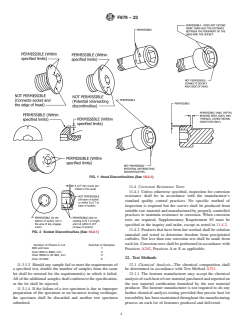
FIG. 1 Head Discontinuities (See 10.2.1)
FIG. 2 Socket Discontinuities (See 10.2.1)
10.2.1.4 No transverse discontinuities shall be permitted in the head-to-shank fillet area.
10.2.1.5 Threads shall have no laps at the root or on the flanks, as shown in Fig. 3. Laps are permitted at the crests (Fig. 3(C))
that do not exceed 25 % of the basic thread depth, and on the flanks outside the pitch cylinder. Longitudinal seams rolled beneath
the root of the thread and across the crests of the threads are acceptable within the limits of 10.2.1.3.
11. Numbe
...
Questions, Comments and Discussion
Ask us and Technical Secretary will try to provide an answer. You can facilitate discussion about the standard in here.
Loading comments...