

ASTM D8133-23
(Test Method)Standard Test Method for Determination of Low Level Phthalates in Poly(Vinyl Chloride) Plastics by Solvent Extraction-Gas Chromatography/Mass Spectrometry
General Information
- Abstract
SIGNIFICANCE AND USE
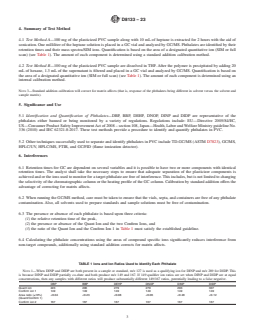
5.1 Identification and Quantification of Phthalates-DBP, BBP, DEHP, DNOP, DINP and DIDP are representative of the phthalates either banned or being monitored by a variety of regulations. Regulations include: EU-Directive 2005/84/EC, US-Consumer Product Safety Improvement Act of 2008 – section 108, Japan-Health, Labor and Welfare Ministry guideline No. 336 (2010) and IEC 62321-8:2017. These test methods provide a procedure to identify and quantify phthalates in PVC.
5.2 Other techniques successfully used to separate and identify phthalates in PVC include TD-GC/MS (ASTM D7823), GC/MS, HPLC/UV, HPLC/MS, FTIR, and GC/FID (flame ionization detector).
SCOPE
1.1 This test method provides a procedure to quantify six phthalates by solvent extraction of plasticized PVC articles followed by analysis of the extract by gas chromatography/mass spectrometry. Six phthalates, BBP, DBP, DEHP, DNOP, DINP, and DIDP, are used to illustrate how to implement the method.
Note 1: The method can be extended to other phthalates in a wide range of polymeric substrates.
1.2 Within the context of this method, “low level” is defined as 1000 ppm.
1.3 The values in SI units are to be regarded as standard.
1.4 This standard does not purport to address all of the safety concerns, if any, associated with its use. It is the responsibility of the user of this standard to establish appropriate safety, health, and environmental practices and determine the applicability of regulatory limitations prior to use.
Note 2: There is no known ISO equivalent to this standard.
1.5 This international standard was developed in accordance with internationally recognized principles on standardization established in the Decision on Principles for the Development of International Standards, Guides and Recommendations issued by the World Trade Organization Technical Barriers to Trade (TBT) Committee.
- Status
- Published
- Publication Date
- 14-Mar-2023
- Technical Committee
- D20 - Plastics
- Drafting Committee
- D20.70 - Analytical Methods
Buy Documents
ASTM D8133-23 - Standard Test Method for Determination of Low Level Phthalates in Poly(Vinyl Chloride) Plastics by Solvent Extraction—Gas Chromatography/Mass Spectrometry
REDLINE ASTM D8133-23 - Standard Test Method for Determination of Low Level Phthalates in Poly(Vinyl Chloride) Plastics by Solvent Extraction—Gas Chromatography/Mass Spectrometry
Overview
ASTM D8133-23: Standard Test Method for Determination of Low Level Phthalates in Poly(Vinyl Chloride) Plastics by Solvent Extraction-Gas Chromatography/Mass Spectrometry outlines robust procedures for identifying and quantifying low levels of six key phthalates-BBP, DBP, DEHP, DNOP, DINP, and DIDP-in poly(vinyl chloride) (PVC) plastics. The test standard, developed by ASTM International, serves the vital needs of quality assurance, regulatory compliance, and consumer safety, providing a reliable method to detect phthalates that are regulated or monitored globally.
This method supports compliance with major regulations such as EU Directive 2005/84/EC, the US Consumer Product Safety Improvement Act (CPSIA) Section 108, Japan’s MHLW Guideline No. 336 (2010), and IEC 62321-8. These rules restrict certain phthalates in consumer, industrial, and children’s products, making precise measurement methods essential.
Key Topics
- Target Phthalates: The method specifically measures six phthalates often regulated or restricted: BBP, DBP, DEHP, DNOP, DINP, and DIDP.
- Low Level Quantification: Quantitative analysis is defined for concentrations at or above 1000 ppm (“low level”).
- Sample Preparation: PVC samples are prepared by solvent extraction, with optional sonication, followed by analysis via gas chromatography/mass spectrometry (GC/MS).
- Detection Methods: Detailed conditions and calibration approaches are outlined for robust identification and quantification, including the use of standard addition and calibration curve techniques.
- Quality Control: The standard provides recommendations for blanks, control samples, and triplicate analysis to ensure data reliability.
Applications
- Regulatory Compliance: Essential for manufacturers and importers of plasticized PVC products to demonstrate adherence to international phthalate restrictions.
- Product Safety Assurance: Supports consumer product testing, especially for items intended for children, medical devices, packaging, and toys.
- Quality Control in Manufacturing: Ensures that production processes maintain phthalate concentrations below legal thresholds.
- Materials Testing Laboratories: Used for product certification, research and development, and periodic audits of plastic goods.
- International Trade: Facilitates cross-border movement of goods by providing recognized test results for phthalate content in PVC.
The method is adaptable and may be extended to other polymer substrates and additional phthalates as needed for emerging regulations or specialized applications.
Related Standards
For comprehensive implementation and comparative analysis, ASTM D8133-23 references several relevant documents and methods:
- ASTM D7823: Test method for determination of low level phthalates in PVC plastics by thermal desorption-GC/MS.
- ASTM D883 / D1600: Terminology standards for plastics and associated abbreviations.
- ASTM D3465 / D7083: Guides for purity and determination of monomeric plasticizers in PVC.
- ASTM D7993: Guide for analyzing complex phthalates.
- CPSC-CH-C1001–09.3: Standard operating procedure for determination of phthalates.
- IEC 62321-8: International guideline for determination of phthalates in electronics and related products.
Practical Value
By following ASTM D8133-23, organizations gain:
- Accurate, reproducible results for regulatory reporting and certification
- International acceptance of testing methods
- Reduced risk of non-compliance penalties
- Improved consumer safety and trust in plastic products
The standard is highly relevant for plastics manufacturers, product safety labs, and regulatory agencies, ensuring responsible production and marketing of PVC articles worldwide.
Relations
- Effective Date
- 01-Feb-2024
- Effective Date
- 01-Nov-2023
- Effective Date
- 01-Feb-2020
- Effective Date
- 01-Jan-2020
- Effective Date
- 01-Sep-2019
- Effective Date
- 01-Aug-2019
- Effective Date
- 01-Aug-2019
- Effective Date
- 15-Apr-2019
- Effective Date
- 01-Feb-2019
- Effective Date
- 01-Dec-2018
- Effective Date
- 01-Nov-2018
- Effective Date
- 01-Nov-2018
- Refers
ASTM D1600-18 - Standard Terminology for Abbreviated Terms Relating to Plastics (Withdrawn 2024) - Effective Date
- 01-Jan-2018
- Effective Date
- 15-Aug-2017
- Effective Date
- 01-May-2016
Buy Documents
ASTM D8133-23 - Standard Test Method for Determination of Low Level Phthalates in Poly(Vinyl Chloride) Plastics by Solvent Extraction—Gas Chromatography/Mass Spectrometry
REDLINE ASTM D8133-23 - Standard Test Method for Determination of Low Level Phthalates in Poly(Vinyl Chloride) Plastics by Solvent Extraction—Gas Chromatography/Mass Spectrometry
Get Certified
Connect with accredited certification bodies for this standard

DIN CERTCO
DIN Group product certification.

Smithers Quality Assessments
US management systems and product certification.
Sponsored listings
Frequently Asked Questions
ASTM D8133-23 is a standard published by ASTM International. Its full title is "Standard Test Method for Determination of Low Level Phthalates in Poly(Vinyl Chloride) Plastics by Solvent Extraction-Gas Chromatography/Mass Spectrometry". This standard covers: SIGNIFICANCE AND USE 5.1 Identification and Quantification of Phthalates-DBP, BBP, DEHP, DNOP, DINP and DIDP are representative of the phthalates either banned or being monitored by a variety of regulations. Regulations include: EU-Directive 2005/84/EC, US-Consumer Product Safety Improvement Act of 2008 – section 108, Japan-Health, Labor and Welfare Ministry guideline No. 336 (2010) and IEC 62321-8:2017. These test methods provide a procedure to identify and quantify phthalates in PVC. 5.2 Other techniques successfully used to separate and identify phthalates in PVC include TD-GC/MS (ASTM D7823), GC/MS, HPLC/UV, HPLC/MS, FTIR, and GC/FID (flame ionization detector). SCOPE 1.1 This test method provides a procedure to quantify six phthalates by solvent extraction of plasticized PVC articles followed by analysis of the extract by gas chromatography/mass spectrometry. Six phthalates, BBP, DBP, DEHP, DNOP, DINP, and DIDP, are used to illustrate how to implement the method. Note 1: The method can be extended to other phthalates in a wide range of polymeric substrates. 1.2 Within the context of this method, “low level” is defined as 1000 ppm. 1.3 The values in SI units are to be regarded as standard. 1.4 This standard does not purport to address all of the safety concerns, if any, associated with its use. It is the responsibility of the user of this standard to establish appropriate safety, health, and environmental practices and determine the applicability of regulatory limitations prior to use. Note 2: There is no known ISO equivalent to this standard. 1.5 This international standard was developed in accordance with internationally recognized principles on standardization established in the Decision on Principles for the Development of International Standards, Guides and Recommendations issued by the World Trade Organization Technical Barriers to Trade (TBT) Committee.
SIGNIFICANCE AND USE 5.1 Identification and Quantification of Phthalates-DBP, BBP, DEHP, DNOP, DINP and DIDP are representative of the phthalates either banned or being monitored by a variety of regulations. Regulations include: EU-Directive 2005/84/EC, US-Consumer Product Safety Improvement Act of 2008 – section 108, Japan-Health, Labor and Welfare Ministry guideline No. 336 (2010) and IEC 62321-8:2017. These test methods provide a procedure to identify and quantify phthalates in PVC. 5.2 Other techniques successfully used to separate and identify phthalates in PVC include TD-GC/MS (ASTM D7823), GC/MS, HPLC/UV, HPLC/MS, FTIR, and GC/FID (flame ionization detector). SCOPE 1.1 This test method provides a procedure to quantify six phthalates by solvent extraction of plasticized PVC articles followed by analysis of the extract by gas chromatography/mass spectrometry. Six phthalates, BBP, DBP, DEHP, DNOP, DINP, and DIDP, are used to illustrate how to implement the method. Note 1: The method can be extended to other phthalates in a wide range of polymeric substrates. 1.2 Within the context of this method, “low level” is defined as 1000 ppm. 1.3 The values in SI units are to be regarded as standard. 1.4 This standard does not purport to address all of the safety concerns, if any, associated with its use. It is the responsibility of the user of this standard to establish appropriate safety, health, and environmental practices and determine the applicability of regulatory limitations prior to use. Note 2: There is no known ISO equivalent to this standard. 1.5 This international standard was developed in accordance with internationally recognized principles on standardization established in the Decision on Principles for the Development of International Standards, Guides and Recommendations issued by the World Trade Organization Technical Barriers to Trade (TBT) Committee.
ASTM D8133-23 is classified under the following ICS (International Classification for Standards) categories: 83.080.20 - Thermoplastic materials. The ICS classification helps identify the subject area and facilitates finding related standards.
ASTM D8133-23 has the following relationships with other standards: It is inter standard links to ASTM D883-24, ASTM D883-23, ASTM D7823-20, ASTM D883-20, ASTM E594-96(2019), ASTM D883-19c, ASTM D7993-15(2019), ASTM D883-19a, ASTM D883-19, ASTM D883-18a, ASTM D7823-18, ASTM D883-18, ASTM D1600-18, ASTM D883-17, ASTM D7823-16. Understanding these relationships helps ensure you are using the most current and applicable version of the standard.
ASTM D8133-23 is available in PDF format for immediate download after purchase. The document can be added to your cart and obtained through the secure checkout process. Digital delivery ensures instant access to the complete standard document.
Standards Content (Sample)
This international standard was developed in accordance with internationally recognized principles on standardization established in the Decision on Principles for the
Development of International Standards, Guides and Recommendations issued by the World Trade Organization Technical Barriers to Trade (TBT) Committee.
Designation: D8133 − 23
Standard Test Method for
Determination of Low Level Phthalates in Poly(Vinyl
Chloride) Plastics by Solvent Extraction—Gas
Chromatography/Mass Spectrometry
This standard is issued under the fixed designation D8133; the number immediately following the designation indicates the year of
original adoption or, in the case of revision, the year of last revision. A number in parentheses indicates the year of last reapproval. A
superscript epsilon (´) indicates an editorial change since the last revision or reapproval.
1. Scope* D3465 Guide for Purity of Monomeric Plasticizers by Gas
Chromatography
1.1 This test method provides a procedure to quantify six
D7083 Practice for Determination of Monomeric Plasticiz-
phthalates by solvent extraction of plasticized PVC articles
ers in Poly (Vinyl Chloride) (PVC) by Gas Chromatogra-
followed by analysis of the extract by gas chromatography/
phy
mass spectrometry. Six phthalates, BBP, DBP, DEHP, DNOP,
D7823 Test Method for Determination of Low Level Phtha-
DINP, and DIDP, are used to illustrate how to implement the
lates in Poly (Vinyl Chloride) Plastics by Thermal
method.
Desorption—Gas Chromatography/Mass Spectrometry
NOTE 1—The method can be extended to other phthalates in a wide
D7993 Guide for Analyzing Complex Phthalates
range of polymeric substrates.
E177 Practice for Use of the Terms Precision and Bias in
1.2 Within the context of this method, “low level” is defined
ASTM Test Methods
as 1000 ppm.
E355 Practice for Gas Chromatography Terms and Relation-
ships
1.3 The values in SI units are to be regarded as standard.
E594 Practice for Testing Flame Ionization Detectors Used
1.4 This standard does not purport to address all of the
in Gas or Supercritical Fluid Chromatography
safety concerns, if any, associated with its use. It is the
E691 Practice for Conducting an Interlaboratory Study to
responsibility of the user of this standard to establish appro-
Determine the Precision of a Test Method
priate safety, health, and environmental practices and deter-
IEEE/ASTM SI-10 Practice for Use of the International
mine the applicability of regulatory limitations prior to use.
System of Units (SI), the Modernized Metric System
NOTE 2—There is no known ISO equivalent to this standard.
2.2 ASTM Adjuncts:ADJD7823-EA
Vinyl Plasticizer Library—Total Ion Chromatograms and
1.5 This international standard was developed in accor-
Mass Spectra
dance with internationally recognized principles on standard-
ization established in the Decision on Principles for the
2.3 CPSC Standard:
Development of International Standards, Guides and Recom- CPSC-CH-C1001–09.3 Standard Operating Procedure for
mendations issued by the World Trade Organization Technical
Determination of Phthalates
Barriers to Trade (TBT) Committee.
3. Terminology
2. Referenced Documents
3.1 Definitions:
2.1 ASTM Standards: 3.1.1 For definition of plastic terms used in this standard,
see Terminologies D883 and D1600.
D883 Terminology Relating to Plastics
D1600 Terminology for Abbreviated Terms Relating to Plas-
3.2 For units, symbols, and abbreviations used in this
tics
standard refer to Practices E594, E355, or IEEE/ASTM SI-10.
3.3 Compounds and Instrumentation:
3.3.1 (DOA) Hexanedioic acid, 1,6-bis(2-ethylhexyl) ester
This test method is under the jurisdiction of ASTM Committee D20 on Plastics
and is the direct responsibility of Subcommittee D20.70 on Analytical Methods. CAS #103-23-1
Current edition approved March 15, 2023. Published April 2023. Originally
3.3.2 (DINCH) 1,2-Cyclohexanedicarboxylic acid, dinonyl
approved in 2017. Last previous edition approved in 2021 as D8133 – 21. DOI:
ester, branched and linear CAS #474919-59-0
10.1520/D8133-23.
For referenced ASTM standards, visit the ASTM website, www.astm.org, or
contact ASTM Customer Service at service@astm.org. For Annual Book of ASTM
Standards volume information, refer to the standard’s Document Summary page on Available from U.S. Consumer Product Safety Commission (CPSC), 4330 East
the ASTM website. West Hwy., Bethesda, MD 20814, http://www.cpsc.gov.
*A Summary of Changes section appears at the end of this standard
Copyright © ASTM International, 100 Barr Harbor Drive, PO Box C700, West Conshohocken, PA 19428-2959. United States
D8133 − 23
3.3.3 (DBP) 1,2-Benzenedicarboxylic acid, 1,2-di-n-butyl 5. Significance and Use
ester CAS #84-74-2
5.1 Identification and Quantification of Phthalates—DBP,
3.3.4 (BBP) Benzyl butyl phthalate CAS #85-68-7
BBP, DEHP, DNOP, DINP and DIDP are representative of the
3.3.5 (DEHP) Bis(2-ethyhexyl) phthalate CAS #117-81-7
phthalates either banned or being monitored by a variety of
3.3.6 (DNOP) Di(n-octyl) phthalate CAS #117-84-0
regulations. Regulations include: EU—Directive 2005/84/EC,
3.3.7 (DINP) 1,2-Benzenedicarboxylic acid, di-C8-10-
US—Consumer Product Safety Improvement Act of 2008 –
branched alkyl esters, C9-rich (Jayflex) CAS #68515-48-0
section 108, Japan—Health, Labor and Welfare Ministry
3.3.8 (DINP) 1,2-Benzenedicarboxylic acid, 1,2-diisononyl
guideline No. 336 (2010) and IEC 62321-8:2017. These test
(Palatinol) CAS #28553-12-0
methods provide a procedure to identify and quantify phtha-
3.3.9 (DIDP) 1,2-Benzenedicarboxylic acid, di-C9-11-
lates in PVC.
branched alkyl esters, C10-rich (Jayflex) CAS #68515-49-1
5.2 Other techniques successfully used to separate and
3.3.10 (DIDP) 1,2-Benzenedicarboxylic acid, 1,2-
identify phthalates in PVC include TD-GC/MS (ASTM
diisodecyl CAS #26761-40-0
D7823), GC/MS, HPLC/UV, HPLC/MS, FTIR, and GC/FID
3.3.11 GC Gas Chromatography
(flame ionization detector).
3.3.12 GC/MS Gas Chromatography/Mass Spectrometry
3.3.13 TD-GC/MS Thermal Desorption—Gas
6. Interferences
Chromatography/Mass Spectrometry
3.3.14 PVC Poly(vinyl chloride)
6.1 Retention times for GC are dependent on several vari-
3.3.15 Heptane GC grade or higher
ables and it is possible to have two or more components with
3.3.16 FTIR Fourier Transform Infrared Spectroscopy
identical retention times. The analyst shall take the necessary
3.3.17 TIC Total ion chromatogram
steps to ensure that adequate separation of the plasticizer
3.3.18 DQO Data quality objectives
components is achieved and or the ions used to monitor for a
target phthalate are free of interference. This includes, but is
4. Summary of Test Method
not limited to changing the selectivity of the chromatographic
4.1 Test Method A—100 mg of the plasticized PVC sample
column or the heating profile of the GC column. Calibration by
along with 10 mL of heptane is extracted for 2 hours with the
standard addition offers the advantage of correcting for matrix
aid of sonication. One milliliter of the heptane solution is
affects.
placed in a GC vial and analyzed by GC/MS. Phthalates are
6.2 When running the GC/MS method, care must be taken
identified by their retention times and their mass spectra/SIM
to ensure that the vials, septa, and containers are free of any
ions. Quantification is based on the area of a designated
phthalate contamination. Also, all solvents used to prepare
quantitative ion (SIM or full scan) (see Table 1). The amount
standards and sample solutions must be free of contamination.
of each component is determined using a standard addition
calibration method. 6.3 The presence or absence of each phthalate is based upon
three criteria:
4.2 Test Method B—100 mg of the plasticized PVC sample
(1) the relative retention time of the peak,
are dissolved in THF. After the polymer is precipitated by
(2) the presence or absence of the Quant Ion and the two
adding 20 mL of hexane, 1.3 mL of the supernatant is filtered
Confirm Ions, and
and placed in a GC vial and analyzed by GC/MS. Quantifica-
(3) the ratio of the Quant Ion and the Confirm Ion 1 in
tion is based on the area of a designated quantitative ion (SIM
Table 1 must satisfy the established guideline.
or full scan) (see Table 1). The amount of each component is
determined using an internal calibration method.
6.4 Calculating the phthalate concentrations using the areas
of compound specific ions significantly reduces interference
NOTE 3—Standard addition calibration will correct for matrix affects
from non-target compounds, additionally using standard addi-
(that is, response of the phthalates being different in solvent versus the
solvent and sample matrix). tion corrects for matrix affects.
TABLE 1 Ions and Ion Ratios Used to Identify Each Phthalate
NOTE 1—When DINP and DIDP are both present in a sample or standard, m/z 127 is used as a qualifying ion for DINP and m/z 289 for DIDP. This
is because DINP and DIDP partially co-elute and both produce m/z 149 and 167. If 149 qualifier ion ratios are set when DINP and DIDP are at equal
concentrations, then any samples with different ratios will produce substantially different 149/167 ratios, potentially leading to a false negative.
DBP BBP DEHP DNOP DINP DIDP
Quant ion 223 206 279 279 293 307
Confirm ion 1 149 149 149 149 149 149
Area ratio (±10%) <0.04 <0.23 <0.08 <0.06 <0.20 <0.12
(Quant/Confirm 1)
Confirm ion 2 167 167 167 167 167 167
D8133 − 23
7. Safety and Precautions solutions. To test system performance and verify retention
times a 10 μL aliquot of Standard Solution #1 is added to 1 mL
7.1 Use organic solvents in a well-ventilated space.
of heptane and analyzed.
TEST METHOD A—HEPTANE EXTRACTION
10.4 Sample Solution—Cut each plasticized component part
PROCEDURE
into small pieces (no dimension larger than 2 mm), or
milled/ground into a representative powder. Each cut/milled
8. Apparatus
plasticized component part will be considered a sample for
8.1 Gas chromatograph/mass spectrometer capable of op- testing as described below.
erating in the 100-260°C temperature range and equipped with 10.4.1 Weigh 100 mg (0.10 g) of the sample in a vial and
autosampler and injector. add 10 mL heptane with a 10-mL volumetric pipet (100 mg/10
mL). The vial with the sample and heptane is placed in a
8.2 GC vials, glass pipets, 4, and 20-mL vials.
sonication bath and extracted for two hours at room tempera-
8.3 Optional Recommended Equipment—10-mL volumetric
ture. Into a GC vial, place 1.0 mL of the extracted sample
flask.
solution (this is conveniently done with a 1 mL volumetric
8.4 GC Capillary Column—Carbowax capillary column, 30 pipet). See Fig. 1 and Fig. 2 for example chromatograms.
m by 0.25 mm ID with a 0.25 μm film thickness, or equivalent.
10.5 Spiked Sample Solution—Place 1.0 mL of the sample
8.5 Integrator or data handling system, capable of measur- solution (10.4) into a GC vial. Add 10 μL of the phthalate
Standard Solution #1 (10.3) to the sample solution with a GC
ing peak areas and retention times.
syringe.
8.6 Analytical balance, capable of weighing to 60.00001 g.
NOTE 5—A critical step in the accurate determination of phthalates is
8.7 Pressure regulators, for all required gas cylinders.
sample homogeneity. This is discussed in more detail in Appendix X1.
8.8 Flow meter, or other means of measuring gas flow rates
11. Procedure
60.1 mL/min.
11.1 Establish that the analytical system has an acceptable
9. Reagents and Materials
background of phthalate contamination by analyzing a heptane
9.1 Helium carrier gas, chromatographic grade.
solvent blank. Acceptable background contamination will be
determined by the data quality specific objectives.
9.2 Heptane for preparing the phthalate standard solution
(Stock Standard Solution, Standard Solution #1, 10.2 and 10.3;
11.2 Establish the relative retention time and mass
Sample Solution, 10.4), spectral quality or chromatographic
spectrum/SIM ions of each phthalate by analyzing a solution of
grade.
10 μL of Standard Solution #1 (10.1(3)) added to 1.0 mL of
heptane. The conditions in Table 2 were used to obtain the
9.3 Standards of the appropriate phthalates for use when
example chromatograms shown in Figs. 1 and 2.
preparing the Stock Standard Solution (10.2) and Standard
TABLE 2 Gas Chromatography/Mass Spectrometry Analysis
Solution #1 (10.3) used for standard addition. See Note 4.
Conditions
NOTE 4—DINP and DIDP, when used in various PVC formulations are
Column: Carbowax (Polyethylene glycol) stationary phase, 30 m
technical mixtures. Here is specific information on DINP and DIDP. For
× 0.25 mm i.d, 0.25 μm film thickness
more information, please refer to Appendix X3.
Carrier Gas: Helium or other acceptable gas
Jayflex DIDP: 1,2-Benzenedicarboxylic acid, di-C9-11-branched alkyl
Carrier 1.0 mL/min
Flow Rate:
esters, C10-rich: CAS# 68515-49-1.
Oven 150°C (0 min hold) to 250°C (at 10°C/min) (45 min hold)
Jayflex DINP: 1,2-Benzenedicarboxylic acid, di-C8-10-branched alkyl
Temperature
esters, C9-rich: CAS# 68515-48-0.
Program:
Injector 250°C
10. Preparation of the Analytical Samples
Temperature:
Injection Split or splitless injection depending on the sensitivity of
10.1 Four solutions shall be prepared:
Conditions: the instrument. 20:1 split is recommended as a starting
(1) a Stock Standard Solution of the target phthalate
point for those wishing to run split.
Injection 1 μL
standards,
Volume:
(2) a Standard Solution of the target phthalate standards
MSD Transfer 250°C
used to spike the sample,
Line Temp.:
Ion Source 230°C
(3) a solution of the sample, and
(EI) Temp.:
(4) the sample solution spiked with the standard stock
MS Mode: SIM (scan mode is employed if sufficient detection
solution. sensitivity is met)
10.2 Stock Standard Solution—Prepare a stock standard 11.2.1 The mass spectrometer is run in scan mode for
solution of the phthalates by dissolving 0.10 g of each general identification of phthalates and other sample compo-
phthalate in 10 mL of heptane (0.10 g/10 mL; this is conve- nents.
niently performed by weighing the phthalates into a 10 mL
11.3 Analyze the sample (Sample Solution – 10.4) and
volumetric flask and diluting to the mark).
Spiked Sample (Spiked Sample Solution – 10.5) using the
10.3 Standard Solution #1A—Prepare a diluted (1:10) solu- conditions outlined in 11.2. A typical chromatogram is shown
tion of the Stock Standard Solution to spike the sample in Fig. 1 and Fig. 2.
D8133 − 23
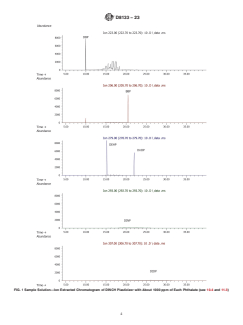
FIG. 1 Sample Solution—Ion Extracted Chromatogram of DINCH Plasticizer with About 1000 ppm of Each Phthalate (see 10.4 and 11.3)
D8133 − 23
FIG. 2 Sample Solution—Ion Extracted Chromatogram of DINCH Plasticizer with About 1000 ppm of Each Phthalate (see 10.4 and
11.3)—Expanded TIC
D8133 − 23
11.4 Peak identifications are based on relative retention y = 12202.3x + 116113.0 = 0
data, Scan mode (extracted ion) or single ion monitoring (SIM)
x (μg of analyte in sample solution) = 116113.0 / 12202.3 =
mode of the quant and confirming ions and the ion area ratios
9.52
as indicated in Table 1. Phthalate quantification is based upon
Amount of analyte in sample (ppm) = μg of analyte in
the peak areas of the quant ions listed in Table 1. The
sample solution / weight of sample in spiked sample
assumption being made is that the sole source of the quant ion
Weight of spiked sample = weight of sample / 10 =
at a predetermined retention time is the phthalate. Use the peak
0.1002 / 10 = 0.01002
area of the quant ion to accurately determine the amount of the
Amount of BBP in sample (ppm) = 9.52 / 0.01002 = 947
phthalate.
11.4.1 Peak identification is based solely on the presence or
13. Quality Control
absence of the quant ion and the two confirming ions at a
13.1 Perform the quality checks outlined in Table 3.
predetermined retention time. Quantification is based on the
area of the quant ion.
13.2 Ensure that the system is free of phthalate contamina-
NOTE 6—A typical ion extracted chromatogram obtained using the tion before analyzing samples. Prior to sample analysis the
conditions specific in 11.2 is shown in Fig. 1. Because the absolute
ability of the system to perform properly shall be verified.
retention times are dependent upon the entirety of the GC system; relative
retention times are used to identify each phthalate.
14. Report
11.5 Quantification is done using standard addition. Analyze
14.1 The amount of each target phthalate in ppm.
a Sample Solution. A typical ion extracted chromatogram is
14.1.1 Analyze 10 % of the samples in triplicate, report the
shown in Fig. 1 and Fig. 2. Standard addition is very useful to
standard deviation for each target compound. If the sample
correct for difference in response of the analyte in the sample
batch is less than 10 samples, then analyze one sample in
matrix. This is often the case when analyzing PVC where
triplicate and report the standard deviation. The standard
DINCH, Mesamoll or both are present.
deviation must be calculated using N-1 (2 rather than 3). No
NOTE 7—A good overview of standard addition is found on page 476,
outlier detection is allowed.
LCGC North America, Volume 27, number 6, June 2009.
14.1.2 If a sample batch is analyzed over more than two
days, the percent difference between the first and last Labora-
12. Example Calculations
tory control sample must be less than 10. Use the average in the
12.1 The amount of each phthalate in the samples are
denominator for calculating the % difference.
determined by a single-point standard addition method. The
amount of the analyte spiked into the sample (in μg) is plotted 14.2 R
...
This document is not an ASTM standard and is intended only to provide the user of an ASTM standard an indication of what changes have been made to the previous version. Because
it may not be technically possible to adequately depict all changes accurately, ASTM recommends that users consult prior editions as appropriate. In all cases only the current version
of the standard as published by ASTM is to be considered the official document.
Designation: D8133 − 21 D8133 − 23
Standard Test Method for
Determination of Low Level Phthalates in Poly(Vinyl
Chloride) Plastics by Solvent Extraction—Gas
Chromatography/Mass Spectrometry
This standard is issued under the fixed designation D8133; the number immediately following the designation indicates the year of
original adoption or, in the case of revision, the year of last revision. A number in parentheses indicates the year of last reapproval. A
superscript epsilon (´) indicates an editorial change since the last revision or reapproval.
1. Scope*
1.1 This test method provides a procedure to quantify six phthalates by solvent extraction of plasticized PVC articles followed by
analysis of the extract by gas chromatography/mass spectrometry. Six phthalates, BBP, DBP, DEHP, DNOP, DINP, and DIDP, are
used to illustrate how to implement the method.
NOTE 1—The method can be extended to other phthalates in a wide range of polymeric substrates.
1.2 Within the context of this method, “low level” is defined as 1000 ppm.
1.3 The values in SI units are to be regarded as standard.
1.4 This standard does not purport to address all of the safety concerns, if any, associated with its use. It is the responsibility
of the user of this standard to establish appropriate safety, health, and environmental practices and determine the applicability of
regulatory limitations prior to use.
NOTE 2—There is no known ISO equivalent to this standard.
1.5 This international standard was developed in accordance with internationally recognized principles on standardization
established in the Decision on Principles for the Development of International Standards, Guides and Recommendations issued
by the World Trade Organization Technical Barriers to Trade (TBT) Committee.
2. Referenced Documents
2.1 ASTM Standards:
D883 Terminology Relating to Plastics
D1600 Terminology for Abbreviated Terms Relating to Plastics
D3465 Guide for Purity of Monomeric Plasticizers by Gas Chromatography
D7083 Practice for Determination of Monomeric Plasticizers in Poly (Vinyl Chloride) (PVC) by Gas Chromatography
D7823 Test Method for Determination of Low Level Phthalates in Poly (Vinyl Chloride) Plastics by Thermal Desorption—Gas
Chromatography/Mass Spectrometry
D7993 Guide for Analyzing Complex Phthalates
This test method is under the jurisdiction of ASTM Committee D20 on Plastics and is the direct responsibility of Subcommittee D20.70 on Analytical Methods.
Current edition approved Jan. 15, 2021March 15, 2023. Published February 2021April 2023. Originally approved in 2017. Last previous edition approved in 20202021
as D8133 – 20.D8133 – 21. DOI: 10.1520/D8133-21.10.1520/D8133-23.
For referenced ASTM standards, visit the ASTM website, www.astm.org, or contact ASTM Customer Service at service@astm.org. For Annual Book of ASTM Standards
volume information, refer to the standard’s Document Summary page on the ASTM website.
*A Summary of Changes section appears at the end of this standard
Copyright © ASTM International, 100 Barr Harbor Drive, PO Box C700, West Conshohocken, PA 19428-2959. United States
D8133 − 23
E177 Practice for Use of the Terms Precision and Bias in ASTM Test Methods
E355 Practice for Gas Chromatography Terms and Relationships
E594 Practice for Testing Flame Ionization Detectors Used in Gas or Supercritical Fluid Chromatography
E691 Practice for Conducting an Interlaboratory Study to Determine the Precision of a Test Method
IEEE/ASTM SI-10 Practice for Use of the International System of Units (SI), the Modernized Metric System
2.2 ASTM Adjuncts:ADJD7823-EA
Vinyl Plasticizer Library—Total Ion Chromatograms and Mass Spectra
2.3 CPSC Standard:
CPSC-CH-C1001–09.3 Standard Operating Procedure for Determination of Phthalates
3. Terminology
3.1 Definitions:
3.1.1 For definition of plastic terms used in this standard, see Terminologies D883 and D1600.
3.2 For units, symbols, and abbreviations used in this standard refer to Practices E594, E355, or IEEE/ASTM SI-10.
3.3 Compounds and Instrumentation:
3.3.1 (DOA) Hexanedioic acid, 1,6-bis(2-ethylhexyl) ester CAS #103-23-1
3.3.2 (DINCH) 1,2-Cyclohexanedicarboxylic acid, dinonyl ester, branched and linear CAS #474919-59-0
3.3.3 (DBP) 1,2-Benzenedicarboxylic acid, 1,2-di-n-butyl ester CAS #84-74-2
3.3.4 (BBP) Benzyl butyl phthalate CAS #85-68-7
3.3.5 (DEHP) Bis(2-ethyhexyl) phthalate CAS #117-81-7
3.3.6 (DNOP) Di(n-octyl) phthalate CAS #117-84-0
3.3.7 (DINP) 1,2-Benzenedicarboxylic acid, di-C8-10-branched alkyl esters, C9-rich (Jayflex) CAS #68515-48-0
3.3.8 (DINP) 1,2-Benzenedicarboxylic acid, 1,2-diisononyl (Palatinol) CAS #28553-12-0
3.3.9 (DIDP) 1,2-Benzenedicarboxylic acid, di-C9-11-branched alkyl esters, C10-rich (Jayflex) CAS #68515-49-1
3.3.10 (DIDP) 1,2-Benzenedicarboxylic acid, 1,2-diisodecyl CAS #26761-40-0
3.3.11 GC Gas Chromatography
3.3.12 GC/MS Gas Chromatography/Mass Spectrometry
3.3.13 TD-GC/MS Thermal Desorption—Gas Chromatography/Mass Spectrometry
3.3.14 PVC Poly(vinyl chloride)
3.3.15 Heptane GC grade or higher
3.3.16 FTIR Fourier Transform Infrared Spectroscopy
3.3.17 TIC Total ion chromatogram
3.3.18 DQO Data quality objectives
Available from U.S. Consumer Product Safety Commission (CPSC), 4330 East West Hwy., Bethesda, MD 20814, http://www.cpsc.gov.
D8133 − 23
4. Summary of Test Method
4.1 Test Method A—100 mg of the plasticized PVC sample along with 10 mL of heptane is extracted for 2 hours with the aid of
sonication. One milliliter of the heptane solution is placed in a GC vial and analyzed by GC/MS. Phthalates are identified by their
retention times and their mass spectra/SIM ions. Quantification is based on the area of a designated quantitative ion (SIM or full
scan) (see Table 1). The amount of each component is determined using a standard addition calibration method.
4.2 Test Method B—100 mg of the plasticized PVC sample are dissolved in THF. After the polymer is precipitated by adding 20
mL of hexane, 1.3 mL of the supernatant is filtered and placed in a GC vial and analyzed by GC/MS. Quantification is based on
the area of a designated quantitative ion (SIM or full scan) (see Table 1). The amount of each component is determined using an
internal calibration method.
NOTE 3—Standard addition calibration will correct for matrix affects (that is, response of the phthalates being different in solvent versus the solvent and
sample matrix).
5. Significance and Use
5.1 Identification and Quantification of Phthalates—DBP, BBP, DEHP, DNOP, DINP and DIDP are representative of the
phthalates either banned or being monitored by a variety of regulations. Regulations include: EU—Directive 2005/84/EC,
US—Consumer Product Safety Improvement Act of 2008 – section 108, Japan—Health, Labor and Welfare Ministry guideline No.
336 (2010) and IEC 62321-8:2017. These test methods provide a procedure to identify and quantify phthalates in PVC.
5.2 Other techniques successfully used to separate and identify phthalates in PVC include TD-GC/MS (ASTM D7823), GC/MS,
HPLC/UV, HPLC/MS, FTIR, and GC/FID (flame ionization detector).
6. Interferences
6.1 Retention times for GC are dependent on several variables and it is possible to have two or more components with identical
retention times. The analyst shall take the necessary steps to ensure that adequate separation of the plasticizer components is
achieved and or the ions used to monitor for a target phthalate are free of interference. This includes, but is not limited to changing
the selectivity of the chromatographic column or the heating profile of the GC column. Calibration by standard addition offers the
advantage of correcting for matrix affects.
6.2 When running the GC/MS method, care must be taken to ensure that the vials, septa, and containers are free of any phthalate
contamination. Also, all solvents used to prepare standards and sample solutions must be free of contamination.
6.3 The presence or absence of each phthalate is based upon three criteria:
(1) the relative retention time of the peak,
(2) the presence or absence of the Quant Ion and the two Confirm Ions, and
(3) the ratio of the Quant Ion and the Confirm Ion 1 in Table 1 must satisfy the established guideline.
6.4 Calculating the phthalate concentrations using the areas of compound specific ions significantly reduces interference from
non-target compounds, additionally using standard addition corrects for matrix affects.
TABLE 1 Ions and Ion Ratios Used to Identify Each Phthalate
NOTE 1—When DINP and DIDP are both present in a sample or standard, m/z 127 is used as a qualifying ion for DINP and m/z 289 for DIDP. This
is because DINP and DIDP partially co-elute and both produce m/z 149 and 167. If 149 qualifier ion ratios are set when DINP and DIDP are at equal
concentrations, then any samples with different ratios will produce substantially different 149/167 ratios, potentially leading to a false negative.
DBP BBP DEHP DNOP DINP DIDP
Quant ion 223 206 279 279 293 307
Confirm ion 1 149 149 149 149 149 149
Area ratio (±10%) <0.04 <0.23 <0.08 <0.06 <0.20 <0.12
(Quant/Confirm 1)
Confirm ion 2 167 167 167 167 167 167
D8133 − 23
7. Safety and Precautions
7.1 Use organic solvents in a well-ventilated space.
TEST METHOD A—HEPTANE EXTRACTION PROCEDURE
8. Apparatus
8.1 Gas chromatograph/mass spectrometer capable of operating in the 100-260°C temperature range and equipped with
autosampler and injector.
8.2 GC vials, glass pipets, 4, and 20-mL vials.
8.3 Optional Recommended Equipment—10-mL volumetric flask.
8.4 GC Capillary Column—Carbowax capillary column, 30 m by 0.25 mm ID with a 0.25 μm film thickness, or equivalent.
8.5 Integrator or data handling system, capable of measuring peak areas and retention times.
8.6 Analytical balance, capable of weighing to 60.00001 g.
8.7 Pressure regulators, for all required gas cylinders.
8.8 Flow meter, or other means of measuring gas flow rates 60.1 mL/min.
9. Reagents and Materials
9.1 Helium carrier gas, chromatographic grade.
9.2 Heptane for preparing the phthalate standard solution (Stock Standard Solution, Standard Solution #1, 10.2 and 10.3; Sample
Solution, 10.4), spectral quality or chromatographic grade.
9.3 Standards of the appropriate phthalates for use when preparing the Stock Standard Solution (10.2) and Standard Solution #1
(10.3) used for standard addition. See Note 4.
NOTE 4—DINP and DIDP, when used in various PVC formulations are technical mixtures. Here is specific information on DINP and DIDP. For more
information, please refer to Appendix X3.
Jayflex DIDP: 1,2-Benzenedicarboxylic acid, di-C9-11-branched alkyl esters, C10-rich: CAS# 68515-49-1.
Jayflex DINP: 1,2-Benzenedicarboxylic acid, di-C8-10-branched alkyl esters, C9-rich: CAS# 68515-48-0.
10. Preparation of the Analytical Samples
10.1 Four solutions shall be prepared:
(1) a Stock Standard Solution of the target phthalate standards,
(2) a Standard Solution of the target phthalate standards used to spike the sample,
(3) a solution of the sample, and
(4) the sample solution spiked with the standard stock solution.
10.2 Stock Standard Solution—Prepare a stock standard solution of the phthalates by dissolving 0.10 g of each phthalate in 10 mL
of heptane (0.10 g/10 mL; this is conveniently performed by weighing the phthalates into a 10 mL volumetric flask and diluting
to the mark).
D8133 − 23
10.3 Standard Solution #1A—Prepare a diluted (1:10) solution of the Stock Standard Solution to spike the sample solutions. To
test system performance and verify retention times a 10 μL aliquot of Standard Solution #1 is added to 1 mL of heptane and
analyzed.
10.4 Sample Solution—Cut each plasticized component part into small pieces (no dimension larger than 2 mm), or milled/ground
into a representative powder. Each cut/milled plasticized component part will be considered a sample for testing as described
below.
10.4.1 Weigh 100 mg (0.10 g) of the sample in a vial and add 10 mL heptane with a 10-mL volumetric pipet (100 mg/10 mL).
The vial with the sample and heptane is placed in a sonication bath and extracted for two hours at room temperature. Into a GC
vial, place 1.0 mL of the extracted sample solution (this is conveniently done with a 1 mL volumetric pipet). See Fig. 1 and Fig.
2 for example chromatograms.
10.5 Spiked Sample Solution—Place 1.0 mL of the sample solution (10.4) into a GC vial. Add 10 μL of the phthalate Standard
Solution #1 (10.3) to the sample solution with a GC syringe.
NOTE 5—A critical step in the accurate determination of phthalates is sample homogeneity. This is discussed in more detail in Appendix X1.
11. Procedure
11.1 Establish that the analytical system has an acceptable background of phthalate contamination by analyzing a heptane solvent
blank. Acceptable background contamination will be determined by the data quality specific objectives.
11.2 Establish the relative retention time and mass spectrum/SIM ions of each phthalate by analyzing a solution of 10 μL of
Standard Solution #1 (10.1(3)) added to 1.0 mL of heptane. The conditions in Table 2 were used to obtain the example
chromatograms shown in Figs. 1 and 2.
TABLE 2 Gas Chromatography/Mass Spectrometry Analysis Conditions
Column: Carbowax (Polyethylene glycol) stationary phase, 30 m × 0.25 mm i.d, 0.25 μm film thickness
Carrier Gas: Helium or other acceptable gas
Carrier 1.0 mL/min
Flow Rate:
Oven 150°C (0 min hold) to 250°C (at 10°C/min) (45 min hold)
Temperature
Program:
Injector 250°C
Temperature:
Injection Splitless injection
Conditions:
Injection Split or splitless injection depending on the sensitivity of the instrument. 20:1 split is recommended as a starting point
Conditions: for those wishing to run split.
Injection 1 μL
Volume:
MSD Transfer 250°C
Line Temp.:
Ion Source 230°C
(EI) Temp.:
MS Mode: SIM (scan mode is employed if sufficient detection sensitivity is met)
11.2.1 The mass spectrometer is run in scan mode for general identification of phthalates and other sample components.
11.3 Analyze the sample (Sample Solution – 10.4) and Spiked Sample (Spiked Sample Solution – 10.5) using the conditions
outlined in 11.2. A typical chromatogram is shown in Fig. 1 and Fig. 2.
11.4 Peak identifications are based on relative retention data, Scan mode (extracted ion) or single ion monitoring (SIM) mode of
the quant and confirming ions and the ion area ratios as indicated in Table 1. Phthalate quantification is based upon the peak areas
of the quant ions listed in Table 1. The assumption being made is that the sole source of the quant ion at a predetermined retention
time is the phthalate. Use the peak area of the quant ion to accurately determine the amount of the phthalate.
D8133 − 23
FIG. 1 Sample Solution—Ion Extracted Chromatogram of DINCH Plasticizer with About 1000 ppm of Each Phthalate (see 10.4 and 11.3)
D8133 − 23
FIG. 2 Sample Solution—Ion Extracted Chromatogram of DINCH Plasticizer with About 1000 ppm of Each Phthalate (see 10.4 and
11.3)—Expanded TIC
D8133 − 23
11.4.1 Peak identification is based solely on the presence or absence of the quant ion and the two confirming ions at a
predetermined retention time. Quantification is based on the area of the quant ion.
NOTE 6—A typical ion extracted chromatogram obtained using the conditions specific in 11.2 is shown in Fig. 1. Because the absolute retention times
are dependent upon the entirety of the GC system; relative retention times are used to identify each phthalate.
11.5 Quantification is done using standard addition. Analyze a Sample Solution. A typical ion extracted chromatogram is shown
in Fig. 1 and Fig. 2. Standard addition is very useful to correct for difference in response of the analyte in the sample matrix. This
is often the case when analyzing PVC where DINCH, Mesamoll or both are present.
NOTE 7—A good overview of standard addition is found on page 476, LCGC North America, Volume 27, number 6, June 2009.
12. Example Calculations
12.1 The amount of each phthalate in the samples are determined by a single-point standard addition method. The amount of the
analyte spiked into the sample (in μg) is plotted versus the peak area (see Fig. 3). The line is used to calculate the amount of
phthalate in the sample. As only one-tenth of the sample solution is spiked (the weight of sample is about 0.100 g / 10 = 0.01 g).
12.1.1 To determine the amount of the analyte in the sample, determine the point where the line crosses the x-axis (this is the
amount of the analyte in the sample solution, DBP in this case).
y = 12202.3x + 116113.0 = 0
x (μg of analyte in sample solution) = 116113.0 / 12202.3 = 9.52
Amount of analyte in sample (ppm) = μg of analyte in sample solution / weight of sample in spiked sample
Weight of spiked sample = weight of sample / 10 =
0.1002 / 10 = 0.01002
Amount of BBP in sample (ppm) = 9.52 / 0.01002 = 947
13. Quality Control
13.1 Perform the quality checks outlined in Table 3.
13.2 Ensure that the system is free of phthalate contamination before analyzing samples. Prior to sample analysis the ability of
the system to perform properly shall be verified.
14. Report
14.1 The amount of each target phthalate in ppm.
FIG. 3 Plot of Micrograms of Phthalate Added to the Sample Solution Versus Phthalate Peak Area
D8133 − 23
TABLE 3 System Performance Verificatio
...