

ASTM D6092-21
(Practice)Standard Practice for Specifying Standard Sizes of Stone for Erosion Control
General Information
- Abstract
SIGNIFICANCE AND USE
5.1 The standard size designations listed in this practice are provided so that the design team, consumer, and the producer have a common reference in sizing stone materials used in erosion control. The design team should assign a materials survey, and rock quality testing series to determine which quarry sources may have suitable blasting and processing procedures to produce the required gradations. The design team should recognize the fact that not all sources are capable of or willing to produce the required gradations. Only those sources listed by the design team should be considered for construction of the project.
5.2 The standard size designations provided in this guide are suitable for protective surfacing and structures designed for erosion control. These sizes are for typical structures such as jetties, revetments, groin baffles, bulkheads, lining for drainage/irrigation ditches and for intake or outlet facilities, bridges and stream channel banks, gabions, and slope protection for earth embankment and rock-fill dams.
5.3 The design selection of stone sizes, durability, placement, filter/bedding materials, or geotextiles, steepness of slopes for placement, and layer thickness are beyond the scope of this guide.
SCOPE
1.1 This practice covers size designations and maximum ranges in mass or gradation for standard sizes for riprap, spalls, or bedding, or both, used for slope protection of dam embankments, streambank erosion control, bridge piers and abutments. Sizes used for outer harbor structures such as breakwalls, revetments, confined diked disposal structures (heretofore described as armor stone, cover stone, or dimension stone) for which stone sizes range between 5 and 25 tons, or that require cut dimensions for layed-up structures are beyond the scope of this practice.
1.2 The values stated in inch-pound units are to be regarded as standard. The values given in parentheses are rationalized conversions to SI units that are provided for information only and are not considered standard.
1.3 This standard does not purport to address all of the safety concerns, if any, associated with its use. It is the responsibility of the user of this standard to establish appropriate safety, health, and environmental practices and determine the applicability of regulatory limitations prior to use.
1.4 This practice offers an organized collection of information or a series of options and does not recommend a specific course of action. This document cannot replace education or experience and should be used in conjunction with professional judgment. Not all aspects of this practice may be applicable in all circumstances. This ASTM standard is not intended to represent or replace the standard of care by which the adequacy of a given professional service must be judged, nor should this document be applied without consideration of a project's many unique aspects. The word “Standard” in the title of this document means only that the document has been approved through the ASTM consensus process.
1.5 This international standard was developed in accordance with internationally recognized principles on standardization established in the Decision on Principles for the Development of International Standards, Guides and Recommendations issued by the World Trade Organization Technical Barriers to Trade (TBT) Committee.
- Status
- Published
- Publication Date
- 31-Oct-2021
- Technical Committee
- D18 - Soil and Rock
- Drafting Committee
- D18.17 - Rock for Erosion Control
Overview
ASTM D6092-21: Standard Practice for Specifying Standard Sizes of Stone for Erosion Control establishes a framework for design teams, producers, and consumers to reference standard size designations and gradation limits for stone materials commonly used in erosion control projects. This standard ensures all parties have a consistent approach when specifying riprap, spalls, and bedding stone for protective surfacing and structures, promoting effective communication and reliable material sourcing in construction activities.
ASTM D6092-21 plays a critical role in civil engineering and environmental projects by providing unified guidance for stone sizing, enhancing erosion resistance in various applications such as embankments, streambanks, ditches, bridges, and protective linings.
Key Topics
- Standard Size Designations: The document provides unified size gradations for riprap and related stone products, which are crucial for erosion control structures.
- Gradation and Sizing: Detailed gradation requirements by mass and sieve size help ensure the proper performance of erosion control structures.
- Material Selection: Emphasizes the need for material surveys, source testing, and quality assessment to confirm suitability of quarry stone.
- Manufacturing Methods: Permits any commercial quarrying and sizing approach capable of reliably producing stones within the specified gradation limits.
- Material Quality: Requirements include specifications for hardness, durability, shape, and freedom from deleterious matter, ensuring stone longevity in environmental exposure.
- Limitations: The standard does not address specific design aspects such as durability selection, placement methods, or filter layer thickness - these must be determined using professional judgment and project-specific criteria.
Applications
The standard sizes of stone defined in ASTM D6092-21 are intended for use in a wide range of erosion control and slope protection applications, including:
- Dam Embankment Protection: Provides stability to earth dams and rock-fill dams against erosive forces.
- Streambank and Channel Protection: Prevents erosion at bridge abutments, piers, and along stream channel banks.
- Drainage/irrigation Ditches: Lining ditches with riprap decreases soil erosion from concentrated water flows.
- Coastal and Hydraulic Structures: While protection for breakwalls and armor stone above 5 tons is outside scope, the standard sizes support typical inland revetments, jetties, groins, and bulkheads.
- Gabions and Bedding Layers: Ensures compatibility and stability when used in conjunction with gabion baskets or as filter layers beneath primary riprap.
Using standardized sizes as per ASTM D6092-21 facilitates efficient material procurement, clear project specification, and enhances the cost-effectiveness of civil engineering projects where erosion control is a priority.
Related Standards
For comprehensive erosion control planning and stone evaluation, the following ASTM documents are closely associated with ASTM D6092-21:
- ASTM D653: Terminology Relating to Soil, Rock, and Contained Fluids - for consistent definitions in geotechnical projects.
- ASTM D4992: Practice for Evaluation of Rock to be Used for Erosion Control - provides guidance on assessing quarry stone suitability.
- ASTM D5519: Test Methods for Particle Size Analysis of Natural and Man-Made Riprap Materials - used to verify compliance with gradation requirements.
- ASTM E11: Specification for Woven Wire Test Sieve Cloth and Test Sieves - referenced for sieve sizes and gradation measurements.
Practical Value
By following ASTM D6092-21, engineers and constructors can:
- Standardize material specifications across projects and suppliers.
- Reduce the risk of material incompatibility and construction delays.
- Enhance the reliability and durability of erosion control structures.
- Ensure compliance with best practices recognized internationally in water and environmental works.
Incorporating ASTM D6092-21 into project specifications supports long-term infrastructure resilience through the proper selection and use of riprap and related stone products for erosion control.
Relations
- Effective Date
- 01-Nov-2015
- Effective Date
- 01-Nov-2014
- Effective Date
- 01-Aug-2014
- Effective Date
- 01-May-2014
- Effective Date
- 01-Oct-2013
- Effective Date
- 01-Sep-2011
- Effective Date
- 01-May-2009
- Effective Date
- 01-Jan-2009
- Effective Date
- 01-Dec-2008
- Effective Date
- 01-Nov-2008
- Effective Date
- 15-Dec-2007
- Effective Date
- 01-Nov-2007
- Effective Date
- 01-Aug-2007
- Effective Date
- 01-Jul-2007
- Effective Date
- 01-Jul-2007
Get Certified
Connect with accredited certification bodies for this standard

Zavod za gradbeništvo Slovenije (ZAG) - Inšpekcija
ZAG inspection body for construction products, structures, and materials.
Sponsored listings
Frequently Asked Questions
ASTM D6092-21 is a standard published by ASTM International. Its full title is "Standard Practice for Specifying Standard Sizes of Stone for Erosion Control". This standard covers: SIGNIFICANCE AND USE 5.1 The standard size designations listed in this practice are provided so that the design team, consumer, and the producer have a common reference in sizing stone materials used in erosion control. The design team should assign a materials survey, and rock quality testing series to determine which quarry sources may have suitable blasting and processing procedures to produce the required gradations. The design team should recognize the fact that not all sources are capable of or willing to produce the required gradations. Only those sources listed by the design team should be considered for construction of the project. 5.2 The standard size designations provided in this guide are suitable for protective surfacing and structures designed for erosion control. These sizes are for typical structures such as jetties, revetments, groin baffles, bulkheads, lining for drainage/irrigation ditches and for intake or outlet facilities, bridges and stream channel banks, gabions, and slope protection for earth embankment and rock-fill dams. 5.3 The design selection of stone sizes, durability, placement, filter/bedding materials, or geotextiles, steepness of slopes for placement, and layer thickness are beyond the scope of this guide. SCOPE 1.1 This practice covers size designations and maximum ranges in mass or gradation for standard sizes for riprap, spalls, or bedding, or both, used for slope protection of dam embankments, streambank erosion control, bridge piers and abutments. Sizes used for outer harbor structures such as breakwalls, revetments, confined diked disposal structures (heretofore described as armor stone, cover stone, or dimension stone) for which stone sizes range between 5 and 25 tons, or that require cut dimensions for layed-up structures are beyond the scope of this practice. 1.2 The values stated in inch-pound units are to be regarded as standard. The values given in parentheses are rationalized conversions to SI units that are provided for information only and are not considered standard. 1.3 This standard does not purport to address all of the safety concerns, if any, associated with its use. It is the responsibility of the user of this standard to establish appropriate safety, health, and environmental practices and determine the applicability of regulatory limitations prior to use. 1.4 This practice offers an organized collection of information or a series of options and does not recommend a specific course of action. This document cannot replace education or experience and should be used in conjunction with professional judgment. Not all aspects of this practice may be applicable in all circumstances. This ASTM standard is not intended to represent or replace the standard of care by which the adequacy of a given professional service must be judged, nor should this document be applied without consideration of a project's many unique aspects. The word “Standard” in the title of this document means only that the document has been approved through the ASTM consensus process. 1.5 This international standard was developed in accordance with internationally recognized principles on standardization established in the Decision on Principles for the Development of International Standards, Guides and Recommendations issued by the World Trade Organization Technical Barriers to Trade (TBT) Committee.
SIGNIFICANCE AND USE 5.1 The standard size designations listed in this practice are provided so that the design team, consumer, and the producer have a common reference in sizing stone materials used in erosion control. The design team should assign a materials survey, and rock quality testing series to determine which quarry sources may have suitable blasting and processing procedures to produce the required gradations. The design team should recognize the fact that not all sources are capable of or willing to produce the required gradations. Only those sources listed by the design team should be considered for construction of the project. 5.2 The standard size designations provided in this guide are suitable for protective surfacing and structures designed for erosion control. These sizes are for typical structures such as jetties, revetments, groin baffles, bulkheads, lining for drainage/irrigation ditches and for intake or outlet facilities, bridges and stream channel banks, gabions, and slope protection for earth embankment and rock-fill dams. 5.3 The design selection of stone sizes, durability, placement, filter/bedding materials, or geotextiles, steepness of slopes for placement, and layer thickness are beyond the scope of this guide. SCOPE 1.1 This practice covers size designations and maximum ranges in mass or gradation for standard sizes for riprap, spalls, or bedding, or both, used for slope protection of dam embankments, streambank erosion control, bridge piers and abutments. Sizes used for outer harbor structures such as breakwalls, revetments, confined diked disposal structures (heretofore described as armor stone, cover stone, or dimension stone) for which stone sizes range between 5 and 25 tons, or that require cut dimensions for layed-up structures are beyond the scope of this practice. 1.2 The values stated in inch-pound units are to be regarded as standard. The values given in parentheses are rationalized conversions to SI units that are provided for information only and are not considered standard. 1.3 This standard does not purport to address all of the safety concerns, if any, associated with its use. It is the responsibility of the user of this standard to establish appropriate safety, health, and environmental practices and determine the applicability of regulatory limitations prior to use. 1.4 This practice offers an organized collection of information or a series of options and does not recommend a specific course of action. This document cannot replace education or experience and should be used in conjunction with professional judgment. Not all aspects of this practice may be applicable in all circumstances. This ASTM standard is not intended to represent or replace the standard of care by which the adequacy of a given professional service must be judged, nor should this document be applied without consideration of a project's many unique aspects. The word “Standard” in the title of this document means only that the document has been approved through the ASTM consensus process. 1.5 This international standard was developed in accordance with internationally recognized principles on standardization established in the Decision on Principles for the Development of International Standards, Guides and Recommendations issued by the World Trade Organization Technical Barriers to Trade (TBT) Committee.
ASTM D6092-21 is classified under the following ICS (International Classification for Standards) categories: 93.140 - Construction of waterways, ports and dykes. The ICS classification helps identify the subject area and facilitates finding related standards.
ASTM D6092-21 has the following relationships with other standards: It is inter standard links to ASTM D5519-15, ASTM D5519-14, ASTM D653-14, ASTM D4992-14, ASTM E11-13, ASTM D653-11, ASTM E11-09e1, ASTM D653-09, ASTM D653-08a, ASTM D653-08, ASTM D653-07f, ASTM D653-07e, ASTM D653-07d, ASTM D5519-07, ASTM D653-07c. Understanding these relationships helps ensure you are using the most current and applicable version of the standard.
ASTM D6092-21 is available in PDF format for immediate download after purchase. The document can be added to your cart and obtained through the secure checkout process. Digital delivery ensures instant access to the complete standard document.
Standards Content (Sample)
This international standard was developed in accordance with internationally recognized principles on standardization established in the Decision on Principles for the
Development of International Standards, Guides and Recommendations issued by the World Trade Organization Technical Barriers to Trade (TBT) Committee.
Designation: D6092 − 21
Standard Practice for
Specifying Standard Sizes of Stone for Erosion Control
This standard is issued under the fixed designation D6092; the number immediately following the designation indicates the year of
original adoption or, in the case of revision, the year of last revision. A number in parentheses indicates the year of last reapproval. A
superscript epsilon (´) indicates an editorial change since the last revision or reapproval.
1. Scope mendations issued by the World Trade Organization Technical
Barriers to Trade (TBT) Committee.
1.1 This practice covers size designations and maximum
ranges in mass or gradation for standard sizes for riprap, spalls,
2. Referenced Documents
or bedding, or both, used for slope protection of dam
embankments, streambank erosion control, bridge piers and 2.1 ASTM Standards:
abutments. Sizes used for outer harbor structures such as D653 Terminology Relating to Soil, Rock, and Contained
breakwalls, revetments, confined diked disposal structures Fluids
(heretoforedescribedasarmorstone,coverstone,ordimension D4992 Practice for Evaluation of Rock to be Used for
stone) for which stone sizes range between 5 and 25 tons, or Erosion Control
that require cut dimensions for layed-up structures are beyond D5519 Test Methods for Particle Size Analysis of Natural
and Man-Made Riprap Materials
the scope of this practice.
E11 Specification for Woven Wire Test Sieve Cloth and Test
1.2 The values stated in inch-pound units are to be regarded
Sieves
as standard. The values given in parentheses are rationalized
conversions to SI units that are provided for information only
3. Terminology
and are not considered standard.
3.1 Definitions—For definitions of common technical terms
1.3 This standard does not purport to address all of the
in this practice, refer to Terminology D653.
safety concerns, if any, associated with its use. It is the
responsibility of the user of this standard to establish appro- 3.2 Definitions of Terms Specific to This Standard:
priate safety, health, and environmental practices and deter- 3.2.1 filter/bedding stone/spalls, n—stone, filter stone con-
mine the applicability of regulatory limitations prior to use. sisting of crushed stone ranging in size from minus 2.0 in. (50
1.4 This practice offers an organized collection of informa- mm) to No. 100 (150 µm) and bedding stone, often referred to
tion or a series of options and does not recommend a specific as “spalls,” consisting of crushed stone ranging in size from
course of action. This document cannot replace education or
minus 6 ⁄2 in. (163 mm) to No. 16 (1.18 mm).
experience and should be used in conjunction with professional 3.2.1.1 Discussion—Filter and bedding may be placed in
judgment. Not all aspects of this practice may be applicable in
two layers prior to the riprap placement, that is, a filter layer 8
all circumstances. This ASTM standard is not intended to to 10 in. (200 to 250 mm) thick and a bedding layer of 6 to 8
represent or replace the standard of care by which the
in. (150 to 200 mm) thick.
adequacy of a given professional service must be judged, nor
3.2.2 gradation, n—the proportions by mass of stones dis-
should this document be applied without consideration of a
tributed within specified ranges between maximum and mini-
project’s many unique aspects. The word “Standard” in the
mum limits.
title of this document means only that the document has been
3.2.3 prolate sphere, n—a spheroid in which the polar axis
approved through the ASTM consensus process.
is greater than the equatorial diameter.
1.5 This international standard was developed in accor-
3.2.4 riprap, n—stone materials generally less than 3000 lb
dance with internationally recognized principles on standard-
in mass (1400 kg), specially selected and graded, and when
ization established in the Decision on Principles for the
properly placed prevents erosion through minor wave action,
Development of International Standards, Guides and Recom-
or strong currents and thereby preserves the shape of a surface,
slope, or the underlying structure.
This practice is under the jurisdiction of ASTM Committee D18 on Soil and
Rock and is the direct responsibility of Subcommittee D18.17 on Rock for Erosion
Control. For referenced ASTM standards, visit the ASTM website, www.astm.org, or
Current edition approved Nov. 1, 2021. Published November 2021. Originally contact ASTM Customer Service at service@astm.org. For Annual Book of ASTM
ɛ1
approved in 1997. Last previous edition approved in 2014 as D6092 – 14 . DOI: Standards volume information, refer to the standard’s Document Summary page on
10.1520/D6092-21. the ASTM website.
Copyright © ASTM International, 100 Barr Harbor Drive, PO Box C700, West Conshohocken, PA 19428-2959. United States
D6092 − 21
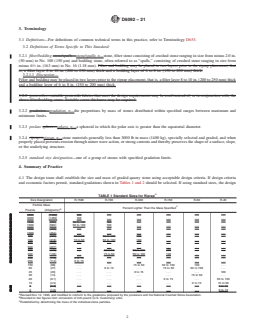
TABLE 2 Standard Sizes for Spalls and Filter/Bedding Stone
3.2.5 standard size designation—one of a group of stones
with specified gradation limits. FS-3 FS-2 FS-1
Size Designation
Spalls Bedding Bedding
4. Summary of Practice Sieve Sizes
Percent Finer by Mass
A A
Alternative Standard
4.1 The design team shall establish the size and mass of
6 ⁄2 in. 163 mm 100 . . . . . .
graded quarry stone using acceptable design criteria. If design
4 ⁄2 in. 113 mm 85 to 100 . . . . . .
criteria and economic factors permit, standard gradations 1
2 ⁄2in. 63mm 15to50 . .
2 in. 50 mm . . . 100 . . .
shown in Tables 1 and 2 should be selected. If using standard
⁄4 in. 19.5 mm . . . 85 to 100 . . .
sizes, the design team shall select the appropriate gradation;
⁄8in. 9.5mm . . 100
this might require selecting the next larger size, thereby
No. 4 4.75 mm . . . 15 to 50 85 to 100
No. 16 1.18 mm 0 to 15 . . . . . .
creating an over-designed structure, but one which is economi-
No. 30 600 µm . . . . . . 15 to 50
cally a cheaper structure. Added cost may result due to the
No. 100 150 µm . . . . . . 0 to 15
increased volume of stone required, and in transporting and
A
Sieve sizes in this table are designated by Specification E11 up to the 2 ⁄2 in. (63
placing the additional stone at the project site. The cost 1 1
mm) size. Specification E11 addresses neither the 4 ⁄2 in. (113 mm) nor the 6 ⁄2 in.
effectiveness of using “standard grading” versus “non-standard (163 mm) sizes; however, consistent nomenclature is used for those sizes.
grading” always should be evaluated, and standard gradings
used whenever possible. Standard gradings typically vary
betweenstates,provinces,andwithinothergeographicdistricts
based on influence of a local department of transportation or
bridges and stream channel banks, gabions, and slope protec-
other dominant entity, which is historically the primary pur-
tion for earth embankment and rock-fill dams.
chaser or specifier of erosion control stone products.
5.3 The design selection of stone sizes, durability,
5. Significance and Use placement, filter/bedding materials, or geotextiles, steepness of
slopes for placement, and layer thickness are beyond the scope
5.1 The standard size designations listed in this practice are
of this guide.
provided so that the design team, consumer, and the producer
have a common reference in sizing stone materials used in
6. Manufacturing
erosion control. The design team should assign a materials
survey, and rock quality testing series to determine which 6.1 The standard size designations of quarried stone for
quarry sources may have suitable blasting and processing erosion control in this guide may be produced by any suitable
procedures to produce the required gradations. The design commercial quarrying method, and by the use of any type of
team should recognize the fact that not all sources are capable sizing device, shape or size of
...
This document is not an ASTM standard and is intended only to provide the user of an ASTM standard an indication of what changes have been made to the previous version. Because
it may not be technically possible to adequately depict all changes accurately, ASTM recommends that users consult prior editions as appropriate. In all cases only the current version
of the standard as published by ASTM is to be considered the official document.
´1
Designation: D6092 − 14 D6092 − 21
Standard Practice for
Specifying Standard Sizes of Stone for Erosion Control
This standard is issued under the fixed designation D6092; the number immediately following the designation indicates the year of
original adoption or, in the case of revision, the year of last revision. A number in parentheses indicates the year of last reapproval. A
superscript epsilon (´) indicates an editorial change since the last revision or reapproval.
ε NOTE—Figure 4 was editorially corrected in June 2018.
1. Scope*Scope
1.1 This practice covers size designations and maximum ranges in mass or gradation for standard sizes for riprap, spalls, or
bedding, or both, used for slope protection of dam embankments, streambank erosion control, bridge piers and abutments. Sizes
used for outer harbor structures such as breakwalls, revetments, confined diked disposal structures (heretofore described as armor
stone, cover stone, or dimension stone) for which stone sizes range between 5 and 25 tons, or that require cut dimensions for
layed-up structures are beyond the scope of this practice.
1.2 The values stated in inch-pound units are to be regarded as standard. The values given in parentheses are mathematicalra-
tionalized conversions to SI units that are provided for information only and are not considered standard.
1.3 This standard does not purport to address all of the safety concerns, if any, associated with its use. It is the responsibility
of the user of this standard to establish appropriate safety, health, and environmental practices and determine the applicability of
regulatory limitations prior to use.
1.4 This practice offers an organized collection of information or a series of options and does not recommend a specific course
of action. This document cannot replace education or experience and should be used in conjunction with professional judgment.
Not all aspects of this practice may be applicable in all circumstances. This ASTM standard is not intended to represent or replace
the standard of care by which the adequacy of a given professional service must be judged, nor should this document be applied
without consideration of a project’s many unique aspects. The word “Standard” in the title of this document means only that the
document has been approved through the ASTM consensus process.
1.5 This international standard was developed in accordance with internationally recognized principles on standardization
established in the Decision on Principles for the Development of International Standards, Guides and Recommendations issued
by the World Trade Organization Technical Barriers to Trade (TBT) Committee.
2. Referenced Documents
2.1 ASTM Standards:
D653 Terminology Relating to Soil, Rock, and Contained Fluids
D4992 Practice for Evaluation of Rock to be Used for Erosion Control
D5519 Test Methods for Particle Size Analysis of Natural and Man-Made Riprap Materials
E11 Specification for Woven Wire Test Sieve Cloth and Test Sieves
This practice is under the jurisdiction of ASTM Committee D18 on Soil and Rock and is the direct responsibility of Subcommittee D18.17 on Rock for Erosion Control.
Current edition approved Feb. 1, 2014Nov. 1, 2021. Published March 2014November 2021. Originally approved in 1997. Last previous edition approved in 20082014 as
ɛ1
D6092 – 97 (2008).D6092 – 14 . DOI: 10.1520/D6092-14E01.10.1520/D6092-21.
For referenced ASTM standards, visit the ASTM website, www.astm.org, or contact ASTM Customer Service at service@astm.org. For Annual Book of ASTM Standards
volume information, refer to the standard’s Document Summary page on the ASTM website.
*A Summary of Changes section appears at the end of this standard
Copyright © ASTM International, 100 Barr Harbor Drive, PO Box C700, West Conshohocken, PA 19428-2959. United States
D6092 − 21
3. Terminology
3.1 Definitions—For definitions of common technical terms in this practice, refer to Terminology D653.
3.2 Definitions of Terms Specific to This Standard:
3.2.1 filter/bedding stone/spalls—stone/spalls, n—stone, filter stone consisting of crushed stone ranging in size from minus 2.0 in.
(50 mm) to No. 100 (150 μm) and bedding stone, often referred to as “spalls,” consisting of crushed stone ranging in size from
minus 6 ⁄2 in. (163 mm) to No. 16 (1.18 mm). Filter and bedding may be placed in two layers prior to the riprap placement, that
is, a filter layer 8 to 10 in. (200 to 250 mm) thick and a bedding layer of 6 to 8 in. (150 to 200 mm) thick.
3.2.1.1 Discussion—
Filter and bedding may be placed in two layers prior to the riprap placement, that is, a filter layer 8 to 10 in. (200 to 250 mm) thick
and a bedding layer of 6 to 8 in. (150 to 200 mm) thick.
3.2.2 geotextiles—suitable geotextile fabrics that meet the design requirements may be used instead of, or in conjunction with, the
above filter/bedding stone. Suitable cover thickness may be required.
3.2.2 gradation—gradation, n—the proportions by mass of stones distributed within specified ranges between maximum and
minimum limits.
3.2.3 prolate sphere—sphere, n—a spheroid in which the polar axis is greater than the equatorial diameter.
3.2.4 riprap—riprap, n—stone materials generally less than 3000 lb in mass (1400 kg), specially selected and graded, and when
properly placed prevents erosion through minor wave action, or strong currents and thereby preserves the shape of a surface, slope,
or the underlying structure.
3.2.5 standard size designation—one of a group of stones with specified gradation limits.
4. Summary of Practice
4.1 The design team shall establish the size and mass of graded quarry stone using acceptable design criteria. If design criteria
and economic factors permit, standard gradations shown in Tables 1 and 2 should be selected. If using standard sizes, the design
A
TABLE 1 Standard Sizes for Riprap
Size Designation R-1500 R-700 R-300 R-150 R-60 R-20
Particle Mass
C
Percent Lighter Than the Mass Specified
B
Pounds (Kilograms)
3000 (1400) 100 . . . . . . . . . . . . . . .
3000 (1364) 100 . . . . . . . . . . . . . . .
1500 (680) 50 to 100 100 . . . . . . . . . . . .
1500 (682) 50 to 100 100 . . . . . . . . . . . .
1000 (450) . . . . . . . . . . . . . . . . . .
1000 (454) . . . . . . . . . . . . . . . . . .
700 (320) 15 to 50 50 to 100 100 . . . . . . . . .
700 (318) 15 to 50 50 to 100 100 . . . . . . . . .
500 (230) . . . . . . . . . . . . . . . . . .
500 (227) . . . . . . . . . . . . . . . . . .
300 (140) . . . 15 to 50 50 to 100 100 . . . . . .
300 (136) . . . 15 to 50 50 to 100 100 . . . . . .
250 (110) 0 to 15 . . . . . . . . . . . . . . .
250 (114) 0 to 15 . . . . . . . . . . . . . . .
150 (68) . . . . . . 15 to 50 50 to 100 100 . . .
60 (27) . . . 0 to 15 . . . 15 to 50 50 to 100 . . .
45 (20) . . . . . . 0 to 15 . . . . . . 100
30 (14) . . . . . . . . . . . . 15 to 50 . . .
20 (9.1) . . . . . . . . . 0 to 15 . . . 50 to 100
10 (4.5) . . . . . . . . . . . . 0 to 15 15 to 50
2 (0.9) . . . . . . . . . . . . . . . 0 to 15
2 (1.0) . . . . . . . . . . . . . . . 0 to 15
A
Revised Nov 14, 1995, and modified to conform to the gradations proposed by the producers and the National Crushed Stone Association.
B
Rounded to two figures from conversion of inch-pound (U.S. Customary) units.
C
Established by determining the mass of the individual stone particles.
D6092 − 21
TABLE 2 Standard Sizes for Spalls and Filter/Bedding Stone
FS-3 FS-2 FS-1
Size Designation
Spalls Bedding Bedding
Sieve Sizes
Percent Finer by WeightMass
A A
Alternative Standard
6 ⁄2 in. 163 mm 100 . . . . . .
4 ⁄2 in. 113 mm 85 to 100 . . . . . .
2 ⁄2 in. 63 mm 15 to 50 . . . . . .
2 in. 50 mm . . . 100 . . .
⁄4 in. 19.5 mm . . . 85 to 100 . . .
⁄8 in. 9.5 mm . . . . . . 100
No. 4 4.75 mm . . . 15 to 50 85 to 100
No. 16 1.18 mm 0 to 15 . . . . . .
No. 30 600 μm . . . . . . 15 to 50
No. 100 150 μm . . . . . . 0 to 15
A
Sieve sizes in this table are designated by Specification E11 up to the 2 ⁄2 in. (63
1 1
mm) size. Specification E11 addresses neither the 4 ⁄2 in. (113 mm) nor the 6 ⁄2 in.
(163 mm) sizes; however, consistent nomenclature is used for those sizes.
team shall select the appropriate gradation; this might require selecting the next larger size, thereby creating an over-designed
structure, but one which is economically a cheaper structure. Added cost may result due to the increased volume of stone required,
and in transporting and placing the additional stone at the project site. The cost effectiveness of using “standard grading” versus
“non-standard grading” always should be evaluated, and standard gradings used whenever possible. Standard gradings typically
vary between states, provinces, and within other geographic districts based on influence of a local department of transportation or
other dominant entity, which is historically the primary purchaser or specifier of erosion control stone products.
5. Significance and Use
5.1 The standard size designations listed in this practice are provided so that the design team, consumer, and the producer have
a common reference in sizing stone materia
...