

ASTM A992/A992M-22
(Specification)Standard Specification for Structural Steel Shapes
General Information
- Abstract
ABSTRACT
This specification covers rolled steel structural shapes for use in building framing or bridges, or for general structural purposes. Heat analysis shall be used to determine the percentage of carbon, manganese, phosphorus, sulfur, vanadium, titanium, nickel, chromium, molybdenum, columbium, and copper for the required chemical composition. Tension test shall be used to evaluate the required tensile properties such as tensile strength, yield strength and elongation.
SCOPE
1.1 This specification covers rolled steel structural shapes for use in building framing or bridges, or for general structural purposes.
1.2 Supplementary requirements are provided for use where additional testing or additional restrictions are required by the purchaser. Such requirements apply only when specified in the purchase order.
1.3 When the steel is to be welded, a welding procedure suitable for the grade of steel and intended use or service is to be utilized. See Appendix X3 of Specification A6/A6M for information on weldability.
1.4 The values stated in either inch-pound units or SI units are to be regarded separately as standard. Within the text, the SI units are shown in brackets. The values stated in each system are not necessarily exact equivalents; therefore, to ensure conformance with the standard, each system shall be used independently of the other, and values from the two systems shall not be combined.
1.5 The text of this specification contains notes or footnotes, or both, that provide explanatory material; such notes and footnotes, excluding those in tables and figures, do not contain any mandatory requirements.
1.6 This international standard was developed in accordance with internationally recognized principles on standardization established in the Decision on Principles for the Development of International Standards, Guides and Recommendations issued by the World Trade Organization Technical Barriers to Trade (TBT) Committee.
- Status
- Published
- Publication Date
- 31-Aug-2022
- Technical Committee
- A01 - Steel, Stainless Steel and Related Alloys



Overview
ASTM A992/A992M-22: Standard Specification for Structural Steel Shapes is a globally recognized standard published by ASTM International. This specification defines the requirements for rolled steel structural shapes, widely used in building framing, bridges, and a variety of general structural applications. ASTM A992 structural steel is known for its high strength, excellent weldability, and reliable performance in diverse construction projects. This standard ensures uniformity in quality and performance characteristics, helping engineers and fabricators meet safety and design expectations in structural steelwork.
Key Topics
- Material Requirements: ASTM A992/A992M-22 specifies the use of killed steel, controlling composition with nitrogen-binding elements or specific nitrogen content.
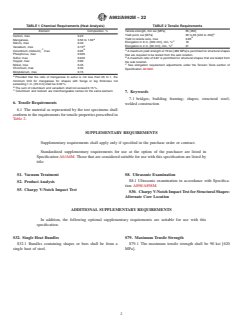
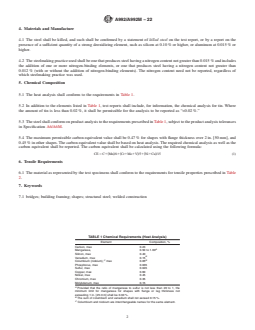
- Chemical Composition: The standard provides strict limits on elements such as carbon, manganese, vanadium, columbium (niobium), phosphorus, sulfur, copper, nickel, chromium, and molybdenum, enhancing weldability and toughness.
- Mechanical Properties:
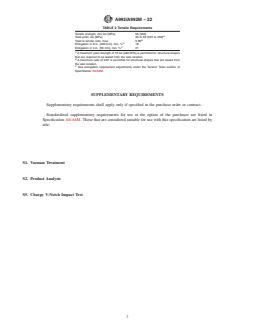
- Minimum tensile strength: 65 ksi [450 MPa]
- Yield point: 50 to 65 ksi [345 to 450 MPa]
- Maximum yield-to-tensile ratio: 0.85
- Minimum elongation: 18% in 8 in. [200 mm], 21% in 2 in. [50 mm]
- Supplementary Requirements: Optional testing methods, such as ultrasonic examination, Charpy V-Notch impact testing, and maximum tensile strength limits, may be specified by buyers for additional assurance.
- Unit Consistency: Both inch-pound and SI units are standard, but values from each system must be applied independently per the specification.
- Weldability: The standard requires the use of welding procedures appropriate to A992 steel and provides references for additional information on weldability.
Applications
ASTM A992/A992M-22 is essential for:
- Building Framing: Utilized extensively in wide-flange beams, columns, and other load-bearing steel members due to predictable mechanical properties and superior weldability.
- Bridge Construction: Facilitates robust, durable structural shapes suitable for the demanding loads and environmental factors typical in bridge projects.
- General Structural Uses: Ideal for industrial frames, commercial buildings, and infrastructure due to its consistent quality, making it easier for fabricators and constructors to design safe and efficient structures.
- Welded Construction: ASTM A992 is optimized for jobs requiring reliable welded connections, simplifying the fabrication process and reducing onsite complications.
Related Standards
The ASTM A992/A992M-22 specification references and is commonly used in conjunction with several other structural steel standards:
- ASTM A6/A6M: General requirements for rolled structural steel bars, plates, shapes, and sheet piling.
- ASTM A898/A898M: Specification for straight beam ultrasonic examination of rolled steel shapes, providing nondestructive testing methods for quality control.
- Other Relevant Steel Standards: ASTM A36, ASTM A572, and ASTM A913, which specify different grades and requirements for structural steel, may be selected depending on specific project criteria.
Practical Value
Compliance with ASTM A992/A992M-22 assures that project stakeholders are using high-quality structural steel shapes that meet stringent mechanical and chemical requirements. This helps:
- Optimize structural performance
- Reduce fabrication and construction risks
- Ensure compatibility with modern building codes
- Support sustainability and material efficiency in steel construction
By adhering to this widely adopted standard, engineers, designers, steel manufacturers, and contractors can consistently achieve durable, safe, and cost-effective steel structures in a wide array of construction and civil engineering applications.
Relations
- Effective Date
- 01-Mar-2024
- Effective Date
- 01-Nov-2023
- Effective Date
- 01-Nov-2017
- Effective Date
- 15-Nov-2016
- Effective Date
- 01-May-2016
- Effective Date
- 01-May-2014
- Effective Date
- 01-Oct-2013
- Effective Date
- 01-May-2013
- Effective Date
- 01-Nov-2012
- Effective Date
- 01-Mar-2012
- Effective Date
- 01-Mar-2012
- Effective Date
- 01-Apr-2011
- Effective Date
- 01-Oct-2010
- Effective Date
- 01-Apr-2010
- Effective Date
- 01-Apr-2009
Get Certified
Connect with accredited certification bodies for this standard

DIBt (Deutsches Institut für Bautechnik)
German Institute for Building Technology.
DIN CERTCO
DIN Group product certification.

Aboma Certification B.V.
Specialized in construction, metal, and transport sectors.
Sponsored listings
Frequently Asked Questions
ASTM A992/A992M-22 is a technical specification published by ASTM International. Its full title is "Standard Specification for Structural Steel Shapes". This standard covers: ABSTRACT This specification covers rolled steel structural shapes for use in building framing or bridges, or for general structural purposes. Heat analysis shall be used to determine the percentage of carbon, manganese, phosphorus, sulfur, vanadium, titanium, nickel, chromium, molybdenum, columbium, and copper for the required chemical composition. Tension test shall be used to evaluate the required tensile properties such as tensile strength, yield strength and elongation. SCOPE 1.1 This specification covers rolled steel structural shapes for use in building framing or bridges, or for general structural purposes. 1.2 Supplementary requirements are provided for use where additional testing or additional restrictions are required by the purchaser. Such requirements apply only when specified in the purchase order. 1.3 When the steel is to be welded, a welding procedure suitable for the grade of steel and intended use or service is to be utilized. See Appendix X3 of Specification A6/A6M for information on weldability. 1.4 The values stated in either inch-pound units or SI units are to be regarded separately as standard. Within the text, the SI units are shown in brackets. The values stated in each system are not necessarily exact equivalents; therefore, to ensure conformance with the standard, each system shall be used independently of the other, and values from the two systems shall not be combined. 1.5 The text of this specification contains notes or footnotes, or both, that provide explanatory material; such notes and footnotes, excluding those in tables and figures, do not contain any mandatory requirements. 1.6 This international standard was developed in accordance with internationally recognized principles on standardization established in the Decision on Principles for the Development of International Standards, Guides and Recommendations issued by the World Trade Organization Technical Barriers to Trade (TBT) Committee.
ABSTRACT This specification covers rolled steel structural shapes for use in building framing or bridges, or for general structural purposes. Heat analysis shall be used to determine the percentage of carbon, manganese, phosphorus, sulfur, vanadium, titanium, nickel, chromium, molybdenum, columbium, and copper for the required chemical composition. Tension test shall be used to evaluate the required tensile properties such as tensile strength, yield strength and elongation. SCOPE 1.1 This specification covers rolled steel structural shapes for use in building framing or bridges, or for general structural purposes. 1.2 Supplementary requirements are provided for use where additional testing or additional restrictions are required by the purchaser. Such requirements apply only when specified in the purchase order. 1.3 When the steel is to be welded, a welding procedure suitable for the grade of steel and intended use or service is to be utilized. See Appendix X3 of Specification A6/A6M for information on weldability. 1.4 The values stated in either inch-pound units or SI units are to be regarded separately as standard. Within the text, the SI units are shown in brackets. The values stated in each system are not necessarily exact equivalents; therefore, to ensure conformance with the standard, each system shall be used independently of the other, and values from the two systems shall not be combined. 1.5 The text of this specification contains notes or footnotes, or both, that provide explanatory material; such notes and footnotes, excluding those in tables and figures, do not contain any mandatory requirements. 1.6 This international standard was developed in accordance with internationally recognized principles on standardization established in the Decision on Principles for the Development of International Standards, Guides and Recommendations issued by the World Trade Organization Technical Barriers to Trade (TBT) Committee.
ASTM A992/A992M-22 is classified under the following ICS (International Classification for Standards) categories: 91.080.10 - Metal structures. The ICS classification helps identify the subject area and facilitates finding related standards.
ASTM A992/A992M-22 has the following relationships with other standards: It is inter standard links to ASTM A6/A6M-24, ASTM A6/A6M-23, ASTM A6/A6M-17a, ASTM A6/A6M-16a, ASTM A6/A6M-16, ASTM A6/A6M-14, ASTM A6/A6M-13a, ASTM A6/A6M-13, ASTM A6/A6M-12a, ASTM A898/A898M-07(2012), ASTM A6/A6M-12, ASTM A6/A6M-11, ASTM A6/A6M-10a, ASTM A6/A6M-10, ASTM A6/A6M-09. Understanding these relationships helps ensure you are using the most current and applicable version of the standard.
ASTM A992/A992M-22 is available in PDF format for immediate download after purchase. The document can be added to your cart and obtained through the secure checkout process. Digital delivery ensures instant access to the complete standard document.
Standards Content (Sample)
This international standard was developed in accordance with internationally recognized principles on standardization established in the Decision on Principles for the
Development of International Standards, Guides and Recommendations issued by the World Trade Organization Technical Barriers to Trade (TBT) Committee.
Designation:A992/A992M −22
Standard Specification for
Structural Steel Shapes
This standard is issued under the fixed designationA992/A992M; the number immediately following the designation indicates the year
of original adoption or, in the case of revision, the year of last revision. A number in parentheses indicates the year of last reapproval.
A superscript epsilon (´) indicates an editorial change since the last revision or reapproval.
1. Scope* A6/A6M Specification for General Requirements for Rolled
Structural Steel Bars, Plates, Shapes, and Sheet Piling
1.1 This specification covers rolled steel structural shapes
A898/A898M Specification for Straight Beam Ultrasonic
for use in building framing or bridges, or for general structural
Examination of Rolled Steel Structural Shapes
purposes.
1.2 Supplementary requirements are provided for use where
3. General Requirements For Delivery
additional testing or additional restrictions are required by the
3.1 Material furnished under this specification shall con-
purchaser. Such requirements apply only when specified in the
form to the requirements of the current edition of Specification
purchase order.
A6/A6M for the ordered material, unless a conflict exists, in
1.3 When the steel is to be welded, a welding procedure
which case this specification shall prevail.
suitable for the grade of steel and intended use or service is to
be utilized. See Appendix X3 of Specification A6/A6M for 4. Materials and Manufacture
information on weldability.
4.1 The steel shall be killed, and such shall be confirmed by
1.4 The values stated in either inch-pound units or SI units a statement of killed steel on the test report, or by a report on
are to be regarded separately as standard. Within the text, the the presence of a sufficient quantity of a strong deoxidizing
SI units are shown in brackets. The values stated in each element, such as silicon at 0.10 % or higher, or aluminum at
system are not necessarily exact equivalents; therefore, to 0.015 % or higher.
ensure conformance with the standard, each system shall be
4.2 The steelmaking practice used shall be one that pro-
used independently of the other, and values from the two
duces steel having a nitrogen content not greater than 0.015 %
systems shall not be combined.
and includes the addition of one or more nitrogen-binding
1.5 Thetextofthisspecificationcontainsnotesorfootnotes, elements, or one that produces steel having a nitrogen content
or both, that provide explanatory material; such notes and
not greater than 0.012 % (with or without the addition of
footnotes, excluding those in tables and figures, do not contain nitrogen-binding elements). The nitrogen content need not be
any mandatory requirements.
reported, regardless of which steelmaking practice was used.
1.6 This international standard was developed in accor-
5. Chemical Composition
dance with internationally recognized principles on standard-
5.1 The heat analysis shall conform to the requirements in
ization established in the Decision on Principles for the
Development of International Standards, Guides and Recom- Table 1.
mendations issued by the World Trade Organization Technical
5.2 In addition to the elements listed in Table 1, test reports
Barriers to Trade (TBT) Committee.
shall include, for information, the chemical analysis for tin.
Where the amount of tin is less than 0.02 %, it shall be
2. Referenced Documents
permissible for the analysis to be reported as “<0.02 %.”
2.1 ASTM Standards:
5.3 The steel shall conform on product analysis to the
requirements prescribed in Table 1, subject to the product
analysis tolerances in Specification A6/A6M.
This specification is under the jurisdiction of ASTM Committee A01 on Steel,
Stainless Steel and Related Alloys and is the direct responsibility of Subcommittee 5.4 Themaximumpermissiblecarbonequivalentvalueshall
A01.02 on Structural Steel for Bridges, Buildings, Rolling Stock and Ships.
be 0.47 % for shapes with flange thickness over 2 in. [50 mm],
Current edition approved Sept. 1, 2022. Published September 2022. Originally
and 0.45 % in other shapes. The carbon equivalent value shall
approved in 1998. Last previous edition approved in 2020 as A992/A992M – 20.
be based on heat analysis. The required chemical analysis as
DOI: 10.1520/A0992_A0992M-22.
For referenced ASTM standards, visit the ASTM website, www.astm.org, or well as the carbon equivalent shall be reported. The carbon
contact ASTM Customer Ser
...
This document is not an ASTM standard and is intended only to provide the user of an ASTM standard an indication of what changes have been made to the previous version. Because
it may not be technically possible to adequately depict all changes accurately, ASTM recommends that users consult prior editions as appropriate. In all cases only the current version
of the standard as published by ASTM is to be considered the official document.
Designation: A992/A992M − 20 A992/A992M − 22
Standard Specification for
Structural Steel Shapes
This standard is issued under the fixed designation A992/A992M; the number immediately following the designation indicates the year
of original adoption or, in the case of revision, the year of last revision. A number in parentheses indicates the year of last reapproval.
A superscript epsilon (´) indicates an editorial change since the last revision or reapproval.
1. Scope*
1.1 This specification covers rolled steel structural shapes for use in building framing or bridges, or for general structural purposes.
1.2 Supplementary requirements are provided for use where additional testing or additional restrictions are required by the
purchaser. Such requirements apply only when specified in the purchase order.
1.3 When the steel is to be welded, a welding procedure suitable for the grade of steel and intended use or service is to be utilized.
See Appendix X3 of Specification A6/A6M for information on weldability.
1.4 The values stated in either inch-pound units or SI units are to be regarded separately as standard. Within the text, the SI units
are shown in brackets. The values stated in each system are not necessarily exact equivalents; therefore, to ensure conformance
with the standard, each system shall be used independently of the other, and values from the two systems shall not be combined.
1.5 The text of this specification contains notes or footnotes, or both, that provide explanatory material; such notes and footnotes,
excluding those in tables and figures, do not contain any mandatory requirements.
1.6 This international standard was developed in accordance with internationally recognized principles on standardization
established in the Decision on Principles for the Development of International Standards, Guides and Recommendations issued
by the World Trade Organization Technical Barriers to Trade (TBT) Committee.
2. Referenced Documents
2.1 ASTM Standards:
A6/A6M Specification for General Requirements for Rolled Structural Steel Bars, Plates, Shapes, and Sheet Piling
A898/A898M Specification for Straight Beam Ultrasonic Examination of Rolled Steel Structural Shapes
3. General Requirements For Delivery
3.1 Material furnished under this specification shall conform to the requirements of the current edition of Specification A6/A6M
for the ordered material, unless a conflict exists, in which case this specification shall prevail.
This specification is under the jurisdiction of ASTM Committee A01 on Steel, Stainless Steel and Related Alloys and is the direct responsibility of Subcommittee A01.02
on Structural Steel for Bridges, Buildings, Rolling Stock and Ships.
Current edition approved July 1, 2020Sept. 1, 2022. Published July 2020September 2022. Originally approved in 1998. Last previous edition approved in 20152020 as
A992/A992M – 11 (2015).A992/A992M – 20. DOI: 10.1520/A0992_A0992M-20.10.1520/A0992_A0992M-22.
For referenced ASTM standards, visit the ASTM website, www.astm.org, or contact ASTM Customer Service at service@astm.org. For Annual Book of ASTM Standards
volume information, refer to the standard’s Document Summary page on the ASTM website.
*A Summary of Changes section appears at the end of this standard
Copyright © ASTM International, 100 Barr Harbor Drive, PO Box C700, West Conshohocken, PA 19428-2959. United States
A992/A992M − 22
4. Materials and Manufacture
4.1 The steel shall be killed, and such shall be confirmed by a statement of killed steel on the test report, or by a report on the
presence of a sufficient quantity of a strong deoxidizing element, such as silicon at 0.10 % or higher, or aluminum at 0.015 % or
higher.
4.2 The steelmaking practice used shall be one that produces steel having a nitrogen content not greater than 0.015 % and includes
the addition of one or more nitrogen-binding elements, or one that produces steel having a nitrogen content not greater than
0.012 % (with or without the addition of nitrogen-binding elements). The nitrogen content need not be reported, regardless of
which steelmaking practice was used.
5. Chemical Composition
5.1 The heat analysis shall conform to the requirements in Table 1.
5.2 In addition to the elements listed in Table 1, test reports shall include, for information, the chemical analysis for tin. Where
the amount of tin is less than 0.02 %, it shall be permissible for the analysis to be reported as “<0.02 %.”
5.3 The steel shall conform on product analysis to the requirements pres
...