

ASTM A494/A494M-22
(Specification)Standard Specification for Castings, Nickel and Nickel Alloy
General Information
- Abstract
ABSTRACT
This specification covers nickel, nickel-copper, nickel-copper-silicon, nickel-molybdenum, nickel-chromium, and nickel-molybdenum-chromium alloy castings for corrosion resistant service. The castings shall be heat treated. When Class 1 is specified, grades CY40 and M25S shall be supplied in the as-cast condition. When Class 2 is specified, grades CY40 and M25S shall be supplied in the solution treated condition. When Class 3 is specified, grade M25S shall be supplied in the age-hardened condition. The chemical composition requirements of the alloys are presented. The tensile property requirements including the heat treatment procedure for the castings are presented in detail. It is required that one tension test shall be made from each master heat except for grades M25S and CY5SnBiM when the master heat is used to pour the castings. One tension test shall be made from each melt except for grades M25S and CY5SnBiM. Test results shall conform to the specified tensile requirements.
SCOPE
1.1 This specification covers nickel, nickel-copper, nickel-copper-silicon, nickel-molybdenum, nickel-chromium, and nickel-molybdenum-chromium alloy castings for corrosion-resistant service.
1.2 The values stated in either SI units or inch-pound units are to be regarded separately as standard. The values stated in each system may not be exact equivalents; therefore, each system shall be used independently of the other. Combining values from the two systems may result in nonconformance with the standard.
1.3 This international standard was developed in accordance with internationally recognized principles on standardization established in the Decision on Principles for the Development of International Standards, Guides and Recommendations issued by the World Trade Organization Technical Barriers to Trade (TBT) Committee.
- Status
- Published
- Publication Date
- 28-Feb-2022
- Technical Committee
- A01 - Steel, Stainless Steel and Related Alloys
- Drafting Committee
- A01.18 - Castings
Buy Documents
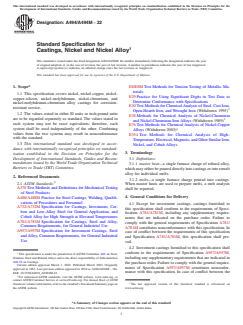
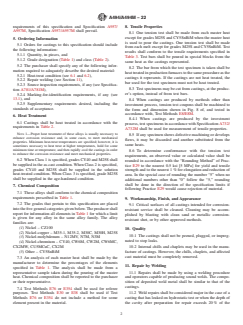
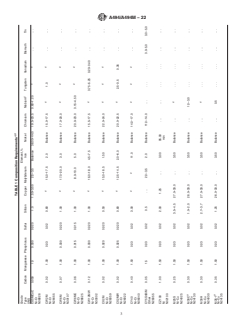
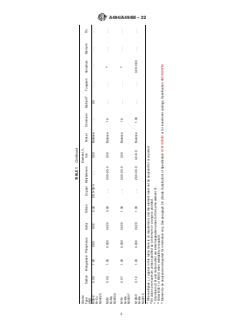
ASTM A494/A494M-22 - Standard Specification for Castings, Nickel and Nickel Alloy
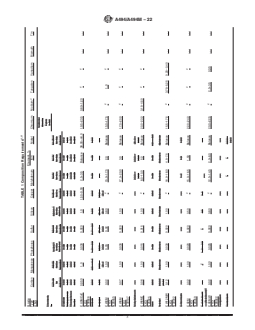
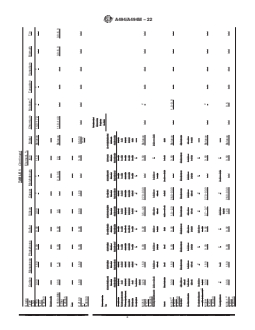
REDLINE ASTM A494/A494M-22 - Standard Specification for Castings, Nickel and Nickel Alloy
Overview
ASTM A494/A494M-22 standard specifies the requirements for nickel, nickel-copper, nickel-copper-silicon, nickel-molybdenum, nickel-chromium, and nickel-molybdenum-chromium alloy castings intended for corrosion-resistant service. Developed by ASTM International, this specification ensures castings exhibit the necessary chemical composition, mechanical properties, and heat treatment for use in severe environments where corrosion resistance is essential. This standard is widely referenced across industries such as chemical processing, marine, oil and gas, and power generation.
Key Topics
- Material Coverage: Nickel and various nickel alloy castings with enhanced corrosion resistance, including nickel-copper, nickel-molybdenum, and nickel-chromium combinations.
- Heat Treatment Classes: Defines as-cast, solution treated, and age-hardened conditions for specific grades (e.g., CY40 and M25S), supporting various application requirements.
- Chemical Composition: Prescribes detailed limits for elements such as carbon, manganese, silicon, copper, molybdenum, iron, nickel, chromium, and others, ensuring consistent alloy performance.
- Mechanical Properties: Sets minimum requirements for tensile strength, yield strength, and elongation, supporting the mechanical integrity of cast components.
- Quality Assurance: Specifies tension testing frequency, sample preparation, and test methods aligned with other ASTM standards to demonstrate conformity before acceptance.
- Workmanship and Repair: Outlines surface preparation, weld repair guidelines, and requirements for the removal of defects, ensuring castings are free from peening or plugging used to stop leaks.
- Marking and Traceability: Requires proper identification and marking for material certification and traceability.
Applications
ASTM A494/A494M-22 is critical for sectors where resistance to corrosive media is vital:
- Chemical Processing Plants: Used for valves, pumps, and fittings exposed to aggressive chemicals.
- Oil & Gas Industry: Applied in offshore and onshore equipment subjected to saline or sour environments, such as valves and connectors.
- Marine Engineering: Suitable for components in seawater and brine services, offering exceptional resistance to corrosion.
- Power Generation: Utilized in systems where exposure to corrosive gases or fluids occurs.
- General Industrial Equipment: Ideal for parts and assemblies where long-term durability and resistance to cracking or pitting are required.
Selecting castings compliant with this standard ensures superior performance, safety, and service life in demanding applications.
Related Standards
Several ASTM and international standards are referenced or applicable alongside ASTM A494/A494M-22 to ensure comprehensive control over production and testing:
- ASTM A370: Mechanical testing methods for steel products.
- ASTM A781/A781M: General requirements for steel and alloy castings.
- ASTM A957/A957M: Common requirements for investment castings.
- ASTM A488/A488M: Qualifications for welding castings.
- ASTM E8/E8M: Tension testing of metallic materials.
- ASTM E354: Chemical analysis of high-temperature alloys.
Each referenced document covers procedures and criteria essential for fulfilling the chemical and mechanical property requirements, test controls, and quality assurance of nickel and nickel alloy castings.
Keywords: ASTM A494, nickel alloy castings, corrosion-resistant castings, nickel-copper castings, nickel-molybdenum castings, nickel-chromium castings, mechanical properties, chemical composition, industrial standards.
Relations
- Effective Date
- 01-Mar-2024
- Effective Date
- 01-Mar-2024
- Effective Date
- 01-Jan-2024
- Effective Date
- 01-May-2020
- Effective Date
- 01-Jul-2019
- Effective Date
- 01-Sep-2018
- Effective Date
- 01-Sep-2018
- Effective Date
- 01-Jul-2018
- Effective Date
- 01-Jul-2018
- Effective Date
- 01-Jun-2018
- Effective Date
- 15-May-2018
- Effective Date
- 15-May-2018
- Effective Date
- 01-Jan-2018
- Refers
ASTM A370-17a - Standard Test Methods and Definitions for Mechanical Testing of Steel Products - Effective Date
- 15-Nov-2017
- Effective Date
- 01-May-2017
Buy Documents
ASTM A494/A494M-22 - Standard Specification for Castings, Nickel and Nickel Alloy
REDLINE ASTM A494/A494M-22 - Standard Specification for Castings, Nickel and Nickel Alloy
Get Certified
Connect with accredited certification bodies for this standard

Element Materials Technology
Materials testing and product certification.

Inštitut za kovinske materiale in tehnologije
Institute of Metals and Technology. Materials testing, metallurgical analysis, NDT.
Sponsored listings
Frequently Asked Questions
ASTM A494/A494M-22 is a technical specification published by ASTM International. Its full title is "Standard Specification for Castings, Nickel and Nickel Alloy". This standard covers: ABSTRACT This specification covers nickel, nickel-copper, nickel-copper-silicon, nickel-molybdenum, nickel-chromium, and nickel-molybdenum-chromium alloy castings for corrosion resistant service. The castings shall be heat treated. When Class 1 is specified, grades CY40 and M25S shall be supplied in the as-cast condition. When Class 2 is specified, grades CY40 and M25S shall be supplied in the solution treated condition. When Class 3 is specified, grade M25S shall be supplied in the age-hardened condition. The chemical composition requirements of the alloys are presented. The tensile property requirements including the heat treatment procedure for the castings are presented in detail. It is required that one tension test shall be made from each master heat except for grades M25S and CY5SnBiM when the master heat is used to pour the castings. One tension test shall be made from each melt except for grades M25S and CY5SnBiM. Test results shall conform to the specified tensile requirements. SCOPE 1.1 This specification covers nickel, nickel-copper, nickel-copper-silicon, nickel-molybdenum, nickel-chromium, and nickel-molybdenum-chromium alloy castings for corrosion-resistant service. 1.2 The values stated in either SI units or inch-pound units are to be regarded separately as standard. The values stated in each system may not be exact equivalents; therefore, each system shall be used independently of the other. Combining values from the two systems may result in nonconformance with the standard. 1.3 This international standard was developed in accordance with internationally recognized principles on standardization established in the Decision on Principles for the Development of International Standards, Guides and Recommendations issued by the World Trade Organization Technical Barriers to Trade (TBT) Committee.
ABSTRACT This specification covers nickel, nickel-copper, nickel-copper-silicon, nickel-molybdenum, nickel-chromium, and nickel-molybdenum-chromium alloy castings for corrosion resistant service. The castings shall be heat treated. When Class 1 is specified, grades CY40 and M25S shall be supplied in the as-cast condition. When Class 2 is specified, grades CY40 and M25S shall be supplied in the solution treated condition. When Class 3 is specified, grade M25S shall be supplied in the age-hardened condition. The chemical composition requirements of the alloys are presented. The tensile property requirements including the heat treatment procedure for the castings are presented in detail. It is required that one tension test shall be made from each master heat except for grades M25S and CY5SnBiM when the master heat is used to pour the castings. One tension test shall be made from each melt except for grades M25S and CY5SnBiM. Test results shall conform to the specified tensile requirements. SCOPE 1.1 This specification covers nickel, nickel-copper, nickel-copper-silicon, nickel-molybdenum, nickel-chromium, and nickel-molybdenum-chromium alloy castings for corrosion-resistant service. 1.2 The values stated in either SI units or inch-pound units are to be regarded separately as standard. The values stated in each system may not be exact equivalents; therefore, each system shall be used independently of the other. Combining values from the two systems may result in nonconformance with the standard. 1.3 This international standard was developed in accordance with internationally recognized principles on standardization established in the Decision on Principles for the Development of International Standards, Guides and Recommendations issued by the World Trade Organization Technical Barriers to Trade (TBT) Committee.
ASTM A494/A494M-22 is classified under the following ICS (International Classification for Standards) categories: 77.150.40 - Nickel and chromium products. The ICS classification helps identify the subject area and facilitates finding related standards.
ASTM A494/A494M-22 has the following relationships with other standards: It is inter standard links to ASTM A370-24, ASTM A488/A488M-24, ASTM E8/E8M-24, ASTM A732/A732M-20, ASTM A370-19, ASTM A957/A957M-18a, ASTM A781/A781M-18c, ASTM A488/A488M-18, ASTM A488/A488M-18e1, ASTM A781/A781M-18b, ASTM A781/A781M-18a, ASTM A957/A957M-18, ASTM A781/A781M-18, ASTM A370-17a, ASTM A488/A488M-17. Understanding these relationships helps ensure you are using the most current and applicable version of the standard.
ASTM A494/A494M-22 is available in PDF format for immediate download after purchase. The document can be added to your cart and obtained through the secure checkout process. Digital delivery ensures instant access to the complete standard document.
Standards Content (Sample)
This international standard was developed in accordance with internationally recognized principles on standardization established in the Decision on Principles for the
Development of International Standards, Guides and Recommendations issued by the World Trade Organization Technical Barriers to Trade (TBT) Committee.
Designation:A494/A494M −22
Standard Specification for
Castings, Nickel and Nickel Alloy
This standard is issued under the fixed designationA494/A494M; the number immediately following the designation indicates the year
of original adoption or, in the case of revision, the year of last revision.Anumber in parentheses indicates the year of last reapproval.
A superscript epsilon (´) indicates an editorial change since the last revision or reapproval.
This standard has been approved for use by agencies of the U.S. Department of Defense.
1. Scope* E8/E8MTest Methods for Tension Testing of Metallic Ma-
terials
1.1 This specification covers nickel, nickel-copper, nickel-
E29Practice for Using Significant Digits in Test Data to
copper-silicon, nickel-molybdenum, nickel-chromium, and
Determine Conformance with Specifications
nickel-molybdenum-chromium alloy castings for corrosion-
E30TestMethodsforChemicalAnalysisofSteel,CastIron,
resistant service.
Open-Hearth Iron, and Wrought Iron (Withdrawn 1995)
1.2 The values stated in either SI units or inch-pound units
E38Methods for Chemical Analysis of Nickel-Chromium
are to be regarded separately as standard. The values stated in
and Nickel-Chromium-Iron Alloys (Withdrawn 1989)
each system may not be exact equivalents; therefore, each
E76Test Methods for Chemical Analysis of Nickel-Copper
system shall be used independently of the other. Combining
Alloys (Withdrawn 2003)
values from the two systems may result in nonconformance
E354 Test Methods for Chemical Analysis of High-
with the standard.
Temperature,Electrical,Magnetic,andOtherSimilarIron,
1.3 This international standard was developed in accor-
Nickel, and Cobalt Alloys
dance with internationally recognized principles on standard-
3. Terminology
ization established in the Decision on Principles for the
Development of International Standards, Guides and Recom-
3.1 Definitions:
mendations issued by the World Trade Organization Technical
3.1.1 master heat—a single furnace charge of refined alloy,
Barriers to Trade (TBT) Committee.
whichmayeitherbepoureddirectlyintocastingsorintoremelt
alloy for individual melts.
2. Referenced Documents
3.1.2 melts—a single furnace charge poured into castings.
2.1 ASTM Standards:
When master heats are used to prepare melts, a melt analysis
A370Test Methods and Definitions for Mechanical Testing
shall be reported.
of Steel Products
4. General Conditions for Delivery
A488/A488MPractice for Steel Castings, Welding, Qualifi-
cations of Procedures and Personnel
4.1 Except for investment castings, castings furnished to
A732/A732MSpecification for Castings, Investment, Car-
this specification shall conform to the requirements of Speci-
bon and Low-Alloy Steel for General Application, and
fication A781/A781M, including any supplementary require-
Cobalt Alloy for High Strength at Elevated Temperatures
ments that are indicated on the purchase order. Failure to
A781/A781MSpecification for Castings, Steel and Alloy,
comply with the general requirements of Specification A781/
Common Requirements, for General Industrial Use
A781M constitutes nonconformance with this specification. In
A957/A957MSpecification for Investment Castings, Steel
case of conflict between the requirements of this specification
andAlloy, Common Requirements, for General Industrial
and Specification A781/A781M, this specification shall pre-
Use
vail.
4.2 Investment castings furnished to this specification shall
1 conform to the requirements of Specification A957/A957M,
This specification is under the jurisdiction ofASTM Committee A01 on Steel,
Stainless Steel and RelatedAlloys and is the direct responsibility of Subcommittee includinganysupplementaryrequirementsthatareindicatedin
A01.18 on Castings.
the purchase order. Failure to comply with the general require-
Current edition approved March 1, 2022. Published March 2022. Originally
ments of Specification A957/A957M constitutes nonconfor-
approved in 1963. Last previous edition approved in 2018 as A494/A494M–18a.
mance with this specification. In case of conflict between the
DOI: 10.1520/A0494_A0494M-22.
For referenced ASTM standards, visit the ASTM website, www.astm.org, or
contact ASTM Customer Service at service@astm.org. For Annual Book of ASTM
Standards volume information, refer to the standard’s Document Summary page on The last approved version of this historical standard is referenced on
the ASTM website. www.astm.org.
*A Summary of Changes section appears at the end of this standard
Copyright © ASTM International, 100 Barr Harbor Drive, PO Box C700, West Conshohocken, PA 19428-2959. United States
A494/A494M−22
requirements of this specification and Specification A957/ 8. Tensile Properties
A957M, Specification A957/A957M shall prevail.
8.1 One tension test shall be made from each master heat
except for grades M25S and CY5SnBiM when the master heat
5. Ordering Information
is used to pour the castings. One tension test shall be made
5.1 Orders for castings to this specification should include
from each melt except for grades M25S and CY5SnBiM. Test
the following information:
results shall conform to the tensile requirements specified in
5.1.1 Quantity, in pieces, and
Table 3. Test bars shall be poured in special blocks from the
5.1.2 Grade designation (Table 1) and class (Table 2).
same heat as the castings represented.
5.2 The purchaser shall specify any of the following infor-
8.2 The bar from which the test specimen is taken shall be
mation required to adequately describe the desired material:
heattreatedinproductionfurnacestothesameprocedureasthe
5.2.1 Heat-treat condition (see 6.1 and 6.2),
castings it represents. If the castings are not heat treated, the
5.2.2 Repair welding (see Section 11),
bar used for the test specimen must not be heat treated.
5.2.3 Source inspection requirements, if any (see Specifica-
8.3 Testspecimensmaybecutfromcastings,attheproduc-
tion A781/A781M),
er’s option, instead of from test bars.
5.2.4 Marking-for-identification requirements, if any (see
13.1), and
8.4 When castings are produced by methods other than
5.2.5 Supplementary requirements desired, including the
investment process, tension test coupons shall be machined to
standards of acceptance.
the form and dimension shown in Fig. 8 of, and tested in
accordance with, Test Methods E8/E8M.
6. Heat Treatment
8.4.1 When castings are produced by the investment
6.1 Castings shall be heat treated in accordance with the
process,testspecimensinaccordancewithSpecificationA732/
requirements in Table 2.
A732M shall be used for measurement of tensile properties.
NOTE 1—Proper heat treatment of these alloys is usually necessary to
8.5 If any specimen shows defective machining or develops
enhance corrosion resistance and, in some cases, to meet mechanical
flaws, it may be discarded and another substituted from the
properties. Minimum heat-treat temperatures are specified; however, it is
same heats.
sometimes necessary to heat treat at higher temperatures, hold for some
minimum time at temperature, and then rapidly cool the castings in order
8.6 To determine conformance with the tension test
to enhance the corrosion resistance and meet mechanical properties.
requirements, an observed value or calculated value shall be
6.2 WhenClass1isspecified,gradesCY40andM25Sshall
rounded in accordance with the “Rounding Method” of Prac-
be supplied in the as-cast condition.When Class 2 is specified,
tice E29 to the nearest 0.5 ksi [5 MPa] for yield and tensile
grades CY40 and M25S shall be supplied in the solution
strength and to the nearest 1% for elongation and reduction of
heat-treated condition. When Class 3 is specified, grade M25S
area. In the special case of rounding the number “5” when no
shall be supplied in the age-hardened condition.
additional numbers other than “0” follow the “5,” rounding
shall be done in the direction of the specification limits if
7. Chemical Composition
following Practice E29 would cause rejection of material.
7.1 These alloys shall conform to the chemical composition
requirements prescribed in Table 1.
9. Workmanship, Finish, and Appearance
7.2 The grades that pertain to this specification are placed
9.1 Critical surfaces of all castings intended for corrosion-
intothefivegeneralcategoriesgivenbelow.Theproducershall
resistant service shall be cleaned. Cleaning may be accom-
report for information all elements in Table 1 for which a limit
plished by blasting with clean sand or metallic corrosion-
is given for any alloy in the same alloy family. The alloy
resistant shot, or by other approved methods.
families are:
(1)Nickel – CZ100
10. Quality
(2)Nickel-copper – M35-1, M35-2, M30C, M30H, M25S
10.1 The castings shall not be peened, plugged, or impreg-
(3)Nickel-molybdenum – N12MV, N7M, N3M
nated to stop leaks.
(4)Nickel-chromium – CY40, CW6M, CW2M, CW6MC,
CX2MW, CU5MCuC, CX2M 10.2 Internal chills and chaplets may be used in the manu-
(5)Other – CY5SnBiM facture of castings. However, the chills, chaplets, and affected
cast material must be completely removed.
7.3 An analysis of each master heat shall be made by the
manufacturer to determine the percentages of the elements
11. Repair by Welding
specified in Table 1. The analysis shall be made from a
representative sample taken during the pouring of the master 11.1 Repairs shall be made by using a welding procedure
heat. Chemical composition shall be reported to the purchaser and operators capable of producing sound welds. The compo-
or their representative. sition of deposited weld metal shall be similar to that of the
castings.
7.4 Test Methods E76 or E354 shall be used for referee
purposes. Test Methods E30 or E38 shall be used if Test 11.2 Weld repairs shall be considered major in the case of a
Methods E76 or E354 do not include a method for some castingthathasleakedonhydrostatictestorwhenthedepthof
element present in the material. the cavity after preparation for repair exceeds 20% of the
A494/A494M−22
A,B
TABLE 1 Composition Requirements
Grade Element, %
C
Type Carbon Manganese Phosphorus Sulfur Silicon Copper Molybdenum Iron Nickel Chromium Niobium Tungsten Vanadium Bismuth Tin
UNS
EE
CU5MCuC 0.050 1.0 0.030 0.020 1.0 1.50–3.50 2.5–3.5 Balance 38.00–44.0 19.5–23.5 0.60–1.20 . .
Ni-Cr
N08826
E E E
CW2M 0.02 1.00 0.03 0.02 0.80 15.0–17.5 2.0 Balance 15.0–17.5 1.0 . .
Ni-Cr
N26455
E EEE
CW6M 0.07 1.00 0.030 0.020 1.00 17.0–20.0 3.0 Balance 17.0–20.0 . .
Ni-Cr
N30107
E EE
CW6MC 0.06 1.00 0.015 0.015 1.00 8.0–10.0 5.0 Balance 20.0–23.0 3.15–4.50 . .
Ni-Cr
N26625
E E
CW12MW 0.12 1.00 0.030 0.020 1.00 16.0–18.0 4.5–7.5 Balance 15.5–17.5 3.75–5.25 0.20–0.40 . . . . . .
Ni-Cr
N30002
E EEE
CX2M 0.02 1.00 0.020 0.020 0.50 15.0–16.5 1.50 Balance 22.0–24.0 . .
Ni-Cr
N26059
E E
CX2MW 0.02 1.00 0.025 0.020 0.80 12.5–14.5 2.0–6.0 Balance 20.0–22.5 2.5–3.5 0.35 . . . . . .
Ni-Cr
N26022
EE EEE
CY40 0.40 1.50 0.03 0.02 3.00 11.0 Balance 14.0–17.0 . .
Ni-Cr
N06040
CY5SnBiM 0.05 1.5 0.03 0.02 0.5 . . . 2.0–3.5 2.0 Balance 11.0–14.0 . . . . . . . . . 3.0–5.0 3.0–5.0
Other
N26055
CZ100 1.00 1.50 0.03 0.02 2.00 1.25 . . . 3.00 95.00 . . . . . .
Ni min
N02100
E
M25S 0.25 1.50 0.03 0.02 3.5–4.5 27.0–33.0 . . . 3.50 Balance . . . . . . .
Ni-Cu
N24025
D
M30C 0.30 1.50 0.03 0.02 1.0–2.0 26.0–33.0 . . . 3.50 Balance . . . 1.0–3.0 . . . . . . . . . . . .
Ni-Cu
N24130
E
M30H 0.30 1.50 0.03 0.02 2.7–3.7 27.0–33.0 . . . 3.50 Balance . . . . . . .
Ni-Cu
N24030
D
M35-1 0.35 1.50 0.03 0.02 1.25 26.0–33.0 . . . 3.50 Balance . . . 0.5 . . . . . . . . . . . .
Ni-Cu
N24135
A494/A494M−22
TABLE1 Continued
Grade Element, %
C
Type Carbon Manganese Phosphorus Sulfur Silicon Copper Molybdenum Iron Nickel Chromium Niobium Tungsten Vanadium Bismuth Tin
UNS
M35-2 0.35 1.50 0.03 0.02 2.00 26.0–33.0 . . . 3.50 Balance . . . 0.5 . . . . . . . . . . . .
Ni-Cu
N04020
E
N3M 0.03 1.00 0.030 0.020 0.50 . . . 30.0–33.0 3.00 Balance 1.0 . . . . . . . .
Ni-Mo
N30003
E
N7M 0.07 1.00 0.030 0.020 1.00 . . . 30.0–33.0 3.00 Balance 1.0 . . . . . . . .
Ni-Mo
N30007
N12MV 0.12 1.00 0.030 0.020 1.00 . . . 26.0–30.0 4.0–6.0 Balance 1.00 . . . . . . 0.20–0.60 . . . . . .
Ni-Mo
N30012
A
Where ellipses (.) appear in this table, there is no requirement, and the element need not be analyzed for or reported.
B
All values are maximum unless specified as a minimum or a range is provided.
C
Columbium (Cb) and niobium (Nb) are interchangeable names for the same element 41.
D
Order M35-1 or M30C when weldability is required.
E
Element to be analyzed and reported for information only. See paragraph 5.5 (Grade Substitution) of Specification A781/A781M or for investment castings, Specification A957/A957M.
A494/A494M−22
TABLE 2 Heat-Treat Requirements
Grade Heat Treatment
CZ100, M35-1, M35-2, CY40 Class 1, M30H, M30C, As cast
M25S Class 1, CY5SnBiM
A
M25S, Class 2 Load into furnace at 600 °F [315 °C] maximum. Heat to 1600 °F [870 °C] and
hold for 1 h plus an additional 30 min for each ⁄2 in. [13 mm] of cross section
B C
over 1 in. Cool to 1300 °F [705 °C] and hold at temperature for
...
This document is not an ASTM standard and is intended only to provide the user of an ASTM standard an indication of what changes have been made to the previous version. Because
it may not be technically possible to adequately depict all changes accurately, ASTM recommends that users consult prior editions as appropriate. In all cases only the current version
of the standard as published by ASTM is to be considered the official document.
Designation: A494/A494M − 18a A494/A494M − 22
Standard Specification for
Castings, Nickel and Nickel Alloy
This standard is issued under the fixed designation A494/A494M; the number immediately following the designation indicates the year
of original adoption or, in the case of revision, the year of last revision. A number in parentheses indicates the year of last reapproval.
A superscript epsilon (´) indicates an editorial change since the last revision or reapproval.
This standard has been approved for use by agencies of the U.S. Department of Defense.
1. Scope*
1.1 This specification covers nickel, nickel-copper, nickel-copper-silicon, nickel-molybdenum, nickel-chromium, and nickel-
molybdenum-chromium alloy castings for corrosion-resistant service.
1.2 The values stated in either SI units or inch-pound units are to be regarded separately as standard. The values stated in each
system may not be exact equivalents; therefore, each system shall be used independently of the other. Combining values from the
two systems may result in nonconformance with the standard.
1.3 This international standard was developed in accordance with internationally recognized principles on standardization
established in the Decision on Principles for the Development of International Standards, Guides and Recommendations issued
by the World Trade Organization Technical Barriers to Trade (TBT) Committee.
2. Referenced Documents
2.1 ASTM Standards:
A370 Test Methods and Definitions for Mechanical Testing of Steel Products
A488/A488M Practice for Steel Castings, Welding, Qualifications of Procedures and Personnel
A732/A732M Specification for Castings, Investment, Carbon and Low-Alloy Steel for General Application, and Cobalt Alloy
for High Strength at Elevated Temperatures
A781/A781M Specification for Castings, Steel and Alloy, Common Requirements, for General Industrial Use
A957/A957M Specification for Investment Castings, Steel and Alloy, Common Requirements, for General Industrial Use
E8/E8M Test Methods for Tension Testing of Metallic Materials
E29 Practice for Using Significant Digits in Test Data to Determine Conformance with Specifications
E30 Test Methods for Chemical Analysis of Steel, Cast Iron, Open-Hearth Iron, and Wrought Iron (Withdrawn 1995)
E38 Methods for Chemical Analysis of Nickel-Chromium and Nickel-Chromium-Iron Alloys (Withdrawn 1989)
E76 Test Methods for Chemical Analysis of Nickel-Copper Alloys (Withdrawn 2003)
E354 Test Methods for Chemical Analysis of High-Temperature, Electrical, Magnetic, and Other Similar Iron, Nickel, and
Cobalt Alloys
3. Terminology
3.1 Definitions:
This specification is under the jurisdiction of ASTM Committee A01 on Steel, Stainless Steel and Related Alloys and is the direct responsibility of Subcommittee A01.18
on Castings.
Current edition approved Nov. 1, 2018March 1, 2022. Published November 2018March 2022. Originally approved in 1963. Last previous edition approved in 2018 as
A494/A494M – 18.A494/A494M – 18a. DOI: 10.1520/A0494_A0494M-18A.10.1520/A0494_A0494M-22.
For referenced ASTM standards, visit the ASTM website, www.astm.org, or contact ASTM Customer Service at service@astm.org. For Annual Book of ASTM Standards
volume information, refer to the standard’s Document Summary page on the ASTM website.
The last approved version of this historical standard is referenced on www.astm.org.
*A Summary of Changes section appears at the end of this standard
Copyright © ASTM International, 100 Barr Harbor Drive, PO Box C700, West Conshohocken, PA 19428-2959. United States
A494/A494M − 22
3.1.1 master heat—a single furnace charge of refined alloy, which may either be poured directly into castings or into remelt alloy
for individual melts.
3.1.2 melts—a single furnace charge poured into castings. When master heats are used to prepare melts, a melt analysis shall be
reported.
4. General Conditions for Delivery
4.1 Except for investment castings, castings furnished to this specification shall conform to the requirements of Specification
A781/A781M, including any supplementary requirements that are indicated on the purchase order. Failure to comply with the
general requirements of Specification A781/A781M constitutes nonconformance with this specification. In case of conflict between
the requirements of this specification and Specification A781/A781M, this specification shall prevail.
4.2 Investment castings furnished to this specification shall conform to the requirements of Specification A957/A957M, including
any supplementary requirements that are indicated in the purchase order. Failure to comply with the general requirements of
Specification A957/A957M constitutes nonconformance with this specification. In case of conflict between the requirements of this
specification and Specification A957/A957M, Specification A957/A957M shall prevail.
5. Ordering Information
5.1 Orders for castings to this specification should include the following information:
5.1.1 Quantity, in pieces, and
5.1.2 Grade designation (Table 1) and class (Table 2).
5.2 The purchaser shall specify any of the following information required to adequately describe the desired material:
5.2.1 Heat-treat condition (see 6.1 and 6.2),
5.2.2 Repair welding (see Section 11),
5.2.3 Source inspection requirements, if any (see Specification A781/A781M),
5.2.4 Marking-for-identification requirements, if any (see 13.1), and
5.2.5 Supplementary requirements desired, including the standards of acceptance.
6. Heat Treatment
6.1 Castings shall be heat treated in accordance with the requirements in Table 2.
NOTE 1—Proper heat treatment of these alloys is usually necessary to enhance corrosion resistance and, in some cases, to meet mechanical properties.
Minimum heat-treat temperatures are specified; however, it is sometimes necessary to heat treat at higher temperatures, hold for some minimum time at
temperature, and then rapidly cool the castings in order to enhance the corrosion resistance and meet mechanical properties.
6.2 When Class 1 is specified, grades CY40 and M25S shall be supplied in the as-cast condition. When Class 2 is specified, grades
CY40 and M25S shall be supplied in the solution heat-treated condition. When Class 3 is specified, grade M25S shall be supplied
in the age-hardened condition.
7. Chemical Composition
7.1 These alloys shall conform to the chemical composition requirements prescribed in Table 1.
7.2 The grades that pertain to this specification are placed into the five general categories given below. The producer shall report
for information all elements in Table 1 for which a limit is given for any alloy in the same alloy family. The alloy families are:
A494/A494M − 22
A,B
TABLE 1 Composition Requirements
Grade Element, %
C
Type Carbon Manganese Phosphorus Sulfur Silicon Copper Molybdenum Iron Nickel Chromium Niobium Tungsten Vanadium Bismuth Tin
UNS
Material
Grade,
Type,
Element,
UNS
%
C C
CZ100 M25S M30H M35-2 N3M N7M N12MV
M30C M35-1
Ni Ni-Cu Ni-Cu Ni-Cu Ni-Cu Ni-Cu Ni-Mo Ni-Mo Ni-Mo
N24130 N24135
N02100 N24025 N24030 N04020 N30003 N30007 N30012
Carbon 1.00 0.25 0.30 0.30 0.35 0.35 0.03 0.07 0.12
Manganese 1.50 1.50 1.50 1.50 1.50 1.50 1.00 1.00 1.00
Phosphorus 0.03 0.03 0.03 0.03 0.03 0.03 0.030 0.030 0.030
Sulfur 0.02 0.02 0.02 0.02 0.02 0.02 0.020 0.020 0.020
E E
CU5MCuC 0.050 1.0 0.030 0.020 1.0 1.50–3.50 2.5–3.5 Balance 38.00–44.0 19.5–23.5 0.60–1.20 . . . . . .
Ni-Cr
N08826
Silicon 2.00 3.5 – 4.5 1.0 – 2.0 2.7 – 3.7 1.25 2.00 0.50 1.00 1.00
Copper 1.25 27.0 – 26.0 – 27.0 – 26.0 – 26.0 – . . . . . . . . .
33.0 33.0 33.0 33.0 33.0
E E E
CW2M 0.02 1.00 0.03 0.02 0.80 15.0–17.5 2.0 Balance 15.0–17.5 1.0 . . . . . .
Ni-Cr
N26455
E E E E
CW6M 0.07 1.00 0.030 0.020 1.00 17.0–20.0 3.0 Balance 17.0–20.0 . . . . . .
Ni-Cr
N30107
Molybdenum . . . . . . . . . . . . . . . . . . 30.0 – 30.0 – 26.0 –
33.0 33.0 30.0
E E E
CW6MC 0.06 1.00 0.015 0.015 1.00 8.0–10.0 5.0 Balance 20.0–23.0 3.15–4.50 . . . . . .
Ni-Cr
N26625
Iron 3.00 3.50 3.50 3.50 3.50 3.50 3.00 3.00 4.0 – 6.0
Nickel 95.00 Balance Balance Balance Balance Balance Balance Balance Balance
(min)
E E
CW12MW 0.12 1.00 0.030 0.020 1.00 16.0–18.0 4.5–7.5 Balance 15.5–17.5 3.75–5.25 0.20–0.40 . . . . . .
Ni-Cr
N30002
Chromium . . . . . . . . . . . . . . . . . . 1.0 1.0 1.00
E E E E
CX2M 0.02 1.00 0.020 0.020 0.50 15.0–16.5 1.50 Balance 22.0–24.0 . . . . . .
Ni-Cr
N26059
E E
Columbium . . . 1.0 – 3.0 0.5 0.5 . . . . . .
. . .
D
(Niobium)
E E
CX2MW 0.02 1.00 0.025 0.020 0.80 12.5–14.5 2.0–6.0 Balance 20.0–22.5 2.5–3.5 0.35 . . . . . .
Ni-Cr
N26022
Tungsten . . . . . . . . . . . . . . . . . . . . . . . . . . .
E E
Vanadium . . . . . . . . . . . . . . . . . . 0.20 –
0.60
A494/A494M − 22
TABLE 1 Continued
Grade Element, %
C
Type Carbon Manganese Phosphorus Sulfur Silicon Copper Molybdenum Iron Nickel Chromium Niobium Tungsten Vanadium Bismuth Tin
UNS
E E E E E
CY40 0.40 1.50 0.03 0.02 3.00 11.0 Balance 14.0–17.0 . . . . . .
Ni-Cr
N06040
Bismuth . . . . . . . . . . . . . . . . . . . . . . . . . . .
CY5SnBiM 0.05 1.5 0.03 0.02 0.5 . . . 2.0–3.5 2.0 Balance 11.0–14.0 . . . . . . . . . 3.0–5.0 3.0–5.0
Other
N26055
Tin . . . . . . . . . . . . . . . . . . . . . . . . . . .
CZ100 1.00 1.50 0.03 0.02 2.00 1.25 . . . 3.00 95.00 . . . . . . . . . . . . . . . . . .
Ni min
N02100
Material
Grade,
Type,
Element,
UNS
%
CU5MCuC CW2M CW6M CW6MC CW12MW CX2M CX2MW CY40 CY5SNBiM
Ni-Cr Ni-Cr Ni-Cr Ni-Cr Ni-Cr Ni-Cr Ni-Cr Ni-Cr Other
N08826 N26455 N30107 N26625 N30002 N26059 N26022 N06040 N26055
Carbon 0.050 0.02 0.07 0.06 0.12 0.02 0.02 0.40 0.05
Manganese 1.0 1.00 1.00 1.00 1.00 1.00 1.00 1.50 1.5
Phosphorus 0.030 0.03 0.030 0.015 0.030 0.020 0.025 0.03 0.03
Sulfur 0.020 0.02 0.020 0.015 0.020 0.020 0.020 0.02 0.02
Silicon 1.0 0.80 1.00 1.00 1.00 0.50 0.80 3.00 0.5
E E E E E E E
Copper 1.50 – . . .
3.50
E
M25S 0.25 1.50 0.03 0.02 3.5–4.5 27.0–33.0 . . . 3.50 Balance . . . . . . . . . . . . . . .
Ni-Cu
N24025
E
Molybdenum 2.5 – 3.5 15.0 – 17.0 – 8.0 – 16.0 – 15.0 – 12.5 – 2.0 – 3.5
17.5 20.0 10.0 18.0 16.5 14.5
Iron Balance 2.0 3.0 5.0 4.5 – 7.5 1.50 2.0 – 6.0 11.0 2.0
D
M30C 0.30 1.50 0.03 0.02 1.0–2.0 26.0–33.0 . . . 3.50 Balance . . . 1.0–3.0 . . . . . . . . . . . .
Ni-Cu
N24130
Nickel 38.00 – Balance Balance Balance Balance Balance Balance Balance Balance
44.0
Chromium 19.5 – 15.0 – 17.0 – 20.0 – 15.5 – 22.0 – 20.0 – 14.0 – 11.0 –
23.5 17.5 20.0 23.0 17.5 24.0 22.5 17.0 14.0
E E E E E E
Columbium 0.60 – 3.15 – . . .
D
(Niobium) 1.20 4.50
E
M30H 0.30 1.50 0.03 0.02 2.7–3.7 27.0–33.0 . . . 3.50 Balance . . . . . . . . . . . . . . .
Ni-Cu
N24030
E E E E E
Tungsten 1.0 3.75 – 2.5 – 3.5 . . .
5.25
D
M35-1 0.35 1.50 0.03 0.02 1.25 26.0–33.0 . . . 3.50 Balance . . . 0.5 . . . . . . . . . . . .
Ni-Cu
N24135
A494/A494M − 22
TABLE 1 Continued
Grade Element, %
C
Type Carbon Manganese Phosphorus Sulfur Silicon Copper Molybdenum Iron Nickel Chromium Niobium Tungsten Vanadium Bismuth Tin
UNS
E E E E E E
Vanadium 0.20 – 0.35 . . .
0.40
Bismuth . . . . . . . . . . . . . . . . . . . . . . . . 3.0 – 5.0
M35-2 0.35 1.50 0.03 0.02 2.00 26.0–33.0 . . . 3.50 Balance . . . 0.5 . . . . . . . . . . . .
Ni-Cu
N04020
E
N3M 0.03 1.00 0.030 0.020 0.50 . . . 30.0–33.0 3.00 Balance 1.0 . . . . . . . . . . . .
Ni-Mo
N30003
Tin . . . . . . . . . . . . . . . . . . . . . . . . 3.0 – 5.0
E
N7M 0.07 1.00 0.030 0.020 1.00 . . . 30.0–33.0 3.00 Balance 1.0 . . . . . . . . . . . .
Ni-Mo
N30007
N12MV 0.12 1.00 0.030 0.020 1.00 . . . 26.0–30.0 4.0–6.0 Balance 1.00 . . . . . . 0.20–0.60 . . . . . .
Ni-Mo
N30012
A
Where ellipses (.) appear in this table, there is no requirement, and the element need not be analyzed for or reported.
B
All values are maximum unless a specified as a minimum or a range is provided.
C
Order M35-1 or M30C when weldability is required.
C
Columbium (Cb) and niobium (Nb) are interchangeable names for the same element 41.
D
Order M35-1 or M30C when weldability is required.
E
Element to be analyzed and reported for information only. See paragraph 5.5 (Grade Substitution) of Specification A781/A781M or for investment castings, Specification A957/A957M.
A494/A494M − 22
TABLE 2 Heat-Treat Requirements
Grade Heat Treatment
CZ100, M35-1, M35-2, CY40 Class 1, M30H, M30C, As cast
M25S Class 1, CY5SnBiM
A
M25S, Class 2 Load into furnace at 600 °F [315 °C] maximum. Heat to 1600 °F [870 °C] and
hold for 1 h plus an additional 30 min for each ⁄2 in. [13 mm] of cross section
B C
over 1 in. Cool to 1300 °F [705 °C] and hold at temperature for 30 min then
quench in oil to room temperature.
M25S, Class 3 Load into furnace at 600 °F [315 °C] maximum. Heat slowly to 1100 °F [605 °C]
and hold to develop maximum hardness. Furnace or air cool to room
temperature.
N12MV, N7M, N3M Heat to 2000 °F [1095 °C] minimum, hold for sufficient time to heat castings to
temperature, quench in water or rapid cool by other means.
CW12MW, CW6M, CW6MC, CW2M Heat to 2150 °F [1175 °C] minimum, hold for sufficient time to heat castings to
temperature, quench in water or rapid cool by other means.
CY40, Class 2 Heat to 1900 °F [1040 °C] minimum, hold for sufficient time to heat castings to
temperature, quench in water or rapid cool by other means.
CX2MW Heat to 2200 °F [1205 °C] minimum, hold for sufficient time to heat castings to
temperature, quench in water or rapid air cool by other means.
CU5MCuC Heat to 2100 °F [1150 °C] minimum, hold for sufficient time to heat castings to
temperature, quench in water. Stabilize at 1725 – 1815 °F [940 – 990 °C], hold
for sufficient time to heat castings to temperature, quench in water or rapid cool
by other means.
CU5MCuC Heat to 2100 °F [1150 °C] minimum, hold for sufficient time to heat castings to
temperature, quench in water. Stabilize at 1725–1815 °F [940–990 °C], hold for
sufficient time to heat castings to temperature, quench in water or rapid cool by
other means.
CX2M Heat to 2100 °F [1150 °C] minimum, hold for sufficient time to heat castings to
temperature, quench in water or rapid air cool by other means.
A
M25S, while machinable in the “as-cast” condition, is capable of being solution heat treated for improved machinability. It may be subsequently age hardened to the
hardness specified in Table 3 and finished machined or ground.
B
For cross sections over 6 in. [125 mm], it may be necessary to increase the hold time if maximum softness is desired.
C
For maximum softness and the least variation in hardness levels, castings should be transferred from an oven at 1600 °F [870 °C] to a second oven at 1300 °F [705 °C].
(1) Nickel – CZ100
(2) Nickel-copper – M35-1, M35-2, M30C, M30H, M25S
(3) Nickel-molybdenum – N12MV, N7M, N3M
(4) Nickel-chromium – CY40, CW6M, CW2M, CW6MC, CX2MW, CU5MCuC, CX2M
(5) Other – CY5SnBiM
7.3 An analysis of each master heat shall be made by the manufacturer to determine the percentages of the elements specified in
Table 1. The analysis shall be made from a representative sample taken during the pouring of the master heat. Chemical
composition shall be reported to the purchaser or their representative.
7.4 Test Methods E76 or E354 shall be used for referee purposes. Test Methods E30 or E38 shall be used if Test Methods E76
or E354 do not include a method for some element present in the material.
8. Tensile Properties
8.1 One tension test shall be made from each master heat except for grades M25S and CY5SnBiM when the master heat is used
to
...