

ASTM B572-24
(Specification)Standard Specification for Heat and Corrosion Resistant High Temperature Alloy Bar or Rod
General Information
- Abstract
ABSTRACT
This specification covers alloys UNS N06002, UNS N06230, UNS N12160, and UNS R30556 in the form of rod for heat resisting and general-corrosive service. The material shall conform to the required chemical composition for nickel, iron, chromium, cobalt, molybdenum, tungsten, carbon, silicon, manganese, phosphorus, sulfur, columbium, tantalum, aluminum, zirconium, lanthanum, nitrogen, boron, and titanium. The mechanical properties of the material at room temperature shall conform to the prescribed values of tensile strength, yield strength, and elongation. The alloys shall undergo chemical analysis and mechanical testing, sampling for chemical analysis, and sampling for mechanical testing.
SCOPE
1.1 This specification2 covers alloys in the form of bar or rod that are typically used for (though not limited to) heat resisting and general-corrosive service.
1.2 Alloys that can currently be certified to this specification are UNS N06002, UNS N06230, UNS N12160, and UNS R30556.
1.3 The values stated in inch-pound units are to be regarded as standard. The values given in parentheses are mathematical conversions to SI units that are provided for information only and are not considered standard.
1.4 This standard does not purport to address all of the safety concerns, if any, associated with its use. It is the responsibility of the user of this standard to become familiar with all hazards including those identified in the appropriate Safety Data Sheet (SDS) for this product/material as provided by the manufacturer, to establish appropriate safety, health, and environmental practices and determine the applicability of regulatory limitations prior to use.
1.5 This international standard was developed in accordance with internationally recognized principles on standardization established in the Decision on Principles for the Development of International Standards, Guides and Recommendations issued by the World Trade Organization Technical Barriers to Trade (TBT) Committee.
- Status
- Published
- Publication Date
- 31-Mar-2024
- Technical Committee
- B02 - Nonferrous Metals and Alloys
- Drafting Committee
- B02.07 - Refined Nickel and Cobalt and Their Alloys
Buy Documents

ASTM B572-24 - Standard Specification for Heat and Corrosion Resistant High Temperature Alloy Bar or Rod
REDLINE ASTM B572-24 - Standard Specification for Heat and Corrosion Resistant High Temperature Alloy Bar or Rod
Overview
ASTM B572-24: Standard Specification for Heat and Corrosion Resistant High Temperature Alloy Bar or Rod is an international standard developed by ASTM International. This specification covers alloys UNS N06002, UNS N06230, UNS N12160, and UNS R30556 in the form of bar or rod, intended for heat resisting and general-corrosive service. The specification provides requirements for the chemical composition, mechanical properties, dimensions, and finish of these high-temperature, corrosion-resistant alloys, supporting consistent quality and performance for demanding industrial environments.
Key Topics
- Scope: Covers hot-finished or cold-finished, solution-annealed, and pickled or mechanically descaled bars or rods made from specified nickel, iron, and cobalt-based high-temperature alloys.
- Chemical Composition: Defines required elemental concentrations, including nickel, chromium, iron, cobalt, molybdenum, tungsten, carbon, silicon, manganese, phosphorus, sulfur, columbium/niobium, tantalum, aluminum, zirconium, lanthanum, nitrogen, boron, and titanium.
- Mechanical Properties: Requires materials to meet minimum values for tensile strength, yield strength, and elongation at room temperature, ensuring safe use in high-stress, high-temperature applications.
- Dimensional Tolerances: Specifies permissible variations in diameter, out-of-roundness, length, curvature, and straightness, addressing both manufacturing and machining requirements.
- Sampling and Testing: Details requirements for sampling, chemical analysis, tension testing, and retesting using referenced ASTM methods, promoting traceable and reliable test results.
- Certification and Marking: Mandates manufacturer’s certification and appropriate product marking with specification, alloy or UNS number, and relevant identifiers for traceability.
Applications
ASTM B572-24 alloy bars and rods are widely used across multiple industries that require materials possessing both heat and corrosion resistance. Common applications include:
- Aerospace and Power Generation: Components such as turbine blades, heat exchangers, and support structures subject to sustained high temperatures.
- Chemical and Petrochemical Processing: Reactor vessels, heater elements, and piping exposed to corrosive media at elevated temperatures.
- Industrial Furnaces: Structural supports, trays, fixtures, and baskets designed for repeated exposure to thermal cycling.
- Oil and Gas: Processing equipment and downhole tools exposed to extreme environmental stressors.
- General Engineering: Any structural or functional application requiring superior performance in aggressive environments.
Selection of these alloys under the ASTM B572-24 standard ensures consistent mechanical and chemical properties, thereby enhancing safety, reliability, and efficiency in mission-critical systems.
Related Standards
To ensure comprehensive compliance and facilitate integration with additional requirements, the following standards and practices are referenced or commonly used alongside ASTM B572-24:
- ASTM B880 - Specification for General Requirements for Chemical Check Analysis Limits for Nickel, Nickel Alloys, and Cobalt Alloys
- ASTM B899 - Terminology Relating to Non-ferrous Metals and Alloys
- ASTM E8/E8M - Test Methods for Tension Testing of Metallic Materials
- ASTM E29 - Practice for Using Significant Digits in Test Data to Determine Conformance with Specifications
- ASTM E55 - Practice for Sampling Wrought Nonferrous Metals and Alloys for Determination of Chemical Composition
- ASTM E527 - Practice for Numbering Metals and Alloys in the Unified Numbering System (UNS)
- ASTM E1473 - Test Methods for Chemical Analysis of Nickel, Cobalt, and High-Temperature Alloys
- ASME SB-572 - Related specification in the ASME Boiler and Pressure Vessel Code for pressure-retaining applications
By observing the requirements specified in ASTM B572-24 and related standards, manufacturers and end-users can ensure product quality, regulatory fulfillment, and optimum performance in high-temperature, high-corrosion industrial environments.
Relations
- Effective Date
- 01-Apr-2024
- Effective Date
- 01-Apr-2024
Buy Documents
ASTM B572-24 - Standard Specification for Heat and Corrosion Resistant High Temperature Alloy Bar or Rod
REDLINE ASTM B572-24 - Standard Specification for Heat and Corrosion Resistant High Temperature Alloy Bar or Rod
Get Certified
Connect with accredited certification bodies for this standard

Element Materials Technology
Materials testing and product certification.

Inštitut za kovinske materiale in tehnologije
Institute of Metals and Technology. Materials testing, metallurgical analysis, NDT.
Sponsored listings
Frequently Asked Questions
ASTM B572-24 is a technical specification published by ASTM International. Its full title is "Standard Specification for Heat and Corrosion Resistant High Temperature Alloy Bar or Rod". This standard covers: ABSTRACT This specification covers alloys UNS N06002, UNS N06230, UNS N12160, and UNS R30556 in the form of rod for heat resisting and general-corrosive service. The material shall conform to the required chemical composition for nickel, iron, chromium, cobalt, molybdenum, tungsten, carbon, silicon, manganese, phosphorus, sulfur, columbium, tantalum, aluminum, zirconium, lanthanum, nitrogen, boron, and titanium. The mechanical properties of the material at room temperature shall conform to the prescribed values of tensile strength, yield strength, and elongation. The alloys shall undergo chemical analysis and mechanical testing, sampling for chemical analysis, and sampling for mechanical testing. SCOPE 1.1 This specification2 covers alloys in the form of bar or rod that are typically used for (though not limited to) heat resisting and general-corrosive service. 1.2 Alloys that can currently be certified to this specification are UNS N06002, UNS N06230, UNS N12160, and UNS R30556. 1.3 The values stated in inch-pound units are to be regarded as standard. The values given in parentheses are mathematical conversions to SI units that are provided for information only and are not considered standard. 1.4 This standard does not purport to address all of the safety concerns, if any, associated with its use. It is the responsibility of the user of this standard to become familiar with all hazards including those identified in the appropriate Safety Data Sheet (SDS) for this product/material as provided by the manufacturer, to establish appropriate safety, health, and environmental practices and determine the applicability of regulatory limitations prior to use. 1.5 This international standard was developed in accordance with internationally recognized principles on standardization established in the Decision on Principles for the Development of International Standards, Guides and Recommendations issued by the World Trade Organization Technical Barriers to Trade (TBT) Committee.
ABSTRACT This specification covers alloys UNS N06002, UNS N06230, UNS N12160, and UNS R30556 in the form of rod for heat resisting and general-corrosive service. The material shall conform to the required chemical composition for nickel, iron, chromium, cobalt, molybdenum, tungsten, carbon, silicon, manganese, phosphorus, sulfur, columbium, tantalum, aluminum, zirconium, lanthanum, nitrogen, boron, and titanium. The mechanical properties of the material at room temperature shall conform to the prescribed values of tensile strength, yield strength, and elongation. The alloys shall undergo chemical analysis and mechanical testing, sampling for chemical analysis, and sampling for mechanical testing. SCOPE 1.1 This specification2 covers alloys in the form of bar or rod that are typically used for (though not limited to) heat resisting and general-corrosive service. 1.2 Alloys that can currently be certified to this specification are UNS N06002, UNS N06230, UNS N12160, and UNS R30556. 1.3 The values stated in inch-pound units are to be regarded as standard. The values given in parentheses are mathematical conversions to SI units that are provided for information only and are not considered standard. 1.4 This standard does not purport to address all of the safety concerns, if any, associated with its use. It is the responsibility of the user of this standard to become familiar with all hazards including those identified in the appropriate Safety Data Sheet (SDS) for this product/material as provided by the manufacturer, to establish appropriate safety, health, and environmental practices and determine the applicability of regulatory limitations prior to use. 1.5 This international standard was developed in accordance with internationally recognized principles on standardization established in the Decision on Principles for the Development of International Standards, Guides and Recommendations issued by the World Trade Organization Technical Barriers to Trade (TBT) Committee.
ASTM B572-24 is classified under the following ICS (International Classification for Standards) categories: 77.150.40 - Nickel and chromium products. The ICS classification helps identify the subject area and facilitates finding related standards.
ASTM B572-24 has the following relationships with other standards: It is inter standard links to ASTM B572-06(2016), ASTM B366/B366M-23. Understanding these relationships helps ensure you are using the most current and applicable version of the standard.
ASTM B572-24 is available in PDF format for immediate download after purchase. The document can be added to your cart and obtained through the secure checkout process. Digital delivery ensures instant access to the complete standard document.
Standards Content (Sample)
This international standard was developed in accordance with internationally recognized principles on standardization established in the Decision on Principles for the
Development of International Standards, Guides and Recommendations issued by the World Trade Organization Technical Barriers to Trade (TBT) Committee.
Designation: B572 − 24
Standard Specification for
Heat and Corrosion Resistant High Temperature Alloy Bar or
Rod
This standard is issued under the fixed designation B572; the number immediately following the designation indicates the year of
original adoption or, in the case of revision, the year of last revision. A number in parentheses indicates the year of last reapproval. A
superscript epsilon (´) indicates an editorial change since the last revision or reapproval.
1. Scope* B899 Terminology Relating to Non-ferrous Metals and Al-
2 loys
1.1 This specification covers alloys in the form of bar or
E8/E8M Test Methods for Tension Testing of Metallic Ma-
rod that are typically used for (though not limited to) heat
terials
resisting and general-corrosive service.
E29 Practice for Using Significant Digits in Test Data to
1.2 Alloys that can currently be certified to this specification
Determine Conformance with Specifications
are UNS N06002, UNS N06230, UNS N12160, and UNS
E55 Practice for Sampling Wrought Nonferrous Metals and
R30556.
Alloys for Determination of Chemical Composition
1.3 The values stated in inch-pound units are to be regarded E1473 Test Methods for Chemical Analysis of Nickel,
Cobalt, and High-Temperature Alloys
as standard. The values given in parentheses are mathematical
conversions to SI units that are provided for information only
3. Terminology
and are not considered standard.
3.1 Common B02.07 terminology is found in Specification
1.4 This standard does not purport to address all of the
B899.
safety concerns, if any, associated with its use. It is the
responsibility of the user of this standard to become familiar
3.2 Definitions of Terms Specific to This Standard:
with all hazards including those identified in the appropriate
3.2.1 bar, n—an elongated, forged or rolled metal product
Safety Data Sheet (SDS) for this product/material as provided
with uniform strength, length, and diameter.
by the manufacturer, to establish appropriate safety, health,
3.2.2 rod, n—a hot-finished product of round solid section
and environmental practices and determine the applicability of
furnished in straight lengths.
regulatory limitations prior to use.
1.5 This international standard was developed in accor-
4. Ordering Information
dance with internationally recognized principles on standard-
4.1 It is the responsibility of the purchaser to specify all
ization established in the Decision on Principles for the
requirements that are necessary for material ordered under this
Development of International Standards, Guides and Recom-
specification.
mendations issued by the World Trade Organization Technical
Barriers to Trade (TBT) Committee.
4.2 Examples of such requirements include, but are not
limited to the following:
2. Referenced Documents
4.2.1 Alloy,
2.1 ASTM Standards:
4.2.2 Dimensions—(Section 8),
B880 Specification for General Requirements for Chemical
4.2.3 Purchaser Inspection—(Section 13), and
Check Analysis Limits for Nickel, Nickel Alloys and
4.2.4 Samples for Product (Check) Analysis—(Section 10).
Cobalt Alloys
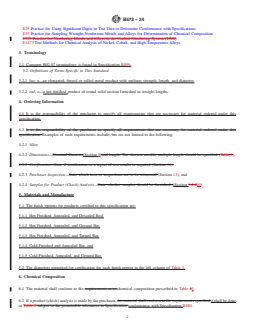
5. Materials and Manufacture
This specification is under the jurisdiction of ASTM Committee B02 on
5.1 The finish options for products certified to this specifi-
Nonferrous Metals and Alloys and is the direct responsibility of Subcommittee
cation are:
B02.07 on Refined Nickel and Cobalt and Their Alloys.
5.1.1 Hot-Finished, Annealed, and Descaled Rod,
Current edition approved April 1, 2024. Published April 2024. Originally
approved in 1972. Last previous edition approved in 2016 as B572 – 06 (2016).
5.1.2 Hot-Finished, Annealed, and Ground Bar,
DOI: 10.1520/B0572-24.
5.1.3 Hot-Finished, Annealed, and Turned Bar,
For ASME Boiler and Pressure Vessel Code applications see related Specifi-
5.1.4 Cold-Finished and Annealed Bar, and
cation SB-572 in Section II of that Code.
For referenced ASTM standards, visit the ASTM website, www.astm.org, or 5.1.5 Cold-Finished, Annealed, and Ground Bar.
contact ASTM Customer Service at service@astm.org. For Annual Book of ASTM
5.2 The diameters permitted for certification for each finish
Standards volume information, refer to the standard’s Document Summary page on
the ASTM website. appear in the left column of Table 3.
*A Summary of Changes section appears at the end of this standard
Copyright © ASTM International, 100 Barr Harbor Drive, PO Box C700, West Conshohocken, PA 19428-2959. United States
B572 − 24
A
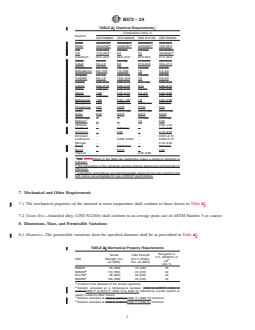
TABLE 1 Chemical Requirements
8.3.1 As-finished (Annealed and Descaled)—For diameters
5 11
Composition Limits, %
of ⁄16 in. to ⁄16 in. (7.94 mm to 17.46 mm) inclusive, an
Element
UNS N06002 UNS N06230 UNS N12160 UNS R30556
allowance of ⁄16 in. (1.59 mm) should be added on the
B B B
Nickel remainder remainder remainder 19.0–22.5
diameter for finish machining.
B
Iron 17.0–20.0 3.0 3.5 remainder
8.4 Length:
Chromium 20.5–23.0 20.0–24.0 26.0-30.0 21.0–23.0
Cobalt 0.5–2.5 5.0 27.0-33.0 16.0–21.0
8.4.1 Unless multiple, nominal, or cut lengths are specified,
Molybdenum 8.0–10.0 1.0–3.00 1.0 2.5–4.0
random mill lengths shall be furnished.
Tungsten 0.2–1.0 13.0–15.0 1.0 2.0–3.5
Carbon 0.05–0.15 0.05–0.15 0.15 0.05–0.15 8.4.2 The permissible variations in length of multiple,
Silicon 1.00 0.25–0.75 2.4–3.0 0.20–0.80
nominal, or cut length rod shall be as prescribed in Table 4.
Manganese 1.00 0.30–1.00 1.5 0.50–2.00
Where rods are ordered in multiple lengths, a ⁄4 in. (6.35 mm)
Phosphorus 0.04 0.030 0.030 0.04
Sulfur 0.03 0.015 0.015 0.015 length addition shall be allowed for each uncut multiple length.
C
Niobium . . 1.0 0.30
8.5 Ends:
Tantalum . . . 0.30–1.25
Aluminum . 0.50 . 0.10–0.50
8.5.1 Rods or bars ordered to random or nominal lengths
Zirconium . . . 0.001–0.10
shall be furnished with either cropped or sawed ends.
Lanthanum . 0.005–0.050 . 0.005–0.10
8.5.2 Rods or bars ordered to cut lengths shall be furnished
Nitrogen . . . 0.10–0.30
Boron . 0.015 . 0.02
with square saw cut or machined ends.
Titanium . . 0.20–0.80 .
8.6 Weight—For calculations of mass or weight, the follow-
A
Values in the table are maximums unless a range or minimum is indicated.
B
ing densities shall be used:
The composition of the remainder element shall be determined arithmetically by
difference.
Alloy Density
C
Columbium and Niobium are interchangeable names for the same element and
3 3
lb/in. (g/cm )
both names are acceptable for use in B02.07 specifications.
N06002 0.297 (8.23)
N06230 0.324 (8.97)
N12160 0.292 (8.08)
R30556 0.297 (8.23)
TABLE 2 Mechanical Property Requirements
Elongation in 8.7 Straightness—The maximum curvature (depth of chord)
Tensile Yield Strength
2 in. (50.8mm) or
UNS Strength, min, (0.2 % Offset), shall not exceed the number calculated by the equation below.
A
4D
ksi (MPA) min, ksi (MPa)
The calculated number is the maximum allowed curvature in
min, %
N06002 95 (660) 35 (240) 35 inches (inch-pound units) or millimeters (SI units).
B
N06230 110 (760) 45 (310) 40
C
N12160 90 (620) 35 (240) 40
Curvature [customary unit] = 0.05 × length (in feet)
D
R30556 100 (690) 45 (310) 40
A
D refers to the diameter of the tension specimen. Curvature [SI unit] = 0.04 × length (in cm)
B
Solution annealed at a temperature between 2200 °F to 2275 °F (1204 °C to
1246 °C) followed by a water quench or rapidly cooled by other means.
9. Workmanship, Finish, and Appearance
C
Solution annealed at 1950 °F (1065 °C) minimum.
D
Solution annealed at 2100 °F (1150 °C) minimum.
9.1 The material shall be uniform in quality and condition.
9.2 The finish should be smooth and free of injurious
defects.
6. Chemical Composition
6.1 The material shall conform to the chemical composition 10. Sampling
prescribed in Table 1.
10.1 Lots for Chemical Analysis and Mechanical Testing:
6.2 If a product (check) analysis is made by the purchaser, 10.1.1 A lot for chemical analysis shall consist of one heat.
10.1.2 A lot for mechanical testing shall be defined as the
it shall be done in conformance with Specification B880.
material from one heat in the same condition and specified
7. Mechanical and Other Requirements
diameter.
7.1 The mechanical properties of the material at room
10.2 Sampling for Chemica
...
This document is not an ASTM standard and is intended only to provide the user of an ASTM standard an indication of what changes have been made to the previous version. Because
it may not be technically possible to adequately depict all changes accurately, ASTM recommends that users consult prior editions as appropriate. In all cases only the current version
of the standard as published by ASTM is to be considered the official document.
Designation: B572 − 06 (Reapproved 2016) B572 − 24
Standard Specification for
UNS N06002, UNS N06230, UNS N12160, and UNS R30556
Heat and Corrosion Resistant High Temperature Alloy Bar or
Rod
This standard is issued under the fixed designation B572; the number immediately following the designation indicates the year of
original adoption or, in the case of revision, the year of last revision. A number in parentheses indicates the year of last reapproval. A
superscript epsilon (´) indicates an editorial change since the last revision or reapproval.
1. Scope Scope*
1.1 This specification covers alloys UNS N06002, UNS N06230, UNS N12160, and UNS R30556alloys in the form of bar or
rod that are typically used in the form of rod for heat for (though not limited to) heat resisting and general-corrosive service.
1.2 The following products are covered under this specification:Alloys that can currently be certified to this specification are UNS
N06002, UNS N06230, UNS N12160, and UNS R30556.
5 3
1.2.1 Rods ⁄16 to ⁄4 in. (7.94 to 19.05 mm) exclusive in diameter, hot or cold finished, solution-annealed, and pickled or
mechanically descaled.
3 1
1.2.2 Rods ⁄4 to 3 ⁄2 in. (19.05 to 88.9 mm) inclusive in diameter, hot or cold finished, solution annealed, ground, or turned.
1.3 The values stated in inch-pound units are to be regarded as standard. The values given in parentheses are mathematical
conversions to SI units that are provided for information only and are not considered standard.
1.4 This standard does not purport to address all of the safety concerns, if any, associated with its use. It is the responsibility
of the user of this standard to become familiar with all hazards including those identified in the appropriate Safety Data Sheet
(SDS) for this product/material as provided by the manufacturer, to establish appropriate safety and health practices,safety, health,
and environmental practices and determine the applicability of regulatory limitations prior to use.
1.5 This international standard was developed in accordance with internationally recognized principles on standardization
established in the Decision on Principles for the Development of International Standards, Guides and Recommendations issued
by the World Trade Organization Technical Barriers to Trade (TBT) Committee.
2. Referenced Documents
2.1 ASTM Standards:
B880 Specification for General Requirements for Chemical Check Analysis Limits for Nickel, Nickel Alloys and Cobalt Alloys
B899 Terminology Relating to Non-ferrous Metals and Alloys
E8E8/E8M Test Methods for Tension Testing of Metallic Materials [Metric] E0008_E0008M
This specification is under the jurisdiction of ASTM Committee B02 on Nonferrous Metals and Alloys and is the direct responsibility of Subcommittee B02.07 on Refined
Nickel and Cobalt and Their Alloys.
Current edition approved June 1, 2016April 1, 2024. Published June 2016April 2024. Originally approved in 1972. Last previous edition approved in 20112016 as
B572B572 – 06 (2016). – 06 (2011). DOI: 10.1520/B0572-06R16. DOI: 10.1520/B0572-24.
For ASME Boiler and Pressure Vessel Code applications see related Specification SB-572 in Section II of that Code.
For referenced ASTM standards, visit the ASTM website, www.astm.org, or contact ASTM Customer Service at service@astm.org. For Annual Book of ASTM Standards
volume information, refer to the standard’s Document Summary page on the ASTM website.
*A Summary of Changes section appears at the end of this standard
Copyright © ASTM International, 100 Barr Harbor Drive, PO Box C700, West Conshohocken, PA 19428-2959. United States
B572 − 24
E29 Practice for Using Significant Digits in Test Data to Determine Conformance with Specifications
E55 Practice for Sampling Wrought Nonferrous Metals and Alloys for Determination of Chemical Composition
E527 Practice for Numbering Metals and Alloys in the Unified Numbering System (UNS)
E1473 Test Methods for Chemical Analysis of Nickel, Cobalt, and High-Temperature Alloys
3. Terminology
3.1 Common B02.07 terminology is found in Specification B899.
3.2 Definitions of Terms Specific to This Standard:
3.2.1 bar, n—an elongated, forged or rolled metal product with uniform strength, length, and diameter.
3.2.2 rod, n—a hot-finished product of round solid section furnished in straight lengths.
4. Ordering Information
4.1 It is the responsibility of the purchaser to specify all requirements that are necessary for material ordered under this
specification.
4.2 It is the responsibility of the purchaser to specify all requirements that are necessary for material ordered under this
specification. Examples of such requirements include, but are not limited to the following:
4.2.1 Alloy,
4.2.2 Dimensions—Nominal diameter(Section 8 and length. The shortest useable multiple length should be specified (Table 1),
4.1.3 Certification—State if certification or a report of test results is required (Section 16).
4.2.3 Purchaser Inspection—State which tests or inspections are to be witnessed (Section 13), and
4.2.4 Samples for Product (Check) Analysis—State whether samples should be furnished ((Section 9.2.210).
5. Materials and Manufacture
5.1 The finish options for products certified to this specification are:
5.1.1 Hot-Finished, Annealed, and Descaled Rod,
5.1.2 Hot-Finished, Annealed, and Ground Bar,
5.1.3 Hot-Finished, Annealed, and Turned Bar,
5.1.4 Cold-Finished and Annealed Bar, and
5.1.5 Cold-Finished, Annealed, and Ground Bar.
5.2 The diameters permitted for certification for each finish appear in the left column of Table 3.
6. Chemical Composition
6.1 The material shall conform to the requirements as to chemical composition prescribed in Table 21.
6.2 If a product (check) analysis is made by the purchaser, the material shall conform to the requirements specified it shall be done
in Table 2 subject to the permissible tolerances in Specification conformance with Specification B880.
B572 − 24
A
TABLE 21 Chemical Requirements
Composition Limits, %
Element
UNS N06002 UNS N06230 UNS N12160 UNS R30556
A A A
Nickel remainder remainder remainder 19.0–22.5
B B B
Nickel remainder remainder remainder 19.0–22.5
A
Iron 17.0–20.0 3.0 max 3.5 max remainder
B
Iron 17.0–20.0 3.0 3.5 remainder
Chromium 20.5–23.0 20.0–24.0 26.0-30.0 21.0–23.0
Cobalt 0.5–2.5 5.0 max 27.0-33.0 16.0–21.0
Cobalt 0.5–2.5 5.0 27.0-33.0 16.0–21.0
Molybdenum 8.0–10.0 1.0–3.00 1.0 max 2.5–4.0
Molybdenum 8.0–10.0 1.0–3.00 1.0 2.5–4.0
Tungsten 0.2–1.0 13.0–15.0 1.0 max 2.0–3.5
Tungsten 0.2–1.0 13.0–15.0 1.0 2.0–3.5
Carbon 0.05–0.15 0.05–0.15 0.15 max 0.05–0.15
Carbon 0.05–0.15 0.05–0.15 0.15 0.05–0.15
Silicon 1.00 max 0.25–0.75 2.4-3.0 0.20–0.80
Silicon 1.00 0.25–0.75 2.4–3.0 0.20–0.80
Manganese 1.00 max 0.30–1.00 1.5 max 0.50–2.00
Manganese 1.00 0.30–1.00 1.5 0.50–2.00
Phosphorus 0.04 0.030 max 0.030 max 0.04 max
Phosphorus 0.04 0.030 0.030 0.04
Sulfur 0.03 0.015 max 0.015 max 0.015 max
Sulfur 0.03 0.015 0.015 0.015
Columbium . . 1.0 max 0.30 max
C
Niobium . . 1.0 0.30
Tantalum . . . 0.30–1.25
Aluminum . 0.50 max . 0.10–0.50
Aluminum . 0.50 . 0.10–0.50
Zirconium . . . 0.001–0.10
Lanthanum . 0.005–0.050 . 0.005–0.10
Nitrogen . . . 0.10–0.30
Boron . 0.015 max . 0.02 max
Boron . 0.015 . 0.02
Titanium . . 0.20–0.80 .
A
See 12.1.1.Values in the table are maximums unless a range or minimum is
indicated.
B
The composition of the remainder element shall be determined arithmetically by
difference.
C
Columbium and Niobium are interchangeable names for the same element and
both names are acceptable for use in B02.07 specifications.
7. Mechanical and Other Requirements
7.1 The mechanical properties of the material at room temperature shall conform to those shown in Table 32.
7.2 Grain Size—Annealed alloy (UNS N12160) shall conform to an average grain size of ASTM Number 5 or coarser.
8. Dimensions, Mass, and Permissible Variations
8.1 Diameter—The permissible variations from the specified diameter shall be as prescribed in Table 43.
TABLE 32 Mechanical Property Requirements
Elongation in
Tensile Yield Strength
2 in. (50.8mm) or
UNS Strength, min, (0.2 % Offset),
A
4D
ksi (MPA) min, ksi (MPa)
min, %
N06002 95 (660) 35 (240) 35
B
N06230 110 (760) 45 (310) 40
C
N12160 90 (620) 35 (240) 40
D
R30556 100 (690) 45 (310) 40
A
D refers to the diameter of the tension specimen.
B
Solution annealed at a temperature between 2200 to 2275°F (1204 to
1246°C)2200 °F to 2275 °F (1204 °C to 1246 °C) followed by a water quench or
rapidly cooled by other means.
C
Solution annealed at 1950°F (1065°C)1950 °F (1065 °C) minimum.
D
Solution annealed at 2100°F (1150°C)2100 °F (1150 °C) minimum.
B572 − 24
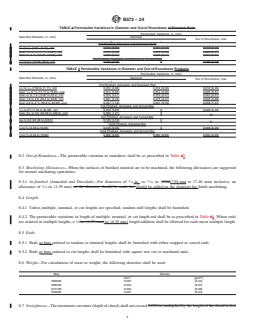
TABLE 4 Permissible Variations in Diameter and Out-of-Roundness of Finished Rods
Permissible Variations, in. (mm)
Specified Diameter, in. (mm) Diameter
Out of Roundness, max
+ −
Hot-Finished, Annealed, and Descaled Rods
5 7
⁄16 to ⁄16 (7.94–11.11), incl 0.012 (0.30) 0.012 (0.30) 0.018 (0.46)
7 5
Over ⁄16 to ⁄8 (11.11–15.87), incl 0.014 (0.36) 0.014 (0.36) 0.020 (0.51)
5 3
Over ⁄8 to ⁄4 (15.87–19.05), excl 0.016 (0.41) 0.016 (0.41) 0.024 (0.61)
Hot-Finished, Annealed, and Ground or Turned Rods
5 5
⁄16 to 3 ⁄8 (19.05–88.9), incl 0.010 (0.25) 0 0.008 (0.20)
TABLE 3 Permissible Variations in Diameter and Out-of-Roundness Products
Permissible Variations, in. (mm)
Specified Diameter, in. (mm) Diameter
Out of Roundness, max
+ −
Hot-Finished, Annealed, and Descaled Rod
5 7
⁄16 to ⁄16 (7.94 to 11.11), incl 0.012 (0.30) 0.012 (0.30) 0.018 (0.46)
7 5
Over ⁄16 to ⁄8 (11.11 to 15.87), incl 0.014 (0.36) 0.014 (0.36) 0.020 (0.51)
Over ⁄8 to 1.0 (15.87 to 25.4), incl 0.016 (0.41) 0.016 (0.41) 0.024 (0.61)
Over 1.0 to 2.0 (25.4 to 50.8), incl 0.031 (0.79) 0.016 (0.41) 0.035 (0.89)
Over 2.0 to 3 ⁄8 (50.8 to 92.08), excl 0.047 (1.19) 0.031 (0.79) 0.058 (1.47)
Hot-Finished, Annealed, and Ground Bar
5 5
⁄16 to 3 ⁄8 (7.94 to 92.08), incl 0.010 (0.25) 0 0.008 (0.20)
Over 3 ⁄8 to 9.0 (92.08 to 228.6), excl 0.050 (1.27) 0 .
Hot-Finished, Annealed, and Turned Bar
3 ⁄8 to 9.0 (92.08 to 228.6) 0.125 (3.18) 0 .
Cold-Finished, Annealed Bar
1 3
⁄8 to ⁄4 (3.18 to 19.05) 0.010 (0.25) 0 0.008 (0.20)
Cold-Finished, Annealed, and Ground Bar
1 3
⁄8 to ⁄4 (3.18 to 19.05) 0.002 (0.05) 0.002 (0.05) 0.002 (0.05)
8.2 Out-of-Roundness—The permissible variation in roundness shall be as prescribed in Table 43.
8.3 Machining Allowances—When the surfaces of finished material are to be machined, the following allowances are suggested
for normal machining operations:
5 11
8.3.1 As-finished (Annealed and Descaled)—For diameters of ⁄16 in. to ⁄16 in. (7.94(7.94 mm to 17.46 mm) incl
...