

ASTM B167-23
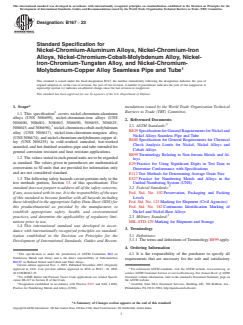
(Specification)Standard Specification for Nickel-Chromium-Aluminum Alloys, Nickel-Chromium-Iron Alloys, Nickel-Chromium-Cobalt-Molybdenum Alloy, Nickel-Iron-Chromium-Tungsten Alloy, and Nickel-Chromium-Molybdenum-Copper Alloy Seamless Pipe and Tube
General Information
- Abstract
ABSTRACT
This specification covers nickel-chromium-iron alloys (UNS N06600, N06601, N06603, N06690, N06693, N06025, N06045, and N06696) and nickel-chromium-cobalt molybdenum alloy (UNS N06617) in cold-worked annealed, hot-worked annealed, and hot-finished seamless pipe and tube intended for general corrosion resistant and heat resistant applications. The material shall conform to the required chemical composition for nickel, chromium, iron, manganese, molybdenum, cobalt, aluminum, carbon, copper, boron, silicon, sulfur, titanium, niobium, phosphorous, zirconium, yttrium, and cerium. The following test methods shall be performed on the alloys, namely: chemical analysis, tension test, and hydrostatic or nondestructive electric test. The material shall conform to the required mechanical properties such as tensile strength, yield strength, elongation, nondestructive electric test, and rounding method.
SCOPE
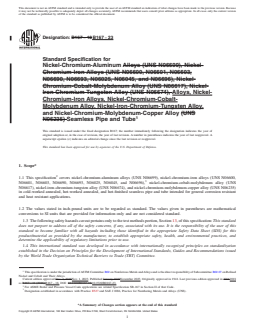
1.1 This specification2 covers nickel-chromium-aluminum alloys (UNS N06699), nickel-chromium-iron alloys (UNS N06600, N06601, N06603, N06690, N06693, N06025, N06045, and N06696),3 nickel-chromium-cobalt-molybdenum alloy (UNS N06617), nickel-iron-chromium-tungsten alloy (UNS N06674), and nickel-chromium-molybdenum-copper alloy (UNS N06235) in cold-worked annealed, hot-worked annealed, and hot-finished seamless pipe and tube intended for general corrosion resistant and heat resistant applications.
1.2 The values stated in inch-pound units are to be regarded as standard. The values given in parentheses are mathematical conversions to SI units that are provided for information only and are not considered standard.
1.3 The following safety hazards caveat pertains only to the test methods portion, Section 13, of this specification: This standard does not purport to address all of the safety concerns, if any, associated with its use. It is the responsibility of the user of this standard to become familiar with all hazards including those identified in the appropriate Safety Data Sheet (SDS) for this product/material as provided by the manufacturer, to establish appropriate safety, health, and environmental practices, and determine the applicability of regulatory limitations prior to use.
1.4 This international standard was developed in accordance with internationally recognized principles on standardization established in the Decision on Principles for the Development of International Standards, Guides and Recommendations issued by the World Trade Organization Technical Barriers to Trade (TBT) Committee.
- Status
- Published
- Publication Date
- 31-Oct-2023
- Technical Committee
- B02 - Nonferrous Metals and Alloys
- Drafting Committee
- B02.07 - Refined Nickel and Cobalt and Their Alloys
Buy Documents
ASTM B167-23 - Standard Specification for Nickel-Chromium-Aluminum Alloys, Nickel-Chromium-Iron Alloys, Nickel-Chromium-Cobalt-Molybdenum Alloy, Nickel-Iron-Chromium-Tungsten Alloy, and Nickel-Chromium-Molybdenum-Copper Alloy Seamless Pipe and Tube
REDLINE ASTM B167-23 - Standard Specification for Nickel-Chromium-Aluminum Alloys, Nickel-Chromium-Iron Alloys, Nickel-Chromium-Cobalt-Molybdenum Alloy, Nickel-Iron-Chromium-Tungsten Alloy, and Nickel-Chromium-Molybdenum-Copper Alloy Seamless Pipe and Tube
Overview
ASTM B167-23 is the standard specification developed by ASTM International covering seamless pipe and tube made from various nickel-chromium-aluminum, nickel-chromium-iron, nickel-chromium-cobalt-molybdenum, nickel-iron-chromium-tungsten, and nickel-chromium-molybdenum-copper alloys. This specification includes alloys such as UNS N06600, N06601, N06603, N06690, N06693, N06025, N06045, N06696, N06617, N06674, N06235, and N06699. The standard applies to cold-worked annealed, hot-worked annealed, and hot-finished seamless pipe and tube, with a focus on products designed for corrosion-resistant and heat-resistant applications.
ASTM B167-23 sets forth requirements for chemical composition, mechanical properties, testing, dimensional tolerances, and product marking, ensuring the consistency and performance of materials used in critical industries.
Key Topics
Scope of Alloys Covered
- Nickel-chromium-aluminum alloys
- Nickel-chromium-iron alloys
- Nickel-chromium-cobalt-molybdenum alloys
- Nickel-iron-chromium-tungsten alloys
- Nickel-chromium-molybdenum-copper alloys
Product Forms
- Seamless pipe
- Seamless tube
- Cold-worked annealed, hot-worked annealed, and hot-finished conditions
Chemical Composition
- Specifies ranges or minimum contents for elements like nickel, chromium, iron, manganese, molybdenum, cobalt, aluminum, copper, silicon, sulfur, titanium, niobium, phosphorous, zirconium, yttrium, and cerium
Mechanical Properties
- Minimum tensile and yield strengths
- Minimum elongation
- Product must meet specified performance metrics for each alloy and size
Testing Requirements
- Chemical analysis
- Tension tests for tensile strength, yield strength, and elongation
- Hydrostatic testing or nondestructive electric testing for integrity
- Grain size evaluation for certain alloys
Dimensional Tolerances
- Defines permissible variations in outside diameter, wall thickness, and length based on referenced standards (such as ASTM B829)
Inspection and Marking
- Guidelines for inspection agreements between buyers and sellers
- Certification and marking requirements to ensure traceability
Applications
ASTM B167-23 seamless pipes and tubes are primarily used in environments demanding superior corrosion resistance and heat resistance. This includes:
- Chemical Processing: Handling aggressive media and corrosive process fluids
- Petrochemical Industry: For heat exchangers, piping in refineries, and high-temperature service environments
- Power Generation: In boilers, pressure vessels, and superheaters
- Aerospace: High-temperature ducting and engine components
- Pharmaceutical and Food Processing: Where purity and corrosion resistance are essential
By adhering to ASTM B167-23, manufacturers and end users benefit from internationally recognized quality assurance, reliable mechanical performance, and long service life even under harsh operating conditions.
Related Standards
- ASTM B829 - General requirements for nickel and nickel alloys seamless pipe and tube
- ASTM B880 - Chemical check analysis limits for nickel, nickel alloys, and cobalt alloys
- ASTM E8/E8M - Tension testing of metallic materials
- ASTM E29 - Practice for using significant digits in test data
- ASTM E527 - Practice for numbering metals and alloys in the Unified Numbering System (UNS)
- ASTM E112 - Test methods for determining average grain size
This standard also provides cross-reference to federal and military standards for marking, preservation, packaging, and quality assurance, further supporting its use in regulated and critical service environments.
Keywords: ASTM B167-23, nickel alloy seamless pipe, corrosion-resistant tube, heat-resistant alloys, UNS N06600, industrial pipe standards, ASTM nickel-chromium alloys, chemical processing piping, high temperature alloys, seamless tube specification.
Relations
- Effective Date
- 01-Nov-2023
- Effective Date
- 01-Nov-2023
- Effective Date
- 01-Nov-2023
- Effective Date
- 01-Nov-2023
- Referred By
ASTM E1137/E1137M-08(2020) - Standard Specification for Industrial Platinum Resistance Thermometers - Effective Date
- 01-Nov-2023
- Effective Date
- 01-Nov-2023
Buy Documents
ASTM B167-23 - Standard Specification for Nickel-Chromium-Aluminum Alloys, Nickel-Chromium-Iron Alloys, Nickel-Chromium-Cobalt-Molybdenum Alloy, Nickel-Iron-Chromium-Tungsten Alloy, and Nickel-Chromium-Molybdenum-Copper Alloy Seamless Pipe and Tube
REDLINE ASTM B167-23 - Standard Specification for Nickel-Chromium-Aluminum Alloys, Nickel-Chromium-Iron Alloys, Nickel-Chromium-Cobalt-Molybdenum Alloy, Nickel-Iron-Chromium-Tungsten Alloy, and Nickel-Chromium-Molybdenum-Copper Alloy Seamless Pipe and Tube
Get Certified
Connect with accredited certification bodies for this standard

Element Materials Technology
Materials testing and product certification.

Inštitut za kovinske materiale in tehnologije
Institute of Metals and Technology. Materials testing, metallurgical analysis, NDT.
Sponsored listings
Frequently Asked Questions
ASTM B167-23 is a technical specification published by ASTM International. Its full title is "Standard Specification for Nickel-Chromium-Aluminum Alloys, Nickel-Chromium-Iron Alloys, Nickel-Chromium-Cobalt-Molybdenum Alloy, Nickel-Iron-Chromium-Tungsten Alloy, and Nickel-Chromium-Molybdenum-Copper Alloy Seamless Pipe and Tube". This standard covers: ABSTRACT This specification covers nickel-chromium-iron alloys (UNS N06600, N06601, N06603, N06690, N06693, N06025, N06045, and N06696) and nickel-chromium-cobalt molybdenum alloy (UNS N06617) in cold-worked annealed, hot-worked annealed, and hot-finished seamless pipe and tube intended for general corrosion resistant and heat resistant applications. The material shall conform to the required chemical composition for nickel, chromium, iron, manganese, molybdenum, cobalt, aluminum, carbon, copper, boron, silicon, sulfur, titanium, niobium, phosphorous, zirconium, yttrium, and cerium. The following test methods shall be performed on the alloys, namely: chemical analysis, tension test, and hydrostatic or nondestructive electric test. The material shall conform to the required mechanical properties such as tensile strength, yield strength, elongation, nondestructive electric test, and rounding method. SCOPE 1.1 This specification2 covers nickel-chromium-aluminum alloys (UNS N06699), nickel-chromium-iron alloys (UNS N06600, N06601, N06603, N06690, N06693, N06025, N06045, and N06696),3 nickel-chromium-cobalt-molybdenum alloy (UNS N06617), nickel-iron-chromium-tungsten alloy (UNS N06674), and nickel-chromium-molybdenum-copper alloy (UNS N06235) in cold-worked annealed, hot-worked annealed, and hot-finished seamless pipe and tube intended for general corrosion resistant and heat resistant applications. 1.2 The values stated in inch-pound units are to be regarded as standard. The values given in parentheses are mathematical conversions to SI units that are provided for information only and are not considered standard. 1.3 The following safety hazards caveat pertains only to the test methods portion, Section 13, of this specification: This standard does not purport to address all of the safety concerns, if any, associated with its use. It is the responsibility of the user of this standard to become familiar with all hazards including those identified in the appropriate Safety Data Sheet (SDS) for this product/material as provided by the manufacturer, to establish appropriate safety, health, and environmental practices, and determine the applicability of regulatory limitations prior to use. 1.4 This international standard was developed in accordance with internationally recognized principles on standardization established in the Decision on Principles for the Development of International Standards, Guides and Recommendations issued by the World Trade Organization Technical Barriers to Trade (TBT) Committee.
ABSTRACT This specification covers nickel-chromium-iron alloys (UNS N06600, N06601, N06603, N06690, N06693, N06025, N06045, and N06696) and nickel-chromium-cobalt molybdenum alloy (UNS N06617) in cold-worked annealed, hot-worked annealed, and hot-finished seamless pipe and tube intended for general corrosion resistant and heat resistant applications. The material shall conform to the required chemical composition for nickel, chromium, iron, manganese, molybdenum, cobalt, aluminum, carbon, copper, boron, silicon, sulfur, titanium, niobium, phosphorous, zirconium, yttrium, and cerium. The following test methods shall be performed on the alloys, namely: chemical analysis, tension test, and hydrostatic or nondestructive electric test. The material shall conform to the required mechanical properties such as tensile strength, yield strength, elongation, nondestructive electric test, and rounding method. SCOPE 1.1 This specification2 covers nickel-chromium-aluminum alloys (UNS N06699), nickel-chromium-iron alloys (UNS N06600, N06601, N06603, N06690, N06693, N06025, N06045, and N06696),3 nickel-chromium-cobalt-molybdenum alloy (UNS N06617), nickel-iron-chromium-tungsten alloy (UNS N06674), and nickel-chromium-molybdenum-copper alloy (UNS N06235) in cold-worked annealed, hot-worked annealed, and hot-finished seamless pipe and tube intended for general corrosion resistant and heat resistant applications. 1.2 The values stated in inch-pound units are to be regarded as standard. The values given in parentheses are mathematical conversions to SI units that are provided for information only and are not considered standard. 1.3 The following safety hazards caveat pertains only to the test methods portion, Section 13, of this specification: This standard does not purport to address all of the safety concerns, if any, associated with its use. It is the responsibility of the user of this standard to become familiar with all hazards including those identified in the appropriate Safety Data Sheet (SDS) for this product/material as provided by the manufacturer, to establish appropriate safety, health, and environmental practices, and determine the applicability of regulatory limitations prior to use. 1.4 This international standard was developed in accordance with internationally recognized principles on standardization established in the Decision on Principles for the Development of International Standards, Guides and Recommendations issued by the World Trade Organization Technical Barriers to Trade (TBT) Committee.
ASTM B167-23 is classified under the following ICS (International Classification for Standards) categories: 77.150.40 - Nickel and chromium products. The ICS classification helps identify the subject area and facilitates finding related standards.
ASTM B167-23 has the following relationships with other standards: It is inter standard links to ASTM B167-18, ASTM E585/E585M-23, ASTM B924-02(2022), ASTM E2181/E2181M-19, ASTM E1137/E1137M-08(2020), ASTM B366/B366M-23. Understanding these relationships helps ensure you are using the most current and applicable version of the standard.
ASTM B167-23 is available in PDF format for immediate download after purchase. The document can be added to your cart and obtained through the secure checkout process. Digital delivery ensures instant access to the complete standard document.
Standards Content (Sample)
This international standard was developed in accordance with internationally recognized principles on standardization established in the Decision on Principles for the
Development of International Standards, Guides and Recommendations issued by the World Trade Organization Technical Barriers to Trade (TBT) Committee.
Designation: B167 − 23
Standard Specification for
Nickel-Chromium-Aluminum Alloys, Nickel-Chromium-Iron
Alloys, Nickel-Chromium-Cobalt-Molybdenum Alloy, Nickel-
Iron-Chromium-Tungsten Alloy, and Nickel-Chromium-
Molybdenum-Copper Alloy Seamless Pipe and Tube
This standard is issued under the fixed designation B167; the number immediately following the designation indicates the year of
original adoption or, in the case of revision, the year of last revision. A number in parentheses indicates the year of last reapproval. A
superscript epsilon (´) indicates an editorial change since the last revision or reapproval.
This standard has been approved for use by agencies of the U.S. Department of Defense.
1. Scope* mendations issued by the World Trade Organization Technical
2 Barriers to Trade (TBT) Committee.
1.1 This specification covers nickel-chromium-aluminum
alloys (UNS N06699), nickel-chromium-iron alloys (UNS
2. Referenced Documents
N06600, N06601, N06603, N06690, N06693, N06025,
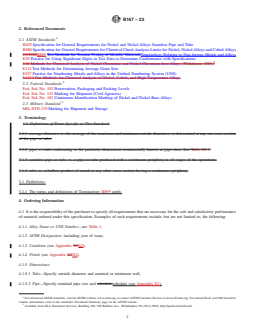
2.1 ASTM Standards:
N06045, and N06696), nickel-chromium-cobalt-molybdenum
B829 Specification for General Requirements for Nickel and
alloy (UNS N06617), nickel-iron-chromium-tungsten alloy
Nickel Alloys Seamless Pipe and Tube
(UNS N06674), and nickel-chromium-molybdenum-copper al-
B880 Specification for General Requirements for Chemical
loy (UNS N06235) in cold-worked annealed, hot-worked
Check Analysis Limits for Nickel, Nickel Alloys and
annealed, and hot-finished seamless pipe and tube intended for
Cobalt Alloys
general corrosion resistant and heat resistant applications.
B899 Terminology Relating to Non-ferrous Metals and Al-
1.2 The values stated in inch-pound units are to be regarded
loys
as standard. The values given in parentheses are mathematical
E29 Practice for Using Significant Digits in Test Data to
conversions to SI units that are provided for information only
Determine Conformance with Specifications
and are not considered standard.
E112 Test Methods for Determining Average Grain Size
E527 Practice for Numbering Metals and Alloys in the
1.3 The following safety hazards caveat pertains only to the
test methods portion, Section 13, of this specification: This Unified Numbering System (UNS)
standard does not purport to address all of the safety concerns, 2.2 Federal Standards:
if any, associated with its use. It is the responsibility of the user Fed. Std. No. 102 Preservation, Packaging and Packing
of this standard to become familiar with all hazards including Levels
those identified in the appropriate Safety Data Sheet (SDS) for Fed. Std. No. 123 Marking for Shipment (Civil Agencies)
this product/material as provided by the manufacturer, to Fed. Std. No. 182 Continuous Identification Marking of
establish appropriate safety, health, and environmental Nickel and Nickel-Base Alloys
practices, and determine the applicability of regulatory limi- 2.3 Military Standard:
tations prior to use. MIL-STD-129 Marking for Shipment and Storage
1.4 This international standard was developed in accor-
3. Terminology
dance with internationally recognized principles on standard-
3.1 Definitions:
ization established in the Decision on Principles for the
3.1.1 The terms and definitions of Terminology B899 apply.
Development of International Standards, Guides and Recom-
4. Ordering Information
This specification is under the jurisdiction of ASTM Committee B02 on
4.1 It is the responsibility of the purchaser to specify all
Nonferrous Metals and Alloys and is the direct responsibility of Subcommittee
requirements that are necessary for the safe and satisfactory
B02.07 on Refined Nickel and Cobalt and Their Alloys.
Current edition approved Nov. 1, 2023. Published November 2023. Originally
approved in 1941. Last previous edition approved in 2018 as B167 – 18. DOI: For referenced ASTM standards, visit the ASTM website, www.astm.org, or
10.1520/B0167-23. contact ASTM Customer Service at service@astm.org. For Annual Book of ASTM
For ASME Boiler and Pressure Vessel Code applications see related Specifi- Standards volume information, refer to the standard’s Document Summary page on
cation SB-167 in Section II of that Code. the ASTM website.
Designation established in accordance with Practice E527 and SAE J 1086, Available from DLA Document Services, Building 4/D, 700 Robbins Ave.,
Practice for Numbering Metals and Alloys (UNS). Philadelphia, PA 19111-5094, http://quicksearch.dla.mil.
*A Summary of Changes section appears at the end of this standard
Copyright © ASTM International, 100 Barr Harbor Drive, PO Box C700, West Conshohocken, PA 19428-2959. United States
B167 − 23
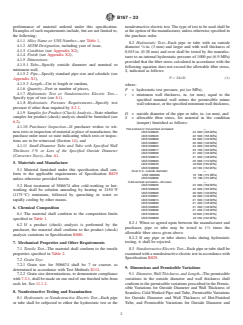
performance of material ordered under this specification. nondestructive electric test. The type of test to be used shall be
Examples of such requirements include, but are not limited to, at the option of the manufacturer, unless otherwise specified in
the following: the purchase order.
4.1.1 Alloy Name or UNS Number—see Table 1,
8.2 Hydrostatic Test—Each pipe or tube with an outside
4.1.2 ASTM Designation, including year of issue,
diameter ⁄8 in. (3 mm) and larger and with wall thickness of
4.1.3 Condition (see Appendix X2),
0.015 in. (0.38 mm) and over shall be tested by the manufac-
4.1.4 Finish (see Appendix X2),
turer to an internal hydrostatic pressure of 1000 psi (6.9 MPa)
4.1.5 Dimensions:
provided that the fiber stress calculated in accordance with the
4.1.5.1 Tube—Specify outside diameter and nominal or
following equation does not exceed the allowable fiber stress,
minimum wall,
S, indicated as follows:
4.1.5.2 Pipe—Specify standard pipe size and schedule (see
P 5 2St⁄D (1)
Appendix X1),
4.1.5.3 Length—Cut to length or random,
where:
4.1.6 Quantity—Feet or number of pieces,
P = hydrostatic test pressure, psi (or MPa),
4.1.7 Hydrostatic Test or Nondestructive Electric Test—
t = minimum wall thickness, in. (or mm), equal to the
Specify type of test (see 8.1).
specified nominal wall minus the permissible minus
4.1.8 Hydrostatic Pressure Requirements—Specify test
wall tolerance, or the specified minimum wall thickness,
pressure if other than required by 8.2.1,
4.1.9 Samples for Product (Check) Analysis—State whether
D = outside diameter of the pipe or tube, in. (or mm), and
samples for product (check) analysis should be furnished (see
S = allowable fiber stress, for material in the condition
6.2),
(temper) furnished as follows:
4.1.10 Purchaser Inspection—If purchaser wishes to wit-
Hot-worked or hot-worked annealed: —
ness tests or inspection of material at place of manufacture, the
UNS N06025 24 000 (165 MPa)
UNS N06045 22 500 (155 MPa)
purchase order must so state indicating which tests or inspec-
UNS N06600 20 000 (140 MPa)
tions are to be witnessed (Section 14), and
UNS N06601 20 000 (140 MPa)
4.1.11 Small-Diameter Tube and Tube with Specified Wall
UNS N06603 24 000 (165 MPa)
UNS N06617 23 700 (163 MPa)
Thickness 3 % or Less of the Specified Outside Diameter
UNS N06690 21 200 (146 MPa)
(Converter Sizes)—See A1.
UNS N06674 21 500 (148 MPa)
UNS N06693 25 000 (172 MPa)
5. Materials and Manufacture
UNS N06235 22 500 (155 MPa)
UNS N06699 22 100 (152 MPa)
5.1 Material furnished under this specification shall con-
Over 5 in. outside diameter: —
form to the applicable requirements of Specification B829 UNS N06600 16 700 (115 MPa)
UNS N06690 16 700 (115 MPa)
unless otherwise provided herein.
Cold-worked annealed—All sizes: —
5.2 Heat treatment of N06674 after cold-working or hot- UNS N06025 24 500 (169 MPa)
UNS N06045 22 500 (155 MPa)
working shall be solution annealing by heating to 2150 °F
UNS N06600 20 000 (140 MPa)
(1175 °C) minimum, followed by quenching in water or
UNS N06601 20 000 (140 MPa)
UNS N06674 21 500 (148 MPa)
rapidly cooling by other means.
UNS N06690 21 200 (146 MPa)
UNS N06693 21 200 (146 MPa)
6. Chemical Composition
UNS N06696 21 200 (146 MPa)
6.1 The material shall conform to the composition limits UNS N06235 22 500 (155 MPa)
UNS N06699 22 100 (152 MPa)
specified in Table 1.
8.2.1 When so agreed upon between the manufacturer and
6.2 If a product (check) analysis is performed by the
purchaser, pipe or tube may be tested to 1 ⁄2 times the
purchaser, the material shall conform to the product (check)
allowable fiber stress given above.
analysis variations in Specification B880.
8.2.2 If any pipe or tube shows leaks during hydrostatic
7. Mechanical Properties and Other Requirements testing, it shall be rejected.
8.3 Nondestructive Electric Test—Each pipe or tube shall be
7.1 Tensile Test—The material shall conform to the tensile
properties specified in Table 2. examined with a nondestructive electric test in accordance with
Specification B829.
7.2 Grain Size:
7.2.1 Grain size for N06674 shall be 7 or coarser, as
9. Dimensions and Permissible Variations
determined in accordance with Test Methods E112.
9.1 Diameter, Wall Thickness, and Length—The permissible
7.2.2 Grain size determinations, to demonstrate compliance
with 7.2.1, shall be made on one end of one finished tube from variations in the outside diameter and wall thickness shall
conform to the permissible variations prescribed in the Permis-
each lot. See 11.1.2.
sible Variations for Outside Diameter and Wall Thickness of
8. Nondestructive Testing and Examination
Seamless Cold-Worked Pipe and Tube, Permissible Variations
8.1 Hydrostatic or Nondestructive Electric Test—Each pipe for Outside Diameter and Wall Thickness of Hot-Finished
or tube shall be subjected to either the hydrostatic test or the Tube, and Permissible Variations for Outside Diameter and
B167 − 23
A
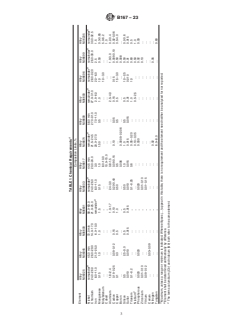
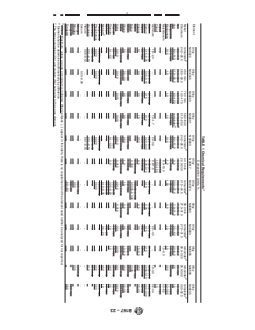
TABLE 1 Chemical Requirements
Composition Limits, %
Element
Alloy Alloy Alloy Alloy Alloy Alloy Alloy Alloy Alloy Alloy Alloy Alloy
N06025 N06045 N06600 N06601 N06603 N06617 N06674 N06690 N06693 N06696 N06699 N06235
B B B B B B B
Nickel remainder 45.0 min 72.0 min 58.0–63.0 remainder 44.5 min remainder 58.0 min remainder remainder remainder remainder
Chromium 24.0–26.0 26.0–29.0 14.0–17.0 21.0–25.0 24.0–26.0 20.0-24.0 21.5–24.5 27.0–31.0 27.0–31.0 28.0–32.0 26.0-30.0 30.0-32.5
B
Iron 8.0–11.0 21.0–25.0 6.0–10.0 remainder 8.0–11.0 3.0 20.0–27.0 7.0–11.0 2.5–6.0 2.0–6.0 2.5 1.5
Manganese 0.15 1.0 1.0 1.5 0.15 1.0 1.50 0.5 1.0 1.0 0.50 0.3-0.65
Molybdenum . . . . . 8.0–10.0 . . . 1.0–3.0 . 5.0-6.2
Cobalt . . . . . 10.0–15.0 . . . . . 1.0
Aluminum 1.8–2.4 . . 1.0–1.7 2.4-3.0 0.8-1.5 . . 2.5–4.0 . 1.9-3.0 0.2-0.4
Carbon 0.15–0.25 0.05–0.12 0.15 0.10 0.20-0.40 0.05-0.15 0.10 0.05 0.15 0.15 0.005-0.10 0.02-0.06
Copper 0.1 0.3 0.5 1.0 0.50 0.5 . 0.5 0.5 1.5–3.0 0.50 3.5-4.0
Boron . . . . . 0.006 0.0005–0.006 . . . 0.008 .
Silicon 0.5 2.5–3.0 0.5 0.5 0.50 1.0 1.0 0.5 0.5 1.0–2.5 0.50 0.2-0.6
Sulfur 0.010 0.010 0.015 0.015 0.010 0.015 0.015 0.015 0.01 0.010 0.01 0.015
Titanium 0.1–0.2 . . . 0.1–0.25 0.6 0.05–0.20 . 1.0 1.0 0.60 0.5
C
Niobium . . . . . . 0.10–0.35 . 0.5–2.5 . 0.50 1.0
Phosphorous 0.020 0.020 . . 0.020 . 0.030 . . . 0.02 0.03
Zirconium 0.01–0.10 . . . 0.01–0.10 . . . . . 0.10 .
Yttrium 0.05–0.12 . . . 0.01–0.15 . . . . . . .
Cerium . 0.03–0.09 . . . . . . . . . .
Nitrogen . . . . . . 0.02 . . . 0.05 .
Tungsten . . . . . . 6.0–8.0 . . . . 0.60
A
Maximum, unless a range or minimum is indicated. Where ellipses (.) appear in this table, there is no requirement and the element need neither be analyzed for nor reported.
B
Element shall be determined arithmetically by difference.
C
The terms columbium (Cb) and niobium (Nb) both refer to the same element.
B167 − 23
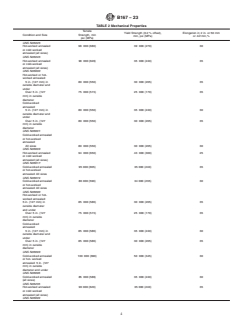
TABLE 2 Mechanical Properties
Tensile
Yield Strength (0.2 % offset), Elongation in 2 in. or 50 mm
Condition and Size Strength, min
min, psi (MPa) or 4D min,%
psi (MPa)
UNS N06025:
Hot-worked annealed 98 000 (680) 39 000 (270) 30
or cold worked
annealed (all sizes)
UNS N06045:
Hot-worked annealed 90 000 (620) 35 000 (240) 35
or cold-worked
annealed (all sizes)
UNS N06600:
Hot-worked or hot-
worked annealed:
5 in. (127 mm) in 80 000 (550) 30 000 (205) 35
outside diameter and
under
Over 5 in. (127 75 000 (515) 25 000 (170) 35
mm) in outside
diameter
Cold-worked
annealed:
5 in. (127 mm) in 80 000 (550) 35 000 (240) 30
outside diameter and
under
Over 5 in. (127 80 000 (550) 30 000 (205) 35
mm) in outside
diameter
UNS N06601:
Cold-worked annealed
or hot-worked
annealed:
All sizes 80 000 (550) 30 000 (205) 30
UNS N06603:
Hot-worked annealed 94 000 (650) 43 000 (300) 25
or cold worked
annealed (all sizes)
UNS N06617:
Cold-worked annealed 95 000 (665) 35 000 (240) 35
or hot-worked
annealed: All sizes
UNS N06674:
Cold-worked annealed 86 000 (590) 34 000 (235) 30
or hot-worked
annealed: All sizes
UNS N06690:
Hot-worked or hot-
worked annealed:
5 in. (127 mm) in 85 000 (586) 30 000 (205) 35
outside diameter
and under
Over 5 in. (127 75 000 (515) 25 000 (170) 35
mm) in outside
diameter
Cold-worked
annealed:
5 in. (127 mm) in 85 000 (586) 35 000 (240) 30
outside diameter and
under
Over 5 in. (127 85 000 (586) 30 000 (205) 35
mm) in outside
diameter
UNS N06693:
Cold-worked annealed 100 000 (690) 50 000 (345) 30
or hot- worked
annealed: 5 in. (127
mm) in outside
diameter and under
UNS N06696
Cold-worked annealed 85 000 (586) 35 000 (240) 30
(all sizes)
UNS N06235
Hot-worked annealed 90 000 (620) 35 000 (240) 35
or cold worked
annealed (all sizes)
UNS N06699
B167 − 23
TABLE 2 Continued
Tensile
Yield Strength (0.2 % offset), Elongation in 2 in. or 50 mm
Condition and Size Strength, min
min, psi (MPa) or 4D min,%
psi (MPa)
Hot-worked annealed 89 000 (610) 35 000 (240) 40
or cold worked
annealed (all sizes)
Wall Thickness of Seamless Hot-Worked Pipe tables in Speci-
Rounded Unit for Observed or
Test Calculated Value
fication B829. The permissible variations in the length shall
conform to the permissible variations prescribed in the Permis-
Chemical composition and nearest unit in the last right-hand
sible Variations in Length table in Specification B829.
tolerances (when place of figures of the specified limit.
expressed in If two choices are possible, as when
decimals) the digits dropped are exactly a 5 or a
10. Workmanship, Finish, and Appearance
5 followed only by zeros, choose the
one ending in an even digit with zero
10.1 The material shall be uniform in quality and temper,
defined as an even digit.
smooth, commercially straight, and free of injurious imperfec-
Tensile strength, yield nearest 1000 psi (6.9 MPa)
tions. strength
Elongation nearest 1 %
11. Sampling
14. Inspection
11.1 Lot Definition: 14.1 Inspection of the material shall be agreed upon be-
11.1.1 A lot for chemical analysis shall consist of one heat.
tween the purchaser and the supplier as part of the purchase
11.1.2 A lot for all other testing shall consist of all material contract.
from the same heat, nominal siz
...
This document is not an ASTM standard and is intended only to provide the user of an ASTM standard an indication of what changes have been made to the previous version. Because
it may not be technically possible to adequately depict all changes accurately, ASTM recommends that users consult prior editions as appropriate. In all cases only the current version
of the standard as published by ASTM is to be considered the official document.
Designation: B167 − 18 B167 − 23
Standard Specification for
Nickel-Chromium-Aluminum Alloys (UNS N06699), Nickel-
Chromium-Iron Alloys (UNS N06600, N06601, N06603,
N06690, N06693, N06025, N06045, and N06696), Nickel-
Chromium-Cobalt-Molybdenum Alloy (UNS N06617), Nickel-
Iron-Chromium-Tungsten Alloy (UNS N06674), Alloys, Nickel-
Chromium-Iron Alloys, Nickel-Chromium-Cobalt-
Molybdenum Alloy, Nickel-Iron-Chromium-Tungsten Alloy,
and Nickel-Chromium-Molybdenum-Copper Alloy (UNS
N06235) Seamless Pipe and Tube
This standard is issued under the fixed designation B167; the number immediately following the designation indicates the year of
original adoption or, in the case of revision, the year of last revision. A number in parentheses indicates the year of last reapproval. A
superscript epsilon (´) indicates an editorial change since the last revision or reapproval.
This standard has been approved for use by agencies of the U.S. Department of Defense.
1. Scope*
1.1 This specification covers nickel-chromium-aluminum alloys (UNS N06699), nickel-chromium-iron alloys (UNS N06600,
N06601, N06603, N06690, N06693, N06025, N06045, and N06696), nickel-chromium-cobalt-molybdenum alloy (UNS
N06617), nickel-iron-chromium-tungsten alloy (UNS N06674), and nickel-chromium-molybdenum-copper alloy (UNS N06235)
in cold-worked annealed, hot-worked annealed, and hot-finished seamless pipe and tube intended for general corrosion resistant
and heat resistant applications.
1.2 The values stated in inch-pound units are to be regarded as standard. The values given in parentheses are mathematical
conversions to SI units that are provided for information only and are not considered standard.
1.3 The following safety hazards caveat pertains only to the test methods portion, Section 13, of this specification: This standard
does not purport to address all of the safety concerns, if any, associated with its use. It is the responsibility of the user of this
standard to become familiar with all hazards including those identified in the appropriate Safety Data Sheet (SDS) for this
product/material as provided by the manufacturer, to establish appropriate safety, health, and environmental practices, and
determine the applicability of regulatory limitations prior to use.
1.4 This international standard was developed in accordance with internationally recognized principles on standardization
established in the Decision on Principles for the Development of International Standards, Guides and Recommendations issued
by the World Trade Organization Technical Barriers to Trade (TBT) Committee.
This specification is under the jurisdiction of ASTM Committee B02 on Nonferrous Metals and Alloys and is the direct responsibility of Subcommittee B02.07 on Refined
Nickel and Cobalt and Their Alloys.
Current edition approved Dec. 1, 2018Nov. 1, 2023. Published January 2019November 2023. Originally approved in 1941. Last previous edition approved in 20162018
as B167 – 11 (2016).B167 – 18. DOI: 10.1520/B0167-18.10.1520/B0167-23.
For ASME Boiler and Pressure Vessel Code applications see related Specification SB-167 in Section II of that Code.
Designation established in accordance with Practice E527 and SAE J 1086, Practice for Numbering Metals and Alloys (UNS).
*A Summary of Changes section appears at the end of this standard
Copyright © ASTM International, 100 Barr Harbor Drive, PO Box C700, West Conshohocken, PA 19428-2959. United States
B167 − 23
2. Referenced Documents
2.1 ASTM Standards:
B829 Specification for General Requirements for Nickel and Nickel Alloys Seamless Pipe and Tube
B880 Specification for General Requirements for Chemical Check Analysis Limits for Nickel, Nickel Alloys and Cobalt Alloys
E8/E8MB899 Test Methods for Tension Testing of Metallic MaterialsTerminology Relating to Non-ferrous Metals and Alloys
E29 Practice for Using Significant Digits in Test Data to Determine Conformance with Specifications
E38 Methods for Chemical Analysis of Nickel-Chromium and Nickel-Chromium-Iron Alloys (Withdrawn 1989)
E112 Test Methods for Determining Average Grain Size
E527 Practice for Numbering Metals and Alloys in the Unified Numbering System (UNS)
E1473 Test Methods for Chemical Analysis of Nickel, Cobalt, and High-Temperature Alloys
2.2 Federal Standards:
Fed. Std. No. 102 Preservation, Packaging and Packing Levels
Fed. Std. No. 123 Marking for Shipment (Civil Agencies)
Fed. Std. No. 182 Continuous Identification Marking of Nickel and Nickel-Base Alloys
2.3 Military Standard:
MIL-STD-129 Marking for Shipment and Storage
3. Terminology
3.1 Definitions of Terms Specific to This Standard:
3.1.1 average diameter, n—the average of the maximum and minimum outside diameters, as determined at any one cross section
of the pipe or tube.
3.1.2 pipe, n—tube conforming to the particular dimensions commercially known as pipe sizes. See Table X2.1.
3.1.3 seamless pipe or tube, n—a pipe or tube produced with a continuous periphery in all stages of the operations.
3.1.4 tube, n—a hollow product of round or any other cross section having a continuous periphery.
3.1 Definitions:
3.1.1 The terms and definitions of Terminology B899 apply.
4. Ordering Information
4.1 It is the responsibility of the purchaser to specify all requirements that are necessary for the safe and satisfactory performance
of material ordered under this specification. Examples of such requirements include, but are not limited to, the following:
4.1.1 Alloy Name or UNS Number—see Table 1,
4.1.2 ASTM Designation, including year of issue,
4.1.3 Condition (see Appendix X3X2),
4.1.4 Finish (see Appendix X3X2),
4.1.5 Dimensions:
4.1.5.1 Tube—Specify outside diameter and nominal or minimum wall,
4.1.5.2 Pipe—Specify standard pipe size and schedule,schedule (see Appendix X1),
For referenced ASTM standards, visit the ASTM website, www.astm.org, or contact ASTM Customer Service at service@astm.org. For Annual Book of ASTM Standards
volume information, refer to the standard’s Document Summary page on the ASTM website.
Available from DLA Document Services, Building 4/D, 700 Robbins Ave., Philadelphia, PA 19111-5094, http://quicksearch.dla.mil.
B167 − 23
A
TABLE 1 Chemical Requirements
Composition Limits, %
Element
Alloy Alloy Alloy Alloy Alloy Alloy Alloy Alloy Alloy Alloy Alloy Alloy
N06025 N06045 N06600 N06601 N06603 N06617 N06674 N06690 N06693 N06696 N06699 N06235
B B B B B B B
Nickel remainder 45.0 min 72.0 min 58.0–63.0 remainder 44.5 min remainder 58.0 min remainder remainder remainder remainder
Chromium 24.0–26.0 26.0–29.0 14.0–17.0 21.0–25.0 24.0–26.0 20.0-24.0 21.5–24.5 27.0–31.0 27.0–31.0 28.0–32.0 26.0-30.0 30.0-32.5
B
Iron 8.0–11.0 21.0–25.0 6.0–10.0 remainder 8.0–11.0 3.0 max 20.0–27.0 7.0–11.0 2.5–6.0 2.0–6.0 2.5 max 1.5 max
B
Iron 8.0–11.0 21.0–25.0 6.0–10.0 remainder 8.0–11.0 3.0 20.0–27.0 7.0–11.0 2.5–6.0 2.0–6.0 2.5 1.5
Manganese 0.15 max 1.0 max 1.0 max 1.5 max 0.15 max 1.0 max 1.50 max 0.5 max 1.0 max 1.0 max 0.50 max 0.3-0.65
Manganese 0.15 1.0 1.0 1.5 0.15 1.0 1.50 0.5 1.0 1.0 0.50 0.3-0.65
Molybdenum . . . . . 8.0–10.0 . . . 1.0–3.0 . 5.0-6.2
Cobalt . . . . . 10.0–15.0 . . . . . 1.0 max
Cobalt . . . . . 10.0–15.0 . . . . . 1.0
Aluminum 1.8–2.4 . . 1.0–1.7 2.4-3.0 0.8-1.5 . . 2.5–4.0 . 1.9-3.0 0.2-0.4
Carbon 0.15–0.25 0.05–0.12 0.15 max 0.10 max 0.20-0.40 0.05-0.15 0.10 max 0.05 max 0.15 max 0.15 max 0.005-0.10 0.02-0.06
Carbon 0.15–0.25 0.05–0.12 0.15 0.10 0.20-0.40 0.05-0.15 0.10 0.05 0.15 0.15 0.005-0.10 0.02-0.06
Copper 0.1 max 0.3 max 0.5 max 1.0 max 0.50 max 0.5 max . 0.5 max 0.5 max 1.5–3.0 0.50 max 3.5-4.0
Copper 0.1 0.3 0.5 1.0 0.50 0.5 . 0.5 0.5 1.5–3.0 0.50 3.5-4.0
Boron . . . . . 0.006 max 0.0005–0.006 . . . 0.008 max .
Boron . . . . . 0.006 0.0005–0.006 . . . 0.008 .
Silicon 0.5 max 2.5–3.0 0.5 max 0.5 max 0.50 max 1.0 max 1.0 max 0.5 max 0.5 max 1.0–2.5 0.50 max 0.2-0.6
Silicon 0.5 2.5–3.0 0.5 0.5 0.50 1.0 1.0 0.5 0.5 1.0–2.5 0.50 0.2-0.6
Sulfur 0.010 max 0.010 max 0.015 max 0.015 max 0.010 max 0.015 max 0.015 max 0.015 max 0.01 max 0.010 max 0.01 max 0.015 max
Sulfur 0.010 0.010 0.015 0.015 0.010 0.015 0.015 0.015 0.01 0.010 0.01 0.015
Titanium 0.1–0.2 . . . 0.1–0.25 0.6 max 0.05–0.20 . 1.0 max 1.0 max 0.60 max 0.5 max
Titanium 0.1–0.2 . . . 0.1–0.25 0.6 0.05–0.20 . 1.0 1.0 0.60 0.5
Niobium . . . . . . 0.10–0.35 . 0.5–2.5 . 0.50 max 1.0 max
C
Niobium . . . . . . 0.10–0.35 . 0.5–2.5 . 0.50 1.0
Phosphorous 0.020 max 0.020 max . . 0.020 max . 0.030 max . . . 0.02 max 0.03 max
Phosphorous 0.020 0.020 . . 0.020 . 0.030 . . . 0.02 0.03
Zirconium 0.01–0.10 . . . 0.01–0.10 . . . . . 0.10 max .
Zirconium 0.01–0.10 . . . 0.01–0.10 . . . . . 0.10 .
Yttrium 0.05–0.12 . . . 0.01–0.15 . . . . . . .
Cerium . 0.03–0.09 . . . . . . . . . .
Nitrogen . . . . . . 0.02 max . . . 0.05 max .
Nitrogen . . . . . . 0.02 . . . 0.05 .
Tungsten . . . . . . 6.0–8.0 . . . . 0.60 max
Tungsten . . . . . . 6.0–8.0 . . . . 0.60
A
Where Maximum, unless a range or minimum is indicated. Where ellipses (.) appear in this table, there is no requirement and the element need neither be analyzed for nor reported.
B
Element shall be determined arithmetically by difference.
C
The terms columbium (Cb) and niobium (Nb) both refer to the same element.
B167 − 23
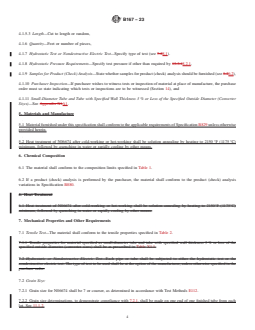
4.1.5.3 Length—Cut to length or random,
4.1.6 Quantity—Feet or number of pieces,
4.1.7 Hydrostatic Test or Nondestructive Electric Test—Specify type of test (see 7.28.1).
4.1.8 Hydrostatic Pressure Requirements—Specify test pressure if other than required by 13.3.18.2.1,
4.1.9 Samples for Product (Check) Analysis—State whether samples for product (check) analysis should be furnished (see 5.26.2),
4.1.10 Purchaser Inspection—If purchaser wishes to witness tests or inspection of material at place of manufacture, the purchase
order must so state indicating which tests or inspections are to be witnessed (Section 14), and
4.1.11 Small-Diameter Tube and Tube with Specified Wall Thickness 3 % or Less of the Specified Outside Diameter (Converter
Sizes)—See Appendix X1A1.
5. Materials and Manufacture
5.1 Material furnished under this specification shall conform to the applicable requirements of Specification B829 unless otherwise
provided herein.
5.2 Heat treatment of N06674 after cold-working or hot-working shall be solution annealing by heating to 2150 °F (1175 °C)
minimum, followed by quenching in water or rapidly cooling by other means.
6. Chemical Composition
6.1 The material shall conform to the composition limits specified in Table 1.
6.2 If a product (check) analysis is performed by the purchaser, the material shall conform to the product (check) analysis
variations in Specification B880.
6. Heat Treatment
6.1 Heat treatment of N06674 after cold-working or hot-working shall be solution annealing by heating to 2150°F (1175°C)
minimum, followed by quenching in water or rapidly cooling by other means.
7. Mechanical Properties and Other Requirements
7.1 Tensile Test—The material shall conform to the tensile properties specified in Table 2.
7.1.1 Tensile properties for material specified as small-diameter tube and tube with specified wall thickness 3 % or less of the
specified outside diameter (converter sizes) shall be as prescribed in Table X1.1.
7.2 Hydrostatic or Nondestructive Electric Test—Each pipe or tube shall be subjected to either the hydrostatic test or the
nondestructive electric test. The type of test to be used shall be at the option of the manufacturer, unless otherwise specified in the
purchase order.
7.2 Grain Size:
7.2.1 Grain size for N06674 shall be 7 or coarser, as determined in accordance with Test Methods E112.
7.2.2 Grain size determinations, to demonstrate compliance with 7.2.1, shall be made on one end of one finished tube from each
lot. See 11.1.2.
B167 − 23
TABLE 2 Mechanical Properties
Tensile
Yield Strength (0.2 % offset), Elongation in 2 in. or 50 mm
Condition and Size Strength, min
min, psi (MPa) or 4D min,%
psi (MPa)
UNS N06025:
Hot-worked annealed 98 000 (680) 39 000 (270) 30
or cold worked
annealed (all sizes)
UNS N06045:
Hot-worked annealed 90 000 (620) 35 000 (240) 35
or cold-worked
annealed (all sizes)
UNS N06600:
Hot-worked or hot-
worked annealed:
5 in. (127 mm) in 80 000 (550) 30 000 (205) 35
outside diameter and
under
Over 5 in. (127 75 000 (515) 25 000 (170) 35
mm) in outside
diameter
Cold-worked
annealed:
5 in. (127 mm) in 80 000 (550) 35 000 (240) 30
outside diameter and
under
Over 5 in. (127 80 000 (550) 30 000 (205) 35
mm) in outside
diameter
UNS N06601:
Cold-worked annealed
or hot-worked
annealed:
All sizes 80 000 (550) 30 000 (205) 30
UNS N06603:
Hot-worked annealed 94 000 (650) 43 000 (300) 25
or cold worked
annealed (all sizes)
UNS N06617:
Cold-worked annealed 95 000 (665) 35 000 (240) 35
or hot-worked
annealed: All sizes
UNS N06674:
Cold-worked annealed 86 000 (590) 34 000 (235) 30
or hot-worked
annealed: All sizes
UNS N06690:
Hot-worked or hot-
worked annealed:
5 in. (127 mm) in 85 000 (586) 30 000 (205) 35
outside diameter
and under
Over 5 in. (127 75 000 (515) 25 000 (170) 35
mm) in outside
diameter
Cold-worked
annealed:
5 in. (127 mm) in 85 000 (586) 35 000 (240) 30
outside diameter and
under
Over 5 in. (127 85 000 (586) 30 000 (205) 35
mm) in outside
diameter
UNS N06693:
Cold-worked annealed 100 000 (690) 50 000 (345) 30
or hot- worked
annealed: 5 in. (127
mm) in outside
diameter and under
UNS N06696
Cold-worked annealed 85 000 (586) 35 000 (240) 30
(all sizes)
UNS N06235
Hot-worked annealed 90 000 (620) 35 000 (240) 35
or cold worked
annealed (all sizes)
UNS N06699
B167 − 23
TABLE 2 Continued
Tensile
Yield Strength (0.2 % offset), Elongation in 2 in. or 50 mm
Condition and Size Strength, min
min, psi (MPa) or 4D min,%
psi (MPa)
Hot-worked annealed 89 000 (610) 35 000 (240) 40
or cold worked
annealed (all sizes)
8. Nondestructive Testing and Examination
8.1 Hydrostatic or Nondestructive Electric Test—Each pipe or tube shall be subjected to either the hydrostatic test or the
nondestructive electric test. The type of test to be used shall be at the option of the manufacturer, unless otherwise specified in the
purchase order.
8.2 Hydrostatic Test—Each pipe or tube with an outside diameter ⁄8 in. (3 mm) and larger and with wall thickness of 0.015 in.
(0.38 mm) and over shall be tested by the manufacturer to an internal hydrostatic pressure of 1000 psi (6.9 MPa) provided that
the fiber stress calculated in accordance with the following equation does not exceed the allowable fiber stress, S, indicated as
follows:
P 5 2St⁄D (1)
where:
P = hydrostatic test pressure, psi (or MPa),
t = minimum wall thickness, in. (or mm), equal to the specified nominal wall minus the permissible minus wall tolerance, or
the specified minimum wall thickness,
D = outside diameter of the pipe or tube, in. (or mm), and
S = allowable fiber stress, for material in the condition (temper) furnished as follows:
Hot-worked or hot-worked annealed: —
UNS N06025 24 000 (165 MPa)
UNS N06045 22 500 (155 MPa)
UNS N06600 20 000 (140 MPa)
UNS N06601 20 000 (140 MPa)
UNS N06603 24 000 (165 MPa)
UNS N06617 23 700 (163 MPa)
UNS N06690 21 200 (146 MPa)
UNS N06674 21 500 (148 MPa)
UNS N06693 25 000 (172 MPa)
UNS N06235 22 500 (155 MPa)
UNS N06699 22 100 (152 MPa)
Over 5 in. outside diameter: —
UNS N06600 16 700 (115 MPa)
UNS N06690 16 700 (115 MPa)
Cold-worked annealed—All sizes: —
UNS N06025 24 500 (169 MPa)
UNS N06045 22 500 (155 MPa)
UNS N06600 20 000 (140 MPa)
UNS N06601 20 000 (140 MPa)
UNS N06674 21 500 (148 MPa)
UNS N06690 21 200 (146 MPa)
UNS N06693 21 200 (146 MPa)
UNS N06696 21 200 (146 MPa)
UNS N06235 22 500 (155 MPa)
UNS N06699 22 100 (152 MPa)
8.2.1 When so agreed upon between the manufacturer and purchaser, pipe or tube may be tested to 1 ⁄2 times the allowable fiber
stress given above.
8.2.2 If any pipe or tube shows leaks during hydrostatic testing, it shall be rejected.
8.3 Nondestructive Electric Test—Each pipe or tube shall be examined with a nondestructive electric test in accordance with
Specification B829.
B167 − 23
9. Dimensions and Permissible Variations
9.1 Diameter, Wall Thickness, and Length—The permissible variations in the outside diameter and wall thickness shall conform
to the permissible variations prescribed in the Permissible Variations for Outside Diameter and Wall Thickness of Seamless
Cold-Worked Pipe and Tube, Permissible Variations for Outside Diameter and Wall Thickness of Hot-Finished Tube, and
Permissible Variations for Outside Diameter and Wall Thickness of Seamless Hot-Worked Pipe tables in Specification B829. The
permissible variations in the length shall conform to the permissible variations prescribed in the Permissible Variations in Length
table in Specification B829.
8.2 Permissible variations for material specified as small-diameter and light-wall tube (converter size) shall conform to the
permissible variations prescribed in Table X1.2.
10. Workmanship, Finish, and Appearance
10.1 The material shall be uniform in quality and temper, smooth, commercially straight, and free of injurious imperfections.
11. Sampling
11.1 Lot Definition:
11.1.1 A lot for chemical analysis shall consist of one heat.
11.1.2 A lot for all other testing shall consist of all material from the same heat, nominal size (excepting length), and condition.
11.1.2.1 Where material cannot be identified by heat, a lot shall consist of not more than 500 lb (227 kg) of material in the same
condition and nominal size (excepting length).
11.2 Test Material Selection:
11.2.1 Chemical Analysis—Representative samples from each lot shall be taken during pouring or subsequent processing.
11.2.1.1 Product (check) analysis shall be wholly the responsibility of the purchaser.
11.2.2 Mechanical and Other Properties—Samples of the material to provide test specimens for mechanical and other properties
shall be taken from such locations in each lot as to be representative of that lot. Test specimens shall be taken from material in
the final condition.
12. Number of Tests
12.1 Chemical Analysis—One test per lot.
12.2 Tension—One test per lot.
11.3 Hydrostatic or Nondestructive Electric Test—Each piece in each lot.
12. Specimen Preparation
12.1 Room-Temperature Tension Specimen—Material shall
...