

ASTM E1137/E1137M-08(2020)
(Specification)Standard Specification for Industrial Platinum Resistance Thermometers
General Information
- Abstract
ABSTRACT
This specification establishes the physical, performance, and testing requirements, as well as resistance-temperature relationship and tolerances for metal-sheathed industrial platinum resistance thermometers (PRT) suitable for direct immersion temperature measurement. All materials including the sheath materials, sensing elements, insulation, connecting wire end closure materials, epoxy materials, and connecting wires shall be in accordance with specified requirements. The PRT shall be subjected to corresponding qualification tests to demonstrate conformance to the acceptance criteria of the following properties: insulation resistance; resistance versus temperature; minimum immersion length; pressure; thermal response time; vibration; self-heating; stability; thermoelectric effect; mechanical shock; and dimensions.
SIGNIFICANCE AND USE
4.1 This specification is written to provide common terminology, resistance versus temperature characteristics, accuracy classification, and inspection requirements for a specified configuration of a typical industrial platinum resistance thermometer (PRT).
4.2 This specification may be used as part of the documentation to support negotiations for the purchase and discussion of such thermometers.
SCOPE
1.1 This specification covers the requirements for metal-sheathed industrial platinum resistance thermometers (PRT's) suitable for direct immersion temperature measurement. It applies to PRT's with an average temperature coefficient of resistance between 0 and 100 °C of 0.385 %/°C and nominal resistance at 0 °C of 100 Ω or other specified value. This specification covers PRT's suitable for all or part of the temperature range −200 to 650 °C. The resistance-temperature relationship and tolerances are specified as well as physical, performance, and testing requirements.
1.2 The values of temperature in this specification are based on the International Temperature Scale of 1990 (ITS-90).2
1.3 The values stated in inch-pound units or SI (metric) units may be regarded separately as standard. The values stated in each system are not exact equivalents, and each system shall be independent of the other.
1.4 This standard does not purport to address all of the safety concerns, if any, associated with its use. It is the responsibility of the user of this standard to establish appropriate safety, health, and environmental practices and determine the applicability of regulatory limitations prior to use.
1.5 This international standard was developed in accordance with internationally recognized principles on standardization established in the Decision on Principles for the Development of International Standards, Guides and Recommendations issued by the World Trade Organization Technical Barriers to Trade (TBT) Committee.
- Status
- Published
- Publication Date
- 30-Apr-2020
- Technical Committee
- E20 - Temperature Measurement
- Drafting Committee
- E20.03 - Resistance Thermometers
Overview
ASTM E1137/E1137M-08(2020) - Standard Specification for Industrial Platinum Resistance Thermometers establishes uniform requirements and terminology for metal-sheathed industrial platinum resistance thermometers (PRTs). These thermometers are widely used for precise and reliable direct immersion temperature measurement in industrial environments across a range of −200 °C to 650 °C, with a nominal resistance of 100 Ω at 0 °C or as specified. The specification is aligned with the International Temperature Scale of 1990 (ITS-90), supporting global consistency in temperature measurement practices.
This standard sets crucial physical, performance, and testing criteria for PRTs, covering their resistance-temperature relationship, accuracy tolerances, and construction materials. The requirements ensure proper operation under various industrial conditions, providing a foundation for product quality, procurement specifications, and regulatory compliance.
Key Topics
Material Requirements: The standard details acceptable sheath materials (e.g., stainless steel, high-nickel alloys), platinum sensing elements, appropriate insulation (magnesium oxide or alumina), and closure materials for durability and moisture resistance.
Performance Criteria: PRTs must meet strict limits for insulation resistance, resistance versus temperature behavior, and minimum immersion length. Additional requirements address response time, vibration, self-heating, thermal stability, thermoelectric effects, and mechanical shock tolerance.
Accuracy Classes: Defines Grade A and Grade B tolerance classes, specifying resistance versus temperature accuracy to ensure reliable readings.
Testing and Qualification: Outlines required qualification and acceptance tests, including pressure, vibration, shock, and thermal response time tests. Manufacturers must document and confirm compliance to guarantee reliability in demanding settings.
Ordering Information: Guidance is provided for specifying critical details in purchase orders, such as sheath diameter, length, material, temperature range, connection configuration, and identification requirements.
Marking and Packaging: Each PRT must have permanent identification (serial number, grade, ASTM designation) and be packaged to prevent shipping and handling damage.
Applications
Industrial platinum resistance thermometers specified by ASTM E1137/E1137M are essential for accurate temperature measurement and control in a wide range of sectors, including:
- Process industries: Chemicals, oil and gas, food and beverage processing, and pharmaceuticals, where stable and precise temperature monitoring is critical for quality and safety.
- Energy and utilities: Power generation, heating plants, and HVAC systems benefit from consistent monitoring across wide temperature ranges.
- Calibration laboratories: For traceable temperature measurement and quality assurance, PRTs built to this standard provide reliable reference points.
- Research and manufacturing: Used in environments requiring robust sensors with excellent resistance to vibration, pressure, and thermal cycling.
These thermometers are particularly valued for their repeatability, stability, and compliance with international measurement systems, making them integral to both process control and instrumentation calibration.
Related Standards
For comprehensive coverage in industrial temperature measurement and sensor quality, consider these related ASTM standards:
- ASTM E344: Terminology Relating to Thermometry and Hydrometry
- ASTM E644: Test Methods for Testing Industrial Resistance Thermometers
- ASTM A269: Specification for Seamless and Welded Austenitic Stainless Steel Tubing
- ASTM B167: Specification for Nickel-Chromium-Iron and Related Alloy Tubing
- ASTM E1652: Specification for Magnesium Oxide and Aluminum Oxide Insulators
These documents support the selection, testing, and application of platinum resistance thermometers according to ASTM E1137/E1137M and facilitate global interchangeability and compliance within the industrial temperature measurement sector.
Keywords: ASTM E1137, platinum resistance thermometer, PRT, industrial temperature measurement, ITS-90, sensor tolerance, metal-sheathed PRT, resistance-temperature relationship, testing requirements.
Relations
- Effective Date
- 01-Dec-2023
- Effective Date
- 01-Nov-2023
- Effective Date
- 01-Nov-2019
- Effective Date
- 01-Sep-2019
- Effective Date
- 01-Apr-2018
- Effective Date
- 01-Nov-2016
- Effective Date
- 01-Jun-2016
- Effective Date
- 01-May-2014
- Effective Date
- 15-Jan-2014
- Effective Date
- 01-Oct-2013
- Effective Date
- 01-May-2013
- Effective Date
- 01-May-2012
- Effective Date
- 01-Oct-2011
- Effective Date
- 01-May-2011
- Effective Date
- 01-Nov-2010
Get Certified
Connect with accredited certification bodies for this standard

BSMI (Bureau of Standards, Metrology and Inspection)
Taiwan's standards and inspection authority.
Sponsored listings
Frequently Asked Questions
ASTM E1137/E1137M-08(2020) is a technical specification published by ASTM International. Its full title is "Standard Specification for Industrial Platinum Resistance Thermometers". This standard covers: ABSTRACT This specification establishes the physical, performance, and testing requirements, as well as resistance-temperature relationship and tolerances for metal-sheathed industrial platinum resistance thermometers (PRT) suitable for direct immersion temperature measurement. All materials including the sheath materials, sensing elements, insulation, connecting wire end closure materials, epoxy materials, and connecting wires shall be in accordance with specified requirements. The PRT shall be subjected to corresponding qualification tests to demonstrate conformance to the acceptance criteria of the following properties: insulation resistance; resistance versus temperature; minimum immersion length; pressure; thermal response time; vibration; self-heating; stability; thermoelectric effect; mechanical shock; and dimensions. SIGNIFICANCE AND USE 4.1 This specification is written to provide common terminology, resistance versus temperature characteristics, accuracy classification, and inspection requirements for a specified configuration of a typical industrial platinum resistance thermometer (PRT). 4.2 This specification may be used as part of the documentation to support negotiations for the purchase and discussion of such thermometers. SCOPE 1.1 This specification covers the requirements for metal-sheathed industrial platinum resistance thermometers (PRT's) suitable for direct immersion temperature measurement. It applies to PRT's with an average temperature coefficient of resistance between 0 and 100 °C of 0.385 %/°C and nominal resistance at 0 °C of 100 Ω or other specified value. This specification covers PRT's suitable for all or part of the temperature range −200 to 650 °C. The resistance-temperature relationship and tolerances are specified as well as physical, performance, and testing requirements. 1.2 The values of temperature in this specification are based on the International Temperature Scale of 1990 (ITS-90).2 1.3 The values stated in inch-pound units or SI (metric) units may be regarded separately as standard. The values stated in each system are not exact equivalents, and each system shall be independent of the other. 1.4 This standard does not purport to address all of the safety concerns, if any, associated with its use. It is the responsibility of the user of this standard to establish appropriate safety, health, and environmental practices and determine the applicability of regulatory limitations prior to use. 1.5 This international standard was developed in accordance with internationally recognized principles on standardization established in the Decision on Principles for the Development of International Standards, Guides and Recommendations issued by the World Trade Organization Technical Barriers to Trade (TBT) Committee.
ABSTRACT This specification establishes the physical, performance, and testing requirements, as well as resistance-temperature relationship and tolerances for metal-sheathed industrial platinum resistance thermometers (PRT) suitable for direct immersion temperature measurement. All materials including the sheath materials, sensing elements, insulation, connecting wire end closure materials, epoxy materials, and connecting wires shall be in accordance with specified requirements. The PRT shall be subjected to corresponding qualification tests to demonstrate conformance to the acceptance criteria of the following properties: insulation resistance; resistance versus temperature; minimum immersion length; pressure; thermal response time; vibration; self-heating; stability; thermoelectric effect; mechanical shock; and dimensions. SIGNIFICANCE AND USE 4.1 This specification is written to provide common terminology, resistance versus temperature characteristics, accuracy classification, and inspection requirements for a specified configuration of a typical industrial platinum resistance thermometer (PRT). 4.2 This specification may be used as part of the documentation to support negotiations for the purchase and discussion of such thermometers. SCOPE 1.1 This specification covers the requirements for metal-sheathed industrial platinum resistance thermometers (PRT's) suitable for direct immersion temperature measurement. It applies to PRT's with an average temperature coefficient of resistance between 0 and 100 °C of 0.385 %/°C and nominal resistance at 0 °C of 100 Ω or other specified value. This specification covers PRT's suitable for all or part of the temperature range −200 to 650 °C. The resistance-temperature relationship and tolerances are specified as well as physical, performance, and testing requirements. 1.2 The values of temperature in this specification are based on the International Temperature Scale of 1990 (ITS-90).2 1.3 The values stated in inch-pound units or SI (metric) units may be regarded separately as standard. The values stated in each system are not exact equivalents, and each system shall be independent of the other. 1.4 This standard does not purport to address all of the safety concerns, if any, associated with its use. It is the responsibility of the user of this standard to establish appropriate safety, health, and environmental practices and determine the applicability of regulatory limitations prior to use. 1.5 This international standard was developed in accordance with internationally recognized principles on standardization established in the Decision on Principles for the Development of International Standards, Guides and Recommendations issued by the World Trade Organization Technical Barriers to Trade (TBT) Committee.
ASTM E1137/E1137M-08(2020) is classified under the following ICS (International Classification for Standards) categories: 17.200.20 - Temperature-measuring instruments. The ICS classification helps identify the subject area and facilitates finding related standards.
ASTM E1137/E1137M-08(2020) has the following relationships with other standards: It is inter standard links to ASTM E344-23, ASTM B167-23, ASTM E644-11(2019), ASTM E344-19, ASTM E344-18, ASTM E344-16, ASTM B167-11(2016), ASTM E1652-14a, ASTM E1652-14, ASTM A269-13, ASTM E344-13, ASTM E344-12, ASTM B167-11, ASTM E644-11, ASTM E344-10. Understanding these relationships helps ensure you are using the most current and applicable version of the standard.
ASTM E1137/E1137M-08(2020) is available in PDF format for immediate download after purchase. The document can be added to your cart and obtained through the secure checkout process. Digital delivery ensures instant access to the complete standard document.
Standards Content (Sample)
This international standard was developed in accordance with internationally recognized principles on standardization established in the Decision on Principles for the
Development of International Standards, Guides and Recommendations issued by the World Trade Organization Technical Barriers to Trade (TBT) Committee.
Designation: E1137/E1137M −08 (Reapproved 2020)
Standard Specification for
Industrial Platinum Resistance Thermometers
ThisstandardisissuedunderthefixeddesignationE1137/E1137M;thenumberimmediatelyfollowingthedesignationindicatestheyear
of original adoption or, in the case of revision, the year of last revision.Anumber in parentheses indicates the year of last reapproval.
A superscript epsilon (´) indicates an editorial change since the last revision or reapproval.
1. Scope A269Specification for Seamless and Welded Austenitic
Stainless Steel Tubing for General Service
1.1 This specification covers the requirements for metal-
B167Specification for Nickel-Chromium-AluminumAlloys
sheathed industrial platinum resistance thermometers (PRT’s)
(UNS N06699), Nickel-Chromium-Iron Alloys (UNS
suitable for direct immersion temperature measurement. It
N06600, N06601, N06603, N06690, N06693, N06025,
applies to PRT’s with an average temperature coefficient of
N06045, and N06696), Nickel-Chromium-Cobalt-
resistance between 0 and 100 °C of 0.385%⁄°C and nominal
Molybdenum Alloy (UNS N06617), Nickel-Iron-
resistance at 0 °C of 100 Ω or other specified value. This
Chromium-Tungsten Alloy (UNS N06674), and
specification covers PRT’s suitable for all or part of the
E344Terminology Relating to Thermometry and Hydrom-
temperature range−200 to 650 °C. The resistance-temperature
etry
relationship and tolerances are specified as well as physical,
E644Test Methods for Testing Industrial Resistance Ther-
performance, and testing requirements.
mometers
1.2 Thevaluesoftemperatureinthisspecificationarebased
E1652Specification for Magnesium Oxide and Aluminum
on the International Temperature Scale of 1990 (ITS-90).
Oxide Powder and Crushable Insulators Used in the
1.3 The values stated in inch-pound units or SI (metric) Manufacture of Base Metal Thermocouples, Metal-
Sheathed Platinum Resistance Thermometers, and Noble
unitsmayberegardedseparatelyasstandard.Thevaluesstated
ineachsystemarenotexactequivalents,andeachsystemshall Metal Thermocouples
be independent of the other.
3. Terminology
1.4 This standard does not purport to address all of the
3.1 Definitions:
safety concerns, if any, associated with its use. It is the
responsibility of the user of this standard to establish appro- 3.1.1 For definitions of terms used in this specification see
Terminology E344.
priate safety, health, and environmental practices and deter-
mine the applicability of regulatory limitations prior to use. 3.2 Definitions of Terms Specific to This Standard:
1.5 This international standard was developed in accor- 3.2.1 connecting wire end closure, n—moisture barrier at
dance with internationally recognized principles on standard- the connecting wire end of the sheath.
ization established in the Decision on Principles for the 3.2.1.1 Discussion—The closure is intended to provide a
Development of International Standards, Guides and Recom- sealsufficienttopreventthesensor’sinsulationresistancefrom
mendations issued by the World Trade Organization Technical dropping below the minimum requirements.
Barriers to Trade (TBT) Committee.
3.2.2 connecting wires, n—wires that run from the element
through the connecting wire end closure and external to the
2. Referenced Documents
sheath.
2.1 ASTM Standards:
3.2.3 excitation, n—electrical current passing through the
element.
3.2.4 g-level, n—acceleration of an object relative to the
This specification is under the jurisdiction of ASTM Committee E20 on
local acceleration of gravity.
Temperature Measurement and is the direct responsibility of Subcommittee E20.03
3.2.4.1 Discussion—For example, a g-level of 5 is equiva-
on Resistance Thermometers.
Current edition approved May 1, 2020. Published May 2020. Originally lent to an acceleration of approximately
2 2
approved in 1987. Last previous edition approved in 2014 as E1137/E1137M–08
5×9.8 m⁄s =49.0 m⁄s .
(2014). DOI: 10.1520/E1137_E1137M-08R20.
3.2.5 minimum immersion length, n—depth that a thermom-
Preston-Thomas, H., “The International Temperature Scale of 1990 (ITS-90),”
Metrologia, Vol 27, No. 1, 1990, pp. 3–10, ibid, Vol 27, No. 2, 1990, p. 107
eter should be immersed, in a uniform temperature
For referenced ASTM standards, visit the ASTM website, www.astm.org, or
environment, such that further immersion does not produce a
contact ASTM Customer Service at service@astm.org. For Annual Book of ASTM
change in indicated temperature greater than the specified
Standards volume information, refer to the standard’s Document Summary page on
the ASTM website. tolerance.
Copyright © ASTM International, 100 Barr Harbor Drive, PO Box C700, West Conshohocken, PA 19428-2959. United States
E1137/E1137M − 08 (2020)
3.2.6 PRT design, n—generic term used to differentiate 6.1.6 Connection configuration; 2-Wire, 3-Wire, 4-Wire
between different PRT construction details, such as element (potentiometric), and compensating loop (4-Wire) (see Fig. 2),
and connecting wire construction, insulation methods, sealing
6.1.7 Tolerance, (Grade A, or Grade B),
techniques,andmountingmethods(forexample,springloaded
6.1.8 Nominal resistance at 0 °C (100 Ω unless otherwise
or direct mounting).
specified), and
3.2.7 self-heating, n—change in temperature of the element
6.1.9 Serial Number identification requirement (mandatory
caused by the heating effect of the excitation.
if an individual calibration or test record will be maintained).
3.2.8 sheath, n—cylindrical metal tube with an integral
7. Materials and Manufacture
welded closure at the end in which the element is located.
7.1 All materials used shall be in accordance with the
4. Significance and Use
following requirements:
4.1 This specification is written to provide common
7.1.1 Sheath Materials—For temperatures not exceeding
terminology, resistance versus temperature characteristics, ac-
480 °C, austenitic stainless steel tubing, conforming to Speci-
curacy classification, and inspection requirements for a speci-
fication A269. For temperatures not exceeding 650 °C, high-
fied configuration of a typical industrial platinum resistance
nickel alloy tubing, conforming to Specification B167.
thermometer (PRT).
7.1.2 Sensing Element—Sensing element shall be platinum.
4.2 This specification may be used as part of the documen- 7.1.3 Insulation—The insulating material within the PRT
tation to support negotiations for the purchase and discussion
shallbecompatiblewiththetemperaturerange−200to650°C
of such thermometers. or as specified in 6.1.4. Magnesium oxide (MgO) and alumi-
numoxide(Al O )powdersandcrushableinsulatorsconform-
2 3
5. Classification of Tolerances
ing to Specification E1652 satisfy this requirement.
7.1.4 Connecting Wire End Closure Materials—Closure
5.1 The PRT shall conform to the resistance-temperature
materialsshallprovideabarrieragainstwaterandotherliquids
relation (see 9.2.1) within the following tolerances:
and generally prevent the penetration of water vapor. Any
Grade A56@0.1310.0017? t ? #°C (1)
material used shall be compatible with the ambient tempera-
Grade B56 0.2510.0042 ? t ? °C (2)
@ #
tures specified for the application (see 6.1.5).
where: 7.1.4.1 Typically, epoxy materials are used for ambient
temperatures less than 200 °C and moisture impervious ce-
| t | = value of temperature without regard to sign, °C.
ramic adhesives are used over 200 °C, but the connecting wire
5.1.1 The tolerances are given in Table 1 for a PRT with a
end closure shall not be limited to these materials if the end
nominal resistance of 100 Ω at 0 °C.
closure meets all other requirements of this specification.
7.1.5 Connecting Wires—Typically, materials of connecting
6. Ordering Information
wiresare:nickelplatedcopper,nickel,platinum,constantan,or
6.1 The purchase order documents shall specify the follow-
manganin. Individual connecting wires may be comprised of
inginformationtoensurethatthePRTisadequatelydescribed:
two or more different materials and sizes over their length to
6.1.1 The number of this specification,
accommodate different requirements internal and external to
6.1.2 Sheath diameter and overall length (see Fig. 1),
thesensorsheath.Wheredifferentmaterialsareused,caremust
6.1.3 Sheath material,
be exercised in their selection to minimize thermoelectrically
6.1.4 Minimum and maximum sensed temperature,
induced measurement error (see 9.6). Any material used in
6.1.5 Maximum and minimum temperature at connecting
joining the connecting wires to the PRT element must with-
wire end closure,
stand the maximum operating temperature of the PRT.
8. Other Requirements
A,B
TABLE 1 Classification Tolerances
8.1 Pressure—The PRTshall withstand an external pressure
Temperature, t, Grade A Grade B
of 21 MPa (3000 psig) and shall be tested in accordance with
°C °C Ω °C Ω
−200 0.47 0.20 1.1 0.47 Test Methods E644 pressure test.The PRTshall remain within
−100 0.30 0.12 0.67 0.27
the tolerance specified in 5.1.
0 0.13 0.05 0.25 0.10
100 0.30 0.11 0.67 0.25
8.2 Vibration:
200 0.47 0.17 1.1 0.40
8.2.1 ThePRTshallwithstandvibrationtestingasdescribed
300 0.64 0.23 1.5 0.53
400 0.81 0.28 1.9 0.66 in Test Methods E644 using the test parameters in Table 2.
500 0.98 0.33 2.4 0.78
8.2.2 The PRT shall be mounted by installation in the
600 1.15 0.37 2.8 0.89
650 1.24 0.40 3.0 0.94 thermowell or by threaded connection to simulate normal
A
mounting procedure as limited by Table 2.
The table represents values for 3-wire and 4-wire PRT’s. Caution must be
exercised with 2-wire PRT’s because of possible errors caused by connecting
8.2.3 The PRT shall be continuously energized with an
wires.
B oscilloscope-monitored1.0mAdcexcitation.Thereshallbeno
Tabulated values are based on elements of 100.0 Ω (nominal) at 0 °C.
discontinuity of the monitored trace during the test.
E1137/E1137M − 08 (2020)
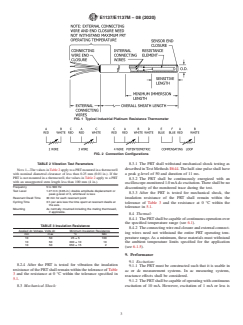
FIG. 1 Typical Industrial Platinum Resistance Thermometer
FIG. 2 Connection Configurations
TABLE 2 Vibration Test Parameters
8.3.1 The PRT shall withstand mechanical shock testing as
describedinTestMethodsE644.Thehalf-sinepulseshallhave
NOTE1—ThevaluesinTable2applytoaPRTmountedinathermowell
a peak g-level of 50 and duration of 11 ms.
with nominal diametral clearance of less than 0.25 mm (0.01 in.). If the
PRTis not mounted in a thermowell, the values in Table 2 apply to a PRT
8.3.2 The PRT shall be continuously energized with an
with an unsupported stem length less than 100 mm (4 in.).
oscilloscope-monitored1.0mAdcexcitation.Thereshallbeno
Frequency 5 to 500 Hz
discontinuity of the monitored trace during the test.
Test Level 1.27 mm (0.05-in.) double amplitude displacement or
8.3.3 After the PRT is tested for mechanical shock, the
peak g-level of 3, whichever is less
Resonant Dwell Time 30 min for each resonant point insulation resistance of the PRT shall remain within the
Cycling Time 3 h per axis less the time spent at resonant dwells at
tolerance of Table 3 and the resistance at 0 °C within the
the axis.
tolerance in 5.1.
Mounting As normally mounted including the mating thermowell,
if applicable.
8.4 Thermal:
8.4.1 ThePRTshallbecapableofcontinuousoperationover
the specified temperature range (see 6.1).
TABLE 3 Insulation Resistance
8.4.2 Theconnectingwireendclosureandexternalconnect-
Applied dc Voltage, Volts dc Minimum Insulation Resistance
ing wires need not withstand the entire PRT operating tem-
min max °C MΩ
perature range.As a minimum, these materials must withstand
10 50 25 ± 5 100
10 50 300 ± 10 10
the ambient temperature limits specified for the application
10 50 650 ± 15 2
(see 6.1.5).
9. Performance
9.1 Excitation:
8.2.4 After the PRT is tested for vibration the insulation
9.1.1 The PRT must be constructed such that it is usable in
resistanceofthePRTshallremainwithinthetoleranceofTable
ac or dc measurement systems. In ac measuring systems,
3 and the resistance at 0 °C within the tolerance specified in
reactance effects shall be considered.
5.1.
9.1.2 ThePRTshallbecapableofoperatingwithcontinuous
8.3 Mechanical Shock: excitation of 10 mA. However, excitation of 1 mA or less is
E1137/E1137M − 08 (2020)
recommendedtominimizemeasurementerrorsassociatedwith sion length shall be less than 51 mm (2 in.). The limit of
self-heating (see 9.4). uncertaintyshallbe0.13and0.25°CforGradeAandGradeB
PRT’s respectively.
9.2 Resistance Versus Temperature Relation:
9.2.1 Resistance-Temperature Equations—Within the speci- 9.9 End Seal Integrity—When tested in accordance with
fied tolerances (see 5.1), the PRT shall have resistance- Test Methods E644, the PRT shall meet the minimum insula-
temperature characteristics defined as follows: tion resistance value at 25 6 5 °C as specified in Table 3.
for the range−200 °C ≤ t < 0 °C:
10. Dimensions, Mass, and Permissible Variations
2 3
R 5 R 11At1Bt 1C t 2 100 t Ω (3)
@ ~ ! #
t o
10.1 A PRT without a process fitting or other means of
for the range 0 °C ≤ t ≤ 650 °C:
attachment is shown in Fig. 1.
R 5 R @11At1Bt # Ω (4)
t o
10.2 PRT’s manufactured in accordance with this specifica-
tion shall be able to pass through the straightness ring gauge
where:
with the gauge sizes listed in Table 6.
t = temperature (ITS-90), °C,
R = resistance at temperature (t),
t
11. Required Tests
R = resistance at 0 °C,
o
−3 −1
A = 3.9083×10 °C ,
11.1 Qualification Tests—The PRT shall be subjected to the
−7 −2
B = −5.775×10 °C , and
tests outlined in Table 7 to demonstrate conformance to this
−12 −4
C = −4.183×10 °C .
specification. The manufacturer shall perform these tests at
least one time to qualify the PRT design. Thereafter, it is
9.2.2 Resistance Table—Resistance values of the PRT ver-
recommended these tests be used on a periodic basis to verify
sus temperature using the equations of 9.2.1 and R of 100 Ω
o
process control.
are given in Table 4.
11.1.1 Qualification Test Report—The manufacturer shall
...