

ASTM D4552/D4552M-20
(Classification)Standard Classification for Hot-Mix Recycling Agents
General Information
- Abstract
SIGNIFICANCE AND USE
3.1 Recycling of deteriorated asphalt pavements is being used with increasing frequency for its economy and benefit of conserving raw materials. The objective of recycling is to reuse the two ingredients of asphalt concrete-aggregate and asphalt binder and to restore the desired properties to the mixture. Recycling is carried out hot or cold, depending on the condition of the deteriorated pavement, construction procedure, availability of equipment, and cost. This classification is for classifying recycling agents to be used in recycled asphalt mixtures.
Note 3: The quality of the results produced by this standard are dependent on the competence of the personnel performing the procedure and the capability, calibration, and maintenance of the equipment used. Agencies that meet the criteria of Specification D3666 are generally considered capable of competent and objective testing, sampling, inspection, etc. Users of this standard are cautioned that compliance with Specification D3666 alone does not completely ensure reliable results. Reliable results depend on many factors; following the suggestions of Specification D3666 or some similar acceptable guideline provides a means of evaluating and controlling some of those factors.
SCOPE
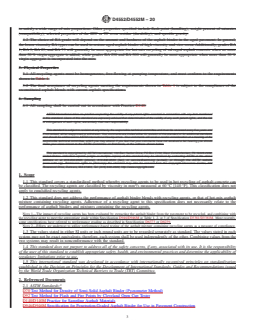
1.1 This standard covers a standardized method whereby recycling agents to be used in hot recycling of asphalt concrete can be classified. The recycling agents are classified by viscosity in mm2/s measured at 60 °C [140 °F]. This classification does not apply to emulsified recycling agents.
1.2 This standard does not address the performance of asphalt binder blends with recycling agents, or that of hot-mix asphalt mixture containing recycling agents. Adherence of a recycling agent to this specification does not necessarily relate to the performance of asphalt binders and mixtures containing the recycling agents.
Note 1: The impact of recycling agents has been evaluated by extracting the asphalt binder from the pavement to be recycled, and combining with the recycling agent to meet the appropriate grade within Specification D946/D946M or Table 1, 2, or 3 of Specification D3381/D3381M. More recently, some specifications have referred to performance grading as described in Specification D6373 or D8239.
Note 2: Efforts are underway to utilize performance-based testing of the asphalt mixture containing recycling agents as a measure of compliance.
1.3 The values stated in either SI units or inch-pound units are to be regarded separately as standard. The values stated in each system may not be exact equivalents; therefore, each system shall be used independently of the other. Combining values from the two systems may result in nonconformance with the standard.
1.4 This standard does not purport to address all of the safety concerns, if any, associated with its use. It is the responsibility of the user of this standard to establish appropriate safety, health, and environmental practices and determine the applicability of regulatory limitations prior to use.
1.5 This international standard was developed in accordance with internationally recognized principles on standardization established in the Decision on Principles for the Development of International Standards, Guides and Recommendations issued by the World Trade Organization Technical Barriers to Trade (TBT) Committee.
- Status
- Published
- Publication Date
- 30-Jun-2020
- Technical Committee
- D04 - Road and Paving Materials
- Drafting Committee
- D04.40 - Asphalt Specifications


Overview
ASTM D4552/D4552M-20: Standard Classification for Hot-Mix Recycling Agents provides a standardized classification system for recycling agents used in the hot recycling of asphalt concrete. The standard, developed by ASTM International, enables the effective identification and selection of hot-mix recycling agents based primarily on their viscosity measured at 60 °C [140 °F]. This classification facilitates the reuse of aged asphalt pavement materials, contributing to the sustainability and cost-effectiveness of road construction and rehabilitation projects.
Key Topics
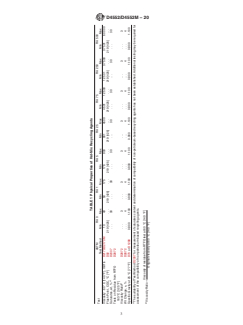
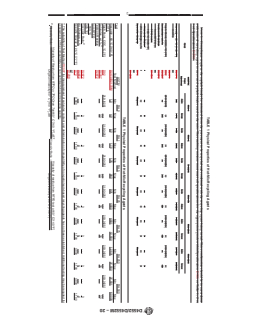
Classification by Viscosity: Recycling agents are grouped based on their kinematic viscosity into seven categories: RA 0, RA 1, RA 5, RA 25, RA 75, RA 250, and RA 500. This ensures that agents can be matched appropriately to the requirements of various hot-mix recycling scenarios.
Physical Property Requirements: The classification includes requirements not only for viscosity, but also properties such as:
- Flash point (important for safe handling)
- Saturates content (for compatibility)
- Properties of residue after aging tests (for durability)
- Specific gravity
Sampling and Quality Assurance: The standard specifies that sampling must follow ASTM D140/D140M, ensuring consistency and reliability. Results depend heavily on the competence of personnel and equipment calibration; agencies are encouraged to adhere to ASTM D3666 for testing and inspection.
Scope and Limitations: The classification does not directly address the performance of asphalt binder-recycling agent blends or hot-mix asphalt mixtures containing these agents. Compliance with this specification does not guarantee final mixture performance, which may be determined by additional specification or performance-based testing.
Applications
ASTM D4552/D4552M-20 is valuable for a range of stakeholders in road construction, pavement maintenance, and materials testing:
Hot-Mix Asphalt Recycling Projects: The standard aids engineers and contractors in selecting the right recycling agent for restoring the desired properties to recycled asphalt mixtures. Lower viscosity agents are typically best for rejuvenating highly aged binders, while higher viscosity agents are more appropriate when a significant portion of virgin aggregate is added.
Quality Assurance and Specification: By classifying recycling agents, the standard enables consistent material selection for state DOTs, contractors, and specification writers. It supports material testing laboratories in certifying products as fit for use in hot-mix asphalt recycling.
Sustainable Construction: Adoption of this classification supports environmental goals by encouraging the reuse of existing asphalt materials, thus reducing dependency on virgin resources and minimizing waste.
Related Standards
Several related ASTM standards are referenced for testing methods, material specifications, and quality control, including:
- ASTM D70/D1298: Test methods for determining the density or specific gravity of asphalt materials
- ASTM D92: Test method for flash and fire points
- ASTM D140/D140M: Practice for sampling asphalt materials
- ASTM D946/D946M, D3381/D3381M: Specifications for penetration- and viscosity-graded asphalt binders
- ASTM D2007: Method for characterizing petroleum-derived oils
- ASTM D2170/D2171: Viscosity testing methods for asphalt
- ASTM D2872: Rolling thin-film oven test for aging simulation
- ASTM D3666: Requirements for agencies engaged in testing and inspection of paving materials
- ASTM D6373, D8239: Performance grading of asphalt binders
Practical Value
Adhering to ASTM D4552/D4552M-20 helps achieve durable and high-performing recycled asphalt pavements by ensuring that recycling agents are appropriately selected and classified. This standard supports quality, safety, and sustainability in hot-mix asphalt recycling operations, playing a crucial role in modern infrastructure management and green construction practices.
Relations
- Effective Date
- 01-Jul-2020
- Effective Date
- 01-Mar-2024
- Effective Date
- 01-Dec-2023
- Effective Date
- 01-May-2020
- Effective Date
- 15-Dec-2019
- Effective Date
- 15-Dec-2017
- Effective Date
- 01-Oct-2016
- Effective Date
- 01-Oct-2016
- Effective Date
- 01-Jun-2016
- Effective Date
- 01-Dec-2015
- Effective Date
- 01-Jun-2015
- Effective Date
- 01-Jan-2015
- Effective Date
- 01-Jun-2014
- Effective Date
- 01-Dec-2013
- Effective Date
- 01-Jun-2013
Get Certified
Connect with accredited certification bodies for this standard

Zavod za gradbeništvo Slovenije (ZAG) - Inšpekcija
ZAG inspection body for construction products, structures, and materials.
Sponsored listings
Frequently Asked Questions
ASTM D4552/D4552M-20 is a standard published by ASTM International. Its full title is "Standard Classification for Hot-Mix Recycling Agents". This standard covers: SIGNIFICANCE AND USE 3.1 Recycling of deteriorated asphalt pavements is being used with increasing frequency for its economy and benefit of conserving raw materials. The objective of recycling is to reuse the two ingredients of asphalt concrete-aggregate and asphalt binder and to restore the desired properties to the mixture. Recycling is carried out hot or cold, depending on the condition of the deteriorated pavement, construction procedure, availability of equipment, and cost. This classification is for classifying recycling agents to be used in recycled asphalt mixtures. Note 3: The quality of the results produced by this standard are dependent on the competence of the personnel performing the procedure and the capability, calibration, and maintenance of the equipment used. Agencies that meet the criteria of Specification D3666 are generally considered capable of competent and objective testing, sampling, inspection, etc. Users of this standard are cautioned that compliance with Specification D3666 alone does not completely ensure reliable results. Reliable results depend on many factors; following the suggestions of Specification D3666 or some similar acceptable guideline provides a means of evaluating and controlling some of those factors. SCOPE 1.1 This standard covers a standardized method whereby recycling agents to be used in hot recycling of asphalt concrete can be classified. The recycling agents are classified by viscosity in mm2/s measured at 60 °C [140 °F]. This classification does not apply to emulsified recycling agents. 1.2 This standard does not address the performance of asphalt binder blends with recycling agents, or that of hot-mix asphalt mixture containing recycling agents. Adherence of a recycling agent to this specification does not necessarily relate to the performance of asphalt binders and mixtures containing the recycling agents. Note 1: The impact of recycling agents has been evaluated by extracting the asphalt binder from the pavement to be recycled, and combining with the recycling agent to meet the appropriate grade within Specification D946/D946M or Table 1, 2, or 3 of Specification D3381/D3381M. More recently, some specifications have referred to performance grading as described in Specification D6373 or D8239. Note 2: Efforts are underway to utilize performance-based testing of the asphalt mixture containing recycling agents as a measure of compliance. 1.3 The values stated in either SI units or inch-pound units are to be regarded separately as standard. The values stated in each system may not be exact equivalents; therefore, each system shall be used independently of the other. Combining values from the two systems may result in nonconformance with the standard. 1.4 This standard does not purport to address all of the safety concerns, if any, associated with its use. It is the responsibility of the user of this standard to establish appropriate safety, health, and environmental practices and determine the applicability of regulatory limitations prior to use. 1.5 This international standard was developed in accordance with internationally recognized principles on standardization established in the Decision on Principles for the Development of International Standards, Guides and Recommendations issued by the World Trade Organization Technical Barriers to Trade (TBT) Committee.
SIGNIFICANCE AND USE 3.1 Recycling of deteriorated asphalt pavements is being used with increasing frequency for its economy and benefit of conserving raw materials. The objective of recycling is to reuse the two ingredients of asphalt concrete-aggregate and asphalt binder and to restore the desired properties to the mixture. Recycling is carried out hot or cold, depending on the condition of the deteriorated pavement, construction procedure, availability of equipment, and cost. This classification is for classifying recycling agents to be used in recycled asphalt mixtures. Note 3: The quality of the results produced by this standard are dependent on the competence of the personnel performing the procedure and the capability, calibration, and maintenance of the equipment used. Agencies that meet the criteria of Specification D3666 are generally considered capable of competent and objective testing, sampling, inspection, etc. Users of this standard are cautioned that compliance with Specification D3666 alone does not completely ensure reliable results. Reliable results depend on many factors; following the suggestions of Specification D3666 or some similar acceptable guideline provides a means of evaluating and controlling some of those factors. SCOPE 1.1 This standard covers a standardized method whereby recycling agents to be used in hot recycling of asphalt concrete can be classified. The recycling agents are classified by viscosity in mm2/s measured at 60 °C [140 °F]. This classification does not apply to emulsified recycling agents. 1.2 This standard does not address the performance of asphalt binder blends with recycling agents, or that of hot-mix asphalt mixture containing recycling agents. Adherence of a recycling agent to this specification does not necessarily relate to the performance of asphalt binders and mixtures containing the recycling agents. Note 1: The impact of recycling agents has been evaluated by extracting the asphalt binder from the pavement to be recycled, and combining with the recycling agent to meet the appropriate grade within Specification D946/D946M or Table 1, 2, or 3 of Specification D3381/D3381M. More recently, some specifications have referred to performance grading as described in Specification D6373 or D8239. Note 2: Efforts are underway to utilize performance-based testing of the asphalt mixture containing recycling agents as a measure of compliance. 1.3 The values stated in either SI units or inch-pound units are to be regarded separately as standard. The values stated in each system may not be exact equivalents; therefore, each system shall be used independently of the other. Combining values from the two systems may result in nonconformance with the standard. 1.4 This standard does not purport to address all of the safety concerns, if any, associated with its use. It is the responsibility of the user of this standard to establish appropriate safety, health, and environmental practices and determine the applicability of regulatory limitations prior to use. 1.5 This international standard was developed in accordance with internationally recognized principles on standardization established in the Decision on Principles for the Development of International Standards, Guides and Recommendations issued by the World Trade Organization Technical Barriers to Trade (TBT) Committee.
ASTM D4552/D4552M-20 is classified under the following ICS (International Classification for Standards) categories: 93.080.10 - Road construction; 93.080.20 - Road construction materials. The ICS classification helps identify the subject area and facilitates finding related standards.
ASTM D4552/D4552M-20 has the following relationships with other standards: It is inter standard links to ASTM D4552/D4552M-10(2016)e1, ASTM D2007-19(2024)e1, ASTM D140/D140M-16(2023), ASTM D946/D946M-20, ASTM D2007-19, ASTM D70-17, ASTM D3666-16, ASTM D2007-11(2016), ASTM D140/D140M-16, ASTM D946/D946M-15, ASTM D140/D140M-15, ASTM D6373-15, ASTM D140/D140M-14, ASTM D3666-13, ASTM D6373-13. Understanding these relationships helps ensure you are using the most current and applicable version of the standard.
ASTM D4552/D4552M-20 is available in PDF format for immediate download after purchase. The document can be added to your cart and obtained through the secure checkout process. Digital delivery ensures instant access to the complete standard document.
Standards Content (Sample)
This international standard was developed in accordance with internationally recognized principles on standardization established in the Decision on Principles for the
Development of International Standards, Guides and Recommendations issued by the World Trade Organization Technical Barriers to Trade (TBT) Committee.
Designation: D4552/D4552M −20
Standard Classification for
Hot-Mix Recycling Agents
This standard is issued under the fixed designation D4552/D4552M; the number immediately following the designation indicates the
year of original adoption or, in the case of revision, the year of last revision. A number in parentheses indicates the year of last
reapproval. A superscript epsilon (´) indicates an editorial change since the last revision or reapproval.
1. Scope 2. Referenced Documents
1.1 This standard covers a standardized method whereby 2.1 ASTM Standards:
recycling agents to be used in hot recycling of asphalt concrete D70 Test Method for Density of Semi-Solid Asphalt Binder
can be classified. The recycling agents are classified by (Pycnometer Method)
viscosity in mm /s measured at 60 °C [140 °F]. This classifi- D92 Test Method for Flash and Fire Points by Cleveland
cation does not apply to emulsified recycling agents. Open Cup Tester
D140/D140M Practice for Sampling Asphalt Materials
1.2 This standard does not address the performance of
D946/D946M Specification for Penetration-Graded Asphalt
asphalt binder blends with recycling agents, or that of hot-mix
Binder for Use in Pavement Construction
asphalt mixture containing recycling agents. Adherence of a
D1298 Test Method for Density, Relative Density, or API
recycling agent to this specification does not necessarily relate
Gravity of Crude Petroleum and Liquid Petroleum Prod-
to the performance of asphalt binders and mixtures containing
ucts by Hydrometer Method
the recycling agents.
D2007 Test Method for Characteristic Groups in Rubber
NOTE 1—The impact of recycling agents has been evaluated by
Extender and Processing Oils and Other Petroleum-
extracting the asphalt binder from the pavement to be recycled, and
Derived Oils by the Clay-Gel Absorption Chromato-
combining with the recycling agent to meet the appropriate grade within
graphic Method
Specification D946/D946M or Table 1, 2, or 3 of Specification D3381/
D2170/D2170M Test Method for Kinematic Viscosity of
D3381M.Morerecently,somespecificationshavereferredtoperformance
grading as described in Specification D6373 or D8239.
Asphalts
NOTE 2—Efforts are underway to utilize performance-based testing of
D2872 Test Method for Effect of Heat and Air on a Moving
the asphalt mixture containing recycling agents as a measure of compli-
Film of Asphalt (Rolling Thin-Film Oven Test)
ance.
D3381/D3381M Specification for Viscosity-Graded Asphalt
1.3 The values stated in either SI units or inch-pound units
Binder for Use in Pavement Construction
are to be regarded separately as standard. The values stated in
D3666 Specification for Minimum Requirements for Agen-
each system may not be exact equivalents; therefore, each
cies Testing and Inspecting Road and Paving Materials
system shall be used independently of the other. Combining
D6373 Specification for Performance Graded Asphalt
values from the two systems may result in nonconformance
Binder
with the standard.
D8239 Specification for Performance-Graded Asphalt
1.4 This standard does not purport to address all of the
Binder Using the Multiple Stress Creep and Recovery
safety concerns, if any, associated with its use. It is the
(MSCR) Test
responsibility of the user of this standard to establish appro-
priate safety, health, and environmental practices and deter-
3. Significance and Use
mine the applicability of regulatory limitations prior to use.
3.1 Recycling of deteriorated asphalt pavements is being
1.5 This international standard was developed in accor-
used with increasing frequency for its economy and benefit of
dance with internationally recognized principles on standard-
conservingrawmaterials.Theobjectiveofrecyclingistoreuse
ization established in the Decision on Principles for the
the two ingredients of asphalt concrete-aggregate and asphalt
Development of International Standards, Guides and Recom-
binder and to restore the desired properties to the mixture.
mendations issued by the World Trade Organization Technical
Recycling is carried out hot or cold, depending on the
Barriers to Trade (TBT) Committee.
condition of the deteriorated pavement, construction
This classification is under the jurisdiction of ASTM Committee D04 on Road
and Paving Materials and is the direct responsibility of Subcommittee D04.40 on
Asphalt Specifications. For referenced ASTM standards, visit the ASTM website, www.astm.org, or
Current edition approved July 1, 2020. Published July 2020. Originally approved contact ASTM Customer Service at service@astm.org. For Annual Book of ASTM
in 1986. Last previous edition approved in 2016 as D4552/D4552M – 10 (2016). Standards volume information, refer to the standard
...
This document is not an ASTM standard and is intended only to provide the user of an ASTM standard an indication of what changes have been made to the previous version. Because
it may not be technically possible to adequately depict all changes accurately, ASTM recommends that users consult prior editions as appropriate. In all cases only the current version
of the standard as published by ASTM is to be considered the official document.
´1
Designation: D4552/D4552M − 10 (Reapproved 2016) D4552/D4552M − 20
Standard PracticeClassification for
Classifying Hot-Mix Recycling Agents
This standard is issued under the fixed designation D4552/D4552M; the number immediately following the designation indicates the
year of original adoption or, in the case of revision, the year of last revision. A number in parentheses indicates the year of last
reapproval. A superscript epsilon (´) indicates an editorial change since the last revision or reapproval.
ε NOTE—The words ‘asphalt’ and ‘asphalt cement’ were changed editorially to ‘asphalt binder’ in December 2016.
1. Scope
1.1 This practice covers a standardized method whereby petroleum product additives to be used in hot recycling of asphalt
concrete can be identified. The products are classified by viscosity in mm /s measured at 60 °C [140 °F]. This practice does not
apply to emulsified materials.
1.2 The values stated in either SI units or inch-pound units are to be regarded separately as standard. The values stated in each
system may not be exact equivalents; therefore, each system shall be used independently of the other. Combining values from the
two systems may result in nonconformance with the standard.
1.3 This standard does not purport to address all of the safety concerns, if any, associated with its use. It is the responsibility
of the user of this standard to establish appropriate safety and health practices and determine the applicability of regulatory
limitations prior to use.
2. Referenced Documents
2.1 ASTM Standards:
D70 Test Method for Density of Semi-Solid Asphalt Binder (Pycnometer Method)
D92 Test Method for Flash and Fire Points by Cleveland Open Cup Tester
D140 Practice for Sampling Asphalt Materials
D946 Specification for Penetration-Graded Asphalt Binder for Use in Pavement Construction
D1298 Test Method for Density, Relative Density, or API Gravity of Crude Petroleum and Liquid Petroleum Products by
Hydrometer Method
D1754 Test Method for Effects of Heat and Air on Asphaltic Materials (Thin-Film Oven Test)
D2007 Test Method for Characteristic Groups in Rubber Extender and Processing Oils and Other Petroleum-Derived Oils by the
Clay-Gel Absorption Chromatographic Method
D2170 Test Method for Kinematic Viscosity of Asphalts
D2171 Test Method for Viscosity of Asphalts by Vacuum Capillary Viscometer
D2872 Test Method for Effect of Heat and Air on a Moving Film of Asphalt (Rolling Thin-Film Oven Test)
D3381 Specification for Viscosity-Graded Asphalt Binder for Use in Pavement Construction
3. Significance and Use
3.1 Recycling of deteriorated asphalt pavements is being used with increasing frequency for its economy and benefit of
conserving raw materials. The objective of recycling is to reuse the two ingredients of asphalt concrete-aggregate and asphalt
binder and to restore the desired properties to the mixture. Recycling is carried out hot or cold, depending on the condition of the
deteriorated pavement, construction procedure, availability of equipment, and cost. This practice is for classifying recycling agents
to be used in hot recycling.
4. Classification
4.1 This practice describes recycling agents (RA) as belonging to one of the following six groups: RA 1, RA 5, RA 25, RA 75,
RA 250, or RA 500, as shown in Table 1. The viscosity ranges are designed to avoid overlap and to provide sufficient flexibility
This practiceclassification is under the jurisdiction of ASTM Committee D04 on Road and Paving Materials and is the direct responsibility of Subcommittee D04.40 on
Asphalt Specifications.
Current edition approved Dec. 1, 2016July 1, 2020. Published December 2016July 2020. Originally approved in 1986. Last previous edition approved in 20102016 as
D4552/D4552M – 10.D4552/D4552M – 10 (2016). DOI: 10.1520/D4552_D4552M-10R16E01.10.1520/D4552_D4552M-20.
For referenced ASTM standards, visit the ASTM website, www.astm.org, or contact ASTM Customer Service at service@astm.org. For Annual Book of ASTM Standards
volume information, refer to the standard’s Document Summary page on the ASTM website.
Copyright © ASTM International, 100 Barr Harbor Drive, PO Box C700, West Conshohocken, PA 19428-2959. United States
D4552/D4552M − 20
TABLE 1 Physical Properties of Hot-Mix Recycling Agents
NOTE 1—Compliance requires the asphalt binder be extracted from the pavement to be recycled and combined with the recycling agent being tested. This combination should be in accordance
with ratio of recycling agent to recovered asphalt binder used in the mix. The resulting mixture must meet all specifications for the appropriate grade within Specification D946 or Table 1, 2 or
3 of Specification D3381.
ASTM RA 1 RA 5 RA 25 RA 75 RA 250 RA 500
Test Test
Min Max Min Max Min Max Min Max Min Max Min Max
Method
Viscosity • 60 °C [140 °F], D2170 50 175 176 900 901 4500 4501 12500 12501 37500 37501 60000
mm /s or
D2171
Flash Point, COC, °C [°F] D92 219 [425] . 219 [425] . 219 [425] . 219 [425] . 219 [425] . 219 [425] .
Saturates, wt, % D2007 . 30 . 30 . 30 . 30 . 30 . 30
Tests on Residue D2872
from RTFO or or
TFO oven D1754
163 °C [325 °F]
A
Viscosity Ratio “ . 3 . 3 . 3 . 3 . 3 . 3
Wt Change, ±, % “ . 4 . 4 . 3 . 3 . 3 . 3
Specific Gravity D70 Report Report Report Report Report Report
or
D1298
TABLE 1 Physical Properties of Hot-Mix Recycling Agents
ASTM RA 0 RA 1 RA 5 RA 25 RA 75 RA 250 RA 500
Test
Test Method Min Max Min Max Min Max Min Max Min Max Min Max Min Max
Viscosity · 60 °C [140 °F], D2170/D2170M 10 49 50 175 176 900 901 4500 4501 12 500 12 501 37 500 37 501 60 000
mm /s
Flash Point, COC, °C [°F] D92 219 [425] . . . 219 [425] . . . 219 [425] . . . 219 [425] . . . 219 [425] . . . 219 [425] . . . 219 [425] . . .
A
Saturates, wt, % D2007 . . . 30 . . . 30 . . . 30 . . . 30 . . . 30 . . . 30 . . . 30
Tests on Residue D2872
from RTFO
163 °C
[325 °F]
B
Viscosity Ratio D2872 . . . 3 . . . 3 . . . 3 . . . 3 . . . 3 . . . 3 . . . 3
Wt Change, ±, % D2872 . . . 4 . . . 4 . . . 4 . . . 4 . . . 4 . . . 4 . . . 4
Specific Gravity at 25 °C [77 °F] D70 0.900 1.100 0.900 1.100 0.900 1.100 0.900 1.100 0.900 1.100 0.900 1.100 0.900 1.100
or
D1298
A
The suitability of Test Method D2007 for measurement of saturates content and determination of compatibility of non-petroleum-based recycling agents has not been established. Additional testing may be required for
assessment of the compatibility of non-petroleum-based recycling agents.
Viscosity of Residue from RTFO or TFO Oven Test·60 °C f140 °Fg,cST Viscosity of residue from RTFO test at 60 °C f140 °Fg
B
Viscosity Ratio5 Viscosity Ratio 5
Original Viscosity·60 °C 140 °F ,cSt Original viscosity at 60 °C f140 °Fg
f g
D4552/D4552M − 20
to satisfy a wide range of mix proportions. Other properties specified include flash point (handling), weight percent of saturates
(compatibility), selected properties of the RTF or TF oven residue (durability), and specific gravity.
4.2 The choice of RA grade will depend on the amount and hardness of the asphalt binder in the aged pavement. In general,
the lower viscosity RA types can be used to restore aged asphalt binder of high viscosity and vice versa. Additionally, grades RA
1, RA 5, RA 25, and RA 75 will generally be most appropriate for hot-mix recycling of salvaged asphalt concrete when no more
than 30 % virgin aggregate is added, while grades RA 250 and RA 500 will generally be most appropriate when more than 30 %
virgin aggregate is incorporated into the mix.
5. Physical Properties
5.1 All recycling agents must be homogeneous, free-flowing at pumping temperature, and must conform to the requirements
shown in Table 1.
5.2 The final acceptance of recycling agents meeting the requirements shown in Table 1 is subject to the compliance of the
reconstituted asphalt blends with current asphalt specifications.
6. Sampling
6.1 All sampling shall be carried out in accordance with Practice D140.
ASTM International takes no position respecting the validity of any patent rights asserted in connection with
...