

ASTM D3282-15
(Practice)Standard Practice for Classification of Soils and Soil-Aggregate Mixtures for Highway Construction Purposes
General Information
- Abstract
SIGNIFICANCE AND USE
4.1 The practice described classifies soils from any geographic location into groups (including group indexes) based on the results of prescribed laboratory tests to determine the particle-size characteristics, liquid limit, and plasticity index.
4.2 The assigning of a group symbol and group index can be used to aid in the evaluation of the significant properties of the soil for highway and airfield purposes.
4.3 The various groupings of this classification system correlate in a general way with the engineering behavior of soils. Also, in a general way, the engineering behavior of a soil varies inversely with its group index. Therefore, this practice provides a useful first step in any field or laboratory investigation for geotechnical engineering purposes.
Note 3: The quality of the result produced by this standard is dependent upon the competence of the personnel performing it, and the suitability of the equipment and facilities used. Agencies that meet the criteria of Practice D3740 are generally considered capable of competent and objective testing/sampling/inspection/etc. Users of this standard are cautioned that compliance with Practice D3740 does not in itself assure reliable results. Reliable results depend on many factors; Practice D3740 provides a means of evaluation some of those factors.
SCOPE
1.1 This practice covers a procedure for classifying mineral and organomineral soils into seven groups based on laboratory determination of particle-size distribution, liquid limit, and plasticity index. It may be used when a precise engineering classification is required, especially for highway construction purposes. Evaluation of soils within each group is made by means of a group index, which is a value calculated from an empirical formula.
Note 1: The group classification, including the group index, should be useful in determining the relative quality of the soil material for use in earthwork structures, particularly embankments, subgrades, subbases, and bases. However, for the detailed design of important structures, additional data concerning strength or performance characteristics of the soil under field conditions will usually be required.
1.2 Units—The sieve designations are identified using the “standard” system in accordance with Specification E11, such as 75-mm and 75-μm, followed by the “alternative” system of 3-in. and No. 200, respectively.
1.3 This standard does not purport to address all of the safety concerns, if any, associated with its use. It is the responsibility of the user of this standard to establish appropriate safety and health practices and determine the applicability of regulatory limitations prior to use.
1.4 This practice offers a set of instructions for performing one or more specific operations. This practice cannot replace education or experience and should be used in conjunction with professional judgment. Not all aspects of this practice may be applicable in all circumstances. This practice is not intended to represent or replace the standard of care by which the adequacy of a given professional service must be judged, nor should this practice be applied without consideration of a project's many unique aspects. The word “Standard” in the title of this document means only that the document has been approved through the ASTM consensus process.
- Status
- Published
- Publication Date
- 31-Oct-2015
- Technical Committee
- D18 - Soil and Rock
- Drafting Committee
- D18.07 - Identification and Classification of Soils
Buy Documents
ASTM D3282-15 - Standard Practice for Classification of Soils and Soil-Aggregate Mixtures for Highway Construction Purposes
REDLINE ASTM D3282-15 - Standard Practice for Classification of Soils and Soil-Aggregate Mixtures for Highway Construction Purposes
Overview
ASTM D3282-15, Standard Practice for Classification of Soils and Soil-Aggregate Mixtures for Highway Construction Purposes, provides an established method for classifying soils and soil-aggregate mixtures based on particle-size distribution, liquid limit, and plasticity index. Primarily intended for highway and airfield construction, this ASTM standard supports the evaluation of soil properties critical to designing embankments, subgrades, bases, and subbases. The standardized soil classification serves as an essential first step in geotechnical investigations and project planning for engineers and construction professionals, ensuring greater reliability in site preparation, material assessment, and performance prediction.
Key Topics
- Soil Classification Groups: Soils are classified into seven major groups (A-1 to A-7), further subdivided based on specific test results. The grouping corresponds to engineering properties relevant to highway construction.
- Laboratory Testing Requirements: Classification relies on laboratory determination of:
- Particle-size distribution (using test sieves following ASTM E11)
- Liquid limit and plasticity index (in accordance with ASTM D4318)
- Group Index: Each group can be further refined with a group index value, calculated from an empirical formula considering percentage passing specific sieves, liquid limit, and plasticity index. This quantifies the suitability of the soil for subgrade use.
- Granular vs. Silt-Clay Materials: The standard distinguishes between granular materials (e.g., gravels, sands) and silt-clay materials, each with unique subgrade performance implications.
- Terminology & Definitions: Specific terms such as boulders, cobbles, gravel, sand, silt, and clay are standardized for consistency across geotechnical documentation.
Applications
ASTM D3282-15 is widely applied in infrastructure development projects where soil and soil-aggregate quality impacts long-term road and runway durability. Key applications include:
- Highway and Airfield Construction: Classifying soils for embankments, subgrades, subbases, and bases, enabling appropriate material selection and compaction requirements.
- Geotechnical Site Investigations: Providing a standardized initial soil assessment for feasibility studies, risk evaluation, and design decision-making.
- Quality Control and Material Sourcing: Supporting agencies and contractors in sourcing and qualifying fill material, ensuring that materials meet required performance criteria.
- Specification Development: Allowing project specifications to reference common soil groups and indices, reducing ambiguity in contract documentation and facilitating stakeholder communication.
- Regulatory Compliance: Aligning with requirements from transportation authorities and U.S. Department of Defense agencies that reference ASTM standards for soil classification.
The standard ensures that soil materials are classified consistently, aiding the prediction of engineering behavior and guiding further, more detailed assessments such as load-bearing capacity and moisture response.
Related Standards
- ASTM D421: Practice for Dry Preparation of Soil Samples for Particle-Size Analysis and Determination of Soil Constants.
- ASTM D422: Test Method for Particle-Size Analysis of Soils.
- ASTM D4318: Test Methods for Liquid Limit, Plastic Limit, and Plasticity Index of Soils.
- ASTM D1140: Test Methods for Determining Amount of Material Finer than 75-µm (No. 200) Sieve in Soils by Washing.
- ASTM D1452: Practice for Soil Exploration and Sampling by Auger Borings.
- ASTM D1586, D1587: Methods for soil sampling and penetration testing.
- ASTM D3740: Practice for Minimum Requirements for Agencies Engaged in Testing and/or Inspection of Soil and Rock.
- ASTM D6913: Test Methods for Particle-Size Distribution (Gradation) of Soils Using Sieve Analysis.
- AASHTO M 145: The Classification of Soils and Soil Aggregate Mixtures for Highway Construction Purposes.
These supporting standards provide detailed procedures and equipment requirements for preparing samples, conducting the necessary laboratory tests, and carrying out field investigations, all integral to effective use of ASTM D3282-15 in civil engineering projects.
Keywords: soil classification, soil-aggregate mixtures, highway construction, subgrade, group index, laboratory soil testing, geotechnical engineering, ASTM D3282, infrastructure soils, soil gradation.
Relations
- Effective Date
- 01-Nov-2015
- Effective Date
- 01-Nov-2023
- Effective Date
- 01-Oct-2019
- Refers
ASTM D4318-17 - Standard Test Methods for Liquid Limit, Plastic Limit, and Plasticity Index of Soils - Effective Date
- 01-Jun-2017
- Effective Date
- 01-Feb-2015
- Effective Date
- 01-Nov-2014
- Effective Date
- 01-Aug-2014
- Effective Date
- 01-Oct-2013
- Effective Date
- 15-May-2012
- Effective Date
- 01-May-2012
- Effective Date
- 01-Mar-2012
- Effective Date
- 01-Nov-2011
- Effective Date
- 01-Sep-2011
- Effective Date
- 01-Sep-2011
- Effective Date
- 01-Mar-2010
Buy Documents
ASTM D3282-15 - Standard Practice for Classification of Soils and Soil-Aggregate Mixtures for Highway Construction Purposes
REDLINE ASTM D3282-15 - Standard Practice for Classification of Soils and Soil-Aggregate Mixtures for Highway Construction Purposes
Get Certified
Connect with accredited certification bodies for this standard

Zavod za gradbeništvo Slovenije (ZAG) - Inšpekcija
ZAG inspection body for construction products, structures, and materials.
Sponsored listings
Frequently Asked Questions
ASTM D3282-15 is a standard published by ASTM International. Its full title is "Standard Practice for Classification of Soils and Soil-Aggregate Mixtures for Highway Construction Purposes". This standard covers: SIGNIFICANCE AND USE 4.1 The practice described classifies soils from any geographic location into groups (including group indexes) based on the results of prescribed laboratory tests to determine the particle-size characteristics, liquid limit, and plasticity index. 4.2 The assigning of a group symbol and group index can be used to aid in the evaluation of the significant properties of the soil for highway and airfield purposes. 4.3 The various groupings of this classification system correlate in a general way with the engineering behavior of soils. Also, in a general way, the engineering behavior of a soil varies inversely with its group index. Therefore, this practice provides a useful first step in any field or laboratory investigation for geotechnical engineering purposes. Note 3: The quality of the result produced by this standard is dependent upon the competence of the personnel performing it, and the suitability of the equipment and facilities used. Agencies that meet the criteria of Practice D3740 are generally considered capable of competent and objective testing/sampling/inspection/etc. Users of this standard are cautioned that compliance with Practice D3740 does not in itself assure reliable results. Reliable results depend on many factors; Practice D3740 provides a means of evaluation some of those factors. SCOPE 1.1 This practice covers a procedure for classifying mineral and organomineral soils into seven groups based on laboratory determination of particle-size distribution, liquid limit, and plasticity index. It may be used when a precise engineering classification is required, especially for highway construction purposes. Evaluation of soils within each group is made by means of a group index, which is a value calculated from an empirical formula. Note 1: The group classification, including the group index, should be useful in determining the relative quality of the soil material for use in earthwork structures, particularly embankments, subgrades, subbases, and bases. However, for the detailed design of important structures, additional data concerning strength or performance characteristics of the soil under field conditions will usually be required. 1.2 Units—The sieve designations are identified using the “standard” system in accordance with Specification E11, such as 75-mm and 75-μm, followed by the “alternative” system of 3-in. and No. 200, respectively. 1.3 This standard does not purport to address all of the safety concerns, if any, associated with its use. It is the responsibility of the user of this standard to establish appropriate safety and health practices and determine the applicability of regulatory limitations prior to use. 1.4 This practice offers a set of instructions for performing one or more specific operations. This practice cannot replace education or experience and should be used in conjunction with professional judgment. Not all aspects of this practice may be applicable in all circumstances. This practice is not intended to represent or replace the standard of care by which the adequacy of a given professional service must be judged, nor should this practice be applied without consideration of a project's many unique aspects. The word “Standard” in the title of this document means only that the document has been approved through the ASTM consensus process.
SIGNIFICANCE AND USE 4.1 The practice described classifies soils from any geographic location into groups (including group indexes) based on the results of prescribed laboratory tests to determine the particle-size characteristics, liquid limit, and plasticity index. 4.2 The assigning of a group symbol and group index can be used to aid in the evaluation of the significant properties of the soil for highway and airfield purposes. 4.3 The various groupings of this classification system correlate in a general way with the engineering behavior of soils. Also, in a general way, the engineering behavior of a soil varies inversely with its group index. Therefore, this practice provides a useful first step in any field or laboratory investigation for geotechnical engineering purposes. Note 3: The quality of the result produced by this standard is dependent upon the competence of the personnel performing it, and the suitability of the equipment and facilities used. Agencies that meet the criteria of Practice D3740 are generally considered capable of competent and objective testing/sampling/inspection/etc. Users of this standard are cautioned that compliance with Practice D3740 does not in itself assure reliable results. Reliable results depend on many factors; Practice D3740 provides a means of evaluation some of those factors. SCOPE 1.1 This practice covers a procedure for classifying mineral and organomineral soils into seven groups based on laboratory determination of particle-size distribution, liquid limit, and plasticity index. It may be used when a precise engineering classification is required, especially for highway construction purposes. Evaluation of soils within each group is made by means of a group index, which is a value calculated from an empirical formula. Note 1: The group classification, including the group index, should be useful in determining the relative quality of the soil material for use in earthwork structures, particularly embankments, subgrades, subbases, and bases. However, for the detailed design of important structures, additional data concerning strength or performance characteristics of the soil under field conditions will usually be required. 1.2 Units—The sieve designations are identified using the “standard” system in accordance with Specification E11, such as 75-mm and 75-μm, followed by the “alternative” system of 3-in. and No. 200, respectively. 1.3 This standard does not purport to address all of the safety concerns, if any, associated with its use. It is the responsibility of the user of this standard to establish appropriate safety and health practices and determine the applicability of regulatory limitations prior to use. 1.4 This practice offers a set of instructions for performing one or more specific operations. This practice cannot replace education or experience and should be used in conjunction with professional judgment. Not all aspects of this practice may be applicable in all circumstances. This practice is not intended to represent or replace the standard of care by which the adequacy of a given professional service must be judged, nor should this practice be applied without consideration of a project's many unique aspects. The word “Standard” in the title of this document means only that the document has been approved through the ASTM consensus process.
ASTM D3282-15 is classified under the following ICS (International Classification for Standards) categories: 93.080.10 - Road construction. The ICS classification helps identify the subject area and facilitates finding related standards.
ASTM D3282-15 has the following relationships with other standards: It is inter standard links to ASTM D3282-09, ASTM D3740-23, ASTM D3740-19, ASTM D4318-17, ASTM D4700-15, ASTM D1140-14, ASTM D653-14, ASTM E11-13, ASTM D1587-08(2012)e1, ASTM D3740-12a, ASTM D3740-12, ASTM D1586-11, ASTM D653-11, ASTM D3740-11, ASTM D3740-10. Understanding these relationships helps ensure you are using the most current and applicable version of the standard.
ASTM D3282-15 is available in PDF format for immediate download after purchase. The document can be added to your cart and obtained through the secure checkout process. Digital delivery ensures instant access to the complete standard document.
Standards Content (Sample)
This international standard was developed in accordance with internationally recognized principles on standardization established in the Decision on Principles for the
Development of International Standards, Guides and Recommendations issued by the World Trade Organization Technical Barriers to Trade (TBT) Committee.
Designation:D3282 −15
Standard Practice for
Classification of Soils and Soil-Aggregate Mixtures for
Highway Construction Purposes
This standard is issued under the fixed designation D3282; the number immediately following the designation indicates the year of
original adoption or, in the case of revision, the year of last revision. A number in parentheses indicates the year of last reapproval. A
superscript epsilon (´) indicates an editorial change since the last revision or reapproval.
This standard has been approved for use by agencies of the U.S. Department of Defense.
1. Scope* 2. Referenced Documents
1.1 This practice covers a procedure for classifying mineral
2.1 ASTM Standards:
and organomineral soils into seven groups based on laboratory
D421 Practice for Dry Preparation of Soil Samples for
determination of particle-size distribution, liquid limit, and
Particle-Size Analysis and Determination of Soil Con-
plasticity index. It may be used when a precise engineering
stants
classification is required, especially for highway construction
D422 Test Method for Particle-Size Analysis of Soils
purposes. Evaluation of soils within each group is made by
D653 Terminology Relating to Soil, Rock, and Contained
means of a group index, which is a value calculated from an
Fluids
empirical formula.
D1140 Test Methods for Determining the Amount of Mate-
rial Finer than 75-µm (No. 200) Sieve in Soils byWashing
NOTE 1—The group classification, including the group index, should be
useful in determining the relative quality of the soil material for use in D1452 Practice for Soil Exploration and Sampling byAuger
earthwork structures, particularly embankments, subgrades, subbases, and
Borings
bases. However, for the detailed design of important structures, additional
D1586 Test Method for Penetration Test (SPT) and Split-
data concerning strength or performance characteristics of the soil under
Barrel Sampling of Soils
field conditions will usually be required.
D1587 Practice for Thin-Walled Tube Sampling of Soils for
1.2 Units—The sieve designations are identified using the
Geotechnical Purposes
“standard” system in accordance with Specification E11, such
D3740 Practice for Minimum Requirements for Agencies
as 75-mm and 75-µm, followed by the “alternative” system of
Engaged in Testing and/or Inspection of Soil and Rock as
3-in. and No. 200, respectively.
Used in Engineering Design and Construction
1.3 This standard does not purport to address all of the
D4318 Test Methods for Liquid Limit, Plastic Limit, and
safety concerns, if any, associated with its use. It is the
Plasticity Index of Soils
responsibility of the user of this standard to establish appro-
D4700 Guide for Soil Sampling from the Vadose Zone
priate safety and health practices and determine the applica-
D6913 Test Methods for Particle-Size Distribution (Grada-
bility of regulatory limitations prior to use.
tion) of Soils Using Sieve Analysis
1.4 This practice offers a set of instructions for performing
E11 Specification for Woven Wire Test Sieve Cloth and Test
one or more specific operations. This practice cannot replace
Sieves
education or experience and should be used in conjunction
2.2 AASHTO Document:
with professional judgment. Not all aspects of this practice may
M 145 The Classification of Soils and Soil Aggregate Mix-
be applicable in all circumstances. This practice is not
tures for Highway Construction Purposes
intended to represent or replace the standard of care by which
the adequacy of a given professional service must be judged,
3. Terminology
nor should this practice be applied without consideration of a
project’s many unique aspects. The word “Standard” in the
3.1 Definitions of Terms Specific to This Standard:
title of this document means only that the document has been
approved through the ASTM consensus process.
For referenced ASTM standards, visit the ASTM website, www.astm.org, or
Thispractice is under the jurisdiction of ASTM Committee D18 on Soil and contact ASTM Customer Service at service@astm.org. For Annual Book of ASTM
Rock and is the direct responsibility of Subcommittee D18.07 on Identification and Standards volume information, refer to the standard’s Document Summary page on
Classification of Soils. the ASTM website.
Current edition approved Nov. 1, 2015. Published December 2015. Originally Available from American Association of State Highway and Transportation
approved in 1973. Last previous edition approved in 2009 as D3282 – 09. DOI: Officials (AASHTO), 444 N. Capitol St., NW, Suite 249, Washington, DC 20001,
10.1520/D3282-15. http://www.transportation.org.
*A Summary of Changes section appears at the end of this standard
Copyright © ASTM International, 100 Barr Harbor Drive, PO Box C700, West Conshohocken, PA 19428-2959. United States
D3282−15
reliable results. Reliable results depend on many factors; Practice D3740
3.1.1 The following terms are frequently used in this prac-
provides a means of evaluation some of those factors.
tice. These terms differ slightly from those given in Terminol-
ogy D653, but are used here to maintain consistency with
5. Apparatus
common highway usage.
3.1.2 boulders—particles of rock with a minimum dimen- 5.1 Apparatus for Preparation of Samples—See Practice
D421.
sion of 305-mm (12-in.) or more.
3.1.3 cobbles—particles of rock with a minimum dimension
5.2 Apparatus for Particle-Size Analysis—SeeTestMethods
of less than 305-mm (12-in.) and be retained on a 75-mm D1140, D422, and D6913.
(3-in.) sieve.
5.3 Apparatus for Liquid Limit and Plastic Limit Tests—See
3.1.4 gravel—particles of rock that will pass a 75-mm
Test Methods D4318.
(3-in.) sieve and be retained on a 2-mm (No. 10) sieve.
6. Sampling
3.1.5 coarse sand—particles of rock or soil that will pass a
2-mm (No. 10) sieve and be retained on a 425-µm (No. 40)
6.1 Conductfieldinvestigationsandsamplinginaccordance
sieve.
with one or more of the following procedures:
3.1.6 fine sand—particles of rock or soil that will pass a 6.1.1 Guide D4700,
425-µm (No. 40) sieve and be retained on a 75-µm (No. 200) 6.1.2 Practice D1452,
6.1.3 Test Method D1586, and
sieve.
6.1.4 Practice D1587.
3.1.7 silt-clay (combined silt and clay)—fine soil and rock
particles that will pass a 75-µm (No. 200) sieve.
7. Test Samples and Testing Procedures
3.1.8 silty—fine-grained material that has a plasticity index
7.1 Prepare test specimens and perform testing in accor-
of 10 or less.
dance with the following procedures:
3.1.9 clayey—fine-grained material that has a plasticity
7.1.1 Test Samples and Testing for Particle-Size Analysis—
index of 11 or more.
Use either Test Methods D1140, D422 or D6913.
3.1.10 irreversible mineral colloid, n—in soils, certain min-
7.1.2 Test Samples and Testing for Liquid Limit and Plastic
erals such as feldspars, when weathered bind with water to
Limit Tests—Use Test Method D4318
form clay minerals containing interlayer moisture, that when
dried above 50°C, permanently lose this structural moisture.
8. Classification Procedure
3.1.10.1 Discussion—The dewatering process changes the
nature of the mineralogy.This permanent dehydration has been 8.1 Using the test data determined by the methods in
shown to reduce plasticity, increase particle size and may Section 7, classify the soil into the appropriate group or
potentially skew the soil classification subgroup, or both, in accordance with Table 1 or Table 2. Use
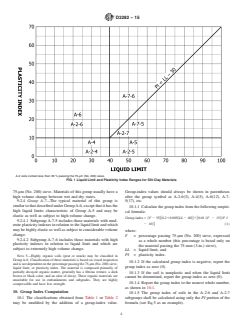
Fig. 1 to classify silt-clay materials on the basis of liquid limit
3.1.11 stone fragment—a small piece of rock that has been
and plasticity index values. Classification of materials in the
mechanically broken from a larger stone.
various groups applies only to the fraction passing the 75-mm
NOTE 2—The terminology used above differs from terminology used in
(3-in.) sieve. Boulders and cobbles shall be excluded from the
Terminology D653. The above terminology conforms in part toAASHTO
portion of the sample to be classified. However, the percentage
standard M 145.
of such material, if any, shall be recorded.
8.1.1 All limiting values are shown as whole numbers. If
4. Significance and Use
fractionalnumbersappearontestreports,converttothenearest
4.1 The practice described classifies soils from any geo-
whole numbers for the purpose of classification.
graphic location into groups (including group indexes) based
8.1.2 Withtherequiredtestdataavailable,proceedfromleft
on the results of prescribed laboratory tests to determine the
to right in Table 1 or Table 2 and the correct classification will
particle-size characteristics, liquid limit, and plasticity index.
befoundbytheprocessofelimination.Thefirstgroupfromthe
4.2 Theassigningofagroupsymbolandgroupindexcanbe
left into which the test data will fit is the correct classification.
used to aid in the evaluation of the significant properties of the
NOTE 4—Classification of materials in the various groups applies only
soil for highway and airfield purposes.
to the fraction passing the 75-mm (3-in.) sieve. Therefore, any specifica-
tion regarding the use of soil and soil-aggregate mixtures in construction
4.3 The various groupings of this classification system
should state whether boulders, or cobbles, or both, are permitted.
correlate in a general way with the engineering behavior of
soils.Also, in a general way, the engineering behavior of a soil
9. Description of Classification Groups
varies inversely with its group index. Therefore, this practice
provides a useful first step in any field or laboratory investi- 9.1 Granular Materials, containing 35 % or less passing the
gation for geotechnical engineering purposes.
75-µm (No. 200) sieve:
NOTE 3—The quality of the result produced by this standard is
9.1.1 Group A-1—The typical material of this group is a
dependent upon the competence of the personnel performing it, and the
well-graded mixture of stone fragments or gravel, coarse sand,
suitability of the equipment and facilities used. Agencies that meet the
fine sand, and a nonplastic or feebly-plastic soil binder.
criteria of Practice D3740 are generally considered capable of competent
However, this group also includes stone fragments, gravel,
and objective testing/sampling/inspection/etc. Users of this standard are
cautioned that compliance with Practice D3740 does not in itself assure coarse sand, volcanic cinders, etc., without a soil binder.
D3282−15
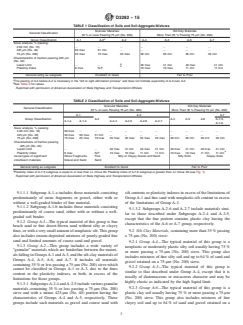
TABLE 1 Classification of Soils and Soil-Aggregate Mixtures
Granular Materials Silt-Clay Materials
General Classification
35 % or Less Passing 75 µm (No. 200) More Than 35 % Passing 75 µm (No. 200)
A
Group Classification A-1 A-3 A-2 A-4 A-5 A-6 A-7
Sieve analysis, % passing:
2.00 mm (No. 10) . . . . . . .
425 µm (No. 40) 50 max 51 min . . . . .
75 µm (No. 200) 25 max 10 max 35 max 36 min 36 min 36 min 36 min
Characteristics of fraction passing 425 µm
(No. 40):
B
Liquid Limit . . 40 max 41 min 40 max 41 min
B
Plasticity Index 6 max N.P. 10 max 10 max 11 min 11 min
General rating as subgrade Excellent to Good Fair to Poor
A
The placing of A-3 before A-2 is necessary in the “left to right elimination process” and does not indicate superiority of A-3 over A-2.
B
See Table 2 for values.
Reprinted with permission of American Association of State Highway and Transportation Officials
TABLE 2 Classification of Soils and Soil-Aggregate Mixtures
Granular Materials Silt-Clay Materials
General Classification
35 % or Less Passing 75 µm (No. 200) More Than 35 % Passing 75 µm (No. 200)
A-1 A-2 A-7
Group Classification A-3 A-4 A-5 A-6
A-7-5,
A-1-a A-1-b A-2-4 A-2-5 A-2-6 A-2-7
A-7-6
Sieve analysis, % passing:
2.00 mm (No. 10) 50 max . . . . . . . . . .
425 µm (No. 40) 30 max 50 max 51 min . . . . . . . .
75 µm (No. 200) 15 max 25 max 10 max 35 max 35 max 35 max 35 max 36 min 36 min 36 min 36 min
Characteristics of fraction passing
425 µm (No. 40):
Liquid Limit . . 40 max 41 min 40 max 41 min 40 max 41 min 40 max 41 min
A
Plasticity Index 6 max N.P. 10 max 10 max 11 min 11 min 10 max 10 max 11 min 11 min
Usual types of significant Stone Fragments, Fine Silty or Clayey Gravel and Sand Silty Soils Clayey Soils
constituent materials Gravel and Sand Sand
General rating as subgrade Excellent to Good Fair to Poor
A
Plasticity index of
...
This document is not an ASTM standard and is intended only to provide the user of an ASTM standard an indication of what changes have been made to the previous version. Because
it may not be technically possible to adequately depict all changes accurately, ASTM recommends that users consult prior editions as appropriate. In all cases only the current version
of the standard as published by ASTM is to be considered the official document.
Designation: D3282 − 09 D3282 − 15
Standard Practice for
Classification of Soils and Soil-Aggregate Mixtures for
Highway Construction Purposes
This standard is issued under the fixed designation D3282; the number immediately following the designation indicates the year of
original adoption or, in the case of revision, the year of last revision. A number in parentheses indicates the year of last reapproval. A
superscript epsilon (´) indicates an editorial change since the last revision or reapproval.
This standard has been approved for use by agencies of the U.S. Department of Defense.
1. Scope*
1.1 This practice covers a procedure for classifying mineral and organomineral soils into seven groups based on laboratory
determination of particle-size distribution, liquid limit, and plasticity index. It may be used when a precise engineering
classification is required, especially for highway construction purposes. Evaluation of soils within each group is made by means
of a group index, which is a value calculated from an empirical formula.
NOTE 1—The group classification, including the group index, should be useful in determining the relative quality of the soil material for use in
earthwork structures, particularly embankments, subgrades, subbases, and bases. However, for the detailed design of important structures, additional data
concerning strength or performance characteristics of the soil under field conditions will usually be required.
1.2 Units—The values stated in inch-pound units are to be regarded as standard. The values given in parentheses are
mathematicalsieve designations are identified using the “standard” system in accordance with Specification E11conversions to SI
units that are provided for information only and are not considered standard., such as 75-mm and 75-μm, followed by the
“alternative” system of 3-in. and No. 200, respectively.
1.3 This standard does not purport to address all of the safety concerns, if any, associated with its use. It is the responsibility
of the user of this standard to establish appropriate safety and health practices and determine the applicability of regulatory
limitations prior to use.
1.4 This practice offers a set of instructions for performing one or more specific operations. This practice cannot replace
education or experience and should be used in conjunction with professional judgment. Not all aspects of this practice may be
applicable in all circumstances. This practice is not intended to represent or replace the standard of care by which the adequacy
of a given professional service must be judged, nor should this practice be applied without consideration of a project’s many
unique aspects. The word “Standard” in the title of this document means only that the document has been approved through the
ASTM consensus process.
2. Referenced Documents
2.1 ASTM Standards:
D420 Guide to Site Characterization for Engineering Design and Construction Purposes (Withdrawn 2011)
D421 Practice for Dry Preparation of Soil Samples for Particle-Size Analysis and Determination of Soil Constants
D422 Test Method for Particle-Size Analysis of Soils
D653 Terminology Relating to Soil, Rock, and Contained Fluids
D1140 Test Methods for Determining the Amount of Material Finer than 75-μm (No. 200) Sieve in Soils by Washing
D1452 Practice for Soil Exploration and Sampling by Auger Borings
D1586 Test Method for Penetration Test (SPT) and Split-Barrel Sampling of Soils
D1587 Practice for Thin-Walled Tube Sampling of Soils for Geotechnical Purposes
D2217D3740 Practice for Wet Preparation of Soil Samples for Particle-Size Analysis and Determination of Soil ConstantsMini-
mum Requirements for Agencies Engaged in Testing and/or Inspection of Soil and Rock as Used in Engineering Design and
Construction
Thispractice is under the jurisdiction of ASTM Committee D18 on Soil and Rock and is the direct responsibility of Subcommittee D18.07 on Identification and
Classification of Soils.
Current edition approved July 1, 2009Nov. 1, 2015. Published August 2009December 2015. Originally approved in 1973. Last previous edition approved in 20042009
ε1
as D3282 – 93 (2004)D3282 – 09. . DOI: 10.1520/D3282-09.10.1520/D3282-15.
For referenced ASTM standards, visit the ASTM website, www.astm.org, or contact ASTM Customer Service at service@astm.org. For Annual Book of ASTM Standards
volume information, refer to the standard’s Document Summary page on the ASTM website.
*A Summary of Changes section appears at the end of this standard
Copyright © ASTM International, 100 Barr Harbor Drive, PO Box C700, West Conshohocken, PA 19428-2959. United States
D3282 − 15
D4318 Test Methods for Liquid Limit, Plastic Limit, and Plasticity Index of Soils
D4700 Guide for Soil Sampling from the Vadose Zone
D6913 Test Methods for Particle-Size Distribution (Gradation) of Soils Using Sieve Analysis
E11 Specification for Woven Wire Test Sieve Cloth and Test Sieves
2.2 AASHTO Document:
M 145 The Classification of Soils and Soil Aggregate Mixtures for Highway Construction Purposes
3. Terminology
3.1 Definitions of Terms Specific to This Standard:
3.1.1 The following terms are frequently used in this practice. These terms differ slightly from those given in Terminology
D653, but are used here to maintain consistency with common highway usage.
3.1.2 boulders—particles of rock with a minimum dimension of 305-mm (12-in.) or more.
3.1.3 cobbles—particles of rock with a minimum dimension of less than 305-mm (12-in.) and be retained on a 75-mm (3-in.)
sieve.
3.1.4 boulders and cobbles—gravel—particles of rock usually rounded by weathering or abrasion, that willthat will pass a
75-mm (3-in.) sieve and be retained on a 3-in. (75-mm) 2-mm (No. 10) sieve.
3.1.5 coarse sand—particles of rock or soil that will pass a No. 10 (2-mm)2-mm (No. 10) sieve and be retained on a No. 40
(425-μm)425-μm (No. 40) sieve.
3.1.6 fine sand—particles of rock or soil that will pass a No. 40 (425-μm)425-μm (No. 40) sieve and be retained on a No. 200
(75-μm)75-μm (No. 200) sieve.
3.1.5 gravel—particles of rock that will pass a 3-in. (75-mm) sieve and be retained on a No. 10 (2-mm) sieve.
3.1.7 silt-clay (combined silt and clay)—fine soil and rock particles that will pass a No. 200 (75-μm)75-μm (No. 200) sieve.
3.1.8 silty—fine-grained material that has a plasticity index of 10 or less.
3.1.9 clayey—fine-grained material that has a plasticity index of 11 or more.
NOTE 2—The terminology used above differs from terminology used in Terminology D653. The above terminology conforms in part to AASHTO
standard M 145.
3.1.10 irreversible mineral colloid, n—in soils, certain minerals such as feldspars, when weathered bind with water to form clay
minerals containing interlayer moisture, that when dried above 50°C, permanently lose this structural moisture.
Available from American Association of State Highway and Transportation Officials (AASHTO), 444 N. Capitol St., NW, Suite 249, Washington, DC 20001,
http://www.transportation.org.
3.1.10.1 Discussion—
The dewatering process changes the nature of the mineralogy. This permanent dehydration has been shown to reduce plasticity,
increase particle size and may potentially skew the soil classification
3.1.11 stone fragment—a small piece of rock that has been mechanically broken from a larger stone.
NOTE 2—The terminology used above differs from terminology used in Terminology D653. The above terminology conforms in part to AASHTO
standard M 145.
4. Significance and Use
4.1 The practice described classifies soils from any geographic location into groups (including group indexes) based on the
results of prescribed laboratory tests to determine the particle-size characteristics, liquid limit, and plasticity index.
4.2 The assigning of a group symbol and group index can be used to aid in the evaluation of the significant properties of the
soil for highway and airfield purposes.
4.3 The various groupings of this classification system correlate in a general way with the engineering behavior of soils. Also,
in a general way, the engineering behavior of a soil varies inversely with its group index. Therefore, this practice provides a useful
first step in any field or laboratory investigation for geotechnical engineering purposes.
NOTE 3—The quality of the result produced by this standard is dependent upon the competence of the personnel performing it, and the suitability of
the equipment and facilities used. Agencies that meet the criteria of Practice D3740 are generally considered capable of competent and objective
testing/sampling/inspection/etc. Users of this standard are cautioned that compliance with Practice D3740 does not in itself assure reliable results. Reliable
results depend on many factors; Practice D3740 provides a means of evaluation some of those factors.
5. Apparatus
5.1 Apparatus for Preparation of Samples—See PracticesPractice D421 or D2217.
5.2 Apparatus for Particle-Size Analysis—See Test Methods D1140, D422and , and D422D6913.
D3282 − 15
5.3 Apparatus for Liquid Limit and Plastic Limit Tests—See Test Methods D4318.
6. Sampling
6.1 Conduct field investigations and sampling in accordance with one or more of the following procedures:
6.1.1 Guide D420D4700,
6.1.2 Practice D1452,
6.1.3 Test Method D1586, and
6.1.4 Practice D1587.
7. Test Sample Samples and Testing Procedures
7.1 Test samples shall represent that portion of the field sample finer than the 3-in. (75-mm) sieve and shall be obtained as
follows:
7.1.1 Air-dry the field sample,
7.1.2 Weigh the field sample,
7.1.3 Separate the field sample into two fractions on a 3-in. (75-mm) sieve,
7.1.4 Weigh the fraction retained on the 3-in. (75-mm) sieve. Compute the percentage of plus 3-in. material in the field sample,
and note this percentage as auxiliary information, and
7.1.5 Thoroughly mix the fraction passing the 3-in. (75-mm) sieve and select the test samples.
NOTE 3—If visual examination indicates that no boulder size material is present, omit 7.1.3 and 7.1.4.
7.1 Prepare the test sample test specimens and perform testing in accordance with Practices D421 or D2217. Determine the
percentage of the sample finer than a No. 10 (2-mm) sieve.the following procedures:
NOTE 4—It is recommended that the method for wet preparation be used for soils containing organic matter or irreversible mineral colloids.
7.1.1 Test Samples and Testing for Particle-Size Analysis—Use either Test Methods D1140, D422 or D6913.
7.1.2 Test Samples and Testing for Liquid Limit and Plastic Limit Tests—Use Test Method D4318
8. Testing Procedure
8.1 Determine the percentage of the test sample finer than a No. 200 (75-μm) sieve in accordance with Test Methods D1140
or D422.
NOTE 5—For granular materials, the percentage of the sample finer than a No. 40 (425-μm) sieve must also be determined.
8.2 Determine the liquid limit and the plasticity index of a portion of the test sample passing a No. 40 (425-μm) sieve in
accordance with Test Methods D4318.
8. Classification Procedure
8.1 Using the test data determined by the methods in Section 87, classify the soil into the appropriate group or subgroup, or both,
in accordance with Table 1 or Table 2. Use Fig. 1 to classify silt-clay materials on the basis of liquid limit and plasticity index
TABLE 1 Classification of Soils and Soil-Aggregate Mixtures
Granular Materials Silt-Clay Materials
General Classification (35 % or less passing No. 200 (75 μm))35 % or (More than 35 % passing No. 200 (75 μm))More Than 35 %
Less Passing 75 μm (No. 200) Passing 75 μm (No. 200)
A
Group Classification A-1 A-3 A-2 A-4 A-5 A-6 A-7
Sieve analysis, % passing:
No. 10 (2.00 mm) . . . . . . .
2.00 mm (No. 10) . . . . . . .
No. 40 (425 μm) 50 max 51 min . . . . .
425 μm (No. 40) 50 max 51 min . . . . .
No. 200 (75 μm) 25 max 10 max 35 max 36 min 36 min 36 min 36 min
75 μm (No. 200) 25 max 10 max 35 max 36 min 36 min 36 min 36 min
Characteristics of fraction passing No. 40
(425 μm):
Characteristics of fraction passing 425 μm
(No. 40):
B
Liquid limit . . 40 max 41 min 40 max 41 min
B
Plasticity index 6 max N.P. 10 max 10 max 11 min 11 min
B
Liquid Limit . . 40 max 41 min 40 max 41 min
B
Plasticity Index 6 max N.P. 10 max 10 max 11 min 11 min
General rating as subgrade Excellent to Good Fair to Poor
A
TheThe placing of A-3 before A-2 is necessary in the “left to right elimination process” and does not indicate superiority of A-3 over A-2.
B
SeeSee Table 2 for values.
Reprinted with permission of American Association of State Highway and Transportation Officials
D3282 − 15
TABLE 2 Classification of Soils and Soil-Aggregate Mixtures
Silt-Clay Materials
Granular Materials (More than 35 % passing No. 200 (75
General Classification
(35 % or less passing No. 200 (75 μm))35 % or Less Passing 75 μm (No. 200) μm))More Than 35 % Passing 75 μm (No.
200)
A-1 A-2 A-7
Group classificationClassification A-3 A-4 A-5 A-6
A-7-5,
A-1-a A-1-b A-2-4 A-2-5 A-2-6 A-2-7
A-7-6
Sieve analysis, % passing:
No. 10 (2.00 mm) 50 max . . . . . . . . . .
2.00 mm (No. 10) 50 max . . . . . . . . . .
No. 40 (425 μm) 30 max 50 max 51 min . . . . . . . .
425 μm (No. 40) 30 max 50 max 51 min . . . . . . . .
No. 200 (75 μm) 15 max 25 max 10 max 35 max 35 max 35 max 35 max 36 min 36 min 36 min 36 min
75 μm (No. 200) 15 max 25 max 10 max 35 max 35 max 35 max 35 max 36 min 36 min 36 min 36 min
Characteristics of fraction passing
No. 40 (425 μm):
Characteristics of fraction passing
425 μm (No. 40):
Liquid limit . . 40 max 41 min 40 max 41 min 40 max 41 min 40 max 41 min
A
Plasticity index 6 max N.P. 10 max 10 max 11 min 11 min 10 max 10 max 11 min 11 min
Liquid Limit . . 40 max 41 min 40 max 41 min 40 max 41 min 40 max 41 min
A
Plasticity Index 6 max N.P. 10 max 10 max 11 min 11 min 10 max 10 max 11 min 11 min
Usual types of significant consti- Stone Fragments, Fine Silty or Clayey Gravel and Sand Silty Soils Clayey Soils
tuent materials Gravel and Sand Sand
Usual types of significant Stone Fragments, Fine Silty or Clayey Gravel and Sand Silty Soils Clayey Soils
constituent materials Gravel and Sand Sand
General rating as subgrade Excellent to Good Fair to Poor
A
PlasticityPlasticity index of A-7-5 subgroup is equal to or less than LL minus 30. Plasticity index of A-7-6 subgroup is greater than LL minus 30 (see Fig. 1).
Reprinted with permission of American Association of State Highway and Transportation Officials.
values. Classification of materials in the various groups applies only to the fraction passing the 75-mm (3-in.) sieve. Boulders and
cobbles shall be excluded from the portion of the sample to be classified. However, the percentage of such material, if any, shall
be recorded.
8.1.1 All limiting values are shown as whole numbers. If fractional numbers appear on test reports, convert to the nearest whole
numb
...