

ASTM F2338-09(2020)
(Test Method)Standard Test Method for Nondestructive Detection of Leaks in Packages by Vacuum Decay Method
General Information
- Abstract
SIGNIFICANCE AND USE
5.1 Leaks in medical device, pharmaceutical, and food packages may result in the ingress of unwanted gases (most commonly oxygen), harmful microbiological, or particulate contaminants. Package leaks may appear as imperfections in the package components themselves or at the seal juncture between mated components. The ability to detect leaks is necessary to ensure consistency and integrity of packages.
5.2 After initial set-up and calibration, individual test operation may be semi-automatic, automatic, or manual. The test method permits non-destructive detection of leaks not visibly detectable. The test method does not require the introduction of any extraneous materials or substances, such as dyes or gases. However, it is important to physically mask or block off any package porous barrier surface during the test to prevent rapid loss of chamber vacuum resulting primarily from gas migration through the porous surface. Leak detection is based solely on the ability to detect the change in pressure inside the test chamber resulting from gas or vapor egress from a package challenged with vacuum.
5.3 This test is a useful research tool for optimizing package sealing parameters and for comparatively evaluating various packages and materials. This test method is also applicable to production settings as it is rapid, non-invasive, and non-destructive, making it useful for either 100 % on-line testing or to perform tests on a statistical sampling from the production operation.
5.4 Leak test results that exceed the permissible limits for the vacuum decay test are indicated by audible or visual signal responses, or both.
SCOPE
1.1 Test Packages—Packages that can be nondestructively evaluated by this test method include:
1.1.1 Rigid and semi-rigid non-lidded trays.
1.1.2 Trays or cups sealed with porous barrier lidding material.
1.1.3 Rigid, nonporous packages.
1.1.4 Flexible, nonporous packages.
1.2 Leaks Detected—This test method detects package leaks by measuring the rise in pressure (vacuum loss) in an enclosed evacuated test chamber containing the test package. Vacuum loss results from leakage of test package headspace gases and/or volatilization of test package liquid contents located in or near the leak. When testing for leaks that may be partially or completely plugged with the package’s liquid contents, the test chamber is evacuated to a pressure below the liquid’s vaporization pressure. All methods require a test chamber to contain the test package and a leak detection system designed with one or more pressure transducers. Test method sensitivities cited below were determined using specific product-package systems selected for the precision and bias studies summarized in Table 1. Table 1 also lists other examples of relevant product-package systems that can be tested for leakage by vacuum decay.
1.2.1 Trays or Cups (Non-lidded) (Air Leakage)—Hole or crack defects in the wall of the tray/cup of at least 50 μm in diameter can be detected. Nonlidded trays were tested at a Target Vacuum of –4·E4 Pa (–400 mbar).
1.2.2 Trays Sealed with Porous Barrier Lidding Material (Headspace Gas Leakage)—Hole or crack defects in the wall of the tray/cup of at least 100 μm in diameter can be detected. Channel defects in the seal area (made using wires of 125 μm in diameter) can be detected. Severe seal bonding defects in both continuous adhesive and dot matrix adhesive package systems can be detected. Slightly incomplete dot matrix adhesive bonding defects can also be detected. All porous barrier lidding material packages were tested at a Target Vacuum of –4·E4 Pa (–400 mbar). The sensitivity of the test for porous lidded packages is approximately E-2 Pa·m3·s-1 using a calibrated volumetric airflow meter.
1.2.3 Rigid, Nonporous Packages (Headspace Gas Leakage)—Hole defects of at least 5 μm in diameter can be detected. Plastic bottles with screw caps were tested at a target vacuum...
- Status
- Published
- Publication Date
- 14-Nov-2020
- Technical Committee
- F02 - Primary Barrier Packaging
- Drafting Committee
- F02.40 - Package Integrity
Overview
ASTM F2338-09(2020) is the internationally recognized standard test method for the nondestructive detection of leaks in packages by the vacuum decay method. Published by ASTM International, this standard is critical in ensuring the integrity of packaging in industries such as medical devices, pharmaceuticals, and food. The vacuum decay method is valued for its ability to quickly, reliably, and non-invasively detect leaks that could compromise product sterility, efficacy, or shelf-life without causing any damage to the package itself. This protocol is applicable to various package types, including rigid, semi-rigid, and flexible packages, with or without porous barrier lidding.
Key Topics
- Nondestructive Testing: The method allows for identification of leaks without damaging the package, thus maximizing throughput and reducing waste.
- Vacuum Decay Principle: Leak detection is based on monitoring any increase in pressure (loss of vacuum) within a closed test chamber, resulting from the ingress of gases or vapors escaping from the package.
- Package Types: ASTM F2338 covers rigid and semi-rigid non-lidded trays, trays or cups sealed with porous barrier lidding material, and both rigid and flexible nonporous packages.
- Testing Sensitivity: Capable of detecting micron-sized holes and defects, including imperfections not visible to the naked eye and seal bonding defects.
- Quality Control: Provides qualitative pass/fail results and supports both 100% online production testing and statistical sampling.
Applications
- Medical Device Packaging: Ensures package integrity to prevent microbial contamination, crucial for sterile barrier systems such as trays, cups, and pouches.
- Pharmaceutical Industry: Validates seal integrity for bottles, vials, and syringes, helping meet regulatory requirements for safety and efficacy by preventing ingress of gases or particulates.
- Food Packaging: Assesses leak tightness of various refrigerated or shelf-stable food packaging to extend shelf life and protect product quality.
- Research & Development: Provides a valuable tool for optimizing sealing parameters, evaluating new materials, and comparative testing of packaging designs.
- Production and Quality Assurance: The rapid and non-invasive nature of the vacuum decay test supports routine quality checks on production lines, minimizing risk of compromised shipments.
The vacuum decay test can be conducted in semi-automatic, automatic, or manual modes, making it adaptable to small laboratories and high-volume manufacturing environments alike. Importantly, it does not require the introduction of foreign substances such as dyes or trace gases, reducing the risk of secondary contamination.
Related Standards
To ensure comprehensive understanding and interoperability within packaging and barrier integrity testing, ASTM F2338 references and aligns with several other ASTM standards:
- ASTM D996: Terminology of Packaging and Distribution Environments
- ASTM E691: Practice for Conducting an Interlaboratory Study to Determine the Precision of a Test Method
- ASTM F17: Terminology Relating to Primary Barrier Packaging
- ASTM F1327 (withdrawn): Terminology Relating to Barrier Materials for Medical Packaging
This standard supports compliance with internationally recognized principles as outlined by the WTO Technical Barriers to Trade (TBT) Committee, facilitating international trade and regulatory acceptance.
Keywords: ASTM F2338, vacuum decay, leak detection, nondestructive testing, package integrity, medical device packaging, pharmaceutical packaging, food packaging, quality control, vacuum decay method.
Relations
- Effective Date
- 01-May-2020
- Effective Date
- 01-Oct-2018
- Effective Date
- 15-Aug-2018
- Effective Date
- 01-Jun-2017
- Effective Date
- 01-Aug-2013
- Effective Date
- 01-May-2013
- Effective Date
- 15-Apr-2013
- Effective Date
- 01-Nov-2012
- Effective Date
- 01-Nov-2011
- Effective Date
- 01-Dec-2010
- Effective Date
- 01-Oct-2008
- Effective Date
- 01-Aug-2008
- Effective Date
- 01-Sep-2007
- Effective Date
- 01-May-2007
- Effective Date
- 01-Dec-2006
Get Certified
Connect with accredited certification bodies for this standard

BRCGS (Brand Reputation Compliance Global Standards)
Global food safety and quality standards owner.
Sponsored listings
Frequently Asked Questions
ASTM F2338-09(2020) is a standard published by ASTM International. Its full title is "Standard Test Method for Nondestructive Detection of Leaks in Packages by Vacuum Decay Method". This standard covers: SIGNIFICANCE AND USE 5.1 Leaks in medical device, pharmaceutical, and food packages may result in the ingress of unwanted gases (most commonly oxygen), harmful microbiological, or particulate contaminants. Package leaks may appear as imperfections in the package components themselves or at the seal juncture between mated components. The ability to detect leaks is necessary to ensure consistency and integrity of packages. 5.2 After initial set-up and calibration, individual test operation may be semi-automatic, automatic, or manual. The test method permits non-destructive detection of leaks not visibly detectable. The test method does not require the introduction of any extraneous materials or substances, such as dyes or gases. However, it is important to physically mask or block off any package porous barrier surface during the test to prevent rapid loss of chamber vacuum resulting primarily from gas migration through the porous surface. Leak detection is based solely on the ability to detect the change in pressure inside the test chamber resulting from gas or vapor egress from a package challenged with vacuum. 5.3 This test is a useful research tool for optimizing package sealing parameters and for comparatively evaluating various packages and materials. This test method is also applicable to production settings as it is rapid, non-invasive, and non-destructive, making it useful for either 100 % on-line testing or to perform tests on a statistical sampling from the production operation. 5.4 Leak test results that exceed the permissible limits for the vacuum decay test are indicated by audible or visual signal responses, or both. SCOPE 1.1 Test Packages—Packages that can be nondestructively evaluated by this test method include: 1.1.1 Rigid and semi-rigid non-lidded trays. 1.1.2 Trays or cups sealed with porous barrier lidding material. 1.1.3 Rigid, nonporous packages. 1.1.4 Flexible, nonporous packages. 1.2 Leaks Detected—This test method detects package leaks by measuring the rise in pressure (vacuum loss) in an enclosed evacuated test chamber containing the test package. Vacuum loss results from leakage of test package headspace gases and/or volatilization of test package liquid contents located in or near the leak. When testing for leaks that may be partially or completely plugged with the package’s liquid contents, the test chamber is evacuated to a pressure below the liquid’s vaporization pressure. All methods require a test chamber to contain the test package and a leak detection system designed with one or more pressure transducers. Test method sensitivities cited below were determined using specific product-package systems selected for the precision and bias studies summarized in Table 1. Table 1 also lists other examples of relevant product-package systems that can be tested for leakage by vacuum decay. 1.2.1 Trays or Cups (Non-lidded) (Air Leakage)—Hole or crack defects in the wall of the tray/cup of at least 50 μm in diameter can be detected. Nonlidded trays were tested at a Target Vacuum of –4·E4 Pa (–400 mbar). 1.2.2 Trays Sealed with Porous Barrier Lidding Material (Headspace Gas Leakage)—Hole or crack defects in the wall of the tray/cup of at least 100 μm in diameter can be detected. Channel defects in the seal area (made using wires of 125 μm in diameter) can be detected. Severe seal bonding defects in both continuous adhesive and dot matrix adhesive package systems can be detected. Slightly incomplete dot matrix adhesive bonding defects can also be detected. All porous barrier lidding material packages were tested at a Target Vacuum of –4·E4 Pa (–400 mbar). The sensitivity of the test for porous lidded packages is approximately E-2 Pa·m3·s-1 using a calibrated volumetric airflow meter. 1.2.3 Rigid, Nonporous Packages (Headspace Gas Leakage)—Hole defects of at least 5 μm in diameter can be detected. Plastic bottles with screw caps were tested at a target vacuum...
SIGNIFICANCE AND USE 5.1 Leaks in medical device, pharmaceutical, and food packages may result in the ingress of unwanted gases (most commonly oxygen), harmful microbiological, or particulate contaminants. Package leaks may appear as imperfections in the package components themselves or at the seal juncture between mated components. The ability to detect leaks is necessary to ensure consistency and integrity of packages. 5.2 After initial set-up and calibration, individual test operation may be semi-automatic, automatic, or manual. The test method permits non-destructive detection of leaks not visibly detectable. The test method does not require the introduction of any extraneous materials or substances, such as dyes or gases. However, it is important to physically mask or block off any package porous barrier surface during the test to prevent rapid loss of chamber vacuum resulting primarily from gas migration through the porous surface. Leak detection is based solely on the ability to detect the change in pressure inside the test chamber resulting from gas or vapor egress from a package challenged with vacuum. 5.3 This test is a useful research tool for optimizing package sealing parameters and for comparatively evaluating various packages and materials. This test method is also applicable to production settings as it is rapid, non-invasive, and non-destructive, making it useful for either 100 % on-line testing or to perform tests on a statistical sampling from the production operation. 5.4 Leak test results that exceed the permissible limits for the vacuum decay test are indicated by audible or visual signal responses, or both. SCOPE 1.1 Test Packages—Packages that can be nondestructively evaluated by this test method include: 1.1.1 Rigid and semi-rigid non-lidded trays. 1.1.2 Trays or cups sealed with porous barrier lidding material. 1.1.3 Rigid, nonporous packages. 1.1.4 Flexible, nonporous packages. 1.2 Leaks Detected—This test method detects package leaks by measuring the rise in pressure (vacuum loss) in an enclosed evacuated test chamber containing the test package. Vacuum loss results from leakage of test package headspace gases and/or volatilization of test package liquid contents located in or near the leak. When testing for leaks that may be partially or completely plugged with the package’s liquid contents, the test chamber is evacuated to a pressure below the liquid’s vaporization pressure. All methods require a test chamber to contain the test package and a leak detection system designed with one or more pressure transducers. Test method sensitivities cited below were determined using specific product-package systems selected for the precision and bias studies summarized in Table 1. Table 1 also lists other examples of relevant product-package systems that can be tested for leakage by vacuum decay. 1.2.1 Trays or Cups (Non-lidded) (Air Leakage)—Hole or crack defects in the wall of the tray/cup of at least 50 μm in diameter can be detected. Nonlidded trays were tested at a Target Vacuum of –4·E4 Pa (–400 mbar). 1.2.2 Trays Sealed with Porous Barrier Lidding Material (Headspace Gas Leakage)—Hole or crack defects in the wall of the tray/cup of at least 100 μm in diameter can be detected. Channel defects in the seal area (made using wires of 125 μm in diameter) can be detected. Severe seal bonding defects in both continuous adhesive and dot matrix adhesive package systems can be detected. Slightly incomplete dot matrix adhesive bonding defects can also be detected. All porous barrier lidding material packages were tested at a Target Vacuum of –4·E4 Pa (–400 mbar). The sensitivity of the test for porous lidded packages is approximately E-2 Pa·m3·s-1 using a calibrated volumetric airflow meter. 1.2.3 Rigid, Nonporous Packages (Headspace Gas Leakage)—Hole defects of at least 5 μm in diameter can be detected. Plastic bottles with screw caps were tested at a target vacuum...
ASTM F2338-09(2020) is classified under the following ICS (International Classification for Standards) categories: 55.180.40 - Complete, filled transport packages. The ICS classification helps identify the subject area and facilitates finding related standards.
ASTM F2338-09(2020) has the following relationships with other standards: It is inter standard links to ASTM F17-20, ASTM F17-18a, ASTM F17-18, ASTM F17-17, ASTM F17-13a, ASTM E691-13, ASTM F17-13, ASTM F17-12, ASTM E691-11, ASTM D996-10a, ASTM E691-08, ASTM F17-08, ASTM F17-07a, ASTM F17-07, ASTM F17-06. Understanding these relationships helps ensure you are using the most current and applicable version of the standard.
ASTM F2338-09(2020) is available in PDF format for immediate download after purchase. The document can be added to your cart and obtained through the secure checkout process. Digital delivery ensures instant access to the complete standard document.
Standards Content (Sample)
This international standard was developed in accordance with internationally recognized principles on standardization established in the Decision on Principles for the
Development of International Standards, Guides and Recommendations issued by the World Trade Organization Technical Barriers to Trade (TBT) Committee.
Designation: F2338 − 09 (Reapproved 2020)
Standard Test Method for
Nondestructive Detection of Leaks in Packages by Vacuum
Decay Method
This standard is issued under the fixed designation F2338; the number immediately following the designation indicates the year of
original adoption or, in the case of revision, the year of last revision. A number in parentheses indicates the year of last reapproval. A
superscript epsilon (´) indicates an editorial change since the last revision or reapproval.
1. Scope adhesive bonding defects can also be detected. All porous
barrier lidding material packages were tested at a Target
1.1 Test Packages—Packages that can be nondestructively
Vacuumof–4·E4Pa(–400mbar).Thesensitivityofthetestfor
evaluated by this test method include:
3 -1
porous lidded packages is approximately E-2 Pa·m ·s using a
1.1.1 Rigid and semi-rigid non-lidded trays.
calibrated volumetric airflow meter.
1.1.2 Trays or cups sealed with porous barrier lidding
material. 1.2.3 Rigid, Nonporous Packages (Headspace Gas
1.1.3 Rigid, nonporous packages. Leakage)—Hole defects of at least 5 µm in diameter can be
1.1.4 Flexible, nonporous packages. detected. Plastic bottles with screw caps were tested at a target
vacuum of –5·E4 Pa (–500 mbar). Using a calibrated volumet-
1.2 Leaks Detected—This test method detects package leaks
ric airflow meter, the sensitivity of the test is approximately
by measuring the rise in pressure (vacuum loss) in an enclosed
3 -1
E-3.4 Pa·m ·s .Air-filled glass syringes were tested at a target
evacuated test chamber containing the test package. Vacuum
vacuum of –7.5·E4 Pa (+250 mbar absolute) and again at a
loss results from leakage of test package headspace gases
target vacuum of about +1 mbar absolute. The sensitivity of
and/or volatilization of test package liquid contents located in
3 -1
both tests is approximately E-4.1 Pa·m ·s using a calibrated
or near the leak.When testing for leaks that may be partially or
volumetric airflow meter.
completely plugged with the package’s liquid contents, the test
chamber is evacuated to a pressure below the liquid’s vapor-
1.2.4 Rigid, Nonporous Packages (Liquid Leakage)—Hole
ization pressure.All methods require a test chamber to contain defects of at least 5 µm in diameter can be detected. This
the test package and a leak detection system designed with one
detection limit was verified using a population of water-filled
or more pressure transducers. Test method sensitivities cited
glass syringes tested at a target vacuum of about +1 mbar
below were determined using specific product-package sys-
absolute.
tems selected for the precision and bias studies summarized in
1.2.5 Flexible, Nonporous Packages (Gas or Liquid
Table 1. Table 1 also lists other examples of relevant product-
Leakage)—Such packages may also be tested by the vacuum
package systems that can be tested for leakage by vacuum
decay method. Sensitivity data for flexible packages were not
decay.
included in the precision and bias studies, although the use of
1.2.1 Trays or Cups (Non-lidded) (Air Leakage)—Hole or
vacuum decay for testing such packages is well known.
crack defects in the wall of the tray/cup of at least 50 µm in
diameter can be detected. Nonlidded trays were tested at a 1.3 Test Results—Test results are qualitative (Accept/
Target Vacuum of –4·E4 Pa (–400 mbar). Reject). Acceptance criteria are established by comparing
1.2.2 Trays Sealed with Porous Barrier Lidding Material
quantitative baseline vacuum decay measurements obtained
(Headspace Gas Leakage)—Hole or crack defects in the wall
from control, non-leaking packages to measurements obtained
of the tray/cup of at least 100 µm in diameter can be detected.
usingleakingpackages,andtomeasurementsobtainedwiththe
Channel defects in the seal area (made using wires of 125 µm
introduction of simulated leaks using a calibrated gas flow
in diameter) can be detected. Severe seal bonding defects in
meter.
both continuous adhesive and dot matrix adhesive package
1.4 The values stated in SI units are to be regarded as
systems can be detected. Slightly incomplete dot matrix
standard. No other units of measurement are included in this
standard.
1 1.5 This standard does not purport to address all of the
This test method is under the jurisdiction ofASTM Committee F02 on Primary
Barrier Packaging and is the direct responsibility of Subcommittee F02.40 on
safety concerns, if any, associated with its use. It is the
Package Integrity.
responsibility of the user of this standard to establish appro-
Current edition approved Nov. 15, 2020. Published December 2020. Originally
priate safety, health, and environmental practices and deter-
approved in 2003. Last previous edition approved in 2013 as F2338 – 09 (2013).
DOI: 10.1520/F2338-09R20. mine the applicability of regulatory limitations prior to use.
Copyright © ASTM International, 100 Barr Harbor Drive, PO Box C700, West Conshohocken, PA 19428-2959. United States
F2338 − 09 (2020)
TABLE 1 Summary of Vacuum Decay Leak Tests Applications for Various Product-Packages Systems
A B
Package Examples Package Content Examples ASTM P&B Data Tables Target Vacuum
GAS LEAK TEST
PACKAGE APPLICATIONS AND PRECISION & BIAS STUDIES
C
Porous barrier lidded trays Empty 3, 4, 5 –400 mbar
Solids (tablets, capsules, powders, devices)
C
Nonlidded trays or cups Empty 2 –400 mbar
C
Plastic screw capped bottles Solids (tablets, capsules, powders) 6 –500 mbar
Liquids (with significant gas headspace volume)
C
Glass syringes Solids (lyophilized powders) 7, 8 +250 mbar
A
ADDITIONAL GAS LEAK TEST PACKAGE APPLICATIONS
Lidded (nonporous) trays or cups containing solid materials (for example, powders, tablets, capsules, devices)
Glass or plastic vials closed with elastomeric closures containing solid materials (for example, powders)
Glass or plastic vials closed with elastomeric closures, containing liquid materials, but with significant gas headspace volume
Flexible packages (for example pouches or bags) containing solid materials (for example, powders, devices)
LIQUID LEAK TEST (with or without gas headspace)
PACKAGE APPLICATIONS AND PRECISION & BIAS STUDIES
C
Glass syringes Liquids 9, 10 +1 mbar
A
ADDITIONAL LIQUID LEAK TEST PACKAGE APPLICATIONS
Ophthalmic dropper tip bottles containing liquid materials
Glass or plastic ampoules containing liquid materials
Glass or plastic vials with elastomeric closures containing liquid materials
Lidded (nonporous trays or cups) containing liquid materials
Flexible packages such as pouches or bags containing liquid materials
A
Examples of package types relevant to the specified leak test method are listed. The list is not intended to be all inclusive.
B
Target vacuum expressed as a negative mbar reading (for example, –400 mbar) refers to the measured test chamber pressure (vacuum) relative to atmospheric pressure.
Target vacuum expressed as a positive mbar reading (for example, +1 mbar) refers to the absolute pressure reading in the test chamber.
C
Packages used for the referenced ASTM Precision and Bias (P&B) studies.
1.6 This international standard was developed in accor- 3.2.2 control, non-leaking packages, n—packages without
dance with internationally recognized principles on standard- defects and properly sealed or closed according to manufac-
ization established in the Decision on Principles for the turer’s specifications.
Development of International Standards, Guides and Recom-
3.2.3 flexible, nonporous packages, n—packages that sig-
mendations issued by the World Trade Organization Technical
nificantly deflect when under vacuum, and are constructed of
Barriers to Trade (TBT) Committee.
malleable, nonporous materials. Examples include pouches or
bags made of polymeric, foil, or laminate films.
2. Referenced Documents
3.2.4 gas leaks, n—leak paths that allow the flow of gas
2.1 ASTM Standards:
from the test package.
D996 Terminology of Packaging and Distribution Environ-
3.2.5 liquid leaks, n—leak paths partially or fully filled with
ments
liquid.
E691 Practice for Conducting an Interlaboratory Study to
3.2.6 rigid, nonporous packages, n—packages that do not
Determine the Precision of a Test Method
significantlydeflectundervacuumandareconstructedofsolid,
F17 Terminology Relating to Primary Barrier Packaging
nonporous materials. Examples include plastic bottles with
F1327 Terminology Relating to Barrier Materials for Medi-
screw-thread or snap-on closures, glass or plastic vials with
cal Packaging (Withdrawn 2007)
elastomeric closures, and glass or plastic syringes.
3. Terminology
3.2.7 semi-rigid trays or cups, n—trays made of material
that retain shape upon deflection. For example, thermoformed
3.1 Definitions—Fordefinitionsusedinthistestmethod,see
PETE or PETG trays are considered semi-rigid trays.
Terminologies D996, F17, and F1327.
3.2.8 spotty or mottled seals, n—an incomplete adhesive
3.2 Definitions of Terms Specific to This Standard:
bond made between a package tray or cup and porous lidding
3.2.1 baseline vacuum decay, n—the extent of vacuum
materialthatcanbevisiblyidentifiedbyadistinctivepatternof
change within the test chamber over time demonstrated by a
dots, spotting or mottling on the tray sealing surface after the
control, non-leaking package.
lid is removed.
3.2.9 volumetric airflow meter, n—a calibration tool that can
be used to provide an artificial leak of known volumetric
For referenced ASTM standards, visit the ASTM website, www.astm.org, or
contact ASTM Customer Service at service@astm.org. For Annual Book of ASTM
airflow rate into the test chamber for verification of instrument
Standards volume information, refer to the standard’s Document Summary page on
sensitivity. Airflow meters should be calibrated to NIST
the ASTM website.
standards.The operational range of the meter should reflect the
The last approved version of this historical standard is referenced on
www.astm.org. desired limit of sensitivity for the intended leak test.
F2338 − 09 (2020)
3.3 Definitions of Test Cycle and Critical Parameters 5. Significance and Use
Terms—For terms and abbreviations relating to the test cycle
5.1 Leaks in medical device, pharmaceutical, and food
and the critical parameters for establishing accept/reject limits,
packages may result in the ingress of unwanted gases (most
see Annex A1.
commonly oxygen), harmful microbiological, or particulate
contaminants. Package leaks may appear as imperfections in
4. Summary of Test Method
the package components themselves or at the seal juncture
between mated components. The ability to detect leaks is
4.1 The test package is placed in a test chamber to which
necessary to ensure consistency and integrity of packages.
vacuum is applied. The chamber is then isolated from the
vacuum source and a pressure transducer (absolute or gauge) 5.2 After initial set-up and calibration, individual test op-
eration may be semi-automatic, automatic, or manual. The test
alone or in combination with a second differential pressure
transducer, is used to monitor the test chamber for both the method permits non-destructive detection of leaks not visibly
detectable.Thetestmethoddoesnotrequiretheintroductionof
level of vacuum, as well as the change in vacuum over time.
any extraneous materials or substances, such as dyes or gases.
Vacuum decay, or rise in chamber pressure, is a result of
However, it is important to physically mask or block off any
packageheadspacegasbeingdrawnoutofthepackagethrough
package porous barrier surface during the test to prevent rapid
any leaks present, plus background noise. Vacuum decay can
lossofchambervacuumresultingprimarilyfromgasmigration
also result from the volatilization of packaged liquid that
through the porous surface. Leak detection is based solely on
partially or fully occludes the leak path. In this case, vacuum
the ability to detect the change in pressure inside the test
decay will only occur if the chamber test pressure is lowered
chamber resulting from gas or vapor egress from a package
below the liquid’s vaporization pressure.
challenged with vacuum.
4.2 Porous barrier lidded tray or cup packages are tested for
5.3 Thistestisausefulresearchtoolforoptimizingpackage
leaks located in the tray or cup, and at the lidding material/tray
sealing parameters and for comparatively evaluating various
seal junction. Leaks in the porous lidding material itself cannot
packages and materials. This test method is also applicable to
be detected. When testing such packages, steps are taken to
production settings as it is rapid, non-invasive, and non-
physically mask or block the porous barrier surface to prevent
destructive, making it useful for either 100 % on-line testing or
the migration of package gas through the porous lid. These
to perform tests on a statistical sampling from the production
steps may require some sample preparation, depending on the
operation.
masking approach required, but must be nondestructive and
5.4 Leak test results that exceed the permissible limits for
noninvasive. Vacuum decay from porous barrier lidded pack-
the vacuum decay test are indicated by audible or visual signal
ages may potentially include background noise from gas
responses, or both.
trapped between the lidding material and the masking surface,
or from transverse gas flow through the porous barrier material
6. Apparatus
itself at the lid/tray seal junction.
6.1 Vacuum Decay Leak Detection Apparatus—Thevacuum
4.3 The sensitivity of a test is a function of test package
decay leak apparatus includes a test chamber connected to a
design, transducer(s)’sensitivity, test chamber design, test sys-
vacuum decay test system and a volumetric airflow meter.
tem design, and critical test parameters of time and pressure.
6.2 Test Chamber—The test chamber has a lower compart-
The test system and leak test parameters selected for any given
ment (lower tooling) designed to nest the test package, and an
product-package system must be based on the package’s
upper lid (top tooling) for closing the test chamber. Fig. 1
contents (liquid or solid with significant or little gas
illustrates a test chamber designed for testing packages with
headspace), and the nature of the package (flexible or rigid,
porous barrier lidding material. The test fixture upper lid
porous or nonporous). Instruments with more sensitive pres-
consists of a flexible bladder to mask the package’s porous
suretransducersandwithminimalvoidvolumeswithinthetest
barrier during the test cycle. Figs. 2 and 3 illustrate test
chamber and the test system have the potential to detect the
chambers designed for testing rigid, nonporous packages. In
smallest leaks. Lengthening test time enables smaller gaseous
the latter two cases, there is no flexible bladder.
leaks to be detected. Minimizing pressure variation back-
6.2.1 Tray Nest or Lower Tooling—The bottom half of the
ground noise can also improve test sensitivity. For porous
test chamber is dimensionally designed to closely nest the test
barrier lidded packages, masking techniques will minimize
package, while still allowing for easy gas flow around the test
background noise. For flexible or semi-rigid packages, restrict-
package. Without ready gas flow around the package, leakage
ing package expansion via properly designed test chambers
sites can be blocked. Conversely, the larger the gap between
lessens noise. Background noise may also occur upon release
thetestchamberandthetestpackage,thelesssensitivetheleak
of residual gases or vapors trapped in the test system or
test, as vacuum decay from package leakage will be minimized
between test package components. Such noise can be differen-
in a larger net test chamber volume.
tiated from actual leakage by lengthening the time to reach
6.2.2 Upper Lid or Upper Tooling—The upper lid is de-
initial vacuum or lengthening equalization time.
signed to tightly seal the closed test chamber during the
NOTE 1—Further information on the “Leak Test Theory” may be found
vacuum cycle.
in Annex A1. Examples of test methods and test equipment used to
6.3 Vacuum Decay Test System—The vacuum decay test
generatetheprecisionandbiasdatainSection12aresummarizedinTable
1. system includes a vacuum source for establishing the required
F2338 − 09 (2020)
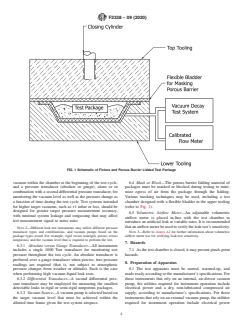
FIG. 1 Schematic of Fixture and Porous Barrier Lidded Test Package
vacuum within the chamber at the beginning of the test cycle, 6.4 Mask or Block—The porous barrier lidding material of
and a pressure transducer (absolute or gauge), alone or in packages must be masked or blocked during testing to mini-
combination with a second differential pressure transducer, for mize egress of air from the package through the lidding.
monitoring the vacuum level as well as the pressure change as Various masking techniques may be used, including a test
a function of time during the test cycle. Test systems intended chamber designed with a flexible bladder in the upper tooling
for higher target vacuums, such as +1 mbar or less, should be (refer to Fig. 1).
designed for greater target pressure measurement accuracy,
6.5 Volumetric Airflow Meter—An adjustable volumetric
with minimal system leakage and outgassing that may affect
airflow meter is placed in-line with the test chamber to
test measurement signal to noise ratio.
introduce an artificial leak at variable rates. It is recommended
thatanairflowmeterbeusedtoverifytheleaktest’ssensitivity.
NOTE 2—Different leak test instruments may utilize different pressure
transducer types and combinations, and vacuum pumps based on the NOTE 3—Refer to Annex A2 for further information about volumetric
package types tested (for example, rigid versus nonrigid, porous versus airflow meter use for verifying leak test sensitivity.
nonporous) and the vacuum level that is required to perform the test.
7. Hazards
6.3.1 Absolute versus Gauge Transducer—All instruments
7.1 Asthetestchamberisclosed,itmaypresentpinch-point
includes a single 1000 Torr transducer for monitoring test
hazards.
pressure throughout the test cycle. An absolute transducer is
preferred over a gauge transducer when precise, true pressure
8. Preparation of Apparatus
readings are required (that is, not subject to atmospheric
pressure changes from weather or altitude). Such is the case 8.1 The test apparatus must be started, warmed-up, and
when performing high vacuum liquid leak tests. made ready according to the manufacturer’s specifications. For
6.3.2 Differential Transducer—A second differential pres- those instruments that rely on an internal, air-driven vacuum
sure transducer may be employed for measuring the smallest pump, the utilities required for instrument operation include
detectable leaks in rigid or semi-rigid nonporous packages. electrical power and a dry, non-lubricated compressed air
6.3.3 Vacuum Source—Avacuum pump is selected based on supply, according to manufacturer’s specifications. For those
the target vacuum level that must be achieved within the instruments that rely on an external vacuum pump, the utilities
allotted time frame given the test system airspace. required for instrument operation include electrical power
F2338 − 09 (2020)
FIG. 2 Schematic of Fixture and Rigid, Nonporous Test Package
according to manufacturer’s specifications for both the instru- surface’s inherent porosity. A few control non-leaking pack-
ment and the vacuum pump. ages or a no-leak package mock-up must be used to select
critical test parameter settings.
9. Calibration and Standardization
NOTE 4—Refer to Section 4 and Annex A1 for a description of critical
test parameters.
9.1 Before test measurements are made, the apparatus must
be calibrated.The pressure transducers, any applicable vacuum
9.4 A larger sample population of control non-leaking
source pressure gauges, and the adjustable volumetric airflow
packages must be used for optimizing critical test parameters.
meter must all be calibrated according to the manufacturer’s
Control packages are to be made from the same materials and
recommended procedures and maintenance schedule.
according to the same design as the test units.
NOTE 5—Refer to Annex A2 for information on critical test parameter
9.2 Leak tests should be performed on the instrument test
selection.
systemtoverifyasteadybaselineleakrate.Thetestparameters
for start-up system qualification tests are typically recom- 9.5 Determine the sensitivity of the optimized leak test
using control non-leaking test packages and a calibrated
mended by the instrument manufacturer.
volumetric airflow meter.
9.3 Critical test parameter settings must be established for
each package/test fixture combination. Parameters will vary
NOTE 6—Refer to Annex A2 for information about test sensitivity
based on the test package geometry and any porous barrier verification procedures.
F2338 − 09 (2020)
FIG. 3 Schematic of Test Chamber and Rigid, Nonporous Test Package
9.6 Qualify the ability of the optimized test to reliably 10.7.1 If suspect fail results occur, verify the test chamber
differentiate between known non-leaking and defective pack- and system functionality according to the leak test instrument
ages. manufacturer’s instructions prior to proceeding.
10.7.2 If a failed test package contains product that may
9.7 Test system baseline qualification (see 9.2) and test
have contaminated the test chamber or system during the leak
sensitivity verification (see 9.5) are to be conducted frequently,
test, perform steps to eliminate the contaminant from the test
typically at least one or more times a day, preferably at the
chamber or system according to the leak test instrument
beginning of every shift.
manufacturer’s instructions prior to proceeding.
10. Procedure
10.8 Select another package and repeat the testing process.
10.1 Select and install the appropriately sized test chamber
11. Report
for the package to be tested. Make any necessary adjustments
11.1 For each package tested, report the values for the
tothechambertoensureasufficientlytightsealofthechamber
lid (upper tooling) to the lower chamber package nest (lower following critical test parameters as well as package test
results:
tooling) when the test chamber is in the closed position.
11.1.1 Pre-Test Vacuum expressed in seconds.
10.2 Verify the pressure level available at the supply source.
11.1.2 Reserve Vacuum expressed in mbar or Pa, in either
Check the functionality of the vacuum source.
positive absolute pressure units or negative pressure units
10.3 Program the test instrument with all necessary test
(vacuum) relative to atmospheric pressure.
parameters and accept/reject criteria.
11.1.3 Target Vacuum expressed in mbar or Pa, in either
positive absolute pressure units or negative pressure units
10.4 For those test methods that require a Pre-Test Vacuum
(vacuum) relative to atmospheric pressure.
sequence prior to each test sample leak test, close the empty
11.1.4 Reference Vacuum expressed in mbar or Pa, in either
testchamberandperformtherequiredtimedvacuumsequence.
positive absolute pressure units or negative pressure units
10.5 Place the assembled package into the lower tooling
(vacuum) relative to atmospheric pressure.
nest and close the test chamber.Take appropriate steps to mask
11.1.5 Reference Fill Time expressed in seconds.
or block any porous barrier surface of the package.
11.1.6 Equalization Time expressed in seconds.
NOTE 7—Inspect and clean the masking or blocking surface according
11.1.7 Test Time expressed in seconds.
to a regularly established routine according to the instrument manufac-
turer’srecommendedprocedurestoensureeffectivemaskingoftheporous 11.1.8 Reference Vacuum Decay Accept/Reject Limit ex-
barrier surface.
pressed in Pa/s or Pa, in either positive absolute pressure units
to describe allowable pressure rise, or negative pressure units
10.6 Start the test.
(vacuum) to describe allowable vacuum loss.
10.7 Note the pass or fail indicator or other means of
11.1.9 Accept/Reject Test Results.
detecting vacuum decay and document results. Identify and set
aside any failed package for further evaluation. NOTE 8—Refer to Annex A1 for definitions of critical test parameters.
F2338 − 09 (2020)
TABLE 2 Gas Leak Detection Results—Nonlidded Tray
Approximate Success Rate
Number of Total Number of Number FAILED Number PASSED
Tray Size (cm) Tray Description (% accurate
Units Tested Replicate Tests (Leaks detected) (No leaks detected)
L×W×H replicate tests)
14×7×2 No defect 5 45 0 45 100
100 µm hole 4 36 36 0 100
17 × 13 × 2 No defect 5 45 0 45 100
A A
50 µm hole 5 45 35 10 78 (100)
100 µm hole 5 45 45 0 100
A
Two test packages yielded all 10 PASS observations. An independent test laboratory later verified that the holes in these packages could no longer be located and may
have become clogged. In this case, the success rate is reported considering all 5 test trays (78 %), and considering only the 3 known defective trays (100%).
The nomenclature used to describe critical test parameters may vary with
completion of the study, the two suspect trays were indepen-
the equipment manufacturer, but the essential definitions remain un-
dentlyreexaminedforthepresenceandsizeoftheholes.Itwas
changed.
determined that the holes could no longer be located and it was
hypothesized that they had become clogged. These two trays
12. Precision and Bias
were eliminated from the precision statement.
12.1 Precision:
(2) Porous Barrier Lidded Trays—The test method is able
NOTE 9—Refer to Table 1 for a summary of the various test equipment,
to identify defective packages sealed with porous barrier
test methods and packages used to generate the precision and bias data
lidding material, tray holes of at least 100 µm in diameter, and
presented.
channel defects created using a 125 µm wire, when using a
NOTE 10—All test results are expressed in qualitative terms (accept/
Target Vacuum of –4·E4 Pa (–400 mbar). As per the results
reject). Precision and bias studies indicate the percentage of packages
meeting the test criterion. outlined in Table 3, two populations of porous barrier lidded
NOTE11—Thevacuumdecayinstrumentsusedinthisroundrobinwere
tray packages were tested, representing two package sizes, all
manufactured by Packaging Technologies and Inspection. All available
sealed with one type of coated porous barrier lidding material.
apparatus may not be suitable for this application. Apparatus considered
Defective samples included packages with a single hole in the
for use in this application shall be checked for suitability in accordance
tray wall (50 µm or 100 µm in diameter), and packages with a
with the requirements in Section 6.
single seal channel defect created using a wire of either 75 µm,
12.1.1 Gas Leak Detection:
100 µm, or 125 µm in diameter (0.003, 0.004, and 0.005 in.,
12.1.1.1 Nonlidded and Porous Barrier Lidded Trays—An
respectively).An independent laboratory microscopically veri-
interlaboratorystudywasruninaccordancewithPracticeE691
fied tray hole sizes, however seal channel sizes could not be
using a single pressure transducer (gauge) vacuum decay
4 reliably verified.
instrument. Three laboratories ran the study, each using a
(3) Porous Barrier Lidded Trays with Various Adhesive
separate instrument. Each laboratory performed three replicate
Bonding Systems—The test method is able to reliably identify
tests on each test sample. Test sample populations consisted of
packages with less than optimum seal bonding for dot matrix
non-lidded semi-rigid (PETE) thermoformed trays, and trays
adhesive systems, and severely incomplete bonds made with
sealed by means of various adhesive systems. The same test
continuous adhesive systems at a Target Vacuum of –4·E4 Pa
samples were tested at each laboratory. Test results are
(–400 mbar). Table 4 documents test results using two popu-
qualitative in nature (Pass or Fail). Operators selected test
lations of tray packages with porous barrier lidding material
critical parameters for each sample population; therefore test
representing two seal bonding adhesive systems. All lidding
results reflect operator, laboratory and instrument variability.
materials consisted of the same porous barrier substrate.
Another single laboratory study was run testing the same
Adhesives included dot matrix (C) and continuous (D) sys-
vacuum decay instrume
...