

ASTM D3888-15(2022)
(Terminology)Standard Terminology for Yarn Spinning Systems
General Information
- Abstract
SIGNIFICANCE AND USE
3.1 Terminology D3888 was originally developed as a terminology standard for rotor spinning when it evolved as a new yarn spinning technology in the 1980s. Ring spinning production had been the traditional spinning since the early 1800s when hand spinning became mechanized. Rotor spinning and other spinning technologies increased yarn production rates and formed yarns by different mechanical means that generated yarns with characteristics unlike traditional ring-spun yarns. The revision of this document is intended to compile terminology for current yarn spinning systems into one standard rather than individual standards, in that all yarn formation is generated by processing raw fiber into a spun yarn by using common preparation steps, such as opening, cleaning, carding, roving formation, and sometimes combing. Terminology in this standard is grouped by the type of spinning system and in chronological order of their development and production usage. It should be noted that the higher end of yarn number ranges cited with each spinning system are possible but are rare in actual production.
SCOPE
1.1 This terminology covers terms related to ring, rotor, and air jet yarn spinning systems.
1.1.1 This standard formerly only included terminology related to open-end spinning. It has been expanded to include terms relating to ring and air jet spinning systems.
1.1.2 While the term rotor spinning is technically correct, the terms rotor and open-end are used interchangeably in the textile industry.
1.1.3 While the clarifying examples given in this terminology do not cover industrial yarns and fibers, the technical spinning principles are also valid for this category of textile materials.
1.2 This standard does not purport to address all of the safety concerns, if any, associated with its use. It is the responsibility of the user of this standard to establish appropriate safety, health, and environmental practices and determine the applicability of regulatory limitations prior to use.
1.3 This international standard was developed in accordance with internationally recognized principles on standardization established in the Decision on Principles for the Development of International Standards, Guides and Recommendations issued by the World Trade Organization Technical Barriers to Trade (TBT) Committee.
- Status
- Published
- Publication Date
- 31-Jan-2022
- Technical Committee
- D13 - Textiles
- Drafting Committee
- D13.58 - Yarns and Fibers
Overview
ASTM D3888-15(2022) - Standard Terminology for Yarn Spinning Systems provides comprehensive terminology for ring, rotor (open-end), and air jet yarn spinning systems. Originally focused on rotor spinning, this standard has evolved to encompass terminology relevant to all major yarn spinning technologies utilized in the textile industry today. By consolidating these terms, ASTM D3888 supports consistency, precision, and clear communication across the textile and related industries, facilitating global trade, manufacturing, quality control, and research.
Key Topics
Yarn Spinning Systems
- Ring Spinning: The oldest mechanized spinning method, used as a reference for comparing other yarns. Involves drafting, twisting, and winding fibers onto a bobbin.
- Rotor (Open-End) Spinning: Introduces higher production speeds by spinning yarn using a rotor. Known for producing yarns with distinct characteristics compared to ring-spun yarns.
- Air Jet Spinning: Uses airflow to twist and bind fibers, offering even higher production rates and unique yarn structures.
Common Spinning Processes
- Preparation Steps: Includes opening, cleaning, carding, roving formation, and, optionally, combing.
- Drafting, Twisting, and Winding: Core processes shared among spinning systems, essential for producing yarn from raw fibers.
Yarn and Machine Components
- Bobbins, Rotors, Spindles, Nozzles: Fundamental parts of spinning machinery defined within the standard.
- Yarn Types: Definitions for carded yarn, combed yarn, compact-spun yarn, rotor-spun yarn, and air-jet spun yarn.
Key Terms and Features
- Twist, Drafting Zone, Sliver, Roving: Core vocabulary for understanding and analyzing yarn structure and production.
- Defect and Quality Terms: Terms like “thin place,” “yarn clearer,” and “waxing device” are included for quality control in spinning processes.
Applications
Employing ASTM D3888 terminology is critical for professionals throughout the textile supply chain, including:
- Textile Manufacturing and Quality Control: Ensures all parties use consistent definitions for machine components, processes, and yarn types, supporting accurate specification and testing.
- R&D and Innovation: Provides a unified language for researchers and engineers developing new spinning technologies and materials.
- Global Sourcing and Trade: Fosters clarity between suppliers and buyers when specifying yarn properties and production methods.
- Technical Documentation, Education, and Training: Supplies standardized language for manuals, instructional materials, and operator guides, improving training effectiveness and knowledge transfer.
Regardless of fiber types-including those not explicitly covered-technical principles can be applied to industrial yarns and fibers, supporting broader industry needs.
Related Standards
Adopting ASTM D3888 is complemented by referencing related ASTM textile standards, such as:
- ASTM D2255: Test Method for Grading Spun Yarns for Appearance
- ASTM D3990: Terminology Relating to Fabric Defects
These standards provide further guidance on testing, assessment, and terminology for textile production and analysis.
Keywords: yarn spinning systems, ASTM D3888, ring spinning, rotor spinning, open-end spinning, air jet spinning, yarn terminology, textile standards, spinning machine components, carding, combing, spinning processes, textile manufacturing.
Relations
- Effective Date
- 01-Jul-2012
- Effective Date
- 01-Jul-2012
- Effective Date
- 01-Feb-2012
- Effective Date
- 01-Jul-2008
- Effective Date
- 01-Dec-2007
- Effective Date
- 01-Dec-2007
- Effective Date
- 01-Jul-2007
- Effective Date
- 10-Sep-2002
- Effective Date
- 10-Sep-2002
- Effective Date
- 01-Jan-2001
- Effective Date
- 01-Jan-2001
- Effective Date
- 10-Sep-1999
- Effective Date
- 10-Sep-1999
- Effective Date
- 01-Jan-1996
Get Certified
Connect with accredited certification bodies for this standard

Control Union Certifications
Global certification for agriculture and sustainability.

Hohenstein Institut
Textile testing and certification.

Bureau Veritas Bangladesh
Bureau Veritas certification services in Bangladesh.
Sponsored listings
Frequently Asked Questions
ASTM D3888-15(2022) is a standard published by ASTM International. Its full title is "Standard Terminology for Yarn Spinning Systems". This standard covers: SIGNIFICANCE AND USE 3.1 Terminology D3888 was originally developed as a terminology standard for rotor spinning when it evolved as a new yarn spinning technology in the 1980s. Ring spinning production had been the traditional spinning since the early 1800s when hand spinning became mechanized. Rotor spinning and other spinning technologies increased yarn production rates and formed yarns by different mechanical means that generated yarns with characteristics unlike traditional ring-spun yarns. The revision of this document is intended to compile terminology for current yarn spinning systems into one standard rather than individual standards, in that all yarn formation is generated by processing raw fiber into a spun yarn by using common preparation steps, such as opening, cleaning, carding, roving formation, and sometimes combing. Terminology in this standard is grouped by the type of spinning system and in chronological order of their development and production usage. It should be noted that the higher end of yarn number ranges cited with each spinning system are possible but are rare in actual production. SCOPE 1.1 This terminology covers terms related to ring, rotor, and air jet yarn spinning systems. 1.1.1 This standard formerly only included terminology related to open-end spinning. It has been expanded to include terms relating to ring and air jet spinning systems. 1.1.2 While the term rotor spinning is technically correct, the terms rotor and open-end are used interchangeably in the textile industry. 1.1.3 While the clarifying examples given in this terminology do not cover industrial yarns and fibers, the technical spinning principles are also valid for this category of textile materials. 1.2 This standard does not purport to address all of the safety concerns, if any, associated with its use. It is the responsibility of the user of this standard to establish appropriate safety, health, and environmental practices and determine the applicability of regulatory limitations prior to use. 1.3 This international standard was developed in accordance with internationally recognized principles on standardization established in the Decision on Principles for the Development of International Standards, Guides and Recommendations issued by the World Trade Organization Technical Barriers to Trade (TBT) Committee.
SIGNIFICANCE AND USE 3.1 Terminology D3888 was originally developed as a terminology standard for rotor spinning when it evolved as a new yarn spinning technology in the 1980s. Ring spinning production had been the traditional spinning since the early 1800s when hand spinning became mechanized. Rotor spinning and other spinning technologies increased yarn production rates and formed yarns by different mechanical means that generated yarns with characteristics unlike traditional ring-spun yarns. The revision of this document is intended to compile terminology for current yarn spinning systems into one standard rather than individual standards, in that all yarn formation is generated by processing raw fiber into a spun yarn by using common preparation steps, such as opening, cleaning, carding, roving formation, and sometimes combing. Terminology in this standard is grouped by the type of spinning system and in chronological order of their development and production usage. It should be noted that the higher end of yarn number ranges cited with each spinning system are possible but are rare in actual production. SCOPE 1.1 This terminology covers terms related to ring, rotor, and air jet yarn spinning systems. 1.1.1 This standard formerly only included terminology related to open-end spinning. It has been expanded to include terms relating to ring and air jet spinning systems. 1.1.2 While the term rotor spinning is technically correct, the terms rotor and open-end are used interchangeably in the textile industry. 1.1.3 While the clarifying examples given in this terminology do not cover industrial yarns and fibers, the technical spinning principles are also valid for this category of textile materials. 1.2 This standard does not purport to address all of the safety concerns, if any, associated with its use. It is the responsibility of the user of this standard to establish appropriate safety, health, and environmental practices and determine the applicability of regulatory limitations prior to use. 1.3 This international standard was developed in accordance with internationally recognized principles on standardization established in the Decision on Principles for the Development of International Standards, Guides and Recommendations issued by the World Trade Organization Technical Barriers to Trade (TBT) Committee.
ASTM D3888-15(2022) is classified under the following ICS (International Classification for Standards) categories: 01.040.59 - Textile and leather technology (Vocabularies); 59.020 - Processes of the textile industry. The ICS classification helps identify the subject area and facilitates finding related standards.
ASTM D3888-15(2022) has the following relationships with other standards: It is inter standard links to ASTM D3990-12e1, ASTM D3990-12, ASTM D3888-12, ASTM D3990-99(2008), ASTM D3888-07e1, ASTM D3888-07, ASTM D2255-02(2007), ASTM D2255-02, ASTM D2255-02e1, ASTM D3888-95(2001), ASTM D3888-95, ASTM D3990-99, ASTM D3990-99(2004), ASTM D2255-96. Understanding these relationships helps ensure you are using the most current and applicable version of the standard.
ASTM D3888-15(2022) is available in PDF format for immediate download after purchase. The document can be added to your cart and obtained through the secure checkout process. Digital delivery ensures instant access to the complete standard document.
Standards Content (Sample)
This international standard was developed in accordance with internationally recognized principles on standardization established in the Decision on Principles for the
Development of International Standards, Guides and Recommendations issued by the World Trade Organization Technical Barriers to Trade (TBT) Committee.
Designation: D3888 − 15 (Reapproved 2022)
Standard Terminology for
Yarn Spinning Systems
This standard is issued under the fixed designation D3888; the number immediately following the designation indicates the year of
original adoption or, in the case of revision, the year of last revision. A number in parentheses indicates the year of last reapproval. A
superscript epsilon (´) indicates an editorial change since the last revision or reapproval.
1. Scope production had been the traditional spinning since the early
1800s when hand spinning became mechanized. Rotor spin-
1.1 This terminology covers terms related to ring, rotor, and
ningandotherspinningtechnologiesincreasedyarnproduction
air jet yarn spinning systems.
rates and formed yarns by different mechanical means that
1.1.1 This standard formerly only included terminology
generated yarns with characteristics unlike traditional ring-
related to open-end spinning. It has been expanded to include
spun yarns. The revision of this document is intended to
terms relating to ring and air jet spinning systems.
compile terminology for current yarn spinning systems into
1.1.2 While the term rotor spinning is technically correct,
one standard rather than individual standards, in that all yarn
the terms rotor and open-end are used interchangeably in the
formation is generated by processing raw fiber into a spun yarn
textile industry.
by using common preparation steps, such as opening, cleaning,
1.1.3 While the clarifying examples given in this terminol-
carding, roving formation, and sometimes combing. Terminol-
ogy do not cover industrial yarns and fibers, the technical
ogy in this standard is grouped by the type of spinning system
spinning principles are also valid for this category of textile
andinchronologicalorderoftheirdevelopmentandproduction
materials.
usage. It should be noted that the higher end of yarn number
1.2 This standard does not purport to address all of the
rangescitedwitheachspinningsystemarepossiblebutarerare
safety concerns, if any, associated with its use. It is the
in actual production.
responsibility of the user of this standard to establish appro-
priate safety, health, and environmental practices and deter-
4. Terminology
mine the applicability of regulatory limitations prior to use.
4.1 Ring Spinning—Ring spinning is the oldest spinning
1.3 This international standard was developed in accor-
system in use, therefore ring-spun yarns are the basis for
dance with internationally recognized principles on standard-
comparing yarns produced from other spinning systems. See
ization established in the Decision on Principles for the
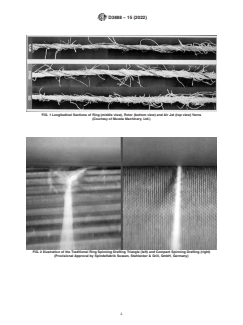
Fig. 1. Production rates are low when compared to new
Development of International Standards, Guides and Recom-
mendations issued by the World Trade Organization Technical spinning systems. The production delivery capability of ring
Barriers to Trade (TBT) Committee. spinning is limited by traveler velocity and the twist limits of
the yarn number being made; the speed may range between 10
2. Referenced Documents
m/min and 20 m/min. Ring spinning allows for the production
of the widest range of yarn numbers from 200 to 2 tex (Ne 3/1
2.1 ASTM Standards:
c
D2255 Test Method for Grading SpunYarns forAppearance to 300/1). Ring-spun yarns are produced by drafting rovings
between pairs of rollers, twisting the drafted roving by passing
D3888 Terminology for Yarn Spinning Systems
D3990 Terminology Relating to Fabric Defects it under a traveler that rotates around a fixed ring on the frame
of the spinning machine, and winding the twisted strand on a
3. Significance and Use
removable bobbin mounted on a rotating spindle.
3.1 Terminology D3888 was originally developed as a
bobbin, n—a cylinder (can be slightly tapered; plastic or
terminology standard for rotor spinning when it evolved as a
cardboard), mounted on a spindle of a ring spinning frame
new yarn spinning technology in the 1980s. Ring spinning
on which yarn produced from drafting and twisting is
wound.
DISCUSSION—Yarn from several ring frame bobbins is wound onto a
ThisterminologyisunderthejurisdictionofASTMCommitteeD13onTextiles
and is the direct responsibility of Subcommittee D13.58 on Yarns and Fibers. cone or cheese to create a larger package from which it can be easily
Current edition approved Feb. 1, 2022. Published March 2022. Originally
unwound for use in weaving, knitting, or other processes.
approved in 1980. Last previous edition approved in 2015 as D3888 – 15. DOI:
10.1520/D3888-15R22.
carding, v—a mechanical preparation, utilized by staple fiber
For referenced ASTM standards, visit the ASTM website, www.astm.org, or
spinning systems, that cleans, straightens, and aligns fibers
contact ASTM Customer Service at service@astm.org. For Annual Book of ASTM
using wire-covered rolls (or cylinders) that converts fibers
Standards volume information, refer to the standard’s Document Summary page on
the ASTM website. into a sliver.
Copyright © ASTM International, 100 Barr Harbor Drive, PO Box C700, West Conshohocken, PA 19428-2959. United States
D3888 − 15 (2022)
carded yarn, n—an organized, continuous strand of staple traveler, n—a C-shaped metal or plastic piece that rides on the
fibers produced by carding, drawing, roving formation, and ring of a spinning frame and guides the twisted yarn onto a
spinning. (Compare with combed yarn.) bobbin.
twist, n—the number of turns about the axis per unit of length
combing, v—an optional mechanical preparation process un-
in a yarn or other textile strand.
dertaken to remove additional trash particles, neps, and short
fibers (typically fibers less than 12.5 mm or 0.5 in.) from
4.2 Rotor Spinning—Rotor, or open-end, spinning is a
carded sliver to further align the remaining fibers.
production spinning technology that can spin yarn at a rate of
uptotentimesthatofringspinning.Rotorspinningproduction
combed yarn, n—an organized, continuous strand of staple
capability, typically utilized for coarser yarn number
fibers produced by carding, roving, drawing, formation,
production, is dependant on rotor dimensions and nozzle
combing, and spinning. (Compare with carded yarn.)
configuration; its spinning speeds may range between 150
DISCUSSION—Combed yarns produced on the same spinning system
m/min to 250 m/min. It does not require either roving forma-
are, generally, stronger, more uniform with fewer imperfections, and
tion prior to spinning or an extra winding step after spinning.
have greater luster than carded yarns.
Its yarn number production range is 200 to 15 tex (Ne 3/1 to
c
compact spinning, n—a modified ring-spinning process that
40/1). See Fig. 5.
alters the geometry of the spinning twist triangle to produce
carding, n—See carding in 4.1.
a more uniform structure by binding fibers into the body of
collecting surface, n—in the rotor of an open-end spinning
the yarn. See Fig. 2.
machine, that portion of the internal surface of the rotor,
compact- (ring-) spun yarn, n—compact-spun yarn is char-
often in the form of a groove, in which the fibers are
acterized by reduced hairiness and higher strength than
condensed for assembly into yarn.
conventional ring spun yarns in the same fiber properties,
doffing tube, n—a component of an open-end spinning ma-
yarn number, and twist per unit distance. See Fig. 3.
chine which is an extension to the navel and is used to guide
drafting, v—the process of attenuating a web, sliver or roving
the withdrawn yarn en route to the take-up rollers. (See also
of staple fiber to increase its length per unit mass.
navel.)
DISCUSSION—Drafting is generally attained by passing a web, sliver
feed unit, n—in an open-end spinning machine, the device
or roving between pairs of rollers (or a combination of pairs of rollers
with aprons), operating at differing speeds. which presents the fiber feed stock to the opening roller by
either a feed roller and feed plate combination or interacting
drafting zone, n—the location on a drawing, roving or
feed rollers. (See opening device.)
spinning frame where pairs of rollers, cylinders, aprons or a
fiber channel, n—a component of an open-end spinning
combination of the same, operate at differing surface speeds.
machine through which the fibers are conveyed by an air
DISCUSSION—The differing surface speeds attenuate the material
current from the opening device to the rotor. (Syn. fiber
being processed, and control the number of fibers per cross-section.
transport tube.) (See also opening device.)
ring spinning machine, n—a machine that converts roving of
DISCUSSION—Different navel designs will impact the physical prop-
staple fiber (produced from carded or combed sliver) into
erties of rotor-spun yarns.
spun yarn by drafting, twisting, and winding onto a remov-
navel, n—a component of an open-end spinning machine
able bobbin. (Syn. ring-spinning frame.) See Fig. 4.
located on the axis of the rotor through which the yarn is
ring-spun yarn, n—ring-spun yarn is characterized by a withdrawnfromtherotorandwhic
...