

ASTM E2019-03(2019)
(Test Method)Standard Test Method for Minimum Ignition Energy of a Dust Cloud in Air
General Information
- Abstract
SIGNIFICANCE AND USE
5.1 This test method provides a procedure for performing laboratory tests to determine the minimum ignition energy of a dust cloud.
Note 1: For gases and vapors, see Test Method E582.
5.2 The data developed by this test method may be used to assess the spark ignitibility of a dust cloud. Additional guidance on the significance of minimum ignition energy is in X1.1.
5.3 The values obtained are specific to the sample tested, the method used and the test equipment used. The values are not to be considered intrinsic material constants.
5.4 The MIE of a dust as determined using this procedure can be compared with the MIE's of reference dusts (using the same procedure) to obtain the relative sensitivity of the dust to spark ignition. An understanding of the relative sensitivity to spark ignition can be used to minimize the probability of explosions due to spark ignition.
SCOPE
1.1 This test method determines the minimum ignition energy of a dust cloud in air by a high voltage spark.
1.2 The minimum ignition energy (MIE) of a dust-cloud is primarily used to assess the likelihood of ignition during processing and handling. The likelihood of ignition is used to evaluate the need for precautions such as explosion prevention systems. The MIE is determined as the electrical energy stored in a capacitor which, when released as a high voltage spark, is just sufficient to ignite the dust cloud at its most easily ignitable concentration in air. The laboratory test method described in this standard does not optimize all test variables that affect MIE. Smaller MIE values might be determined by increasing the number of repetitions or optimizing the spark discharge circuit for each dust tested.
1.3 In this test method, the test equipment is calibrated using a series of reference dusts whose MIE values lie within established limits. Once the test equipment is calibrated, the relative ignition sensitivity of other dusts can be found by comparing their MIE values with those of the reference dusts or with dusts whose ignition sensitivities are known from experience. X1.1 of this test method includes guidance on the significance of minimum ignition energy with respect to electrostatic discharges.
1.4 The values stated in SI units are to be regarded as standard. No other units of measurement are included in this standard.
1.5 This standard does not purport to address all of the safety concerns, if any, associated with its use. It is the responsibility of the user of this standard to establish appropriate safety, health, and environmental practices and determine the applicability of regulatory limitations prior to use. Specific precautionary statements are given in Section 8.
1.6 This international standard was developed in accordance with internationally recognized principles on standardization established in the Decision on Principles for the Development of International Standards, Guides and Recommendations issued by the World Trade Organization Technical Barriers to Trade (TBT) Committee.
- Status
- Published
- Publication Date
- 14-Feb-2019
- Technical Committee
- E27 - Hazard Potential of Chemicals
- Drafting Committee
- E27.05 - Explosibility and Ignitability of Dust Clouds
Overview
ASTM E2019-03(2019): Standard Test Method for Minimum Ignition Energy of a Dust Cloud in Air is an international standard developed by ASTM. This test method provides a systematic laboratory procedure to determine the minimum ignition energy (MIE) required to ignite a dust cloud in air using a high voltage spark. Understanding the MIE of combustible dusts is essential for evaluating the risk of ignition during processing, handling, and storage, and thus is critical in the development of explosion prevention and mitigation strategies in industrial environments.
MIE data obtained through this method is specific to the sample, equipment, and testing process used. Therefore, results are not considered absolute material constants, but provide valuable comparative information on the relative ignition sensitivity of various dusts.
Key Topics
- Minimum Ignition Energy (MIE): Defined as the smallest amount of electrical energy (stored in a capacitor and discharged as a spark) necessary to ignite a dust cloud in its most easily ignitable air concentration.
- Test Method Overview:
- A dust cloud is dispersed in a laboratory chamber.
- Ignition attempts are made using spark discharges at various energies and concentrations.
- The lowest energy that consistently produces ignition is recorded as the MIE.
- Calibration: Test apparatus must be calibrated using reference dusts with known MIE values to ensure test reliability and comparability.
- Sample Preparation:
- Particle size and moisture content significantly impact test results.
- Dust samples are typically ground or sieved to achieve fine, consistent particle distribution (often sub-200 mesh).
- Safety Guidance:
- Tests involve toxic or irritating materials and high-voltage circuits-adequate ventilation, protective measures, and consideration of toxicity are required.
- The method should not be used with recognized explosives or pyrophoric substances.
- Reporting: Detailed documentation is required, including particle size distribution, moisture content, apparatus details, and all test results.
Applications
The ASTM E2019-03(2019) test method has broad applications in industries where combustible dusts are present, including:
- Industrial Safety Assessment: Determining the likelihood of dust ignition by static electricity or other sparks during material processing or handling.
- Explosion Prevention: Assisting in the design and implementation of explosion prevention and protection systems based on measured MIE values.
- Regulatory Compliance: Supporting compliance with health, safety, and environmental standards for combustible dust hazards.
- Comparative Hazard Assessment: Comparing different dusts' sensitivities to spark ignition to prioritize risk mitigation strategies in multi-product facilities.
- Process Optimization: Informing process modifications, such as humidity and dust particle size controls, to reduce explosion risk.
Related Standards
This standard is part of a broader framework for dust and gaseous mixture safety and testing. Key related standards include:
- ASTM E582: Test Method for Minimum Ignition Energy and Quenching Distance in Gaseous Mixtures
- ASTM E1226: Test Method for Explosibility of Dust Clouds
- ASTM D3173 / D3175: Methods for determining moisture and volatile matter content in analysis samples
- IEC 1241-2-3: Electrical Apparatus for Use in the Presence of Combustible Dusts - Test Method for Determining Minimum Ignition Energy of Dust-Air Mixtures
- ASTM E1445: Terminology Relating to Hazard Potential of Chemicals
Using ASTM E2019-03(2019) in conjunction with these related standards allows for a comprehensive assessment and control of combustible dust risks in a wide variety of industrial sectors.
Practical Value
Implementing ASTM E2019-03(2019) helps organizations understand dust ignitibility, comply with international safety regulations, and develop targeted dust explosion mitigation strategies. This standard is essential for engineers, safety professionals, and facility managers involved in operations where combustible dust hazards are present, and for those responsible for industrial risk management and occupational health and safety.
Relations
- Replaces
ASTM E2019-03(2013) - Standard Test Method for Minimum Ignition Energy of a Dust Cloud in Air - Effective Date
- 15-Feb-2019
- Effective Date
- 15-Nov-2023
- Refers
ASTM D3175-20 - Standard Test Method for Volatile Matter in the Analysis Sample of Coal and Coke - Effective Date
- 01-Feb-2020
- Effective Date
- 15-Dec-2019
- Refers
ASTM D3175-18 - Standard Test Method for Volatile Matter in the Analysis Sample of Coal and Coke - Effective Date
- 01-Dec-2018
- Refers
ASTM D3175-17 - Standard Test Method for Volatile Matter in the Analysis Sample of Coal and Coke - Effective Date
- 01-Feb-2017
- Effective Date
- 01-Dec-2012
- Effective Date
- 15-May-2012
- Effective Date
- 01-Apr-2011
- Refers
ASTM D3175-11 - Standard Test Method for Volatile Matter in the Analysis Sample of Coal and Coke - Effective Date
- 01-Apr-2011
- Effective Date
- 01-Jan-2010
- Refers
ASTM E1226-09 - Standard Test Method for Pressure and Rate of Pressure Rise for Combustible Dusts - Effective Date
- 15-Nov-2009
- Effective Date
- 15-May-2008
- Refers
ASTM D3173-03(2008) - Standard Test Method for Moisture in the Analysis Sample of Coal and Coke - Effective Date
- 01-Feb-2008
- Refers
ASTM D3175-07 - Standard Test Method for Volatile Matter in the Analysis Sample of Coal and Coke - Effective Date
- 01-Mar-2007
Get Certified
Connect with accredited certification bodies for this standard

CIS Institut d.o.o.
Personal Protective Equipment (PPE) certification body. Notified Body NB-2890 for EU Regulation 2016/425 PPE.

Kiwa BDA Testing
Building and construction product certification.
Kmetijski inštitut Slovenije
Agricultural Institute of Slovenia. Soil testing, plant health, agricultural product analysis.
Sponsored listings
Frequently Asked Questions
ASTM E2019-03(2019) is a standard published by ASTM International. Its full title is "Standard Test Method for Minimum Ignition Energy of a Dust Cloud in Air". This standard covers: SIGNIFICANCE AND USE 5.1 This test method provides a procedure for performing laboratory tests to determine the minimum ignition energy of a dust cloud. Note 1: For gases and vapors, see Test Method E582. 5.2 The data developed by this test method may be used to assess the spark ignitibility of a dust cloud. Additional guidance on the significance of minimum ignition energy is in X1.1. 5.3 The values obtained are specific to the sample tested, the method used and the test equipment used. The values are not to be considered intrinsic material constants. 5.4 The MIE of a dust as determined using this procedure can be compared with the MIE's of reference dusts (using the same procedure) to obtain the relative sensitivity of the dust to spark ignition. An understanding of the relative sensitivity to spark ignition can be used to minimize the probability of explosions due to spark ignition. SCOPE 1.1 This test method determines the minimum ignition energy of a dust cloud in air by a high voltage spark. 1.2 The minimum ignition energy (MIE) of a dust-cloud is primarily used to assess the likelihood of ignition during processing and handling. The likelihood of ignition is used to evaluate the need for precautions such as explosion prevention systems. The MIE is determined as the electrical energy stored in a capacitor which, when released as a high voltage spark, is just sufficient to ignite the dust cloud at its most easily ignitable concentration in air. The laboratory test method described in this standard does not optimize all test variables that affect MIE. Smaller MIE values might be determined by increasing the number of repetitions or optimizing the spark discharge circuit for each dust tested. 1.3 In this test method, the test equipment is calibrated using a series of reference dusts whose MIE values lie within established limits. Once the test equipment is calibrated, the relative ignition sensitivity of other dusts can be found by comparing their MIE values with those of the reference dusts or with dusts whose ignition sensitivities are known from experience. X1.1 of this test method includes guidance on the significance of minimum ignition energy with respect to electrostatic discharges. 1.4 The values stated in SI units are to be regarded as standard. No other units of measurement are included in this standard. 1.5 This standard does not purport to address all of the safety concerns, if any, associated with its use. It is the responsibility of the user of this standard to establish appropriate safety, health, and environmental practices and determine the applicability of regulatory limitations prior to use. Specific precautionary statements are given in Section 8. 1.6 This international standard was developed in accordance with internationally recognized principles on standardization established in the Decision on Principles for the Development of International Standards, Guides and Recommendations issued by the World Trade Organization Technical Barriers to Trade (TBT) Committee.
SIGNIFICANCE AND USE 5.1 This test method provides a procedure for performing laboratory tests to determine the minimum ignition energy of a dust cloud. Note 1: For gases and vapors, see Test Method E582. 5.2 The data developed by this test method may be used to assess the spark ignitibility of a dust cloud. Additional guidance on the significance of minimum ignition energy is in X1.1. 5.3 The values obtained are specific to the sample tested, the method used and the test equipment used. The values are not to be considered intrinsic material constants. 5.4 The MIE of a dust as determined using this procedure can be compared with the MIE's of reference dusts (using the same procedure) to obtain the relative sensitivity of the dust to spark ignition. An understanding of the relative sensitivity to spark ignition can be used to minimize the probability of explosions due to spark ignition. SCOPE 1.1 This test method determines the minimum ignition energy of a dust cloud in air by a high voltage spark. 1.2 The minimum ignition energy (MIE) of a dust-cloud is primarily used to assess the likelihood of ignition during processing and handling. The likelihood of ignition is used to evaluate the need for precautions such as explosion prevention systems. The MIE is determined as the electrical energy stored in a capacitor which, when released as a high voltage spark, is just sufficient to ignite the dust cloud at its most easily ignitable concentration in air. The laboratory test method described in this standard does not optimize all test variables that affect MIE. Smaller MIE values might be determined by increasing the number of repetitions or optimizing the spark discharge circuit for each dust tested. 1.3 In this test method, the test equipment is calibrated using a series of reference dusts whose MIE values lie within established limits. Once the test equipment is calibrated, the relative ignition sensitivity of other dusts can be found by comparing their MIE values with those of the reference dusts or with dusts whose ignition sensitivities are known from experience. X1.1 of this test method includes guidance on the significance of minimum ignition energy with respect to electrostatic discharges. 1.4 The values stated in SI units are to be regarded as standard. No other units of measurement are included in this standard. 1.5 This standard does not purport to address all of the safety concerns, if any, associated with its use. It is the responsibility of the user of this standard to establish appropriate safety, health, and environmental practices and determine the applicability of regulatory limitations prior to use. Specific precautionary statements are given in Section 8. 1.6 This international standard was developed in accordance with internationally recognized principles on standardization established in the Decision on Principles for the Development of International Standards, Guides and Recommendations issued by the World Trade Organization Technical Barriers to Trade (TBT) Committee.
ASTM E2019-03(2019) is classified under the following ICS (International Classification for Standards) categories: 13.230 - Explosion protection. The ICS classification helps identify the subject area and facilitates finding related standards.
ASTM E2019-03(2019) has the following relationships with other standards: It is inter standard links to ASTM E2019-03(2013), ASTM E1445-08(2023), ASTM D3175-20, ASTM E1226-19, ASTM D3175-18, ASTM D3175-17, ASTM E1226-12a, ASTM E1226-12, ASTM D3173-11, ASTM D3175-11, ASTM E1226-10, ASTM E1226-09, ASTM E1445-08, ASTM D3173-03(2008), ASTM D3175-07. Understanding these relationships helps ensure you are using the most current and applicable version of the standard.
ASTM E2019-03(2019) is available in PDF format for immediate download after purchase. The document can be added to your cart and obtained through the secure checkout process. Digital delivery ensures instant access to the complete standard document.
Standards Content (Sample)
This international standard was developed in accordance with internationally recognized principles on standardization established in the Decision on Principles for the
Development of International Standards, Guides and Recommendations issued by the World Trade Organization Technical Barriers to Trade (TBT) Committee.
Designation: E2019 − 03 (Reapproved 2019)
Standard Test Method for
Minimum Ignition Energy of a Dust Cloud in Air
This standard is issued under the fixed designation E2019; the number immediately following the designation indicates the year of
original adoption or, in the case of revision, the year of last revision.Anumber in parentheses indicates the year of last reapproval.A
superscript epsilon (´) indicates an editorial change since the last revision or reapproval.
1. Scope Development of International Standards, Guides and Recom-
mendations issued by the World Trade Organization Technical
1.1 This test method determines the minimum ignition
Barriers to Trade (TBT) Committee.
energy of a dust cloud in air by a high voltage spark.
1.2 The minimum ignition energy (MIE) of a dust-cloud is
2. Referenced Documents
primarily used to assess the likelihood of ignition during
2.1 ASTM Standards:
processing and handling. The likelihood of ignition is used to
D3173Test Method for Moisture in theAnalysis Sample of
evaluate the need for precautions such as explosion prevention
Coal and Coke
systems.The MIE is determined as the electrical energy stored
D3175Test Method for Volatile Matter in the Analysis
in a capacitor which, when released as a high voltage spark, is
Sample of Coal and Coke
justsufficienttoignitethedustcloudatitsmosteasilyignitable
E582 Test Method for Minimum Ignition Energy and
concentration in air. The laboratory test method described in
Quenching Distance in Gaseous Mixtures
this standard does not optimize all test variables that affect
E789Test Method for Dust Explosions in a 1.2-Litre Closed
MIE. Smaller MIE values might be determined by increasing
Cylindrical Vessel (Withdrawn 2007)
the number of repetitions or optimizing the spark discharge
E1226Test Method for Explosibility of Dust Clouds
circuit for each dust tested.
E1445Terminology Relating to Hazard Potential of Chemi-
1.3 Inthistestmethod,thetestequipmentiscalibratedusing
cals
a series of reference dusts whose MIE values lie within
2.2 IEC Standards:
established limits. Once the test equipment is calibrated, the
1241-2-3, 1994ElectricalApparatus for Use in the Presence
relative ignition sensitivity of other dusts can be found by
of Combustible Dusts, Part 2: Test Method, Section 3:
comparing their MIE values with those of the reference dusts
Method for Determining Minimum Ignition Energy of
or with dusts whose ignition sensitivities are known from
Dust-Air Mixtures
experience. X1.1 of this test method includes guidance on the
significance of minimum ignition energy with respect to
3. Terminology
electrostatic discharges.
3.1 Definitions—For additional definitions, see Terminol-
1.4 The values stated in SI units are to be regarded as
ogy E1445.
standard. No other units of measurement are included in this
3.2 Definitions of Terms Specific to This Standard:
standard.
3.2.1 ignition delay time, n—the time between the onset of
1.5 This standard does not purport to address all of the
dispersion of the dust sample into a cloud and the activation of
safety concerns, if any, associated with its use. It is the
the ignition source.
responsibility of the user of this standard to establish appro-
3.2.2 minimum ignition energy (MIE), n—electrical energy
priate safety, health, and environmental practices and deter-
discharged from a capacitor, which is just sufficient to effect
mine the applicability of regulatory limitations prior to use.
ignitionofthemosteasilyignitableconcentrationoffuelinair
Specific precautionary statements are given in Section 8.
under the specific test conditions.
1.6 This international standard was developed in accor-
dance with internationally recognized principles on standard-
ization established in the Decision on Principles for the
For referenced ASTM standards, visit the ASTM website, www.astm.org, or
contact ASTM Customer Service at service@astm.org. For Annual Book of ASTM
Standards volume information, refer to the standard’s Document Summary page on
This test method is under the jurisdiction ofASTM Committee E27 on Hazard the ASTM website.
Potential of Chemicals and is the direct responsibility of Subcommittee E27.05 on The last approved version of this historical standard is referenced on
Explosibility and Ignitability of Dust Clouds. www.astm.org.
Current edition approved Feb. 15, 2019. Published March 2019. Originally Available from International Electrotechnical Commission (IEC), 3, rue de
approved in 1999. Last previous edition approved in 2013 as E2019–03 (2013). Varembé, 1st floor, P.O. Box 131, CH-1211, Geneva 20, Switzerland, https://
DOI: 10.1520/E2019-03R19. www.iec.ch.
Copyright © ASTM International, 100 Barr Harbor Drive, PO Box C700, West Conshohocken, PA 19428-2959. United States
E2019 − 03 (2019)
3.2.3 spark discharge, n—transient discrete electric suitable for this test method. These vessels are described in
discharge, which takes place between two conductors, which Refs (1-4) and Test Methods E789 and E1226. These and
are at different potentials. The discharge bridges the gap other suitable chambers can be used provided that the calibra-
between the conductors in the form of a single ionization tion requirements in 10.1 are met.
channel.
7.2 Spark Generation Circuit—Appendix X1 describes
some suitable forms of circuits, all of which shall have the
4. Summary of Test Method
following characteristics:
4.1 A dust cloud is formed in a laboratory chamber by an
7.2.1 Electrode Material, such as tungsten, stainless steel,
introduction of the material with air.
brass, or graphite.
7.2.2 Electrode Diameter and Shape, 2 6 1 mm. For
4.2 Ignition trials of this dust-air mixture are then
circuits in which high voltage is maintained across the spark
attempted, after a specific ignition delay time, by a spark
gap prior to spark breakdown, a significant fraction of the
discharge from a charged capacitor.
energy stored in the capacitor may drain away as corona
4.3 The stored energy discharged into the spark and the
discharges from sharp electrode tips prior to the spark dis-
occurrence or nonoccurrence of flame are recorded.
charge. This is increasingly important at low stored energies.
4.4 The minimum ignition energy is sought by varying the
Electrodes with rounded tips can be used to reduce corona
dust concentration, the spark discharge energy and optionally
effects that can occur with pointed electrodes, which may give
the ignition delay time.
incorrectvaluesofsparkenergy.Ifpointedelectrodesareused,
corona effects should be considered carefully.
4.5 Ignition is determined by visual observation of a flame
7.2.3 Electrode Gap—The optimum spacing is typically of
propagation away from the spark gap.
the order of 6 mm. For certain materials at low ignition energy
values, however, the gap spacing may need to be reduced in
5. Significance and Use
ordertoinitiatethespark.Underthesecircumstances,thespark
5.1 This test method provides a procedure for performing
gapcanbereducedandthetestscarriedoutwiththelargestgap
laboratoryteststodeterminetheminimumignitionenergyofa
possible, but the gap should not be less than 2 mm.
dust cloud.
NOTE 2—The capacitance of the electrodes and associated high voltage
NOTE 1—For gases and vapors, see Test Method E582.
cables between the storage capacitor and the electrodes should be as low
5.2 The data developed by this test method may be used to as possible. It should be noted that cable capacitance may be of the order
40 pF/m depending on its construction, which represents significant
assess the spark ignitibility of a dust cloud. Additional guid-
additional stored energy at low storage capacitance and high voltage.The
ance on the significance of minimum ignition energy is in
stray capacitance of these components must be measured to determine if
X1.1.
it needs to be taken into account when calculating the stored circuit
energy.
5.3 Thevaluesobtainedarespecifictothesampletested,the
NOTE3—Insulationresistancebetweenelectrodesshouldbesufficiently
methodusedandthetestequipmentused.Thevaluesarenotto
high to prevent leakage currents prior to discharge.Typically, a minimum
be considered intrinsic material constants.
resistance between the electrodes of 10 Ω is required for a minimum
ignitionenergyof1mJ,and10 Ωforaminimumignitionenergyof100
5.4 The MIE of a dust as determined using this procedure
mJ. Insulation resistance may decrease over time due to contamination of
can be compared with the MIE’s of reference dusts (using the
thesurfacewithcarbonandothermaterials.Theresistancemaybedirectly
same procedure) to obtain the relative sensitivity of the dust to
measured across the electrodes.Alternatively, a decrease may be inferred
spark ignition. An understanding of the relative sensitivity to by the inability to hold constant voltage on the isolated storage capacitor
for the timescale of a test.
spark ignition can be used to minimize the probability of
NOTE 4—Almost all electrostatic discharges in plant installations are
explosions due to spark ignition.
capacitive with negligible inductance. It has been found that for equal
stored energies many dusts can be ignited more easily when a resistor or
6. Interferences
an inductance is placed in the discharge circuit to create longer duration
sparks. Ideally, the MIE should correspond to circuits whose discharge
6.1 Dust residue from previous tests may affect results. The
duration has been optimized for the dust in question using, for example,
chamber must be cleaned before a new product is tested.
an inductance.
6.2 Problems may arise due to electrical shortcircuits when
8. Safety Precautions
using conductive materials.
8.1 Prior to handling a test material, the toxicity of the
7. Apparatus
sample and its combustion products must be considered. This
7.1 Test Apparatus—Although a number of different test
information is generally obtained from the manufacturer or
apparatuses are used in practice, they all have the following
supplier. Appropriate safety precautions must be taken if the
components in common:Atest chamber, spark electrodes, and
materialhastoxicorirritatingcharacteristics.MIE-testsshould
a spark generation circuit. Various configurations of the spark
be conducted in a ventilated hood or other area having
generation circuits are provided in the Appendix X1. The
adequate ventilation.
purpose of the test chamber is to produce a uniform, nontur-
bulent and known density dust cloud in air at the time of
ignition.TheclearplasticorglassHartmanntube,typically0.5
Theboldfacenumbersinparenthesesrefertothelistofreferencesattheendof
or 1.2 L, and the 20-L sphere apparatus have been found this standard.
E2019 − 03 (2019)
8.7 Care should be taken not to clean acrylic Hartmann
tubes with incompatible solvents, which can lead to embrittle-
ment and cracking.
9. Sampling
9.1 Itisnotpracticaltospecifyasinglemethodofsampling
dustfortestpurposesbecausethecharacterofthematerialand
its available form affect selection of the sampling procedure.
9.2 Minimum ignition energy decreases with decreasing
particle size (see Fig. 1). Although tests may be run on an
“as-received” sample, explosible dust clouds often consist
largelyofsub-200meshdust,whichaccumulatesinsuspension
when coarser bulk powder is handled. Therefore, it is recom-
mended that the test sample be at least 95% minus 200 mesh
(75µm).Ingeneral,thesampletestedshouldbeatleastasfine
as the dust at the location being considered, which, in some
cases, may require testing of sub-325 mesh or even finer dust.
9.3 To achieve this particle fineness (≥95% minus 200
mesh) the sample may be ground or pulverized, or it may be
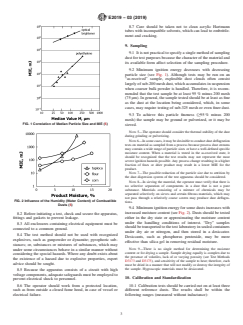
FIG. 1 Correlation of Median Particle Size and MIE (5)
sieved.
NOTE 5—The operator should consider the thermal stability of the dust
during grinding or pulverizing.
NOTE6—Insomecases,itmaybedesirabletoconductdustdeflagration
tests on material as sampled from a process because process dust streams
may contain a wide range of particle sizes or have a well-defined specific
moisture content. When a material is tested in the as-received state, it
should be recognized that the test results may not represent the most
severe ignition hazards possible.Any process change resulting in a higher
fraction of fines or drier product may result in a lower MIE for the
product.
NOTE 7—The possible reduction of the particle size due to attrition by
the dust dispersion system of the test apparatus should be considered.
NOTE 8—In sieving the material, the operator must verify that there is
no selective separation of components in a dust that is not a pure
substance. Materials consisting of a mixture of chemicals may be
separated selectively on sieves and certain fibrous materials, which may
not pass through a relatively coarse screen may produce dust deflagra-
FIG. 2 Influence of the Humidity (Water Content) of Combustible
tions.
Dusts (5)
9.4 Minimum ignition energy for some dusts increases with
increased moisture content (see Fig. 2). Dusts should be tested
8.2 Before initiating a test, check and secure the apparatus,
either in the dry state or approximating the moisture content
fittings and gaskets to prevent leakage.
under the handling conditions of interest. “Dry” samples
8.3 All enclosures containing electrical equipment must be
shouldbetransportedtothetestlaboratoryinsealedcontainers
connected to a common ground.
under dry air or nitrogen, and then stored in a desiccator.
8.4 The test method should not be used with recognized
Desiccants, such as phosphorus pentoxide, may be more
explosives, such as gunpowder or dynamite; pyrophoric sub-
effective than silica gel in removing residual moisture.
stances; or, substances or mixtures of substances, which may
NOTE 9—There is no single method for determining the moisture
under some circumstances behave in a similar manner without
content or for drying a sample. Sample drying equally is complex due to
considering the special hazards. Where any doubt exists about
the presence of volatiles, lack of or varying porosity (see Test Methods
the existence of a hazard due to explosive properties, expert
D3173 and D3175), and sensitivity of the sample to heat; therefore, each
advice should be sought.
must be dried in a manner that will not modify or destroy the integrity of
the sample. Hygroscopic materials must be desiccated.
8.5 Because the apparatus consists of a circuit with high
voltagecomponents,adequatesafeguardsmustbeemployedto
10. Calibration and Standardization
prevent electrical shock to personnel.
8.6 The operator should work from a protected location, 10.1 Calibration tests should be carried out on at least three
such as from outside a closed fume hood, in case of vessel or different reference dusts. The results shall be within the
following ranges (measured without inductance):
electrical failure.
E2019 − 03 (2019)
A
Irganox 1010: MIE=1to6mJ
Anthraquinone: MIE=1to11mJ
B
Lycopodium: MIE=10to30mJ
C
Pittsburgh coal: MIE = 30 to 140 mJ
A
Irganox 1010:
Tetrakis-[Methylene(3,5-di-(tert)-butyl-4-hydroxyhydrocinnamate)]methane. The
sole source of supply of this material known to the committee at this time is Ciba
Specialty Chemicals. If you are aware of alternative suppliers, please provide this
information to ASTM International Headquarters. Your comments will receive
careful consideration at a meeting of the responsible technical committee, which
you may attend.
B
Lycopodium Clavatum:
Lycopodium is a natural plant spore having a narrow size distribution with 100 %
minus 200 mesh and a mass median diameter of ;28 µm.
C
The Pittsburgh coal has ;80 % minus 200 mesh, a mass median diameter of
;45 µm, and 36 % volatility.
10.2 Inadditiontotheinitialcalibrationandstandardization
procedure, at least one standard dust should be retested
periodically to verify that the dispersion and turbulence char-
acteristics of the chamber have not changed.
11. Procedure
11.1 Test Description:
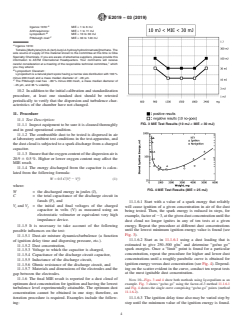
FIG. 3 MIE Test Results (10 mJ < MIE < 30 mJ)
11.1.1 Inspect equipment to be sure it is cleaned thoroughly
and in good operational condition.
11.1.2 The combustible dust to be tested is dispersed in air
at laboratory ambient test conditions in the test-apparatus, and
the dust cloud is subjected to a spark discharge from a charged
capacitor.
11.1.3 Ensurethattheoxygencontentofthedispersionairis
20.9 6 0.5%. Higher or lower oxygen content may affect the
MIE result.
11.1.4 The energy discharged from the capacitor is calcu-
lated from the following formula:
2 2
W 50.5 C~V 2 V ! (1)
i f
where:
FIG. 4 MIE Test Results (MIE = 25 mJ)
W = the discharged energy in joules (J),
C = the total capacitance of the discharge circuit in
farads (F), and
11.1.6.1 Start with a value of a spark energy that reliably
V and V = the initial and final voltages of the charged
i f will cause ignition of a given concentration in air of the dust
capacitor in volts (V) as measured using an
being tested. Then, the spark energy is reduced in steps, for
electrostatic voltmeter or equivalent very high
example,factorof ;3,atthegivendustconcentrationuntilthe
impedance device.
dust cloud no longer ignites in any of ten tests at a given
energy. Repeat the procedure at different dust concentrations
11.1.5 It is necessary to take account of the following
until the lowest minimum ignition energy value is found (see
possible influences on the test:
Fig. 3).
11.1.5.1 Dust-air mixture dynamics/turbulence (a function
11.1.6.2 Start as in 11.1.6.1 using a dust loading that is
of ignition delay time and dispersing pressure, etc.).
estimated to give 250–500 g/m and determine “go/no go”
11.1.5.2 Dust concentration,
spark energies. Once a “limit” point is found for a particular
11.1.5.3 Voltage to which the capacitor is charged,
concentration, repeat the procedure for higher and lower dust
11.1.5.4 Capacitance of the discharge circuit capacitor,
concentrations until a roughly parabolic curve is obtained for
11.1.5.5 Inductance of the discharge circuit,
ignitionenergyversusdustconcentration(seeFig.4).Depend-
11.1.5.6 Ohmic resistance of the discharge circuit, and
ing on the scatter evident in the curve, conduct ten repeat tests
11.1.5.7 Materials and dimensions of the electrodes and the
at the most ignitable dust concentration.
gap between the electrodes.
11.1.6 The final MIE result is reported for a dust cloud of
NOTE 10—Figs. 3 and 4 show both methods using Lycopodium as an
optimum dust concentration for ignition and having the lowest
example. Fig. 3 shows “go/no go” using the factor-of-3 method 11.1.6.1
and Fig. 4 shows the single curve comprising “go/no go” points (method
turbulence level experimentally attainable. The optimum dust
11.1.6.2).
concentration cannot be obtained in one step; therefore, an
iteration procedure is required. Examples include the follow- 11.1.6.3 The ignition delay time also may be varied step by
ing: step until the minimum value of the ignition energy is found.
E2019 − 03 (2019)
11.1.7 These general procedures are applicable for all suit- 12.1.1 Appropriate identification of the material tested,
able circuits. The detailed procedures specific to each circuit including information, such as type of dust, source, code
numbers, forms, and previous history.
are listed in the corresponding appendix.
12.1.2 Particle size distribution of the sample as received
11.1.8 Theminimumignitionenergy,MIE,liesbetweenthe
and as tested, if available. Statistical parameters derived from
highest energy, W , at which ignition fails to occur in ten
the distribution, such as, surface average or volume average
successive attempts to ignite the dust-air mixture, and the
diameter, may be used to summarize the distribution.
lowestenergy, W ,atwhichignitionoccursonceatleastwithin
12.1.3 Moisture or volatile content, or both, of the as-
ten successive atte
...