

ASTM D4373-21
(Test Method)Standard Test Method for Rapid Determination of Carbonate Content of Soils
General Information
- Abstract
SIGNIFICANCE AND USE
5.1 This test method is used to determine the presence and quantity of carbonate in a soil or soft rock specimen in terms of the calcite equivalent. The method is generally intended for use as an index of approximate carbonate content to assist with characterizing marine soils, but can be used for other soils and soft rock. Other test methods exist (such as Method C25 and Test Method D3042) to evaluate calcium carbonate equivalency for purposes of characterizing use of calcareous materials as soil modifiers or agricultural lining materials.
5.1.1 Calcium carbonates (CaCO3) are known cementing agents, are water soluble at pH
5.2 This test method has limitations as follows:
5.2.1 If low carbonate contents (calcite equivalents) are measured, the user does not know whether the soil is low in carbonate content or contains cerrusite, witherite, and the like, which are carbonate species whose reactions with hydrochloric acid are either very slow or limited.
5.2.2 Testing times may be extensive (longer than 1 hour) for some carbonate species (such as dolomite) if calcite equivalents within about 1 % are required.
5.2.3 The effects of specimen grain size, duration of testing, pH and specimen mass are discussed in the literature.3
Note 1: The quality of the result produced by this standard is dependent on the competence of the personnel performing it, and the suitability of the equipment and facilities used. Agencies that meet the criteria of Practice D3740 are generally considered capable of competent and objective testing/sampling/inspection, etc. Users of this standard are cautioned that compliance with Practice D3740 does not in itself assure reliable results. Reliable results depend on many factors; Practice D3740 provides a means of evaluating some of those factors.
SCOPE
1.1 This test method covers the determination of carbonate content of soils and soft rock which can be readily broken down by mechanical effort. It is a gasometric method that uses a simple portable apparatus. Results should be clearly stated as the calcite equivalent in percent because different carbonate species cover a wide range of percent calcite equivalent as shown below for a number of carbonates:
Species
Cation
Calcite
Equivalent, %
Magnesite
Mg
117.0
Dolomite
Ca, Mg
108.6
Calcite
Ca
100.0
Aragonite
Ca
100.0
Rhodocrosite
Mn
87.1
Siderite
Fe
86.4
Smithsonite
Zn
79.8
Witherite
Ba
50.7
Cerrusite
Pb
37.5
For example, a 100 % dolomite would be expected to yield 108.6 % calcite equivalent while 100 % siderite would yield only 86.4 % calcite equivalent. Calcite and aragonite reactions will typically complete within about 10 minutes. This method does not distinguish between the carbonate species and such determination must be made using quantitative chemical analysis methods such as atomic absorption.
1.2 Units—The values stated in SI units are to be regarded as standard. The values given in parentheses are provided for information only and are not considered standard. Reporting of test results in units other than SI shall not be regarded as nonconformance with this standard
1.3 All observed and calculated values shall conform to the guidelines for significant digits and rounding established in Practice D6026.
1.3.1 The procedures used to specify how data are collected/recorded or calculated, in this standard are regarded as the industry standard. In addition, they are representative of the significant digits that generally should be retained. The procedures used do not consider material variation, purpose for obtaining the data, special purpose studies, or any considerations for the user's objectives; and it is common practice to increase or reduce significant digits of reported data to be commensurate with these considerations. It is beyond the scope of this standard to consider significant digit...
- Status
- Published
- Publication Date
- 14-Jun-2021
- Technical Committee
- D18 - Soil and Rock
- Drafting Committee
- D18.06 - Physical-Chemical Interactions of Soil and Rock
Overview
ASTM D4373-21: Standard Test Method for Rapid Determination of Carbonate Content of Soils provides a practical, gasometric method for determining carbonate content in soils and soft rocks. This method, issued by ASTM International, is designed to deliver the results as a percentage of calcite equivalent, making it particularly useful for geotechnical investigations, soil science, and environmental studies. The test is especially relevant for marine soils, though it is applicable to a broad range of soil and soft rock types.
By using a simple, portable apparatus, this standard allows for rapid field or laboratory assessment of carbonate minerals such as calcite, dolomite, and other related species present in geological materials.
Key Topics
- Purpose: Supports soil classification and geotechnical characterization by rapidly quantifying carbonate content as calcite equivalent.
- Test Method: Utilizes a gasometric reaction between hydrochloric acid and soil carbonates, measuring the pressure of evolved carbon dioxide proportional to carbonate content.
- Applicability: Suitable for soils and soft rocks that can be broken down mechanically.
- Limitations:
- Some carbonate species may react slowly or incompletely, leading to extended testing times or underestimation if only short durations are used.
- The method does not differentiate between carbonate species; it provides an aggregate result as calcite equivalent.
- Lower sensitivity for specific non-calcite carbonate minerals unless supplemented with further quantitative chemical analysis.
- Reporting: Results are reported in SI units and expressed as percent calcite equivalent. All values must adhere to significant digits practices.
- Quality Assurance: Reliable results depend on skilled personnel and proper calibration. Agencies are encouraged to follow established practices like ASTM D3740.
Applications
ASTM D4373-21 offers essential value across multiple sectors:
- Geotechnical Engineering: Rapidly evaluates marine and other calcareous soils for foundation, tunnel, or earthworks design.
- Environmental Site Assessment: Assists in characterizing soils during remediation or impact studies.
- Agricultural Science: Provides a quick screening tool to determine if soils are calcareous, which affects pH, nutrient availability, and suitability for specific crops.
- Material Sourcing and Quality Control: Helps in determining the suitability of soils or soft rocks for construction or fill materials where carbonate content is a specification.
- Soil Classification: Supports comprehensive soil surveys, especially in regions with variable carbonate content.
Related Standards
Several related ASTM standards and documents complement or expand on the scope of ASTM D4373-21:
- ASTM C25: Test Methods for Chemical Analysis of Limestone, Quicklime, and Hydrated Lime - details methods to evaluate calcium carbonate equivalency, especially for agricultural or soil amendment uses.
- ASTM D3042: Test Method for Insoluble Residue in Carbonate Aggregates - for understanding the purity of carbonate materials.
- ASTM D653: Terminology Relating to Soil, Rock, and Contained Fluids - provides definitions relevant to this and other soil testing methods.
- ASTM D3740: Minimum requirements for agencies engaged in testing and/or inspection of soil and rock.
- ASTM D6026: Guidance on significant digits in geotechnical data.
- ASTM E11 & E145: Specifications for sieves and ovens used during sample preparation.
- Global Relevance: Developed in accordance with internationally recognized standardization principles, this test method supports harmonized global engineering practices.
For professionals in soil science, geotechnical consulting, and civil engineering, ASTM D4373-21 is a key method for the accurate, rapid determination of carbonate content in soils and soft rocks, supporting reliable data for project planning, design, and compliance. Use this test standard for robust, repeatable results in your soil characterization workflows.
Relations
- Effective Date
- 01-Feb-2024
- Effective Date
- 01-Nov-2023
- Effective Date
- 01-Oct-2019
- Effective Date
- 01-May-2019
- Effective Date
- 01-Apr-2017
- Effective Date
- 01-Dec-2015
- Effective Date
- 01-May-2015
- Effective Date
- 01-Aug-2014
- Effective Date
- 01-Oct-2013
- Effective Date
- 01-May-2012
- Effective Date
- 01-Mar-2012
- Effective Date
- 01-Sep-2011
- Effective Date
- 01-Sep-2011
- Effective Date
- 01-Jun-2011
- Effective Date
- 01-Mar-2010
Get Certified
Connect with accredited certification bodies for this standard

CIS Institut d.o.o.
Personal Protective Equipment (PPE) certification body. Notified Body NB-2890 for EU Regulation 2016/425 PPE.

Kiwa BDA Testing
Building and construction product certification.
Kmetijski inštitut Slovenije
Agricultural Institute of Slovenia. Soil testing, plant health, agricultural product analysis.
Sponsored listings
Frequently Asked Questions
ASTM D4373-21 is a standard published by ASTM International. Its full title is "Standard Test Method for Rapid Determination of Carbonate Content of Soils". This standard covers: SIGNIFICANCE AND USE 5.1 This test method is used to determine the presence and quantity of carbonate in a soil or soft rock specimen in terms of the calcite equivalent. The method is generally intended for use as an index of approximate carbonate content to assist with characterizing marine soils, but can be used for other soils and soft rock. Other test methods exist (such as Method C25 and Test Method D3042) to evaluate calcium carbonate equivalency for purposes of characterizing use of calcareous materials as soil modifiers or agricultural lining materials. 5.1.1 Calcium carbonates (CaCO3) are known cementing agents, are water soluble at pH 5.2 This test method has limitations as follows: 5.2.1 If low carbonate contents (calcite equivalents) are measured, the user does not know whether the soil is low in carbonate content or contains cerrusite, witherite, and the like, which are carbonate species whose reactions with hydrochloric acid are either very slow or limited. 5.2.2 Testing times may be extensive (longer than 1 hour) for some carbonate species (such as dolomite) if calcite equivalents within about 1 % are required. 5.2.3 The effects of specimen grain size, duration of testing, pH and specimen mass are discussed in the literature.3 Note 1: The quality of the result produced by this standard is dependent on the competence of the personnel performing it, and the suitability of the equipment and facilities used. Agencies that meet the criteria of Practice D3740 are generally considered capable of competent and objective testing/sampling/inspection, etc. Users of this standard are cautioned that compliance with Practice D3740 does not in itself assure reliable results. Reliable results depend on many factors; Practice D3740 provides a means of evaluating some of those factors. SCOPE 1.1 This test method covers the determination of carbonate content of soils and soft rock which can be readily broken down by mechanical effort. It is a gasometric method that uses a simple portable apparatus. Results should be clearly stated as the calcite equivalent in percent because different carbonate species cover a wide range of percent calcite equivalent as shown below for a number of carbonates: Species Cation Calcite Equivalent, % Magnesite Mg 117.0 Dolomite Ca, Mg 108.6 Calcite Ca 100.0 Aragonite Ca 100.0 Rhodocrosite Mn 87.1 Siderite Fe 86.4 Smithsonite Zn 79.8 Witherite Ba 50.7 Cerrusite Pb 37.5 For example, a 100 % dolomite would be expected to yield 108.6 % calcite equivalent while 100 % siderite would yield only 86.4 % calcite equivalent. Calcite and aragonite reactions will typically complete within about 10 minutes. This method does not distinguish between the carbonate species and such determination must be made using quantitative chemical analysis methods such as atomic absorption. 1.2 Units—The values stated in SI units are to be regarded as standard. The values given in parentheses are provided for information only and are not considered standard. Reporting of test results in units other than SI shall not be regarded as nonconformance with this standard 1.3 All observed and calculated values shall conform to the guidelines for significant digits and rounding established in Practice D6026. 1.3.1 The procedures used to specify how data are collected/recorded or calculated, in this standard are regarded as the industry standard. In addition, they are representative of the significant digits that generally should be retained. The procedures used do not consider material variation, purpose for obtaining the data, special purpose studies, or any considerations for the user's objectives; and it is common practice to increase or reduce significant digits of reported data to be commensurate with these considerations. It is beyond the scope of this standard to consider significant digit...
SIGNIFICANCE AND USE 5.1 This test method is used to determine the presence and quantity of carbonate in a soil or soft rock specimen in terms of the calcite equivalent. The method is generally intended for use as an index of approximate carbonate content to assist with characterizing marine soils, but can be used for other soils and soft rock. Other test methods exist (such as Method C25 and Test Method D3042) to evaluate calcium carbonate equivalency for purposes of characterizing use of calcareous materials as soil modifiers or agricultural lining materials. 5.1.1 Calcium carbonates (CaCO3) are known cementing agents, are water soluble at pH 5.2 This test method has limitations as follows: 5.2.1 If low carbonate contents (calcite equivalents) are measured, the user does not know whether the soil is low in carbonate content or contains cerrusite, witherite, and the like, which are carbonate species whose reactions with hydrochloric acid are either very slow or limited. 5.2.2 Testing times may be extensive (longer than 1 hour) for some carbonate species (such as dolomite) if calcite equivalents within about 1 % are required. 5.2.3 The effects of specimen grain size, duration of testing, pH and specimen mass are discussed in the literature.3 Note 1: The quality of the result produced by this standard is dependent on the competence of the personnel performing it, and the suitability of the equipment and facilities used. Agencies that meet the criteria of Practice D3740 are generally considered capable of competent and objective testing/sampling/inspection, etc. Users of this standard are cautioned that compliance with Practice D3740 does not in itself assure reliable results. Reliable results depend on many factors; Practice D3740 provides a means of evaluating some of those factors. SCOPE 1.1 This test method covers the determination of carbonate content of soils and soft rock which can be readily broken down by mechanical effort. It is a gasometric method that uses a simple portable apparatus. Results should be clearly stated as the calcite equivalent in percent because different carbonate species cover a wide range of percent calcite equivalent as shown below for a number of carbonates: Species Cation Calcite Equivalent, % Magnesite Mg 117.0 Dolomite Ca, Mg 108.6 Calcite Ca 100.0 Aragonite Ca 100.0 Rhodocrosite Mn 87.1 Siderite Fe 86.4 Smithsonite Zn 79.8 Witherite Ba 50.7 Cerrusite Pb 37.5 For example, a 100 % dolomite would be expected to yield 108.6 % calcite equivalent while 100 % siderite would yield only 86.4 % calcite equivalent. Calcite and aragonite reactions will typically complete within about 10 minutes. This method does not distinguish between the carbonate species and such determination must be made using quantitative chemical analysis methods such as atomic absorption. 1.2 Units—The values stated in SI units are to be regarded as standard. The values given in parentheses are provided for information only and are not considered standard. Reporting of test results in units other than SI shall not be regarded as nonconformance with this standard 1.3 All observed and calculated values shall conform to the guidelines for significant digits and rounding established in Practice D6026. 1.3.1 The procedures used to specify how data are collected/recorded or calculated, in this standard are regarded as the industry standard. In addition, they are representative of the significant digits that generally should be retained. The procedures used do not consider material variation, purpose for obtaining the data, special purpose studies, or any considerations for the user's objectives; and it is common practice to increase or reduce significant digits of reported data to be commensurate with these considerations. It is beyond the scope of this standard to consider significant digit...
ASTM D4373-21 is classified under the following ICS (International Classification for Standards) categories: 13.080.10 - Chemical characteristics of soils. The ICS classification helps identify the subject area and facilitates finding related standards.
ASTM D4373-21 has the following relationships with other standards: It is inter standard links to ASTM D4753-24, ASTM D3740-23, ASTM D3740-19, ASTM C25-19e1, ASTM D3042-17, ASTM D3042-09(2015), ASTM D4753-15, ASTM D653-14, ASTM E11-13, ASTM D3740-12a, ASTM D3740-12, ASTM D653-11, ASTM D3740-11, ASTM C25-11e1, ASTM D3740-10. Understanding these relationships helps ensure you are using the most current and applicable version of the standard.
ASTM D4373-21 is available in PDF format for immediate download after purchase. The document can be added to your cart and obtained through the secure checkout process. Digital delivery ensures instant access to the complete standard document.
Standards Content (Sample)
This international standard was developed in accordance with internationally recognized principles on standardization established in the Decision on Principles for the
Development of International Standards, Guides and Recommendations issued by the World Trade Organization Technical Barriers to Trade (TBT) Committee.
Designation: D4373 − 21
Standard Test Method for Rapid Determination of
Carbonate Content of Soils
This standard is issued under the fixed designation D4373; the number immediately following the designation indicates the year of
original adoption or, in the case of revision, the year of last revision. A number in parentheses indicates the year of last reapproval. A
superscript epsilon (´) indicates an editorial change since the last revision or reapproval.
1. Scope* obtaining the data, special purpose studies, or any consider-
ations for the user’s objectives; and it is common practice to
1.1 This test method covers the determination of carbonate
increase or reduce significant digits of reported data to be
content of soils and soft rock which can be readily broken
commensuratewiththeseconsiderations.Itisbeyondthescope
down by mechanical effort. It is a gasometric method that uses
of this standard to consider significant digits used in analytical
a simple portable apparatus. Results should be clearly stated as
methods for engineering design.
the calcite equivalent in percent because different carbonate
1.4 This standard does not purport to address all of the
species cover a wide range of percent calcite equivalent as
safety concerns, if any, associated with its use. It is the
shown below for a number of carbonates:
responsibility of the user of this standard to establish appro-
Calcite
Species Cation
Equivalent, % priate safety, health, and environmental practices and deter-
Magnesite Mg 117.0
mine the applicability of regulatory limitations prior to use.
Dolomite Ca, Mg 108.6
1.5 This international standard was developed in accor-
Calcite Ca 100.0
Aragonite Ca 100.0 dance with internationally recognized principles on standard-
Rhodocrosite Mn 87.1
ization established in the Decision on Principles for the
Siderite Fe 86.4
Development of International Standards, Guides and Recom-
Smithsonite Zn 79.8
Witherite Ba 50.7 mendations issued by the World Trade Organization Technical
Cerrusite Pb 37.5
Barriers to Trade (TBT) Committee.
For example, a 100 % dolomite would be expected to yield
2. Referenced Documents
108.6 % calcite equivalent while 100 % siderite would yield
only 86.4 % calcite equivalent. Calcite and aragonite reactions 2.1 ASTM Standards:
will typically complete within about 10 minutes. This method C25 Test Methods for Chemical Analysis of Limestone,
does not distinguish between the carbonate species and such Quicklime, and Hydrated Lime
determinationmustbemadeusingquantitativechemicalanaly-
D653 Terminology Relating to Soil, Rock, and Contained
sis methods such as atomic absorption. Fluids
D3042 Test Method for Insoluble Residue in Carbonate
1.2 Units—The values stated in SI units are to be regarded
Aggregates
as standard. The values given in parentheses are provided for
D3740 Practice for Minimum Requirements for Agencies
information only and are not considered standard. Reporting of
Engaged in Testing and/or Inspection of Soil and Rock as
test results in units other than SI shall not be regarded as
Used in Engineering Design and Construction
nonconformance with this standard
D4753 Guide for Evaluating, Selecting, and Specifying Bal-
1.3 All observed and calculated values shall conform to the
ances and Standard Masses for Use in Soil, Rock, and
guidelines for significant digits and rounding established in
Construction Materials Testing
Practice D6026.
D6026 Practice for Using Significant Digits in Geotechnical
1.3.1 Theproceduresusedtospecifyhowdataarecollected/
Data
recorded or calculated, in this standard are regarded as the
E11 Specification for Woven Wire Test Sieve Cloth and Test
industry standard. In addition, they are representative of the
Sieves
significant digits that generally should be retained. The proce-
3. Terminology
dures used do not consider material variation, purpose for
3.1 Definitions—For definitions of common technical terms
used in this standard, refer to Terminology D653.
ThistestmethodisunderthejurisdictionofASTMCommitteeD18onSoiland
RockandisthedirectresponsibilityofSubcommitteeD18.06onPhysical-Chemical
Interactions of Soil and Rock. For referenced ASTM standards, visit the ASTM website, www.astm.org, or
Current edition approved June 15, 2021. Published June 2021. Originally contact ASTM Customer Service at service@astm.org. For Annual Book of ASTM
approved in 1984. Last previous edition approved in 2014 as D4373 – 14. DOI: Standards volume information, refer to the standard’s Document Summary page on
10.1520/D4373-21. the ASTM website.
*A Summary of Changes section appears at the end of this standard
Copyright © ASTM International, 100 Barr Harbor Drive, PO Box C700, West Conshohocken, PA 19428-2959. United States
D4373 − 21
4. Summary of Test Method 5.2.1 If low carbonate contents (calcite equivalents) are
measured, the user does not know whether the soil is low in
4.1 A representative sample is oven dried and then pulver-
carbonate content or contains cerrusite, witherite, and the like,
izedtopassa0.425mm(No.40)orfinersieve.A1gspecimen
which are carbonate species whose reactions with hydrochloric
is obtained from the representative sample and placed inside
acid are either very slow or limited.
the reaction cylinder (reactor). Hydrochloric acid is added to
5.2.2 Testing times may be extensive (longer than 1 hour)
thereactorusingacontainerandthereactorsealed.Thereactor
for some carbonate species (such as dolomite) if calcite
is tilted and then shaken to allow the acid to react with the
equivalents within about 1 % are required.
specimen. After the pressure reading has stabilized, the pres-
5.2.3 The effects of specimen grain size, duration of testing,
sure reading is taken. The resulting pressure generated in the
pH and specimen mass are discussed in the literature.
closed reactor is proportional to the calcite equivalent of the
specimen.
NOTE 1—The quality of the result produced by this standard is
dependent on the competence of the personnel performing it, and the
suitability of the equipment and facilities used. Agencies that meet the
5. Significance and Use
criteria of Practice D3740 are generally considered capable of competent
5.1 This test method is used to determine the presence and
and objective testing/sampling/inspection, etc. Users of this standard are
cautioned that compliance with Practice D3740 does not in itself assure
quantity of carbonate in a soil or soft rock specimen in terms
reliable results. Reliable results depend on many factors; Practice D3740
of the calcite equivalent. The method is generally intended for
provides a means of evaluating some of those factors.
use as an index of approximate carbonate content to assist with
characterizing marine soils, but can be used for other soils and
6. Apparatus
soft rock. Other test methods exist (such as Method C25 and
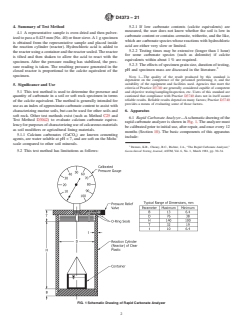
6.1 Rapid Carbonate Analyzer—Aschematicdrawingofthe
Test Method D3042) to evaluate calcium carbonate equiva-
rapid carbonate analyzer is shown in Fig. 1. The analyzer must
lencyforpurposesofcharacterizinguseofcalcareousmaterials
be calibrated prior to initial use, after repair, and once every 12
as soil modifiers or agricultural lining materials.
months (Section 10). The basic components of this apparatus
5.1.1 Calcium carbonates (CaCO ) are known cementing
include:
agents, are water soluble at pH < 7, and are soft on the Mohs’
scale compared to other soil minerals.
Demars, K.R., Chaney, R.C., Richter, J.A., “The Rapid Carbonate Analyzer,”
5.2 This test method has limitations as follows: Geotechnical Testing Journal, ASTM, Vol. 6, No. 1, March 1981, pp. 30–34.
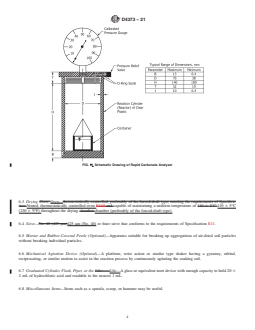
FIG. 1 Schematic Drawing of Rapid Carbonate Analyzer
D4373 − 21
6.1.1 Reaction Cylinder (Reactor)—A clear plastic cylinder with commercial grade distilled water. Store in polyethylene
which allows viewing the effervescent reaction, with a bottle. Faster reaction times may be achieved by increasing the
threaded cap and O-ring seal to enclose the cylinder. concentration to higher normal solutions (up to about 3 N
6.1.2 Pressure Gauge—A Bourdon Tube-type or Electronic solution). Hydrochloric acid is also commercially available in
Pressure Transducer with a capacity of 70 kPa (10 psi), an a1 N solution.
accuracy of 1.5 %, and a readability of 0.5 kPa (0.1 psi).
7.4 Water—Distilled or demineralized water is the only
6.1.3 Container—A clear plastic container with a bail
permissible test fluid.
handle to hold 20 mL of acid. Optionally, in addition to, or in
place of the acid container, use a soil container of clear plastic
8. Hazards
toholdthesoil/softrockspecimen.Acidaddedtodrysoiloften
8.1 Use care in handling the hydrochloric acid so that no
causes considerable splashing and use of soil container reduces
acid is spilled on either skin or clothing. If acid contacts the
splashing before reactor is sealed.
skin or eyes, immediately flush with large quantities of water.
6.1.4 Pressure Relief Valve—Used for safe release of CO
Process concentrated hydrochloric acid beneath a laboratory
gas pressure.
hood or in a well-ventilated area to reduce the inhalation of
6.2 Balance—The balance shall conform to the require-
fumes.
ments of Guide D4753.AClass GP1 balance with a minimum
8.2 The pressure relief valve of the carbonate analyzer
capacity of 100 g and a readability of 0.01 g is needed to
should be opened following each test to dissipate gas pressure
m
...
This document is not an ASTM standard and is intended only to provide the user of an ASTM standard an indication of what changes have been made to the previous version. Because
it may not be technically possible to adequately depict all changes accurately, ASTM recommends that users consult prior editions as appropriate. In all cases only the current version
of the standard as published by ASTM is to be considered the official document.
Designation: D4373 − 14 D4373 − 21
Standard Test Method for Rapid Determination of
Carbonate Content of Soils
This standard is issued under the fixed designation D4373; the number immediately following the designation indicates the year of
original adoption or, in the case of revision, the year of last revision. A number in parentheses indicates the year of last reapproval. A
superscript epsilon (´) indicates an editorial change since the last revision or reapproval.
1. Scope*
1.1 This test method covers the determination of carbonate content of soils and soft rock which can be readily broken down by
mechanical effort. It is a gasometric method that uses a simple portable apparatus. Results should be clearly stated as the calcite
equivalent in percent because different carbonate species cover a wide range of percent calcite equivalent as shown below for a
number of carbonates:
Calcite
Species Cation
Equivalent, %
Magnesite Mg 117.0
Dolomite Ca, Mg 108.6
Calcite Ca 100.0
Aragonite Ca 100.0
Rhodocrosite Mn 87.1
Siderite Fe 86.4
Smithsonite Zn 79.8
Witherite Ba 50.7
Cerrusite Pb 37.5
For example, a 100 % dolomite would be expected to yield 108.6 % calcite equivalent while 100 % siderite would yield only
86.4 % calcite equivalent. Calcite and aragonite reactions will typically complete within about 10 minutes. This method does not
distinguish between the carbonate species and such determination must be made using quantitative chemical analysis methods such
as atomic absorption.
1.2 Units—The values stated in SI units are to be regarded as the standard.standard. The values given in parentheses are provided
for information only and are not considered standard. Reporting of test results in units other than SI shall not be regarded as
nonconformance with this standard
1.3 All observed and calculated values shall conform to the guidelines for significant digits and rounding established in Practice
D6026.
1.3.1 The procedures used to specify how data are collected/recorded or calculated, in this standard are regarded as the industry
standard. In addition, they are representative of the significant digits that generally should be retained. The procedures used do not
consider material variation, purpose for obtaining the data, special purpose studies, or any considerations for the user’s objectives;
and it is common practice to increase or reduce significant digits of reported data to be commensurate with these considerations.
It is beyond the scope of this standard to consider significant digits used in analytical methods for engineering design.
This test method is under the jurisdiction of ASTM Committee D18 on Soil and Rock and is the direct responsibility of Subcommittee D18.06 on Physical-Chemical
Interactions of Soil and Rock.
Current edition approved May 1, 2014June 15, 2021. Published June 2014June 2021. Originally approved in 1984. Last previous edition approved in 20072014 as
D4373 – 02 (2007).D4373 – 14. DOI: 10.1520/D4373-14.10.1520/D4373-21.
*A Summary of Changes section appears at the end of this standard
Copyright © ASTM International, 100 Barr Harbor Drive, PO Box C700, West Conshohocken, PA 19428-2959. United States
D4373 − 21
1.4 This standard does not purport to address all of the safety concerns, if any, associated with its use. It is the responsibility
of the user of this standard to establish appropriate safety safety, health, and healthenvironmental practices and determine the
applicability of regulatory limitations prior to use.For specific precaution statements, see Section 8.
1.5 This international standard was developed in accordance with internationally recognized principles on standardization
established in the Decision on Principles for the Development of International Standards, Guides and Recommendations issued
by the World Trade Organization Technical Barriers to Trade (TBT) Committee.
2. Referenced Documents
2.1 ASTM Standards:
C25 Test Methods for Chemical Analysis of Limestone, Quicklime, and Hydrated Lime
D653 Terminology Relating to Soil, Rock, and Contained Fluids
D3042 Test Method for Insoluble Residue in Carbonate Aggregates
D3740 Practice for Minimum Requirements for Agencies Engaged in Testing and/or Inspection of Soil and Rock as Used in
Engineering Design and Construction
D4753 Guide for Evaluating, Selecting, and Specifying Balances and Standard Masses for Use in Soil, Rock, and Construction
Materials Testing
D6026 Practice for Using Significant Digits in Geotechnical Data
E11 Specification for Woven Wire Test Sieve Cloth and Test Sieves
E145 Specification for Gravity-Convection and Forced-Ventilation Ovens
3. Terminology
3.1 Definitions—For definitions of common technical terms used in this standard, refer to Terminology D653.
4. Summary of Test Method
4.1 The carbonate content (calcite equivalent) of soil is determined by treating a 1-g dried soil specimen with hydrochloric acid
(HCl) in an enclosed A representative sample is oven dried and then pulverized to pass a 0.425 mm (No. 40) or finer sieve. A 1
g specimen is obtained from the representative sample and placed inside the reaction cylinder (reactor). Carbon dioxide
(COHydrochloric acid ) gas is evolved during the reaction between the acid and carbonate fraction of the specimen. is added to
the reactor using a container and the reactor sealed. The reactor is tilted and then shaken to allow the acid to react with the
specimen. After the pressure reading has stabilized, the pressure reading is taken. The resulting pressure generated in the closed
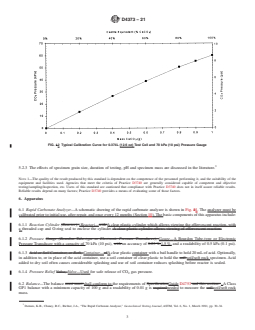
reactor is proportional (see Fig. 1) to the calcite equivalent of the specimen. This pressure is measured with a suitable pressure
gauge, or equivalent pressure-measuring device, that is pre-calibrated with reagent grade calcium carbonate.
5. Significance and Use
5.1 This test method is used to determine the presence and quantity of carbonate in a soil or soft rock specimen in terms of the
calcite equivalent. The method is generally intended for use as an index of approximate carbonate content to assist with
characterizing marine soils. soils, but can be used for other soils and soft rock. Other test methods exist (such as Method C25 and
Test Method D3042) to evaluate calcium carbonate equivalency for purposes of characterizing use of calcareous materials as soil
modifiers or agricultural lining materials.
5.1.1 Calcium carbonates (CaCO ) are known cementing agents, are water soluble at pH < 7, and are soft on the Mohs’ scale
compared to other soil minerals.
5.2 This test method has limitations as follows:
5.2.1 If low carbonate contents (calcite equivalents) are measured, the user does not know whether the soil is low in carbonate
content or contains cerrusite, witherite, and the like, which are carbonate species whose reactions with hydrochloric acid are either
very slow or limited.
5.2.2 Testing times may be extensive (longer than 1 hour) for some carbonate species (such as dolomite) if calcite equivalents
within about 1 % are required.
For referenced ASTM standards, visit the ASTM website, www.astm.org, or contact ASTM Customer Service at service@astm.org. For Annual Book of ASTM Standards
volume information, refer to the standard’s Document Summary page on the ASTM website.
D4373 − 21
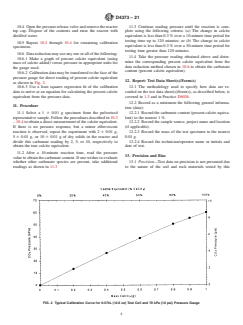
FIG. 12 Typical Calibration Curve for 0.374L (12.6 oz) Test Cell and 70 kPa (10 psi) Pressure Gauge
5.2.3 The effects of specimen grain size, duration of testing, pH and specimen mass are discussed in the literature.
NOTE 1—The quality of the result produced by this standard is dependent on the competence of the personnel performing it, and the suitability of the
equipment and facilities used. Agencies that meet the criteria of Practice D3740 are generally considered capable of competent and objective
testing/sampling/inspection, etc. Users of this standard are cautioned that compliance with Practice D3740 does not in itself assure reliable results.
Reliable results depend on many factors; Practice D3740 provides a means of evaluating some of those factors.
6. Apparatus
6.1 Rapid Carbonate Analyzer—A schematic drawing of the rapid carbonate analyzer is shown in Fig. 21. The analyzer must be
calibrated prior to initial use, after repair, and once every 12 months (Section 10). The basic components of this apparatus include:
6.1.1 Reaction Cylinder (Reactor), (Reactor)—with A clear plastic cylinder which allows viewing the effervescent reaction, with
a threaded cap and O-ring seal to enclose the cylinder. A clear plastic cylinder allows viewing of effervescent reaction.
6.1.2 Pressure Gauge (Bourdon Tube-type or Electronic Pressure Transducer), Gauge—A Bourdon Tube-type or Electronic
Pressure Transducer with a capacity of 70 kPa (10 psi), with an accuracy of 0.25 %,1.5 %, and a readability of 0.5 kPa (0.1 psi).
6.1.3 Acid or Soil Container, or Both, Container—ofA clear plastic container with a bail handle to hold 20 mL of acid. Optionally,
in addition to, or in place of the acid container, use a soil container of clear plastic to hold the soil soil/soft rock specimen. Acid
added to dry soil often causes considerable splashing and use of soil container reduces splashing before reactor is sealed.
6.1.4 Pressure Relief Valve, Valve—Used for safe release of CO gas pressure.
6.2 Balance—The balance must meet shall conform to the requirements of SpecificationGuide D4753 and this section. . A Class
GP1 balance with a minimum capacity of 100 g and a readability of 0.01 g is requiredneeded to measure the soil soil/soft rock
mass.
Demars, K.R., Chaney, R.C., Richter, J.A., “The Rapid Carbonate Analyzer,” Geotechnical Testing Journal, ASTM, Vol. 6, No. 1, March 1981, pp. 30–34.
D4373 − 21
FIG. 21 Schematic Drawing of Rapid Carbonate Analyzer
6.3 Drying Oven, Oven—thermostatically-controlled, preferably of the forced-draft type, meeting the requirements of Specifica-
tion Vented, thermostatically controlled oven E145 and capable of maintaining a uniform temperature of 110 6 5°C 110 6 5°C
(230 6 9°F) throughout the drying chamber.chamber (preferably of the forced-draft type).
6.4 Sieve—No. 40 (425 μm)425 μm (No. 40) or finer sieve that conforms to the requirements of Specification E11.
6.5 Mortar and Rubber-Covered Pestle (Optional)—Apparatus suitable for breaking up aggregations o
...