

ASTM D2155-18
(Test Method)Standard Test Method for Determination of Fire Resistance of Aircraft Hydraulic Fluids by Autoignition Temperature
General Information
- Abstract
SIGNIFICANCE AND USE
4.1 Autoignition is dependent on the chemical and physical properties of the material and the method and apparatus employed for its determination. The autoignition temperature by a given method does not necessarily represent the minimum temperature at which a given material will self-ignite in air. The volume of the vessel used is particularly important since lower autoignition temperatures will be achieved in larger vessels. Vessel material can also be an important factor.
4.2 The temperatures determined by this test method are those at which air oxidation leads to ignition. These temperatures can be expected to vary with the test pressure and oxygen concentration.
4.3 This test method is not designed for evaluating materials which are capable of exothermic decomposition. For such materials, ignition is dependent upon the thermal and kinetic properties of the decomposition, the mass of the sample, and the heat transfer characteristics of the system.
4.4 This test method is not designed for evaluating for solid chemicals which melt and vaporize or which readily sublime at the test temperature.
4.5 This test method is not designed to measure the autoignition temperature of materials which are solids or liquids at the test temperature (for example, wood, paper, cotton, plastics, and high-boiling point chemicals). Such materials will thermally degrade in the flask and the accumulated degradation products may ignite.
4.6 This test method is not designed to measure the autoignition temperature of chemicals that are gaseous at atmospheric temperature and pressure.
SCOPE
1.1 This test method is used for assessing the fire resistance of hydraulic fluids used for aircraft applications by determination of the autoignition temperature of the hydraulic fluid in air at one atmosphere pressure using hypodermic syringe injection.
1.2 The values stated in inch-pound units are to be regarded as standard. The values given in parentheses are mathematical conversions to SI units that are provided for information only and are not considered standard.
1.3 This standard is used to measure and describe the response of materials, products, or assemblies to heat and flame under controlled conditions, but does not by itself incorporate all factors required for fire hazard or fire risk assessment of the materials, products, or assemblies under actual fire conditions.
1.4 This standard does not purport to address all of the safety concerns, if any, associated with its use. It is the responsibility of the user of this standard to establish appropriate safety, health, and environmental practices and determine the applicability of regulatory limitations prior to use.
1.5 This international standard was developed in accordance with internationally recognized principles on standardization established in the Decision on Principles for the Development of International Standards, Guides and Recommendations issued by the World Trade Organization Technical Barriers to Trade (TBT) Committee.
- Status
- Published
- Publication Date
- 30-Nov-2018
- Technical Committee
- D02 - Petroleum Products, Liquid Fuels, and Lubricants
- Drafting Committee
- D02.N0 - Hydraulic Fluids
Buy Documents
ASTM D2155-18 - Standard Test Method for Determination of Fire Resistance of Aircraft Hydraulic Fluids by Autoignition Temperature
REDLINE ASTM D2155-18 - Standard Test Method for Determination of Fire Resistance of Aircraft Hydraulic Fluids by Autoignition Temperature
Overview
ASTM D2155-18 establishes a standardized test method for determining the fire resistance of aircraft hydraulic fluids by measuring their autoignition temperature in air at atmospheric pressure. Developed by ASTM International, this standard is an essential reference for aerospace safety, quality assurance, and regulatory compliance. The primary objective is to assess the behavior of hydraulic fluids exposed to high temperatures in aircraft environments, providing critical data for fire hazard analysis.
Key Topics
- Autoignition Temperature: The test identifies the lowest temperature at which a sample of hydraulic fluid will spontaneously ignite in air, without an external flame or spark.
- Test Methodology: A controlled process using a hypodermic syringe to inject a metered sample into a heated borosilicate glass flask, with ignition observed under specified conditions.
- Limitations: This method is specific to aircraft hydraulic fluids and does not cover materials capable of exothermic decomposition, solids, or chemicals that are gases at room temperature and pressure.
- Critical Variables:
- Vessel volume and material can significantly impact results.
- Test pressure and oxygen concentration may alter ignition temperatures.
- Data Reporting: Results include the minimum autoignition temperature, ignition time lag, sample quantity, and barometric pressure, providing valuable data for safety assessments.
Applications
ASTM D2155-18 is widely applied in:
- Aircraft Hydraulic System Design: Ensuring hydraulic fluids meet stringent fire resistance requirements for operational safety.
- Quality Control: Verifying fluid batches for compliance with manufacturer and industry fire safety specifications.
- Regulatory Compliance: Demonstrating adherence to national and international aviation safety standards.
- Research and Development: Supporting the development of new, safer hydraulic fluid formulations for use in aerospace and related industries.
- Fire Safety Assessment: Supplying critical parameters for fire risk analysis, though the method alone does not constitute a full fire hazard evaluation.
Related Standards
Organizations and professionals working with ASTM D2155-18 may also reference these related standards for comprehensive fire safety evaluations and material performance:
- ASTM D4206 - Standard Test Method for Sustained Burning of Liquid Mixtures Using the Small Scale Open-Cup Apparatus
- ASTM D2863 - Standard Test Method for Measuring the Minimum Oxygen Concentration to Support Candle-Like Combustion of Plastics (Oxygen Index)
- ISO 20823 - Petroleum and related products - Determination of the resistance to ignition of hydraulic fluids by hot surfaces
- SAE AIR 1351 - Fire Test Methods for Aircraft Materials
Practical Value
Implementing ASTM D2155-18 helps organizations:
- Reduce the risk of in-flight and on-ground fire incidents by selecting appropriate hydraulic fluids.
- Enhance passenger and crew safety through stringent material screening.
- Support certification and airworthiness processes with recognized test data.
- Drive innovation in fluid design by establishing clear performance benchmarks.
Keywords: ASTM D2155-18, aircraft hydraulic fluids, autoignition temperature, fire resistance, aerospace safety, fluid testing, fire hazard, aviation standards.
Relations
- Effective Date
- 01-Dec-2018
- Effective Date
- 01-Dec-2018
Buy Documents
ASTM D2155-18 - Standard Test Method for Determination of Fire Resistance of Aircraft Hydraulic Fluids by Autoignition Temperature
REDLINE ASTM D2155-18 - Standard Test Method for Determination of Fire Resistance of Aircraft Hydraulic Fluids by Autoignition Temperature
Get Certified
Connect with accredited certification bodies for this standard

BUREAU VERITAS Certification Germany
Bureau Veritas certification in Germany.

Element Materials Technology
Materials testing and product certification.

AQMS Ltd.
AQMS provides ISO certification to SMEs across the UK.
Sponsored listings
Frequently Asked Questions
ASTM D2155-18 is a standard published by ASTM International. Its full title is "Standard Test Method for Determination of Fire Resistance of Aircraft Hydraulic Fluids by Autoignition Temperature". This standard covers: SIGNIFICANCE AND USE 4.1 Autoignition is dependent on the chemical and physical properties of the material and the method and apparatus employed for its determination. The autoignition temperature by a given method does not necessarily represent the minimum temperature at which a given material will self-ignite in air. The volume of the vessel used is particularly important since lower autoignition temperatures will be achieved in larger vessels. Vessel material can also be an important factor. 4.2 The temperatures determined by this test method are those at which air oxidation leads to ignition. These temperatures can be expected to vary with the test pressure and oxygen concentration. 4.3 This test method is not designed for evaluating materials which are capable of exothermic decomposition. For such materials, ignition is dependent upon the thermal and kinetic properties of the decomposition, the mass of the sample, and the heat transfer characteristics of the system. 4.4 This test method is not designed for evaluating for solid chemicals which melt and vaporize or which readily sublime at the test temperature. 4.5 This test method is not designed to measure the autoignition temperature of materials which are solids or liquids at the test temperature (for example, wood, paper, cotton, plastics, and high-boiling point chemicals). Such materials will thermally degrade in the flask and the accumulated degradation products may ignite. 4.6 This test method is not designed to measure the autoignition temperature of chemicals that are gaseous at atmospheric temperature and pressure. SCOPE 1.1 This test method is used for assessing the fire resistance of hydraulic fluids used for aircraft applications by determination of the autoignition temperature of the hydraulic fluid in air at one atmosphere pressure using hypodermic syringe injection. 1.2 The values stated in inch-pound units are to be regarded as standard. The values given in parentheses are mathematical conversions to SI units that are provided for information only and are not considered standard. 1.3 This standard is used to measure and describe the response of materials, products, or assemblies to heat and flame under controlled conditions, but does not by itself incorporate all factors required for fire hazard or fire risk assessment of the materials, products, or assemblies under actual fire conditions. 1.4 This standard does not purport to address all of the safety concerns, if any, associated with its use. It is the responsibility of the user of this standard to establish appropriate safety, health, and environmental practices and determine the applicability of regulatory limitations prior to use. 1.5 This international standard was developed in accordance with internationally recognized principles on standardization established in the Decision on Principles for the Development of International Standards, Guides and Recommendations issued by the World Trade Organization Technical Barriers to Trade (TBT) Committee.
SIGNIFICANCE AND USE 4.1 Autoignition is dependent on the chemical and physical properties of the material and the method and apparatus employed for its determination. The autoignition temperature by a given method does not necessarily represent the minimum temperature at which a given material will self-ignite in air. The volume of the vessel used is particularly important since lower autoignition temperatures will be achieved in larger vessels. Vessel material can also be an important factor. 4.2 The temperatures determined by this test method are those at which air oxidation leads to ignition. These temperatures can be expected to vary with the test pressure and oxygen concentration. 4.3 This test method is not designed for evaluating materials which are capable of exothermic decomposition. For such materials, ignition is dependent upon the thermal and kinetic properties of the decomposition, the mass of the sample, and the heat transfer characteristics of the system. 4.4 This test method is not designed for evaluating for solid chemicals which melt and vaporize or which readily sublime at the test temperature. 4.5 This test method is not designed to measure the autoignition temperature of materials which are solids or liquids at the test temperature (for example, wood, paper, cotton, plastics, and high-boiling point chemicals). Such materials will thermally degrade in the flask and the accumulated degradation products may ignite. 4.6 This test method is not designed to measure the autoignition temperature of chemicals that are gaseous at atmospheric temperature and pressure. SCOPE 1.1 This test method is used for assessing the fire resistance of hydraulic fluids used for aircraft applications by determination of the autoignition temperature of the hydraulic fluid in air at one atmosphere pressure using hypodermic syringe injection. 1.2 The values stated in inch-pound units are to be regarded as standard. The values given in parentheses are mathematical conversions to SI units that are provided for information only and are not considered standard. 1.3 This standard is used to measure and describe the response of materials, products, or assemblies to heat and flame under controlled conditions, but does not by itself incorporate all factors required for fire hazard or fire risk assessment of the materials, products, or assemblies under actual fire conditions. 1.4 This standard does not purport to address all of the safety concerns, if any, associated with its use. It is the responsibility of the user of this standard to establish appropriate safety, health, and environmental practices and determine the applicability of regulatory limitations prior to use. 1.5 This international standard was developed in accordance with internationally recognized principles on standardization established in the Decision on Principles for the Development of International Standards, Guides and Recommendations issued by the World Trade Organization Technical Barriers to Trade (TBT) Committee.
ASTM D2155-18 is classified under the following ICS (International Classification for Standards) categories: 49.080 - Aerospace fluid systems and components. The ICS classification helps identify the subject area and facilitates finding related standards.
ASTM D2155-18 has the following relationships with other standards: It is inter standard links to ASTM D2155-12, ASTM E659-15(2023). Understanding these relationships helps ensure you are using the most current and applicable version of the standard.
ASTM D2155-18 is available in PDF format for immediate download after purchase. The document can be added to your cart and obtained through the secure checkout process. Digital delivery ensures instant access to the complete standard document.
Standards Content (Sample)
This international standard was developed in accordance with internationally recognized principles on standardization established in the Decision on Principles for the
Development of International Standards, Guides and Recommendations issued by the World Trade Organization Technical Barriers to Trade (TBT) Committee.
Designation: D2155 − 18
Standard Test Method for
Determination of Fire Resistance of Aircraft Hydraulic Fluids
by Autoignition Temperature
This standard is issued under the fixed designation D2155; the number immediately following the designation indicates the year of
original adoption or, in the case of revision, the year of last revision. A number in parentheses indicates the year of last reapproval. A
superscript epsilon (´) indicates an editorial change since the last revision or reapproval.
1. Scope* 2.1.2 autoignition temperature, n—the minimum tempera-
ture at which autoignition occurs under the specified conditions
1.1 This test method is used for assessing the fire resistance
of the test.
of hydraulic fluids used for aircraft applications by determina-
2.1.3 ignition, n—the initiation of combustion.
tion of the autoignition temperature of the hydraulic fluid in air
at one atmosphere pressure using hypodermic syringe injec-
2.1.4 ignition time lag, n—the time lapse between applica-
tion.
tion of the heat to a material and its ignition; it is the time in
seconds between the insertion of the sample into the flask and
1.2 The values stated in inch-pound units are to be regarded
ignition.
as standard. The values given in parentheses are mathematical
conversions to SI units that are provided for information only
3. Summary of Test Method
and are not considered standard.
3.1 A small metered sample of the fluid to be tested is
1.3 This standard is used to measure and describe the
injected with a hypodermic syringe into a heated 200 mL
response of materials, products, or assemblies to heat and
Erlenmeyer borosilicate glass flask containing air.The contents
flame under controlled conditions, but does not by itself
of the flask are observed in a darkened room for 5 min
incorporate all factors required for fire hazard or fire risk
following injection of the sample or until autoignition occurs;
assessment of the materials, products, or assemblies under
autoignition is evidenced by the sudden appearance of a flame
actual fire conditions.
inside the flask. The lowest flask temperature at which autoi-
gnition occurs for a series of prescribed sample volumes is
1.4 This standard does not purport to address all of the
safety concerns, if any, associated with its use. It is the taken to be the autoignition temperature of the fluid in air at
one atmosphere pressure.
responsibility of the user of this standard to establish appro-
priate safety, health, and environmental practices and deter-
4. Significance and Use
mine the applicability of regulatory limitations prior to use.
4.1 Autoignition is dependent on the chemical and physical
1.5 This international standard was developed in accor-
properties of the material and the method and apparatus
dance with internationally recognized principles on standard-
employed for its determination. The autoignition temperature
ization established in the Decision on Principles for the
by a given method does not necessarily represent the minimum
Development of International Standards, Guides and Recom-
temperature at which a given material will self-ignite in air.
mendations issued by the World Trade Organization Technical
The volume of the vessel used is particularly important since
Barriers to Trade (TBT) Committee.
lower autoignition temperatures will be achieved in larger
vessels. Vessel material can also be an important factor.
2. Terminology
4.2 The temperatures determined by this test method are
2.1 Definitions:
those at which air oxidation leads to ignition. These tempera-
2.1.1 autoignition, n—the ignition of a material commonly
tures can be expected to vary with the test pressure and oxygen
in air as the result of heat liberation due to the exothermic
concentration.
oxidation reaction in the absence of an external ignition source
such as a spark or flame. 4.3 This test method is not designed for evaluating materials
which are capable of exothermic decomposition. For such
materials, ignition is dependent upon the thermal and kinetic
properties of the decomposition, the mass of the sample, and
This test method is under the jurisdiction of ASTM Committee D02 on
the heat transfer characteristics of the system.
Petroleum Products, Liquid Fuels, and Lubricants and is the direct responsibility of
Subcommittee D02.N0 on Hydraulic Fluids.
4.4 This test method is not designed for evaluating for solid
Current edition approved Dec. 1, 2018. Published February 2019. Originally
chemicals which melt and vaporize or which readily sublime at
approved in 1966. Last previous edition approved in 2012 as D2155 – 12. DOI:
10.1520/D2155-18. the test temperature.
*A Summary of Changes section appears at the end of this standard
Copyright © ASTM International, 100 Barr Harbor Drive, PO Box C700, West Conshohocken, PA 19428-2959. United States
D2155 − 18
4.5 This test method is not designed to measure the autoi- 6.3 Time Measurement—Start the timer as the sample is
gnition temperature of materials which are solids or liquids at injected into the test flask.
thetesttemperature(forexample,wood,paper,cotton,plastics,
6.4 Observations—Observe the inside of the test flask in a
and high-boiling point chemicals). Such materials will ther-
darkened room by means of a mirror placed at an appropriate
mally degrade in the flask and the accumulated degradation
angle above the flask. If a flame is not observed in 5 min, the
products may ignite.
volume of the sample tested is considered nonflammable at the
4.6 This test method is not designed to measure the autoi-
temperature of the test flask. Completely flush the flask with
gnition temperature of chemicals that are gaseous at atmo-
clean dry air and stop the timer. Then repeat the test at a higher
spheric temperature and pressure.
(about 50 °F or 30 °C) temperature. Allow at least 15 min to
elapse between tests. If a flame is observed, stop the timer and
5. Apparatus
record the time interval between the sample injection and the
5.1 The apparatus, shown schematically in Figs. 1 and 2,
appearance of the flame to the nearest 0.2 s as the time lag.
shall conform to the requirements prescribed in 5.2 to 5.6.
Lower the test temperature by 5 °F (3 °C) an
...
This document is not an ASTM standard and is intended only to provide the user of an ASTM standard an indication of what changes have been made to the previous version. Because
it may not be technically possible to adequately depict all changes accurately, ASTM recommends that users consult prior editions as appropriate. In all cases only the current version
of the standard as published by ASTM is to be considered the official document.
Designation: D2155 − 12 D2155 − 18
Standard Test Method for
Determination of Fire Resistance of Aircraft Hydraulic Fluids
by Autoignition Temperature
This standard is issued under the fixed designation D2155; the number immediately following the designation indicates the year of
original adoption or, in the case of revision, the year of last revision. A number in parentheses indicates the year of last reapproval. A
superscript epsilon (´) indicates an editorial change since the last revision or reapproval.
1. Scope Scope*
1.1 This test method is used for assessing the fire resistance of hydraulic fluids used for aircraft applications by determination
of the autoignition temperature of the hydraulic fluid in air at one atmosphere pressure using hypodermic syringe injection.
1.2 The values stated in inch-pound units are to be regarded as standard. The values given in parentheses are mathematical
conversions to SI units that are provided for information only and are not considered standard.
1.3 This standard is used to measure and describe the response of materials, products, or assemblies to heat and flame under
controlled conditions, but does not by itself incorporate all factors required for fire hazard or fire risk assessment of the materials,
products, or assemblies under actual fire conditions.
1.4 This standard does not purport to address all of the safety concerns, if any, associated with its use. It is the responsibility
of the user of this standard to establish appropriate safety safety, health, and healthenvironmental practices and determine the
applicability of regulatory limitations prior to use.
1.5 This international standard was developed in accordance with internationally recognized principles on standardization
established in the Decision on Principles for the Development of International Standards, Guides and Recommendations issued
by the World Trade Organization Technical Barriers to Trade (TBT) Committee.
2. Terminology
2.1 Definitions:
2.1.1 autoignition, n—the ignition of a material commonly in air as the result of heat liberation due to the exothermic oxidation
reaction in the absence of an external ignition source such as a spark or flame.
2.1.2 autoignition temperature, n—the minimum temperature at which autoignition occurs under the specified conditions of the
test.
2.1.3 ignition, n—the initiation of combustion.
2.1.4 ignition time lag, n—the time lapse between application of the heat to a material and its ignition; it is the time in seconds
between the insertion of the sample into the flask and ignition.
3. Summary of Test Method
3.1 A small metered sample of the fluid to be tested is injected with a hypodermic syringe into a heated 200-mL200 mL
Erlenmeyer borosilicate glass flask containing air. The contents of the flask are observed in a darkened room for 5 min 5 min
following injection of the sample or until autoignition occurs; autoignition is evidenced by the sudden appearance of a flame inside
the flask. The lowest flask temperature at which autoignition occurs for a series of prescribed sample volumes is taken to be the
autoignition temperature of the fluid in air at one atmosphere pressure.
4. Significance and Use
4.1 Autoignition is dependent on the chemical and physical properties of the material and the method and apparatus employed
for its determination. The autoignition temperature by a given method does not necessarily represent the minimum temperature at
which a given material will self-ignite in air. The volume of the vessel used is particularly important since lower autoignition
temperatures will be achieved in larger vessels. Vessel material can also be an important factor.
This test method is under the jurisdiction of ASTM Committee D02 on Petroleum Products Products, Liquid Fuels, and Lubricants and is the direct responsibility of
Subcommittee D02.N0 on Hydraulic Fluids.
Current edition approved July 1, 2012Dec. 1, 2018. Published November 2012February 2019. Originally approved in 1966. Last previous edition approved in 19762012
as D2155-66(1976)D2155 – 12. which was withdrawn August 1980 and reinstated in July 2012. DOI: 10.1520/D2155-12DOI: 10.1520/D2155-18.
*A Summary of Changes section appears at the end of this standard
Copyright © ASTM International, 100 Barr Harbor Drive, PO Box C700, West Conshohocken, PA 19428-2959. United States
D2155 − 18
4.2 The temperatures determined by this test method are those at which air oxidation leads to ignition. These temperatures can
be expected to vary with the test pressure and oxygen concentration.
4.3 This test method is not designed for evaluating materials which are capable of exothermic decomposition. For such
materials, ignition is dependent upon the thermal and kinetic properties of the decomposition, the mass of the sample, and the heat
transfer characteristics of the system.
4.4 This test method is not designed for evaluating for solid chemicals which melt and vaporize or which readily sublime at the
test temperature.
4.5 This test method is not designed to measure the autoignition temperature of materials which are solids or liquids at the test
temperature (for example, wood, paper, cotton, plastics, and high-boiling point chemicals). Such materials will thermally degrade
in the flask and the accumulated degradation products may ignite.
4.6 This test method is not designed to measure the autoignition temperature of chemicals that are gaseous at atmospheric
temperature and pressure.
5. Apparatus
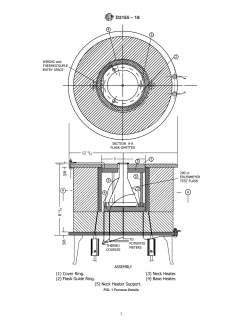
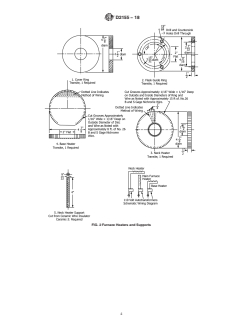
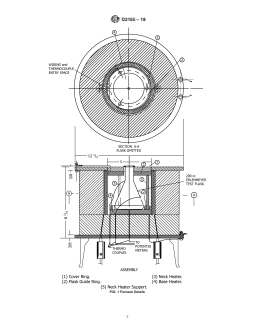
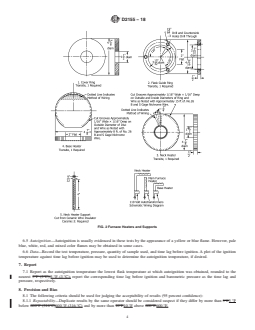
5.1 The apparatus, shown schematically in Figs. 1 and 2, shall conform to the requirements prescribed in 3.25.2 to 3.65.6.
5.2 Furnace—The furnace shall consist of a 5-in. (127-mm)5 in. (127 mm) internal diameter alundum cylinder, 5 in. 5 in. long,
circumferentially wound with an electric heater, a Transite cover ring neck heater, three-neck heater supports, Transite flask guide
ring, base heater, and suitable refractory insulating material and retaining shell. Temperature control shall be achieved by the use
of suitable autotransformers or rheostats, thermocouples, and a suitable potentiometer.
3 3
5.3 Hypodermic Syringe—A 0.250.25 cm or 1-cm1 cm hypodermic syringe equipped with a 2-in. (50.8-mm)2 in. (50.8 mm)
No. 18 stainless steel needle and calibrated in units of 0.01 cm0.01 cm should be used to inject the sample into the heated test
flask.
5.4 Test Flask—The test flask
...