

ASTM E1181-02(2023)
(Test Method)Standard Test Methods for Characterizing Duplex Grain Sizes
General Information
- Abstract
SIGNIFICANCE AND USE
5.1 Duplex grain size may occur in some metals and alloys as a result of their thermomechanical processing history. For comparison of mechanical properties with metallurgical features, or for specification purposes, it may be important to be able to characterize grain size in such materials. Assigning an average grain size value to a duplex grain size specimen does not adequately characterize the appearance of that specimen, and may even misrepresent its appearance. For example, averaging two distinctly different grain sizes may result in reporting a size that does not actually exist anywhere in the specimen.
5.2 These test methods may be applied to specimens or products containing randomly intermingled grains of two or more significantly different sizes (henceforth referred to as random duplex grain size). Examples of random duplex grain sizes include: isolated coarse grains in a matrix of much finer grains, extremely wide distributions of grain sizes, and bimodal distributions of grain size.
5.3 These test methods may also be applied to specimens or products containing grains of two or more significantly different sizes, but distributed in topologically varying patterns (henceforth referred to as topological duplex grain sizes). Examples of topological duplex grain sizes include: systematic variation of grain size across the section of a product, necklace structures, banded structures, and germinative grain growth in selected areas of critical strain.
5.4 These test methods may be applied to specimens or products regardless of their state of recrystallization.
5.5 Because these test methods describe deviations from a single, log-normal distribution of grain sizes, and characterize patterns of variation in grain size, the total specimen cross-section must be evaluated.
5.6 These test methods are limited to duplex grain sizes as identifiable within a single polished and etched metallurgical specimen. If duplex grain size is suspected in a product too ...
SCOPE
1.1 These test methods provide simple guidelines for deciding whether a duplex grain size exists. The test methods separate duplex grain sizes into one of two distinct classes, then into specific types within those classes, and provide systems for grain size characterization of each type.
1.2 Units—The values stated in SI units are to be regarded as standard. No other units of measurement are included in this standard.
1.3 This standard may involve hazardous materials, operations, and equipment. This standard does not purport to address all of the safety concerns, if any, associated with its use. It is the responsibility of the user of this standard to establish appropriate safety, health, and environmental practices and determine the applicability of regulatory limitations prior to use.
1.4 This international standard was developed in accordance with internationally recognized principles on standardization established in the Decision on Principles for the Development of International Standards, Guides and Recommendations issued by the World Trade Organization Technical Barriers to Trade (TBT) Committee.
- Status
- Published
- Publication Date
- 30-Apr-2023
- Technical Committee
- E04 - Metallography
- Drafting Committee
- E04.08 - Grain Size
Overview
ASTM E1181-02(2023) - Standard Test Methods for Characterizing Duplex Grain Sizes provides comprehensive guidelines for identifying and characterizing duplex grain size distributions in metals and alloys. Duplex grain size, often resulting from thermomechanical processing, refers to the presence of grains with two or more significantly different sizes within a material. The standard details methods to assess both randomly intermixed and topologically varying duplex grain sizes, offering standardized approaches for accurate comparison and specification of mechanical and metallurgical properties.
Key Topics
Duplex Grain Sizes Defined
- Random duplex: Intermingled coarse and fine grains, wide or bimodal size distributions.
- Topological duplex: Systematic patterns like banding or necklace structures, with grain size variation tied to product geometry or processing.
Test Methods
- Distinguishes duplex grain structures from single log-normal distributions.
- Provides step-by-step procedures for:
- Recognizing the presence of duplex grain sizes.
- Estimating area fractions of different grain sizes.
- Using visual comparison charts, point counting, planimetric methods, and statistical measurement.
Reporting and Classification
- Clear classification into types (random ALA condition, wide-range, bimodal, cross-section, necklace, banding).
- Standardized reporting formats, facilitating comparison and traceability.
Specimen Preparation and Evaluation
- Requirements for sample orientation and full cross-section evaluation.
- Guidelines for etching, imaging, and precise area fraction estimation.
Applications
ASTM E1181-02(2023) is essential for metallographers, quality engineers, and materials scientists involved in:
- Quality Assurance in Manufacturing
- Allows manufacturers of steel, alloys, and metal products to assure customers of consistent structural properties by accurately characterizing the distribution of grain sizes.
- Failure Analysis and Compliance
- Assists in linking mechanical property variations or failures to underlying microstructural features, providing evidence for root cause analysis or litigation.
- Research & Development
- Supports R&D teams in improving thermomechanical processes by providing reliable methods to detect and quantify duplex grain structures.
- Specification and Procurement
- Enables precise communication of microstructural requirements in material standards and purchase specifications, reducing ambiguity and rejection rates.
Related Standards
To ensure consistency and accuracy, ASTM E1181-02(2023) references and complements several key ASTMs:
- ASTM E3 - Guide for Preparation of Metallographic Specimens
Standardizes sample preparation for microscopic examination. - ASTM E7 - Terminology Relating to Metallography
Provides essential definitions for metallurgical terms. - ASTM E112 - Test Methods for Determining Average Grain Size
Widely used for single-distribution grain size measurement; referenced for specific regions in duplex structures. - ASTM E407 - Practice for Microetching Metals and Alloys
Prescribes etching techniques to reveal grain boundaries. - ASTM E562 - Method for Determining Volume Fraction by Systematic Manual Point Count
Used for quantitative area fraction estimation. - ASTM E883 - Guide for Reflected-Light Photomicrography
Ensures standardized imaging. - ASTM E930 - Test Methods for Estimating the Largest Grain Observed in a Metallographic Section
Supports assessment of anomalously large grains in duplex specimens.
Practical Value
Utilizing ASTM E1181-02(2023) streamlines the detection and reporting of complex grain size distributions, ensuring material performance, process control, and compliance with international standards. By following rigorous, repeatable methods for characterizing duplex grain sizes, stakeholders can trust their results, improve product quality, and reduce risks associated with mischaracterization.
Keywords: ASTM E1181, duplex grain size, metallography, grain size characterization, area fraction, banding, necklace structure, microstructure analysis, test methods, quality assurance, standards compliance
Relations
- Effective Date
- 01-Apr-2024
- Effective Date
- 01-Nov-2023
- Effective Date
- 15-Aug-2019
- Effective Date
- 01-Jun-2017
- Effective Date
- 01-Oct-2015
- Effective Date
- 01-Jun-2015
- Effective Date
- 01-Jun-2015
- Effective Date
- 01-Nov-2014
- Effective Date
- 15-Nov-2012
- Effective Date
- 01-Oct-2011
- Refers
ASTM E562-11 - Standard Test Method for Determining Volume Fraction by Systematic Manual Point Count - Effective Date
- 01-Oct-2011
- Effective Date
- 01-May-2011
- Effective Date
- 01-Nov-2010
- Effective Date
- 01-Oct-2009
- Refers
ASTM E562-08 - Standard Test Method for Determining Volume Fraction by Systematic Manual Point Count - Effective Date
- 01-Oct-2008
Get Certified
Connect with accredited certification bodies for this standard

Element Materials Technology
Materials testing and product certification.

Inštitut za kovinske materiale in tehnologije
Institute of Metals and Technology. Materials testing, metallurgical analysis, NDT.
Sponsored listings
Frequently Asked Questions
ASTM E1181-02(2023) is a standard published by ASTM International. Its full title is "Standard Test Methods for Characterizing Duplex Grain Sizes". This standard covers: SIGNIFICANCE AND USE 5.1 Duplex grain size may occur in some metals and alloys as a result of their thermomechanical processing history. For comparison of mechanical properties with metallurgical features, or for specification purposes, it may be important to be able to characterize grain size in such materials. Assigning an average grain size value to a duplex grain size specimen does not adequately characterize the appearance of that specimen, and may even misrepresent its appearance. For example, averaging two distinctly different grain sizes may result in reporting a size that does not actually exist anywhere in the specimen. 5.2 These test methods may be applied to specimens or products containing randomly intermingled grains of two or more significantly different sizes (henceforth referred to as random duplex grain size). Examples of random duplex grain sizes include: isolated coarse grains in a matrix of much finer grains, extremely wide distributions of grain sizes, and bimodal distributions of grain size. 5.3 These test methods may also be applied to specimens or products containing grains of two or more significantly different sizes, but distributed in topologically varying patterns (henceforth referred to as topological duplex grain sizes). Examples of topological duplex grain sizes include: systematic variation of grain size across the section of a product, necklace structures, banded structures, and germinative grain growth in selected areas of critical strain. 5.4 These test methods may be applied to specimens or products regardless of their state of recrystallization. 5.5 Because these test methods describe deviations from a single, log-normal distribution of grain sizes, and characterize patterns of variation in grain size, the total specimen cross-section must be evaluated. 5.6 These test methods are limited to duplex grain sizes as identifiable within a single polished and etched metallurgical specimen. If duplex grain size is suspected in a product too ... SCOPE 1.1 These test methods provide simple guidelines for deciding whether a duplex grain size exists. The test methods separate duplex grain sizes into one of two distinct classes, then into specific types within those classes, and provide systems for grain size characterization of each type. 1.2 Units—The values stated in SI units are to be regarded as standard. No other units of measurement are included in this standard. 1.3 This standard may involve hazardous materials, operations, and equipment. This standard does not purport to address all of the safety concerns, if any, associated with its use. It is the responsibility of the user of this standard to establish appropriate safety, health, and environmental practices and determine the applicability of regulatory limitations prior to use. 1.4 This international standard was developed in accordance with internationally recognized principles on standardization established in the Decision on Principles for the Development of International Standards, Guides and Recommendations issued by the World Trade Organization Technical Barriers to Trade (TBT) Committee.
SIGNIFICANCE AND USE 5.1 Duplex grain size may occur in some metals and alloys as a result of their thermomechanical processing history. For comparison of mechanical properties with metallurgical features, or for specification purposes, it may be important to be able to characterize grain size in such materials. Assigning an average grain size value to a duplex grain size specimen does not adequately characterize the appearance of that specimen, and may even misrepresent its appearance. For example, averaging two distinctly different grain sizes may result in reporting a size that does not actually exist anywhere in the specimen. 5.2 These test methods may be applied to specimens or products containing randomly intermingled grains of two or more significantly different sizes (henceforth referred to as random duplex grain size). Examples of random duplex grain sizes include: isolated coarse grains in a matrix of much finer grains, extremely wide distributions of grain sizes, and bimodal distributions of grain size. 5.3 These test methods may also be applied to specimens or products containing grains of two or more significantly different sizes, but distributed in topologically varying patterns (henceforth referred to as topological duplex grain sizes). Examples of topological duplex grain sizes include: systematic variation of grain size across the section of a product, necklace structures, banded structures, and germinative grain growth in selected areas of critical strain. 5.4 These test methods may be applied to specimens or products regardless of their state of recrystallization. 5.5 Because these test methods describe deviations from a single, log-normal distribution of grain sizes, and characterize patterns of variation in grain size, the total specimen cross-section must be evaluated. 5.6 These test methods are limited to duplex grain sizes as identifiable within a single polished and etched metallurgical specimen. If duplex grain size is suspected in a product too ... SCOPE 1.1 These test methods provide simple guidelines for deciding whether a duplex grain size exists. The test methods separate duplex grain sizes into one of two distinct classes, then into specific types within those classes, and provide systems for grain size characterization of each type. 1.2 Units—The values stated in SI units are to be regarded as standard. No other units of measurement are included in this standard. 1.3 This standard may involve hazardous materials, operations, and equipment. This standard does not purport to address all of the safety concerns, if any, associated with its use. It is the responsibility of the user of this standard to establish appropriate safety, health, and environmental practices and determine the applicability of regulatory limitations prior to use. 1.4 This international standard was developed in accordance with internationally recognized principles on standardization established in the Decision on Principles for the Development of International Standards, Guides and Recommendations issued by the World Trade Organization Technical Barriers to Trade (TBT) Committee.
ASTM E1181-02(2023) is classified under the following ICS (International Classification for Standards) categories: 77.040.99 - Other methods of testing of metals. The ICS classification helps identify the subject area and facilitates finding related standards.
ASTM E1181-02(2023) has the following relationships with other standards: It is inter standard links to ASTM E883-11(2024), ASTM E407-23, ASTM E562-19e1, ASTM E883-11(2017), ASTM E930-99(2015), ASTM E7-15, ASTM E407-07(2015)e1, ASTM E7-14, ASTM E112-12, ASTM E562-08e1, ASTM E562-11, ASTM E883-11, ASTM E112-10, ASTM E7-03(2009), ASTM E562-08. Understanding these relationships helps ensure you are using the most current and applicable version of the standard.
ASTM E1181-02(2023) is available in PDF format for immediate download after purchase. The document can be added to your cart and obtained through the secure checkout process. Digital delivery ensures instant access to the complete standard document.
Standards Content (Sample)
This international standard was developed in accordance with internationally recognized principles on standardization established in the Decision on Principles for the
Development of International Standards, Guides and Recommendations issued by the World Trade Organization Technical Barriers to Trade (TBT) Committee.
Designation: E1181 − 02 (Reapproved 2023)
Standard Test Methods for
Characterizing Duplex Grain Sizes
This standard is issued under the fixed designation E1181; the number immediately following the designation indicates the year of
original adoption or, in the case of revision, the year of last revision. A number in parentheses indicates the year of last reapproval. A
superscript epsilon (´) indicates an editorial change since the last revision or reapproval.
INTRODUCTION
Test methods are well established for the determination of average grain size, and estimation of
largest grain size, in products assumed to contain a single log-normal distribution of grain sizes. The
test methods in this standard are set forth to characterize grain size in products with any other
distributions of grain size.
The term “duplex grain size” is chosen to describe any of these other distributions of grain size,
because of its common usage and familiarity. However, the use of that term does not imply that only
two grain size distributions exist.
These test methods are equally aimed at describing the nature of the deviation from a single
log-normal distribution of grain sizes, and at describing with reasonable accuracy the distributions of
sizes that actually exist.
1. Scope 2. Referenced Documents
2.1 ASTM Standards:
1.1 These test methods provide simple guidelines for decid-
E3 Guide for Preparation of Metallographic Specimens
ing whether a duplex grain size exists. The test methods
E7 Terminology Relating to Metallography
separate duplex grain sizes into one of two distinct classes,
E112 Test Methods for Determining Average Grain Size
then into specific types within those classes, and provide
E407 Practice for Microetching Metals and Alloys
systems for grain size characterization of each type.
E562 Test Method for Determining Volume Fraction by
1.2 Units—The values stated in SI units are to be regarded
Systematic Manual Point Count
as standard. No other units of measurement are included in this
E883 Guide for Reflected–Light Photomicrography
standard.
E930 Test Methods for Estimating the Largest Grain Ob-
served in a Metallographic Section (ALA Grain Size)
1.3 This standard may involve hazardous materials,
2.2 ASTM Adjuncts:
operations, and equipment. This standard does not purport to
Comparison Chart for Estimation of Area Fractions
address all of the safety concerns, if any, associated with its
use. It is the responsibility of the user of this standard to
3. Terminology
establish appropriate safety, health, and environmental prac-
3.1 Definitions:
tices and determine the applicability of regulatory limitations
3.1.1 All terms used in these test methods are either defined
prior to use.
in Terminology E7, or are discussed in 3.2.
1.4 This international standard was developed in accor-
3.2 Definitions of Terms Specific to This Standard:
dance with internationally recognized principles on standard-
3.2.1 bands or banding— in grain size, alternating areas of
ization established in the Decision on Principles for the
significantly different grain sizes. These areas are usually
Development of International Standards, Guides and Recom-
elongated in a direction parallel to the direction of working.
mendations issued by the World Trade Organization Technical
3.2.2 grain size—equivalent in meaning to the average of a
Barriers to Trade (TBT) Committee.
distribution of grain sizes.
1 2
These test methods are under the jurisdiction of ASTM Committee E04 on For referenced ASTM standards, visit the ASTM website, www.astm.org, or
Metallography and are the direct responsibility of Subcommittee E04.08 on Grain contact ASTM Customer Service at service@astm.org. For Annual Book of ASTM
Size. Standards volume information, refer to the standard’s Document Summary page on
Current edition approved May 1, 2023. Published May 2023. Originally the ASTM website.
approved in 1987. Last previous edition approved in 2015 as E1181–02(2015). DOI: This comparison chart shows different area percentages of light grains among
10.1520/E1181-02R23. dark grains. Available from ASTM Headquarters. Order Adjunct: ADJE1181.
Copyright © ASTM International, 100 Barr Harbor Drive, PO Box C700, West Conshohocken, PA 19428-2959. United States
E1181 − 02 (2023)
3.2.3 necklace or necklace structure—individual coarse 5. Significance and Use
grains surrounded by rings of significantly finer grains.
5.1 Duplex grain size may occur in some metals and alloys
3.2.4 topologically varying—varying nonrandomly, in some
as a result of their thermomechanical processing history. For
definable pattern; that pattern may be related to the shape of the comparison of mechanical properties with metallurgical
specimen or product being examined. features, or for specification purposes, it may be important to
be able to characterize grain size in such materials. Assigning
4. Summary of Test Method an average grain size value to a duplex grain size specimen
does not adequately characterize the appearance of that
4.1 These test methods provide means for recognizing the
specimen, and may even misrepresent its appearance. For
presence of duplex grain size. The test methods separate duplex
example, averaging two distinctly different grain sizes may
grain sizes into two classes (randomly varying, and topologi-
result in reporting a size that does not actually exist anywhere
cally varying), and define specific types of duplex grain sizes
in the specimen.
within these classes. The test methods provide means for
5.2 These test methods may be applied to specimens or
estimating area fractions occupied by distinct grain sizes, and
products containing randomly intermingled grains of two or
offer existing standard methods (Test Methods E112, Test
more significantly different sizes (henceforth referred to as
Methods E930) for determining grain size in specific identified
random duplex grain size). Examples of random duplex grain
areas. The test methods provide for reporting of specific,
sizes include: isolated coarse grains in a matrix of much finer
distinctive information for each type of duplex grain size. And,
grains, extremely wide distributions of grain sizes, and bimodal
as an alternative, the test methods offer a procedure for
distributions of grain size.
statistically determining the distribution of all the grain sizes
present in a duplex grain size specimen.
5.3 These test methods may also be applied to specimens or
products containing grains of two or more significantly differ-
ent sizes, but distributed in topologically varying patterns
(henceforth referred to as topological duplex grain sizes).
Examples of topological duplex grain sizes include: systematic
variation of grain size across the section of a product, necklace
structures, banded structures, and germinative grain growth in
selected areas of critical strain.
5.4 These test methods may be applied to specimens or
products regardless of their state of recrystallization.
5.5 Because these test methods describe deviations from a
single, log-normal distribution of grain sizes, and characterize
patterns of variation in grain size, the total specimen cross-
section must be evaluated.
5.6 These test methods are limited to duplex grain sizes as
identifiable within a single polished and etched metallurgical
specimen. If duplex grain size is suspected in a product too
large to be polished and etched as a single specimen, macro-
etching should be considered as a first step in evaluation. The
entire macroetched cross-section should be used as a basis for
estimating area fractions occupied by distinct grain sizes, if
possible. If microscopic examination is subsequently
necessary, individual specimens must be taken to allow esti-
mation of area fractions for the entire product cross-section,
and to allow determination of grain sizes representing the
entire cross-section as well.
5.7 These test methods are intended to be applied to duplex
grain sizes. Duplex grain structures (for example, multiphase
alloys) are not necessarily duplex in grain size, and as such are
not the subject of these methods. However, the test methods
described here for area fraction estimation may be of use in
describing duplex grain structures.
6. Apparatus
6.1 Certain items may be helpful or necessary in applying
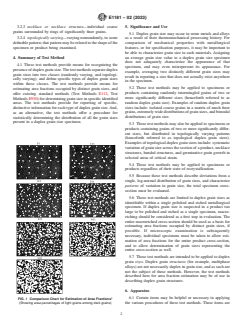
FIG. 1 Comparison Chart for Estimation of Area Fractions
(Showing area percentages of light grains among dark grains) the various procedures of these test methods. These items are
E1181 − 02 (2023)
briefly described below, under the headings of the specific 6.1.8 Test Methods E112, Intercept Procedures for Determi-
procedures to which they apply. nation of Average Grain Size,
6.1.1 Comparison Procedure for Estimation of Area 6.1.8.1 The Intercept Procedures of Test Methods E112
Fractions—This procedure requires the use of a comparison require the use of patterns of test lines, usually on transparent
chart to improve the accuracy of visual estimates of area overlays. The use of these is described in detail in Test
fractions occupied by distinct grain sizes. This comparison Methods E112. A transparency of one such pattern is available
chart is shown in Fig. 1 . The chart shows different area as an ASTM adjunct (see Test Methods E112 for details).
percentages of light grains among dark grains. 6.1.9 Statistical Determination of Grain Size Distribution:
6.1.2 Point Count Procedure for Estimation of Area 6.1.9.1 This procedure requires the use of a test grid on a
Fractions—This procedure requires the use of a test grid on a transparent overlay that can be superimposed on the specimen
transparent overlay, or in a reticle, that can be superimposed on image. The test grid consists of a series of fine, parallel lines,
the specimen image. The grid should consist of equally spaced with an interline spacing of 5 mm. Use of the grid is described
points formed by the intersection of fine lines. Practice E562 in 8.7.
gives examples of such grids, as well as details on recom- 6.1.9.2 This procedure may be carried out using manual
mended grid spacing, and use of the grid. measuring and counting techniques, but as such, will be very
6.1.3 Planimetric Procedure for Estimation of Area laborious and time-consuming. This procedure can be carried
Fractions—This procedure requires the use of a planimeter, a out much more efficiently through the use of an automated
device for measuring the areas of irregular polygons. The image analysis system with an electronic pencil or cursor, or
regions occupied by a distinct grain size are manually outlined through the use of a semi-automated image analysis system
on a photomicrograph or transparent overlay. The area of each with a digitizing tablet and electronic pencil or cursor. The use
of those regions is then measured by tracing its outline with the of this equipment is also described in 8.7.
planimeter.
7. Sampling and Test Specimens
6.1.4 Test Methods E930, Comparison Procedure for Esti-
mation of Largest Grain Size Observed.
7.1 Sampling:
6.1.4.1 This procedure requires the use of a visual aid for
7.1.1 These test methods are intended to characterize pat-
estimation of the size of the largest grain found in a given
terns of variation in grain size, when they occur in a given
metallographic section. That visual aid is shown in Test
specimen or product. To characterize these patterns accurately,
Methods E930, and is available as an ASTM Adjunct (see Test
the entire cross-section of the specimen or product must be
Methods E930 for details).
evaluated.
6.1.5 Test Methods E930, Measuring Procedure for Estima-
7.1.2 If variations in grain size occur in a product too large
tion of Largest Grain Size Observed.
to be polished and etched as a single specimen, individual
6.1.5.1 This procedure may require the use of a measuring
specimens must be taken to allow estimation of area fractions
microscope eyepiece or measuring microscope reticle. These
for the entire product cross-section, and to allow determination
are available from microscope manufacturers.
of grain sizes representing the entire cross-section as well.
6.1.6 Test Methods E930, Referee Procedure for Estimation
7.2 Specimen Orientation:
of Largest Grain Size Observed.
7.2.1 All of the types of duplex grain size described in this
6.1.6.1 This procedure requires the use of a test grid on a
test method (see 3.2 and 8.3) can be detected in a longitudinal
transparent overlay that can be superimposed on the specimen
specimen orientation (that is, in a plane parallel to the direction
image. The test grid consists of a square network of grid lines,
of maximum product deformation, during manufacture).
with a recommended interline spacing of 5 mm. Use of the grid
Accordingly, the longitudinal orientation is recommended,
is described in Test Methods E930.
with one exception. If the specimen being examined is the full
6.1.7 Test Methods E112, Comparison Procedure for Deter-
cross-section of a round bar, the longitudinal section should not
mination of Average Grain Size.
be used to estimate the area fraction occupied by different grain
6.1.7.1 This procedure requires the use of grain size com-
sizes. That estimate can be made most accurately only on a
parison charts or overlay transparencies, or grain size compari-
transverse section. For a tubular product, estimates of area
son reticles fitted into microscopes. Various comparison charts
fractions made on longitudinal sections are reasonable approxi-
and overlay transparencies are available as ASTM adjuncts
mations of the same estimates made on transverse sections. For
(see Test Methods E112 for details).
all other products, area fraction estimates should be equally
6.1.7.2 Grain size comparison reticles are available from
accurate with either specimen orientation.
various manufacturers of microscopes.
7.2.2 Other specimen orientations may be used, provided
that their limitations are recognized. For instance, banding
present in a given specimen may not be easily recognizable in
Leidheiser, H., Jr. and Kim, D. K., “A Chemical Test for Identifying the
a transverse orientation.
Fraction of Grains in the Surface of Galvanized Steel Sheet That Have Orientations
7.2.3 The specimen orientation used should be reported
Approximating (0001)—Importance to Paint Adherence,”Metallurgical Transac-
along with the duplex grain size characterization.
tions “B,” American Society for Metals, Metals Park, OH 44073, December, 1978,
p. 590.
A Keuffel & Esser Compensating Polar Planimeter available from drafting
equipment suppliers, or equivalent, has been found to be satisfactory for this A Zeiss Videoplan System, or its equivalent, has been found satisfactory for this
purpose. purpose.
E1181 − 02 (2023)
8. Procedure 8.4 Estimation of Area Fractions:
8.4.1 Estimation of the area fractions (expressed as percent-
8.1 Specimen Preparation—Prepare specimens according to
ages of the total area) occupied by the distinct grain sizes in a
Methods E3, and etch specimens in accordance with Practice
given specimen is the most subjective part of characterizing
E407. Etch specimens so that all grain boundaries are distinct
duplex grain sizes, and is the part most prone to error. Four
and easily visible.
procedures for estimating area fraction are described, the
8.2 Preparation of Photomicrographs—If photomicro-
simplest to apply resulting in the least precision, and the most
graphs are required for characterizing duplex grain size,
complicated resulting in the greatest precision. One, the Direct
prepare them in accordance with Guide E883.
Measurement Procedure (see 8.4.6), is applicable only in
8.3 Recognizing and Classifying Duplex Grain Size:
specific cases.
8.3.1 A random duplex grain size is defined as any of the
8.4.2 Because this test method is aimed at characterizing
following:
variations in grain size within a specimen, the following
8.3.1.1 The presence of randomly distributed individual
precautions should be taken in applying any of the area fraction
coarse grains, differing in size by three or more ASTM grain
estimation procedures to the specimen:
size numbers from the average size of the balance of the grains
8.4.2.1 For the random class of duplex grain sizes, apply the
(henceforth referred to as the ALA (As Large As) condition).
chosen estimation procedure to a minimum of five randomly
These individual coarse grains should comprise 5 % or less of
selected areas of the specimen.
the area of the specimen. If they comprise more than 5 % of the
area, treat the specimen as described in 8.3.1.3. An example 8.4.2.2 For the topological class of duplex grain sizes, apply
photomicrograph of the ALA condition appears in Fig. A1.1. the chosen estimation procedure to all of the specimen area, if
(See Annex A1.) possible. If this is not practical, apply the estimation procedure
8.3.1.2 The presence of an unusually wide range of grain to as much of the specimen as is reasonable, but recognize that,
sizes, randomly distributed, with the largest size differing from by not sampling all of the specimen area, some undefined bias
the smallest size by five or more ASTM grain size numbers may be introduced into the estimate.
(henceforth referred to as the wide-range condition). An (a) For example, if banding is present in a full-thickness
example photomicrograph of the wide-range condition appears specimen taken from a plate product, that banding may vary in
in Fig. A1.2.
severity from surface to center of the specimen. The most
8.3.1.3 The presence of two distinct grain sizes, randomly
precise estimate of the area fractions occupied by each grain
distributed such that the sizes differ by more than four ASTM
size will be obtained by evaluating the entire surface of that
grain size numbers, and such that the two sizes together
specimen. Selecting only part of the specimen surface may
comprise 75 % more of the total area of the specimen (hence-
inadvertently eliminate areas that have high (or low) concen-
forth referred to as the bimodal condition). An example
trations of one of the grain sizes, thus biasing the estimate.
photomicrograph of the bimodal condition appears in Fig.
(b) In this example, the entire specimen surface could be
A1.3. A further example appears in Fig. X1.1 in Appendix X1.
examined either by using a single, low-magnification image, or
8.3.2 A topological duplex grain size is defined as any of the
by using sufficient multiple images at higher magnification. If
following:
neither of these is practical, then, as an absolute minimum, the
8.3.2.1 The presence of a systematic variation in grain size
area of the specimen to be examined must include one
across the section of the product, such that the average grain
complete traverse from surface to surface of the original plate
size differs from one area to another by three or more ASTM
section. If additional traverses can be made, they will improve
grain size numbers; or, the presence of different grain sizes in
the precision of the final area fraction estimate.
specific areas of a product cross-section (for example, coarse
8.4.3 Comparison Procedure:
grains resulting from germinative grain growth at areas of
8.4.3.1 Do not estimate area fractions occupied by distinct
critical strain), such that the grain size in those specific areas
grain sizes based solely on unaided visual scanning of a
differs from the grain size in the bulk of the cross-section by
specimen. Such a method is subject to considerable error.
three or more ASTM grain size numbers (both conditions
Reduce that error by using graded area fraction comparison
henceforth referred to as the cross-section condition). An
figures (see Fig. 1 for an example). Compare such figures with
example photomicrograph of a cross-section condition appears
eyepiece or projected images from a microscope, or with
in Fig. A1.4.
photomicrographs. Use the lowest magnification that allows
8.3.2.2 The presence of individual coarse grains, each
visual resolution of the coarse- and fine-grained areas as
surrounded by rings of finer grains, the coarse and fine grains
distinct regions. Note that it is not necessary to resolve the
differing in size by three or more ASTM grain size numbers
individual fine grains in the image. The area occupied by the
(henceforth referred to as the necklace condition). An example
fine grains is what must be determined.
photomicrograph of the necklace condition appears in Fig.
8.4.3.2 Apply the comparison figures to as many areas of
A1.5.
the specimen as recommended in 8.4.2, and calculate the
8.3.2.3 The presence of bands of distinct grain sizes, such
average estimated area fractions (expressed as percentages of
that the sizes differ by three or more ASTM grain size numbers
the total area) occupied by the distinct grain sizes, over the
(henceforth referred to as the banding condition). An example
number of areas examined.
photomicrograph of the banding condition appears in Fig.
A1.6. 8.4.4 Point Count Procedure:
E1181 − 02 (2023)
8.4.4.1 Practice E562 may be used to estimate the area No. 4. Suppose that measurements indicate that the surface
fractions occupied by distinct grain sizes. Apply this practice to layers each average 3.2 mm in depth. The layer depth of 3.2
projected images from a microscope, or to photomicrographs. mm divided by the total product thickness of 19.0 mm, would
Begin by outlining the distinct grain size regions in a given give an estimate of 16.8% for the area fraction represented by
image, either on a transparent overlay placed over the projected each surface layer.
image, or directly on a photomicrograph. Such outlining will
8.4.6.3 For another example, suppose a tubular product with
simplify decisions during point counting, and thus speed the
an outside diameter of 115.0 mm and a wall thickness of 7.2
counting process. On the overlay, also mark the outline of the
mm showed a surface layer at the outside diameter of grains of
total field of view (the limits of the image). Next apply a
ASTM No.
...