

ASTM E527-23
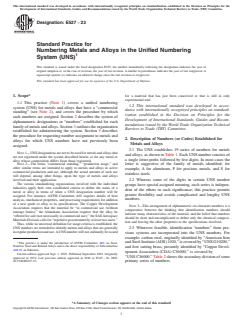
(Practice)Standard Practice for Numbering Metals and Alloys in the Unified Numbering System (UNS)
General Information
- Abstract
SIGNIFICANCE AND USE
4.1 The UNS provides a means of correlating many nationally used numbering systems currently administered by societies, trade associations, and individual users and producers of metals and alloys, thereby avoiding confusion caused by use of more than one identification number for the same material; and by the opposite situation of having the same number assigned to two or more entirely different materials. It also provides the uniformity necessary for efficient indexing, record keeping, data storage and retrieval, and cross referencing.
4.2 A UNS number is not in itself a specification, since it establishes no requirements for form, condition, quality, etc. It is a unified identification of metals and alloys for which controlling limits have been established in specifications published elsewhere.
Note 5: Organizations that issue specifications should report to appropriate UNS number-assigning offices (3.1.2) any specification changes that affect descriptions shown in published UNS listings.
SCOPE
1.1 This practice (Note 1) covers a unified numbering system (UNS) for metals and alloys that have a “commercial standing” (see Note 2), and covers the procedure by which such numbers are assigned. Section 2 describes the system of alphanumeric designations or “numbers” established for each family of metals and alloys. Section 3 outlines the organization established for administering the system. Section 5 describes the procedure for requesting number assignment to metals and alloys for which UNS numbers have not previously been assigned.
Note 1: UNS designations are not to be used for metals and alloys that are not registered under the system described herein, or for any metal or alloy whose composition differs from those registered.
Note 2: The terms “commercial standing,” “production usage,” and other similar terms are intended to apply to metals and alloys in active commercial production and use, although the actual amount of such use will depend, among other things, upon the type of metals and alloys involved and their application.
The various standardizing organizations involved with the individual industries apply their own established criteria to define the status of a metal or alloy in terms of when a UNS designation number will be assigned. For instance, ASTM Committee A01 requires details of heat analysis, mechanical properties, and processing requirements for addition of a new grade or alloy to its specifications. The Copper Development Association requires that the material be “in commercial use (without tonnage limits);” the Aluminum Association requires that the alloy be “offered for sale (not necessarily in commercial use);” the SAE Aerospace Materials Division calls for “repetitive procurement by at least two users.”
Thus, while no universal definition for usage criteria is established, the UNS numbers are intended to identify metals and alloys that are generally in regular production and use. A UNS number will not ordinarily be issued for a material that has just been conceived or that is still in only experimental trial.
1.2 This international standard was developed in accordance with internationally recognized principles on standardization established in the Decision on Principles for the Development of International Standards, Guides and Recommendations issued by the World Trade Organization Technical Barriers to Trade (TBT) Committee.
- Status
- Published
- Publication Date
- 31-Aug-2023
- Technical Committee
- A01 - Steel, Stainless Steel and Related Alloys
- Drafting Committee
- A01.91 - Editorial
Buy Documents
ASTM E527-23 - Standard Practice for Numbering Metals and Alloys in the Unified Numbering System (UNS)
REDLINE ASTM E527-23 - Standard Practice for Numbering Metals and Alloys in the Unified Numbering System (UNS)
Overview
ASTM E527-23: Standard Practice for Numbering Metals and Alloys in the Unified Numbering System (UNS) provides a systematic approach to the identification and correlation of metals and alloys using a unified alphanumeric system. This practice, managed under ASTM and SAE collaboration, organizes a wide variety of commercially significant metals and alloys into a consistent and easily referenced numbering scheme. By integrating various existing national and association-based identification systems, it aims to avoid duplication and confusion in material classification, thus supporting efficient data management and global industry communication.
Key Topics
1. Unified Numbering System (UNS):
- UNS is an alphanumeric code for metals and alloys in commercial use.
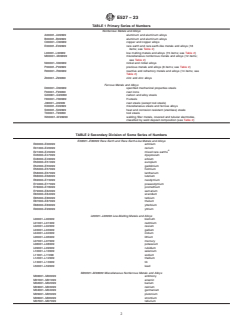
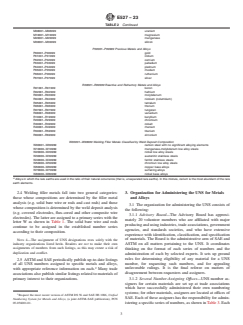
- Each UNS number has a prefix letter indicating the metal family (e.g., "A" for aluminum, "C" for copper, "S" for stainless steel) followed by five digits.
- Nineteen primary series are established to encompass ferrous and nonferrous metals.
2. Assignment and Administration:
- UNS numbers are assigned only to materials with established commercial use - experimental or newly conceived materials typically do not qualify.
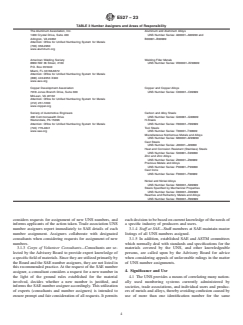
- Numbers are administered by a council of representatives from ASTM, SAE, relevant trade associations (e.g., Aluminum Association, Copper Development Association), and other stakeholders.
- Application for new UNS numbers requires detailed information about the material's composition or properties.
3. Significance and Use:
- The UNS does not specify material form, quality, or properties; it simply provides an identification code.
- UNS numbers enable cross-referencing among specifications published by various organizations, supporting consistent recordkeeping, indexing, and retrieval.
4. Numbering Structure:
- The system consolidates prior well-known numbering systems (e.g., AISI, CDA) into the UNS format for compatibility.
- The system's flexibility ensures that only the chemical composition or defining properties are reflected in the code.
Applications
The Unified Numbering System, as outlined in ASTM E527-23, finds application in:
- Materials Selection and Specification: Allows engineers, designers, and manufacturers to identify and select metals and alloys based on a universally recognized code, simplifying communication and procurement.
- Data Management: Supports industry databases, inventory tracking, and recordkeeping by providing a non-ambiguous identification system.
- Cross-referencing: Facilitates tracing between different national and international standards, trade association specs, and supplier catalogs by aligning diverse systems under one coherent framework.
- Quality Control and Traceability: Aids in ensuring that materials used in production conform to the intended specifications by enabling quick verification against UNS listings.
- Global Trade: Promotes uniformity in the global exchange of metals and alloys, reducing misinterpretation due to conflicting or duplicated identification numbers.
Related Standards
ASTM E527-23 aligns with and supports various other standards and industry practices, including:
- SAE J1086: Practice for Numbering Metals and Alloys (UNS).
- ASTM DS 56 / SAE HS 1086: Publications listing all assigned UNS numbers for reference.
- Standards from the Aluminum Association, Copper Development Association, American Welding Society, and other trade groups that manage UNS number assignments within their respective industry sectors.
- ASTM Committee A01 standards for steels and related materials.
- World Trade Organization (WTO) Principles: Developed in harmony with international standardization guidelines, enhancing its acceptance and utility worldwide.
Keywords: Unified Numbering System, UNS numbers, ASTM E527, metals and alloys identification, material numbering, cross-referencing standards, international standardization, alloy numbering system, ferrous and nonferrous metals, metal data management.
Buy Documents
ASTM E527-23 - Standard Practice for Numbering Metals and Alloys in the Unified Numbering System (UNS)
REDLINE ASTM E527-23 - Standard Practice for Numbering Metals and Alloys in the Unified Numbering System (UNS)
Get Certified
Connect with accredited certification bodies for this standard

Element Materials Technology
Materials testing and product certification.

Inštitut za kovinske materiale in tehnologije
Institute of Metals and Technology. Materials testing, metallurgical analysis, NDT.
Sponsored listings
Frequently Asked Questions
ASTM E527-23 is a standard published by ASTM International. Its full title is "Standard Practice for Numbering Metals and Alloys in the Unified Numbering System (UNS)". This standard covers: SIGNIFICANCE AND USE 4.1 The UNS provides a means of correlating many nationally used numbering systems currently administered by societies, trade associations, and individual users and producers of metals and alloys, thereby avoiding confusion caused by use of more than one identification number for the same material; and by the opposite situation of having the same number assigned to two or more entirely different materials. It also provides the uniformity necessary for efficient indexing, record keeping, data storage and retrieval, and cross referencing. 4.2 A UNS number is not in itself a specification, since it establishes no requirements for form, condition, quality, etc. It is a unified identification of metals and alloys for which controlling limits have been established in specifications published elsewhere. Note 5: Organizations that issue specifications should report to appropriate UNS number-assigning offices (3.1.2) any specification changes that affect descriptions shown in published UNS listings. SCOPE 1.1 This practice (Note 1) covers a unified numbering system (UNS) for metals and alloys that have a “commercial standing” (see Note 2), and covers the procedure by which such numbers are assigned. Section 2 describes the system of alphanumeric designations or “numbers” established for each family of metals and alloys. Section 3 outlines the organization established for administering the system. Section 5 describes the procedure for requesting number assignment to metals and alloys for which UNS numbers have not previously been assigned. Note 1: UNS designations are not to be used for metals and alloys that are not registered under the system described herein, or for any metal or alloy whose composition differs from those registered. Note 2: The terms “commercial standing,” “production usage,” and other similar terms are intended to apply to metals and alloys in active commercial production and use, although the actual amount of such use will depend, among other things, upon the type of metals and alloys involved and their application. The various standardizing organizations involved with the individual industries apply their own established criteria to define the status of a metal or alloy in terms of when a UNS designation number will be assigned. For instance, ASTM Committee A01 requires details of heat analysis, mechanical properties, and processing requirements for addition of a new grade or alloy to its specifications. The Copper Development Association requires that the material be “in commercial use (without tonnage limits);” the Aluminum Association requires that the alloy be “offered for sale (not necessarily in commercial use);” the SAE Aerospace Materials Division calls for “repetitive procurement by at least two users.” Thus, while no universal definition for usage criteria is established, the UNS numbers are intended to identify metals and alloys that are generally in regular production and use. A UNS number will not ordinarily be issued for a material that has just been conceived or that is still in only experimental trial. 1.2 This international standard was developed in accordance with internationally recognized principles on standardization established in the Decision on Principles for the Development of International Standards, Guides and Recommendations issued by the World Trade Organization Technical Barriers to Trade (TBT) Committee.
SIGNIFICANCE AND USE 4.1 The UNS provides a means of correlating many nationally used numbering systems currently administered by societies, trade associations, and individual users and producers of metals and alloys, thereby avoiding confusion caused by use of more than one identification number for the same material; and by the opposite situation of having the same number assigned to two or more entirely different materials. It also provides the uniformity necessary for efficient indexing, record keeping, data storage and retrieval, and cross referencing. 4.2 A UNS number is not in itself a specification, since it establishes no requirements for form, condition, quality, etc. It is a unified identification of metals and alloys for which controlling limits have been established in specifications published elsewhere. Note 5: Organizations that issue specifications should report to appropriate UNS number-assigning offices (3.1.2) any specification changes that affect descriptions shown in published UNS listings. SCOPE 1.1 This practice (Note 1) covers a unified numbering system (UNS) for metals and alloys that have a “commercial standing” (see Note 2), and covers the procedure by which such numbers are assigned. Section 2 describes the system of alphanumeric designations or “numbers” established for each family of metals and alloys. Section 3 outlines the organization established for administering the system. Section 5 describes the procedure for requesting number assignment to metals and alloys for which UNS numbers have not previously been assigned. Note 1: UNS designations are not to be used for metals and alloys that are not registered under the system described herein, or for any metal or alloy whose composition differs from those registered. Note 2: The terms “commercial standing,” “production usage,” and other similar terms are intended to apply to metals and alloys in active commercial production and use, although the actual amount of such use will depend, among other things, upon the type of metals and alloys involved and their application. The various standardizing organizations involved with the individual industries apply their own established criteria to define the status of a metal or alloy in terms of when a UNS designation number will be assigned. For instance, ASTM Committee A01 requires details of heat analysis, mechanical properties, and processing requirements for addition of a new grade or alloy to its specifications. The Copper Development Association requires that the material be “in commercial use (without tonnage limits);” the Aluminum Association requires that the alloy be “offered for sale (not necessarily in commercial use);” the SAE Aerospace Materials Division calls for “repetitive procurement by at least two users.” Thus, while no universal definition for usage criteria is established, the UNS numbers are intended to identify metals and alloys that are generally in regular production and use. A UNS number will not ordinarily be issued for a material that has just been conceived or that is still in only experimental trial. 1.2 This international standard was developed in accordance with internationally recognized principles on standardization established in the Decision on Principles for the Development of International Standards, Guides and Recommendations issued by the World Trade Organization Technical Barriers to Trade (TBT) Committee.
ASTM E527-23 is classified under the following ICS (International Classification for Standards) categories: 77.120.01 - Non-ferrous metals in general. The ICS classification helps identify the subject area and facilitates finding related standards.
ASTM E527-23 is available in PDF format for immediate download after purchase. The document can be added to your cart and obtained through the secure checkout process. Digital delivery ensures instant access to the complete standard document.
Standards Content (Sample)
This international standard was developed in accordance with internationally recognized principles on standardization established in the Decision on Principles for the
Development of International Standards, Guides and Recommendations issued by the World Trade Organization Technical Barriers to Trade (TBT) Committee.
Designation: E527 − 23
Standard Practice for
Numbering Metals and Alloys in the Unified Numbering
System (UNS)
This standard is issued under the fixed designation E527; the number immediately following the designation indicates the year of
original adoption or, in the case of revision, the year of last revision. A number in parentheses indicates the year of last reapproval. A
superscript epsilon (´) indicates an editorial change since the last revision or reapproval.
This standard has been approved for use by agencies of the U.S. Department of Defense.
for a material that has just been conceived or that is still in only
1. Scope*
experimental trial.
1.1 This practice (Note 1) covers a unified numbering
1.2 This international standard was developed in accor-
system (UNS) for metals and alloys that have a “commercial
dance with internationally recognized principles on standard-
standing” (see Note 2), and covers the procedure by which
ization established in the Decision on Principles for the
such numbers are assigned. Section 2 describes the system of
Development of International Standards, Guides and Recom-
alphanumeric designations or “numbers” established for each
mendations issued by the World Trade Organization Technical
family of metals and alloys. Section 3 outlines the organization
Barriers to Trade (TBT) Committee.
established for administering the system. Section 5 describes
the procedure for requesting number assignment to metals and
2. Description of Numbers (or Codes) Established for
alloys for which UNS numbers have not previously been
Metals and Alloys
assigned.
2.1 The UNS establishes 19 series of numbers for metals
NOTE 1—UNS designations are not to be used for metals and alloys that
and alloys, as shown in Table 1. Each UNS number consists of
are not registered under the system described herein, or for any metal or
a single letter-prefix followed by five digits. In most cases the
alloy whose composition differs from those registered.
letter is suggestive of the family of metals identified; for
NOTE 2—The terms “commercial standing,” “production usage,” and
other similar terms are intended to apply to metals and alloys in active
example, A for aluminum, P for precious metals, and S for
commercial production and use, although the actual amount of such use
stainless steels.
will depend, among other things, upon the type of metals and alloys
involved and their application. 2.2 Whereas some of the digits in certain UNS number
The various standardizing organizations involved with the individual
groups have special assigned meaning, each series is indepen-
industries apply their own established criteria to define the status of a
dent of the others in such significance; this practice permits
metal or alloy in terms of when a UNS designation number will be
greater flexibility and avoids complicated and lengthy UNS
assigned. For instance, ASTM Committee A01 requires details of heat
numbers.
analysis, mechanical properties, and processing requirements for addition
of a new grade or alloy to its specifications. The Copper Development
NOTE 3—This arrangement of alphanumeric six-character numbers is a
Association requires that the material be “in commercial use (without
compromise between the thinking that identification numbers should
tonnage limits);” the Aluminum Association requires that the alloy be
indicate many characteristics of the material, and the belief that numbers
“offered for sale (not necessarily in commercial use);” the SAE Aerospace
should be short and uncomplicated to define only the chemical composi-
Materials Division calls for “repetitive procurement by at least two users.”
tion and leaving the other properties to the specifications involved.
Thus, while no universal definition for usage criteria is established, the
UNS numbers are intended to identify metals and alloys that are generally
2.3 Wherever feasible, identification “numbers” from pre-
in regular production and use. A UNS number will not ordinarily be issued
vious systems are incorporated into the UNS numbers. For
example: carbon steel, originally identified by “American Iron
and Steel Institute (AISI) 1020,” is covered by “UNS G10200,”
This practice is under the jurisdiction of ASTM Committee A01 on Steel,
Stainless Steel and Related Alloys and is the direct responsibility of Subcommittee
and free cutting brass, presently identified by “Copper Devel-
A01.91 on Editorial.
opment Association (CDA) C36000,” is covered by
Current edition approved Sept. 1, 2023. Published September 2023. Originally
“UNS C36000.” Table 2 shows the secondary division of some
approved in 1974. Last previous edition approved in 2016 as E527 – 16. DOI:
10.1520/E0527-23. primary series of numbers.
*A Summary of Changes section appears at the end of this standard
Copyright © ASTM International, 100 Barr Harbor Drive, PO Box C700, West Conshohocken, PA 19428-2959. United States
E527 − 23
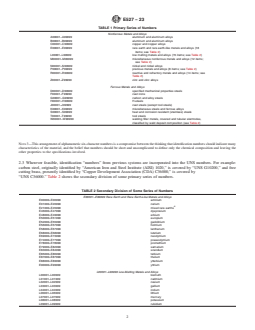
TABLE 1 Primary Series of Numbers
Nonferrous Metals and Alloys
A00001–A99999 aluminum and aluminum alloys
B00001–B99999 aluminum and aluminum alloys
C00001–C99999 copper and copper alloys
E00001–E99999 rare earth and rare earth-like metals and alloys (18
items; see Table 2)
L00001–L99999 low melting metals and alloys (15 items; see Table 2)
M00001–M99999 miscellaneous nonferrous metals and alloys (12 items;
see Table 2)
N00001–N99999 nickel and nickel alloys
P00001–P99999 precious metals and alloys (8 items; see Table 2)
R00001–R99999 reactive and refractory metals and alloys (14 items; see
Table 2)
Z00001–Z99999 zinc and zinc alloys
Ferrous Metals and Alloys
D00001–D99999 specified mechanical properties steels
F00001–F99999 cast irons
G00001–G99999 carbon and alloy steels
H00001–H99999 H-steels
J00001–J99999 cast steels (except tool steels)
K00001–K99999 miscellaneous steels and ferrous alloys
S00001–S99999 heat and corrosion resistant (stainless) steels
T00001–T99999 tool steels
W00001–W99999 welding filler metals, covered and tubular electrodes,
classified by weld deposit composition (see Table 2)
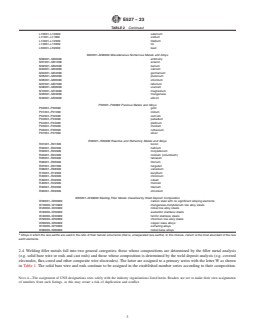
TABLE 2 Secondary Division of Some Series of Numbers
E00001–E99999 Rare Earth and Rare Earth-Like Metals and Alloys
E00000–E00999 actinium
E01000–E20999 cerium
A
E21000–E45999 mixed rare earths
E46000–E47999 dysprosium
E48000–E49999 erbium
E50000–E51999 europium
E52000–E55999 gadolinium
E56000–E57999 holmium
E58000–E67999 lanthanum
E68000–E68999 lutetium
E69000–E73999 neodymium
E74000–E77999 praseodymium
E78000–E78999 promethium
E79000–E82999 samarium
E83000–E84999 scandium
E85000–E86999 terbium
E87000–E87999 thulium
E88000–E89999 ytterbium
E90000–E99999 yttrium
L00001–L99999 Low-Melting Metals and Alloys
L00001–L00999 bismuth
L01001–L01999 cadmium
L02001–L02999 cesium
L03001–L03999 gallium
L04001–L04999 indium
L06001–L06999 lithium
L07001–L07999 mercury
L08001–L08999 potassium
L09001–L09999 rubidium
L10001–L10999 selenium
L11001–L11999 sodium
L12001–L12999 thallium
L13001–L13999 tin
L50001–L59999 lead
M00001–M99999 Miscellaneous Nonferrous Metals and Alloys
M00001–M00999 antimony
M01001–M01999 arsenic
M02001–M02999 barium
M03001–M03999 calcium
M04001–M04999 germanium
M05001–M05999 plutonium
M06001–M06999 strontium
M07001–M07999 tellurium
E527 − 23
TABLE 2 Continued
M08001–M08999 uranium
M10001–M19999 magnesium
M20001–M29999 manganese
M30001–M39999 silicon
P00001–P99999 Precious Metals and Alloys
P00001–P00999 gold
P01001–P01999 iridium
P02001–P02999 osmium
P03001–P03999 palladium
P04001–P04999 platinum
P05001–P05999 rhodium
P06001–P06999 ruthenium
P07001–P07999 silver
R00001–R99999 Reactive and Refractory Metals and Alloys
R01001–R01999 boron
R02001–R02999 hafnium
R03001–R03999 molybdenum
R04001–R04999 niobium (columbium)
R05001–R05999 tantalum
R06001–R06999 thorium
R07001–R07999 tungsten
R08001–R08999 vanadium
R10001–R19999 beryllium
R20001–R29999 chromium
R30001–R39999 cobalt
R40001–R49999 rhenium
R50001–R59999 titanium
R60001–R69999 zirconium
W00001–W99999 Welding Filler Metals Classified by Weld Deposit Composition
W00001–W09999 carbon steel with no significant alloying elements
W10000–W19999 manganese-molybdenum low alloy steels
W20000–W29999 nickel low alloy steels
W30000–W39999 austenitic stainless steels
W40000–W49999 ferritic stainless steels
W50000–W59999 chromiun low alloy steels
W60000–W69999 copper base alloys
W70000–W79999 surfacing alloys
W80000–W89999 nickel base alloys
A
Alloys in which the rare earths are used in the ratio of their natural occurrence (that is, unseparated rare earths). In this mixture, cerium is the most abundant of the rare
earth elements.
2.4 Welding filler metals fall into two general categories: 3. Organization for Administering the UNS for Metals
and Alloys
those whose compositions are determined by the filler metal
analysis (e.g. solid bare wire or rods and cast rods) and those
3.1 The organization for administering the UNS consists of
whose composition is determined by the weld deposit analysis
the following:
(e.g. covered electrodes, flux-cored and other composite wire
3.1.1 Advisory Board—The Advisory Board has approxi-
electrodes). The latter are assigned to a primary series with the
mately 20 volunteer members who are affiliated with major
letter W as shown in Table 1. The solid bare wire and rods
producing and using industries, trade associations, government
continue to be assigned in the established number series
agencies, and standards societies, and who have extensive
according to their composition.
experience with identification, classification, and specification
of materials. The Board is the administrative arm of SAE and
NOTE 4—The assignment of UNS designations rests solely with the
industry organizations listed herin. Readers are not to make their own ASTM on all matters pertaining to the UNS. It coordinates
assignments of numbers from such listings, as this may create a risk of
thinking on the format of each series of numbers and the
duplication and conflict.
administration of each by selected experts. It sets up ground
rules for determining eligibility of any material for a UNS
2.5 ASTM and SAE periodically publish up-to-date listings
number, for requesting such numbers, and for appealing
of all UNS numbers assigned to specific metals and alloys,
unfavorable rulings. It is the final referee on matters of
with appropriate reference information on each. Many trade
disagreement between requesters and assigners.
associations also publish similar listings related to materials of
3.1.2 Several Number-Assigning Offıces—UNS number as-
primary interest to their organizations.
signers for certain materials are set up at trade associations
which have successfully administered their own numbering
systems; for other materials, assigners are located at offices of
Request the most recent version of ASTM DS 56 and SAE HS 1086, Unified
SAE. Each of these assigners has the responsibility for admin-
Numbering System for Metals and Alloys, (a joint ASTM–SAE publication), PCN
05-056001-01. istering a specific series of numbers, as shown in Table 3. Each
E527 − 23
TABLE 3 Number Assigners and Areas of Responsi
...
This document is not an ASTM standard and is intended only to provide the user of an ASTM standard an indication of what changes have been made to the previous version. Because
it may not be technically possible to adequately depict all changes accurately, ASTM recommends that users consult prior editions as appropriate. In all cases only the current version
of the standard as published by ASTM is to be considered the official document.
Designation: E527 − 16 E527 − 23
Standard Practice for
Numbering Metals and Alloys in the Unified Numbering
System (UNS)
This standard is issued under the fixed designation E527; the number immediately following the designation indicates the year of
original adoption or, in the case of revision, the year of last revision. A number in parentheses indicates the year of last reapproval. A
superscript epsilon (´) indicates an editorial change since the last revision or reapproval.
This standard has been approved for use by agencies of the U.S. Department of Defense.
1. Scope*
1.1 This practice (Note 1) covers a unified numbering system (UNS) for metals and alloys that have a “commercial standing” (see
Note 2), and covers the procedure by which such numbers are assigned. Section 2 describes the system of alphanumeric
designations or “numbers” established for each family of metals and alloys. Section 3 outlines the organization established for
administering the system. Section 5 describes the procedure for requesting number assignment to metals and alloys for which UNS
numbers have not previously been assigned.
NOTE 1—UNS designations are not to be used for metals and alloys that are not registered under the system described herein, or for any metal or alloy
whose composition differs from those registered.
NOTE 2—The terms “commercial standing,” “production usage,” and other similar terms are intended to apply to metals and alloys in active commercial
production and use, although the actual amount of such use will depend, among other things, upon the type of metals and alloys involved and their
application.
The various standardizing organizations involved with the individual industries apply their own established criteria to define the status of a metal or
alloy in terms of when a UNS designation number will be assigned. For instance, ASTM Committee A01 requires details of heat analysis, mechanical
properties, and processing requirements for addition of a new grade or alloy to its specifications. The Copper Development Association requires that the
material be “in commercial use (without tonnage limits);” the Aluminum Association requires that the alloy be “offered for sale (not necessarily in
commercial use);” the SAE Aerospace Materials Division calls for “repetitive procurement by at least two users.”
Thus, while no universal definition for usage criteria is established, the UNS numbers are intended to identify metals and alloys that are generally in
regular production and use. A UNS number will not ordinarily be issued for a material that has just been conceived or that is still in only experimental
trial.
1.2 This international standard was developed in accordance with internationally recognized principles on standardization
established in the Decision on Principles for the Development of International Standards, Guides and Recommendations issued
by the World Trade Organization Technical Barriers to Trade (TBT) Committee.
2. Description of Numbers (or Codes) Established for Metals and Alloys
2.1 The UNS establishes 19 series of numbers for metals and alloys, as shown in Table 1. Each UNS number consists of a single
letter-prefix followed by five digits. In most cases the letter is suggestive of the family of metals identified; for example, A for
aluminum, P for precious metals, and S for stainless steels.
2.2 Whereas some of the digits in certain UNS number groups have special assigned meaning, each series is independent of the
others in such significance; this practice permits greater flexibility and avoids complicated and lengthy UNS numbers.
This practice is under the jurisdiction of ASTM Committee A01 on Steel, Stainless Steel and Related Alloys and is the direct responsibility of Subcommittee A01.91
on Editorial.
Current edition approved Sept. 1, 2016Sept. 1, 2023. Published September 2016September 2023. Originally approved in 1974. Last previous edition approved in 20122016
as E527 – 12.E527 – 16. DOI: 10.1520/E0527-16.10.1520/E0527-23.
*A Summary of Changes section appears at the end of this standard
Copyright © ASTM International, 100 Barr Harbor Drive, PO Box C700, West Conshohocken, PA 19428-2959. United States
E527 − 23
TABLE 1 Primary Series of Numbers
Nonferrous Metals and Alloys
A00001–A99999 aluminum and aluminum alloys
B00001–B99999 aluminum and aluminum alloys
C00001–C99999 copper and copper alloys
E00001–E99999 rare earth and rare earth-like metals and alloys (18
items; see Table 2)
L00001–L99999 low melting metals and alloys (15 items; see Table 2)
M00001–M99999 miscellaneous nonferrous metals and alloys (12 items;
see Table 2)
N00001–N99999 nickel and nickel alloys
P00001–P99999 precious metals and alloys (8 items; see Table 2)
R00001–R99999 reactive and refractory metals and alloys (14 items; see
Table 2)
Z00001–Z99999 zinc and zinc alloys
Ferrous Metals and Alloys
D00001–D99999 specified mechanical properties steels
F00001–F99999 cast irons
G00001–G99999 carbon and alloy steels
H00001–H99999 H-steels
J00001–J99999 cast steels (except tool steels)
K00001–K99999 miscellaneous steels and ferrous alloys
S00001–S99999 heat and corrosion resistant (stainless) steels
T00001–T99999 tool steels
W00001–W99999 welding filler metals, covered and tubular electrodes,
classified by weld deposit composition (see Table 2)
NOTE 3—This arrangement of alphanumeric six-character numbers is a compromise between the thinking that identification numbers should indicate many
characteristics of the material, and the belief that numbers should be short and uncomplicated to define only the chemical composition and leaving the
other properties to the specifications involved.
2.3 Wherever feasible, identification “numbers” from previous systems are incorporated into the UNS numbers. For example:
carbon steel, originally identified by “American Iron and Steel Institute (AISI) 1020,” is covered by “UNS G10200,” and free
cutting brass, presently identified by “Copper Development Association (CDA) C36000,” is covered by
“UNS C36000.” Table 2 shows the secondary division of some primary series of numbers.
TABLE 2 Secondary Division of Some Series of Numbers
E00001–E99999 Rare Earth and Rare Earth-Like Metals and Alloys
E00000–E00999 actinium
E01000–E20999 cerium
A
E21000–E45999 mixed rare earths
E46000–E47999 dysprosium
E48000–E49999 erbium
E50000–E51999 europium
E52000–E55999 gadolinium
E56000–E57999 holmium
E58000–E67999 lanthanum
E68000–E68999 lutetium
E69000–E73999 neodymium
E74000–E77999 praseodymium
E78000–E78999 promethium
E79000–E82999 samarium
E83000–E84999 scandium
E85000–E86999 terbium
E87000–E87999 thulium
E88000–E89999 ytterbium
E90000–E99999 yttrium
L00001–L99999 Low-Melting Metals and Alloys
L00001–L00999 bismuth
L01001–L01999 cadmium
L02001–L02999 cesium
L03001–L03999 gallium
L04001–L04999 indium
L06001–L06999 lithium
L07001–L07999 mercury
L08001–L08999 potassium
L09001–L09999 rubidium
E527 − 23
TABLE 2 Continued
L10001–L10999 selenium
L11001–L11999 sodium
L12001–L12999 thallium
L13001–L13999 tin
L50001–L59999 lead
M00001–M99999 Miscellaneous Nonferrous Metals and Alloys
M00001–M00999 antimony
M01001–M01999 arsenic
M02001–M02999 barium
M03001–M03999 calcium
M04001–M04999 germanium
M05001–M05999 plutonium
M06001–M06999 strontium
M07001–M07999 tellurium
M08001–M08999 uranium
M10001–M19999 magnesium
M20001–M29999 manganese
M30001–M39999 silicon
P00001–P99999 Precious Metals and Alloys
P00001–P00999 gold
P01001–P01999 iridium
P02001–P02999 osmium
P03001–P03999 palladium
P04001–P04999 platinum
P05001–P05999 rhodium
P06001–P06999 ruthenium
P07001–P07999 silver
R00001–R99999 Reactive and Refractory Metals and Alloys
R01001–R01999 boron
R02001–R02999 hafnium
R03001–R03999 molybdenum
R04001–R04999 niobium (columbium)
R05001–R05999 tantalum
R06001–R06999 thorium
R07001–R07999 tungsten
R08001–R08999 vanadium
R10001–R19999 beryllium
R20001–R29999 chromium
R30001–R39999 cobalt
R40001–R49999 rhenium
R50001–R59999 titanium
R60001–R69999 zirconium
W00001–W99999 Welding Filler Metals Classified by Weld Deposit Composition
W00001–W09999 carbon steel with no significant alloying elements
W10000–W19999 manganese-molybdenum low alloy steels
W20000–W29999 nickel low alloy steels
W30000–W39999 austenitic stainless steels
W40000–W49999 ferritic stainless steels
W50000–W59999 chromiun low alloy steels
W60000–W69999 copper base alloys
W70000–W79999 surfacing alloys
W80000–W89999 nickel base alloys
A
Alloys in which the rare earths are used in the ratio of their natural occurrence (that is, unseparated rare earths). In this mixture, cerium is the most abundant of the rare
earth elements.
2.4 Welding filler metals fall into two general categories: those whose compositions are determined by the filler metal analysis
(e.g. solid bare wire or rods and cast rods) and those whose composition is determined by the weld deposit analysis (e.g. covered
electrodes, flux-cored and other composite wire electrodes). The latter are assigned to a primary series with the letter W as shown
in Table 1. The solid bare wire and rods continue to be assigned in the established number series according to their composition.
NOTE 4—The assignment of UNS designations rests solely with the industry organizations listed herin. Readers are not to make their own assignments
of numbers from such listings, as this may create a risk of duplication and conflict.
E527 − 23
2.5 ASTM and SAE periodically publish up-to-date listings of all UNS numbers assigned to specific metals and alloys, with
appropriate reference information on each. Many trade associations also publish similar listings related to materials of primary
interest to their organizations.
3. Organization for Administering the UNS for Metals and Alloys
3.1 The organization for administering the UNS consists of the following:
3.1.1 Advisory Board—The Advisory Board has approximately 20 volunteer members who are affiliated with major producing and
using industries, trade associations, government agencies, and standards societies, and who have extensive experience with
identification, classification, and specification of materials. The Board is the administrative arm of SAE and ASTM on all matters
pertaining to the UNS. It coordinates thinking on the format of each series of numbers and the administration of each by selected
experts. It sets up ground rules for determining eligibility of any material for a UNS number, for requesting such numbers, and
for appealing unfavorable rulings. It is the final referee on matters of disagreement between requesters and assigners.
3.1.2 Several Number-Assigning Offıces—UNS number assigners for certain materials are set up at trade associations which have
successfully administered their own numbering systems; for other materials, assigners are located at offices of SAE. Each of these
assigners has the responsibility for administering a specific series of numbers, as shown in Table 3. Each considers requests for
assignment of new UNS numbers, and informs applicants of the action taken. Trade association UNS number assigners report
immediately to SAE details of each number assignment. Assigners collaborate with designated consultants when considering
requests for assignment of new numbers.
3.1.3 Corps of Volunteer Consultants—Consultants are selected by the Advisory Board to provide expert knowledge of a specific
field of materials. Since they are utilized primarily by the Board and the SAE number assigners, they are not listed in this
recommended practice. At the request of the SAE number assigner, a consultant conside
...