

ASTM F2152-07(2021)
(Guide)Standard Guide for In-Situ Burning of Spilled Oil: Fire-Resistant Boom
General Information
- Abstract
ABSTRACT
This guide covers a set of criteria to evaluate the performance, material characteristics, and essential features of fire-resistant oil spill containment boom. Two types of fire-resistant oil containment Boom are covered: those that are intrinsically fire-resistant through the use of fire-resistant materials, and those that provide fire-resistance through the use of coolants. The boom shall be tested for operability, oil containment, and fire resistance.
SCOPE
1.1 This guide covers a set of criteria to evaluate the performance, material characteristics, and essential features of fire-resistant oil spill containment boom.
1.2 This guide covers two types of fire-resistant oil containment boom: those that are intrinsically fire-resistant through the use of fire-resistant materials, and those that provide fire-resistance through the use of coolants. This guide may not be fully applicable to other types of fire-resistant boom.
1.3 This guide is one of four related to in-situ burning of oil spills. Guide F1788 addresses environmental and operational considerations, Guide F1990 addresses ignition devices, and Guide F2230 addresses burning in ice conditions.
1.4 This standard does not purport to address all of the safety concerns, if any, associated with its use. It is the responsibility of the user of this standard to establish appropriate safety, health, and environmental practices and determine the applicability of regulatory limitations prior to use.
1.5 This international standard was developed in accordance with internationally recognized principles on standardization established in the Decision on Principles for the Development of International Standards, Guides and Recommendations issued by the World Trade Organization Technical Barriers to Trade (TBT) Committee.
- Status
- Published
- Publication Date
- 31-Aug-2021
- Technical Committee
- F20 - Hazardous Substances and Oil Spill Response
- Drafting Committee
- F20.15 - In-Situ Burning

Overview
ASTM F2152-07(2021): Standard Guide for In-Situ Burning of Spilled Oil: Fire-Resistant Boom establishes comprehensive criteria for evaluating the performance, material characteristics, and essential features of fire-resistant oil spill containment booms. These booms are specifically engineered for use during in-situ burning of spilled oil on water, ensuring effective containment while withstanding high temperatures. The standard covers two primary types of fire-resistant booms: those constructed from intrinsically fire-resistant materials and those that achieve fire resistance through the use of coolants. Both types must meet rigorous requirements for operability, oil containment, and fire resistance to ensure functionality in emergency response scenarios.
Key Topics
Types of Fire-Resistant Booms:
- Intrinsically fire-resistant booms (using special fireproof materials)
- Actively-cooled booms (relying on coolant systems and ancillary equipment)
Performance Criteria:
- Operability (including towing capabilities and stability in water)
- Oil containment (ability to effectively contain oil before, during, and after burning)
- Fire resistance (withstand oil fire exposure and retain integrity)
Essential Features:
- Minimum design values for freeboard, draft, buoyancy-to-weight ratios, tensile and tear strength (as referenced in related ASTM standards)
- Corrosion resistance and extreme temperature durability
- Documentation for storage, handling, maintenance, health, safety, and repair
Testing Procedures:
- Operability tests in various towing configurations
- Oil containment effectiveness, including tests before and after burn exposure
- Fire-resistance testing through repeated burn cycles under realistic heat fluxes and wave conditions
Special Considerations for Actively-Cooled Booms:
- Requirements for backup coolant systems, flow monitoring, and redundancy
- Additional testing to verify continued fire resistance during coolant supply interruptions
Applications
ASTM F2152 is vital wherever in-situ burning is used as a method for oil spill response, specifically for:
Emergency Environmental Response:
Fire-resistant booms provide critical containment during controlled burning of oil slicks on water, reducing environmental impact and facilitating rapid oil removal.Coastal, Riverine, and Offshore Oil Spill Operations:
These booms are used in a variety of water bodies, from calm, protected waters to open, challenging marine environments.Oil Spill Response Planning:
Government agencies, private response contractors, and oil facility operators rely on this standard to ensure boom equipment meets performance expectations, supports safe operation, and conforms to international best practices.Equipment Manufacturing and Selection:
Manufacturers design fire-resistant booms to comply with this guide, and operators select booms based on validated performance under ASTM F2152, supporting procurement and operational reliability.
Related Standards
Several ASTM standards complement F2152, supporting a comprehensive oil spill response strategy:
- ASTM F1788: In-Situ Burning of Oil Spills on Water - Environmental and Operational Considerations
- ASTM F1990: In-Situ Burning of Spilled Oil - Ignition Devices
- ASTM F2230: In-Situ Burning of Oil Spills on Water - Ice Conditions
- ASTM F1523: Guide for Selection of Booms in Accordance With Water Body Classifications
- ASTM F962: Specification for Oil Spill Response Boom Connection: Z-Connector
- ASTM F1093: Test Methods for Tensile Strength Characteristics of Oil Spill Response Boom
- ASTM F2084/F2084M: Guide for Collecting Containment Boom Performance Data in Controlled Environments
These documents ensure that all aspects of oil spill control, from containment and burning to equipment specification and environmental considerations, are addressed using harmonized international best practices.
Keywords: fire-resistant booms, in-situ burning, oil spill containment, emergency response, ASTM oil spill standards, fire containment boom, oil spill burning, boom performance testing
Relations
- Effective Date
- 01-Mar-2024
- Effective Date
- 01-Apr-2020
- Effective Date
- 01-Mar-2019
- Effective Date
- 01-Apr-2018
- Effective Date
- 01-Nov-2014
- Effective Date
- 01-Mar-2014
- Effective Date
- 01-Apr-2013
- Effective Date
- 01-Apr-2013
- Refers
ASTM F715-07(2012) - Standard Test Methods for Coated Fabrics Used for Oil Spill Control and Storage - Effective Date
- 01-May-2012
- Effective Date
- 01-May-2012
- Effective Date
- 01-May-2012
- Effective Date
- 01-Sep-2011
- Effective Date
- 01-Sep-2011
- Refers
ASTM F962-04(2010) - Standard Specification for Oil Spill Response Boom Connection: Z-Connector - Effective Date
- 01-Apr-2010
- Effective Date
- 01-Apr-2009
Get Certified
Connect with accredited certification bodies for this standard

CIS Institut d.o.o.
Personal Protective Equipment (PPE) certification body. Notified Body NB-2890 for EU Regulation 2016/425 PPE.

Kiwa BDA Testing
Building and construction product certification.
Kmetijski inštitut Slovenije
Agricultural Institute of Slovenia. Soil testing, plant health, agricultural product analysis.
Sponsored listings
Frequently Asked Questions
ASTM F2152-07(2021) is a guide published by ASTM International. Its full title is "Standard Guide for In-Situ Burning of Spilled Oil: Fire-Resistant Boom". This standard covers: ABSTRACT This guide covers a set of criteria to evaluate the performance, material characteristics, and essential features of fire-resistant oil spill containment boom. Two types of fire-resistant oil containment Boom are covered: those that are intrinsically fire-resistant through the use of fire-resistant materials, and those that provide fire-resistance through the use of coolants. The boom shall be tested for operability, oil containment, and fire resistance. SCOPE 1.1 This guide covers a set of criteria to evaluate the performance, material characteristics, and essential features of fire-resistant oil spill containment boom. 1.2 This guide covers two types of fire-resistant oil containment boom: those that are intrinsically fire-resistant through the use of fire-resistant materials, and those that provide fire-resistance through the use of coolants. This guide may not be fully applicable to other types of fire-resistant boom. 1.3 This guide is one of four related to in-situ burning of oil spills. Guide F1788 addresses environmental and operational considerations, Guide F1990 addresses ignition devices, and Guide F2230 addresses burning in ice conditions. 1.4 This standard does not purport to address all of the safety concerns, if any, associated with its use. It is the responsibility of the user of this standard to establish appropriate safety, health, and environmental practices and determine the applicability of regulatory limitations prior to use. 1.5 This international standard was developed in accordance with internationally recognized principles on standardization established in the Decision on Principles for the Development of International Standards, Guides and Recommendations issued by the World Trade Organization Technical Barriers to Trade (TBT) Committee.
ABSTRACT This guide covers a set of criteria to evaluate the performance, material characteristics, and essential features of fire-resistant oil spill containment boom. Two types of fire-resistant oil containment Boom are covered: those that are intrinsically fire-resistant through the use of fire-resistant materials, and those that provide fire-resistance through the use of coolants. The boom shall be tested for operability, oil containment, and fire resistance. SCOPE 1.1 This guide covers a set of criteria to evaluate the performance, material characteristics, and essential features of fire-resistant oil spill containment boom. 1.2 This guide covers two types of fire-resistant oil containment boom: those that are intrinsically fire-resistant through the use of fire-resistant materials, and those that provide fire-resistance through the use of coolants. This guide may not be fully applicable to other types of fire-resistant boom. 1.3 This guide is one of four related to in-situ burning of oil spills. Guide F1788 addresses environmental and operational considerations, Guide F1990 addresses ignition devices, and Guide F2230 addresses burning in ice conditions. 1.4 This standard does not purport to address all of the safety concerns, if any, associated with its use. It is the responsibility of the user of this standard to establish appropriate safety, health, and environmental practices and determine the applicability of regulatory limitations prior to use. 1.5 This international standard was developed in accordance with internationally recognized principles on standardization established in the Decision on Principles for the Development of International Standards, Guides and Recommendations issued by the World Trade Organization Technical Barriers to Trade (TBT) Committee.
ASTM F2152-07(2021) is classified under the following ICS (International Classification for Standards) categories: 13.220.50 - Fire-resistance of building materials and elements. The ICS classification helps identify the subject area and facilitates finding related standards.
ASTM F2152-07(2021) has the following relationships with other standards: It is inter standard links to ASTM F2084/F2084M-01(2024), ASTM F818-16(2020), ASTM F2230-19, ASTM F2084/F2084M-01(2018), ASTM F2230-14, ASTM F1788-14, ASTM F1523-94(2013), ASTM F1990-07(2013), ASTM F715-07(2012), ASTM F1093-99(2012), ASTM F2084/F2084M-01(2012)e1, ASTM F625/F625M-94(2011)e2, ASTM F625/F625M-94(2011)e1, ASTM F962-04(2010), ASTM F818-93(2009). Understanding these relationships helps ensure you are using the most current and applicable version of the standard.
ASTM F2152-07(2021) is available in PDF format for immediate download after purchase. The document can be added to your cart and obtained through the secure checkout process. Digital delivery ensures instant access to the complete standard document.
Standards Content (Sample)
This international standard was developed in accordance with internationally recognized principles on standardization established in the Decision on Principles for the
Development of International Standards, Guides and Recommendations issued by the World Trade Organization Technical Barriers to Trade (TBT) Committee.
Designation: F2152 − 07 (Reapproved 2021)
Standard Guide for
In-Situ Burning of Spilled Oil: Fire-Resistant Boom
This standard is issued under the fixed designation F2152; the number immediately following the designation indicates the year of
original adoption or, in the case of revision, the year of last revision. A number in parentheses indicates the year of last reapproval. A
superscript epsilon (´) indicates an editorial change since the last revision or reapproval.
1. Scope F962 Specification for Oil Spill Response Boom Connec-
tion: Z-Connector
1.1 This guide covers a set of criteria to evaluate the
F1093 Test Methods for Tensile Strength Characteristics of
performance, material characteristics, and essential features of
Oil Spill Response Boom
fire-resistant oil spill containment boom.
F1523 Guide for Selection of Booms in Accordance With
1.2 This guide covers two types of fire-resistant oil contain-
Water Body Classifications
ment boom: those that are intrinsically fire-resistant through
F1788 Guide for In-Situ Burning of Oil Spills on Water:
the use of fire-resistant materials, and those that provide
Environmental and Operational Considerations
fire-resistance through the use of coolants. This guide may not
F1990 Guide for In-Situ Burning of Spilled Oil: Ignition
be fully applicable to other types of fire-resistant boom.
Devices
1.3 This guide is one of four related to in-situ burning of oil F2084/F2084M Guide for Collecting Containment Boom
Performance Data in Controlled Environments
spills. Guide F1788 addresses environmental and operational
considerations, Guide F1990 addresses ignition devices, and F2230 Guide for In-situ Burning of Oil Spills on Water: Ice
Conditions
Guide F2230 addresses burning in ice conditions.
1.4 This standard does not purport to address all of the
3. Terminology
safety concerns, if any, associated with its use. It is the
3.1 Definitions of Terms Specific to This Standard:
responsibility of the user of this standard to establish appro-
3.1.1 actively-cooled fire-resistant boom—type of fire-
priate safety, health, and environmental practices and deter-
resistant boom that uses ancillary equipment to supply coolant
mine the applicability of regulatory limitations prior to use.
to the boom to increase its fire resistance.
1.5 This international standard was developed in accor-
dance with internationally recognized principles on standard-
3.1.2 ancillary equipment—mechanical devices essential to
ization established in the Decision on Principles for the
the operation of a given boom system; for example, water
Development of International Standards, Guides and Recom-
pumps, power supplies, control manifolds, and so forth.
mendations issued by the World Trade Organization Technical
3.1.3 fire resistance—the ability of a barrier to maintain
Barriers to Trade (TBT) Committee.
structural integrity and oil containment ability while being
subjected to the thermal stress of a petroleum fire.
2. Referenced Documents
3.1.4 fire-resistant boom—barrier intended for containment
2.1 ASTM Standards:
of burning oil floating on water.
F625/F625M Practice for Classifying Water Bodies for Spill
3.1.5 freeboard—minimum vertical height of the boom
Control Systems
above the water line.
F715 Test Methods for Coated Fabrics Used for Oil Spill
Control and Storage
3.1.6 heat flux—the thermal intensity indicated by the
F818 Terminology Relating to Spill Response Booms and amount of energy per unit area. (kW/m ).
Barriers
3.1.7 in-situ burning—burning of oil directly on the water
surface.
1 3.1.8 residue—the material, excluding airborne emissions,
This guide is under the jurisdiction of ASTM Committee F20 on Hazardous
Substances and Oil Spill Response and is the direct responsibility of Subcommittee remaining after the oil stops burning.
F20.15 on In-Situ Burning.
3.1.8.1 Discussion—Residue includes only material derived
Current edition approved Sept. 1, 2021. Published September 2021. Originally
from the oil that is burned, and it shall not include material
approved in 2001. Last previous edition approved in 2018 as F2152 – 07(2018).
related to the boom or its components.
DOI: 10.1520/F2152-07R21.
For referenced ASTM standards, visit the ASTM website, www.astm.org, or
3.1.9 salvageable components—components of the boom
contact ASTM Customer Service at service@astm.org. For Annual Book of ASTM
that may be reused in a repair or reconstruction of the boom to
Standards volume information, refer to the standard’s Document Summary page on
the ASTM website. its original state.
Copyright © ASTM International, 100 Barr Harbor Drive, PO Box C700, West Conshohocken, PA 19428-2959. United States
F2152 − 07 (2021)
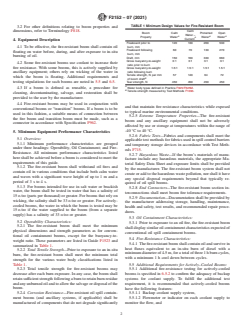
TABLE 1 Minimum Design Values for Fire-Resistant Boom
3.2 For other definitions relating to boom properties and
dimensions, refer to Terminology F818. Calm
Boom Calm Protected Open
Water –
A A A
Property Water Water Water
A
Current
4. Equipment Description
Freeboard prior to 120 130 260 530
4.1 To be effective, the fire-resistant boom shall contain oil burn, mm
Freeboard following 60 70 130 270
floating on water before, during, and after exposure to in-situ
burn, mm
burning of oil.
Draft, mm 150 160 330 660
Gross buoyancy-to-weight 3:1 3:1 3:1 3:1
4.2 Some fire-resistant booms use coolant to increase their
ratio prior to burn
fire resistance. With some booms, this is actively supplied by
Gross buoyancy-to-weight 1.5:1 1.5:1 1.5:1 1.5:1
ratio following burn
ancillary equipment; others rely on wicking of the water in
Tensile strength, N per mm 57 140 64 72
which the boom is floating. Additional requirements and
B
of boom draft
testing stipulations for such booms are noted in 5.5 and 6.5.
Tear strength, N 450 450 450 450
A
Water body types defined in Practice F625/F625M.
4.3 If a boom is defined as reusable, a procedure for
B
Tensile strength measured by Test Methods F1093.
cleaning, decontaminating, salvage, and restoration shall be
provided to the user by the manufacturer.
4.4 Fire-resistant booms may be used in conjunction with
and that maintain fire resistance characteristics while exposed
conventional booms or “transition” booms. If a boom is to be
to typical marine environmental conditions.
used in this fashion, a suitable means of connection between
5.2.5 Extreme Temperature Properties—The fire-resistant
the fire boom and transition boom must be made, such as a
boom and any ancillary equipment shall not be adversely
connector in accordance with Specification F962.
affected by use or storage at temperatures within the range of
-40 °C to 40 °C.
5. Minimum Equipment Performance Characteristics
5.2.6 Fabric Tests—Fabrics and components shall meet the
5.1 Overview:
applicable test methods for fabrics used in spill control barriers
5.1.1 Minimum performance characteristics are grouped
and temporary storage devices in accordance with Test Meth-
under three headings: Operability, Oil Containment; and Fire-
ods F715.
Resistance. All minimum performance characteristics listed
5.2.7 Hazardous Waste—If the boom’s materials of manu-
here shall be achieved before a boom is considered to meet the
facture include any hazardous materials, the appropriate Ma-
requirements of this guide.
terial Safety Data Sheet and exposure limits shall be provided
5.1.2 The fire-resistant boom shall withstand oil fires and
by the manufacturer. The fire-resistant boom system shall not
contain oil in various conditions that include both calm water
create or add to the hazardous waste pollution, nor shall it have
and waves with a significant wave height of up to 1 m and a
any special disposal requirements beyond that typically re-
period of3sto4s.
quired of oil spill booms.
5.1.3 For booms intended for use in salt water or brackish
5.2.8 End Connectors—The fire-resistant boom section in-
water, the boom shall be tested in water that has a salinity of
terconnections shall meet boom fire tolerance requirements.
15 o⁄oo (parts per thousand) or greater. For booms that rely on
5.2.9 Documentation—Documentation shall be provided by
wicking, the salinity shall be 33 o⁄oo or greater. For actively-
the manufacturer addressing storage, handling, maintenance,
cooled booms, the water in which the boom is tested may be
health and safety, test results, and recommended repair proce-
15 o⁄oo if the w
...