


ASTM E2749-23a
(Practice)Standard Practice for Measuring the Uniformity of Furnace Exposure on Test Specimens
Standard Practice for Measuring the Uniformity of Furnace Exposure on Test Specimens
SIGNIFICANCE AND USE
5.1 This practice describes a procedure to gather data intended to measure the uniformity of exposure conditions upon test specimens for the fire test methods described in Test Methods E119, E814, E1529, E1725, E1966, and E2336. The collected data from furnaces are intended to form a basis for performance requirements for the furnaces described in the referenced standards.
5.2 This practice does not include requirements for furnace performance.
5.3 In this procedure, the standardized test specimen is subjected to one or more specific sets of laboratory test conditions. If different test conditions are substituted or the end-use conditions are changed, it is not always possible by or from this procedure to predict changes in the fire-test-response characteristics measured. Therefore, the results are valid only for the fire-test-exposure conditions described in this procedure.
5.4 The attention of all persons connected with the conduct of this practice is drawn to the fact that fire testing is hazardous and that there is a possibility that harmful smoke and gases are developed during the test. There is also a possibility that mechanical and operational hazards develop during the construction of the test specimen and the disposal of the test residues. An assessment of all potential hazards and risks to health shall be made and safety precautions shall be identified and provided. Written safety instructions shall be issued. Appropriate training shall be provided to relevant personnel. Laboratory personnel shall ensure that they follow written safety instructions at all times.
SCOPE
1.1 This standard provides general principles for measuring the uniformity of the furnace exposure on specimens tested in accordance with Test Methods E119, E814, E1529, E1725, E1966, and E2336.
1.2 This practice specifies the materials and the construction requirements for a standardized test specimen used to provide a mounting surface for the instrumentation that measures furnace exposure.
1.3 The instrumentation records temperatures, pressure differentials, and oxygen content near the exposed surface of the test specimen.
1.4 The values stated in SI units are to be regarded as the standard. The units given in parentheses are for information only.
1.5 This standard is used to measure and describe the response of materials, products, or assemblies to heat and flame under controlled conditions, but does not by itself incorporate all factors required for fire hazard or fire risk assessment of the materials, products, or assemblies under actual fire conditions.
1.6 Fire testing is inherently hazardous. Adequate safeguards for personnel and property shall be employed in conducting these tests.
1.7 This standard does not purport to address all of the safety concerns, if any, associated with its use. It is the responsibility of the user of this standard to establish appropriate safety, health, and environmental practices and determine the applicability of regulatory limitations prior to use.
1.8 This international standard was developed in accordance with internationally recognized principles on standardization established in the Decision on Principles for the Development of International Standards, Guides and Recommendations issued by the World Trade Organization Technical Barriers to Trade (TBT) Committee.
General Information
- Status
- Published
- Publication Date
- 30-Nov-2023
- Technical Committee
- E05 - Fire Standards
- Drafting Committee
- E05.11 - Fire Resistance
Relations
- Replaces
ASTM E2749-23 - Standard Practice for Measuring the Uniformity of Furnace Exposure on Test Specimens - Effective Date
- 01-Dec-2023
- Effective Date
- 01-Jan-2024
- Effective Date
- 01-Dec-2023
Overview
ASTM E2749-23a: Standard Practice for Measuring the Uniformity of Furnace Exposure on Test Specimens outlines consistent procedures for collecting data on furnace exposure uniformity during fire testing. This standard supports the fire test methods referenced in ASTM E119, E814, E1529, E1725, E1966, and E2336. The results from these measurements form a crucial evidentiary basis for establishing performance requirements for furnaces used in fire resistance testing of materials and assemblies.
The practice employs a standardized test specimen equipped with instrumentation to record key parameters such as temperature, pressure differentials, and oxygen concentration near the surface exposed to the furnace environment. These controlled measurements enable laboratories and regulatory bodies to compare and verify test furnace exposure conditions, ensuring reliability and consistency in fire test results.
Key Topics
- Uniformity of Furnace Exposure: Measures how consistently heat, pressure, and oxygen content are distributed across the surface of a test specimen during standardized fire tests.
- Standardized Test Specimen: Specifies materials and construction methods for replicable mounting surfaces for instrumentation.
- Instrumentation and Measurement: Details types and placement of thermometers, probes, and sensors for recording environmental parameters at set intervals.
- Test Procedure: Describes the process of subjecting the specimen to specific time-temperature fire test curves for a minimum duration while data are logged in SI units.
- Reporting Protocols: Outlines mandatory information for test reports, including furnace details, instrumentation, data intervals, and variations in measurements.
- Safety Considerations: Emphasizes the inherent hazards of fire testing, mandating risk assessments, safety instructions, and staff training.
Applications
The ASTM E2749-23a standard is widely applicable in the field of fire resistance testing and fire protection engineering. Primary uses include:
- Calibration and Validation: Laboratories use this standard to verify and calibrate furnaces for compliance with fire testing standards, ensuring exposure conditions meet required specifications.
- Comparative Testing: Evaluating the performance of different furnace systems or configurations via uniformity measurements, supporting product certification and research.
- Quality Assurance: Industries engaged in developing or certifying fire-rated construction materials, firestops, or barrier systems rely on uniformity data to verify the repeatability of test outcomes.
- Regulatory Compliance: Helps facilities meet regulatory and code requirements for fire testing by demonstrating controlled and documented furnace exposure.
- Model Development: Provides baseline data for developing and validating fire protection engineering models and further research into material response under uniform fire exposures.
Related Standards
Several ASTM and ISO standards intersect with the practice described in ASTM E2749-23a, including:
- ASTM E119: Fire Tests of Building Construction and Materials
- ASTM E814: Fire Tests of Penetration Firestop Systems
- ASTM E1529: Effects of Large Hydrocarbon Pool Fires on Structural Members and Assemblies
- ASTM E1725: Fire Tests of Fire-Resistive Barrier Systems for Electrical System Components
- ASTM E1966: Fire-Resistive Joint Systems
- ASTM E2336: Fire Resistive Grease Duct Enclosure Systems
- ISO 834-2: Fire resistance tests – Elements of building construction – Guide to measuring uniformity of furnace exposure
These related standards ensure harmonization across fire testing methods, providing complementary guidelines for furnace performance, fire test procedure, and exposure measurement.
Keywords: uniformity of furnace exposure, fire resistance testing, furnace exposure conditions, test specimen instrumentation, fire test laboratory, ASTM E119, oxygen content measurement, pressure differential, building materials fire testing, fire safety standards.
Buy Documents
ASTM E2749-23a - Standard Practice for Measuring the Uniformity of Furnace Exposure on Test Specimens
REDLINE ASTM E2749-23a - Standard Practice for Measuring the Uniformity of Furnace Exposure on Test Specimens
Get Certified
Connect with accredited certification bodies for this standard

NSF International
Global independent organization facilitating standards development and certification.

CIS Institut d.o.o.
Personal Protective Equipment (PPE) certification body. Notified Body NB-2890 for EU Regulation 2016/425 PPE.

Kiwa BDA Testing
Building and construction product certification.
Sponsored listings
Frequently Asked Questions
ASTM E2749-23a is a standard published by ASTM International. Its full title is "Standard Practice for Measuring the Uniformity of Furnace Exposure on Test Specimens". This standard covers: SIGNIFICANCE AND USE 5.1 This practice describes a procedure to gather data intended to measure the uniformity of exposure conditions upon test specimens for the fire test methods described in Test Methods E119, E814, E1529, E1725, E1966, and E2336. The collected data from furnaces are intended to form a basis for performance requirements for the furnaces described in the referenced standards. 5.2 This practice does not include requirements for furnace performance. 5.3 In this procedure, the standardized test specimen is subjected to one or more specific sets of laboratory test conditions. If different test conditions are substituted or the end-use conditions are changed, it is not always possible by or from this procedure to predict changes in the fire-test-response characteristics measured. Therefore, the results are valid only for the fire-test-exposure conditions described in this procedure. 5.4 The attention of all persons connected with the conduct of this practice is drawn to the fact that fire testing is hazardous and that there is a possibility that harmful smoke and gases are developed during the test. There is also a possibility that mechanical and operational hazards develop during the construction of the test specimen and the disposal of the test residues. An assessment of all potential hazards and risks to health shall be made and safety precautions shall be identified and provided. Written safety instructions shall be issued. Appropriate training shall be provided to relevant personnel. Laboratory personnel shall ensure that they follow written safety instructions at all times. SCOPE 1.1 This standard provides general principles for measuring the uniformity of the furnace exposure on specimens tested in accordance with Test Methods E119, E814, E1529, E1725, E1966, and E2336. 1.2 This practice specifies the materials and the construction requirements for a standardized test specimen used to provide a mounting surface for the instrumentation that measures furnace exposure. 1.3 The instrumentation records temperatures, pressure differentials, and oxygen content near the exposed surface of the test specimen. 1.4 The values stated in SI units are to be regarded as the standard. The units given in parentheses are for information only. 1.5 This standard is used to measure and describe the response of materials, products, or assemblies to heat and flame under controlled conditions, but does not by itself incorporate all factors required for fire hazard or fire risk assessment of the materials, products, or assemblies under actual fire conditions. 1.6 Fire testing is inherently hazardous. Adequate safeguards for personnel and property shall be employed in conducting these tests. 1.7 This standard does not purport to address all of the safety concerns, if any, associated with its use. It is the responsibility of the user of this standard to establish appropriate safety, health, and environmental practices and determine the applicability of regulatory limitations prior to use. 1.8 This international standard was developed in accordance with internationally recognized principles on standardization established in the Decision on Principles for the Development of International Standards, Guides and Recommendations issued by the World Trade Organization Technical Barriers to Trade (TBT) Committee.
SIGNIFICANCE AND USE 5.1 This practice describes a procedure to gather data intended to measure the uniformity of exposure conditions upon test specimens for the fire test methods described in Test Methods E119, E814, E1529, E1725, E1966, and E2336. The collected data from furnaces are intended to form a basis for performance requirements for the furnaces described in the referenced standards. 5.2 This practice does not include requirements for furnace performance. 5.3 In this procedure, the standardized test specimen is subjected to one or more specific sets of laboratory test conditions. If different test conditions are substituted or the end-use conditions are changed, it is not always possible by or from this procedure to predict changes in the fire-test-response characteristics measured. Therefore, the results are valid only for the fire-test-exposure conditions described in this procedure. 5.4 The attention of all persons connected with the conduct of this practice is drawn to the fact that fire testing is hazardous and that there is a possibility that harmful smoke and gases are developed during the test. There is also a possibility that mechanical and operational hazards develop during the construction of the test specimen and the disposal of the test residues. An assessment of all potential hazards and risks to health shall be made and safety precautions shall be identified and provided. Written safety instructions shall be issued. Appropriate training shall be provided to relevant personnel. Laboratory personnel shall ensure that they follow written safety instructions at all times. SCOPE 1.1 This standard provides general principles for measuring the uniformity of the furnace exposure on specimens tested in accordance with Test Methods E119, E814, E1529, E1725, E1966, and E2336. 1.2 This practice specifies the materials and the construction requirements for a standardized test specimen used to provide a mounting surface for the instrumentation that measures furnace exposure. 1.3 The instrumentation records temperatures, pressure differentials, and oxygen content near the exposed surface of the test specimen. 1.4 The values stated in SI units are to be regarded as the standard. The units given in parentheses are for information only. 1.5 This standard is used to measure and describe the response of materials, products, or assemblies to heat and flame under controlled conditions, but does not by itself incorporate all factors required for fire hazard or fire risk assessment of the materials, products, or assemblies under actual fire conditions. 1.6 Fire testing is inherently hazardous. Adequate safeguards for personnel and property shall be employed in conducting these tests. 1.7 This standard does not purport to address all of the safety concerns, if any, associated with its use. It is the responsibility of the user of this standard to establish appropriate safety, health, and environmental practices and determine the applicability of regulatory limitations prior to use. 1.8 This international standard was developed in accordance with internationally recognized principles on standardization established in the Decision on Principles for the Development of International Standards, Guides and Recommendations issued by the World Trade Organization Technical Barriers to Trade (TBT) Committee.
ASTM E2749-23a is classified under the following ICS (International Classification for Standards) categories: 13.220.50 - Fire-resistance of building materials and elements. The ICS classification helps identify the subject area and facilitates finding related standards.
ASTM E2749-23a has the following relationships with other standards: It is inter standard links to ASTM E2749-23, ASTM E176-24, ASTM E176-21ae1. Understanding these relationships helps ensure you are using the most current and applicable version of the standard.
ASTM E2749-23a is available in PDF format for immediate download after purchase. The document can be added to your cart and obtained through the secure checkout process. Digital delivery ensures instant access to the complete standard document.
Standards Content (Sample)
This international standard was developed in accordance with internationally recognized principles on standardization established in the Decision on Principles for the
Development of International Standards, Guides and Recommendations issued by the World Trade Organization Technical Barriers to Trade (TBT) Committee.
Designation: E2749 − 23a An American National Standard
Standard Practice for
Measuring the Uniformity of Furnace Exposure on Test
Specimens
This standard is issued under the fixed designation E2749; the number immediately following the designation indicates the year of
original adoption or, in the case of revision, the year of last revision. A number in parentheses indicates the year of last reapproval. A
superscript epsilon (´) indicates an editorial change since the last revision or reapproval.
1. Scope mendations issued by the World Trade Organization Technical
Barriers to Trade (TBT) Committee.
1.1 This standard provides general principles for measuring
the uniformity of the furnace exposure on specimens tested in
2. Referenced Documents
accordance with Test Methods E119, E814, E1529, E1725,
2.1 ASTM Standards:
E1966, and E2336.
C1396/C1396M Specification for Gypsum Board
1.2 This practice specifies the materials and the construction
E119 Test Methods for Fire Tests of Building Construction
requirements for a standardized test specimen used to provide
and Materials
a mounting surface for the instrumentation that measures
E176 Terminology of Fire Standards
furnace exposure.
E814 Test Method for Fire Tests of Penetration Firestop
Systems
1.3 The instrumentation records temperatures, pressure
E1529 Test Methods for Determining Effects of Large Hy-
differentials, and oxygen content near the exposed surface of
drocarbon Pool Fires on Structural Members and Assem-
the test specimen.
blies
1.4 The values stated in SI units are to be regarded as the
E1725 Test Methods for Fire Tests of Fire-Resistive Barrier
standard. The units given in parentheses are for information
Systems for Electrical System Components
only.
E1966 Test Method for Fire-Resistive Joint Systems
E2336 Test Methods for Fire Resistive Grease Duct Enclo-
1.5 This standard is used to measure and describe the
response of materials, products, or assemblies to heat and sure Systems
2.2 ISO Standard:
flame under controlled conditions, but does not by itself
incorporate all factors required for fire hazard or fire risk ISO 834-2 Fire resistance tests – Elements of building
assessment of the materials, products, or assemblies under construction – Part 2: Guide on measuring uniformity of
actual fire conditions. furnace exposure on test samples
1.6 Fire testing is inherently hazardous. Adequate safe-
3. Terminology
guards for personnel and property shall be employed in
3.1 Definitions—For definitions of terms used in this
conducting these tests.
practice, refer to Terminology E176.
1.7 This standard does not purport to address all of the
3.2 Definitions of Terms Specific to This Standard:
safety concerns, if any, associated with its use. It is the
3.2.1 effective area of the furnace opening, n—furnace
responsibility of the user of this standard to establish appro-
opening within the boundaries of the monitoring instrumenta-
priate safety, health, and environmental practices and deter-
tion.
mine the applicability of regulatory limitations prior to use.
1.8 This international standard was developed in accor-
4. Summary of Practice
dance with internationally recognized principles on standard-
4.1 This practice consists of preparing a standardized test
ization established in the Decision on Principles for the
specimen to represent test specimens described in Test Meth-
Development of International Standards, Guides and Recom-
ods E119, E814, E1529, E1725, E1966, and E2336. The
For referenced ASTM standards, visit the ASTM website, www.astm.org, or
This practice is under the jurisdiction of ASTM Committee E05 on Fire contact ASTM Customer Service at service@astm.org. For Annual Book of ASTM
Standards and is the direct responsibility of Subcommittee E05.11 on Fire Standards volume information, refer to the standard’s Document Summary page on
Resistance. the ASTM website.
Current edition approved Dec. 1, 2023. Published January 2024. Originally Available from International Organization for Standardization (ISO), ISO
approved in 2010. Last previous edition approved in 2023 as E2749 – 23. Central Secretariat, Chemin de Blandonnet 8, CP 401, 1214 Vernier, Geneva,
DOI:10.1520/E2749-23A. Switzerland, https://www.iso.org.
Copyright © ASTM International, 100 Barr Harbor Drive, PO Box C700, West Conshohocken, PA 19428-2959. United States
E2749 − 23a
standardized test specimen provides a low cost, easily con-
structed supporting construction for the mounting of instru-
mentation that measures the exposure imposed by the furnace
onto test specimens.
4.2 The standardized test specimen consists of two layers of
15.9 mm ( ⁄8 in.) thick Type X gypsum board on the surface
facing the furnace chamber attached to steel channels and a
single layer of structural panels (plywood or oriented strand
board) attached to the steel channels on the surface away from
the furnace chamber. The gypsum board provides a fire-
resistive surface for the mounting of the instrumentation. The
structural panels provide stability for the steel support chan-
nels.
4.3 Instrumentation to measure the thermal impact due to
exposure to the furnace upon the standardized test specimen is
installed at various locations on the exposed surface of the
standardized test specimen. Probes used to gather air samples
within the furnace chamber are also installed.
4.4 The standardized test specimen is exposed to the time-
temperature curve specified in referenced ASTM fire test
standards for a time period of 45 min during which time data
Dimensions in millimetres.
are recorded by the instrumentation mounted on the standard-
FIG. 1 Horizontal Standardized Test Specimen, Location of
ized test specimen.
Joists and Track Channels
4.5 The data provide a record of the conditions and unifor-
mity of the furnace exposure upon standardized test specimens.
The area bounded by the instrumentation installed on the
Appropriate training shall be provided to relevant personnel.
standardized test specimen is designated as the effective area of
Laboratory personnel shall ensure that they follow written
the furnace opening.
safety instructions at all times.
5. Significance and Use
6. Apparatus
5.1 This practice describes a procedure to gather data
6.1 The furnace(s) and restraining frame(s) used to conduct
intended to measure the uniformity of exposure conditions
tests in accordance with Test Methods E119, E814, E1529,
upon test specimens for the fire test methods described in Test
E1725, E1966, and E2336 shall be used.
Methods E119, E814, E1529, E1725, E1966, and E2336. The
collected data from furnaces are intended to form a basis for
6.2 Standardized Test Specimen:
performance requirements for the furnaces described in the
6.2.1 Materials—The materials used to construct the stan-
referenced standards.
dardized test specimen shall consist of the following: gypsum
board, structural panels, cold-formed steel supports and fasten-
5.2 This practice does not include requirements for furnace
ers.
performance.
6.2.1.1 The gypsum board shall be minimum 15.9 mm
5.3 In this procedure, the standardized test specimen is
( ⁄8 in.) thick complying with the requirements of Type X as
subjected to one or more specific sets of laboratory test
defined in Specification C1396/C1396M.
conditions. If different test conditions are substituted or the
6.2.1.2 The structural panels shall be minimum 18 mm
end-use conditions are changed, it is not always possible by or
(nominal ⁄4 in.) thick. Typical materials include plywood and
from this procedure to predict changes in the fire-test-response
oriented strand boards.
characteristics measured. Therefore, the results are valid only
6.2.1.3 The cold-formed steel joists for horizontal speci-
for the fire-test-exposure conditions described in this proce-
mens shall be fabricated from minimum 1.4 mm thick
dure.
(0.055 in.) steel. The cold formed steel joists shall be “C”
5.4 The attention of all persons connected with the conduct shaped having a minimum depth of 240 mm (9 ⁄2 in.), a
of this practice is drawn to the fact that fire testing is hazardous minimum flange width of 40 mm (1 ⁄8 in.) and a minimum lip
and that there is a possibility that harmful smoke and gases are length of 12 mm ( ⁄2 in.).
developed during the test. There is also a possibility that 6.2.1.4 The cold-formed steel wall studs for vertical speci-
mechanical and operational hazards develop during the con- mens shall be fabricated from minimum 0.9 mm thick
struction of the test specimen and the disposal of the test (0.035 in.) steel. The cold-formed steel wall studs shall be “C”
residues. An assessment of all potential hazards and risks to shaped having a minimum depth of 90 mm (3 ⁄2 in.), a
health shall be made and safety precautions shall be identified minimum flange width of 30 mm (1 ⁄4 in.) and a minimum
and provided. Written safety instructions shall be issued. folded back return flange legs of 5 mm ( ⁄4 in.).
E2749 − 23a
Dimensions in millimetres.
FIG. 2 Horizontal Standardized Test Specimen, Location of Inner Layer of Gypsum Board and Structural Panels
6.2.1.5 The cold-formed steel track channels for the hori- 6.2.2.4 The exposed layer of gypsum board shall be at-
zontal and vertical specimens shall be “C” shaped having a tached to the joists with steel screws spaced a maximum
depth compatible with the joists or wall studs being used. 200 mm (7 ⁄8 in.) on center along each joist and shall be spaced
6.2.1.6 Steel fasteners used to attach the gypsum board to 100 mm (4 in.) from the screws used to attach the inner layer.
3 5
the studs and joists shall be designed for the attachment of A distance of 10 mm to 15 mm ( ⁄8 in. to ⁄8 in.) shall be
gypsum board to steel supports. Typical screws have a thread provided between the screws and the edges of the gypsum
1 3
diameter of 5 mm ( ⁄4 in.) and a head diameter of 8 mm ( ⁄8 in.). board.
The steel fasteners used to attach the inner layer shall have a
NOTE 2—The exposed layer, or outside layer, of gypsum board is in
minimum length of 25 mm (1 in.). The steel fasteners used to
contact with the inner layer of gypsum board.
attach the exposed layer shall have a minimum length of
5 6.2.2.5 The structural panels shall be attached to the joists
40 mm (1 ⁄8 in.).
with steel screws spaced a maximum of 150 mm (5 ⁄8 in.) on
6.2.1.7 Fasteners used to attach the structural panels to the
center along each joist. A distance of 10 mm to 15 mm ( ⁄8 in.
studs and joists shall be designed for the attachment of the
to ⁄8 in.) shall be provided between the screws and the edges of
panels to steel supports.
the structural panels. Holes are permissible in the structural
6.2.2 Construction Method—Horizontal Standardized Test
panels to facilitate the installation of the instrumentation.
Specimen.
6.2.3 Construction Method—Vertical Standardized Test
6.2.2.1 The construction details with respect to the location
Specimen:
of the joists, track channels, gypsum board and the structural
panels are shown in Figs. 1-3. The construction details assume
6.2.3.1 The construction details with respect to the location
a furnace opening of 4.2 m by 4.2 m (13 ft 9 ⁄8 in. by 13 ft of the wall studs, track channels, gypsum board and the
9 ⁄8 in.). Modifications to dimensions are necessary for other structural panels are shown in Figs. 4-6. The construction
furnace openings. details assume a furnace opening of 3.1 m by 3.1 m (10 ft 2 in.
6.2.2.2 The steel joists shall be spaced 300 mm to 450 mm by 10 ft 2 in.). Modifications to dimensions are necessary for
7 3
(11 ⁄8 in. to 17 ⁄4 in.) on center. The joists are inserted into the other furnace openings.
track channels. The use of steel clip angles are permissible to
6.2.3.2 The wall studs shall be spaced 300 mm to 450 mm
7 3
facilitate the attachment of the joists to the track channels.
(11 ⁄8 in. to 17 ⁄4 in.) on center. The studs are inserted into track
6.2.2.3 The inner layer of gypsum board shall be attached to
channels. The use of steel clip angles are permissible to
the joists with the steel screws spaced a maximum of 200 mm
facilitate the attachment of the studs to the track channels.
(7 ⁄8 in.) on center along each joist. A distance of 10 mm to
6.2.3.3 The inner layer of gypsum board shall be attached to
3 5
15 mm ( ⁄8 in. to ⁄8 in.) shall be provided between the screws
the studs with the steel screws spaced a maximum of 200 mm
and the edges of the gypsum board. 7
(7 ⁄8 in.) on center along each stud. A distance of 10 mm to
3 5
15 mm ( ⁄8 in. to ⁄8 in.) shall be provided between the screws
NOTE 1—The inner layer, or base layer, of gypsum board is in contact
with the joists. and the edges of the gypsum board.
E2749 − 23a
Dimensions in millimetres.
FIG. 3 Horizontal Standardized Test Specimen, Location of Outer Layer of Gypsum Board
NOTE 4—The exposed layer, or outside layer, of gypsum board is in
contact with the inner layer of gypsum board.
6.2.3.5 The structural panels shall be attached to the studs
with steel screws spaced a maximum of 150 mm (5 ⁄8 in.) on
center along each stud. A distance of 10 mm to 15 mm ( ⁄8 in.
to ⁄8 in.) shall be provided between the screws and the edges
of the structural panels. Holes are permissible in the structural
panels to facilitate the installation of the instrumentation.
6.3 Furnace Limitations—Furnaces with dedicated
applications, such as testing of
...
This document is not an ASTM standard and is intended only to provide the user of an ASTM standard an indication of what changes have been made to the previous version. Because
it may not be technically possible to adequately depict all changes accurately, ASTM recommends that users consult prior editions as appropriate. In all cases only the current version
of the standard as published by ASTM is to be considered the official document.
Designation: E2749 − 23 E2749 − 23a An American National Standard
Standard Practice for
Measuring the Uniformity of Furnace Exposure on Test
Specimens
This standard is issued under the fixed designation E2749; the number immediately following the designation indicates the year of
original adoption or, in the case of revision, the year of last revision. A number in parentheses indicates the year of last reapproval. A
superscript epsilon (´) indicates an editorial change since the last revision or reapproval.
1. Scope
1.1 This standard provides general principles for measuring the uniformity of the furnace exposure on specimens tested in
accordance with Test Methods E119, E814, E1529, E1725, E1966, and E2336.
1.2 This practice specifies the materials and the construction requirements for a standardized test specimen used to provide a
mounting surface for the instrumentation that measures furnace exposure.
1.3 The instrumentation records temperatures, pressure differentials, and oxygen content near the exposed surface of the test
specimen.
1.4 The values stated in SI units are to be regarded as the standard. The units given in parentheses are for information only.
1.5 This standard is used to measure and describe the response of materials, products, or assemblies to heat and flame under
controlled conditions, but does not by itself incorporate all factors required for fire hazard or fire risk assessment of the materials,
products, or assemblies under actual fire conditions.
1.6 Fire testing is inherently hazardous. Adequate safeguards for personnel and property shall be employed in conducting these
tests.
1.7 This standard does not purport to address all of the safety concerns, if any, associated with its use. It is the responsibility
of the user of this standard to establish appropriate safety, health, and environmental practices and determine the applicability of
regulatory limitations prior to use.
1.8 This international standard was developed in accordance with internationally recognized principles on standardization
established in the Decision on Principles for the Development of International Standards, Guides and Recommendations issued
by the World Trade Organization Technical Barriers to Trade (TBT) Committee.
2. Referenced Documents
2.1 ASTM Standards:
C1396/C1396M Specification for Gypsum Board
E119 Test Methods for Fire Tests of Building Construction and Materials
This practice is under the jurisdiction of ASTM Committee E05 on Fire Standards and is the direct responsibility of Subcommittee E05.11 on Fire Resistance.
Current edition approved Oct. 1, 2023Dec. 1, 2023. Published October 2023January 2024. Originally approved in 2010. Last previous edition approved in 20192023 as
E2749 – 15a (2019).E2749 – 23. DOI:10.1520/E2749-23.DOI:10.1520/E2749-23A.
For referenced ASTM standards, visit the ASTM website, www.astm.org, or contact ASTM Customer Service at service@astm.org. For Annual Book of ASTM Standards
volume information, refer to the standard’s Document Summary page on the ASTM website.
Copyright © ASTM International, 100 Barr Harbor Drive, PO Box C700, West Conshohocken, PA 19428-2959. United States
E2749 − 23a
E176 Terminology of Fire Standards
E814 Test Method for Fire Tests of Penetration Firestop Systems
E1529 Test Methods for Determining Effects of Large Hydrocarbon Pool Fires on Structural Members and Assemblies
E1725 Test Methods for Fire Tests of Fire-Resistive Barrier Systems for Electrical System Components
E1966 Test Method for Fire-Resistive Joint Systems
E2336 Test Methods for Fire Resistive Grease Duct Enclosure Systems
2.2 ISO Standard:
ISO 834-2 Fire resistance tests – Elements of building construction – Part 2: Guide on measuring uniformity of furnace exposure
on test samples
3. Terminology
3.1 Definitions—For definitions of terms used in this practice, refer to Terminology E176.
3.2 Definitions of Terms Specific to This Standard:
3.2.1 effective area of the furnace opening, n—furnace opening within the boundaries of the monitoring instrumentation.
4. Summary of Practice
4.1 This practice consists of preparing a standardized test specimen to represent test specimens described in Test Methods E119,
E814, E1529, E1725, E1966, and E2336. The standardized test specimen provides a low cost, easily constructed supporting
construction for the mounting of instrumentation that measures the exposure imposed by the furnace onto test specimens.
4.2 The standardized test specimen consists of two layers of 15.9 mm ( ⁄8 in.) thick Type X gypsum board on the surface facing
the furnace chamber attached to steel channels and a single layer of structural panels (plywood or oriented strand board) attached
to the steel channels on the surface away from the furnace chamber. The gypsum board provides a fire-resistive surface for the
mounting of the instrumentation. The structural panels provide stability for the steel support channels.
4.3 Instrumentation to measure the thermal impact due to exposure to the furnace upon the standardized test specimen is installed
at various locations on the exposed surface of the standardized test specimen. Probes used to gather air samples within the furnace
chamber are also installed.
4.4 The standardized test specimen is exposed to the time-temperature curve specified in referenced ASTM fire test standards for
a time period of 45 min during which time data are recorded by the instrumentation mounted on the standardized test specimen.
4.5 The data provide a record of the conditions and uniformity of the furnace exposure upon standardized test specimens. The area
bounded by the instrumentation installed on the standardized test specimen is designated as the effective area of the furnace
opening.
5. Significance and Use
5.1 This practice describes a procedure to gather data intended to measure the uniformity of exposure conditions upon test
specimens for the fire test methods described in Test Methods E119, E814, E1529, E1725, E1966, and E2336. The collected data
from furnaces are intended to form a basis for performance requirements for the furnaces described in the referenced standards.
5.2 This practice does not include requirements for furnace performance.
5.3 In this procedure, the standardized test specimen is subjected to one or more specific sets of laboratory test conditions. If
different test conditions are substituted or the end-use conditions are changed, it is not always possible by or from this procedure
to predict changes in the fire-test-response characteristics measured. Therefore, the results are valid only for the fire-test-exposure
conditions described in this procedure.
Available from International Organization for Standardization (ISO), ISO Central Secretariat, Chemin de Blandonnet 8, CP 401, 1214 Vernier, Geneva, Switzerland,
https://www.iso.org.
E2749 − 23a
Dimensions in millimetres.
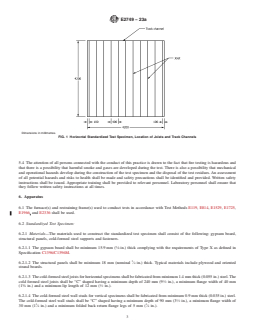
FIG. 1 Horizontal Standardized Test Specimen, Location of Joists and Track Channels
5.4 The attention of all persons connected with the conduct of this practice is drawn to the fact that fire testing is hazardous and
that there is a possibility that harmful smoke and gases are developed during the test. There is also a possibility that mechanical
and operational hazards develop during the construction of the test specimen and the disposal of the test residues. An assessment
of all potential hazards and risks to health shall be made and safety precautions shall be identified and provided. Written safety
instructions shall be issued. Appropriate training shall be provided to relevant personnel. Laboratory personnel shall ensure that
they follow written safety instructions at all times.
6. Apparatus
6.1 The furnace(s) and restraining frame(s) used to conduct tests in accordance with Test Methods E119, E814, E1529, E1725,
E1966, and E2336 shall be used.
6.2 Standardized Test Specimen:
6.2.1 Materials—The materials used to construct the standardized test specimen shall consist of the following: gypsum board,
structural panels, cold-formed steel supports and fasteners.
6.2.1.1 The gypsum board shall be minimum 15.9 mm ( ⁄8 in.) thick complying with the requirements of Type X as defined in
Specification C1396/C1396M.
6.2.1.2 The structural panels shall be minimum 18 mm (nominal ⁄4 in.) thick. Typical materials include plywood and oriented
strand boards.
6.2.1.3 The cold-formed steel joists for horizontal specimens shall be fabricated from minimum 1.4 mm thick (0.055 in.) steel. The
cold formed steel joists shall be “C” shaped having a minimum depth of 240 mm (9 ⁄2 in.), a minimum flange width of 40 mm
5 1
(1 ⁄8 in.) and a minimum lip length of 12 mm ( ⁄2 in.).
6.2.1.4 The cold-formed steel wall studs for vertical specimens shall be fabricated from minimum 0.9 mm thick (0.035 in.) steel.
The cold-formed steel wall studs shall be “C” shaped having a minimum depth of 90 mm (3 ⁄2 in.), a minimum flange width of
1 1
30 mm (1 ⁄4 in.) and a minimum folded back return flange legs of 5 mm ( ⁄4 in.).
E2749 − 23a
Dimensions in millimetres.
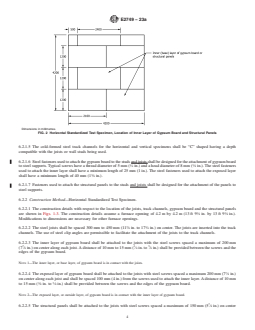
FIG. 2 Horizontal Standardized Test Specimen, Location of Inner Layer of Gypsum Board and Structural Panels
6.2.1.5 The cold-formed steel track channels for the horizontal and vertical specimens shall be “C” shaped having a depth
compatible with the joists or wall studs being used.
6.2.1.6 Steel fasteners used to attach the gypsum board to the studs and joists shall be designed for the attachment of gypsum board
1 3
to steel supports. Typical screws have a thread diameter of 5 mm ( ⁄4 in.) and a head diameter of 8 mm ( ⁄8 in.). The steel fasteners
used to attach the inner layer shall have a minimum length of 25 mm (1 in.). The steel fasteners used to attach the exposed layer
shall have a minimum length of 40 mm (1 ⁄8 in.).
6.2.1.7 Fasteners used to attach the structural panels to the studs and joists shall be designed for the attachment of the panels to
steel supports.
6.2.2 Construction Method—Horizontal Standardized Test Specimen.
6.2.2.1 The construction details with respect to the location of the joists, track channels, gypsum board and the structural panels
3 3
are shown in Figs. 1-3. The construction details assume a furnace opening of 4.2 m by 4.2 m (13 ft 9 ⁄8 in. by 13 ft 9 ⁄8 in.).
Modifications to dimensions are necessary for other furnace openings.
7 3
6.2.2.2 The steel joists shall be spaced 300 mm to 450 mm (11 ⁄8 in. to 17 ⁄4 in.) on center. The joists are inserted into the track
channels. The use of steel clip angles are permissible to facilitate the attachment of the joists to the track channels.
6.2.2.3 The inner layer of gypsum board shall be attached to the joists with the steel screws spaced a maximum of 200 mm
7 3 5
(7 ⁄8 in.) on center along each joist. A distance of 10 mm to 15 mm ( ⁄8 in. to ⁄8 in.) shall be provided between the screws and the
edges of the gypsum board.
NOTE 1—The inner layer, or base layer, of gypsum board is in contact with the joists.
6.2.2.4 The exposed layer of gypsum board shall be attached to the joists with steel screws spaced a maximum 200 mm (7 ⁄8 in.)
on center along each joist and shall be spaced 100 mm (4 in.) from the screws used to attach the inner layer. A distance of 10 mm
3 5
to 15 mm ( ⁄8 in. to ⁄8 in.) shall be provided between the screws and the edges of the gypsum board.
NOTE 2—The exposed layer, or outside layer, of gypsum board is in contact with the inner layer of gypsum board.
6.2.2.5 The structural panels shall be attached to the joists with steel screws spaced a maximum of 150 mm (5 ⁄8 in.) on center
E2749 − 23a
Dimensions in millimetres.
FIG. 3 Horizontal Standardized Test Specimen, Location of Outer Layer of Gypsum Board
3 5
along each joist. A distance of 10 mm to 15 mm ( ⁄8 in. to ⁄8 in.) shall be provided between the screws and the edges of the
structural panels. Holes are permissible in the structural panels to facilitate the installation of the instrumentation.
6.2.3 Construction Method—Vertical Standardized Test Specimen:
6.2.3.1 The construction details with respect to the location of the wall studs, track channels, gypsum board and the structural
panels are shown in Figs. 4-6. The construction details assume a furnace opening of 3.1 m by 3.1 m (10 ft 2 in. by 10 ft 2 in.).
Modifications to dimensions are necessary for other furnace openings.
7 3
6.2.3.2 The wall studs shall be spaced 300 mm to 450 mm (11 ⁄8 in. to 17 ⁄4 in.) on center. The studs are inserted into track
channels. The use of steel clip angles are permissible to facilitate the attachment of the studs to the track channels.
6.2.3.3 The inner layer of gypsum board shall be attached to the studs with the steel screws spaced a maximum of 200 mm (7 ⁄8
3 5
in.) on center along each stud. A distance of 10 mm to 15 mm ( ⁄8 in. to ⁄8 in.) shall be provided between the screws and the edges
of the gypsum board.
NOTE 3—The inner layer, or base layer, of gypsum board is in contact with the studs.
6.2.3.4 The exposed layer of gypsum board shall be attached to the studs with steel screws spaced a maximum 200 mm (7 ⁄8 in.)
on center along each stud and shall be spaced 100 mm (4 in.) from the screws used to attach the inner layer. A distance of 10 mm
3 5
to 15 mm ( ⁄8 in. to ⁄8 in.) shall be provided between the screws and the edges of the gypsum board.
NOTE 4—The exposed layer, or outside layer, of gypsum board is in contact with the inner layer of gypsum board.
6.2.3.5 Th
...
Questions, Comments and Discussion
Ask us and Technical Secretary will try to provide an answer. You can facilitate discussion about the standard in here.
Loading comments...