


ISO 11737-1:1995
(Main)Sterilization of medical devices — Microbiological methods — Part 1: Estimation of population of microorganisms on products
Sterilization of medical devices — Microbiological methods — Part 1: Estimation of population of microorganisms on products
Specifies general criteria for the estimation of the population of viable microorganisms on medical devices or packages. Not applicable for the enumeration or identification of viral contamination and to the microbiological monitoring of the environment in which medical devices are manufactured.
Stérilisation des dispositifs médicaux — Méthodes microbiologiques — Partie 1: Estimation de la population de micro-organismes sur les produits
General Information
- Status
- Withdrawn
- Publication Date
- 29-Nov-1995
- Withdrawal Date
- 29-Nov-1995
- Technical Committee
- ISO/TC 198 - Sterilization of health care products
- Drafting Committee
- ISO/TC 198/WG 8 - Microbiological methods
- Current Stage
- 9599 - Withdrawal of International Standard
- Start Date
- 20-Mar-2006
- Completion Date
- 12-Feb-2026
Relations
- Effective Date
- 15-Apr-2008
Get Certified
Connect with accredited certification bodies for this standard

BSI Group
BSI (British Standards Institution) is the business standards company that helps organizations make excellence a habit.

TÜV Rheinland
TÜV Rheinland is a leading international provider of technical services.

TÜV SÜD
TÜV SÜD is a trusted partner of choice for safety, security and sustainability solutions.
Sponsored listings
Frequently Asked Questions
ISO 11737-1:1995 is a standard published by the International Organization for Standardization (ISO). Its full title is "Sterilization of medical devices — Microbiological methods — Part 1: Estimation of population of microorganisms on products". This standard covers: Specifies general criteria for the estimation of the population of viable microorganisms on medical devices or packages. Not applicable for the enumeration or identification of viral contamination and to the microbiological monitoring of the environment in which medical devices are manufactured.
Specifies general criteria for the estimation of the population of viable microorganisms on medical devices or packages. Not applicable for the enumeration or identification of viral contamination and to the microbiological monitoring of the environment in which medical devices are manufactured.
ISO 11737-1:1995 is classified under the following ICS (International Classification for Standards) categories: 07.100.10 - Medical microbiology; 11.080.01 - Sterilization and disinfection in general. The ICS classification helps identify the subject area and facilitates finding related standards.
ISO 11737-1:1995 has the following relationships with other standards: It is inter standard links to ISO 11737-1:2006. Understanding these relationships helps ensure you are using the most current and applicable version of the standard.
ISO 11737-1:1995 is available in PDF format for immediate download after purchase. The document can be added to your cart and obtained through the secure checkout process. Digital delivery ensures instant access to the complete standard document.
Standards Content (Sample)
INTERNATIONAL ISO
STANDARD 117374
First edition
1995-12-01
Sterilization of medical devices -
Microbiological methods -
Part 1:
Estimation of population of microorganisms on
products
St&ilisa tion des dispositifs medicaux - M&hodes microbiologiques -
Partie 7: Estima tion de Ia popula tion de micro-organismes sur les produits
Reference number
ISO 11737-1 :1995(E)
ISO 11737=1:1995(E)
Page
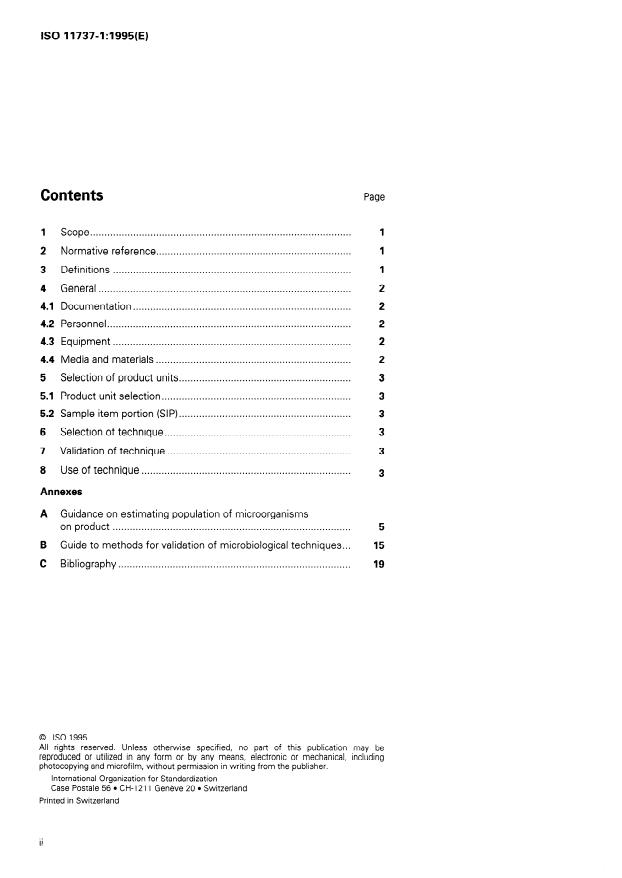
Contents
1 Scope . . . . . . . . . . . . . . . . . . . . . . . . . . . . . . . . . . . . . . . . . . . . . . . . . . . . . . . . . . . . . . . . . . . .~.~.
2 Normative reference . . . . . . . . . . . .*.
3 Definitions . . . . . . . . . . . . . . . . . . . . . . . . . . . . . . . . . . . . . . . . . . . . . . . . . . . . . . . . . . . . . . . . . . . . . . . . . . . . .*.
4 General . . . . . . . . . . . . . . . . . . . . . . . . . . . . . . . . . . . . . . . . . . . . . . . . . . . . . . . . . . . . . . . . . . . . . . . . . . . . . . .“.
4.1 Documentation . . . . . . . . . . . . . . . . . . . . . . . . . . . . . . . . . . . . . . . . . . . . . . . . . . . . . . . . . . . . . . . . . . . . . . . . . . . .
4.2 Personne1 . . . . . . . . . . . . . . . . . . . . . . . . . . . . . . . . . . . . . . . . . . . . . . . . . . . . . . . . . . . . . . . . . . . . . . . . . . . . . . . . . . . . .
4.3 Equipment . . . . . . . . . . . . . . . . . . . . . . . . . . . . . . . . . . . . . . . . . . . . . . . . . . . . . . . . . . . . . . . . . . . . . . . . . . . . . . . . . . .
4.4 Media and materials . . . . . . . . . . . . . . . . . . . . . . . . . . . . . . . . . . . . . . . . . . . . . . . . . . . . . .*.
. . . . . . . . . . . . . . . . . . . . . . . .*.*.*.*. 3
5 Selection of product units
5.1 Product unit selection . . . . . . . . . . . . . . . . . . . . . . . . . . . . . . . . . . . . . . . . . . . . . . . . . . . . . . . . . . . . . . . . . .
5.2 Sample item Portion (SIP) . . . . . . . . . . . . . . . . . . . . . . . . . . . . . . . . . . . . . . . . . . . . . . . . . . . . . . . . . . . .
. . . . . . . . . . . . . . . . . . . . . . . . . . . . . . . . . . . . . . . . . . . . . . . . . . . . . . . . . . . . . . . . . 3
6 Selection of technique
7 Validation of technique . . . . . . . . . . . . . . . . . . . . . . . . . . . . . . . . . . . . . . . . . . . . . . . . . . . . . . . . . . . . . . . .
8 Use of technique . . . . . . . . . . . . . . . . . . . . . . . . . . . . . . . . . . . . . . . . . . . . . . . . . . . . . . . . . . . . . . . . . . . . . . . . .
Annexes
A Guidance on estimating population of microorganisms
on product . . . . . . . . . . . . . . . . . . . . . . . . . . . . . . . . . . . . . . . . . . . . . . . . . . . . . . . . . . . . . . . . . . . . . . . . . . . . . . . . . . . 5
B Guide to methods for Validation of microbiological techniques.
. . . . . . . . . . . . . . . . . . . . . . . . . . . . . . . . . . . . . . . . . . . . . . . . . . . . . . . . . . . . . . . . . . . . . . . . . . . . . . . . . 19
C Bibliography
0 ISO 1995
All rights reserved. Unless otherwise specified, no part of this publication may be
reproduced or utilized in any form or by any means, electronie or mechanical, including
photocopying and microfilm, without Permission in writing from the publisher.
International Organization for Standardization
Case Postale 56 l CH-l 211 Geneve 20 l Switzerland
Printed in Switzerland
@ ISO ISO 11737=1:1995(E)
Foreword
ISO (the International Organization for Standardization) is a worldwide
federation of national Standards bodies (ISO member bodies). The work of
preparing International Standards is normally carried out through ISO
technical committees. Esch member body interested in a subject for
which a technical committee has been established has the right to be
represented on that committee. International organizations, governmental
and non-governmental, in liaison with ISO, also take part in the work. ISO
collaborates closely with the International Electrotechnical Commission
(1 EC) on all matters of electrotechnical standardization.
Draft International Standards adopted by the technical committees are
circulated to the member bodies for voting. Publication as an International
Standard requires approval by at least 75 % of the member bodies casting
a vote.
International Standard ISO 11737-1 was prepared by Technical Committee
lSO/TC 198, Sterikzation of health care products, and is based on three
European Standard drafts prepared by Working Group 5 of CEN Technical
Committee 204, Sterilization of medical devices.
ISO 11737 consists of the following Parts, under the general title Sterili-
zation of medical devices - Microbiological methods:
- Part 1: Estimation of population of microorganisms on products
- Part 2: Tests of sterility performed in the Validation of a s terilization
process
Additional Parts will be published later.
Annexes A, B and C of this part of ISO 11737 are for information only.
. . .
Ill
ISO 11737=1:1995(E) 0 ISO
Introduction
A sterile product item is one which is free of viable microorganisms. The
International Standards for sterilization of health care products require,
when it is necessary to supply a sterile product item, that adventitious
microbiological contamination of a health care product from all sources is
minimized by all practical means. Even so, product items produced under
Standard manufacturing conditions in accordance with the requirements
for quality Systems for health care products may, Prior to sterilization, have
microorganisms on them, albeit in low numbers. Such product items are
nonsterile. The purpose of sterilization processing is to inactivate the
microbiological contaminants and thereby transform the nonsterile items
into sterile ones.
The inactivation of a pure culture of microorganisms by physical and/or
Chemical agents used to sterilize health care products often approximates
to an exponential relationship; inevitably this means that there is always a
finite probability that a microorganism may survive regardless of the extent
of treatment applied. For a given treatment, the probability of survival is
determined by the number and resistance of microorganisms and by the
environment in which the organisms exist during treatment. lt follows that
the sterility of any one item in a population of items subjected to steriliz-
ation processing cannot be guaranteed and the sterility of the processed
population of items has to be defined in terms of the probability of the
existente of a nonsterile item in that population.
Requirements for the quality System for the design/development, pro-
duction, installation and servicing of health care products are given in ISO
9001 and ISO 9002. The ISO 9000 series of International Standards desig-
nates certain processes used in manufacture as “special” if the results
cannot be fully verified by subsequent inspection and testing of the prod-
uct. Sterilization is an example of a special process because process ef-
ficiency cannot be verified by inspection and testing of the product. For
this reason, sterilization processes have to be validated before Lase, the
Performance of each process monitored routinely and the equipment
properly maintained.
International Standards specifying procedures for the Validation and routine
control of the processes used for the sterilization of health care products
have been prepared (see ISO 11134, ISO 11135 and ISO 11137). l-low-
ever, it is important to be aware that exposure to a properly validated and
accurately controlled sterilization process is not the only factor associated
with the Provision of assurance that the product is sterile and, in this
respect, suitable for its intended use. Indeed for the effective Validation
and routine control of a sterilization process, it is also important to be
aware of the microbiological challenge which is presented to that process,
in terms of number, identities and properties of microorganisms.
The presterilization microbiological contamination is the sum of contri-
butions from a number of sources; therefore attention also has to be given
to factors including the microbiological Status of incoming raw materials
and/or components and their subsequent storage, and to the control of the
environment in which the product is manufactured, assembled and
packaged.
ISO 11737=1:1995(E)
@ ISO
The term “bioburden” is commonly used to describe the population of vi-
able microorganisms present on a material or product. lt is not possible to
determine the exact bioburden and therefore, in practice, a viable count is
determined using a defined technique. Validation exercises are performed
to relate this viable count to a bioburden estimate on a material or product
by the application of a correction factor.
The knowledge of the bioburden results from the investigation of micro-
biological contamination levels. Bioburden estimations are performed in a
number of separate situations as part of the:
a) Validation and revalidation of a sterilization process for which the ex-
tent of exposure to sterilizing conditions is to be directly related to the
bioburden estimate;
b) Validation and revalidation of a sterilization process for which the ex-
tent of exposure to sterilizing conditions is not to be directly related to
the bioburden estimate, but for which a general knowledge of biobur-
den is required;
routine control of the manufacturing process for a sterile product for
d
which sterilization Validation was as stated in a) above;
control of the manufactu ring process for a ster ile product for
routine
d)
which s #terilization Validation was as stated in b) above.
Bioburden estimations may also be employed as part of the quality System
for the manufacture of health care products as an element of:
an Overall environmental monitoring Programme;
e)
the assessment of the efficiency of a cleaning process in removing
microorganisms;
g) the process monitoring for products which are supplied nonsterile but
for which the microbiological cleanliness is specified;
the monitoring of raw materials, components or packaging.
hl
The bioburden estimation of a medical device generally consists of four
distinct stages:
removal of microorganisms from the medical device;
transfer of these isolated microorganisms to culture conditions;
enumeration of the microorganisms with subsequent characterization;
- application of the correction facto&) determined during bioburden re-
covery studies in Order to calculate the bioburden estimate from the
presterilization count.
lt is not possible to define a Single technique to be used for the removal of
microorganisms in all situations because of the wide variety of materials
for construction and design of health care products. Furthermore, the
selection of conditions for enumeration will be influenced by the types of
contaminant which may be anticipated.
This part of ISO 11737 therefore specifies the general criteria to be applied
to the estimation of bioburden. The annexes of this part of ISO 11737
provide additional guidance (annex A) and methods which may be used for
validating the technique (annex B).
This page intentionally left blank
ISO 11737=1:1995(E)
INTERNATIONAL STANDARD @ ISO
Sterilization of medical devices - Microbiological methods -
Part 1:
Estimation of population of microorganisms on products
Members of the IEC and ISO maintain registers of
1 Scope
currently valid International Standards.
1.1 This part of ISO 11737 specifies generai criteria
ISO 9001: 1994, Quality Systems - Model for quality
to be applied in the estimation of the population of vi-
assurance in design, developmen t, production, ins tal-
able microorganisms on a medical device or com-
Ia tion and servicing.
ponent, raw material or package thereof. This
estimation consists of both enumeration and charac-
terization of the population.
NOTES 3 Definitions
1 Prior to routine use, a technique for estimating the popu-
For the purposes of this part of ISO 11737, the follow-
lation of microorganisms on product is validated. The levei
to which identification is necessary during characterization
ing definitions apply.
depends on the use to be made of the data generated.
3.1 bioburden: Population of viable microorganisms
2 Annexes to this part of ISO 11737 provide guidance on
on a product and/or a package.
selection of a technique and outline method(s) which may
be used to validate the technique selected.
3.2 bioburden estimate: Value established for the
number of microorganisms comprising the bioburden
1.2 This part of ISO 11737 is not applicable to the
by applying to a viable count or presterilization count a
enumeration or identification of viral contamination.
factor compensating for the recovery efficiency.
This part of ISO 11737 is not applicable to the micro-
3.3 characterkation: General process in which
biological monitoring of the environment in which
microorganisms are grouped into broad categories.
medical devices are manufactured.
NOTE 4 Categories may be based, for example, on colony
NOTE 3 Attention is drawn to the International Standards
or cellular morphology, staining properties or other charac-
for quality Systems (see ISO 9001 and ISO 9002) which
teristics.
control all stages of manufacture including the sterilization
process. lt is not a requirement of this part of ISO 11737 to
have a complete quality System during manufacture, but
3.4 correction factor: Numerital value applied to a
certain elements of such a System are required and these
viable count or presterilization count to compensate
are normatively referenced at appropriate places in the text.
for the incomplete removal of microorganisms from
product and thus produce a bioburden estimate.
2 Normative reference
3.5 culture conditions: Stated combination of
conditions, including the growth medium with the
The following Standard contains provisions which, period and temperature of incubation, used to pro-
through reference in this text, constitute provisions of mote growth and multiplication of microorganisms.
this part of ISO 11737. At the time of publication, the
3.6 medical device: Any instrument, apparatus, ap-
edition indicated was valid. All Standards are subject
pliance, material or other article, whether used alone
to revision, and Parties to agreements based on this
or in combination, including the Software necessary
part of ISO 11737 are encouraged to investigate the
for its proper application, intended by the manufac-
possibility of applying the most recent edition of the
turer to be used for human beings for the purposes of
Standard indicated below.
ISO 11737=1:1995(E) @ ISO
4.1.3 Calculations and data transfers shall be subject
diagnosis, prevention, monitoring, treatment or al-
to appropriate Checks.
leviation of disease;
diagnosis, monitoring, treatment, alleviation of or
NOTE 7 lf calculations are performed by electronie data-
compensation for an injury or handicap;
processing techniques, the Software should be validated
Prior to use and records of this Validation should be re-
investigation, replacement or modification of the
tained.
anatomy or of a physiological process;
control of conception;
4.1.4 Records of all original observations, calcu-
and which does not achieve its principal intended ac-
lations, derived data and final reports shall be retained
tion in or on the human body by pharmacological, im-
as specified in ISO 9001. The records shall include the
munological or metabolic means, but which may be
identity of all personnel involved in sampling, prep-
assisted in its function by such means.
aration and testing.
3.7 presterilization count: Viable count obtained
Prior to sterilization.
4.2 Personne1
3.8 product: Generic term used to describe raw
4.2.1 Responsibility for bioburden estimation shall
materials, intermediate products, subassemblies and
be assigned to specific personnel as specified in
finished medical devices.
ISO 9001.
3.9 recovery efficiency: Measure of the ability of a
4.2.2 Training shall be performed in accordance with
specified technique to remove microorganisms from
documented procedures. Records of the relevant
product.
qualifications, training and experience of technical
personnel shall be maintained.
3.10 revalidation: Set of documented procedures
to tonfirm an established Validation.
4.3 Equipment
3.11 Sample item Portion (SIP): Defined Portion of
a health care product unit that is tested.
4.3.1 All items of equipment required for correct per-
formante of the specified tests and measurements
3.12 Validation: Documented procedure for ob-
shall be available.
taining, recording and interpreting the results needed
to show that a process will consistently yield a prod-
4.3.2 All equipment requiring planned maintenance
uct complying with predetermined specifications.
shall be maintained in accordance with documented
NOTE 5 In the context of estimating the bioburden, the
procedures. Records of maintenance shall be retained.
“process” is the test methodology and the “product” is the
test result. The Validation of a technique for bioburden es-
4.3.3 An effective System shall be established, docu-
timation consists of a series of investigations to determine
mented and maintained for the calibration of all equip-
the effectiveness and reproducibility of the test method.
ment having measurement or control functions. This
calibration System shall comply with ISO 9001.
3.13 viable count: Number of microorganisms es-
timated by growth of discrete colonies under the
4.4 Media and materials
stated culture conditions.
NOTE 6 A discrete colony may not necessarily originate
Methods shall be established and documented for the
from a Single viable microorganism.
preparation and sterilization of materials used in
bioburden estimation, including appropriate quality
tests.
4 General
NOTE 8 Appropriate quality tests should include growth
4.1 Documentation
Promotion tests on batches of media/each batch of me-
dium.
4.1 .l Documented procedures and instructions on
the testing techniques to be employed and the use
and Operation of all relevant equipment shall be avail-
5 Selection of product units
able. These procedures and instructions shall be ap-
proved on issue and shall be controlled as specified in
ISO 9001 D 5.1 Product unit selection
The procedures for selection and procurement of
4.1.2 The procedures and instructions required by
product for testing shall be established to ensure that
this part of ISO 11737 shall be implemented effec-
the product is representative of routine production.
tively.
@ ISO ISO 11737~1:1995(E)
7.2 The Validation procedures shall consist of the
5.2 Sample item Portion (SIP)
following Steps:
If a Sample item Portion (SIP) of less than one whole
assessment of the adequacy of the technique
a)
product unit is to be used, it shall be selected to pos-
used to remove microorganisms from the prod-
sess microorganisms representative of the whole
uct, if such removal is part of the technique;
product. If it has been demonstrated that the micro-
organisms are evenly distributed on the product, the
assessment of the adequacy of the technique
b)
Portion shall be selected from any Single location. In
used to enumerate removed microorganisms, in-
the absence of such a demonstration, the Portion shall
cluding microbiological counting techniques and
be made up of pieces of product from several lo-
culture conditions; and
cations.
d establishment of the recovery efficiency of the
NOTE 9 The Standards specifying the requirement for vali-
method used in Order that the correction factor
dation and routine control of the sterilization process should
stipulate the criteria for the adequacy of SIP. tan be calculated.
NOTE 11 Annex B describes methods which may be used
in the Validation of techniques for bioburden estimation.
6 Selection of technique
7.3 Any cha nge in a routin e meth od shall be as-
6.1 For an identified product, factors relevant to the
sessed. This a ssessment shall include
efficiency of removal of viable microorganisms from
product shall be considered and recorded, if such re-
a) evaluation of the Change;
moval is part of the technique. Factors shall include:
b) establishment of the recovery efficiency of the
ability to remove microbiological contamination;
a) revised method.
possible type(s) of contaminating microorganisms
b) NOTE 12 The assessment of the Change may indicate that
and their locations on product; the previous Validation and recovery efficiency are still ap-
plicable.
c) effect(s) of the removal method on the viability of
microbiological contamination;
7.4 The Validation and any subsequent revalidation
data shall be reviewed periodically and the extent of
d) the physical or Chemical nature of product to be
revalidation determined and documented. Procedures
tested.
for the review of Validation and revalidation shall be
documented and records of the revalidation shall be
6.2 If the physical or Chemical nature of product to
retained.
be tested [see item d) of 6.11 is such that substances
may be released which would adversely affect either
The revalidation report shall be signed by the Same
the number or the types of microorganisms detected,
functions/organizations that prepared, reviewed and
then a System to neutralize, remove or, if this is not
accepted the original Validation report.
possible, minimize the effect of any such released
substance shall be used. The effectiveness of each
System shall be demonstrated.
NOTE 10 Annex B describes methods which may be used
8 Use of technique
to assess the release of microbicidal or microbiostatic sub-
stances.
8.1 Presterilization counts shall be performed in ac-
cordante with documented sampling plan(s) with de-
6.3 Culture conditions shall be selected after con-
fined sampling frequency and Sample size.
sideration of the types of microorganisms expected to
be present. The results of this consideration and the
8.2 If contaminants that are not normally encoun-
rationale for the decisions reached shall be docu-
tered are isolated while performing presterilization
mented.
counts, they shall be characterized. The influence of
such contaminants on the manufacturing process, in-
6.4 The selected technique shall be validated as
cluding the effectiveness of the sterilization process,
specified in clause 7.
shall be considered and documented.
8.3 Acceptable limits for either presterilization
7 Validation of technique
counts or bioburden estimates shall be established on
the basis of previous data and documented. If these
7.1 Esch procedure for the Validation of bioburden limits are exceeded, corrective action shall be under-
estimations shall be documented. taken as specified in ISO 9001. Established limits shall
@ ISO
ISO 11737=1:1995(E)
be reviewed formally at defined intervals and revised 8.6 If bioburden estimates have been used to de-
termine the extent of treatment of the sterilization
if necessary.
process:
8.4 If statistical methods are used to define Sample
consideration shall be given to the effect on the
a)
size, sampling frequency and/or acceptance limits,
assurance of sterility if the acceptable limits are
they shall conform with ISO 9001.
exceeded; and
b) the characterization of contaminants that are not
8.5 When presterilization counts are to be used to
normally encountered shall include an estimation
determine the extent of treatment of a sterilization
of the resistance of those contaminants to the
process (unless a requirement in a Standard for the
sterilization process. The consequences of the
Validation of the particular sterilization process speci-
presence on product of contaminants with high
fies otherwise), then:
resistance to the sterilization process on the as-
surance of sterility shall be considered.
a) a correction factor, based on the recovery ef-
ficiency, as determined during Validation (see 7.2),
All these considerations shall be documented and in-
shall be applied to the presterilization count to
cluded in the determination of corrective action. This
calculate the bioburden estimate before the ex-
corrective action shall be conducted in accordance
tent of treatment is determined; and
with ISO 9001.
b) the resistance of the microorganisms comprising
the population present on product shall be con-
8.7 Changes to product and/or processes shall be
sidered in determining the extent of treatment.
reviewed formally to determine whether they are
likely to result in a Change in the bioburden (see also
NOTE 13 In applying microbiological data to establishing a
8.3). The results of the review shall be documented. If
sterilizing dose for sterilization by irradiation (see annex B of
a Change in bioburden is envisaged, specific bioburden
ISO 11137:1995 and see ISO 13409), a presterilization
count may be used to select the verification and sterilizing
estimations shall be performed to evaluate the effects
doses.
of the Change.
@ ISO
ISO 11737~1:1995(E)
Annex A
(informative)
Guidance on estimating population of microorganisms on products
The Operation of the laboratory should be subject to
A. 1 Introduction
regular internal audits. The results of the audit should
be documented and reviewed by the laboratory man-
This annex contains guidance on the implementation
agement.
of the requirements specified in this part of
ISO 11737, and is aimed at providing better under-
Further information on quality management is avail-
standing of the requirements. The guidance given is
able in ISO 9004. lSO/IEC Guide 25 outlines require-
not intended to be exhaustive, but to highlight import-
ments for a laboratory quality System. Particular
ant aspects to which attention should be given.
requirements for quality Systems for manufacture of
medical devices are given in ISO 13485 and 13488.
Methods other than those given in this annex may be
used, but these alternative methods should be dem-
onstrated effective in achieving compliance with the
A.3 Equipment and materials
requirements of this part of ISO 11737.
A.3.1 Electronie data-processing equipment
This annex is not intended as a Checklist for assessing
compliance with the requirements of this part of
Computers may be used in laboratories for both direct
ISO 11737.
and indirect collection, processing and/or storage of
data. Both the hardware and Software used for such
applications should be controlled.
A.2 General
The Computer System in use should be identified,
both in terms of hardware and Software, and any
In Order that the data obtained from performing bio-
changes in either of these aspects should be docu-
burden estimations will be reliable and reproducible, it
mented and subject to appropriate approval.
is important that the estimations are performed under
For Software, there should be documentation describ-
controlled conditions. The laboratory facilities used for
ing:
the estimations, whether on the site of the manufac-
turer of the medical device or located at a remote
- applications Software run on the Computer sys-
location, should therefore be managed and operated
tem;
in accordance with a documented quality System.
operations Software;
If bioburden estimations are performed in a laboratory
under the direct management of the manufacturer of
data packages in use.
the medical device, the Operation of the laboratory
All Software should be acceptance-tested before be-
should be within the manufacturer’s quality System. If
ing put into Service (See, for example ISO 9000-3).
an external laboratory is used, it is recommended that
such a laboratory be formally certified against an ap-
If commercial Software packages are purchased,
propriate ISO document (e.g. lSO/IEC Guide 25).
these packages should have been prepared under a
quality System as described in ISO 9000-3.
Any laboratory should be committed to providing a
quality Service and this commitment should be docu-
If Computer Software
is developed in-house, s uitable
mented as a quality policy. The lines of authority and
procedures should be
developed to ensure that:
responsibility within the laboratory organization should
- documentation
on development, including the
be formally established and documented. An individual
Source Code, is retained;
should be nominated to be responsible for the estab-
lishment of the laboratory quality System and have
- records of acceptance testing are retained;
sufficient authority to ensure that the System is im-
plemented.
modifications to programs are documented;
@ ISO
ISO 11737=1:1995(E)
- changes in equipm ent are documented and for- SAMPLE SELECTE0i+~
.
mally tested before
bei ng put into use.
These controls should also be applied to any modifi-
cation or customizing of commercial Software pack-
COLLECTION OF ITEMS FOR TEST
ages.
I
be procedures or prevent un-
There should to detect
v
ftware program
author ized so changes.
TRANSFER TO TEST LABORATORY
Software programs which organize, tabulate, subject
data to statistical or other mathematical procedures,
or which otherwise manipulate or analyse the elec-
tronically stored data, should permit retrieval of orig-
TREATMENT (if required)
inal data entries. Special procedures for archiving
Computer data will probably be required and these
procedures should be documented.
TRANSFER TO CULTURE MEDIUM
A.3.2 Laboratory equipment
I
v
m ainten-
There should be a System for identifying the
INCUBATION
ante requirements for each p iece of laborato equip-
rY
ment.
Equipment that does not require calibration should be
clearly identified
ENUMERATION and
CHARACTERIZATION (if appropriate)
Any equipment, or Parts thereof, that Comes into con-
tact with product, eluent, media, etc. during testing
should be sterile.
INTERPRETATION OF DATA
A.3.3 Microbiological media
The individual responsible for the conduct of such es-
All microbiological media and eluents used to remove timations should use the knowledge of the raw
microorganisms from product should be prepared in a materials, components, manufacturing environment,
manner that ensures their sterility. production process and the nature of the product to
select appropriate methods for each of these stages.
The ability of microbiological medium to support
As indicated in the introduction to the body of this part
growth of microorganisms should be established.
of ISO 11737, bioburden estimations may be em-
This is commonly achieved by performing a growth
ployed in a variety of situations. The responsible indi-
Promotion test on each batch of medium using an in-
vidual should take account of the particular Situation in
oculum of low numbers (between 10 and 100 colony-
deciding the sampling rate, range of culture media and
forming units) of selected microorganisms. Growth
incubation conditions together with the extent of
support tests are generally described in pharmaco-
method development and Validation. Documenting
poeial monographs, and these monographs detail
these considerations, and the rationales for decisions
which microorganisms may be suitable.
taken, assists in subsequent review of procedures.
If the bioburden estimate is to be used to directly es-
tablish the extent of exposure to sterilizing conditions,
consideration should be given to including packaging
A.4 Selection of techniques
materials within the Programme for estimation of bio-
burden.
A.4.1 General
Ideally, bioburden should be estimated for each prod-
uct on a regular basis. However, given the wide var-
The sequence of key stages of the technique for the
iety of products manufactured, often in small batches,
estimation of microbial contamination is illustrated as
this is not always practicable, and in such circum-
follows:
@ ISO ISO 11737=1:1995(E)
accommodated in available laboratory glassware. In
stances, products may be grouped on the basis of
the latter instance, as large a Portion of the product as
product type and equivalence of manufacturing en-
possible should be used, and the Portion of product
vironment and processes, and raw materials used.
used should allow, at completion of the estimation,
The rationale for placing products into such groups
the bioburden on the whole product to be estimated.
should be documented and should ensure that the
Therefore, careful selection of the Portion of the prod-
data are representative of all products in the group.
uct to be used is necessary when large products,
such as surgical gowns or extemal drainage kits, are
tested.
A.4.2 Elements of bioburden estimation
A.4.2.2.3 When sampling for estimating the biobur-
den, care should be taken that the products are con-
A.4.2.1 General
tained in their Standard packaging.
Methods of taking and handling samples should be
When portions of the product are taken for bioburden
Chosen and performed to avoid the introduction of in-
testing, care should be taken during manipulations of
advertent contamination and significant alterations to
the product. If portions must be separated from the
the numbers and nature of microorganisms in the
products, this should be done under clean conditions
Sample. Sampling Systems should be consistent to
(e.g. inside a laminar flow cabinet) in Order to avoid
allow comparisons to be made over a period of time.
adding contamination.
Generally, microorganisms are transferred from the
item being tested, or a representative Portion thereof,
A.4.2.3 Sampling frequency
to a culture medium by immersing, rinsing or dissolv-
ing in an eluent. The eluent may then be passed
The frequency of bioburden estimation should be es-
through a membrane filter which is itself placed on a
tablished on the basis of a variety of factors, including:
culture medium or directly plated onto culture me-
dium. Large indivisible items may be tested by
a) data from previous bioburden estimates;
methods used for surface sampling (see A.4.2.4.8,
A.4.2.4.9 and A.4.2.4.10).
b) the use to be made of the bioburden estimates;
Recovery of microorganisms from product surfaces
c) the manufacturing processes used;
may be enhanced by the presence of surface-active
agents in the eluent and by subjecting the product to a d) batch sizes;
physical treatment while in the liquid. Commonly used
e) production frequency for the product;
eluents are discussed in A.4.2.5.
f) the materials used;
A.4.2.2 Sample selection
g) variations in bioburden estimates.
A.4.2.2.1 In sampling product for presterilization
counts there are two possibilities:
Sampling may be performed at a frequency based on
time (e.g. monthly), or on production volume (e.g. al-
a) take product at random Prior to sterilization;
ternate batches). However, in Order to establish base-
line levels, it is common practice to perform bioburden
b) take product that is not suitable for sale which
estimations at a high frequency during the initial pro-
may be a scrap or otherwise rejected product.
duction of a new product and for this frequency to be
reduced as the knowledge of the bioburden develops.
The choice for such a Sample may depend on many
factors, but the first prerequisite is that the Sample
The frequency of bioburden estimations should allow
should reflect as closely as possible the product as it
detection of changes in bioburden due to, for exam-
is presented for sterilization. If the decision is made to
ple, seasonal variations, manufacturing changes or
utilize rejected product, it should be selected so that
changes in materials.
the product has undergone all essential stages of pro-
duction, including possible cleaning and packaging
A.4.2.4 Treatment
processes. Product taken as indicated in a) above rep-
resents the more desirable Sample.
A.4.2.4.1 General
Different strategies may be employed when selecting
The degree of adhesion of microorganisms to sur-
a Sample for bioburden estimation for different pur-
faces varies with the nature of the surface, the micro-
poses, such as validating cleaning or assessing pro-
organisms involved and other materials present (e.g.
duction processes.
Iubricants). The origin of the contamination will also
influence the degree of adhesion. To remove microor-
A.4.2.2.2 Whenever practicable, the bioburden esti-
ganisms, treatments employed may consist of rinsing
mation should utilize the whole product, although this
together with some form of physical forte or direct
may not be feasible because the product cannot be
Q ISO
ISO 11737=1:1995(E)
This method is particularly suitable for soft, fibrous
surface sampling. A surfactant may be used to en-
and/or absorbent materials but it would be unsuitable
hance recovery, but it should be recognized that sur-
for any materials which would puncture the bag, for
factants at higher concentrations may be inhibitory to
example devices containing needles or particularly
microorganisms (see also A.4.2.5).
large items.
With certain materials, some microorganisms may oc-
cur as a biofilm, i.e. a structure in which microorgan-
The time of treatment should be specified.
isms are encapsulated in a matrix which adheres
strongly to surfaces. Microorganisms in biofilms may
This method may yield a Suspension having a low
exhibit increased resistance to sterilization processes.
concentration of microorganisms because of the rela-
The formation of biofilms would not commonly be ex-
tively large volume of eluent employed. Techniques
pected in the manufacture of medical devices,
such as membrane filtration (see A.4.2.6.2) or pour
although in certain instances, for example with ma-
plating (see A.4.2.6.3) may be required for subsequent
terials of animal origin, they may be formed. In such
enumeration.
instances, consideration should be given to the
potential for biofilm formation and it should not be
assumed that the treatment methods outlined in
A.4.2.4.3 Ultrasonicating
A.4.2.4.2 to A.4.2.4.10 would be appropriate for
liberating microorganisms completely from a biofilm.
The test item is immersed in a known volume of
An indication that a biofilm is present may be obtained
eluent within a suitable vessel. Either the vessel and
during Validation of the removal technique if repeated
contents are treated in an ultrasonic bath or an
high microbial counts are recorded during repetitive
ultrasonic probe is immersed in the contained eluent.
recovery (see A.5.2.1.1).
The nominal frequency of sonication and duration of
Any treatment used during bioburden estimation
treatment should be defined. Furthermore, the pos-
should be reproducible and should avoid conditions
ition(s) in which items are placed in an ultrasonic bath
that are likely to affect the viability of microorganisms,
should be defined. Consideration should be given to
such as excessive cavitation, shear forces, tempera-
limiting the number of items to be processed concur-
ture rise or osmotic shock.
rently as some of the sonication power may be
Some methods of treatment are easier to control than
blocked.
others. The variables in the method and means of
controlling these variables should be considered when The method is particularly suitable for solid imperme-
selecting a method and devising a suitable combi-
able items and for products with complex shapes. lt
nation of variables. For example, for a given method
may be destructive to some medical devices, particu-
the time may be extended or the nature of mechanical
larly those containing electronie components, such as
agitation modified to increase the removal sf organ-
implantable pulse generators.
isms.
The sonication energy and time of sonication should
Certain methods of treatment may disaggregate the
not be so great as to Cause disruption and death of
product under test (e.g. disintegration, stomaching
microorganisms or to overheat the eluent.
and vortexing). The presence of disaggregated ma-
terial may make enumeration of microorganisms diffi-
cult. Additional treatment, for example to separate the
8.4.2.4.4 Shaking with or without glass beads
disaggregated material from the eluent, may be
necessary. Care should be taken to ensure that the
The test item is immersed in a known volume of
counts obtained are representative.
eluent within a suitable vessel and shaken on a mech-
Every effort should be made to transfer items for
anical shaker (reciprocating, orbital or wrist action)
testing to the laboratory as quickly as possible. If de- in Order to assist the removal of microorganisms.
lay in transfer is unavoidable, the conditions under Manual shaking may be used but its effectiveness
which the items are stored should be selected to pre- may vary depending on the Operator. Glass beads of a
vent loss of microorganisms or changes in the micro-
defined size may be added to increase surface
bial population. The maximum storage time should be
abrasion and thereby recovery efficiency. The size of
specified. Desiccation tan be the Cause of significant
added glass beads, together with the tirne and
decreases in numbers of microorganisms and should
frequency of shaking, should not be such as to Cause
be considered in the selection of storage conditions
overheating and/or possible darnage to the micro-
and storage times.
organisms.
lt should be noted that the addition of glass beads will
A.4.2.4.2 Stomaching
increase the surface area to which microorganisms
The test item and a known volume of eluent are en- may adhere.
closed in a sterile stomacher bag. Reciprocating
paddles operate on the bag forcing the eluent through The time and frequency of shaking should be speci-
fied.
and around the item.
0 ISO
A.4.2.4.5 Vortex mixing Sample will be collected by the swab. Some of the
microorganisms which are collected may become
The test item is immersed in a known volume of
trapped in the matrix of the swab
tself and therefore
eluent in a closed Container which is pressed on the
not detected.
rotating pad of the vortex mixer so that a vortex is cre-
ated. There should be no microbicida
or microbiostatic
agents present in the swab.
The Container to be used, the time of mixing and the
Speed at which the mixer is set should be specified.
8.4.2.4.9 Agar overlaying
The vortex produced will also depend upon the press-
ure applied manually, which may Cause variability. The
Coating the surfaces of a product with a molten agar
method is quick and simple to perform but is suitable
culture medium (at a maximum temperature of 45 “C)
only for small items with regular surfaces.
and incubation to produce visible colonies may be
applicable when the bioburden is low and the product
A.4.2.4.6 Flushing
configuration suitable.
The eluent is passed through the internal lumen of the
The natura1 clumping of cells on surfaces, spreading of
test item. Liquid flow may be induced by gravity or
colonies at the agar interfaces, drying out of the agar
pumping. Alternatively, the product may be filled with
and possibility of anaerobic locations are potential dis-
the eluent, clamped and agitated.
advantages.
The time of contact between the device and eluent,
the rate of flushing and the volume of fluid should be
A.4.2.4.10 Contact plating
specif ied.
Contact plates or slides are means by which solidified
culture medium tan be applied to a surface with the
A.4.2.4.7 Blending (disintegrating)
intention that viable microorganisms will adhere to the
surface of the medium. The plate or slide tan then be
The test item is immersed in a known volume of
...
Questions, Comments and Discussion
Ask us and Technical Secretary will try to provide an answer. You can facilitate discussion about the standard in here.
Loading comments...