

ISO 18473-3:2018
(Main)Functional pigments and extenders for special application — Part 3: Fumed silica for silicone rubber application
General Information
- Abstract
ISO 18473-3:2018 specifies requirements and corresponding methods of test for fumed silica in powder form for silicone rubber application. This document is applicable to untreated and surface treated fumed silica.
- Status
- Published
- Publication Date
- 08-Mar-2018
- Technical Committee
- ISO/TC 256 - Pigments, dyestuffs and extenders
- Drafting Committee
- ISO/TC 256/WG 7 - Functional pigments and extenders
- Current Stage
- 9093 - International Standard confirmed
- Start Date
- 29-Apr-2024
- Completion Date
- 29-Aug-2026
Buy Documents
ISO 18473-3:2018 - Functional pigments and extenders for special application
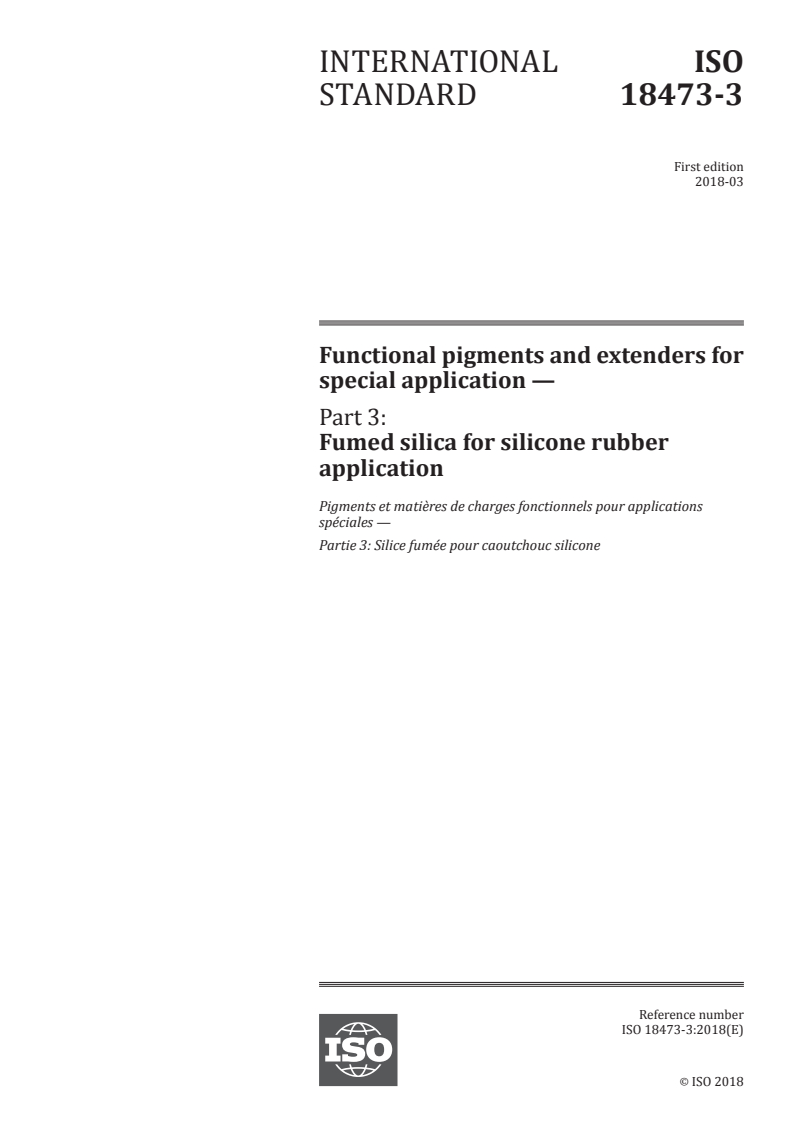
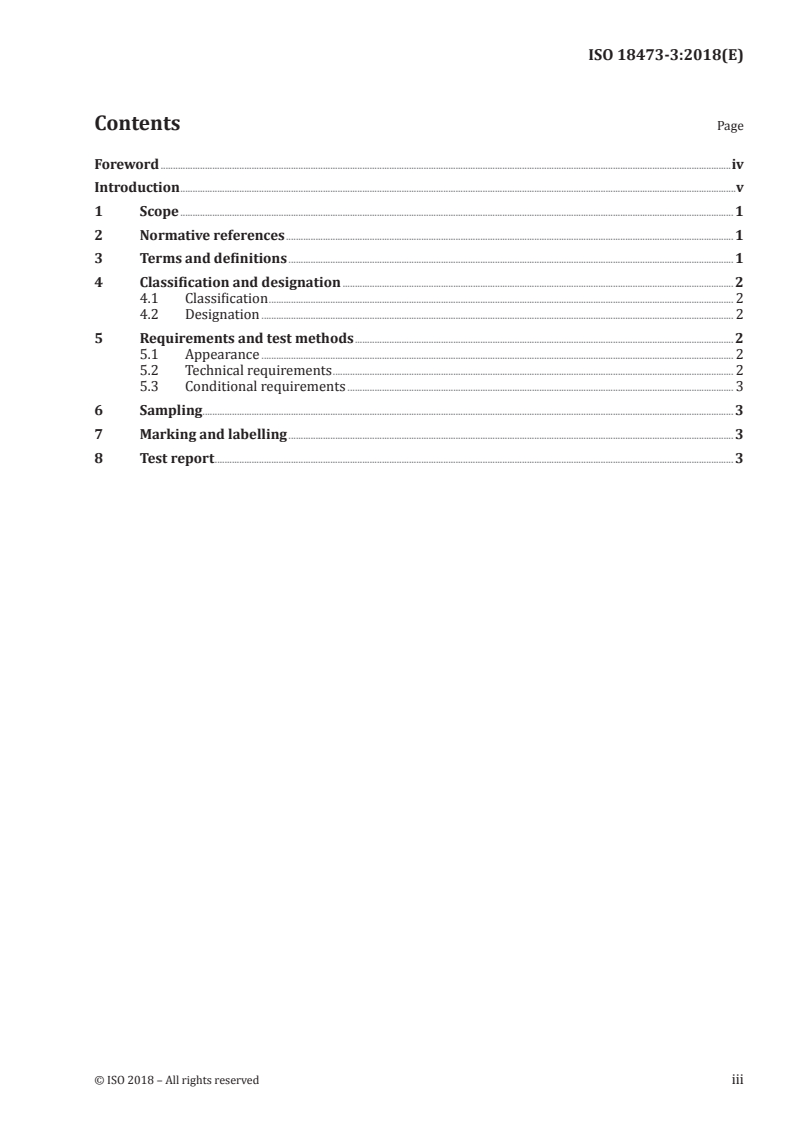
ISO 18473-3:2018 - Functional pigments and extenders for special application — Part 3: Fumed silica for silicone rubber application/9/2018
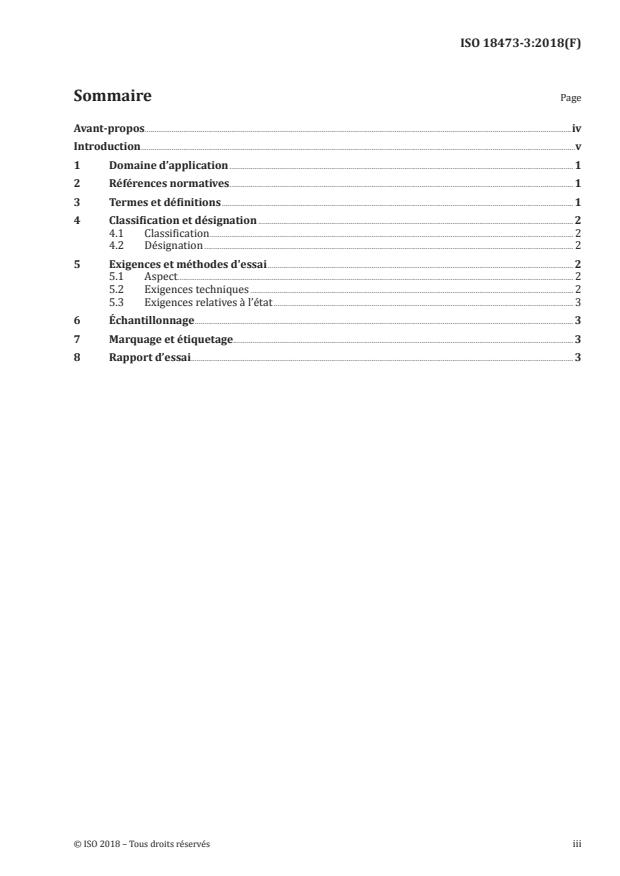
ISO 18473-3:2018 - Pigments et matieres de charges fonctionnels pour applications spéciales
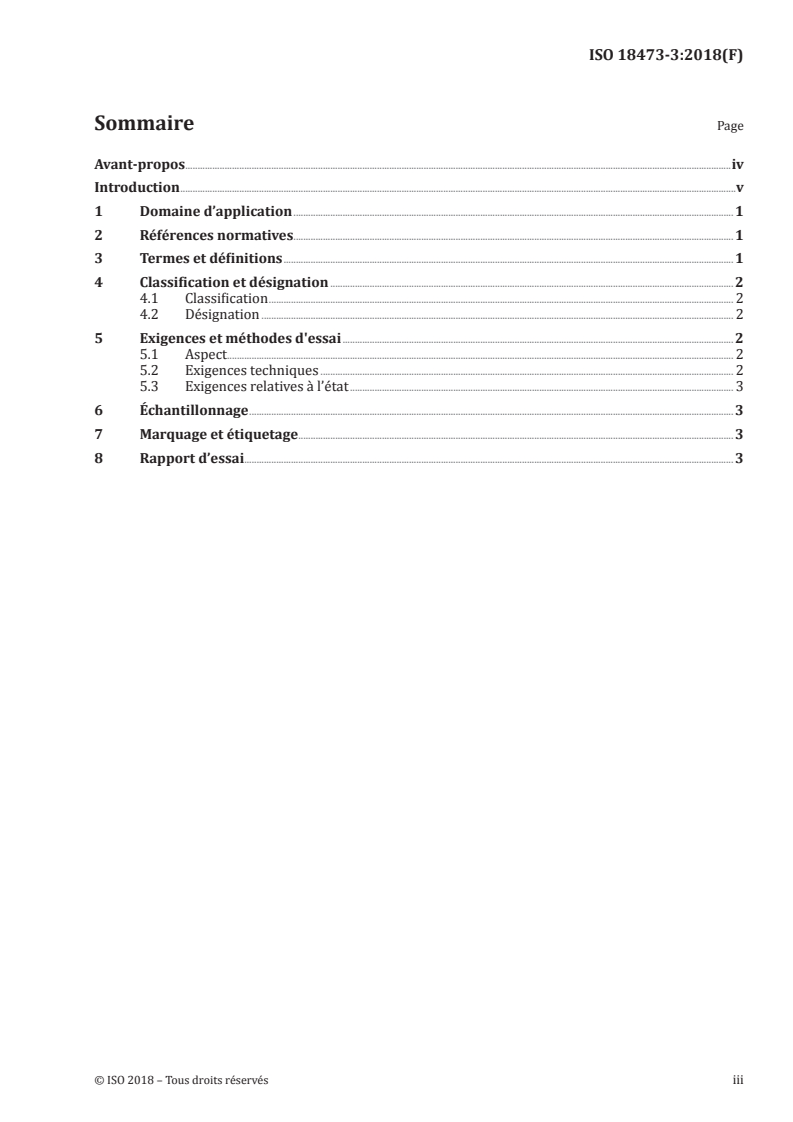
ISO 18473-3:2018 - Pigments et matières de charges fonctionnels pour applications spéciales — Partie 3: Silice pyrogénée pour caoutchouc silicone/26/2019
Overview
ISO 18473-3:2018 specifies requirements and corresponding methods of test for fumed silica in powder form intended for silicone rubber applications. The standard applies to both untreated (hydrophilic) and surface‑treated (hydrophobic) fumed silica used as reinforcing functional fillers in RTV, HTV, HCR and LSR silicone formulations. Key objectives are to ensure consistent quality, appropriate physicochemical characteristics and suitable labeling and test reporting for supply-chain and manufacturing use.
Key Topics
- Definition and classification: Fumed silica is defined as amorphous silica produced by high‑temperature flame hydrolysis. It is classified as hydrophilic or hydrophobic depending on dispersibility in water.
- Designation: Products are commonly designated by specific surface area (BET method, ISO 9277) with typical values such as 150, 200, 300 and 380 m2/g and a ±10 % tolerance unless otherwise agreed.
- Essential requirements: The document lists technical limits and test methods, including:
- Specific surface area - measured by ISO 9277 (BET).
- pH - minimum value (tested per ISO 787‑9).
- Loss on drying - limits differ for hydrophilic and hydrophobic grades (ISO 787‑2).
- Residue on 45 µm sieve - ISO 787‑18.
- Trace element limits (Fe, Al, Ti) and carbon content - methods referenced to ISO 3262‑20 and related parts.
- Conditional requirements: Tamped density is conditional and may be agreed between parties; measured according to ISO 787‑11.
- Sampling and test reporting: Sampling follows ISO 15528. Test reports must identify the product, reference ISO 18473‑3:2018, list methods and results, declare deviations and unusual observations, and include the test date.
Applications
Fumed silica specified to ISO 18473‑3 is used primarily as a reinforcing filler in silicone rubber formulations where it:
- Improves mechanical strength and rheology of cured polydimethylsiloxane (PDMS) systems.
- Influences transparency and surface properties depending on grade and surface treatment.
- Serves in a wide range of silicone rubber products including room temperature vulcanized (RTV) sealants, high‑consistency and liquid silicone rubbers (HCR, LSR), and high‑temperature vulcanized (HTV) compounds.
Practical benefits for manufacturers and material engineers include predictable performance, easier quality control, and clear acceptance criteria for incoming materials.
Related Standards
- ISO 9277 - Specific surface area (BET) method
- ISO 787 series - General methods of test for pigments and extenders (pH, loss on drying, tamped volume, residue on sieve)
- ISO 3262‑20:2000 - Extenders for paints: fumed silica test clauses referenced for trace elements and carbon content
- ISO 15528 - Sampling
- ISO 18451‑1 - Terminology for pigments, dyestuffs and extenders
Note: ISO 18473‑3:2018 provides test method references and limits to support specification, procurement and quality assurance of fumed silica for silicone rubber. For detailed test procedures and exact numeric limits consult the full standard.
Buy Documents
ISO 18473-3:2018 - Functional pigments and extenders for special application
ISO 18473-3:2018 - Functional pigments and extenders for special application — Part 3: Fumed silica for silicone rubber application/9/2018
ISO 18473-3:2018 - Pigments et matieres de charges fonctionnels pour applications spéciales
ISO 18473-3:2018 - Pigments et matières de charges fonctionnels pour applications spéciales — Partie 3: Silice pyrogénée pour caoutchouc silicone/26/2019
Frequently Asked Questions
ISO 18473-3:2018 is a standard published by the International Organization for Standardization (ISO). Its full title is "Functional pigments and extenders for special application — Part 3: Fumed silica for silicone rubber application". This standard covers: ISO 18473-3:2018 specifies requirements and corresponding methods of test for fumed silica in powder form for silicone rubber application. This document is applicable to untreated and surface treated fumed silica.
ISO 18473-3:2018 specifies requirements and corresponding methods of test for fumed silica in powder form for silicone rubber application. This document is applicable to untreated and surface treated fumed silica.
ISO 18473-3:2018 is classified under the following ICS (International Classification for Standards) categories: 87.060.10 - Pigments and extenders. The ICS classification helps identify the subject area and facilitates finding related standards.
ISO 18473-3:2018 is available in PDF format for immediate download after purchase. The document can be added to your cart and obtained through the secure checkout process. Digital delivery ensures instant access to the complete standard document.
Standards Content (Sample)
INTERNATIONAL ISO
STANDARD 18473-3
First edition
2018-03
Functional pigments and extenders for
special application —
Part 3:
Fumed silica for silicone rubber
application
Pigments et matières de charges fonctionnels pour applications
spéciales —
Partie 3: Silice fumée pour caoutchouc silicone
Reference number
©
ISO 2018
© ISO 2018
All rights reserved. Unless otherwise specified, or required in the context of its implementation, no part of this publication may
be reproduced or utilized otherwise in any form or by any means, electronic or mechanical, including photocopying, or posting
on the internet or an intranet, without prior written permission. Permission can be requested from either ISO at the address
below or ISO’s member body in the country of the requester.
ISO copyright office
CP 401 • Ch. de Blandonnet 8
CH-1214 Vernier, Geneva
Phone: +41 22 749 01 11
Fax: +41 22 749 09 47
Email: copyright@iso.org
Website: www.iso.org
Published in Switzerland
ii © ISO 2018 – All rights reserved
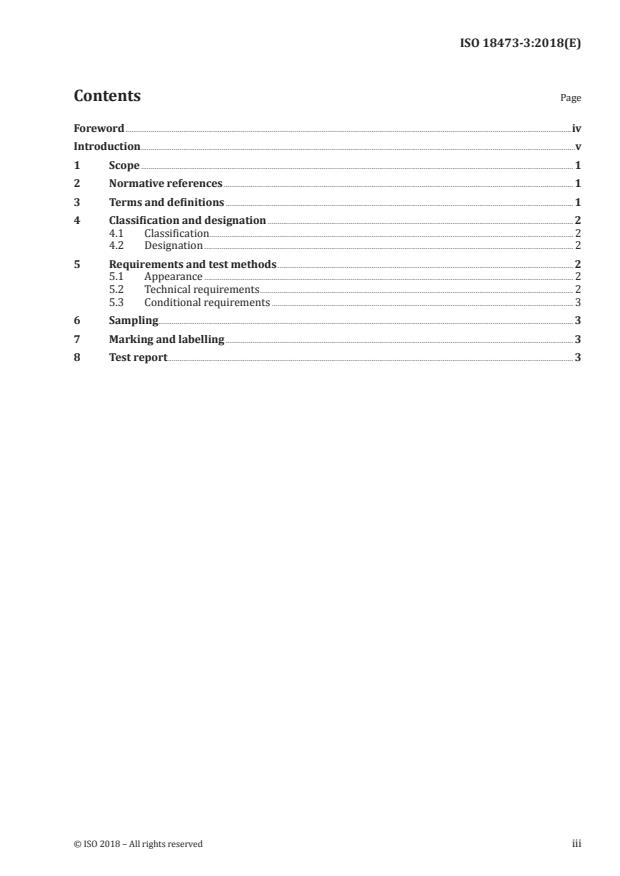
Contents Page
Foreword .iv
Introduction .v
1 Scope . 1
2 Normative references . 1
3 Terms and definitions . 1
4 Classification and designation . 2
4.1 Classification . 2
4.2 Designation . 2
5 Requirements and test methods . 2
5.1 Appearance . 2
5.2 Technical requirements . 2
5.3 Conditional requirements . 3
6 Sampling . 3
7 Marking and labelling . 3
8 Test report . 3
Foreword
ISO (the International Organization for Standardization) is a worldwide federation of national standards
bodies (ISO member bodies). The work of preparing International Standards is normally carried out
through ISO technical committees. Each member body interested in a subject for which a technical
committee has been established has the right to be represented on that committee. International
organizations, governmental and non-governmental, in liaison with ISO, also take part in the work.
ISO collaborates closely with the International Electrotechnical Commission (IEC) on all matters of
electrotechnical standardization.
The procedures used to develop this document and those intended for its further maintenance are
described in the ISO/IEC Directives, Part 1. In particular the different approval criteria needed for the
different types of ISO documents should be noted. This document was drafted in accordance with the
editorial rules of the ISO/IEC Directives, Part 2 (see www .iso .org/ directives).
Attention is drawn to the possibility that some of the elements of this document may be the subject of
patent rights. ISO shall not be held responsible for identifying any or all such patent rights. Details of
any patent rights identified during the development of the document will be in the Introduction and/or
on the ISO list of patent declarations received (see www .iso .org/ patents).
Any trade name used in this document is information given for the convenience of users and does not
constitute an endorsement.
For an explanation on the voluntary nature of standards, the meaning of ISO specific terms and
expressions related to conformity assessment, as well as information about ISO's adherence to the
World Trade Organization (WTO) principles in the Technical Barriers to Trade (TBT) see the following
URL: www .iso .org/ iso/ foreword .html.
This document was prepared by Technical Committee ISO/TC 256, Pigments, dyestuffs and extenders.
A list of all parts in the ISO ISO 18473 series can be found on the ISO website.
iv © ISO 2018 – All rights reserved
Introduction
Fumed silica (pyrogenic silicon dioxide) is one kind of pure amorphous white inorganic powder which
has high specific surface area, nano-scale primary particle size resulting in a “stable/none destroyable”
aggregated structure, and a relatively high (among silica products) concentration of surface silanol
groups. The properties of fumed silica can be chemically modified by reaction with these silanol
groups. Commercial available fumed silica can be divided into two groups: hydrophilic fumed silica and
hydrophobic fumed silica. Because of the above-mentioned features, it is widely used as an important
ingredient in many industries such as the rubber, paint and plastics industries. The major application
for fumed silica is the silicone rubber industry.
Silicone rubbers exhibit excellent properties, such as flexibility at low temperature,
...
INTERNATIONAL ISO
STANDARD 18473-3
First edition
2018-03
Functional pigments and extenders for
special application —
Part 3:
Fumed silica for silicone rubber
application
Pigments et matières de charges fonctionnels pour applications
spéciales —
Partie 3: Silice fumée pour caoutchouc silicone
Reference number
©
ISO 2018
© ISO 2018
All rights reserved. Unless otherwise specified, or required in the context of its implementation, no part of this publication may
be reproduced or utilized otherwise in any form or by any means, electronic or mechanical, including photocopying, or posting
on the internet or an intranet, without prior written permission. Permission can be requested from either ISO at the address
below or ISO’s member body in the country of the requester.
ISO copyright office
CP 401 • Ch. de Blandonnet 8
CH-1214 Vernier, Geneva
Phone: +41 22 749 01 11
Fax: +41 22 749 09 47
Email: copyright@iso.org
Website: www.iso.org
Published in Switzerland
ii © ISO 2018 – All rights reserved
Contents Page
Foreword .iv
Introduction .v
1 Scope . 1
2 Normative references . 1
3 Terms and definitions . 1
4 Classification and designation . 2
4.1 Classification . 2
4.2 Designation . 2
5 Requirements and test methods . 2
5.1 Appearance . 2
5.2 Technical requirements . 2
5.3 Conditional requirements . 3
6 Sampling . 3
7 Marking and labelling . 3
8 Test report . 3
Foreword
ISO (the International Organization for Standardization) is a worldwide federation of national standards
bodies (ISO member bodies). The work of preparing International Standards is normally carried out
through ISO technical committees. Each member body interested in a subject for which a technical
committee has been established has the right to be represented on that committee. International
organizations, governmental and non-governmental, in liaison with ISO, also take part in the work.
ISO collaborates closely with the International Electrotechnical Commission (IEC) on all matters of
electrotechnical standardization.
The procedures used to develop this document and those intended for its further maintenance are
described in the ISO/IEC Directives, Part 1. In particular the different approval criteria needed for the
different types of ISO documents should be noted. This document was drafted in accordance with the
editorial rules of the ISO/IEC Directives, Part 2 (see www .iso .org/ directives).
Attention is drawn to the possibility that some of the elements of this document may be the subject of
patent rights. ISO shall not be held responsible for identifying any or all such patent rights. Details of
any patent rights identified during the development of the document will be in the Introduction and/or
on the ISO list of patent declarations received (see www .iso .org/ patents).
Any trade name used in this document is information given for the convenience of users and does not
constitute an endorsement.
For an explanation on the voluntary nature of standards, the meaning of ISO specific terms and
expressions related to conformity assessment, as well as information about ISO's adherence to the
World Trade Organization (WTO) principles in the Technical Barriers to Trade (TBT) see the following
URL: www .iso .org/ iso/ foreword .html.
This document was prepared by Technical Committee ISO/TC 256, Pigments, dyestuffs and extenders.
A list of all parts in the ISO ISO 18473 series can be found on the ISO website.
iv © ISO 2018 – All rights reserved
Introduction
Fumed silica (pyrogenic silicon dioxide) is one kind of pure amorphous white inorganic powder which
has high specific surface area, nano-scale primary particle size resulting in a “stable/none destroyable”
aggregated structure, and a relatively high (among silica products) concentration of surface silanol
groups. The properties of fumed silica can be chemically modified by reaction with these silanol
groups. Commercial available fumed silica can be divided into two groups: hydrophilic fumed silica and
hydrophobic fumed silica. Because of the above-mentioned features, it is widely used as an important
ingredient in many industries such as the rubber, paint and plastics industries. The major application
for fumed silica is the silicone rubber industry.
Silicone rubbers exhibit excellent properties, such as flexibility at low temperature,
...
NORME ISO
INTERNATIONALE 18473-3
Première édition
2018-03
Pigments et matières de charges
fonctionnels pour applications
spéciales —
Partie 3:
Silice pyrogénée pour caoutchouc
silicone
Functional pigments and extenders for special application —
Part 3: Fumed silica for silicone rubber application
Numéro de référence
©
ISO 2018
DOCUMENT PROTÉGÉ PAR COPYRIGHT
© ISO 2018
Tous droits réservés. Sauf prescription différente ou nécessité dans le contexte de sa mise en œuvre, aucune partie de cette
publication ne peut être reproduite ni utilisée sous quelque forme que ce soit et par aucun procédé, électronique ou mécanique,
y compris la photocopie, ou la diffusion sur l’internet ou sur un intranet, sans autorisation écrite préalable. Une autorisation peut
être demandée à l’ISO à l’adresse ci-après ou au comité membre de l’ISO dans le pays du demandeur.
ISO copyright office
Case postale 401 • Ch. de Blandonnet 8
CH-1214 Vernier, Genève
Tél.: +41 22 749 01 11
Fax: +41 22 749 09 47
E-mail: copyright@iso.org
Web: www.iso.org
Publié en Suisse
ii © ISO 2018 – Tous droits réservés
Sommaire Page
Avant-propos .iv
Introduction .v
1 Domaine d’application . 1
2 Références normatives . 1
3 Termes et définitions . 1
4 Classification et désignation . 2
4.1 Classification . 2
4.2 Désignation . 2
5 Exigences et méthodes d'essai . 2
5.1 Aspect . . 2
5.2 Exigences techniques . 2
5.3 Exigences relatives à l’état . 3
6 Échantillonnage . 3
7 Marquage et étiquetage . 3
8 Rapport d’essai . 3
Avant-propos
L'ISO (Organisation internationale de normalisation) est une fédération mondiale d'organismes
nationaux de normalisation (comités membres de l'ISO). L'élaboration des Normes internationales est
en général confiée aux comités techniques de l'ISO. Chaque comité membre intéressé par une étude
a le droit de faire partie du comité technique créé à cet effet. Les organisations internationales,
gouvernementales et non gouvernementales, en liaison avec l'ISO participent également aux travaux.
L'ISO collabore étroitement avec la Commission électrotechnique internationale (IEC) en ce qui
concerne la normalisation électrotechnique.
Les procédures utilisées pour élaborer le présent document et celles destinées à sa mise à jour sont
décrites dans les Directives ISO/IEC, Partie 1. Il convient, en particulier, de prendre note des différents
critères d'approbation requis pour les différents types de documents ISO. Le présent document a été
rédigé conformément aux règles de rédaction données dans les Directives ISO/IEC, Partie 2 (voir www
.iso .org/directives).
L'attention est appelée sur le fait que certains des éléments du présent document peuvent faire l'objet de
droits de propriété intellectuelle ou de droits analogues. L'ISO ne saurait être tenue pour responsable
de ne pas avoir identifié de tels droits de propriété et averti de leur existence. Les détails concernant
les références aux droits de propriété intellectuelle ou autres droits analogues identifiés lors de
l'élaboration du document sont indiqués dans l'Introduction et/ou dans la liste des déclarations de
brevets reçues par l'ISO (voir www .iso .org/brevets).
Les appellations commerciales éventuellement mentionnées dans le présent document sont données
pour information, par souci de commodité, à l'intention des utilisateurs et ne sauraient constituer un
engagement.
Pour une explication de la nature volontaire des normes, la signification des termes et expressions
spécifiques de l'ISO liés à l'évaluation de la conformité, ou pour toute information au sujet de l'adhésion
de l'ISO aux principes de l’Organisation mondiale du commerce (OMC) concernant les obstacles
techniques au commerce (OTC), voir le lien suivant: www .iso .org/iso/foreword .html.
Le présent document a été élaboré par le comité technique ISO/TC 256, Pigments, colorants et matières
de charge.
Une liste de toutes les parties de la série ISO 18473 peut être consultée sur le site de l’ISO.
iv © ISO 2018 – Tous droits réservés
Introduction
La silice pyrogénée (dioxyde de silicium pyrogéné) est un type de poudre blanche pure amorphe
inorganique ayant une aire spécifique élevée, une taille de particules primaires à l’échelle nanométrique
produisant une structure agrégée « stable/ne pouvant être détruite », et une concentration relativement
élevée (parmi les produits en silice) en groupes silanol superficiels. Les propriétés de la silice pyrogénée
peuvent être chimiquement modifiées par une réaction avec ces groupes silanol. La silice pyrogénée
disponible dans le commerce peut être divisée en deux groupes: la silice pyrogénée hydrophile et la
silice pyrogénée hydrophobe. En raison des caractéristiques susmentionnées, c’est un ingrédient
important largement utilisé dans l’industrie, notamment les industries du caoutchouc, des peintures et
des plastiques. L’application principale de la silice pyrogénée est l’industrie du caoutchouc silicone.
Les caoutchoucs silicone présentent d’excellentes propriétés comme la flexibilité à basse température,
une bonne résistance aux agents atmosphériques, l’isolation électrique, la résistance aux supports,
l’inertie physiologique, une tension superficielle et une énergie superficielle faibles qui leur permettent
de répondre à d’importants bes
...
NORME ISO
INTERNATIONALE 18473-3
Première édition
2018-03
Pigments et matières de charges
fonctionnels pour applications
spéciales —
Partie 3:
Silice pyrogénée pour caoutchouc
silicone
Functional pigments and extenders for special application —
Part 3: Fumed silica for silicone rubber application
Numéro de référence
©
ISO 2018
DOCUMENT PROTÉGÉ PAR COPYRIGHT
© ISO 2018
Tous droits réservés. Sauf prescription différente ou nécessité dans le contexte de sa mise en œuvre, aucune partie de cette
publication ne peut être reproduite ni utilisée sous quelque forme que ce soit et par aucun procédé, électronique ou mécanique,
y compris la photocopie, ou la diffusion sur l’internet ou sur un intranet, sans autorisation écrite préalable. Une autorisation peut
être demandée à l’ISO à l’adresse ci-après ou au comité membre de l’ISO dans le pays du demandeur.
ISO copyright office
Case postale 401 • Ch. de Blandonnet 8
CH-1214 Vernier, Genève
Tél.: +41 22 749 01 11
Fax: +41 22 749 09 47
E-mail: copyright@iso.org
Web: www.iso.org
Publié en Suisse
ii © ISO 2018 – Tous droits réservés
Sommaire Page
Avant-propos .iv
Introduction .v
1 Domaine d’application . 1
2 Références normatives . 1
3 Termes et définitions . 1
4 Classification et désignation . 2
4.1 Classification . 2
4.2 Désignation . 2
5 Exigences et méthodes d'essai . 2
5.1 Aspect . . 2
5.2 Exigences techniques . 2
5.3 Exigences relatives à l’état . 3
6 Échantillonnage . 3
7 Marquage et étiquetage . 3
8 Rapport d’essai . 3
Avant-propos
L'ISO (Organisation internationale de normalisation) est une fédération mondiale d'organismes
nationaux de normalisation (comités membres de l'ISO). L'élaboration des Normes internationales est
en général confiée aux comités techniques de l'ISO. Chaque comité membre intéressé par une étude
a le droit de faire partie du comité technique créé à cet effet. Les organisations internationales,
gouvernementales et non gouvernementales, en liaison avec l'ISO participent également aux travaux.
L'ISO collabore étroitement avec la Commission électrotechnique internationale (IEC) en ce qui
concerne la normalisation électrotechnique.
Les procédures utilisées pour élaborer le présent document et celles destinées à sa mise à jour sont
décrites dans les Directives ISO/IEC, Partie 1. Il convient, en particulier, de prendre note des différents
critères d'approbation requis pour les différents types de documents ISO. Le présent document a été
rédigé conformément aux règles de rédaction données dans les Directives ISO/IEC, Partie 2 (voir www
.iso .org/directives).
L'attention est appelée sur le fait que certains des éléments du présent document peuvent faire l'objet de
droits de propriété intellectuelle ou de droits analogues. L'ISO ne saurait être tenue pour responsable
de ne pas avoir identifié de tels droits de propriété et averti de leur existence. Les détails concernant
les références aux droits de propriété intellectuelle ou autres droits analogues identifiés lors de
l'élaboration du document sont indiqués dans l'Introduction et/ou dans la liste des déclarations de
brevets reçues par l'ISO (voir www .iso .org/brevets).
Les appellations commerciales éventuellement mentionnées dans le présent document sont données
pour information, par souci de commodité, à l'intention des utilisateurs et ne sauraient constituer un
engagement.
Pour une explication de la nature volontaire des normes, la signification des termes et expressions
spécifiques de l'ISO liés à l'évaluation de la conformité, ou pour toute information au sujet de l'adhésion
de l'ISO aux principes de l’Organisation mondiale du commerce (OMC) concernant les obstacles
techniques au commerce (OTC), voir le lien suivant: www .iso .org/iso/foreword .html.
Le présent document a été élaboré par le comité technique ISO/TC 256, Pigments, colorants et matières
de charge.
Une liste de toutes les parties de la série ISO 18473 peut être consultée sur le site de l’ISO.
iv © ISO 2018 – Tous droits réservés
Introduction
La silice pyrogénée (dioxyde de silicium pyrogéné) est un type de poudre blanche pure amorphe
inorganique ayant une aire spécifique élevée, une taille de particules primaires à l’échelle nanométrique
produisant une structure agrégée « stable/ne pouvant être détruite », et une concentration relativement
élevée (parmi les produits en silice) en groupes silanol superficiels. Les propriétés de la silice pyrogénée
peuvent être chimiquement modifiées par une réaction avec ces groupes silanol. La silice pyrogénée
disponible dans le commerce peut être divisée en deux groupes: la silice pyrogénée hydrophile et la
silice pyrogénée hydrophobe. En raison des caractéristiques susmentionnées, c’est un ingrédient
important largement utilisé dans l’industrie, notamment les industries du caoutchouc, des peintures et
des plastiques. L’application principale de la silice pyrogénée est l’industrie du caoutchouc silicone.
Les caoutchoucs silicone présentent d’excellentes propriétés comme la flexibilité à basse température,
une bonne résistance aux agents atmosphériques, l’isolation électrique, la résistance aux supports,
l’inertie physiologique, une tension superficielle et une énergie superficielle faibles qui leur permettent
de répondre à d’importants bes
...