


EN 61779-1:2000
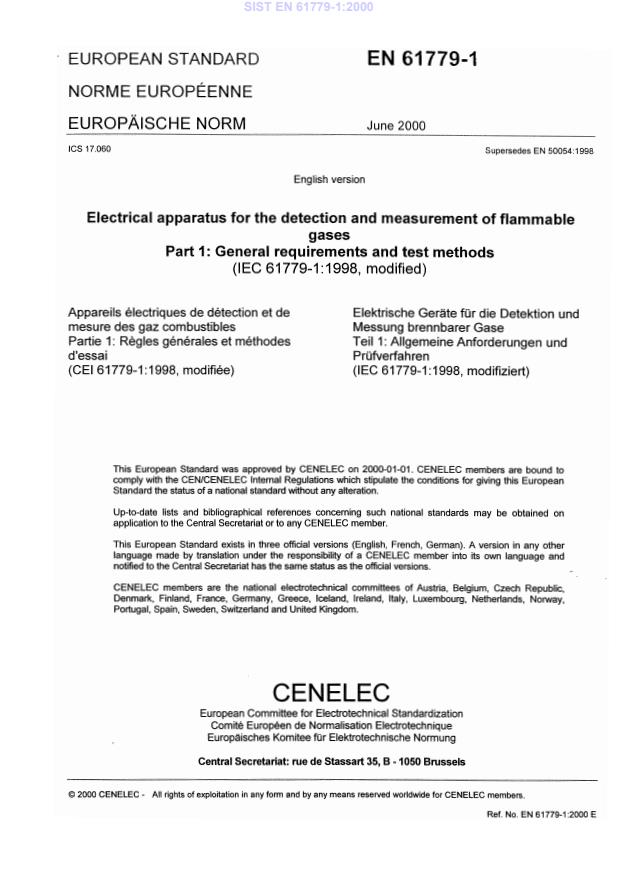
(Main)Electrical apparatus for the detection and measurement of flammable gases - Part 1: General requirements and test methods
General Information
- Abstract
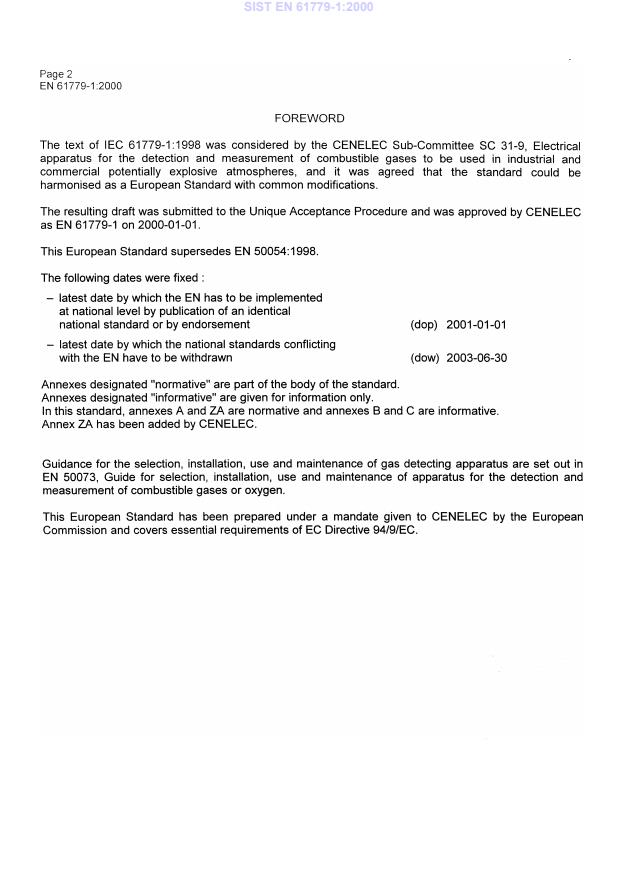
Specifies general requirements for construction and testing and describes the test methods that apply to portable, transportable and fixed apparatus for the detection and measurement of flammable gas or vapour concentrations with air. The apparatus, or parts thereof, are intended for use in potentially explosive atmospheres and in mines susceptible to firedamp.
- Status
- Withdrawn
- Publication Date
- 28-Jun-2000
- Withdrawal Date
- 29-Jun-2003
- Technical Committee
- CLC/TC 31 - Electrical apparatus for explosive atmospheres - General requirements
- Drafting Committee
- CLC/SC 31-9 - Electrical apparatus for the detection and measurement of combustible gases to be used in industrial
- Parallel Committee
- IEC/SC 31L - IEC_SC_31L
- Current Stage
- 9960 - Withdrawal effective - Withdrawal
- Start Date
- 01-Nov-2010
- Completion Date
- 01-Nov-2010
- Directive
- Not Harmonized94/9/EC - Equipment and protective systems intended for use in potentially explosive atmospheres (ATEX)OJ Ref: C 168/6, C 97/, C 97/01, C 251/01 OJ Date: 17-Sep-2010

Relations
- Effective Date
- 29-Jan-2023
- Effective Date
- 29-Jan-2023
- Effective Date
- 10-Feb-2026
- Effective Date
- 10-Feb-2026
- Effective Date
- 10-Feb-2026
- Effective Date
- 10-Feb-2026
- Effective Date
- 10-Feb-2026
- Effective Date
- 10-Feb-2026
- Effective Date
- 09-Feb-2026
- Effective Date
- 09-Feb-2026
- Effective Date
- 09-Feb-2026
- Effective Date
- 09-Feb-2026
- Refers
ENV 1993-6:1999 - Eurocode 3: Design of steel structures - Part 6: Crane supporting structures - Effective Date
- 09-Feb-2026
- Effective Date
- 09-Feb-2026
- Effective Date
- 03-Feb-2026
Get Certified
Connect with accredited certification bodies for this standard

BSMI (Bureau of Standards, Metrology and Inspection)
Taiwan's standards and inspection authority.
Sponsored listings
Frequently Asked Questions
EN 61779-1:2000 is a standard published by CLC. Its full title is "Electrical apparatus for the detection and measurement of flammable gases - Part 1: General requirements and test methods". This standard covers: Specifies general requirements for construction and testing and describes the test methods that apply to portable, transportable and fixed apparatus for the detection and measurement of flammable gas or vapour concentrations with air. The apparatus, or parts thereof, are intended for use in potentially explosive atmospheres and in mines susceptible to firedamp.
Specifies general requirements for construction and testing and describes the test methods that apply to portable, transportable and fixed apparatus for the detection and measurement of flammable gas or vapour concentrations with air. The apparatus, or parts thereof, are intended for use in potentially explosive atmospheres and in mines susceptible to firedamp.
EN 61779-1:2000 is classified under the following ICS (International Classification for Standards) categories: 17.060 - Measurement of volume, mass, density, viscosity. The ICS classification helps identify the subject area and facilitates finding related standards.
EN 61779-1:2000 has the following relationships with other standards: It is inter standard links to EN 50054:1998, EN 60079-29-1:2007, ISO 6145-3:1986, ISO 6142:1981, ISO 6147:1979, ISO 6145-6:1986, ISO 6145-4:1986, ISO 6145-1:1986, EN 73:1988, ENV 1993-1-1:1992/A1:1994, EN 84:1989, EN ISO 4022:2006, ENV 1993-6:1999, EN 24003:1993, EN 61000-4-4:1995. Understanding these relationships helps ensure you are using the most current and applicable version of the standard.
EN 61779-1:2000 is associated with the following European legislation: EU Directives/Regulations: 94/9/EC. When a standard is cited in the Official Journal of the European Union, products manufactured in conformity with it benefit from a presumption of conformity with the essential requirements of the corresponding EU directive or regulation.
EN 61779-1:2000 is available in PDF format for immediate download after purchase. The document can be added to your cart and obtained through the secure checkout process. Digital delivery ensures instant access to the complete standard document.
Standards Content (Sample)
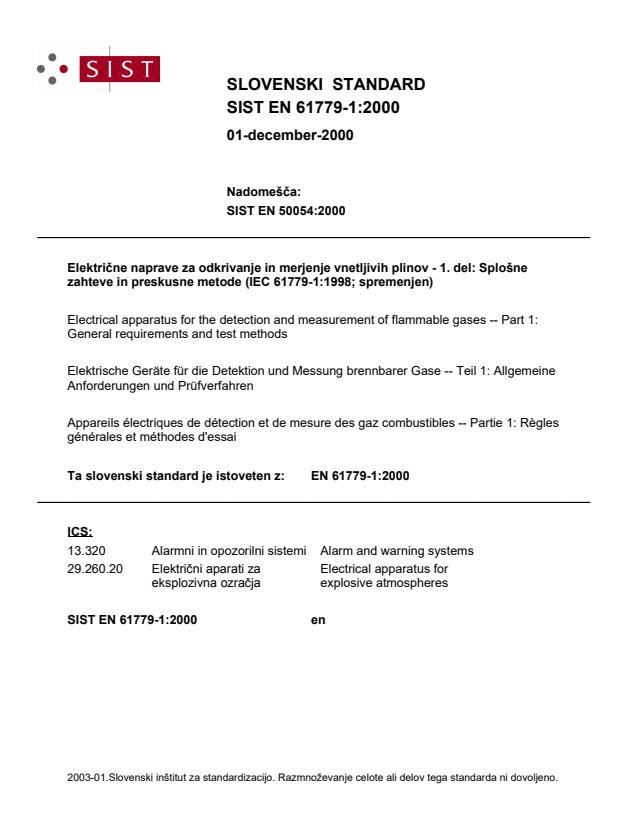
2003-01.Slovenski inštitut za standardizacijo. Razmnoževanje celote ali delov tega standarda ni dovoljeno.Elektrische Geräte für die Detektion und Messung brennbarer Gase -- Teil 1: Allgemeine Anforderungen und PrüfverfahrenAppareils électriques de détection et de mesure des gaz combustibles -- Partie 1: Règles générales et méthodes d'essaiElectrical apparatus for the detection and measurement of flammable gases -- Part 1: General requirements and test methods29.260.20Electrical apparatus for explosive atmospheres13.320Alarmni in opozorilni sistemiAlarm and warning systemsICS:Ta slovenski standard je istoveten z:EN 61779-1:2000SIST EN 61779-1:2000en01-december-2000SIST EN 61779-1:2000SLOVENSKI
STANDARDSIST EN 50054:20001DGRPHãþD
SIST EN 61
...