

ASTM D4057-22
(Practice)Standard Practice for Manual Sampling of Petroleum and Petroleum Products
General Information
- Abstract
SIGNIFICANCE AND USE
4.1 Samples of petroleum and petroleum products are obtained for many reasons, including the determination of chemical and physical properties. These properties may be used for: calculating standard volumes; establishing product value; and often safety and regulatory reporting.
4.2 There are inherent limitations when performing any type of sampling, any one of which may affect the representative nature of the sample. As examples, a spot sample provides a sample from only one particular point in the tank, vessel compartment, or pipeline. In the case of running or all-level samples, the sample only represents the column of material from which it was taken.
4.3 Based on the product, and testing to be performed, this practice provides guidance on sampling equipment, container preparation, and manual sampling procedures for petroleum and petroleum products of a liquid, semi-liquid, or solid state, from the storage tanks, flowlines, pipelines, marine vessels, process vessels, drums, cans, tubes, bags, kettles, and open discharge streams into the primary sample container.
SCOPE
1.1 This practice covers procedures and equipment for manually obtaining samples of liquid petroleum and petroleum products, crude oils, and intermediate products from the sample point into the primary container are described. Procedures are also included for the sampling of free water and other heavy components associated with petroleum and petroleum products.
1.2 This practice also addresses the sampling of semi-liquid or solid-state petroleum products. For the sampling of green petroleum coke, see Practice D8145. For the sampling of calcined petroleum coke, see Practice D6970.
1.3 This practice provides additional specific information about sample container selection, preparation, and sample handling.
1.4 This practice does not cover sampling of electrical insulating oils and hydraulic fluids. If sampling is for the precise determination of volatility, use Practice D5842 (API MPMS Chapter 8.4) in conjunction with this practice. For sample mixing and handling, refer to Practice D5854 (API MPMS Chapter 8.3).
1.5 The procedures described in this practice may also be applicable in sampling most non-corrosive liquid industrial chemicals provided that all safety precautions specific to these chemicals are followed. Also, refer to Practice E300. The procedures described in this practice are also applicable to sampling liquefied petroleum gases and chemicals. Also refer to Practices D1265 and D3700. The procedure for sampling bituminous materials is described in Practice D140. Practice D4306 provides guidance on sample containers and preparation for sampling aviation fuel.
1.6 Units—The values stated in SI units are to be regarded as the standard. USC units are reflected in parentheses.
1.7 This standard does not purport to address all of the safety concerns, if any, associated with its use. It is the responsibility of the user of this standard to establish appropriate safety, health, and environmental practices and determine the applicability of regulatory limitations prior to use.
1.8 This international standard was developed in accordance with internationally recognized principles on standardization established in the Decision on Principles for the Development of International Standards, Guides and Recommendations issued by the World Trade Organization Technical Barriers to Trade (TBT) Committee.
- Status
- Published
- Publication Date
- 30-Apr-2022
- Technical Committee
- D02 - Petroleum Products, Liquid Fuels, and Lubricants
- Drafting Committee
- D02.02 - Hydrocarbon Measurement for Custody Transfer (Joint ASTM-API)
Overview
ASTM D4057-22 is the globally recognized standard for the manual sampling of petroleum and petroleum products. Published by ASTM International, this standard provides systematic procedures and practical guidance for obtaining representative samples from a wide range of petroleum materials in various physical states - including liquids, semi-liquids, and solids. ASTM D4057-22 is widely used in the petroleum and chemical industries for quality control, regulatory compliance, product valuation, and safety reporting. Its guidelines support accurate measurement of chemical and physical properties by detailing proper sampling methods, equipment selection, and container preparation.
Key Topics
- Sample Collection Procedures: The standard outlines methods for manually obtaining samples from storage tanks, pipelines, marine vessels, drums, cans, tubes, bags, kettles, and more. It emphasizes proper technique to minimize contamination and ensure sample integrity.
- Types of Petroleum Samples: It defines standard terms for various sample types, including spot samples, running samples, all-level samples, composite samples, bottom samples, top samples, and others, depending on the sampling purpose.
- Sampling Equipment and Containers: Guidance is provided on the appropriate selection, preparation, and cleaning of sampling equipment and containers, which is vital for maintaining sample representativeness and preventing cross-contamination.
- Handling Special Materials: Procedures are also included for sampling free water and heavier components, as well as handling semi-liquid or solid petroleum products.
- Limitations of Manual Sampling: The standard addresses inherent limitations, such as potential lack of sample representativity from spot or partial column samples, and advises on mitigating these challenges.
- Safety and Regulatory Considerations: Users are reminded to implement suitable safety, health, and environmental practices and to comply with national and international regulatory requirements.
Applications
Manual sampling as described in ASTM D4057-22 has broad applications in the oil, gas, petrochemical, and related industries:
- Quality Control and Assurance: Ensures that petroleum and petroleum product samples correctly represent the bulk material for laboratory analysis and decision-making.
- Custody Transfer and Valuation: Facilitates accurate determination of product characteristics such as density, water content, sediment, and other critical quality metrics that impact product value in transactions.
- Regulatory Compliance: Supports compliance with environmental, safety, and transportation regulations through validated sampling practices.
- Process Monitoring: Enables ongoing process control by providing reliable samples needed for process optimization, contamination detection, and troubleshooting.
- Safety Reporting: Assists in fulfilling safety and regulatory reporting obligations by ensuring that sample results are accurate and traceable.
Related Standards
ASTM D4057-22 references and interoperates with multiple related standards and industry guidelines for comprehensive sampling and analysis, including:
- ASTM D5854 - Practice for Mixing and Handling of Liquid Samples of Petroleum and Petroleum Products.
- ASTM D5842 - Practice for Sampling and Handling of Fuels for Volatility Measurement.
- ASTM D1265 & D3700 - Practices for Sampling Liquefied Petroleum Gases (LPG).
- ASTM D6970 & D8145 - Sampling of calcined and green petroleum coke.
- ASTM D4306 - Guidance on sample containers for aviation fuel.
- API MPMS Chapters 8.2, 8.3, 8.4, and 8.5 - Manual of Petroleum Measurement Standards for automatic sampling, mixing, and specialized procedures.
- ASTM E300 - Practice for Sampling Industrial Chemicals.
- ASTM D4177 – Practice for Automatic Sampling of Petroleum and Petroleum Products.
By following ASTM D4057-22 and these related standards, organizations can improve consistency, traceability, and data quality in sampling petroleum and petroleum products, contributing to operational efficiency and regulatory compliance.
Relations
- Effective Date
- 01-Apr-2024
- Refers
ASTM D4175-23a - Standard Terminology Relating to Petroleum Products, Liquid Fuels, and Lubricants - Effective Date
- 15-Dec-2023
- Effective Date
- 01-Dec-2023
- Effective Date
- 01-Dec-2023
- Effective Date
- 01-Dec-2023
- Effective Date
- 01-Dec-2023
- Effective Date
- 01-Nov-2023
- Effective Date
- 01-Oct-2023
- Effective Date
- 01-Oct-2023
- Refers
ASTM D4175-23e1 - Standard Terminology Relating to Petroleum Products, Liquid Fuels, and Lubricants - Effective Date
- 01-Jul-2023
- Effective Date
- 01-Jul-2023
- Effective Date
- 01-May-2020
- Effective Date
- 01-Dec-2019
- Effective Date
- 01-Nov-2019
- Effective Date
- 01-Nov-2019
Get Certified
Connect with accredited certification bodies for this standard

Element Materials Technology
Materials testing and product certification.

ABS Group Brazil
ABS Group certification services in Brazil.

ABS Quality Evaluations Inc.
American Bureau of Shipping quality certification.
Sponsored listings
Frequently Asked Questions
ASTM D4057-22 is a standard published by ASTM International. Its full title is "Standard Practice for Manual Sampling of Petroleum and Petroleum Products". This standard covers: SIGNIFICANCE AND USE 4.1 Samples of petroleum and petroleum products are obtained for many reasons, including the determination of chemical and physical properties. These properties may be used for: calculating standard volumes; establishing product value; and often safety and regulatory reporting. 4.2 There are inherent limitations when performing any type of sampling, any one of which may affect the representative nature of the sample. As examples, a spot sample provides a sample from only one particular point in the tank, vessel compartment, or pipeline. In the case of running or all-level samples, the sample only represents the column of material from which it was taken. 4.3 Based on the product, and testing to be performed, this practice provides guidance on sampling equipment, container preparation, and manual sampling procedures for petroleum and petroleum products of a liquid, semi-liquid, or solid state, from the storage tanks, flowlines, pipelines, marine vessels, process vessels, drums, cans, tubes, bags, kettles, and open discharge streams into the primary sample container. SCOPE 1.1 This practice covers procedures and equipment for manually obtaining samples of liquid petroleum and petroleum products, crude oils, and intermediate products from the sample point into the primary container are described. Procedures are also included for the sampling of free water and other heavy components associated with petroleum and petroleum products. 1.2 This practice also addresses the sampling of semi-liquid or solid-state petroleum products. For the sampling of green petroleum coke, see Practice D8145. For the sampling of calcined petroleum coke, see Practice D6970. 1.3 This practice provides additional specific information about sample container selection, preparation, and sample handling. 1.4 This practice does not cover sampling of electrical insulating oils and hydraulic fluids. If sampling is for the precise determination of volatility, use Practice D5842 (API MPMS Chapter 8.4) in conjunction with this practice. For sample mixing and handling, refer to Practice D5854 (API MPMS Chapter 8.3). 1.5 The procedures described in this practice may also be applicable in sampling most non-corrosive liquid industrial chemicals provided that all safety precautions specific to these chemicals are followed. Also, refer to Practice E300. The procedures described in this practice are also applicable to sampling liquefied petroleum gases and chemicals. Also refer to Practices D1265 and D3700. The procedure for sampling bituminous materials is described in Practice D140. Practice D4306 provides guidance on sample containers and preparation for sampling aviation fuel. 1.6 Units—The values stated in SI units are to be regarded as the standard. USC units are reflected in parentheses. 1.7 This standard does not purport to address all of the safety concerns, if any, associated with its use. It is the responsibility of the user of this standard to establish appropriate safety, health, and environmental practices and determine the applicability of regulatory limitations prior to use. 1.8 This international standard was developed in accordance with internationally recognized principles on standardization established in the Decision on Principles for the Development of International Standards, Guides and Recommendations issued by the World Trade Organization Technical Barriers to Trade (TBT) Committee.
SIGNIFICANCE AND USE 4.1 Samples of petroleum and petroleum products are obtained for many reasons, including the determination of chemical and physical properties. These properties may be used for: calculating standard volumes; establishing product value; and often safety and regulatory reporting. 4.2 There are inherent limitations when performing any type of sampling, any one of which may affect the representative nature of the sample. As examples, a spot sample provides a sample from only one particular point in the tank, vessel compartment, or pipeline. In the case of running or all-level samples, the sample only represents the column of material from which it was taken. 4.3 Based on the product, and testing to be performed, this practice provides guidance on sampling equipment, container preparation, and manual sampling procedures for petroleum and petroleum products of a liquid, semi-liquid, or solid state, from the storage tanks, flowlines, pipelines, marine vessels, process vessels, drums, cans, tubes, bags, kettles, and open discharge streams into the primary sample container. SCOPE 1.1 This practice covers procedures and equipment for manually obtaining samples of liquid petroleum and petroleum products, crude oils, and intermediate products from the sample point into the primary container are described. Procedures are also included for the sampling of free water and other heavy components associated with petroleum and petroleum products. 1.2 This practice also addresses the sampling of semi-liquid or solid-state petroleum products. For the sampling of green petroleum coke, see Practice D8145. For the sampling of calcined petroleum coke, see Practice D6970. 1.3 This practice provides additional specific information about sample container selection, preparation, and sample handling. 1.4 This practice does not cover sampling of electrical insulating oils and hydraulic fluids. If sampling is for the precise determination of volatility, use Practice D5842 (API MPMS Chapter 8.4) in conjunction with this practice. For sample mixing and handling, refer to Practice D5854 (API MPMS Chapter 8.3). 1.5 The procedures described in this practice may also be applicable in sampling most non-corrosive liquid industrial chemicals provided that all safety precautions specific to these chemicals are followed. Also, refer to Practice E300. The procedures described in this practice are also applicable to sampling liquefied petroleum gases and chemicals. Also refer to Practices D1265 and D3700. The procedure for sampling bituminous materials is described in Practice D140. Practice D4306 provides guidance on sample containers and preparation for sampling aviation fuel. 1.6 Units—The values stated in SI units are to be regarded as the standard. USC units are reflected in parentheses. 1.7 This standard does not purport to address all of the safety concerns, if any, associated with its use. It is the responsibility of the user of this standard to establish appropriate safety, health, and environmental practices and determine the applicability of regulatory limitations prior to use. 1.8 This international standard was developed in accordance with internationally recognized principles on standardization established in the Decision on Principles for the Development of International Standards, Guides and Recommendations issued by the World Trade Organization Technical Barriers to Trade (TBT) Committee.
ASTM D4057-22 is classified under the following ICS (International Classification for Standards) categories: 75.080 - Petroleum products in general; 75.100 - Lubricants, industrial oils and related products. The ICS classification helps identify the subject area and facilitates finding related standards.
ASTM D4057-22 has the following relationships with other standards: It is inter standard links to ASTM D445-24, ASTM D4175-23a, ASTM D86-23a, ASTM D86-23ae1, ASTM D6299-23a, ASTM D1265-23a, ASTM D445-23, ASTM D244-23, ASTM D8145-23a, ASTM D4175-23e1, ASTM D8145-23, ASTM D6470-99(2020), ASTM D6970-03(2019), ASTM D977-19a, ASTM D977-19ae1. Understanding these relationships helps ensure you are using the most current and applicable version of the standard.
ASTM D4057-22 is available in PDF format for immediate download after purchase. The document can be added to your cart and obtained through the secure checkout process. Digital delivery ensures instant access to the complete standard document.
Standards Content (Sample)
This international standard was developed in accordance with internationally recognized principles on standardization established in the Decision on Principles for the
Development of International Standards, Guides and Recommendations issued by the World Trade Organization Technical Barriers to Trade (TBT) Committee.
Designation: D4057 − 22
Manual of Petroleum Measurement Standards (MPMS), Chapter 8.1
Standard Practice for
Manual Sampling of Petroleum and Petroleum Products
This standard is issued under the fixed designation D4057; the number immediately following the designation indicates the year of
original adoption or, in the case of revision, the year of last revision. A number in parentheses indicates the year of last reapproval. A
superscript epsilon (´) indicates an editorial change since the last revision or reapproval.
This standard has been approved for use by agencies of the U.S. Department of Defense.
INTRODUCTION
The previous version of the manual sampling practice described the various sampling methods and
apparatus, with much focus on crude oils and semi-solids and solids. Also, previous versions did not
significantly address closed or restricted sampling, which continue to become more prevalent.
This version will provide guidance on manual sampling terminology, concepts, equipment,
containers, procedures, and will provide some specific guidance related to particular products and
tests. The type and size of the sample obtained, and the handling method, will depend on the purpose
for which it was taken. Refer to the test method for any specific sampling and handling requirements
uptothepointoftesting.Itremainstheresponsibilityofthesubcommitteefortherelevanttestmethod
to provide guidance, or warnings, regarding sample container selection; preparation; cleanliness; heat,
pressure, or light; sample size requirements for testing and retention; and any other special handling
requirements necessary to ensure a representative sample is tested.
In addition to the individual test method, for guidance on container, size, mixing and special
handling, further guidance may be provided in Practice D5854 (API MPMS Chapter 8.3), Practice
D5842 (API MPMS Chapter 8.4), and Practice D4306. While this practice will provide some general
guidance regarding sample chain of custody, Guide D4840 should also be consulted.
This document has been developed jointly between the American Petroleum Institute (API) and
ASTM International.
1. Scope* petroleum coke, see Practice D8145. For the sampling of
calcined petroleum coke, see Practice D6970.
1.1 This practice covers procedures and equipment for
manually obtaining samples of liquid petroleum and petroleum
1.3 This practice provides additional specific information
products, crude oils, and intermediate products from the
about sample container selection, preparation, and sample
sample point into the primary container are described. Proce-
handling.
duresarealsoincludedforthesamplingoffreewaterandother
1.4 This practice does not cover sampling of electrical
heavy components associated with petroleum and petroleum
insulating oils and hydraulic fluids. If sampling is for the
products.
precise determination of volatility, use Practice D5842 (API
1.2 This practice also addresses the sampling of semi-liquid
MPMS Chapter 8.4) in conjunction with this practice. For
or solid-state petroleum products. For the sampling of green
sample mixing and handling, refer to Practice D5854 (API
MPMS Chapter 8.3).
1 1.5 The procedures described in this practice may also be
This practice is under the jurisdiction ofASTM Committee D02 on Petroleum
Products, Liquid Fuels, and Lubricants and the API Committee on Petroleum
applicable in sampling most non-corrosive liquid industrial
Measurement, and is the direct responsibility of Subcommittee D02.02 /COMQ the
chemicals provided that all safety precautions specific to these
joint ASTM-API Committee on Hydrocarbon Measurement for Custody Transfer
chemicals are followed. Also, refer to Practice E300. The
(Joint ASTM-API). This practice has been approved by the sponsoring committees
and accepted by the Cooperating Societies in accordance with established proce-
procedures described in this practice are also applicable to
dures. This practice was issued as a joint ASTM-API standard in 1981.
sampling liquefied petroleum gases and chemicals. Also refer
Current edition approved May 1, 2022. Published June 2022. Originally
to Practices D1265 and D3700. The procedure for sampling
approved in 1981. Last previous edition approved in 2019 as D4057 – 19. DOI:
10.1520/D4057-22. bituminous materials is described in Practice D140. Practice
*A Summary of Changes section appears at the end of this standard
© Jointly copyrighted by ASTM International, 100 Barr Harbor Drive, PO Box C700, West Conshohocken, PA 19428-2959, USA and the American Petroleum Institute (API), 1220 L Street NW, Washington DC 20005, USA
D4057 − 22
D4306 provides guidance on sample containers and prepara- D2172 Test Methods for Quantitative Extraction of Asphalt
tion for sampling aviation fuel. Binder from Asphalt Mixtures
D2622 Test Method for Sulfur in Petroleum Products by
1.6 Units—The values stated in SI units are to be regarded
Wavelength Dispersive X-ray Fluorescence Spectrometry
as the standard. USC units are reflected in parentheses.
D3230 Test Method for Salts in Crude Oil (Electrometric
1.7 This standard does not purport to address all of the
Method)
safety concerns, if any, associated with its use. It is the
D3700 Practice for Obtaining LPG Samples Using a Float-
responsibility of the user of this standard to establish appro-
ing Piston Cylinder
priate safety, health, and environmental practices and deter-
D4006 Test Method for Water in Crude Oil by Distillation
mine the applicability of regulatory limitations prior to use.
(API MPMSChapter 10.2)
1.8 This international standard was developed in accor-
D4007 Test Method forWater and Sediment in Crude Oil by
dance with internationally recognized principles on standard-
the Centrifuge Method (Laboratory Procedure) (API
ization established in the Decision on Principles for the
MPMS Chapter 10.3)
Development of International Standards, Guides and Recom-
D4175 Terminology Relating to Petroleum Products, Liquid
mendations issued by the World Trade Organization Technical
Fuels, and Lubricants
Barriers to Trade (TBT) Committee.
D4177 Practice for Automatic Sampling of Petroleum and
2. Referenced Documents
Petroleum Products (API MPMS Chapter 8.2)
2.1 ASTM Standards:
D4294 Test Method for Sulfur in Petroleum and Petroleum
D86 Test Method for Distillation of Petroleum Products and
Products by Energy Dispersive X-ray Fluorescence Spec-
Liquid Fuels at Atmospheric Pressure
trometry
D97 Test Method for Pour Point of Petroleum Products
D4306 Practice for Aviation Fuel Sample Containers for
D140 Practice for Sampling Asphalt Materials
Tests Affected by Trace Contamination
D217 Test Methods for Cone Penetration of Lubricating
D4377 Test Method forWater in Crude Oils by Potentiomet-
Grease
ric Karl Fischer Titration (API MPMS Chapter 10.7)
D244 Test Methods and Practices for Emulsified Asphalts
D4530 Test Method for Determination of Carbon Residue
D268 Guide for Sampling and Testing Volatile Solvents and
(Micro Method)
Chemical Intermediates for Use in Paint and Related
D4629 Test Method for Trace Nitrogen in Liquid Hydrocar-
Coatings and Material
bons by Syringe/Inlet Oxidative Combustion and Chemi-
D287 Test Method for API Gravity of Crude Petroleum and
luminescence Detection
Petroleum Products (Hydrometer Method)
D4807 Test Method for Sediment in Crude Oil by Mem-
D323 TestMethodforVaporPressureofPetroleumProducts
brane Filtration (API MPMS Chapter 10.8)
(Reid Method)
D4840 Guide for Sample Chain-of-Custody Procedures
D445 Test Method for Kinematic Viscosity of Transparent
D4928 Test Method for Water in Crude Oils by Coulometric
and Opaque Liquids (and Calculation of Dynamic Viscos-
Karl Fischer Titration (API MPMS Chapter 10.9)
ity)
D4929 Test Method for Determination of Organic Chloride
D473 Test Method for Sediment in Crude Oils and Fuel Oils
Content in Crude Oil
by the Extraction Method (API MPMS Chapter 10.1)
D5002 Test Method for Density, Relative Density, and API
D664 Test Method for Acid Number of Petroleum Products
Gravity of Crude Oils by Digital Density Analyzer
by Potentiometric Titration
D5191 Test Method for Vapor Pressure of Petroleum Prod-
D977 Specification for Emulsified Asphalt
ucts and Liquid Fuels (Mini Method)
D1265 Practice for Sampling Liquefied Petroleum (LP)
D5762 Test Method for Nitrogen in Liquid Hydrocarbons,
Gases, Manual Method
Petroleum and Petroleum Products by Boat-Inlet Chemi-
D1267 Test Method for Gauge Vapor Pressure of Liquefied
Petroleum (LP) Gases (LP-Gas Method) luminescence
D1298 Test Method for Density, Relative Density, or API D5842 Practice for Sampling and Handling of Fuels for
Gravity of Crude Petroleum and Liquid Petroleum Prod-
Volatility Measurement (API MPMS Chapter 8.4)
ucts by Hydrometer Method (API MPMS Chapter 9.1)
D5853 Test Method for Pour Point of Crude Oils
D1657 Test Method for Density or Relative Density of Light
D5854 Practice for Mixing and Handling of Liquid Samples
Hydrocarbons by Pressure Hydrometer (API MPMS
of Petroleum and Petroleum Products (API MPMS Chap-
Chapter 9.2)
ter 8.3)
D1838 TestMethodforCopperStripCorrosionbyLiquefied
D5863 Test Methods for Determination of Nickel,
Petroleum (LP) Gases
Vanadium, Iron, and Sodium in Crude Oils and Residual
D1856 Test Method for Recovery of Asphalt from Solution
Fuels by Flame Atomic Absorption Spectrometry
by Abson Method
D6299 Practice for Applying Statistical Quality Assurance
and Control Charting Techniques to Evaluate Analytical
For referenced ASTM standards, visit the ASTM website, www.astm.org, or
Measurement System Performance
contact ASTM Customer Service at service@astm.org. For Annual Book of ASTM
D6377 Test Method for Determination of Vapor Pressure of
Standards volume information, refer to the standard’s Document Summary page on
the ASTM website. Crude Oil: VPCR (Expansion Method)
x
D4057 − 22
D6378 Test Method for Determination of Vapor Pressure Crude Oils and Fuel Oils by the Extraction Method
(VP ) of Petroleum Products, Hydrocarbons, and (ASTM Test Method D473)
X
Hydrocarbon-Oxygenate Mixtures (Triple Expansion MPMS Chapter 10.2 Standard Test Method for Water in
Method) Crude Oil by Distillation (ASTM Test Method D4006)
D6470 Test Method for Salt in Crude Oils (Potentiometric MPMS Chapter 10.3 Standard Test Method for Water and
Method) Sediment in Crude Oil by the Centrifuge Method (Labo-
D6560 Test Method for Determination ofAsphaltenes (Hep- ratory Procedure) (ASTM Test Method D4007)
tane Insolubles) in Crude Petroleum and Petroleum Prod- MPMS Chapter 10.4 Standard Test Method for Water and
ucts Sediment in Crude Oil by the Centrifuge Method (Labo-
D6822 Test Method for Density, Relative Density, and API ratory Procedure)
Gravity of Crude Petroleum and Liquid Petroleum Prod- MPMS Chapter 10.7 Standard Test Method for Water in
ucts by Thermohydrometer Method (API MPMS Chapter Crude Oils by Potentiometric Karl Fischer Titration
9.3) (ASTM Test Method D4377)
D6849 Practice for Storage and Use of Liquefied Petroleum MPMS Chapter 10.8 Standard Test Method for Water in
Gases (LPG) in Sample Cylinders for LPG Test Methods Crude Oils by Potentiometric Karl Fischer Titration
D6970 Practice for Collection of Calcined Petroleum Coke (ASTM Test Method D4807)
Samples for Analysis MPMS Chapter 10.9 Standard Test Method for Water in
D7169 Test Method for Boiling Point Distribution of Crude Oils by Coulometric Karl Fischer Titration (ASTM
Samples with Residues Such as Crude Oils and Atmo- Test Method D4928)
spheric and Vacuum Residues by High Temperature Gas MPMS Chapter 14.6 Pressure Pycnometer
Chromatography MPMSChapter17.1 GuidelinesforMarineCargoInspection
D7975 Test Method for Determination of Vapor Pressure of MPMS Chapter 17.2 Measurement of Cargoes Aboard Ma-
Crude Oil: VPCR -F(Tm°C) (Manual Expansion Field rine Tank Vessels
x
Method) MPMSChapter 18.1 Measurement Procedures for Crude Oil
D8009 Practice for Manual Piston Cylinder Sampling for Gathered from Small Tanks By Truck
Volatile Crude Oils, Condensates, and Liquid Petroleum
2.3 Gas Processors Association (GPA) Standards:
Products (API MPMS Chapter 8.5)
GPA S 2174 Obtaining Liquid Hydrocarbon Samples for
D8145 Practice for Sampling of Green Petroleum Coke
Analysis by Gas Chromatograph
E300 Practice for Sampling Industrial Chemicals
2.4 Other Publications:
E882 Guide for Accountability and Quality Control in the
UOP163 Hydrogen Sulfide and Mercaptan Sulfur in Liquid
Chemical Analysis Laboratory 5
Hydrocarbons by Potentiometric Titration
2.2 API Manual of Petroleum Measurement Standards:
49 CFR 173 Shippers—General Requirements for Ship-
MPMS Chapter 1 Vocabulary
ments and Packagings
MPMS Chapter 8.2 Automatic Sampling of Petroleum and
Petroleum Products (ASTM Practice D4177)
3. Terminology
MPMS Chapter 8.3 Standard Practice for Mixing and Han-
3.1 Definitions:
dling of Liquid Samples of Petroleum and Petroleum
3.1.1 For definitions of terms used in this practice, refer to
Products (ASTM Practice D5854)
Terminology D4175 and API MPMS Chapter 1.
MPMSChapter 8.4 Standard Practice for the Sampling and
3.1.2 assay, n—the procedure to determine the presence,
Handling of Fuels for Volatility Measurements (ASTM
absence, or quantity of one or more components.
Practice D5842)
3.1.3 automatic sampler, n—a device used to extract a
MPMS Chapter 8.5 Standard Practice Manual Piston Cylin-
representative sample from the liquid flowing in a pipe; the
ders (ASTM Practice D8009)
automatic sampler generally consists of a probe, a sample
MPMSChapter 9.1 Standard Test Method for Density, Rela-
extractor, an associated controller, a flow measuring device,
tive Density (Specific Gravity), or API Gravity of Crude
and a sample receiver.
Petroleum and Liquid Petroleum (ASTM Test Method
D1298) 3.1.4 bubble point, n—the pressure at which the first bubble
MPMSChapter 9.2 Standard Test Method for Density or ofvaporformsisthebubblepointwhenthepressureislowered
Relative Density of Light Hydrocarbons by Pressure on a liquid held at a constant temperature.
Hydrometer (ASTM Test Method D1657) 3.1.4.1 Discussion—Bubble point pressures are higher at
MPMS Chapter 9.3 Standard Test Method for Density, Rela- high temperatures.
tive Density, and API Gravity of Crude Petroleum and
LiquidPetroleumProductsbyThermohydrometerMethod
(ASTM Test Method D6822) Available from Gas ProcessorsAssociation (GPA), 6526 E. 60th St.,Tulsa, OK
74145, http://www.gasprocessors.com.
MPMS Chapter 10.1 Standard Test Method for Sediment in
Available from ASTM International. Visit the ASTM website, www.astm.org,
or contact ASTM Customer Service at service@astm.org.
AvailablefromU.S.GovernmentPrintingOfficeSuperintendentofDocuments,
Available from American Petroleum Institute (API), 1220 L. St., NW, 732 N. Capitol St., NW, Mail Stop: SDE, Washington, DC 20401, http://
Washington, DC 20005-4070, http://www.api.org. www.access.gpo.gov.
D4057 − 22
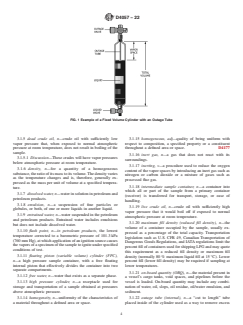
FIG. 1 Example of a Fixed Volume Cylinder with an Outage Tube
3.1.5 dead crude oil, n—crude oil with sufficiently low 3.1.15 homogeneous, adj—quality of being uniform with
vapor pressure that, when exposed to normal atmospheric respect to composition, a specified property or a constituent
pressure at room temperature, does not result in boiling of the throughout a defined area or space. D4177
sample.
3.1.16 inert gas, n—a gas that does not react with its
3.1.5.1 Discussion—These crudes will have vapor pressures
surroundings.
below atmospheric pressure at room temperature.
3.1.17 inerting, v—a procedure used to reduce the oxygen
3.1.6 density, n—for a quantity of a homogeneous
content of the vapor spaces by introducing an inert gas such as
substance,theratioofitsmasstoitsvolume.Thedensityvaries
nitrogen or carbon dioxide or a mixture of gases such as
as the temperature changes and is, therefore, generally ex-
processed flue gas.
pressed as the mass per unit of volume at a specified tempera-
3.1.18 intermediate sample container, n—a container into
ture.
which all or part of the sample from a primary container
3.1.7 dissolved water, n—water in solution in petroleum and
(receiver) is transferred for transport, storage, or ease of
petroleum products.
handling.
3.1.8 emulsion, n—a suspension of fine particles or
3.1.19 live crude oil, n—crude oil with sufficiently high
globules, or both, of one or more liquids in another liquid.
vapor pressure that it would boil off if exposed to normal
3.1.9 entrained water, n—water suspended in the petroleum
atmospheric pressure at room temperature.
and petroleum products. Entrained water includes emulsions
3.1.20 maximum fill density (reduced fill density), n—the
but does not include dissolved water.
volume of a container occupied by the sample, usually ex-
3.1.10 flash point, n—in petroleum products, the lowest
pressed as a percentage of the total capacity. Transportation
temperature corrected to a barometric pressure of 101.3 kPa
legislation such as U.S. CFR 49, Canadian Transportation of
(760 mmHg),atwhichapplicationofanignitionsourcecauses
Dangerous Goods Regulations, and IATA regulations limit the
thevaporsofaspecimenofthesampletoigniteunderspecified
percent fill of containers used for shipping LPG and may quote
conditions of test.
this requirement as a reduced fill density or maximum fill
3.1.11 floating piston (variable volume) cylinder (FPC),
density (normally 80 % maximum liquid fill at 15 °C). Lower
n—a high pressure sample container, with a free floating
percent fill (lower fill density) may be required if sampling at
internal piston that effectively divides the container into two
lower temperatures.
separate compartments.
3.1.21 on-board quantity (OBQ), n—the material present in
3.1.12 free water, n—water that exists as a separate phase.
a vessel’s cargo tanks, void spaces, and pipelines before the
vessel is loaded. On-board quantity may include any combi-
3.1.13 high pressure cylinder, n—a receptacle used for
nation of water, oil, slops, oil residue, oil/water emulsion, and
storage and transportation of a sample obtained at pressures
sediment.
above atmospheric pressure.
3.1.14 homogeneity, n—uniformity of the characteristics of 3.1.22 outage tube (internal), n—a “cut to length” tube
a material throughout a defined area or space. placed inside of the cylinder used as a way to remove excess
D4057 − 22
FIG. 2 Example of a Fixed Volume Cylinder and Transfer Line
sample from the cylinder via manual evacuation after the 3.1.28.1 Discussion—The act of sampling or obtaining a
sample cylinder assembly is removed from the sample point. sample may or may not be representative of the contents of the
Refer to Fig. 1 and Fig. 2. whole or total volume of product. See also 3.1.26 and 3.3.19.
3.1.29 slip tube, n—a graduated hollow rod fitted into a
3.1.23 portable manual sampling unit, PSU, n—an intrinsi-
gas-tighthousing,thelowerendofwhichisopentothecargo’s
callysafedeviceusedinconjunctionwithavaporcontrolvalve
contents and the upper end is fitted with a valve.
to obtain required cargo samples under closed or restricted
system conditions. Refer to Fig. 3 and Fig. 4.
3.1.30 standpipes, n—the vertical sections of pipe or tubing
used for gauging extending from the gauging platform to near
3.1.24 primary sample container, n—a container in which a
the bottom of tanks that are equipped with external or internal
sample is initially collected.
floatingroofs.Standpipesmayalsobefoundonmarinevessels.
3.1.24.1 Discussion—Examples of primary sample contain-
Standpipes are also known as “stilling wells” or “gauge wells.”
ers include glass and plastic bottles, cans, core-type thief, and
Standpipes without slots do not allow the free flow of product
fixed and portable sample containers (receivers).
through the standpipe, and are known as solid or unslotted
3.1.25 remaining on board, ROB, n—thematerialremaining
standpipes.
in a vessel’s cargo tanks, void spaces, and pipelines after the
3.1.31 ullage (outage), n—the volume of available space in
cargo is discharged. Remaining on board quantity may include
a container unoccupied by contents.
any combination of water, oil, slops, oil residue, oil/water
emulsions, and sediment.
3.1.32 vapor control valve, VCV, n—a valve fitted on a
standpipe, expansion trunk, or the deck that permits use of the
3.1.26 sample, n—a portion extracted from a total volume
portable handheld gauging/sampling instruments while re-
that may or may not contain the constituents in the same
stricting the release of vapors into the atmosphere.
proportions that are present in that total volume.
3.1.33 vapor pressure, n—the pressure exerted by the vapor
3.1.27 sample loop (fast loop or slip stream), n—a low
volume bypass diverted from the main pipeline. of a liquid when in equilibrium with the liquid.
3.1.28 sampling, v—the steps or procedures required to 3.1.33.1 Reid vapor pressure, RVP, n—resultant total pres-
obtain a sample, which is a portion of the contents of any pipe, sure reading, corrected for measuring error, of a specific
tank, or other vessel, and to place that sample in a container empirical test method (Test Method D323) for measuring the
from which a test specimen or aliquot can be analyzed. vapor pressure of gasoline and other volatile products.
D4057 − 22
FIG. 3 Examples of a Small Volume (5 cm (2 in.)) and a Large Volume PSU (10 cm (4 in.))
FIG. 4 Examples of Closed/Restricted Sampling Equipment
3.1.33.2 true vapor pressure, TVP, n—the pressure at which 3.3.1.1 Discussion—If required by the test method, the
the fluid is in equilibrium between its liquid and gas state. sampler may be greater than 85 % full when withdrawn but in
no case shall it be completely full. In these cases, take special
3.2 Definitions of Terms Specific to This Standard:
handling precautions to consider the hazards associated with
3.2.1 LPG (liquefied petroleum gas), n—narrow boiling
product thermal expansion.
range hydrocarbon mixtures consisting mainly of propane or
3.3.2 boring sample, n—a sample of the material contained
propylene, or both, and butanes or butylenes, or both, plus
in a barrel, case, bag, or cake that is obtained from the chips
limited amounts of other hydrocarbons and naturally-occurring
created by boring holes into the material with a ship auger.
non-hydrocarbons.
3.3.3 bottom sample, n—a spot sample collected from the
3.2.2 non-homogeneous, adj—quality of not being uniform
material at the bottom of the tank, container, or line at its
with respect to composition, a specified property or a constitu-
lowest point. In practice, the term bottom sample has a variety
ent throughout a defined area or space.
of meanings. As a result, it is recommended that the exact
3.2.3 rinse, v—the act of introducing material into a con-
sampling location (for example 15 cm (6 in.) from the bottom)
tainer for a purpose and discarding material before collecting a
should be specified when using this term. See Fig. 5.
sample in the same container.
3.3.4 bottom water sample, n—a spot sample of free water
3.2.3.1 Discussion—Reasons for rinsing may include pur-
taken from beneath the petroleum contained in a ship or barge
poses such as removal of potential contaminants from the
compartment or a storage tank.
container, pre-load the container with hydrocarbon vapors,
3.3.5 clearance sample, n—a spot sample taken with the
acclimatecontainertemperaturetothatofthesampleifneeded,
inlet opening of the sampling device 10 cm (4 in.) (some
as well as other purposes.
regulatory agencies require 15 cm (6 in.)) below the bottom of
the tank outlet. This term is normally associated with small
3.3 Definitions of Sample Types:
3.3.1 all-levels sample, n—a sample obtained by lowering (159 m (1000 barrels) or less) tanks, commonly referred to as
lease tanks.
the closed sampling device to the bottom of the outlet suction
level, but always above free water, then opening the sampler 3.3.6 composite sample, n—a sample prepared by combin-
and raising it at a uniform rate such that it is between 70 % and ing a number of samples and treated as a single sample. Also
85 % full when withdrawn from the product. Alternatively, refer to “tank composite sample,” “volumetric composite
all-levels samples may be taken with samplers designed for sample,” “deck composite sample,” and “multiple tank com-
filling as they pass downward through the product. posite sample” definitions.
D4057 − 22
3.3.16 lower sample, n—a spot sample of liquid from the
middle of the lower one-third of the tank’s content (a distance
of five-sixths of the depth liquid below the liquid’s surface).
See Fig. 5.
3.3.16.1 Discussion—For tap sampling, the tap is often not
in the middle of the lower layer. It is typically near the level of
themaintankoutletasreferencedin7.7.2.Whileitisnotinthe
exact middle of the lower one-third of the tank’s content, it
should still yield a sample representative of the lower layer.
3.3.17 middle sample, n—a spot sample taken from the
middle of a tank’s contents (a distance of one half of the depth
of liquid below the liquid’s surface). See Fig. 5.
3.3.17.1 Discussion—For tap sampling, the tap is often not
in the middle of the middle layer. Use the available tap closest
to the middle of the middle layer. While it is not in the exact
middle of the middle one-third of the tank’s content, it should
still yield a sample representative of the middle layer.
3.3.18 multiple tank composite sample, n—a mixture of
individual samples or composites of samples that have been
obtained from several tanks or ship/barge compartments con-
taining the same grade of material. The mixture is blended
typically in proportion to the volume of material contained in
the respective tanks or compartments.
FIG. 5 Illustration of Common Spot Sample Positions
3.3.19 representative sample, n—a portion extracted from
the total volume that contains the constituents in the same
proportions that are present in that total volume.
3.3.20 running sample, n—a sample obtained by lowering
3.3.7 core sample, n—a sample of uniform cross-sectional
an open sampling device to the bottom of the outlet suction
area taken at a given height in a tank.
level, but always above free water, and returning it to the top
3.3.8 dead bottom sample, n—a sample obtained from the
of the product at a uniform rate such that the sampling device
lowestaccessiblepointinatank.Thisistypicallydirectlyfrom
is between 70 % and 85 % full when withdrawn from the
the floor (or datum plate) of the shore tank or the bottom of the
product.
vessel compartment.
3.3.20.1 Discussion—If required by the test method, the
3.3.9 deck composite sample, n—a sample typically made
sampler may be greater than 85 % full when withdrawn but in
by compositing a portion of each sample obtained from all
no case shall it be completely full. In these cases, take special
vessel compartments containing a particular product grade.
handling precautions to consider the hazards associated with
3.3.10 dipper sample, n—a sample obtained by placing a product thermal expansion.
dipper or other collecting vessel in the path of a free-flowing
3.3.21 spot sample, n—a sample taken at a specific location
stream to collect a definite volume from the full cross section
in a tank or from a flowing stream in a pipe at a specific time.
of the stream at regular time intervals for a constant time rate
3.3.22 suction sample (outlet), n—aspotsampletakenatthe
offloworattimeintervalsvariedinproportiontotheflowrate.
lowest level from which product is expected to be pumped
3.3.11 drain sample, n—a sample obtained from the water
from the tank; see Fig. 5.
draw-off valve on a storage tank vessel or container.
3.3.23 sump sample, n—spot sample taken from within the
Occasionally, a drain sample may be the same as a bottom
tank or vessel compartment sump; see Fig. 5.
sample (for example, in the case of a tank car).
3.3.24 surface sample (skim sample), n—a spot sample
3.3.12 floating roof sample, n—a spot sample taken just
skimmed from the surface of a liquid in a tank. See Fig. 5.
below the surface to determine the density (API gravity) of the
3.3.25 tank composite sample, n—a blend created from a
liquid on which the roof is floating.
single tank, as an example combining the upper, middle, and
3.3.13 grab sample, n—liquid—a sample collected at a
lower samples. For a tank of uniform cross section, such as an
specific location in a tank or from a flowing stream in a pipe at
upright cylindrical tank, the blend consists of equal parts of the
a specific time.
three samples. A combination of other samples may also be
3.3.14 grease sample, n—obtainedbyscoopingordippinga used,suchasrunning,all-levelsoradditionalspotsamples.For
quantity of soft or semi-liquid material contained from a a horizontal cylindrical tank, the blend consists of samples in
package in a representative manner. the proportions shown in Table 1.
3.3.15 loading zone sample, n—a sample taken from a tank 3.3.26 tank tap sample, n—a spot sample taken from a
prior to commencement of a transfer, intended to represent sample tap on the side of a tank. It may also be referred to as
only the product expected to be transferred. a tank-side sample.
D4057 − 22
TABLE 1 Sampling from Horizontal Cylindrical Tanks
Liquid Depth (% of Diameter) Sampling Level (% of Diameter above Bottom) Composite Sample (Proportional Parts)
Upper Middle Lower Upper Middle Lower
100 80 50 20 3 4 3
90 75 50 20 3 4 3
80 70 50 20 2 5 3
70 . 50 20 . 6 4
60 . 50 20 . 5 5
50 . 40 20 . 4 6
40 . . 20 . . 10
30 . . 15 . . 10
20 . . 10 . . 10
10 . . 5 . . 10
3.3.27 test specimen, n—a representative sub-sample taken process vessels, drums, cans, tubes, bags, kettles, and open
fromtheprimaryorintermediatesamplecontainerforanalysis. discharge streams into the primary sample container.
3.3.28 top sample, n—a spot sample obtained 15 cm (6 in.)
below the top surface of the liquid. See Fig. 5.
5. Health and Safety Precautions
3.3.29 tube sample (thief sample), n—a sample obtained
5.1 General—This practice does not purport to cover all
with a sampling tube or special thief, either as a core sample or
safety and health aspects associated with sampling. Personnel
spot sample, from a specific point in the tank or container.
involved with sampling of petroleum and petroleum-related
3.3.30 upper sample, n—a spot sample taken from the
products should be familiar with their physical and chemical
middle of the upper one third of the tank’s contents (a distance
characteristics, including: potential for fire, explosion, and
of one-sixth of the depth of the liquid below the liquid’s
reactivity; toxicity and health hazards; and appropriate emer-
surface). See Fig. 5.
gency procedures. Additionally personnel should comply with
3.3.30.1 Discussion—For tap sampling, the tap is often not
individual company safe operating practices and local, state,
in the middle of the upper layer. Use the available tap closest
and national regulations, including the use of personal protec-
to the middle of the upper layer. While it is not in the exact
tive equipment (PPE). Upon completion of any sampling
middle of the upper one-third of the tank’s content, it should
activity, ensure the sample point is left in a safe, secure, and
still yield a sample representative of the upper layer.
clean condition with the handling of any waste in accordance
3.3.31 volumetric composite sample, n—a sample consist-
with local requirements.All marine vessel sampling should be
ing of measured proportional parts from each zone if it is for a
performed in the presence of a designated vessel representa-
single tank. If the volumetric composite is for multiple tanks,
tive.
or vessel compartments, it consists of measured proportional
parts from each tank or compartment sampled.
5.2 Sample Handling—For safety and protection of the
3.3.32 zone sample, n—a sample taken as that part of the
integrity of the samples, sample carriers are suggested in most
liquid column that is trapped within the whole height of a
instances. Refer to Fig. 6. Because of potential liquid thermal
sampling device when it is sealed at a single spot location
expansion, sample containers that are completely, or nearly
within a tank after having been fully flushed as it was lowered
full, are not to be transported or stored, unless special precau-
to that position.
tionary measures are taken. A safe fill of between 70 % and
85 % is recommended. Refer to definition for maximum fill
4. Significance and Use
densityand9.30forsafefillofpressurizedcylinders.Takecare
toavoidheatingsamplesincontainerswithgas-tightcaps,lids,
4.1 Samples of petroleum and petroleum products are ob-
tained for many reasons, including the determination of chemi- and stoppers. Handle any sample containing hazardous mate-
cal and physical properties. These properties may be used for: rialsortheresidueofhazardousmaterialsofferedforshipment/
calculating standard volumes; establishing product value; and transportation by air, public roadway, rail, or water in such a
often safety and regulatory reporting. manner as to ensure compliance with requirements such as
training, documentation, labeling, container, packaging,
4.2 Thereareinherentlimitationswhenperforminganytype
communications, and so forth, set forth in applicable
of sampling, any one of which may affect the representative
regulations, such as those issued by the International Air
nature of the sample. As examples, a spot sample provides a
Transport Association (IATA) and the U.S. Department of
sample from only one particular point in the tank, vessel
Transportation (DOT).
compartment, or pipeline. In the case of running or all-level
samples, the sample only represents the column of material
5.3 Sample Point Safety:
from which it was taken.
5.3.1 Provide sample points that enable samples to be taken
4.3 Based on the product, and testing to be performed, this in a safe manner, considering ventilation during sampling,
practice provides guidance on sampling equipment, container clear access/egress, and lighting. Any potential hazards asso-
preparation, and manual sampling procedures for petroleum ciated with sampling, or located near the sample point, should
and petroleum products of a liquid, semi-liquid, or solid state, beclearlymarked.Itisrecommendedthatapressuregaugeand
from the storage tanks, flowlines, pipelines, marine vessels, a method of closed loop flushing with safe drainage, be
D4057 − 22
documented conditions, some exceptions to the 30 min relax-
ation period may apply. Some tanks and vessel compartments
have inert gas blankets in the vapor space above the liquid.
Unless the effectiveness of the inert blanket can be verified, all
static charge precautions and recommendations should be
observed.
5.4.4 Exercise caution when using equipment made of
aluminum, magnesium, or titanium, which may generate in-
cendiary sparks when struck against rusted steel. Some coun-
tries restrict the use of sampling equipment made from such
materials or from alloys containing more than 15 % (m/m) in
total of these metals or 6 % (m/m) of magnesium.
5.5 Pipeline/Line Sampling—When sampling from a flow-
ing pipeline, maintain electrical continuity between the pipe-
line and the sample container via the connecting pipework. Do
not use plastic containers since they are non-conductive and
will not dissipate static electricity. Use a static grounding
clamp or other arrangement that ensures adequate electrical
FIG. 6 Typical Sample Carrier
continuity is maintained if sampling with a metal container.An
effective ground should be verified.
provided at pipeline sample points. Sample points and related
NOTE 1—The API safety publication Protection Against Ignitions
equipment should be maintained and inspected regularly.
Arising Out of Static, Lightning, and Stray Currents states that electrical
5.3.2 Floating-roof tanks should be sampled from the top resistances of higher than 10 in metal circuits are indicative of a break in
the continuity of the circuit, resulting in the undesirable accumulation of
platform, thereby avoiding descent onto the floating roof.
static electricity.
5.3.2.1 Descending onto a floating roof is normally consid-
5.6 General Health Hazards and Precautions:
ered entering a designated confined space, requiring all facility
5.6.1 Petroleum vapor dilutes oxygen in the air and may
and regulatory requirements to be strictly followed, including
also be toxic. Hydrogen sulfide vapors are particularly hazard-
obtaining a confined space permit, and rescue provisions
ous. Harmful vapors or oxygen deficiency cannot always be
arranged. Toxic and flammable vapors may accumulate on the
detected by smell, visual inspection, or judgment. The use of
roof. Climbing stairs of tanks and descending onto floating
oxygen and toxic gas monitors, PPE, and emergency rescue
roofs can pose an increased safety risk for personnel.
precautions should be considered for all sampling operations.
5.4 Static Electricity Hazards:
Self-contained breathing apparatus (SCBA) may be necessary.
5.4.1 A number of fires and explosions have occurred as a
Personnel should position themselves upwind of the sample
result of hydrocarbon vapors being ignited by static electricity.
pointtominimizeexposuretoanyharmfulvaporwhichmaybe
If electrical charges are not earthed or grounded, they are
released.
unable to dissipate and become “static.” This static electric
5.6.2 This discussion on safety and health is not exhaustive.
charge can accumulate and freely migrate to a single point on
The appropriate Material Safety Data Sheet (MSDS), API, or
thesamplecontainerbyadifferenceinelectricalpotential,then
ASTM International publication should be consulted, together
jump off as a high-energy spark discharge to a nearby less
with applicable regulatory requirements, and the International
charged surface, often hot and prolonged enough to ignite
SafetyGuideforOilTankersandTerminals(ISGOTT), Safety
nearby hydrocarbon vapors above the lower explosive limit
of Life at Sea (SOLAS), and Oil Companies International
(LEL). This potential shall be managed by safely dissipating
Marine Forum (OCIMF), while always observing company
static charges, and through proper grounding, when sampling
and local health and safety requirements.
flammable products.
5.4.2 Footwear or clothing, capable of causing sparks,
6. Apparatus
should not to be worn during sampling activities in which
6.1 General Sample Container Design Considerations:
flammable vapors are likely to be present. Sampling should not
6.1.1 Sample containers come in a variety of shapes, sizes,
be carried out during periods of atmospheric electric distur-
and materials. Select the proper container based on the product
bance or hail storms. To ground any static charge on their
to be sampled to ensure that there will be no interaction
person, the individual performing the sampling should touch
part of the tank structure at least 1 m (3 ft) from the sample
point immediately before sampling.
Protection Against Ignitions Arising Out of Static, Lightning, and Stray
5.4.3 Precautions are to be observed before sampling to
Currents, Edition 7, American Petroleum Institute, Washington, DC, 2008.
reduce the likelihood of a static charge being present. During
International Safety Guide for Oil Tankers and Terminals (ISGOTT), Hyperion
Books, 2006.
tank filling or mixing operations, and for 30 min after the
International Convention for the Safety of Life at Sea (SOLAS), International
completion, sampling equipment shall not be introduced into,
Maritime Organization, London, UK, 1974.
or remain in, the tank. With full observance of applicable
Available from Oil Companies International Marine Forum (OCIMF), 29
regulatory requirements, and only under very specific and Queen Anne’s Gate, London SW1H 9BU, U.K., http://www.ocimf.com.
D4057 − 22
between the product sampled and the container that would
affect the integrity of either. The following are general design
considerations for sample containers:
6.1.1.1 No internal pockets or dead spots;
6.1.1.2 Internal surfaces designed to minimize corrosion,
encrustation, and water/sediment clingage;
6.1.1.3 An inspection cover/closure of sufficient size to
facilitate filling, inspection, and cleaning;
6.1.1.4 Designed to allow the preparation, and transfer to
the analytical apparatus, of a homogeneous mixture of the
samplewhileminimizingthelossofanyconstituentsthataffect
the representativeness of the sample and the accuracy of the
analytical tests.
6.1.2 Additional considerations in the selection of sample
containers are the type of mixing required before transferring
from the primary container, and the analysis to be performed.
To facilitate the discussion on proper handling and mixing of
samples, sample containers are referred to as either primary or
intermediate containers. Regardless of the type of sample
container used, the sample container should be large enough to
contain the required sample volume and sufficient ullage space
for thermal expansion and mixing of the sample.
6.1.3 While this practice is meant to provide some guidance
related to particular products and tests, it remains the respon-
sibility of the subcommittee for the relevant test method to
provide specific guidance regarding sample container
selection, preparation, cleanliness, and sample size require-
ments for testing and retention. Also refer to Practice D5854
(API MPMS Chapter 8.3), Practice D5842 (API MPMS Chap-
FIG. 7 Amber and Clear Boston Round Bottles
ter 8.4), and Practice D4306.
6.2 Glass Bottles—See Fig. 7. Glass containers are suitable
for many sample test and storage requirements. Clear glass
This is to avoid sample contamination or sample bottle failure.
bottles can be easily examined visually for cleanliness, and
Used engine oil samples that may have been subjected to fuel
allow for visual inspection of the sample for haze (cloudiness),
dilution should not be stored in plastic containers. Plastic
discoloration, free water, and solid impurities.The brown glass
bottles do have an advantage in that they will not shatter like
bottle affords some protection to the samples when light may
glass or corrode like metal containers.
affect the test results. Refer to Practice D5854 (API MPMS
6.5 Container Closures:
Chapter 8.3).
6.5.1 Screwcapsmadeofamaterialthatwillnotdeteriorate
6.3 Cans—When using cans, any seams shall have been
or contaminate the sample are to be used for glass bottles.
soldered on the exterior surfaces with a flux of rosin in a
Screw caps should provide a vapor-tight seal. Use care when
suitable solvent. Such a flux is easily removed with gasoline,
using cork stoppers. Situations in which corks should not be
whereas many others are very difficult to remove. Cans made
used include: liquids in which loss of light ends may affect any
ofstainlesssteelwithweldedseams,andaluminumbottles,are
test results; and liquids that are hygroscopic or have a
suitable for many sampling operations, but cleanliness is still
low-water content specification. Rubber stoppers are not to be
required. Minute traces of flux may contaminate the sample so
used.
that results obtained on tests such as dielectric strength,
6.5.2 Cans and plastic bottles should be closed with screw
oxidation resistance, and sludge formation may be erroneous.
caps made of the same material as the container. Protect can
For aviation fuel sampling, refer to Practice D4306.
screw caps with a disk faced with a material that will not
deteriorate or contaminate the sample when used to store or
6.4 Plastic Bottles—In general, plastic bottles made of
transport samples. Consideration of closure type is important
suitable material may be used for the handling and storage of
for samples in which vapor loss will affect the test results.
diesel oil, fuel oil, and lubricating oil. Bottles of this type
Screw caps of a quality that provide a vapor-tight closure
should not be used for gasoline, aviation jet fuel, kerosene,
should be used for plastic bottles and cans. Use screw caps for
crude oil, white spirit, medicinal white oil, or other petroleum
containers used to take samples that will be tested for density
products unless testing indicates there is no problem with
or API gravity.
so
...
This document is not an ASTM standard and is intended only to provide the user of an ASTM standard an indication of what changes have been made to the previous version. Because
it may not be technically possible to adequately depict all changes accurately, ASTM recommends that users consult prior editions as appropriate. In all cases only the current version
of the standard as published by ASTM is to be considered the official document.
Designation: D4057 − 19 D4057 − 22
Manual of Petroleum Measurement Standards (MPMS), Chapter 8.1
Standard Practice for
Manual Sampling of Petroleum and Petroleum Products
This standard is issued under the fixed designation D4057; the number immediately following the designation indicates the year of
original adoption or, in the case of revision, the year of last revision. A number in parentheses indicates the year of last reapproval. A
superscript epsilon (´) indicates an editorial change since the last revision or reapproval.
This standard has been approved for use by agencies of the U.S. Department of Defense.
INTRODUCTION
The previous version of the manual sampling practice described the various sampling methods and
apparatus, with much focus on crude oils and semi-solids and solids. Also, previous versions did not
significantly address closed or restricted sampling, which continue to become more prevalent.
This version will provide guidance on manual sampling terminology, concepts, equipment,
containers, procedures, and will provide some specific guidance related to particular products and
tests. The type and size of the sample obtained, and the handling method, will depend on the purpose
for which it was taken. Refer to the test method for any specific sampling and handling requirements
up to the point of testing. It remains the responsibility of the subcommittee for the relevant test method
to provide guidance, or warnings, regarding sample container selection; preparation; cleanliness; heat,
pressure, or light; sample size requirements for testing and retention; and any other special handling
requirements necessary to ensure a representative sample is tested.
In addition to the individual test method, for guidance on container, size, mixing and special
handling, further guidance may be provided in Practice D5854 (API MPMS Chapter 8.3), Practice
D5842 (API MPMS Chapter 8.4), and Practice D4306. While this practice will provide some general
guidance regarding sample chain of custody, Guide D4840 should also be consulted.
This document has been developed jointly between the American Petroleum Institute (API) and
ASTM International.
1. Scope*
1.1 This practice covers procedures and equipment for manually obtaining samples of liquid petroleum and petroleum products,
crude oils, and intermediate products from the sample point into the primary container are described. Procedures are also included
for the sampling of free water and other heavy components associated with petroleum and petroleum products.
1.2 This practice also addresses the sampling of semi-liquid or solid-state petroleum products. For the sampling of green
petroleum coke, see Practice D8145. For the sampling of calcined petroleum coke, see Practice D6970.
1.3 This practice provides additional specific information about sample container selection, preparation, and sample handling.
This practice is under the jurisdiction of ASTM Committee D02 on Petroleum Products, Liquid Fuels, and Lubricants and the API Committee on Petroleum Measurement,
and is the direct responsibility of Subcommittee D02.02 /COMQ the joint ASTM-API Committee on Hydrocarbon Measurement for Custody Transfer (Joint ASTM-API).
This practice has been approved by the sponsoring committees and accepted by the Cooperating Societies in accordance with established procedures. This practice was issued
as a joint ASTM-API standard in 1981.
Current edition approved July 1, 2019May 1, 2022. Published August 2019June 2022. Originally approved in 1981. Last previous edition approved in 20182019 as
D4057 – 12 (2018).D4057 – 19. DOI: 10.1520/D4057-19.10.1520/D4057-22.
*A Summary of Changes section appears at the end of this standard
© Jointly copyrighted by ASTM International, 100 Barr Harbor Drive, PO Box C700, West Conshohocken, PA 19428-2959, USA and the American Petroleum Institute (API), 1220 L Street NW, Washington DC 20005, USA
D4057 − 22
1.4 This practice does not cover sampling of electrical insulating oils and hydraulic fluids. If sampling is for the precise
determination of volatility, use Practice D5842 (API MPMS Chapter 8.4) in conjunction with this practice. For sample mixing and
handling, refer to Practice D5854 (API MPMS Chapter 8.3).
1.5 The procedures described in this practice may also be applicable in sampling most non-corrosive liquid industrial chemicals
provided that all safety precautions specific to these chemicals are followed. Also, refer to Practice E300. The procedures described
in this practice are also applicable to sampling liquefied petroleum gases and chemicals. Also refer to Practices D1265 and D3700.
The procedure for sampling bituminous materials is described in Practice D140. Practice D4306 provides guidance on sample
containers and preparation for sampling aviation fuel.
1.6 Units—The values stated in SI units are to be regarded as the standard. USC units are reflected in parentheses.
1.7 This standard does not purport to address all of the safety concerns, if any, associated with its use. It is the responsibility
of the user of this standard to establish appropriate safety, health, and environmental practices and determine the applicability of
regulatory limitations prior to use.
1.8 This international standard was developed in accordance with internationally recognized principles on standardization
established in the Decision on Principles for the Development of International Standards, Guides and Recommendations issued
by the World Trade Organization Technical Barriers to Trade (TBT) Committee.
2. Referenced Documents
2.1 ASTM Standards:
D86 Test Method for Distillation of Petroleum Products and Liquid Fuels at Atmospheric Pressure
D97 Test Method for Pour Point of Petroleum Products
D140 Practice for Sampling Asphalt Materials
D217 Test Methods for Cone Penetration of Lubricating Grease
D244 Test Methods and Practices for Emulsified Asphalts
D268 Guide for Sampling and Testing Volatile Solvents and Chemical Intermediates for Use in Paint and Related Coatings and
Material
D287 Test Method for API Gravity of Crude Petroleum and Petroleum Products (Hydrometer Method)
D323 Test Method for Vapor Pressure of Petroleum Products (Reid Method)
D445 Test Method for Kinematic Viscosity of Transparent and Opaque Liquids (and Calculation of Dynamic Viscosity)
D473 Test Method for Sediment in Crude Oils and Fuel Oils by the Extraction Method (API MPMS Chapter 10.1)
D664 Test Method for Acid Number of Petroleum Products by Potentiometric Titration
D977 Specification for Emulsified Asphalt
D1265 Practice for Sampling Liquefied Petroleum (LP) Gases, Manual Method
D1267 Test Method for Gauge Vapor Pressure of Liquefied Petroleum (LP) Gases (LP-Gas Method)
D1298 Test Method for Density, Relative Density, or API Gravity of Crude Petroleum and Liquid Petroleum Products by
Hydrometer Method (API MPMS Chapter 9.1)
D1657 Test Method for Density or Relative Density of Light Hydrocarbons by Pressure Hydrometer (API MPMS Chapter 9.2)
D1838 Test Method for Copper Strip Corrosion by Liquefied Petroleum (LP) Gases
D1856 Test Method for Recovery of Asphalt from Solution by Abson Method
D2172 Test Methods for Quantitative Extraction of Asphalt Binder from Asphalt Mixtures
D2622 Test Method for Sulfur in Petroleum Products by Wavelength Dispersive X-ray Fluorescence Spectrometry
D3230 Test Method for Salts in Crude Oil (Electrometric Method)
D3700 Practice for Obtaining LPG Samples Using a Floating Piston Cylinder
D4006 Test Method for Water in Crude Oil by Distillation (API MPMSChapter 10.2)
D4007 Test Method for Water and Sediment in Crude Oil by the Centrifuge Method (Laboratory Procedure) (API MPMS
Chapter 10.3)
D4175 Terminology Relating to Petroleum Products, Liquid Fuels, and Lubricants
D4177 Practice for Automatic Sampling of Petroleum and Petroleum Products (API MPMS Chapter 8.2)
D4294 Test Method for Sulfur in Petroleum and Petroleum Products by Energy Dispersive X-ray Fluorescence Spectrometry
D4306 Practice for Aviation Fuel Sample Containers for Tests Affected by Trace Contamination
D4377 Test Method for Water in Crude Oils by Potentiometric Karl Fischer Titration (API MPMS Chapter 10.7)
For referenced ASTM standards, visit the ASTM website, www.astm.org, or contact ASTM Customer Service at service@astm.org. For Annual Book of ASTM Standards
volume information, refer to the standard’s Document Summary page on the ASTM website.
D4057 − 22
D4530 Test Method for Determination of Carbon Residue (Micro Method)
D4629 Test Method for Trace Nitrogen in Liquid Hydrocarbons by Syringe/Inlet Oxidative Combustion and Chemiluminescence
Detection
D4807 Test Method for Sediment in Crude Oil by Membrane Filtration (API MPMS Chapter 10.8)
D4840 Guide for Sample Chain-of-Custody Procedures
D4928 Test Method for Water in Crude Oils by Coulometric Karl Fischer Titration (API MPMS Chapter 10.9)
D4929 Test Method for Determination of Organic Chloride Content in Crude Oil
D5002 Test Method for Density, Relative Density, and API Gravity of Crude Oils by Digital Density Analyzer
D5191 Test Method for Vapor Pressure of Petroleum Products and Liquid Fuels (Mini Method)
D5762 Test Method for Nitrogen in Liquid Hydrocarbons, Petroleum and Petroleum Products by Boat-Inlet Chemiluminescence
D5842 Practice for Sampling and Handling of Fuels for Volatility Measurement (API MPMS Chapter 8.4)
D5853 Test Method for Pour Point of Crude Oils
D5854 Practice for Mixing and Handling of Liquid Samples of Petroleum and Petroleum Products (API MPMS Chapter 8.3)
D5863 Test Methods for Determination of Nickel, Vanadium, Iron, and Sodium in Crude Oils and Residual Fuels by Flame
Atomic Absorption Spectrometry
D6299 Practice for Applying Statistical Quality Assurance and Control Charting Techniques to Evaluate Analytical Measure-
ment System Performance
D6377 Test Method for Determination of Vapor Pressure of Crude Oil: VPCR (Expansion Method)
x
D6378 Test Method for Determination of Vapor Pressure (VP ) of Petroleum Products, Hydrocarbons, and Hydrocarbon-
X
Oxygenate Mixtures (Triple Expansion Method)
D6470 Test Method for Salt in Crude Oils (Potentiometric Method)
D6560 Test Method for Determination of Asphaltenes (Heptane Insolubles) in Crude Petroleum and Petroleum Products
D6822 Test Method for Density, Relative Density, and API Gravity of Crude Petroleum and Liquid Petroleum Products by
Thermohydrometer Method (API MPMS Chapter 9.3)
D6849 Practice for Storage and Use of Liquefied Petroleum Gases (LPG) in Sample Cylinders for LPG Test Methods
D6970 Practice for Collection of Calcined Petroleum Coke Samples for Analysis
D7169 Test Method for Boiling Point Distribution of Samples with Residues Such as Crude Oils and Atmospheric and Vacuum
Residues by High Temperature Gas Chromatography
D7975 Test Method for Determination of Vapor Pressure of Crude Oil: VPCR -F(Tm°C) (Manual Expansion Field Method)
x
D8009 Practice for Manual Piston Cylinder Sampling for Volatile Crude Oils, Condensates, and Liquid Petroleum Products (API
MPMS Chapter 8.5)
D8145 Practice for Sampling of Green Petroleum Coke
E300 Practice for Sampling Industrial Chemicals
E882 Guide for Accountability and Quality Control in the Chemical Analysis Laboratory
2.2 API Manual of Petroleum Measurement Standards:
MPMS Chapter 1 Vocabulary
MPMS Chapter 8.2 Automatic Sampling of Petroleum and Petroleum Products (ASTM Practice D4177)
MPMS Chapter 8.3 Standard Practice for Mixing and Handling of Liquid Samples of Petroleum and Petroleum Products (ASTM
Practice D5854)
MPMSChapter 8.4 Standard Practice for the Sampling and Handling of Fuels for Volatility Measurements (ASTM Practice
D5842)
MPMS Chapter 8.5 Standard Practice Manual Piston Cylinders (ASTM Practice D8009)
MPMSChapter 9.1 Standard Test Method for Density, Relative Density (Specific Gravity), or API Gravity of Crude Petroleum
and Liquid Petroleum (ASTM Test Method D1298)
MPMSChapter 9.2 Standard Test Method for Density or Relative Density of Light Hydrocarbons by Pressure Hydrometer
(ASTM Test Method D1657)
MPMS Chapter 9.3 Standard Test Method for Density, Relative Density, and API Gravity of Crude Petroleum and Liquid
Petroleum Products by Thermohydrometer Method (ASTM Test Method D6822)
MPMS Chapter 10.1 Standard Test Method for Sediment in Crude Oils and Fuel Oils by the Extraction Method (ASTM Test
Method D473)
MPMS Chapter 10.2 Standard Test Method for Water in Crude Oil by Distillation (ASTM Test Method D4006)
MPMS Chapter 10.3 Standard Test Method for Water and Sediment in Crude Oil by the Centrifuge Method (Laboratory
Procedure) (ASTM Test Method D4007)
MPMS Chapter 10.4 Standard Test Method for Water and Sediment in Crude Oil by the Centrifuge Method (Laboratory
Procedure)
Available from American Petroleum Institute (API), 1220 L. St., NW, Washington, DC 20005-4070, http://www.api.org.
D4057 − 22
MPMS Chapter 10.7 Standard Test Method for Water in Crude Oils by Potentiometric Karl Fischer Titration (ASTM Test
Method D4377)
MPMS Chapter 10.8 Standard Test Method for Water in Crude Oils by Potentiometric Karl Fischer Titration (ASTM Test
Method D4807)
MPMS Chapter 10.9 Standard Test Method for Water in Crude Oils by Coulometric Karl Fischer Titration (ASTM Test Method
D4928)
MPMS Chapter 14.6 Pressure Pycnometer
MPMS Chapter 17.1 Guidelines for Marine Cargo Inspection
MPMS Chapter 17.2 Measurement of Cargoes Aboard Marine Tank Vessels
MPMSChapter 18.1 Measurement Procedures for Crude Oil Gathered from Small Tanks By Truck
2.3 Gas Processors Association (GPA) Standards:
GPA S 2174 Obtaining Liquid Hydrocarbon Samples for Analysis by Gas Chromatograph
2.4 Other Publications:
UOP163 Hydrogen Sulfide and Mercaptan Sulfur in Liquid Hydrocarbons by Potentiometric Titration
49 CFR 173 Shippers—General Requirements for Shipments and Packagings
3. Terminology
3.1 Definitions:
3.1.1 For definitions of terms used in this practice, refer to Terminology D4175 and API MPMS Chapter 1.
3.1.2 assay, n—the procedure to determine the presence, absence, or quantity of one or more components.
3.1.3 automatic sampler, n—a device used to extract a representative sample from the liquid flowing in a pipe; the automatic
sampler generally consists of a probe, a sample extractor, an associated controller, a flow measuring device, and a sample receiver.
3.1.4 bubble point, n—the pressure at which the first bubble of vapor forms is the bubble point when the pressure is lowered on
a liquid held at a constant temperature.
3.1.4.1 Discussion—
Bubble point pressures are higher at high temperatures.
3.1.5 dead crude oil, n—crude oil with sufficiently low vapor pressure that, when exposed to normal atmospheric pressure at room
temperature, does not result in boiling of the sample.
3.1.5.1 Discussion—
These crudes will have vapor pressures below atmospheric pressure at room temperature.
3.1.6 density, n—for a quantity of a homogeneous substance, the ratio of its mass to its volume. The density varies as the
temperature changes and is, therefore, generally expressed as the mass per unit of volume at a specified temperature.
3.1.7 dissolved water, n—water in solution in petroleum and petroleum products.
3.1.8 emulsion, n—a suspension of fine particles or globules, or both, of one or more liquids in another liquid.
3.1.9 entrained water, n—water suspended in the petroleum and petroleum products. Entrained water includes emulsions but does
not include dissolved water.
3.1.10 flash point, n—in petroleum products, the lowest temperature corrected to a barometric pressure of 101.3 kPa (760 mm Hg),
at which application of an ignition source causes the vapors of a specimen of the sample to ignite under specified conditions of
test.
3.1.11 floating piston (variable volume) cylinder (FPC), n—a high pressure sample container, with a free floating internal piston
that effectively divides the container into two separate compartments.
Available from Gas Processors Association (GPA), 6526 E. 60th St., Tulsa, OK 74145, http://www.gasprocessors.com.
Available from ASTM International. Visit the ASTM website, www.astm.org, or contact ASTM Customer Service at service@astm.org.
Available from U.S. Government Printing Office Superintendent of Documents, 732 N. Capitol St., NW, Mail Stop: SDE, Washington, DC 20401, http://
www.access.gpo.gov.
D4057 − 22
3.1.12 free water, n—water that exists as a separate phase.
3.1.13 high pressure cylinder, n—a receptacle used for storage and transportation of a sample obtained at pressures above
atmospheric pressure.
3.1.14 homogeneity, n—uniformity of the characteristics of a material throughout a defined area or space.
3.1.15 homogeneous, adj—quality of being uniform with respect to composition, a specified property or a constituent throughout
a defined area or space. D4177
3.1.16 inert gas, n—a gas that does not react with its surroundings.
3.1.17 inerting, v—a procedure used to reduce the oxygen content of the vapor spaces by introducing an inert gas such as nitrogen
or carbon dioxide or a mixture of gases such as processed flue gas.
3.1.18 intermediate sample container, n—a container into which all or part of the sample from a primary container (receiver) is
transferred for transport, storage, or ease of handling.
3.1.19 live crude oil, n—crude oil with sufficiently high vapor pressure that it would boil off if exposed to normal atmospheric
pressure at room temperature.
3.1.17 LPG (liquefied petroleum gas), n—narrow boiling range hydrocarbon mixtures consisting mainly of propane or propylene,
or both, and butanes or butylenes, or both, plus limited amounts of other hydrocarbons and naturally-occurring non-hydrocarbons.
3.1.20 maximum fill density (reduced fill density), n—the volume of a container occupied by the sample, usually expressed as a
percentage of the total capacity. Transportation legislation such as U.S. CFR 49, Canadian Transportation of Dangerous Goods
Regulations, and IATA regulations limit the percent fill of containers used for shipping LPG and may quote this requirement as
a reduced fill density or maximum fill density (normally 80 % maximum liquid fill at 15 °C). Lower percent fill (lower fill density)
may be required if sampling at lower temperatures.
3.1.21 on-board quantity (OBQ), n—the material present in a vessel’s cargo tanks, void spaces, and pipelines before the vessel is
loaded. On-board quantity may include any combination of water, oil, slops, oil residue, oil/water emulsion, and sediment.
3.1.22 outage tube (internal), n—a “cut to length” tube placed inside of the cylinder used as a way to remove excess sample from
the cylinder via manual evacuation after the sample cylinder assembly is removed from the sample point. Refer to Fig. 1 and Fig.
2.
3.1.23 portable manual sampling unit, PSU, n—an intrinsically safe device used in conjunction with a vapor control valve to
obtain required cargo samples under closed or restricted system conditions. Refer to Fig. 3 and Fig. 4.
3.1.24 primary sample container, n—a container in which a sample is initially collected.
3.1.24.1 Discussion—
Examples of primary sample containers include glass and plastic bottles, cans, core-type thief, and fixed and portable sample
containers (receivers).
3.1.25 remaining on board, ROB, n—the material remaining in a vessel’s cargo tanks, void spaces, and pipelines after the cargo
is discharged. Remaining on board quantity may include any combination of water, oil, slops, oil residue, oil/water emulsions, and
sediment.
3.1.26 sample, n—a portion extracted from a total volume that may or may not contain the constituents in the same proportions
that are present in that total volume.
3.1.27 sample loop (fast loop or slip stream), n—a low volume bypass diverted from the main pipeline.
D4057 − 22
FIG. 1 Example of a Fixed Volume Cylinder with an Outage Tube
FIG. 2 Example of a Fixed Volume Cylinder and Transfer Line
3.1.28 sampling, v—the steps or procedures required to obtain a sample, which is a portion of the contents of any pipe, tank, or
other vessel, and to place that sample in a container from which a test specimen or aliquot can be analyzed.
3.1.28.1 Discussion—
The act of sampling or obtaining a sample may or may not be representative of the contents of the whole or total volume of product.
See also 3.1.243.1.26 and 3.1.503.3.19.
D4057 − 22
FIG. 3 Examples of a Small Volume (5 cm (2 in.)) and a Large Volume PSU (10 cm (4 in.))
FIG. 4 Examples of Closed/Restricted Sampling Equipment
3.1.29 slip tube, n—a graduated hollow rod fitted into a gas-tight housing, the lower end of which is open to the cargo’s contents
and the upper end is fitted with a valve.
3.1.30 standpipes, n—the vertical sections of pipe or tubing used for gauging extending from the gauging platform to near the
bottom of tanks that are equipped with external or internal floating roofs. Standpipes may also be found on marine vessels.
Standpipes are also known as “stilling wells” or “gauge wells.” Standpipes without slots do not allow the free flow of product
through the standpipe, and are known as solid or unslotted standpipes.
3.1.31 ullage (outage), n—the volume of available space in a container unoccupied by contents.
3.1.32 vapor control valve, VCV, n—a valve fitted on a standpipe, expansion trunk, or the deck that permits use of the portable
handheld gauging/sampling instruments while restricting the release of vapors into the atmosphere.
3.1.33 vapor pressure, n—the pressure exerted by the vapor of a liquid when in equilibrium with the liquid.
3.1.33.1 Reid vapor pressure, RVP, n—resultant total pressure reading, corrected for measuring error, of a specific empirical test
method (Test Method D323) for measuring the vapor pressure of gasoline and other volatile products.
3.1.33.2 true vapor pressure, TVP, n—the pressure at which the fluid is in equilibrium between its liquid and gas state.
Sample Types
3.1.32 all-levels sample, n—a sample obtained by lowering the closed sampling device to the bottom of the outlet suction level,
but always above free water, then opening the sampler and raising it at a uniform rate such that it is between 70 % and 85 % full
when withdrawn from the product. Alternatively, all-levels samples may be taken with samplers designed for filling as they pass
downward through the product.
3.1.32.1 Discussion—
D4057 − 22
FIG. 5 Illustration of Common Spot Sample Positions
If required by the test method, the sampler may be greater than 85 % full when withdrawn but in no case shall it be completely
full. In these cases, take special handling precautions to consider the hazards associated with product thermal expansion.
3.1.33 boring sample, n—a sample of the material contained in a barrel, case, bag, or cake that is obtained from the chips created
by boring holes into the material with a ship auger.
3.1.34 bottom sample, n—a spot sample collected from the material at the bottom of the tank, container, or line at its lowest point.
In practice, the term bottom sample has a variety of meanings. As a result, it is recommended that the exact sampling location (for
example 15 cm (6 in.) from the bottom) should be specified when using this term. See Fig. 5.
3.1.35 bottom water sample, n—a spot sample of free water taken from beneath the petroleum contained in a ship or barge
compartment or a storage tank.
3.1.36 clearance sample, n—a spot sample taken with the inlet opening of the sampling device 10 cm (4 in.) (some regulatory
agencies require 15 cm (6 in.)) below the bottom of the tank outlet. This term is normally associated with small (159 m (1000
barrels) or less) tanks, commonly referred to as lease tanks.
3.1.37 composite sample, n—a sample prepared by combining a number of samples and treated as a single sample. Also refer to
“tank composite sample,” “volumetric composite sample,” “deck composite sample,” and “multiple tank composite sample”
definitions.
3.1.38 core sample, n—a sample of uniform cross-sectional area taken at a given height in a tank.
3.1.39 dead bottom sample, n—a sample obtained from the lowest accessible point in a tank. This is typically directly from the
floor (or datum plate) of the shore tank or the bottom of the vessel compartment.
3.1.40 deck composite sample, n—a sample typically made by compositing a portion of each sample obtained from all vessel
compartments containing a particular product grade.
3.1.41 dipper sample, n—a sample obtained by placing a dipper or other collecting vessel in the path of a free-flowing stream to
D4057 − 22
collect a definite volume from the full cross section of the stream at regular time intervals for a constant time rate of flow or at
time intervals varied in proportion to the flow rate.
3.1.42 drain sample, n—a sample obtained from the water draw-off valve on a storage tank vessel or container. Occasionally, a
drain sample may be the same as a bottom sample (for example, in the case of a tank car).
3.1.43 floating roof sample, n—a spot sample taken just below the surface to determine the density (API gravity) of the liquid on
which the roof is floating.
3.1.44 grab sample, n—liquid—a sample collected at a specific location in a tank or from a flowing stream in a pipe at a specific
time.
3.1.45 grease sample, n—obtained by scooping or dipping a quantity of soft or semi-liquid material contained from a package in
a representative manner.
3.1.46 loading zone sample, n—a sample taken from a tank prior to commencement of a transfer, intended to represent only the
product expected to be transferred.
3.1.47 lower sample, n—a spot sample of liquid from the middle of the lower one-third of the tank’s content (a distance of
five-sixths of the depth liquid below the liquid’s surface). See Fig. 5.
3.1.48 middle sample, n—a spot sample taken from the middle of a tank’s contents (a distance of one half of the depth of liquid
below the liquid’s surface). See Fig. 5.
3.1.49 multiple tank composite sample, n—a mixture of individual samples or composites of samples that have been obtained from
several tanks or ship/barge compartments containing the same grade of material. The mixture is blended typically in proportion
to the volume of material contained in the respective tanks or compartments.
3.1.50 representative sample, n—a portion extracted from the total volume that contains the constituents in the same proportions
that are present in that total volume.
3.1.51 running sample, n—a sample obtained by lowering an open sampling device to the bottom of the outlet suction level, but
always above free water, and returning it to the top of the product at a uniform rate such that the sampling device is between 70 %
and 85 % full when withdrawn from the product.
3.1.51.1 Discussion—
If required by the test method, the sampler may be greater than 85 % full when withdrawn but in no case shall it be completely
full. In these cases, take special handling precautions to consider the hazards associated with product thermal expansion.
3.1.52 spot sample, n—a sample taken at a specific location in a tank or from a flowing stream in a pipe at a specific time.
3.1.53 suction sample (outlet), n—a spot sample taken at the lowest level from which product is expected to be pumped from the
tank; see Fig. 5.
3.1.54 sump sample, n—spot sample taken from within the tank or vessel compartment sump; see Fig. 5.
3.1.55 surface sample (skim sample), n—a spot sample skimmed from the surface of a liquid in a tank. See Fig. 5.
3.1.56 tank composite sample, n—a blend created from a single tank, as an example combining the upper, middle, and lower
samples. For a tank of uniform cross section, such as an upright cylindrical tank, the blend consists of equal parts of the three
samples. A combination of other samples may also be used, such as running, all-levels or additional spot samples. For a horizontal
cylindrical tank, the blend consists of samples in the proportions shown in Table 1.
3.1.57 tank tap sample, n—a spot sample taken from a sample tap on the side of a tank. It may also be referred to as a tank-side
sample.
D4057 − 22
TABLE 1 Sampling from Horizontal Cylindrical Tanks
Liquid Depth (% of Diameter) Sampling Level (% of Diameter above Bottom) Composite Sample (Proportional Parts)
Upper Middle Lower Upper Middle Lower
100 80 50 20 3 4 3
90 75 50 20 3 4 3
80 70 50 20 2 5 3
70 . 50 20 . 6 4
60 . 50 20 . 5 5
50 . 40 20 . 4 6
40 . . 20 . . 10
30 . . 15 . . 10
20 . . 10 . . 10
10 . . 5 . . 10
3.1.58 test specimen, n—a representative sub-sample taken from the primary or intermediate sample container for analysis.
3.1.59 top sample, n—a spot sample obtained 15 cm (6 in.) below the top surface of the liquid. See Fig. 5.
3.1.60 tube sample (thief sample), n—a sample obtained with a sampling tube or special thief, either as a core sample or spot
sample, from a specific point in the tank or container.
3.1.61 upper sample, n—a spot sample taken from the middle of the upper one third of the tank’s contents (a distance of one-sixth
of the depth of the liquid below the liquid’s surface). See Fig. 5.
3.1.62 volumetric composite sample, n—a sample consisting of measured proportional parts from each zone if it is for a single
tank. If the volumetric composite is for multiple tanks, or vessel compartments, it consists of measured proportional parts from
each tank or compartment sampled.
3.1.63 zone sample, n—a sample taken as that part of the liquid column that is trapped within the whole height of a sampling
device when it is sealed at a single spot location within a tank after having been fully flushed as it was lowered to that position.
3.2 Definitions of Terms Specific to This Standard:
3.2.1 LPG (liquefied petroleum gas), n—narrow boiling range hydrocarbon mixtures consisting mainly of propane or propylene,
or both, and butanes or butylenes, or both, plus limited amounts of other hydrocarbons and naturally-occurring non-hydrocarbons.
3.2.2 non-homogeneous, adj—quality of not being uniform with respect to composition, a specified property or a constituent
throughout a defined area or space.
3.2.3 rinse, v—the act of introducing material into a container for a purpose and discarding material before collecting a sample
in the same container.
3.2.3.1 Discussion—
Reasons for rinsing may include purposes such as removal of potential contaminants from the container, pre-load the container
with hydrocarbon vapors, acclimate container temperature to that of the sample if needed, as well as other purposes.
3.3 Definitions of Sample Types:
3.3.1 all-levels sample, n—a sample obtained by lowering the closed sampling device to the bottom of the outlet suction level,
but always above free water, then opening the sampler and raising it at a uniform rate such that it is between 70 % and 85 % full
when withdrawn from the product. Alternatively, all-levels samples may be taken with samplers designed for filling as they pass
downward through the product.
3.3.1.1 Discussion—If required by the test method, the sampler may be greater than 85 % full when withdrawn but in no case shall
it be completely full. In these cases, take special handling precautions to consider the hazards associated with product thermal
expansion.
D4057 − 22
3.3.2 boring sample, n—a sample of the material contained in a barrel, case, bag, or cake that is obtained from the chips created
by boring holes into the material with a ship auger.
3.3.3 bottom sample, n—a spot sample collected from the material at the bottom of the tank, container, or line at its lowest point.
In practice, the term bottom sample has a variety of meanings. As a result, it is recommended that the exact sampling location (for
example 15 cm (6 in.) from the bottom) should be specified when using this term. See Fig. 5.
3.3.4 bottom water sample, n—a spot sample of free water taken from beneath the petroleum contained in a ship or barge
compartment or a storage tank.
3.3.5 clearance sample, n—a spot sample taken with the inlet opening of the sampling device 10 cm (4 in.) (some regulatory
agencies require 15 cm (6 in.)) below the bottom of the tank outlet. This term is normally associated with small (159 m (1000
barrels) or less) tanks, commonly referred to as lease tanks.
3.3.6 composite sample, n—a sample prepared by combining a number of samples and treated as a single sample. Also refer to
“tank composite sample,” “volumetric composite sample,” “deck composite sample,” and “multiple tank composite sample”
definitions.
3.3.7 core sample, n—a sample of uniform cross-sectional area taken at a given height in a tank.
3.3.8 dead bottom sample, n—a sample obtained from the lowest accessible point in a tank. This is typically directly from the floor
(or datum plate) of the shore tank or the bottom of the vessel compartment.
3.3.9 deck composite sample, n—a sample typically made by compositing a portion of each sample obtained from all vessel
compartments containing a particular product grade.
3.3.10 dipper sample, n—a sample obtained by placing a dipper or other collecting vessel in the path of a free-flowing stream to
collect a definite volume from the full cross section of the stream at regular time intervals for a constant time rate of flow or at
time intervals varied in proportion to the flow rate.
3.3.11 drain sample, n—a sample obtained from the water draw-off valve on a storage tank vessel or container. Occasionally, a
drain sample may be the same as a bottom sample (for example, in the case of a tank car).
3.3.12 floating roof sample, n—a spot sample taken just below the surface to determine the density (API gravity) of the liquid on
which the roof is floating.
3.3.13 grab sample, n—liquid—a sample collected at a specific location in a tank or from a flowing stream in a pipe at a specific
time.
3.3.14 grease sample, n—obtained by scooping or dipping a quantity of soft or semi-liquid material contained from a package in
a representative manner.
3.3.15 loading zone sample, n—a sample taken from a tank prior to commencement of a transfer, intended to represent only the
product expected to be transferred.
3.3.16 lower sample, n—a spot sample of liquid from the middle of the lower one-third of the tank’s content (a distance of
five-sixths of the depth liquid below the liquid’s surface). See Fig. 5.
3.3.16.1 Discussion—For tap sampling, the tap is often not in the middle of the lower layer. It is typically near the level of the
main tank outlet as referenced in 7.7.2. While it is not in the exact middle of the lower one-third of the tank’s content, it should
still yield a sample representative of the lower layer.
3.3.17 middle sample, n—a spot sample taken from the middle of a tank’s contents (a distance of one half of the depth of liquid
below the liquid’s surface). See Fig. 5.
D4057 − 22
3.3.17.1 Discussion—For tap sampling, the tap is often not in the middle of the middle layer. Use the available tap closest to the
middle of the middle layer. While it is not in the exact middle of the middle one-third of the tank’s content, it should still yield
a sample representative of the middle layer.
3.3.18 multiple tank composite sample, n—a mixture of individual samples or composites of samples that have been obtained from
several tanks or ship/barge compartments containing the same grade of material. The mixture is blended typically in proportion
to the volume of material contained in the respective tanks or compartments.
3.3.19 representative sample, n—a portion extracted from the total volume that contains the constituents in the same proportions
that are present in that total volume.
3.3.20 running sample, n—a sample obtained by lowering an open sampling device to the bottom of the outlet suction level, but
always above free water, and returning it to the top of the product at a uniform rate such that the sampling device is between 70 %
and 85 % full when withdrawn from the product.
3.3.20.1 Discussion—If required by the test method, the sampler may be greater than 85 % full when withdrawn but in no case
shall it be completely full. In these cases, take special handling precautions to consider the hazards associated with product thermal
expansion.
3.3.21 spot sample, n—a sample taken at a specific location in a tank or from a flowing stream in a pipe at a specific time.
3.3.22 suction sample (outlet), n—a spot sample taken at the lowest level from which product is expected to be pumped from the
tank; see Fig. 5.
3.3.23 sump sample, n—spot sample taken from within the tank or vessel compartment sump; see Fig. 5.
3.3.24 surface sample (skim sample), n—a spot sample skimmed from the surface of a liquid in a tank. See Fig. 5.
3.3.25 tank composite sample, n—a blend created from a single tank, as an example combining the upper, middle, and lower
samples. For a tank of uniform cross section, such as an upright cylindrical tank, the blend consists of equal parts of the three
samples. A combination of other samples may also be used, such as running, all-levels or additional spot samples. For a horizontal
cylindrical tank, the blend consists of samples in the proportions shown in Table 1.
3.3.26 tank tap sample, n—a spot sample taken from a sample tap on the side of a tank. It may also be referred to as a tank-side
sample.
3.3.27 test specimen, n—a representative sub-sample taken from the primary or intermediate sample container for analysis.
3.3.28 top sample, n—a spot sample obtained 15 cm (6 in.) below the top surface of the liquid. See Fig. 5.
3.3.29 tube sample (thief sample), n—a sample obtained with a sampling tube or special thief, either as a core sample or spot
sample, from a specific point in the tank or container.
3.3.30 upper sample, n—a spot sample taken from the middle of the upper one third of the tank’s contents (a distance of one-sixth
of the depth of the liquid below the liquid’s surface). See Fig. 5.
3.3.30.1 Discussion—For tap sampling, the tap is often not in the middle of the upper layer. Use the available tap closest to the
middle of the upper layer. While it is not in the exact middle of the upper one-third of the tank’s content, it should still yield a
sample representative of the upper layer.
3.3.31 volumetric composite sample, n—a sample consisting of measured proportional parts from each zone if it is for a single
tank. If the volumetric composite is for multiple tanks, or vessel compartments, it consists of measured proportional parts from
each tank or compartment sampled.
3.3.32 zone sample, n—a sample taken as that part of the liquid column that is trapped within the whole height of a sampling
device when it is sealed at a single spot location within a tank after having been fully flushed as it was lowered to that position.
D4057 − 22
FIG. 6 Typical Sample Carrier
4. Significance and Use
4.1 Samples of petroleum and petroleum products are obtained for many reasons, including the determination of chemical and
physical properties. These properties may be used for: calculating standard volumes; establishing product value; and often safety
and regulatory reporting.
4.2 There are inherent limitations when performing any type of sampling, any one of which may affect the representative nature
of the sample. As examples, a spot sample provides a sample from only one particular point in the tank, vessel compartment, or
pipeline. In the case of running or all-level samples, the sample only represents the column of material from which it was taken.
4.3 Based on the product, and testing to be performed, this practice provides guidance on sampling equipment, container
preparation, and manual sampling procedures for petroleum and petroleum products of a liquid, semi-liquid, or solid state, from
the storage tanks, flowlines, pipelines, marine vessels, process vessels, drums, cans, tubes, bags, kettles, and open discharge
streams into the primary sample container.
5. Health and Safety Precautions
5.1 General—This practice does not purport to cover all safety and health aspects associated with sampling. Personnel involved
with sampling of petroleum and petroleum-related products should be familiar with their physical and chemical characteristics,
including: potential for fire, explosion, and reactivity; toxicity and health hazards; and appropriate emergency procedures.
Additionally personnel should comply with individual company safe operating practices and local, state, and national regulations,
including the use of personal protective equipment (PPE). Upon completion of any sampling activity, ensure the sample point is
left in a safe, secure, and clean condition with the handling of any waste in accordance with local requirements. All marine vessel
sampling should be performed in the presence of a designated vessel representative.
5.2 Sample Handling—For safety and protection of the integrity of the samples, sample carriers are suggested in most instances.
Refer to Fig. 6. Because of potential liquid thermal expansion, sample containers that are completely, or nearly full, are not to be
transported or stored, unless special precautionary measures are taken. A safe fill of between 70 % and 85 % is recommended.
Refer to definition for maximum fill density and 9.30 for safe fill of pressurized cylinders. Take care to avoid heating samples in
containers with gas-tight caps, lids, and stoppers. Handle any sample containing hazardous materials or the residue of hazardous
materials offered for shipment/transportation by air, public roadway, rail, or water in such a manner as to ensure compliance with
requirements such as training, documentation, labeling, container, packaging, communications, and so forth, set forth in applicable
regulations, such as those issued by the International Air Transport Association (IATA) and the U.S. Department of Transportation
(DOT).
5.3 Sample Point Safety:
D4057 − 22
5.3.1 Provide sample points that enable samples to be taken in a safe manner, considering ventilation during sampling, clear
access/egress, and lighting. Any potential hazards associated with sampling, or located near the sample point, should be clearly
marked. It is recommended that a pressure gauge and a method of closed loop flushing with safe drainage, be provided at pipeline
sample points. Sample points and related equipment should be maintained and inspected regularly.
5.3.2 Floating-roof tanks should be sampled from the top platform, thereby avoiding descent onto the floating roof. Descending
onto a floating roof is normally considered entering a designated confined space, requiring all facility and regulatory requirements
to be strictly followed, including obtaining a confined space permit, and rescue provisions arranged. Toxic and flammable vapors
may accumulate on the roof.
5.3.2.1 Descending onto a floating roof is normally considered entering a designated confined space, requiring all facility and
regulatory requirements to be strictly followed, including obtaining a confined space permit, and rescue provisions arranged. Toxic
and flammable vapors may accumulate on the roof. Climbing stairs of tanks and descending onto floating roofs can pose an
increased safety risk for personnel.
5.4 Static Electricity Hazards:
5.4.1 A number of fires and explosions have occurred as a result of hydrocarbon vapors being ignited by static electricity. If
electrical charges are not earthed or grounded, they are unable to dissipate and become “static.” This static electric charge can
accumulate and freely migrate to a single point on the sample container by a difference in electrical potential, then jump off as a
high-energy spark discharge to a nearby less charged surface, often hot and prolonged enough to ignite nearby hydrocarbon vapors
above the lower explosive limit (LEL). This potential shall be managed by safely dissipating static charges, and through
...