

ASTM D974-22
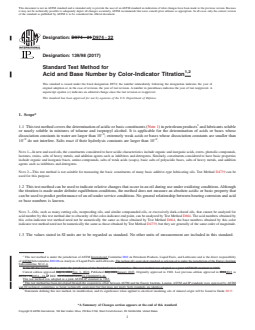
(Test Method)Standard Test Method for Acid and Base Number by Color-Indicator Titration
General Information
- Abstract
SIGNIFICANCE AND USE
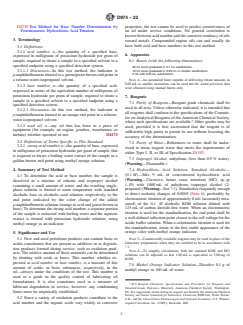
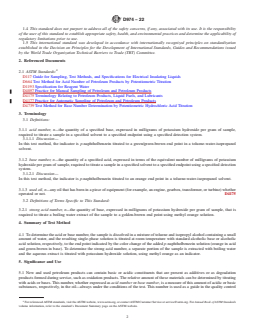
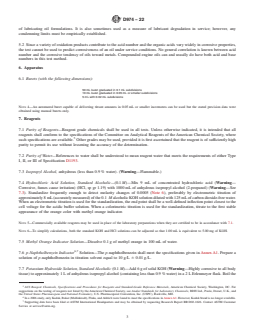
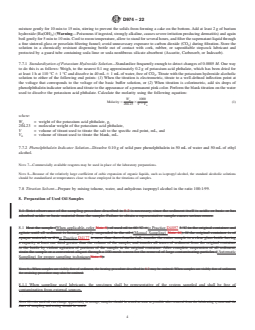
5.1 New and used petroleum products can contain basic or acidic constituents that are present as additives or as degradation products formed during service, such as oxidation products. The relative amount of these materials can be determined by titrating with acids or bases. This number, whether expressed as acid number or base number, is a measure of this amount of acidic or basic substances, respectively, in the oil—always under the conditions of the test. This number is used as a guide in the quality control of lubricating oil formulations. It is also sometimes used as a measure of lubricant degradation in service; however, any condemning limits must be empirically established.
5.2 Since a variety of oxidation products contribute to the acid number and the organic acids vary widely in corrosive properties, the test cannot be used to predict corrosiveness of an oil under service conditions. No general correlation is known between acid number and the corrosive tendency of oils toward metals. Compounded engine oils can and usually do have both acid and base numbers in this test method.
SCOPE
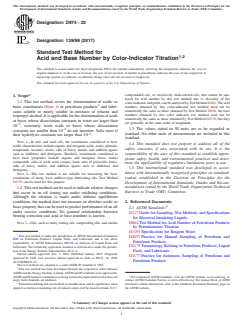
1.1 This test method covers the determination of acidic or basic constituents (Note 1) in petroleum products3 and lubricants soluble or nearly soluble in mixtures of toluene and isopropyl alcohol. It is applicable for the determination of acids or bases whose dissociation constants in water are larger than 10−9; extremely weak acids or bases whose dissociation constants are smaller than 10−9 do not interfere. Salts react if their hydrolysis constants are larger than 10−9.
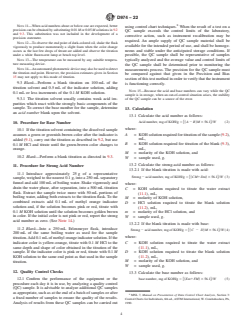
Note 1: In new and used oils, the constituents considered to have acidic characteristics include organic and inorganic acids, esters, phenolic compounds, lactones, resins, salts of heavy metals, and addition agents such as inhibitors and detergents. Similarly, constituents considered to have basic properties include organic and inorganic bases, amino compounds, salts of weak acids (soaps), basic salts of polyacidic bases, salts of heavy metals, and addition agents such as inhibitors and detergents.
Note 2: This test method is not suitable for measuring the basic constituents of many basic additive-type lubricating oils. Test Method D4739 can be used for this purpose.
1.2 This test method can be used to indicate relative changes that occur in an oil during use under oxidizing conditions. Although the titration is made under definite equilibrium conditions, the method does not measure an absolute acidic or basic property that can be used to predict performance of an oil under service conditions. No general relationship between bearing corrosion and acid or base numbers is known.
Note 3: Oils, such as many cutting oils, rustproofing oils, and similar compounded oils, or excessively dark-colored oils, that cannot be analyzed for acid number by this test method due to obscurity of the color-indicator end point, can be analyzed by Test Method D664. The acid numbers obtained by this color-indicator test method need not be numerically the same as those obtained by Test Method D664, the base numbers obtained by this color indicator test method need not be numerically the same as those obtained by Test Method D4739, but they are generally of the same order of magnitude.
1.3 The values stated in SI units are to be regarded as standard. No other units of measurement are included in this standard.
1.4 This standard does not purport to address all of the safety concerns, if any, associated with its use. It is the responsibility of the user of this standard to establish appropriate safety, health, and environmental practices and determine the applicability of regulatory limitations prior to use.
1.5 This international standard was developed in accordance with internationally recognized principles on standardization established in the Decision on Principles for the Development of International Standards, Guides and Recommendations...
- Status
- Published
- Publication Date
- 31-Oct-2022
- Technical Committee
- D02 - Petroleum Products, Liquid Fuels, and Lubricants
- Drafting Committee
- D02.06 - Analysis of Liquid Fuels and Lubricants
Overview
ASTM D974-22 is the internationally recognized Standard Test Method for Acid and Base Number by Color-Indicator Titration, published by ASTM International. This method enables the determination of acidic or basic constituents in petroleum products and lubricants that are soluble or nearly soluble in mixtures of toluene and isopropyl alcohol. The test is commonly used for both new and used oils, playing a critical role in the quality control of lubricating oil formulations and in monitoring lubricant degradation over time.
The acid number obtained via this color-indicator titration reflects the concentration of acidic or basic substances in a given oil sample under the test conditions. Although this test is fundamental in oil analysis, results do not directly predict corrosiveness or performance in service; instead, they indicate relative chemical changes that may occur during oil service life.
Key Topics
- Determination of Acid and Base Number: The method measures acidic and basic constituents, expressed as acid number and base number, based on color change using a p-naphtholbenzein indicator.
- Applicable to Petroleum Products and Lubricants: Suitable for products soluble or nearly soluble in toluene and isopropyl alcohol mixtures.
- Guidance for Quality Control: Acid and base number values support the formulation and monitoring of lubricating oils, ensuring they meet manufacturer and industry specifications.
- Assessment of Oil Degradation: The test tracks the relative increase in acidic products due to oxidation and degradation during oil use.
- Limitations: The test cannot be used to reliably predict oil corrosiveness or the performance of lubricants in service; specific condemnation limits for acid or base numbers must be empirically established.
- Sample Preparation and Accuracy: Proper sampling, homogenization, and avoidance of contamination are critical for precise results, especially when handling used or dark-colored oils.
- Safety and Compliance: Laboratories must adhere to safety, health, and environmental guidelines, and confirm compliance with local regulatory requirements.
Applications
ASTM D974-22 is utilized across a wide range of sectors including:
- Lubricating Oil Quality Control: Used by lubricant manufacturers to monitor base stock purity and the effects of additive treatments.
- In-Service Oil Monitoring: Employed by maintenance and reliability teams in industries such as automotive, marine, power generation, and manufacturing to track lubricant degradation through increased acid numbers.
- Blending and Formulation: Applied in laboratories for checking batch consistency and compliance with product specifications during oil blending.
- Petroleum Product Research: Facilitates the development and testing of new oil formulations where control of acid and base content is essential.
- Used Oil Analysis: Supports asset management and predictive maintenance by identifying oil degradation products that may indicate equipment wear or contamination.
Related Standards
Professionals working with acid and base number titration may also reference the following ASTM standards:
- ASTM D664: Test Method for Acid Number of Petroleum Products by Potentiometric Titration, suited for oils incompatible with the color-indicator detection method.
- ASTM D4739: Test Method for Base Number Determination by Potentiometric Hydrochloric Acid Titration, particularly for oils with strong basic additives.
- ASTM D4057 and D4177: Practices for manual and automatic sampling of petroleum and petroleum products, essential for representative sample preparation.
- ASTM D1193: Specification for Reagent Water, which defines water quality requirements for laboratory analyses.
- ASTM D4175: Terminology relating to petroleum products, liquid fuels, and lubricants, for standardized definitions.
By adhering to ASTM D974-22, organizations can ensure accurate determination of acid and base numbers in petroleum products, supporting quality assurance, regulatory compliance, and extended service life of equipment through effective lubricant management.
Keywords: ASTM D974, acid number, base number, color-indicator titration, petroleum products, lubricants, oil quality control, lubricant degradation, oil analysis.
Relations
- Refers
ASTM D4175-23a - Standard Terminology Relating to Petroleum Products, Liquid Fuels, and Lubricants - Effective Date
- 15-Dec-2023
- Refers
ASTM D4175-23e1 - Standard Terminology Relating to Petroleum Products, Liquid Fuels, and Lubricants - Effective Date
- 01-Jul-2023
- Effective Date
- 01-May-2017
- Refers
ASTM D4057-06(2011) - Standard Practice for Manual Sampling of Petroleum and Petroleum Products - Effective Date
- 01-Jun-2011
- Effective Date
- 15-May-2011
- Effective Date
- 15-Sep-2010
- Effective Date
- 01-Mar-2009
- Effective Date
- 01-Feb-2008
- Effective Date
- 01-Jul-2007
- Effective Date
- 01-Nov-2006
- Effective Date
- 01-Nov-2006
- Refers
ASTM D4739-06 - Standard Test Method for Base Number Determination by Potentiometric Titration - Effective Date
- 01-Jul-2006
- Effective Date
- 01-Mar-2006
- Effective Date
- 01-Jan-2006
- Refers
ASTM D4739-05 - Standard Test Method for Base Number Determination by Potentiometric Titration - Effective Date
- 01-Nov-2005
Get Certified
Connect with accredited certification bodies for this standard

Element Materials Technology
Materials testing and product certification.

ABS Group Brazil
ABS Group certification services in Brazil.

ABS Quality Evaluations Inc.
American Bureau of Shipping quality certification.
Sponsored listings
Frequently Asked Questions
ASTM D974-22 is a standard published by ASTM International. Its full title is "Standard Test Method for Acid and Base Number by Color-Indicator Titration". This standard covers: SIGNIFICANCE AND USE 5.1 New and used petroleum products can contain basic or acidic constituents that are present as additives or as degradation products formed during service, such as oxidation products. The relative amount of these materials can be determined by titrating with acids or bases. This number, whether expressed as acid number or base number, is a measure of this amount of acidic or basic substances, respectively, in the oil—always under the conditions of the test. This number is used as a guide in the quality control of lubricating oil formulations. It is also sometimes used as a measure of lubricant degradation in service; however, any condemning limits must be empirically established. 5.2 Since a variety of oxidation products contribute to the acid number and the organic acids vary widely in corrosive properties, the test cannot be used to predict corrosiveness of an oil under service conditions. No general correlation is known between acid number and the corrosive tendency of oils toward metals. Compounded engine oils can and usually do have both acid and base numbers in this test method. SCOPE 1.1 This test method covers the determination of acidic or basic constituents (Note 1) in petroleum products3 and lubricants soluble or nearly soluble in mixtures of toluene and isopropyl alcohol. It is applicable for the determination of acids or bases whose dissociation constants in water are larger than 10−9; extremely weak acids or bases whose dissociation constants are smaller than 10−9 do not interfere. Salts react if their hydrolysis constants are larger than 10−9. Note 1: In new and used oils, the constituents considered to have acidic characteristics include organic and inorganic acids, esters, phenolic compounds, lactones, resins, salts of heavy metals, and addition agents such as inhibitors and detergents. Similarly, constituents considered to have basic properties include organic and inorganic bases, amino compounds, salts of weak acids (soaps), basic salts of polyacidic bases, salts of heavy metals, and addition agents such as inhibitors and detergents. Note 2: This test method is not suitable for measuring the basic constituents of many basic additive-type lubricating oils. Test Method D4739 can be used for this purpose. 1.2 This test method can be used to indicate relative changes that occur in an oil during use under oxidizing conditions. Although the titration is made under definite equilibrium conditions, the method does not measure an absolute acidic or basic property that can be used to predict performance of an oil under service conditions. No general relationship between bearing corrosion and acid or base numbers is known. Note 3: Oils, such as many cutting oils, rustproofing oils, and similar compounded oils, or excessively dark-colored oils, that cannot be analyzed for acid number by this test method due to obscurity of the color-indicator end point, can be analyzed by Test Method D664. The acid numbers obtained by this color-indicator test method need not be numerically the same as those obtained by Test Method D664, the base numbers obtained by this color indicator test method need not be numerically the same as those obtained by Test Method D4739, but they are generally of the same order of magnitude. 1.3 The values stated in SI units are to be regarded as standard. No other units of measurement are included in this standard. 1.4 This standard does not purport to address all of the safety concerns, if any, associated with its use. It is the responsibility of the user of this standard to establish appropriate safety, health, and environmental practices and determine the applicability of regulatory limitations prior to use. 1.5 This international standard was developed in accordance with internationally recognized principles on standardization established in the Decision on Principles for the Development of International Standards, Guides and Recommendations...
SIGNIFICANCE AND USE 5.1 New and used petroleum products can contain basic or acidic constituents that are present as additives or as degradation products formed during service, such as oxidation products. The relative amount of these materials can be determined by titrating with acids or bases. This number, whether expressed as acid number or base number, is a measure of this amount of acidic or basic substances, respectively, in the oil—always under the conditions of the test. This number is used as a guide in the quality control of lubricating oil formulations. It is also sometimes used as a measure of lubricant degradation in service; however, any condemning limits must be empirically established. 5.2 Since a variety of oxidation products contribute to the acid number and the organic acids vary widely in corrosive properties, the test cannot be used to predict corrosiveness of an oil under service conditions. No general correlation is known between acid number and the corrosive tendency of oils toward metals. Compounded engine oils can and usually do have both acid and base numbers in this test method. SCOPE 1.1 This test method covers the determination of acidic or basic constituents (Note 1) in petroleum products3 and lubricants soluble or nearly soluble in mixtures of toluene and isopropyl alcohol. It is applicable for the determination of acids or bases whose dissociation constants in water are larger than 10−9; extremely weak acids or bases whose dissociation constants are smaller than 10−9 do not interfere. Salts react if their hydrolysis constants are larger than 10−9. Note 1: In new and used oils, the constituents considered to have acidic characteristics include organic and inorganic acids, esters, phenolic compounds, lactones, resins, salts of heavy metals, and addition agents such as inhibitors and detergents. Similarly, constituents considered to have basic properties include organic and inorganic bases, amino compounds, salts of weak acids (soaps), basic salts of polyacidic bases, salts of heavy metals, and addition agents such as inhibitors and detergents. Note 2: This test method is not suitable for measuring the basic constituents of many basic additive-type lubricating oils. Test Method D4739 can be used for this purpose. 1.2 This test method can be used to indicate relative changes that occur in an oil during use under oxidizing conditions. Although the titration is made under definite equilibrium conditions, the method does not measure an absolute acidic or basic property that can be used to predict performance of an oil under service conditions. No general relationship between bearing corrosion and acid or base numbers is known. Note 3: Oils, such as many cutting oils, rustproofing oils, and similar compounded oils, or excessively dark-colored oils, that cannot be analyzed for acid number by this test method due to obscurity of the color-indicator end point, can be analyzed by Test Method D664. The acid numbers obtained by this color-indicator test method need not be numerically the same as those obtained by Test Method D664, the base numbers obtained by this color indicator test method need not be numerically the same as those obtained by Test Method D4739, but they are generally of the same order of magnitude. 1.3 The values stated in SI units are to be regarded as standard. No other units of measurement are included in this standard. 1.4 This standard does not purport to address all of the safety concerns, if any, associated with its use. It is the responsibility of the user of this standard to establish appropriate safety, health, and environmental practices and determine the applicability of regulatory limitations prior to use. 1.5 This international standard was developed in accordance with internationally recognized principles on standardization established in the Decision on Principles for the Development of International Standards, Guides and Recommendations...
ASTM D974-22 is classified under the following ICS (International Classification for Standards) categories: 75.080 - Petroleum products in general; 75.100 - Lubricants, industrial oils and related products. The ICS classification helps identify the subject area and facilitates finding related standards.
ASTM D974-22 has the following relationships with other standards: It is inter standard links to ASTM D4175-23a, ASTM D4175-23e1, ASTM D664-11a(2017), ASTM D4057-06(2011), ASTM D664-11, ASTM D117-10, ASTM D664-09, ASTM D4739-08, ASTM D664-07, ASTM D664-06a, ASTM D664-06ae1, ASTM D4739-06, ASTM D1193-06, ASTM D664-06, ASTM D4739-05. Understanding these relationships helps ensure you are using the most current and applicable version of the standard.
ASTM D974-22 is available in PDF format for immediate download after purchase. The document can be added to your cart and obtained through the secure checkout process. Digital delivery ensures instant access to the complete standard document.
Standards Content (Sample)
This international standard was developed in accordance with internationally recognized principles on standardization established in the Decision on Principles for the
Development of International Standards, Guides and Recommendations issued by the World Trade Organization Technical Barriers to Trade (TBT) Committee.
Designation: D974 − 22
Designation: 139/98 (2017)
Standard Test Method for
1,2
Acid and Base Number by Color-Indicator Titration
This standard is issued under the fixed designation D974; the number immediately following the designation indicates the year of
original adoption or, in the case of revision, the year of last revision.Anumber in parentheses indicates the year of last reapproval.A
superscript epsilon (´) indicates an editorial change since the last revision or reapproval.
This standard has been approved for use by agencies of the U.S. Department of Defense.
compounded oils, or excessively dark-colored oils, that cannot be ana-
1. Scope*
lyzed for acid number by this test method due to obscurity of the
1.1 This test method covers the determination of acidic or
color-indicatorendpoint,canbeanalyzedbyTestMethodD664.Theacid
basic constituents (Note 1) in petroleum products and lubri- numbers obtained by this color-indicator test method need not be
numerically the same as those obtained by Test Method D664, the base
cants soluble or nearly soluble in mixtures of toluene and
numbers obtained by this color indicator test method need not be
isopropylalcohol.Itisapplicableforthedeterminationofacids
numerically the same as those obtained by Test Method D4739, but they
or bases whose dissociation constants in water are larger than
are generally of the same order of magnitude.
−9
10 ; extremely weak acids or bases whose dissociation
−9 1.3 The values stated in SI units are to be regarded as
constants are smaller than 10 do not interfere. Salts react if
standard. No other units of measurement are included in this
−9
their hydrolysis constants are larger than 10 .
standard.
NOTE 1—In new and used oils, the constituents considered to have
1.4 This standard does not purport to address all of the
acidic characteristics include organic and inorganic acids, esters, phenolic
safety concerns, if any, associated with its use. It is the
compounds, lactones, resins, salts of heavy metals, and addition agents
responsibility of the user of this standard to establish appro-
such as inhibitors and detergents. Similarly, constituents considered to
have basic properties include organic and inorganic bases, amino
priate safety, health, and environmental practices and deter-
compounds, salts of weak acids (soaps), basic salts of polyacidic bases,
mine the applicability of regulatory limitations prior to use.
salts of heavy metals, and addition agents such as inhibitors and
1.5 This international standard was developed in accor-
detergents.
dance with internationally recognized principles on standard-
NOTE 2—This test method is not suitable for measuring the basic
constituents of many basic additive-type lubricating oils. Test Method ization established in the Decision on Principles for the
D4739 can be used for this purpose.
Development of International Standards, Guides and Recom-
mendations issued by the World Trade Organization Technical
1.2 Thistestmethodcanbeusedtoindicaterelativechanges
Barriers to Trade (TBT) Committee.
that occur in an oil during use under oxidizing conditions.
Although the titration is made under definite equilibrium
2. Referenced Documents
conditions, the method does not measure an absolute acidic or
basicpropertythatcanbeusedtopredictperformanceofanoil
2.1 ASTM Standards:
under service conditions. No general relationship between
D117Guide for Sampling, Test Methods, and Specifications
bearing corrosion and acid or base numbers is known.
for Electrical Insulating Liquids
D664Test Method for Acid Number of Petroleum Products
NOTE 3—Oils, such as many cutting oils, rustproofing oils, and similar
by Potentiometric Titration
D1193Specification for Reagent Water
This test method is under the jurisdiction of ASTM International Committee
D4057Practice for Manual Sampling of Petroleum and
D02 on Petroleum Products, Liquid Fuels, and Lubricants and is the direct
Petroleum Products
responsibility of ASTM Subcommittee D02.06 on Analysis of Liquid Fuels and
D4175Terminology Relating to Petroleum Products, Liquid
Lubricants. The technically equivalent standard as referenced is under the jurisdic-
tion of the Energy Institute Subcommittee SC-C-4.
Fuels, and Lubricants
Current edition approved Nov. 1, 2022. Published January 2023. Originally
D4177Practice for Automatic Sampling of Petroleum and
approved in 1948. Last previous edition approved in 2021 as D974–21. DOI:
Petroleum Products
10.1520/D0974-22.
This test method was adopted as a joint ASTM-IP standard in 1965.
This test method has been developed through the cooperative effort between
ASTMandtheEnergyInstitute,London.ASTMandIPstandardswereapprovedby
ASTMandEItechnicalcommitteesasbeingtechnicallyequivalentbutthatdoesnot For referenced ASTM standards, visit the ASTM website, www.astm.org, or
imply both standards are identical. contact ASTM Customer Service at service@astm.org. For Annual Book of ASTM
Statementsdefiningthistestmethod,itsmodification,anditssignificancewhen Standards volume information, refer to the standard’s Document Summary page on
applied to electrical insulating oils of mineral origin will be found in Guide D117. the ASTM website.
*A Summary of Changes section appears at the end of this standard
Copyright © ASTM International, 100 Barr Harbor Drive, PO Box C700, West Conshohocken, PA 19428-2959. United States
D974 − 22
D4739Test Method for Base Number Determination by properties, the test cannot be used to predict corrosiveness of
Potentiometric Hydrochloric Acid Titration an oil under service conditions. No general correlation is
knownbetweenacidnumberandthecorrosivetendencyofoils
3. Terminology
toward metals. Compounded engine oils can and usually do
have both acid and base numbers in this test method.
3.1 Definitions:
3.1.1 acid number, n—the quantity of a specified base,
6. Apparatus
expressed in milligrams of potassium hydroxide per gram of
sample, required to titrate a sample in a specified solvent to a
6.1 Burets (with the following dimensions):
specified endpoint using a specified detection system.
50 mL buret graduated in 0.1 mL subdivisions
3.1.1.1 Discussion—In this test method, the indicator is 10 mL buret graduated in 0.05 mL or smaller subdivisions
5 mL with 0.02 mL subdivisions
p-naphtholbenzeintitratedtoagreen/green-brownendpointin
a toluene-water-isopropanol solvent. NOTE 4—An automated buret capable of delivering titrant amounts in
0.05mL or smaller increments can be used but the stated precision data
3.1.2 base number, n—the quantity of a specified acid,
were obtained using manual burets only.
expressed in terms of the equivalent number of milligrams of
potassium hydroxide per gram of sample, required to titrate a
7. Reagents
sample in a specified solvent to a specified endpoint using a
7.1 Purity of Reagents—Reagent grade chemicals shall be
specified detection system.
used in all tests. Unless otherwise indicated, it is intended that
3.1.2.1 Discussion—In this test method, the indicator is
all reagents shall conform to the specifications of the Commit-
p-naphtholbenzein titrated to an orange end point in a toluene-
tee onAnalytical Reagents of theAmerican Chemical Society,
water-isopropanol solvent.
where such specifications are available. Other grades may be
3.1.3 used oil, n—any oil that has been in a piece of
used, provided it is first ascertained that the reagent is of
equipment (for example, an engine, gearbox, transformer, or
sufficiently high purity to permit its use without lessening the
turbine) whether operated or not. D4175
accuracy of the determination.
3.2 Definitions of Terms Specific to This Standard:
7.2 Purity of Water—References to water shall be under-
3.2.1 strong acid number, n—thequantityofbase,expressed
stood to mean reagent water that meets the requirements of
in milligrams of potassium hydroxide per gram of sample, that
either Type I, II, or III of Specification D1193.
is required to titrate a boiling water extract of the sample to a
7.3 Isopropyl Alcohol, anhydrous (less than 0.9% water).
golden-brown end point using methyl orange solution.
(Warning—Flammable.)
4. Summary of Test Method
7.4 Hydrochloric Acid Solution, Standard Alcoholic—
(0.1 M)—Mix 9 mL of concentrated hydrochloric acid
4.1 To determine the acid or base number, the sample is
(Warning—Corrosive, fumes cause irritation) (HCl, sp gr
dissolved in a mixture of toluene and isopropyl alcohol
1.19) with 1000mL of anhydrous isopropyl alcohol (2-
containing a small amount of water, and the resulting single-
propanol)(Warning—See7.3).Standardizefrequentlyenough
phase solution is titrated at room temperature with standard
to detect molarity changes of 0.0005 (Note 6), preferably by
alcoholic base or alcoholic acid solution, respectively, to the
electrometric titration of approximately 8mL(accurately mea-
end point indicated by the color change of the added
sured) of the 0.1 M alcoholic KOH solution diluted with
p-naphtholbenzeinsolution(orangeinacidandgreen-brownin
125mL of carbon dioxide-free water. When an electrometric
base). To determine the strong acid number, a separate portion
titration is used for the standardization, the end point shall be
of the sample is extracted with boiling water and the aqueous
awell-definedinflectionpointclosesttothecellvoltageforthe
extract is titrated with potassium hydroxide solution, using
acidic buffer solution.When a colorimetric titration is used for
methyl orange as an indicator.
the standardization, titrate to the first stable appearance of the
5. Significance and Use orange color with methyl orange indicator.
5.1 New and used petroleum products can contain basic or NOTE 5—Commercially available reagents may be used in place of the
laboratory preparations when they are certified to be in accordance with
acidic constituents that are present as additives or as degrada-
7.1.
tion products formed during service, such as oxidation prod-
NOTE 6—To simplify calculations, both the standard KOH and HCl
ucts.The relative amount of these materials can be determined
solutions can be adjusted so that 1.00mL is equivalent to 5.00mg of
by titrating with acids or bases. This number, whether ex-
KOH.
pressed as acid number or base number, is a measure of this
7.5 Methyl Orange Indicator Solution—Dissolve 0.1g of
amount of acidic or basic substances, respectively, in the
methyl orange in 100mL of water.
oil—always under the conditions of the test. This number is
used as a guide in the quality control of lubricating oil
formulations. It is also sometimes used as a measure of
ACS Reagent Chemicals, Specifications and Procedures for Reagents and
lubricant degradation in service; however, any condemning
Standard-Grade Reference Materials, American Chemical Society, Washington,
limits must be empirically established. DC. For suggestions on the testing of reagents not listed by theAmerican Chemical
Society, see Analar Standards for Laboratory Chemicals, BDH Ltd., Poole, Dorset,
5.2 Since a variety of oxidation products contribute to the
U.K., and the United States Pharmacopeia and National Formulary, U.S. Pharma-
acid number and the organic acids vary widely in corrosive copeial Convention, Inc. (USPC), Rockville, MD.
D974 − 22
6,7 A
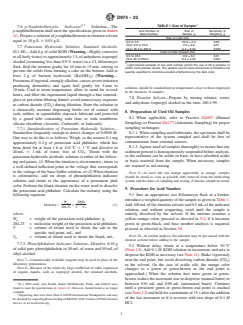
TABLE 1 Size of Sample
7.6 p-Naphtholbenzein Indicator Solution—The
Acid Number or Size of Sensitivity of
p-naphtholbenzeinshallmeetthespecificationsgiveninAnnex
Base Number Sample, g Weighing, g
A1.Prepareasolutionof p-naphtholbenzeinintitrationsolvent
New or Light Oils
equal to 10g⁄L 6 0.01g⁄L.
0.0 to 3.0 20.0 ± 2.0 0.05
Over 3.0 to 25.0 2.0 ± 0.2 0.01
7.7 Potassium Hydroxide Solution, Standard Alcoholic
Over 25.0 to 250.0 0.2 ± 0.02 0.001
(0.1 M)—Add 6g of solid KOH (Warning—Highly corrosive Used or Dark-Colored Oils
0.0 to 25.0 2.0 ± 0.2 0.01
toallbodytissue)toapproximately1Lofanhydrousisopropyl
Over 25 to 250.0 0.2 ± 0.02 0.001
alcohol (containing less than 0.9% water) in a 2LErlenmeyer
A
Light-colored samples of low acid number permit the use of 20 g samples to
flask. Boil the mixture gently for 10min to 15min, stirring to
obtain more precise results. The sample size for dark-colored oils is limited to the
prevent the solids from forming a cake on the bottom. Add at quantity specified to minimize possible interference by the dark color.
least 2 g of barium hydroxide (Ba(OH))(Warning—
Poisonousifingested,stronglyalkaline,causessevereirritation
producing dermatitis) and again boil gently for 5min to
solutions should be standardized at temperatures close to those employed
10min. Cool to room temperature, allow to stand for several
in the titrations of samples.
hours, and filter the supernatant liquid through a fine sintered-
7.8 Titration Solvent—Prepare by mixing toluene, water,
glass or porcelain filtering funnel; avoid unnecessary exposure
and anhydrous isopropyl alcohol in the ratio 100:1:99.
to carbon dioxide (CO ) during filtration. Store the solution in
a chemically resistant dispensing bottle out of contact with
8. Preparation of Used Oil Samples
cork, rubber, or saponifiable stopcock lubricant and protected
8.1 When applicable, refer to Practice D4057 (Manual
by a guard tube containing soda lime or soda nonfibrous
Sampling)orPracticeD4177(AutomaticSampling)forproper
silicate absorbent (Ascarite, Carbosorb, or Indecarb).
sampling techniques
7.7.1 Standardization of Potassium Hydroxide Solution—
8.1.1 When sampling used lubricants, the specimen shall be
Standardize frequently enough to detect changes of 0.0005 M.
representative of the system sampled and shall be free of
One way to do this is as follows: Weigh, to the nearest 0.1mg
contamination from external sources.
approximately 0.2g of potassium acid phthalate, which has
8.1.2 Agitateusedoilsamplesthoroughlytoensurethatany
been dried for at least 1h at 110°C 6 1°C and dissolve in
sedimentpresentishomogeneouslysuspendedbeforeanalysis,
40mL 6 1mL of water, free of CO . Titrate with the
as the sediment can be acidic or basic or have adsorbed acidic
potassium hydroxide alcoholic solution to either of the follow-
or basic material from the sample. When necessary, samples
ingendpoints:(1)Whenthetitrationiselectrometric,titrateto
are warmed to aid mixing.
a well-defined inflection point at the voltage that corresponds
tothevoltageofthebasicbuffersolution,or(2)Whentitration
NOTE 9—As used oils can change appreciably in storage, samples
is colorimetric, add six drops of phenolphthalein indicator
should be tested as soon as possible after removal from the lubricating
system and the dates of sampling and testing, if known, should be noted.
solution and titrate to the appearance of a permanent pink
color. Perform the blank titration on the water used to dissolve
9. Procedure for Acid Number
the potassium acid phthalate. Calculate the molarity using the
following equation: 9.1 Into an appropriate size Erlenmeyer flask or a beaker,
introduceaweighedquantityofthesampleasgiveninTable1.
W 1000
p
Molarity 5 3 (1)
Add100mLofthetitrationsolventand0.5mLoftheindicator
204.23 V 2 V
b
solution, and without stoppering, swirl until the sample is
where:
entirely dissolved by the solvent. If the mixture assumes a
W = weight of the potassium acid phthalate, g, yellow-orange color, proceed as directed in 9.2; if it becomes
p
204.23 = molecular weight of the potassium acid phthalate, green or green-black, and base number analysis is required,
V = volume of titrant used to titrate the salt to the
proceed as directed in Section 10.
specific end point, mL, and
NOTE 10—In routine analysis, the indicator may be pre-mixed with the
V = volume of titrant used to titrate the blank, mL.
b
titration solvent before adding to the sample.
7.7.2 Phenolphthalein Indicator Solution—Dissolve 0.10g
9.2 Without delay, titrate at a temperature below 30°C
of solid pure phenolphthalein in 50mLof water and 50mLof
(Note 13).Add 0.1 M KOH solution in increments and mix to
ethyl alcohol.
dispersetheKOHasnecessary(seeNote11).Shakevigorously
near the end point, but avoid dissolving carbon dioxide (CO )
NOTE 7—Commercially available reagents may be used in place of the
laboratory preparations.
in the solvent. (In the case of acidic oils, the orange color
NOTE 8—Because of the relatively large coefficient of cubic expansion
changes to a green or green-brown as the end point is
of organic liquids, such as isopropyl alcohol, the standard alcoholic
approached.) When the solution first turns green or green-
brown,reducetheincrementsizetodropwise(manualburet)or
between 0.01mL and 0.05mL (automated buret). Continue
In a 2006 study, only Kodak, Baker (Mallinkr
...
This document is not an ASTM standard and is intended only to provide the user of an ASTM standard an indication of what changes have been made to the previous version. Because
it may not be technically possible to adequately depict all changes accurately, ASTM recommends that users consult prior editions as appropriate. In all cases only the current version
of the standard as published by ASTM is to be considered the official document.
Designation: D974 − 21 D974 − 22
Designation: 139/98 (2017)
Standard Test Method for
1,2
Acid and Base Number by Color-Indicator Titration
This standard is issued under the fixed designation D974; the number immediately following the designation indicates the year of
original adoption or, in the case of revision, the year of last revision. A number in parentheses indicates the year of last reapproval. A
superscript epsilon (´) indicates an editorial change since the last revision or reapproval.
This standard has been approved for use by agencies of the U.S. Department of Defense.
1. Scope*
1.1 This test method covers the determination of acidic or basic constituents (Note 1) in petroleum products and lubricants soluble
or nearly soluble in mixtures of toluene and isopropyl alcohol. It is applicable for the determination of acids or bases whose
−9
dissociation constants in water are larger than 10 ; extremely weak acids or bases whose dissociation constants are smaller than
−9 −9
10 do not interfere. Salts react if their hydrolysis constants are larger than 10 .
NOTE 1—In new and used oils, the constituents considered to have acidic characteristics include organic and inorganic acids, esters, phenolic compounds,
lactones, resins, salts of heavy metals, and addition agents such as inhibitors and detergents. Similarly, constituents considered to have basic properties
include organic and inorganic bases, amino compounds, salts of weak acids (soaps), basic salts of polyacidic bases, salts of heavy metals, and addition
agents such as inhibitors and detergents.
NOTE 2—This test method is not suitable for measuring the basic constituents of many basic additive-type lubricating oils. Test Method D4739 can be
used for this purpose.
1.2 This test method can be used to indicate relative changes that occur in an oil during use under oxidizing conditions. Although
the titration is made under definite equilibrium conditions, the method does not measure an absolute acidic or basic property that
can be used to predict performance of an oil under service conditions. No general relationship between bearing corrosion and acid
or base numbers is known.
NOTE 3—Oils, such as many cutting oils, rustproofing oils, and similar compounded oils, or excessively dark-colored oils, that cannot be analyzed for
acid number by this test method due to obscurity of the color-indicator end point, can be analyzed by Test Method D664. The acid numbers obtained by
this color-indicator test method need not be numerically the same as those obtained by Test Method D664, the base numbers obtained by this color
indicator test method need not be numerically the same as those obtained by Test Method D4739, but they are generally of the same order of magnitude.
1.3 The values stated in SI units are to be regarded as standard. No other units of measurement are included in this standard.
This test method is under the jurisdiction of ASTM International Committee D02 on Petroleum Products, Liquid Fuels, and Lubricants and is the direct responsibility
of ASTM Subcommittee D02.06 on Analysis of Liquid Fuels and Lubricants. The technically equivalent standard as referenced is under the jurisdiction of the Energy Institute
Subcommittee SC-C-4.
In the IP, this test method is under the jurisdiction of the Standardization Committee. This test method was adopted as a joint ASTM-IP standard in 1965.
Current edition approved July 1, 2021Nov. 1, 2022. Published July 2021January 2023. Originally approved in 1948. Last previous edition approved in 20142021 as
ɛ2
D974 – 14D974 – 21. . DOI: 10.1520/D0974-21.10.1520/D0974-22.
This test method was adopted as a joint ASTM-IP standard in 1965.
This test method has been developed through the cooperative effort between ASTM and the Energy Institute, London. ASTM and IP standards were approved by ASTM
and EI technical committees as being technically equivalent but that does not imply both standards are identical.
Statements defining this test method, its modification, and its significance when applied to electrical insulating oils of mineral origin will be found in Guide D117.
*A Summary of Changes section appears at the end of this standard
Copyright © ASTM International, 100 Barr Harbor Drive, PO Box C700, West Conshohocken, PA 19428-2959. United States
D974 − 22
1.4 This standard does not purport to address all of the safety concerns, if any, associated with its use. It is the responsibility
of the user of this standard to establish appropriate safety, health, and environmental practices and determine the applicability of
regulatory limitations prior to use.
1.5 This international standard was developed in accordance with internationally recognized principles on standardization
established in the Decision on Principles for the Development of International Standards, Guides and Recommendations issued
by the World Trade Organization Technical Barriers to Trade (TBT) Committee.
2. Referenced Documents
2.1 ASTM Standards:
D117 Guide for Sampling, Test Methods, and Specifications for Electrical Insulating Liquids
D664 Test Method for Acid Number of Petroleum Products by Potentiometric Titration
D1193 Specification for Reagent Water
D4057 Practice for Manual Sampling of Petroleum and Petroleum Products
D4175 Terminology Relating to Petroleum Products, Liquid Fuels, and Lubricants
D4177 Practice for Automatic Sampling of Petroleum and Petroleum Products
D4739 Test Method for Base Number Determination by Potentiometric Hydrochloric Acid Titration
3. Terminology
3.1 Definitions:
3.1.1 acid number, n—the quantity of a specified base, expressed in milligrams of potassium hydroxide per gram of sample,
required to titrate a sample in a specified solvent to a specified endpoint using a specified detection system.
3.1.1.1 Discussion—
In this test method, the indicator is p-naphtholbenzein titrated to a green/green-brown end point in a toluene-water-isopropanol
solvent.
3.1.2 base number, n—the quantity of a specified acid, expressed in terms of the equivalent number of milligrams of potassium
hydroxide per gram of sample, required to titrate a sample in a specified solvent to a specified endpoint using a specified detection
system.
3.1.2.1 Discussion—
In this test method, the indicator is p-naphtholbenzein titrated to an orange end point in a toluene-water-isopropanol solvent.
3.1.3 used oil, n—any oil that has been in a piece of equipment (for example, an engine, gearbox, transformer, or turbine) whether
operated or not. D4175
3.2 Definitions of Terms Specific to This Standard:
3.2.1 strong acid number, n—the quantity of base, expressed in milligrams of potassium hydroxide per gram of sample, that is
required to titrate a boiling water extract of the sample to a golden-brown end point using methyl orange solution.
4. Summary of Test Method
4.1 To determine the acid or base number, the sample is dissolved in a mixture of toluene and isopropyl alcohol containing a small
amount of water, and the resulting single-phase solution is titrated at room temperature with standard alcoholic base or alcoholic
acid solution, respectively, to the end point indicated by the color change of the added p-naphtholbenzein solution (orange in acid
and green-brown in base). To determine the strong acid number, a separate portion of the sample is extracted with boiling water
and the aqueous extract is titrated with potassium hydroxide solution, using methyl orange as an indicator.
5. Significance and Use
5.1 New and used petroleum products can contain basic or acidic constituents that are present as additives or as degradation
products formed during service, such as oxidation products. The relative amount of these materials can be determined by titrating
with acids or bases. This number, whether expressed as acid number or base number, is a measure of this amount of acidic or basic
substances, respectively, in the oil—always under the conditions of the test. This number is used as a guide in the quality control
For referenced ASTM standards, visit the ASTM website, www.astm.org, or contact ASTM Customer Service at service@astm.org. For Annual Book of ASTM Standards
volume information, refer to the standard’s Document Summary page on the ASTM website.
D974 − 22
of lubricating oil formulations. It is also sometimes used as a measure of lubricant degradation in service; however, any
condemning limits must be empirically established.
5.2 Since a variety of oxidation products contribute to the acid number and the organic acids vary widely in corrosive properties,
the test cannot be used to predict corrosiveness of an oil under service conditions. No general correlation is known between acid
number and the corrosive tendency of oils toward metals. Compounded engine oils can and usually do have both acid and base
numbers in this test method.
6. Apparatus
6.1 Burets (with the following dimensions):
50 mL buret graduated in 0.1 mL subdivisions
10 mL buret graduated in 0.05 mL or smaller subdivisions
5 mL with 0.02 mL subdivisions
NOTE 4—An automated buret capable of delivering titrant amounts in 0.05 mL or smaller increments can be used but the stated precision data were
obtained using manual burets only.
7. Reagents
7.1 Purity of Reagents—Reagent grade chemicals shall be used in all tests. Unless otherwise indicated, it is intended that all
reagents shall conform to the specifications of the Committee on Analytical Reagents of the American Chemical Society, where
such specifications are available. Other grades may be used, provided it is first ascertained that the reagent is of sufficiently high
purity to permit its use without lessening the accuracy of the determination.
7.2 Purity of Water—References to water shall be understood to mean reagent water that meets the requirements of either Type
I, II, or III of Specification D1193.
7.3 Isopropyl Alcohol, anhydrous (less than 0.9 % water). (Warning—Flammable.)
7.4 Hydrochloric Acid Solution, Standard Alcoholic—(0.1 M)—Mix 9 mL of concentrated hydrochloric acid (Warning—
Corrosive, fumes cause irritation) (HCl, sp gr 1.19) with 1000 mL of anhydrous isopropyl alcohol (2-propanol) (Warning—See
7.3). Standardize frequently enough to detect molarity changes of 0.0005 (Note 6), preferably by electrometric titration of
approximately 8 mL (accurately measured) of the 0.1 M alcoholic KOH solution diluted with 125 mL of carbon dioxide-free water.
When an electrometric titration is used for the standardization, the end point shall be a well-defined inflection point closest to the
cell voltage for the acidic buffer solution. When a colorimetric titration is used for the standardization, titrate to the first stable
appearance of the orange color with methyl orange indicator.
NOTE 5—Commercially available reagents may be used in place of the laboratory preparations when they are certified to be in accordance with 7.1.
NOTE 6—To simplify calculations, both the standard KOH and HCl solutions can be adjusted so that 1.00 mL is equivalent to 5.00 mg of KOH.
7.5 Methyl Orange Indicator Solution—Dissolve 0.1 g of methyl orange in 100 mL of water.
6,7
7.6 p-Naphtholbenzein Indicator Solution—The p-naphtholbenzein shall meet the specifications given in Annex A1. Prepare a
solution of p-naphtholbenzein in titration solvent equal to 10 g ⁄L 6 0.01 g ⁄L.
7.7 Potassium Hydroxide Solution, Standard Alcoholic (0.1 M)—Add 6 g of solid KOH (Warning—Highly corrosive to all body
tissue) to approximately 1 L of anhydrous isopropyl alcohol (containing less than 0.9 % water) in a 2 L Erlenmeyer flask. Boil the
ACS Reagent Chemicals, Specifications and Procedures for Reagents and Standard-Grade Reference Materials, American Chemical Society, Washington, DC. For
suggestions on the testing of reagents not listed by the American Chemical Society, see Analar Standards for Laboratory Chemicals, BDH Ltd., Poole, Dorset, U.K., and
the United States Pharmacopeia and National Formulary, U.S. Pharmacopeial Convention, Inc. (USPC), Rockville, MD.
In a 2006 study, only Kodak, Baker (Mallinkrodt), Fluka, and Aldrich were found to meet the specifications in Annex A1. However, Kodak brand is no longer available.
Supporting data have been filed at ASTM International Headquarters and may be obtained by requesting Research Report RR:D02-1626. Contact ASTM Customer
Service at service@astm.org.
D974 − 22
mixture gently for 10 min to 15 min, stirring to prevent the solids from forming a cake on the bottom. Add at least 2 g of barium
hydroxide (Ba(OH) ) (Warning—Poisonous if ingested, strongly alkaline, causes severe irritation producing dermatitis) and again
boil gently for 5 min to 10 min. Cool to room temperature, allow to stand for several hours, and filter the supernatant liquid through
a fine sintered-glass or porcelain filtering funnel; avoid unnecessary exposure to carbon dioxide (CO ) during filtration. Store the
solution in a chemically resistant dispensing bottle out of contact with cork, rubber, or saponifiable stopcock lubricant and
protected by a guard tube containing soda lime or soda nonfibrous silicate absorbent (Ascarite, Carbosorb, or Indecarb).
7.7.1 Standardization of Potassium Hydroxide Solution—Standardize frequently enough to detect changes of 0.0005 M. One way
to do this is as follows: Weigh, to the nearest 0.1 mg approximately 0.2 g of potassium acid phthalate, which has been dried for
at least 1 h at 110 °C 6 1 °C and dissolve in 40 mL 6 1 mL of water, free of CO . Titrate with the potassium hydroxide alcoholic
solution to either of the following end points: (1) When the titration is electrometric, titrate to a well-defined inflection point at
the voltage that corresponds to the voltage of the basic buffer solution, or (2) When titration is colorimetric, add six drops of
phenolphthalein indicator solution and titrate to the appearance of a permanent pink color. Perform the blank titration on the water
used to dissolve the potassium acid phthalate. Calculate the molarity using the following equation:
W 1000
p
Molarity 5 3 (1)
204.23 V 2 V
b
where:
W = weight of the potassium acid phthalate, g,
p
204.23 = molecular weight of the potassium acid phthalate,
V = volume of titrant used to titrate the salt to the specific end point, mL, and
V = volume of titrant used to titrate the blank, mL.
b
7.7.2 Phenolphthalein Indicator Solution—Dissolve 0.10 g of solid pure phenolphthalein in 50 mL of water and 50 mL of ethyl
alcohol.
NOTE 7—Commercially available reagents may be used in place of the laboratory preparations.
NOTE 8—Because of the relatively large coefficient of cubic expansion of organic liquids, such as isopropyl alcohol, the standard alcoholic solutions
should be standardized at temperatures close to those employed in the titrations of samples.
7.8 Titration Solvent—Prepare by mixing toluene, water, and anhydrous isopropyl alcohol in the ratio 100:1:99.
8. Preparation of Used Oil Samples
8.1 Strict observance of the sampling procedure described in 8.2 is necessary, since the sediment itself is acidic or basic or has
adsorbed acidic or basic material from the sample. Failure to obtain a representative sample causes serious errors.
8.1 Heat the sample (When applicable, refer Note 9) of used oil to 60 °C 6to Practice D4057 5 °C in the original container and
agitate until all sediment is homogeneously suspended in the oil ((Manual Sampling) Note 10). If the original container is of
opaque material, or if itor Practice D4177 is more than three-fourths full, transfer the entire sample to a clear glass bottle having
a capacity at least one third greater than the volume of the sample, and transfer all traces of sediment from the original container
to the bottle by violent agitation of portions of the sample in the original container. After complete suspension of all sediment,
strain the sample or a convenient aliquot through a 100-mesh screen for the removal of large contaminating particles ((Automatic
Sampling) for proper sampling techniquesNote 9).
NOTE 9—When samples are visibly free of sediment, the heating procedure described in 8.2 may be omitted. When samples are visibly free of sediment,
the straining procedure may also be omitted.
8.1.1 When sampling used lubricants, the specimen shall be representative of the system sampled and shall be free of
contamination from external sources.
NOTE 10—As used oil can change appreciably in storage, samples should be tested as soon as possible after removal from the lubricating system and the
dates of sampling and testing should be noted.
D974 − 22
A
TABLE 1 Size of Sample
Acid Number or Size of Sensitivity of
Base Number Sample, g Weighing, g
New or Light Oils
0.0 to 3.0 20.0 ± 2.0 0.05
Over 3.0 to 25.0 2.0 ± 0.2 0.01
Over 25.0 to 250.0 0.2 ± 0.02 0.001
Used or Dark-Colored Oils
0.0 to 25.0 2.0 ± 0.2 0.01
Over 25 to 250.0 0.2 ± 0.02 0.001
A
Light-colored samples of low acid number permit the use of 20 g samples to
obtain more precise results. The sample size for dark-colored oils is limited to the
quantity specified to minimize possible interference by the dark color.
8.1.2 Agitate used oil samples thoroughly to ensure that any sediment present is homogeneously suspended before analysis, as the
sediment can be acidic or basic or have adsorbed acidic or basic material from the sample. When necessary, samples are warmed
to aid mixing.
NOTE 9—As used oils can change appreciably in storage, samples should be tested as soon as possible after removal from the lubricating system and the
dates of sampling and testing, if known, should be noted.
9. Procedure for Acid Number
9.1 Into an appropriate size Erlenmeyer flask or a be
...