

ASTM E2111-12(2018)
(Test Method)Standard Quantitative Carrier Test Method to Evaluate the Bactericidal, Fungicidal, Mycobactericidal, and Sporicidal Potencies of Liquid Chemicals
General Information
- Abstract
SIGNIFICANCE AND USE
5.1 This test method is fully quantitative and it also avoids any loss of viable organisms through wash off, making it possible to produce statistically valid data using many fewer test and control carriers than other quantitative methods based on most probable numbers (MPN).
5.2 The design of the carriers makes it possible to place into each a precisely measured volume of the test suspension. The use of the threaded stir bars allows for efficient recovery of the inoculum even after its exposure for several hours to strong fixatives such as glutaraldehyde.
5.3 The membrane filtration step allows processing of the entire eluate from the test carriers and therefore the capture and subsequent detection of even low numbers of viable organisms that may be present.
5.4 This test can be performed with or without a soil load to determine the effect of such loading on microbicide performance. Consult the target regulatory agency on the need, type(s), and acceptable level(s) of soil load prior to testing. One type of soil load (Quantitative Disk Carrier Test Method E2197) to consider for this test is a mixture of three types of proteins (high molecular weight proteins, low molecular weight peptides, and mucous material) to represent the body secretions, excretions, or other extraneous substances that chemical microbicides may encounter under field conditions. It is suitable for working with the various test organisms included here. The components of the soil load are readily available and subject to much less variability than animal sera.
5.5 If distilled water or other diluent is not to be specified on the product label, the diluent for the test substance is assumed to be tap water. Since the quality of tap water varies considerably both geographically and temporally, this test method incorporates the use of water with a specified and documented level of hardness to prepare use-dilutions of test substance that require dilution in water before use. Consult the tar...
SCOPE
1.1 This test method is designed for use in product development and for the generation of product potency data. This test method permits the loading of each carrier with a known volume of the test organism. The incorporation of controls can also determine the initial load of colony forming units (CFU) of organisms on the test carriers and any loss in CFU after the mandatory drying of the inoculum.
1.2 This test method is designed to have survivors and also to be used with a performance standard. The surviving microorganisms on each test carrier are compared to the mean of no less than three control carriers to determine if the performance standard has been met. To allow proper statistical evaluation of results, the size of the test inoculum should be sufficiently large to take into account both the performance standard and the experimental variation in the results. For example, if an arbitrary performance standard of 6-log10 reduction in the viability titer of the test organism is used, and an inoculum size of 107 CFU, then theoretically a maximum of ten survivors per carrier is permitted; however, because of experimental variability, the exact target may need to be higher than 106 CFU/carrier, thus fewer survivors would be permitted.
1.3 This test method should be performed by persons with training in microbiology and in facilities designed and equipped for work with infectious agents at the appropriate biosafety level (3).
1.4 In this test method, SI units are used for all applications, except for distance, in which case inches are used and SI units follow.
1.5 It is the responsibility of the investigator to determine whether Good Laboratory Practice Regulations (GLPs) are required and to follow them where appropriate (40 CFR Part 160 for EPA submissions and 21 CFR Part 58 for FDA submissions).
1.6 This standard does not purport to address all of the safety concerns, if any, associated with its use. It ...
- Status
- Published
- Publication Date
- 14-Sep-2018
- Technical Committee
- E35 - Pesticides, Antimicrobials, and Alternative Control Agents
- Drafting Committee
- E35.15 - Antimicrobial Agents
Overview
ASTM E2111-12(2018), developed by ASTM International, provides a standardized, fully quantitative test method to evaluate the bactericidal, fungicidal, mycobactericidal, and sporicidal activities of liquid chemical microbicides. The method uses glass vial carriers inoculated with known volumes of test organisms, enabling rigorous and statistically meaningful analysis of a product’s microbicidal potency with fewer replicates than traditional methods. This standard is primarily applicable for product development and regulatory submissions involving disinfectants and sterilants used on hard environmental surfaces and medical devices.
Key Topics
- Quantitative Carrier Testing: Accurately measures the reduction in viable microorganisms following exposure to liquid microbicides.
- Organism Recovery Efficiency: Utilizes specialized carriers and magnetic stir bars for efficient and complete recovery of surviving microorganisms, even after extended exposure to potent fixatives.
- Soil Load Simulation: Allows optional addition of a simulated organic soil load to mimic body fluids or other environmental contaminants, ensuring realistic efficacy assessments under field-relevant conditions.
- Membrane Filtration: Enables detection and quantification of even low survivor counts by filtering the entire eluate from test carriers.
- Control Comparison: Employs appropriate controls to establish initial microbial loads and statistically evaluate log reductions achieved.
- Water Quality for Dilution: Mandates calibrated water hardness when using tap water as a diluent, minimizing geographic and temporal variability in results.
- Good Laboratory Practice (GLP) Compliance: Addresses regulatory requirements for testing, especially for EPA and FDA submissions.
- Appropriate Use: Designed for use by trained microbiologists in biosafety level 3 laboratories, ensuring safe handling of infectious agents.
Applications
- Product Development: Provides manufacturers of disinfectants and sterilants with validated data on microbicidal performance, supporting product optimization.
- Regulatory Submissions: Generates potency data required for EPA and FDA approval of antimicrobial agents intended for use on medical devices and environmental surfaces.
- Quality Control: Enables consistent lot-to-lot evaluation of microbicidal efficacy by contract testing laboratories and in-house compliance teams.
- Comparative Efficacy Testing: Assesses different formulations, concentrations, and contact times to determine optimal usage conditions for liquid chemical disinfectants.
- Healthcare, Laboratory, and Industry Settings: Directly informs protocols for disinfection and sterilization of surfaces and equipment, contributing to infection prevention.
Related Standards
- ASTM E2197: Quantitative Disk Carrier Test Method for Determining Microbicidal Activities of Chemicals-a referenced method for soil load preparation.
- ASTM D1129 & D1193: Relating to water terminology and specifications for reagent water, critical for test reproducibility.
- ASTM E1054: Evaluation of inactivators of antimicrobial agents, pertinent when neutralizing test microbicides.
- ASTM E2756: Terminology relating to antimicrobial and antiviral agents.
- CFR References (40 CFR Part 160 and 21 CFR Part 58): U.S. EPA and FDA GLP regulations relevant for regulatory compliance.
By adopting ASTM E2111-12(2018), laboratories and product developers ensure robust, repeatable, and internationally recognized assessment of the efficacy of liquid chemical microbicides. This enhances infection control standards and supports regulatory acceptance in the healthcare and environmental hygiene sectors.
Relations
- Effective Date
- 15-Sep-2018
- Effective Date
- 01-May-2020
- Effective Date
- 01-Nov-2019
- Effective Date
- 01-Apr-2018
- Effective Date
- 01-Dec-2017
- Effective Date
- 01-Dec-2017
- Effective Date
- 01-Jan-2011
- Effective Date
- 01-May-2010
- Effective Date
- 01-Mar-2010
- Effective Date
- 01-Apr-2008
- Effective Date
- 01-Sep-2006
- Effective Date
- 01-Sep-2006
- Effective Date
- 01-Mar-2006
- Effective Date
- 15-Feb-2006
- Effective Date
- 01-Mar-2004
Get Certified
Connect with accredited certification bodies for this standard

ECOCERT
Organic and sustainability certification.

Eurofins Food Testing Global
Global leader in food, environment, and pharmaceutical product testing.

Intertek Bangladesh
Intertek certification and testing services in Bangladesh.
Sponsored listings
Frequently Asked Questions
ASTM E2111-12(2018) is a standard published by ASTM International. Its full title is "Standard Quantitative Carrier Test Method to Evaluate the Bactericidal, Fungicidal, Mycobactericidal, and Sporicidal Potencies of Liquid Chemicals". This standard covers: SIGNIFICANCE AND USE 5.1 This test method is fully quantitative and it also avoids any loss of viable organisms through wash off, making it possible to produce statistically valid data using many fewer test and control carriers than other quantitative methods based on most probable numbers (MPN). 5.2 The design of the carriers makes it possible to place into each a precisely measured volume of the test suspension. The use of the threaded stir bars allows for efficient recovery of the inoculum even after its exposure for several hours to strong fixatives such as glutaraldehyde. 5.3 The membrane filtration step allows processing of the entire eluate from the test carriers and therefore the capture and subsequent detection of even low numbers of viable organisms that may be present. 5.4 This test can be performed with or without a soil load to determine the effect of such loading on microbicide performance. Consult the target regulatory agency on the need, type(s), and acceptable level(s) of soil load prior to testing. One type of soil load (Quantitative Disk Carrier Test Method E2197) to consider for this test is a mixture of three types of proteins (high molecular weight proteins, low molecular weight peptides, and mucous material) to represent the body secretions, excretions, or other extraneous substances that chemical microbicides may encounter under field conditions. It is suitable for working with the various test organisms included here. The components of the soil load are readily available and subject to much less variability than animal sera. 5.5 If distilled water or other diluent is not to be specified on the product label, the diluent for the test substance is assumed to be tap water. Since the quality of tap water varies considerably both geographically and temporally, this test method incorporates the use of water with a specified and documented level of hardness to prepare use-dilutions of test substance that require dilution in water before use. Consult the tar... SCOPE 1.1 This test method is designed for use in product development and for the generation of product potency data. This test method permits the loading of each carrier with a known volume of the test organism. The incorporation of controls can also determine the initial load of colony forming units (CFU) of organisms on the test carriers and any loss in CFU after the mandatory drying of the inoculum. 1.2 This test method is designed to have survivors and also to be used with a performance standard. The surviving microorganisms on each test carrier are compared to the mean of no less than three control carriers to determine if the performance standard has been met. To allow proper statistical evaluation of results, the size of the test inoculum should be sufficiently large to take into account both the performance standard and the experimental variation in the results. For example, if an arbitrary performance standard of 6-log10 reduction in the viability titer of the test organism is used, and an inoculum size of 107 CFU, then theoretically a maximum of ten survivors per carrier is permitted; however, because of experimental variability, the exact target may need to be higher than 106 CFU/carrier, thus fewer survivors would be permitted. 1.3 This test method should be performed by persons with training in microbiology and in facilities designed and equipped for work with infectious agents at the appropriate biosafety level (3). 1.4 In this test method, SI units are used for all applications, except for distance, in which case inches are used and SI units follow. 1.5 It is the responsibility of the investigator to determine whether Good Laboratory Practice Regulations (GLPs) are required and to follow them where appropriate (40 CFR Part 160 for EPA submissions and 21 CFR Part 58 for FDA submissions). 1.6 This standard does not purport to address all of the safety concerns, if any, associated with its use. It ...
SIGNIFICANCE AND USE 5.1 This test method is fully quantitative and it also avoids any loss of viable organisms through wash off, making it possible to produce statistically valid data using many fewer test and control carriers than other quantitative methods based on most probable numbers (MPN). 5.2 The design of the carriers makes it possible to place into each a precisely measured volume of the test suspension. The use of the threaded stir bars allows for efficient recovery of the inoculum even after its exposure for several hours to strong fixatives such as glutaraldehyde. 5.3 The membrane filtration step allows processing of the entire eluate from the test carriers and therefore the capture and subsequent detection of even low numbers of viable organisms that may be present. 5.4 This test can be performed with or without a soil load to determine the effect of such loading on microbicide performance. Consult the target regulatory agency on the need, type(s), and acceptable level(s) of soil load prior to testing. One type of soil load (Quantitative Disk Carrier Test Method E2197) to consider for this test is a mixture of three types of proteins (high molecular weight proteins, low molecular weight peptides, and mucous material) to represent the body secretions, excretions, or other extraneous substances that chemical microbicides may encounter under field conditions. It is suitable for working with the various test organisms included here. The components of the soil load are readily available and subject to much less variability than animal sera. 5.5 If distilled water or other diluent is not to be specified on the product label, the diluent for the test substance is assumed to be tap water. Since the quality of tap water varies considerably both geographically and temporally, this test method incorporates the use of water with a specified and documented level of hardness to prepare use-dilutions of test substance that require dilution in water before use. Consult the tar... SCOPE 1.1 This test method is designed for use in product development and for the generation of product potency data. This test method permits the loading of each carrier with a known volume of the test organism. The incorporation of controls can also determine the initial load of colony forming units (CFU) of organisms on the test carriers and any loss in CFU after the mandatory drying of the inoculum. 1.2 This test method is designed to have survivors and also to be used with a performance standard. The surviving microorganisms on each test carrier are compared to the mean of no less than three control carriers to determine if the performance standard has been met. To allow proper statistical evaluation of results, the size of the test inoculum should be sufficiently large to take into account both the performance standard and the experimental variation in the results. For example, if an arbitrary performance standard of 6-log10 reduction in the viability titer of the test organism is used, and an inoculum size of 107 CFU, then theoretically a maximum of ten survivors per carrier is permitted; however, because of experimental variability, the exact target may need to be higher than 106 CFU/carrier, thus fewer survivors would be permitted. 1.3 This test method should be performed by persons with training in microbiology and in facilities designed and equipped for work with infectious agents at the appropriate biosafety level (3). 1.4 In this test method, SI units are used for all applications, except for distance, in which case inches are used and SI units follow. 1.5 It is the responsibility of the investigator to determine whether Good Laboratory Practice Regulations (GLPs) are required and to follow them where appropriate (40 CFR Part 160 for EPA submissions and 21 CFR Part 58 for FDA submissions). 1.6 This standard does not purport to address all of the safety concerns, if any, associated with its use. It ...
ASTM E2111-12(2018) is classified under the following ICS (International Classification for Standards) categories: 71.040.50 - Physicochemical methods of analysis. The ICS classification helps identify the subject area and facilitates finding related standards.
ASTM E2111-12(2018) has the following relationships with other standards: It is inter standard links to ASTM E2111-12, ASTM D1129-13(2020)e2, ASTM E2756-19, ASTM E2756-18, ASTM E2197-17, ASTM E2197-17e1, ASTM E2197-11, ASTM E2756-10, ASTM D1129-10, ASTM E1054-08, ASTM D1129-06ae1, ASTM D1129-06a, ASTM D1193-06, ASTM D1129-06, ASTM D1129-04e1. Understanding these relationships helps ensure you are using the most current and applicable version of the standard.
ASTM E2111-12(2018) is available in PDF format for immediate download after purchase. The document can be added to your cart and obtained through the secure checkout process. Digital delivery ensures instant access to the complete standard document.
Standards Content (Sample)
This international standard was developed in accordance with internationally recognized principles on standardization established in the Decision on Principles for the
Development of International Standards, Guides and Recommendations issued by the World Trade Organization Technical Barriers to Trade (TBT) Committee.
Designation: E2111 − 12 (Reapproved 2018)
Standard Quantitative Carrier Test Method to
Evaluate the Bactericidal, Fungicidal, Mycobactericidal, and
Sporicidal Potencies of Liquid Chemicals
This standard is issued under the fixed designation E2111; the number immediately following the designation indicates the year of
original adoption or, in the case of revision, the year of last revision.Anumber in parentheses indicates the year of last reapproval.A
superscript epsilon (´) indicates an editorial change since the last revision or reapproval.
INTRODUCTION
The need for better tests to assess the microbicidal activity of chemicals was recognized (1) and
severalsimplerandquantitativetestmethodshavebeendevelopedforworkingwithawidevarietyof
microorganisms (2). The test method described here uses glass vials as carriers; the same basic set of
materials and procedures can be used to test the potency of liquid microbicides against vegetative
bacteria,fungi,mycobacteria,andbacterialspores.However,thetestmethodisnotappropriateforuse
with viruses because of the relatively high levels of eluate dilutions required and the need for
membrane filtration. Further evaluation of products under more stringent test conditions may be
necessary for their registration. Performance standards for the categories of products to be tested and
the specific types of organism(s) to be used may also vary depending on the regulatory agency.
1. Scope carrier is permitted; however, because of experimental
variability, the exact target may need to be higher than 10
1.1 This test method is designed for use in product devel-
CFU/carrier, thus fewer survivors would be permitted.
opment and for the generation of product potency data. This
test method permits the loading of each carrier with a known
1.3 This test method should be performed by persons with
volume of the test organism.The incorporation of controls can training in microbiology and in facilities designed and
also determine the initial load of colony forming units (CFU)
equipped for work with infectious agents at the appropriate
of organisms on the test carriers and any loss in CFU after the biosafety level (3).
mandatory drying of the inoculum.
1.4 Inthistestmethod,SIunitsareusedforallapplications,
1.2 This test method is designed to have survivors and also
except for distance, in which case inches are used and SI units
to be used with a performance standard. The surviving micro-
follow.
organisms on each test carrier are compared to the mean of no
1.5 It is the responsibility of the investigator to determine
less than three control carriers to determine if the performance
whether Good Laboratory Practice Regulations (GLPs) are
standardhasbeenmet.Toallowproperstatisticalevaluationof
required and to follow them where appropriate (40 CFR Part
results,thesizeofthetestinoculumshouldbesufficientlylarge
160 for EPA submissions and 21 CFR Part 58 for FDA
to take into account both the performance standard and the
submissions).
experimental variation in the results. For example, if an
1.6 This standard does not purport to address all of the
arbitrary performance standard of 6-log reduction in the
safety concerns, if any, associated with its use. It is the
viabilitytiterofthetestorganismisused,andaninoculumsize
responsibility of the user of this standard to establish appro-
of10 CFU,thentheoreticallyamaximumoftensurvivorsper
priate safety, health, and environmental practices and deter-
mine the applicability of regulatory limitations prior to use.
This test method is under the jurisdiction of ASTM Committee E35 on
1.7 This international standard was developed in accor-
Pesticides, Antimicrobials, and Alternative Control Agents and is the direct
dance with internationally recognized principles on standard-
responsibility of Subcommittee E35.15 on Antimicrobial Agents.
Current edition approved Sept. 15, 2018. Published March 2019. Originally
ization established in the Decision on Principles for the
approved in 2000. Last previous edition approved in 2012 as E2111–12. DOI:
Development of International Standards, Guides and Recom-
10.1520/E2111–12R18.
2 mendations issued by the World Trade Organization Technical
Theboldfacenumbersinparenthesesrefertothelistofreferencesattheendof
this standard. Barriers to Trade (TBT) Committee.
Copyright © ASTM International, 100 Barr Harbor Drive, PO Box C700, West Conshohocken, PA 19428-2959. United States
E2111 − 12 (2018)
2. Referenced Documents a soil load. The contamination of the inside surface of the
3 carrier with microaerosols is avoided by the use of glass
2.1 ASTM Standards:
inserts. The inoculum is dried and exposed to 1 mLof the test
D1129Terminology Relating to Water
microbicide for the desired contact time at the recommended
D1193Specification for Reagent Water
temperature; control carriers receive 1 mL of normal saline
E1054Test Methods for Evaluation of Inactivators of Anti-
instead. At the end of the contact time, 9 mL of an eluent
microbial Agents
without or with a neutralizer, is added to the vial to dilute/
E2197Quantitative Disk Carrier Test Method for Determin-
neutralize the microbicide and any inoculum adhering to the
ing Bactericidal, Virucidal, Fungicidal, Mycobactericidal,
carrier surface is recovered using a magnetic stir bar with a
and Sporicidal Activities of Chemicals
threaded surface. The eluate is passed through a membrane
E2756Terminology Relating toAntimicrobial andAntiviral
filter, the carrier vial is then rinsed several times with eluent/
Agents
4 diluent and the rinses are also passed through the same filter.
2.2 CFR Standards:
Thetotalrinsevolumeisnolessthan100mL.Controlandtest
40 CFRPart 160
eluates requiring dilution to get countable colonies are first
21 CFRPart 58
subjected to a series of tenfold dilutions and the material from
suitable dilutions is passed separately through membrane
3. Terminology
filters. Each filter is placed on the agar surface of an appropri-
3.1 Definitions of Terms Specific to This Standard:
ate recovery medium in a 100-mm diameter petri plate. The
3.1.1 carrier,n—inanimatesurfaceorobjectinoculatedwith
platesareheldfortherequiredperiodatthedesiredincubation
the test organism.
temperature, colonies counted, and log reductions in the
3.1.2 eluate, n—eluent,whichcontainstherecoveredorgan-
viability titer of the test organism calculated.
ism(s).
NOTE1—Donotsoakthemagneticstirbarsinethanolorothersolvents
for decontamination as this may damage the sealant on them.
3.1.3 eluent, n—any solution that is harmless to the test
organism(s) and that is added to a carrier to recover the
5. Significance and Use
organism(s) in or on it.
5.1 This test method is fully quantitative and it also avoids
3.1.4 neutralization, n—processtoquenchtheantimicrobial
any loss of viable organisms through wash off, making it
activityofatestformulation.Thisprocessmaybeachievedby
possible to produce statistically valid data using many fewer
dilution of the organism/test formulation mixture and/or by
test and control carriers than other quantitative methods based
adding to it one or more chemical neutralizers. (Refer to Test
on most probable numbers (MPN).
Methods E1054 for further details
3.1.4.1 Discussion—This process may be achieved by dilu-
5.2 Thedesignofthecarriersmakesitpossibletoplaceinto
tionoftheorganism/testformulationmixtureorbyaddingtoit
each a precisely measured volume of the test suspension. The
one or more chemical neutralizers, or both.
use of the threaded stir bars allows for efficient recovery of the
3.1.5 soil load, n—solution of one or more organic, or inoculum even after its exposure for several hours to strong
fixatives such as glutaraldehyde.
inorganic substances, or both, added to the suspension of the
test organism to simulate the presence of body secretions,
5.3 The membrane filtration step allows processing of the
excretions, or other extraneous substances.
entireeluatefromthetestcarriersandthereforethecaptureand
3.1.6 test formulation, n—formulation that incorporates an-
subsequentdetectionofevenlownumbersofviableorganisms
timicrobial ingredients.
that may be present.
3.1.7 test organism, n—applied inoculum of an organism
5.4 Thistestcanbeperformedwithorwithoutasoilloadto
that has characteristics that allows it to be readily identified. It
determine the effect of such loading on microbicide perfor-
also may be referred to as a surrogate or a marker organism.
mance. Consult the target regulatory agency on the need,
type(s),andacceptablelevel(s)ofsoilloadpriortotesting.One
4. Summary of Test Method
type of soil load (Quantitative Disk Carrier Test Method
4.1 This is a fully quantitative carrier test method suitable
E2197) to consider for this test is a mixture of three types of
for assessing the potency of chemicals against vegetative
proteins (high molecular weight proteins, low molecular
bacteria, fungi, mycobacteria, as well as bacterial spores. It is
weight peptides, and mucous material) to represent the body
designed primarily for testing formulations to be used on hard
secretions, excretions, or other extraneous substances that
environmental surfaces and medical devices. This test method
chemicalmicrobicidesmayencounterunderfieldconditions.It
uses the flat inside bottom surface of glass vials as the carrier.
issuitableforworkingwiththevarioustestorganismsincluded
Each vial receives 10 µL of the test organism with or without
here.Thecomponentsofthesoilloadarereadilyavailableand
subject to much less variability than animal sera.
5.5 Ifdistilledwaterorotherdiluentisnottobespecifiedon
For referenced ASTM standards, visit the ASTM website, www.astm.org, or
contact ASTM Customer Service at service@astm.org. For Annual Book of ASTM
the product label, the diluent for the test substance is assumed
Standards volume information, refer to the standard’s Document Summary page on
to be tap water. Since the quality of tap water varies consid-
the ASTM website.
erably both geographically and temporally, this test method
AvailablefromU.S.GovernmentPrintingOfficeSuperintendentofDocuments,
732 N. Capitol St., NW, Mail Stop: SDE, Washington, DC 20401. incorporates the use of water with a specified and documented
E2111 − 12 (2018)
level of hardness to prepare use-dilutions of test substance that 6.4 Filter Sterilization System for Media and Reagents—A
require dilution in water before use. Consult the target regula- membrane or cartridge filtration system (0.22-µm pore diam-
toryagencyregardingtheuseandlevelofwaterhardnessprior eter) is required for sterilizing heat-sensitive solutions.
to testing.
6.5 Membrane Filtration System for Capture of the Test
Organisms—Sterile 47-mm diameter sterilizing membrane fil-
6. General Equipment and Labware
ters and glass, metal, or plastic holders for such filters are
6.1 Laminar Flow Cabinet—AClass II (TypeA) biological
required. Membranes made from polyethersulfone (PES) are
safety cabinet for this work. The procedures for the proper
recommended. Filter membranes with a pore diameter of 0.22
maintenance and use of such cabinets are given in Ref 3.
µm must be used when working with bacterial spores.
6.2 Incubator—An ordinary incubator and an anaerobic
6.6 Environmental Chamber/Incubator—To hold the carri-
incubator. If only one ordinary incubator is available, its
ers at the desired test temperature.
temperature will require adjustment depending on the type of
6.7 Freezers—A freezer at –20 6 2°C is required for the
organism under test.
storage of media and additives. A second freezer at –70°C or
6.3 Sterilizer—Any steam sterilizer suitable for processing
lower is required to store the stocks of test organisms.
culture media, reagents and labware is acceptable. The steam
supplied to the sterilizer must be free from additives toxic to 6.8 Refrigerator—A refrigerator at 4 6 2°C for storage of
the test organisms. media, plates, and reagents.
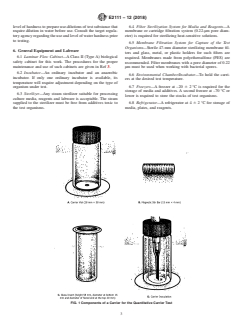
FIG. 1 Components of a Carrier for the Quantitative Carrier Test
E2111 − 12 (2018)
6.9 Timer—Any stopwatch that can be read in minutes and 6.25 Aluminum Foil, to wrap items to be sterilized.
seconds.
6.26 Vortex Mixer, to vortex the eluate and rinsing fluid in
6.10 Hot Air Oven—An oven at 60°C to dry and sterile the carrier to ensure efficient recovery of the test organism(s).
clean glassware.
6.27 Glass Inserts, to be placed inside the glass carriers
6.11 Magnetic Stir Plate and Stir Bars—Large enough for a during inoculation with the test organism. Such inserts have
5-Lbeaker or Erlenmeyer flask for preparing culture media or been found to eliminate the deposition of microaerosols on the
other solutions. inside walls of the carriers. Glass inserts may be manufactured
according to Fig. 1C.
6.12 Positive Displacement Pipette—A pipette and pipette
tipsthataccuratelycandispense10-µLvolumesforinoculation 6.28 Centrifuge, for concentration, or washing, or both of
of carriers. the cells/spores of the test organism(s).
6.13 Air Displacement Pipettes—Eppendorf or equivalent, 6.29 Markers, permanent labware marking pens.
100 to 1000 µL with disposable tips.
6.30 Sterile Polypropylene Centrifuge Tubes with Caps, 50
6.14 Orbital Shaker—For shaking the broth cultures of mL.
bacteria during their incubation.
6.31 Colony Counter,forexample,QuebecColonyCounter.
6.15 Sterile Dispenser—10 mL, for dispensing diluent/
6.32 Sterile Disposable Gloves, for handling the carriers.
eluent.
6.33 Hemocytometer, for counting fungal conidia.
6.16 Glassware—One-liter flasks with a side-arm and ap-
6.34 Spectrophotometer, for measuring turbidity of micro-
propriate tubing to capture the filtrates from 47-mm diameter
bial suspensions.
membranefilters;250-mLErlenmeyerflasksforculturemedia;
100mL and 5L beakers, reusable or disposable glass pipettes
6.35 Bunsen Burner, for aseptic technique
capableofhandling10-,5-,and1-mLvolumes;and25-mLtest
7. General Solutions and Reagents
tubes with caps.
7.1 Purity of Reagents—Reagent grade chemicals shall be
6.17 Vacuum Source—A vacuum pump, access to an in-
used in all tests. Unless otherwise indicated, it is intended that
house vacuum line or a water faucet vacuum apparatus
all reagents conform to the specifications of the Committee on
required to pull the samples through the membrane filters.
Analytical Reagents of the American Chemical Society (4).
6.18 Sterile Disposable Plastic Petri Dishes,100by15mm.
Other grades may be used (5), provided it is first ascertained
6.19 Forceps,straightorcurved,withsmoothtipstohandle that the reagent is of sufficiently high purity to permit its use
membrane filters.
without lessening the accuracy of the determination.
6.20 Flat-Bottomed Glass Vials, 20 mL, with regular and 7.2 Absolute Alcohol—In a 100-mL plastic or glass beaker
septate caps (Fig. 1A). Flat-bottomed glass vials may be
for flame-sterilization of metallic forceps used to handle
manufactured such that the bottom of the vials is completely
membrane filters.
flat with no ridges.
7.3 NormalSaline(0.85 %NaCl;pH7.2)—Tobeusedasan
6.21 Vials, wide-mouth, glass, 25 mL, for use as dilution
eluent and control fluid.
vials.
7.4 Test Microbicide—Prepared at its use-dilution and
6.22 Desiccator,recommendedsizeis25cmwideby20cm
brought to the test temperature.
deep, with an active desiccant for drying the inocula on the
7.5 Growth, Recovery Media and Media Supplements—The
carriers.
required types of materials (see below) can be purchased from
6.23 Stir Bars with Threaded TFE-Fluorocarbon-Coated a variety of sources specializing in laboratory supplies.
Surface, to dislodge inoculum from the carriers surface. Stir
7.6 MnSO H O,addedtoColumbiabrothtopromotethe B.
6 4 2
bars may be manufactured according to Fig. 1B.
subtilis sporulation.
6.24 Magnet, strong enough to hold the threaded stir bar in
7.7 Test Product Diluent, water with a standard hardness of
placeintheglasscarrierwhiletheliquidisbeingpouredoutof
at least 300 ppm as CaCO may be used as the diluent, for test
it for membrane filtration.
products requiring dilution in water to obtain a use-dilution.
The sole source of supply of the apparatus (flat-bottomed vials (catalog
#5260G)) known to the committee at this time is Galaxy Environ. Products, P.O. The sole source of supply of glass inserts known to the committee at this time
Box 238, 7 Greenwood Ave., Newfield, NJ 08344. If you are aware of alternative is Galaxy Environ. Products (Newfield, NJ). If you are aware of alternative
suppliers, please provide this information to ASTM International Headquarters. suppliers, please provide this information to ASTM International Headquarters.
Your comments will receive careful consideration at a meeting of the responsible Your comments will receive careful consideration at a meeting of the responsible
1 1
technical committee, which you may attend. technical committee, which you may attend.
The sole source of supply of stir bars known to the committee at this time is Reagent Chemicals, American Chemical Society Specifications, American
Engineering Department, Rehabilitation Centre, 505 Smyth Rd., Ottawa, ON, Chemical Society, Washington, DC. For Suggestions on the testing of reagents not
CanadaK1H8M2;phone:613-737-7350,ext.75320.Ifyouareawareofalternative listed by the American Chemical Society, see Annual Standards for Laboratory
suppliers, please provide this information to ASTM International Headquarters. Chemicals, BDH Ltd., Poole, Dorset, U.K., and the United States Pharmacopeia
Your comments will receive careful consideration at a meeting of the responsible and National Formulary, U.S. Pharmacopeial Convention, Inc. (USPC), Rockville,
technical committee, which you may attend. MD.
E2111 − 12 (2018)
7.8 Deionized Distilled Water (DDW), for making reagent 11. Carrier Test
solutions and media. For terminology and specifications for
11.1 Inoculation of the Carriers—Wearing sterile gloves,
watertobeusedrefertoTerminologyD1129andSpecification
gentlytightentheseptatecapsonthecarrierssuchthatinsertis
D1193 under 2.1.
positioned at the center of the bottom of the vial.
7.9 Plates of Recovery Media—Mediamustbepreparedand
NOTE 4—The septate cap must not be screwed on too tightly to avoid
sterilized according to manufacturer’s instructions and then
the touching and grinding of the narrow end of the insert on the inside
aseptically dispensed into culture plates.
bottom surface of the carrier vial.
11.1.1 Vortex the test suspension to distribute evenly cells/
8. Carriers
spores. Withdraw 10 µL of the suspension with a positive
8.1 Preparation of the Carriers—Place a clean glass insert
displacementpipetteandplaceitontotheinsidebottomsurface
inside each flat-bottomed vial and position the insert in place
of each carrier (Fig. 1D). For consistency, the same pipette tip
with the help of a septate cap loosely screwed on
...