

ASTM D7552-22
(Test Method)Standard Test Method for Determining the Complex Shear Modulus (G*) of Asphalt Mixtures Using Dynamic Shear Rheometer
General Information
- Abstract
SIGNIFICANCE AND USE
5.1 The complex shear modulus of asphalt mixtures is a fundamental property of the material. Test results at critical temperatures (Tcritical) are used for specifications for some mixes. Mixtures with stiffer binders, aged mixes, mixtures with higher amounts of fines (material finer than 75 µ), and mixtures with lower voids all tend to have higher complex shear modulus values than mixtures with less stiff binders, unaged mixes, mixtures with low levels of fines, and higher air voids. In general, mixtures with higher complex shear modulus values at a given service temperature will exhibit lower permanent deformation values than similar mixtures tested at the same temperature that have lower complex shear modulus values.
Note 2: The quality of the results produced by this standard are dependent on the competence of the personnel performing the procedure and the capability, calibration, and maintenance of the equipment used. Agencies that meet the criteria of Specification D3666 are generally considered capable of competent and objective testing, sampling, inspection, etc. Users of this standard are cautioned that compliance with Specification D3666 alone does not completely ensure reliable results. Reliable results depend on many factors; following the suggestions of Specification D3666 or some similar acceptable guideline provides a means of evaluating and controlling some of those factors.
SCOPE
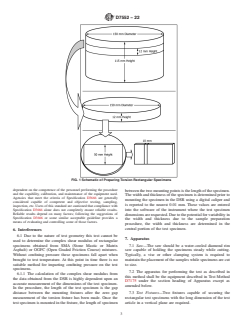
1.1 This test method covers the determination of the complex shear modulus of asphalt mixtures using torsion rectangular geometry on a dynamic shear rheometer (DSR). It is applicable to asphalt mixtures having complex shear modulus values greater than 1 × 10⁴ Pa when tested over a range of temperatures from –40 °C to 76 °C at frequencies of 0.01 to 25 Hz and strains of 0.0005 % to 0.1 %. The determination of complex shear modulus is typically determined at 20 °C to 70 °C at 0.01 % strain at ten discrete frequency values covering 0.01 to 10 Hz. From these data, temperature or frequency master curves can be generated as required. This test method is intended for determining the complex shear modulus of asphalt mixtures as required for specification testing or quality control of asphalt mixture production.
1.2 This test method is appropriate for laboratory-prepared and compacted mixtures, field-produced and laboratory-compacted mixtures or field cores, regardless of binder type or grade and regardless of whether RAP is used in the mixture. Due to the geometry of the specimens being tested this test method is not applicable to open-graded or SMA mixtures. It has been found to be appropriate for dense-graded mixtures, whether coarse- or fine-graded, with 19 mm or smaller nominal maximum aggregate size.
1.3 Since a precision estimate for this standard has not been developed, the test method is to be used for research and informational purposes only. Therefore, this standard should not be used for acceptance or rejection of a material for purchasing purposes.
1.4 The values stated in SI units are to be regarded as standard. No other units of measurement are included in this standard.
1.5 The text of this standard references notes and footnotes which provide explanatory material. These notes and footnotes (excluding those in tables and figures) shall not be considered as requirements of the standard.
1.6 This standard does not purport to address all of the safety concerns, if any, associated with its use. It is the responsibility of the user of this standard to establish appropriate safety, health, and environmental practices and determine the applicability of regulatory limitations prior to use.
1.7 This international standard was developed in accordance with internationally recognized principles on standardization established in the Decision on Principles for the Development of International Standards, Guides and Recommendations issued by the World Trade Organization Technical Barriers...
- Status
- Published
- Publication Date
- 14-Dec-2022
- Technical Committee
- D04 - Road and Paving Materials
- Drafting Committee
- D04.26 - Fundamental/Mechanistic Tests
Buy Documents
ASTM D7552-22 - Standard Test Method for Determining the Complex Shear Modulus (G*) of Asphalt Mixtures Using Dynamic Shear Rheometer
REDLINE ASTM D7552-22 - Standard Test Method for Determining the Complex Shear Modulus (G*) of Asphalt Mixtures Using Dynamic Shear Rheometer
Overview
ASTM D7552-22 is the internationally recognized standard test method for determining the complex shear modulus (G*) of asphalt mixtures using a dynamic shear rheometer (DSR) in torsional rectangular geometry. Developed by ASTM International, this standard is applicable to laboratory-prepared and compacted, field-produced and laboratory-compacted, or field-core asphalt mixtures. The main focus is to evaluate the fundamental viscoelastic properties of dense-graded asphalt mixtures, supporting material specification, quality control, and research in pavement engineering.
The complex shear modulus (G*) is a critical rheological property that helps predict how asphalt mixtures will perform under repeated traffic loading, temperature variations, and environmental stressors. High G* values usually indicate greater resistance to permanent deformation, which is essential for long-lasting pavement performance.
Key Topics
Test Scope:
- Measures complex shear modulus for asphalt mixtures (not suitable for open-graded or stone matrix asphalt types).
- Applicable for mixtures with nominal maximum aggregate size of 19 mm or smaller.
Test Parameters:
- Temperature range: –40 °C to 76 °C
- Frequency range: 0.01 to 25 Hz
- Strain: 0.0005% to 0.1%
- Standard testing often at 20 °C to 70 °C, using 0.01% strain
Specimen Preparation:
- Rectangular prismatic specimens cut from laboratory or field-compacted mixes.
Test Procedure:
- Mounted in DSR with environmental chamber for precise temperature control.
- Subjected to sinusoidal oscillatory load; G* measured at various frequencies.
Result Interpretation:
- G* helps assess mixture stiffness, rutting resistance, and temperature susceptibility.
- Master curves can be generated to compare performance across frequencies and temperatures.
Quality and Reliability:
- Test reliability depends on operator skill and equipment calibration.
- Agencies following ASTM D3666 guidelines are generally qualified for performing this testing.
Applications
ASTM D7552-22 is widely used in the following practical applications:
- Mixture Specification Testing: Ensures asphalt mixtures meet regulatory and performance specifications by quantifying viscoelastic behavior.
- Quality Control during Production: Assures consistency and reliability of asphalt mixtures by identifying batch-to-batch variations.
- Research and Development: Enables the development of improved asphalt materials and pavement structures by providing fundamental mechanical properties.
- Performance Prediction: Supports the modeling of pavement life and maintenance needs by predicting susceptibility to rutting and permanent deformation.
- Comparative Analysis: Facilitates comparison between mixtures with various binders, aggregate characteristics, and air void content.
Industries and Users
- Pavement and highway agencies
- Construction materials laboratories
- Asphalt mixture designers and specifiers
- Academic and research institutions
Note: ASTM D7552-22 is intended for research and informational purposes. It is not recommended for acceptance or rejection of materials for purchase due to the current lack of established precision estimates.
Related Standards
Professionals using ASTM D7552-22 may also reference:
- ASTM D7175: Test Method for Determining the Rheological Properties of Asphalt Binder Using a Dynamic Shear Rheometer.
- ASTM D2041/D2041M: Test Method for Theoretical Maximum Specific Gravity and Density of Asphalt Mixtures.
- ASTM D3203: Test Method for Percent Air Voids in Compacted Asphalt Mixtures.
- ASTM D3666: Specification for Minimum Requirements for Agencies Testing and Inspecting Road and Paving Materials.
- ASTM D6925: Preparation and Determination of Relative Density of Asphalt Mix Specimens by Means of the Superpave Gyratory Compactor.
Referencing these standards ensures comprehensive laboratory practice and data reliability when assessing asphalt mixtures for road and pavement construction.
Keywords: ASTM D7552-22, complex shear modulus, asphalt mixtures, dynamic shear rheometer, pavement performance, viscoelastic properties, rutting resistance, pavement materials testing.
Relations
- Effective Date
- 15-Dec-2023
- Effective Date
- 01-Dec-2023
- Effective Date
- 01-Nov-2023
- Effective Date
- 01-Nov-2023
- Effective Date
- 01-Jan-2020
- Effective Date
- 01-Nov-2019
- Effective Date
- 01-Aug-2019
- Effective Date
- 01-Jun-2019
- Effective Date
- 15-Dec-2018
- Effective Date
- 15-Aug-2018
- Effective Date
- 15-Aug-2018
- Effective Date
- 15-Aug-2018
- Effective Date
- 01-Jul-2018
- Effective Date
- 01-Feb-2018
- Effective Date
- 15-Jul-2017
Buy Documents
ASTM D7552-22 - Standard Test Method for Determining the Complex Shear Modulus (G*) of Asphalt Mixtures Using Dynamic Shear Rheometer
REDLINE ASTM D7552-22 - Standard Test Method for Determining the Complex Shear Modulus (G*) of Asphalt Mixtures Using Dynamic Shear Rheometer
Get Certified
Connect with accredited certification bodies for this standard

DIBt (Deutsches Institut für Bautechnik)
German Institute for Building Technology.
DIN CERTCO
DIN Group product certification.

Element Materials Technology
Materials testing and product certification.
Sponsored listings
Frequently Asked Questions
ASTM D7552-22 is a standard published by ASTM International. Its full title is "Standard Test Method for Determining the Complex Shear Modulus (G*) of Asphalt Mixtures Using Dynamic Shear Rheometer". This standard covers: SIGNIFICANCE AND USE 5.1 The complex shear modulus of asphalt mixtures is a fundamental property of the material. Test results at critical temperatures (Tcritical) are used for specifications for some mixes. Mixtures with stiffer binders, aged mixes, mixtures with higher amounts of fines (material finer than 75 µ), and mixtures with lower voids all tend to have higher complex shear modulus values than mixtures with less stiff binders, unaged mixes, mixtures with low levels of fines, and higher air voids. In general, mixtures with higher complex shear modulus values at a given service temperature will exhibit lower permanent deformation values than similar mixtures tested at the same temperature that have lower complex shear modulus values. Note 2: The quality of the results produced by this standard are dependent on the competence of the personnel performing the procedure and the capability, calibration, and maintenance of the equipment used. Agencies that meet the criteria of Specification D3666 are generally considered capable of competent and objective testing, sampling, inspection, etc. Users of this standard are cautioned that compliance with Specification D3666 alone does not completely ensure reliable results. Reliable results depend on many factors; following the suggestions of Specification D3666 or some similar acceptable guideline provides a means of evaluating and controlling some of those factors. SCOPE 1.1 This test method covers the determination of the complex shear modulus of asphalt mixtures using torsion rectangular geometry on a dynamic shear rheometer (DSR). It is applicable to asphalt mixtures having complex shear modulus values greater than 1 × 10⁴ Pa when tested over a range of temperatures from –40 °C to 76 °C at frequencies of 0.01 to 25 Hz and strains of 0.0005 % to 0.1 %. The determination of complex shear modulus is typically determined at 20 °C to 70 °C at 0.01 % strain at ten discrete frequency values covering 0.01 to 10 Hz. From these data, temperature or frequency master curves can be generated as required. This test method is intended for determining the complex shear modulus of asphalt mixtures as required for specification testing or quality control of asphalt mixture production. 1.2 This test method is appropriate for laboratory-prepared and compacted mixtures, field-produced and laboratory-compacted mixtures or field cores, regardless of binder type or grade and regardless of whether RAP is used in the mixture. Due to the geometry of the specimens being tested this test method is not applicable to open-graded or SMA mixtures. It has been found to be appropriate for dense-graded mixtures, whether coarse- or fine-graded, with 19 mm or smaller nominal maximum aggregate size. 1.3 Since a precision estimate for this standard has not been developed, the test method is to be used for research and informational purposes only. Therefore, this standard should not be used for acceptance or rejection of a material for purchasing purposes. 1.4 The values stated in SI units are to be regarded as standard. No other units of measurement are included in this standard. 1.5 The text of this standard references notes and footnotes which provide explanatory material. These notes and footnotes (excluding those in tables and figures) shall not be considered as requirements of the standard. 1.6 This standard does not purport to address all of the safety concerns, if any, associated with its use. It is the responsibility of the user of this standard to establish appropriate safety, health, and environmental practices and determine the applicability of regulatory limitations prior to use. 1.7 This international standard was developed in accordance with internationally recognized principles on standardization established in the Decision on Principles for the Development of International Standards, Guides and Recommendations issued by the World Trade Organization Technical Barriers...
SIGNIFICANCE AND USE 5.1 The complex shear modulus of asphalt mixtures is a fundamental property of the material. Test results at critical temperatures (Tcritical) are used for specifications for some mixes. Mixtures with stiffer binders, aged mixes, mixtures with higher amounts of fines (material finer than 75 µ), and mixtures with lower voids all tend to have higher complex shear modulus values than mixtures with less stiff binders, unaged mixes, mixtures with low levels of fines, and higher air voids. In general, mixtures with higher complex shear modulus values at a given service temperature will exhibit lower permanent deformation values than similar mixtures tested at the same temperature that have lower complex shear modulus values. Note 2: The quality of the results produced by this standard are dependent on the competence of the personnel performing the procedure and the capability, calibration, and maintenance of the equipment used. Agencies that meet the criteria of Specification D3666 are generally considered capable of competent and objective testing, sampling, inspection, etc. Users of this standard are cautioned that compliance with Specification D3666 alone does not completely ensure reliable results. Reliable results depend on many factors; following the suggestions of Specification D3666 or some similar acceptable guideline provides a means of evaluating and controlling some of those factors. SCOPE 1.1 This test method covers the determination of the complex shear modulus of asphalt mixtures using torsion rectangular geometry on a dynamic shear rheometer (DSR). It is applicable to asphalt mixtures having complex shear modulus values greater than 1 × 10⁴ Pa when tested over a range of temperatures from –40 °C to 76 °C at frequencies of 0.01 to 25 Hz and strains of 0.0005 % to 0.1 %. The determination of complex shear modulus is typically determined at 20 °C to 70 °C at 0.01 % strain at ten discrete frequency values covering 0.01 to 10 Hz. From these data, temperature or frequency master curves can be generated as required. This test method is intended for determining the complex shear modulus of asphalt mixtures as required for specification testing or quality control of asphalt mixture production. 1.2 This test method is appropriate for laboratory-prepared and compacted mixtures, field-produced and laboratory-compacted mixtures or field cores, regardless of binder type or grade and regardless of whether RAP is used in the mixture. Due to the geometry of the specimens being tested this test method is not applicable to open-graded or SMA mixtures. It has been found to be appropriate for dense-graded mixtures, whether coarse- or fine-graded, with 19 mm or smaller nominal maximum aggregate size. 1.3 Since a precision estimate for this standard has not been developed, the test method is to be used for research and informational purposes only. Therefore, this standard should not be used for acceptance or rejection of a material for purchasing purposes. 1.4 The values stated in SI units are to be regarded as standard. No other units of measurement are included in this standard. 1.5 The text of this standard references notes and footnotes which provide explanatory material. These notes and footnotes (excluding those in tables and figures) shall not be considered as requirements of the standard. 1.6 This standard does not purport to address all of the safety concerns, if any, associated with its use. It is the responsibility of the user of this standard to establish appropriate safety, health, and environmental practices and determine the applicability of regulatory limitations prior to use. 1.7 This international standard was developed in accordance with internationally recognized principles on standardization established in the Decision on Principles for the Development of International Standards, Guides and Recommendations issued by the World Trade Organization Technical Barriers...
ASTM D7552-22 is classified under the following ICS (International Classification for Standards) categories: 75.140 - Waxes, bituminous materials and other petroleum products; 91.100.50 - Binders. Sealing materials. The ICS classification helps identify the subject area and facilitates finding related standards.
ASTM D7552-22 has the following relationships with other standards: It is inter standard links to ASTM D7175-23, ASTM D6925-23, ASTM D6752/D6752M-23, ASTM D6857/D6857M-23, ASTM D6926-20, ASTM E644-11(2019), ASTM D8-19, ASTM D2041/D2041M-19, ASTM D8-18c, ASTM D6752/D6752M-18, ASTM D8-18b, ASTM D6857/D6857M-18, ASTM D8-18a, ASTM D8-18, ASTM D8-17c. Understanding these relationships helps ensure you are using the most current and applicable version of the standard.
ASTM D7552-22 is available in PDF format for immediate download after purchase. The document can be added to your cart and obtained through the secure checkout process. Digital delivery ensures instant access to the complete standard document.
Standards Content (Sample)
This international standard was developed in accordance with internationally recognized principles on standardization established in the Decision on Principles for the
Development of International Standards, Guides and Recommendations issued by the World Trade Organization Technical Barriers to Trade (TBT) Committee.
Designation: D7552 − 22
Standard Test Method for
Determining the Complex Shear Modulus (G*) of Asphalt
Mixtures Using Dynamic Shear Rheometer
This standard is issued under the fixed designation D7552; the number immediately following the designation indicates the year of
original adoption or, in the case of revision, the year of last revision.Anumber in parentheses indicates the year of last reapproval.A
superscript epsilon (´) indicates an editorial change since the last revision or reapproval.
1. Scope (excluding those in tables and figures) shall not be considered
as requirements of the standard.
1.1 This test method covers the determination of the com-
1.6 This standard does not purport to address all of the
plex shear modulus of asphalt mixtures using torsion rectan-
safety concerns, if any, associated with its use. It is the
gular geometry on a dynamic shear rheometer (DSR). It is
responsibility of the user of this standard to establish appro-
applicable to asphalt mixtures having complex shear modulus
priate safety, health, and environmental practices and deter-
values greater than 1 × 10 Pa when tested over a range of
mine the applicability of regulatory limitations prior to use.
temperatures from –40°C to 76°C at frequencies of 0.01 to
1.7 This international standard was developed in accor-
25Hz and strains of 0.0005% to 0.1%. The determination of
dance with internationally recognized principles on standard-
complex shear modulus is typically determined at 20°C to
ization established in the Decision on Principles for the
70°Cat0.01%strainattendiscretefrequencyvaluescovering
Development of International Standards, Guides and Recom-
0.01 to 10 Hz. From these data, temperature or frequency
mendations issued by the World Trade Organization Technical
mastercurvescanbegeneratedasrequired.Thistestmethodis
Barriers to Trade (TBT) Committee.
intendedfordeterminingthecomplexshearmodulusofasphalt
mixtures as required for specification testing or quality control
2. Referenced Documents
of asphalt mixture production.
2.1 ASTM Standards:
1.2 This test method is appropriate for laboratory-prepared
D8Terminology Relating to Materials for Roads and Pave-
and compacted mixtures, field-produced and laboratory-
ments
compacted mixtures or field cores, regardless of binder type or
D2041/D2041MTest Method for Theoretical Maximum
grade and regardless of whether RAP is used in the mixture.
Specific Gravity and Density of Asphalt Mixtures
Due to the geometry of the specimens being tested this test
D3203Test Method for Percent Air Voids in Compacted
method is not applicable to open-graded or SMA mixtures. It
Asphalt Mixtures
has been found to be appropriate for dense-graded mixtures,
D3666Specification for Minimum Requirements for Agen-
whethercoarse-orfine-graded,with19mmorsmallernominal
cies Testing and Inspecting Road and Paving Materials
maximum aggregate size.
D6752/D6752MTest Method for Bulk Specific Gravity and
1.3 Sinceaprecisionestimateforthisstandardhasnotbeen
Density of CompactedAsphalt Mixtures UsingAutomatic
developed, the test method is to be used for research and
Vacuum Sealing Method
informational purposes only. Therefore, this standard should
D6857/D6857MTest Method for Maximum Specific Grav-
not be used for acceptance or rejection of a material for
ity and Density of Asphalt Mixtures Using Automatic
purchasing purposes.
Vacuum Sealing Method
D6925Test Method for Preparation and Determination of
1.4 The values stated in SI units are to be regarded as
the Relative Density ofAsphalt Mix Specimens by Means
standard. No other units of measurement are included in this
of the Superpave Gyratory Compactor
standard.
D6926Practice for Preparation of Asphalt Mixture Speci-
1.5 The text of this standard references notes and footnotes
mens Using Marshall Apparatus
whichprovideexplanatorymaterial.Thesenotesandfootnotes
D7175Test Method for Determining the Rheological Prop-
erties of Asphalt Binder Using a Dynamic Shear Rheom-
eter
This test method is under the jurisdiction of ASTM Committee D04 on Road
and Paving Materials and is the direct responsibility of Subcommittee D04.26 on
Fundamental/Mechanistic Tests. For referenced ASTM standards, visit the ASTM website, www.astm.org, or
Current edition approved Dec. 15, 2022. Published January 2023. Originally contact ASTM Customer Service at service@astm.org. For Annual Book of ASTM
approved in 2009. Last previous edition approved in 2014 as D7552–09 (2014). Standards volume information, refer to the standard’s Document Summary page on
DOI: 10.1520/D7552-22. the ASTM website.
Copyright © ASTM International, 100 Barr Harbor Drive, PO Box C700, West Conshohocken, PA 19428-2959. United States
D7552 − 22
D7312Test Method for Determining the Permanent Shear measurement system, or material measure are stable. Usually
Strain and Complex Shear Modulus of Asphalt Mixtures performed internally within the operating laboratory.
Using the Superpave Shear Tester (SST) (Withdrawn
3.2 Fordefinitionsofothertermsusedinthisstandard,refer
2019)
to Terminology D8.
E77Test Method for Inspection and Verification of Ther-
mometers
4. Summary of Test Method
E644Test Methods for Testing Industrial Resistance Ther-
4.1 This standard contains the procedure used to measure
mometers
the complex shear modulus of an asphalt mixture using a DSR
2.2 Other Standards:
in oscillatory mode and using torsional rectangular geometry.
DIN Standard 43760Standard for Calibration of Platinum
The DSR must be temperature-controlled using a forced air
Resistance Thermometers
system.
4.2 Thestandardissuitableforusewhenthecomplexshear
3. Terminology
modulus is greater than1×10 Pa at the test temperature.The
3.1 Definitions of Terms Specific to This Standard:
complex shear modulus is typically determined at 20°C to
3.1.1 calibration, n—a process that establishes the relation-
70°C, although other test temperatures may be used.
ship (traceability) between the results of a measurement
4.3 Test specimens, nominally 50 mm in length, 12 mm in
instrument, measurement system, or material measure and the
width, and 10 mm in thickness may be cut from gyratory or
corresponding values assigned to a reference standard.
Marshall laboratory specimens or from field cores (see Figs.
3.1.1.1 Discussion—Calibration is typically performed by
1-3).Specimenscanbeobtainedfromasphaltmixturesamples
themanufactureroranexternalcommercialcalibrationservice.
compacted using other devices as long as it is possible to
3.1.2 complex shear modulus (G*), n—a complex number
determine the air voids of the mixture samples. The test
that is defined by the ratio of shear stress to shear strain.
specimens are mounted with the 50 mm length forming a
3.1.3 dummy test specimen, n—a rectangular prismatic or
vertical dimension in the DSR.
cylindrical specimen of bituminous mix prepared as discussed
4.4 During testing, one of the fixtures is rotated with
in 9.2, into which a small hole is drilled and into which a PRT
respect to the other at a pre-selected percent strain and a range
wire is inserted.
of frequencies at the selected temperatures. The test shall be
3.1.3.1 Discussion—The dummy specimen is mounted in
conductedat0.01%strainunlessotherwisestated.Thepercent
thetorsionfixtureoftheDSRforthepurposeofmeasuringthe
strain stipulated in this test method has been found to produce
internal temperature of the asphalt mixture sample for use in
acceptableresultsfortheasphaltmaterialsinvestigatedtodate.
determining thermal equilibrium times.
NOTE 1—Different strain values, within the capabilities of individual
3.1.4 loading cycle, n—refers to the application of sinusoi-
equipment, may be selected for testing materials beyond the scope of
dal stress or strain loading for a specified duration.
those tested to date. Regardless of percent strain or test temperatures
3.1.5 portable thermometer, n—refers to an electronic de- chosen or test materials investigated, the basic testing process described
herein will not change.
vicethatisseparatefromthedynamicshearrheometerandthat
consists of a detector (probe containing a thermocouple or
4.5 The test specimen is maintained at the test temperature
resistive element), associated electronic circuitry, and readout
6 0.1°C by enclosing the upper and lower fixtures in a
system.
thermally controlled environmental test chamber.
3.1.6 reference thermometer, n—refers to a NIST-traceable
5. Significance and Use
liquid-in-glass or electronic thermometer that is used as a
5.1 The complex shear modulus of asphalt mixtures is a
laboratory standard.
fundamental property of the material. Test results at critical
3.1.7 shear stress, n—the force per unit area that produces
temperatures (T ) are used for specifications for some
critical
the flow.
mixes.Mixtureswithstifferbinders,agedmixes,mixtureswith
3.1.8 temperature correction, n—difference in temperature
higheramountsoffines(materialfinerthan75µ),andmixtures
between the temperature indicated by the DSR and the test
with lower voids all tend to have higher complex shear
specimen as measured by the portable thermometer inserted
modulus values than mixtures with less stiff binders, unaged
between the test plates.
mixes, mixtures with low levels of fines, and higher air voids.
3.1.9 thermal equilibrium, n—condition where the tempera-
Ingeneral,mixtureswithhighercomplexshearmodulusvalues
ture of the test specimen mounted between the test plates is
at a given service temperature will exhibit lower permanent
constant with time.
deformation values than similar mixtures tested at the same
temperature that have lower complex shear modulus values.
3.1.10 verification, n—aprocessthatestablisheswhetherthe
results of a previously calibrated measurement instrument,
NOTE 2—The quality of the results produced by this standard are
3 5
The last approved version of this historical standard is referenced on Depending upon whether a stress or strain controlled rheometer is being used,
www.astm.org. either the upper or lower fixture will be the one which is rotated. This test method
Available from Beuth Verlag GmbH (DIN--DIN Deutsches Institut fur Nor- is applicable to both stress and strain controlled rheometers. When a stress
mung e.V.), Burggrafenstrasse 6, 10787, Berlin, Germany, http://www.en.din.de. controlled rheometer is used, the test is performed in strain controlled mode.
D7552 − 22
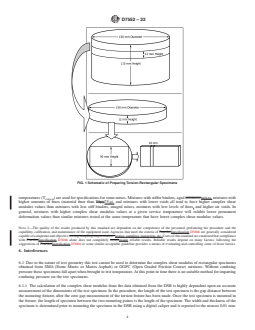
FIG. 1 Schematic of Preparing Torsion Rectangular Specimens
dependent on the competence of the personnel performing the procedure
betweenthetwomountingpointsisthelengthofthespecimen.
and the capability, calibration, and maintenance of the equipment used.
Thewidthandthicknessofthespecimenisdeterminedpriorto
Agencies that meet the criteria of Specification D3666 are generally
mounting the specimen in the DSR using a digital caliper and
considered capable of competent and objective testing, sampling,
is reported to the nearest 0.01 mm. These values are entered
inspection, etc. Users of this standard are cautioned that compliance with
Specification D3666 alone does not completely ensure reliable results. into the software of the instrument where the test specimen
Reliable results depend on many factors; following the suggestions of
dimensionsarerequested.Duetothepotentialforvariabilityin
Specification D3666 or some similar acceptable guideline provides a
the width and thickness due to the sample preparation
means of evaluating and controlling some of those factors.
procedure, the width and thickness are determined in the
central portion of the test specimen.
6. Interferences
6.1 Due to the nature of test geometry this test cannot be
7. Apparatus
used to determine the complex shear modulus of rectangular
specimens obtained from SMA (Stone Mastic or Matrix
7.1 Saw—The saw should be a water-cooled diamond rim
Asphalt) or OGFC (Open Graded Friction Course) mixtures. saw capable of holding the specimens steady while cutting.
Without confining pressure these specimens fall apart when
Typically, a vise or other clamping system is required to
brought to test temperature. At this point in time there is no maintaintheplacementofthesampleswhilespecimensarecut
suitable method for imparting confining pressure on the test
to size.
specimens.
7.2 The apparatus for performing the test as described in
6.1.1 The calculation of the complex shear modulus from
this method shall be the equipment described in Test Method
the data obtained from the DSR is highly dependent upon an
D7175 under the section heading of Apparatus except as
accurate measurement of the dimensions of the test specimen.
amended below.
In the procedure, the length of the test specimen is the gap
distance between the mounting fixtures after the zero gap 7.3 Test Fixtures—Two fixtures capable of securing the
measurement of the torsion fixture has been made. Once the rectangular test specimens with the long dimension of the test
test specimen is mounted in the fixture, the length of specimen article in a vertical plane are required.
D7552 − 22
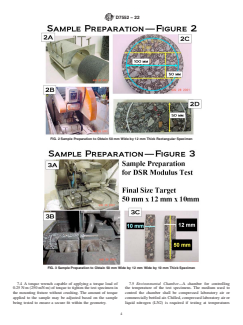
FIG. 2 Sample Preparation to Obtain 50 mm Wide by 12 mm Thick Rectangular Specimen
FIG. 3 Sample Preparation to Obtain 50 mm Wide by 12 mm Wide by 10 mm Thick Specimen
7.4 A torque wrench capable of applying a torque load of 7.5 Environmental Chamber—A chamber for controlling
0.25 N·m (250 mN·m) of torque to tighten the test specimen in the temperature of the test specimens. The medium used to
the mounting fixture without crushing. The amount of torque control the chamber shall be compressed laboratory air or
applied to the sample may be adjusted based on the sample commerciallybottledair.Chilled,compressedlaboratoryairor
being tested to ensure a secure fit within the geometry. liquid nitrogen (LN2) is required if testing at temperatures
D7552 − 22
below approximately 30°C is to be conducted. When labora- 8.2 Cleaning Solvents:
tory air is used in a forced air environmental chamber, a 8.2.1 Mineral oil, citrus-based solvents, mineral spirits,
suitable dryer must be included to prevent condensation of toluene, or similar solvent as required for cleaning the mount-
moistureonthetestspecimen.Theenvironmentalchamberand ing clamps.
the temperature controller shall control the temperature of the 8.2.2 Acetone or ethanol may be used as needed for
test specimen mounted between the grips, including any removing solvent residue from the surfaces of the mounting
thermal gradients within the test specimen, at the test tempera- clamps.
ture 6 0.1°C. Due to the geometry and type of material being
8.3 Reference Thermometer—Either a NIST-traceable
tested, water baths and Peltier fixtures cannot be used to
liquid-in-glassthermometer(s)(8.3.1)orNIST-traceabledigital
controlthetesttemperatureofthespecimens.Somecompanies
electronic thermometer (8.3.2) shall be maintained in the
manufactureaPeltierheatedsubmersioncell,whichuseswater
laboratory as a reference standard. This reference standard
or some other liquid medium to condition the test specimen.
shall be used to verify the portable thermometer (8.4).
Testing the mixture while submerged could introduce errors in
8.3.1 Liquid-in-Glass Thermometer—NIST-traceable
the results due to weakening of the mix due to moisture
liquid-in-glass thermometer(s) with a suitable range and with
interaction.
subdivisions of 0.1°C. The thermometer(s) shall be partial
immersion thermometers with an ice point and calibrated in
7.6 Temperature Controller—A temperature controller ca-
accordancewithTestMethodE77.Calibrationintervalshallbe
pableofmaintainingthetemperatureofthetestspecimenatthe
on a twelve-month interval.
test temperature 6 0.1°C for test temperatures stipulated.
8.3.2 Digital Electronic Thermometer—An electronic ther-
7.7 Internal DSR Thermometer—Aplatinumresistancether-
mometerthatincorporatesaresistivedetectorwithanaccuracy
mometer (PRT) mounted within the environmental chamber as
of 60.05°C and a resolution of 0.01°C. The electronic
an integral part of the DSR and in close proximity to the
thermometer shall be calibrated at least once per year by a
bottom mounting fixture with a minimum range of 20°C to
commercial calibrating service using a NIST-traceable refer-
70°C,andwitharesolutionof0.1°C.Normallythisrangewill
ence standard in accordance with Test Method E644.
be sufficient unless there is a need to determine the complex
8.4 Portable Thermometer—A portable thermometer con-
shearmodulusofthemixtureattemperaturesbelowambient.If
sisting of a resistive detector, associated electronic circuitry,
there is a need to control test temperatures below ambient then
and digital readout. The thickness of the detector shall be no
mechanical cooling or liquid nitrogen will be needed. This
greater than 2.0 mm.The reference thermometer (see 8.3) may
thermometershallbeusedtocontrolthetemperatureofthetest
be used for this purpose if its detector fits within the dummy
specimen and shall provide a continuous readout of tempera-
specimen.
ture during the mounting, conditioning, and testing of the
specimen.
9. Verification
7.8 Loading Device—The loading device shall at least be
9.1 Verify the DSR and its components as described in this
capable of applying a sinusoidal oscillatory load to the speci-
section when the DSR is newly installed, when it is moved to
menatthefollowingfrequencies:0.01,0.02,0.05,0.1,0.2,0.5,
anewlocation,orwhenevertheaccuracyoftheDSRoranyof
1, 5, 10, and 15 Hz. The loading device shall be capable of
its components is suspect. Verification of the DSR required to
controlling frequencies to an accuracy of 1%. The loading
perform solids testing follows the procedures detailed in the
device shall be capable of providing a strain controlled load
verification section of Test Method D7175.
within a range of strain necessary to make the measurements
NOTE3—Atthispointnosuitabletorsionalverificationstandardforthe
describedinthisstandard.Themanufacturerofthedeviceshall
torque transducer has been identi
...
This document is not an ASTM standard and is intended only to provide the user of an ASTM standard an indication of what changes have been made to the previous version. Because
it may not be technically possible to adequately depict all changes accurately, ASTM recommends that users consult prior editions as appropriate. In all cases only the current version
of the standard as published by ASTM is to be considered the official document.
Designation: D7552 − 09 (Reapproved 2014) D7552 − 22
Standard Test Method for
Determining the Complex Shear Modulus (G*) Of
Bituminousof Asphalt Mixtures Using Dynamic Shear
Rheometer
This standard is issued under the fixed designation D7552; the number immediately following the designation indicates the year of
original adoption or, in the case of revision, the year of last revision. A number in parentheses indicates the year of last reapproval. A
superscript epsilon (´) indicates an editorial change since the last revision or reapproval.
1. Scope
1.1 This test method covers the determination of the complex shear modulus of bituminousasphalt mixtures using torsion
rectangular geometry on a dynamic shear rheometer (DSR). It is applicable to bituminousasphalt mixtures having complex shear
modulus values greater than 1 × 10 Pa when tested over a range of temperatures from 10°C–40 °C to 76°C76 °C at frequencies
of 0.01 to 25 Hz 25 Hz and strains of 0.001 %0.0005 % to 0.1 %. The determination of complex shear modulus is typically
determined at 20°C20 °C to 70°C70 °C at 0.01%0.01 % strain at 10ten discrete frequency values covering 0.01 to 10 Hz. From
these data, temperature or frequency master curves can be generated as required. This test method is intended for determining the
complex shear modulus of bituminousasphalt mixtures as required for specification testing or quality control of bituminousasphalt
mixture production.
1.2 This test method is appropriate for laboratory prepared laboratory-prepared and compacted mixtures, field produced and
laboratory compacted field-produced and laboratory-compacted mixtures or field cores, regardless of binder type or grade and
regardless of whether RAP is used in the mixture. Due to the geometry of the specimens being tested this test method is not
applicable to open-graded or SMA mixtures. It has been found to be appropriate for dense-graded mixtures, whether coarse- or
fine-graded, with 19 mm or smaller nominal maximum aggregate size.
1.3 The between-laboratory reproducibility of this Since a precision estimate for this standard has not been developed, the test
method is being determined and will be available on or before June 2012. Therefore, this test method to be used for research and
informational purposes only. Therefore, this standard should not be used for acceptance or rejection of materials a material for
purchasing purposes.
1.4 The values stated in SI units are to be regarded as standard. No other units of measurement are included in this standard.
1.5 This standard does not purport to address all of the safety concerns, if any, associated with its use. It is the responsibility of
the user of this standard to establish appropriate safety and health practices and determine the applicability of regulatory limitations
prior to use.The text of this standard references notes and footnotes which provide explanatory material. These notes and footnotes
(excluding those in tables and figures) shall not be considered as requirements of the standard.
1.6 This standard does not purport to address all of the safety concerns, if any, associated with its use. It is the responsibility
of the user of this standard to establish appropriate safety, health, and environmental practices and determine the applicability of
regulatory limitations prior to use.
This test method is under the jurisdiction of ASTM Committee D04 on Road and Paving Materials and is the direct responsibility of Subcommittee D04.26 on
Fundamental/Mechanistic Tests.
Current edition approved Aug. 1, 2014Dec. 15, 2022. Published November 2014January 2023. Originally approved in 2009. Last previous edition approved in 20092014
as D7552 – 09.D7552 – 09 (2014). DOI: 10.1520/D7552-09R14.10.1520/D7552-22.
Copyright © ASTM International, 100 Barr Harbor Drive, PO Box C700, West Conshohocken, PA 19428-2959. United States
D7552 − 22
1.7 This international standard was developed in accordance with internationally recognized principles on standardization
established in the Decision on Principles for the Development of International Standards, Guides and Recommendations issued
by the World Trade Organization Technical Barriers to Trade (TBT) Committee.
2. Referenced Documents
2.1 ASTM Standards:
C670D8 Practice for Preparing Precision and Bias Statements for Test Methods for Construction MaterialsTerminology Relating
to Materials for Roads and Pavements
D140 Practice for Sampling Asphalt Materials
D2041D2041/D2041M Test Method for Theoretical Maximum Specific Gravity and Density of Asphalt Mixtures
D2726 Test Method for Bulk Specific Gravity and Density of Non-Absorptive Compacted Asphalt Mixtures
D3203 Test Method for Percent Air Voids in Compacted Asphalt Mixtures
D3666 Specification for Minimum Requirements for Agencies Testing and Inspecting Road and Paving Materials
D6752D6752/D6752M Test Method for Bulk Specific Gravity and Density of Compacted Asphalt Mixtures Using Automatic
Vacuum Sealing Method
D6857D6857/D6857M Test Method for Maximum Specific Gravity and Density of Asphalt Mixtures Using Automatic Vacuum
Sealing Method
D6925 Test Method for Preparation and Determination of the Relative Density of Asphalt Mix Specimens by Means of the
Superpave Gyratory Compactor
D6926 Practice for Preparation of Asphalt Mixture Specimens Using Marshall Apparatus
D7175 Test Method for Determining the Rheological Properties of Asphalt Binder Using a Dynamic Shear Rheometer
D7312 Test Method for Determining the Permanent Shear Strain and Complex Shear Modulus of Asphalt Mixtures Using the
Superpave Shear Tester (SST) (Withdrawn 2019)
E77 Test Method for Inspection and Verification of Thermometers
E563 Practice for Preparation and Use of an Ice-Point Bath as a Reference Temperature
E644 Test Methods for Testing Industrial Resistance Thermometers
2.2 Other Standards:
DIN Standard 43760 Standard for Calibration of Platinum Resistance Thermometers
3. Terminology
3.1 Definitions of Terms Specific to This Standard:
3.1.1 asphalt binder, n—an asphalt-based cement that is produced from petroleum residue either with or without the addition of
non-particulate modifiers.
3.1.1 calibration, n—a process that establishes the relationship (traceability) between the results of a measurement instrument,
measurement system, or material measure and the corresponding values assigned to a reference standard. Calibration is typically
performed by the manufacturer or an external commercial calibration service.
3.1.1.1 Discussion—
Calibration is typically performed by the manufacturer or an external commercial calibration service.
3.1.2 complex shear modulus (G*), n—a complex number that is defined by the ratio of shear stress to shear strain.
3.1.3 dummy test specimen, n—a rectangular prismatic or cylindrical specimen of bituminous mix prepared as discussed in Section
9.2, into which a small hole is drilled and into which a PRT wire is inserted. The dummy specimen is then mounted in the torsion
fixture of the DSR for the purpose of determining the temperature in the bituminous mixture. In addition the dummy specimen can
be used to ascertain the amount of time needed to bring a test specimen to the appropriate test temperature.
3.1.3.1 Discussion—
The dummy test specimen is not used to measure the modulus characteristics of the bituminous mixture but is used to determine
temperature corrections and mounted in the torsion fixture of the DSR for the purpose of measuring the internal temperature of
the asphalt mixture sample for use in determining thermal equilibrium times.
For referenced ASTM standards, visit the ASTM website, www.astm.org, or contact ASTM Customer Service at service@astm.org. For Annual Book of ASTM Standards
volume information, refer to the standard’s Document Summary page on the ASTM website.
The last approved version of this historical standard is referenced on www.astm.org.
Available from Beuth Verlag GmbH (DIN-- DIN (DIN--DIN Deutsches Institut fur Normung e.V.), Burggrafenstrasse 6, 10787, Berlin, Germany, http://www.en.din.de.
D7552 − 22
3.1.4 loading cycle, n—refers to the application of sinusoidal stress or strain loading for a specified duration.
3.1.6 shear stress, n—the force per unit area that produces the flow.
3.1.5 portable thermometer, n—refers to an electronic device that is separate from the dynamic shear rheometer and that consists
of a detector (probe containing a thermocouple or resistive element), associated electronic circuitry, and readout system.
3.1.6 reference thermometer, n—refers to a NIST-traceable liquid-in-glass or electronic thermometer that is used as a laboratory
standard.
3.1.7 shear stress, n—the force per unit area that produces the flow.
3.1.8 temperature correction, n—difference in temperature between the temperature indicated by the DSR and the test specimen
as measured by the portable thermometer inserted between the test plates.
3.1.9 thermal equilibrium, n—condition where the temperature of the test specimen mounted between the test plates is constant
with time.
3.1.10 verification, n—a process that establishes whether the results of a previously calibrated measurement instrument,
measurement system, or material measure are stable. Usually performed internally within the operating laboratory.
3.2 For definitions of other terms used in this standard, refer to Terminology D8.
4. Summary of Test Method
4.1 This standard contains the procedure used to measure the complex shear modulus of a bituminousan asphalt mixture using a
DSR in oscillatory mode and using torsional rectangular geometry. The DSR must be temperature-controlled using a forced air
system.
4.2 The standard is suitable for use when the complex shear modulus is greater than 1 × 10 Pa at the test temperature. The
complex shear modulus is typically determined at 20°C20 °C to 70°C,70 °C, although other test temperatures may be used.
4.3 Test specimens, nominally 49 6 2 50 mm in length, 12 6 2 mm in width and 9 6 1.5 width, and 10 mm in thickness may
be cut from gyratory or Marshall laboratory specimens or from field cores (see Figs. 1-3). Specimens can be obtained from
bituminousasphalt mixture samples compacted using other devices as long as it is possible to determine the air voids of the mixture
samples. The test specimens are mounted with the 49 6 2 50 mm length forming a vertical dimension in the DSR.
4.4 During testing, one of the fixtures is rotated with respect to the other at a pre-selected %percent strain and a range of
frequencies at the selected temperatures. The test shall be conducted at 0.01 % strain unless otherwise stated. The %percent strain
stipulated in this test method has been found to produce acceptable results for the bituminousasphalt materials investigated to date.
NOTE 1—Different strain values, within the capabilities of individual equipment, may be selected for testing materials beyond the scope of those tested
to date. Regardless of %percent strain or test temperatures chosen or test materials investigated, the basic testing process described herein will not change.
4.5 The test specimen is maintained at the test temperature 60.1°C 6 0.1 °C by enclosing the upper and lower fixtures in a
thermally controlled environmental test chamber.
5. Significance and Use
5.1 The complex shear modulus of bituminousasphalt mixtures is a fundamental property of the material. Test results at critical
Depending upon whether a stress or strain controlled rheometer is being used, either the upper or lower fixture will be the one which is rotated. This test method is
applicable to both stress and strain controlled rheometers. When a stress controlled rheometer is used, the test is performed in strain controlled mode.
D7552 − 22
FIG. 1 Schematic of Preparing Torsion Rectangular Specimens
temperatures (T ) are used for specifications for some mixes. Mixtures with stiffer binders, aged mixtures,mixes, mixtures with
critical
higher amounts of fines (material finer than 75μ),75 μ), and mixtures with lower voids all tend to have higher complex shear
modulus values than mixtures with less stiff binders, unaged mixes, mixtures with low levels of fines, and higher air voids. In
general, mixtures with higher complex shear modulus values at a given service temperature will exhibit lower permanent
deformation values than similar mixtures tested at the same temperature that have lower complex shear modulus values.
NOTE 2—The quality of the results produced by this standard are dependent on the competence of the personnel performing the procedure and the
capability, calibration, and maintenance of the equipment used. Agencies that meet the criteria of PracticeSpecification D3666 are generally considered
capable of competent and objective testing/sampling/inspection/etc. testing, sampling, inspection, etc. Users of this standard are cautioned that compliance
with PracticeSpecification D3666 alone does not completely assureensure reliable results. Reliable results depend on many factors; following the
suggestions of PracticeSpecification D3666 or some similar acceptable guideline provides a means of evaluating and controlling some of those factors.
6. Interferences
6.1 Due to the nature of test geometry this test cannot be used to determine the complex shear modulus of rectangular specimens
obtained from SMA (Stone Mastic or Matrix Asphalt) or OGFC (Open Graded Friction Course) mixtures. Without confining
pressure these specimens fall apart when brought to test temperature. At this point in time there is no suitable method for imparting
confining pressure on the test specimens.
6.1.1 The calculation of the complex shear modulus from the data obtained from the DSR is highly dependent upon an accurate
measurement of the dimensions of the test specimen. In the procedure, the length of the test specimen is the gap distance between
the mounting fixtures after the zero gap measurement of the torsion fixture has been made. Once the test specimen is mounted in
the fixture, the length of specimen between the two mounting points is the length of the specimen. The width and thickness of the
specimen is determined prior to mounting the specimen in the DSR using a digital caliper and is reported to the nearest 0.01 mm.
D7552 − 22
FIG. 2 Sample Preparation to Obtain 50-mm 50 mm Wide by 12-mm 12 mm Thick Rectangular Specimen
FIG. 3 Sample Preparation to Obtain 50-mm 50 mm Wide by 12-mm 12 mm Wide by 10-mm 10 mm Thick Specimen.Specimen
These values are entered into the software of the instrument where the test specimen dimensions are requested. Due to the potential
for variability in the width and thickness due to the sample preparation procedure, the width and thickness isare determined in the
central portion of the test specimen.
D7552 − 22
7. Apparatus
7.1 Saw—The saw should be a water-cooled diamond rim saw capable of holding the specimens steady while cutting. Typically,
a vise or other clamping system is required to maintain the placement of the samples while specimens are cut to size.
7.2 The apparatus for performing the test as described in this method shall be the equipment described in Test Method D7175
under the section heading of Apparatus except as amended below.
7.3 Test Fixtures—Two fixtures capable of securing the rectangular test specimens with the long dimension of the test article in
a vertical plane are required.
7.4 A torque wrench capable of applying a torque load of 0.25 N·m (250 mN·m) 6 0.05 N·m of torque to tighten the test specimen
in the mounting fixture without crushing. The amount of torque applied to the sample may be adjusted based on the sample being
tested to ensure a secure fit within the geometry.
7.5 Environmental Chamber—A chamber for controlling the temperature of the test specimens. The medium used to control the
chamber shall be compressed laboratory air or commercially bottled air. Chilled, compressed laboratory air or liquid nitrogen
(LN2) is required if testing at temperatures below approximately 30°C30 °C is to be conducted. When laboratory air is used in a
forced air environmental chamber, a suitable dryer must be included to prevent condensation of moisture on the test specimen. The
environmental chamber and the temperature controller shall control the temperature of the test specimen mounted between the
grips, including any thermal gradients within the test specimen, at the test temperature 6 0.1°C.0.1 °C. Due to the geometry and
type of material being tested, water baths and Peltier fixtures cannot be used to control the test temperature of the specimens. Some
companies manufacture a Peltier heated submersion cell, which uses water or some other liquid medium to condition the test
specimen. Testing the mixture while submerged could introduce errors in the results due to weakening of the mix due to moisture
interaction.
7.6 Temperature Controller—A temperature controller capable of maintaining the temperature of the test specimen at the test
temperature 60.1°C 6 0.1 °C for test temperatures stipulated.
7.7 Internal DSR Thermometer—A platinum resistance thermometer (PRT) mounted within the environmental chamber as an
integral part of the DSR and in close proximity to the bottom mounting fixture with a minimum range of 30°C20 °C to 82°C,70 °C,
and with a resolution of 0.1°C.0.1 °C. Normally this range will be sufficient unless there is a need to determine the complex shear
modulus of the mixture at temperatures below ambient. If there is a need to control test temperatures below ambient then
mechanical cooling or liquid nitrogen will be needed. This thermometer shall be used to control the temperature of the test
specimen and shall provide a continuous readout of temperature during the mounting, conditioning, and testing of the specimen.
NOTE 3—Platinum resistance thermometers (PRTs) meeting DIN Standard 43760 (Class A) or equal are recommended for this purpose. The PRT is to
be calibrated as an integral unit with its respective meter or electronic circuitry.
7.8 Loading Device—The loading device shall at least be capable of applying a sinusoidal oscillatory load to the specimen at the
following frequencies—0.01, frequencies: 0.01, 0.02, 0.05, 0.1, 0.2, 0.5, 1, 5, 10, and 15 Hz. The loading device shall be capable
of controlling frequencies to an accuracy of 1 percent. 1 %. The loading device shall be capable of providing a strain controlled
load within a range of strain necessary to make the measurements described in this standard. The manufacturer of the device shall
provide a certificate certifying that the frequency and strain are controlled and measured with accuracy of 1 % or less in the range
of this measurement.
7.9 Data Acquisition System—The data acquisition system shall provide a record of temperature, frequency, deflection angle,
%percent strain, oscillatory stress, and torque. The manufacturer of the rheometer shall provide a certificate certifying that the
frequency, deflection angle, and torque are reported with an accuracy of at least 1 %.
7.10 Digital Calipers—A digital caliper with a resolution of 60.01 mm is required to determine the width and thickness of the
test specimens.
D7552 − 22
8. Materials
8.1 Wiping Material—Clean cloth, paper towels, cotton swabs, or other suitable material as required for wiping the mounting
fixtures.
8.2 Cleaning Solvents.Solvents:
8.2.1 Mineral oil, citrus-based solvents, mineral spirits, toluene, or similar solvent, Mineral oil, citrus-based solvents, mineral
spirits, toluene, or similar solvent as required for cleaning the mounting clamps.
8.2.2 Acetone or ethanol may be used as needed for removing solvent residue from the surfaces of the mounting clamps.
8.3 Reference Thermometer—Either a NIST-traceable liquid-in-glass thermometer(s) (Section (8.3.1) or NIST-traceable digital
electronic thermometer (Section (8.3.2) shall be maintained in the laboratory as a temperaturereference standard. This
temperaturereference standard shall be used to verify the portable thermometer (Section (8.4).
8.3.1 Liquid-in-Glass Thermometer—NIST-traceable liquid-in-glass thermometer(s) with a suitable range and with subdivisions
of 0.1°C.0.1 °C. The thermometer(s) shall be partial immersion thermometers with an ice point and calibrated in accordance with
Test Method E77. Calibration interval shall be on a 12-monthtwelve-month interval.
8.3.2 Digital Electronic Thermometer—An electronic thermometer that incorporates a thermocouple or resistive detector with an
accuracy of 60.05°C60.05 °C and a resolution of 0.01°C.0.01 °C. The electronic thermometer shall be calibrated at least once per
year by a commercial calibrating service using a NIST-traceable reference standard in accordance with Test Method E644.
8.4 Portable Thermometer—A calibrated portable thermometer consisting of a thermocouple or resistive detector, associated
electronic circuitry, and digital readout. The thickness of the detector shall be no greater than 2.0 mm. The reference thermometer
(See Section (see 8.3) may be used for this purpose if its detector fits within the dummy specimen as required by Section
specimen.9.2.1.
9. Verification and Calibration
9.1 Verify the DSR and its components as described in this section when the DSR is newly installed, when it is moved to a new
location, or whenever the accuracy of the DSR or any of its components is suspect. Verification and calibration of the DSR required
to perform solids testing follows the procedures detailed in the verification section of Test Method D7175 Section 9. A DSR for
which the DSR torque transducer and portable thermometer have been properly calibrated and verified requires no further
calibration and verification of the torque transducer and portable thermometer. .
NOTE 3—At this point no suitable torsional verification standard for the torque transducer has been identified. Therefore verification of the torque
transducer utilizing the Cannon Instrument Company viscosity standard N2700000SP as described in Test Method D7175 Sectionsubsection 9.5.1.1 and
Note 11 should be employed.
9.2 Temperature Correction—Thermal gradients within the rheometer can cause differences between the temperature of the test
specimen and the temperature indicated by the DSR thermometer (also used to control the temperature of the DSR). When these
differences are 0.1°C,0.1 °C or greater, determine a temperature correction by placing a bituminous mixture specimen (dummy
sample) between the torsion mounting fixtures and inserting the detector of the portable thermometer into a small hole drilled in
the specimen and secured in place using commercial caulking.correction.
NOTE 5—Depending upon the DSR manufacturer there may be no need to perform a separate temperature correction for solids testing. Follow the
recommendations of the DSR manufacturer to ascertain whether a separate temperature correction determination is required for solids testing.
9.2.1 Method Using Dummy Test Specimen—The dummy test specimen shall be a torsion rectangular bituminous mix specimen
of approximate dimensions described in Section 4.3. Mount the dummy test specimen with the temperature probe wires insert
...