

ASTM E3320-21
(Test Method)Standard Test Method for Measurement of Retroreflective Pavement Marking Materials Using a Mobile Retroreflectometer Unit (MRU)
General Information
- Abstract
SIGNIFICANCE AND USE
5.1 The quality of the pavement marking is determined by the coefficient of retroreflected luminance, RL, and depends on the materials used, age, wear pattern, application method, pavements surface, and other conditions.
5.2 Under the same conditions of illumination and viewing, larger values of RL correspond to higher levels of visual performance in dark conditions.
5.3 Retroreflectivity of pavement (road) markings degrades with traffic wear and requires periodic measurement to ensure that sufficient line visibility is provided to drivers.
5.4 MRUs are used to measure RL values of road markings while moving at traffic speed, and can be used for longer stretches of road than portable instruments and in cases where the use of portable instruments require extensive precautions, in particular on motorways.
5.5 The measurement geometry of the MRU is based on a viewing distance of 30 m, a headlight mounting height of 0.65 m directly over the stripe, and an eye height of 1.2 m directly over the marking according to CEN 1436 and Test Method E1710.
5.6 MRUs are to be calibrated, maintained, and operated according to instructions by the instrument supplier or manufacturer.
5.7 It shall be the responsibility of the user to employ an MRU fulfilling the required specifications in this standard.
SCOPE
1.1 This test method covers measurement of the retroreflective properties of horizontal pavement marking materials containing retroreflecting optics, such as traffic stripes and surface symbols, using a mobile retroreflectometer unit that can be operated at traffic speed, mounted on a vehicle to measure the retroreflection at a prescribed geometry.
1.2 The entrance and observation angles of the MRU affect the readings. As specified by the European Committee for Standardization (CEN) and in Test Method E1710, the entrance and observation angles shall be 88.76° and 1.05°, respectively.
1.3 This test method is intended to be used for field measurement of pavement markings at traffic speed.
1.4 This test method is intended to be used for retroreflectivity measurement of dry pavement markings.
1.5 The values stated in SI units are to be regarded as standard. The values given in parentheses after SI units are provided for information only and are not considered standard.
1.6 This standard does not purport to address regulatory and safety regulations of the MRU and its use. It is the responsibility of the manufacturer to fulfill regulatory standards. It is the responsibility of the user of this standard to establish appropriate safety and health practices and determine the applicability of regulatory limitations prior to use.
1.7 This international standard was developed in accordance with internationally recognized principles on standardization established in the Decision on Principles for the Development of International Standards, Guides and Recommendations issued by the World Trade Organization Technical Barriers to Trade (TBT) Committee.
- Status
- Published
- Publication Date
- 30-Sep-2021
- Technical Committee
- E12 - Color and Appearance
- Drafting Committee
- E12.10 - Retroreflection
Overview
ASTM E3320-21 is the Standard Test Method for Measurement of Retroreflective Pavement Marking Materials Using a Mobile Retroreflectometer Unit (MRU). Developed by ASTM International, this standard provides guidelines for evaluating the retroreflective properties of horizontal pavement markings-such as traffic stripes and symbols-using vehicle-mounted equipment operating at traffic speeds. The ability to measure retroreflectivity accurately and efficiently is critical for ensuring night-time visibility of pavement markings, supporting safer roadways and effective maintenance of traffic infrastructure.
Key Topics
- Retroreflectivity Measurement: Focuses on quantifying the coefficient of retroreflected luminance (RL) of pavement markings, an essential attribute for visibility under low-light or nighttime conditions.
- Mobile Retroreflectometer Units (MRU): Outlines the use of MRUs, which are vehicle-mounted systems capable of measuring pavement marking retroreflectivity at driving speeds, enhancing safety and efficiency compared to manual, hand-held retroreflectometers.
- Test Geometry: Specifies critical parameters such as the entrance angle (88.76°) and observation angle (1.05°), mirroring CEN EN 1436 and ASTM E1710 prescribed geometries, to maintain internationally aligned and repeatable measurement conditions.
- Field Calibration and Maintenance: Details the necessity for regular MRU calibration using traceable reflection standards and highlights adherence to manufacturer operation and maintenance procedures.
- Operational Considerations: Covers practical operational requirements, such as data collection at highway speeds, handling of dry pavement markings, and the impact of environmental and geometric variances on measurement accuracy.
Applications
Implementing ASTM E3320-21 allows agencies and contractors to:
- Assess Pavement Marking Quality: Evaluate the current condition and performance of road markings by measuring RL, ensuring compliance with safety and visibility standards.
- Support Road Safety Initiatives: Maintain high visibility markings to aid driver guidance at night and during adverse weather, minimizing accident risks associated with poor road marking visibility.
- Enable Efficient, Large-scale Testing: Use MRUs to conduct rapid, high-coverage assessments over extensive road networks without disrupting traffic or requiring labor-intensive fieldwork.
- Guide Maintenance and Refurbishment: Identify markings with degraded retroreflectivity and plan timely maintenance or replacement, optimizing resource allocation for pavement marking programs.
- Comply with Regulatory and Quality Standards: Demonstrate adherence to recognized international and regional specifications for pavement marking retroreflectivity, supporting regulatory compliance and audit-readiness.
Related Standards
Several key documents complement and support ASTM E3320-21:
- ASTM E1710 - Test Method for Measurement of Retroreflective Pavement Marking Materials with CEN-Prescribed Geometry Using a Portable Retroreflectometer
- ASTM D7585 - Practice for Evaluating Retroreflective Pavement Markings Using Portable Hand-Operated Instruments
- CEN EN 1436 - Road Marking Materials - Road Marking Performance for Road Users and Test Methods
- CIE Publication No. 54.2 - Retroreflection: Definition and Measurement
- ASTM E808 - Practice for Describing Retroreflection
- ASTM E284 - Terminology of Appearance
Practical Value
Utilizing ASTM E3320-21 provides transportation departments, testing service providers, and road contractors with a reliable and efficient method for measuring and maintaining pavement marking retroreflectivity at scale. The standard improves consistency and comparability of results, aligns with international best practices, and supports the goal of safer, more navigable road networks by ensuring that pavement markings remain visible and effective throughout their service life.
Keywords: ASTM E3320-21, retroreflective pavement marking, mobile retroreflectometer unit, MRU, retroreflectivity measurement, traffic stripe visibility, pavement marking quality, road safety, ASTM standards.
Relations
- Effective Date
- 01-Dec-2023
- Effective Date
- 01-Jan-2018
- Effective Date
- 01-Jan-2016
- Effective Date
- 01-Nov-2013
- Effective Date
- 01-Jun-2013
- Effective Date
- 01-Jan-2013
- Effective Date
- 01-Jul-2012
- Effective Date
- 01-Jun-2011
- Effective Date
- 01-Jun-2009
- Effective Date
- 01-Feb-2009
- Effective Date
- 01-Jan-2009
- Effective Date
- 01-Aug-2008
- Effective Date
- 15-Jul-2007
- Effective Date
- 01-Dec-2006
- Effective Date
- 15-Jul-2006
Get Certified
Connect with accredited certification bodies for this standard

Zavod za gradbeništvo Slovenije (ZAG) - Inšpekcija
ZAG inspection body for construction products, structures, and materials.
Sponsored listings
Frequently Asked Questions
ASTM E3320-21 is a standard published by ASTM International. Its full title is "Standard Test Method for Measurement of Retroreflective Pavement Marking Materials Using a Mobile Retroreflectometer Unit (MRU)". This standard covers: SIGNIFICANCE AND USE 5.1 The quality of the pavement marking is determined by the coefficient of retroreflected luminance, RL, and depends on the materials used, age, wear pattern, application method, pavements surface, and other conditions. 5.2 Under the same conditions of illumination and viewing, larger values of RL correspond to higher levels of visual performance in dark conditions. 5.3 Retroreflectivity of pavement (road) markings degrades with traffic wear and requires periodic measurement to ensure that sufficient line visibility is provided to drivers. 5.4 MRUs are used to measure RL values of road markings while moving at traffic speed, and can be used for longer stretches of road than portable instruments and in cases where the use of portable instruments require extensive precautions, in particular on motorways. 5.5 The measurement geometry of the MRU is based on a viewing distance of 30 m, a headlight mounting height of 0.65 m directly over the stripe, and an eye height of 1.2 m directly over the marking according to CEN 1436 and Test Method E1710. 5.6 MRUs are to be calibrated, maintained, and operated according to instructions by the instrument supplier or manufacturer. 5.7 It shall be the responsibility of the user to employ an MRU fulfilling the required specifications in this standard. SCOPE 1.1 This test method covers measurement of the retroreflective properties of horizontal pavement marking materials containing retroreflecting optics, such as traffic stripes and surface symbols, using a mobile retroreflectometer unit that can be operated at traffic speed, mounted on a vehicle to measure the retroreflection at a prescribed geometry. 1.2 The entrance and observation angles of the MRU affect the readings. As specified by the European Committee for Standardization (CEN) and in Test Method E1710, the entrance and observation angles shall be 88.76° and 1.05°, respectively. 1.3 This test method is intended to be used for field measurement of pavement markings at traffic speed. 1.4 This test method is intended to be used for retroreflectivity measurement of dry pavement markings. 1.5 The values stated in SI units are to be regarded as standard. The values given in parentheses after SI units are provided for information only and are not considered standard. 1.6 This standard does not purport to address regulatory and safety regulations of the MRU and its use. It is the responsibility of the manufacturer to fulfill regulatory standards. It is the responsibility of the user of this standard to establish appropriate safety and health practices and determine the applicability of regulatory limitations prior to use. 1.7 This international standard was developed in accordance with internationally recognized principles on standardization established in the Decision on Principles for the Development of International Standards, Guides and Recommendations issued by the World Trade Organization Technical Barriers to Trade (TBT) Committee.
SIGNIFICANCE AND USE 5.1 The quality of the pavement marking is determined by the coefficient of retroreflected luminance, RL, and depends on the materials used, age, wear pattern, application method, pavements surface, and other conditions. 5.2 Under the same conditions of illumination and viewing, larger values of RL correspond to higher levels of visual performance in dark conditions. 5.3 Retroreflectivity of pavement (road) markings degrades with traffic wear and requires periodic measurement to ensure that sufficient line visibility is provided to drivers. 5.4 MRUs are used to measure RL values of road markings while moving at traffic speed, and can be used for longer stretches of road than portable instruments and in cases where the use of portable instruments require extensive precautions, in particular on motorways. 5.5 The measurement geometry of the MRU is based on a viewing distance of 30 m, a headlight mounting height of 0.65 m directly over the stripe, and an eye height of 1.2 m directly over the marking according to CEN 1436 and Test Method E1710. 5.6 MRUs are to be calibrated, maintained, and operated according to instructions by the instrument supplier or manufacturer. 5.7 It shall be the responsibility of the user to employ an MRU fulfilling the required specifications in this standard. SCOPE 1.1 This test method covers measurement of the retroreflective properties of horizontal pavement marking materials containing retroreflecting optics, such as traffic stripes and surface symbols, using a mobile retroreflectometer unit that can be operated at traffic speed, mounted on a vehicle to measure the retroreflection at a prescribed geometry. 1.2 The entrance and observation angles of the MRU affect the readings. As specified by the European Committee for Standardization (CEN) and in Test Method E1710, the entrance and observation angles shall be 88.76° and 1.05°, respectively. 1.3 This test method is intended to be used for field measurement of pavement markings at traffic speed. 1.4 This test method is intended to be used for retroreflectivity measurement of dry pavement markings. 1.5 The values stated in SI units are to be regarded as standard. The values given in parentheses after SI units are provided for information only and are not considered standard. 1.6 This standard does not purport to address regulatory and safety regulations of the MRU and its use. It is the responsibility of the manufacturer to fulfill regulatory standards. It is the responsibility of the user of this standard to establish appropriate safety and health practices and determine the applicability of regulatory limitations prior to use. 1.7 This international standard was developed in accordance with internationally recognized principles on standardization established in the Decision on Principles for the Development of International Standards, Guides and Recommendations issued by the World Trade Organization Technical Barriers to Trade (TBT) Committee.
ASTM E3320-21 is classified under the following ICS (International Classification for Standards) categories: 93.080.20 - Road construction materials. The ICS classification helps identify the subject area and facilitates finding related standards.
ASTM E3320-21 has the following relationships with other standards: It is inter standard links to ASTM E808-23, ASTM E1710-18, ASTM E808-01(2016), ASTM E284-13b, ASTM E284-13a, ASTM E284-13, ASTM E284-12, ASTM E1710-11, ASTM E284-09a, ASTM E808-01(2009), ASTM E284-09, ASTM E284-08, ASTM E284-07, ASTM E284-06b, ASTM E284-06a. Understanding these relationships helps ensure you are using the most current and applicable version of the standard.
ASTM E3320-21 is available in PDF format for immediate download after purchase. The document can be added to your cart and obtained through the secure checkout process. Digital delivery ensures instant access to the complete standard document.
Standards Content (Sample)
This international standard was developed in accordance with internationally recognized principles on standardization established in the Decision on Principles for the
Development of International Standards, Guides and Recommendations issued by the World Trade Organization Technical Barriers to Trade (TBT) Committee.
Designation: E3320 −21
Standard Test Method for
Measurement of Retroreflective Pavement Marking Materials
Using a Mobile Retroreflectometer Unit (MRU)
This standard is issued under the fixed designation E3320; the number immediately following the designation indicates the year of
original adoption or, in the case of revision, the year of last revision.Anumber in parentheses indicates the year of last reapproval.A
superscript epsilon (´) indicates an editorial change since the last revision or reapproval.
1. Scope 2. Referenced Documents
2.1 ASTM Standards:
1.1 This test method covers measurement of the retroreflec-
tive properties of horizontal pavement marking materials D7585Practice for Evaluating Retroreflective Pavement
containing retroreflecting optics, such as traffic stripes and Markings Using Portable Hand-Operated Instruments
surface symbols, using a mobile retroreflectometer unit that E284Terminology of Appearance
can be operated at traffic speed, mounted on a vehicle to E808Practice for Describing Retroreflection
measure the retroreflection at a prescribed geometry. E1710Test Method for Measurement of Retroreflective
Pavement Marking Materials with CEN-Prescribed Ge-
1.2 The entrance and observation angles of the MRU affect
ometry Using a Portable Retroreflectometer
the readings. As specified by the European Committee for
2.2 Other Standards:
Standardization(CEN)andinTestMethodE1710,theentrance
CEN EN 1436Road Marking Materials—Road Marking
and observation angles shall be 88.76° and 1.05°, respectively.
Performance for Road Users and Test Methods
1.3 This test method is intended to be used for field
CIE publication No. 54.2Retroreflection – Definition and
measurement of pavement markings at traffic speed.
Measurement
1.4 This test method is intended to be used for retroreflec- ISO 10526CIE standard illuminants for colorimetry
tivity measurement of dry pavement markings.
3. Terminology
1.5 The values stated in SI units are to be regarded as
3.1 The terminology used in this test method generally
standard. The values given in parentheses after SI units are
agrees with that used in Terminology E284.
provided for information only and are not considered standard.
3.2 Definitions—The delimiting phrase “in retroreflection”
1.6 Thisstandarddoesnotpurporttoaddressregulatoryand
applies to each of the following definitions when used outside
safety regulations of the MRU and its use. It is the responsi-
the context of this or other retroreflection test methods:
bility of the manufacturer to fulfill regulatory standards. It is
3.2.1 actual measuring distance, D, n—theactualhorizontal
the responsibility of the user of this standard to establish
distance from the MRU to the center of the measuring areas of
appropriate safety and health practices and determine the
the pavement marking.
applicability of regulatory limitations prior to use.
3.2.2 coeffıcient of retroreflected luminance, R ,n—theratio
L
1.7 This international standard was developed in accor-
of the luminance, L, of a projected surface to the normal
dance with internationally recognized principles on standard-
ization established in the Decision on Principles for the
For referenced ASTM standards, visit the ASTM website, www.astm.org, or
Development of International Standards, Guides and Recom-
contact ASTM Customer Service at service@astm.org. For Annual Book of ASTM
mendations issued by the World Trade Organization Technical
Standards volume information, refer to the standard’s Document Summary page on
Barriers to Trade (TBT) Committee.
the ASTM website.
Available from European Committee for Standardization (CEN), Avenue
Marnix 17, B-1000, Brussels, Belgium, http://www.cen.eu.
AvailablefromU.S.NationalCommitteeoftheCIE(InternationalCommission
This test method is under the jurisdiction of ASTM Committee E12 on Color on Illumination), C/o Alan Laird Lewis, 282 E. Riding, Carlisle, MA 01741,
and Appearance and is the direct responsibility of Subcommittee E12.10 on http://www.cie-usnc.org.
Retroreflection. Available from International Organization for Standardization (ISO), ISO
Current edition approved Oct. 1, 2021. Published June 2022. DOI: 10.1520/ Central Secretariat, Chemin de Blandonnet 8, CP 401, 1214 Vernier, Geneva,
E3320-21. Switzerland, https://www.iso.org.
Copyright © ASTM International, 100 Barr Harbor Drive, PO Box C700, West Conshohocken, PA 19428-2959. United States
E3320 − 21
illuminance, E',atthesurfaceonaplanenormaltotheincident 4.3 The observation angle is fixed at 1.05°. See Fig. 1.
light expressed in candelas per square meter per lux
4.4 The entrance angle component β (the side angle)
-2 -1
(cd·m ·lx ).
measured between the longitudinal direction of the road
3.2.2.1 Discussion—Because of the low luminance of pave-
markingandtheverticalplanecontainingthedirectionofview
ment markings, the units used commonly are millicandelas per
shallbewithin 610°.Measurementuncertaintyincreasesas β
-2 -1
square meter per lux (mcd·m ·lx ).
increases. See Fig. 1.
3.2.3 co-entrance angle, β,n—the complement of the
C
4.5 The MRU uses for calibration an external white
entrance angle (90° − β).
standard, an external beaded horizontal panel, or a diffuse
3.2.4 co-viewing angle, ν ,n—the complement of the view-
reflection tilted panel of known coefficient of retroreflected
C
ing angle (90° − v).
luminance.
3.2.5 entrance angle, β,n—the angle between the illumina-
4.6 The retroreflectometer is mounted to the vehicle, ensur-
tion axis and the retroreflector axis.
ing the pavement marking(s) to be measured is(are) within its
3.2.5.1 Discussion—The retroreflector axis for pavement
field-of-view.
markings is normal to the marking.
4.7 The vehicle is driven down the road with the flow of
3.2.6 entrance angle components, n—β and β are the
1 2 traffic collecting data on the pavement marking(s) as it goes.
entrance angle components as defined in CIE publ. 54.2 and
Data collection is averaged over a given distance driven
Practice E808.
(typically0.1milesor100m)andsavedwithGPScoordinates.
3.2.7 instrument standard, n—working standard used to
4.8 Other peripheral data such as vehicle speed, calendar
calibrate the MRU.
date, time of day, road conditions, pavement marking contrast,
width, color, etc. may also be collected by the MRU.
3.2.8 intended measuring distance, D,n—the intended
horizontal distance from the MRU to the center of the
4.9 Measurements shall be taken and averaged in each
measuring areas of the pavement marking.
direction of traffic for a centerline.
3.2.9 longitudinal measurement field, L, n—longitudinal
dimension of the measuring field. 5. Significance and Use
3.2.10 mobile retroreflectometer unit (MRU), n—refers to a 5.1 The quality of the pavement marking is determined by
measurement system that can be mounted on a vehicle to
the coefficient of retroreflected luminance, R , and depends on
L
measure the coefficient of retroreflected luminance with a the materials used, age, wear pattern, application method,
prescribed geometry at traffic speed.
pavements surface, and other conditions.
3.2.11 observation angle, α,n—the angle between the
5.2 Under the same conditions of illumination and viewing,
illumination axis and the observation axis.
larger values of R correspond to higher levels of visual
L
performance in dark conditions.
3.2.12 presentation angle, γ,n—the angle between the
observation half-plane and the half-plane that originates on the
5.3 Retroreflectivity of pavement (road) markings degrades
illumination axis and that contains the retroreflector axis.
with traffic wear and requires periodic measurement to ensure
that sufficient line visibility is provided to drivers.
3.2.13 retroreflection, n—a reflection in which the reflected
rays are returned preferentially in directions close to the
5.4 MRUs are used to measure R values of road markings
L
opposite of the direction of the incident rays; this property
while moving at traffic speed, and can be used for longer
being maintained over wide variations of the direction of the
stretches of road than portable instruments and in cases where
incident rays.
the use of portable instruments require extensive precautions,
3.2.14 rotation angle, ε,n—theangleinaplaneperpendicu- in particular on motorways.
lar to the retroreflector axis from the observation half-plane to
5.5 The measurement geometry of the MRU is based on a
the datum axis, measured counterclockwise from a viewpoint
viewing distance of 30 m, a headlight mounting height of
on the retroreflector axis; according to Practice E808.
0.65m directly over the stripe, and an eye height of 1.2 m
3.2.15 transverse measurement field, T, n—dimensionofthe directly over the marking according to CEN 1436 and Test
width of the measurement field in the traverse direction in Method E1710.
order to fully measure the width of the road marking(s).
5.6 MRUs are to be calibrated, maintained, and operated
3.2.16 viewing angle, v, n—the angle between the retrore-
according to instructions by the instrument supplier or manu-
flector axis and the observation axis.
facturer.
5.7 It shall be the responsibility of the user to employ an
4. Summary of Test Method
MRU fulfilling the required specifications in this standard.
4.1 ThistestmethodinvolvestheuseofMRUfordetermin-
ing the coefficient of retroreflected luminance of horizontal
6. MRU System
coating materials used in pavement markings, at traffic speed.
6.1 Vehicle Mounted Retroreflectometer System:
4.2 The entrance angle is fixed at 88.76° (co-entrance angle 6.1.1 The MRU shall be mountable on a vehicle and
1.24°). See Fig. 1. operated at traffic speed. Alignment to establish the specified
E3320 − 21
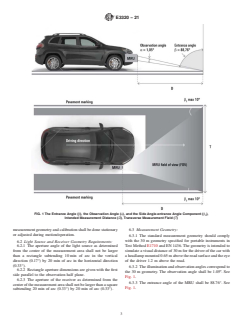
FIG. 1 The Entrance Angle (β), the Observation Angle (α), and the Side Angle-entrance Angle Component (β ),
Intended Measurement Distance (D), Transverse Measurement Field (T)
measurementgeometryandcalibrationshallbedonestationary 6.3 Measurement Geometry:
or adjusted during motion/operation.
6.3.1 The standard measurement geometry should comply
with the 30 m geometry specified for portable instruments in
6.2 Light Source and Receiver Geometry Requirements:
Test Method E1710 and EN 1436.The geometry is intended to
6.2.1 The aperture angle of the light source as determined
from the center of the measurement area shall not be larger simulateavisualdistanceof30mforthedriverofthecarwith
than a rectangle subtending 10min of arc in the vertical aheadlampmounted0.65mabovetheroadsurfaceandtheeye
direction (0.17°) by 20 min of arc in the horizontal direction
of the driver 1.2 m above the road.
(0.33°).
6.3.2 Theilluminationandobservationanglescorrespondto
6.2.2 Rectangle aperture dimensions are given with the first
the 30 m geometry. The observation angle shall be 1.05º. See
side parallel to the observation half plane.
Fig. 1.
6.2.3 The aperture of the receiver as determined from the
6.3.3 The entrance angle of the MRU shall be 88.76°. See
centerofthemeasurementareashallnotbelargerthanasquare
Fig. 1.
subtending 20 min of arc (0.33°) by 20 min of arc (0.33°).
E3320 − 21
6.3.4 The geometry may be reversed in the sense that light 6.5.4 The ratio of the R measured with a filter and the R
L L
is put through the optics of the measuring system and reflected measuredwithoutthefiltershallbewithin5%ofthemeasured
light is received and measured through the optics of the Illuminant A luminous transmittance of the filter.
illumination system.
6.5.5 Filters of colors other than described in 6.5.2 may be
used to demonstrate the ability of the MRU to measure such
6.4 Measurement Geometry - Sensitivity to Deviations Dur-
colors.
ing Operation:
6.5.6 Other types of light sources resulting in non-
6.4.1 Compared to portable instruments where a direct
compliance with 6.5.1, however they are permissible if:
physicalcontactbetweentheinstrumentsandtheroadmarking
(a)Calibration is carried out for the color of the road
defines the illuminations and observation angles, the MRU is
markings to be measured; or
mounted and aligned relative to the vehicle following the
(b)Deviates max 5% for each color, when compared to
manufacturer’s instructions, in order to obtain the specified
readings taken on various white, yellow, and amber pavement
geometry according to 6.3.
markings measured by a portable retroreflectometer with
6.4.2 During operation the MRUs are tilted and shifted in
known spectral match according to 6.5.2, 6.5.3, and 6.5.4. The
height relative to the pavement marking surface. This will,
reading taken by the portable retroreflectometer should be
without a compensation, result in deviations from the nominal
corrected for the known spectral match; or
measurement geometry defined in 6.3.
(c)Deviates max 5% for each color, when compare
...