

ASTM G32-16(2021)e1
(Test Method)Standard Test Method for Cavitation Erosion Using Vibratory Apparatus
General Information
- Abstract
SIGNIFICANCE AND USE
5.1 This test method may be used to estimate the relative resistance of materials to cavitation erosion as may be encountered, for instance, in pumps, hydraulic turbines, hydraulic dynamometers, valves, bearings, diesel engine cylinder liners, ship propellers, hydrofoils, and in internal flow passages with obstructions. An alternative method for similar purposes is Test Method G134, which employs a cavitating liquid jet to produce erosion on a stationary specimen. The latter may be more suitable for materials not readily formed into a precisely shaped specimen. The results of either, or any, cavitation erosion test should be used with caution; see 5.8.
5.2 Some investigators have also used this test method as a screening test for materials subjected to liquid impingement erosion as encountered, for instance, in low-pressure steam turbines and in aircraft, missiles or spacecraft flying through rainstorms. Test Method G73 describes another testing approach specifically intended for that type of environment.
5.3 This test method is not recommended for evaluating elastomeric or compliant coatings, some of which have been successfully used for protection against cavitation or liquid impingement of moderate intensity. This is because the compliance of the coating on the specimen may reduce the severity of the liquid cavitation induced by its vibratory motion. The result would not be representative of a field application, where the hydrodynamic generation of cavitation is independent of the coating.
Note 1: An alternative approach that uses the same basic apparatus, and is deemed suitable for compliant coatings, is the “stationary specimen” method. In that method, the specimen is fixed within the liquid container, and the vibrating tip of the horn is placed in close proximity to it. The cavitation “bubbles” induced by the horn (usually fitted with a highly resistant replaceable tip) act on the specimen. While several investigators have used this approach (see X4.2....
SCOPE
1.1 This test method covers the production of cavitation damage on the face of a specimen vibrated at high frequency while immersed in a liquid. The vibration induces the formation and collapse of cavities in the liquid, and the collapsing cavities produce the damage to and erosion (material loss) of the specimen.
1.2 Although the mechanism for generating fluid cavitation in this method differs from that occurring in flowing systems and hydraulic machines (see 5.1), the nature of the material damage mechanism is believed to be basically similar. The method therefore offers a small-scale, relatively simple and controllable test that can be used to compare the cavitation erosion resistance of different materials, to study in detail the nature and progress of damage in a given material, or—by varying some of the test conditions—to study the effect of test variables on the damage produced.
1.3 This test method specifies standard test conditions covering the diameter, vibratory amplitude and frequency of the specimen, as well as the test liquid and its container. It permits deviations from some of these conditions if properly documented, that may be appropriate for some purposes. It gives guidance on setting up a suitable apparatus and covers test and reporting procedures and precautions to be taken. It also specifies standard reference materials that must be used to verify the operation of the facility and to define the normalized erosion resistance of other test materials.
1.4 A history of this test method is given in Appendix X4, followed by a comprehensive bibliography.
1.5 The values stated in SI units are to be regarded as standard. The values given in parentheses after SI units are provided for information only and are not considered standard.
1.6 This standard does not purport to address all of the safety concerns, if any, associated with its use. It is the responsibility of the user of this standard to...
- Status
- Published
- Publication Date
- 31-May-2021
- Technical Committee
- G02 - Wear and Erosion
- Drafting Committee
- G02.10 - Erosion by Solids and Liquids
Overview
ASTM G32-16(2021)e1, "Standard Test Method for Cavitation Erosion Using Vibratory Apparatus," provides a widely accepted procedure for evaluating the relative resistance of materials to cavitation erosion. This method is particularly valuable for industries where materials are exposed to high-velocity liquids and cavitation, including pumps, hydraulic turbines, valves, ship propellers, and engine components. The standard outlines how to use a vibratory apparatus to systematically induce and measure material erosion caused by the formation and violent collapse of vapor bubbles in a liquid medium.
Developed by ASTM International, G32-16(2021)e1 serves as a reproducible laboratory technique for comparing the cavitation erosion resistance of different materials, analyzing the mechanisms of damage, and assessing the effects of variables such as temperature, vibration amplitude, and test environment. The method is recognized for its small-scale, controlled approach, allowing insights into the progressive, cumulative loss of material through cavitation phenomena.
Key Topics
- Cavitation Erosion: The standard defines cavitation as the formation and collapse of vapor cavities within a liquid, and cavitation erosion as the material loss from a solid surface due to continued exposure to these effects.
- Test Apparatus and Specimen Preparation: Detailed guidance is given for setting up the vibratory apparatus, including frequency (typically 20 kHz), amplitude, and alignment, as well as the preparation of standard specimen geometries and surface finishes.
- Testing Procedure: The process includes immersing specimens in a specified test liquid (commonly distilled or deionized water), applying controlled vibration, and periodically measuring mass loss to chart cumulative erosion over time.
- Data Interpretation: The test generates characteristic curves of cumulative erosion versus exposure time. Key performance indicators include maximum erosion rate, incubation period, terminal erosion rate, and normalized erosion resistance.
- Reference Materials and Calibration: The standard emphasizes using reference materials such as Nickel 200 to qualify equipment and normalize results, enhancing interlaboratory comparability.
- Limitations: The method is not recommended for compliant or elastomeric coatings and may not be suitable for ranking materials where corrosion or other forms of erosion predominate.
Applications
The ASTM G32 standard test method is commonly applied in:
- Material Selection: Assesses the relative cavitation erosion resistance of alloys and coatings for pumps, turbines, propellers, bearings, and valves.
- Quality Control: Verifies material performance consistency for critical components likely to encounter cavitation.
- Failure Analysis: Investigates erosive damage and lifetime prediction in fielded equipment.
- Research and Development: Supports screening of new metallurgical formulations, surface treatments, and protective coatings under controlled cavitation conditions.
- Comparative Analysis: Enables benchmarking of material performance using standardized reference materials for reliable data interpretation.
Its flexibility regarding test conditions (e.g., amplitude, liquid type, temperature) also allows adaptation for more application-specific studies, including those requiring customized specimens or simulating non-standard operating environments.
Related Standards
Several ASTM and international standards complement or provide alternatives to ASTM G32 for testing erosion and cavitation resistance:
- ASTM G134: Test Method for Erosion of Solid Materials by Cavitating Liquid Jet - alternative method using a cavitating jet, especially for materials not suitable for standard specimen geometries.
- ASTM G73: Test Method for Liquid Impingement Erosion Using Rotating Apparatus - targeted method for environments with high-velocity liquid droplets.
- ASTM G40: Terminology Relating to Wear and Erosion - essential reference for definitions used in G32 and connected standards.
- ASTM G119: Guide for Determining Synergism Between Wear and Corrosion - useful for combined erosion-corrosion assessments.
- ASTM E177, E691: Guidance on statistical treatment and interlaboratory reproducibility of test results.
For quality management or compliance, following ASTM G32-16(2021)e1 ensures consistent, globally recognized evaluation of cavitation erosion in research, design, and materials selection processes.
Relations
- Effective Date
- 01-Apr-2024
- Effective Date
- 01-Feb-2024
- Effective Date
- 01-Jan-2024
- Effective Date
- 01-Oct-2023
- Effective Date
- 01-Jan-2019
- Effective Date
- 01-May-2016
- Effective Date
- 01-Jan-2016
- Effective Date
- 01-Nov-2015
- Effective Date
- 01-Jan-2015
- Effective Date
- 01-May-2014
- Effective Date
- 01-Aug-2013
- Effective Date
- 01-Jun-2013
- Effective Date
- 01-May-2013
- Effective Date
- 01-May-2013
- Effective Date
- 01-May-2012
Get Certified
Connect with accredited certification bodies for this standard

Element Materials Technology
Materials testing and product certification.

Inštitut za kovinske materiale in tehnologije
Institute of Metals and Technology. Materials testing, metallurgical analysis, NDT.
Sponsored listings
Frequently Asked Questions
ASTM G32-16(2021)e1 is a standard published by ASTM International. Its full title is "Standard Test Method for Cavitation Erosion Using Vibratory Apparatus". This standard covers: SIGNIFICANCE AND USE 5.1 This test method may be used to estimate the relative resistance of materials to cavitation erosion as may be encountered, for instance, in pumps, hydraulic turbines, hydraulic dynamometers, valves, bearings, diesel engine cylinder liners, ship propellers, hydrofoils, and in internal flow passages with obstructions. An alternative method for similar purposes is Test Method G134, which employs a cavitating liquid jet to produce erosion on a stationary specimen. The latter may be more suitable for materials not readily formed into a precisely shaped specimen. The results of either, or any, cavitation erosion test should be used with caution; see 5.8. 5.2 Some investigators have also used this test method as a screening test for materials subjected to liquid impingement erosion as encountered, for instance, in low-pressure steam turbines and in aircraft, missiles or spacecraft flying through rainstorms. Test Method G73 describes another testing approach specifically intended for that type of environment. 5.3 This test method is not recommended for evaluating elastomeric or compliant coatings, some of which have been successfully used for protection against cavitation or liquid impingement of moderate intensity. This is because the compliance of the coating on the specimen may reduce the severity of the liquid cavitation induced by its vibratory motion. The result would not be representative of a field application, where the hydrodynamic generation of cavitation is independent of the coating. Note 1: An alternative approach that uses the same basic apparatus, and is deemed suitable for compliant coatings, is the “stationary specimen” method. In that method, the specimen is fixed within the liquid container, and the vibrating tip of the horn is placed in close proximity to it. The cavitation “bubbles” induced by the horn (usually fitted with a highly resistant replaceable tip) act on the specimen. While several investigators have used this approach (see X4.2.... SCOPE 1.1 This test method covers the production of cavitation damage on the face of a specimen vibrated at high frequency while immersed in a liquid. The vibration induces the formation and collapse of cavities in the liquid, and the collapsing cavities produce the damage to and erosion (material loss) of the specimen. 1.2 Although the mechanism for generating fluid cavitation in this method differs from that occurring in flowing systems and hydraulic machines (see 5.1), the nature of the material damage mechanism is believed to be basically similar. The method therefore offers a small-scale, relatively simple and controllable test that can be used to compare the cavitation erosion resistance of different materials, to study in detail the nature and progress of damage in a given material, or—by varying some of the test conditions—to study the effect of test variables on the damage produced. 1.3 This test method specifies standard test conditions covering the diameter, vibratory amplitude and frequency of the specimen, as well as the test liquid and its container. It permits deviations from some of these conditions if properly documented, that may be appropriate for some purposes. It gives guidance on setting up a suitable apparatus and covers test and reporting procedures and precautions to be taken. It also specifies standard reference materials that must be used to verify the operation of the facility and to define the normalized erosion resistance of other test materials. 1.4 A history of this test method is given in Appendix X4, followed by a comprehensive bibliography. 1.5 The values stated in SI units are to be regarded as standard. The values given in parentheses after SI units are provided for information only and are not considered standard. 1.6 This standard does not purport to address all of the safety concerns, if any, associated with its use. It is the responsibility of the user of this standard to...
SIGNIFICANCE AND USE 5.1 This test method may be used to estimate the relative resistance of materials to cavitation erosion as may be encountered, for instance, in pumps, hydraulic turbines, hydraulic dynamometers, valves, bearings, diesel engine cylinder liners, ship propellers, hydrofoils, and in internal flow passages with obstructions. An alternative method for similar purposes is Test Method G134, which employs a cavitating liquid jet to produce erosion on a stationary specimen. The latter may be more suitable for materials not readily formed into a precisely shaped specimen. The results of either, or any, cavitation erosion test should be used with caution; see 5.8. 5.2 Some investigators have also used this test method as a screening test for materials subjected to liquid impingement erosion as encountered, for instance, in low-pressure steam turbines and in aircraft, missiles or spacecraft flying through rainstorms. Test Method G73 describes another testing approach specifically intended for that type of environment. 5.3 This test method is not recommended for evaluating elastomeric or compliant coatings, some of which have been successfully used for protection against cavitation or liquid impingement of moderate intensity. This is because the compliance of the coating on the specimen may reduce the severity of the liquid cavitation induced by its vibratory motion. The result would not be representative of a field application, where the hydrodynamic generation of cavitation is independent of the coating. Note 1: An alternative approach that uses the same basic apparatus, and is deemed suitable for compliant coatings, is the “stationary specimen” method. In that method, the specimen is fixed within the liquid container, and the vibrating tip of the horn is placed in close proximity to it. The cavitation “bubbles” induced by the horn (usually fitted with a highly resistant replaceable tip) act on the specimen. While several investigators have used this approach (see X4.2.... SCOPE 1.1 This test method covers the production of cavitation damage on the face of a specimen vibrated at high frequency while immersed in a liquid. The vibration induces the formation and collapse of cavities in the liquid, and the collapsing cavities produce the damage to and erosion (material loss) of the specimen. 1.2 Although the mechanism for generating fluid cavitation in this method differs from that occurring in flowing systems and hydraulic machines (see 5.1), the nature of the material damage mechanism is believed to be basically similar. The method therefore offers a small-scale, relatively simple and controllable test that can be used to compare the cavitation erosion resistance of different materials, to study in detail the nature and progress of damage in a given material, or—by varying some of the test conditions—to study the effect of test variables on the damage produced. 1.3 This test method specifies standard test conditions covering the diameter, vibratory amplitude and frequency of the specimen, as well as the test liquid and its container. It permits deviations from some of these conditions if properly documented, that may be appropriate for some purposes. It gives guidance on setting up a suitable apparatus and covers test and reporting procedures and precautions to be taken. It also specifies standard reference materials that must be used to verify the operation of the facility and to define the normalized erosion resistance of other test materials. 1.4 A history of this test method is given in Appendix X4, followed by a comprehensive bibliography. 1.5 The values stated in SI units are to be regarded as standard. The values given in parentheses after SI units are provided for information only and are not considered standard. 1.6 This standard does not purport to address all of the safety concerns, if any, associated with its use. It is the responsibility of the user of this standard to...
ASTM G32-16(2021)e1 is classified under the following ICS (International Classification for Standards) categories: 77.060 - Corrosion of metals. The ICS classification helps identify the subject area and facilitates finding related standards.
ASTM G32-16(2021)e1 has the following relationships with other standards: It is inter standard links to ASTM B160-24, ASTM A276/A276M-24a, ASTM A276/A276M-24, ASTM B211/B211M-23, ASTM B211/B211M-19, ASTM A276/A276M-16a, ASTM A276/A276M-16, ASTM G40-15, ASTM A276/A276M-15, ASTM E177-14, ASTM G117-13, ASTM G40-13, ASTM E691-13, ASTM E177-13, ASTM G40-12. Understanding these relationships helps ensure you are using the most current and applicable version of the standard.
ASTM G32-16(2021)e1 is available in PDF format for immediate download after purchase. The document can be added to your cart and obtained through the secure checkout process. Digital delivery ensures instant access to the complete standard document.
Standards Content (Sample)
This international standard was developed in accordance with internationally recognized principles on standardization established in the Decision on Principles for the
Development of International Standards, Guides and Recommendations issued by the World Trade Organization Technical Barriers to Trade (TBT) Committee.
´1
Designation: G32 − 16 (Reapproved 2021)
Standard Test Method for
Cavitation Erosion Using Vibratory Apparatus
ThisstandardisissuedunderthefixeddesignationG32;thenumberimmediatelyfollowingthedesignationindicatestheyearoforiginal
adoptionor,inthecaseofrevision,theyearoflastrevision.Anumberinparenthesesindicatestheyearoflastreapproval.Asuperscript
epsilon (´) indicates an editorial change since the last revision or reapproval.
ε NOTE—Caution statement in 9.1.1.5 changed to warning editorially and editorial changes made throughout in June 2021
1. Scope responsibility of the user of this standard to establish appro-
priate safety, health, and environmental practices and deter-
1.1 This test method covers the production of cavitation
mine the applicability of regulatory limitations prior to use.
damage on the face of a specimen vibrated at high frequency
For specific safety warning information, see 6.1, 10.3, and
while immersed in a liquid. The vibration induces the forma-
10.6.1.
tion and collapse of cavities in the liquid, and the collapsing
1.7 This international standard was developed in accor-
cavities produce the damage to and erosion (material loss) of
dance with internationally recognized principles on standard-
the specimen.
ization established in the Decision on Principles for the
1.2 Although the mechanism for generating fluid cavitation
Development of International Standards, Guides and Recom-
in this method differs from that occurring in flowing systems
mendations issued by the World Trade Organization Technical
and hydraulic machines (see 5.1), the nature of the material
Barriers to Trade (TBT) Committee.
damage mechanism is believed to be basically similar. The
method therefore offers a small-scale, relatively simple and
2. Referenced Documents
controllable test that can be used to compare the cavitation
2.1 ASTM Standards:
erosion resistance of different materials, to study in detail the
A276/A276MSpecification for Stainless Steel Bars and
nature and progress of damage in a given material, or—by
Shapes
varying some of the test conditions—to study the effect of test
B160Specification for Nickel Rod and Bar
variables on the damage produced.
B211/B211MSpecification for Aluminum and Aluminum-
1.3 This test method specifies standard test conditions
Alloy Rolled or Cold Finished Bar, Rod, and Wire
covering the diameter, vibratory amplitude and frequency of
D1193Specification for Reagent Water
the specimen, as well as the test liquid and its container. It
E177Practice for Use of the Terms Precision and Bias in
permits deviations from some of these conditions if properly
ASTM Test Methods
documented, that may be appropriate for some purposes. It
E691Practice for Conducting an Interlaboratory Study to
gives guidance on setting up a suitable apparatus and covers
Determine the Precision of a Test Method
test and reporting procedures and precautions to be taken. It
E960Specification for Laboratory Glass Beakers
also specifies standard reference materials that must be used to
G40Terminology Relating to Wear and Erosion
verifytheoperationofthefacilityandtodefinethenormalized
G73Test Method for Liquid Impingement Erosion Using
erosion resistance of other test materials.
Rotating Apparatus
G117Guide for Calculating and Reporting Measures of
1.4 A history of this test method is given in Appendix X4,
followed by a comprehensive bibliography. Precision Using Data from Interlaboratory Wear or Ero-
sion Tests (Withdrawn 2016)
1.5 The values stated in SI units are to be regarded as
G119Guide for Determining Synergism Between Wear and
standard. The values given in parentheses after SI units are
Corrosion
providedforinformationonlyandarenotconsideredstandard.
G134Test Method for Erosion of Solid Materials by Cavi-
1.6 This standard does not purport to address all of the
tating Liquid Jet
safety concerns, if any, associated with its use. It is the
1 2
This test method is under the jurisdiction of ASTM Committee G02 on Wear For referenced ASTM standards, visit the ASTM website, www.astm.org, or
and Erosion and is the direct responsibility of Subcommittee G02.10 on Erosion by contact ASTM Customer Service at service@astm.org. For Annual Book of ASTM
Solids and Liquids. Standards volume information, refer to the standard’s Document Summary page on
Current edition approved June 1, 2021. Published June 2021. Originally the ASTM website.
approved in 1972. Last previous edition approved in 2016 as G32–16. DOI: The last approved version of this historical standard is referenced on
10.1520/G0032-16R21E01. www.astm.org.
Copyright © ASTM International, 100 Barr Harbor Drive, PO Box C700, West Conshohocken, PA 19428-2959. United States
´1
G32 − 16 (2021)
3. Terminology 3.1.9.1 Discussion—In cavitation and liquid impingement
erosion, a typical pattern may be composed of all or some of
3.1 Definitions:
the following “periods” or “stages”: incubation period, accel-
3.1.1 See Terminology G40 for definitions of terms relating
eration period, maximum-rate period, deceleration period,
to cavitation erosion. For convenience, important definitions
terminal period, and occasionally catastrophic period. The
forthistestmethodarelistedbelow;someareslightlymodified
generic term “period” is recommended when associated with
from Terminology G40 or not contained therein.
quantitativemeasuresofitsduration,etc.;forpurelyqualitative
3.1.2 average erosion rate, n—a less preferred term for
descriptions the term“ stage” is preferred.
cumulative erosion rate.
3.1.10 erosion threshold time, n—the exposure time re-
3.1.3 cavitation, n—the formation and subsequent collapse,
quired to reach a mean depth of erosion of 1.0 µm.
within a liquid, of cavities or bubbles that contain vapor or a
3.1.10.1 Discussion—Amean depth of erosion of 1.0 µm is
mixture of vapor and gas.
theleastaccuratelymeasurablevalueconsideringtheprecision
3.1.3.1 Discussion—In general, cavitation originates from a
of the scale, specimen diameter, and density of the standard
local decrease in hydrostatic pressure in the liquid, produced
reference material.
by motion of the liquid (see flow cavitation) or of a solid
boundary (see vibratory cavitation). It is distinguished in this 3.1.11 flow cavitation, n—cavitationcausedbyadecreasein
way from boiling, which originates from an increase in liquid local pressure induced by changes in velocity of a flowing
temperature. liquid, such as in flow around an obstacle or through a
3.1.3.2 Discussion—The term cavitation, by itself, should constriction.
not be used to denote the damage or erosion of a solid surface
3.1.12 incubation period, n—the initial stage of the erosion
that can be caused by it; this effect of cavitation is termed
rate-time pattern during which the erosion rate is zero or
cavitation damage or cavitation erosion. To erode a solid
negligible compared to later stages.
surface, bubbles or cavities must collapse on or near that
3.1.12.1 Discussion—The incubation period is usually
surface.
thought to represent the accumulation of plastic deformation
3.1.4 cavitation erosion, n—progressive loss of original
andinternalstressesunderthesurface,thatprecedessignificant
material from a solid surface due to continued exposure to
material loss. There is no exact measure of the duration of the
cavitation.
incubation period. See related terms, erosion threshold time
and nominal incubation period.
3.1.5 cumulative erosion, n—the total amount of material
lost from a solid surface during all exposure periods since it
3.1.13 maximum erosion rate, n—the maximum instanta-
was first exposed to cavitation or impingement as a newly
neous erosion rate in a test that exhibits such a maximum
finished surface. (More specific terms that may be used are
followed by decreasing erosion rates. (See also erosion rate-
cumulative mass loss, cumulative volume loss,or cumulative
time pattern.)
mean depth of erosion. See also cumulative erosion-time
3.1.13.1 Discussion—Occurrence of such a maximum is
curve.)
typical of many cavitation and liquid impingement tests. In
3.1.5.1 Discussion—Unless otherwise indicated by the
some instances it occurs as an instantaneous maximum, in
context, it is implied that the conditions of cavitation or
others as a steady-state maximum which persists for some
impingement have remained the same throughout all exposure
time.
periods, with no intermediate refinishing of the surface.
3.1.14 mean depth of erosion (MDE), n—the average thick-
3.1.6 cumulative erosion rate, n—the cumulative erosion at
ness of material eroded from a specified surface area, usually
a specified point in an erosion test divided by the correspond-
calculatedbydividingthemeasuredmasslossbythedensityof
ing cumulative exposure duration; that is, the slope of a line
the material to obtain the volume loss and dividing that by the
from the origin to the specified point on the cumulative
area of the specified surface. (Also known as mean depth of
erosion-time curve. (Synonym: average erosion rate)
penetration or MDP. Since that might be taken to denote the
3.1.7 cumulative erosion-time curve—a plot of cumulative average value of the depths of individual pits, it is a less
preferred term.)
erosion versus cumulative exposure duration, usually deter-
mined by periodic interruption of the test and weighing of the
3.1.15 nominalincubationtime,n—theinterceptonthetime
specimen. This is the primary record of an erosion test. Most
orexposureaxisofthestraight-lineextensionofthemaximum-
other characteristics, such as the incubation period, maximum
slope portion of the cumulative erosion-time curve; while this
erosionrate,terminalerosionrate,anderosionrate-timecurve,
is not a true measure of the incubation stage, it serves to locate
are derived from it.
the maximum erosion rate line on the cumulative erosion
3.1.8 erosion rate-time curve, n—a plot of instantaneous versus time coordinates.
erosion rate versus exposure duration, usually obtained by
3.1.16 normalized erosion resistance, N,n—a measure of
e
numerical or graphical differentiation of the cumulative
the erosion resistance of a test material relative to that of a
erosion-time curve. (See also erosion rate-time pattern.)
specifiedreferencematerial,calculatedbydividingthevolume
3.1.9 erosion rate-time pattern, n—any qualitative descrip- loss rate of the reference material by that of the test material,
tion of the shape of the erosion rate-time curve in terms of the when both are similarly tested and similarly analyzed. By
several stages of which it may be composed. “similarly analyzed” is meant that the two erosion rates must
´1
G32 − 16 (2021)
be determined for corresponding portions of the erosion rate shaped specimen. The results of either, or any, cavitation
time pattern; for instance, the maximum erosion rate or the erosion test should be used with caution; see 5.8.
terminal erosion rate.
5.2 Some investigators have also used this test method as a
3.1.16.1 Discussion—A recommended complete wording
screening test for materials subjected to liquid impingement
has the form, “The normalized erosion resistance of (test
erosion as encountered, for instance, in low-pressure steam
material) relative to (reference material) based on (criterion of
turbines and in aircraft, missiles or spacecraft flying through
data analysis) is (numerical value).”
rainstorms. Test Method G73 describes another testing ap-
3.1.17 normalized incubation resistance N ,n—thenominal
proach specifically intended for that type of environment.
o
incubation time of a test material, divided by the nominal
5.3 This test method is not recommended for evaluating
incubation time of a specified reference material similarly
elastomeric or compliant coatings, some of which have been
tested and similarly analyzed. (See also normalized erosion
successfully used for protection against cavitation or liquid
resistance.)
impingement of moderate intensity. This is because the com-
3.1.18 tangent erosion rate, n—the slope of a straight line
plianceofthecoatingonthespecimenmayreducetheseverity
drawn through the origin and tangent to the knee of the
of the liquid cavitation induced by its vibratory motion. The
cumulative erosion-time curve, when that curve has the char-
result would not be representative of a field application, where
acteristic S-shaped pattern that permits this. In such cases, the
the hydrodynamic generation of cavitation is independent of
tangent erosion rate also represents the maximum cumulative
the coating.
erosion rate exhibited during the test.
NOTE 1—An alternative approach that uses the same basic apparatus,
3.1.19 terminal erosion rate, n—the final steady-state ero-
and is deemed suitable for compliant coatings, is the “stationary speci-
sion rate that is reached (or appears to be approached asymp-
men” method. In that method, the specimen is fixed within the liquid
totically) after the erosion rate has declined from its maximum container, and the vibrating tip of the horn is placed in close proximity to
it. The cavitation “bubbles” induced by the horn (usually fitted with a
value.(Seealsoterminalperiodanderosionrate-timepattern.)
highly resistant replaceable tip) act on the specimen. While several
3.1.20 vibratory cavitation, n—cavitation caused by the
investigatorshaveusedthisapproach(seeX4.2.3),theyhavedifferedwith
pressure fluctuations within a liquid, induced by the vibration regard to standoff distances and other arrangements. The stationary
specimen approach can also be used for brittle materials which can not be
of a solid surface immersed in the liquid.
formed into a threaded specimen nor into a disc that can be cemented to
a threaded specimen, as required for this test method (see 7.6).
4. Summary of Test Method
5.4 This test method should not be directly used to rank
4.1 This test method generally utilizes a commercially
materials for applications where electrochemical corrosion or
obtained 20-kHz ultrasonic transducer to which is attached a
solid particle impingement plays a major role. However,
suitably designed “horn” or velocity transformer. A specimen
adaptations of the basic method and apparatus have been used
button of proper mass is attached by threading into the tip of
for such purposes (see 9.2.5, 9.2.6, and X4.2). Guide G119
the horn.
may be followed in order to determine the synergism between
4.2 The specimen is immersed into a container of the test the mechanical and electrochemical effects.
liquid (generally distilled water) that must be maintained at a
5.5 Those who are engaged in basic research, or concerned
specifiedtemperatureduringtestoperation,whilethespecimen
with very specialized applications, may need to vary some of
is vibrated at a specified amplitude. The amplitude and
the test parameters to suit their purposes. However, adherence
frequency of vibration of the test specimen must be accurately
to this test method in all other respects will permit a better
controlled and monitored.
understanding and correlation between the results of different
4.3 The test specimen is weighed accurately before testing
investigators.
begins and again during periodic interruptions of the test, in
5.6 Because of the nonlinear nature of the erosion-versus-
order to obtain a history of mass loss versus time (which is not
time curve in cavitation and liquid impingement erosion, the
linear). Appropriate interpretation of this cumulative erosion-
shapeofthatcurvemustbeconsideredinmakingcomparisons
versus-time curve permits comparison of results between
and drawing conclusions. See Section 11.
different materials or between different test fluids or other
conditions. 5.7 The results of this test may be significantly affected by
the specimen’s surface preparation.This must be considered in
5. Significance and Use planning,conductingandreportingatestprogram.Seealso7.4
and 12.2.
5.1 This test method may be used to estimate the relative
resistance of materials to cavitation erosion as may be 5.8 The mechanisms of cavitation erosion and liquid im-
encountered, for instance, in pumps, hydraulic turbines, hy- pingement erosion are not fully understood and may differ,
draulic dynamometers, valves, bearings, diesel engine cylinder depending on the detailed nature, scale, and intensity of the
liners,shippropellers,hydrofoils,andininternalflowpassages liquid/solid interactions. “Erosion resistance” may, therefore,
with obstructions. An alternative method for similar purposes represent a mix of properties rather than a single property, and
is Test Method G134, which employs a cavitating liquid jet to has not yet been successfully correlated with other indepen-
produce erosion on a stationary specimen. The latter may be dently measurable material properties. For this reason, the
more suitable for materials not readily formed into a precisely consistency of results between different test methods or under
´1
G32 − 16 (2021)
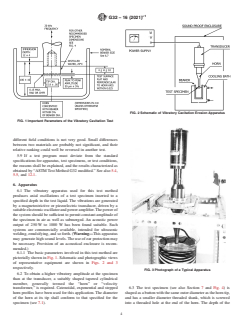
FIG. 2 Schematic of Vibratory Cavitation Erosion Apparatus
FIG. 1 Important Parameters of the Vibratory Cavitation Test
different field conditions is not very good. Small differences
between two materials are probably not significant, and their
relative ranking could well be reversed in another test.
5.9 If a test program must deviate from the standard
specifications for apparatus, test specimens, or test conditions,
the reasons shall be explained, and the results characterized as
obtainedby“ASTMTestMethodG32modified.”Seealso5.4,
5.5, and 12.1.
6. Apparatus
6.1 The vibratory apparatus used for this test method
produces axial oscillations of a test specimen inserted to a
specified depth in the test liquid. The vibrations are generated
by a magnetostrictive or piezoelectric transducer, driven by a
suitableelectronicoscillatorandpoweramplifier.Thepowerof
the system should be sufficient to permit constant amplitude of
the specimen in air as well as submerged. An acoustic power
output of 250W to 1000 W has been found suitable. Such
systems are commercially available, intended for ultrasonic
welding,emulsifying,andsoforth.(Warning—Thisapparatus
may generate high sound levels.The use of ear protection may
be necessary. Provision of an acoustical enclosure is recom-
mended.)
6.1.1 The basic parameters involved in this test method are
pictorially shown in Fig. 1. Schematic and photographic views
of representative equipment are shown in Figs. 2 and 3
respectively.
FIG. 3 Photograph of a Typical Apparatus
6.2 To obtain a higher vibratory amplitude at the specimen
than at the transducer, a suitably shaped tapered cylindrical
member, generally termed the “horn” or “velocity
transformer,” is required. Catenoidal, exponential and stepped 6.3 The test specimen (see also Section 7 and Fig. 4)is
horn profiles have been used for this application.The diameter shapedasabuttonwiththesameouterdiameterasthehorntip,
of the horn at its tip shall conform to that specified for the and has a smaller diameter threaded shank, which is screwed
specimen (see 7.1). into a threaded hole at the end of the horn. The depth of the
´1
G32 − 16 (2021)
6.6.1 Means shall be provided to measure and control
vibration amplitude of the horn tip within the tolerances
specified in 9.1.1.7 or 9.1.2.
6.6.2 If the ultrasonic system has automatic control to
maintain resonance and constant amplitude, amplitude calibra-
tion may be done with the specimen in the air and will still
applywhenthespecimenissubmerged.Thismaybedonewith
a filar microscope, dial indicator, eddy-current displacement
sensor, or other suitable means (see also Appendix X1).
6.6.3 If the apparatus does not have automatic amplitude
control, it may be necessary to provide a strain gage or
accelerometer on some part of the vibrating assembly for
continuous monitoring.
6.7 Liquid Vessel:
6.7.1 The size of the vessel containing the test liquid is a
compromise. It must be small enough to permit satisfactory
temperature control, and large enough to avoid possible effects
TABLE OF VALUES
mm inch
of wave reflections from its boundaries, and of erosion debris.
D* 15.9 ± 0.05 0.624 ± 0.002 6.7.2 The vessel shall be cylindrical in cross-section, and
E* 0.15 0.006
the depth of liquid in it shall be 100mm 6 10 mm, unless
F (W + 2.2) ± 0.25 (W + 0.09) ± 0.01
otherwise required.
H See 7.2
L 10.0 ± 0.5 0.394 ± 0.02 6.7.3 The vessel’s inside diameter will depend on whether
R 0.8 ± 0.15 0.031± 0.006
the cooling method (see 6.8) is an external cooling bath into
T Thread, see X2.1
which the vessel is immersed, or a cooling coil immersed
U 2.0 ± 0.5 0.08 ± 0.02
W Thread minor dia, see Table X2.2
within the vessel. In either case, it is recommended that the
Z 0.8±0.15 0.031±0.006
unobstructed diameter (that is, the internal diameter of the
r* 0.050 0.002
vessel or of the cooling coil within it if used) be 100mm 6
s* 0.025 0.001
15mm.
NOTE 1—Asterisk (*) indicates mandatory; others recommended.
6.7.4 A standard commercially available low-form glass
FIG. 4 Dimensions and Tolerances of the Test Specimen
beaker(forexample,TypeIorIIofSpecificationE960)maybe
suitable.A600mLbeakermaybesuitablewhenacoolingbath
isused,anda1000mLto1500mLbeakerwhenacoolingcoil
is used.
hole in the horn shall be the minimum consistent with the
6.8 Means shall be provided to maintain the temperature of
required length of engagement of the specimen shank.
thetestliquidnearthespecimenataspecifiedtemperature(see
6.4 The transducer and horn assembly shall be supported in
9.1.1.5). This is commonly achieved by means of a cooling
a manner that does not interfere with, and receives no force
bath around the liquid-containing vessel or a cooling coil
input from, the vibratory motion. This can be accomplished,
immersed within it, with suitable thermostatic control. The
for example, by attaching the support structure to a stationary
temperature sensor should be located as close as practicable to
housingofthetransducer,ortoaflangelocatedatanodalplane
thespecimen,butatapointwhereitdoesnotinterferewiththe
of the vibrating assembly. It is also necessary to prevent any
cavitation process and is not damaged by it. A suggested
misalignment of the horn due to forces caused by the electrical
location is approximately 3 mm radially from the specimen
cable, cooling system, or transducer enclosure.
periphery, and at a depth of immersion approximately 3 mm
below that of the specimen face.
6.5 Frequency Control:
6.5.1 The frequency of oscillation of the test specimen shall
6.9 Optionally, a heating system may be provided, for two
be 20kHz 6 0.5 kHz.
purposes: (1) to achieve degassing of the liquid, and (2) to
6.5.2 The whole transducer-horn-specimen system shall be
bringtheliquidtemperaturetothedesiredvaluebeforethetest
designed for longitudinal resonance at this frequency.
begins.Suchasystemmayconsistofaseparateheatingcoil,or
combined with the cooling system, with suitable thermostatic
NOTE 2—If both light and heavy alloys are to be tested, then two horns
control.Acomprehensive thermal control system that includes
of different length may be needed in order to permit use of similarly sized
specimens. One horn might be used for specimens having densities cooling, heating, and magnetic stirring provisions has been
5g⁄cm ormoreandtunedforabuttonmassofabout10g(0.022lb),and
used by at least one investigator.
the other for densities less than 5 g/cm , tuned for a button mass of about
6.10 Atimershouldbeprovidedtomeasurethetestduration
5 g (0.011 lb). See also 7.2 and Table X2.2.
or to switch off the test automatically after a preset time.
6.5.3 A means for monitoring or checking frequency shall
be provided; this could be a signal from the power supply or a
7. Test Specimens
transducer, feeding into a frequency counter.
7.1 The specimen button diameter (see also 6.3) shall be
6.6 Amplitude Control: 15.9mm 6 0.05 mm (0.626in. 6 0.002 in.). The test surface
´1
G32 − 16 (2021)
TABLE 1 Material Used in Interlaboratory Study
shall be plane and square to the transducer axis within an
indicatorreadingof0.025mm(0.001in.).Norimonoraround Designation: Nickel 200, UNS N02200, ASTM B160
Composition (limit values): Ni 99 min; max others: 0.25 Cu, 0.40 Fe, 0.35 Mn,
the specimen test surface shall be used. The circular edges of
0.15 C, 0.35 Si, 0.01 S
thespecimenbuttonshallbesmooth,butanychamferorradius
Specific gravity (nominal): 8.89
shall not exceed 0.15 mm (0.006 in.). Form: 0.75 in. (19 mm) rod, cold drawn and annealed
Properties:
A
7.2 The button thickness of the specimen (Dimension H in
Yield strength (nominal): 103 MPa to 207 MPa (15 ksi to 30 ksi)
B
(measured): 284 MPa (41.2 ksi)
Figs. 1 and 4) shall be not less than 4 mm (0.157 in.) and not
Tensile strength (nominal): 379 MPa to 517 MPa (55 ksi to 75 ksi)
more than 10 mm (0.394 in.). See Table X2.2 for relationships
(measured): 586 MPa (85 ksi)
between button thickness and mass.
Elongation (nominal): 40 % to 55 %
(measured): 58 %
7.3 Specimens of different materials to be tested with the
Reduction of area (nominal): N/A
same horn should have approximately the same button mass, (measured): 76 %
Hardness (nominal): 45 HRB to 70 HRB, 90 HB to 120 HB
within the dimensional limits of 7.2. See also 6.5.2.
(measured): 49 HRB
7.4 Specimens should be prepared in a manner consistent A
“Nominal” properties are from “Huntington Alloys” data sheets. (Strength prop-
with the purposes of the test. Three options are given in 7.4.1 erties were listed in ksi; SI values in this table are conversions.)
B
“Measured”propertiesreportedfromtestsonsamplefromsamerodasusedfor
– 7.4.3.
erosiontestspecimens.(Strengthpropertieswerereportedinksi;SIvaluesinthis
7.4.1 Unless otherwise required, the test surface shall be
table are conversions.)
lightly machined, then ground and polished to a maximum
surface roughness of 0.8 µm (32 µin.), in such a way as to
minimize surface damage or alteration. While an extremely
fine finish is not required, there shall be no visible pits or
specimen, it may be desirable to use a threaded stud made of
scratch marks that would serve as sites for accelerated cavita-
the same material as the horn (or some other suitable material)
tiondamage.Finalfinishingwith600gritemeryclothhasbeen
and to attach a flat disk of the test material by means of
found satisfactory.
brazing, adhesives, or other suitable process. Such a disk shall
7.4.2 For screening of materials for their erosion resistance
beatleast3mm(0.12in.)inthickness,unlessitisthepurpose
in a particular application, the surface preparation method
of the specimen to test an overlay or surface layer system. In
should be as close as possible to that used in the end
that case, the test report shall describe the overlay material, its
application.Forexample,rolledsheetmaterialwouldbetested
thickness, the substrate material, and the deposition or attach-
in the as-rolled condition and weld-deposited hard facings
ment process. For such nonhomogeneous specimens, the but-
would be tested in the as-deposited and final machined or
ton weight recommendation given in 7.3 still applies.
polished condition, or both.
7.7 Noflatsshallbemachinedintothecylindricalsurfaceof
7.4.3 In tests where any possible effects of surface prepara-
thespecimenorhorntip.Tighteningofthespecimenshouldbe
tion (for example, subsurface alterations, or work hardening)
accomplishedbyatoolthatdependsonfrictionalclampingbut
on the results are to be minimized, the following procedure is
does not mar the cylindrical surface, such as a collet or
recommended: Prepare machined surfaces for testing by suc-
specially designed clamp-on wrench, preferably one that can
cessively finer polishing down to 600 grit, with at least 50
be used in conjunction with a torque wrench. (See 10.3 and
strokes of each grade of paper.This method provides a surface
Appendix X2 for tightening requirements and guidelines.)
finish on the order of 0.1µm to 0.2 µm (4µin. to 8 µin.) rms,
with a depth to the plastic/elastic boundary on the order of 20
8. Calibration
µm. Should the experiment require the complete removal of
8.1 Calibration and Qualification of Apparatus:
any altered layer, an additional 25 µm of material should be
8.1.1 Perform a frequency and amplitude calibration of the
removed by means of electropolishing.
assembled system at least with the first sample of each group
NOTE 3—Information on subsurface alterations due to machining and
of specimens of same button mass and length. Also calibrate
grinding can be found in Refs (1 and 2).
the temperature measurement system by an appropriate
7.5 The threaded connection between specimen and horn
method.
must be carefully designed, and sufficiently prestressed on
8.1.2 To qualify the apparatus initially, and to verify its
assembly, to avoid the possibility of excessive vibratory
performance from time to time, perform tests with the pre-
stresses, fatigue failures, and leakage of fluid into the threads.
ferred reference material specified in 8.1.3 (annealed Nickel
There must be no sharp corners in the thread roots or at the
200) or, if a laboratory cannot obtain Ni 200, one of the
junction between threaded shank and button. A smooth radius
supplementaryreferencematerialsspecifiedin8.1.4.Dothisat
or undercut shall be provided at that junction. Other recom-
standard test conditions (see 9.1) even if the apparatus is
mendations are given in Fig. 4 and Appendix X2.
normally operated at optional conditions. Detailed guidelines
7.6 For test materials that are very light, or weak, or brittle, and criteria for qualification are given in Appendix X3.
8.1.3 The preferred reference material is annealed wrought
or that cannot be readily machined into a homogeneous
Nickel 200 (UNS N02200), conforming to SpecificationB160.
Thisisacommerciallypure(99.5%)nickelproduct;seeTable
1 for its properties.Test curves from a “provisional” interlabo-
The boldface numbers in parentheses refer to a list of references at the end of
this standard. ratorystudyareshowninFig.5,andstatisticalresultsfromthat
´1
G32 − 16 (2021)
based on the range of expected erosion resistance of the group
of materials being tested.
9. Test Conditions
9.1 Standard Test Conditions:
9.1.1 If this test method is cited without additional test
parameters, it shall be understood that the following test
conditions apply:
9.1.1.1 The test liquid shall be distilled or deionized water,
meeting specifications for Type III reagent water given by
Specification D1193.
9.1.1.2 The depth of the liquid in its container shall be
100mm 6 10 mm (3.94in. 6 0.39 in.), with cooling coils (if
any) in place.
9.1.1.3 The immersion depth of the specimen test surface
shall be 12mm 6 4 mm (0.47in. 6 0.16 in.).
9.1.1.4 The specimen (horn tip) shall be concentric with the
cylindrical axis of the container, within 65% of the container
diameter.
9.1.1.5 Maintain the temperature of the test liquid at 25°C
6 2°C (77°F 6 3.6°F). (Warning—Failure to maintain
specified temperature can significantly affect the results; see
9.2.2.)
9.1.1.6 Thegasoverthetestliquidshallbeair,atapressure
differing less than 6 % from one standard atmosphere
(101.3kPa; 760 mm (29.92 in.) Hg). If the pressure is outside
this range, for example, because of altitude, this must be noted
in the report as a deviation from standard conditions.
9.1.1.7 Thepeak-to-peakdisplacementamplitudeofthetest
surface of the specimen shall be 50 µm (0.002 in.) 65%
throughout the test.
NOTE 1—The curves for Laboratories 1 through 3 represent averages
from three replicate tests; that for Laboratory 5 is based on two replicate 9.1.2 An alternative peak-to-peak displacement amplitude
tests.
of 25 µm (0.001 in.) may be used for weak, brittle, or
FIG. 5 Cumulative Erosion-Time Curves for Nickel 200 from Four
nonmetallic materials that would be damaged too rapidly or
Laboratories (see 13.1.2)
could not withstand the inertial vibratory stresses with the
standard amplitude of 9.1.1.7. See Appendix X2 for guidance.
This amplitude may also be appropriate for erosion-corrosion
studies. If this amplitude is used, this must be clearly stated in
study are shown in Table 2.The appearance of a test specimen
at various stages is shown in Fig. 6. conjunction with any statement that this test method (Test
Method G32) was followed.
8.1.4 Asupplementary reference material of greater erosion
resistance is annealed austenitic stainless steel Type 316, of
9.2 Optional Test Conditions:
hardness 150HV to 175 HV (UNS S31600, Specification
9.2.1 The standard test conditions of 9.1.1 satisfy a large
A276/A276M). A supplementary reference material of lesser
number of applications in which the relative resistance of
erosion resistance isAluminumAlloy 6061-T6 (UNSA96061,
materials under ordinary environmental conditions is to be
Specification B211/B211M). Their properties are shown in
determined. However, there can be applications for which
Table 3. A comparative test study with these materials was
other temperatures, other pressures, and other liquids must be
conducted for the original development of this Test Method;
used. When such is the case, any presentation of results shall
see Refs (3 and 4). Curves and limited statistical results from
clearly refer to and specify all deviations from the test
four laboratories are presented in X3.2.
conditions of 9.1.1. (See also 12.1.) Deviations from standard
8.2 Normalization of Test Results: testconditionsshouldnotbeusedunlessessentialforpurposes
8.2.1 In each major program include among the materials of the test.
tested one or more reference materials, tested at the same 9.2.2 Investigations of the effect of liquid temperature on
condition to facilitate calculation of “normalized erosion resis- cavitationerosion(seeX4.2.2)haveshownthattheerosionrate
tance” of the other materials. peaks strongly at a temperature about halfway between freez-
8.2.2 If possible include the preferred reference material, ingandboilingpoint,forexample,forwaterunderatmospheric
annealed Ni 200, as specified in 8.1.3. pressure at about 50°C (122°F). Near the standard tempera-
8.2.3 Alternatively,orinaddition,includeoneofthesupple- ture of 25°C, each increase of 1°C probably increases the
mentary reference materials (see 8.1.4). The choice may be erosion rate by 1% to 2%. Thus, there may be economic
´1
G32 − 16 (2021)
A
TABLE 2 Statistical Results of Provisional Interlaboratory Study using Ni 200
Maximum erosion rate Nominal Incubation Time to 50 µm Time to 100 µm
Test Result:
(µm/h) time (min) MDE (min) MDE (min)
Statistic
B
Individual Laboratory Results
Laboratory 1 average: 29.6 29.7 131 234
standard deviation: 0.88 6.8 4.7 4.6
coefficient of variation %: 3.0 22.9 3.6 2.0
Laboratory 2 average: 27.6 19.0 128 236
standard deviation: 0.66 2.7 2.9 4.5
coefficient of variation %: 2.4 14.2 2.3 1.9
Laboratory 3 average: 23.5 18.3 147 275
standard deviation: 0.14 2.5 3.1 4.5
coefficient of variation %: 0.6 13.7 2.1 1.6
Laboratory 5 average: 26.0 19.7 133 248
standard deviation: 1.90 3.5 14.9 24.7
coefficient of variation %: 7.3 17.8 11.2 10.0
Average of laboratory averages: 26.6 21.7 135 248
Pooled Variabilities—Absolute Values
“Repeatability” standard deviation: 1.12 4.24 8.07 13.0
“Reproducibility” standard deviation: 2.74 6.40 10.6 21.7
C
“95 % Repeatability Limit”: 3.13 11.9 22.6 36.4
C
“95 % Reproducibility Limit”: 7.67 17.9 29.8 60.8
D
Pooled Variabilities—Normalized Values
“Repeatability” coefficient of variation, %: 4.2 19.6 6.0 5.2
“Reproducibility” coefficient of variation, % 10.3 29.5 7.9 8.7
“95 % Repeatability Limit” coefficient, %: 12 55 17 14
“95 % Reproducibility Limit” coefficient, %: 29 83 22 25
A 5
This table is revised from that in the research report in that values for Laboratory 4, and pooled values including Laboratory 4, have been omitted.
B
All laboratory results are based on three replications, except time to 50 µm and 100 µm for Laboratory 5 (two replications).
C
A “95 % limit” represents the difference between two random test results that would not be exceeded in 95 % of such pairs (see Practice E177).
D
Normalized variabilities: coefficients of variation are corresponding standard deviations, and “95 % limit” coefficients are corresponding limits, expressed as percent of
the “average of laboratory averages.”
incentive to conduct water tests with especially resistant 10. Procedure
materials (for example, tool steels, stellites) at a temperature
10.1 Foreachnewtestspecimen,cleantheliquidvesseland
higherthanthatspecifiedin9.1.1.5.Thiscangenerallybedone
fill it with fresh liquid.
simply by adjusting the temperature control, since without any
NOTE4—Earlyversionsofthistestmethodcalledforstabilizingthegas
cooling the liquid temperature may rise even beyond the
content of the liquid before beginning a test on a new specimen, by first
optimum.
running a “dummy specimen” of high erosion resistance for 30 min.
9.2.3 Toconductspecializedtestsatelevatedtemperatureor However, there is no convincing evidence that this makes any significant
difference to the results, and it may be supposed that operating with the
pressure, or with difficult or hazardous liquids, the liquid-
test specimen for the first 30 min produces the same effect. However, this
containing vessel must be appropriately designed. Usually, a
procedure may be suitable when very early stages of the test are to be
seal must be provided between the vessel and the horn
investigated.
assembly. While bellows seals can be used, it is preferable to
10.2 Clean the test specimen carefully and weigh it on an
design the supporting features (see 6.4) to incorporate the
accurate and sensitive balance (0.1mg accuracy and sensitiv-
sealing function.
ity) before the test.
9.2.4 The procedures specified in Section 10 still apply.
Opening and disassembling the test vessel should be
10.3 Aftermakingsurethatthethreadsandcontactsurfaces
minimized, as this may distort the erosion results by causing
ofthehornandthespecimenareperfectlyfreeofdebris,thread
extraneous oxidation, etc., through additional exposure to air.
the specimen into the horn until finger tight, then tighten to a
9.2.5 When testing with liquids that may be corrosive (for
suitable torque. The resulting prestressing of the threaded
example, seawater) Guide G119 may be followed in order to
shank must be sufficient to ensure that contact is not lost
determine the synergism between the mechanical and electro-
between horn and specimen shoulder as a result of vibratory
chemical effects. See, for example, Ref (5).
inertial loads. See guidelines given in Appendix X2.
9.2.6 For tests intended to simulate cavitation erosion- (Warning—Fatigue failure of the threaded portion of the
corrosion conditions, it may be appropriate to operate the specimens may become a problem under some circumstances.
equipment in a pulsed or cyclic manner. A 60-s-on/60-s-off The specimen must be tightly secured to the horn to ensure
cycle is recommended as a basic duty cycle for such tests. If good energy transmission and avoid any separation between
the nature of the interactions between erosion and corrosion is specimen button and horn tip. A very thin (virtually invisible)
to be studied, then varying duty cycles may be required. layer of liquid or solid boundary lubricant may be used to
´1
G32 − 16 (2021)
10.6 At the end of the test interval, stop the apparatus,
remove the specimen, and carefully clean, dry and weigh it to
determineitsnewmassandhencethemassloss.See10.6.1for
cleaning and drying recommendations. Repeat the cleaning,
drying, and weighing operations until two successive weigh-
ings yield identical (or acceptably similar) readings, unless
prior qualification of the cleaning procedure has proved such
repetition unnecessary.
10.6.1 Very carefully clean and dry the specimen before
each weighing. Rinsing with ethyl alcohol or other suitable
solvent may be sufficient.An ultrasonic cleaning bath (such as
for cleaning dentures), has also been found satisfactory.
(Warning—ThisshouldNOTbeusedwithsolvents.)Drywith
a stream of hot, dry air, as from a hair dryer. For porous (for
example, cast) materials a vacuum desiccator may be used. Do
not dry with cloth or paper products that may leave lint on the
specimen.)
10.7 Repeat 10.3 – 10.6 for the next test interval, and so on
until the criteria of 10.10 or 10.11 have been met. It is
recommended that a running plot of cumulative mass loss
versus cumulative exposure time be maintained.
10.8 After 8h to 12 h of testing with the same liquid, strain
out the debris, or discard and refill with fresh liquid.
10.9 As shown in Fig. 7, the rate of mass loss varies with
exposure time. The intervals between measurements must be
such that a curve of cumulative mass loss versus cumulative
exposure time can be established with reasonable accuracy.
FIG. 6 Photographs of a Nickel 200 Specimen Taken at Several
Thedurationoftheseintervals,therefore,dependsuponthetest
Cumulative Exposure Times
material and its erosion resistance and cannot be rigorously
specified in advance. Suitable intervals may be approximately
TABLE 3 Properties of Supplementary Reference Materials
15 min for aluminum alloys, 30 min for pure nickel, 1h to 2 h
(from tables in Ref (4))
for stainless steel, and 4h to 8 h for stellite. Intervals near the
Aluminum Alloy Stainless Steel
Property
6061-T6 AISI 316 beginning of a test may need to be shorter if the shape of the
erosion-time curve during the “incubation” and “acceleration”
Hardness, HRB 60.1 74.8
Tensile strength, MPa (ksi) 328 (40.7) 560 (81.3)
periods, and the erosion threshold time, are to be accurately
Elongation, % 21.5 69.0
established.
Reduction of area, % 44 76.9
Density, g/cm 2.71 7.91
10.10 It is recommended that the testing of each specimen
be continued at least until the average rate of erosion (also
termed cumulative erosion rate) has reached a maximum and
ensure effective preloading and to prevent galling between
begins to diminish, that is, until the “tangent erosion rate” line
specimen and horn. However, excessive amounts of liquid or
(see 3.1) can be drawn.
greaselubricantscanresultindamagetomatingsurfacesinthe
NOTE 5—This recommendation assumes that either the “maximum
joint,duetocavitationofthelubricant.SeealsoAppendixX2.)
erosion rate” or the “tangent erosion rate” is considered a significant
(Warning—Heating of the horn and unusual noise are indica-
measure of the resistance of the material, and ensures that both can be
determined. However, there is another school of thought that holds the
tions of either fatigue failure or improper tightening of the
maximum rate is a transient phenomenon, and a truer measure is the
specimen,orpresenceofdirtorexcessiveamountoflubricant.)
eventual “terminal erosion rate” if that can be established. Thus, the
10.4 Insert the specimen into the liquid to a depth as
desirable total duration of the test may depend on the test objectives, the
school of thought to which the investigator adheres, and the practical
specified in 9.1.1.3, and concentric with the container as
limitations.Forstainlesssteel,itcantake40htogetbeyondthemaximum
specified in 9.1.1.4.
rate stage, see Ref (6); for stellite probably more than 100.
10.5 Start the apparatus and the timer, and bring the
10.11 It is recommended that when several materials are to
amplitude as quickly as possible to the specified value. On
be compared, all materials be tested until they reach compa-
apparatus with automatic amplitude control this is usually
rable mean depths of erosion.
accomplished simply by repeating the control settings or dial
readings determined in a previous calibration (see 6.6 and
11. Calculation or Interpretation of Results
8.1.1).Also make sure that the temperature is stabilized at the
desired value as soon as possible. Monitor these conditions 11.1 Interpretation and reporting of cavitation erosion test
from time to time. data is made difficult by the fact that the rate of erosion
´1
G32 − 16 (2021)
NOTE 1—A = nominal incubation time; tan B = maximum erosion rate; tan C =terminal erosion rate; and D = terminal line intercept.
FIG. 7 Characteristic Stages of the Erosion Rate-Time Pattern, and Parameters for Representation of the Cumulative Erosion-Time
Curve
(material loss) is not constant with time, but goes through be reported: (1) Time to 50 µm, designated t ; (2) time to
...