

ASTM E2581-14(2023)
(Practice)Standard Practice for Shearography of Polymer Matrix Composites and Sandwich Core Materials in Aerospace Applications
General Information
- Abstract
SIGNIFICANCE AND USE
5.1 Shearography is commonly used during product process design and optimization, process control, after manufacture inspection, and in service inspection, and can be used to measure static and dynamic axial (tensile and compressive) strain, as well as shearing, Poisson, bending, and torsional strains. The general types of defects detected by shearography include delamination, deformation under load, disbond/unbond, microcracks, and thickness variation.
5.2 Additional information is given in Guide E2533 about the advantages and limitations of the shearography technique, use of related ASTM documents, specimen geometry and size considerations, calibration and standardization, and physical reference standards.
5.3 For procedures for shearography of filament-wound pressure vessels, otherwise known as composite overwrapped pressure vessels, consult Guide E2982.
5.4 Factors that influence shearography and therefore shall be reported include but are not limited to the following: laminate (matrix and fiber) material, lay-up geometry, fiber volume fraction (flat panels); facing material, core material, facing stack sequence, core geometry (cell size); core density, facing void content, and facing volume percent reinforcement (sandwich core materials); processing and fabrication methods, overall thickness, specimen alignment, specimen conditioning, specimen geometry, and test environment (flat panels and sandwich core materials). Shearography has been used with excellent results for composite and metal face sheet sandwich panels with both honeycomb and foam cores, solid monolithic composite laminates, foam cryogenic fuel tank insulation, bonded cork insulation, aircraft tires, elastomeric and plastic coatings. Frequently, defects at multiple and far side bond lines can be detected.
SCOPE
1.1 This practice describes procedures for shearography of polymer matrix composites and sandwich core materials made entirely or in part from fiber-reinforced polymer matrix composites. The composite materials under consideration typically contain continuous high modulus (greater than 20 GPa (3 × 10⁶ psi)) fibers, but may also contain discontinuous fiber, fabric, or particulate reinforcement.
1.2 This practice describes established shearography procedures that are currently used by industry and federal agencies that have demonstrated utility in quality assurance of polymer matrix composites and sandwich core materials during product process design and optimization, manufacturing process control, after manufacture inspection, and in service inspection.
1.3 This practice has utility for testing of polymer matrix composites and sandwich core materials containing but not limited to bismaleimide, epoxy, phenolic, poly(amideimide), polybenzimidazole, polyester (thermosetting and thermoplas- tic), poly(ether ether ketone), poly(ether imide), polyimide (thermosetting and thermoplastic), poly(phenylene sulfide), or polysulfone matrices; and alumina, aramid, boron, carbon, glass, quartz, or silicon carbide fibers. Typical as-fabricated geometries include uniaxial, cross-ply and angle-ply laminates; as well as honeycomb and foam core sandwich materials and structures.
1.4 This practice does not specify accept-reject criteria and is not intended to be used as a means for approving polymer matrix composites or sandwich core materials for service.
1.5 To ensure proper use of the referenced standards, there are recognized nondestructive testing (NDT) specialists that are certified according to industry and company NDT specifications. It is recommended that an NDT specialist be a part of any composite component design, quality assurance, in-service maintenance, or damage examination activity.
1.6 This standard does not purport to address all of the safety concerns, if any, associated with its use. It is the responsibility of the user of this standard to establish appropriate safety, health, and environmental...
- Status
- Published
- Publication Date
- 30-Nov-2023
- Technical Committee
- E07 - Nondestructive Testing
- Drafting Committee
- E07.10 - Specialized NDT Methods
Overview
ASTM E2581-14(2023), "Standard Practice for Shearography of Polymer Matrix Composites and Sandwich Core Materials in Aerospace Applications," provides industry-recognized procedures for performing shearography-a nondestructive testing (NDT) technique-on polymer matrix composites and sandwich core structures commonly used in aerospace applications. Developed by ASTM International, this standard outlines practical methods for detecting defects and assessing the structural integrity of advanced composite materials using shearography, an imaging technique sensitive to surface and subsurface flaws.
Key Topics
- Scope of Shearography: This practice applies to fiber-reinforced polymer matrix composites, including those with bismaleimide, epoxy, phenolic, polyester, polyimide, and other high-performance matrices, reinforced with fibers such as carbon, glass, aramid, and silicon carbide. It also includes sandwich core materials with honeycomb or foam cores and various composite laminates.
- Defect Detection: Shearography is capable of detecting delamination, disbond/unbond, core crush, microcracks, impact damage, and thickness variations. It images the surface deformation caused by subsurface flaws when the part is subjected to loading.
- Applications in Design and Maintenance: The practice supports:
- Product and process design optimization
- Process control during manufacturing
- Post-manufacture inspection
- In-service inspections for maintenance and damage assessment
- Testing Methods: Shearography can analyze static and dynamic strains, including tensile, compressive, shearing, Poisson, bending, and torsional strains. The technique is full-field, allowing rapid inspection over large areas without damaging or physically contacting the part.
- Factors Influencing Results:
- Material and lay-up geometry
- Core and facing materials, geometry, density, and reinforcement
- Processing methods, specimen alignment and conditioning, test environment
Applications
Shearography, as standardized in ASTM E2581, is widely used across the aerospace industry and in other advanced manufacturing sectors where polymer matrix composites and sandwich structures are prevalent. Typical applications include:
- Quality Assurance: Ensures production consistency and identifies defects in composite panels, sandwich structures, and bonded assemblies before entering service.
- Maintenance and Repair: Supports in-service inspections of aircraft, satellites, and space vehicles to detect hidden flaws and damage without part removal.
- Research and Development: Assists in material selection and design validation by evaluating the structural response of new composite formulations and constructions.
- Other Structures: Beyond aerospace, applies to composite cryogenic fuel tank insulation, aircraft tires, elastomeric and plastic coatings, cork insulation, and more.
Shearography Advantages:
- Non-contact, non-contaminating, no coupling media required
- Fast inspection over large areas, with permanent digital records
- Sensitive to defects at or near surface and multiple bond lines
Limitations:
- Most effective on non-brittle materials and within a certain defect depth range
- Equipment setup and surface conditions (geometry, color, reflectivity) impact data quality
Related Standards
Several documents and standards are referenced to ensure comprehensive and accurate shearography application:
- ASTM E2533: Guide for Nondestructive Examination of Polymer Matrix Composites in Aerospace Applications-outlines advantages, specimen considerations, and limitations.
- ASTM E2982: Guide for Nondestructive Examination of Thin-Walled Metallic Liners in Filament-Wound Pressure Vessels-details procedures for composite pressure vessels.
- Other ASTM References:
- D3878 (Composite Materials Terminology)
- E543 (Agencies Performing Nondestructive Testing)
- D5687 (Preparation of Composite Panels)
- E1316 (Nondestructive Examination Terminology)
- Personnel Qualification:
- ANSI/ASNT CP-189, SNT-TC-1A, NAS-410-standards for qualification and certification of NDT personnel
- Laser Safety:
- EN 60825-1, ANSI Z136.1, and U.S. CFR standards for laser safety relevant to shearography systems
ASTM E2581-14(2023) serves as the key standard for implementing reliable, efficient, and safe shearography inspection processes in aerospace composite applications, supporting high safety and performance requirements.
Relations
- Effective Date
- 01-Dec-2023
- Effective Date
- 01-Feb-2024
- Effective Date
- 01-Sep-2023
- Effective Date
- 01-Dec-2023
- Effective Date
- 01-Dec-2023
Get Certified
Connect with accredited certification bodies for this standard

BUREAU VERITAS Certification Germany
Bureau Veritas certification in Germany.

DIN CERTCO
DIN Group product certification.

Element Materials Technology
Materials testing and product certification.
Sponsored listings
Frequently Asked Questions
ASTM E2581-14(2023) is a standard published by ASTM International. Its full title is "Standard Practice for Shearography of Polymer Matrix Composites and Sandwich Core Materials in Aerospace Applications". This standard covers: SIGNIFICANCE AND USE 5.1 Shearography is commonly used during product process design and optimization, process control, after manufacture inspection, and in service inspection, and can be used to measure static and dynamic axial (tensile and compressive) strain, as well as shearing, Poisson, bending, and torsional strains. The general types of defects detected by shearography include delamination, deformation under load, disbond/unbond, microcracks, and thickness variation. 5.2 Additional information is given in Guide E2533 about the advantages and limitations of the shearography technique, use of related ASTM documents, specimen geometry and size considerations, calibration and standardization, and physical reference standards. 5.3 For procedures for shearography of filament-wound pressure vessels, otherwise known as composite overwrapped pressure vessels, consult Guide E2982. 5.4 Factors that influence shearography and therefore shall be reported include but are not limited to the following: laminate (matrix and fiber) material, lay-up geometry, fiber volume fraction (flat panels); facing material, core material, facing stack sequence, core geometry (cell size); core density, facing void content, and facing volume percent reinforcement (sandwich core materials); processing and fabrication methods, overall thickness, specimen alignment, specimen conditioning, specimen geometry, and test environment (flat panels and sandwich core materials). Shearography has been used with excellent results for composite and metal face sheet sandwich panels with both honeycomb and foam cores, solid monolithic composite laminates, foam cryogenic fuel tank insulation, bonded cork insulation, aircraft tires, elastomeric and plastic coatings. Frequently, defects at multiple and far side bond lines can be detected. SCOPE 1.1 This practice describes procedures for shearography of polymer matrix composites and sandwich core materials made entirely or in part from fiber-reinforced polymer matrix composites. The composite materials under consideration typically contain continuous high modulus (greater than 20 GPa (3 × 10⁶ psi)) fibers, but may also contain discontinuous fiber, fabric, or particulate reinforcement. 1.2 This practice describes established shearography procedures that are currently used by industry and federal agencies that have demonstrated utility in quality assurance of polymer matrix composites and sandwich core materials during product process design and optimization, manufacturing process control, after manufacture inspection, and in service inspection. 1.3 This practice has utility for testing of polymer matrix composites and sandwich core materials containing but not limited to bismaleimide, epoxy, phenolic, poly(amideimide), polybenzimidazole, polyester (thermosetting and thermoplas- tic), poly(ether ether ketone), poly(ether imide), polyimide (thermosetting and thermoplastic), poly(phenylene sulfide), or polysulfone matrices; and alumina, aramid, boron, carbon, glass, quartz, or silicon carbide fibers. Typical as-fabricated geometries include uniaxial, cross-ply and angle-ply laminates; as well as honeycomb and foam core sandwich materials and structures. 1.4 This practice does not specify accept-reject criteria and is not intended to be used as a means for approving polymer matrix composites or sandwich core materials for service. 1.5 To ensure proper use of the referenced standards, there are recognized nondestructive testing (NDT) specialists that are certified according to industry and company NDT specifications. It is recommended that an NDT specialist be a part of any composite component design, quality assurance, in-service maintenance, or damage examination activity. 1.6 This standard does not purport to address all of the safety concerns, if any, associated with its use. It is the responsibility of the user of this standard to establish appropriate safety, health, and environmental...
SIGNIFICANCE AND USE 5.1 Shearography is commonly used during product process design and optimization, process control, after manufacture inspection, and in service inspection, and can be used to measure static and dynamic axial (tensile and compressive) strain, as well as shearing, Poisson, bending, and torsional strains. The general types of defects detected by shearography include delamination, deformation under load, disbond/unbond, microcracks, and thickness variation. 5.2 Additional information is given in Guide E2533 about the advantages and limitations of the shearography technique, use of related ASTM documents, specimen geometry and size considerations, calibration and standardization, and physical reference standards. 5.3 For procedures for shearography of filament-wound pressure vessels, otherwise known as composite overwrapped pressure vessels, consult Guide E2982. 5.4 Factors that influence shearography and therefore shall be reported include but are not limited to the following: laminate (matrix and fiber) material, lay-up geometry, fiber volume fraction (flat panels); facing material, core material, facing stack sequence, core geometry (cell size); core density, facing void content, and facing volume percent reinforcement (sandwich core materials); processing and fabrication methods, overall thickness, specimen alignment, specimen conditioning, specimen geometry, and test environment (flat panels and sandwich core materials). Shearography has been used with excellent results for composite and metal face sheet sandwich panels with both honeycomb and foam cores, solid monolithic composite laminates, foam cryogenic fuel tank insulation, bonded cork insulation, aircraft tires, elastomeric and plastic coatings. Frequently, defects at multiple and far side bond lines can be detected. SCOPE 1.1 This practice describes procedures for shearography of polymer matrix composites and sandwich core materials made entirely or in part from fiber-reinforced polymer matrix composites. The composite materials under consideration typically contain continuous high modulus (greater than 20 GPa (3 × 10⁶ psi)) fibers, but may also contain discontinuous fiber, fabric, or particulate reinforcement. 1.2 This practice describes established shearography procedures that are currently used by industry and federal agencies that have demonstrated utility in quality assurance of polymer matrix composites and sandwich core materials during product process design and optimization, manufacturing process control, after manufacture inspection, and in service inspection. 1.3 This practice has utility for testing of polymer matrix composites and sandwich core materials containing but not limited to bismaleimide, epoxy, phenolic, poly(amideimide), polybenzimidazole, polyester (thermosetting and thermoplas- tic), poly(ether ether ketone), poly(ether imide), polyimide (thermosetting and thermoplastic), poly(phenylene sulfide), or polysulfone matrices; and alumina, aramid, boron, carbon, glass, quartz, or silicon carbide fibers. Typical as-fabricated geometries include uniaxial, cross-ply and angle-ply laminates; as well as honeycomb and foam core sandwich materials and structures. 1.4 This practice does not specify accept-reject criteria and is not intended to be used as a means for approving polymer matrix composites or sandwich core materials for service. 1.5 To ensure proper use of the referenced standards, there are recognized nondestructive testing (NDT) specialists that are certified according to industry and company NDT specifications. It is recommended that an NDT specialist be a part of any composite component design, quality assurance, in-service maintenance, or damage examination activity. 1.6 This standard does not purport to address all of the safety concerns, if any, associated with its use. It is the responsibility of the user of this standard to establish appropriate safety, health, and environmental...
ASTM E2581-14(2023) is classified under the following ICS (International Classification for Standards) categories: 49.140 - Space systems and operations; 83.120 - Reinforced plastics. The ICS classification helps identify the subject area and facilitates finding related standards.
ASTM E2581-14(2023) has the following relationships with other standards: It is inter standard links to ASTM E2581-14(2019), ASTM E1316-24, ASTM E1316-23b, ASTM E2533-21, ASTM E2981-21. Understanding these relationships helps ensure you are using the most current and applicable version of the standard.
ASTM E2581-14(2023) is available in PDF format for immediate download after purchase. The document can be added to your cart and obtained through the secure checkout process. Digital delivery ensures instant access to the complete standard document.
Standards Content (Sample)
This international standard was developed in accordance with internationally recognized principles on standardization established in the Decision on Principles for the
Development of International Standards, Guides and Recommendations issued by the World Trade Organization Technical Barriers to Trade (TBT) Committee.
Designation: E2581 − 14 (Reapproved 2023)
Standard Practice for
Shearography of Polymer Matrix Composites and Sandwich
Core Materials in Aerospace Applications
This standard is issued under the fixed designation E2581; the number immediately following the designation indicates the year of
original adoption or, in the case of revision, the year of last revision. A number in parentheses indicates the year of last reapproval. A
superscript epsilon (´) indicates an editorial change since the last revision or reapproval.
This standard has been approved for use by agencies of the U.S. Department of Defense.
1. Scope any composite component design, quality assurance, in-service
maintenance, or damage examination activity.
1.1 This practice describes procedures for shearography of
1.6 This standard does not purport to address all of the
polymer matrix composites and sandwich core materials made
safety concerns, if any, associated with its use. It is the
entirely or in part from fiber-reinforced polymer matrix com-
responsibility of the user of this standard to establish appro-
posites. The composite materials under consideration typically
priate safety, health, and environmental practices and deter-
contain continuous high modulus (greater than 20 GPa
mine the applicability of regulatory limitations prior to use.
(3 × 10⁶ psi)) fibers, but may also contain discontinuous fiber,
1.7 This international standard was developed in accor-
fabric, or particulate reinforcement.
dance with internationally recognized principles on standard-
1.2 This practice describes established shearography proce-
ization established in the Decision on Principles for the
dures that are currently used by industry and federal agencies
Development of International Standards, Guides and Recom-
that have demonstrated utility in quality assurance of polymer
mendations issued by the World Trade Organization Technical
matrix composites and sandwich core materials during product
Barriers to Trade (TBT) Committee.
process design and optimization, manufacturing process
control, after manufacture inspection, and in service inspec-
2. Referenced Documents
tion.
2.1 ASTM Standards:
1.3 This practice has utility for testing of polymer matrix
C274 Terminology of Structural Sandwich Constructions
composites and sandwich core materials containing but not
(Withdrawn 2016)
limited to bismaleimide, epoxy, phenolic, poly(amideimide),
D3878 Terminology for Composite Materials
polybenzimidazole, polyester (thermosetting and thermoplas-
D5687/D5687M Guide for Preparation of Flat Composite
tic), poly(ether ether ketone), poly(ether imide), polyimide
Panels with Processing Guidelines for Specimen Prepara-
(thermosetting and thermoplastic), poly(phenylene sulfide), or
tion
polysulfone matrices; and alumina, aramid, boron, carbon,
E543 Specification for Agencies Performing Nondestructive
glass, quartz, or silicon carbide fibers. Typical as-fabricated
Testing
geometries include uniaxial, cross-ply and angle-ply laminates;
E1309 Guide for Identification of Fiber-Reinforced
as well as honeycomb and foam core sandwich materials and
Polymer-Matrix Composite Materials in Databases (With-
structures.
drawn 2015)
1.4 This practice does not specify accept-reject criteria and
E1316 Terminology for Nondestructive Examinations
is not intended to be used as a means for approving polymer
E1434 Guide for Recording Mechanical Test Data of Fiber-
matrix composites or sandwich core materials for service.
Reinforced Composite Materials in Databases (Withdrawn
2015)
1.5 To ensure proper use of the referenced standards, there
E1471 Guide for Identification of Fibers, Fillers, and Core
are recognized nondestructive testing (NDT) specialists that
Materials in Computerized Material Property Databases
are certified according to industry and company NDT specifi-
(Withdrawn 2015)
cations. It is recommended that an NDT specialist be a part of
1 2
This practice is under the jurisdiction of ASTM Committee E07 on Nonde- For referenced ASTM standards, visit the ASTM website, www.astm.org, or
structive Testing and is the direct responsibility of Subcommittee E07.10 on contact ASTM Customer Service at service@astm.org. For Annual Book of ASTM
Specialized NDT Methods. Standards volume information, refer to the standard’s Document Summary page on
Current edition approved Dec. 1, 2023. Published December 2023. Originally the ASTM website.
approved in 2007. Last previous edition approved in 2019 as E2581 – 14 (2019). The last approved version of this historical standard is referenced on
DOI: 10.1520/E2581-14R23. www.astm.org.
Copyright © ASTM International, 100 Barr Harbor Drive, PO Box C700, West Conshohocken, PA 19428-2959. United States
E2581 − 14 (2023)
E2533 Guide for Nondestructive Examination of Polymer 3.2.4 coherent light source—a light source that converts
Matrix Composites Used in Aerospace Applications electrical energy to a monochromatic beam of light having
E2982 Guide for Nondestructive Examination of Thin- uniform phase over a minimum specified length known as the
Walled Metallic Liners in Filament-Wound Pressure Ves- coherent length.
sels Used in Aerospace Applications
3.2.5 component—the part(s) or element(s) of a system
F1364 Practice for Use of a Calibration Device to Demon-
described, assembled, or processed to the extent specified by
strate the Inspection Capability of an Interferometric
the drawing.
Laser Imaging Nondestructive Tire Inspection System
3.2.6 composite material—see Terminology D3878.
2.2 ASNT Standards:
3.2.7 composite component—a finished part containing
SNT-TC-1A Recommended Practice for Personnel Qualifi-
composite material(s) that is in its end use application configu-
cation and Certification in Nondestructive Testing
ration and which has undergone processing, fabrication, and
ANSI/ASNT CP-189 Standard for Qualification and Certifi-
assembly to the extent specified by the drawing, purchase
cation of Nondestructive Testing Personnel
order, or contract.
2.3 AIA Document:
3.2.8 core crush—a collapse, distortion, or compression of
NAS-410 Certification and Qualification of Nondestructive
Test Personnel core material in a sandwich structure.
2.4 BSI Document:
3.2.9 core separation—a partial or complete breaking of
EN 60825-1 Safety of Laser Products - Part 1: Equipment honeycomb core node bonds.
Classification, Requirements, and User’s Guide
3.2.10 disbond, unbond—see Terminology D3878.
2.5 LIA Document:
3.2.11 de-correlation—loss of shearography phase data
ANSI Z136.1-2000 Safe Use of Lasers
caused by test part deformation exceeding the resolution of the
2.6 Federal Standards:
shearing interferometer or motion occurs between the test
21 CFR 1040.10 Laser products
object and shearing interferometer during data acquisition.
21 CFR 1040.11 Specific purpose laser products
3.2.12 delamination—see Terminology D3878.
29 CFR 1910.95 Occupational Noise Exposure
3.2.13 displacement derivatives (∂w/∂x)—rate of spatial dis-
3. Terminology placement change, where w is the surface displacement and x
is the surface coordinates.
3.1 Definitions—Definition of terms related to structural
sandwich constructions, NDT, and composites appearing in 3.2.14 fringe pattern—a set of lines in a subtraction or
Terminologies C274, E1316, and D3878, respectively, shall wrapped phase shearogram that represents the locus of equal
apply to the terms used in this standard. out-of-plane deformation derivative.
3.2 Definitions of Terms Specific to This Standard:
3.2.15 impact damage—fracturing of epoxy matrix, fiber
3.2.1 aerospace—any component that will be installed on a
breakage, inter-laminar delamination of monolithic
system that flies.
composites, composite sandwich structure face sheets due to
impact, characterized by visible dimple surface compression,
3.2.2 beam splitter—an optical element capable of splitting
or fiber breakage caused by impact strike and non-visible
a single beam of coherent laser light into two beams. Beam
subsurface matrix cracking and delamination.
splitters are key elements of Michelson Type Image Shearing
Interferometers.
3.2.16 inclusion—foreign objects or material including but
not limited to particles, chips, backing films, razor blades, or
3.2.3 cognizant engineering organization—the company,
tools of varying sizes which are inadvertently left in a
agency, or other authority responsible for the design or after
composite lay-up.
delivery, end use of the system or component for which laser
holographic or laser shearographic examination is required; in
3.2.17 indication—the observation or evidence of a condi-
addition to design personnel, this may include personnel from
tion resulting from the shearographic examination that requires
material and process engineering, stress anaylsis, NDT, or
interpretation to determine its significance, characterized by
quality groups and others as appropriate.
dimensions, area, s/n ratio, or other quantitative measurement.
3.2.18 laser shearography inspection, shearography
inspection, shearography—inspection method utilizing inter-
Available from American Society for Nondestructive Testing (ASNT), P.O. Box
ferometric imaging of deformation derivatives compared be-
28518, 1711 Arlingate Ln., Columbus, OH 43228-0518, http://www.asnt.org.
tween different strain states and designed to reveal non-
Available from Aerospace Industries Association of America, Inc. (AIA), 1000
Wilson Blvd., Suite 1700, Arlington, VA 22209-3928, http://www.aia-aerospace.org.
homogeneities, material changes and structural defects
Available from British Standards Institution (BSI), 389 Chiswick High Rd.,
throughout the volume of the material.
London W4 4AL, U.K., http://www.bsigroup.com.
Available from the Laser Institute of America, 13501 Integrity Drive, Suite 128,
3.2.19 out-of-plane displacement—the local deformation of
Orlando FL 32826.
a test part, normal to the surface, caused by the application of
Available from U.S. Government Printing Office Superintendent of Documents,
an engineered force acting on a non-homogeneity or defect in
732 N. Capitol St., NW, Mail Stop: SDE, Washington, DC 20401, http://
www.access.gpo.gov. a composite material.
E2581 − 14 (2023)
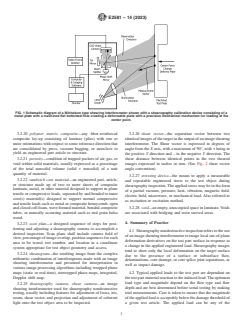
FIG. 1 Schematic diagram of a Michelson type shearing interferometer shown with a shearography calibration device consisting of a
metal plate with a machined flat bottomed hole creating a deformable plate with a precision mechanical mechanism for loading at the
center point.
3.2.20 polymer matrix composite—any fiber-reinforced 3.2.26 shear vector—the separation vector between two
composite lay-up consisting of laminae (plies) with one or
identical images of the target in the output of an image shearing
more orientations with respect to some reference direction that
interferometer. The Shear vector is expressed in degrees of
are consolidated by press, vacuum bagging, or autoclave to
angle from the X axis, with a maximum of 90°, with + being in
yield an engineered part article or structure.
the positive Y direction and – in the negative Y direction. The
3.2.21 porosity—condition of trapped pockets of air, gas, or shear distance between identical points in the two sheared
void within solid materials, usually expressed as a percentage images expressed in inches or mm. (See Fig. 2 shear vector
of the total nonsolid volume (solid + nonsolid) of a unit
angle convention).
quantity of material.
3.2.27 stressing device—the means to apply a measurable
3.2.22 sandwich core material—an engineered part, article,
and repeatable engineered stress to the test object during
or structure made up of two or more sheets of composite
shearography inspection. The applied stress may be in the form
laminate, metal, or other material designed to support in-plane
of a partial vacuum, pressure, heat, vibration, magnetic field,
tensile or compressive loads, separated by and bonded to inner
electric field, microwave, or mechanical load. Also referred to
core(s) material(s) designed to support normal compressive
as excitation or excitation method.
and tensile loads such as metal or composite honeycomb, open
and closed cell foam, wave formed material, bonded composite 3.2.28 void—an empty, unoccupied space in laminate. Voids
tubes, or naturally occurring material such as end grain balsa are associated with bridging and resin starved areas.
wood.
4. Summary of Practice
3.2.23 scan plan—a designed sequence of steps for posi-
tioning and adjusting a shearography camera to accomplish a
4.1 Shearography nondestructive inspection refers to the use
desired inspection. Scan plans shall include camera field of
of an image shearing interferometer to image local out-of-plane
view, percentage of image overlap, position sequences for each
deformation derivatives on the test part surface in response to
area to be tested, test number, and location in a coordinate
a change in the applied engineered load. Shearography images
system appropriate for test object geometry and access.
tend to show only the local deformation on the target surface
3.2.24 shearogram—the resulting image from the complex
due to the presence of a surface or subsurface flaw,
arithmetic combination of interferograms made with an image
delaminations, core damage, or core splice joint separations, as
shearing interferometer and presented for interpretation in
well as impact damage.
various image processing algorithms including wrapped phase
maps (static or real-time), unwrapped phase maps, integrated, 4.2 Typical applied loads to the test part are dependant on
Doppler shift map. the test part material reaction to the induced load. The optimum
load type and magnitude depend on the flaw type and flaw
3.2.25 shearography camera, shear camera—an image
depth and are best determined before serial testing by making
shearing interferometer used for shearography nondestructive
trial measurements. Care is taken to ensure that the magnitude
testing, usually including features for adjustment of focus, iris,
of the applied load is acceptably below the damage threshold of
zoom, shear vector, and projection and adjustment of coherent
light onto the test object area to be inspected. a given test article. The applied load can be any of the
E2581 − 14 (2023)
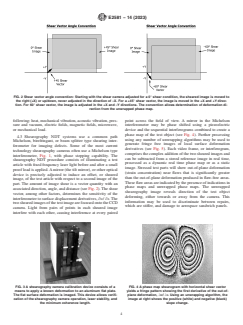
FIG. 2 Shear vector angle convention: Starting with the shear camera adjusted for a 0° shear condition, the sheared image is moved to
the right (+X) or up/down, never adjusted in the direction of –X. For a +45° shear vector, the image is moved in the +X and +Y direc-
tion. For 60° shear vector, the image is adjusted in the +X and –Y directions. The convention allows determination of deformation di-
rection from the unwrapped phase map.
following: heat, mechanical vibration, acoustic vibration, pres- point across the field of view. A mirror in the Michelson
sure and vacuum, electric fields, magnetic fields, microwave, interferometer may be phase shifted using a piezoelectric
or mechanical load. device and the sequential interferograms combined to create a
phase map of the test object (see Fig. 4). Further processing
4.3 Shearography NDT systems use a common path
using any number of unwrapping algorithms may be used to
Michelson, birefringant, or beam splitter type shearing inter-
generate fringe free images of local surface deformation
ferometer for imaging defects. Some of the most current
derivatives (see Fig. 5). Each video frame, or interferogram,
technology shearography cameras often use a Michelson type
comprises the complex addition of the two sheared images and
interferometer, Fig. 1, with phase stepping capability. The
can be subtracted from a stored reference image in real time,
shearography NDT procedure consists of illuminating a test
processed as a dynamic real time phase map or as a static
article with fixed frequency laser light before and after a small
image. Stressed test parts will show out-of-plane deformation
proof load is applied. A mirror (the tilt mirror), or other optical
(strain concentration) near flaws that is significantly greater
device is precisely adjusted to induce an offset, or sheared
than the out-of-plane deformation produced in flaw-free areas.
image, of the test article with respect to a second image of the
These flaw areas are indicated by the presence of indications in
part. The amount of image shear is a vector quantity with an
phase maps and unwrapped phase maps. The unwrapped
associated direction, angle, and distance (see Fig. 2). The shear
shearography image reveals direction of the test object
vector, among other factors, determines the sensitivity of the
deforming, either towards or away from the camera. This
interferometer to surface displacement derivatives, ∂w/ ∂x. The
information may be used to discriminate between repairs,
two sheared images of the test image are focused onto the CCD
which are stiffer, and damage to aerospace sandwich panels.
camera. Light from pairs of points in each sheared image
interfere with each other, causing interference at every paired
FIG. 3 A shearography camera calibration device consists of a FIG. 4 A phase map shearogram with horizontal shear vector
means to apply a known deformation to an aluminum flat plate. yields a fringe pattern showing the first derivative of the out-of-
The flat surface deformation is imaged. This device allows verifi- plane deformation, )w/ )x. Using an unwrapping algorithm, the
cation of the shearography camera operation, laser stability, and image at right shows the positive (white) and negative (black)
the minimum coherence length. slope change.
E2581 − 14 (2023)
degrading the shearography data. Most portable equipment
includes features to allow testing in full daylight. Production
shearography systems operate in test cells or away from high
intensity ambient lighting.
4.5.2 Test Part Color and Reflectivity—Shearography re-
quires imaging diffuse laser light reflected from the test part
surface to create a full field image. The optimal surface is flat
white. The worst condition for shearography inspection is a
spherical or convoluted, gloss black test part. The glare from a
spherical or convoluted surface and the specular reflection
from the gloss surface create an extreme intensity distribution
that degrades the shearography data. In these worst cases,
coatings such as dye-penetrant developer may be applied to
FIG. 5 An unwrapped phase map plots the test part surface de-
formation derivative without fringes.
reduce glare and increase reflectivity.
4.5.3 Ambient Vibration or Test Part Motion—Ambient
4.4 Advantages and Applications—Shearography NDT is vibration or motion can degrade shearography image quality or
prevent any useful image from being obtained. Usually vibra-
full field inspection method and specified area or parts can be
inspected in a very short period of time. A sample size of tion or part motion is predominately in one direction. Rotating
30.5 cm by 30.5 cm (12 in. by 12 in.) area might take several the shear vector can reduce sensitivity in the direction motion
minutes to set up, then just a few seconds to apply to selected is more prominent. Shimming the test piece and checking for
stress technique, collect and processing of the data. Through-
part or camera movement can help eliminate the detrimental
2 -1 2 -1 2 -1 2
puts range from 4.6 m /h to 46 m /h (50 ft /h to 500 ft / effects of motion.
-1
h ) depending on the degree of automation, compared to
2 -1 2 -1
0.93 m /h (10 ft /h ) throughput typical of Ultrasonic Testing
5. Significance and Use
(UT) C-Scan, depending on scan increment step size. Shearog-
5.1 Shearography is commonly used during product process
raphy inspection is non-contact, non-contaminating and does
design and optimization, process control, after manufacture
not require couplant or submersion. For production systems,
inspection, and in service inspection, and can be used to
shearography camera is typically located from 0.6 m to 1.8 m
measure static and dynamic axial (tensile and compressive)
(2 ft to 6 ft) from inspection area and will not contact the
strain, as well as shearing, Poisson, bending, and torsional
inspection part. However, the applied loading method may
strains. The general types of defects detected by shearography
require contact such as a vacuum window placed on the part or
include delamination, deformation under load, disbond/
a transducer attached to the part for a mechanical stress of the
unbond, microcracks, and thickness variation.
part. Portable shearography systems for on-vehicle inspection
are designed to vacuum attach to vehicle surfaces. Care must
5.2 Additional information is given in Guide E2533 about
be taken to ensure no damage to very thin composite face
the advantages and limitations of the shearography technique,
sheets will be caused by such contact.
use of related ASTM documents, specimen geometry and size
4.4.1 Inspection results can be kept as a permanent record
considerations, calibration and standardization, and physical
and available for future evaluation and presentation. With some
reference standards.
software, the data can be stored as a JPG, TIF, or other image
5.3 For procedures for shearography of filament-wound
format, and the raw data is stored and can be processed and
pressure vessels, otherwise known as composite overwrapped
evaluated at any time. Shearography systems utilize tools such
pressure vessels, consult Guide E2982.
as video calipers to allow for rapid defect sizing and area
measurement.
5.4 Factors that influence shearography and therefore shall
4.5 Limitations and Interferences—The laser light used in be reported include but are not limited to the following:
shearography inspection is not a penetrating radiation. laminate (matrix and fiber) material, lay-up geometry, fiber
Shearography images subsurface flaws indirectly causing sur- volume fraction (flat panels); facing material, core material,
face deformations above the flaw, in the range from 1 nm to facing stack sequence, core geometry (cell size); core density,
500 microns, which are detected by the shearography camera. facing void content, and facing volume percent reinforcement
These deformations are detected by the shearography camera. (sandwich core materials); processing and fabrication methods,
Shearography therefore is less sensitive to defects as the defect overall thickness, specimen alignment, specimen conditioning,
depth increases. Shearography is applicable to non-brittle specimen geometry, and test environment (flat panels and
materials, where critical flaw size is approximately smaller sandwich core materials). Shearography has been used with
than the detectable limit. Shearography may not be applicable excellent results for composite and metal face sheet sandwich
to materials with very high rigid strength, low or negative panels with both honeycomb and foam cores, solid monolithic
coefficient of thermal expansion, or thick face sheet thick- composite laminates, foam cryogenic fuel tank insulation,
nesses. bonded cork insulation, aircraft tires, elastomeric and plastic
4.5.1 Ambient Light—Ambient light may overpower the low coatings. Frequently, defects at multiple and far side bond lines
laser power density diffusely reflected from the test part, can be detected.
E2581 − 14 (2023)
6. Equipment and Materials sure. This bias pressure is used as a baseline for testing. The
pressure is then cycled between a pressure either greater than
6.1 The general shearography apparatus is shown schemati-
or less than the bias pressure. The amount of pressure differ-
cally in Fig. 1, and shall include the following:
ential is a function of the tank material and geometry. The
6.1.1 Laser Shearography Camera—The shearography
shearography data taken with increasing pressure will have a
camera shall have demon
...