

ASTM D6463/D6463M-06(2020)
(Test Method)Standard Test Method for Time to Failure of Pressure Sensitive Articles Under Sustained Shear Loading
General Information
- Abstract
SIGNIFICANCE AND USE
5.1 This test method measures the cohesive strength of the adhesive on a pressure sensitive article. The time to failure can predict end use properties of pressure sensitive articles such as edge ooze from cold flow; trimming, slitting and die cutting quality; telescoping in tapes; ability to seal packages; and vertical holding power.
5.2 This test method is suitable for quality control, development and applications testing.
5.3 If the adhesive is not already coated, the adhesive can be coated on smooth, clear polyester (PET) film backing 0.05 mm [0.002 in.] thick. The recommended dry adhesive thickness is 0.025 mm [0.001 in.].
5.4 Humidity has a strong effect on time to failure for many pressure sensitive articles. Therefore, humidity should be controlled in accordance with 8.1.2.
SCOPE
1.1 This test method covers the ability of a pressure sensitive article (for example, tape, label, sticker, etc.) to remain adhered to a stainless steel panel under a constant load applied parallel to the bonding surface of the pressure sensitive article.
1.2 Values stated in either SI or inch-pound units are to be regarded separately as standard. The values stated in each system may not be exact equivalents, therefore, each system must be used independently without combining values in any way.
1.3 This standard does not purport to address all of the safety concerns, if any, associated with its use. It is the responsibility of the user of this standard to establish appropriate safety, health, and environmental practices and determine the applicability of regulatory limitations prior to use.
1.4 This international standard was developed in accordance with internationally recognized principles on standardization established in the Decision on Principles for the Development of International Standards, Guides and Recommendations issued by the World Trade Organization Technical Barriers to Trade (TBT) Committee.
- Status
- Published
- Publication Date
- 30-Sep-2020
- Technical Committee
- D10 - Packaging
- Drafting Committee
- D10.14 - Tape and Labels

Overview
ASTM D6463/D6463M-06(2020): Standard Test Method for Time to Failure of Pressure Sensitive Articles Under Sustained Shear Loading is an important standardized method developed by ASTM International. This standard evaluates the cohesive strength of adhesives in pressure sensitive articles - such as tapes, labels, and stickers - by determining the duration these materials remain adhered to a stainless steel surface under a consistent shear load. This test is crucial for predicting end-use performance, quality control, and the development of pressure sensitive adhesives.
Key Topics
- Pressure Sensitive Articles: Includes tapes, labels, stickers, and similar adhesives designed to bond to surfaces with the application of light pressure.
- Shear Loading Test: Measures the time it takes for an adhesive to fail (separate) under sustained mechanical stress applied parallel to the bonded surface.
- Adhesive Cohesion Strength: Assesses the internal strength of the adhesive, revealing its resistance to deformation and separation under load.
- Environmental Control: Temperature and, especially, humidity are tightly controlled, as these conditions significantly impact the test results.
- Quality and Consistency: Test results inform on features like edge ooze, die-cutting performance, telescoping, packaging seal integrity, and holding power under vertical loads.
- Preparation and Reporting: Detailed sample preparation, panel cleaning, and careful documentation are required to ensure reliable and repeatable results.
Applications
ASTM D6463/D6463M-06(2020) has wide-ranging value for manufacturers, product developers, and quality assurance teams in industries utilizing pressure sensitive adhesives. Practical applications include:
- Quality Control: Routine batch-testing of tapes, labels, and similar materials to ensure consistent performance and to verify compliance with product specifications.
- Product Development: Comparative evaluation of new adhesive formulations or backing materials, supporting innovation and product improvement.
- Performance Prediction: Estimating real-world properties-such as tape edge ooze due to cold flow, package seal reliability, and the risk of product telescoping (unintentional material movement within rolls).
- Troubleshooting: Diagnosing production issues such as poor holding strength or failure during die-cutting and slitting operations.
- Supplier Validation: Ensuring that incoming material from suppliers meets required cohesive strength and performance standards.
- Regulatory and Compliance: Demonstrating adherence to internationally recognized testing protocols when marketing products globally.
Related Standards
Several ASTM standards are referenced in conjunction with ASTM D6463/D6463M-06(2020):
- ASTM D907: Terminology of Adhesives.
- ASTM D3654/D3654M: Test Methods for Shear Adhesion of Pressure-Sensitive Tapes-provides related procedures for measuring adhesive shear holding power.
- ASTM D5750/D5750M: Guide for Width and Length of Pressure-Sensitive Tape.
- ASTM A666: Specification for Annealed or Cold-Worked Austenitic Stainless Steel Sheet, Strip, Plate, and Flat Bar-specifies test panel material.
- ASTM E171: Practice for Conditioning and Testing Flexible Barrier Packaging.
- ASTM E177 and ASTM E691: Practices for test precision, bias, and interlaboratory study for consistency and accuracy.
Summary
By following the procedures outlined in ASTM D6463/D6463M-06(2020), manufacturers and researchers can obtain standardized, repeatable measurements of adhesive performance under shear loading. This standard ultimately enables improved product reliability and helps ensure the quality and consistency of pressure sensitive articles used in diverse applications worldwide. For industries focused on adhesives, packaging, and materials science, implementing this test method is key to maintaining competitive, high-quality product offerings while meeting international standards and compliance requirements.
Relations
- Refers
ASTM D3654/D3654M-06(2019) - Standard Test Methods for Shear Adhesion of Pressure-Sensitive Tapes - Effective Date
- 01-Aug-2019
- Effective Date
- 01-May-2014
- Effective Date
- 01-May-2013
- Effective Date
- 01-May-2013
- Effective Date
- 01-Jul-2012
- Effective Date
- 01-May-2012
- Effective Date
- 01-Dec-2011
- Effective Date
- 01-Nov-2011
- Refers
ASTM D3654/D3654M-06(2011) - Standard Test Methods for Shear Adhesion of Pressure-Sensitive Tapes - Effective Date
- 01-Aug-2011
- Effective Date
- 01-Jan-2011
- Effective Date
- 01-Oct-2010
- Effective Date
- 01-Sep-2010
- Effective Date
- 01-Oct-2008
- Effective Date
- 01-Oct-2008
- Effective Date
- 01-Oct-2008
Get Certified
Connect with accredited certification bodies for this standard

DIN CERTCO
DIN Group product certification.

Smithers Quality Assessments
US management systems and product certification.
Sponsored listings
Frequently Asked Questions
ASTM D6463/D6463M-06(2020) is a standard published by ASTM International. Its full title is "Standard Test Method for Time to Failure of Pressure Sensitive Articles Under Sustained Shear Loading". This standard covers: SIGNIFICANCE AND USE 5.1 This test method measures the cohesive strength of the adhesive on a pressure sensitive article. The time to failure can predict end use properties of pressure sensitive articles such as edge ooze from cold flow; trimming, slitting and die cutting quality; telescoping in tapes; ability to seal packages; and vertical holding power. 5.2 This test method is suitable for quality control, development and applications testing. 5.3 If the adhesive is not already coated, the adhesive can be coated on smooth, clear polyester (PET) film backing 0.05 mm [0.002 in.] thick. The recommended dry adhesive thickness is 0.025 mm [0.001 in.]. 5.4 Humidity has a strong effect on time to failure for many pressure sensitive articles. Therefore, humidity should be controlled in accordance with 8.1.2. SCOPE 1.1 This test method covers the ability of a pressure sensitive article (for example, tape, label, sticker, etc.) to remain adhered to a stainless steel panel under a constant load applied parallel to the bonding surface of the pressure sensitive article. 1.2 Values stated in either SI or inch-pound units are to be regarded separately as standard. The values stated in each system may not be exact equivalents, therefore, each system must be used independently without combining values in any way. 1.3 This standard does not purport to address all of the safety concerns, if any, associated with its use. It is the responsibility of the user of this standard to establish appropriate safety, health, and environmental practices and determine the applicability of regulatory limitations prior to use. 1.4 This international standard was developed in accordance with internationally recognized principles on standardization established in the Decision on Principles for the Development of International Standards, Guides and Recommendations issued by the World Trade Organization Technical Barriers to Trade (TBT) Committee.
SIGNIFICANCE AND USE 5.1 This test method measures the cohesive strength of the adhesive on a pressure sensitive article. The time to failure can predict end use properties of pressure sensitive articles such as edge ooze from cold flow; trimming, slitting and die cutting quality; telescoping in tapes; ability to seal packages; and vertical holding power. 5.2 This test method is suitable for quality control, development and applications testing. 5.3 If the adhesive is not already coated, the adhesive can be coated on smooth, clear polyester (PET) film backing 0.05 mm [0.002 in.] thick. The recommended dry adhesive thickness is 0.025 mm [0.001 in.]. 5.4 Humidity has a strong effect on time to failure for many pressure sensitive articles. Therefore, humidity should be controlled in accordance with 8.1.2. SCOPE 1.1 This test method covers the ability of a pressure sensitive article (for example, tape, label, sticker, etc.) to remain adhered to a stainless steel panel under a constant load applied parallel to the bonding surface of the pressure sensitive article. 1.2 Values stated in either SI or inch-pound units are to be regarded separately as standard. The values stated in each system may not be exact equivalents, therefore, each system must be used independently without combining values in any way. 1.3 This standard does not purport to address all of the safety concerns, if any, associated with its use. It is the responsibility of the user of this standard to establish appropriate safety, health, and environmental practices and determine the applicability of regulatory limitations prior to use. 1.4 This international standard was developed in accordance with internationally recognized principles on standardization established in the Decision on Principles for the Development of International Standards, Guides and Recommendations issued by the World Trade Organization Technical Barriers to Trade (TBT) Committee.
ASTM D6463/D6463M-06(2020) is classified under the following ICS (International Classification for Standards) categories: 83.180 - Adhesives. The ICS classification helps identify the subject area and facilitates finding related standards.
ASTM D6463/D6463M-06(2020) has the following relationships with other standards: It is inter standard links to ASTM D3654/D3654M-06(2019), ASTM E177-14, ASTM E691-13, ASTM E177-13, ASTM D907-12a, ASTM D907-12, ASTM D907-11a, ASTM E691-11, ASTM D3654/D3654M-06(2011), ASTM D907-11, ASTM E177-10, ASTM A666-10, ASTM E691-08, ASTM E177-08, ASTM D907-08b. Understanding these relationships helps ensure you are using the most current and applicable version of the standard.
ASTM D6463/D6463M-06(2020) is available in PDF format for immediate download after purchase. The document can be added to your cart and obtained through the secure checkout process. Digital delivery ensures instant access to the complete standard document.
Standards Content (Sample)
This international standard was developed in accordance with internationally recognized principles on standardization established in the Decision on Principles for the
Development of International Standards, Guides and Recommendations issued by the World Trade Organization Technical Barriers to Trade (TBT) Committee.
Designation: D6463/D6463M − 06 (Reapproved 2020)
Standard Test Method for
Time to Failure of Pressure Sensitive Articles Under
Sustained Shear Loading
This standard is issued under the fixed designation D6463/D6463M; the number immediately following the designation indicates the
year of original adoption or, in the case of revision, the year of last revision. A number in parentheses indicates the year of last
reapproval. A superscript epsilon (´) indicates an editorial change since the last revision or reapproval.
1. Scope E177 Practice for Use of the Terms Precision and Bias in
ASTM Test Methods
1.1 This test method covers the ability of a pressure sensi-
E691 Practice for Conducting an Interlaboratory Study to
tive article (for example, tape, label, sticker, etc.) to remain
Determine the Precision of a Test Method
adhered to a stainless steel panel under a constant load applied
parallel to the bonding surface of the pressure sensitive article.
3. Terminology
1.2 Values stated in either SI or inch-pound units are to be
3.1 Many of the terms found in this test method are defined
regarded separately as standard. The values stated in each
in Terminology D907.
system may not be exact equivalents, therefore, each system
must be used independently without combining values in any
4. Summary of Test Method
way.
4.1 This test method consists of bonding a standard area of
1.3 This standard does not purport to address all of the
a pressure sensitive article to a stainless steel panel. The
safety concerns, if any, associated with its use. It is the
bonded construction is allowed to dwell in a constant tempera-
responsibility of the user of this standard to establish appro-
ture and humidity environment for 30 min. The construction is
priate safety, health, and environmental practices and deter-
then mounted vertically. A standard mass of 500 g [1.1 lb] is
mine the applicability of regulatory limitations prior to use.
attached to the pressure sensitive article and allowed to act
1.4 This international standard was developed in accor-
until the construction separates or until 3000 min elapse. If
dance with internationally recognized principles on standard-
there is no separation after 3000 min, the test is repeated on a
ization established in the Decision on Principles for the
fresh specimen with a mass of 1000 g [2.2 lb] and allowed to
Development of International Standards, Guides and Recom-
act until separation occurs or until 3000 min elapse. If no
mendations issued by the World Trade Organization Technical
separation occurs, perform Procedure C of Test Method
Barriers to Trade (TBT) Committee.
D3654/D3654M for shear holding power to stainless steel at
2. Referenced Documents
49°C [120°F]. The test result is the time in minutes to
separation.
2.1 ASTM Standards:
A666 Specification forAnnealed or Cold-WorkedAustenitic
5. Significance and Use
Stainless Steel Sheet, Strip, Plate, and Flat Bar
D907 Terminology of Adhesives
5.1 This test method measures the cohesive strength of the
D3654/D3654M Test Methods for Shear Adhesion of adhesive on a pressure sensitive article. The time to failure can
Pressure-Sensitive Tapes
predict end use properties of pressure sensitive articles such as
D5750/D5750M Guide for Width and Length of Pressure- edge ooze from cold flow; trimming, slitting and die cutting
Sensitive Tape quality; telescoping in tapes; ability to seal packages; and
E171 Practice for Conditioning and Testing Flexible Barrier vertical holding power.
Packaging
5.2 This test method is suitable for quality control, devel-
opment and applications testing.
This test method is under the jurisdiction of ASTM Committee D10 on
5.3 Iftheadhesiveisnotalreadycoated,theadhesivecanbe
Packaging and is the direct responsibility of Subcommittee D10.14 on Tape and
Labels.
coated on smooth, clear polyester (PET) film backing 0.05 mm
Current edition approved Oct. 1, 2020. Published October 2020. Originally
[0.002 in.] thick. The recommended dry adhesive thickness is
approved in 1999. Last previous edition approved in 2012 as D6463/
0.025 mm [0.001 in.].
D6463M – 06 (2012). DOI: 10.1520/D6463_D6463M-06R20.
For referenced ASTM standards, visit the ASTM website, www.astm.org, or
5.4 Humidity has a strong effect on time to failure for many
contact ASTM Customer Service at service@astm.org. For Annual Book of ASTM
pressure sensitive articles. Therefore, humidity should be
Standards volume information, refer to the standard’s Document Summary page on
the ASTM website. controlled in accordance with 8.1.2.
Copyright © ASTM International, 100 Barr Harbor Drive, PO Box C700, West Conshohocken, PA 19428-2959. United States
D6463/D6463M − 06 (2020)
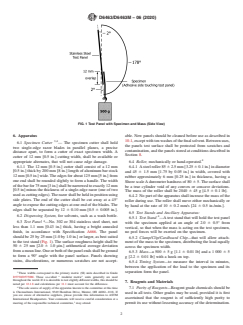
FIG. 1 Test Panel with Specimen and Mass (Side View)
6. Apparatus able. New panels should be cleaned before use as described in
3,4 10.1,exceptwithtenwashesofthefinalsolvent.Betweenuses,
6.1 Specimen Cutter — The specimen cutter shall hold
the panels test surface shall be protected from scratches and
two single-edge razor blades in parallel planes, a precise
contamination, and the panels stored at conditions described in
distance apart, to form a cutter of exact specimen width. A
Section 8.
cutter of 12 mm [0.5 in.] cutting width, shall be available or
appropriate alternates, that will not cause edge damage.
6.4 Roller, mechanically or hand-operated.
6.1.1 The 12 mm [0.5 in.] cutter shall consist of a 12 mm
6.4.1 Asteelroller85 62.5mm[3.25 60.1in.]indiameter
[0.5 in.] thick by 200 mm [8 in.] length of aluminum bar stock
and 45 6 1.5 mm [1.75 by 0.05 in.] in width, covered with
12 mm [0.5 in.] wide.The edges for about 125 mm [5 in.] from
rubber approximately 6 mm [0.25 in.] in thickness, having a
one end shall be rounded slightly to form a handle. The width
Shore scaleAdurometer hardness of 80 6 5. The surface shall
ofthebarfor75mm[3in.]shallbenarrowedtoexactly12mm
be a true cylinder void of any convex or concave deviations.
[0.5 in] minus the thickness of a single-edge razor (one of two
The mass of the roller shall be 2040 6 45 g [4.5 6 0.1 lb].
usedascuttingedges).Therazorshallbeheldinpositionusing
6.4.2 No part of the apparatus shall increase the mass of the
side plates. The end of the cutter shall be cut away at a 45°
roller during use. The roller shall move either mechanically or
angle to expose the cutting edges at one end of the blades. The
by hand at the rate of 10 6 0.2 mm/s [24 6 0.5 in./min.].
edges shall be separated by 12 6 0.10 mm [0.5 6 0.005 in.].
6.5 Test Stands and Ancillary Apparatus:
6.2 Dispensing System, for solvents, such as a wash bottle.
6.5.1 Test Stand —Atest stand that will hold the test panel
6.3 Test Panel —No. 302 or 304 stainless steel sheet, not
with the specimen applied at an angle of 2.0 6 0.5° from
less than 1.1 mm [0.43 in.] thick, having a bright annealed
vertical, so that when the mass is acting on the test specimen,
finish, in accordance with Specification A666. The panel
no peel forces will be exerted on the specimen.
should be 25 by 25 mm [1.0 by 1.0 in.] or larger, as best suited
6.5.2 Clamp/Clip/Cardboard Chip—that will allow attach-
to the test stand (Fig. 1). The surface roughness height shall be
ment of the mass to the specimen, distributing the load equally
50 6 25 nm [2.0 6 1.0 µin.] arithmetical average deviation
across the specimen width.
fromameanline.Oneorbothofthepanelendsshallbeground
6.5.3 Mass—a 500 6 5 g [1.1 6 0.01 lb] anda1000 6 5
to form a 90° angle with the panel surface. Panels showing
g [2.2 6 0.01 lb] with a hook on top.
stains, discolorations, or numerous scratches are not accept-
6.5.4 Timing System—to measure the interval in minutes,
between the application of the load to the specimen and its
3 separation form the panel.
These widths correspond to the primary metric (SI) units described in Guide
D5750/D5750M. These so-called “ modular metric” units generally are used
throughout the world. If it is desirable to test slightly different widths, this should be
7. Reagents and Materials
noted per 12.1.8 and calculations per 11.1 must account for the difference.
The sole source of supply of the apparatus known to the committee at this time
7.1 Purity of Reagents—Reagent grade chemicals should be
is Chemsultants International, 9349 Hamilton Drive, Mentor, OH 44061–1118. If
used in all tests. Other grades may be used, provided it is first
you are aware of alternative suppliers, please provide this information to ASTM
ascertained that the reagent is of sufficiently high purity to
International Headquarters. Your comments will receive careful consideration at a
meeting of the responsible technical committee, may attend. permit its use without l
...