

ASTM E2446-23
(Practice)Standard Practice for Manufacturing Characterization of Computed Radiography Systems
General Information
- Abstract
SIGNIFICANCE AND USE
4.1 There are several factors affecting the quality of a CR image including the basic spatial resolution of the IP system, geometrical unsharpness, scatter and contrast sensitivity. There are several additional factors (for example, software and scanning parameters) that affect the accurate reading of images on exposed IPs using an optical scanner.
4.2 This practice is to be used to establish a characterization of CR system by performance levels on the basis of a normalized SNR, interpolated basic spatial detector resolution and EPS. The CR system performance levels in this practice do not refer to any particular manufacturers’ imaging plates. A CR system performance level results from the use of a particular imaging plate together with the exposure conditions, standardized phantom, the scanner type, and software and the scanning parameters. This characterization system provides a means to compare differing CR technologies, as is common practice with film systems, which guides the user to the appropriate configuration, IP, and technique for the application at hand. The performance level selected may not match the imaging performance of a corresponding film class because of the difference in the spatial resolution and scatter sensitivity. Therefore, the user should always use IQIs for proof of contrast sensitivity and basic spatial resolution.
4.3 The measured performance parameters are presented in a characterization chart. This enables users to select specific CR systems by the different characterization data to find the best system for his specific application.
4.4 The quality factors can be determined most accurately by the tests described in this practice. Some of the system tests require special tools, which may not be available in user laboratories. Simpler tests are described for quality assurance and long term stability tests in Practice E2445.
4.5 Manufacturers of industrial CR systems or certification agencies will use this practice. Users of i...
SCOPE
1.1 This practice covers the manufacturing characterization of computed radiography (CR) systems, consisting of a particular phosphor imaging plate (IP), scanner, software, scanner operational parameters, and an image display monitor, in combination with specified metal screens for industrial radiography.
1.2 The practice defines system tests to be used to characterize the systems of different suppliers and make them comparable for users.
1.3 This practice is intended for use by manufacturers of CR systems or certification agencies to provide quantitative results of CR system characteristics for nondestructive testing (NDT) user or purchaser consumption. Some of these tests require specialized test phantoms to ensure consistency of results among suppliers or manufacturers. These tests are not intended for users to complete, nor are they intended for long term stability tracking and lifetime measurements. However, they may be used for this purpose, if so desired. Practice E2445 describes tests which are intended for users to observe the CR performance and test the long term stability.
1.4 The CR system performance is described by the basic spatial resolution, contrast, signal and noise parameters, and the equivalent penetrameter sensitivity (EPS). Some of these parameters are used to compare with DDA characterization and film characterization data (see Practice E2597 and Test Method E1815).
Note 1: For film system characterization, the signal is represented by the optical density of 2 (above fog and base) and the noise as granularity. The signal-to-noise ratio is normalized by the aperture (similar to the basic spatial resolution) of the system and is part of characterization. This normalization is given by the scanning circular aperture of 100 µm of the micro-photometer, which is defined in Test Method E1815 for film system characterization.
1.5 The measurement of CR systems in this practice is restricted ...
- Status
- Published
- Publication Date
- 14-Jun-2023
- Technical Committee
- E07 - Nondestructive Testing
- Drafting Committee
- E07.01 - Radiography (X and Gamma) Method
Buy Documents

ASTM E2446-23 - Standard Practice for Manufacturing Characterization of Computed Radiography Systems


REDLINE ASTM E2446-23 - Standard Practice for Manufacturing Characterization of Computed Radiography Systems
Overview
ASTM E2446-23: Standard Practice for Manufacturing Characterization of Computed Radiography Systems establishes standardized procedures for assessing the performance of computed radiography (CR) systems used in industrial radiographic applications. Developed by ASTM International, this practice is essential for manufacturers and certification agencies that require accurate, quantitative, and comparable qualification of CR systems for nondestructive testing (NDT). By defining performance levels based on objective image quality parameters, ASTM E2446-23 supports the reliable and consistent selection, comparison, and specification of CR technology across the industry.
Key Topics
- CR System Components: Addresses the evaluation of complete CR systems, including phosphor imaging plates, scanners, software, scanner operational parameters, display monitors, and specified metal screens.
- Critical Image Quality Parameters:
- Basic spatial resolution of the imaging plate system
- Geometrical unsharpness
- Scatter and contrast sensitivity
- Normalized signal-to-noise ratio (SNR)
- Equivalent penetrameter sensitivity (EPS)
- System Tests and Characterization Procedures: Describes standardized system tests, many of which require specialized phantoms and tools, to ensure data consistency across manufacturers.
- Measuring Methods: Offers detailed procedures for determining key performance metrics through step exposure, step wedge, and image quality indicator (IQI) techniques.
- Performance Levels: Provides a framework for categorizing CR system performance, similar to film system classifications, enabling direct comparison and appropriate selection for specific NDT tasks.
- Quality Assurance: Refers users to related practices (e.g., ASTM E2445) for ongoing quality assurance and stability monitoring of CR systems.
Applications
ASTM E2446-23 is specifically targeted at:
- Manufacturers of industrial computed radiography systems: To provide performance data for product specification and customer assurance.
- Certification agencies: For formal evaluation and certification of CR systems for industry-wide use.
- Nondestructive testing users and purchasers: For specifying, validating, and selecting the most suitable CR system based on standardized performance data.
- System evaluation and specification: Enables accurate comparison between different CR technologies and suppliers, guiding selection based on spatial resolution, signal-to-noise ratio, and contrast sensitivity.
- Regulatory and contract compliance: Ensures that CR systems selected for critical applications meet minimum image quality and reliability requirements.
By providing a comprehensive framework for the quantitative characterization of CR systems, this standard ensures that users can reliably compare various digital radiography solutions and maintain high-quality imaging standards in NDT applications such as weld inspection, aerospace component assessment, and structural integrity evaluations.
Related Standards
Professionals applying ASTM E2446-23 should be familiar with the following related ASTM and ISO standards for a comprehensive approach to computed radiography system evaluation and NDT:
- ASTM E746 - Determining Relative Image Quality Response of Industrial Radiographic Imaging Systems
- ASTM E1815 - Classification of Film Systems for Industrial Radiography
- ASTM E2002 - Determining Image Unsharpness and Basic Spatial Resolution in Radiography and Radioscopy
- ASTM E2007 - Guide for Computed Radiography
- ASTM E2033 - Radiographic Examination Using Computed Radiography
- ASTM E2445 - Performance Evaluation and Long-Term Stability of Computed Radiography Systems
- ASTM E2597 - Manufacturing Characterization of Digital Detector Arrays
- ISO 17636-2 - Non-destructive Testing of Welds - Radiographic Testing with Digital Detectors
Understanding and integrating these standards with ASTM E2446-23 contributes not only to improved technology selection but also to greater consistency, safety, and quality in industrial radiographic testing applications.
Relations
- Effective Date
- 01-Feb-2024
- Effective Date
- 01-Dec-2023
- Effective Date
- 01-Dec-2019
- Effective Date
- 01-Mar-2019
- Effective Date
- 01-Feb-2018
- Effective Date
- 01-Feb-2018
- Effective Date
- 01-Jan-2018
- Effective Date
- 01-Nov-2017
- Effective Date
- 15-Jun-2017
- Effective Date
- 01-Feb-2017
- Effective Date
- 01-Aug-2016
- Effective Date
- 01-Feb-2016
- Effective Date
- 01-Dec-2015
- Effective Date
- 01-Sep-2015
- Effective Date
- 01-Jul-2014
Buy Documents
ASTM E2446-23 - Standard Practice for Manufacturing Characterization of Computed Radiography Systems
REDLINE ASTM E2446-23 - Standard Practice for Manufacturing Characterization of Computed Radiography Systems
Get Certified
Connect with accredited certification bodies for this standard

IMP NDT d.o.o.
Non-destructive testing services. Radiography, ultrasonic, magnetic particle, penetrant, visual inspection.
Inštitut za kovinske materiale in tehnologije
Institute of Metals and Technology. Materials testing, metallurgical analysis, NDT.
Q Techna d.o.o.
NDT and quality assurance specialist. 30+ years experience. NDT personnel certification per ISO 9712, nuclear and thermal power plant inspections, QA/
Sponsored listings
Frequently Asked Questions
ASTM E2446-23 is a standard published by ASTM International. Its full title is "Standard Practice for Manufacturing Characterization of Computed Radiography Systems". This standard covers: SIGNIFICANCE AND USE 4.1 There are several factors affecting the quality of a CR image including the basic spatial resolution of the IP system, geometrical unsharpness, scatter and contrast sensitivity. There are several additional factors (for example, software and scanning parameters) that affect the accurate reading of images on exposed IPs using an optical scanner. 4.2 This practice is to be used to establish a characterization of CR system by performance levels on the basis of a normalized SNR, interpolated basic spatial detector resolution and EPS. The CR system performance levels in this practice do not refer to any particular manufacturers’ imaging plates. A CR system performance level results from the use of a particular imaging plate together with the exposure conditions, standardized phantom, the scanner type, and software and the scanning parameters. This characterization system provides a means to compare differing CR technologies, as is common practice with film systems, which guides the user to the appropriate configuration, IP, and technique for the application at hand. The performance level selected may not match the imaging performance of a corresponding film class because of the difference in the spatial resolution and scatter sensitivity. Therefore, the user should always use IQIs for proof of contrast sensitivity and basic spatial resolution. 4.3 The measured performance parameters are presented in a characterization chart. This enables users to select specific CR systems by the different characterization data to find the best system for his specific application. 4.4 The quality factors can be determined most accurately by the tests described in this practice. Some of the system tests require special tools, which may not be available in user laboratories. Simpler tests are described for quality assurance and long term stability tests in Practice E2445. 4.5 Manufacturers of industrial CR systems or certification agencies will use this practice. Users of i... SCOPE 1.1 This practice covers the manufacturing characterization of computed radiography (CR) systems, consisting of a particular phosphor imaging plate (IP), scanner, software, scanner operational parameters, and an image display monitor, in combination with specified metal screens for industrial radiography. 1.2 The practice defines system tests to be used to characterize the systems of different suppliers and make them comparable for users. 1.3 This practice is intended for use by manufacturers of CR systems or certification agencies to provide quantitative results of CR system characteristics for nondestructive testing (NDT) user or purchaser consumption. Some of these tests require specialized test phantoms to ensure consistency of results among suppliers or manufacturers. These tests are not intended for users to complete, nor are they intended for long term stability tracking and lifetime measurements. However, they may be used for this purpose, if so desired. Practice E2445 describes tests which are intended for users to observe the CR performance and test the long term stability. 1.4 The CR system performance is described by the basic spatial resolution, contrast, signal and noise parameters, and the equivalent penetrameter sensitivity (EPS). Some of these parameters are used to compare with DDA characterization and film characterization data (see Practice E2597 and Test Method E1815). Note 1: For film system characterization, the signal is represented by the optical density of 2 (above fog and base) and the noise as granularity. The signal-to-noise ratio is normalized by the aperture (similar to the basic spatial resolution) of the system and is part of characterization. This normalization is given by the scanning circular aperture of 100 µm of the micro-photometer, which is defined in Test Method E1815 for film system characterization. 1.5 The measurement of CR systems in this practice is restricted ...
SIGNIFICANCE AND USE 4.1 There are several factors affecting the quality of a CR image including the basic spatial resolution of the IP system, geometrical unsharpness, scatter and contrast sensitivity. There are several additional factors (for example, software and scanning parameters) that affect the accurate reading of images on exposed IPs using an optical scanner. 4.2 This practice is to be used to establish a characterization of CR system by performance levels on the basis of a normalized SNR, interpolated basic spatial detector resolution and EPS. The CR system performance levels in this practice do not refer to any particular manufacturers’ imaging plates. A CR system performance level results from the use of a particular imaging plate together with the exposure conditions, standardized phantom, the scanner type, and software and the scanning parameters. This characterization system provides a means to compare differing CR technologies, as is common practice with film systems, which guides the user to the appropriate configuration, IP, and technique for the application at hand. The performance level selected may not match the imaging performance of a corresponding film class because of the difference in the spatial resolution and scatter sensitivity. Therefore, the user should always use IQIs for proof of contrast sensitivity and basic spatial resolution. 4.3 The measured performance parameters are presented in a characterization chart. This enables users to select specific CR systems by the different characterization data to find the best system for his specific application. 4.4 The quality factors can be determined most accurately by the tests described in this practice. Some of the system tests require special tools, which may not be available in user laboratories. Simpler tests are described for quality assurance and long term stability tests in Practice E2445. 4.5 Manufacturers of industrial CR systems or certification agencies will use this practice. Users of i... SCOPE 1.1 This practice covers the manufacturing characterization of computed radiography (CR) systems, consisting of a particular phosphor imaging plate (IP), scanner, software, scanner operational parameters, and an image display monitor, in combination with specified metal screens for industrial radiography. 1.2 The practice defines system tests to be used to characterize the systems of different suppliers and make them comparable for users. 1.3 This practice is intended for use by manufacturers of CR systems or certification agencies to provide quantitative results of CR system characteristics for nondestructive testing (NDT) user or purchaser consumption. Some of these tests require specialized test phantoms to ensure consistency of results among suppliers or manufacturers. These tests are not intended for users to complete, nor are they intended for long term stability tracking and lifetime measurements. However, they may be used for this purpose, if so desired. Practice E2445 describes tests which are intended for users to observe the CR performance and test the long term stability. 1.4 The CR system performance is described by the basic spatial resolution, contrast, signal and noise parameters, and the equivalent penetrameter sensitivity (EPS). Some of these parameters are used to compare with DDA characterization and film characterization data (see Practice E2597 and Test Method E1815). Note 1: For film system characterization, the signal is represented by the optical density of 2 (above fog and base) and the noise as granularity. The signal-to-noise ratio is normalized by the aperture (similar to the basic spatial resolution) of the system and is part of characterization. This normalization is given by the scanning circular aperture of 100 µm of the micro-photometer, which is defined in Test Method E1815 for film system characterization. 1.5 The measurement of CR systems in this practice is restricted ...
ASTM E2446-23 is classified under the following ICS (International Classification for Standards) categories: 19.100 - Non-destructive testing. The ICS classification helps identify the subject area and facilitates finding related standards.
ASTM E2446-23 has the following relationships with other standards: It is inter standard links to ASTM E1316-24, ASTM E746-23, ASTM E1316-19b, ASTM E1316-19, ASTM E2903-18, ASTM E746-18, ASTM E1316-18, ASTM E746-17, ASTM E1316-17a, ASTM E1316-17, ASTM E1316-16a, ASTM E1316-16, ASTM E1316-15a, ASTM E1316-15, ASTM E746-07(2014). Understanding these relationships helps ensure you are using the most current and applicable version of the standard.
ASTM E2446-23 is available in PDF format for immediate download after purchase. The document can be added to your cart and obtained through the secure checkout process. Digital delivery ensures instant access to the complete standard document.
Standards Content (Sample)
This international standard was developed in accordance with internationally recognized principles on standardization established in the Decision on Principles for the
Development of International Standards, Guides and Recommendations issued by the World Trade Organization Technical Barriers to Trade (TBT) Committee.
Designation: E2446 − 23
Standard Practice for
Manufacturing Characterization of Computed Radiography
Systems
This standard is issued under the fixed designation E2446; the number immediately following the designation indicates the year of
original adoption or, in the case of revision, the year of last revision. A number in parentheses indicates the year of last reapproval. A
superscript epsilon (´) indicates an editorial change since the last revision or reapproval.
1. Scope 1.5 The measurement of CR systems in this practice is
restricted to a selected radiation quality to simplify the proce-
1.1 This practice covers the manufacturing characterization
dure. The properties of CR systems will change with radiation
of computed radiography (CR) systems, consisting of a par-
energy but not the ranking of CR system performance. Users of
ticular phosphor imaging plate (IP), scanner, software, scanner
this practice may carry out the tests at different or additional
operational parameters, and an image display monitor, in
radiation qualities (X-ray or gamma ray) if required.
combination with specified metal screens for industrial radiog-
1.6 The values stated in SI are to be regarded as the
raphy.
standard.
1.2 The practice defines system tests to be used to charac-
1.7 This standard does not purport to address all of the
terize the systems of different suppliers and make them
safety concerns, if any, associated with its use. It is the
comparable for users.
responsibility of the user of this standard to establish appro-
1.3 This practice is intended for use by manufacturers of CR
priate safety, health, and environmental practices and deter-
systems or certification agencies to provide quantitative results
mine the applicability of regulatory limitations prior to use.
of CR system characteristics for nondestructive testing (NDT)
1.8 This international standard was developed in accor-
user or purchaser consumption. Some of these tests require
dance with internationally recognized principles on standard-
specialized test phantoms to ensure consistency of results
ization established in the Decision on Principles for the
among suppliers or manufacturers. These tests are not intended
Development of International Standards, Guides and Recom-
for users to complete, nor are they intended for long term
mendations issued by the World Trade Organization Technical
stability tracking and lifetime measurements. However, they
Barriers to Trade (TBT) Committee.
may be used for this purpose, if so desired. Practice E2445
2. Referenced Documents
describes tests which are intended for users to observe the CR
performance and test the long term stability.
2.1 ASTM Standards:
E746 Practice for Determining Relative Image Quality Re-
1.4 The CR system performance is described by the basic
sponse of Industrial Radiographic Imaging Systems
spatial resolution, contrast, signal and noise parameters, and
E1165 Test Method for Measurement of Focal Spots of
the equivalent penetrameter sensitivity (EPS). Some of these
Industrial X-Ray Tubes by Pinhole Imaging
parameters are used to compare with DDA characterization and
E1316 Terminology for Nondestructive Examinations
film characterization data (see Practice E2597 and Test Method
E1815 Test Method for Classification of Film Systems for
E1815).
Industrial Radiography
NOTE 1—For film system characterization, the signal is represented by
E2002 Practice for Determining Image Unsharpness and
the optical density of 2 (above fog and base) and the noise as granularity.
Basic Spatial Resolution in Radiography and Radioscopy
The signal-to-noise ratio is normalized by the aperture (similar to the basic
E2007 Guide for Computed Radiography
spatial resolution) of the system and is part of characterization. This
E2033 Practice for Radiographic Examination Using Com-
normalization is given by the scanning circular aperture of 100 μm of the
micro-photometer, which is defined in Test Method E1815 for film system puted Radiography (Photostimulable Luminescence
characterization.
Method)
E2445 Practice for Performance Evaluation and Long-Term
Stability of Computed Radiography Systems
This practice is under the jurisdiction of ASTM Committee E07 on Nonde-
structive Testing and is the direct responsibility of Subcommittee E07.01 on
Radiology (X and Gamma) Method. For referenced ASTM standards, visit the ASTM website, www.astm.org, or
Current edition approved June 15, 2023. Published August 2023. Originally contact ASTM Customer Service at service@astm.org. For Annual Book of ASTM
approved in 2005. Last previous edition approved in 2016 as E2446 – 16. DOI: Standards volume information, refer to the standard’s Document Summary page on
10.1520/E2446-23. the ASTM website.
Copyright © ASTM International, 100 Barr Harbor Drive, PO Box C700, West Conshohocken, PA 19428-2959. United States
E2446 − 23
E2597 Practice for Manufacturing Characterization of Digi- compare differing CR technologies, as is common practice
tal Detector Arrays with film systems, which guides the user to the appropriate
E2903 Test Method for Measurement of the Effective Focal
configuration, IP, and technique for the application at hand.
Spot Size of Mini and Micro Focus X-ray Tubes
The performance level selected may not match the imaging
2.2 ISO Standard:
performance of a corresponding film class because of the
ISO 17636-2 Non-Destructive Testing of Welds—
difference in the spatial resolution and scatter sensitivity.
Radiographic Testing—Part 2: X- and Gamma Ray Tech-
Therefore, the user should always use IQIs for proof of contrast
nologies with Digital Detectors
sensitivity and basic spatial resolution.
3. Terminology 4.3 The measured performance parameters are presented in
a characterization chart. This enables users to select specific
3.1 Definitions—The definition of terms relating to gamma-
CR systems by the different characterization data to find the
and X-radiography, which appear in Terminology E1316,
best system for his specific application.
Guide E2007, and Practice E2033, shall apply to the terms used
in this practice.
4.4 The quality factors can be determined most accurately
3.2 Definitions of Terms Specific to This Standard:
by the tests described in this practice. Some of the system tests
3.2.1 computed radiography system (CR system)—a com-
require special tools, which may not be available in user
plete system of a storage phosphor imaging plate (IP), a
laboratories. Simpler tests are described for quality assurance
corresponding read out unit (scanner or reader), software,
and long term stability tests in Practice E2445.
scanner operational parameters, and an image display monitor,
which converts the information of the IP into a digital image 4.5 Manufacturers of industrial CR systems or certification
(see also Guide E2007).
agencies will use this practice. Users of industrial CR systems
may use Practice E2445 or perform some of the described tests
3.2.2 computed radiography system performance level—a
and measurements outlined in this practice, provided that the
particular group of CR performance levels, which is charac-
required test equipment is used and the methodology is strictly
terized by an SNR (normalized signal-to-noise ratio) range,
N
detector
followed. Any alternative methods or radiation qualities may
an interpolated basic spatial resolution range iSR and
b
equivalent penetrameter sensitivity (EPS) shown in Table 4 in be applied if equivalence to the methods of this practice is
a specified exposure range. proven to the appropriate cognizant engineering organization.
3.2.3 gain/amplification—opto-electrical gain setting of the
4.6 The publication of CR system performance levels will
scanning system.
enable specifying bodies and contracting parties to agree to
3.2.4 ISO speed S —defines the speed of a CR system and
particular system performance level, as a first step in arriving
IPx
is calculated from the reciprocal dose value, measured in Gray
at the appropriate settings of a system, or the selection of a
(Gy), which is necessary to obtain a specified minimum SNR
N system. Confirmation of necessary image quality shall be
of a CR system performance level.
achieved by using Practice E2033.
3.2.5 linearized signal intensity—a numerical signal value
of a picture element (pixel) of the digital image, which is 5. Apparatus
proportional to the radiation dose. The linearized signal inten-
5.1 CR system evaluation depends on the combined prop-
sity is zero, if the radiation dose is zero.
erties of the phosphor imaging plate (IP) type, the scanner and
software used, and the selected scan parameters and image
4. Significance and Use
display monitor. Therefore, documentation for each test shall
4.1 There are several factors affecting the quality of a CR
include the IP type, scanner, software, scan parameters, and
image including the basic spatial resolution of the IP system,
image display monitor, and the results shall be calculated and
geometrical unsharpness, scatter and contrast sensitivity. There
tabulated before arriving at a performance assignment. The
are several additional factors (for example, software and
applied test equipment for SNR measurement (Fig. 1) and
scanning parameters) that affect the accurate reading of images
algorithm 6.1.1 correspond to Test Method E1815. The recom-
on exposed IPs using an optical scanner.
mended thickness for aperture test object (diaphragm) is
4.2 This practice is to be used to establish a characterization
10.2 mm (0.4 in.) of Pb. The SDD shall be at least 1 m (39 in.).
of CR system by performance levels on the basis of a
Do not use any material (for example, lead) behind the cassette
normalized SNR, interpolated basic spatial detector resolution
and leave a free space of at least 1 m (39 in.) behind the
and EPS. The CR system performance levels in this practice do
cassette or use a steel screen of about 0.5 mm (0.02 in.) and a
not refer to any particular manufacturers’ imaging plates. A CR
lead plate of >2 mm (0.08 in.) just behind the cassette (steel
system performance level results from the use of a particular
screen is positioned between cassette and lead) and in contact
imaging plate together with the exposure conditions, standard-
with the cassette.
ized phantom, the scanner type, and software and the scanning
parameters. This characterization system provides a means to
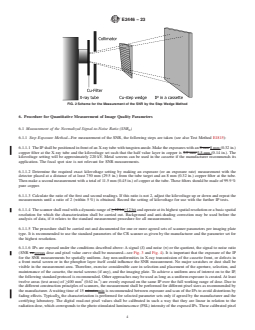
5.2 The step wedge method (Fig. 2) describes a simpler
procedure for SNR measurement than described in Test
3 Method E1815, which permits obtaining similar results with
Available from International Organization for Standardization (ISO), 1, ch. de
la Voie-Creuse, CP 56, CH-1211 Geneva 20, Switzerland, http://www.iso.org. less expense, and less accuracy.
E2446 − 23
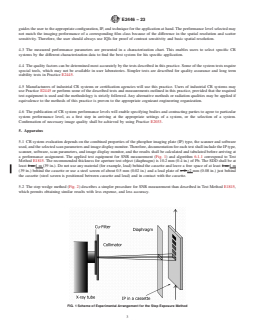
FIG. 1 Scheme of Experimental Arrangement for the Step Exposure Method
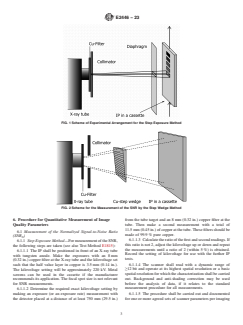
FIG. 2 Scheme for the Measurement of the SNR by the Step Wedge Method
6. Procedure for Quantitative Measurement of Image from the tube target and an 8 mm (0.32 in.) copper filter at the
Quality Parameters tube. Then make a second measurement with a total of
11.5 mm (0.45 in.) of copper at the tube. These filters should be
6.1 Measurement of the Normalized Signal-to-Noise Ratio
made of 99.9 % pure copper.
(SNR )
N
6.1.1.3 Calculate the ratio of the first and second readings. If
6.1.1 Step Exposure Method—For measurement of the SNR,
this ratio is not 2, adjust the kilovoltage up or down and repeat
the following steps are taken (see also Test Method E1815):
the measurements until a ratio of 2 (within 5 %) is obtained.
6.1.1.1 The IP shall be positioned in front of an X-ray tube
Record the setting of kilovoltage for use with the further IP
with tungsten anode. Make the exposures with an 8 mm
tests.
(0.32 in.) copper filter at the X-ray tube and the kilovoltage set
6.1.1.4 The scanner shall read with a dynamic range of
such that the half value layer in copper is 3.5 mm (0.14 in.).
≥12 bit and operate at its highest spatial resolution or a basic
The kilovoltage setting will be approximately 220 kV. Metal
spatial resolution for which the characterization shall be carried
screens can be used in the cassette if the manufacturer
out. Background and anti-shading correction may be used
recommends its application. The focal spot size is not relevant
before the analysis of data, if it relates to the standard
for SNR measurements.
measurement procedure for all measurements.
6.1.1.2 Determine the required exact kilovoltage setting by
making an exposure (or an exposure rate) measurement with 6.1.1.5 The procedure shall be carried out and documented
the detector placed at a distance of at least 750 mm (29.5 in.) for one or more agreed sets of scanner parameters per imaging
E2446 − 23
plate type. It is recommended to use the standard parameters of be achieved using a commonly available image processing
the CR scanner as given by the manufacturer and the parameter tool. The signal and noise shall be calculated from a data set of
set for the highest resolution. 8000 values or more per exposed area. The unfiltered data set
6.1.1.6 IPs are exposed under the conditions described is subdivided into 200 groups or more with 40 values per group
above: A signal (S) and noise (σ) or the quotient, the signal to (200 or more profile lines with 40 pixels per profile). For each
noise ratio (SNR versus dose and pixel value curve shall be group with index i, the signal S and the noise value σ are
I i
measured—see Fig. 3 and Fig. 4). It is important that the calculated from the pixel values PV in the region of interest
ij
exposure of the IP for the SNR measurements be spatially (RoI). An increased number of groups per RoI yields a better
uniform. Any non-uniformities in X-ray transmission of the (lower) uncertainty of the result. Fig. 3 describes the measure-
cassette front, or defects in a front metal screen or in the ment procedure in detail and the equations to use. If
detector
phosphor layer itself could influence the SNR measurement. iSR > pixel size, it is recommended to use a profile line
b
No major scratches or dust shall be visible in the measurement width (lw) of:
area. Therefore, exercise considerable care in selection and
detector
SR
b
lw 5 40 · (1)
placement of the aperture, selection, and maintenance of the
pixel
pixel size
cassette, the metal screens (if any), and the imaging plate. To
achieve a uniform area of interest on to the IP, the following 6.1.1.9 The final value S is obtained by the median of all S
i
values. The final σ value is obtained by the median of all σ
standard protocol is recommended. Other approaches may be
i
used as long as a uniform exposure is created. At least twelve values. SNR shall be calculated as reference value SNR ,
N
2 2
normalized to a resolution of 88.6 μm, which is related to a
areas (test areas) of ≥400 mm (0.62 in. ) are evenly exposed
2 2
on the same IP over the full working range of dose. Due to the squared aperture (pixel size of 88.6 μm by 88.6 μm ). The
final value SNR is calculated by considering the measured
different construction principles of scanners, the measurement
N
detector
shall be performed for different pixel sizes as recommended by interpolated basic spatial resolution iSR , which is the
b
larger value of both, measured in fast and slow scan direction
the manufacturer. A waiting time of 15 min is recommended
between exposure and scan of the IPs to avoid distortions by (see 6.5):
fading effects. Typically, the characterization is performed for
88.6 μm
SNR 5 SNR · (2)
selected parameter sets only if agreed by the manufacturer and detector
N
iSR
b
the certifying laboratory. The digital read-out pixel values shall
where:
be calibrated in such a way that they are linear in relation to the
detector
iSR = interpolated maximum value in μm of both
radiation dose, which corresponds to the photo stimulated
b
basic spatial resolution values as measured in
luminescence (PSL) intensity of the exposed IPs. These cali-
fast and slow scan direction (see 6.5).
brated pixel values shall be used for the calculation of the SNR
to obtain a reliable result. Measurements shall be made on at
NOTE 2—Test Method E1815 requires the use of a micro-photo
least six different samples, and the results are to be averaged
densitometer with circular aperture of 100 μm diameter for the measure-
for each of the twelve or more dose levels measured.
ment of granularity σ of films. Because the pixels in digital images are
D
6.1.1.7 The signal (S) and noise (standard deviation σ) of organized in squares, the corresponding pixel size is calculated by sqrt
((100 μm) π / 4) = 88.6 μm (1 μm = 3.93701E-05 in.). This value of
the measured pixel values shall be calculated from a region of
88.6 μm for normalization was selected for comparison of noise in digital
interest (RoI) without shading or artifacts. Sample SNR values
images with film granularity.
shall be taken in different regions of the image area under test
6.1.1.10 SNR shall be plotted versus pixel value (Fig. 4)
to ensure that SNR values are within 10 %. The size of the RoI
N
and versus exposure dose.
used to measure the mean signal and noise shall be at least
40 pixels by 200 pixels. 6.1.2 Step Wedge Method (Manufacturer Test and Enhanced
6.1.1.8 An example technique for ensuring reliable signal- User Test)—The measurement of the SNR can be performed
to-noise measurements is described in the following. This can with less accuracy using a step wedge, as shown in Fig. 2. This
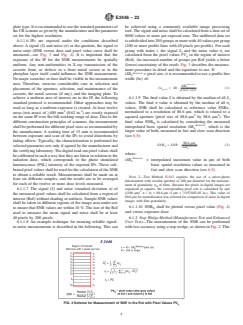
FIG. 3 Scheme for Measurement of SNR in the RoI with Pixel Values PV
ij
E2446 − 23
NOTE 1—The tested CR system qualifies for:
Level I performance from PV 350 – 4095 (see Table 4)
Level II performance from PV 140 – 4095 (see Table 4)
PV = 4095, as determined with procedure of 6.4
max
detector
FIG. 4 Example Plot of Measured SNR Versus PV (12 bit system, iSR = 70 μm) for Determination of Level I and II Performance
N b
Range (see 6.4)
influence of scattered radiation should be reduced by exact collimation.
method, if approved by the cognizant engineering organization
Different exposures with different exposure time or mA-settings are
(CEO), may be of interest for users to determine the SNR with
recommended for the required plot. The exposure value (mAs) of the
less expensive equipment:
different exposures of the step wedge target should be increased by about
6.1.2.1 For that purpose, a step wedge of Cu, with at least
5.
twelve equally increasing steps, shall be used as in the
6.2 Contrast Sensitivity by Equivalent Penetrameter Sensi-
arrangement shown in Fig. 2. The selection of the X-ray
tivity (EPS)
voltage shall be as described in 6.1.1.1. The maximum thick-
6.2.1 The characterization by performance levels being
ness of the step wedge shall absorb 90 % of the radiation of the
based on the EPS can be performed with less accuracy on basis
central beam, which requires a thickness of 11.7 mm (0.46 in.).
of visual evaluation of radiographs than by the quantitative
To cover a range of two or more orders of magnitude of the
SNR step exposure method using the following procedure on
N
radiation dose, at least two suitable and different exposures
basis of Practice E746, as illustrated in Fig. 5. The standard
with adequate exposure time or tube current (mA) shall be
procedure is the EPS measurement at 90 % of the maximum
made. A waiting time of 10 min is recommended between
achievable pixel value, PV (see also 6.3 and Fig. 4) with a
max
exposure and scan of the IPs to avoid distortions by fading
steel absorber as described in Practice E746 and the measure-
effects. The distance between step wedge and IP shall be
ment of the effective attenuation coefficient. Optionally, the
≥500 mm (19.69 in.) to reduce the influence of scattered
complete plot of EPS vs. dose curve may be measured (Fig. 5)
radiation. A magnification of 2× is recommended. A beam
and PV may be determined as shown in Fig. 6 for the
min
collimator shall be used to restrict exposures to the step wedge
different performance levels. Other fine grained materials than
only. X-ray voltage and filtering shall be selected in accordance
mild steel and different radiation qualities may be used if
with 6.1.1.1 through 6.1.1.3.
requested for other applications as, for example, testing of light
NOTE 3—X-ray penetration through Cu-steps of different thickness is materials in aerospace applications.
distorted by beam hardening and suitable adjustment of exposure is
required.
6.1.2.2 The projected area of each step shall be about
20 mm by 20 mm (≥400 mm ). SNR values should not be
detector
taken closer than four times the iSR to an edge.
b
6.1.2.3 All details for the measurement of the SNR shall
correspond to 6.1.1.6 – 6.1.1.9. The graphical analysis shall be
2 μ w
~ !
Cu Cu
based on the plot of SNR5f ~=exposure · e !, where μ
Cu
is the attenuation coefficient, w is the wall thickness of the
Cu
corresponding step of the step wedge, and the value “exposure”
is calculated from exposure time (seconds) multiplied by tube
current (mA).
NOTE 4—For accurate plots, it is necessary to consider the wall FIG. 5 Illustration of EPS Characterization Set Up (left) and Test
thickness dependence of μ on the wall thickness (beam hardening). The Phantom (right). The Duplex Wire IQI is Tilted Approximately 5°.
Cu
E2446 − 23
TABLE 1 EPS Values on Standard 19-mm (¾-in.) Absorber Plate
as a Function of Step and Hole Size
Step Size Hole Size EPS
Plaque Number
mm (in.) mm (in.) %
0.71 (0.028) 1.92
15 0.38 (0.015) 0.64 (0.025) 1.82
0.58 (0.023) 1.71
0.79 (0.031) 1.66
10 0.25 (0.010) 0.71 (0.028) 1.57
0.64 (0.025) 1.49
0.71 (0.028) 1.41
8 0.20 (0.008) 0.64 (0.025) 1.33
0.58 (0.023) 1.25
0.81 (0.032) 1.19
0.71 (0.028) 1.12
5 0.13 (0.005) 0.64 (0.025) 1.05
NOTE 1—The tested CR system qualifies for:
0.58 (0.023) 1.00
—Level I performance from PV 350–4095 (see Table 4)
0.50 (0.020) 0.94
—Level II performance from PV 140–4095 (see Table 4)
—PV = 4095, as determined with procedure of 6.4
max
—aEPS = 1.16
FIG. 6 Example Plot for Measured of EPS Versus PV (12 bit
detector
system, iSR = 70 μm) for Determination of Level I and II
b the source side. The 19 mm ( ⁄4 in.) steel plate should cover the
Performance Range
complete IP and IP cassette. The X-ray source shall be
collimated to the 19 mm ( ⁄4 in.) plate only. The surface finish
6.2.2 Required Measurements and Evaluations—These of the absorber plate shall be no worse than RMS 250. If the
evaluations are adapted from Practices E746 and E2002. Image EPS absorber plate does not cover the entire IP, the IP shall be
quality indicators from these standards and a 1 mm steel plate masked with lead around the absorber plate.
for measurement of the relative contrast are arranged in a 6.2.3 EPS characterization by Practice E746—For each
standard phantom (Fig. 5) and exposed with a (Practice E746) exposure (data point in Fig. 6) at different dose of the set of
19 mm ( ⁄4 in.) absorber of mild steel to qualify. The tube Fig. 5, determine the lowest (best) EPS performance of each
voltage shall be 220 kV with 2 mm Cu in front of the tube port exposure by determining the duplex row (Practice E746
instead of 200 kV as recommended in Practice E746. illustrates step layout and corresponding EPS %), where a
6.2.2.1 The EPS value shall be determined at least at 90 % minimum of 15 holes out of 30 holes in each duplex row (50 %
of the PV . Alternatively, the EPS performance may be rule) are clearly visible. Table 1 provides EPS values (see also
max
determined in the characterized linear or linearized PV range as Practice E746) for each visible duplex row on the specified
illustrated in Fig. 5. standard of a 19 mm ( ⁄4 in.) absorber plate of steel. Plot the
6.2.2.2 Determination of Relative Contrast C —Fig. 5 EPS (in %) taken with the set of Fig. 5 in a graph as presented
1mm
illustrates a typical layout for a 19 mm (¾ in.) thick steel plate, in Fig. 6 that corresponds with the qualifying hole size row of
at least 20 cm (≈ 8 in.) wide by 25 cm (≈ 10 in.) long, Table 1, its corresponding exposure identification, and pixel
containing a series of Practice E746 EPS plaques of varying value.
thicknesses and hole sizes, a 1 mm steel plate, and a Practice 6.2.3.1 The source-to-detector distance (SDD) shall be at
E2002 unsharpness gauge with duplex wires oriented approxi- least 1 m (39 in.). The geometric unsharpness, u , shall not
g
detector
mately 5° tilted to the plate edge direction for monitoring of the exceed 50 μm and u shall not exceed 20 % of iSR . The
g b
influence of the geometric unsharpness; all IQIs are situated on kilovoltage setting shall be selected corresponding to 6.1.1.1 –
TABLE 2 Required Tests as described in Annex A1 and Annex A2, and Required Results
Required Test Required Result
Geometric Distortion (by spatial linearity image quality indicators in CR Test Phantom, Annex A3, see Annex A1 for details.) Fail if distortion >2 %
Laser Jitter (by T-target in CR Test Phantom, Annex A3, see Annex A1 for details.) Not permitted
Straight and continuous edges
required
Laser Beam Scan Line Integrity (no test object required, see Annex A1 for details.) Not permitted
Scan column dropout (no test object required, see Annex A1 for details.) Not permitted
Scanner Slippage (by homogeneous strip slippage target in CR Test Phantom, Annex A3, see Annex A1 for details.) Not permitted
Erasure (high absorption object required, see Annex A2 for details.) Fail if >2 %
Shading or banding (by homogeneous plate, three shading image quality targets in CR Test Phantom, Annex A3) Fail if more than ±10 %
Test Results Shall be Reported, also in Case of Exceeding the Limits Result to Report
PMT Non-linearity (by T-target in CR Test Phantom, Annex A3, see 6.6.2 for details and Annex A1) Report if >2 %
Burn-In (high absorption object required, see Annex A2 for details ) Report if >2 %
Spatial Linearity (by spatial linearity image quality indicators in CR Test Phantom, Annex A3, see Annex A1 for details.) Report if >2 %
Imaging plate response variation (no test object required, see Annex A2 for details.) Report if > ±10 %
Optional Test on Request Result to Report
Imaging Plate Fading (no test object required), optional test, see 6.6.1.2 and 6.6.1.3 and Annex A2 for details. Report fading in %, calculated from
values measured at 5 min and 2 h.
E2446 − 23
6.1.1.3 and is approximately 220 kV for the steel absorber. No range from 10 % to 90 % of the full PV range. At least eight
material (for example, lead) shall be used behind the cassette; data points should be taken.
free space of at least 1 m (39 in.) shall be left behind the 6.3.2 The measured pixel values shall not deviate from the
cassette or a steel screen of about 0.5 mm (0.02 in.), and a lead linear fit more than 5 %. If the linearity does not cover the full
plate of >2 mm (0.08 in.) shall be used just behind the cassette range, a PV value shall be specified that shall not be
max
(steel screen is positioned between cassette and lead) and in exceeded in NDT practice.
contact with the cassette. The EPS method may be applied for 6.3.3 No PV characterization is required if the system is
max
materials other than steel by agreement of the CEO or the linear over the full scanner PV range to exposure dose.
contracting parties.
NOTE 5—PV specification is typically not required. Related to the
max
6.2.3.2 The interpolated basic spatial resolution as deter-
observation that sometimes nonlinearities may appear, if readers scan IP
mined from the exposure through the absorber plate shall be no
areas that have been exposed with extraordinary high exposure dose
values, the linearity test should cover the full PV range. Fading may also
more than 10 % worse than the interpolated basic spatial
influence the linearity with increased exposure time.
resolution as determined without the absorber plate at 220 kV
(8 mm Cu). If this is not achieved, the focal spot size (as 6.4 Determination of Minimum Pixel Value, PV
min
measured by Test Methods E1165 or E2903) shall be reduced 6.4.1 Determination of PV with the SNR Method
min
or the SDD shall be increased. 6.4.1.1 Plot a graph of SNR versus mean pixel value
N
PV as a function as illustrated in Fig. 4.
mean
6.3 Linearity Test of Pixel Value Response for Linearized
Values
TABLE 3 Determination of ISO Speed (S ) from Dose K (in
6.3.1 Measured signal values (mean pixel values) of 6.1 or
ISO S
Gray) for an IP Read-Out Intensity of PV at the Characterized
min
6.2 are plotted versus exposure dose along a linear exposure
Performance Level as Determined from SNR and EPS Method
N
scale for linear systems (see Fig. 7). Nonlinear systems shall be
Log K
10 S
tested with a numeric linearization corresponding to the
ISO Speed (S )
ISO
From To
manufacturer’s conversion equation for linearization. The pixel
-4.66 < -4.55 40 000
value range characterization is valid only for the specific -4.55 < -4.45 32 000
-4.45 < -4.35 25 000
scanner operational parameters used, including photomultiplier
-4.35 < -4.25 20 000
tube gain, laser power, sampling resolution setting, and all
-4.25 < -4.15 16 000
other operator-adjustable scanner control parameters. Expo-
-4.15 < -4.05 12 500
sures should be approximately equally distributed within the
-4.05 < -3.95 10 000
qualified PV range. The linearity test shall be performed in the
-3.95 < -3.85 8000
-3.85 < -3.75 6300
-3.75 < -3.65 5000
-3.65 < -3.55 4000
-3.55 < -3.45 3200
-3.45 < -3.35 2500
-3.35 < -3.25 2000
-3.25 < -3.15 1600
-3.15 < -3.05 1250
-3.05 < -2.95 1000
-2.95 < -2.85 800
-2.85 < -2.75 640
-2.75 < -2.65 500
-2.65 < -2.55 400
-2.55 < -2.45 320
-2.45 < -2.35 250
-2.35 < -2.25 200
-2.25 < -2.15 160
-2.15 < -2.05 125
-2.05 < -1.95 100
-1.95 < -1.85 80
-1.85 < -1.75 64
-1.75 < -1.65 50
-1.65 < -1.55 40
-1.55 < -1.45 32
-1.45 < -1.35 25
-1.35 < -1.25 20
FIG. 7 PV Linearity Characterization for CR Systems with 5%
Bars
6.4.1.2 Use SNR versus PV correlation data as presented
N
(a) The system is qualified successfully in the PV range from 0 to 65535 (16 bit
in Fig. 4 for the specific qualifying CR system to determine the
system).
minimum pixel value that provides the desired minimum
(b) The error bars in the low intensity range can be evaluated better in the double
logarithmic graph. SNR for the performance level as specified in Table 4.
N
E2446 − 23
TABLE 4 CR System Performance by Performance Levels procedure can be applied in CR. Each CR system (or any digital imaging
system) provides pixel values of each picture element (pixel). The pixels
NOTE 1—The terminology of the CR performance levels is chosen in
in the region of interest (RoI) that are to be evaluated should exceed a
analogy to the film system classes of Test Method E1815. It is recom-
minimum pixel value, in a similar way as minimum optical density in film
mended to select the related CR performance levels for replacement of
radiography. Single outliers as, for example, indications of dust indica-
films with the classes: Special, T1, T2, T3. Nevertheless, CR performance
tions may not be evaluated. This minimum pixel value is the reference
and image quality change depending on exposure time, mA, kV and
minimum pixel value PV as determined in 6.4. This procedure permits
minx
performance level in a different way than films. Therefore, no exact
basic quality assurance in CR in relation to contrast sensitivity.
assignment can be made.
6.5 Determination of Interpolated Basic Spatial Detector
Permitted Maxi-
Permitted Maxi-
Resolution of CR Systems
CR System Per- Required Mini- mum Achieved
detector
mum iSR
b
formance mum SNR EPS by E746
N
6.5.1 Duplex-Wire Method
Value (μm)
A
(%)
detector
6.5.1.1 The test object to measure the iSR is the
CR Special 200 50 1.00
b
CR Level I 100 100 1.41
duplex-wire gauge corresponding to Practice E2002. The
CR Level II 70 160 1.66
exposure shall be performed in a distance of 1 m (39 in.) or
CR Level III 50 200 1.92
greater using an X-ray tube with a focal spot size ≤ 1 mm.
A
E746 specifies the test for steel at 200 kV to 220 kV. If the measurement is
Focal spot size and focus detector distance shall be selected for
performed with other materials or kV values, or both, user dependent values may
be specified.
...
This document is not an ASTM standard and is intended only to provide the user of an ASTM standard an indication of what changes have been made to the previous version. Because
it may not be technically possible to adequately depict all changes accurately, ASTM recommends that users consult prior editions as appropriate. In all cases only the current version
of the standard as published by ASTM is to be considered the official document.
Designation: E2446 − 16 E2446 − 23
Standard Practice for
Manufacturing Characterization of Computed Radiography
Systems
This standard is issued under the fixed designation E2446; the number immediately following the designation indicates the year of
original adoption or, in the case of revision, the year of last revision. A number in parentheses indicates the year of last reapproval. A
superscript epsilon (´) indicates an editorial change since the last revision or reapproval.
1. Scope
1.1 This practice describescovers the manufacturing characterization of computed radiography (CR) systems, consisting of a
particular phosphor imaging plate (IP), scanner, software, scanner operational parameters, and an image display monitor, in
combination with specified metal screens for industrial radiography.
1.2 The practice defines system tests to be used to characterize the systems of different suppliers and make them comparable for
users.
1.3 This practice is intended for use by manufacturers of CR systems or certification agencies to provide quantitative results of
CR system characteristics for nondestructive testing (NDT) user or purchaser consumption. Some of these tests require specialized
test phantoms to ensure consistency of results among suppliers or manufacturers. These tests are not intended for users to complete,
nor are they intended for long term stability tracking and lifetime measurements. However, they may be used for this purpose, if
so desired. Practice E2445 describes tests which are intended for users to observe the CR performance and test the long term
stability.
1.4 The CR system performance is described by the basic spatial resolution, contrast, signal and noise parameters, and the
equivalent penetrameter sensitivity (EPS). Some of these parameters are used to compare with DDA characterization and film
characterization data (see Practice E2597 and Test Method E1815).
NOTE 1—For film system characterization, the signal is represented by the optical density of 2 (above fog and base) and the noise as granularity. The
signal-to-noise ratio is normalized by the aperture (similar to the basic spatial resolution) of the system and is part of characterization. This normalization
is given by the scanning circular aperture of 100 μm of the micro-photometer, which is defined in Test Method E1815 for film system characterization.
1.5 The measurement of CR systems in this practice is restricted to a selected radiation quality to simplify the procedure. The
properties of CR systems will change with radiation energy but not the ranking of CR system performance. Users of this practice
may carry out the tests at different or additional radiation qualities (X-ray or gamma ray) if required.
1.6 The values stated in SI are to be regarded as the standard.
1.7 This standard does not purport to address all of the safety concerns, if any, associated with its use. It is the responsibility
of the user of this standard to establish appropriate safety and health practices and to safety, health, and environmental practices
and determine the applicability of regulatory limitations prior to use.
This practice is under the jurisdiction of ASTM Committee E07 on Nondestructive Testing and is the direct responsibility of Subcommittee E07.01 on Radiology (X and
Gamma) Method.
Current edition approved June 1, 2016June 15, 2023. Published June 2016August 2023. Originally approved in 2005. Last previous edition approved in 20152016 as
E2446 – 15.E2446 – 16. DOI: 10.1520/E2446-16.10.1520/E2446-23.
Copyright © ASTM International, 100 Barr Harbor Drive, PO Box C700, West Conshohocken, PA 19428-2959. United States
E2446 − 23
1.8 This international standard was developed in accordance with internationally recognized principles on standardization
established in the Decision on Principles for the Development of International Standards, Guides and Recommendations issued
by the World Trade Organization Technical Barriers to Trade (TBT) Committee.
2. Referenced Documents
2.1 ASTM Standards:
E746 Practice for Determining Relative Image Quality Response of Industrial Radiographic Imaging Systems
E1165 Test Method for Measurement of Focal Spots of Industrial X-Ray Tubes by Pinhole Imaging
E1316 Terminology for Nondestructive Examinations
E1815 Test Method for Classification of Film Systems for Industrial Radiography
E2002 Practice for Determining Image Unsharpness and Basic Spatial Resolution in Radiography and Radioscopy
E2007 Guide for Computed Radiography
E2033 Practice for Radiographic Examination Using Computed Radiography (Photostimulable Luminescence Method)
E2445 Practice for Performance Evaluation and Long-Term Stability of Computed Radiography Systems
E2597 Practice for Manufacturing Characterization of Digital Detector Arrays
E2903 Test Method for Measurement of the Effective Focal Spot Size of Mini and Micro Focus X-ray Tubes
2.2 ISO Standard:
ISO 17636-2 Non-Destructive Testing of Welds—Radiographic Testing—Part 2: X- and Gamma Ray Technologies with Digital
Detectors
3. Terminology
3.1 Definitions—The definition of terms relating to gamma- and X-radiography, which appear in Terminology E1316, Guide
E2007, and Practice E2033, shall apply to the terms used in this practice.
3.2 Definitions of Terms Specific to This Standard:
3.2.1 computed radiography system (CR system)—Aa complete system of a storage phosphor imaging plate (IP), a corresponding
read out unit (scanner or reader), software software, scanner operational parameters, and an image display monitor, which converts
the information of the IP into a digital image (see also Guide E2007).
3.2.2 computed radiography system performance level—Aa particular group of CR performance levels, which is characterized by
detector
aan SNR (signal-to-noise (normalized signal-to-noise ratio) range, an interpolated basic spatial resolution range iSR and
N b
equivalent penetrameter sensitivity (EPS) shown in Table 4 in a specified exposure range.
3.2.3 gain/amplification—Opto-electricalopto-electrical gain setting of the scanning system.
3.2.4 ISO speed S —Definesdefines the speed of a CR system and is calculated from the reciprocal dose value, measured in Gray
IPx
(Gy), which is necessary to obtain a specified minimum SNR of a CR system performance level.
N
3.2.5 linearized signal intensity—a numerical signal value of a picture element (pixel) of the digital image, which is proportional
to the radiation dose. The linearized signal intensity is zero, if the radiation dose is zero.
4. Significance and Use
4.1 There are several factors affecting the quality of a CR image including the basic spatial resolution of the IP system, geometrical
unsharpness, scatter and contrast sensitivity. There are several additional factors (for example, software and scanning parameters)
that affect the accurate reading of images on exposed IPs using an optical scanner.
4.2 This practice is to be used to establish a characterization of CR system by performance levels on the basis of a normalized
SNR, interpolated basic spatial detector resolution and EPS. The CR system performance levels in this practice do not refer to any
particular manufacturers’ imaging plates. A CR system performance level results from the use of a particular imaging plate together
with the exposure conditions, standardized phantom, the scanner type, and software and the scanning parameters. This
characterization system provides a means to compare differing CR technologies, as is common practice with film systems, which
For referenced ASTM standards, visit the ASTM website, www.astm.org, or contact ASTM Customer Service at service@astm.org. For Annual Book of ASTM Standards
volume information, refer to the standard’s Document Summary page on the ASTM website.
Available from International Organization for Standardization (ISO), 1, ch. de la Voie-Creuse, CP 56, CH-1211 Geneva 20, Switzerland, http://www.iso.org.
E2446 − 23
guides the user to the appropriate configuration, IP, and technique for the application at hand. The performance level selected may
not match the imaging performance of a corresponding film class because of the difference in the spatial resolution and scatter
sensitivity. Therefore, the user should always use IQIs for proof of contrast sensitivity and basic spatial resolution.
4.3 The measured performance parameters are presented in a characterization chart. This enables users to select specific CR
systems by the different characterization data to find the best system for his specific application.
4.4 The quality factors can be determined most accurately by the tests described in this practice. Some of the system tests require
special tools, which may not be available in user laboratories. Simpler tests are described for quality assurance and long term
stability tests in Practice E2445.
4.5 Manufacturers of industrial CR systems or certification agencies will use this practice. Users of industrial CR systems may
use Practice E2445 or perform some of the described tests and measurements outlined in this practice, provided that the required
test equipment is used and the methodology is strictly followed. Any alternative methods or radiation qualities may be applied if
equivalence to the methods of this practice is proven to the appropriate cognizant engineering organization.
4.6 The publication of CR system performance levels will enable specifying bodies and contracting parties to agree to particular
system performance level, as a first step in arriving at the appropriate settings of a system, or the selection of a system.
Confirmation of necessary image quality shall be achieved by using Practice E2033.
5. Apparatus
5.1 CR system evaluation depends on the combined properties of the phosphor imaging plate (IP) type, the scanner and software
used, and the selected scan parameters and image display monitor. Therefore, documentation for each test shall include the IP type,
scanner, software, scan parameters, and image display monitor, and the results shall be calculated and tabulated before arriving at
a performance assignment. The applied test equipment for SNR measurement (Fig. 1) and algorithm 6.1.1 correspond to Test
Method E1815. The recommended thickness for aperture test object (diaphragm) is 10.2 mm (0.4 in.) of Pb. The SDD shall be at
least 1 m 1 m (39 in.). Do not use any material (for example, lead) behind the cassette and leave a free space of at least 1 m 1 m
(39 in.) behind the cassette or use a steel screen of about 0.5 mm (0.02 in.) and a lead plate of > 2 >2 mm (0.08 in.) just behind
the cassette (steel screen is positioned between cassette and lead) and in contact with the cassette.
5.2 The step wedge method (Fig. 2) describes a simpler procedure for SNR measurement than described in Test Method E1815,
which permits obtaining similar results with less expense, and less accuracy.
FIG. 1 Scheme of Experimental Arrangement for the Step Exposure Method
E2446 − 23
FIG. 2 Scheme for the Measurement of the SNR by the Step Wedge Method
6. Procedure for Quantitative Measurement of Image Quality Parameters
6.1 Measurement of the Normalized Signal-to-Noise Ratio (SNR )
N
6.1.1 Step Exposure Method—For measurement of the SNR, the following steps are taken (see also Test Method E1815):
6.1.1.1 The IP shall be positioned in front of an X-ray tube with tungsten anode. Make the exposures with an 8 mm 8 mm (0.32 in.)
copper filter at the X-ray tube and the kilovoltage set such that the half value layer in copper is 3.5 mm 3.5 mm (0.14 in.). The
kilovoltage setting will be approximately 220 kV. Metal screens can be used in the cassette if the manufacturer recommends its
application. The focal spot size is not relevant for SNR measurements.
6.1.1.2 Determine the required exact kilovoltage setting by making an exposure (or an exposure rate) measurement with the
detector placed at a distance of at least 750 mm (29.5 in.) from the tube target and an 8 mm (0.32 in.) copper filter at the tube.
Then make a second measurement with a total of 11.5 mm (0.45 in.) of copper at the tube. These filters should be made of 99.9 %
pure copper.
6.1.1.3 Calculate the ratio of the first and second readings. If this ratio is not 2, adjust the kilovoltage up or down and repeat the
measurements until a ratio of 2 (within 5 %) is obtained. Record the setting of kilovoltage for use with the further IP tests.
6.1.1.4 The scanner shall read with a dynamic range of ≥ 12 bit≥12 bit and operate at its highest spatial resolution or a basic spatial
resolution for which the characterization shall be carried out. Background and anti-shading correction may be used before the
analysis of data, if it relates to the standard measurement procedure for all measurements.
6.1.1.5 The procedure shall be carried out and documented for one or more agreed sets of scanner parameters per imaging plate
type. It is recommended to use the standard parameters of the CR scanner as given by the manufacturer and the parameter set for
the highest resolution.
6.1.1.6 IPs are exposed under the conditions described above: A signal (S) and noise (σ) or the quotient, the signal to noise ratio
(SNR vs.versus dose and pixel value curve shall be measured—see Fig. 3 and Fig. 4). It is important that the exposure of the IP
for the SNR measurements be spatially uniform. Any non-uniformities in X-ray transmission of the cassette front, or defects in
a front metal screen or in the phosphor layer itself could influence the SNR measurement. No major scratches or dust shall be
visible in the measurement area. Therefore, exercise considerable care in selection and placement of the aperture, selection, and
maintenance of the cassette, the metal screens (if any), and the imaging plate. To achieve a uniform area of interest on to the IP,
the following standard protocol is recommended. Other approaches may be used as long as a uniform exposure is created. At least
2 2
twelve areas (test areas) of ≥400 mm (0.62 in. ) are evenly exposed on the same IP over the full working range of dose. Due to
the different construction principles of scanners, the measurement shall be performed for different pixel sizes as recommended by
the manufacturer. A waiting time of 15 minutesmin is recommended between exposure and scan of the IPs to avoid distortions by
fading effects. Typically, the characterization is performed for selected parameter sets only if agreed by the manufacturer and the
certifying laboratory. The digital read-out pixel values shall be calibrated in such a way that they are linear in relation to the
radiation dose, which corresponds to the photo stimulated luminescence (PSL) intensity of the exposed IPs. These calibrated pixel
E2446 − 23
FIG. 3 Scheme for Measurement of SNR in the RoI with Pixel Values PV
ij
NOTE 1—The tested CR system qualifies for:
Level I performance from PV 350 – 4095 (see Table 4)
Level II performance from PV 140 – 4095 (see Table 4)
PV = 4095, as determined with procedure of 6.4
max
detector
FIG. 4 Example Plot of Measured SNR Versus PV (12 bit system, iSR = 70 μm) for Determination of Level I and II Performance
N b
Range (see 6.4)
values shall be used for the calculation of the SNR to obtain a reliable result. Measurements shall be made on at least six different
samples, and the results are to be averaged for each of the twelve or more dose levels measured.
6.1.1.7 The signal (S) and noise (standard deviation σ) of the measured pixel values shall be calculated from a region of interest
(RoI) without shading or artifacts. Sample SNR values shall be taken in different regions of the image area under test to ensure
that SNR values are within 10 %. The size of the RoI used to measure the mean signal and noise shall be at least 4040 pixels by
200 pixels.
6.1.1.8 An example technique for ensuring reliable signal-to-noise measurements is described in the following. This can be
achieved using a commonly available image processing tool. The signal and noise shall be calculated from a data set of 8000 values
or more per exposed area. The unfiltered data set is subdivided into 200 groups or more with 40 values per group (200 or more
profile lines with 40 pixels per profile). For each group with index i, the signal S and the noise value σ are calculated from the
I i
pixel values PV in the region of interest (RoI). An increased number of groups per RoI yields a better (lower) uncertainty of the
ij
result. Fig. 3 describes the measurement procedure in detail and the equations to use. If
detector
SRiSR > pixel size, it is recommended to use a profile line width (lw) of:
b
detector
lw~pixel!5 40·iSR ⁄pixelsize (1)
b
detector
SR
b
lw 5 40· (1)
pixel
pixelsize
E2446 − 23
6.1.1.9 The final value S is obtained by the median of all S values. The final σ value is obtained by the median of all σ values.
i i
SNR shall be calculated as reference value SNR , normalized to a resolution of 88.6 μm, which is related to a squared aperture
N
2 2
(pixel size of 88.6 μm by 88.6 x μm 88.6 μm²).). The final value SNR is calculated by considering the measured interpolated
N
detector
basic spatial resolution iSR , which is the larger value of both, measured in fast and slow scan direction (see 6.5):
bmaxb
88.6μm
SNR 5 SNR· (2)
N
iSR
bmax
88.6μm
SNR 5 SNR· (2)
detector
N
iSR
b
where:
iSR = interpolated maximum value of basic spatial resolution in μm as measured in 6.5.
bmax
detector
iSR = interpolated maximum value in μm of both basic spatial resolution values as measured in fast and slow scan
b
direction (see 6.5).
NOTE 2—Test Method E1815 requires the use of a micro-photo densitometer with circular aperture of 100 μm diameter for the measurement of granularity
σ of films. Because the pixels in digital images are organized in squares, the corresponding pixel size is calculated by sqrt ((100 μm) π / 4) = 88.6 μm
D
88.6 μm (1 μm = 3.93701E-05 in.). This value of 88.6 μm 88.6 μm for normalization was selected for comparison of noise in digital images with film
granularity.
6.1.1.10 SNR shall be plotted versus pixel value (Fig. 4) and versus exposure dose.
N
6.1.2 Step Wedge Method (Manufacturer Test and Enhanced User Test)—The measurement of the SNR can be performed with less
accuracy using a step wedge, as shown in Fig. 2. This method, if approved by the cognizant engineering organization (CEO), may
be of interest for users to determine the SNR with less expensive equipment:
6.1.2.1 For that purpose, a step wedge of Cu, with at least twelve equally increasing steps, shall be used as in the arrangement
shown in Fig. 2. The selection of the X-ray voltage shall be as described in 6.1.1.1. The maximum thickness of the step wedge
shall absorb 90 % of the radiation of the central beam, which requires a thickness of 11.7 mm (0.46 in.). To cover a range of two
or more orders of magnitude of the radiation dose, at least two suitable and different exposures with adequate exposure time or
tube current (mA) shall be made. A waiting time of 10 minutesmin is recommended between exposure and scan of the IPs to avoid
distortions by fading effects. The distance between step wedge and IP shall be ≥500 mm (19.69 in.) to reduce the influence of
scattered radiation. A magnification of 2× is recommended. A beam collimator shall be used to restrict exposures to the step wedge
only. X-ray voltage and filtering shall be selected in accordance with 6.1.1.1 through 6.1.1.3.
NOTE 3—X-ray penetration through Cu-steps of different thickness is distorted by beam hardening and suitable adjustment of exposure is required.
6.1.2.2 The projected area of each step shall be about 2020 mm by 20 mm (≥400 mm ). SNR values should not be taken closer
imagedetector
than four times the iSR to an edge.
b
6.1.2.3 All details for the measurement of the SNR shall correspond to 6.1.1.6 – 6.1.1.9. The graphical analysis shall be based on
2 μ w
~ !
Cu Cu
the plot of SNR5f~=exposure·e !SNR = f(sqrt [Exposure·exp(-μ, · w )]), where μ is the absorptionattenuation
Cu Cu Cu
coefficient, w is the wall thickness of the corresponding step of the step wedge, and the value “Exposure”“exposure” is calculated
Cu
from exposure time (seconds),(seconds) multiplied by tube current (mA).
NOTE 4—For accurate plots, it is necessary to consider the wall thickness dependence of μ on the wall thickness (beam hardening). The influence of
Cu
scattered radiation should be reduced by exact collimation. Different exposures with different exposure time or mA-settings are recommended for the
required plot. The exposure value (mAs) of the different exposures of the step wedge target should be increased by about 5.
6.2 Contrast Sensitivity by Equivalent Penetrameter Sensitivity (EPS)
6.2.1 The characterization by performance levels being based on the EPS can be performed with less accuracy on basis of visual
evaluation of radiographs than by the quantitative SNR step exposure method using the following procedure on basis of Practice
N
E746, as illustrated in Fig. 5. The standard procedure is the EPS measurement at 90%90 % of the maximum achievable pixel value,
PV (see also 6.3 and Fig. 4) with a steel absorber as described in Practice E746 and the measurement of the effective attenuation
max
E2446 − 23
FIG. 5 Illustration of EPS Characterization Set Up (left) and Test Phantom (right). The Duplex Wire IQI is Tilted Approximately 5°.
coefficient. Optionally, the complete plot of EPS vs. dose curve may be measured (Fig. 5) and PV may be determined as shown
min
in Fig. 6 for the different performance levels. Other fine grained materials than mild steel and different radiation qualities may be
used if requested for other applications as, for example, testing of light materials in aerospace applications.
6.2.2 Required Measurements and Evaluations—These evaluations are adapted from Practices E746 and E2002. Image quality
indicators from these standards and a 1-mm1 mm steel plate for measurement of the relative contrast are arranged in a standard
phantom (Fig. 5) and exposed with a (Practice E746) 19 mm ( ⁄4 in.) absorber of mild steel to qualify. The tube voltage shall be
220 kV with 2 mm Cu in front of the tube port instead of 200 kV as recommended in Practice E746.
6.2.2.1 The EPS value shall be determined at least at 90 % of the PV . Alternatively, the EPS performance may be determined
max
in the characterized linear or linearized PV range as illustrated in Fig. 5.
6.2.2.2 Determination of Relative Contrast C —Fig. 5 illustrates a typical layout for a 19-mm (¾-in.)19 mm (¾ in.) thick steel
1mm
plate, at least 20 cm (≈ 8 in.) wide by 25 cm (≈ 10 in.) long, containing a series of Practice E746 EPS plaques of varying thicknesses
and hole sizes, a 1-mm steel plate1 mm steel plate, and a Practice E2002 unsharpness gauge with duplex wires oriented
approximately 5° tilted to the plate edge direction for monitoring of the influence of the geometric unsharpness and unsharpness;
all IQIs are situated on the source side. The 19-mm19 mm ( ⁄4-in.) in.) steel plate should cover the complete IP and IP cassette.
The X-ray source shall be collimated to the 19-mm19 mm ( ⁄4-in.) in.) plate only. The surface finish of the absorber plate shall be
no worse than RMS 250. If the EPS absorber plate does not cover the entire IP, the IP shall be masked with lead around the absorber
plate.
6.2.3 EPS characterization by Practice E746—EPS characterization by Practice E746. For each exposure (data point in Fig. 6)
at different dose of the set of Fig. 5, determine the lowest (best) EPS performance of each exposure by determining the duplex row
(Practice E746 illustrates step layout and corresponding EPS %), where a minimum of 15 holes out of 30 holes in each duplex
row (50%(50 % rule) are clearly visible. Table 1 provides EPS values (see also Practice E746) for each visible duplex row on the
NOTE 1—The tested CR system qualifies for:
—Level I performance from PV 350–4095 (see Table 4)
—Level II performance from PV 140–4095 (see Table 4)
—PV = 4095, as determined with procedure of 6.4
max
—aEPS = 1.16
detector
FIG. 6 Example Plot for Measured of EPS Versus PV (12 bit system, iSR = 70 μm) for Determination of Level I and II Performance
b
Range
E2446 − 23
TABLE 1 EPS Values on Standard 19-mm (¾-in.) Absorber Plate
as a Function of Step and Hole Size
Step Size Hole Size EPS
Plaque Number
mm (in.) mm (in.) %
0.71 (0.028) 1.92
15 0.38 (0.015) 0.64 (0.025) 1.82
0.58 (0.023) 1.71
0.79 (0.031) 1.66
10 0.25 (0.010) 0.71 (0.028) 1.57
0.64 (0.025) 1.49
0.71 (0.028) 1.41
8 0.20 (0.008) 0.64 (0.025) 1.33
0.58 (0.023) 1.25
0.81 (0.032) 1.19
0.71 (0.028) 1.12
5 0.13 (0.005) 0.64 (0.025) 1.05
0.58 (0.023) 1.00
0.50 (0.020) 0.94
specified standard of a 19-mm19 mm ( ⁄4-in.) in.) absorber plate of steel. Plot the EPS (in %) taken with the set of Fig. 5 in a graph
as presented in Fig. 6 that corresponds with the qualifying hole size row of Table 1, its corresponding exposure identification, and
pixel value.
6.2.3.1 The source-to-detector distance (SDD) shall be at least 1 m 1 m (39 in.). The geometric unsharpness, u , shall not exceed
g
detector
50 μm and u shall not exceed 20 % 20 % of iSR . The kilovoltage setting shall be selected corresponding to 6.1.1.1 – 6.1.1.3
g b
and is approximately 220 kV for the steel absorber. No material (for example, lead) shall be used behind the cassette,cassette; free
space of at least 1 m (39 in.) 1 m (39 in.) shall be left behind the cassette or a steel screen of about 0.5 mm (0.02 in.), and a lead
plate of > 2 >2 mm (0.08 in.) shall be used just behind the cassette (steel screen is positioned between cassette and lead) and in
contact with the cassette. The EPS method may be applied for materials other than steel by agreement of the CEO or the contracting
parties.
TABLE 2 Required Tests of Practice E2445as described in Annex A1 and Annex A2Required Result, and Required Results
Required Test Required Result
Geometric Distortion (by spatial linearity image quality indicators in Type I Test Phantom) Fail if distortion > 2%
Geometric Distortion (by spatial linearity image quality indicators in CR Test Phantom, Annex A3, see Annex A1 for details.) Fail if distortion >2 %
Laser Jitter (by T-target in Type I CR Test Phantom) Not permitted
Straight and continuous edges
required
Laser Jitter (by T-target in CR Test Phantom, Annex A3, see Annex A1 for details.) Not permitted
Straight and continuous edges
required
Laser Beam Scan Line Integrity (no test object required) Not permitted
Laser Beam Scan Line Integrity (no test object required, see Annex A1 for details.) Not permitted
Scan column dropout (no test object required) Not permitted
Scan column dropout (no test object required, see Annex A1 for details.) Not permitted
Scanner Slippage (by homogeneous strip slippage target in Type I CR Test Phantom) Not permitted
Scanner Slippage (by homogeneous strip slippage target in CR Test Phantom, Annex A3, see Annex A1 for details.) Not permitted
Imaging plate Artifacts (no test object required) Not permitted
Erasure (high absorption object required) Fail if > 2%
Erasure (high absorption object required, see Annex A2 for details.) Fail if >2 %
Shading or banding (by homogeneous plate, three shading image quality targets in Type I) Fail if more than ±10%
Shading or banding (by homogeneous plate, three shading image quality targets in CR Test Phantom, Annex A3) Fail if more than ±10 %
Test Results Shall be Reported, also in Case of Exceeding the Limits Result to Report
PMT Non-linearity (by T-target in Type I CR Test Phantom) Report if > 2%
PMT Non-linearity (by T-target in CR Test Phantom, Annex A3, see 6.6.2 for details and Annex A1) Report if >2 %
Burn-In (high absorption object required) Report if > 2%
Burn-In (high absorption object required, see Annex A2 for details ) Report if >2 %
Spatial Linearity (by spatial linearity image quality indicators in Type I CR Test Phantom) Report if > 2%
Spatial Linearity (by spatial linearity image quality indicators in CR Test Phantom, Annex A3, see Annex A1 for details.) Report if >2 %
Imaging plate response variation (no test object required) Report if > ±10%
Imaging plate response variation (no test object required, see Annex A2 for details.) Report if > ±10 %
Optional Test on Request Result to Report
Imaging Plate Fading (no test object required), optional test Report fading in %, calculated from
values measured at 5 min and 2 h.
Imaging Plate Fading (no test object required), optional test, see 6.6.1.2 and 6.6.1.3 and Annex A2 for details. Report fading in %, calculated from
values measured at 5 min and 2 h.
E2446 − 23
6.2.3.2 The interpolated basic spatial resolution as determined from the exposure through the absorber plate shall be no more than
10 % 10 % worse than the interpolated basic spatial resolution as determined without the absorber plate at 220 kV (8 mm (8 mm
Cu). If this is not achieved, the focal spot size (as measured by Test Methods E1165 or E2903) shall be reduced or the SDD shall
be increased.
6.3 Linearity Test of Pixel Value Response for Linearized Values
6.3.1 Measured signal values (mean pixel values) of 6.1 or 6.2 are plotted versus exposure dose along a linear exposure scale for
linear systems (see Fig. 7). Nonlinear systems shall be tested with a numeric linearization corresponding to the manufacturer’s
conversion equation for linearization. The pixel value range characterization is valid only for the specific scanner operational
parameters used, including photomultiplier tube gain, laser power, sampling resolution setting, and all other operator adjustable
operator-adjustable scanner control parameters. Exposures should be approximately equally distributed within the qualified PV
range. The linearity test shall be performed in the range from 10 to 90 % 10 % to 90 % of the full PV range. At least eight data
points should be taken.
6.3.2 The measured pixel values shall not deviate from the linear fit more than 5 %. If the linearity does not cover the full range,
a PV value shall be specified that shall not be exceeded in NDT practice.
max
6.3.3 No PV characterization is required if the system is linear over the full scanner PV range to exposure dose.
max
NOTE 5—PV specification is typically not required. Related to the observation that sometimes nonlinearities may appear, if readers scan IP areas that
max
have been exposed with extraordinary high exposure dose values, the linearity test should cover the full PV range. Fading may also influence the linearity
with increased exposure time.
6.4 Determination of Minimum Pixel Value, PV
min
FIG. 7 PV Linearity Characterization for CR Systems with 5% Bars
(a) The system is qualified successfully in the PV range from 0 to 65535 (16 bit system).
(b) The error bars in the low intensity range can be evaluated better in the double logarithmic graph.
NOTE 1—X– distance
Y– amplitude
(a) The system is qualified successfully in the PV range from 0 to 65535 (16 bit system).
(b) The error bars in the low intensity range can be evaluated better in the double logarithmic graph.
FIG. 8 Example for Measurement of the Modulation’s Depth of Radiographs with Duplex Wire IQI
(a) Image of Duplex Wire as Shown in a Radiograph
E2446 − 23
6.4.1 Determination of PV with the SNR Method—Method
min
6.4.1.1 Plot a graph of SNR versus mean pixel value PV as a function as illustrated in Fig. 4.
N mean
TABLE 3 Determination of ISO Speed (S ) from Dose K (in
ISO S
Gray) for an IP Read-Out Intensity of PV at the Characterized
min
Performance Level as Determined from SNR and EPS Method
N
LogYK
S
ISO Speed (S )
ISO
Log K
10 S
ISO Speed (S )
ISO
From To
-4.66 < -4.55 40 000
-4.55 < -4.45 32 000
-4.45 < -4.35 25 000
-4.35 < -4.25 20 000
-4.25 < -4.15 16 000
-4.15 < -4.05 12 500
-4.05 < -3.95 10 000
-3.95 < -3.85 8000
-3.85 < -3.75 6300
-3.75 < -3.65 5000
-3.65 < -3.55 4000
-3.55 < -3.45 3200
-3.45 < -3.35 2500
-3.35 < -3.25 2000
-3.25 < -3.15 1600
-3.15 < -3.05 1250
-3.05 < -2.95 1000
-2.95 < -2.85 800
-2.85 < -2.75 640
-2.75 < -2.65 500
-2.65 < -2.55 400
-2.55 < -2.45 320
-2.45 < -2.35 250
-2.35 < -2.25 200
-2.25 < -2.15 160
-2.15 < -2.05 125
-2.05 < -1.95 100
-1.95 < -1.85 80
-1.85 < -1.75 64
-1.75 < -1.65 50
-1.65 < -1.55 40
-1.55 < -1.45 32
-1.45 < -1.35 25
-1.35 < -1.25 20
6.4.1.2 Use SNR versus PV correlation data as presented in Fig. 4 for the specific qualifying CR system to determine the
N
minimum pixel value that provides the desired minimum SNR for the performance level as specified in Table 4.
N
6.4.1.3 Pixel values and SNR values shall be determined without the use of any digital filtering. Some scanner systems may
N
provide degraded SNR or SNR values at very high pixel values and low gain. In the event that this occurs, a maximum pixel value
N
(PV ) shall be specified as the upper linear PV without degradation of the plotted line.
max
6.4.1.4 When establishing minimum pixel values using this method, the specific scanner and its parameters used as well as the
specific imaging plate type used shall be recorded for this characterization.
6.4.1.5 The minimum SNR values for specification of PV and PV (if required) for performance Special to Level III are
N min max
provided in Table 4.
6.4.2 Determination of PV with the EPS Method—Method
min
E2446 − 23
TABLE 4 CR System Performance by Performance Levels
NOTE 1—The terminology of the CR performance levels is chosen in
analogy to the film system classes of Test Method E1815. It is recom-
mended to select the related CR performance levels for replacement of
films with the classes: Special, T1, T2, T3. Nevertheless, CR performance
and image quality change depending on exposure time, mA, kV and
performance level in a different way than films. Therefore, no exact
assignment can be made.
Required Mini- Permitted Maxi-
Permitted Maxi-
CR System Per- mum SNR mum Achieved
N detector
mum iSR
b
formance (Normalized to EPS by E746
Value (μm)
A
SR =88.6 μm) (%)
b
Permitted Maxi-
Permitted Maxi-
CR System Per- Required Mini- mum Achieved
detector
mum iSR
b
formance mum SNR EPS by E746
N
Value (μm)
A
(%)
CR Special 200 50 1.00
CR Level I 100 100 1.41
CR Level II 70 160 1.66
CR Level III 50 200 1.92
A
E746 specifies the test for steel at 200-220 200 kV to 220 kV. If the measurement
is performed with other materials or kV values, or both, user dependent values
may be specified.
6.4.2.1 Plot a graph of EPS versus mean pixel value PV as a function as illustrated in Fig. 6.
mean
6.4.2.2 Use the EPS versus PV graph as presented in Fig. 6 for the specific characterization of the CR system to determine the
minimum pixel value that provides the desired EPS for the performance level as specified in Table 4.
6.4.2.3 Pixel values and EPS values shall be determined without the use of any digital filtering. Some scanner systems may
provide degraded EPS values at very high pixel values and low gain. In the event that this occurs, a maximum pixel value (PV )
max
shall be specified.
6.4.2.4 When establishing minimum pixel values using this method, the specific scanner and its parameters used as well as the
specific imaging plate type used shall be recorded for this characterization.
6.4.2.5 The maximum EPS values for specification of PV and PV (if required) for performance Special to Level III are
min max
provided in Table 4.
NOTE 6—Minimum SNR performance levels are one of the three basic preconditions for satisfying image quality. The IQI sensitivity improves (smaller
N
EPS) with (1) higher SNR or SNR (higher radiation intensity and exposure time), (2) higher attenuation coefficients (reduced radiation energy), and (3)
N
better (lower values) basic spatial resolution. All these three parameters are relevant for sufficient image quality.
NOTE 7—The classical quality assurance procedure in film radiography is based on the measurement of the film density. optical density of films. Exposed
films are accepted only if they haveachieved a minimum optical density. A similar procedure can be applied in CR. Each CR system (or any digital
imaging system) provides pixel values of each picture element (pixel). The pixels in the region of interest (RoI) that are to be evaluated,evaluated should
exceed a minimum pixel value, in a similar way as minimum optical density in film radiography. Single outliers as e.g. as, for example, indications of
dust indications may not be evaluated. This minimum pixel value is the reference minimum pixel value PV as determined in 6.4. This procedure
minx
permits basic quality assurance in CR in relation to contrast sensitivity.
6.5 Determination of Interpolated Basic Spatial Detector Resolution of CR Systems
6.5.1 Duplex-Wire Method
detector
6.5.1.1 The test object to measure the iSR is the duplex-wire gagegauge corresponding to Practice E2002. The exposure
b
shall be performed in a distance of 1 m (39 in.) or greater using an X-ray tube with a focal spot size ≤ 1 mm. Focal spot size and
focus detector distance shall be selected for a geometric unsharpness of less than 5 % of the total measured unsharpness. The
duplex-wire gagegauge shall be positioned directly on the cassette with the IP and lead screen.metal screens. The measurement
shall be performed perpendicular and parallel to the scanning direction of the laser beam. This requires two exposures with one
gauge or one exposure with two gauges. The duplex-wire gagegauge shall be used in an angle of about 5° to the scanning direction
of the laser beam and about 5° to the perpendicular direction.
E2446 − 23
6.5.1.2 The measurement of unsharpness may depend on the radiation quality. For characterization and applications above 160 kV
the test shall be performed with 220 kV (X-ray tube with beryllium window, tungsten target, and no pre-filtering). For low energy
applications the radiation quality shall be 90 kV (X-ray tube with beryllium window, tungsten target, and no pre-filtering). A pre
filter pre-filter up to 0.5 mm (0.02 in.) copper in front of the tube port can be used by specification of the manufacturer. The CR
image shall be exposed between 60 % and 90 % of full saturation value. The full saturation value is the maximum achievable pixel
value, PV , of the system (e.g., (for example, PV = 65 535 for a linear 16 bit system. See also 6.3 for determination of
max max
PV .).). A SNR of ≥ 100 ≥100 shall be obtained.
max
NOTE 8—If no specification of the application range is provided, the measurement at 220 kV is considered as the default tube potential for the unsharpness
measurement and SNR and aSNR determination.
N N
detector
6.5.1.3 The measurement of SR shall be done in agreement with Practice E2002 across the middle area of the IQI image
b
integrating along the width of about 30 to 60 % 30 % to 60 % of the wire length of the duplex wires to avoid variability along
the length of the wires (wires.Fig. 8a).
detector
6.5.1.4 For sufficient accuracy in the measurement of the iSR value the 20%-value, the 20 % modulation depth (dip) value
b
shall be approximated from the modulation depth (dip) values of the neighbor duplex wire modulations.modulations Fig. 8 andas
detector
described Fig. 9 illustrate thein Practice E2002 procedure for determination of iSR .
b
detector
6.5.1.5 The iSR is calculated as the polynomial approximation of the modulation depth (dip) vs. the wire pair spacing of
b
neighbored wire pairs with at least two wire pairs with more than 20 % dip between the wires in the profile and at least two wire
pairs with less than 20 % dip between the wires in the profile (Fig. 8 and Fig. 9), if their values are larger than zero. If no values
detector
are available with dip < 20 %, the largest wire pair value with the dip of zero shall be used. If the measured iSR is smaller
b
detector detector
than the pixel size, for example, a result of aliasing effects, iSR shall be characterized as iSR = pixel size.
b b
6.5.1.5 The calculation of the modulation depth (dip) shall be performed as shown in Fig. 8c and Fig. 8d. The resulting
detector
approximated or interpolated basic spatial resolution value (see Fig. 9) shall be documented as “interpolated SR -value” or
b
detector
iSR .
b
NOTE 8—The dependence of modulation depth (dip) from wire pair spacing should be fitted with a polynomial function of second order for calculation
of the intersection with the 20 % line as indicated in Fig. 8 and Fig. 9.
6.5.1.6 The interpolated basic spatial resolution shall be measured both perpendicular and parallel to the scanning direction of the
detector detector
laser. The larger value of both iSR -values (SR ) shall be used as maximum interpolated basic spatial resolution for
b bmax
characterization. It should be rounded to the nearest 5 μm step in the characterization statement.
NOTE 9—If a system has an interpolated basic spatial resolution of 200 μm 200 μm in fast scan direction of the laser, and 100 μm perpendicular to the
fast scan direction, (slow scan direction), then the final maximum interpolated basic spatial system resolution isis:
detector detector detector
iSR = max (iSR (fast scan), iSR (slow scan)) = 200 μm
bmaxb b b
6.6 Test Procedures of Practice E2445
6.6.1 When making radiographs for CR system performance characterization, the manufacturer’s guidelines shall be used for
handling and scanning. The following tests, described in Annex A1Practice, E2445 under “Test Procedures,” shall be performed
additionally. The tests shall be passed with no findings or the results shall be under the threshold of Table 2, otherwise the test result
shall be documented in the characterization report.
6.6.1.1 This means there will be minimum geometric distortion and nonlinearity. The characteristics of the laser beam in the
scanner will be optimized with no beam jitter, no signal dropout, and best laser focus. The CR plates will be transported without
slipping. The image shading will be within limits of 610 %. The plates used will be correctly erased and will be free from artifacts.
6.6.1.2 Fading effects will be measured optionally. The standard measurement shall be taken at 5 min and 2 h. The fading Fd (in
%) is calculated from the pixel value taken after 5-min5 min waiting time after exposure (PV5) and 120-min120 min waiting time
after exposure (PV120). FAFd is calculated by:
Fd 5 100· 1 2 PV120 ⁄ PV5 (3)
~ ~ !!
E2446 − 23
PV120
Fd 5 100· 1 2 (3)
S D
PV5
6.6.1.3 If specified by the manufacturer, the graph of fading versus time shall be included in the characterization report.
6.6.2 The measurement of the PMT nonlinearity is based on the measurement of an image taken with the T-target in the Type I
CR test phantom. The Type I CR test phantom shall be positioned in a distance of 1 m (about 39 in.) from the X-ray source and
the IP shall be positioned directly behind the phantom. The exposure shall be taken at 90 kV without any filter in front of the tube
port. Lead filters in front of the IP shall be used in agreement with the manufacturer requirements. The CR image shall be exposed
between 60 % and 90 % of full saturation value. A SNR of ≥ 100 ≥100 shall be obtained. A profile function shall be used to
determine the PMT nonlinearity. The profile is taken as shown in Fig. 108 about 12 mm ( ⁄2 in.) from the T-end, perpendicular to
the fast scan direction. The nonlinearity PMT is calculated by:
Nl
P12 P2
PMT 5 200%· (4)
Nl
P11P2
P12 P2
PMT 5 200%· (4)
Nl
P11P2
If the left and right profile steps are different, the average value of both steps shall be taken.
7. Determination of Characterization Data
7.1 Determination of ISO Speed
7.1.1 The ISO speed S is calculated by the dose K , which is needed for exposure of an IP with the pixel value PV by S
ISO S min ISO
-1
= K (K in Gray). The ISO speed shall be given corresponding to each system class, which can be achieved with a system.
S S
NOTE 10—For the same CR system, different ISO speeds are given for different performance levels.
7.1.2 The CR system manufacturer will provide the ISO
...