

ASTM D5948-05(2020)
(Specification)Standard Specification for Molding Compounds, Thermosetting
General Information
- Abstract
ABSTRACT
This specification covers the basic properties of thermoset molding plastic compounds and the test methods used to establish the properties. The plastic compounds shall be a resin, cellulose-filled or mineral/glass-filled phenolic, melamine, polyester, diallyl iso-phthalate, diallyl ortho-phthalate, silicone, or epoxy. Standard test specimens shall be in the as-received condition or shall be conditioned before testing by humidity, immersion, or temperature conditioning. The specimens shall undergo mechanical or physical qualification tests which shall conform to the following properties: compressive strength; dimensional stability; flexural strength; heat deflection temperature; heat resistance; impact strength; tensile strength; and water absorption. Electrical qualification tests shall be conducted; wherein, the specimens shall comply with the following requirements: arc resistance; dielectric breakdown; dielectric constant; dielectric strength; dissipation factor; surface resistance; comparative track index; volume resistance; and water extract conductance. Tests for combustion qualification shall also be performed to determine the flame resistance ignition time, burning time, flammability, and toxicity requirements. Batch acceptance tests shall be conducted as well to ensure the quality conformance of the specimens.
SIGNIFICANCE AND USE
4.1 This specification is a revision of STD MIL-M-14H, Specification for Molding Compound, Thermosetting, retaining the MIL-M-14H material designations and property requirements while conforming to ASTM form and style. It is intended for qualification and batch acceptance for materials used by government and industry, and is intended as a direct replacement for MIL-M-14H.
SCOPE
1.1 This specification covers the basic properties of thermoset molding compounds and the test methods used to establish the properties.
1.2 Classification—Molding thermosetting plastic compounds shall be of the following resins and are covered by the individual specification sheets (see 5.1 and Annex A1 – Annex A8).
Resin
Phenolic, cellulose filled
Phenolic, mineral/glass filled
Melamine
Polyester
Diallyl iso-phthalate
Diallyl ortho-phthalate
Silicone
Epoxy
Note 1: There is no known ISO equivalent to this standard.
1.3 Order of Precedence—In the event of a conflict between the text of this specification and the references cited in Section 2 (except for related specification sheets), the text of this specification takes precedence. Nothing in this specification, however, supersedes applicable laws and regulations unless a specific exemption has been obtained.
1.4 The values stated in SI units are to be considered standard.
1.5 This international standard was developed in accordance with internationally recognized principles on standardization established in the Decision on Principles for the Development of International Standards, Guides and Recommendations issued by the World Trade Organization Technical Barriers to Trade (TBT) Committee.
- Status
- Published
- Publication Date
- 30-Nov-2020
- Technical Committee
- D20 - Plastics
- Drafting Committee
- D20.16 - Thermosetting Materials
Overview
ASTM D5948-05(2020), titled Standard Specification for Molding Compounds, Thermosetting, is a key international standard developed by ASTM International. This specification outlines the fundamental properties required for thermosetting molding plastic compounds and the corresponding test methods employed to evaluate their performance. The standard encompasses various types of resins-including phenolic (cellulose-filled or mineral/glass-filled), melamine, polyester, diallyl iso-phthalate, diallyl ortho-phthalate, silicone, and epoxy-widely used in manufacturing thermoset molded components for industrial and governmental applications.
Adhering to ASTM D5948 helps ensure that molding compounds meet stringent quality, reliability, and safety requirements relevant to mechanical, physical, electrical, and combustion performance. This standard replaces the earlier MIL-M-14H, integrating its designation and material property benchmarks while conforming to ASTM's standardized document structure.
Key Topics
Classification of Resins and Fillers
- Identification and classification of thermoset molding compounds by resin and filler type
- Coverage for phenolic (cellulose and mineral/glass-filled), melamine, polyester, phthalate, silicone, and epoxy resins
Testing and Conditioning Procedures
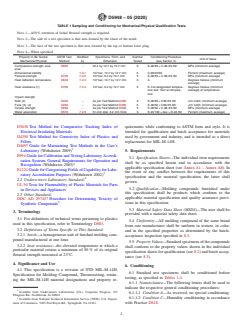
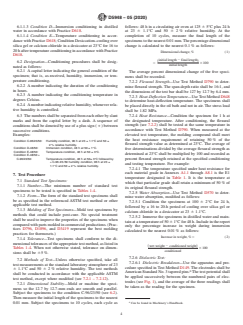
- Outlines specimen preparation, including specific conditioning protocols (e.g., humidity, immersion, temperature cycles)
- Establishes standard test methods for both mechanical and electrical properties
Mechanical and Physical Property Requirements
- Tests for compressive strength, dimensional stability, flexural strength, heat deflection temperature, impact and tensile strength, and water absorption
- Ensures molding compounds exhibit consistent structural integrity and performance under various conditions
Electrical Qualification Tests
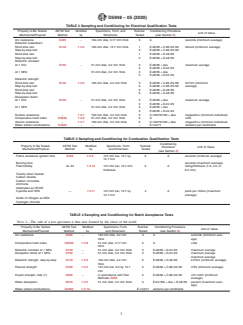
- Evaluation of dielectric breakdown, dielectric constant, dielectric strength, dissipation factor, surface and volume resistance, and tracking index
- Critical for ensuring safe performance in electrical and electronic components
Combustion and Flammability Testing
- Tests for flame resistance ignition time, burning time, flammability (per UL 94), and emission of toxic gases
- Supports compliance with fire safety requirements across industries
Batch Acceptance and Quality Assurance
- Mandates batch inspection and test requirements for uniformity and conformance
- Emphasizes laboratory accreditation and ongoing compliance with specified performance criteria
Applications
Thermosetting molding compounds standardized under ASTM D5948 are essential in a variety of applications where material reliability, electrical insulation, mechanical strength, and fire resistance are required:
Electrical and Electronic Components
- Molded insulators, switchgear, and circuit breaker housings
- Plug and socket bases, terminal boards, coil forms, and other components with rigorous dielectric requirements
Automotive and Transportation
- Under-the-hood applications, ignition components, and parts exposed to high temperatures or mechanical stress
Consumer Appliances
- Components requiring chemical resistance, dimensional stability, or fire-retardant properties, such as handles, knobs, or housings
Industrial Equipment
- Bushings, gears, and other molded parts within machinery subject to heat, moisture, and electrical load
Aerospace and Defense
- Certified materials employed in high-reliability environments, aligning with government and military specifications
Related Standards
Several ASTM and industry standards are referenced or related to ASTM D5948 for thermosetting molding compounds:
- ASTM D149: Test Method for Dielectric Breakdown Voltage and Dielectric Strength
- ASTM D150: Test Methods for AC Loss Characteristics and Permittivity (Dielectric Constant)
- ASTM D256: Test Methods for Determining Izod Pendulum Impact Resistance
- ASTM D570: Test Method for Water Absorption of Plastics
- ASTM D618: Practice for Conditioning Plastics for Testing
- ASTM D638: Test Method for Tensile Properties of Plastics
- ASTM D648: Test Method for Deflection Temperature under Flexural Load
- ASTM D790: Test Methods for Flexural Properties of Plastics
- UL 94: Flammability Standard for Plastic Materials
- Other applicable ASTM, Underwriter Laboratories, and government specifications
For manufacturers, molders, and end users, compliance with ASTM D5948 supports consistent quality, predictable performance, and alignment with critical regulatory and industry benchmarks for thermoset molding compounds.
Relations
- Effective Date
- 01-Feb-2024
- Effective Date
- 01-Nov-2023
- Effective Date
- 01-Jan-2020
- Effective Date
- 01-Jan-2020
- Effective Date
- 01-Aug-2019
- Effective Date
- 01-May-2019
- Effective Date
- 15-Apr-2019
- Effective Date
- 01-Apr-2019
- Effective Date
- 01-Mar-2019
- Effective Date
- 01-Feb-2019
- Effective Date
- 01-Dec-2018
- Effective Date
- 01-Nov-2018
- Effective Date
- 01-Apr-2018
- Effective Date
- 15-Aug-2017
- Effective Date
- 01-Jul-2017
Get Certified
Connect with accredited certification bodies for this standard

DIN CERTCO
DIN Group product certification.

Smithers Quality Assessments
US management systems and product certification.
Sponsored listings
Frequently Asked Questions
ASTM D5948-05(2020) is a technical specification published by ASTM International. Its full title is "Standard Specification for Molding Compounds, Thermosetting". This standard covers: ABSTRACT This specification covers the basic properties of thermoset molding plastic compounds and the test methods used to establish the properties. The plastic compounds shall be a resin, cellulose-filled or mineral/glass-filled phenolic, melamine, polyester, diallyl iso-phthalate, diallyl ortho-phthalate, silicone, or epoxy. Standard test specimens shall be in the as-received condition or shall be conditioned before testing by humidity, immersion, or temperature conditioning. The specimens shall undergo mechanical or physical qualification tests which shall conform to the following properties: compressive strength; dimensional stability; flexural strength; heat deflection temperature; heat resistance; impact strength; tensile strength; and water absorption. Electrical qualification tests shall be conducted; wherein, the specimens shall comply with the following requirements: arc resistance; dielectric breakdown; dielectric constant; dielectric strength; dissipation factor; surface resistance; comparative track index; volume resistance; and water extract conductance. Tests for combustion qualification shall also be performed to determine the flame resistance ignition time, burning time, flammability, and toxicity requirements. Batch acceptance tests shall be conducted as well to ensure the quality conformance of the specimens. SIGNIFICANCE AND USE 4.1 This specification is a revision of STD MIL-M-14H, Specification for Molding Compound, Thermosetting, retaining the MIL-M-14H material designations and property requirements while conforming to ASTM form and style. It is intended for qualification and batch acceptance for materials used by government and industry, and is intended as a direct replacement for MIL-M-14H. SCOPE 1.1 This specification covers the basic properties of thermoset molding compounds and the test methods used to establish the properties. 1.2 Classification—Molding thermosetting plastic compounds shall be of the following resins and are covered by the individual specification sheets (see 5.1 and Annex A1 – Annex A8). Resin Phenolic, cellulose filled Phenolic, mineral/glass filled Melamine Polyester Diallyl iso-phthalate Diallyl ortho-phthalate Silicone Epoxy Note 1: There is no known ISO equivalent to this standard. 1.3 Order of Precedence—In the event of a conflict between the text of this specification and the references cited in Section 2 (except for related specification sheets), the text of this specification takes precedence. Nothing in this specification, however, supersedes applicable laws and regulations unless a specific exemption has been obtained. 1.4 The values stated in SI units are to be considered standard. 1.5 This international standard was developed in accordance with internationally recognized principles on standardization established in the Decision on Principles for the Development of International Standards, Guides and Recommendations issued by the World Trade Organization Technical Barriers to Trade (TBT) Committee.
ABSTRACT This specification covers the basic properties of thermoset molding plastic compounds and the test methods used to establish the properties. The plastic compounds shall be a resin, cellulose-filled or mineral/glass-filled phenolic, melamine, polyester, diallyl iso-phthalate, diallyl ortho-phthalate, silicone, or epoxy. Standard test specimens shall be in the as-received condition or shall be conditioned before testing by humidity, immersion, or temperature conditioning. The specimens shall undergo mechanical or physical qualification tests which shall conform to the following properties: compressive strength; dimensional stability; flexural strength; heat deflection temperature; heat resistance; impact strength; tensile strength; and water absorption. Electrical qualification tests shall be conducted; wherein, the specimens shall comply with the following requirements: arc resistance; dielectric breakdown; dielectric constant; dielectric strength; dissipation factor; surface resistance; comparative track index; volume resistance; and water extract conductance. Tests for combustion qualification shall also be performed to determine the flame resistance ignition time, burning time, flammability, and toxicity requirements. Batch acceptance tests shall be conducted as well to ensure the quality conformance of the specimens. SIGNIFICANCE AND USE 4.1 This specification is a revision of STD MIL-M-14H, Specification for Molding Compound, Thermosetting, retaining the MIL-M-14H material designations and property requirements while conforming to ASTM form and style. It is intended for qualification and batch acceptance for materials used by government and industry, and is intended as a direct replacement for MIL-M-14H. SCOPE 1.1 This specification covers the basic properties of thermoset molding compounds and the test methods used to establish the properties. 1.2 Classification—Molding thermosetting plastic compounds shall be of the following resins and are covered by the individual specification sheets (see 5.1 and Annex A1 – Annex A8). Resin Phenolic, cellulose filled Phenolic, mineral/glass filled Melamine Polyester Diallyl iso-phthalate Diallyl ortho-phthalate Silicone Epoxy Note 1: There is no known ISO equivalent to this standard. 1.3 Order of Precedence—In the event of a conflict between the text of this specification and the references cited in Section 2 (except for related specification sheets), the text of this specification takes precedence. Nothing in this specification, however, supersedes applicable laws and regulations unless a specific exemption has been obtained. 1.4 The values stated in SI units are to be considered standard. 1.5 This international standard was developed in accordance with internationally recognized principles on standardization established in the Decision on Principles for the Development of International Standards, Guides and Recommendations issued by the World Trade Organization Technical Barriers to Trade (TBT) Committee.
ASTM D5948-05(2020) is classified under the following ICS (International Classification for Standards) categories: 83.040.01 - Raw materials for rubber and plastics in general. The ICS classification helps identify the subject area and facilitates finding related standards.
ASTM D5948-05(2020) has the following relationships with other standards: It is inter standard links to ASTM D883-24, ASTM D883-23, ASTM D883-20, ASTM D149-20, ASTM D883-19c, ASTM D3419-12(2019), ASTM D883-19a, ASTM D3636-19, ASTM D229-19, ASTM D883-19, ASTM D883-18a, ASTM D883-18, ASTM D648-18, ASTM D883-17, ASTM D790-17. Understanding these relationships helps ensure you are using the most current and applicable version of the standard.
ASTM D5948-05(2020) is available in PDF format for immediate download after purchase. The document can be added to your cart and obtained through the secure checkout process. Digital delivery ensures instant access to the complete standard document.
Standards Content (Sample)
This international standard was developed in accordance with internationally recognized principles on standardization established in the Decision on Principles for the
Development of International Standards, Guides and Recommendations issued by the World Trade Organization Technical Barriers to Trade (TBT) Committee.
Designation:D5948 −05 (Reapproved 2020)
Standard Specification for
Molding Compounds, Thermosetting
This standard is issued under the fixed designation D5948; the number immediately following the designation indicates the year of
original adoption or, in the case of revision, the year of last revision. A number in parentheses indicates the year of last reapproval. A
superscript epsilon (´) indicates an editorial change since the last revision or reapproval.
This standard has been approved for use by agencies of the U.S. Department of Defense.
1. Scope* 2. Referenced Documents
1.1 This specification covers the basic properties of thermo- 2.1 ASTM Standards:
set molding compounds and the test methods used to establish D149 Test Method for Dielectric Breakdown Voltage and
the properties. DielectricStrengthofSolidElectricalInsulatingMaterials
at Commercial Power Frequencies
1.2 Classification—Molding thermosetting plastic com-
D150 Test Methods forAC Loss Characteristics and Permit-
pounds shall be of the following resins and are covered by the
tivity (Dielectric Constant) of Solid Electrical Insulation
individual specification sheets (see 5.1 and AnnexA1 – Annex
D229 Test Methods for Rigid Sheet and Plate Materials
A8).
Used for Electrical Insulation
Resin
D256 Test Methods for Determining the Izod Pendulum
Phenolic, cellulose filled
Phenolic, mineral/glass filled Impact Resistance of Plastics
Melamine
D495 Test Method for High-Voltage, Low-Current, Dry Arc
Polyester
Resistance of Solid Electrical Insulation
Diallyl iso-phthalate
Diallyl ortho-phthalate D570 Test Method for Water Absorption of Plastics
Silicone
D618 Practice for Conditioning Plastics for Testing
Epoxy
D638 Test Method for Tensile Properties of Plastics
NOTE 1—There is no known ISO equivalent to this standard.
D648 Test Method for Deflection Temperature of Plastics
1.3 Order of Precedence—In the event of a conflict between Under Flexural Load in the Edgewise Position
the text of this specification and the references cited in Section D695 Test Method for Compressive Properties of Rigid
2 (except for related specification sheets), the text of this Plastics
D790 Test Methods for Flexural Properties of Unreinforced
specification takes precedence. Nothing in this specification,
however, supersedes applicable laws and regulations unless a and Reinforced Plastics and Electrical Insulating Materi-
als
specific exemption has been obtained.
D796 Practice for Compression Molding Test Specimens of
1.4 The values stated in SI units are to be considered
Phenolic Molding Compounds (Withdrawn 1992)
standard.
D883 Terminology Relating to Plastics
1.5 This international standard was developed in accor-
D1896 Practice for Transfer Molding Test Specimens of
dance with internationally recognized principles on standard-
Thermosetting Compounds
ization established in the Decision on Principles for the
D3419 Practice for In-Line Screw-Injection Molding Test
Development of International Standards, Guides and Recom-
Specimens From Thermosetting Compounds
mendations issued by the World Trade Organization Technical
D3636 Practice for Sampling and Judging Quality of Solid
Barriers to Trade (TBT) Committee.
Electrical Insulating Materials
1 2
This specification is under the jurisdiction of ASTM Committee D20 on For referenced ASTM standards, visit the ASTM website, www.astm.org, or
Plastics and is the direct responsibility of Subcommittee D20.16 on Thermosetting contact ASTM Customer Service at service@astm.org. For Annual Book of ASTM
Materials. Standards volume information, refer to the standard’s Document Summary page on
Current edition approved Dec. 1, 2020. Published December 2020. Originally the ASTM website.
approved in 1996. Last previous edition approved in 2012 as D5948 - 05 (2012). The last approved version of this historical standard is referenced on
DOI: 10.1520/D5948-05R20. www.astm.org.
*A Summary of Changes section appears at the end of this standard
Copyright © ASTM International, 100 Barr Harbor Drive, PO Box C700, West Conshohocken, PA 19428-2959. United States
D5948−05 (2020)
TABLE 1 Sampling and Conditioning for Mechanical/Physical Qualification Tests
NOTE 1—A50 % retention of initial flexural strength is required.
NOTE 2—The side of a test specimen is that area formed by the chase of the mold.
NOTE 3—The face of the test specimen is that area formed by the top or bottom force plug.
NOTE 4—When specified.
Property to Be Tested- ASTM Test Modified Specimens, Form, and Number Conditioning Procedure
Unit of Value
Mechanical/Physical Method by Dimension Tested (see Section 6)
Compressive strength, end- D695 . 25.4 by 12.7 by 12.7 mm 5 E-48/50 + C-96 ⁄23 ⁄50 MPa (minimum average)
wise
Dimensional stability . 7.2.1 127 bar, 12.7 by 12.7 mm 5 C-96/23/50 Percent (maximum average)
Flexural strength D790 7.2.2 127 bar, 6.4 by 12.7 mm 5 E-48/50 + C-96 ⁄23 ⁄50 MPa (minimum average)
Heat deflection temperature D648 7.2.3 127 bar, 12.7 by 12.7 mm 3 A Degrees Celsius (minimum
average)
Heat resistance (1) D790 7.2.4 127 bar, 6.4 by 12.7 mm 5 E-1/at designated tempera- Degrees Celsius (minimum
ture test. Test at tempera- average) at temperature
ture
Impact strength
Side (2) D256 . As per Test Method D256 5 E-48/50 + C96 ⁄23 ⁄50 J/m notch (minimum average)
Face (3), (4) D256 . As per Test Method D256 5 E-48/50 + C96 ⁄23 ⁄50 J/m notch (minimum average)
Tensile strength D638 . As per Test Method D638 5 E-48/50 + C-96 ⁄23 ⁄50 MPa (minimum average)
Water absorption D570 7.2.5 51-mm disk, 3.2 mm thick 3 E-24/100 + des + D-48 ⁄50 Percent (maximum average)
D3638 Test Method for Comparative Tracking Index of quirements while conforming to ASTM form and style. It is
Electrical Insulating Materials intended for qualification and batch acceptance for materials
D4350 Test Method for Corrosivity Index of Plastics and used by government and industry, and is intended as a direct
Fillers replacement for MIL-M-14H.
D4697 Guide for Maintaining Test Methods in the User’s
Laboratory (Withdrawn 2009)
5. Requirements
E994 Guide for Calibration and Testing LaboratoryAccredi-
5.1 Specification Sheets—The individual item requirements
tation Systems General Requirements for Operation and
shall be as specified herein and in accordance with the
Recognition (Withdrawn 2003)
applicable specification sheet (see Annex A1 – Annex A8). In
E1224 GuideforCategorizingFieldsofCapabilityforLabo-
the event of any conflict between the requirements of this
ratory Accreditation Purposes (Withdrawn 2002)
specification and the material specification, the latter shall
2.2 Underwriters Laboratory Standard:
govern.
UL 94 Tests for Flammability of Plastic Materials for Parts
5.2 Qualification—Molding compounds furnished under
in Devices and Appliances
this specification shall be products which conform to the
2.3 Other Standard:
applicable material specification and quality assurance provi-
DDC AD 297457 Procedure for Determining Toxicity of
sions in this specification.
Synthetic Compounds
5.3 Material Safety Data Sheet (MSDS)—The user shall be
3. Terminology
provided with a material safety data sheet.
3.1 For definitions of technical terms pertaining to plastics
5.4 Uniformity—All molding compound of the same brand
used in this specification, refer to Terminology D883.
from one manufacturer shall be uniform in texture, in color,
3.2 Definitions of Terms Specific to This Standard:
and in the specified properties as determined by the batch-
3.2.1 batch—a homogeneous unit of finished molding com-
acceptance inspection specified in 8.3.
pound manufactured at one time.
5.5 PropertyValues—Standardspecimensofthecompounds
3.2.2 heat resistance—the elevated temperature at which a
shall conform to the property values shown in the individual
particular material retains a minimum of 50 % of its original
specification sheets for qualification (see 8.2) and batch accep-
flexural strength measured at 23°C.
tance (see 8.3).
4. Significance and Use
6. Conditioning
4.1 This specification is a revision of STD MIL-M-14H,
6.1 Standard test specimens shall be conditioned before
Specification for Molding Compound, Thermosetting, retain-
testing, as specified in Tables 1-4.
ing the MIL-M-14H material designations and property re-
6.1.1 Nomenclature—The following letters shall be used to
indicate the respective general conditioning procedures:
Available from Underwriters Laboratories (UL), Corporate Progress, 333
6.1.1.1 Condition A—As received; no special conditioning.
Pfingsten Rd., Northbrook, IL 60062.
6.1.1.2 Condition C—Humidity conditioning in accordance
Available from National Technical Information Service (NTIS), U.S. Depart-
ment of Commerce, 5285 Port Royal Rd., Springfield, VA 22161. with Practice D618.
D5948−05 (2020)
TABLE 2 Sampling and Conditioning for Electrical Qualification Tests
Property to Be Tested- ASTM Test Modified Specimens, Form, and Number Conditioning Procedure
Unit of Value
Mechanical/Physical Method by Dimension Tested (see Section 6)
Arc resistance D495 . 102-mm disk, 3.17 mm thick 3 A seconds (minimum average)
Dielectric breakdown:
Short-time test D149 7.2.6 102-mm disk, 12.7 mm thick 1 E-48/50 + C-96 ⁄23 ⁄50 kilovolt (minimum average)
Step-by-step test 3 E-48/50 + C-96 ⁄23 ⁄50
Short-time test 1 E-48/50 + D-48 ⁄50
Step-by-step test 3 E-48/50 + D-48 ⁄50
Dielectric constant:
At 1 kHz D150 . 51-mm disk, 3.2 mm thick 3 E-48/50 + des maximum average
3 E-48/50 + D-24 ⁄23
At 1 MHz 51-mm disk, 3.2 mm thick 3 E-48/50 + des
3 E-48/50 + D-24 ⁄23
Dielectric strength:
Short-time test D149 7.2.6 102-mm disk, 3.2 mm thick 3 E-48/50 + C-96 ⁄23 ⁄50 kV/mm (minimum
Step-by-step test 5 E-48/50 + C-96 ⁄23 ⁄50 average)
Short-time test 3 E-48/50 + D-48 ⁄50
Step-by-step test 5 E-48/50 + D-48 ⁄50
Dissipation factor:
At 1 kHz D150 . 51-mm disk, 3.2 mm thick 3 E-48/50 + des maximum average
3 E-48/50 + D-24 ⁄23
At 1 MHz 51-mm disk, 3.2 mm thick 3 E-48/50 + des
3 E-48/50 + D-24 ⁄23
Surface resistance . 7.2.7 102-mm disk, 3.2 mm thick 5 C-720/70/100 + dew megaohms (minimum individual)
Comparative track index D3638 7.2.8 51-mm disk, 3.2 mm thick 5 A volts
Volume resistance . 7.2.7 102-mm disk, 3.2 mm thick 5 C-720/70/100 + dew megaohms (minimum individual)
Water extract conductance D4350 . . . E-144/71 siemens per centimetre
TABLE 3 Sampling and Conditioning for Combustion Qualification Tests
Conditioning
Property to Be Tested- ASTM Test Modified Specimens, Form, Number
Procedure Unit of Value
Mechanical/Physical Method by and Dimension Tested
(see Section 6)
Flame resistance ignition time D229 7.2.9 127-mm bar, 12.7 by 5 A seconds (minimum average)
12.7 mm
Burning time seconds (maximum average)
Flammability UL 94 7.2.10 127-mm bar, 12.7-mm 5 A rating/thickness (1.6, 3.2, or
thickness 6.4 mm)
Toxicity when heated:
Carbon dioxide
Carbon monoxide
Ammonia
Aldehydes as HCHO
Cyanide and HCN — 7.2.11 127-mm bar, 12.7 by 4 A parts per million (maximum
12.7 mm average)
Oxide of nitrogen as NO2
Hydrogen chloride
TABLE 4 Sampling and Conditioning for Batch Acceptance Tests
NOTE 1—The side of a test specimen is that area formed by the chase of the mold.
Property to Be Tested- ASTM Test Modified Specimens, Form, Number Conditioning Procedure
Unit of Value
Mechanical/Physical Method by and Dimension Tested (see Section 6)
Arc resistance D495 . 102-mm disk, 3.2 mm 3 A seconds (minimum aver-
thick age)
Comparative track index D3638 7.2.8 51-mm disk, 3.17 mm 5 A volts
thick
Dielectric constant at 1 MHz D150 . 51-mm disk, 3.2 mm thick 3 E-48/50 + D-24 ⁄23 maximum average
Dissipation factor at 1 MHz D150 . 51-mm disk, 3.2 mm thick 3 E-48/50 + D-24 ⁄23 maximum average
maximum average
Dielectric strength, step-by-step D149 7.2.6 102-mm disk, 3.2 mm 5 E-48/50 + D-48 ⁄50 kV/mm (minimum average)
thick
Flexural strength D790 7.2.2 127-mm bar, 6.4 by 12.7 5 E-48/50 + C-96 ⁄23 ⁄50 mPa (minimum average)
mm
Impact strength, side (1) D256 . in accordance with Test 5 E-48/50 + C-96 ⁄23 ⁄50 J/m notch (minimum
Methods D256 average)
Water absorption D570 7.2.5 51-mm disk, 3.2 mm thick 3 E-24/100 + des + D-48 ⁄50 percent (maximum aver-
age)
Water extract conductance D4350 7.2.12. . E-144/71 siemens per centimetre
D5948−05 (2020)
6.1.1.3 Condition D—Immersion conditioning in distilled follows: 48 h in a circulating air oven at 125 6 5°C plus 24 h
water in accordance with Practice D618. at 23 6 1.1°C and 50 6 2 % relative humidity. At the
6.1.1.4 Condition E—Temperature conditioning in accor- completion of 10 cycles, measure the final length of the
dancewithPracticeD618;ConditionDesiccation–coolingover specimenstothenearest0.01mm.Thepercentagedimensional
silica gel or calcium chloride in a desiccator at 23°C for 16 to change is calculated to the nearest 0.1 % as follows:
20haftertemperatureconditioninginaccordancewithPractice
Dimensional change,% (1)
D618.
initial length 2 final length
~ !
6.2 Designation—Conditioning procedures shall be desig-
5 3100
initial length
nated as follows:
6.2.1 A capital letter indicating the general condition of the
The average percent dimensional change of the five speci-
specimen; that is, as-received, humidity, immersion, or tem-
mens shall be recorded.
perature conditioning.
7.2.2 Flexural Strength—Use Test Method D790 to deter-
6.2.2 A number indicating the duration of the conditioning
mine flexural strength. The span-depth ratio shall be 16:1, and
in hours.
the dimensions of the test bar shall be 127 by 12.7 by 6.4 mm.
6.2.3 A number indicating the conditioning temperature in
7.2.3 Heat-DeflectionTemperature—UseTestMethodD648
degrees Celsius.
to determine heat-deflection temperature. The specimens shall
6.2.4 Anumber indicating relative humidity, whenever rela-
be placed directly in the oil bath and not in air. The stress load
tive humidity is controlled.
shall be 1.82 MPa.
7.2.4 Heat Resistance—Condition the specimen for1hat
6.3 The numbers shall be separated from each other by slant
the designated temperature. After conditioning, the flexural
marks and from the capital letter by a dash. A sequence of
strength (see 7.2.2) shall be tested at the same temperature in
conditions shall be denoted by use of a plus sign ( + ) between
accordance with Test Method D790. When measured at the
successive conditions.
elevated test temperature, the molding compound shall meet
Examples:
the heat resistance requirement of retaining 50 % of the
Condition C-96/23/50: Humidity condition, 96 h at 23 ± 1.1°C and 50 ±
flexural strength value as determined at 23°C. The average of
2 % relative humidity.
Condition D-48/50: Immersion condition, 48 h at 50 ± 1°C.
five determinations divided by the average flexural strength as
Condition E-48/50: Temperature condition, 48 h at 50 ± 3°C.
determined at 23°C shall be multiplied by 100 and recorded as
Condition E-48/50 +
C-96/23/50: Temperature condition, 48 h at 50± 3°C followed by percent flexural strength retained at the specified conditioning
+ C-96 ⁄23 ⁄50 humidity condition, 96 h at 23 ±
and testing temperature. For example:
1.1°C and 50 ± 2 % relative humidity.
7.2.4.1 The temperature specified under heat resistance for
each material grade in Annexes A1.1 through A8.1 is the E1
7. Test Procedure
temperature designated in Table 1. It is the temperature at
7.1 Standard Test Specimens:
which that particular grade shall retain a minimum of 50 % of
7.1.1 Number—The minimum number of standard test
its original flexural strength.
specimens to be tested is specified in Tables 1-4.
7.2.5 Water Absorption—Use Test Method D570 to deter-
7.1.2 Form—The form of the standard test specimens shall
mine water absorption, modified as follows:
be as specified in the referenced ASTM test method or other
7.2.5.1 Condition the specimens at 100 6 2°C for 24 h,
applicable test method.
followed by a 16 to 20-h period of cooling over silica gel or
7.1.3 Molding of Test Specimens—Mold test specimens by
calcium chloride in a desiccator at 23 6 1.1°C.
methods that could include post-cure. No special treatment
7.2.5.2 Immerse the specimens in distilled water and main-
shall be used to improve the properties of the specimens when
tainatatemperatureof50 61°Cfor48h.Includeinthereport
comparedwithpartsmoldedincommercialproductions.(Prac-
only the percentage increase in weight during immersion
tices D796, D1896, and D3419 represent the best molding
calculated to the nearest 0.01 % as follows:
practices for thermosets.)
Increase in weight,%5 (2)
7.1.4 Tolerance—Test specimens shall conform to the di-
mensionaltolerancesoftheappropriatetestmethod,aslistedin
~wet weight 2 conditioned weight!
Tables 1-4. When not otherwise stated, tolerance on dimen- 3100
conditioned
sions shall be 65%.
7.2.6 Dielectric Test:
7.2 Methods of Test—Unless otherwise specified, take all
7.2.6.1 Dielectric Breakdown—Use the apparatus and pro-
test measurements at the standard laboratory atmosphere of 23
cedure specified in Test Method D149. The electrodes shall be
6 1.1°C and 50 6 2 % relative humidity. The test methods
American Standard No. 3 tapered pins. The test potential shall
shall be conducted in accordance with the applicable ASTM
be applied successively between the numbered pairs of elec-
test method, except where modified (see 7.2.1 – 7.2.12).
trodes (see Fig. 1), and the average of the three readings shall
7.2.1 Dimensional Stability—Mold or machine the speci-
be taken as the reading for the specimen.
mens so the 12.7 by 12.7-mm ends are smooth and parallel.
Subject the specimens to the condition C-96/23/50 (see 6.2).
Then measure the initial length of the specimens to the nearest
0.01 mm. Subject the specimens to 10 cycles, each cycle as Can be found in Machinery’s Handbook.
D5948−05 (2020)
TABLE 5 Voltage Increase for Step-by-Step Test
Breakdown by Short-Time Method, Increment of Increase,
kV kV
12.5 or less 0.5
Over 12.5 to 25, inclusive 1.0
Over 25 to 50, inclusive 2.5
Over 50 to 100, inclusive 5.0
Over 100 10.0
7.2.7.3 Humidity Chamber—The humidity chamber shall
consist of a glass container with a corrosion-resistant cover.
The cover shall be provided with through-panel-type insula-
tors. The insulators may serve as supports for the electrode
holders as shown in Fig. 2. The chambers shall be of such size
that the ratio of specimen surface area to water surface area
shall not exceed 2.5.The ratio of volume of air in the humidity
NOTE 1—All dimensions in millimetres.
chamber to surface area of the water shall not exceed 10.
NOTE 2—Tolerances with dimensions, 65%.
Obtain 100 % relative humidity with condensation by natural
NOTE 3—Disks shall be furnished undrilled and shall be drilled by the
laboratory.
evaporation from a quantity of distilled water located at the
FIG. 1Standard Test Specimen Drilled for Three Pairs of
bottom of the chamber. Seal the cover to the chamber with an
Electrodes—Dielectric Breakdown Test
inert sealing compound applied to the exterior points formed
bythecoverandthewallsofthechamber.Provideasmallvent
hole in the cover to equalize the pressure. Seal the vent hole as
soon as the air temperature in the humidity chamber has
7.2.6.2 Dielectric Strength—Use the apparatus and proce-
reached 70°C.
dure specified inTest Method D149. Conduct the test under oil
7.2.7.4 Specimen Holders—Install the specimens in a verti-
at a frequency not exceeding 100 Hz. The electrodes shall be
cal plane in the conditioning chamber with the lower edge of
brass or stainless steel cylinders 25.4 mm long with the edges
the specimen not closer than 25.4 mm from the surface of the
rounded to a 3.2-mm radius.
water. Hold the specimens in position with the electrode
(1) Short-Time Test—The voltage shall be increased uni-
contactors in a matter similar to that shown in Fig. 2. Make the
formly at the rate of 500 V/s.
electrical connection to the specimen holders with through-
(2) Step-by-Step Test—Increase the voltage in increments,
panel insulators. The insulators shall be capable of withstand-
as shown in Table 5, up to failure and hold it at each step for
ing the adverse conditions within the chamber without exces-
1 min. The change from one step to the next higher step shall
sive loss of insulating properties. (Insulator resistance to cover
be made within 10 s.
plate shall at all times exceed 10 MΩ). Polytetrafluoroethylene
7.2.7 Volume and Surface Resistance:
insulatorsonthehumiditysideoftheconditioningchamberare
7.2.7.1 Specimens—Use five 102-mm diameter 3.2-mm
recommended to meet this requirement. These should be
thick specimens. Clean specimens by noninjurious methods to
cleaned with alcohol before the start of each test. Electrode
ensure freedom from contamination. Take precautions in han-
contactors and all other metallic parts of the sample shall be
dling the specimens to avoid additional contamination.
silver plated. Contact pressure against the electrodes may be
7.2.7.2 Electrodes—Electrodes shall consist of a guarded
provided by backing the contactors with phosphor bronze
electrode 51 mm in diameter, 6.4-mm guard ring spaced 6.4
springs or other corrosion-resistant spring material.
mm from the guarded electrode on the same side, and the third
7.2.7.5 Heating Chamber—Install the humidity chamber in
electrode 76 mm in diameter on the opposite side and concen-
an oven or other heating chamber capable of maintaining a
tric with the guarded electrode. Dimensions of electrodes shall
temperature of 70 6 1°C. The rate of heating of the oven shall
be maintained at a tolerance of 60.40 mm [6 ⁄64 in.]. Silver
7 be so that the air temperature at a point near the volumetric
paint, permeable to moisture, shall be used for painting
center of the humidity chamber shall attain 70°C in 4 61h.
electrodes on the specimens. The electrodes shall exhibit a
The quality of water in the chamber shall be so that the water
resistance of not more than 5 Ω both before and after the
temperature shall attain 65°C in 4 6 1 h. Maintain room
C-720/70/100 + dew conditioning when measured with a po-
temperature at 25 6 5°C. The insulation of the conductors
tential of not greater than 3 V between points diametrically
connecting the through-panel insulators to the measuring
opposite each electrode. After painting, permit the specimens
equipment shall not be significantly deteriorated by the el-
to air dry for at least one week in an atmosphere of less than
evated temperatures encountered in the oven.
60 % relative humidity at a temperature of 25 6 5°C.
Polytetrafluoroethylene-coated wire is recommended.
7.2.7.6 Measurements—Measure volume and surface resis-
tances using the three-terminal method, employing measuring
DuPont silver paint No. 4517, or its equivalent, available from DuPont Corp.,
equipment such as a megaohm bridge capable of applying
Electronic Materials, Photo Products Dept.,Wilmington, DE 19898, has been found
suitable for this purpose. 500-V direct current (dc) to the specimen. A single set of
D5948−05 (2020)
7.2.9.1 Flame Cabinet—The 14.3-mm slot at the bottom of
the flame cabinet shall be on all four sides. The door shall be
provided with a 31.8-mm diameter peep hole located directly
opposite the heater coil when the door is closed. Keep the hole
closed during testing with a cover.
7.2.9.2 Pyrometer—The means of correction from black-
body radiation to actual conditions of this test shall be as
follows:
(1) When a pyrometer calibrated for black-body emission
isused,add6°Ctothepyrometertoobtainthetruetemperature
of the Nichrome V coil.
7.2.9.3 Specimens—Test specimens shall be as follows:
(1) Specimens shall be molded to 12.7 by 12.7 by 127 6 1
mm.
(2) The test sample shall consist of five test specimens.
7.2.9.4 Calibration—In the calibration of this equipment,
adjust the heater current to obtain an equilibrium temperature
of 860 6 2°C.
7.2.9.5 Calculation of Burning Time—Arrange the five val-
NOTE 1—All dimensions in millimetres.
ues of burning time in increasing order of magnitude, as T , T ,
1 2
NOTE 2—Material — brass except as indicated.
T , T , T . Compute the following ratios:
NOTE 3—Silver plate all metallic parts except plate. 3 4 5
FIG. 2Specimen Holders Electrodes Test Samples and Humidity
T 2 T T 2 T
2 1 5 4
Chamber Cover—Volume and Surface Resistance Test and (3)
T 2 T T 2 T
5 1 5 1
Ifeitheroftheseratiosexceeds0.642,thenT orT isjudged
1 5
measurements shall be made of each specimen while in the
to be abnormal and is eliminated. The burning time reported
conditioning chamber after 30 days of the specified condition-
shall be the average of the remaining four values.
ing.
7.2.9.6 Average Ignition Time—The average ignition time is
NOTE 2—Because of the variability of the resistance of a given
calculated as the arithmetic mean time for the five specimens.
specimen with test conditions and because of nonuniformity of the same
7.2.10 Flammability—Determine the flammability rating in
material from specimen to specimen, determinations are usually not
accordance with UL94 using the vertical or horizontal burning
reproducible to closer than 10 % and are often even more widely
divergent. A range of values from 10 to 1 may be obtained under test and either 1.6, 3.2, or 6.4-mm thick specimens. Record as
apparently identical conditions. Errors in resistance determinations may
rating/thickness in inches.
result from the fact that the current measuring device is shunted by the
7.2.11 Toxicity When Heated—The method described in
resistance between the guarded terminal and the guard system. To ensure
DDCAD 297457 shall be used to determine toxicity of the test
validity of the volume and surface resistance measurements obtained by
the bridge methods, the resistance between the unguarded and the guarded specimen when heated.
terminal should be at least five times greater than the standard resistance
7.2.12 Water Extract Conductance—This test shall be per-
employed in the bridge. This may be ascertained by direct two-terminal
formed in accordance with Test Method D4350, using the
measurements between these two terminals. Conversion of the measure-
conditioning procedure listed in the specification tables.
ments to resistivities is not required since electrode dimensions are
specified.ThepotentialsshallbeappliedtothespecimensasshowninFig.
7.3 ToxicologicalProductFormulations—Thesuppliershall
3 or with polarities opposite to those shown on Fig. 3. Take surface
have the toxicological product formulations and associated
resistance measurements on the same specimens as those used for volume
resistance, except interchange the potentials of guard and low electrodes. information available for review by the user to evaluate the
Measure the volume and surface resistance in each case, 1 min after the
safety of the material for the proposed use.
potentials are applied. Low values of volume and surface resistance
(below 5 MΩ) may be measured by the circuits shown on Fig. 4.
8. Quality Assurance Provisions
7.2.8 Track Resistance—Measure the track resistance by the
8.1 Responsibility for Inspection—The supplier is respon-
comparative tracking index method described in Test Method
sible for the performance of all inspection requirements (ex-
D3638.
aminations and tests) as specified herein.The supplier shall use
Example:
a laboratory accredited in accordance with Guide E994, within
DAP type Volts, min
the required categories in compliance with Guide E1224.
SDG & SDG-F 600 +
MDG & MDG-F 600 +
8.1.1 Responsibility for Compliance—The absence of any
GDI-30 & GDI-30F 600 +
inspection requirements in the specification shall not relieve
SIG & SIG-F 600 +
thesupplieroftheresponsibilityofensuringthatallproductsor
MIG & MIG-F 600 +
GII-30 & GII-30F 600 +
suppliescomplywithallrequirements.Samplinginspection,as
7.2.9 Flame Resistance—Determine flame resistance in ac- part of the manufacturing operations and in accordance with
cordance with Method II of Test Methods D229, with the Practice D3636, is an acceptable practice to ascertain confor-
following exceptions: mance to requirements, however, this does not authorize
D5948−05 (2020)
FIG. 3 Arrangements for Volume Resistance and Surface Resistance Test
FIG. 4 Circuits for Measuring Low Values of Volume and Surface Resistance
submission of known defective material, either indicated or They shall be conducted at an accredited laboratory in com-
actual, nor does it commit the user to accept defective material.
pliance with Guide D4697, on each batch of compound to be
supplied to molders for production of molded parts.
8.2 Retention of Qualification—Any manufacturer who
makes a significant change in raw materials or process used in
9. Keywords
the manufacture of such compounds shall continue to meet the
applicable material qualification test requirements.
9.1 diallyl phthalate plastics; epoxy plastics; melamine-
formaldehyde plastics; molding compounds; phenolic plastics;
8.3 Quality Conformance Inspection—Quality conformance
inspection shall consist of the batch acceptance tests and shall plastics; polyester plastics; silicone resin molding compounds
beasspecifiedintheapplicablematerialspecification(see8.1).
ANNEXES
(Mandatory Information)
A1. MOLDING COMPOUNDS, PHENOLIC, THERMOSETTING, CONTAINING CELLULOSE FILLERS
A1.1 The requirements for acquiring the product described A1.2.3 Type CFI-10—This type is a medium-impact, cotton
herein shall consist of this specification sheet. rag-filled phenolic compound.
A1.2.4 Type CFI-20—This type is a high-impact, rag- or
A1.2 Requirements —Qualification test requirements are
cotton-filled phenolic compound.
specified in TableA1.1. Batch acceptance test requirements are
specified in Table A1.2.
A1.2.5 Type CFI-30—This type is a high-impact, cotton-
A1.2.1 Type CFG—This type is a general-purpose, wood-
filled phenolic compound.
flour-filled phenolic compound.
A1.2.6 Type CFI-40—This type is the highest impact grade
A1.2.2 TypeCFI-5—Thistypeisamoderate-impact,cotton-
of cotton-filled phenolic compound.
or paper-filled phenolic compound.
D5948−05 (2020)
TABLE A1.1 Qualification Test Requirements for Phenolic Resin Molding Compounds: Cellulose Filled
Type Type Type Type Type Type
Requirement
CFG CFI-5 CFI-10 CFI-20 CFI-30 CFI-40
Mechanical/Physical
Compressive strength, 172 159 138 138 131 124
endwise
Flexural strength 62 55 55 55 55 55
Heat deflection 115 115 115 115 115 115
temperature
Heat resistance 115 115 115 115 115 115
Impact strength, 11 27 53 93 160 187
A
side
Tensile strength 41 39 39 39 39 41
Water absorption 3.0 4.0 4.0 4.0 4.0 4.0
Electrical
Dielectric breakdown:
B
Short-time test
Step-by-step test 30 18 18 18 18 18
B
Short-time test
Step-by-step test 2.5 2.5 2.5 2.5 2.5 2.5
Dielectric strength:
S
...