

ASTM D6114/D6114M-19(2023)
(Specification)Standard Specification for Asphalt-Rubber Binder
General Information
- Abstract
ABSTRACT
This specification covers asphalt-rubber binder, consisting of a blend of paving grade asphalt cements, ground recycled tire (that is, vulcanized) rubber and other additives, as needed, for use as binder in pavement construction. The rubber shall be blended and interacted in the hot asphalt cement sufficiently to cause swelling of the rubber particles prior to use. Tests shall be performed to conform with the physical requirements of the asphalt-rubber binder, in accordance with the following test methods: apparent viscosity; modified test method; penetration; softening point; resilience; flash point; thin-film oven test residue; and penetration retention.
SCOPE
1.1 This specification covers asphalt-rubber binder consisting of a blend of asphalt binder, ground recycled tire (that is, vulcanized) rubber, and other additives, as needed, for use as binder in pavement construction. The rubber shall be blended and interacted in the hot asphalt binder sufficiently to cause swelling of the rubber particles prior to use.
1.2 The values stated in either SI units or inch-pound units are to be regarded separately as standard. The values stated in each system may not be exact equivalents; therefore, each system shall be used independently of the other. Combining values from the two systems may result in nonconformance with the standard.
1.3 The text of this standard references notes and footnotes which provide explanatory material. These notes and footnotes (excluding those in tables and figures) shall not be considered as requirements of the standard.
1.4 Since a precision estimate for this standard has not been developed, the test method is to be used for research and informational purposes only. Therefore, this standard should not be used for acceptance or rejection of a material for purchasing purposes.
Note 1: The quality of the results produced by this standard are dependent on the competence of the personnel performing the procedure and the capability, calibration, and maintenance of the equipment used. Agencies that meet the criteria of Specification D3666 are generally considered capable of competent and objective testing, sampling, inspection, etc. Users of this standard are cautioned that compliance with Specification D3666 alone does not completely ensure reliable results. Reliable results depend on many factors; following the suggestions of Specification D3666 or some similar acceptable guideline provides a means of evaluating and controlling some of those factors.
1.5 The following precautionary caveat pertains to the test method portions only, Sections 4 and 5 of this specification: This standard does not purport to address all of the safety concerns, if any, associated with its use. It is the responsibility of the user of this standard to establish appropriate safety, health, and environmental practices and determine the applicability of regulatory limitations prior to use. Specific precautionary statements are given in 4.3.2.
1.6 This international standard was developed in accordance with internationally recognized principles on standardization established in the Decision on Principles for the Development of International Standards, Guides and Recommendations issued by the World Trade Organization Technical Barriers to Trade (TBT) Committee.
- Status
- Published
- Publication Date
- 30-Nov-2023
- Technical Committee
- D04 - Road and Paving Materials
- Drafting Committee
- D04.40 - Asphalt Specifications

Overview
ASTM D6114/D6114M-19(2023) Standard Specification for Asphalt-Rubber Binder sets requirements for asphalt-rubber binder, a mixture of paving grade asphalt cements, ground recycled tire rubber (vulcanized), and optional additives. This binder is specifically engineered for use in pavement construction, where the rubber must be sufficiently interacted in the hot asphalt to achieve optimum swelling. The standard establishes guidelines for materials, blending, and physical properties, and references standardized test methods for ensuring product quality. ASTM D6114/D6114M advances sustainable infrastructure by promoting the reuse of recycled tire rubber in asphalt pavements.
Keywords: asphalt-rubber binder, recycled tire rubber, pavement construction, crumb rubber modified asphalt, ASTM D6114, asphalt binder specification.
Key Topics
- Composition:
- Requires the use of paving grade asphalt binder, ground recycled tire rubber, and optional additives.
- Rubber must be blended to ensure interaction and swelling before application.
- Limits contaminants and specifies maximum allowable moisture and fiber content.
- Physical Requirements:
- Specifies viscosity, penetration, softening point, resilience, flash point, and retention after aging.
- Provides climate-based types (Type I, II, III) for different environmental conditions.
- Testing Procedures:
- Relies on referenced ASTM and DIN test methods for properties such as viscosity, penetration, resilience, and softening point.
- Emphasizes the importance of sample preparation and uniform rubber dispersion in testing.
- Measurement Units:
- Supports both SI and inch-pound units for international applicability, to be used independently without conversion during a single application.
- Quality and Safety:
- Notes the importance of competent personnel and calibrated equipment for reliable results.
- Reminds users to follow safety, health, and environmental practices, and to comply with relevant regulations.
Applications
Asphalt-rubber binders covered by ASTM D6114/D6114M are widely used in:
- Pavement construction:
- Highways, arterials, local roads, and parking lots where improved durability, flexibility, and resistance to cracking are desired.
- Sustainable infrastructure projects:
- Projects that focus on recycling and the circular economy by utilizing ground recycled tire rubber as a valuable modifier.
- Performance in varied climates:
- The standard includes recommendations for binder types suitable for hot, moderate, and cold climate conditions, allowing use in diverse geographical regions.
- Specialty paving applications:
- Suitable for overlays, chip seals, and pavement preservation strategies that benefit from enhanced elasticity and resilience.
Using asphalt-rubber binder in line with ASTM D6114/D6114M helps:
- Enhance pavement life and resistance to rutting or cracking.
- Recycle waste tires, contributing to environmental protection and resource efficiency.
- Meet transportation agency requirements for binder performance in specific project locations.
Related Standards
To ensure compliance and optimal asphalt-rubber binder performance, ASTM D6114/D6114M references a comprehensive set of related standards, including:
- ASTM D946/D946M - Penetration-Graded Asphalt Binder for Use in Pavement Construction
- ASTM D3381/D3381M - Viscosity-Graded Asphalt Binder for Use in Pavement Construction
- ASTM D6373 - Performance-Graded Asphalt Binder
- ASTM D4402/D4402M; D7741/D7741M - Test Methods for Viscosity
- ASTM D5/D5M - Test Method for Penetration of Bituminous Materials
- ASTM D36/D36M - Test Method for Softening Point of Bitumen
- ASTM D92 - Test Method for Flash and Fire Points
- ASTM D5329 - Test Methods for Hot-Applied Sealants and Fillers
- ASTM D140/D140M - Practice for Sampling Asphalt Materials
- ASTM D3666 - Minimum Requirements for Agencies Testing and Inspecting Road and Paving Materials
DIN 53019-1 is also referenced for viscosity measurement using rotational viscometers.
Following ASTM D6114/D6114M and related standards ensures effective material selection, consistent binder performance, and successful pavement outcomes for both public and private infrastructure projects.
Relations
- Effective Date
- 01-Dec-2023
- Effective Date
- 01-Dec-2023
- Effective Date
- 01-Jun-2018
- Effective Date
- 01-Dec-2023
- Effective Date
- 01-Dec-2023
- Effective Date
- 01-Dec-2023
- Effective Date
- 01-Dec-2023
- Referred By
ASTM D7564/D7564M-16(2023) - Standard Practice for Construction of Asphalt-Rubber Cape Seal - Effective Date
- 01-Dec-2023
Get Certified
Connect with accredited certification bodies for this standard

Zavod za gradbeništvo Slovenije (ZAG) - Inšpekcija
ZAG inspection body for construction products, structures, and materials.
Sponsored listings
Frequently Asked Questions
ASTM D6114/D6114M-19(2023) is a technical specification published by ASTM International. Its full title is "Standard Specification for Asphalt-Rubber Binder". This standard covers: ABSTRACT This specification covers asphalt-rubber binder, consisting of a blend of paving grade asphalt cements, ground recycled tire (that is, vulcanized) rubber and other additives, as needed, for use as binder in pavement construction. The rubber shall be blended and interacted in the hot asphalt cement sufficiently to cause swelling of the rubber particles prior to use. Tests shall be performed to conform with the physical requirements of the asphalt-rubber binder, in accordance with the following test methods: apparent viscosity; modified test method; penetration; softening point; resilience; flash point; thin-film oven test residue; and penetration retention. SCOPE 1.1 This specification covers asphalt-rubber binder consisting of a blend of asphalt binder, ground recycled tire (that is, vulcanized) rubber, and other additives, as needed, for use as binder in pavement construction. The rubber shall be blended and interacted in the hot asphalt binder sufficiently to cause swelling of the rubber particles prior to use. 1.2 The values stated in either SI units or inch-pound units are to be regarded separately as standard. The values stated in each system may not be exact equivalents; therefore, each system shall be used independently of the other. Combining values from the two systems may result in nonconformance with the standard. 1.3 The text of this standard references notes and footnotes which provide explanatory material. These notes and footnotes (excluding those in tables and figures) shall not be considered as requirements of the standard. 1.4 Since a precision estimate for this standard has not been developed, the test method is to be used for research and informational purposes only. Therefore, this standard should not be used for acceptance or rejection of a material for purchasing purposes. Note 1: The quality of the results produced by this standard are dependent on the competence of the personnel performing the procedure and the capability, calibration, and maintenance of the equipment used. Agencies that meet the criteria of Specification D3666 are generally considered capable of competent and objective testing, sampling, inspection, etc. Users of this standard are cautioned that compliance with Specification D3666 alone does not completely ensure reliable results. Reliable results depend on many factors; following the suggestions of Specification D3666 or some similar acceptable guideline provides a means of evaluating and controlling some of those factors. 1.5 The following precautionary caveat pertains to the test method portions only, Sections 4 and 5 of this specification: This standard does not purport to address all of the safety concerns, if any, associated with its use. It is the responsibility of the user of this standard to establish appropriate safety, health, and environmental practices and determine the applicability of regulatory limitations prior to use. Specific precautionary statements are given in 4.3.2. 1.6 This international standard was developed in accordance with internationally recognized principles on standardization established in the Decision on Principles for the Development of International Standards, Guides and Recommendations issued by the World Trade Organization Technical Barriers to Trade (TBT) Committee.
ABSTRACT This specification covers asphalt-rubber binder, consisting of a blend of paving grade asphalt cements, ground recycled tire (that is, vulcanized) rubber and other additives, as needed, for use as binder in pavement construction. The rubber shall be blended and interacted in the hot asphalt cement sufficiently to cause swelling of the rubber particles prior to use. Tests shall be performed to conform with the physical requirements of the asphalt-rubber binder, in accordance with the following test methods: apparent viscosity; modified test method; penetration; softening point; resilience; flash point; thin-film oven test residue; and penetration retention. SCOPE 1.1 This specification covers asphalt-rubber binder consisting of a blend of asphalt binder, ground recycled tire (that is, vulcanized) rubber, and other additives, as needed, for use as binder in pavement construction. The rubber shall be blended and interacted in the hot asphalt binder sufficiently to cause swelling of the rubber particles prior to use. 1.2 The values stated in either SI units or inch-pound units are to be regarded separately as standard. The values stated in each system may not be exact equivalents; therefore, each system shall be used independently of the other. Combining values from the two systems may result in nonconformance with the standard. 1.3 The text of this standard references notes and footnotes which provide explanatory material. These notes and footnotes (excluding those in tables and figures) shall not be considered as requirements of the standard. 1.4 Since a precision estimate for this standard has not been developed, the test method is to be used for research and informational purposes only. Therefore, this standard should not be used for acceptance or rejection of a material for purchasing purposes. Note 1: The quality of the results produced by this standard are dependent on the competence of the personnel performing the procedure and the capability, calibration, and maintenance of the equipment used. Agencies that meet the criteria of Specification D3666 are generally considered capable of competent and objective testing, sampling, inspection, etc. Users of this standard are cautioned that compliance with Specification D3666 alone does not completely ensure reliable results. Reliable results depend on many factors; following the suggestions of Specification D3666 or some similar acceptable guideline provides a means of evaluating and controlling some of those factors. 1.5 The following precautionary caveat pertains to the test method portions only, Sections 4 and 5 of this specification: This standard does not purport to address all of the safety concerns, if any, associated with its use. It is the responsibility of the user of this standard to establish appropriate safety, health, and environmental practices and determine the applicability of regulatory limitations prior to use. Specific precautionary statements are given in 4.3.2. 1.6 This international standard was developed in accordance with internationally recognized principles on standardization established in the Decision on Principles for the Development of International Standards, Guides and Recommendations issued by the World Trade Organization Technical Barriers to Trade (TBT) Committee.
ASTM D6114/D6114M-19(2023) is classified under the following ICS (International Classification for Standards) categories: 93.080.20 - Road construction materials. The ICS classification helps identify the subject area and facilitates finding related standards.
ASTM D6114/D6114M-19(2023) has the following relationships with other standards: It is inter standard links to ASTM D6114/D6114M-19, ASTM D140/D140M-16(2023), ASTM D7741/D7741M-18, ASTM D7064/D7064M-21, ASTM D8418-21, ASTM D7741/D7741M-23, ASTM D6932/D6932M-21, ASTM D7564/D7564M-16(2023). Understanding these relationships helps ensure you are using the most current and applicable version of the standard.
ASTM D6114/D6114M-19(2023) is available in PDF format for immediate download after purchase. The document can be added to your cart and obtained through the secure checkout process. Digital delivery ensures instant access to the complete standard document.
Standards Content (Sample)
This international standard was developed in accordance with internationally recognized principles on standardization established in the Decision on Principles for the
Development of International Standards, Guides and Recommendations issued by the World Trade Organization Technical Barriers to Trade (TBT) Committee.
Designation: D6114/D6114M − 19 (Reapproved 2023)
Standard Specification for
Asphalt-Rubber Binder
This standard is issued under the fixed designation D6114/D6114M; the number immediately following the designation indicates the
year of original adoption or, in the case of revision, the year of last revision. A number in parentheses indicates the year of last
reapproval. A superscript epsilon (´) indicates an editorial change since the last revision or reapproval.
1. Scope health, and environmental practices and determine the appli-
cability of regulatory limitations prior to use. Specific precau-
1.1 This specification covers asphalt-rubber binder consist-
tionary statements are given in 4.3.2.
ing of a blend of asphalt binder, ground recycled tire (that is,
1.6 This international standard was developed in accor-
vulcanized) rubber, and other additives, as needed, for use as
dance with internationally recognized principles on standard-
binder in pavement construction. The rubber shall be blended
ization established in the Decision on Principles for the
and interacted in the hot asphalt binder sufficiently to cause
Development of International Standards, Guides and Recom-
swelling of the rubber particles prior to use.
mendations issued by the World Trade Organization Technical
1.2 The values stated in either SI units or inch-pound units
Barriers to Trade (TBT) Committee.
are to be regarded separately as standard. The values stated in
each system may not be exact equivalents; therefore, each
2. Referenced Documents
system shall be used independently of the other. Combining
2.1 ASTM Standards:
values from the two systems may result in nonconformance
D5/D5M Test Method for Penetration of Bituminous Mate-
with the standard.
rials
1.3 The text of this standard references notes and footnotes
D36/D36M Test Method for Softening Point of Bitumen
which provide explanatory material. These notes and footnotes
(Ring-and-Ball Apparatus)
(excluding those in tables and figures) shall not be considered
D92 Test Method for Flash and Fire Points by Cleveland
as requirements of the standard.
Open Cup Tester
D140/D140M Practice for Sampling Asphalt Materials
1.4 Since a precision estimate for this standard has not been
D946/D946M Specification for Penetration-Graded Asphalt
developed, the test method is to be used for research and
Binder for Use in Pavement Construction
informational purposes only. Therefore, this standard should
D1566 Terminology Relating to Rubber
not be used for acceptance or rejection of a material for
D1754/D1754M Test Method for Effects of Heat and Air on
purchasing purposes.
Asphaltic Materials (Thin-Film Oven Test)
NOTE 1—The quality of the results produced by this standard are
D1864/D1864M Test Method for Moisture in Mineral Ag-
dependent on the competence of the personnel performing the procedure
gregate Used on Built-Up Roofs
and the capability, calibration, and maintenance of the equipment used.
D2872 Test Method for Effect of Heat and Air on a Moving
Agencies that meet the criteria of Specification D3666 are generally
considered capable of competent and objective testing, sampling,
Film of Asphalt Binder (Rolling Thin-Film Oven Test)
inspection, etc. Users of this standard are cautioned that compliance with
D3381/D3381M Specification for Viscosity-Graded Asphalt
Specification D3666 alone does not completely ensure reliable results.
Binder for Use in Pavement Construction
Reliable results depend on many factors; following the suggestions of
D3666 Specification for Minimum Requirements for Agen-
Specification D3666 or some similar acceptable guideline provides a
cies Testing and Inspecting Road and Paving Materials
means of evaluating and controlling some of those factors.
D4402/D4402M Test Method for Viscosity Determination of
1.5 The following precautionary caveat pertains to the test
Asphalt at Elevated Temperatures Using a Rotational
method portions only, Sections 4 and 5 of this specification:
Viscometer
This standard does not purport to address all of the safety
D5329 Test Methods for Sealants and Fillers, Hot-Applied,
concerns, if any, associated with its use. It is the responsibility
for Joints and Cracks in Asphalt Pavements and Portland
of the user of this standard to establish appropriate safety,
Cement Concrete Pavements
D5603 Classification for Rubber Compounding Materials—
This specification is under the jurisdiction of ASTM Committee D04 on Road
and Paving Materials and is the direct responsibility of Subcommittee D04.40 on
Asphalt Specifications. For referenced ASTM standards, visit the ASTM website, www.astm.org, or
Current edition approved Dec. 1, 2023. Published December 2023. Originally contact ASTM Customer Service at service@astm.org. For Annual Book of ASTM
approved in 1997. Last previous edition approved in 2019 as D6114/D6114M – 19. Standards volume information, refer to the standard’s Document Summary page on
DOI: 10.1520/D6114_D6114M-19R23. the ASTM website.
Copyright © ASTM International, 100 Barr Harbor Drive, PO Box C700, West Conshohocken, PA 19428-2959. United States
D6114/D6114M − 19 (2023)
Recycled Vulcanizate Rubber content shall not exceed 0.1 % by weight. Up to 4 % by weight
D6373 Specification for Performance-Graded Asphalt of mineral powder (such as talc) is permitted to prevent
Binder sticking and caking of the rubber particles. Other foreign
D7741/D7741M Test Method for Measurement of Apparent contaminating materials (see Note 2) shall be less than 0.25 %
Viscosity of Asphalt-Rubber or Other Asphalt Binders by by weight.
Using a Rotational Handheld Viscometer
NOTE 2—Other foreign contaminants include but are not limited to
2.2 DIN Standard:
materials such as glass, sand, wood, etc.
DIN 53019-1 Measurement of Viscosities and Flow Curves
3.2.3 No rubber particles should be retained on the 2.36 mm
by Means of Rotational Viscometers—Part 1: Principles
(No. 8) sieve. Rubber gradation shall be agreed upon between
and Geometry of Measuring System
purchaser and asphalt-rubber binder supplier for the specific
mixture applications (see Note 3).
3. Materials
NOTE 3—It has been found that rubber gradation may affect the physical
3.1 Asphalt—The asphalt binder shall meet the requirements
properties and performance of hot paving mixtures using asphalt-rubber
of Specification D946/D946M or Table 1 or 3 of Specification
binder.
D3381/D3381M or D6373. Acceptable grades shall be able to
3.3 Asphalt-Rubber:
produce the properties of Table 1 of this specification when
3.3.1 The asphalt-rubber shall be an interacted blend of
interacted with ground recycled tire rubber.
asphalt binder and ground recycled tire rubber. Other additives
3.2 Ground Recycled Tire Rubber—The rubber shall con-
not cited herein, including other types of scrap rubber, are
form to the requirements of Terminology D1566 and Classifi-
permitted.
cation D5603.
3.3.2 The asphalt-rubber shall not foam when heated to
3.2.1 The ground recycled tire rubber shall contain less than
175 °C [347 °F].
0.75 % moisture by weight and shall be free flowing. The
3.3.3 The asphalt-rubber blend shall conform to the physical
specific gravity of the rubber shall be 1.15 6 0.05. The ground
requirements of Table 1. This table was developed to provide
recycled tire rubber shall contain no visible nonferrous metal
a reference for specifying asphalt-rubber binder. The tests are
particles and no more than 0.01 % ferrous metal particles by
intended to measure the degree of modification of the asphalt
weight.
binder by the ground recycled tire rubber. Table 1 is not
3.2.2 Fiber content shall be determined by using Classifica-
intended to be a performance-based specification.
tion D5603. For use in asphalt binders, the fiber content shall
4. Procedure
not exceed 0.5 % by weight of ground recycled tire rubber.
However, for use in asphalt binder spray applications, fiber
4.1 Ground Recycled Tire Rubber:
4.1.1 Determine moisture content according to Test Method
D1864/D1864M, except that oven temperature shall be 105 6
Available from Deutsches Institut für Normung e.V.(DIN), Am DIN-Platz,
5 °C [221 6 9 °F].
Burggrafenstrasse 6, 10787 Berlin, Germany, http://www.din.de.
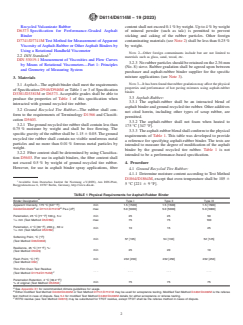
TABLE 1 Physical Requirements for Asphalt-Rubber Binder
A
Binder Designation Type I Type II Type III
Apparent Viscosity, 175 °C [347 °F]: min 1.5 [1500] 1.5 [1500] 1.5 [1500]
B B
D4402/D4402M or D7741/D7741M Pa·s [cP] max 5.0 [5000] 5.0 [5000] 5.0 [5000]
Penetration, 25 °C [77 °F] 100 g, 5 s: min 25 25 50
⁄10 mm (Test Method D5/D5M) max 75 75 100
Penetration, 4 °C [39 °F], 200 g , 60 s:
min 10 15 25
⁄10 mm (Test Method D5/D5M)
Softening Point, °C [°F]:
min 57 [135] 54 [130] 52 [125]
(Test Method D36/D36M)
Resilience, 25 °C [77 °F], %:
min 25 20 10
(Test Method D5329)
Flash Point, °C [°F]: min 232 [450] 232 [450] 232 [450]
(Test Method D92)
Thin-Film Oven Test Residue
. . . . . . . . . . . .
C
(Test Method D1754/D1754M)
Penetration Retention, 4 °C [39.2 °F]:
min 75 75 75
% of original (Test Method D5/D5M)
A
See Appendix X1 for recommended climate guidelines for usage.
B
Either modified Test Method D4402/D4402M or Test Method D7741/D7741M may be used for acceptance testing. Modified Test Method D4402/D4402M is the referee
test method in case of dispute. See 5.4 for modified Test Method D4402/D4402M details for either acceptance or referee testing.
C
RTFO residue (see Test Method D2872) may be substituted for TFOT residue, except TFOT shall be the referee method in cases of dispute.
D6114/D6114M − 19 (2023)
testing equipment, specimen containers, and apparatus, use the following
4.1.2 Detect and sep
...