

ASTM A1071/A1071M-11(2023)
(Test Method)Standard Test Method for Evaluating Hygrothermal Corrosion Resistance of Permanent Magnet Alloys
General Information
- Abstract
SIGNIFICANCE AND USE
5.1 This test method provides a controlled corrosive environment which can be utilized to produce relative corrosion resistance information for sintered permanent magnets.
5.2 Although prediction of performance in natural environments has seldom been statistically correlated with corrosion test results, sufficient empirical results are available to support the usefulness of this test in quantifying relative resistance to corrosion from moisture and heat.
5.3 The reproducibility of results in this test method is dependent on the type, size, and shape of specimens tested, and the control of the operating variables. In any testing program, sufficient replicates should be included to establish confidence limits. Replicates may be run simultaneously, in subsequent test runs, or in duplicate test chambers.
5.4 When multiple test chambers and operators are utilized, efforts shall be made to perform a suitable repeatability and reproducibility study for the equipment, operators, and test method.
SCOPE
1.1 This test method covers the equipment, procedures, and measurement of the resistance of permanent magnet alloys against corrosion in high temperature, high pressure water vapor environments. This test is also known as the Bulk Corrosion Test (BCT).
1.2 The values and equations stated in customary (cgs-emu and inch-pound) units or SI units are to be regarded separately as standard. Within this standard the SI units, when different from customary units, are shown in brackets, the values stated in each system may not be exact equivalents; therefore, each system shall be used independently of the other. Combining values from the two systems may result in nonconformance with this standard.
1.3 This standard does not purport to address all of the safety concerns, if any, associated with its use. It is the responsibility of the user of this standard to establish appropriate safety, health, and environmental practices and determine the applicability of regulatory limitations prior to use.
1.4 This international standard was developed in accordance with internationally recognized principles on standardization established in the Decision on Principles for the Development of International Standards, Guides and Recommendations issued by the World Trade Organization Technical Barriers to Trade (TBT) Committee.
- Status
- Published
- Publication Date
- 30-Nov-2023
- Technical Committee
- A06 - Magnetic Properties
- Drafting Committee
- A06.01 - Test Methods
Overview
ASTM A1071/A1071M-11(2023) is an international standard developed by ASTM, specifying the test method for evaluating the hygrothermal corrosion resistance of permanent magnet alloys. This method, also known as the Bulk Corrosion Test (BCT), provides a systematic approach for assessing the durability of sintered permanent magnets when exposed to high temperature, high-pressure water vapor environments. The key purpose is to offer reliable, comparative data on how different magnet alloys withstand corrosive conditions involving both moisture and heat.
The standard is particularly valuable for manufacturers, researchers, and quality assurance professionals seeking to ensure the reliability and longevity of permanent magnets in demanding environments typical in automotive, electronics, and industrial applications.
Key Topics
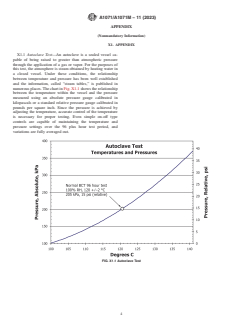
- Test Environment: The test simulates a controlled corrosive environment using pressurized steam with saturated humidity, typically at 120°C for 96 hours.
- Test Specimens: Samples of permanent magnet alloys-often rare earth types-are prepared, cleaned, and exposed in autoclave chambers.
- Corrosion Resistance Measurement: Corrosion is quantified by calculating the specific weight loss of each sample per unit of exposed surface area, providing a straightforward benchmark for material performance.
- Grading System: Results are rated using the BCT grade based on specific weight loss, helping manufacturers compare the relative performance of materials.
- Repeatability & Reproducibility: The method emphasizes the need for replicates and controls to ensure reliable, consistent results. Attention to sample uniformity, equipment calibration, and process documentation is critical.
- Safety and Handling: The standard highlights important safety considerations, particularly regarding the handling of pressurized, high-temperature equipment and potential hazards for personnel.
- Reporting Requirements: Clear reporting guidelines include specimen identification, test conditions, and detailed results for transparency and traceability.
Applications
ASTM A1071/A1071M-11(2023) is widely applied in industries where permanent magnets are expected to operate in harsh environments:
- Automotive: In electric motors, sensors, and actuators, where magnets may be exposed to varying temperatures and humidity.
- Electronics: For components that must maintain integrity and performance in humid or thermally stressed environments.
- Industrial Equipment: In machinery and devices where magnets are critical to operation and reliability.
- Quality Assurance & R&D: To qualify new permanent magnet materials, to screen supplier products, or to support continuous improvement in corrosion resistance.
The test method is particularly important in product development cycles, supplier qualification, and regulatory compliance phases, ensuring magnets meet stringent performance criteria.
Related Standards
- JEDEC JESD22-A102-C: Accelerated Moisture Resistance - Unbiased Autoclave, a standard relevant for electronic component moisture corrosion testing.
- ASTM D3330/D3330M: Test Method for Peel Adhesion of Pressure-Sensitive Tape, which is referenced for certain materials and preparation steps in sample handling.
- Other ASTM Magnetic Materials Standards: For example, standards under ASTM Committee A06 on Magnetic Properties, which cover complementary testing methods for magnetic material characterization.
Using ASTM A1071/A1071M-11(2023) alongside these related standards helps provide a comprehensive approach to permanent magnet quality control and material evaluation.
Keywords: ASTM A1071, permanent magnet corrosion resistance, hygrothermal corrosion, bulk corrosion test, BCT, autoclave test, magnet alloy durability, moisture resistance testing, corrosion testing standards, ASTM magnetic materials.
Relations
- Effective Date
- 01-Dec-2023
Get Certified
Connect with accredited certification bodies for this standard

IMQ S.p.A. (Certification)
Italian electrical product certification.

SLG Prüf- und Zertifizierungs GmbH
German testing and certification body.

UL Solutions
Global safety science company with testing, inspection and certification.
Sponsored listings
Frequently Asked Questions
ASTM A1071/A1071M-11(2023) is a standard published by ASTM International. Its full title is "Standard Test Method for Evaluating Hygrothermal Corrosion Resistance of Permanent Magnet Alloys". This standard covers: SIGNIFICANCE AND USE 5.1 This test method provides a controlled corrosive environment which can be utilized to produce relative corrosion resistance information for sintered permanent magnets. 5.2 Although prediction of performance in natural environments has seldom been statistically correlated with corrosion test results, sufficient empirical results are available to support the usefulness of this test in quantifying relative resistance to corrosion from moisture and heat. 5.3 The reproducibility of results in this test method is dependent on the type, size, and shape of specimens tested, and the control of the operating variables. In any testing program, sufficient replicates should be included to establish confidence limits. Replicates may be run simultaneously, in subsequent test runs, or in duplicate test chambers. 5.4 When multiple test chambers and operators are utilized, efforts shall be made to perform a suitable repeatability and reproducibility study for the equipment, operators, and test method. SCOPE 1.1 This test method covers the equipment, procedures, and measurement of the resistance of permanent magnet alloys against corrosion in high temperature, high pressure water vapor environments. This test is also known as the Bulk Corrosion Test (BCT). 1.2 The values and equations stated in customary (cgs-emu and inch-pound) units or SI units are to be regarded separately as standard. Within this standard the SI units, when different from customary units, are shown in brackets, the values stated in each system may not be exact equivalents; therefore, each system shall be used independently of the other. Combining values from the two systems may result in nonconformance with this standard. 1.3 This standard does not purport to address all of the safety concerns, if any, associated with its use. It is the responsibility of the user of this standard to establish appropriate safety, health, and environmental practices and determine the applicability of regulatory limitations prior to use. 1.4 This international standard was developed in accordance with internationally recognized principles on standardization established in the Decision on Principles for the Development of International Standards, Guides and Recommendations issued by the World Trade Organization Technical Barriers to Trade (TBT) Committee.
SIGNIFICANCE AND USE 5.1 This test method provides a controlled corrosive environment which can be utilized to produce relative corrosion resistance information for sintered permanent magnets. 5.2 Although prediction of performance in natural environments has seldom been statistically correlated with corrosion test results, sufficient empirical results are available to support the usefulness of this test in quantifying relative resistance to corrosion from moisture and heat. 5.3 The reproducibility of results in this test method is dependent on the type, size, and shape of specimens tested, and the control of the operating variables. In any testing program, sufficient replicates should be included to establish confidence limits. Replicates may be run simultaneously, in subsequent test runs, or in duplicate test chambers. 5.4 When multiple test chambers and operators are utilized, efforts shall be made to perform a suitable repeatability and reproducibility study for the equipment, operators, and test method. SCOPE 1.1 This test method covers the equipment, procedures, and measurement of the resistance of permanent magnet alloys against corrosion in high temperature, high pressure water vapor environments. This test is also known as the Bulk Corrosion Test (BCT). 1.2 The values and equations stated in customary (cgs-emu and inch-pound) units or SI units are to be regarded separately as standard. Within this standard the SI units, when different from customary units, are shown in brackets, the values stated in each system may not be exact equivalents; therefore, each system shall be used independently of the other. Combining values from the two systems may result in nonconformance with this standard. 1.3 This standard does not purport to address all of the safety concerns, if any, associated with its use. It is the responsibility of the user of this standard to establish appropriate safety, health, and environmental practices and determine the applicability of regulatory limitations prior to use. 1.4 This international standard was developed in accordance with internationally recognized principles on standardization established in the Decision on Principles for the Development of International Standards, Guides and Recommendations issued by the World Trade Organization Technical Barriers to Trade (TBT) Committee.
ASTM A1071/A1071M-11(2023) is classified under the following ICS (International Classification for Standards) categories: 29.030 - Magnetic materials. The ICS classification helps identify the subject area and facilitates finding related standards.
ASTM A1071/A1071M-11(2023) has the following relationships with other standards: It is inter standard links to ASTM A1071/A1071M-11(2015). Understanding these relationships helps ensure you are using the most current and applicable version of the standard.
ASTM A1071/A1071M-11(2023) is available in PDF format for immediate download after purchase. The document can be added to your cart and obtained through the secure checkout process. Digital delivery ensures instant access to the complete standard document.
Standards Content (Sample)
This international standard was developed in accordance with internationally recognized principles on standardization established in the Decision on Principles for the
Development of International Standards, Guides and Recommendations issued by the World Trade Organization Technical Barriers to Trade (TBT) Committee.
Designation: A1071/A1071M − 11 (Reapproved 2023)
Standard Test Method for
Evaluating Hygrothermal Corrosion Resistance of
Permanent Magnet Alloys
This standard is issued under the fixed designation A1071/A1071M; the number immediately following the designation indicates the
year of original adoption or, in the case of revision, the year of last revision. A number in parentheses indicates the year of last
reapproval. A superscript epsilon (´) indicates an editorial change since the last revision or reapproval.
1. Scope 2.2 JEDEC Standards:
JESD22-A102-C Accelerated Moisture Resistance – Unbi-
1.1 This test method covers the equipment, procedures, and
ased Autoclave
measurement of the resistance of permanent magnet alloys
against corrosion in high temperature, high pressure water
3. Terminology
vapor environments. This test is also known as the Bulk
Corrosion Test (BCT).
3.1 Definitions:
3.1.1 bulk corrosion test (BCT) grade, n—grade given to
1.2 The values and equations stated in customary (cgs-emu
ranges of specific weight loss to indicate the relative corrosion
and inch-pound) units or SI units are to be regarded separately
resistance of a material. (The grades are listed in 15.2.)
as standard. Within this standard the SI units, when different
from customary units, are shown in brackets, the values stated
3.1.2 specific weight loss, n—weight loss of the specimen
in each system may not be exact equivalents; therefore, each
per unit of exposed surface area, in units of milligrams per
system shall be used independently of the other. Combining
square centimetre, due to corrosion and disintegration.
values from the two systems may result in nonconformance
with this standard.
4. Summary of Test Method
1.3 This standard does not purport to address all of the
4.1 Permanent magnet samples are exposed to pressurized
safety concerns, if any, associated with its use. It is the
steam to determine the resistance of these materials, especially
responsibility of the user of this standard to establish appro-
rare earth-type permanent magnets, to degradation by the
priate safety, health, and environmental practices and deter-
combined action of heat and water vapor. The resulting weight
mine the applicability of regulatory limitations prior to use.
loss (including removed loosely-attached material) is used to
1.4 This international standard was developed in accor-
rate the hygrothermal corrosion resistance of the magnet.
dance with internationally recognized principles on standard-
ization established in the Decision on Principles for the
5. Significance and Use
Development of International Standards, Guides and Recom-
5.1 This test method provides a controlled corrosive envi-
mendations issued by the World Trade Organization Technical
ronment which can be utilized to produce relative corrosion
Barriers to Trade (TBT) Committee.
resistance information for sintered permanent magnets.
2. Referenced Documents
5.2 Although prediction of performance in natural environ-
2.1 ASTM Standards:
ments has seldom been statistically correlated with corrosion
D3330/D3330M Test Method for Peel Adhesion of Pressure- test results, sufficient empirical results are available to support
Sensitive Tape
the usefulness of this test in quantifying relative resistance to
corrosion from moisture and heat.
5.3 The reproducibility of results in this test method is
dependent on the type, size, and shape of specimens tested, and
the control of the operating variables. In any testing program,
This test method is under the jurisdiction of ASTM Committee A06 on
Magnetic Properties and is the direct responsibility of Subcommittee A06.01 on Test
sufficient replicates should be included to establish confidence
Methods.
limits. Replicates may be run simultaneously, in subsequent
Current edition approved Dec. 1, 2023. Published December 2023. Originally
test runs, or in duplicate test chambers.
approved in 2011. Last previous edition approved in 2015 as A1071/A1071M – 11
(2015). DOI:10.1520/A1071_A1071M-11R23.
For referenced ASTM standards, visit the ASTM website, www.astm.org, or
contact ASTM Customer Service at service@astm.org. For Annual Book of ASTM
Standards volume information, refer to the standard’s Document Summary page on Available from JEDEC Solid State Technology Association, 2500 Wilson
the ASTM website. Boulevard, Arlington, VA 22201–3834. www.jedec.org
Copyright © ASTM International, 100 Barr Harbor Drive, PO Box C700, West Conshohocken, PA 19428-2959. United States
A1071/A1071M − 11 (2023)
5.4 When multiple test chambers and operators are utilized, 8.3 Brush—Bristle brush made with synthetic polymer or
efforts shall be made to perform a suitable repeatability and natural fiber.
reproducibility study for the equipment, operators, and test
9. Known Hazards
method.
9.1 This test method utilizes equipment operating at el-
6. Interferences
evated pressure. Suitable means should be employed to ensure
6.1 This test method will not yield meaningful results if
the equipment meets local safety regulations and is in good
nonhomogeneous specimens such as assemblies or partially
operating condition, particularly regarding the security of the
coated magnets are tested because of the potential aggravating
chamber door and ports. Suitable means (typically a pressure
effect of galvanic corrosion between dissimilar materials,
relief valve) shall be employed to ensure that the pressure
chemical reactivity with included materials, incompletely ex-
within the equipment does not exceed its design limit.
posed surfaces, and difficulty in determining the amount of
9.2 This test method utilizes pressurized steam which has
weight loss attributable to the magnet and coating.
the ability to cause severe burns. Suitable means should be
6.2 Many cleansers contain bleach or chlorides which will
employed to ensure that personnel are protected from vented
increase the corrosion rate of the samples being tested. Do not
steam during operation, and in particular when the chamber is
use bleach- or chloride-containing cleansers to clean the
opened at the conclusion of the test.
interior of the test chamber or sample racks. Nonmetallic
9.3 This test method utilizes elevated temperature. Suitable
scrubbing pads and water rinsing have been found to be
means should be employed to prevent burns caused by the
suitable for routine cleaning of chambers and racks.
equipment, vented steam, and the specimens.
7. Apparatus
10. Sampling, Test Specimens, and Test Units
7.1 Autoclave—A heated pressure chamber capable of main-
10.1 A minimum of three replicates should be tested.
taining pressurized steam at controlled temperature. The tem-
perature shall be maintained within 62 °C of the selected
10.2 Whenever possible the samples should be unmagne-
temperature for the duration of the exposure. The atmosphere
tized. Magnetized samples may be demagnetized electro-
during test shall be saturated steam (100 % RH). This can be
magnetically or thermally, provided the thermal process does
achieved by venting the chamber as it reaches operating
not damage the sample or significantly change its metallurgical
temperature and pressure and resealing the chamber after
state. Magnetized samples may be used in the magnetized state
pressure has been reduced to 5 psi [34 kPa] through venting.
provided they are secured on the rack so that they do not
The escaping steam purges the chamber of air, leaving only
contact other samples. Care shall be taken to prevent magnetic
steam within the chamber. While commercial autoclaves are
particles from being attracted to and sticking to the test
available that have self-contained heaters and timers, a con-
samples, causing erroneous readings. Obtaining accurate
ventional pressure cooker with external heater may also be
weights of magnetic material is difficult on many balances. For
used, as long as temperature and pressure controls capable of
magnetized samples, equipment and techniques that yield
maintaining suitable control of these variables are present.
accurate weights shall be used, including spacing the magnet
away from the mechanism of the balance.
7.2 Balance—With suitable holders capable of measuring
the mass of magnetic material to within 60.001 g or 60.1 % of
11. Preparation of Apparatus
the magnet’s nominal weight (whichever is greater).
11.1 All equipment and specimen holders shall be inspected
7.3 Specimen Holders or Racks—Suitable containers or
and cleaned as necessary prior to use to ensure that the test
racks which can keep specimens from touching each other or
chamber, support racks, and other components are free of
metallic parts of the autoclave chamber. They must be con-
debris and visible contamination.
structed of material that will not affect the corrosion rate of the
sample. Suitable materials o
...