

ASTM A789/A789M-24
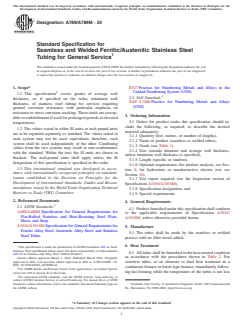
(Specification)Standard Specification for Seamless and Welded Ferritic/Austenitic Stainless Steel Tubing for General Service
General Information
- Abstract
ABSTRACT
This specification covers standard requirements for grades of nominal wall thickness, stainless steel tubing for services requiring general corrosion resistance, with particular emphasis on resistance to stress corrosion cracking. These steels are susceptible to embrittlement if used for prolonged periods at elevated temperatures. Heat and product analyses shall be performed wherein the steel shall conform to the required chemical composition for carbon, manganese, phosphorus, sulfur, silicon, nickel, chromium, molybdenum, nitrogen, copper, and others. All tubes shall be furnished in the heat-treated condition in accordance with the specified temperature and quench conditions. When the final heat treatment is in a continuous furnace, or when heat treated condition is obtained directly by quenching after hot forming, the number of tubes of the same size and from the same heat in a lot shall be determined from the prescribed sizes of the tubes. The material shall conform to the prescribed tensile and hardness properties. Mechanical tests such as tension test, flaring test (for seamless tubes), flange test (for welded tubes), hardness test, and reverse flattening test shall be performed on the steel tubing. Each tube shall also be subjected to the nondestructive electric test or the hydrostatic test.
SCOPE
1.1 This specification2 covers grades of average wall thickness, or, if specified on the order, minimum wall thickness, of stainless steel tubing for services requiring general corrosion resistance, with particular emphasis on resistance to stress corrosion cracking. These steels are susceptible to embrittlement if used for prolonged periods at elevated temperatures.
1.2 The values stated in either SI units or inch-pound units are to be regarded separately as standard. The values stated in each system may not be exact equivalents; therefore, each system shall be used independently of the other. Combining values from the two systems may result in non-conformance with the standard. Within the text, the SI units are shown in brackets. The inch-pound units shall apply unless the M designation of this specification is specified in the order.
1.3 This international standard was developed in accordance with internationally recognized principles on standardization established in the Decision on Principles for the Development of International Standards, Guides and Recommendations issued by the World Trade Organization Technical Barriers to Trade (TBT) Committee.
- Status
- Published
- Publication Date
- 29-Feb-2024
- Technical Committee
- A01 - Steel, Stainless Steel and Related Alloys
- Drafting Committee
- A01.10 - Stainless and Alloy Steel Tubular Products
Buy Documents
ASTM A789/A789M-24 - Standard Specification for Seamless and Welded Ferritic/Austenitic Stainless Steel Tubing for General Service
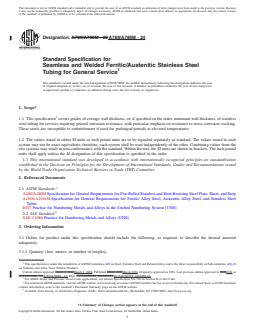
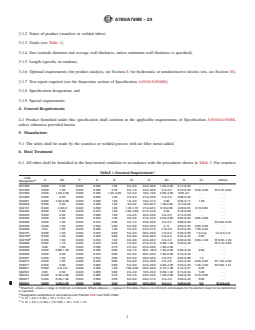
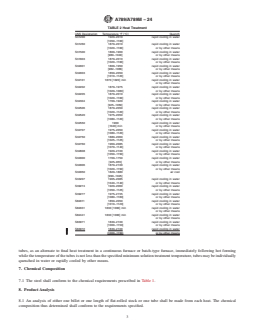
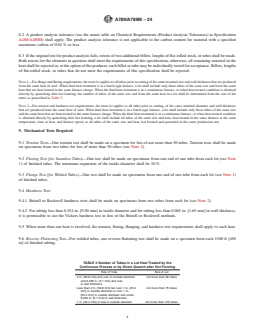
REDLINE ASTM A789/A789M-24 - Standard Specification for Seamless and Welded Ferritic/Austenitic Stainless Steel Tubing for General Service
Overview
ASTM A789/A789M-24 is the standard specification established by ASTM International for seamless and welded ferritic/austenitic stainless steel tubing intended for general service. This specification details requirements for tubing with nominal wall thicknesses, focusing on services requiring excellent general corrosion resistance and, in particular, resistance to stress corrosion cracking. The standard covers several duplex stainless steel grades that meet rigorous chemical composition and mechanical property requirements to ensure reliable performance in demanding industrial applications.
Key Topics
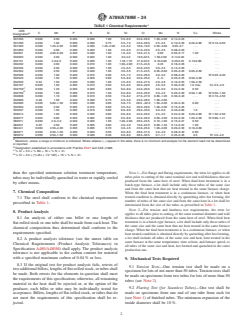
- Material Grades: The specification includes a wide range of duplex stainless steels, combining ferritic and austenitic microstructures for enhanced mechanical properties and corrosion resistance. It defines strict chemical composition limits for elements such as carbon, manganese, nickel, chromium, molybdenum, nitrogen, and others.
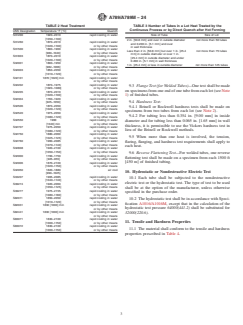
- Manufacturing Process: Tubing may be manufactured by either seamless or welded methods, with no filler metal added during welding. All tubes must be provided in a heat-treated condition, using specified temperature ranges and rapid cooling (quenching) to attain the desired metallurgical structure.
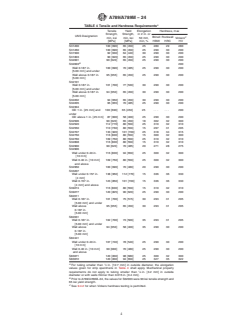
- Mechanical Testing: The standard requires a series of mechanical tests, including tension tests, flaring tests for seamless tubes, flange tests for welded tubes, hardness tests (Brinell, Rockwell, or Vickers as appropriate), and reverse flattening tests for welded tubing. These tests verify the tube's strength, ductility, and resistance to mechanical deformation.
- Quality Assurance and Inspection: Each tube must undergo either a non-destructive electric test or a hydrostatic pressure test to ensure integrity and safety in service. Compliance with dimensional and surface finish tolerances is mandatory.
- Units of Measurement: The specification accommodates both SI and inch-pound units. All requirements must be met according to the selected measurement system, and systems must not be mixed within a single order.
Applications
ASTM A789/A789M-24 stainless steel tubing is widely used across industries where optimal corrosion and stress corrosion cracking resistance is crucial. Typical application areas include:
- Chemical Processing: Piping systems and heat exchangers where contact with corrosive chemicals and elevated temperatures are routine.
- Oil & Gas: Transport lines and structural components exposed to aggressive environments, including offshore platforms.
- Desalination & Water Treatment: Components requiring high resistance to chloride stress corrosion and pitting.
- Power Generation: Tubing for condensers, boiler feedwater, and auxiliary cooling systems.
- General Industrial Use: Structural tubing and general piping where the combination of high mechanical strength and corrosion resistance is required.
Adhering to this internationally recognized standard ensures product reliability, safety, and regulatory compliance in structural and process-critical systems.
Related Standards
For stakeholders specifying or using stainless steel tubing, the following standards are pertinent:
- ASTM A1016/A1016M: General requirements for ferritic alloy steel, austenitic alloy steel, and stainless steel tubes.
- ASTM A480/A480M: General requirements for flat-rolled stainless and heat-resisting steel plate, sheet, and strip.
- ASME SA-789: The ASME Boiler and Pressure Vessel Code’s adaptation of ASTM A789 for boiler and pressure vessel use.
- SAE J1086 & ASTM E527: Practices for numbering metals and alloys in the Unified Numbering System (UNS).
Keywords: ASTM A789, duplex stainless steel tubing, seamless tubing, welded stainless steel tube, corrosion resistance, stress corrosion cracking, heat treatment, mechanical testing, industrial tubing standards.
Relations
- Effective Date
- 01-Mar-2024
- Effective Date
- 01-Mar-2024
- Effective Date
- 01-Mar-2024
- Effective Date
- 01-Mar-2024
- Effective Date
- 01-Mar-2024
Buy Documents
ASTM A789/A789M-24 - Standard Specification for Seamless and Welded Ferritic/Austenitic Stainless Steel Tubing for General Service
REDLINE ASTM A789/A789M-24 - Standard Specification for Seamless and Welded Ferritic/Austenitic Stainless Steel Tubing for General Service
Get Certified
Connect with accredited certification bodies for this standard

Institut za varilstvo d.o.o. (Welding Institute)
Slovenia's leading welding institute since 1952. ISO 3834, EN 1090, pressure equipment certification, NDT personnel, welder qualification. Only IIW Au
Sponsored listings
Frequently Asked Questions
ASTM A789/A789M-24 is a technical specification published by ASTM International. Its full title is "Standard Specification for Seamless and Welded Ferritic/Austenitic Stainless Steel Tubing for General Service". This standard covers: ABSTRACT This specification covers standard requirements for grades of nominal wall thickness, stainless steel tubing for services requiring general corrosion resistance, with particular emphasis on resistance to stress corrosion cracking. These steels are susceptible to embrittlement if used for prolonged periods at elevated temperatures. Heat and product analyses shall be performed wherein the steel shall conform to the required chemical composition for carbon, manganese, phosphorus, sulfur, silicon, nickel, chromium, molybdenum, nitrogen, copper, and others. All tubes shall be furnished in the heat-treated condition in accordance with the specified temperature and quench conditions. When the final heat treatment is in a continuous furnace, or when heat treated condition is obtained directly by quenching after hot forming, the number of tubes of the same size and from the same heat in a lot shall be determined from the prescribed sizes of the tubes. The material shall conform to the prescribed tensile and hardness properties. Mechanical tests such as tension test, flaring test (for seamless tubes), flange test (for welded tubes), hardness test, and reverse flattening test shall be performed on the steel tubing. Each tube shall also be subjected to the nondestructive electric test or the hydrostatic test. SCOPE 1.1 This specification2 covers grades of average wall thickness, or, if specified on the order, minimum wall thickness, of stainless steel tubing for services requiring general corrosion resistance, with particular emphasis on resistance to stress corrosion cracking. These steels are susceptible to embrittlement if used for prolonged periods at elevated temperatures. 1.2 The values stated in either SI units or inch-pound units are to be regarded separately as standard. The values stated in each system may not be exact equivalents; therefore, each system shall be used independently of the other. Combining values from the two systems may result in non-conformance with the standard. Within the text, the SI units are shown in brackets. The inch-pound units shall apply unless the M designation of this specification is specified in the order. 1.3 This international standard was developed in accordance with internationally recognized principles on standardization established in the Decision on Principles for the Development of International Standards, Guides and Recommendations issued by the World Trade Organization Technical Barriers to Trade (TBT) Committee.
ABSTRACT This specification covers standard requirements for grades of nominal wall thickness, stainless steel tubing for services requiring general corrosion resistance, with particular emphasis on resistance to stress corrosion cracking. These steels are susceptible to embrittlement if used for prolonged periods at elevated temperatures. Heat and product analyses shall be performed wherein the steel shall conform to the required chemical composition for carbon, manganese, phosphorus, sulfur, silicon, nickel, chromium, molybdenum, nitrogen, copper, and others. All tubes shall be furnished in the heat-treated condition in accordance with the specified temperature and quench conditions. When the final heat treatment is in a continuous furnace, or when heat treated condition is obtained directly by quenching after hot forming, the number of tubes of the same size and from the same heat in a lot shall be determined from the prescribed sizes of the tubes. The material shall conform to the prescribed tensile and hardness properties. Mechanical tests such as tension test, flaring test (for seamless tubes), flange test (for welded tubes), hardness test, and reverse flattening test shall be performed on the steel tubing. Each tube shall also be subjected to the nondestructive electric test or the hydrostatic test. SCOPE 1.1 This specification2 covers grades of average wall thickness, or, if specified on the order, minimum wall thickness, of stainless steel tubing for services requiring general corrosion resistance, with particular emphasis on resistance to stress corrosion cracking. These steels are susceptible to embrittlement if used for prolonged periods at elevated temperatures. 1.2 The values stated in either SI units or inch-pound units are to be regarded separately as standard. The values stated in each system may not be exact equivalents; therefore, each system shall be used independently of the other. Combining values from the two systems may result in non-conformance with the standard. Within the text, the SI units are shown in brackets. The inch-pound units shall apply unless the M designation of this specification is specified in the order. 1.3 This international standard was developed in accordance with internationally recognized principles on standardization established in the Decision on Principles for the Development of International Standards, Guides and Recommendations issued by the World Trade Organization Technical Barriers to Trade (TBT) Committee.
ASTM A789/A789M-24 is classified under the following ICS (International Classification for Standards) categories: 23.040.40 - Metal fittings. The ICS classification helps identify the subject area and facilitates finding related standards.
ASTM A789/A789M-24 has the following relationships with other standards: It is inter standard links to ASTM A789/A789M-22, ASTM A1012-10(2021), ASTM A1119/A1119M-23a, ASTM A1098/A1098M-18(2022), ASTM A1016/A1016M-23. Understanding these relationships helps ensure you are using the most current and applicable version of the standard.
ASTM A789/A789M-24 is available in PDF format for immediate download after purchase. The document can be added to your cart and obtained through the secure checkout process. Digital delivery ensures instant access to the complete standard document.
Standards Content (Sample)
This international standard was developed in accordance with internationally recognized principles on standardization established in the Decision on Principles for the
Development of International Standards, Guides and Recommendations issued by the World Trade Organization Technical Barriers to Trade (TBT) Committee.
Designation: A789/A789M − 24
Standard Specification for
Seamless and Welded Ferritic/Austenitic Stainless Steel
Tubing for General Service
This standard is issued under the fixed designation A789/A789M; the number immediately following the designation indicates the year
of original adoption or, in the case of revision, the year of last revision. A number in parentheses indicates the year of last reapproval.
A superscript epsilon (´) indicates an editorial change since the last revision or reapproval.
1. Scope* E527 Practice for Numbering Metals and Alloys in the
2 Unified Numbering System (UNS)
1.1 This specification covers grades of average wall
2.2 SAE Standard:
thickness, or, if specified on the order, minimum wall
SAE J 1086 Practice for Numbering Metals and Alloys
thickness, of stainless steel tubing for services requiring
(UNS)
general corrosion resistance, with particular emphasis on
resistance to stress corrosion cracking. These steels are suscep-
3. Ordering Information
tible to embrittlement if used for prolonged periods at elevated
3.1 Orders for product under this specification should in-
temperatures.
clude the following, as required, to describe the desired
1.2 The values stated in either SI units or inch-pound units
material adequately:
are to be regarded separately as standard. The values stated in
3.1.1 Quantity (feet, metres, or number of lengths),
each system may not be exact equivalents; therefore, each
3.1.2 Name of product (seamless or welded tubes),
system shall be used independently of the other. Combining
3.1.3 Grade (see Table 1),
values from the two systems may result in non-conformance
3.1.4 Size (outside diameter and average wall thickness,
with the standard. Within the text, the SI units are shown in
unless minimum wall thickness is specified),
brackets. The inch-pound units shall apply unless the M
3.1.5 Length (specific or random),
designation of this specification is specified in the order.
3.1.6 Optional requirements (for product analysis, see Sec-
1.3 This international standard was developed in accor-
tion 8; for hydrostatic or nondestructive electric test, see
dance with internationally recognized principles on standard-
Section 10),
ization established in the Decision on Principles for the
3.1.7 Test report required (see the Inspection section of
Development of International Standards, Guides and Recom-
Specification A1016/A1016M),
mendations issued by the World Trade Organization Technical
3.1.8 Specification designation, and
Barriers to Trade (TBT) Committee.
3.1.9 Special requirements.
2. Referenced Documents
4. General Requirements
2.1 ASTM Standards:
4.1 Product furnished under this specification shall conform
A480/A480M Specification for General Requirements for
to the applicable requirements of Specification A1016/
Flat-Rolled Stainless and Heat-Resisting Steel Plate,
A1016M, unless otherwise provided herein.
Sheet, and Strip
A1016/A1016M Specification for General Requirements for
5. Manufacture
Ferritic Alloy Steel, Austenitic Alloy Steel, and Stainless
5.1 The tubes shall be made by the seamless or welded
Steel Tubes
process with no filler metal added.
6. Heat Treatment
This specification is under the jurisdiction of ASTM Committee A01 on Steel,
Stainless Steel and Related Alloys and is the direct responsibility of Subcommittee
6.1 All tubes shall be furnished in the heat-treated condition
A01.10 on Stainless and Alloy Steel Tubular Products.
in accordance with the procedures shown in Table 2. For
Current edition approved March 1, 2024. Published March 2024. Originally
approved in 1981. Last previous edition approved in 2022 as A789/A789M – 22.
seamless tubes, as an alternate to final heat treatment in a
DOI: 10.1520/A0789_A0789M-24.
continuous furnace or batch-type furnace, immediately follow-
For ASME Boiler and Pressure Vessel Code applications, see related Specifi-
ing hot forming while the temperature of the tubes is not less
cation SA–789 in Section II of that Code.
For referenced ASTM standards, visit the ASTM website, www.astm.org, or
contact ASTM Customer Service at service@astm.org. For Annual Book of ASTM
Standards volume information, refer to the standard’s Document Summary page on Available from Society of Automotive Engineers (SAE), 400 Commonwealth
the ASTM website. Dr., Warrendale, PA 15096-0001, http://www.sae.org.
*A Summary of Changes section appears at the end of this standard
Copyright © ASTM International, 100 Barr Harbor Drive, PO Box C700, West Conshohocken, PA 19428-2959. United States
A789/A789M − 24
A
TABLE 1 Chemical Requirements
UNS
C Mn P S Si Ni Cr Mo N Cu Others
B
Designation
S31200 0.030 2.00 0.045 0.030 1.00 5.5–6.5 24.0–26.0 1.20–2.00 0.14–0.20 . . . . . .
S31260 0.030 1.00 0.030 0.030 0.75 5.5–7.5 24.0–26.0 2.5–3.5 0.10–0.30 0.20–0.80 W 0.10–0.50
S31500 0.030 1.20–2.00 0.030 0.030 1.40–2.00 4.3–5.2 18.0–19.0 2.50–3.00 0.05–0.1 . . . . . .
S31803 0.030 2.00 0.030 0.020 1.00 4.5–6.5 21.0–23.0 2.5–3.5 0.08–0.20 . . . . . .
S32001 0.030 4.00–6.00 0.040 0.030 1.00 1.0–3.0 19.5–21.5 0.60 0.05–0.17 1.00 . . .
S32003 0.030 2.00 0.030 0.020 1.00 3.0-4.0 19.5-22.5 1.50-2.00 0.14-0.20 . . . . . .
S32101 0.040 4.0-6.0 0.040 0.030 1.00 1.35-1.70 21.0-22.0 0.10-0.80 0.20-0.25 0.10-0.80 . . .
S32202 0.030 2.00 0.040 0.010 1.00 1.00–2.80 21.5–24.0 0.45 0.18–0.26 . . . . . .
S32205 0.030 2.00 0.030 0.020 1.00 4.5–6.5 22.0–23.0 3.0–3.5 0.14–0.20 . . . . . .
S32304 0.030 2.50 0.040 0.040 1.00 3.0–5.5 21.5–24.5 0.05–0.60 0.05–0.20 0.05–0.60 . . .
S32506 0.030 1.00 0.040 0.015 0.90 5.5–7.2 24.0–26.0 3.0–3.5 0.08–0.20 . . . W 0.05–0.30
S32520 0.030 1.50 0.035 0.020 0.80 5.5–8.0 23.0–25.0 3.–5. 0.20–0.35 0.50–3.00 . . .
S32550 0.04 1.50 0.040 0.030 1.00 4.5–6.5 24.0–27.0 2.9–3.9 0.10–0.25 1.50–2.50 . . .
S32707 0.030 1.50 0.035 0.010 0.50 5.5–9.5 26.0–29.0 4.0–5.0 0.30–0.50 1.0 max Co 0.5–2.0
C
S32750 0.030 1.20 0.035 0.020 0.80 6.0–8.0 24.0–26.0 3.0–5.0 0.24–0.32 0.50 . . .
D
S32760 0.030 1.00 0.030 0.010 1.00 6.0–8.0 24.0–26.0 3.0–4.0 0.20–0.30 0.50–1.00 W 0.50–1.00
S32808 0.030 1.10 0.030 0.010 0.50 7.0–8.2 27.0–27.9 0.80–1.20 0.30–0.40 . . . W 2.10–2.50
S32900 0.08 1.00 0.040 0.030 0.75 2.5–5.0 23.0–28.0 1.00–2.00 . . . . . . . . .
S32906 0.030 0.80–1.50 0.030 0.030 0.80 5.8–7.5 28.0 –30.0 1.50–2.60 0.30–0.40 0.80 . . .
S32950 0.030 2.00 0.035 0.010 0.60 3.5–5.2 26.0–29.0 1.00–2.50 0.15–0.35 . . . . . .
S33207 0.030 1.50 0.035 0.010 0.80 6.0–9.0 29.0–33.0 3.0–5.0 0.40–0.60 1.0 . . .
S39274 0.030 1.00 0.030 0.020 0.80 6.0–8.0 24.0–26.0 2.5–3.5 0.24–0.32 0.20–0.80 W 1.50–2.50
S39277 0.025 0.80 0.025 0.002 0.80 6.5–8.0 24.0–26.0 3.00–4.00 0.23–0.33 1.20–2.00 W 0.80–1.21
S82011 0.030 2.0–3.0 0.040 0.020 1.00 1.00–2.00 20.5–23.5 0.10–1.00 0.15–0.27 0.50 . . .
S82031 0.05 2.50 0.040 0.005 0.80 2.0–4.0 19.0–22.0 0.60–1.40 0.14–0.24 1.00 . . .
S82441 0.030 2.50–4.00 0.035 0.005 0.70 3.0–4.5 23.0–25.0 1.00–2.00 0.20–0.30 0.10–0.80 . . .
S83071 0.030 0.50–1.50 0.030 0.020 0.50 6.0–8.0 29.0–31.0 3.0–4.0 0.28–0.40 0.80 . . .
S83072 0.030 0.50–1.50 0.030 0.030 0.30 6.0–8.0 28.5–30.5 0.7–1.7 0.35–0.45 0.5 W 3.0–4.0
A
Maximum, unless a range or minimum is indicated. Where ellipses (.) appear in this table, there is no minimum and analysis for the element need not be determined
or reported.
B
Designation established in accordance with Practice E527 and SAE J1086.
C
% Cr + 3.3 × % Mo + 16 × % N $ 41.
D
% Cr + 3.3 × (% Mo + 1/2 %W) + 16 × % N $ 41.
NOTE 1—For flange and flaring requirements, the term lot applies to all
than the specified minimum solution treatment temperature,
tubes prior to cutting of the same nominal size and wall thickness that are
tubes may be individually quenched in water or rapidly cooled
produced from the same heat of steel. When final heat treatment is in a
by other means.
batch-type furnace, a lot shall include only those tubes of the same size
and from the same heat that are heat treated in the same furnace charge.
7. Chemical Composition
When the final heat treatment is in a continuous furnace, or when heat
treated condition is obtained directly by quenching after hot forming, the
7.1 The steel shall conform to the chemical requirements
number of tubes of the same size and from the same heat in a lot shall be
prescribed in Table 1.
determined from the size of the tubes as prescribed in Table 3.
NOTE 2—For tension and hardness test requirements, the term lot
8. Product Analysis
applies to all tubes prior to cutting, of the same nominal diameter and wall
thickness that are produced from the same heat of steel. When final heat
8.1 An analysis of either one billet or one length of
treatment is in a batch-type furnace, a lot shall include only those tubes of
flat-rolled stock or one tube shall be made from each heat. The
the same size and the same heat that are heat treated in the same furnace
chemical composition thus determined shall conform to the
charge. When the final heat treatment is in a continuous furnace, or when
requirements specified.
heat treated condition is obtained directly by quenching after hot forming,
a lot shall include all tubes of the same size and heat, heat treated in the
8.2 A product analysis tolerance (see the annex table on
same furnace at the same temperature, time at heat, and furnace speed, or
Chemical Requirements (Product Analysis Tolerances) in
all tubes of the same size and heat, hot formed and quenched in the same
Specification A480/A480M) shall apply. The product analysis
production run.
tolerance is not applicable to the carbon content for material
with a specified maximum carbon of 0.04 % or less.
9. Mechanical Tests Required
8.3 If the original test for product analysis fails, retests of
9.1 Tension Tests—One tension test shall be made on a
two additional billets, lengths of flat-rolled stock, or tubes shall
specimen for lots of not more than 50 tubes. Tension tests shall
be made. Both retests for the elements in question shall meet
be made on specimens from two tubes for lots of more than 50
the requirements of this specification; otherwise, all remaining
tubes (see Note 2).
material in the heat shall be rejected or, at the option of the
9.2 Flaring Test (for Seamless Tubes)—One test shall be
producer, each billet or tube may be individually tested for
acceptance. Billets, lengths of flat-rolled stock, or tubes that do made on specimens from one end of one tube from each lot
(see Note 1) of finished tubes. The minimum expansion of the
not meet the requirements of this specification shall be re-
jected. inside diameter shall be 10 %.
A789/A789M − 24
TABLE 2 Heat Treatment TABLE 3 Number of Tubes in a Lot Heat Treated by the
Continuous Process or by Direct Quench after Hot Forming
UNS Designation Temperature °F [°C] Quench
S31200 1920–2010 rapid cooling in water
Size of Tube Size of Lot
[1050–1100]
2 in. [50.8 mm] and over in outside diameter not more than 50 tubes
S31260 1870–2010 rapid cooling in water
and 0.200 in. [5.1 mm] and over
[1020–1100] or by other means
in wall thickness
S31500 1800–1900 rapid cooling in water
Less than 2 in. [50.8 mm]
...
This document is not an ASTM standard and is intended only to provide the user of an ASTM standard an indication of what changes have been made to the previous version. Because
it may not be technically possible to adequately depict all changes accurately, ASTM recommends that users consult prior editions as appropriate. In all cases only the current version
of the standard as published by ASTM is to be considered the official document.
Designation: A789/A789M − 22 A789/A789M − 24
Standard Specification for
Seamless and Welded Ferritic/Austenitic Stainless Steel
Tubing for General Service
This standard is issued under the fixed designation A789/A789M; the number immediately following the designation indicates the year
of original adoption or, in the case of revision, the year of last revision. A number in parentheses indicates the year of last reapproval.
A superscript epsilon (´) indicates an editorial change since the last revision or reapproval.
1. Scope*
1.1 This specification covers grades of average wall thickness, or, if specified on the order, minimum wall thickness, of stainless
steel tubing for services requiring general corrosion resistance, with particular emphasis on resistance to stress corrosion cracking.
These steels are susceptible to embrittlement if used for prolonged periods at elevated temperatures.
1.2 The values stated in either SI units or inch-pound units are to be regarded separately as standard. The values stated in each
system may not be exact equivalents; therefore, each system shall be used independently of the other. Combining values from the
two systems may result in non-conformance with the standard. Within the text, the SI units are shown in brackets. The inch-pound
units shall apply unless the M designation of this specification is specified in the order.
1.3 This international standard was developed in accordance with internationally recognized principles on standardization
established in the Decision on Principles for the Development of International Standards, Guides and Recommendations issued
by the World Trade Organization Technical Barriers to Trade (TBT) Committee.
2. Referenced Documents
2.1 ASTM Standards:
A480/A480M Specification for General Requirements for Flat-Rolled Stainless and Heat-Resisting Steel Plate, Sheet, and Strip
A1016/A1016M Specification for General Requirements for Ferritic Alloy Steel, Austenitic Alloy Steel, and Stainless Steel
Tubes
E527 Practice for Numbering Metals and Alloys in the Unified Numbering System (UNS)
2.2 SAE Standard:
SAE J 1086 Practice for Numbering Metals and Alloys (UNS)
3. Ordering Information
3.1 Orders for product under this specification should include the following, as required, to describe the desired material
adequately:
3.1.1 Quantity (feet, metres, or number of lengths),
This specification is under the jurisdiction of ASTM Committee A01 on Steel, Stainless Steel and Related Alloys and is the direct responsibility of Subcommittee A01.10
on Stainless and Alloy Steel Tubular Products.
Current edition approved March 1, 2022March 1, 2024. Published March 2022March 2024. Originally approved in 1981. Last previous edition approved in 20202022 as
A789/A789M – 20.A789/A789M – 22. DOI: 10.1520/A0789_A0789M-22.10.1520/A0789_A0789M-24.
For ASME Boiler and Pressure Vessel Code applications, see related Specification SA–789 in Section II of that Code.
For referenced ASTM standards, visit the ASTM website, www.astm.org, or contact ASTM Customer Service at service@astm.org. For Annual Book of ASTM Standards
volume information, refer to the standard’s Document Summary page on the ASTM website.
Available from Society of Automotive Engineers (SAE), 400 Commonwealth Dr., Warrendale, PA 15096-0001, http://www.sae.org.
*A Summary of Changes section appears at the end of this standard
Copyright © ASTM International, 100 Barr Harbor Drive, PO Box C700, West Conshohocken, PA 19428-2959. United States
A789/A789M − 24
3.1.2 Name of product (seamless or welded tubes),
3.1.3 Grade (see Table 1),
3.1.4 Size (outside diameter and average wall thickness, unless minimum wall thickness is specified),
3.1.5 Length (specific or random),
3.1.6 Optional requirements (for product analysis, see Section 8; for hydrostatic or nondestructive electric test, see Section 10),
3.1.7 Test report required (see the Inspection section of Specification A1016/A1016M),
3.1.8 Specification designation, and
3.1.9 Special requirements.
4. General Requirements
4.1 Product furnished under this specification shall conform to the applicable requirements of Specification A1016/A1016M,
unless otherwise provided herein.
5. Manufacture
5.1 The tubes shall be made by the seamless or welded process with no filler metal added.
6. Heat Treatment
6.1 All tubes shall be furnished in the heat-treated condition in accordance with the procedures shown in Table 2. For seamless
A
TABLE 1 Chemical Requirements
UNS
C Mn P S Si Ni Cr Mo N Cu Others
B
Designation
S31200 0.030 2.00 0.045 0.030 1.00 5.5–6.5 24.0–26.0 1.20–2.00 0.14–0.20 . . . . . .
S31260 0.030 1.00 0.030 0.030 0.75 5.5–7.5 24.0–26.0 2.5–3.5 0.10–0.30 0.20–0.80 W 0.10–0.50
S31500 0.030 1.20–2.00 0.030 0.030 1.40–2.00 4.3–5.2 18.0–19.0 2.50–3.00 0.05–0.1 . . . . . .
S31803 0.030 2.00 0.030 0.020 1.00 4.5–6.5 21.0–23.0 2.5–3.5 0.08–0.20 . . . . . .
S32001 0.030 4.00–6.00 0.040 0.030 1.00 1.0–3.0 19.5–21.5 0.60 0.05–0.17 1.00 . . .
S32003 0.030 2.00 0.030 0.020 1.00 3.0-4.0 19.5-22.5 1.50-2.00 0.14-0.20 . . . . . .
S32101 0.040 4.0-6.0 0.040 0.030 1.00 1.35-1.70 21.0-22.0 0.10-0.80 0.20-0.25 0.10-0.80 . . .
S32202 0.030 2.00 0.040 0.010 1.00 1.00–2.80 21.5–24.0 0.45 0.18–0.26 . . . . . .
S32205 0.030 2.00 0.030 0.020 1.00 4.5–6.5 22.0–23.0 3.0–3.5 0.14–0.20 . . . . . .
S32304 0.030 2.50 0.040 0.040 1.00 3.0–5.5 21.5–24.5 0.05–0.60 0.05–0.20 0.05–0.60 . . .
S32506 0.030 1.00 0.040 0.015 0.90 5.5–7.2 24.0–26.0 3.0–3.5 0.08–0.20 . . . W 0.05–0.30
S32520 0.030 1.50 0.035 0.020 0.80 5.5–8.0 23.0–25.0 3.–5. 0.20–0.35 0.50–3.00 . . .
S32550 0.04 1.50 0.040 0.030 1.00 4.5–6.5 24.0–27.0 2.9–3.9 0.10–0.25 1.50–2.50 . . .
S32707 0.030 1.50 0.035 0.010 0.50 5.5–9.5 26.0–29.0 4.0–5.0 0.30–0.50 1.0 max Co 0.5–2.0
C
S32750 0.030 1.20 0.035 0.020 0.80 6.0–8.0 24.0–26.0 3.0–5.0 0.24–0.32 0.50 . . .
D
S32760 0.030 1.00 0.030 0.010 1.00 6.0–8.0 24.0–26.0 3.0–4.0 0.20–0.30 0.50–1.00 W 0.50–1.00
S32808 0.030 1.10 0.030 0.010 0.50 7.0–8.2 27.0–27.9 0.80–1.20 0.30–0.40 . . . W 2.10–2.50
S32900 0.08 1.00 0.040 0.030 0.75 2.5–5.0 23.0–28.0 1.00–2.00 . . . . . . . . .
S32906 0.030 0.80–1.50 0.030 0.030 0.80 5.8–7.5 28.0 –30.0 1.50–2.60 0.30–0.40 0.80 . . .
S32950 0.030 2.00 0.035 0.010 0.60 3.5–5.2 26.0–29.0 1.00–2.50 0.15–0.35 . . . . . .
S33207 0.030 1.50 0.035 0.010 0.80 6.0–9.0 29.0–33.0 3.0–5.0 0.40–0.60 1.0 . . .
S39274 0.030 1.00 0.030 0.020 0.80 6.0–8.0 24.0–26.0 2.5–3.5 0.24–0.32 0.20–0.80 W 1.50–2.50
S39277 0.025 0.80 0.025 0.002 0.80 6.5–8.0 24.0–26.0 3.00–4.00 0.23–0.33 1.20–2.00 W 0.80–1.21
S82011 0.030 2.0–3.0 0.040 0.020 1.00 1.00–2.00 20.5–23.5 0.10–1.00 0.15–0.27 0.50 . . .
S82031 0.05 2.50 0.040 0.005 0.80 2.0–4.0 19.0–22.0 0.60–1.40 0.14–0.24 1.00 . . .
S82441 0.030 2.50–4.00 0.035 0.005 0.70 3.0–4.5 23.0–25.0 1.00–2.00 0.20–0.30 0.10–0.80 . . .
S83071 0.030 0.50–1.50 0.030 0.020 0.50 6.0–8.0 29.0–31.0 3.0–4.0 0.28–0.40 0.80 . . .
S83072 0.030 0.50–1.50 0.030 0.030 0.30 6.0–8.0 28.5–30.5 0.7–1.7 0.35–0.45 0.5 W 3.0–4.0
A
Maximum, unless a range or minimum is indicated. Where ellipses (.) appear in this table, there is no minimum and analysis for the element need not be determined
or reported.
B
Designation established in accordance with Practice E527 and SAE J1086.
C
% Cr + 3.3 × % Mo + 16 × % N $ 41.
D
% Cr + 3.3 × (% Mo + 1/2 %W) + 16 × % N $ 41.
A789/A789M − 24
TABLE 2 Heat Treatment
UNS Designation Temperature °F [°C] Quench
S31200 1920–2010 rapid cooling in water
[1050–1100]
S31260 1870–2010 rapid cooling in water
[1020–1100] or by other means
S31500 1800–1900 rapid cooling in water
[980–1040] or by other means
S31803 1870–2010 rapid cooling in water
[1020–1100] or by other means
S32001 1800–1950 rapid cooling in water
[982–1066] or by other means
S32003 1850–2050 rapid cooling in water
[1010–1120] or by other means
S32101 1870 [1020] min rapid cooling in water
or by other means
S32202 1870–1975 rapid cooling in water
[1020–1080] or by other means
S32205 1870–2010 rapid cooling in water
[1020–1100] or by other means
S32304 1700–1920 rapid cooling in water
[925–1050] or by other means
S32506 1870–2050 rapid cooling in water
[1020–1120] or by other means
S32520 1975–2050 rapid cooling in water
[1080–1120] or by other means
S32550 1900 rapid cooling in water
[1040] min or by other means
S32707 1975–2050 rapid cooling in water
[1080–1120] or by other means
S32750 1880–2060 rapid cooling in water
[1025–1125] or by other means
S32760 1960–2085 rapid cooling in water
[1070–1140] or by other means
S32808 1920–2100 rapid cooling in water
[1050–1150] or by other means
S32900 1700–1750 rapid cooling in water
[925–955] or by other means
S32906 1870–2100 rapid cooling in water
[1020–1150] or by other means
S32950 1820–1880 air cool
[990–1025]
S33207 1905–2085 rapid cooling in water
[1040–1140] or by other means
S39274 1920–2060 rapid cooling in water
[1050–1125] or by other means
S39277 1975–2155 rapid cooling in water
[1080–1180] or by other means
S82011 1850–2050 rapid cooling in water
[1010–1120] or by other means
S82031 1830 [1000] min rapid cooling in water
or by other means
S82441 1830 [1000] min rapid cooling in water
or by other means
S83071 1830–2100 rapid cooling in water
[1000–1150] or by other means
S83072 1830–2100 rapid cooling in water
[1000–1150] or by other means
tubes, as an alternate to final heat treatment in a continuous furnace or batch-type furnace, immediately following hot forming
while the temperature of the tubes is not less than the specified minimum solution treatment temperature, tubes may be individually
quenched in water or rapidly cooled by other means.
7. Chemical Composition
7.1 The steel shall conform to the chemical requirements prescribed in Table 1.
8. Product Analysis
8.1 An analysis of either one billet or one length of flat-rolled stock or one tube shall be made from each heat. The chemical
composition thus determined shall conform to the requirements specified.
A789/A789M − 24
8.2 A product analysis tolerance (see the annex table on Chemical Requirements (Product Analysis Tolerances) in Specification
A480/A480M) shall apply. The product analysis tolerance is not applicable to the carbon content for material with a specified
maximum carbon of 0.04 % or less.
8.3 If the original test for product analysis fails, retests of two additional billets, lengths of flat-rolled stock, or tubes shall be made.
Both retests for the elements in question shall meet the requirements of this specification; otherwise, all remaining material in the
heat shall be rejected or, at the option of the producer, each billet or tube may be individually tested for acceptance. Billets, lengths
of flat-rolled stock, or tubes that do not meet the requirements of this specification shall be rejected.
NOTE 1—For flange and flaring requirements, the term lot applies to all tubes prior to cutting of the same nominal size and wall thickness that are produced
from the same heat of steel. When final heat treatment is in a batch-type furnace, a lot shall include only those tubes of the same size and from the same
heat that a
...