

ASTM A1098/A1098M-18(2022)
(Specification)Standard Specification for Welded Austenitic, Ferritic, Martensitic and Duplex Stainless Steel Boiler, Superheater, Condenser, and Heat Exchanger Tubes with Textured Surface(s)
General Information
- Abstract
ABSTRACT
This specification applies to average or minimum-wall thickness welded tubes made from various grades of austenitic alloy steel materials in which the external tube surface, internal tube surface, or both internal and external tube surfaces have a textured configuration for improved heat transfer or fluid flow or both. Texture surface(s) are produced by cold forming a specified configuration on the surface(s) of base strip material, prior to welding. The produced welded textured tubes may be used in boilers, superheaters, condensers, evaporators, heat exchangers, and other similar heat transfer apparatus in diameters up to and including 1.5 in. [38 mm] for various wall thicknesses up to and including 0.079 in. [2 mm].
SCOPE
1.1 This specification covers average or minimum-wall thickness welded tubes made from various grades of austenitic, ferritic, martensitic and duplex stainless steel materials in which the (1) external tube surface, (2) internal tube surface, or (3) both internal and external tube surfaces have a textured configuration for improved heat transfer or fluid flow or both. Texture surface(s) are produced by cold forming a specified configuration on the surface(s) of base strip material, prior to welding. The produced welded textured tubes may be used in boilers, superheaters, condensers, evaporators, heat exchangers, and other similar heat transfer apparatus in diameters up to and including 1.5 in. [38 mm] for various wall thicknesses up to and including 0.079 in. [2 mm].
1.2 The tubing sizes and thicknesses usually furnished to this specification are 0.375 in. [10 mm] inside diameter (ID) to 1.5 in. [38 mm] outside diameter and 0.020 to 0.079 in. [0.5 to 2 mm], inclusive, in wall thickness. Tubing having other dimensions may be furnished provided such tubes comply with all other requirements of this specification.
1.3 Optional supplementary requirements are provided and, when one or more of these are desired, each shall be so stated in the order.
1.4 Several grades of austenitic, ferritic, martensitic and duplex stainless steels are included in this specification. Not all alloys are suitable for all conditions. Selection will depend upon design and service requirements.
1.5 The values stated in either inch-pound units or SI units are to be regarded separately as standard. Within the text, the SI units are shown in brackets. The values stated in each system may not be exact equivalents; therefore, each system shall be used independently of the other. Combining values from the two systems may result in non-conformance with the standard. The inch-pound units shall apply unless the “M” designation of this specification is specified in the order.
1.6 The following safety hazards statement pertains only to the test method and the Supplementary Requirements of this specification. A specific warning statement is given in the Supplementary Requirements. This standard does not purport to address all of the safety concerns, if any, associated with its use. It is the responsibility of the user of this standard to establish appropriate safety, health, and environmental practices and determine the applicability of regulatory limitations prior to use.
1.7 This international standard was developed in accordance with internationally recognized principles on standardization established in the Decision on Principles for the Development of International Standards, Guides and Recommendations issued by the World Trade Organization Technical Barriers to Trade (TBT) Committee.
- Status
- Published
- Publication Date
- 31-Aug-2022
- Technical Committee
- A01 - Steel, Stainless Steel and Related Alloys
- Drafting Committee
- A01.10 - Stainless and Alloy Steel Tubular Products
Overview
ASTM A1098/A1098M-18(2022) is the international standard specification for welded stainless steel tubes with textured surfaces, intended for use in boilers, superheaters, condensers, evaporators, heat exchangers, and similar heat transfer equipment. This standard, published by ASTM International, covers tubes made from austenitic, ferritic, martensitic, and duplex stainless steel grades. The specification applies to tubes with average or minimum wall thickness, with diameters up to and including 1.5 inches (38 mm) and wall thicknesses up to and including 0.079 inches (2 mm).
The standard is specifically focused on tubes where one or both surfaces-external, internal, or both-are cold formed with a texture to enhance heat transfer or fluid flow. The textured surface is produced by cold forming before welding, enabling improved performance in demanding industrial conditions.
Key Topics
- Material Grades: Includes austenitic, ferritic, martensitic, and duplex stainless steels. Selection depends on design and service requirements.
- Texture Configuration: Tube surfaces can be textured internally, externally, or both, resulting in increased surface area for efficient heat transfer or improved fluid dynamics.
- Manufacturing Process: Texturing is achieved by cold forming a specific pattern onto the base strip material, prior to tube welding.
- Typical Dimensions:
- Tube diameters up to 1.5 in. [38 mm]
- Wall thicknesses up to 0.079 in. [2 mm]
- Testing and Inspection:
- Hydrostatic or non-destructive electric testing (e.g., eddy current) required for quality assurance.
- Mechanical properties such as tensile strength and hardness must meet specified requirements.
- Supplementary Requirements: Optional provisions may include stress-relieved annealed tubes, additional corrosion testing, or special marking on request.
Applications
Welded stainless steel tubes with textured surfaces are essential in industries requiring efficient thermal management and high durability in corrosive or high-temperature environments. Key applications include:
- Boilers: Textured tubes improve heat transfer rates, leading to more efficient steam generation and boiler operation.
- Superheaters & Evaporators: Enhanced surface area raises thermal efficiency for superheating steam or evaporating working fluids.
- Condensers: Improved fluid flow characteristics on textured surfaces increase condensation rates and heat recovery in power plants and HVAC systems.
- Heat Exchangers: Used in chemical, petrochemical, and energy sectors, these tubes provide efficient heat exchange for a variety of fluids.
- Feedwater Heaters: Durable against corrosion and designed to handle fluctuating temperatures, essential in power generation equipment.
Related Standards
ASTM A1098/A1098M references and aligns with several related standards for seamless and welded stainless steel tubing and testing methods, such as:
- ASTM A249/A249M - Welded Austenitic Steel Boiler, Superheater, Heat-Exchanger, and Condenser Tubes
- ASTM A268/A268M - Seamless and Welded Ferritic and Martensitic Stainless Steel Tubing
- ASTM A789/A789M - Seamless and Welded Ferritic/Austenitic Stainless Steel Tubing (Duplex)
- ASTM A1016/A1016M - General Requirements for Ferritic Alloy Steel, Austenitic Alloy Steel, and Stainless Steel Tubes
- ASME Boiler and Pressure Vessel Code - Section VIII on welded boiler and pressure vessel construction
Practical Value
Adherence to ASTM A1098/A1098M provides manufacturers, engineers, and purchasers with:
- Assured Product Quality: Standardized requirements for materials, dimensions, testing, and mechanical performance ensure reliability and safety.
- Improved System Efficiency: Textured surface technology enhances thermal performance and longevity of tube applications, reducing energy consumption.
- International Compliance: The specification is developed following internationally recognized principles, promoting acceptance in global markets and alignment with World Trade Organization (WTO) guidelines.
- Versatility: Suitable for a broad range of industrial heat transfer and fluid handling environments where efficiency and corrosion resistance are paramount.
Keywords
stainless steel tube, textured surface tube, heat exchanger tube, boiler tube, superheater tube, condenser tube, welded tube, ASTM A1098, austenitic stainless steel, duplex stainless steel, ferritic stainless steel, martensitic stainless steel, heat transfer tube, industrial tubing, corrosion-resistant tube, high-temperature tube
For further technical information and the latest updates, always refer to the current ASTM A1098/A1098M standard and consult corresponding referenced standards.
Relations
- Effective Date
- 01-Mar-2024
- Effective Date
- 01-Mar-2024
- Effective Date
- 01-Mar-2024
- Effective Date
- 01-Mar-2024
- Effective Date
- 01-Mar-2024
- Effective Date
- 01-Nov-2023
- Effective Date
- 01-Nov-2023
- Effective Date
- 01-Sep-2019
- Effective Date
- 01-Jul-2019
- Effective Date
- 01-Sep-2018
- Effective Date
- 01-Sep-2018
- Effective Date
- 01-Jul-2018
- Effective Date
- 01-Mar-2018
- Refers
ASTM A370-17a - Standard Test Methods and Definitions for Mechanical Testing of Steel Products - Effective Date
- 15-Nov-2017
- Effective Date
- 01-Nov-2017
Get Certified
Connect with accredited certification bodies for this standard

Institut za varilstvo d.o.o. (Welding Institute)
Slovenia's leading welding institute since 1952. ISO 3834, EN 1090, pressure equipment certification, NDT personnel, welder qualification. Only IIW Au
Sponsored listings
Frequently Asked Questions
ASTM A1098/A1098M-18(2022) is a technical specification published by ASTM International. Its full title is "Standard Specification for Welded Austenitic, Ferritic, Martensitic and Duplex Stainless Steel Boiler, Superheater, Condenser, and Heat Exchanger Tubes with Textured Surface(s)". This standard covers: ABSTRACT This specification applies to average or minimum-wall thickness welded tubes made from various grades of austenitic alloy steel materials in which the external tube surface, internal tube surface, or both internal and external tube surfaces have a textured configuration for improved heat transfer or fluid flow or both. Texture surface(s) are produced by cold forming a specified configuration on the surface(s) of base strip material, prior to welding. The produced welded textured tubes may be used in boilers, superheaters, condensers, evaporators, heat exchangers, and other similar heat transfer apparatus in diameters up to and including 1.5 in. [38 mm] for various wall thicknesses up to and including 0.079 in. [2 mm]. SCOPE 1.1 This specification covers average or minimum-wall thickness welded tubes made from various grades of austenitic, ferritic, martensitic and duplex stainless steel materials in which the (1) external tube surface, (2) internal tube surface, or (3) both internal and external tube surfaces have a textured configuration for improved heat transfer or fluid flow or both. Texture surface(s) are produced by cold forming a specified configuration on the surface(s) of base strip material, prior to welding. The produced welded textured tubes may be used in boilers, superheaters, condensers, evaporators, heat exchangers, and other similar heat transfer apparatus in diameters up to and including 1.5 in. [38 mm] for various wall thicknesses up to and including 0.079 in. [2 mm]. 1.2 The tubing sizes and thicknesses usually furnished to this specification are 0.375 in. [10 mm] inside diameter (ID) to 1.5 in. [38 mm] outside diameter and 0.020 to 0.079 in. [0.5 to 2 mm], inclusive, in wall thickness. Tubing having other dimensions may be furnished provided such tubes comply with all other requirements of this specification. 1.3 Optional supplementary requirements are provided and, when one or more of these are desired, each shall be so stated in the order. 1.4 Several grades of austenitic, ferritic, martensitic and duplex stainless steels are included in this specification. Not all alloys are suitable for all conditions. Selection will depend upon design and service requirements. 1.5 The values stated in either inch-pound units or SI units are to be regarded separately as standard. Within the text, the SI units are shown in brackets. The values stated in each system may not be exact equivalents; therefore, each system shall be used independently of the other. Combining values from the two systems may result in non-conformance with the standard. The inch-pound units shall apply unless the “M” designation of this specification is specified in the order. 1.6 The following safety hazards statement pertains only to the test method and the Supplementary Requirements of this specification. A specific warning statement is given in the Supplementary Requirements. This standard does not purport to address all of the safety concerns, if any, associated with its use. It is the responsibility of the user of this standard to establish appropriate safety, health, and environmental practices and determine the applicability of regulatory limitations prior to use. 1.7 This international standard was developed in accordance with internationally recognized principles on standardization established in the Decision on Principles for the Development of International Standards, Guides and Recommendations issued by the World Trade Organization Technical Barriers to Trade (TBT) Committee.
ABSTRACT This specification applies to average or minimum-wall thickness welded tubes made from various grades of austenitic alloy steel materials in which the external tube surface, internal tube surface, or both internal and external tube surfaces have a textured configuration for improved heat transfer or fluid flow or both. Texture surface(s) are produced by cold forming a specified configuration on the surface(s) of base strip material, prior to welding. The produced welded textured tubes may be used in boilers, superheaters, condensers, evaporators, heat exchangers, and other similar heat transfer apparatus in diameters up to and including 1.5 in. [38 mm] for various wall thicknesses up to and including 0.079 in. [2 mm]. SCOPE 1.1 This specification covers average or minimum-wall thickness welded tubes made from various grades of austenitic, ferritic, martensitic and duplex stainless steel materials in which the (1) external tube surface, (2) internal tube surface, or (3) both internal and external tube surfaces have a textured configuration for improved heat transfer or fluid flow or both. Texture surface(s) are produced by cold forming a specified configuration on the surface(s) of base strip material, prior to welding. The produced welded textured tubes may be used in boilers, superheaters, condensers, evaporators, heat exchangers, and other similar heat transfer apparatus in diameters up to and including 1.5 in. [38 mm] for various wall thicknesses up to and including 0.079 in. [2 mm]. 1.2 The tubing sizes and thicknesses usually furnished to this specification are 0.375 in. [10 mm] inside diameter (ID) to 1.5 in. [38 mm] outside diameter and 0.020 to 0.079 in. [0.5 to 2 mm], inclusive, in wall thickness. Tubing having other dimensions may be furnished provided such tubes comply with all other requirements of this specification. 1.3 Optional supplementary requirements are provided and, when one or more of these are desired, each shall be so stated in the order. 1.4 Several grades of austenitic, ferritic, martensitic and duplex stainless steels are included in this specification. Not all alloys are suitable for all conditions. Selection will depend upon design and service requirements. 1.5 The values stated in either inch-pound units or SI units are to be regarded separately as standard. Within the text, the SI units are shown in brackets. The values stated in each system may not be exact equivalents; therefore, each system shall be used independently of the other. Combining values from the two systems may result in non-conformance with the standard. The inch-pound units shall apply unless the “M” designation of this specification is specified in the order. 1.6 The following safety hazards statement pertains only to the test method and the Supplementary Requirements of this specification. A specific warning statement is given in the Supplementary Requirements. This standard does not purport to address all of the safety concerns, if any, associated with its use. It is the responsibility of the user of this standard to establish appropriate safety, health, and environmental practices and determine the applicability of regulatory limitations prior to use. 1.7 This international standard was developed in accordance with internationally recognized principles on standardization established in the Decision on Principles for the Development of International Standards, Guides and Recommendations issued by the World Trade Organization Technical Barriers to Trade (TBT) Committee.
ASTM A1098/A1098M-18(2022) is classified under the following ICS (International Classification for Standards) categories: 23.040.10 - Iron and steel pipes. The ICS classification helps identify the subject area and facilitates finding related standards.
ASTM A1098/A1098M-18(2022) has the following relationships with other standards: It is inter standard links to ASTM A268/A268M-24, ASTM A941-24, ASTM A789/A789M-24, ASTM A370-24, ASTM A249/A249M-24, ASTM A480/A480M-23b, ASTM A1016/A1016M-23, ASTM A480/A480M-19, ASTM A370-19, ASTM A1016/A1016M-18a, ASTM A480/A480M-18, ASTM A249/A249M-18, ASTM A1016/A1016M-18, ASTM A370-17a, ASTM A480/A480M-17. Understanding these relationships helps ensure you are using the most current and applicable version of the standard.
ASTM A1098/A1098M-18(2022) is available in PDF format for immediate download after purchase. The document can be added to your cart and obtained through the secure checkout process. Digital delivery ensures instant access to the complete standard document.
Standards Content (Sample)
This international standard was developed in accordance with internationally recognized principles on standardization established in the Decision on Principles for the
Development of International Standards, Guides and Recommendations issued by the World Trade Organization Technical Barriers to Trade (TBT) Committee.
Designation:A1098/A1098M −18 (Reapproved 2022)
Standard Specification for
Welded Austenitic, Ferritic, Martensitic and Duplex Stainless
Steel Boiler, Superheater, Condenser, and Heat Exchanger
Tubes with Textured Surface(s)
This standard is issued under the fixed designation A1098/A1098M; the number immediately following the designation indicates the
year of original adoption or, in the case of revision, the year of last revision. A number in parentheses indicates the year of last
reapproval. A superscript epsilon (´) indicates an editorial change since the last revision or reapproval.
1. Scope standard. The inch-pound units shall apply unless the “M”
designation of this specification is specified in the order.
1.1 This specification covers average or minimum-wall
1.6 The following safety hazards statement pertains only to
thicknessweldedtubesmadefromvariousgradesofaustenitic,
the test method and the Supplementary Requirements of this
ferritic, martensitic and duplex stainless steel materials in
specification. A specific warning statement is given in the
whichthe(1)externaltubesurface,(2)internaltubesurface,or
Supplementary Requirements. This standard does not purport
(3) both internal and external tube surfaces have a textured
to address all of the safety concerns, if any, associated with its
configuration for improved heat transfer or fluid flow or both.
use. It is the responsibility of the user of this standard to
Texture surface(s) are produced by cold forming a specified
establish appropriate safety, health, and environmental prac-
configuration on the surface(s) of base strip material, prior to
tices and determine the applicability of regulatory limitations
welding. The produced welded textured tubes may be used in
prior to use.
boilers, superheaters, condensers, evaporators, heat
1.7 This international standard was developed in accor-
exchangers, and other similar heat transfer apparatus in diam-
dance with internationally recognized principles on standard-
eters up to and including 1.5 in. [38 mm] for various wall
ization established in the Decision on Principles for the
thicknesses up to and including 0.079 in. [2 mm].
Development of International Standards, Guides and Recom-
1.2 The tubing sizes and thicknesses usually furnished to
mendations issued by the World Trade Organization Technical
this specification are 0.375 in. [10 mm] inside diameter (ID) to
Barriers to Trade (TBT) Committee.
1.5 in. [38 mm] outside diameter and 0.020 to 0.079 in. [0.5 to
2 mm], inclusive, in wall thickness. Tubing having other
2. Referenced Documents
dimensions may be furnished provided such tubes comply with
2.1 ASTM Standards:
all other requirements of this specification.
A249/A249M Specification for Welded Austenitic Steel
1.3 Optional supplementary requirements are provided and,
Boiler, Superheater, Heat-Exchanger, and Condenser
when one or more of these are desired, each shall be so stated
Tubes
in the order.
A262 Practices for Detecting Susceptibility to Intergranular
1.4 Several grades of austenitic, ferritic, martensitic and Attack in Austenitic Stainless Steels
duplex stainless steels are included in this specification. Not all
A268/A268M Specification for Seamless and Welded Fer-
alloys are suitable for all conditions. Selection will depend ritic and Martensitic Stainless Steel Tubing for General
upon design and service requirements.
Service
A370 Test Methods and Definitions for Mechanical Testing
1.5 The values stated in either inch-pound units or SI units
of Steel Products
are to be regarded separately as standard. Within the text, the
A480/A480M Specification for General Requirements for
SI units are shown in brackets. The values stated in each
Flat-Rolled Stainless and Heat-Resisting Steel Plate,
system may not be exact equivalents; therefore, each system
Sheet, and Strip
shall be used independently of the other. Combining values
A763 Practices for Detecting Susceptibility to Intergranular
from the two systems may result in non-conformance with the
Attack in Ferritic Stainless Steels
A789/A789M Specification for Seamless and Welded
This specification is under the jurisdiction ofASTM Committee A01 on Steel,
Stainless Steel and Related Alloys and is the direct responsibility of Subcommittee
A01.10 on Stainless and Alloy Steel Tubular Products. For referenced ASTM standards, visit the ASTM website, www.astm.org, or
Current edition approved Sept. 1, 2022. Published October 2022. Originally contact ASTM Customer Service at service@astm.org. For Annual Book of ASTM
approved in 2016. Last previous edition approved in 2018 as A1098/A1098M – 18. Standards volume information, refer to the standard’s Document Summary page on
DOI: 10.1520/A1098_A1098M-18R22. the ASTM website.
Copyright © ASTM International, 100 Barr Harbor Drive, PO Box C700, West Conshohocken, PA 19428-2959. United States
A1098/A1098M−18 (2022)
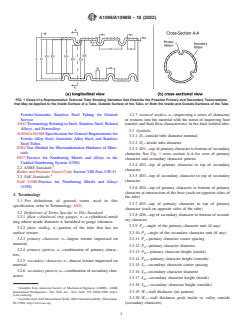
FIG. 1Views of a Representative Textured Tube Showing Variables that Describe the Possible Primary and Secondary Texturizations
that May be Applied to the Inside Surface of a Tube, Outside Surface of the Tube, or Both the Inside and Outside Surfaces of the Tube
Ferritic/Austenitic Stainless Steel Tubing for General 3.2.7 textured surface, n—impressing a series of characters
Service or textures into the material with the intent of improving heat
A941 TerminologyRelatingtoSteel,StainlessSteel,Related transfer and fluid flow characteristics in the final welded tube.
Alloys, and Ferroalloys
3.3 Symbols:
A1016/A1016M Specification for General Requirements for
3.3.1 D—outside tube diameter-nominal
Ferritic Alloy Steel, Austenitic Alloy Steel, and Stainless
3.3.2 D—inside tube diameter
Steel Tubes i
E384 Test Method for Microindentation Hardness of Mate-
3.3.3 ID1—top of primary character to bottom of secondary
rials
character. See Fig. 1 cross section A-A for view of primary
E527 Practice for Numbering Metals and Alloys in the
character and secondary character pattern.
Unified Numbering System (UNS)
3.3.4 ID2—top of primary character to top of secondary
2.2 ASME Standard:
character
Boiler and Pressure Vessel Code Section VIII Para UW-51
3.3.5 ID3—top of secondary character to top of secondary
2.3 SAE Standards:
character
SAE J1086 Practice for Numbering Metals and Alloys
(UNS)
3.3.6 ID4—top of primary character to bottom of primary
character at intersection of the base (each on opposite sides of
3. Terminology
the tube)
3.1 For definitions of general terms used in this
3.3.7 ID5—top of primary character to top of primary
specification, refer to Terminology A941.
character (each on opposite sides of the tube)
3.2 Definitions of Terms Specific to This Standard:
3.3.8 ID6—top of secondary character to bottom of second-
3.2.1 plain cylindrical ring gauges, n—a cylindrical metal
ary character
ring whose inside diameter is furnished to gauge tolerance.
3.3.9 P —angle of the primary character unit (if any)
a
3.2.2 plain ending, n—portion of the tube that has no
surface texture. 3.3.10 P —angle of the secondary character unit (if any)
a
3.2.3 primary character, n—largest texture impressed on
3.3.11 P —primary character center spacing
c
material.
3.3.12 P —primary character diameter
d
3.2.4 primary pattern, n—combination of primary charac-
3.3.13 P —primary character height (inside)
hi
ters.
3.3.14 P —primary character height (outside)
ho
3.2.5 secondary character, n—finecut texture impressed on
material. 3.3.15 S —secondary character center spacing
c
3.2.6 secondary pattern, n—combinationofsecondarychar-
3.3.16 S —secondary character diameter
d
acters.
3.3.17 S —secondary character height (inside)
hi
3.3.18 S —secondary character height (outside)
ho
Available from American Society of Mechanical Engineers (ASME), ASME
International Headquarters, Two Park Ave., New York, NY 10016-5990, http:// 3.3.19 W—wall thickness (no pattern)
www.asme.org.
3.3.20 W —wall thickness peak inside to valley outside
Available from SAE International (SAE), 400 Commonwealth Dr.,Warrendale, 1
PA 15096, http://www.sae.org. (secondary character)
A1098/A1098M−18 (2022)
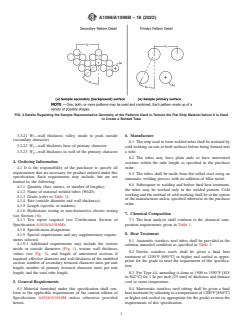
FIG. 2Details Regarding the Sample Representative Geometry of the Patterns Used to Texture the Flat Strip Material before It is Used
to Create a Welded Tube
3.3.21 W —wall thickness valley inside to peak outside 6. Manufacture
(secondary character)
6.1 The strip used to form welded tubes shall be textured by
3.3.22 W —wall thickness base of primary character
cold working on one or both surfaces before being formed into
a tube.
3.3.23 W —wall thickness in wall of the primary character
6.2 The tubes may have plain ends or have untextured
4. Ordering Information
sections within the tube length as specified in the purchase
order.
4.1 It is the responsibility of the purchaser to specify all
requirements that are necessary for product ordered under this
6.3 The tubes shall be made from flat rolled steel using an
specification. Such requirements may include, but are not
automatic welding process with no addition of filler metal.
limited to, the following:
6.4 Subsequent to welding and before final heat treatment,
4.1.1 Quantity (feet, metres, or number of lengths);
the tubes may be worked only in the welded portion. Cold
4.1.2 Name of material welded tubes (WLD);
working and the method of cold working shall be at the option
4.1.3 Grade (refer to Table 1);
of the manufacturer unless specified otherwise in the purchase
4.1.4 Size (outside diameter and wall thickness);
order.
4.1.5 Length (specific or random);
4.1.6 Hydrostatic testing or non-destructive electric testing
7. Chemical Composition
(see Section 16);
7.1 The heat analysis shall conform to the chemical com-
4.1.7 Test report required (see Certification Section of
position requirements given in Table 1.
Specification A1016/A1016M);
4.1.8 Specification designation;
8. Heat Treatment
4.1.9 Special requirements and any supplementary require-
ments selected.
8.1 Austenitic stainless steel tubes shall be provided in the
4.1.9.1 Additional requirements may include the various
solution annealed condition as specified in Table 2.
inside or outside diameters (Fig. 1), texture wall thickness
8.2 Ferritic stainless steels shall be given a final heat
values (see Fig. 3), and length of untextured sections if
treatment of 1200°F [650°C] or higher and cooled as appro-
required; effective diameter and wall thickness of the modified
priate for the grade to meet the requirement of this specifica-
section; number of secondary textured character units per unit
tion.
length; number of primary textured character units per unit
8.3 For Type 44, annealing is done at 1500 to 1550°F [815
length; and the total tube length.
to 842°C] for 1 hr per inch [25 mm] of thickness and furnace
5. General Requirements cool to room temperature.
5.1 Material furnished under this specification shall con- 8.4 Martensitic stainless steel tubing shall be given a final
form to the applicable requirements of the current edition of heattreatmentbyreheatingtoatemperatureof1200°F[650°C]
Specification A1016/A1016M unless otherwise provided or higher and cooled (as appropriate for the grade) to meet the
herein. requirements of this specification.
A1098/A1098M−18 (2022)
A
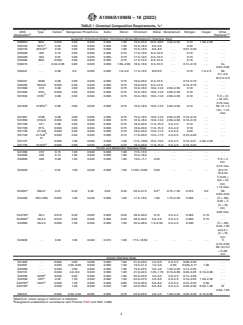
TABLE 1 Chemical Composition Requirements, %
C D
UNS Type Carbon Manganese Phosphorus Sulfur Silicon Chromium Nickel Molybdenum Nitrogen Copper Other
B E,F
Designation Elements
Austenitic (Chromium-Nickel) (Chromium-Nickel-Molybdenum) Stainless Steel
N08904 904L 0.020 2.00 0.045 0.035 1.00 19.0–23.0 23.0–28.0 4.00–5.00 0.10 1.00–2.00 . . .
G
S30103 301L 0.03 2.00 0.045 0.030 1.00 16.0–18.0 6.0–8.0 . . . 0.20 . . . . . .
G
S30153 301LN 0.03 2.00 0.045 0.030 1.00 16.0–18.0 6.0–8.0 . . . 0.07–0.20 . . . . . .
S30200 302 0.15 2.00 0.045 0.030 0.75 17.0–19.0 8.0–10.0 . . . 0.10 . . . . . .
S30400 304 0.07 2.00 0.045 0.030 0.75 17.5–19.5 8.0–10.5 . . . 0.10 . . . . . .
S30403 304L 0.030 2.00 0.045 0.030 0.75 17.5–19.5 8.0–12.0 . . . 0.10 . . . . . .
S30415 . . . 0.04–0.06 0.80 0.045 0.030 1.00–2.00 18.0–19.0 9.0–10.0 . . . 0.12–0.18 . . . Ce
0.03–0.08
S30441 . . . 0.08 2.0 0.045 0.030 1.0–2.0 17.5–19.5 8.010.5 . . . 0.10 1.5–2.5 Nb
0.1–0.5
W 0.2–0.8
S30451 304N 0.08 2.00 0.045 0.030 0.75 18.0–20.0 8.0–10.5 . . . 0.10–0.16 . . . . . .
S30453 304LN 0.030 2.00 0.045 0.030 0.75 18.0–20.0 8.0–12.0 . . . 0.10–0.16 . . . . . .
S31600 316 0.08 2.00 0.045 0.030 0.75 16.0–18.0 10.0–14.0 2.00–3.00 0.10 . . . . . .
S31603 316L 0.030 2.00 0.045 0.030 0.75 16.0–18.0 10.0–14.0 2.00–3.00 0.10 . . . . . .
G
S31635 316Ti 0.08 2.00 0.045 0.030 0.75 16.0–18.0 10.0–14.0 2.00–3.00 0.10 . . . Ti 5 × (C
+ N) min,
0.70 max
G
S31640 316Cb 0.08 2.00 0.045 0.030 0.75 16.0–18.0 10.0–14.0 2.00–3.00 0.10 . . . Nb 10 × C
min, 1.10
max
S31651 316N 0.08 2.00 0.045 0.030 0.75 16.0–18.0 10.0–14.0 2.00–3.00 0.10–0.16 . . . . . .
S31653 316LN 0.030 2.00 0.045 0.030 0.75 16.0–18.0 10.0–14.0 2.00–3.00 0.10–0.16 . . . . . .
S31700 317 0.08 2.00 0.045 0.030 0.75 18.0–20.0 11.0–15.0 3.0–4.0 0.10 . . . . . .
S31703 317L 0.030 2.00 0.045 0.030 0.75 18.0–20.0 11.0–15.0 3.0–4.0 0.10 . . . . . .
S31725 317LM 0.030 2.00 0.045 0.030 0.75 18.0–20.0 13.5–17.5 4.0–5.0 0.20 . . . . . .
G
S31726 317LM 0.030 2.00 0.045 0.030 0.75 17.0–20.0 13.5–17.5 4.0–5.0 0.10–0.20 . . . . . .
N
S31727 . . . 0.030 1.00 0.030 0.030 1.00 17.5–1930 15.5–16.5 3.8–4.5 0.15–0.21 2.80–4.00 . . .
G
S31753 317LN 0.030 2.00 0.045 0.030 0.75 18.0–20.0 11.0–15.0 3.0–4.0 0.10–0.22 . . . . . .
Ferritic and Martensitic Stainless Steel
S41000 410 0.15 1.00 0.040 0.030 1.00 11.5–13.5 . . . . . . . . . . . . . . .
S43000 430 0.12 1.00 0.040 0.030 1.00 16.0–18.0 . . . . . . . . . . . . . . .
S40900 409 0.08 1.00 0.045 0.030 1.00 10.5–11.7 0.50 . . . . . . . . . Ti 6 × C
min;
0.75 max
S43035 . . . 0.07 1.00 0.040 0.030 1.00 17.00–19.00 0.50 . . . . . . . . . Al 0.15
Ni 0.04
Ti 0.20 +
4(C+N)
min;
1.10 max
I H
S44627 XM-27 0.01 0.40 0.02 0.02 0.40 25.0–27.5 0.5 0.75–1.50 0.015 0.2 Nb
0.05–0.20
S44400 18Cr-2Mo 0.025 1.00 0.040 0.030 1.00 17.5–19.5 1.00 1.75–2.50 0.035 . . . (Ti + Nb)
0.20 + 4
(C+N)
min;
0.80 max
J
S44700 29-4 0.010 0.30 0.025 0.020 0.20 28.0–30.0 0.15 3.5–4.2 0.020 0.15 . . .
J
S44800 29-4-2 0.010 0.30 0.025 0.020 0.20 28.0–30.0 2.0–2.5 3.5–4.2 0.020 0.15 . . .
S44660 26-3-3 0.030 1.00 0.040 0.030 1.00 25.0–28.0 1.0–3.50 3.0–4.0 0.040 . . . (Ti + Nb)
0.20–1.00
and6×
(C+N)
min
S43940 . . . 0.03 1.00 0.040 0.015 1.00 17.5–18.50 . . . . . . . . . . . . Ti
0.10–0.60
Nb (3×%C
+ 0.30)
min
Duplex Stainless Steel
S31803 . . . 0.030 2.00 0.030 0.020 1.00 21.0–23.0 4.5–6.5 2.5–3.5 0.08–0.20 . . . . . .
S32001 . . . 0.030 4.00–6.00 0.040 0.030 1.00 19.5–21.5 1.0–3.0 0.60 0.045–0.17 1.00 . . .
S32003 . . . 0.030 2.00 0.030 0.020 1.00 19.5–22.5 3.0–4.0 1.50–2.00 0.14–0.20 . . . . . .
S32101 . . . 0.040 4.0–6.0 0.040 0.030 1.00 21.0–22.0 1.35–1.70 0.10–0.80 0.20–0.25 0.10–0.80 . . .
G
S32205 2205 0.030 2.00 0.030 0.020 1.00 22.0–23.0 4.5–6.5 3.0–3.5 0.14–0.20 . . . . . .
G
S32550 255 0.04 1.50 0.040 0.030 1.00 24.0–27.0 4.5–6.5 2.9–3.9 0.10–0.25 1.50–2.50 . . .
K G
S32750 2507 0.030 1.20 0.035 0.020 0.80 24.0–26.0 6.8–8.0 3.0–5.0 0.24–0.32 0.50 . . .
L
S32760 . . . 0.030 1.00 0.030 0.010 1.00 24.0–26.0 6.0–8.0 3.0–4.0 0.20–0.30 0.50–1.00 W
0.50–1.00
S82441 . . . 0.030 2.50–4.00 0.035 0.005 0.70 23.0–25.0 3.0–4.5 1.00–2.00 0.20–0.30 0.10–0.80 . . .
A
Maximum unless range or minimum is indicated.
B
Designation established in accordance with Practice E527 and SAE J1086.
A1098/A1098M−18 (2022)
C
Unless otherwise indicated, a grade designation originally assigned by the American Iron and Steel Institute (AISI).
D
Carbon analysis shall be reported to nearest 0.01 % except for the low-carbon types, which shall be reported to nearest 0.001 %.
E
The element columbium and its chemical symbol (Cb) are equivalent to the element niobium and its chemical symbol Nb.
F
When two minimums or two maximums are listed for a single type, as in the case of both a value from a formula and an absolute value; the higher minimum or lower
maximum shall apply.
G
Common name, not a trademark, widely used, not associated with any one producer.
H
Nickel plus Copper.
I
For small diameter or thin walls, or both, tubing, where many drawing passes are required, a carbon maximum of 0.015 % is necessary. Small outside diameter tubes are
defined as those less than 0.500 in. [12.7 mm] in outside diameter and light wall tubes as those less than 0.045 in. [1.2 mm] in average wall thickness (0.040 in. [1 mm]
in minimum wall thickness).
J
Carbon plus nitrogen = 0.025 % max.
K
%C+3.3×%Mo+16×%N$ 41.
L
%C+3.3×%Mo+16×%N$ 40.
FIG. 3Details Regarding the Wall Thickness of the Representative Sample Geometry of the Patterns Used to Texture the Flat Strip Ma-
terial before It is Used to Create a Welded Tube
8.5 Forduplexstainlesssteels,alltubesshallbefurnishedin 9.4 Any tests that are specified and required are performed
the heat treated condition in accordance with the procedures on textured lengths of the tube in accordance with this
shown in Table 2. specification need not be performed on both the textured and
the plain sections of the tube.
9. Product Analysis
10. Tensile Requirements
9.1 If specified in the purchase order an analysis of the strip
10.1 All portions of the tubes shall conform to the tensile
supplied from the material producer will be provided to the
requirements as stated in Table 4.
purchaser of the tube; however, if specified as a requirement,
an analysis of either one length of flat-rolled stock or one tube
10.2 For calculating the mechanical properties, the cross-
shall be made for each heat. The chemical composition thus
section to be used is calculated from the wall thickness with no
determined shall conform to the requirements given in Section
pattern.
7 and Table 1.
11. Hardness Requirements
9.2 A product analysis tolerance of Table A1.1 in Specifi-
cation A480/A480M shall apply. The product analysis toler- 11.1 The tubes shall have a Rockwell hardness number not
ance is not applicable to the carbon content for material with a exceeding those in Table 4. These values will be evaluated in
specified maximum carbon of 0.04 % or less. both the textured and untextured sections (if both are present).
The evaluation method will follow the method prescribed in
9.3 If the original test for product analysis fails, retests of
Specification A1016/A1016M.
two additional lengths of flat-rolled stock or tubes shall be
made. Both retests for the elements in question shall meet the 11.2 Hardness values for the textured section will be deter-
mined using microindentation hardness values taken from the
requirements of the specification; otherwise, all remaining
materialintheheatorlot(refertoSection18andTable3)shall cross section.
be rejected or, at the option of the producer, each length of
12. Reverse-Bend Test Requirement
flat-rolled stock or tube may be individually tested for accep-
tance. Lengths of flat-rolled stock or tubes that do not meet the 12.1 A section 4 in. [100 mm] minimum in length shall be
requirements of this specification shall be rejected. split longitudinally 90° on each side of the weld. The sample
A1098/A1098M−18 (2022)
TABLE 2 Heat Treatment Requirements
Wall thickness tolerances shall be 610 % of specified wall for
A
Designation Type Temperature Cooling/ all tubing sizes or other agreed tolerance variation values
Testing
agreed between the producer and the customer. Strip material
Requirements
may be redistributed, but material may not be removed from
Austenitic (Chromium-Nickel) (Chromium-Nickel-Molybdenum)
B
All Cr-Ni steels 1900°F [1040°C] the surface by any method.
except the
13.2.1 The wall thickness (Fig. 3: W, W1-W4) of textured
following:
D C
N08904 904L 2000°F [1095°C] and untextured sections of the tube shall not exceed the
C
S31727 1975 to 2155°F [1080
thickness tolerances shown in Specification A1016/A1016M
to 1180°C]
unless otherwise agreed to between the manufacturer and
Ferritic Stainless Steel
purchaser.Notubewallthicknessatanypointshallbelessthan
All Ferritic Stainless Steels 1200°F [650°C]
Duplex Stainless Steel
the minimum thickness requirements for wall thickness, pre-
E
S31803 1870–2010°F
scribed in Specification A1016/A1016M which is specified for
[1020–1100°C]
E
S32001 1800–1950°F the plain sections or in the textured sections unless customer
[982–1066°C]
and manufacturer agree after evaluating test data of similarly
E
S32003 1850–2050°F
produced textured tubes.
[1010–1120°C]
C
S32101 1870°F [1020°C] min
E 13.3 Alternative Methods:
S32205 1870–2010°F
[1020–1100°C]
13.3.1 Wall thickness shall be evaluated using any instru-
E
S32550 1900°F [1040°C]
ment(thatis,pointingmicrometer,optical,microscopic,andso
E
S32750 1880–2060°F
[1025–1125°C] forth) that is capable of satisfying the required accuracy.
E
S32760 1960–2085°F
Testing frequency shall be one tube per lot for lots as described
[1070–1140°C]
E in Table 3. Alternative methods of measurement able to
S82441 1830°F [1000°C] min
measure the OD and wall include electronic micrometers, a
A
Minimum unless otherwise indicated.
B
no-go snap gauge, ring gauge, non-contact profilometers or
Quenched in water or rapidly cooled by other means at a rate sufficient to prevent
reprecipitation of carbides as demonstr
...