

ASTM D4871-11(2022)
(Guide)Standard Guide for Universal Oxidation/Thermal Stability Test Apparatus
General Information
- Abstract
SIGNIFICANCE AND USE
4.1 This standard describes an apparatus that provides the versatility required to conduct oxidation or thermal stability tests on liquids using a wide variety of test conditions. It is sufficiently flexible so that new test conditions can be chosen in response to the changing demands of the marketplace.
4.2 Procedures using this apparatus are described in the following ASTM standard test methods: D5763, D5846, and D6514. Other procedures may be in use, but they have not been developed as ASTM standard test methods.
SCOPE
1.1 This guide covers an apparatus used to measure the oxidation or thermal stability of liquids by subjecting them to temperatures in the range from 50 °C to 375 °C in the presence of air, oxygen, nitrogen, or other gases at flow rates of 1.5 L/h to 13 L/h, or in the absence of gas flow. Stability may be measured in the presence or absence of water or soluble or insoluble catalysts. Gases evolved may be allowed to escape, condensed and collected, or condensed and returned to the test cell.
1.2 The values stated in SI units are to be regarded as standard. No other units of measurement are included in this standard.
1.3 This standard does not purport to address all of the safety concerns, if any, associated with its use. It is the responsibility of the user of this standard to establish appropriate safety, health, and environmental practices and determine the applicability of regulatory limitations prior to use.
1.4 This international standard was developed in accordance with internationally recognized principles on standardization established in the Decision on Principles for the Development of International Standards, Guides and Recommendations issued by the World Trade Organization Technical Barriers to Trade (TBT) Committee.
- Status
- Published
- Publication Date
- 31-Mar-2022
- Technical Committee
- D02 - Petroleum Products, Liquid Fuels, and Lubricants
- Drafting Committee
- D02.09.0D - Oxidation of Lubricants

Overview
ASTM D4871-11(2022), Standard Guide for Universal Oxidation/Thermal Stability Test Apparatus, provides guidelines for a versatile and flexible test apparatus used to evaluate the oxidation and thermal stability of liquids under controlled laboratory conditions. Developed by ASTM International, this guidance is essential for industries needing reliable methods to assess lubricant and liquid stability across various temperature ranges and in different gaseous environments.
This standard describes the requirements and capabilities of an apparatus that can subject liquids to temperatures between 50°C and 375°C, in the presence or absence of air, oxygen, nitrogen, or other gases at adjustable flow rates. It supports the addition of catalysts (soluble or insoluble), water, and offers options for handling gases evolved during testing.
Key Topics
- Apparatus Flexibility: The apparatus covered is suitable for a wide array of liquid oxidation or thermal stability tests, accommodating shifting industry and regulatory demands.
- Controlled Conditions: Test parameters include temperature control, gas flow regulation, and the management of catalysts and water. The apparatus can measure stability in the presence or absence of these variables.
- Monitoring Parameters: Key monitoring outcomes include changes in acid or base number, viscosity, evaporation loss, sludge formation, color, and corrosion effects on catalyst metals.
- Safety and Compliance: The standard emphasizes the establishment of appropriate safety, health, and environmental practices when using the apparatus, highlighting that regulatory limitations should be evaluated by users.
Applications
The universal oxidation/thermal stability test apparatus described in ASTM D4871-11(2022) finds broad practical application across numerous sectors, especially in the petroleum and lubricants industries:
- Lubricant Testing: Used to determine how lubricating oils, gear oils, and turbine oils respond to oxidative and thermal stress, aiding in product formulation and performance specification.
- Fluid Stability Assessment: Allows for the evaluation of hydraulic fluids and other industrial liquids to ensure durability and resistance to degradation.
- Research and Development: Supports screening of new additives or reformulated products under accelerated oxidation or thermal breakdown conditions.
- Quality Assurance: Essential for routine product qualification and compliance testing, helping manufacturers meet industry and customer requirements.
- Screening and Investigation: The flexible system enables both fixed-time performance testing and failure-point determinations, providing deeper insights into stability characteristics for both existing and novel fluids.
Related Standards
This ASTM guide references various related ASTM standards that detail specific testing procedures compatible with the described apparatus:
- ASTM D5763 - Oxidation and Thermal Stability Characteristics of Gear Oils Using Universal Glassware
- ASTM D5846 - Universal Oxidation Test for Hydraulic and Turbine Oils Using the Universal Oxidation Test Apparatus
- ASTM D6514 - High Temperature Universal Oxidation Test for Turbine Oils
Other referenced test methods relevant to monitoring parameters include:
- ASTM D91 - Precipitation Number of Lubricating Oils
- ASTM D445 - Kinematic Viscosity of Transparent and Opaque Liquids
- ASTM D3339, D5770 - Acid Number of Petroleum Products
- ASTM D156, D1500 - ASTM Color of Petroleum Products
Practical Value
Adhering to ASTM D4871-11(2022) ensures standardized, reproducible, and reliable testing of liquid oxidation and thermal stability. This benefits manufacturers, researchers, and quality assurance professionals by:
- Enabling efficient comparison between products and formulations
- Reducing risk of equipment failure due to subpar lubricant or fluid stability
- Supporting compliance with industry and international standards
- Allowing flexibility to adapt testing parameters in line with changing industry needs
By utilizing the universal oxidation/thermal stability test apparatus as detailed in this ASTM standard, organizations can ensure rigorous evaluation of fluids critical to machinery performance and longevity.
Relations
- Effective Date
- 01-Apr-2024
- Effective Date
- 01-Mar-2024
- Effective Date
- 01-Nov-2023
- Effective Date
- 01-Oct-2023
- Effective Date
- 01-May-2019
- Effective Date
- 01-May-2019
- Effective Date
- 01-Oct-2017
- Effective Date
- 01-Jul-2017
- Effective Date
- 01-May-2017
- Effective Date
- 15-Dec-2016
- Effective Date
- 01-Dec-2014
- Effective Date
- 01-Oct-2014
- Effective Date
- 01-Jul-2014
- Effective Date
- 01-Jul-2014
- Effective Date
- 01-Dec-2012
Get Certified
Connect with accredited certification bodies for this standard

IMP NDT d.o.o.
Non-destructive testing services. Radiography, ultrasonic, magnetic particle, penetrant, visual inspection.
Inštitut za kovinske materiale in tehnologije
Institute of Metals and Technology. Materials testing, metallurgical analysis, NDT.
Q Techna d.o.o.
NDT and quality assurance specialist. 30+ years experience. NDT personnel certification per ISO 9712, nuclear and thermal power plant inspections, QA/
Sponsored listings
Frequently Asked Questions
ASTM D4871-11(2022) is a guide published by ASTM International. Its full title is "Standard Guide for Universal Oxidation/Thermal Stability Test Apparatus". This standard covers: SIGNIFICANCE AND USE 4.1 This standard describes an apparatus that provides the versatility required to conduct oxidation or thermal stability tests on liquids using a wide variety of test conditions. It is sufficiently flexible so that new test conditions can be chosen in response to the changing demands of the marketplace. 4.2 Procedures using this apparatus are described in the following ASTM standard test methods: D5763, D5846, and D6514. Other procedures may be in use, but they have not been developed as ASTM standard test methods. SCOPE 1.1 This guide covers an apparatus used to measure the oxidation or thermal stability of liquids by subjecting them to temperatures in the range from 50 °C to 375 °C in the presence of air, oxygen, nitrogen, or other gases at flow rates of 1.5 L/h to 13 L/h, or in the absence of gas flow. Stability may be measured in the presence or absence of water or soluble or insoluble catalysts. Gases evolved may be allowed to escape, condensed and collected, or condensed and returned to the test cell. 1.2 The values stated in SI units are to be regarded as standard. No other units of measurement are included in this standard. 1.3 This standard does not purport to address all of the safety concerns, if any, associated with its use. It is the responsibility of the user of this standard to establish appropriate safety, health, and environmental practices and determine the applicability of regulatory limitations prior to use. 1.4 This international standard was developed in accordance with internationally recognized principles on standardization established in the Decision on Principles for the Development of International Standards, Guides and Recommendations issued by the World Trade Organization Technical Barriers to Trade (TBT) Committee.
SIGNIFICANCE AND USE 4.1 This standard describes an apparatus that provides the versatility required to conduct oxidation or thermal stability tests on liquids using a wide variety of test conditions. It is sufficiently flexible so that new test conditions can be chosen in response to the changing demands of the marketplace. 4.2 Procedures using this apparatus are described in the following ASTM standard test methods: D5763, D5846, and D6514. Other procedures may be in use, but they have not been developed as ASTM standard test methods. SCOPE 1.1 This guide covers an apparatus used to measure the oxidation or thermal stability of liquids by subjecting them to temperatures in the range from 50 °C to 375 °C in the presence of air, oxygen, nitrogen, or other gases at flow rates of 1.5 L/h to 13 L/h, or in the absence of gas flow. Stability may be measured in the presence or absence of water or soluble or insoluble catalysts. Gases evolved may be allowed to escape, condensed and collected, or condensed and returned to the test cell. 1.2 The values stated in SI units are to be regarded as standard. No other units of measurement are included in this standard. 1.3 This standard does not purport to address all of the safety concerns, if any, associated with its use. It is the responsibility of the user of this standard to establish appropriate safety, health, and environmental practices and determine the applicability of regulatory limitations prior to use. 1.4 This international standard was developed in accordance with internationally recognized principles on standardization established in the Decision on Principles for the Development of International Standards, Guides and Recommendations issued by the World Trade Organization Technical Barriers to Trade (TBT) Committee.
ASTM D4871-11(2022) is classified under the following ICS (International Classification for Standards) categories: 19.040 - Environmental testing. The ICS classification helps identify the subject area and facilitates finding related standards.
ASTM D4871-11(2022) has the following relationships with other standards: It is inter standard links to ASTM D445-24, ASTM D1500-24, ASTM D445-23, ASTM D156-23, ASTM D6514-03(2019)e1, ASTM D6514-03(2019), ASTM D5846-07(2017), ASTM D91-02(2017), ASTM D664-11a(2017), ASTM D445-16, ASTM D974-14e1, ASTM D6514-03(2014), ASTM D445-14e1, ASTM D445-14, ASTM D1500-12. Understanding these relationships helps ensure you are using the most current and applicable version of the standard.
ASTM D4871-11(2022) is available in PDF format for immediate download after purchase. The document can be added to your cart and obtained through the secure checkout process. Digital delivery ensures instant access to the complete standard document.
Standards Content (Sample)
This international standard was developed in accordance with internationally recognized principles on standardization established in the Decision on Principles for the
Development of International Standards, Guides and Recommendations issued by the World Trade Organization Technical Barriers to Trade (TBT) Committee.
Designation: D4871 − 11 (Reapproved 2022)
Standard Guide for
Universal Oxidation/Thermal Stability Test Apparatus
This standard is issued under the fixed designation D4871; the number immediately following the designation indicates the year of
original adoption or, in the case of revision, the year of last revision. A number in parentheses indicates the year of last reapproval. A
superscript epsilon (´) indicates an editorial change since the last revision or reapproval.
1. Scope D664 Test Method for Acid Number of Petroleum Products
by Potentiometric Titration
1.1 This guide covers an apparatus used to measure the
D974 Test Method for Acid and Base Number by Color-
oxidation or thermal stability of liquids by subjecting them to
Indicator Titration
temperatures in the range from 50 °C to 375 °C in the presence
D1500 Test Method forASTM Color of Petroleum Products
of air, oxygen, nitrogen, or other gases at flow rates of 1.5 L⁄h
(ASTM Color Scale)
to 13 L⁄h, or in the absence of gas flow. Stability may be
D3339 Test Method forAcid Number of Petroleum Products
measured in the presence or absence of water or soluble or
by Semi-Micro Color Indicator Titration
insoluble catalysts. Gases evolved may be allowed to escape,
D5763 Test Method for Oxidation and Thermal Stability
condensed and collected, or condensed and returned to the test
Characteristics of Gear Oils Using Universal Glassware
cell.
D5770 Test Method for Semiquantitative Micro Determina-
1.2 The values stated in SI units are to be regarded as
tion of Acid Number of Lubricating Oils During Oxida-
standard. No other units of measurement are included in this
tion Testing
standard.
D5846 Test Method for Universal Oxidation Test for Hy-
1.3 This standard does not purport to address all of the
draulic and Turbine Oils Using the Universal Oxidation
safety concerns, if any, associated with its use. It is the Test Apparatus
responsibility of the user of this standard to establish appro-
D6514 Test Method for High Temperature Universal Oxida-
priate safety, health, and environmental practices and deter- tion Test for Turbine Oils
mine the applicability of regulatory limitations prior to use.
3. Summary of Guide
1.4 This international standard was developed in accor-
dance with internationally recognized principles on standard-
3.1 An apparatus is described in which a sample of test
ization established in the Decision on Principles for the
fluid, typically from 100 mL or 100 g, is subjected to thermal
Development of International Standards, Guides and Recom-
or oxidative degradation or both. Insoluble or soluble catalyst
mendations issued by the World Trade Organization Technical
may be added. Gas may be bubbled through the liquid to
Barriers to Trade (TBT) Committee.
provide agitation or to promote oxidation or both. Water or
water vapor may be added.At the end of the test or at intervals
2. Referenced Documents
throughout the test, the liquid is monitored for change in
2.1 ASTM Standards:
neutralization number, viscosity, weight loss, formation of
D91 Test Method for Precipitation Number of Lubricating
sludge, or for other parameters. The corrosivity of the fluid
Oils
toward any catalyst metals can be determined from the
D156 Test Method for Saybolt Color of Petroleum Products
appearance and weight change of the metal test specimens, if
(Saybolt Chromometer Method)
present, or by monitoring the oil and any sludge or water for
D445 Test Method for Kinematic Viscosity of Transparent
metal content. The test is terminated after a fixed time period
and Opaque Liquids (and Calculation of Dynamic Viscos-
or when a selected parameter reaches a condemning value.
ity)
NOTE 1—The volume of liquid at test temperature should be sufficient
to cover the catalysts and should not extend beyond the heated portion of
This guide is under the jurisdiction of ASTM Committee D02 on Petroleum the bath.
Products, Liquid Fuels, and Lubricants and is the direct responsibility of Subcom-
mittee D02.09.0D on Oxidation of Lubricants.
4. Significance and Use
Current edition approved April 1, 2022. Published April 2022. Originally
4.1 This standard describes an apparatus that provides the
approved in 1988. Last previous edition approved in 2016 as D4871 – 11 (2016).
DOI: 10.1520/D4871-11R22.
versatility required to conduct oxidation or thermal stability
For referenced ASTM standards, visit the ASTM website, www.astm.org, or
tests on liquids using a wide variety of test conditions. It is
contact ASTM Customer Service at service@astm.org. For Annual Book of ASTM
sufficientlyflexiblesothatnewtestconditionscanbechosenin
Standards volume information, refer to the standard’s Document Summary page on
the ASTM website. response to the changing demands of the marketplace.
Copyright © ASTM International, 100 Barr Harbor Drive, PO Box C700, West Conshohocken, PA 19428-2959. United States
D4871 − 11 (2022)
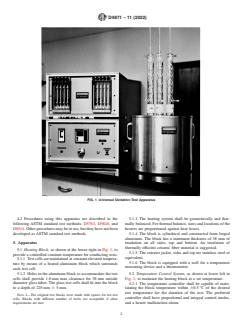
FIG. 1 Universal Oxidation Test Apparatus
4.2 Procedures using this apparatus are described in the 5.1.3 The heating system shall be geometrically and ther-
following ASTM standard test methods: D5763, D5846, and mally balanced. For thermal balance, sizes and locations of the
D6514.Otherproceduresmaybeinuse,buttheyhavenotbeen heaters are proportioned against heat losses.
developed as ASTM standard test methods. 5.1.4 The block is cylindrical and constructed from forged
aluminum. The block has a minimum thickness of 38 mm of
5. Apparatus insulation on all sides, top and bottom. An insulation of
thermally efficient ceramic fiber material is suggested.
5.1 Heating Block, as shown at the lower right in Fig. 1,to
5.1.5 The exterior jacket, sides and top are stainless steel or
provide a controlled constant temperature for conducting tests.
equivalent.
5.1.1 Test cells are maintained at constant elevated tempera-
5.1.6 The block is equipped with a well for a temperature
ture by means of a heated aluminum block which surrounds
measuring device and a thermometer.
each test cell.
5.1.2 Holes in the aluminum block to accommodate the test
5.2 Temperature Control System, as shown at lower left in
cells shall provide 1.0 mm max clearance for 38 mm outside Fig. 1, to maintain the heating block at a set temperature.
diameter glass tubes. The glass test cells shall fit into the block
5.2.1 The temperature controller shall be capable of main-
to a depth of 225 mm 6 5 mm.
taining the block temperature within 60.5 °C of the desired
test temperature for the duration of the test. The preferred
NOTE 2—The original test blocks were made with spaces for ten test
controller shall have proportional and integral control modes,
cells. Blocks with different number of holes are acceptable if other
requirements are met. and a heater malfunction alarm.
D4871 − 11 (2022)
5.2.2 The range for operation is from at least 50 °C to
375 °C. (Warning—An adjustable deviation alarm that auto-
matically shuts down the system if temperature varies outside
preset limits is desirable as a safety feature and to avoid
erroneous test results. A separate adjustable high temperature
monitor and shutoff is desirable as a safety device.)
5.2.3 Temperature control and uniformity is the most im-
portant parameter affecting test result precision. Therefore, the
heating system design is critical. Temperature from hole-to-
hole and at all sides of each hole in the block shall be uniform
within the 0.5 °C tolerance of the total system.
5.3 GasFlowControlSystem,asshowninFig.1,toprovide
air or other gases to each test cell.
5.3.1 A gas flow controller is required for each test cell, to
provideairorotherdesiredgases.(Warning—Ifreactivegases
are to be used in th
...