

ASTM E2787-21
(Test Method)Standard Test Method for Determination of Thiodiglycol in Soil Using Pressurized Fluid Extraction Followed by Single Reaction Monitoring Liquid Chromatography/Tandem Mass Spectrometry (LC/MS/MS)
General Information
- Abstract
SIGNIFICANCE AND USE
5.1 TDG is a Schedule 2 compound under the Chemical Weapons Convention (CWC). Schedule 2 chemicals include those that are precursors to chemical weapons, chemical weapons agents, or have a number of other commercial uses. They are used as ingredients to produce insecticides, herbicides, lubricants, and some pharmaceutical products. Schedule 2 chemicals can be found in applications unrelated to chemical weapons. TDG is both a mustard gas precursor and a degradant as well as an ingredient in water-based inks, ballpoint pen inks, dyes, and some pesticides.5
5.2 This method has been investigated for use with soil.
SCOPE
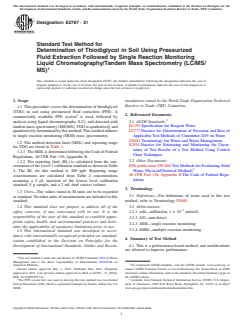
1.1 This procedure covers the determination of thiodiglycol (TDG) in soil using pressurized fluid extraction (PFE). A commercially available PFE system2 is used, followed by analysis using liquid chromatography (LC), and detected with tandem mass spectrometry (MS/MS). TDG is qualitatively and quantitatively determined by this method. This method adheres to single reaction monitoring (SRM) mass spectrometry.
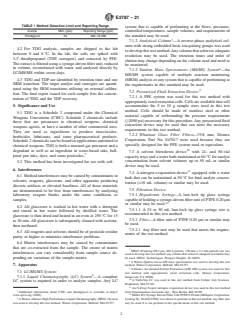
1.2 The method detection limit (MDL) and reporting range for TDG are listed in Table 1.
1.2.1 The MDL is determined following the Code of Federal Regulations, 40 CFR Part 136, Appendix B.
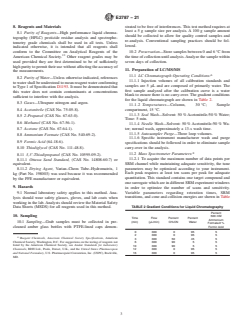
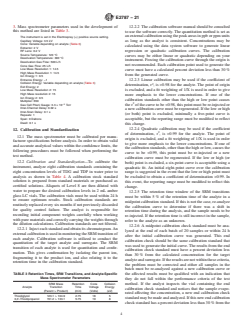
1.2.2 The reporting limit (RL) is calculated from the concentration of the Level 1 calibration standard as shown in Table 4. The RL for this method is 200 ppb. Reporting range concentrations are calculated from Table 4 concentrations assuming a 5 μL injection of the lowest level calibration standard, 5 g sample, and a 2 mL final extract volume.
1.3 Units—The values stated in SI units are to be regarded as standard. No other units of measurement are included in this standard.
1.4 This standard does not purport to address all of the safety concerns, if any, associated with its use. It is the responsibility of the user of this standard to establish appropriate safety, health, and environmental practices and determine the applicability of regulatory limitations prior to use.
1.5 This international standard was developed in accordance with internationally recognized principles on standardization established in the Decision on Principles for the Development of International Standards, Guides and Recommendations issued by the World Trade Organization Technical Barriers to Trade (TBT) Committee.
- Status
- Published
- Publication Date
- 30-Apr-2021
- Technical Committee
- D34 - Waste Management
- Drafting Committee
- D34.01.06 - Analytical Methods
Buy Documents
ASTM E2787-21 - Standard Test Method for Determination of Thiodiglycol in Soil Using Pressurized Fluid Extraction Followed by Single Reaction Monitoring Liquid Chromatography/Tandem Mass Spectrometry (LC/MS/MS)
REDLINE ASTM E2787-21 - Standard Test Method for Determination of Thiodiglycol in Soil Using Pressurized Fluid Extraction Followed by Single Reaction Monitoring Liquid Chromatography/Tandem Mass Spectrometry (LC/MS/MS)
Overview
ASTM E2787-21 establishes a standardized test method for the determination of thiodiglycol (TDG) in soil. This analytical procedure employs pressurized fluid extraction (PFE), followed by analysis via liquid chromatography coupled with tandem mass spectrometry (LC/MS/MS), utilizing single reaction monitoring (SRM) for detection and quantification. Thiodiglycol is classified as a Schedule 2 compound under the Chemical Weapons Convention (CWC) due to its role as a precursor and degradant of chemical warfare agents, though it is also found in various commercial products, including inks, dyes, and certain pesticides. This standard outlines requirements and procedures for the accurate laboratory determination of TDG concentrations in solid matrices such as soil, ensuring reliable data for compliance, safety, and environmental monitoring purposes.
Key Topics
- Precision Analytical Methods: The document specifies the use of commercially available PFE systems for soil extraction, ensuring controlled sample handling and reproducible results.
- LC/MS/MS Analysis: Utilization of liquid chromatography and tandem mass spectrometry, with the SRM mode, enables sensitive and selective identification and quantitation of thiodiglycol.
- Quality Control: The method includes guidelines for calibration, blank analysis, surrogate recovery, matrix spikes, and duplicate analyses, underpinning the precision and accuracy required for regulatory and forensic applications.
- Interference Mitigation: Addresses sources of interference such as contaminated reagents or sample matrices, stressing the need for purity and suitable control measures.
- Regulatory Compliance: Follows standards in accordance with 40 CFR Part 136 and other recognized analytical guidelines, supporting environmental and chemical safety legislation.
Applications
- Environmental Monitoring: Laboratories and environmental agencies use this standard to assess thiodiglycol contamination in soils, particularly near manufacturing, storage, or disposal sites associated with chemical agents or pesticides.
- Regulatory Compliance: Meets requirements for monitoring Schedule 2 chemicals under the Chemical Weapons Convention and other international treaties by providing documented and validated test procedures for soil matrices.
- Remediation and Risk Assessment: Supports site investigations, remedial action planning, and risk assessments where thiodiglycol presence may pose health, safety, or ecological risks.
- Industrial Hygiene: Used by facilities managing or producing products containing thiodiglycol (inks, dyes, lubricants, pesticides) to verify soil contamination status and ensure regulatory adherence.
- Forensic Investigations: Assists legal and compliance professionals in identifying and quantifying thiodiglycol to determine past or current misuse associated with chemical weapons or their precursors.
Related Standards
ASTM E2787-21 references and aligns with the following standards and regulatory documents:
- ASTM D653: Terminology Relating to Soil, Rock, and Contained Fluids
- ASTM D1193: Specification for Reagent Water
- ASTM D5681: Terminology for Waste and Waste Management
- ASTM E2554: Practice for Estimating and Monitoring the Uncertainty of Test Results of a Test Method Using Control Chart Techniques
- EPA SW-846: Test Methods for Evaluating Solid Waste, Physical/Chemical Methods
- 40 CFR Part 136, Appendix B: Guidelines for establishing method detection limits
- Chemical Weapons Convention (CWC): International framework regulating Schedule 2 chemicals and their monitoring
By following ASTM E2787-21, laboratories ensure robust, defensible, and internationally recognized procedures for the determination of thiodiglycol in soil using modern PFE and LC/MS/MS techniques. This facilitates accurate reporting, compliance with environmental and safety regulations, and supports chemical risk management initiatives across multiple sectors.
Relations
- Effective Date
- 01-Nov-2023
- Effective Date
- 01-Nov-2018
- Effective Date
- 01-Apr-2018
- Effective Date
- 01-Apr-2018
- Effective Date
- 01-Sep-2017
- Effective Date
- 01-Nov-2016
- Effective Date
- 01-Feb-2016
- Effective Date
- 01-Apr-2013
- Effective Date
- 01-Feb-2013
- Effective Date
- 15-Jun-2012
- Effective Date
- 01-Jul-2009
- Effective Date
- 01-Sep-2008
- Effective Date
- 15-Jan-2008
- Effective Date
- 01-May-2007
- Effective Date
- 15-Aug-2006
Buy Documents
ASTM E2787-21 - Standard Test Method for Determination of Thiodiglycol in Soil Using Pressurized Fluid Extraction Followed by Single Reaction Monitoring Liquid Chromatography/Tandem Mass Spectrometry (LC/MS/MS)
REDLINE ASTM E2787-21 - Standard Test Method for Determination of Thiodiglycol in Soil Using Pressurized Fluid Extraction Followed by Single Reaction Monitoring Liquid Chromatography/Tandem Mass Spectrometry (LC/MS/MS)
Get Certified
Connect with accredited certification bodies for this standard

CIS Institut d.o.o.
Personal Protective Equipment (PPE) certification body. Notified Body NB-2890 for EU Regulation 2016/425 PPE.

Kiwa BDA Testing
Building and construction product certification.
Kmetijski inštitut Slovenije
Agricultural Institute of Slovenia. Soil testing, plant health, agricultural product analysis.
Sponsored listings
Frequently Asked Questions
ASTM E2787-21 is a standard published by ASTM International. Its full title is "Standard Test Method for Determination of Thiodiglycol in Soil Using Pressurized Fluid Extraction Followed by Single Reaction Monitoring Liquid Chromatography/Tandem Mass Spectrometry (LC/MS/MS)". This standard covers: SIGNIFICANCE AND USE 5.1 TDG is a Schedule 2 compound under the Chemical Weapons Convention (CWC). Schedule 2 chemicals include those that are precursors to chemical weapons, chemical weapons agents, or have a number of other commercial uses. They are used as ingredients to produce insecticides, herbicides, lubricants, and some pharmaceutical products. Schedule 2 chemicals can be found in applications unrelated to chemical weapons. TDG is both a mustard gas precursor and a degradant as well as an ingredient in water-based inks, ballpoint pen inks, dyes, and some pesticides.5 5.2 This method has been investigated for use with soil. SCOPE 1.1 This procedure covers the determination of thiodiglycol (TDG) in soil using pressurized fluid extraction (PFE). A commercially available PFE system2 is used, followed by analysis using liquid chromatography (LC), and detected with tandem mass spectrometry (MS/MS). TDG is qualitatively and quantitatively determined by this method. This method adheres to single reaction monitoring (SRM) mass spectrometry. 1.2 The method detection limit (MDL) and reporting range for TDG are listed in Table 1. 1.2.1 The MDL is determined following the Code of Federal Regulations, 40 CFR Part 136, Appendix B. 1.2.2 The reporting limit (RL) is calculated from the concentration of the Level 1 calibration standard as shown in Table 4. The RL for this method is 200 ppb. Reporting range concentrations are calculated from Table 4 concentrations assuming a 5 μL injection of the lowest level calibration standard, 5 g sample, and a 2 mL final extract volume. 1.3 Units—The values stated in SI units are to be regarded as standard. No other units of measurement are included in this standard. 1.4 This standard does not purport to address all of the safety concerns, if any, associated with its use. It is the responsibility of the user of this standard to establish appropriate safety, health, and environmental practices and determine the applicability of regulatory limitations prior to use. 1.5 This international standard was developed in accordance with internationally recognized principles on standardization established in the Decision on Principles for the Development of International Standards, Guides and Recommendations issued by the World Trade Organization Technical Barriers to Trade (TBT) Committee.
SIGNIFICANCE AND USE 5.1 TDG is a Schedule 2 compound under the Chemical Weapons Convention (CWC). Schedule 2 chemicals include those that are precursors to chemical weapons, chemical weapons agents, or have a number of other commercial uses. They are used as ingredients to produce insecticides, herbicides, lubricants, and some pharmaceutical products. Schedule 2 chemicals can be found in applications unrelated to chemical weapons. TDG is both a mustard gas precursor and a degradant as well as an ingredient in water-based inks, ballpoint pen inks, dyes, and some pesticides.5 5.2 This method has been investigated for use with soil. SCOPE 1.1 This procedure covers the determination of thiodiglycol (TDG) in soil using pressurized fluid extraction (PFE). A commercially available PFE system2 is used, followed by analysis using liquid chromatography (LC), and detected with tandem mass spectrometry (MS/MS). TDG is qualitatively and quantitatively determined by this method. This method adheres to single reaction monitoring (SRM) mass spectrometry. 1.2 The method detection limit (MDL) and reporting range for TDG are listed in Table 1. 1.2.1 The MDL is determined following the Code of Federal Regulations, 40 CFR Part 136, Appendix B. 1.2.2 The reporting limit (RL) is calculated from the concentration of the Level 1 calibration standard as shown in Table 4. The RL for this method is 200 ppb. Reporting range concentrations are calculated from Table 4 concentrations assuming a 5 μL injection of the lowest level calibration standard, 5 g sample, and a 2 mL final extract volume. 1.3 Units—The values stated in SI units are to be regarded as standard. No other units of measurement are included in this standard. 1.4 This standard does not purport to address all of the safety concerns, if any, associated with its use. It is the responsibility of the user of this standard to establish appropriate safety, health, and environmental practices and determine the applicability of regulatory limitations prior to use. 1.5 This international standard was developed in accordance with internationally recognized principles on standardization established in the Decision on Principles for the Development of International Standards, Guides and Recommendations issued by the World Trade Organization Technical Barriers to Trade (TBT) Committee.
ASTM E2787-21 is classified under the following ICS (International Classification for Standards) categories: 13.080.10 - Chemical characteristics of soils. The ICS classification helps identify the subject area and facilitates finding related standards.
ASTM E2787-21 has the following relationships with other standards: It is inter standard links to ASTM D5681-23, ASTM D5681-18, ASTM E2554-18e1, ASTM E2554-18, ASTM D5681-17, ASTM D5681-16a, ASTM D5681-16, ASTM E2554-13, ASTM D5681-13, ASTM D2777-12, ASTM D5681-09, ASTM D5681-08, ASTM D2777-08, ASTM E2554-07, ASTM D2777-06. Understanding these relationships helps ensure you are using the most current and applicable version of the standard.
ASTM E2787-21 is available in PDF format for immediate download after purchase. The document can be added to your cart and obtained through the secure checkout process. Digital delivery ensures instant access to the complete standard document.
Standards Content (Sample)
This international standard was developed in accordance with internationally recognized principles on standardization established in the Decision on Principles for the
Development of International Standards, Guides and Recommendations issued by the World Trade Organization Technical Barriers to Trade (TBT) Committee.
Designation: E2787 − 21
Standard Test Method for
Determination of Thiodiglycol in Soil Using Pressurized
Fluid Extraction Followed by Single Reaction Monitoring
Liquid Chromatography/Tandem Mass Spectrometry (LC/MS/
MS)
This standard is issued under the fixed designation E2787; the number immediately following the designation indicates the year of
original adoption or, in the case of revision, the year of last revision.Anumber in parentheses indicates the year of last reapproval.A
superscript epsilon (´) indicates an editorial change since the last revision or reapproval.
1. Scope mendations issued by the World Trade Organization Technical
Barriers to Trade (TBT) Committee.
1.1 This procedure covers the determination of thiodiglycol
(TDG) in soil using pressurized fluid extraction (PFE). A
2 2. Referenced Documents
commercially available PFE system is used, followed by
2.1 ASTM Standards:
analysis using liquid chromatography (LC), and detected with
tandemmassspectrometry(MS/MS).TDGisqualitativelyand D1193Specification for Reagent Water
D2777Practice for Determination of Precision and Bias of
quantitativelydeterminedbythismethod.Thismethodadheres
to single reaction monitoring (SRM) mass spectrometry. Applicable Test Methods of Committee D19 on Water
D5681Terminology for Waste and Waste Management
1.2 The method detection limit (MDL) and reporting range
E2554Practice for Estimating and Monitoring the Uncer-
for TDG are listed in Table 1.
tainty of Test Results of a Test Method Using Control
1.2.1 TheMDLisdeterminedfollowingtheCodeofFederal
Chart Techniques
Regulations, 40 CFR Part 136, Appendix B.
2.2 Other Documents:
1.2.2 The reporting limit (RL) is calculated from the con-
EPApublication SW-846Test Methods for Evaluating Solid
centrationoftheLevel1calibrationstandardasshowninTable
Waste, Physical/Chemical Methods
4. The RL for this method is 200 ppb. Reporting range
40 CFR Part 136, Appendix BThe Code of Federal Regu-
concentrations are calculated from Table 4 concentrations
lations
assuminga5µL injection of the lowest level calibration
standard, 5 g sample, anda2mL final extract volume.
3. Terminology
1.3 Units—The values stated in SI units are to be regarded
3.1 Definitions—For definitions of terms used in this test
asstandard.Nootherunitsofmeasurementareincludedinthis
method, refer to Terminology D5681.
standard.
3.2 Abbreviations:
1.4 This standard does not purport to address all of the
–3
3.2.1 mM—millimolar,1×10 moles/L
safety concerns, if any, associated with its use. It is the
responsibility of the user of this standard to establish appro-
3.2.2 ND—non-detect
priate safety, health, and environmental practices and deter-
3.2.3 SRM—single reaction monitoring
mine the applicability of regulatory limitations prior to use.
3.2.4 MRM—multiple reaction monitoring
1.5 This international standard was developed in accor-
dance with internationally recognized principles on standard-
4. Summary of Test Method
ization established in the Decision on Principles for the
Development of International Standards, Guides and Recom- 4.1 This is a performance-based method, and modifications
are allowed to improve performance.
This test method is under the jurisdiction ofASTM Committee D34 on Waste
Management and is the direct responsibility of Subcommittee D34.01.06 on
Analytical Methods. For referenced ASTM standards, visit the ASTM website, www.astm.org, or
Current edition approved May 1, 2021. Published May 2021. Originally contact ASTM Customer Service at service@astm.org. For Annual Book of ASTM
approved in 2011. Last previous edition approved in 2016 as E2787–11 (2016). Standards volume information, refer to the standard’s Document Summary page on
DOI: 10.1520/E2787-21. the ASTM website.
2 4
The PFE system that was used to develop this test method was Accelerated Available from National Technical Information Service (NTIS), U.S. Depart-
Solvent Extraction (ASE) which is a patented technique by Dionex, Sunnyvale, CA ment of Commerce, 5285 Port Royal Road, Springfield, VA, 22161 or at http://
94088. www.epa.gov/epawaste/hazard/testmethods/index.htm.
Copyright © ASTM International, 100 Barr Harbor Drive, PO Box C700, West Conshohocken, PA 19428-2959. United States
E2787 − 21
TABLE 1 Method Detection Limit and Reporting Range
system that is capable of performing at the flows, pressures,
Analyte MDL (ppb) Reporting Range (ppb) controlled temperatures, sample volumes, and requirements of
Thiodiglycol 54 200–16 000 the standard may be used.
7.1.2 Analytical Column —A reverse-phase analytical col-
umn with strong embedded basic ion-pairing groups was used
4.2 For TDG analysis, samples are shipped to the lab
todevelopthistestmethod.Anycolumnthatachievesadequate
between 0 and 6°C. In the lab, the soils are spiked with
resolution may be used. The retention times and order of
3,3’-thiodipropanol (TDP, surrogate) and extracted by PFE.
elutionmaychangedependingonthecolumnusedandneedto
Theextractisfilteredusingasyringe-drivenfilterunit,reduced
be monitored.
in volume, reconstituted with water, and analyzed directly by 8
7.1.3 Tandem Mass Spectrometer (MS/MS) System —An
LC/MS/MS within seven days.
MS/MS system capable of multiple reaction monitoring
4.3 TDG and TDP are identified by retention time and one
(MRM)analysisoranysystemthatiscapableofperformingat
SRM transition. The target analyte and surrogate are quanti-
the requirements in this standard may be used.
tated using the SRM transitions utilizing an external calibra-
7.2 Pressurized Fluid Extraction Device:
tion. The final report issued for each sample lists the concen-
7.2.1 A PFE system was used for this test method with
tration of TDG and the TDP recovery.
appropriatelysizedextractioncells.Cellsareavailablethatwill
5. Significance and Use accommodate the 5 to 10 g sample sizes used in this test
method. Cells should be made of stainless steel or other
5.1 TDG is a Schedule 2 compound under the Chemical
material capable of withstanding the pressure requirements
Weapons Convention (CWC). Schedule 2 chemicals include
(≥2000psi)necessaryforthisprocedure.Anypressurizedfluid
those that are precursors to chemical weapons, chemical
extraction device may be used that can meet the necessary
weapons agents, or have a number of other commercial uses.
requirements in this test method.
They are used as ingredients to produce insecticides,
7.2.2 Whatman Glass Fiber Filters—19.8 mm, Dionex
herbicides, lubricants, and some pharmaceutical products.
Corporation, Part No. 047017 were used because they are
Schedule2chemicalscanbefoundinapplicationsunrelatedto
specially designed for the PFE system used or equivalent.
chemical weapons.TDG is both a mustard gas precursor and a
degradant as well as an ingredient in water-based inks, ball-
7.3 A solvent blowdown device with 24- and 50-vial
point pen inks, dyes, and some pesticides.
capacitytraysandawaterbathmaintainedat60°Cforanalyte
concentration from solvent volumes up to 50 mL or similar
5.2 This method has been investigated for use with soil.
device may be used.
6. Interferences
7.4 A nitrogen evaporation device equipped with a water
6.1 Methodinterferencesmaybecausedbycontaminantsin
bath that can be maintained at 50°C for final analyte concen-
solvents, reagents, glassware, and other apparatus producing
tration (<10 mL volume) or similar may be used.
discrete artifacts or elevated baselines. All of these materials
7.5 Filtration Device:
are demonstrated to be free from interferences by analyzing
7.5.1 Hypodermic Syringe—A luer-lock tip glass syringe
laboratory reagent blanks under the same conditions as
capableofholdingasyringe-drivenfilterunitofPTFE0.20µm
samples.
or similar may be used.
6.2 All glassware is washed in hot water with a detergent
7.5.1.1 A 25 or 50 mL luer-lock tip glass syringe size is
and rinsed in hot water followed by distilled water. The
recommended in this test method.
glassware is then dried and heated in an oven at 250°C for 15
7.5.2 Filter—A filter unit of PTFE 0.20 µm or similar may
to 30 min.All glassware is subsequently cleaned with acetone,
be used.
then methanol.
7.5.2.1 Any filter unit may be used that meets the require-
6.3 All reagents and solvents should be of pesticide residue
ments of the test method.
purity or higher to minimize interference problems.
6.4 Matrix interferences may be caused by contaminants
that are co-extracted from the sample. The extent of matrix
SIELC–PrimesepSB5µm,100Åparticle,150mm×2.1mmparticlesizewas
interferences can vary considerably from sample source de-
usedtodevelopthistestmethod,anycolumnthatachievesadequateresolutionmay
pending on variations of the sample matrix. be used. SIELC Technologies, Prospect Heights, IL 60070.
A Waters Quattro micro API mass spectrometer was used to develop this test
7. Apparatus method. Waters Corporation, Milford, MA 01757.
ADionexAccelerated Solvent Extraction (ASE 200) system was used for this
7.1 LC/MS/MS System:
test method with appropriately sized extraction cells. Dionex Corporation,
7.1.1 Liquid Chromatography (LC) System —A complete Sunnyvale, CA 94088.
A TurboVap LV was used in this test method from Caliper Life Sciences,
LC system is required in order to analyze samples. Any LC
Hopkinton, MA 01748.
An N-Evap 24-port nitrogen evaporation device was used in this test method
Additional information about CWC and thiodiglycol is available at http:// from Organomation Associates Inc., West Berlin, MA 01503.
www.opcw.org (2009). MillexHVSyringeDrivenFilterUnitPTFE0.20mm(MilliporeCorporation,
AWatersAlliance High Performance Liquid Chromatography (HPLC) System CatalogNo.SLLGC25NS)wasshowntoperforminthistestmethod;anyfilterunit
was used to develop this test method. Waters Corporation, Milford, MA 01757. may be used if it can perform to the specifications in this test method.
E2787 − 21
8. Reagents and Materials strated to be free of interferences. This test method requires at
leasta5g sample size per analysis. A 100 g sample amount
8.1 Purity of Reagents—High performance liquid chroma-
should be collected to allow for quality control samples and
tography (HPLC) pesticide residue analysis and spectropho-
re-analysis. Conventional sampling practices should be fol-
tometry grade chemicals shall be used in all tests. Unless
lowed.
indicated otherwise, it is intended that all reagents shall
conform to the Committee on Analytical Reagents of the 10.2 Preservation—Store samples between 0 and 6°C from
American Chemical Society. Other reagent grades may be thetimeofcollectionuntilanalysis.Analyzethesamplewithin
used provided they are first determined to be of sufficiently seven days of collection.
highpuritytopermittheirusewithoutaffectingtheaccuracyof
11. Preparation of LC/MS/MS
the measurements.
11.1 LC Chromatograph Operating Conditions:
8.2 Purity of Water—Unless otherwise indicated, references
11.1.1 Injection volumes of all calibration standards and
towatershallbeunderstoodtomeanreagentwaterconforming
samples are 5 µL and are composed of primarily water. The
toType1ofSpecificationD1193.Itmustbedemonstratedthat
first sample analyzed after the calibration curve is a water
this water does not contain contaminants at concentrations
blank to ensure there is no carry-over. The gradient conditions
sufficient to interfere with the analysis.
for the liquid chromatograph are shown in Table 2.
8.3 Gases—Ultrapure nitrogen and argon.
11.1.2 Temperatures—Column, 30 °C; Sample
8.4 Acetonitrile (CAS No. 75-05-8). compartment, 15°C.
11.1.3 Seal Wash—Solvent: 50% Acetonitrile⁄50% Water;
8.5 2-Propanol (CAS No. 67-63-0).
Time: 5 min.
8.6 Methanol (CAS No. 67-56-1).
11.1.4 Needle Wash—Solvent: 50% Acetonitrile⁄50% Wa-
8.7 Acetone (CAS No. 67-64-1). ter; normal wash, approximately a 13-s wash time.
11.1.5 Autosampler Purge—Three loop volumes.
8.8 Ammonium Formate (CAS No. 540-69-2).
11.1.6 Specific instrument manufacturer wash and purge
8.9 Formic Acid (64-18-6).
specifications should be followed in order to eliminate sample
carry-over in the analysis.
8.10 Thiodiglycol (CAS No. 111-48-8).
11.2 Mass Spectrometer Parameters:
8.11 3,3’-Thiodipropanol (CAS No. 10595-09-2).
11.2.1 To acquire the maximum number of data points per
8.11.1 Ottawa Sand Standard, (CAS No. 14808-60-7) or
SRM channel while maintaining adequate sensitivity, the tune
equivalent.
parameters may be optimized according to your instrument.
8.11.2 Drying Agent, Varian–Chem Tube–Hydromatrix, 1
Each peak requires at least ten scans per peak for adequate
kg (Part No. 198003) was used because it was recommended
quantitation. This standard contains one target compound and
by the PFE manufacturer or equivalent.
onesurrogatewhichareindifferentSRMexperimentwindows
9. Hazards
in order to optimize the number of scans and sensitivity.
Variable parameters regarding retention times, SRM
9.1 Normal laboratory safety applies to this method. Ana-
transitions, and cone and collision energies are shown in Table
lysts should wear safety glasses, gloves, and lab coats when
working in the lab.Analysts should review the Material Safety
Data Sheets (MSDS) for all reagents used in this method. TABLE 2 Gradient Conditions for Liquid Chromatography
Percent
10. Sampling
500 mM
Time Flow Percent Percent
Ammonium
(min) (µL/min) CH CN Water
10.1 Sampling—Grab samples must be collected in pre- 3
Formate/2 %
cleaned amber glass bottles with PTFE-lined caps demon- Formic Acid
0 300 0 95 5
2 300 0 95 5
Reagent Chemicals, American Chemical Society Specifications, American
3 300 50 45 5
Chemical Society, Washington, D.C. For suggestions on the testing of reagents not
6 300 90 5 5
listed by the American Chemical Society, see Analar Standards for Laboratory
10 300 90 5 5
Chemicals, BDH Ltd., Poole, Dorset, U.K., and the United States Pharmacopeia
12 300 0 95 5
and National Formulary, U.S. Pharmacopeial Convention, Inc. (USPC), Rockville, 16 300 0 95 5
MD.
E2787 − 21
3. Mass spectrometer parameters used in the development of 12.2.2 The calibration software manual should be consulted
this method are listed in Table 3. to use the software correctly.The quantitation method is set as
anexternalcalibrationusingthepeakareasinppborppmunits
The instrument is set in the Electrospray (+) positive source setting.
Capillary Voltage: 3.5 kV
as long as the analyst is consistent. Concentrations may be
Cone: Variable depending on analyte (Table 3)
calculated using the data system software to generate linear
Extractor: 2 V
regression or quadratic calibration curves. The calibration
RF Lens: 0.2 V
Source Temperature: 120 °C
curves may be either linear or quadratic depending on your
Desolvation Temperature: 300 °C
instrument. Forcing the calibration curve through the origin is
Desolvation Gas Flow: 500 L/h
not recommended. Each calibration point used to generate the
Cone Gas Flow: 25 L/h
Low Mass Resolution 1: 14.5
curve must have a calculated percent deviation less than 30%
High Mass Resolution 1: 14.5
from the generated curve.
Ion Energy 1: 0.5
Entrance Energy: –1
12.2.3 Linear calibration may be used if the coefficient of
Collision Energy: Variable depending on analyte (Table 3) 2
determination, r , is >0.98 for the analyte. The point of origin
Exit Energy: 2
is excluded, and a fit weighting of 1/X is used in order to give
Low Mass Resolution 2: 15
High Mass resolution 2: 15
more emphasis to the lower concentrations. If one of the
Ion Energy 2: 0.5
calibration standards other than the high or low point causes
Multiplier: 650
–3
Gas Cell Pirani Gauge: 3.3 × 10 Torr ther ofthecurvetobe<0.98,thispointmustbere-injectedor
Inter-Channel Delay: 0.02 s
anewcalibrationcurvemustberegenerated.Iftheloworhigh
Inter-Scan Delay: 0.1 s
(or both) point is excluded, minimally a five-point curve is
Repeats: 1
Span: 0 Daltons acceptable, but the reporting range must be modified to reflect
Dwell: 0.1 s
this change.
12.2.4 Quadratic calibration may be used if the coefficient
12. Calibration and Standardization
of determination, r , is >0.99 for the analyte. The point of
12.1 The mass spectrometer must be calibrated per manu-
origin is excluded, and a fit weighting of 1/X is used in order
facturer specifications before analysis. In order to obtain valid
to give more emphasis to the lower concentrations. If one of
and accurate analytical values within the confidence limits, the
thecalibrationstandards,otherthanthehighorlow,causesthe
following procedures must be followed when performing the
curve to be <0.99, this point must be re-injected or a new
test method.
calibration curve must be regenerated. If the low or high (or
12.2 Calibration and Standardization—To calibrate the
both) point is excluded, a six-point curve is acceptable using a
instrument, analyze eight calibration standards containing the
quadratic fit. An initial eight-point curve over the calibration
eight concentration levels of TDG and TDP in water prior to
range is suggested in the event that the low or high point must
analysis as shown in Table 4. A calibration stock standard
be excluded to obtain a coefficient of determination >0.99. In
solution is prepared from standard materials or purchased as
this event, the reporting range must be modified to reflect this
certified solutions. Aliquots of Level 8 are then diluted with
change.
water to prepare the desired calibration levels in 2 mL amber
12.2.5 The retention time window of the SRM transitions
glass LC vials. The calibration vials must be used within 24h
must be within 5% of the retention time of the analyte in a
to ensure optimum results. Stock calibration standards are
midpointcalibrationstandard.Ifthisisnotthecase,re-analyze
routinelyreplacedeverysixmonthsifnotpreviouslydiscarded
the calibration curve to determine if there was a shift in
for quality control failure. The analyst is responsible for
retention time during the analysis, and the sample needs to be
recording initial component weights carefully when working
re-injected. If the retention time is still incorrect in the sample,
with pure materials and correctly carrying the weights through
refer to the analyte as an unknown.
the dilution calculations. Calibration standards are not filtered.
12.2.6 A midpoint calibration check standard must be ana-
12.2.1 Injecteachstandardandobtainitschromatogram.An
lyzed at the end of each batch of 20 samples or within 24 h
externalcalibrationisusedinmonitoringtheSRMtransitionof
after the initial calibration curve was generated. This end
each analyte. Calibration software is utilized to conduct the
calibration check should be the same calibration standard that
quantitation of the target analyte and surrogate. The SRM
wasusedtogeneratetheinitialcurve.Theresultsfromtheend
transition of each analyte is used for quantitation and confir-
calibration check standard must have a percent deviation less
mation. This gives confirmation by isolating the parent ion,
than 30% from the calculated concentration for the target
fragmenting it to the product ion, and also relating it to the
analyteandsurrogate.Iftheresultsarenotwithinthesecriteria,
retention time in the calibration standard.
the problem must be corrected and either all samples in the
batch must be re-analyzed against a new calibration curve or
the affected results must be qualified with an indication that
TABLE 3 Retention Times, SRM Transitions, and Analyte-Specific
Mass Spectrometer Parameters
they do not fall within the performance criteria of the test
SRM Mass Retention Cone Collision method. If the analyst inspects the vial containing the end
Analyte Transition Time Voltage Energy
calibration check standard and notices that the sample evapo-
(Parent > Product) (min) (Volts) (eV)
rated affecting the concentration, a new end calibration check
Thiodiglycol 123.1 > 104.9 2.75 18 5
standardmaybemadeandanalyzed.Ifthisnewendcalibration
3,3’-Thiodipropanol 151.2 > 133.1 5.75 19 8
checkstandardhasapercentdeviationlessthan30%fromthe
E2787 − 21
TABLE 4 Concentrations of Calibration Standards (PPB)
Analyte/Surrogate LV 1 LV 2 LV 3 LV 4 LV 5 LV 6 LV 7 LV 8
Thiodiglycol 500 1000 2000 4000 8000 16 000 32 000 40 000
3,3’-Thiodipropanol 500 1000 2000 4000 8000 16 000 32 000 40 000
calculated concentration for the target analyte and surrogate, 12.5.1 Analyze a blank with each bat
...
This document is not an ASTM standard and is intended only to provide the user of an ASTM standard an indication of what changes have been made to the previous version. Because
it may not be technically possible to adequately depict all changes accurately, ASTM recommends that users consult prior editions as appropriate. In all cases only the current version
of the standard as published by ASTM is to be considered the official document.
Designation: E2787 − 11 (Reapproved 2016) E2787 − 21
Standard Test Method for
Determination of Thiodiglycol in Soil Using Pressurized
Fluid Extraction Followed by Single Reaction Monitoring
Liquid Chromatography/Tandem Mass Spectrometry (LC/MS/
MS)
This standard is issued under the fixed designation E2787; the number immediately following the designation indicates the year of
original adoption or, in the case of revision, the year of last revision. A number in parentheses indicates the year of last reapproval. A
superscript epsilon (´) indicates an editorial change since the last revision or reapproval.
1. Scope
1.1 This procedure covers the determination of thiodiglycol (TDG) in soil using pressurized fluid extraction (PFE). A
commercially available PFE system wasis used, followed by analysis using liquid chromatography (LC), and detected with
tandem mass spectrometry (MS/MS). TDG is qualitatively and quantitatively determined by this method. This method adheres to
single reaction monitoring (SRM) mass spectrometry.
1.2 The Method Detection Limitmethod detection limit (MDL) and Reporting Rangereporting range for TDG are listed in Table
1.
1.2.1 The MDL is determined following the Code of Federal Regulations, 40 CFR Part 136, Appendix B.
1.2.2 The reporting limit (RL) is calculated from the concentration of the Level 1 calibration standard as shown in Table 4. The
RL for this method is 200 ppb. Reporting range concentrations are calculated from Table 4 concentrations assuming a 5 μL
injection of the lowest level calibration standard, 5 g sample, and a 2 mL final extract volume.
1.3 Units—The values stated in SI units are to be regarded as standard. No other units of measurement are included in this
standard.
1.4 This standard does not purport to address all of the safety concerns, if any, associated with its use. It is the responsibility
of the user of this standard to establish appropriate safety, health, and environmental practices and determine the applicability of
regulatory limitations prior to use.
1.5 This international standard was developed in accordance with internationally recognized principles on standardization
established in the Decision on Principles for the Development of International Standards, Guides and Recommendations issued
by the World Trade Organization Technical Barriers to Trade (TBT) Committee.
This test method is under the jurisdiction of ASTM Committee D34 on Waste Management and is the direct responsibility of Subcommittee D34.01.06 on Analytical
Methods.
Current edition approved June 1, 2016May 1, 2021. Published June 2016May 2021. Originally approved in 2011. Last previous edition approved in 20112016 as
E2787 – 11.E2787 – 11 (2016). DOI: 10.1520/E2787-11R16.10.1520/E2787-21.
The PFE system that was used to develop this test method was Accelerated Solvent Extraction (ASE®)(ASE) which is a patented technique by Dionex, Sunnyvale, CA
94088.
Copyright © ASTM International, 100 Barr Harbor Drive, PO Box C700, West Conshohocken, PA 19428-2959. United States
E2787 − 21
TABLE 1 Method Detection Limit and Reporting Range
Analyte MDL (ppb) Reporting Range (ppb)
Thiodiglycol 54 200–16 000
2. Referenced Documents
2.1 ASTM Standards:
D653 Terminology Relating to Soil, Rock, and Contained Fluids
D1193 Specification for Reagent Water
D3694D2777 PracticesPractice for PreparationDetermination of Sample Containers and for Preservation of Organic Constitu-
entsPrecision and Bias of Applicable Test Methods of Committee D19 on Water
D3740D5681 Practice for Minimum Requirements for Agencies Engaged in Testing and/or Inspection of Soil and Rock as Used
in Engineering Design and ConstructionTerminology for Waste and Waste Management
E2554 Practice for Estimating and Monitoring the Uncertainty of Test Results of a Test Method Using Control Chart Techniques
2.2 Other Documents:
EPA publication SW-846,SW-846 Test Methods for Evaluating Solid Waste, Physical/Chemical Methods
40 CFR Part 136, Appendix B,B The Code of Federal Regulations
3. Terminology
3.1 Definitions—For definitions of terms used in this test method, refer to Terminology D5681.
3.2 Abbreviations:
–3
3.2.1 mM—millimolar, 1 × 10 moles/L
3.2.2 ND—non-detect
3.2.3 SRM—single reaction monitoring
3.2.4 MRM—multiple reaction monitoring
4. Summary of Test Method
4.1 This is a performance based performance-based method, and modifications are allowed to improve performance.
4.2 For TDG analysis, samples are shipped to the lab between 0 and 6°C.6 °C. In the lab, the soils are spiked with
3,3’-thiodipropanol (TDP, surrogate) and extracted by PFE. The extract is filtered using a syringe driven syringe-driven filter unit,
reduced in volume, reconstituted with water, and analyzed directly by LC/MS/MS within 7seven days.
4.3 TDG and TDP are identified by retention time and one SRM transition. The target analyte and surrogate are quantitated using
the SRM transitions utilizing an external calibration. The final report issued for each sample lists the concentration of TDG and
the TDP recovery.
5. Significance and Use
5.1 TDG is a Schedule 2 compound under the Chemical Weapons Convention (CWC). Schedule 2 chemicals include those that
are precursors to chemical weapons, chemical weapons agents, or have a number of other commercial uses. They are used as
ingredients to produce insecticides, herbicides, lubricants, and some pharmaceutical products. Schedule 2 chemicals can be found
in applications unrelated to chemical weapons. TDG is both a mustard gas precursor and a degradant as well as an ingredient in
water-based inks, ballpoint pen inks, dyes, and some pesticides.
For referenced ASTM standards, visit the ASTM website, www.astm.org, or contact ASTM Customer Service at service@astm.org. For Annual Book of ASTM Standards
volume information, refer to the standard’s Document Summary page on the ASTM website.
Available from National Technical Information Service (NTIS), U.S. Department of Commerce, 5285 Port Royal Road, Springfield, VA, 22161 or at http://www.epa.gov/
epawaste/hazard/testmethods/index.htmhttp://www.epa.gov/epawaste/hazard/testmethods/index.htm.
Additional information about CWC and thiodiglycol is available on the Internet at http://www.opcw.org (2009).
E2787 − 21
5.2 This method has been investigated for use with soil.
6. Interferences
6.1 Method interferences may be caused by contaminants in solvents, reagents, glassware, and other apparatus producing discrete
artifacts or elevated baselines. All of these materials are demonstrated to be free from interferences by analyzing laboratory reagent
blanks under the same conditions as samples.
6.2 All glassware is washed in hot water with a detergent and rinsed in hot water followed by distilled water. The glassware is
then dried and heated in an oven at 250°C250 °C for 15 to 30 min. All glassware is subsequently cleaned with acetone, then
methanol.
6.3 All reagents and solvents should be of pesticide residue purity or higher to minimize interference problems.
6.4 Matrix interferences may be caused by contaminants that are co-extracted from the sample. The extent of matrix interferences
can vary considerably from sample source depending on variations of the sample matrix.
7. Apparatus
7.1 LC/MS/MS System:
7.1.1 Liquid Chromatography (LC) System —A complete LC system is required in order to analyze samples. Any LC system that
is capable of performing at the flows, pressures, controlled temperatures, sample volumes, and requirements of the standard may
be used.
7.1.2 Analytical Column —A reverse-phase analytical column with strong embedded basic ion-pairing groups was used to
develop this test method. Any column that achieves adequate resolution may be used. The retention times and order of elution may
change depending on the column used and need to be monitored.
7.1.3 Tandem Mass Spectrometer (MS/MS) System —AAn MS/MS system capable of multiple reaction monitoring (MRM)
analysis or any system that is capable of performing at the requirements in this standard may be used.
7.2 Pressurized Fluid Extraction Device:
7.2.1 A PFE system was used for this test method with appropriately-sized appropriately sized extraction cells. Cells are available
that will accommodate the 5–10 5 to 10 g sample sizes used in this test method. Cells should be made of stainless steel or other
material capable of withstanding the pressure requirements (≥2000 psi) necessary for this procedure. Any pressurized fluid
extraction device may be used that can meet the necessary requirements in this test method.
7.2.2 Whatman Glass Fiber Filters—19.8 mm, Dionex Corporation, Part #No. 047017 were used because they are specially
designed for the PFE system used or equivalent.
7.3 A solvent blowdown device with 24- and 50-vial capacity trays and a water bath maintained at 60°C60 °C for analyte
concentration from solvent volumes up to 50 mL or similar device may be used.
7.4 A nitrogen evaporation device equipped with a water bath that can be maintained at 50°C50 °C for final analyte
concentration (<10 mL volume) or similar may be used.
A Waters Alliance®Alliance High Performance Liquid Chromatography (HPLC) System was used to develop this test method. Waters Corporation, Milford, MA 01757.
SIELC–Primesep SB™SB 5 μm, 100 Å particle, 150 mm × 2.1 mm particle size was used to develop this test method, any column that achieves adequate resolution
may be used. SIELC Technologies, Prospect Heights, IL 60070.
A Waters Quattro micro™micro API mass spectrometer was used to develop this test method. Waters Corporation, Milford, MA 01757.
A Dionex Accelerated Solvent Extraction (ASE®(ASE 200) system was used for this test method with appropriately-sized appropriately sized extraction cells. Dionex
Corporation, Sunnyvale, CA 94088.
A TurboVap LV was used in this test method from Caliper Life Sciences, Hopkinton, MA 01748.
AAn N-Evap 24-port nitrogen evaporation device was used in this test method from Organomation Associates Inc., West Berlin, MA 01503.
E2787 − 21
7.5 Filtration Device:
7.5.1 Hypodermic Syringe—A luer-lock tip glass syringe capable of holding a syringe driven syringe-driven filter unit of PTFE
0.20 μm or similar may be used.
7.5.1.1 A 25 or 50 mL luer-lock tip glass syringe size is recommended in this test method.
7.5.2 Filter—A filter unit of PTFE 0.20 μm or similar may be used.
7.5.2.1 Discussion—Any filter unit may be used that meets the requirements of the test method.
8. Reagents and Materials
8.1 Purity of Reagents—High Performance Liquid Chromatographyperformance liquid chromatography (HPLC) pesticide residue
analysis and spectrophotometry grade chemicals shall be used in all tests. Unless indicated otherwise, it is intended that all reagents
shall conform to the Committee on Analytical Reagents of the American Chemical Society. Other reagent grades may be used
provided they are first determined to be of sufficiently high purity to permit their use without affecting the accuracy of the
measurements.
8.2 Purity of Water—Unless otherwise indicated, references to water shall be understood to mean reagent water conforming to
Type 1 of Specification D1193. It must be demonstrated that this water does not contain contaminants at concentrations sufficient
to interfere with the analysis.
8.3 Gases—Ultrapure nitrogen and argon.
8.4 Acetonitrile (CAS #No. 75-05-8).
8.5 2-Propanol (CAS #No. 67-63-0).
8.6 Methanol (CAS #No. 67-56-1).
8.7 Acetone (CAS #No. 67-64-1).
8.8 Ammonium Formate (CAS #No. 540-69-2).
8.9 Formic Acid (64-18-6).
8.10 Thiodiglycol (CAS #No. 111-48-8).
8.11 3,3’-Thiodipropanol (CAS #No. 10595-09-2).
8.11.1 Ottawa Sand Standard, (CAS #No. 14808-60-7) or equivalent.
8.11.2 Drying Agent, Varian–Chem Tube–Hydromatrix®, 1kg (Part #Tube–Hydromatrix, 1 kg (Part No. 198003) was used
because it was recommended by the PFE manufacturer or equivalent.
Millex®Millex HV Syringe Driven Filter Unit PTFE 0.20 mm (Millipore Corporation, Catalog #No. SLLGC25NS) was shown to perform in this test method,method;
any filter unit may be used if it can perform to the specifications in this test method.
Reagent Chemicals, American Chemical Society Specifications, American Chemical Society, Washington, D.C. For Suggestionssuggestions on the testing of reagents
not listed by the American Chemical Society, see AnnualAnalar Standards for Laboratory Chemicals, BDH Ltd., Poole, Dorset, U.K., and the United States Pharmacopeia
and National Formulators,Formulary, U.S. Pharmacopeial Convention, Inc. (USPC), Rockville, MD.
E2787 − 21
9. Hazards
9.1 Normal laboratory safety applies to this method. Analysts should wear safety glasses, gloves, and lab coats when working in
the lab. Analysts should review the Material Safety Data Sheets (MSDS) for all reagents used in this method.
10. Sampling
10.1 Sampling—Grab samples must be collected in pre-cleaned amber glass bottles with Teflon® lined PTFE-lined caps
demonstrated to be free of interferences. This test method requires at least a 5 g sample size per analysis. A 100 g sample amount
should be collected to allow for quality control samples and re-analysis. Conventional sampling practices should be followed.
10.2 Preservation—Store samples between 0 and 6°C6 °C from the time of collection until analysis. Analyze the sample within
7seven days of collection.
11. Preparation of LC/MS/MS
11.1 LC Chromatograph Operating Conditions:
11.1.1 Injection volumes of all calibration standards and samples are 5 μL and are composed of primarily water. The first sample
analyzed after the calibration curve is a water blank to ensure there is no carry-over. The gradient conditions for the liquid
chromatograph are shown in Table 2.
11.1.2 Temperatures—Column, 30°C;30 °C; Sample compartment, 15°C.15 °C.
11.1.3 Seal Wash—Solvent: 50% Acetonitrile/50%50 % Acetonitrile ⁄50 % Water; Time: 5 min.
11.1.4 Needle Wash—Solvent: 50% Acetonitrile/50%50 % Acetonitrile ⁄50 % Water; Normal Wash,normal wash, approximately a
13-s wash time.
11.1.5 Autosampler Purge—Three loop volumes.
11.1.6 Specific instrument manufacturer wash and purge specifications should be followed in order to eliminate sample carry-over
in the analysis.
11.2 Mass Spectrometer Parameters:
11.2.1 To acquire the maximum number of data points per SRM channel while maintaining adequate sensitivity, the tune
parameters may be optimized according to your instrument. Each peak requires at least 10ten scans per peak for adequate
quantitation. This standard contains one target compound and one surrogate which are in different SRM experiment windows in
order to optimize the number of scans and sensitivity. Variable parameters regarding retention times, SRM transitions, and cone
and collision energies are shown in Table 3. Mass spectrometer parameters used in the development of this method are listed in
Table 3.
The instrument is set in the Electrospray (+) positive source setting.
TABLE 2 Gradient Conditions for Liquid Chromatography
Percent
500 mM
Time Flow Percent Percent Ammonium
(min) (μL/min) CH CN Water Formate/
2%Formate/2 %
Formic Acid
0 300 0 95 5
2 300 0 95 5
3 300 50 45 5
6 300 90 5 5
10 300 90 5 5
12 300 0 95 5
16 300 0 95 5
E2787 − 21
TABLE 3 Retention Times, SRM Transitions, and Analyte-Specific
Mass Spectrometer Parameters
SRM Mass Retention Cone Collision
Analyte Transition Time Voltage Energy
(Parent > Product) (min) (Volts) (eV)
Thiodiglycol 123.1 > 104.9 2.75 18 5
3,3’-Thiodipropanol 151.2 > 133.1 5.75 19 8
Capillary Voltage: 3.5 kV
Cone: Variable depending on analyte (Table 3)
Extractor: 2 V
RF Lens: 0.2 V
Source Temperature: 120°C
Source Temperature: 120 °C
Desolvation Temperature: 300°C
Desolvation Temperature: 300 °C
Desolvation Gas Flow: 500 L/h
Cone Gas Flow: 25 L/h
Low Mass Resolution 1: 14.5
High Mass Resolution 1: 14.5
Ion Energy 1: 0.5
Entrance Energy: –1
Collision Energy: Variable depending on analyte (Table 3)
Exit Energy: 2
Low Mass Resolution 2: 15
High Mass resolution 2: 15
Ion Energy 2: 0.5
Multiplier: 650
-3
Gas Cell Pirani Gauge: 3.3 × 10 Torr
–3
Gas Cell Pirani Gauge: 3.3 × 10 Torr
Inter-Channel Delay: 0.02 s
Inter-Scan Delay: 0.1 s
Repeats: 1
Span: 0 Daltons
Dwell: 0.1 s
12. Calibration and Standardization
12.1 The mass spectrometer must be calibrated per manufacturer specifications before analysis. In order to obtain valid and
accurate analytical values within the confidence limits, the following procedures must be followed when performing the test
method.
12.2 Calibration and Standardization—To calibrate the instrument, analyze eight calibration standards containing the eight
concentration levels of TDG and TDP in water prior to analysis as shown in Table 4. A calibration stock standard solution is
prepared from standard materials or purchased as certified solutions. Aliquots of Level 8 are then diluted with water to prepare the
desired calibration levels in 2 mL amber glass LC vials. The calibration vials must be used within 24 h to ensure optimum results.
Stock calibration standards are routinely replaced every six months if not previously discarded for quality control failure. The
analyst is responsible for recording initial component weights carefully when working with pure materials and correctly carrying
the weights through the dilution calculations. Calibration standards are not filtered.
12.2.1 Inject each standard and obtain its chromatogram. An external calibration is used in monitoring the SRM transition of each
analyte. Calibration software is utilized to conduct the quantitation of the target analyte and surrogate. The SRM transition of each
analyte is used for quantitation and confirmation. This gives confirmation by isolating the parent ion, fragmenting it to the product
ion, and also relating it to the retention time in the calibration standard.
12.2.2 The calibration software manual should be consulted to use the software correctly. The quantitation method is set as an
external calibration using the peak areas in ppb or ppm units as long as the analyst is consistent. Concentrations may be calculated
using the data system software to generate linear regression or quadratic calibration curves. The calibration curves may be either
TABLE 4 Concentrations of Calibration Standards (PPB)
Analyte/Surrogate LV 1 LV 2 LV 3 LV 4 LV 5 LV 6 LV 7 LV 8
Thiodiglycol 500 1000 2000 4000 8000 16 000 32 000 40 000
3,3’-Thiodipropanol 500 1000 2000 4000 8000 16 000 32 000 40 000
E2787 − 21
linear or quadratic depending on your instrument. Forcing the calibration curve through the origin is not recommended. Each
calibration point used to generate the curve must have a calculated percent deviation less than 30%30 % from the generated curve.
12.2.3 Linear calibration may be used if the coefficient of determination, r , is >0.98 for the analyte. The point of origin is
excluded, and a fit weighting of 1/X is used in order to give more emphasis to the lower concentrations. If one of the calibration
standards other than the high or low point causes the r of the curve to be <0.98, this point must be re-injected or a new calibration
curve must be regenerated. If the low or high (or both) point is excluded, minimally a five point five-point curve is acceptable,
but the reporting range must be modified to reflect this change.
12.2.4 Quadratic calibration may be used if the coefficient of determination, r , is >0.99 for the analyte. The point of origin is
excluded, and a fit weighting of 1/X is used in order to give more emphasis to the lower concentrations. If one of the calibration
standards, other than the high or low, causes the curve to be <0.99, this point must be re-injected or a new calibration curve must
be regenerated. If the low and/oror high (or both) point is excluded, a six point six-point curve is acceptable using a quadratic fit.
An initial eight point eight-point curve over the calibration range is suggested in the event that the low or high point must be
excluded to obtain a coefficient of determination >0.99. In this event, the reporting range must be modified to reflect this change.
12.2.5 The retention time window of the SRM transitions must be within 5%5 % of the retention time of the analyte in a midpoint
calibration standard. If this is not the case, re-analyze the calibration curve to determine if there was a shift in retention time during
the analysis, and the sample needs to be re-injected. If the retention time is still incorrect in the sample, refer to the analyte as an
unknown.
12.2.6 A midpoint calibration check standard must be analyzed at the end of each batch of 20 samples or within 24 h after the
initial calibration curve was generated. This end calibration check should be the same calibration standard that was used to generate
the initial curve. The results from the end calibration check standard must have a percent deviation less than 30%30 % from the
calculated concentration for the target analyte and surrogate. If the results are not within these criteria, the problem must be
corrected and either all samples in the batch must be re-analyzed against a new calibration curve or the affected results must be
qualified with an indication that they do not fall within the performance criteria of the test method. If the analyst inspects the vial
containing the end calibration check standard and notices that the sample evaporated affecting the concentration, a new end
calibration check standard may be mad
...