

ASTM E2022-16(2021)
(Practice)Standard Practice for Calculation of Weighting Factors for Tristimulus Integration
General Information
- Abstract
SIGNIFICANCE AND USE
5.1 This practice is intended to provide a method that will yield uniformity of calculations used in making, matching, or controlling colors of objects. This uniformity is accomplished by providing a method for calculation of weighting factors for tristimulus integration consistent with the methods utilized to obtain the weighting factors for common illuminant-observer combinations contained in Practice E308.
5.2 This practice should be utilized by persons desiring to calculate a set of weighting factors for tristimulus integration who have custom source, or illuminant spectral power distributions, or custom observer response functions.
SCOPE
1.1 This practice describes the method to be used for calculating tables of weighting factors for tristimulus integration using custom spectral power distributions of illuminants or sources, or custom color-matching functions.
1.2 The values stated in SI units are to be regarded as standard. No other units of measurement are included in this standard.
1.3 This standard does not purport to address all of the safety concerns, if any, associated with its use. It is the responsibility of the user of this standard to establish appropriate safety, health, and environmental practices and determine the applicability of regulatory limitations prior to use.
1.4 This international standard was developed in accordance with internationally recognized principles on standardization established in the Decision on Principles for the Development of International Standards, Guides and Recommendations issued by the World Trade Organization Technical Barriers to Trade (TBT) Committee.
- Status
- Published
- Publication Date
- 31-May-2021
- Technical Committee
- E12 - Color and Appearance
- Drafting Committee
- E12.04 - Color and Appearance Analysis
Overview
ASTM E2022-16(2021) - Standard Practice for Calculation of Weighting Factors for Tristimulus Integration provides a standardized method for calculating tables of weighting factors used in tristimulus integration. These factors are integral in colorimetry for making, matching, or controlling the color of objects based on spectral measurements. This method addresses the need for uniform calculations, especially when working with custom illuminant spectral power distributions or custom observer response functions. The practice is consistent with approaches in ASTM E308, allowing reliable calculation of colorimetric values under unique or non-standard measurement conditions.
Key Topics
- Tristimulus Integration: The standard describes how to compute weighting factors that are essential for integrating spectral data into standard colorimetric values (X, Y, Z).
- Custom Illuminants and Observers: It supports calculations using custom illuminant spectral power distributions and observer color-matching functions, providing flexibility for advanced color measurement scenarios.
- Lagrange Interpolation: The standard provides procedures for deriving Lagrange coefficients to interpolate spectral data at 1-nm intervals from more widely spaced (e.g., 10-nm) measurements to improve calculation accuracy.
- Normalization and Precision: It includes methods to normalize weighting factors and highlights the need for precision in spectral data to ensure accurate color calculations.
- Consistency with Other Standards: ASTM E2022 enhances compatibility and interoperability with illuminant-observer combinations as defined in ASTM E308.
Applications
This practice is particularly valuable for:
- Color Measurement and Control: Used in industries such as paints, textiles, plastics, and printing for precise color matching and control by calculating accurate colorimetric values.
- Custom Lighting Conditions: Essential for applications involving specialized lighting or observer conditions where standard tables do not apply, enabling accurate reproduction of appearance under unique scenarios.
- Instrument Manufacturers: Spectrophotometer and colorimeter manufacturers employ these methods to ensure accurate calibration and performance of their instruments for non-standard spectral configurations.
- Research and Development: Supports color science research by allowing the use of arbitrary or experimental observer and illuminant functions.
- Quality Assurance: Ensures that color-related specifications and tolerances in production environments are consistently applied and can be validated across different labs and industries.
Related Standards
- ASTM E308 - Practice for Computing the Colors of Objects by Using the CIE System: The primary reference for standard methods of color calculations using CIE color-matching functions and standardized illuminant data.
- ASTM E284 - Terminology of Appearance: Provides definitions for appearance-related terms used throughout color science and metrology.
- ASTM E2729 - Practice for Rectification of Spectrophotometric Bandpass Differences: Sets procedures for correcting spectrophotometric measurements, which is referenced for bandpass corrections instead of embedding them into weighting factors.
- CIE Standard S 002 - Colorimetric Observers: The international source for standard observer color-matching functions, fundamental in tristimulus calculations.
Practical Value
ASTM E2022-16(2021) helps ensure uniformity, accuracy, and comparability in color measurement workflows, especially when standard conditions do not suffice. By providing a clear methodology for calculating and applying tristimulus weighting factors with custom spectral data, this standard supports high-quality results in color-critical applications, fosters interoperability between measurement systems, and upholds global best practices in color science.
Keywords: ASTM E2022-16, tristimulus integration, weighting factors, colorimetry, spectral power distribution, color-matching functions, Lagrange interpolation, custom illuminants, custom observers, color measurement, color standardization.
Relations
- Effective Date
- 01-May-2017
- Refers
ASTM E2729-09(2015) - Standard Practice for Rectification of Spectrophotometric Bandpass Differences - Effective Date
- 01-Apr-2015
- Effective Date
- 01-Apr-2015
- Effective Date
- 01-Nov-2013
- Effective Date
- 01-Jun-2013
- Effective Date
- 01-Jan-2013
- Effective Date
- 01-Jul-2012
- Effective Date
- 01-Jul-2012
- Refers
ASTM E2729-09 - Standard Practice for Rectification of Spectrophotometric Bandpass Differences - Effective Date
- 01-Dec-2009
- Effective Date
- 01-Jun-2009
- Effective Date
- 01-Jan-2009
- Effective Date
- 01-Dec-2008
- Effective Date
- 01-Aug-2008
- Effective Date
- 15-Jul-2007
- Effective Date
- 01-Dec-2006
Get Certified
Connect with accredited certification bodies for this standard

Control Union Certifications
Global certification for agriculture and sustainability.

Gozdarski inštitut Slovenije
Slovenian Forestry Institute. Forest management certification support, timber testing.
Sponsored listings
Frequently Asked Questions
ASTM E2022-16(2021) is a standard published by ASTM International. Its full title is "Standard Practice for Calculation of Weighting Factors for Tristimulus Integration". This standard covers: SIGNIFICANCE AND USE 5.1 This practice is intended to provide a method that will yield uniformity of calculations used in making, matching, or controlling colors of objects. This uniformity is accomplished by providing a method for calculation of weighting factors for tristimulus integration consistent with the methods utilized to obtain the weighting factors for common illuminant-observer combinations contained in Practice E308. 5.2 This practice should be utilized by persons desiring to calculate a set of weighting factors for tristimulus integration who have custom source, or illuminant spectral power distributions, or custom observer response functions. SCOPE 1.1 This practice describes the method to be used for calculating tables of weighting factors for tristimulus integration using custom spectral power distributions of illuminants or sources, or custom color-matching functions. 1.2 The values stated in SI units are to be regarded as standard. No other units of measurement are included in this standard. 1.3 This standard does not purport to address all of the safety concerns, if any, associated with its use. It is the responsibility of the user of this standard to establish appropriate safety, health, and environmental practices and determine the applicability of regulatory limitations prior to use. 1.4 This international standard was developed in accordance with internationally recognized principles on standardization established in the Decision on Principles for the Development of International Standards, Guides and Recommendations issued by the World Trade Organization Technical Barriers to Trade (TBT) Committee.
SIGNIFICANCE AND USE 5.1 This practice is intended to provide a method that will yield uniformity of calculations used in making, matching, or controlling colors of objects. This uniformity is accomplished by providing a method for calculation of weighting factors for tristimulus integration consistent with the methods utilized to obtain the weighting factors for common illuminant-observer combinations contained in Practice E308. 5.2 This practice should be utilized by persons desiring to calculate a set of weighting factors for tristimulus integration who have custom source, or illuminant spectral power distributions, or custom observer response functions. SCOPE 1.1 This practice describes the method to be used for calculating tables of weighting factors for tristimulus integration using custom spectral power distributions of illuminants or sources, or custom color-matching functions. 1.2 The values stated in SI units are to be regarded as standard. No other units of measurement are included in this standard. 1.3 This standard does not purport to address all of the safety concerns, if any, associated with its use. It is the responsibility of the user of this standard to establish appropriate safety, health, and environmental practices and determine the applicability of regulatory limitations prior to use. 1.4 This international standard was developed in accordance with internationally recognized principles on standardization established in the Decision on Principles for the Development of International Standards, Guides and Recommendations issued by the World Trade Organization Technical Barriers to Trade (TBT) Committee.
ASTM E2022-16(2021) is classified under the following ICS (International Classification for Standards) categories: 85.060 - Paper and board. The ICS classification helps identify the subject area and facilitates finding related standards.
ASTM E2022-16(2021) has the following relationships with other standards: It is inter standard links to ASTM E308-17, ASTM E2729-09(2015), ASTM E308-15, ASTM E284-13b, ASTM E284-13a, ASTM E284-13, ASTM E284-12, ASTM E308-12, ASTM E2729-09, ASTM E284-09a, ASTM E284-09, ASTM E308-08, ASTM E284-08, ASTM E284-07, ASTM E308-06. Understanding these relationships helps ensure you are using the most current and applicable version of the standard.
ASTM E2022-16(2021) is available in PDF format for immediate download after purchase. The document can be added to your cart and obtained through the secure checkout process. Digital delivery ensures instant access to the complete standard document.
Standards Content (Sample)
This international standard was developed in accordance with internationally recognized principles on standardization established in the Decision on Principles for the
Development of International Standards, Guides and Recommendations issued by the World Trade Organization Technical Barriers to Trade (TBT) Committee.
Designation: E2022 − 16 (Reapproved 2021)
Standard Practice for
Calculation of Weighting Factors for Tristimulus Integration
This standard is issued under the fixed designation E2022; the number immediately following the designation indicates the year of
original adoption or, in the case of revision, the year of last revision. A number in parentheses indicates the year of last reapproval. A
superscript epsilon (´) indicates an editorial change since the last revision or reapproval.
1. Scope 3.2 Definitions of Terms Specific to This Standard:
3.2.1 illuminant, n—real or ideal radiant flux, specified by
1.1 This practice describes the method to be used for
its spectral distribution over the wavelengths that, in illuminat-
calculating tables of weighting factors for tristimulus integra-
ing objects, can affect their perceived colors.
tionusingcustomspectralpowerdistributionsofilluminantsor
sources, or custom color-matching functions.
3.2.2 source, n—an object that produces light or other
radiant flux, or the spectral power distribution of that light.
1.2 The values stated in SI units are to be regarded as
3.2.2.1 Discussion—A source is an emitter of visible radia-
standard. No other units of measurement are included in this
tion. An illuminant is a table of agreed spectral power
standard.
distribution that may represent a source; thus, IlluminantAis a
1.3 This standard does not purport to address all of the
standard spectral power distribution and Source A is the
safety concerns, if any, associated with its use. It is the
physical representation of that distribution. Illuminant D65 is a
responsibility of the user of this standard to establish appro-
standard illuminant that represents average north sky daylight
priate safety, health, and environmental practices and deter-
but has no representative source.
mine the applicability of regulatory limitations prior to use.
1.4 This international standard was developed in accor- 3.2.3 spectral power distribution, SPD, S(λ),
n—specificationofanilluminantbythespectralcompositionof
dance with internationally recognized principles on standard-
ization established in the Decision on Principles for the a radiometric quantity, such as radiance or radiant flux, as a
function of wavelength.
Development of International Standards, Guides and Recom-
mendations issued by the World Trade Organization Technical
4. Summary of Practice
Barriers to Trade (TBT) Committee.
4.1 CIE color-matching functions are standardized at 1-nm
2. Referenced Documents
wavelength intervals. Tristimulus integration by multiplication
2.1 ASTM Standards:
of abridged spectral data into sets of weighting factors occurs
E284 Terminology of Appearance
at larger intervals, typically 10-nm; therefore, intermediate
E308 PracticeforComputingtheColorsofObjectsbyUsing
1-nm interval spectral data are missing, but needed.
the CIE System
4.2 Lagrange interpolating coefficients are calculated for the
E2729 Practice for Rectification of Spectrophotometric
Bandpass Differences missing wavelengths. The Lagrange coefficients, when multi-
2.2 CIE Standard: plied into the appropriate measured spectral data, interpolate
CIE Standard S 002 Colorimetric Observers the abridged spectrum to 1-nm interval. The 1-nm interval
spectrum is then multiplied into the CIE 1-nm color-matching
3. Terminology
data, and into the source spectral power distribution. Each
3.1 Definitions—Appearance terms in this practice are in
separate term of this multiplication is collected into a value
accordance with Terminology E284.
associated with a measured spectral wavelength, thus forming
weighting factors for tristimulus integration.
This practice is under the jurisdiction of ASTM Committee E12 on Color and
Appearance and is the direct responsibility of Subcommittee E12.04 on Color and
5. Significance and Use
Appearance Analysis.
Current edition approved June 1, 2021. Published June 2021. Originally
5.1 This practice is intended to provide a method that will
approved in 1999. Last previous edition approved in 2016 as E2022 – 16. DOI:
yield uniformity of calculations used in making, matching, or
10.1520/E2022-16R21.
controlling colors of objects. This uniformity is accomplished
For referenced ASTM standards, visit the ASTM website, www.astm.org, or
contact ASTM Customer Service at service@astm.org. For Annual Book of ASTM
by providing a method for calculation of weighting factors for
Standards volume information, refer to the standard’s Document Summary page on
tristimulus integration consistent with the methods utilized to
the ASTM website.
3 obtain the weighting factors for common illuminant-observer
Available from CIE (International Commission on Illumination), http://
www.cie.co.at or http://www.techstreet.com. combinations contained in Practice E308.
Copyright © ASTM International, 100 Barr Harbor Drive, PO Box C700, West Conshohocken, PA 19428-2959. United States
E2022 − 16 (2021)
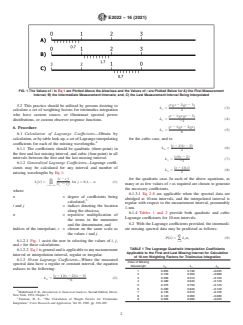
FIG. 1 The Values of i in Eq 1 are Plotted Above the Abscissa and the Values of r are Plotted Below for A) the First Measurement
Interval; B) the Intermediate Measurement Intervals; and, C) the Last Measurement Interval Being Interpolated
5.2 This practice should be utilized by persons desiring to ~r!~r 2 2!~r 2 3!
L 5 (3)
calculate a set of weighting factors for tristimulus integration 2
who have custom source, or illuminant spectral power
r 2 1 r r 2 3
~ !~ !~ !
L 5 (4)
distributions, or custom observer response functions.
r 2 1 r 2 2 r
~ !~ !~ !
6. Procedure
L 5 (5)
6.1 Calculation of Lagrange Coeffıcients—Obtain by
calculation, or by table look-up, a set of Lagrange interpolating for the cubic case, and to
coefficients for each of the missing wavelengths.
r 2 1 r 2 2
~ !~ !
L 5 (6)
6.1.1 The coefficients should be quadratic (three-point) in
the first and last missing interval, and cubic (four-point) in all
r r 2 2
~ !~ !
intervals between the first and the last missing interval.
L 5 (7)
6.1.2 Generalized Lagrange Coeffıcients—Lagrange coeffi-
~r 2 1!~r!
cients may be calculated for any interval and number of
L 5 (8)
missing wavelengths by Eq 1:
n
~r 2 r ! for the quadratic case. In each of the above equations, as
i
L ~r! 5 , for j 50,1,…n (1)
j )
r 2 r
~ ! many or as few values of r as required are chosen to generate
i50 ifij
j i
the necessary coefficients.
where:
6.1.3.1 Eq 2-8 are applicable when the spectral data are
n = degree of coefficients being
abridged at 10-nm intervals, and the interpolated interval is
calculated,
regular with respect to the measurement interval, presumably
i and j = indices denoting the location
1-nm.
along the abscissa,
6.1.4 Tables 1 and 2 provide both quadratic and cubic
π = repetitive multiplication of
Lagrange coefficients for 10-nm intervals.
the terms in the numerator
6.2 With the Lagrange coefficients provided, the intermedi-
and the denominator, and
ate missing spectral data may be predicted as follows:
indices of the interpolant, r = chosen on the same scale as
n
the values i and j.
P~λ! 5 L m (9)
( i i
6.1.2.1 Fig. 1 assist the user in selecting the values of i, j,
i50
and r for these calculations.
TABLE 1 The Lagrange Quadratic Interpolation Coefficients
6.1.2.2 Eq1isgeneralandisapplicabletoanymeasurement
Applicable to the First and Last Missing Interval for Calculation
interval or interpolation interval, regular or irregular.
of 10-nm Weighting Factors for Tristimulus Integration
6.1.3 10-nm Lagrange Coeffıcients—Where the measured
Index of Missing
spectral data have a regular or constant interval, the equation
Wavelength L L L
0 1 2
reduces to the following:
1 0.855 0.190 –0.045
2 0.720 0.360 –0.080
~r 2 1!~r 2 2!~r 2 3!
3 0.595 0.510 –0.105
L 5 (2)
4 0.480 0.640 –0.120
5 0.375 0.750 –0.125
6 0.280 0.840 –0.120
Hildebrand, F. B., Introduction to Numerical Analysis, Second Edition, Dover,
7 0.195 0.910 –0.105
New York, 1974, Chapter 3.
8 0.120 0.960 –0.080
Fairman, H. S., “The Calculation of Weight Factors for Tristimulus 9 0.055 0.990 –0.045
Integration,” Color Research and Application, Vol 10, 1985, pp. 199–203.
E2022 − 16 (2021)
TABLE 2 The Lagrange Cubic Interpolation Coefficients
6.5 In the four terms on the right-hand side of this equation,
Applicable to the Interior Missing Intervals for Calculation of
the numerical values of the three factors in the brackets are
10-nm Weighting Factors for Tristimulus Integration
known and should be multiplied into a single coefficient. The
Index of Missing
fourthfactor, m,ineachofthefouradditivetermsisassociated
i
Wavelength L L L L
0 1 2 3
with a different measured wavelength.
1 –0.0285 0.9405 0.1045 –0.0165
2 –0.0480 0.8640 0.2160 –0.0320
6.6 Add all multiplicative coefficients dependent upon each
3 –0.0595 0.7735 0.3315 –0.0455
different measured wavelength into a single coefficient appli-
4 –0.0640 0.6720 0.4480 –0.0560
5 –0.0625 0.5625 0.5625 –0.0625 cable to that wavelength. This results in a single set of
6 –0.0560 0.4480 0.6720 –0.0640
weighting factors that then will contain one value for each
7 –0.0455 0.3315 0.7735 –0.0595
measured wavelength in each of three color-matching func-
8 –0.0320 0.2160 0.8640 –0.0480
9 –0.0165 0.1045 0.9405 –0.0285 tions. The partial contribution to the tristimulus value at
wavelength m is:
@~x¯~λ !S~λ !L !1~x¯~λ !S~λ !L !1… #m 5 wt m (13)
where: 0 0 0 1 1 0 0 0 0
6.7 Normalize the weighting factors by calculating the
P = the value being interpolated at interval λ,
L = the Lagrange coefficients, and following normalizing coefficient:
m = the measured abridged spectral values.
k 5 (14)
Because the measured spectral values are as yet unknown, it
S~λ!y¯~λ!
(
may be best to consider this equation in its expanded form:
where:
P λ 5 L m 1L m 1L m 1L m (10)
~ !
0 0 1 1 2 2 3 3
k = the normalizing coefficient,
6.3 Multiply each P(λ) by the 1-nm interval relative spectral
S(λ) = the power in the 1-nm spectrum, and
power of the source or illuminant being considered.
y(λ) = the CIE Y color-matching function.
6.3.1 It may be necessary to interpolate missing values of
6.8 Multiply the weighting factors by k to normalize the set
the source spectral power distribution S(λ), if the source has
to Y = 100 for the perfect reflecting diffuser.
been measured at other than 1-nm intervals.
6.9 Beginning in January of 2010, rectification of bandpass
6.3.2 Doing so results in the following equation:
differences is no longer accomplished by building the correc-
S λ P λ 5 S λ L m 1S λ L m 1S λ L m 1S λ L m (11)
~ ! ~ ! ~ ! ~ ! ~ ! ~ !
0 0 1 1 2 2 3 3
tion factors into a weight set for tristimulus integration. This is
6.4 Multiply the weighted power at each 1-nm wavelength
because to do so fails to correct the spectrum itself and corrects
by the appropriate custom color-matching function value for
onlythetristimulusvalues.Bandpassrectificationisnowunder
that wavelength. Using the CIE color-matching functions as an
the jurisdiction of Practice E2729.
example, obtain the CIE 1-nm data from CIE Standard S 002,
Colorimetric Observers. Doing so results in the following
7. Precision
equation:
7.1 The precision of the practice is limited only by the
x¯ λ S λ P λ 5 x¯ λ S λ L m 1 x¯ λ S λ L m
~ ! ~ ! ~ ! @ ~ ! ~ ! # @ ~ ! ~ ! #
0 0 1 1 precision of the data provided for the source spectral power
distribution. The CIE color-matching functions are precise to
1@x¯~λ!S~λ!L #m 1@x¯~λ!S~λ!L #m (12)
2 2 3 3
sixdigitsbydefinition.TheLagrangecoefficientsarepreciseto
where:
seven digits.
x¯(λ) = the value of the CIE X color-matching function at
wavelength λ, and the calculations are carried out for
8. Keywords
each of the three CIE color-matching functions, x¯(λ),
8.1 color-matching functions; illuminant; illuminant-
y¯(λ), and z¯(λ).
observer weights; source; tristimulus weighting factors
E2022 − 16 (2021)
APPENDIXES
(Nonmandatory Information)
X1. EXAMPLE OF THE CALCULATIONS
X1.1 TableX1.1givesthespectralpowerdistribution(SPD) same three spectral regions. Tables X1.4-X1.6 illustrate how
of a typical 3-band fluorescent lamp with a correlated color
the same measured data, used to interpolate the missing
temperature of about 3000K. The first step is to multiply each
reflectance data in several different intervals, can be combined
value of the SPD by the appropriate CIE color matching
with the illuminant-color matching function product to form a
function (y¯ in this case), wavelength by wavelength, which is
single weight at a single measurement point. Finally, Table
shown inTable X1.2 for three spectral regions: near 360 nm,
X1.7 shows the resulting weight set for this 3000K source and
560 nm, and 830 nm. Table X1.3 shows a typical interpolation
the 1964 10° color matching functions. Table X1.7 is compat-
of a measured reflectance curve from a 10-nm reported interval
ible with Tables 5 in Practice E308.
to the 1-nm interval that matches the SPD-y¯ product in the
E2022 − 16 (2021)
TABLE X1.1 Spectral Power Distribution of Typical 3-Band Fluorescent Lamp with Correlated Color Temperature of 3000 K (1-nm
measurement interval)
λ SPD λ SPD λ SPD λ SPD λ SPD λ SPD
360 0.004880 450 0.014870 540 0.162400 630 0.111200 720 0.004410 810 0.000000
361 0.004595 451 0.015040 541 0.277600 631 0.102900 721 0.003505 811 0.000000
362 0.004310 452 0.015210 542 0.392800 632 0.094620 722 0.002600 812 0.000000
363 0.020290 453 0.014980 543 0.353900 633 0.062350 723 0.002470 813 0.000000
364 0.036270 454 0.014750 544 0.315100 634 0.030080 724 0.002340 814 0.000000
365 0.047350 455 0.014370 545 0.429800 635 0.027420 725 0.002375 815 0.000000
366 0.058440 456 0.014000 546 0.544600 636 0.024770 726 0.002410 816 0.000000
367 0.031870 457 0.014060 547 0.383500 637 0.023050 727 0.002450 817 0.000000
368 0.005300 458 0.014110 548 0.222500 638 0.021330 728 0.002490 818 0.000000
369 0.004700 459 0.013930 549 0.182100 639 0.020750 729 0.001795 819 0.000000
370 0.004100 460 0.013760 550 0.141700 640 0.020170 730 0.001100 820 0.000000
371 0.003785 461 0.013470 551 0.113500 641 0.019920 731 0.001120 821 0.000000
372 0.003470 462 0.013180 552 0.085290 642 0.019660 732 0.001140 822 0.000000
373 0.003540 463 0.013470 553 0.070050 643 0.019740 733 0.001750 823 0.000000
374 0.003610 464 0.013750 554 0.054810 644 0.019810 734 0.002360 824 0.000000
375 0.003615 465 0.014000 555 0.046030 645 0.019550 735 0.002190 825 0.000000
376 0.003620 466 0.014250 556 0.037250 646 0.019280 736 0.002020 826 0.000000
377 0.004210 467 0.013810 557 0.034310 647 0.019080 737 0.003930 827 0.000000
378 0.004800 468 0.013370 558 0.031360 648 0.018880 738 0.005840 828 0.000000
379 0.005170 469 0.012870 559 0.030480 649 0.030460 739 0.003355 829 0.000000
380 0.005540 470 0.012370 560 0.029590 650 0.042050 740 0.000870 830 0.000000
381 0.005240 471 0.012640 561 0.029650 651 0.034870 741 0.002235
382 0.004940 472 0.012900 562 0.029700 652 0.027690 742 0.003600
383 0.004615 473 0.012640 563 0.029530 653 0.024990 743 0.002500
384 0.004290 474 0.012380 564 0.029360 654 0.022290 744 0.001400
385 0.003750 475 0.011680 565 0.029200 655 0.020120 745 0.002155
386 0.003210 476 0.010970 566 0.029040 656 0.017950 746 0.002910
387 0.003050 477 0.011050 567 0.029500 657 0.019130 747 0.002970
388 0.002890 478 0.011130 568 0.029960 658 0.020320 748 0.003030
389 0.002980 479 0.012680 569 0.029480 659 0.017400 749 0.003615
390 0.003070 480 0.014240 570 0.029000 660 0.014470 750 0.004200
391 0.002795 481 0.019080 571 0.029140 661 0.020750 751 0.003470
392 0.002520 482 0.023910 572 0.029280 662 0.027030 752 0.002740
393 0.002395 483 0.035600 573 0.029390 663 0.022910 753 0.002225
394 0.002270 484 0.047290 574 0.029500 664 0.018790 754 0.001710
395 0.002285 485 0.064030 575 0.040510 665 0.015270 755 0.000855
396 0.002300 486 0.080770 576 0.051530 666 0.011740 756 0.000000
397 0.002420 487 0.082540 577 0.060840 667 0.012890 757 0.000310
398 0.002540 488 0.084310 578 0.070160 668 0.014040 758 0.000620
399 0.002640 489 0.073870 579 0.079050 669 0.013040 759 0.000310
400 0.002740 490 0.063440 580 0.087930 670 0.012030 760 0.000000
401 0.002845 491 0.059500 581 0.090370 671 0.012230 761 0.000000
402 0.002950 492 0.055560 582 0.092820 672 0.012430 762 0.000000
403 0.062430 493 0.049350 583 0.098470 673 0.011550 763 0.000000
404 0.121900 494 0.043140 584 0.104100 674 0.010680 764 0.000000
405 0.085640 495 0.038320 585 0.102800 675 0.010140 765 0.000000
406 0.049360 496 0.033490 586 0.101400 676 0.009600 766 0.000000
407 0.032040 497 0.030100 587 0.113700 677 0.009705 767 0.000000
408 0.014720 498 0.026710 588 0.126000 678 0.009810 768 0.000000
409 0.009680 499 0.023390 589 0.097210 679 0.010690 769 0.000000
410 0.004640 500 0.020080 590 0.068430 680 0.011560 770 0.000000
411 0.005120 501 0.017300 591 0.085320 681 0.010990 771 0.000000
412 0.005600 502 0.014520 592 0.102200 682 0.010420 772 0.000000
413 0.005835 503 0.012700 593 0.103800 683 0.010040 773 0.000000
414 0.006070 504 0.010870 594 0.105400 684 0.009650 774 0.000000
415 0.006515 505 0.009670 595 0.083490 685 0.012730 775 0.000000
416 0.006960 506 0.008470 596 0.061600 686 0.015810 776 0.000000
417 0.007105 507 0.008350 597 0.064520 687 0.021660 777 0.000000
418 0.007250 508 0.008230 598 0.067430 688 0.027500 778
...